Last spring, I watched my neighbor wage war on the wrong enemy for weeks.
He kept setting mole traps while voles destroyed his garden right under his nose. The confusion makes sense, both create chaos in your yard, but in completely different ways.
Lawn vole vs mole damage comes down to this: moles push up dirt mounds and create spongy tunnels hunting for insects, while voles chew visible paths through grass and attack your plants directly at ground level.
You’re probably seeing one type of damage but blaming the other creature. The tunnels tell different stories.
Moles rarely touch your plants; voles devour them. Getting this right means you’ll stop wasting time on solutions that don’t match your actual problem.
What’s Really Happening Under Your Lawn?
Your lawn isn’t just grass: it’s a full buffet and real estate opportunity for underground critters. Moles move in because your soil is packed with grubs, earthworms, and insects they can’t resist.
They’re hunting protein, digging constantly to find their next meal. Voles, on the other hand, are after your plant roots, seeds, bulbs, and tender bark. They love dense ground cover because it hides their movements from predators.
Here’s why you miss the damage early: both pests work mostly out of sight. Moles tunnel beneath the surface, so you won’t see destruction until your grass starts sinking or dying in patches. Voles create runways under leaf litter, mulch, or snow.
By the time you notice chewed plants or surface trails, they’ve already established a network.
Winter damage especially goes undetected, voles thrive under snow cover, destroying roots while you’re inside. You’ll discover the carnage when spring arrives and your garden looks like someone took bites out of everything.
Moles vs. Voles: Know Your Yard Invader
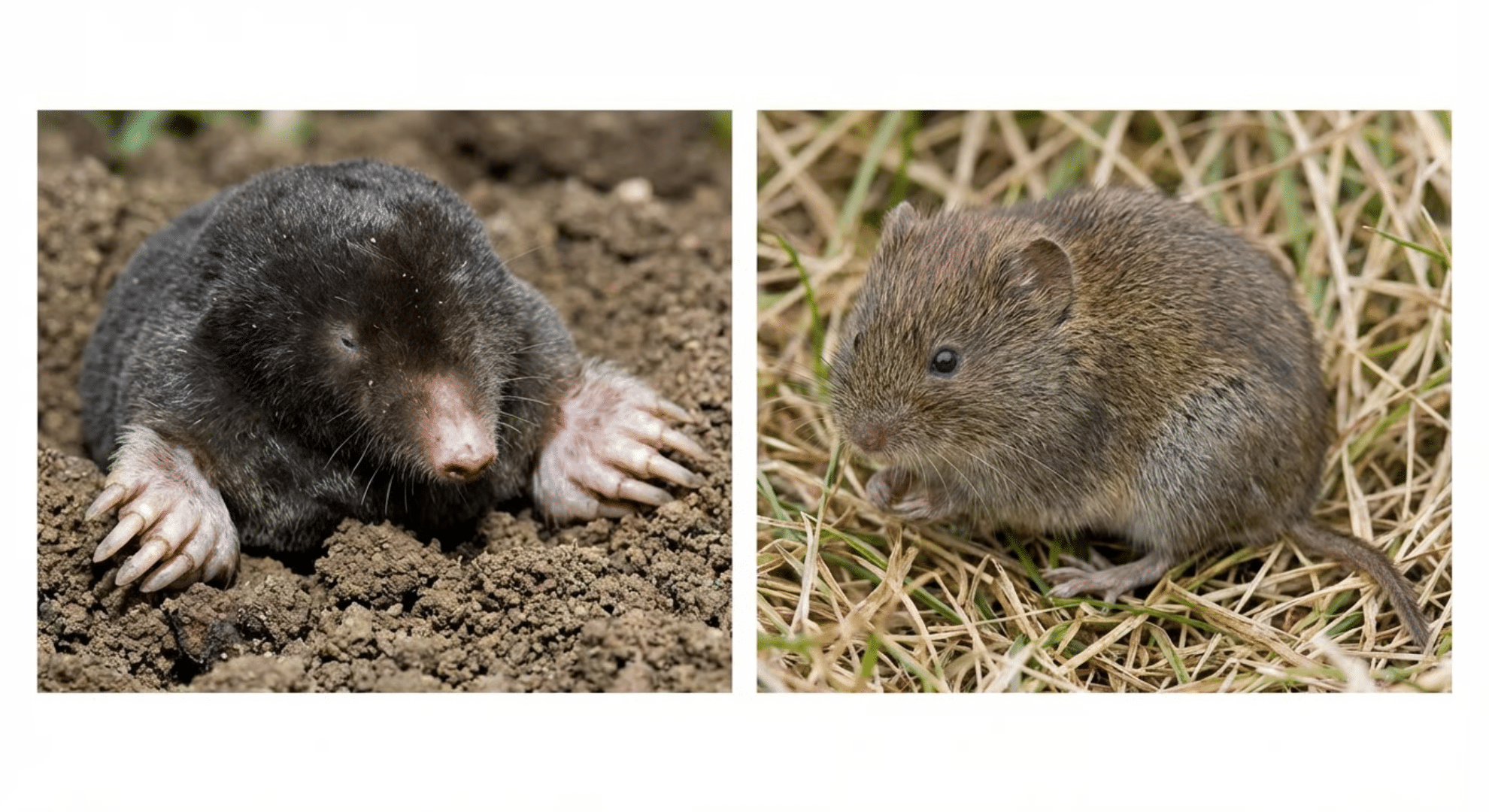
I’ve held both creatures, and trust me, they’re nothing alike once you know what to look for.
Size and Appearance Differences
Moles are bigger, usually 6-8 inches long with paddle-shaped front feet built for serious digging. Their fur is velvety gray or black, and they’ve got tiny eyes you can barely see. Those oversized claws? Pure excavation tools.
Voles look like chubby mice, about 5-7 inches including their short tails. You’ll notice their small rounded ears, beady eyes, and brownish-gray fur. They’re rodents through and through, while moles are completely different mammals.
Diet Distinctions
Here’s the game-changer: moles eat insects, grubs, and earthworms. They’re insectivores, which means your plants are safe from them. Voles are herbivores that demolish everything green.
I’ve watched them strip bark off young trees, devour bulbs, and mow through vegetable gardens. They’ll eat roots, seeds, grass, and any plant material they can reach.
Behavioral Patterns
Moles are solo operators. They’re territorial and aggressive toward other moles, preferring to work alone in their tunnel systems. You’ll rarely see them above ground; they spend 99% of their time underground.
Voles are social creatures that live in colonies. They’re active above ground, especially at dawn and dusk. You might actually spot them scurrying through their runway systems.
Activity Seasons
Moles stay active year-round because they’re always hunting food below the frost line. You’ll see fresh mounds even in winter. Voles also work all year, but they’re especially destructive under snow cover.
Winter is when they do their worst damage, chewing bark and roots while hidden from predators. Spring reveals what they’ve destroyed while you weren’t watching.
Here I’ll give you a table to know the differences on a glance:
| Feature | Moles | Voles |
|---|---|---|
| Size | 6-8 inches long | 5-7 inches (including tail) |
| Appearance | Velvety gray/black fur, paddle-shaped feet, tiny eyes, large claws | Brown/gray fur, small, rounded ears, visible eyes, mouse-like |
| Diet | Insects, grubs, earthworms (insectivore) | Plants, roots, bark, bulbs, seeds (herbivore) |
| Behavior | Solitary, territorial and stays underground | Social, lives in colonies, active above ground |
| When Active | Year-round, below the frost line | Year-round, the worst damage occurs under snow |
| Visibility | Rarely seen above ground | Often spotted during dawn/dusk |
Spotting Lawn Vole vs. Mole Damage
The damage tells you exactly who’s causing problems, and I’ve learned to read the signs like a detective. Here’s what each pest leaves behind so you can identify your invader fast.
How to Identify Vole Damage
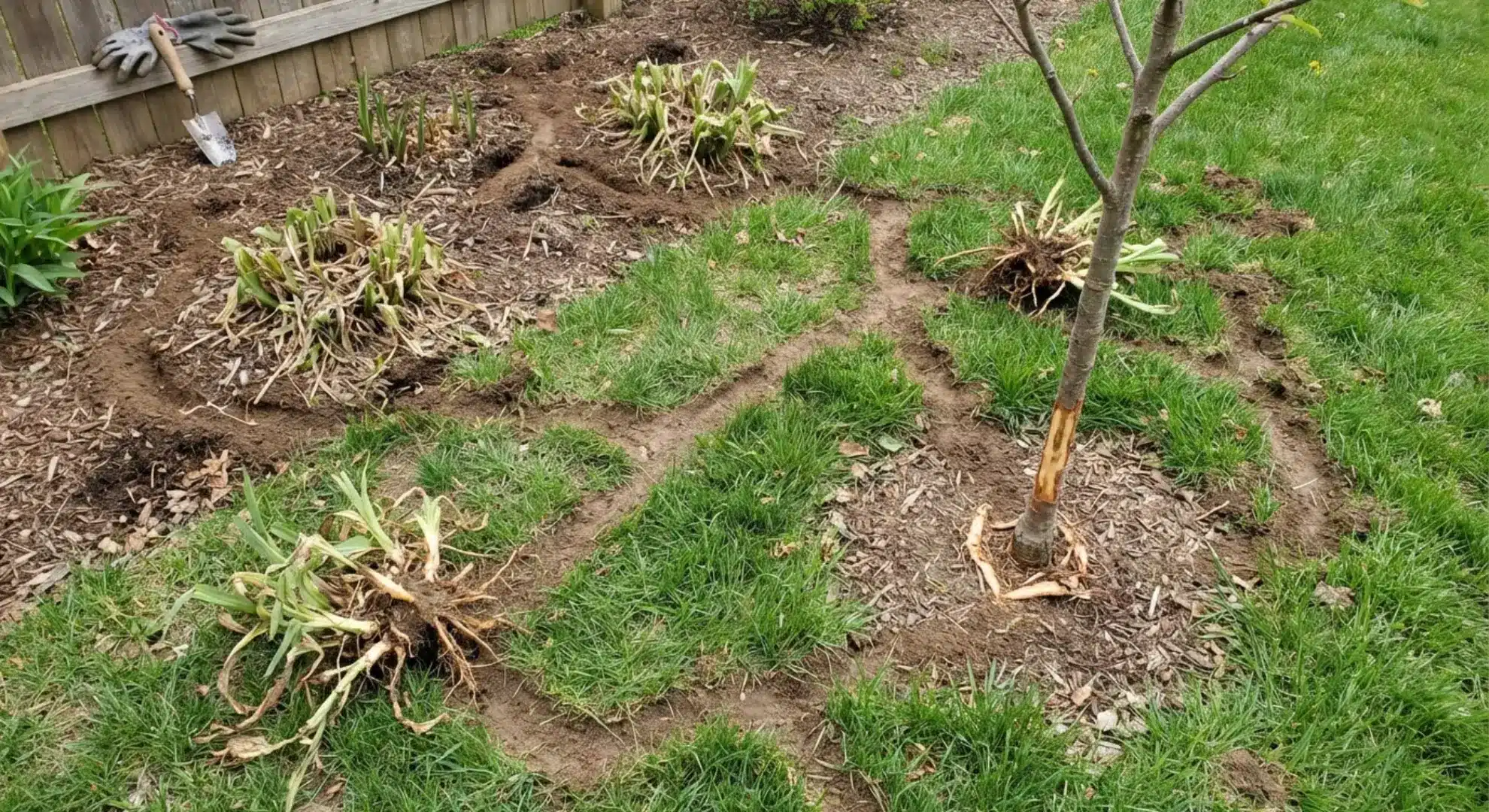
Surface Runway Patterns
Voles create visible trails that look like tiny highways pressed into your grass. These runways sit right on the surface and connect burrow openings across your yard in messy networks.
- You’ll see 1-2 inch wide paths where grass looks matted and chewed down to soil
- The trails often hide under mulch, leaf litter, or thatch until you pull it back
- Runways run along foundations, through garden beds, and crisscross open lawn areas
- The paths connect multiple entry points creating an interconnected system
Plant and Root Damage Signs
Your plants will show the pain voles cause. Pull up wilting plants and you’ll find damaged or missing root systems that explain why they’re dying.
- Bulbs disappear completely or show distinctive gnaw marks
- Vegetables like carrots, potatoes, and beets vanish or appear hollowed out from below
- Perennials suddenly collapse when voles chew through their roots
- Irregular patches of dead grass appear where roots got destroyed underneath
Bark Gnawing and Girdling Evidence
This is where voles do their most serious tree damage. Check the base of young trees and shrubs for stripped bark within a few inches of the ground.
- Gnaw marks look like tiny chisel cuts in a distinctive pattern around the trunk
- Girdling happens when they chew bark completely around the trunk, cutting nutrient flow
- Trees look fine until spring, then suddenly die from winter girdling
- Fruit trees and ornamental shrubs are especially vulnerable to this damage
Winter Damage Under Snow
Snow cover is when voles work freely without predator threats. They tunnel between ground and snow, chewing everything in reach for months.
- When snow melts, you’ll discover extensive runway systems you never saw
- Girdled trees, destroyed bulbs, and large dead lawn patches appear suddenly
- The damage looks catastrophic because they worked undetected all winter
- Protected feeding allows colony expansion and widespread destruction
How to Identify Mole Damage
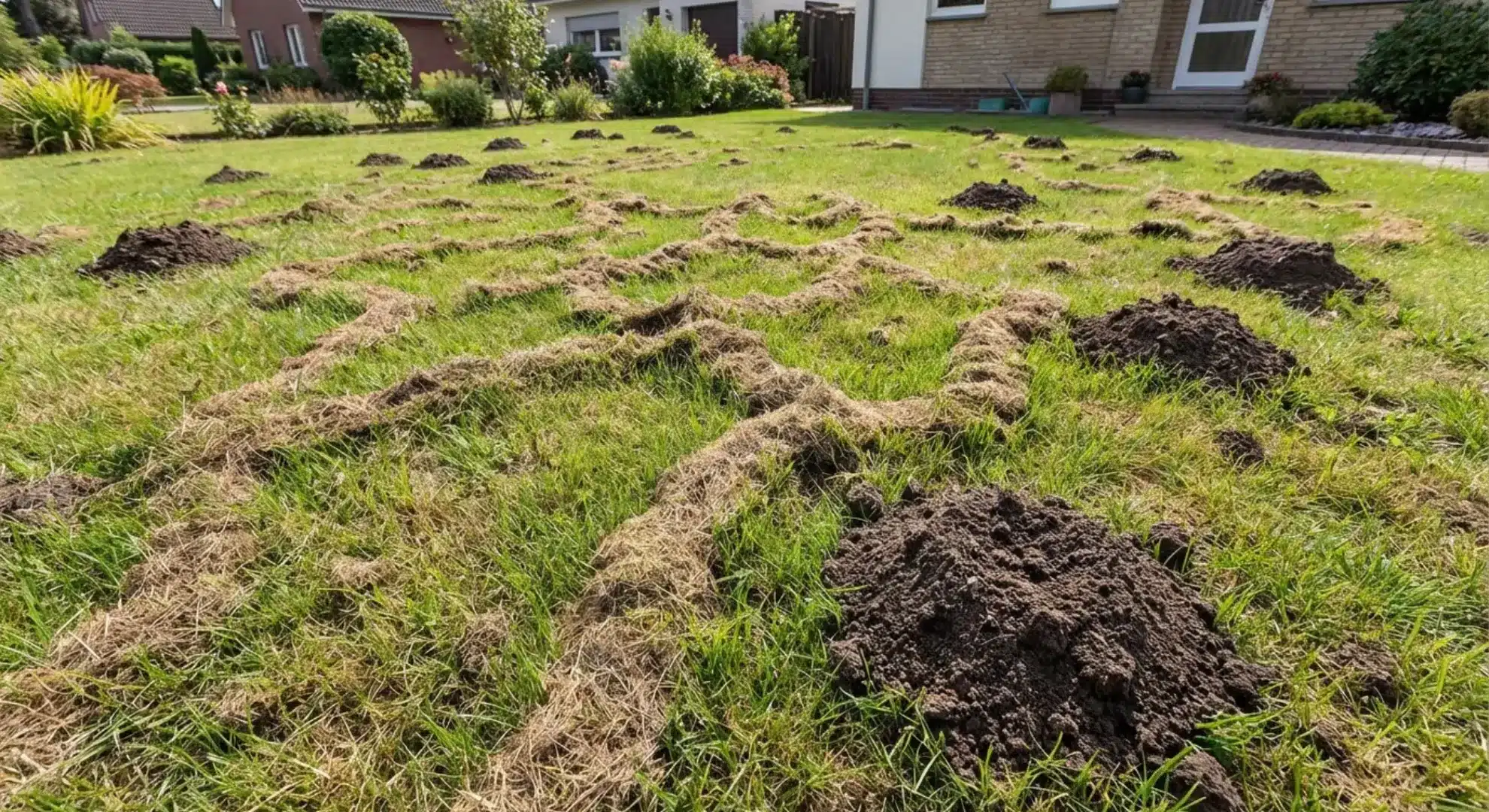
Raised Tunnel Ridges
Walk across your lawn and feel for spongy spots—that’s classic mole activity. These raised ridges snake across your yard creating soft tunnels just below the surface.
- Press down on ridges and they collapse slightly under your weight
- Grass above tunnels often dies because roots separate from soil contact
- Surface tunnels appear as irregular lines looking like someone pushed up turf from underneath
- The patterns are random, following wherever moles find grubs and insects
Volcano-Shaped Soil Mounds
Moles push excavated dirt straight up, creating cone-shaped mounds that are their signature. These molehills appear randomly across your lawn as they dig deeper tunnel systems.
- Mounds are usually 4-8 inches high and circular in shape
- Fresh mounds have loose, fine soil on top that’s easy to spot
- You won’t see an entrance hole in the center like gopher mounds have
- New mounds appear every few days when moles are actively hunting
Root Disruption Patterns
Moles don’t eat your plants, but their tunneling wrecks roots anyway. Plants sitting above tunnel systems lose soil contact and start suffering immediately.
- Wilting happens even after watering because roots suspend in air pockets
- Grass turns brown in strips following the tunnel lines underneath
- The damage is indirect—they’re hunting food and accidentally destroying your lawn’s foundation
- Plants dry out quickly when roots can’t reach moisture or nutrients
Soil Texture Changes
Areas with heavy mole activity develop softer, looser soil that feels unstable. The constant tunneling creates a completely different ground texture you’ll notice when walking.
- Your lawn feels bouncy and unstable under your feet in affected areas
- After rain, these spots may sink or develop depressions as tunnels collapse
- Your mower bounces over raised ridges and dips into soft spots
- The soil becomes well-aerated but too loose to support healthy turf
Vole vs. Mole Damage on Your Property
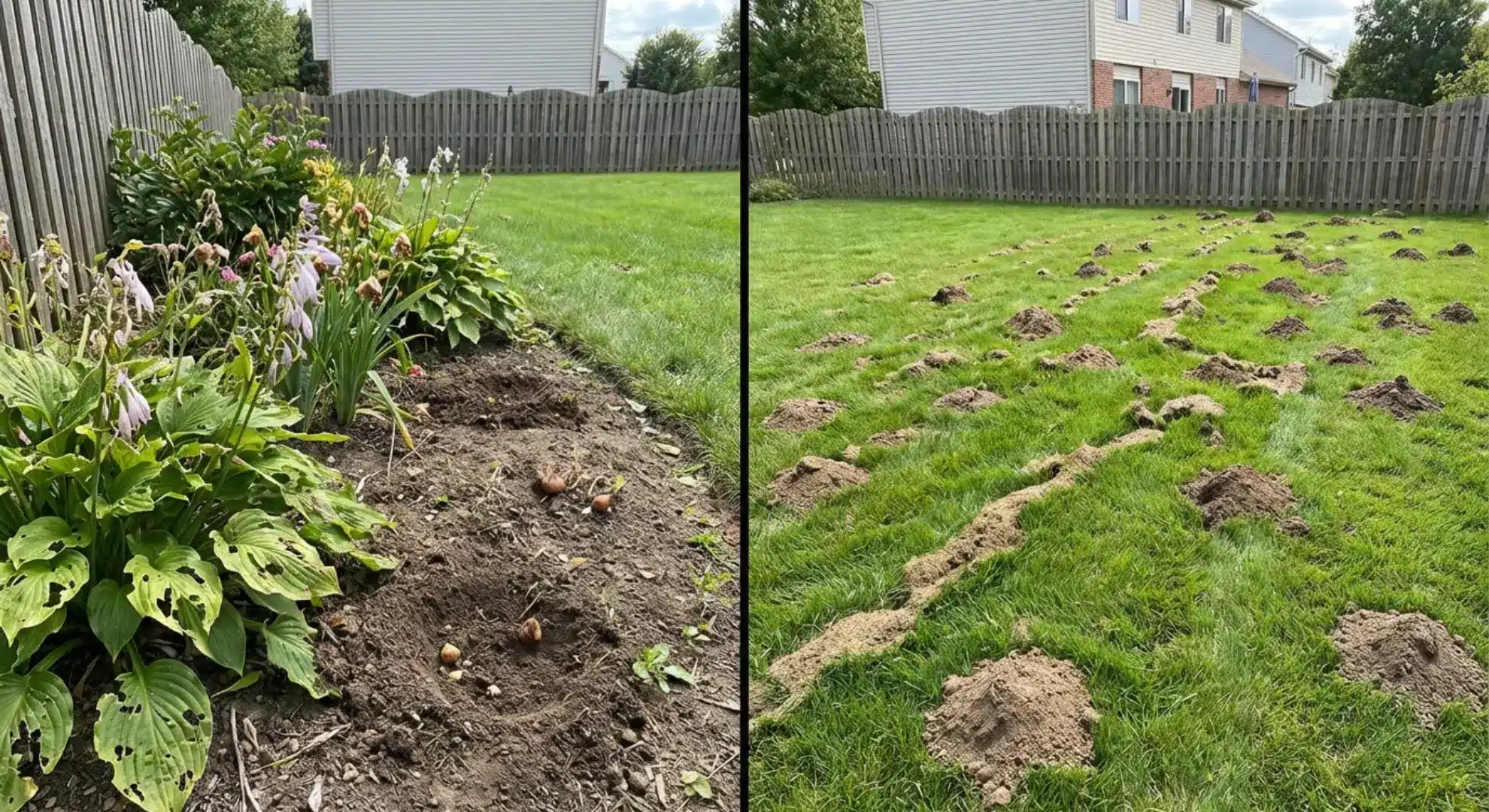
The damage these pests cause hits different parts of your property, and I’ve seen both wreak havoc in unique ways. Voles target everything above and just below ground. Your garden beds take the worst hit: chewed plants, missing bulbs, and stripped bark on young trees.
They’ll destroy flower beds, vegetable gardens, and ornamental plantings without mercy. The damage is direct and visible once you spot those surface runways.
Moles mess up your lawn’s structure and appearance. You’ll deal with unsightly molehills dotting your yard, raised tunnel ridges that make mowing difficult, and spongy ground that feels unstable underfoot.
Your once-smooth lawn becomes a bumpy obstacle course. The grass dies in patches where roots lose soil contact.
Here’s what really matters: voles destroy your plants intentionally while moles wreck your lawn accidentally while hunting insects.
Both cause frustration, but you’re fighting completely different battles depending on which pest moved in.
Effective Control Methods for Voles
Voles are tough to control because they reproduce fast and hide well, but you’ve got options that work. I’ve had success combining multiple approaches rather than relying on just one method.
Trapping works best for small infestations. Place snap traps perpendicular to runways with peanut butter or apple slices as bait. Check them daily and reset as needed. You’ll catch voles quickly if you position traps right along their travel paths.
Habitat modification is your long-term solution. Remove dense ground cover, pull mulch back from tree bases, and keep grass mowed short. Voles need cover to feel safe—take it away and they’ll move elsewhere.
Protect valuable plants with hardware cloth barriers. Wrap tree trunks at least 18 inches high and bury the bottom 6 inches underground. This stops bark girdling before it happens.
Repellents offer temporary relief but need frequent reapplication. Castor oil-based products make areas less appealing. Natural predators like owls and hawks help too, install nest boxes to attract them.
Proven Solutions for Mole Management
Moles are solitary and territorial, which actually works in your favor when controlling them. I’ve found that removing one mole often solves your entire problem since they don’t share space willingly.
Trapping is the most effective method. Use scissor-jaw or harpoon traps placed directly over active tunnel systems.
Test tunnels first by pressing them down; moles will reopen active ones within 24 hours. Set traps there for best results.
Reduce their food source by treating your lawn for grubs. Moles follow the food, so fewer grubs mean less reason to stay.
Apply grub control in late summer when larvae are most vulnerable.
Castor oil repellents make your soil taste terrible to moles. Spray or granular products soak into the ground and encourage them to relocate. You’ll need to reapply after heavy rain.
Soil compaction helps in garden beds. Pack down loose soil to make digging harder. Moles prefer easy tunneling, so they’ll avoid compacted areas when possible.
Eliminate surface tunnels by rolling your lawn or pressing them flat, then watering thoroughly to restore root contact.
Natural and Eco-Friendly Prevention Strategies
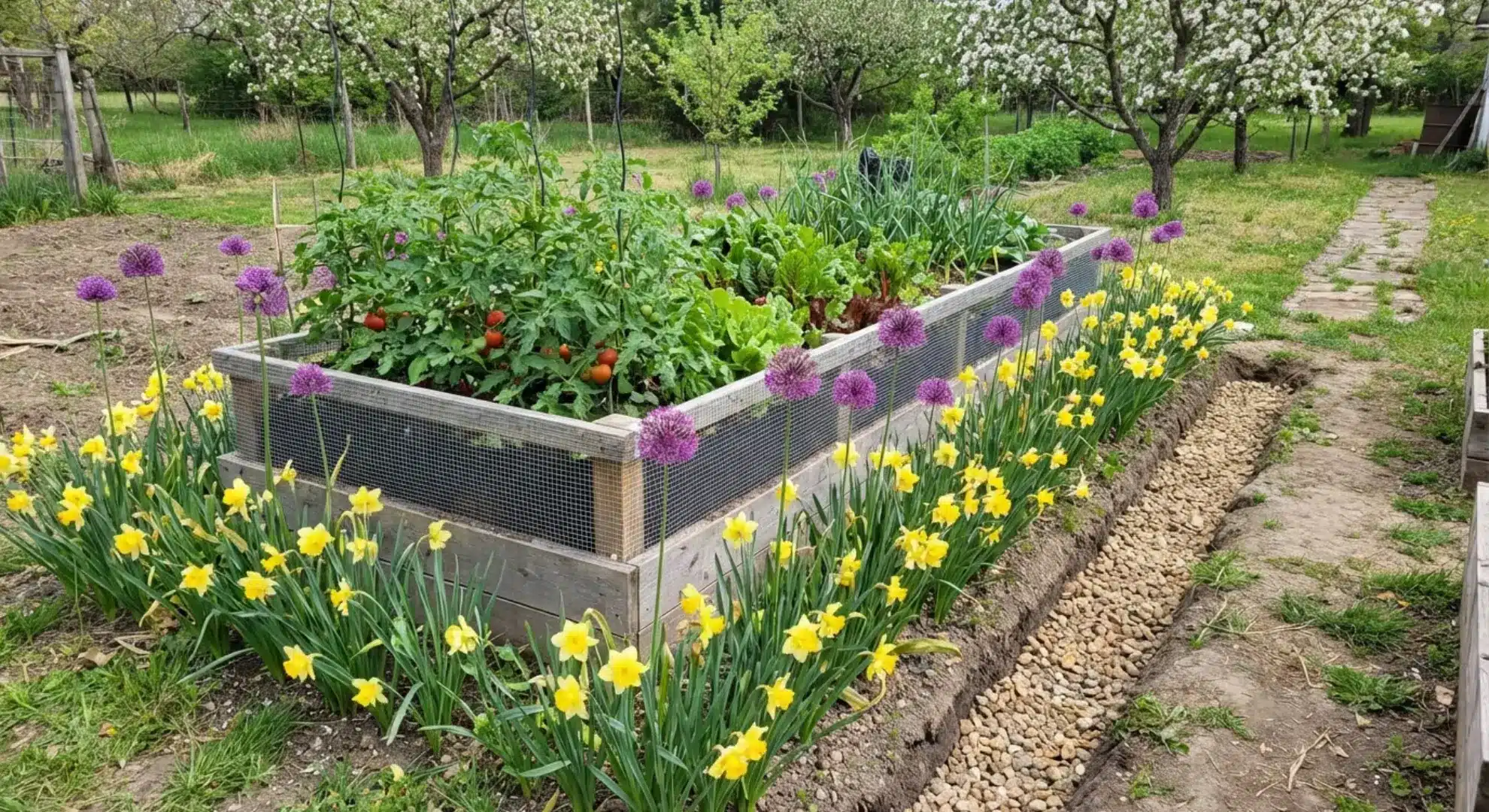
You don’t need harsh chemicals to keep voles and moles away from your property. I’ve had great success with natural methods that work with your yard’s ecosystem instead of against it.
| Prevention Method | How It Works | Best For |
|---|---|---|
| Plant Barriers | Daffodils, alliums, and crown imperial repel voles with their scent and taste | Garden beds and borders |
| Predator Habitat | Owl boxes, perches for hawks, and cover for snakes invite natural hunters | Large open yards |
| Gravel Trenches | 6-inch deep gravel around garden beds, blocks, and tunneling | Protecting specific areas |
| Raised Beds | Elevating gardens with hardware cloth bottoms prevents underground access | Vegetable gardens |
| Ground Cover Removal | Clearing dense vegetation eliminates vole hiding spots | Entire property |
| Native Plants | Deep-rooted native species resist damage better than shallow-rooted ornamentals | Landscaping choices |
| Companion Planting | Mint, garlic, and marigolds create natural barriers that voles avoid | Around vulnerable plants |
| Beneficial Nematodes | Microscopic worms reduce grub populations, removing mole’s food source | Lawn treatment |
These strategies take longer than traps or poisons but create lasting solutions. You’re building an environment that naturally discourages both pests while supporting the beneficial wildlife that keeps them in check.
Long-Term Prevention: Keeping Your Lawn Pest-Free
Prevention beats constantly fighting infestations, and I’ve learned that maintaining an uninviting environment keeps both voles and moles from settling in. These ongoing practices protect your property year-round.
- Maintain regular mowing schedules to keep grass short and eliminate vole cover
- Remove leaf piles, brush, and dense vegetation where voles hide from predators
- Create a 2-3 foot cleared zone around foundations, trees, and garden beds
- Monitor your property weekly for early signs of tunnel activity or runways
- Water deeply but less frequently to avoid creating soft soil moles love digging
- Keep bird feeders away from garden areas since spilled seed attracts voles
- Install proper drainage to prevent overly moist soil that supports large grub populations
- Inspect tree bases every season for bark damage and wrap vulnerable young trees
Consistency is what makes these practices work. You’re not just treating problems as they appear—you’re making your property naturally resistant to future invasions while maintaining a healthy, attractive landscape.
Conclusion
I used to walk my yard frustrated, throwing solutions at problems I didn’t fully understand. Learning to spot the actual culprit behind lawn vole vs mole damage changed everything for me.
The tunnels, the mounds, the chewed roots, they all tell a clear story once you know what to look for.
You’ve got the tools now to diagnose your yard’s real problem and stop wasting effort on the wrong pest. Check those damage patterns, match them to the right control methods, and take action while the problem’s still manageable.
Your lawn doesn’t have to be a mystery anymore. Browse other blogs for more straightforward advice on tackling yard challenges with confidence and getting results that last!