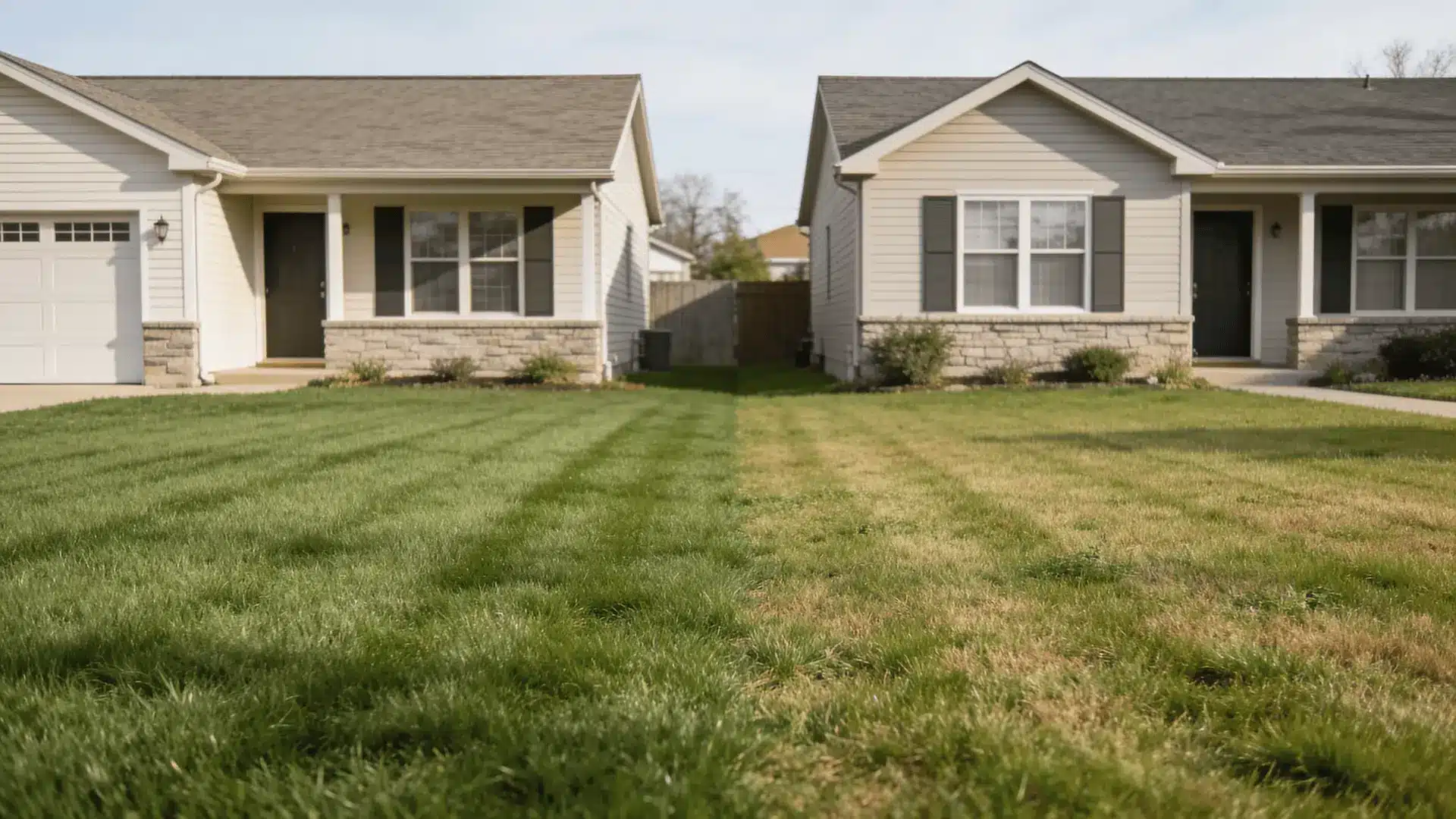
Feeding your yard sounds simple. Toss down fertilizer, add water, wait for green. But the real question is not what to use. It’s when and how often. That’s where most lawns struggle.
The right lawn fertilizer schedule is less about the calendar and more about how grass actually grows beneath the surface. Roots and blades do not move at the same pace all year, and soil conditions change more than most people realize.
In this guide, I’ll break down how often to fertilize, how grass type shifts the timing, and why spacing matters more than brand names. Let’s start with the number that really matters.
How Many Times per Year Should You Fertilize Your Lawn?
Most lawns need fertilizer three to four times per year. That number is not random. It lines up with how grass uses nutrients during its growth cycle.
A lawn fertilizer schedule typically includes three to four applications per year, timed around active growth periods. Cool-season grasses are fertilized in early spring, late spring, and fall, while warm-season grasses are fed from late spring through summer. Applications are usually spaced six to eight weeks apart and should align with soil temperature and active growth.
Grass does not grow at the same speed all year. It has active growth periods and slower periods. During active growth, it pulls nitrogen and other nutrients from the soil to build blades and roots. Over time, those nutrients get depleted.
If you fertilize too rarely, the grass runs short during peak growth. It thins out and loses color.
If you fertilize too often, you create problems:
- Excess salt buildup in the soil
- Rapid top growth with weak roots
- Higher risk of burn
More applications do not equal better results. Grass can only use nutrients while it is metabolically active. Extra fertilizer does not store forever. It either leaches away or stresses the plant.
Three to four applications usually match the main growth phases:
- Early active growth
- Late spring growth
- Peak or maintenance growth
- Fall recovery or storage phase (for certain grass types)
The exact timing depends on what kind of grass you have.
When Should You Fertilize Cool-Season Grasses?
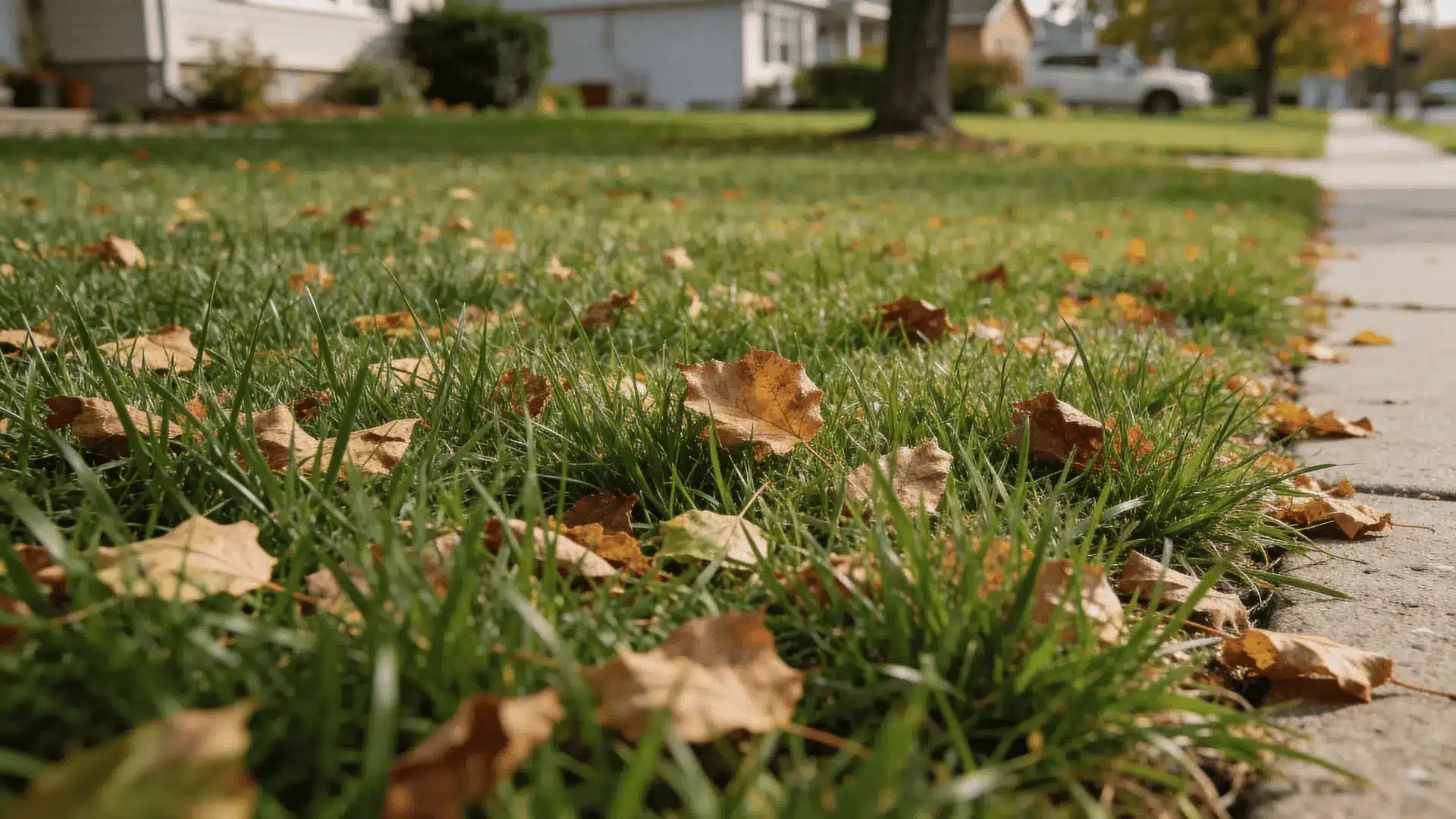
Cool-season grasses include Kentucky bluegrass, fescue, and ryegrass. These grasses grow most aggressively in spring and fall. They slow down in extreme heat.
Understanding that pattern is the key to building the right schedule.
1. Early Spring Timing
Many people want to fertilize as soon as the snow melts. That feels logical. The lawn looks weak, and you want it green fast.
But early spring growth is mostly leaf-driven at first. The roots are still waking up. Soil temperatures need to reach roughly the mid-50s°F before roots actively take up nitrogen.
If you fertilize too early, the plant cannot efficiently absorb nutrients. You may push fast blade growth before the root system is ready. That creates tall, soft growth and shallow roots.
A better marker is consistent active growth. If you’ve mowed once or twice and daytime temperatures are steady in the 60s°F, the lawn is metabolically active. That’s when feeding supports both blade and root development.
2. Late Spring Feeding
Late spring is when cool-season grass is growing fast. Roots are active. Blades are thickening.
This is a good time for a second application, usually about six to eight weeks after the first. The goal here is to maintain steady growth without forcing it.
The contrast is important. Early spring is about support. Late spring is about sustaining momentum.
If you skip late spring feeding, the lawn may start thinning before summer. If you overdo it, you create lush top growth heading into heat stress.
3. Summer Adjustments
Cool-season grasses struggle in high heat. Once temperatures consistently climb above the mid-80s°F, growth slows. The plant shifts energy to survival.
Heavy fertilization during peak heat can cause burn. The grass is not actively building tissue at the same rate. Nutrients sit in the soil and increase salt stress.
In mild summers, a light feeding may be fine. In hotter climates, it’s often better to reduce or skip heavy applications.
The difference comes down to stress. A well-watered lawn in moderate heat may tolerate light feeding. A drought-stressed lawn will not.
4. Fall and Late-Fall Feeding
Fall is the most important feeding period for cool-season grass.
As temperatures cool, root growth becomes very active again. The plant shifts energy underground. It stores carbohydrates and nitrogen for winter.
This is why fall fertilization strengthens spring green-up. The nutrients are stored in the crown and roots, not just used for quick blade growth.
Timing matters here, too. The final application should happen while the grass is still growing, but at least six to eight weeks before hard frost. Once soil temperatures drop too low, root activity slows and uptake decreases.
Fertilizing after growth shuts down wastes nutrients and increases runoff risk.
The biggest mistake is thinking spring is the most important feeding. For cool-season lawns, fall drives long-term strength.
When Should You Fertilize Warm-Season Grasses?
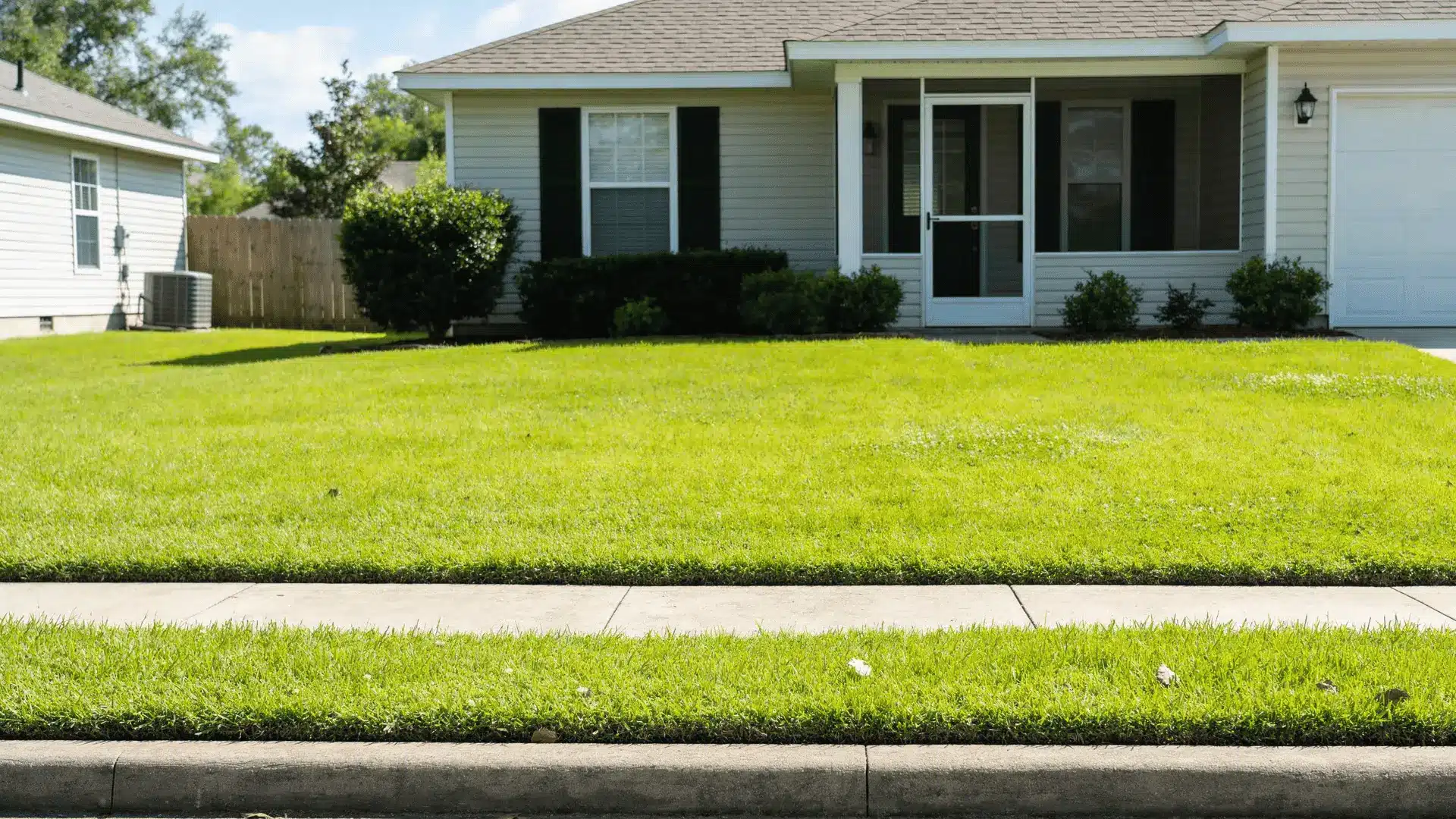
Warm-season grasses, like Bermuda, zoysia, and St. Augustine, grow most actively in heat. They go dormant and brown when soil temperatures drop.
This flips the schedule compared to northern lawns.
1. Spring Green-Up Timing
Warm-season grasses should not be fertilized while they are dormant. If the lawn is still brown, it is not actively growing and cannot use nutrients.
Wait until the grass is fully green and growing steadily.
In most regions, this means mid to late spring, when soil temperatures are consistently around 65°F or higher. A simple sign is mowing. If you’ve mowed at least once and growth is strong, roots are active and ready to absorb fertilizer.
Applying fertilizer too early, such as in early spring while nights are still cool, wastes nutrients. It can also encourage weeds before the turf thickens enough to compete.
2. Peak Summer Feeding
Summer is the main growth period for warm-season grasses. In most climates, this falls between late May and early August. During this window, grass spreads, thickens, and repairs itself.
This is the ideal time for one to two fertilizer applications, spaced about 6–8 weeks apart. Nutrients support strong blade growth and lateral spread while the plant is metabolically active.
Unlike cool-season lawns, warm-season grass thrives in heat. What slows northern grass fuels southern grass.
However, there are limits. If temperatures are extremely high and the lawn is drought-stressed, growth slows. In those cases, heavy fertilization can increase stress and risk of burn. Healthy, actively growing turf responds best.
3. Late-Season Cutoff Timing
As late summer transitions into early fall, growth begins to slow. When soil temperatures drop below about 65°F and daylight shortens, warm-season grass prepares for dormancy.
Final nitrogen applications are usually made in late summer, often 6–8 weeks before the average first frost in your area. Fertilizing too close to cold weather can push soft, tender growth that is easily damaged by frost.
Unlike cool-season lawns, fall is not the main feeding season for warm-season grasses. Continuing a heavy nitrogen schedule into fall is a common mistake and can weaken the lawn heading into winter.
Why Timing Matters More than Fertilizer Type
It’s easy to blame the bag when your lawn doesn’t respond the way you hoped. I’ve seen people switch brands mid-season, convinced the product failed.
Most of the time, the real issue is timing.
Here’s why when you apply fertilizer matters more than which brand you choose:
- Active roots are required for nutrient uptake: Grass roots must be actively growing to absorb nitrogen. Cold or inactive roots cannot pull nutrients efficiently from the soil.
- Dormant grass cannot use fertilizer properly: When grass is dormant, metabolism slows dramatically. Nutrients applied during this phase often sit unused or wash away.
- Heat stress limits how nutrients are used: In extreme heat, cool-season grass reduces growth. Forcing nitrogen during stress can weaken roots and increase burn risk.
- Soil temperature drives microbial activity: Beneficial microbes convert nutrients into plant-available forms. In cold soil, this process slows, reducing fertilizer effectiveness.
- Growth cycles determine nutrient demand: Grass only needs higher nitrogen during active growth. Outside those windows, demand drops and excess increases stress.
The best fertilizer applied at the wrong time performs poorly. A basic product used during active growth often delivers better results.
When you align applications with real growth cycles instead of brand promises, your lawn responds more consistently and with less risk.
How to Space Fertilizer Applications Safely
Most lawn fertilizer schedules recommend spacing applications six to eight weeks apart. That window reflects how nutrients are released and used.
Quick-release fertilizers make nutrients available fast. Grass absorbs them rapidly during active growth. After several weeks, much of that nitrogen is used or leached.
Slow-release fertilizers extend availability. They break down gradually through microbial activity and moisture.
| Timing Issue | What Happens in the Soil | What Happens to the Grass |
|---|---|---|
| Apply too soon (especially quick-release) | Nitrogen levels spike and excess salts build up in the root zone. | Roots may burn, and leaf tips can turn yellow or brown. |
| Wait too long during active growth | Available nutrients decline as the grass uses what’s already present. | Color fades, growth slows, and the lawn may thin out. |
Spacing depends on:
- Growth rate
- Temperature
- Rainfall
- Fertilizer type
Pale color alone is not always a safe signal to reapply. Heat stress, drought, or mowing stress can also cause color changes. The goal is steady support during active growth, not constant feeding.
When You Should Not Fertilize Your Lawn
There are clear times when fertilizing does more harm than good.
| Condition | What’s Happening in the Lawn | Why Fertilizing Is a Problem |
|---|---|---|
| Dormancy periods | Grass is not actively growing and metabolic activity is low. | Nutrients are not absorbed efficiently and may run off or leach away. |
| High-heat stress (cool-season lawns) | Growth slows as the plant shifts energy toward survival. | Nitrogen can force weak top growth and increase burn risk. |
| Drought conditions | Soil moisture is limited and roots struggle to function normally. | Fertilizer salts concentrate in dry soil, raising the chance of root damage. |
| Frozen soil | Roots are inactive and the ground blocks proper nutrient movement. | Nutrients may wash away during thaw before roots can absorb them. |
The common belief is that feeding stressed grass helps it recover. In reality, fertilizer fuels growth, not healing. If the plant cannot actively grow, added nutrients increase pressure rather than solve the stress.
Understanding when not to fertilize is just as important as knowing when to apply it.
Wrapping Up
A lawn fertilizer schedule works best when it matches your grass type and real growth patterns, not just the calendar.
Grass feeds when it is active, stores nutrients when preparing for dormancy, and slows down during stress.
If you align applications with those phases, you get steadier color, stronger roots, and fewer problems. If you push fertilizer outside those windows, you increase risk without adding benefit.
Start by identifying your grass type and watching how it grows through the seasons. Once you see that rhythm, your lawn fertilizer schedule becomes simple and predictable.