
Rubber mulch keeps showing up at home improvement stores and playgrounds. But is rubber mulch good for your yard? The internet gives mixed answers.
Some sources praise its durability, while others warn about chemicals and heat issues. It’s confusing when you just want to make a smart choice for your landscape.
This post breaks down everything you need to know: what rubber mulch actually is, the pros and cons, how it compares to wood and other options, where it works best, and where you should avoid it.
What Is Rubber Mulch?
Rubber mulch is a ground cover material made from recycled tires and synthetic rubber. This product comes from old vehicle tires that have been shredded and processed for use in gardens and play areas. Understanding what rubber mulch is can help you decide if this option fits your landscaping needs.
Common Forms & Sizes
| Form | Description | Best Use |
|---|---|---|
| Nuggets | Small, chunky pieces (0.5-2 inches) | Garden beds, decorative landscaping |
| Shredded rubber | Fine, irregular strips | Playgrounds, pathways, slope control |
| Roll mats/sheets | Pre-formed rubber surfaces | Playground safety surfacing, high-traffic areas |
Rubber mulch comes in various forms to suit different outdoor projects. Nuggets work well for flower beds and around trees, while shredded rubber offers better coverage for larger areas like playgrounds. Roll mats provide instant ground coverage and are popular for commercial play spaces.
Why People Consider Rubber Mulch
People choose rubber mulch for many different outdoor projects. Here are the most common reasons homeowners and businesses turn to this material.
- Landscaping Areas: Homeowners use rubber mulch in flower beds and garden borders because it stays in place and keeps a clean appearance for years without needing replacement.
- Playgrounds & Safety Surfacing: Rubber mulch provides cushioning that helps protect children from injuries during falls, making it a popular choice for playground surfaces and play areas.
- Garden Pathways & High-Traffic Zones: This material holds up well in areas with constant foot traffic and does not compact or break down as wood chips do over time.
- Tough Climate or Erosion-Prone Areas: Rubber mulch resists heavy rain and wind better than organic options, making it useful on slopes and in regions with harsh weather.
- Commercial Landscaping & Public Spaces: Property managers and businesses prefer rubber mulch because it requires less maintenance and helps keep public spaces tidy with minimal upkeep costs.
Pros of Rubber Mulch
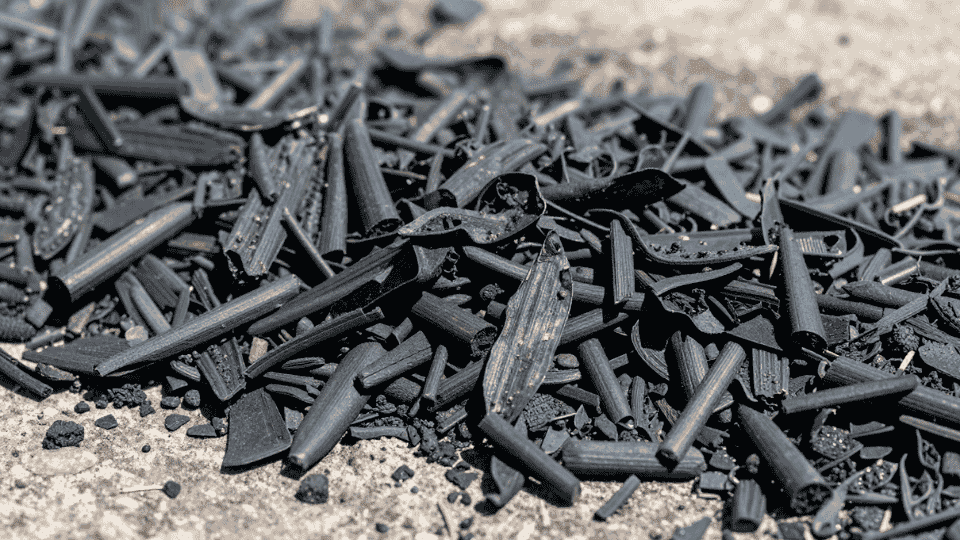
Now, let’s look at the benefits that make rubber mulch appealing to many people. These advantages explain why some homeowners and property managers prefer this option over traditional mulch.
1. Durability & Longevity
Rubber mulch lasts many years without decomposing or breaking down. Unlike wood mulch, which needs to be replaced every year or two, rubber can remain effective for over a decade with minimal material loss.
2. Low Maintenance & Stability
This material stays in place even during heavy winds and rainstorms because of its weight. You won’t need to rake it back into position or add more layers each season as you would with organic mulch.
3. Weed Suppression & Moisture Conservation
Rubber mulch blocks sunlight from reaching the soil surface, which stops many weed seeds from sprouting. While it doesn’t absorb water like wood chips do, it still slows the evaporation of moisture from the ground beneath it.
4. Pest & Fungus Resistance
Rubber does not attract termites, carpenter ants, or other wood-eating insects that can damage your home. It also resists fungal growth and decay, which means you won’t see mold or mushrooms growing in your mulched areas.
5. Insulation & Temperature Regulation
This material helps moderate soil temperature by reducing extreme heat in summer and cold in winter. The insulation effect can protect plant roots during temperature swings and help some plants survive harsh conditions.
6. Variety of Colors & Aesthetics
Rubber mulch comes in multiple colors, like red, brown, black, and even blue or green. This gives you design flexibility and helps maintain a consistent, uniform look that doesn’t fade as quickly as dyed wood mulch.
7. Safety for Play Areas
The cushioning properties of rubber mulch make it safer for children’s play spaces. It absorbs impact from falls better than hard surfaces or thin layers of wood chips, reducing the risk of serious injuries.
8. Environmental Benefit
Using rubber mulch keeps old tires out of landfills and gives them a second life. Each bag of rubber mulch represents recycled tires that would otherwise take up space in waste disposal sites for decades.
Cons of Rubber Mulch
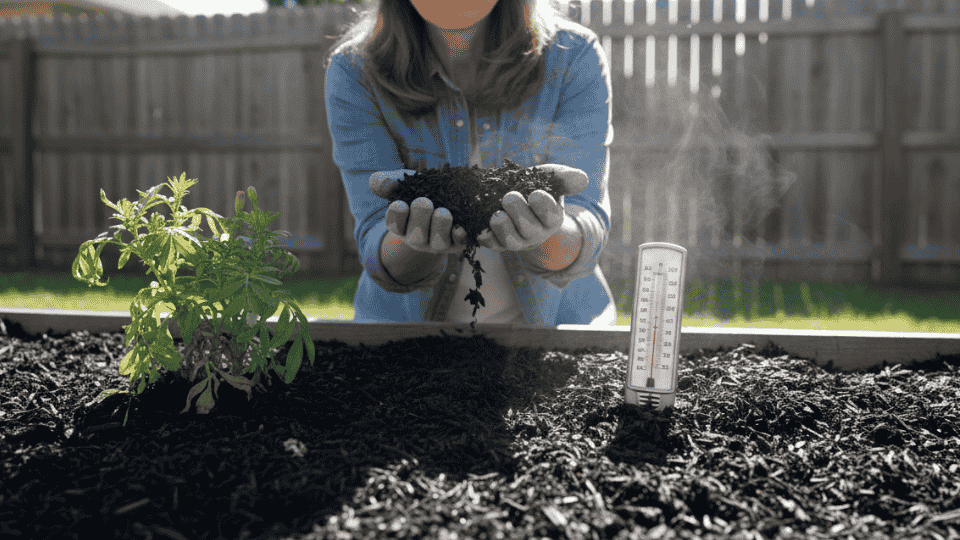
Every product has downsides, and rubber mulch is no exception. Here are the main concerns and drawbacks to consider before choosing this material.
1. Higher Upfront Cost
Rubber mulch costs significantly more than wood chips or shredded bark at the time of purchase. The initial investment can be two to three times higher than organic mulch options, which may not fit every budget.
2. No Soil Nutrient Contribution
Since rubber doesn’t break down, it adds nothing beneficial to your soil over time. Organic mulches feed the soil as they decay, improving soil structure and providing nutrients that rubber simply cannot.
3. Potential Chemical Leaching & Contamination
Studies show that rubber mulch can release volatile organic compounds (VOCs) and heavy metals, such as zinc, into the surrounding soil and groundwater. These chemicals come from the original tire materials and can pose environmental and health concerns, especially near edible plants.
4. Heat Absorption & Plant Stress
Rubber mulch absorbs and holds more heat than wood-based options, which can create problems in sunny areas. The hot surface can stress plant roots and raise soil temperatures to levels that harm sensitive plants, particularly during summer months.
5. Fire Hazard Risk
Rubber is more flammable than organic mulch and burns at higher temperatures once ignited. If a fire starts, rubber mulch is harder to extinguish and can produce toxic smoke, making it a safety concern near homes and buildings.
6. Difficult Removal / Replacement
Once rubber mulch mixes with soil and settles into your landscape, removing it completely becomes very challenging. The small pieces work their way down and stick around for years, making it nearly impossible to switch back to organic mulch later.
7. Aesthetic / Natural Landscape Concerns
The synthetic appearance of rubber mulch doesn’t blend well with natural garden designs that many homeowners prefer. It can look artificial and out of place, especially in traditional or cottage-style landscapes where organic materials create a more authentic feel.
8. Limited Plant-Bed Use
Experts do not recommend using rubber mulch near vegetable gardens or other food-producing plants because of the risk of chemical leaching. Delicate ornamental plants may also suffer from the heat retention and lack of organic matter that natural mulches provide.
Rubber Mulch vs Other Mulches
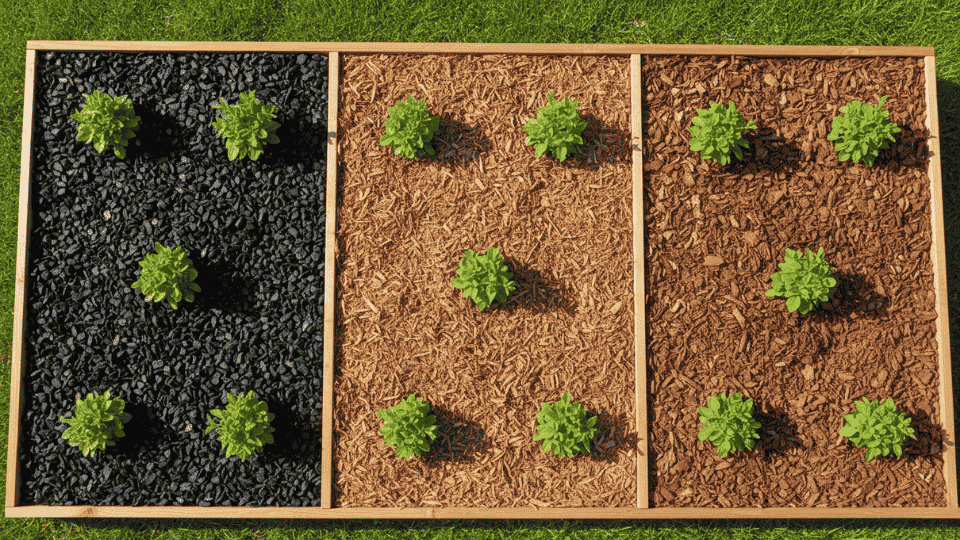
Comparing rubber mulch to other options helps you make an informed choice. Here’s how rubber stacks up against the most common mulch types.
Rubber Mulch vs Wood Mulch
| Factor | Rubber Mulch | Wood Mulch |
|---|---|---|
| Lifespan | 10+ years | 1-3 years |
| Soil Benefits | None | Adds nutrients |
| Upfront Cost | $5-8 per bag | $2-4 per bag |
| Pest Resistance | Termite-proof | Attracts pests |
| Aesthetics | Synthetic look | Natural appearance |
Rubber Mulch vs Other Popular Mulches
| Mulch Type | Pros | Cons |
|---|---|---|
| Bark Chips | Natural, feeds soil, cheaper upfront | Needs replacement every 2-3 years |
| Compost Mulch | Excellent soil health adds nutrients | Breaks down in 6-12 months |
| Stone/Gravel | Long-lasting, natural look | Heavier, retains more heat |
How to Install Rubber Mulch?
Installing rubber mulch correctly ensures it performs well and looks good in your landscape. Follow these simple steps to get the best results.
Step 1: Prepare the Area
Clear the installation area of existing mulch, weeds, rocks, and debris. Level the ground and remove any plants or grass that might grow through the rubber layer.
Step 2: Install Landscape Fabric
Lay down landscape fabric or weed barrier over the prepared soil surface. This prevents weeds from growing up through the mulch and keeps the rubber from mixing with the soil over time.
Step 3: Calculate Coverage Needed
Measure your area and plan for a depth of 2-3 inches for general landscaping or 6 inches for playground safety. One cubic foot of rubber mulch typically covers about 12 square feet at a depth of 1 inch.
Step 4: Spread the Rubber Mulch
Pour the rubber mulch over the landscape fabric and spread it evenly using a rake or shovel. Work in sections to maintain consistent depth and avoid overfilling any spots.
Step 5: Level and Finish
Rake the surface smooth to create an even appearance and proper depth throughout. Check for thin spots and add more material where needed to maintain uniform coverage.
Where Rubber Mulch Works Best?
Rubber mulch performs best in playgrounds and play areas where fall protection is important.
It also works well in high-traffic pathways, commercial landscapes, and areas with steep slopes where erosion is a concern.
The material is suitable for climates with heavy rain or strong winds because it stays in place better than lightweight organic options.
However, avoid using it near vegetable gardens, edible plants, or areas where you want to improve soil quality over time.
The Bottom Line
So, is rubber mulch good? It depends on your needs.
This material offers serious durability and low maintenance, making it great for playgrounds and high-traffic areas.
But the chemical concerns, heat retention, and lack of soil benefits mean it’s not right for every situation. Wood mulch still wins for garden beds and vegetable gardens.
Take time to weigh the pros and cons based on where you plan to use it. Think about your budget, landscape goals, and whether you prioritize longevity or soil health.
What works for a commercial playground might not suit your backyard flower beds. Have questions or experiences with rubber mulch? Drop a comment below and share your thoughts.