You’ve been calling it a vegetable your whole life, and honestly, so has everyone else. But the moment science enters the conversation, things get a little more interesting.
Cucumbers are actually fruit, and no, that’s not a mistake.
Botanically speaking, anything that grows from a flower and carries seeds qualifies as a fruit, which puts cucumbers firmly in that category.
Culinary traditions just never got the memo, so here we are, slicing “vegetables” into our salads that were fruit all along.
What Makes Something a Fruit in Botany?
Botany doesn’t care much about how something tastes or how we use it in cooking. In scientific terms, a fruit is the mature ovary of a flowering plant, and its entire purpose is to protect and carry seeds.
After a flower gets pollinated, its ovary wall develops into what we recognize as the fleshy part surrounding those seeds.
That seed-bearing structure is, by definition, a fruit.
This is exactly why tomatoes, bell peppers, and zucchini all qualify as fruits botanically, even though your dinner plate has always told you otherwise.
Why Cucumbers are Botanically a Fruit?
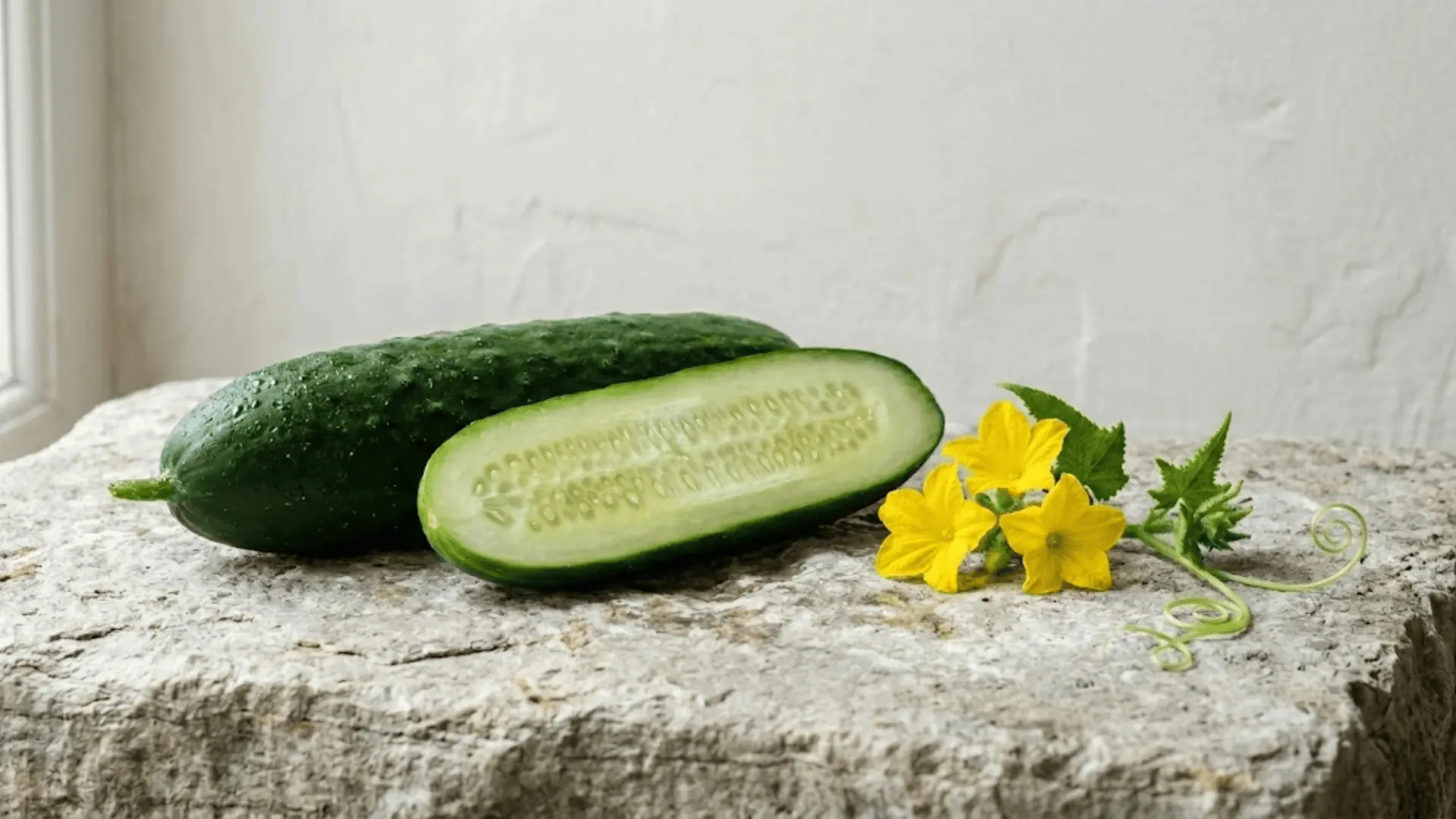
The cucumber plant produces a small yellow flower, and once that flower gets pollinated, the ovary at its base begins to develop into what we eventually harvest.
That process right there is exactly how every botanical fruit comes to exist.
The Cucumber follows this same path without exception. It grows directly from the flower, its flesh develops from the ovary wall, and nestled inside are seeds, the clearest biological signal that what you’re holding is a fruit.
Structure, origin, and seed content all point to the same conclusion: cucumbers check every botanical box.
Why Cucumbers are Treated Like Vegetables in Cooking?
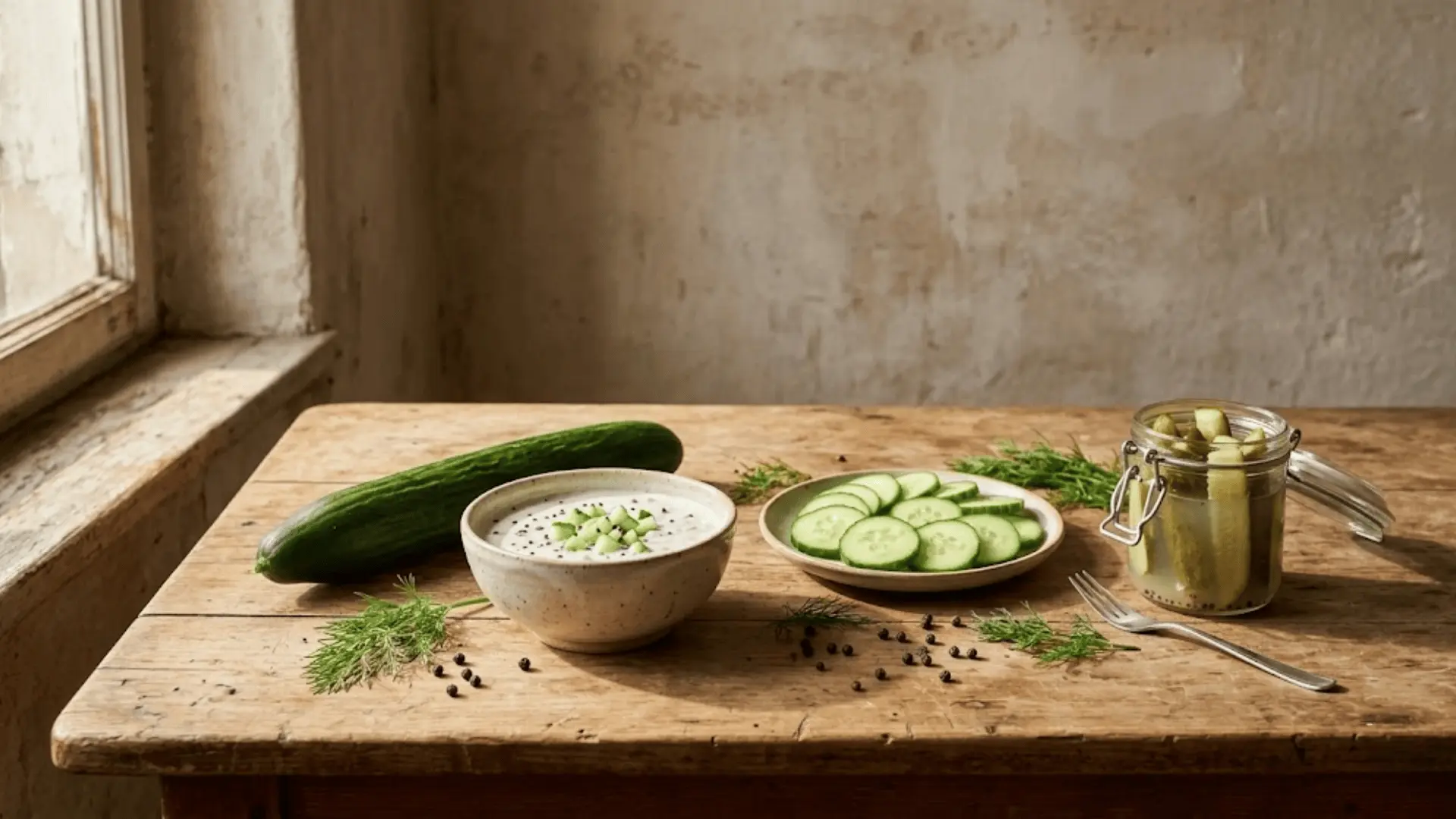
Botany and the kitchen have never quite agreed on this one, and cucumbers are the perfect example of why. Science classifies by structure, but cooking classifies by flavor and use.
- Cucumbers have a mild, watery taste with zero sweetness, which puts them firmly in savory territory.
- They show up in salads, raitas, pickles, and sandwiches, rarely anywhere near a dessert menu.
- Across cultures, from Indian chutneys to Mediterranean mezze, cucumbers have always been treated as a savory ingredient.
- Unlike sweet fruits such as mangoes or berries, cucumbers don’t carry the sugar content that defines “fruit” in a culinary sense.
So while the botanical label says fruit, the kitchen never got on board, and honestly, it probably never will.
Fruit vs. Vegetable: What’s the Real Difference?
The confusion between fruits and vegetables isn’t just casual kitchen talk; it goes deeper into how science and culture define food differently.
Here’s where the two perspectives actually split.
Botanical Classification
In botany, a fruit is specifically the mature ovary of a flowering plant that develops after pollination and contains seeds. This definition is purely structural. It doesn’t factor in taste, texture, or how we cook something.
Under this lens, cucumbers, tomatoes, and even sunflower seeds qualify as fruits because the classification is built entirely around plant biology and reproduction.
Culinary Classification
Cooking sorts produce by flavor and function, not biology. If something is sweet and eaten as a snack or dessert, it’s a fruit. If it’s savory and built into a main meal, it’s a vegetable.
This is why cucumbers, despite being botanical fruits, land in the vegetable category at every grocery store and in every recipe. Culinary tradition is shaped by taste, not taxonomy.
Nutritional Perspective
Nutritionally, the fruit versus vegetable debate matters less than people think. Cucumbers are low in calories, high in water content, and carry a decent amount of vitamin K, potassium, and antioxidants.
Either way, cucumbers offer real nutritional value with very little dietary cost, making them one of the more effortless additions to any balanced diet.
Are Pickles Fruit, Too?
Technically, yes, at least at the starting point. Pickles are made from cucumbers, and since cucumbers are botanically a fruit, pickles do originate from fruit.
But the moment a cucumber goes into a brine of vinegar, salt, and spices, its classification gets a little murky.
Processed foods are generally categorized by their final form and ingredients, not their botanical origin.
So while the raw cucumber it came from was a fruit, a pickle sitting in a jar is simply considered a preserved food, one that has traveled far from its botanical roots.
The Supreme Court Case That Confused Everyone
In 1893, the U.S. Supreme Court settled Nix v. Hedden by ruling that tomatoes should be classified as vegetables for tariff purposes, not fruits.
The court acknowledged the botanical definition but sided with common culinary usage because trade and taxation needed practical language, not scientific terminology.
This ruling perfectly captures why the debate still lingers today.
Legal definitions relate to commerce, scientific definitions relate to biology, and the two rarely meet in the middle. One court case from the 1800s still manages to complicate how people think about fruits and vegetables.
Is Cucumber a Berry?
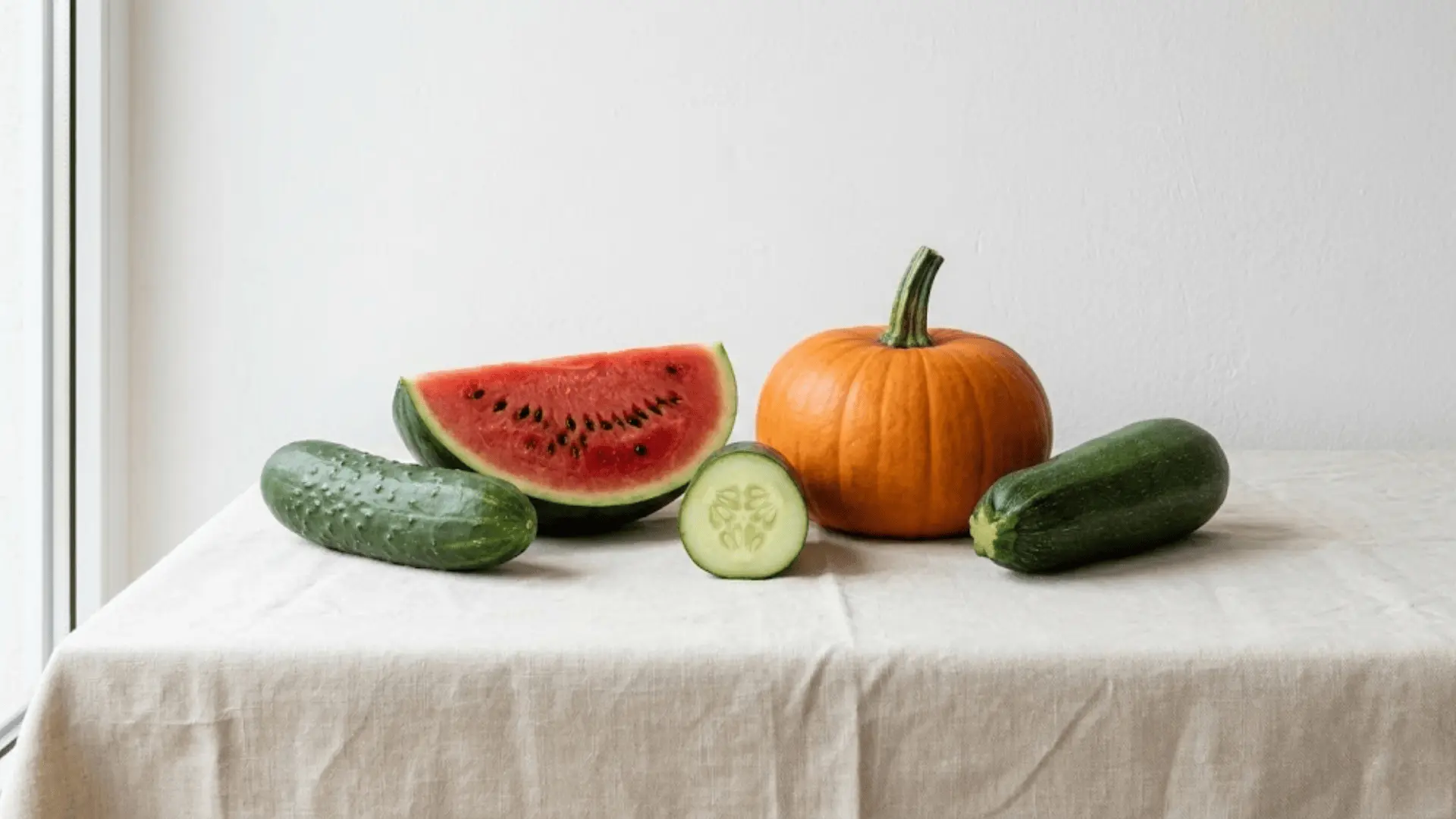
Believe it or not, botany takes this even further. A berry, in botanical terms, is a fleshy fruit that develops from a single flower with one ovary and typically carries seeds on the inside.
Cucumbers meet every one of those criteria.
More specifically, cucumbers are classified as a pepo, a subtype of berry characterized by a hard outer rind and fleshy interior, a structure common across the Cucurbitaceae family.
This is the same plant family that includes watermelons, pumpkins, and zucchini, all of which are technically berries too.
The deeper botany goes, the more it upends everything.
Nutritional Profile of Cucumbers
Most people know cucumbers are “healthy,” but the more interesting conversation is around why each nutrient does what it does specifically in cucumbers, given their unique composition.
Here’s what actually makes the breakdown worth paying attention to.
| Nutrient | Amount (per 100g) |
Primary Benefit | What Makes It Unique |
|---|---|---|---|
| Water Content | 95% | Hydration | More hydrating per bite than most sports drinks, minus the sugar |
| Vitamin K | 16.4 mcg | Bone & blood health | Rare in raw vegetables; no cooking needed to unlock absorption |
| Cucurbitacins | Trace amounts | Anti-inflammatory | Unique to Cucurbitaceae; currently studied for anticancer potential |
| Silica | 2.1 mg | Connective tissue support | Linked to stronger hair, nails, and joint health |
| Calories | 15 kcal | Weight management | One of the lowest caloric densities of any whole food |
Common Fruits That People Think are Vegetables
Cucumbers aren’t the only ones living a botanical double life. A surprisingly long list of everyday produce sits in the vegetable aisle while science quietly classifies them as fruit.
- Tomatoes are the only fruit in history to have their identity ruled on by the U.S. Supreme Court, declared a vegetable purely for tax purposes in 1893.
- Peppers pack more Vitamin C than oranges, yet centuries of savory cooking kept them permanently out of the fruit conversation.
- Eggplants belong to the nightshade family, and their seeds contain trace amounts of nicotine, something no other common “vegetable” can claim.
- Squash has been cultivated for over 10,000 years, and for most of that history, it was grown primarily for its seeds, not its flesh.
- Avocados were nearly driven to extinction when the ancient megafauna that dispersed their seeds died out, meaning humans quite literally saved them from disappearing.
Once the botanical lens clicks into place, the produce aisle starts to feel like a long-running case of mistaken identity that nobody ever bothered to correct.
Wrapping Up
So, are cucumbers fruit? Botanically, without a doubt.
But somewhere between the science textbook and the salad bowl, cucumbers found a comfortable home in both worlds, and that quiet contradiction is what makes them worth talking about.
They carry seeds, grow from flowers, and meet every botanical criteria, yet taste nothing like what the fruit aisle represents.
The real takeaway is that nature doesn’t always color inside the lines we draw for it.
Drop a comment below, which side do you land on, the botany camp or the kitchen camp?