Basement water problems feel simple at first. You notice moisture, maybe a small puddle, and someone suggests an interior basement drainage system as the fix. It sounds straightforward. But a lot of people misunderstand what it actually does.
Some think it seals the basement. Others assume it keeps water away from the foundation altogether. Neither is quite right.
What this system really does is manage groundwater once it reaches your foundation, and that difference matters. If you don’t understand how water moves around your home, it’s easy to expect the wrong result.
So let me break this apart properly, starting with what the system is and what it is not.
What is an Interior Basement Drainage System?
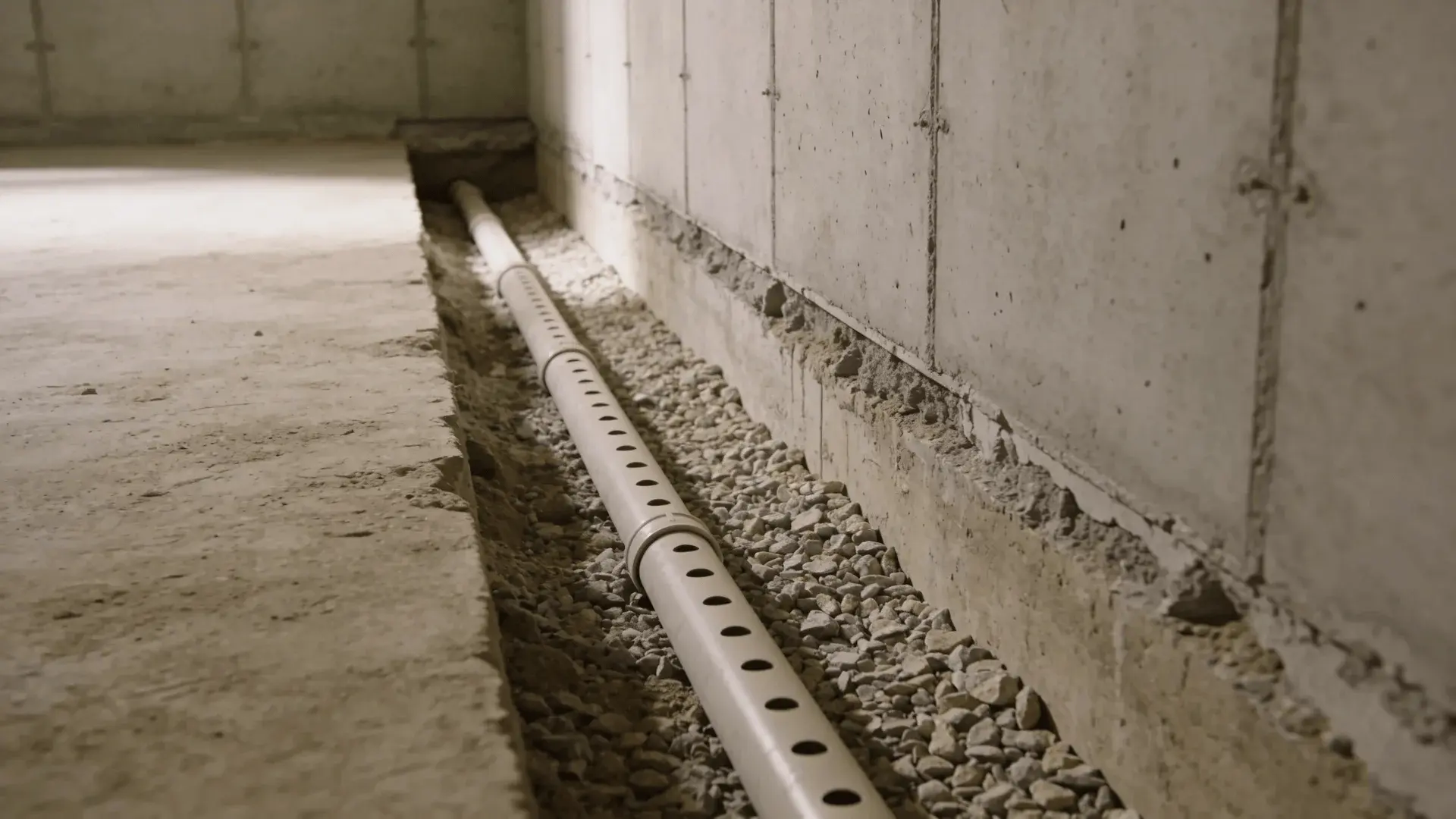
An interior basement drainage system is a water management setup installed inside the basement along the perimeter of the foundation, usually below the floor slab.
It does not block water from touching your foundation walls. Instead, it collects water after it reaches the foundation and redirects it safely to a sump pump, which then pushes it out of the house.
That distinction is critical.
The system typically sits in a trench cut into the concrete floor right along the inside edge of the foundation wall. A perforated pipe runs through gravel inside that trench. When water reaches the base of the wall, it enters the trench instead of pushing into your living space.
The purpose is simple:
- Relieve pressure.
- Capture groundwater.
- Move it away from the basement interior.
It manages water. It does not make your foundation waterproof in the literal sense.
Why Basements Leak: How Hydrostatic Pressure Builds Around Your Foundation
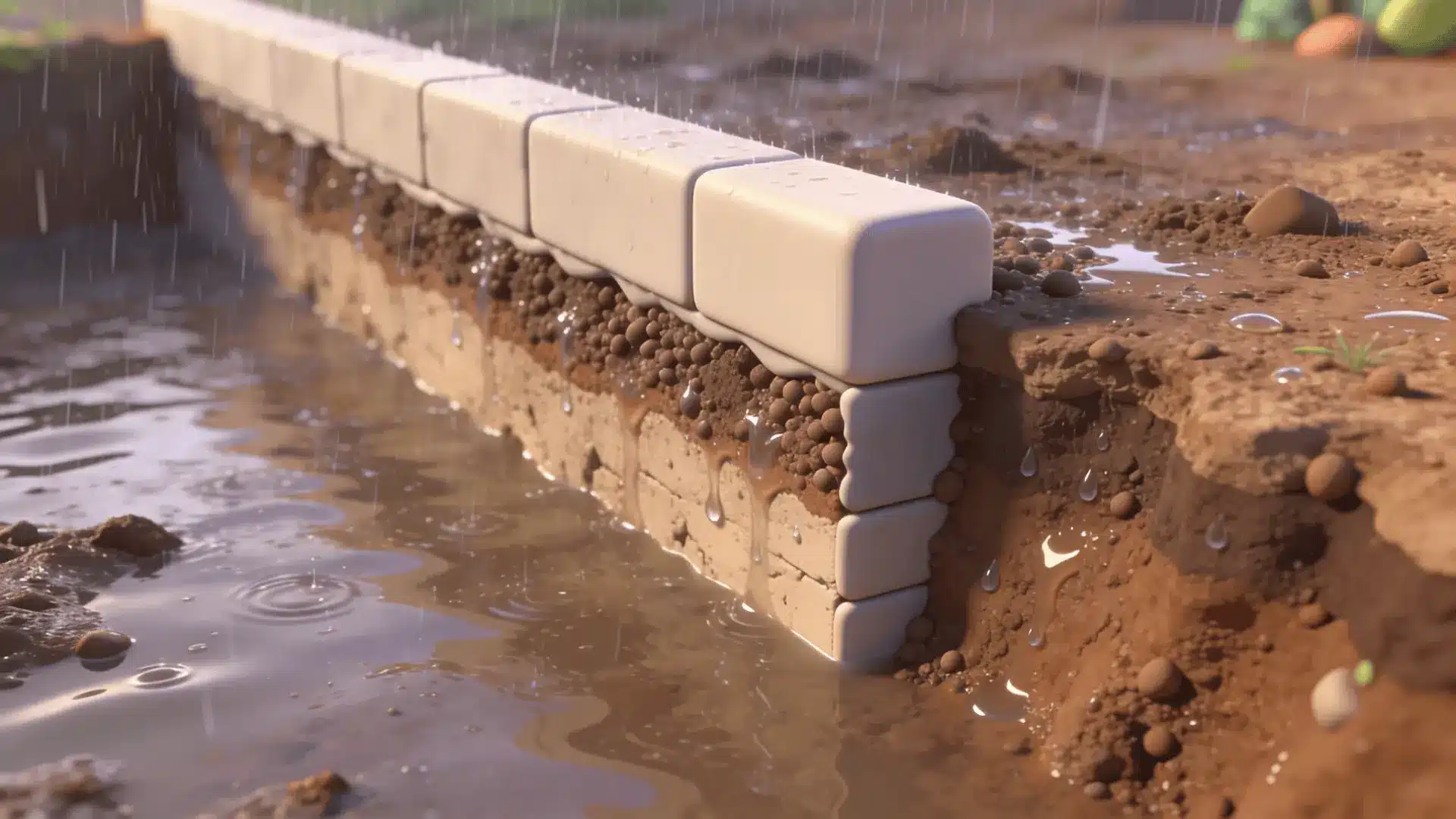
Before you can understand the system, you have to understand the problem underneath it.
When it rains or snow melts, water soaks into the soil around your home, which contains tiny spaces between particles. Once those spaces fill up, the soil becomes saturated, holds water, and that water has weight.
As that weight builds, it presses against your foundation walls. This force is called hydrostatic pressure. It doesn’t appear instantly. It builds gradually as the soil becomes wetter and stays wet.
Here’s where many people get confused. Water doesn’t need a large crack to get in. It looks for the weakest path available.
One of the most vulnerable spots is the cove joint, the seam where the basement wall meets the floor slab. It’s a construction joint, not a single solid pour, so it naturally becomes a weak point over time.
As pressure increases:
- Soil becomes saturated.
- Water pushes laterally against the wall.
- Pressure concentrates at joints and small gaps.
- Water seeps through at the floor-wall intersection.
Some days you see nothing at all. Other days, after steady rain, you notice dampness or even small streams. That’s because hydrostatic pressure isn’t constant. It rises and falls with soil saturation.
A short storm may not build enough pressure to push water inside. A week of heavy rain often does. It may feel random, but it isn’t. It follows basic physics.
How an Interior Drainage System Relieves Hydrostatic Pressure
An interior drainage system works by changing the path of least resistance.
Water always moves toward the easiest exit. If the soil outside your wall is saturated and there is no easier path, it pushes inward through the cove joint.
When a trench is cut along the inside perimeter and filled with gravel and perforated pipe, something important shifts. That trench creates a lower-pressure zone right at slab level.
Gravel contains open spaces between stones, so water flows through it more easily than through dense soil or solid concrete. The perforated pipe inside the gravel provides a direct channel.
Instead of forcing its way through your floor joint, water now sees a simpler option:
- It moves toward the trench.
- It drops into the gravel.
- It enters the perforated pipe.
- It flows to the sump basin.
The sump pump then actively removes that water from the basement and discharges it outside, away from the foundation. The pump is not optional. It maintains the pressure difference. Without it, water would collect in the basin and eventually equalize again.
Here’s the important contrast.
Without a drainage system, pressure builds until water pushes inward. With a drainage system, pressure is relieved at the lowest point before it reaches your living space.
If the sump pump loses power during heavy rain, the system becomes passive. Water can fill the basin, and if it rises high enough, seepage can return. The system depends on active discharge during high-volume events. Pressure relief is an ongoing process, not a one-time event.
Core Components and What Each One Actually Does
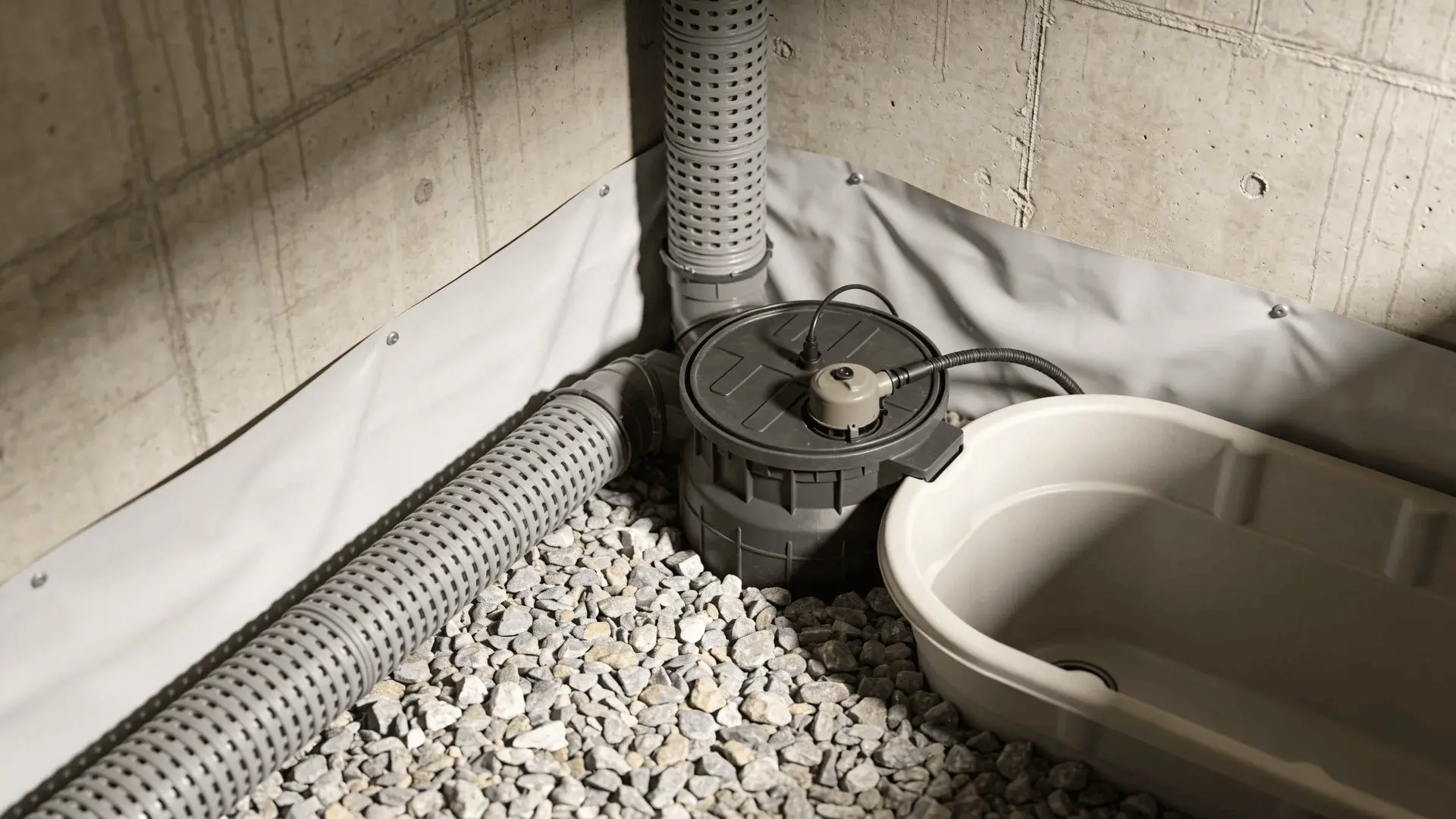
Each part of the system has a specific job. If one piece fails or is missing, the whole pressure-relief process weakens.
1. Perimeter Drain Pipe and Gravel Bed
The gravel bed is not filler. It creates a highly permeable zone where water can move quickly. Water travels through gravel far more easily than through compacted soil.
The perforated pipe sitting in that gravel collects the water and directs it toward a single point. The holes in the pipe allow water in while keeping the flow controlled.
If the gravel were missing, water would not move efficiently. If the pipe were solid, water would pool instead of flowing.
Together, they create a controlled collection path that relieves pressure at the base of the wall.
2. Sump Basin and Pump (Including Power Failure Risk)
The sump basin is the collection chamber where water from the perimeter pipe drains.
The pump sits inside the basin. When the water level rises to a set height, the pump activates and pushes water outside. This is the engine of the system.
If the pump fails, the trench can still collect water, but it cannot remove it. During mild conditions that may not cause visible problems. During heavy rainfall, it can.
The core point is simple: the pump maintains movement. Without movement, pressure can rebuild.
3. Wall Membrane or Flow Channel
Some systems include a wall membrane or dimpled board. This guides moisture that seeps through porous concrete down into the trench.
Concrete is not fully waterproof. It can allow slow moisture transmission over time.
The membrane does not block water. It directs it downward so it enters the drainage channel instead of evaporating into the basement air. That helps reduce humidity and keeps wall surfaces drier.
Types of Interior Drainage Systems and How Depth Changes Performance
Not all interior systems sit at the same depth, and that difference affects performance.
1. Subfloor (Footing-Level) Systems
These systems are installed below the slab, often near the top of the footing.
Because they sit lower, they intercept water closer to where pressure builds. That allows earlier pressure relief before seepage becomes visible.
They are generally more effective for consistent groundwater problems, especially in areas with frequent soil saturation.
2. Baseboard or Surface Systems
These systems sit on top of the slab along the wall edge.
They are sometimes easier to install in finished basements. However, they intercept water after it has already emerged at the wall-floor joint.
They manage visible seepage but do not relieve pressure as deeply as footing-level systems.
So the whole thing comes down to depth and timing. Deeper systems intercept earlier. Surface systems collect later.
3. Hybrid Systems
Hybrid systems combine a subfloor pipe with a wall channel.
They aim to capture groundwater at slab level while also guiding moisture traveling down the wall surface.
These systems are often used when basements experience both joint seepage and damp walls.
Performance varies with soil type, water table level, and rainfall patterns. Groundwater pressure is not constant, so system behavior can shift between dry seasons and wet seasons.
What Problems This System Solves and What It Cannot Fix
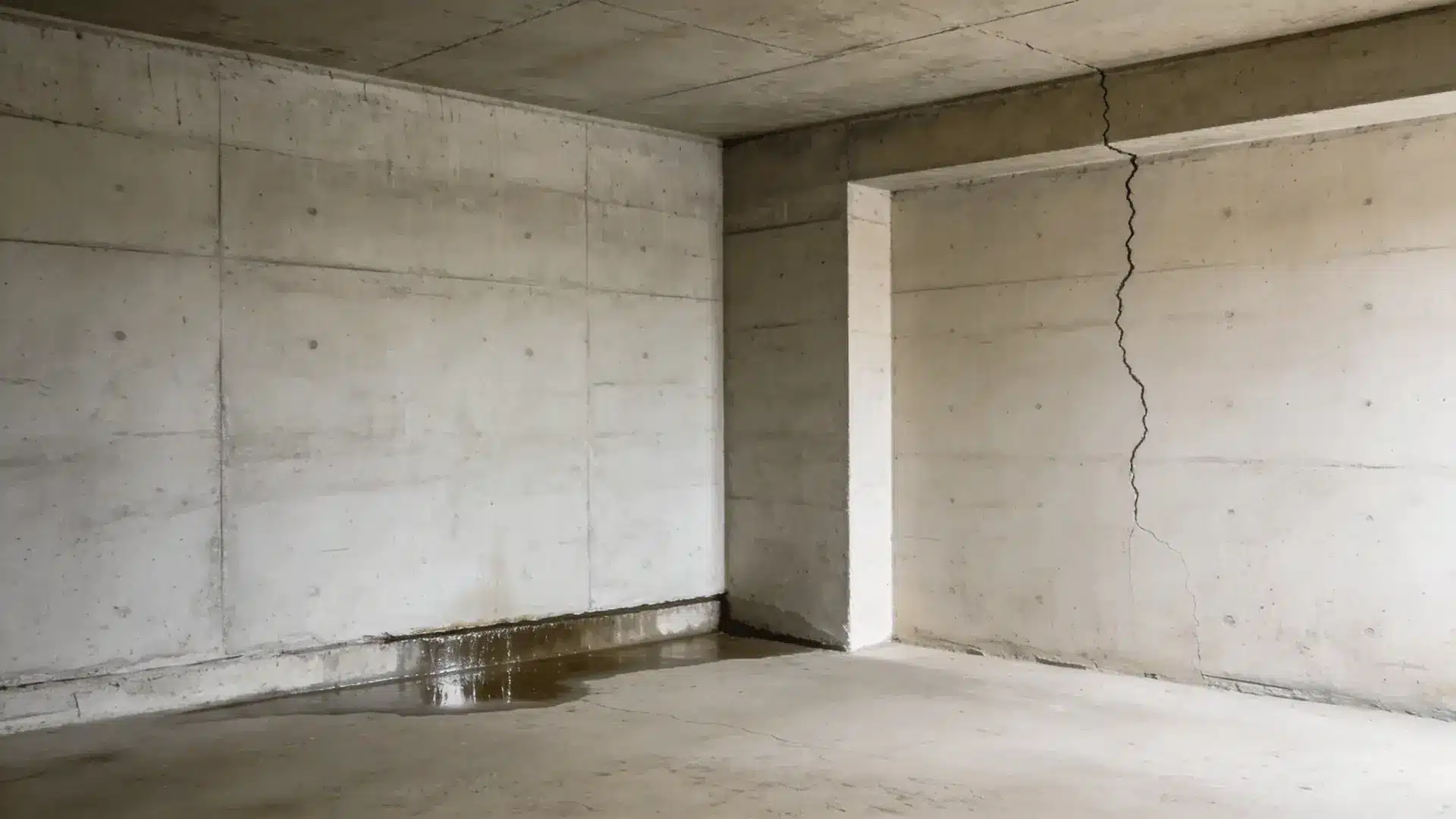
An interior drainage system is strong at solving certain problems.
It is effective for:
- Groundwater seepage at the cove joint
- Water rising through small slab cracks
- Moisture caused by hydrostatic pressure
It does not fix:
- Bowing or structurally cracked walls
- Surface water entering through doors or windows
- Severe grading problems outside
This is where expectations often drift. If your basement floods because water rushes in from an above-grade window during a storm, this system will not stop that. That is a surface entry issue.
If your wall is structurally failing, redirecting groundwater does not repair structural damage. The system manages subsurface water pressure. It does not rebuild foundations or redesign exterior grading.
How Much Does an Interior Basement Drainage System Cost?
Cost depends mostly on perimeter length and how accessible the basement is.
Typical pricing falls between $40 and $85 per linear foot. For most homes, total costs range from $3,000 to $15,000.
Smaller basements with easy access and unfinished floors tend to fall toward the lower end. Large basements or finished spaces that require careful removal and replacement increase cost.
The system type also matters. A deeper subfloor system usually costs more than a surface channel because of the labor involved in cutting and restoring concrete.
Prices vary by region, soil conditions, and pump selection. The main driver is how much perimeter needs to be opened.
Is an Interior Drainage System the Right Type of Solution for Your Basement?
This comes down to pattern recognition over time. The timing and entry point usually tell you what kind of water problem you’re dealing with.
| Pattern You Notice | Likely Cause |
|---|---|
| Water appears after heavy rain that lasts hours or days | Groundwater pressure building in saturated soil |
| Moisture shows up along the floor-wall joint | Hydrostatic pressure at the cove joint |
| Seepage comes and goes with changing weather | Soil saturation rising and falling |
| Water enters through windows or doors | Surface water intrusion above grade |
| Flooding happens during sudden downpours, not long wet periods | Fast-moving surface runoff |
| Water flows visibly across the floor from one direction | Exterior grading or entry-point issue |
Groundwater issues build gradually as soil saturates. Surface water problems are faster and more directional.
If the problem tracks with rainfall totals and soil saturation patterns, an interior drainage system often aligns with that mechanism. If it follows exterior openings, the source may be above grade.
Wrapping Up
An interior basement drainage system works because it changes how water behaves around your foundation. It doesn’t stop rain, and it doesn’t seal concrete. What it does is manage pressure and give water an easier path than your basement floor.
When you understand that mechanism, expectations become clearer. You stop looking for a magic barrier and start thinking in terms of pressure and flow.
If you suspect groundwater pressure is behind your basement moisture, the next step is to observe patterns after rainfall and confirm where water first appears. Then move on to choosing what fits your situation best.
Frequently Asked Questions
What is hydrostatic pressure in a basement?
Hydrostatic pressure is the force created when saturated soil pushes water against your foundation walls. As soil fills with water, its weight increases and pressure drives moisture through joints and weak points.
Are interior French drains worth it?
They are worth it when the problem is groundwater seepage driven by pressure. They are less effective if the issue is surface flooding or structural wall failure.
What are the signs of poor basement drainage?
Repeated seepage at the floor-wall joint, damp spots after heavy rain, musty odors, and water appearing without visible exterior entry points are common indicators.
How does a sump pump work with the drainage system?
The sump pump collects water from the perimeter drain and actively discharges it outside. It maintains flow and prevents pressure from rebuilding inside the trench.