

Growing carrots looks simple. You drop seeds in the ground and wait. Then nothing comes up. Or the tops look great, but the roots are tiny, forked, or bitter.
That gap between effort and results is why people keep struggling. Most advice lists steps but skips the reasons behind them. That leaves you guessing when things go wrong.
Here, I explain what carrots need, why timing matters, and how early choices shape the roots you pull later. Once you understand how carrots grow underground, the usual problems start to make sense.
Let’s start with the one thing that decides success before a seed even sprouts.
What Carrots Need to Grow Properly From the Start
Carrots are not like leafy crops. Almost everything that matters happens below the soil. If the conditions are wrong early on, no later care can fix it.
Why Loose, Stone-Free Soil Matters More for Carrots than Other Crops
Carrots grow one main taproot straight down. That root pushes through soil instead of branching around obstacles. When it hits resistance, it reacts immediately.
A small stone, compacted patch, or clay clump can stop the root’s forward growth. When that happens, the root bends or splits to get around the obstacle. That shape is permanent.
Leafy crops can tolerate this because the harvest is above ground. Carrots cannot. The plant above the soil may still look healthy, which often hides the problem until harvest.
Soil that feels fine for other vegetables can still be too dense for carrots. They need clear, loose space to grow downward without stress. That’s what produces straight, full-length roots instead of short or twisted ones.
How Soil Texture Directly Shapes the Root Underground
Soil texture controls how hard the root has to work.
- Loose soil: The root tip keeps moving forward. Energy goes into length and even thickness.
- Dense soil: Resistance increases. Energy shifts to survival, causing thickening, bending, or splitting.
This is why carrots grown in sandy or well-worked soil look long and clean, while those in heavy ground stay short and forked.
At this stage, it’s not about nutrition. It’s about physical resistance. Less resistance means less stress, and less stress means better root shape.
When to Plant Carrots and Why Timing Matters
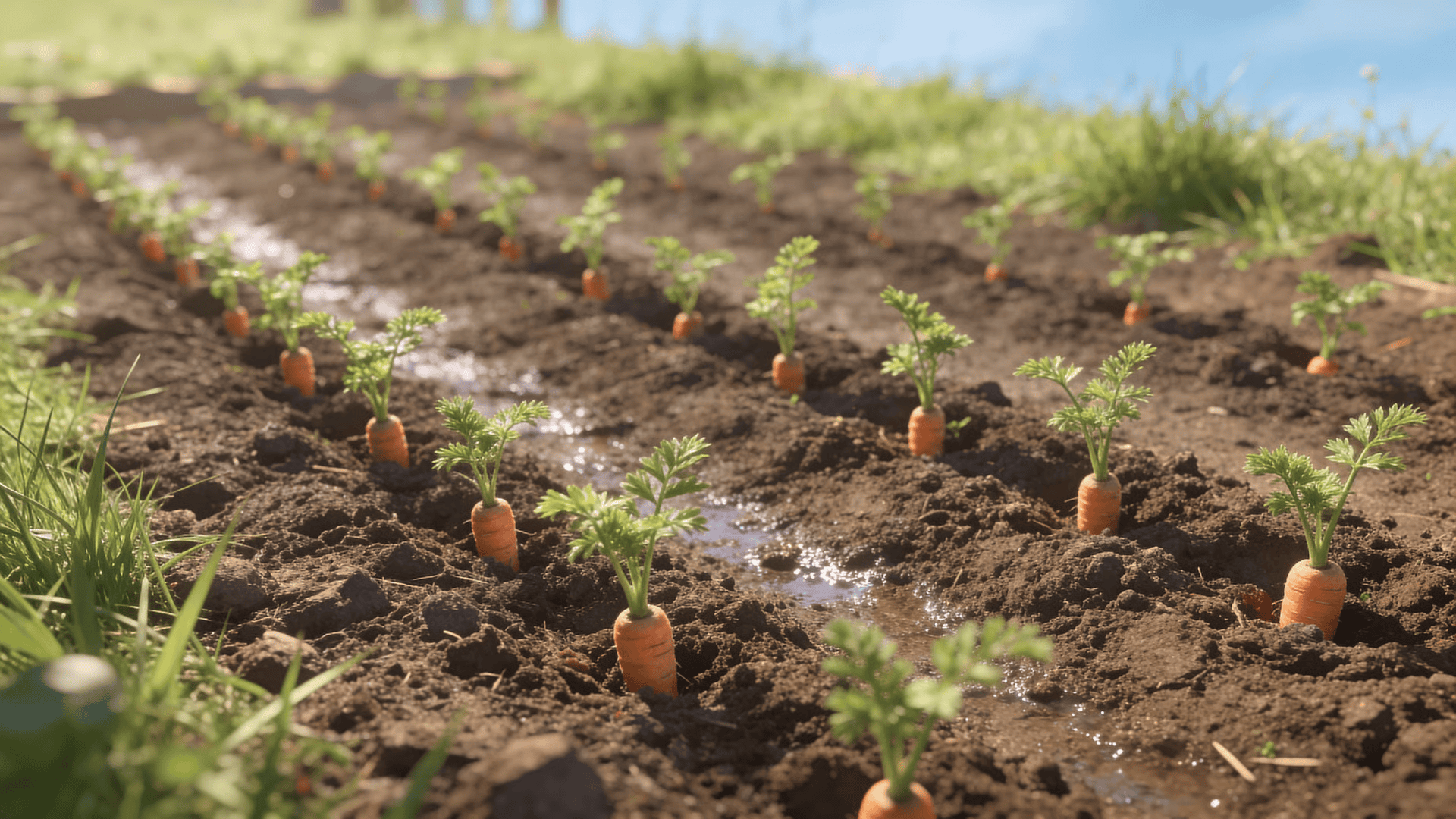
Planting time is not just about avoiding frost. It affects whether seeds sprout evenly at all.
How Soil Temperature Affects Carrot Germination Speed
Carrot seeds are small and carry limited stored energy. They need steady conditions to finish germination, not quick swings.
- Cold soil: Seeds absorb water and begin growing, but progress is slow. Extended cold increases the risk of rot or stalled germination before sprouts reach the surface.
- Hot soil: Moisture evaporates faster than seeds can use it, causing seeds to dry out after sprouting has already started.
- Unstable temperatures: Warm days followed by cold nights interrupt the germination process, leading to patchy rows or uneven emergence.
The seed needs several calm days in a row. One warm afternoon is not enough.
Spring vs. Late-Season Planting Outcomes
Both spring and late-season carrot planting can work, but each has a different failure point.
- Spring planting: Cold nights and rain can crust the soil surface, slowing emergence and trapping weak sprouts below ground.
- Late-season planting: Heat dries the top soil quickly, interrupting germination unless moisture is managed carefully.
- Time to emergence: Cooler conditions require patience, while warmer conditions demand closer attention to moisture.
The method does not change. Only the risk does. Maintain steady moisture and stable soil conditions until sprouts appear, and carrots will do the rest.
How to Plant Carrot Seeds so They Actually Germinate
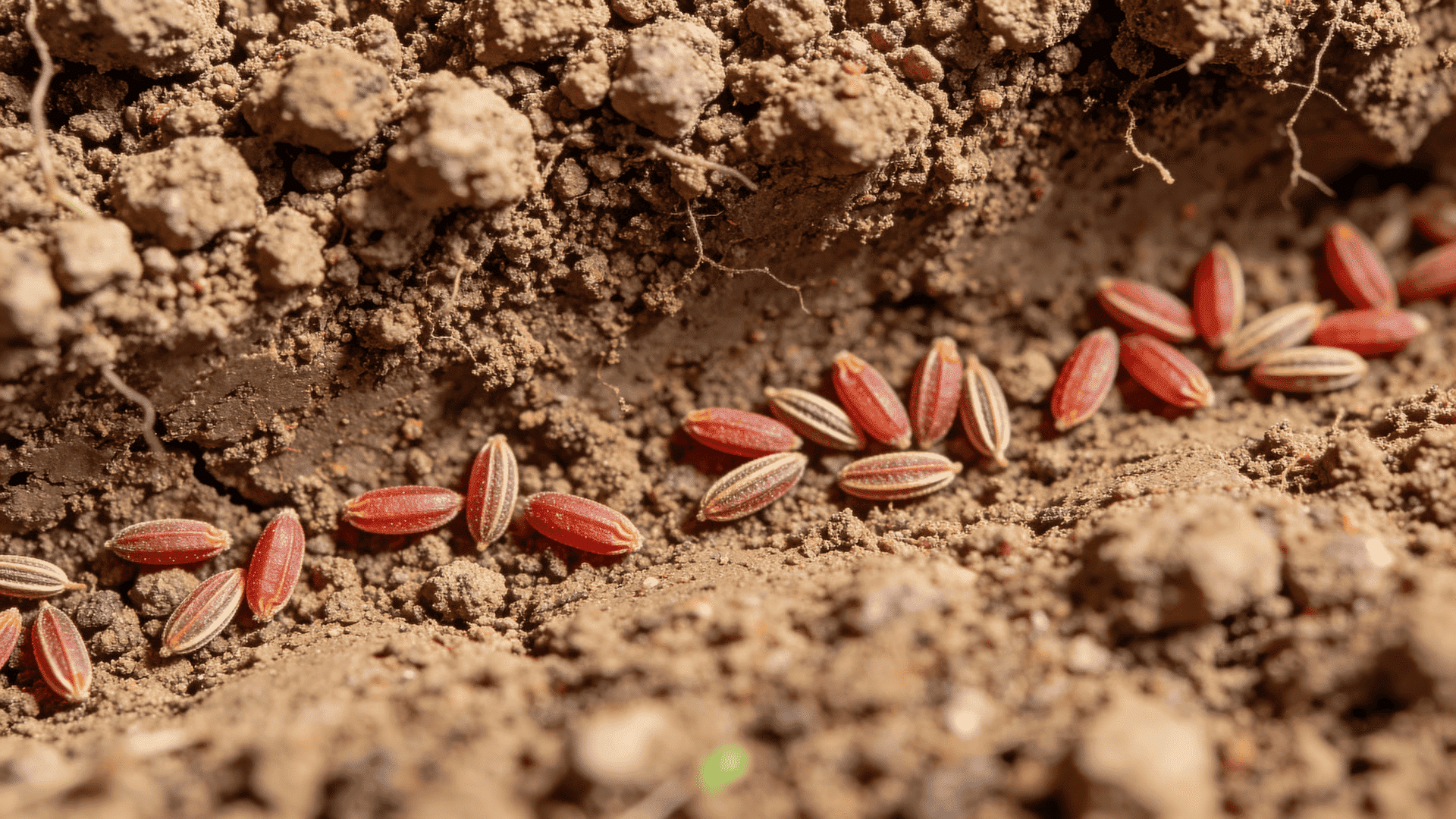
Most carrot failures happen before you ever see green.
Why Carrot Seeds Must Be Planted Shallow
Carrot seeds do not have the strength to push through thick soil. If planted too deep, they run out of energy before reaching light. Even a small extra layer can be enough to stop them.
Shallow planting shortens the distance to the surface. That lowers energy use and speeds up emergence. The tradeoff is exposure. Shallow seeds dry out fast if the surface is not protected.
This balance is why planting depth matters more for carrots than for many other vegetables.
How Consistent Moisture Prevents Germination Failure
Carrot seeds must stay moist from the moment they absorb water until they sprout. If the surface dries even once, the process can stop for good. The seed cannot restart.
This is also why soil crusting is a problem. A hard surface blocks fragile shoots. Even if the seed germinates, the sprout may never break through.
Gentle, even moisture keeps the surface soft and the seed active. It is not about heavy watering. It is about never letting the top layer dry out during those early days.
What Early Care Determines Carrot Shape and Size
Once sprouts appear, the underground race begins.
Young carrot plants compete underground long before you notice it above ground. When roots are crowded, they press against each other. This pressure causes them to grow sideways or split.
Thinning removes that competition early. It gives each root clear space to expand straight down. Waiting too long locks in damage. Even if you thin later, the roots may already be misshapen.
This is why thinning affects quality, not just spacing. It decides whether roots grow clean or distorted.
How Watering Patterns Affect Root Expansion
Carrot roots grow in pulses. They expand most when moisture is steady. When soil swings between dry and wet, the root tissue expands unevenly. This can cause cracking or rough texture later on.
Early stress also limits size. A root that struggles early often stays thin, even if conditions improve. Consistent watering during early growth sets the ceiling for how big and smooth the carrot can become.
How to Maintain Carrots until Harvest without Ruining Them
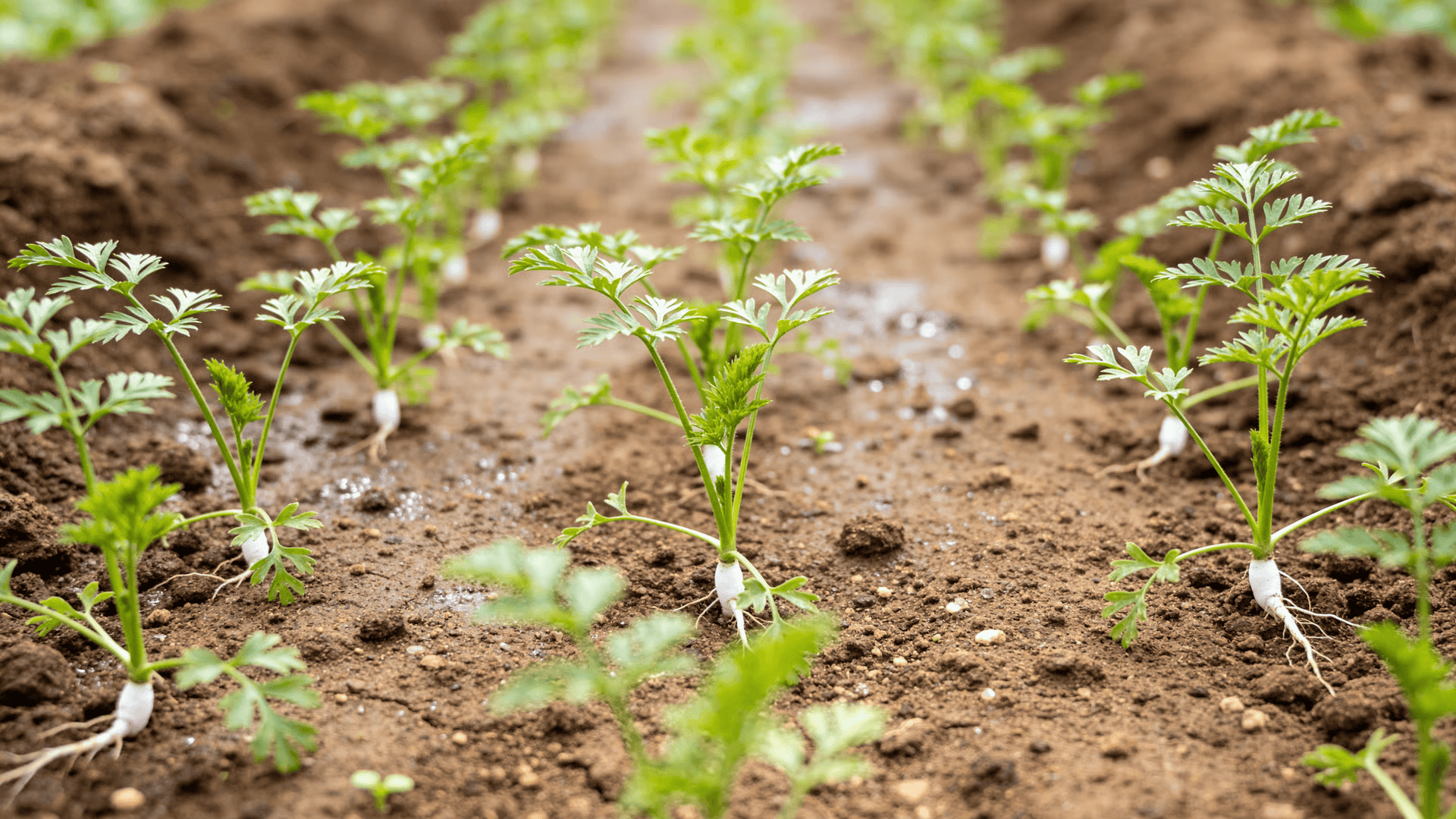
Once carrots are established, problems shift from growth to damage control.
Why Weeds Compete More Aggressively with Carrots
Carrots grow slowly above ground. Weeds grow fast. Their roots steal water and space before carrots can respond. This competition stresses carrot roots even if the leaves look fine.
Because carrot roots are shallow at first, nearby weeds have an advantage. Removing weeds early protects root growth during this sensitive phase. Later, carrots are more resilient, but early pressure leaves lasting effects.
How Inconsistent Watering Damages Mature Roots
As carrots mature, uneven watering leads to quality issues.
- Sudden heavy watering after dry periods causes roots to swell too fast. The outer layers cannot keep up, which leads to cracks.
- Inconsistent moisture also affects taste. Stress shifts how sugars develop in the root. This can lead to harsh or bitter flavors even when size looks good.
Steady care does not mean constant attention. It means avoiding extremes that shock the root late in the season.
When and How to Harvest Carrots for Best Results
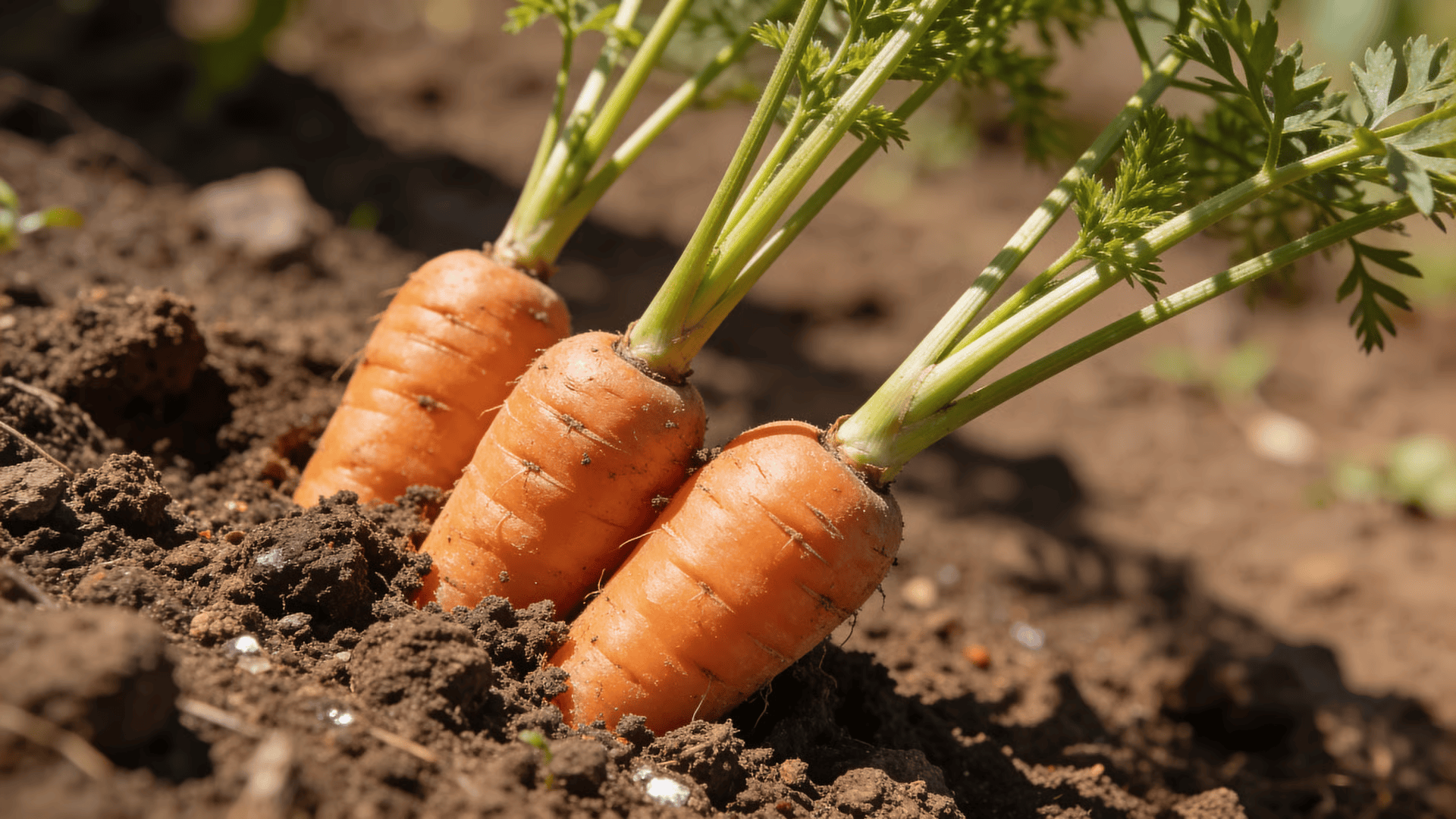
Harvest timing is about readiness, not the calendar.
Visual and Physical Signs Carrots Are Ready
Carrots don’t follow a strict calendar. Read the plant, not the date.
- Shoulder exposure: When the top of the root pushes slightly above the soil and looks full, the carrot is usually mature.
- Thickness at the crown: A well-filled crown signals the root has finished sizing and is ready to harvest.
- Surface texture: Smooth skin points to tenderness, while rough or ridged skin suggests aging.
- Firmness: A firm carrot is in its prime. Softness or a woody feel means quality is already declining.
Gently brushing soil away gives more information than pulling too early.
What Happens If Carrots Stay in the Ground Too Long
Carrots change focus as they age. Quality shifts before failure is visible.
- Fiber buildup: The root thickens internal fibers, which reduces tenderness.
- Sugar loss: Sweetness drops as energy shifts from storage to survival explaination.
- Texture change: Flesh turns coarse even though size continues to increase.
- Cold influence: Cool temperatures slow aging but do not reverse it.
Harvest timing is the last control point. Pulling carrots at the right moment protects flavor, texture, and overall quality.
Wrapping Up
Learning how to grow carrots comes down to understanding what happens underground. The root responds to resistance, crowding, temperature, and water long before problems show above the soil.
When you match your care to those responses, results improve fast. Straight roots come from loose soil. Even sprouting comes from steady moisture. Good flavor comes from calm growth, not rushed or stressed plants.
If your past attempts failed, it was not bad luck. It was a mismatch between what carrots needed and what they got. Start with the soil, stay patient early, and pay attention to changes over time. That alone puts you on the right track the next time you plant.