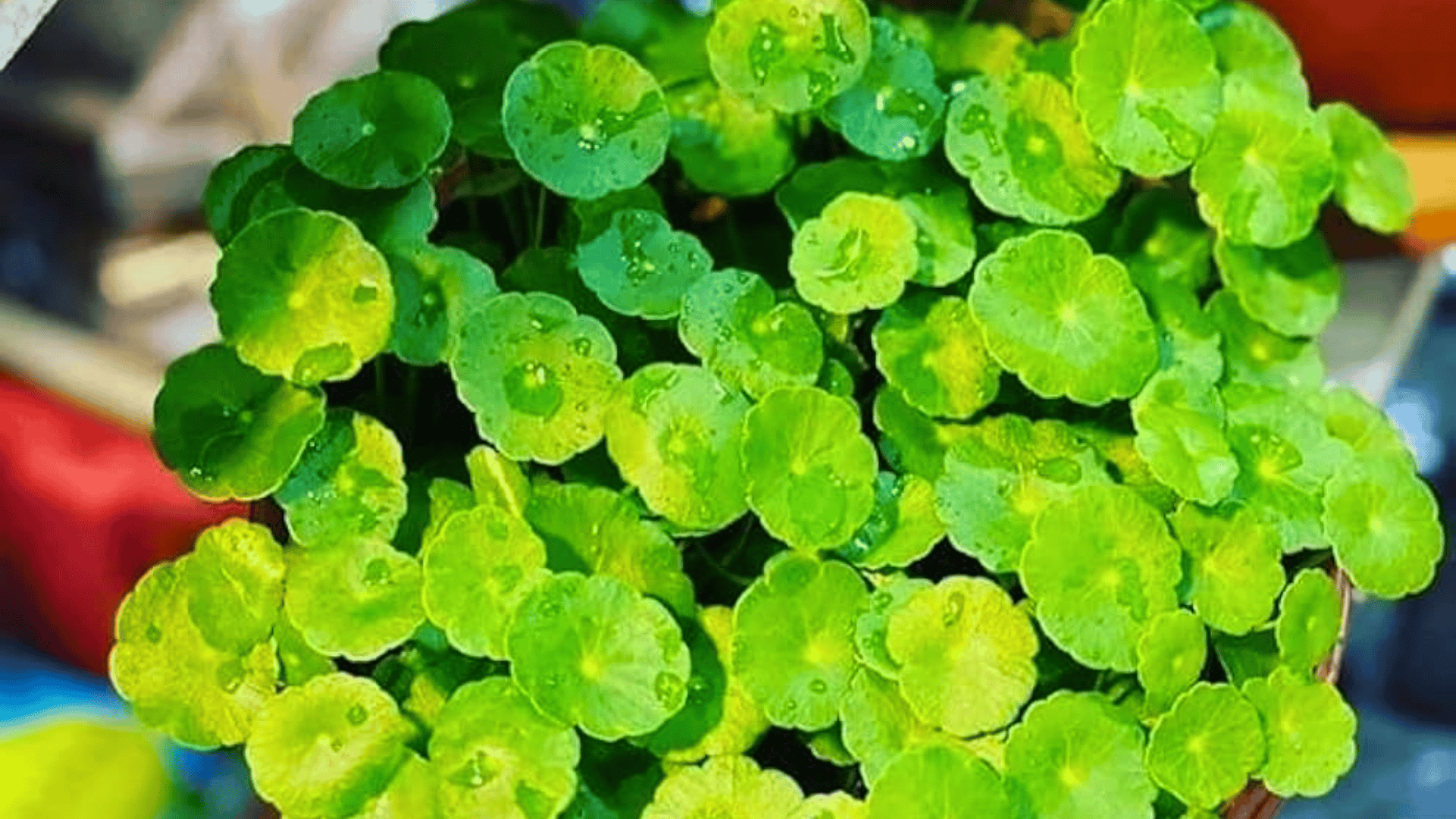
The Chinese money plant looks simple at first glance. That’s why it catches people off guard when it starts leaning, dropping leaves, or stalling without an obvious reason.
This guide walks you through caring for a Chinese money plant by paying attention to how it behaves over time indoors, rather than following strict routines.
You’ll see how light, water, and setup quietly shape its growth, and how small adjustments make a bigger difference than constant fixes. Everything starts with what this plant actually is.
Chinese money plant care focuses on bright, indirect light, well-draining soil, and watering only after the soil partially dries. The plant prefers stable indoor temperatures, moderate humidity, and minimal feeding during active growth. Most issues come from excess moisture, low light, or sudden environmental changes.
Chinese Money Plant Overview
Below is a quick reference overview of the Chinese money plant, covering its basic identity, growth habits, and why it’s so commonly kept indoors:
| Category | Details |
|---|---|
| Common name | Chinese money plant |
| Botanical name | Pilea peperomioides |
| Other names | Pancake plant, UFO plant, friendship plant |
| Plant type | Herbaceous perennial houseplant |
| Origin | Southern China |
| Notable features | Round, flat, coin-shaped leaves on long stems |
| Typical size | Compact; usually 8–12 inches tall indoors |
| Growth habit | Upright with outward-facing leaves; leans toward light |
| Indoor suitability | Very well suited to indoor environments |
| Care difficulty | Moderate; forgiving but sensitive to light and watering mistakes |
| Popularity reason | Modern appearance, compact size, easy propagation |
| Propagation method | Offshoots (“pups”) that grow from the base or roots |
| Best use | Desks, shelves, windowsills, small indoor spaces |
Ideal Growing Conditions for a Chinese Money Plant
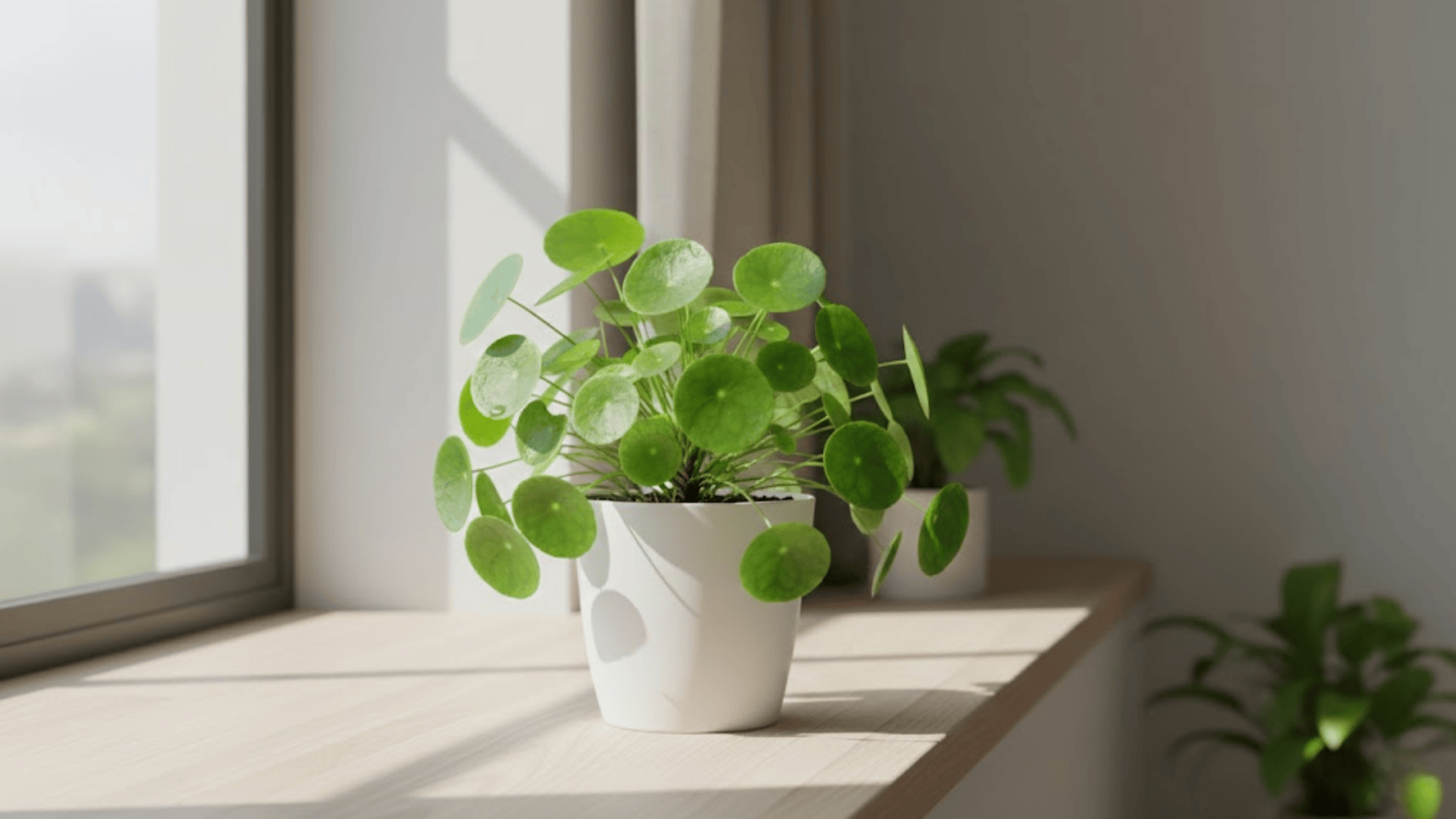
Before worrying about watering schedules or fertilizer, you need to get the environment right. This is the foundation of how to care for a Chinese money plant in a way that actually works long term.
Light, temperature, and air conditions influence how the plant uses water and energy. When these basics are off, care tends to fail no matter how careful you are.
1. Light Requirements
“Bright, indirect light” gets repeated so often that it stops meaning anything. What it really means is strong light that doesn’t sit directly on the leaves for long periods.
An east-facing window is usually the easiest setup. The morning light is bright but gentle. West-facing windows can work too, as long as the plant isn’t pressed right up against the glass.
South-facing windows are fine when the light is filtered or when the plant sits slightly off to the side instead of directly in the sun.
When the light is too strong, the plant tells you. Leaves can fade, scorch, or get dry, crispy patches. When the light is too weak, the response looks different. Stems stretch. Leaves stay smaller. The whole plant starts leaning hard in one direction.
That leaning isn’t a flaw. It’s the plant doing exactly what it’s supposed to do when it’s searching for light.
2. Temperature and Air Conditions
Chinese money plants are comfortable at normal indoor temperatures. Somewhere between 60 and 80°F keeps things steady. What they don’t like is sudden change.
Cold drafts from windows or doors can slow growth and stress the leaves. Heat blasting from vents dries the plant out faster than most people realize. In winter, growth slows down naturally. Shorter days and cooler air signal the plant to ease up. That’s normal.
What helps is simple. Keep it away from cold glass at night. Don’t park it right next to the heaters. Stability matters more than hitting a perfect number.
3. Humidity Needs
For most homes, humidity isn’t a big issue. You don’t need to mist this plant to keep it happy, and misting usually doesn’t change much anyway.
Low humidity shows up in specific ways. Leaf edges turn brown. The tips feel dry or brittle.
When that happens, spraying the leaves isn’t the best fix. Raising the humidity in the room works better. A small humidifier nearby helps. Grouping plants together can help too.
One thing to watch out for is wet leaves sitting still. Moisture without airflow creates other problems. So whatever you do, keep the air moving.
How to Water a Chinese Money Plant Properly Indoors
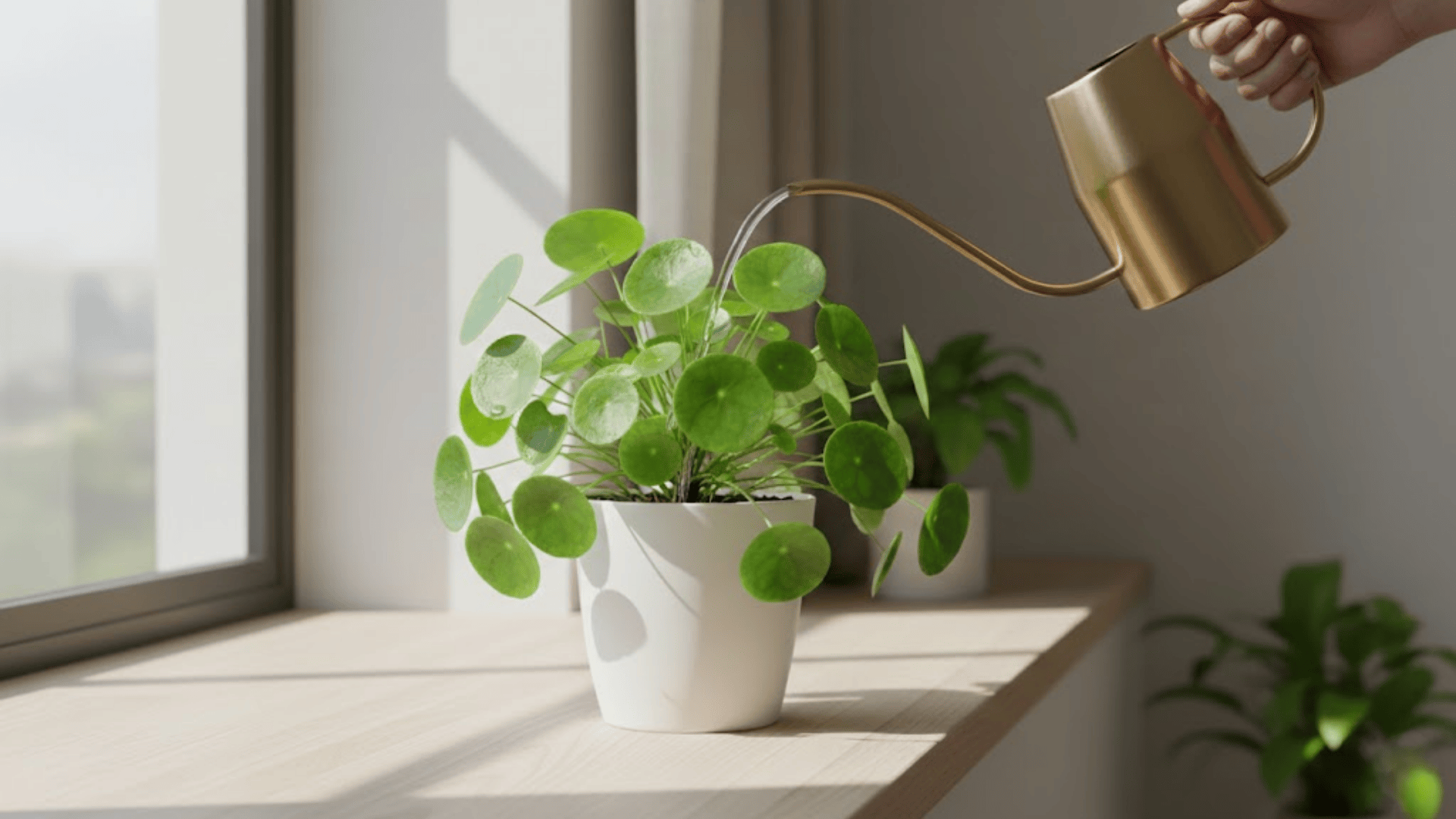
Watering causes more trouble than anything else in Chinese money plant care, not because it’s complicated, but because advice is often followed without context.
The same patterns show up with many indoor houseplants that need careful watering, especially those that store or regulate moisture in their roots.
How Often to Water
In warmer months, watering often lands around once a week. In cooler months, it stretches closer to every two weeks . Those are loose ranges, not rules.
The soil should dry out partway before watering again. A simple check helps. Stick a finger into the soil. If the top few inches feel dry, it is usually time.
Signs the plant needs water include slightly drooping leaves and softer stems. Signs of overwatering include yellow leaves, mushy stems, and soil that stays wet for days.
Best Watering Method
Top watering works well. Water slowly until it runs out of the drainage holes. This flushes salts and ensures the root ball gets evenly moist.
Soaking from the bottom can work, but it should not replace regular top watering. Drainage matters more than technique. If water cannot escape, roots sit in wet soil and start to fail.
Best Soil and Pot Setup
If a Chinese money plant keeps struggling even though light and watering seem right, the problem is often below the surface.
Roots control how the plant takes in water and air. When they’re stressed, everything above them starts to look off, even if you’re doing most things correctly.
Soil Type
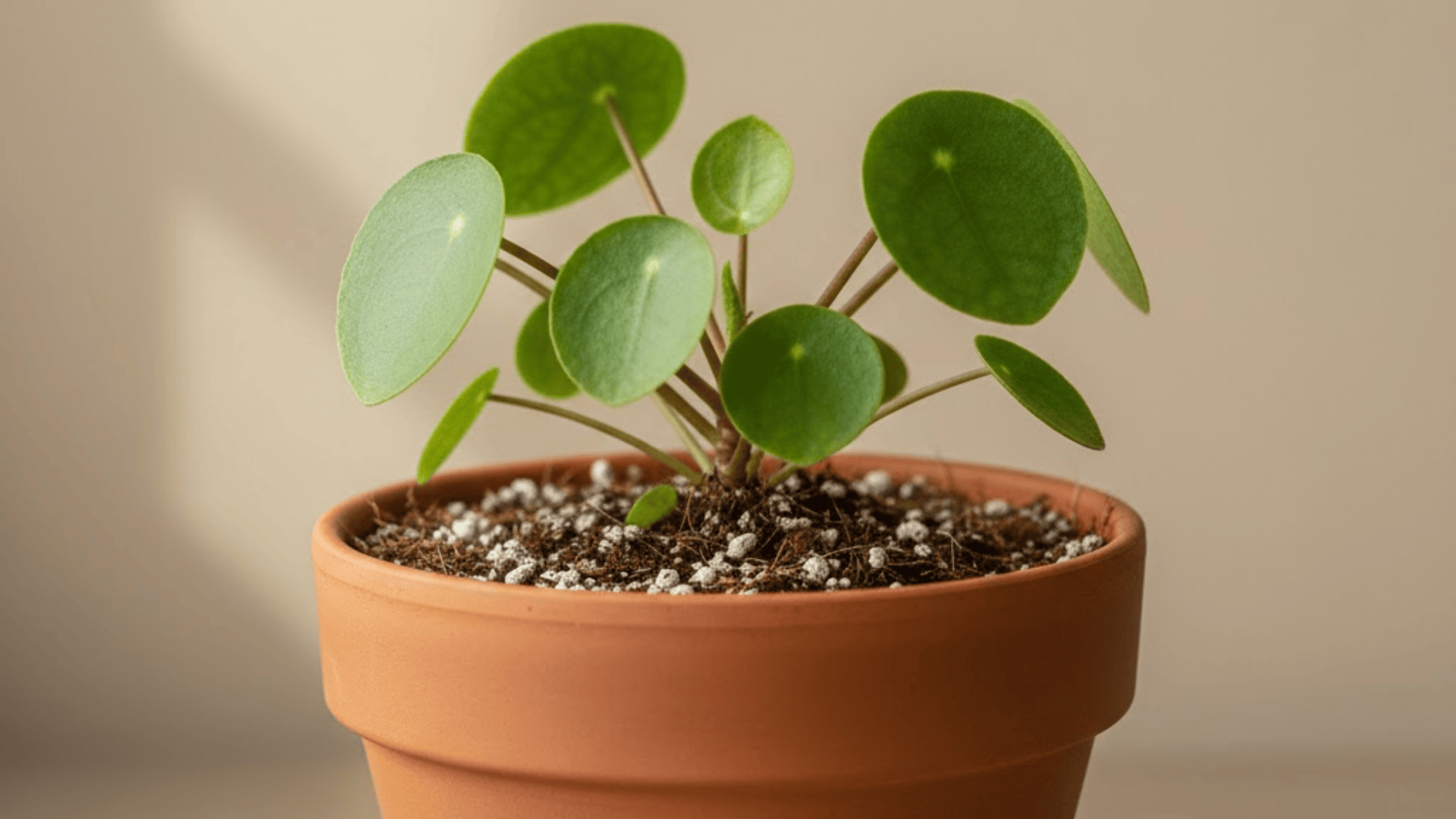
This plant needs soil that drains easily and doesn’t stay heavy after watering. Dense mixes hold water too long. When that happens, roots sit in wet soil without enough air, and they slowly begin to fail.
A simple potting mix works well when it’s loosened with something coarse, like perlite.
What matters is structure. You want small air spaces throughout the soil so water can move through and oxygen can reach the roots. Moisture without airflow is what causes most root problems, not water itself.
Pot Choice
Drainage holes matter more than almost anything else in the setup. Without them, extra water has nowhere to go. Even careful watering turns risky when moisture can’t escape the pot.
Pot size should stay close to the size of the root ball. A pot that’s too large holds water the roots can’t use yet, which keeps the soil wet longer than it should be.
Being slightly rootbound is not a problem for this plant. In fact, it often helps regulate moisture and leads to steadier, more predictable growth.
Feeding and Maintenance for Chinese Money Plants
Chinese money plants respond poorly to heavy feeding. Excess fertilizer often leads to weak growth and leaf damage rather than faster or healthier development.
Fertilizing Schedule
Fertilizer is useful only when the plant is actively growing, which typically happens from spring through summer.
A simple feeding routine works best:
- Feed once a month during the growing season
- Use a balanced liquid fertilizer
- Dilute to about half the recommended strength
Applying fertilizer more often or at higher strength increases the risk of salt buildup in the soil. This commonly results in:
- Yellowing leaves
- Brown or burned leaf edges
- Uneven or slowed growth
Stop feeding in fall and winter. During this period, the plant’s growth slows, and unused nutrients remain in the soil, increasing the chance of root stress.
Leaf Care and Cleaning
The flat leaves collect dust easily, which reduces light absorption. Reduced light limits photosynthesis even when placement is correct.
Wipe leaves with a damp cloth every few weeks to remove buildup. Avoid leaf shine products, as they can block leaf pores. Regular cleaning also makes it easier to notice early signs of stress, pests, or damage before they spread.
How to Keep a Chinese Money Plant Full and Balanced
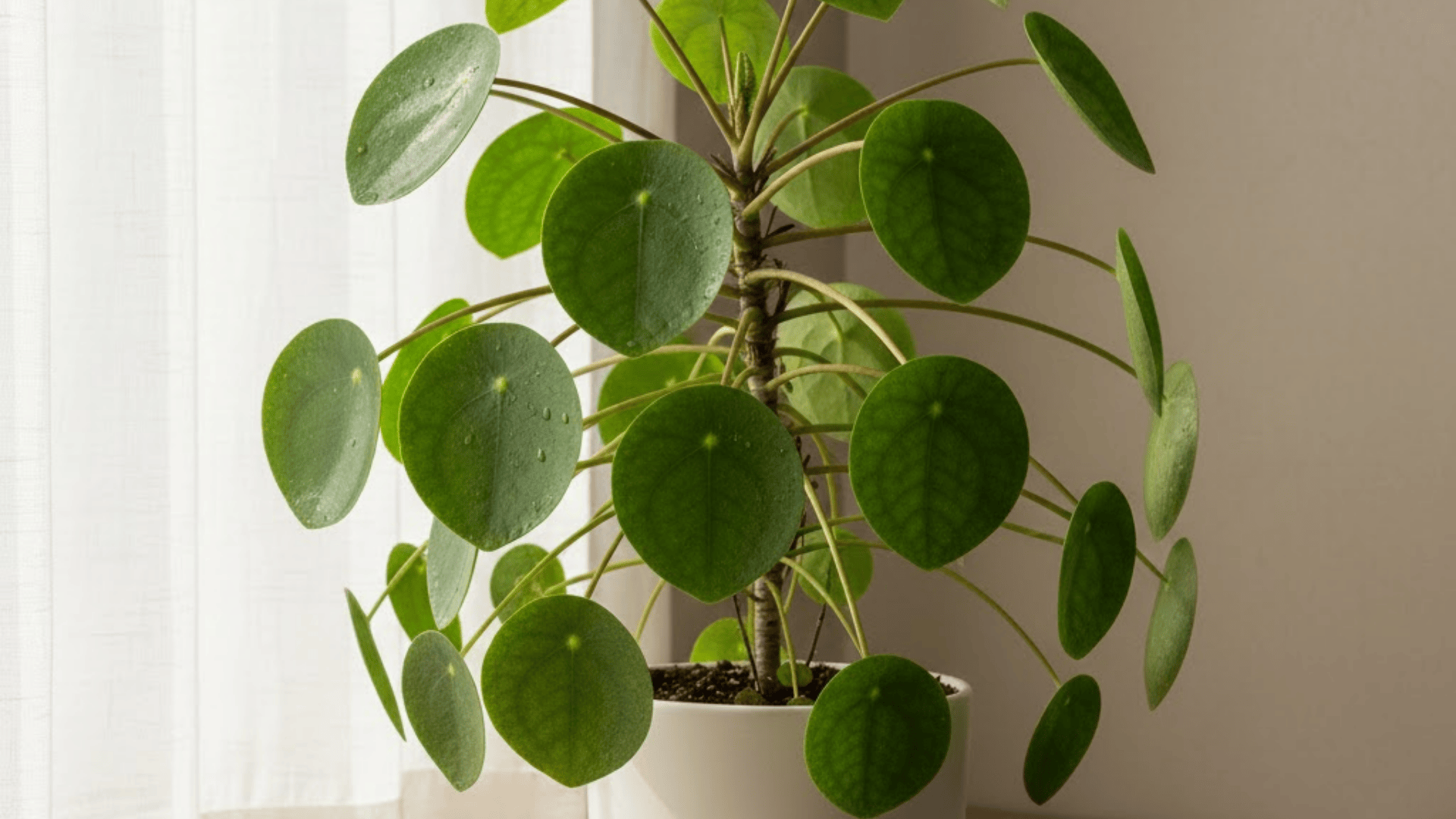
The shape of a Chinese money plant is driven by how it responds to light and pruning. Small, consistent adjustments work better than occasional big changes.
Rotating the Plant
Regular rotation keeps growth even and prevents the plant from leaning too far in one direction.
- Turn the pot about a quarter turn every 1–2 weeks
- Rotate in the same direction each time
- Expect slower correction if the plant has already leaned heavily
Rotation works because the plant naturally grows toward its light source. Even exposure keeps stems shorter and leaves more evenly spaced.
Pruning Tips
Pruning helps redirect growth and encourages fuller, lower leaf development.
- Prune when stems become long or bare
- Cut just above a leaf node
- Use clean, sharp scissors
Avoid heavy pruning during winter. Growth slows during this time, and the plant may not respond with new shoots until light levels increase again.
Common Chinese Money Plant Problems and Fixes
These issues tend to repeat because they’re tied to light, water, and temperature. Reading the pattern usually makes the fix clear. The table below links common symptoms to their most likely causes and fixes:
| Problem | What it usually means | What to check | How to fix it |
|---|---|---|---|
| Yellow leaves | Roots staying wet too long or sudden cold exposure | Soil moisture, drainage holes, nearby drafts | Let soil dry more between watering, improve drainage, move plant away from cold air |
| Curling leaves | Light stress or uneven watering | Window placement, watering consistency | Adjust light exposure, stabilize watering routine |
| Drooping or limp plant | Water imbalance or temperature shock | Soil dryness, pot drainage, recent location changes | Correct watering based on soil feel, confirm drainage, restore stable placement |
| Leggy growth | Insufficient light | Distance from window, direction of light | Move closer to bright indirect light, prune stretched stems |
Once you connect each symptom to its cause, fixing the issue becomes a matter of adjusting conditions rather than guessing or overcorrecting.
What a Healthy Chinese Money Plant Looks Like
A healthy Chinese money plant has a very specific look. You should see:
- Round, flat leaves with smooth edges
- Even medium-green color across the leaf surface
- Upright stems that hold their shape but aren’t stiff
- Balanced growth that doesn’t rush or stall
New leaves emerge from the center of the plant. They start small and gradually expand to full size. Sudden bursts of tiny leaves or long gaps between new growth usually point to light or watering issues.
How to Propagate a Chinese Money Plant
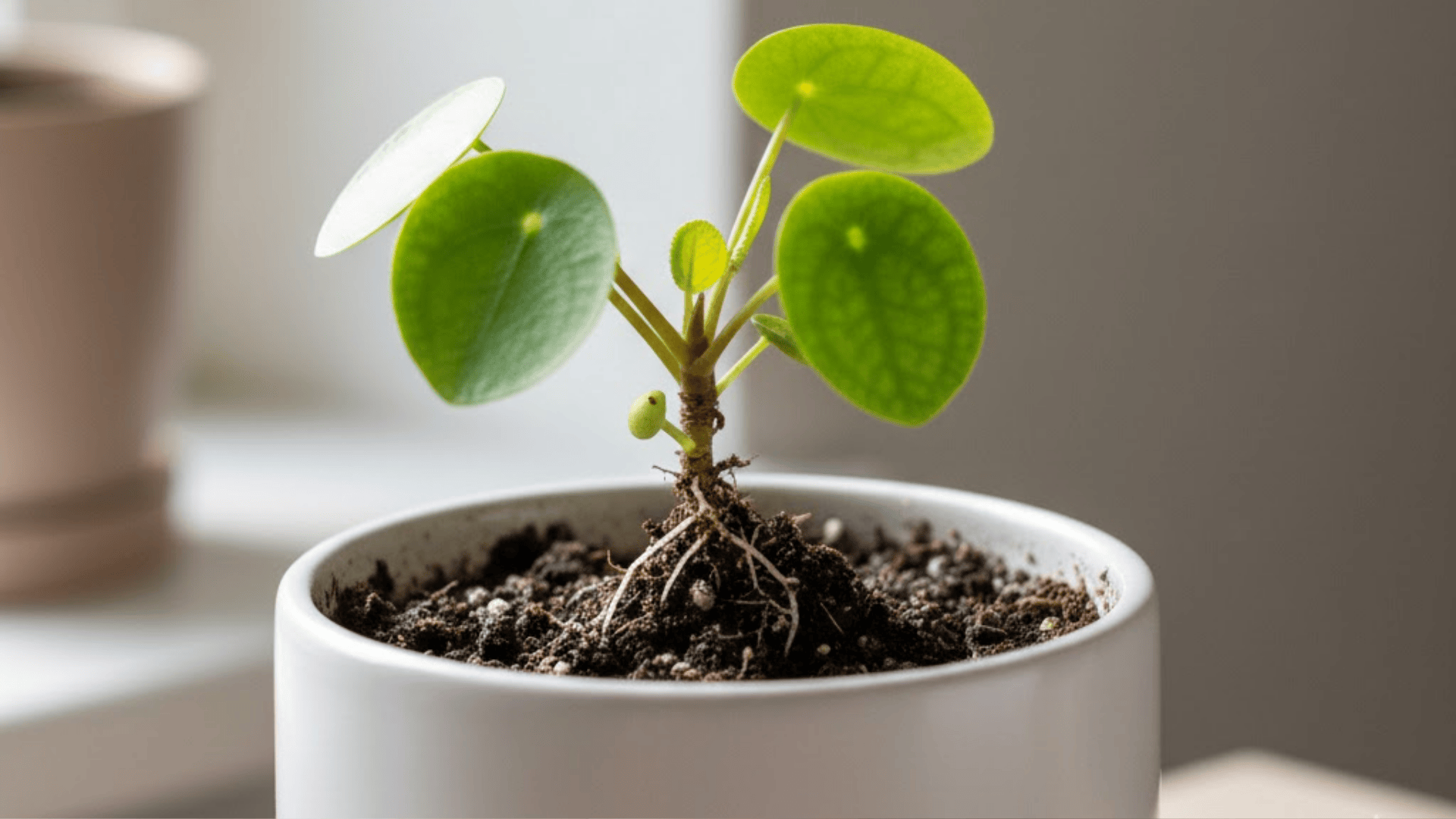
Propagation works well because this plant produces offshoots, often called pups, as part of its normal growth cycle. When conditions are right, the plant does the hard part for you.
When to Propagate
Spring and early summer are the best times to propagate. Light levels are higher, temperatures are stable, and the plant recovers faster from disturbance. Propagating outside this window increases the chance of slow rooting or rot.
Step-by-Step Propagation
Pups usually appear at the base of the plant or emerge from underground stems. Wait until they are a few inches tall and have a visible stem.
To propagate:
- Gently remove the plant from its pot
- Locate the pup’s connection point
- Cut cleanly using sharp, sanitized scissors
You can root pups in soil or water. Soil propagation tends to produce stronger roots over time. Water propagation makes it easier to monitor root development. Both methods work when light is bright and moisture is controlled.
Common Propagation Mistakes
- Cutting pups before they have a clear stem or enough size to support rooting
- Keeping soil or water too wet, which increases the risk of rot
- Using dull or unclean tools, leading to damaged tissue or infection
- Propagating during low-light seasons when growth is slow
- Disturbing pups too often to “check” root progress
Repotting a Chinese Money Plant
Repotting is something this plant needs occasionally, not regularly. A good sign it’s time is when roots begin to circle the inside of the pot or grow out through the drainage holes. For most plants, this happens about every one to two years.
More frequent repotting tends to cause problems. Each move disturbs the root system, and the plant needs time to settle before it can grow again.
While fresh soil can be beneficial, constant disruption slows growth and can make the plant look stalled or stressed.
When you do repot, move up only one pot size. Choose a container with drainage holes and fresh, well-draining soil. Gently loosen the outer roots if they are tightly packed, but avoid breaking them apart.
Set the plant at the same depth it was growing before, fill in around the roots, and water lightly to help the soil settle. After repotting, give the plant bright, indirect light and a few weeks to adjust before resuming normal feeding or pruning
Wrapping Up
Caring for a Chinese money plant becomes much easier once you stop chasing perfection. This plant does best with steady conditions and small, thoughtful adjustments.
Light placement matters more than rigid schedules. Drainage matters more than complex soil mixes. Most long-term issues come from reacting too quickly instead of watching how the plant responds over time.
When something looks off, pause before changing anything. Check the basics first. Light, soil moisture, and temperature usually explain what’s happening.
As you spend more time with the plant, its signals become easier to read. Taking a calm, observant approach to Chinese money plant care makes it easier to keep the plant healthy, balanced, and consistent for years.
Frequently Asked Questions
Should I mist a Chinese money plant?
Misting isn’t usually needed. Most homes have enough humidity. If air is very dry, raise room humidity instead of spraying the leaves.
Can a Chinese money plant grow in water?
It can grow in water short term, especially for propagation, but long-term growth is stronger and more stable when the plant is grown in soil.
Is a Chinese money plant safe for pets?
Chinese money plants are considered non-toxic to cats and dogs, making them a safer option for homes with curious pets.
Can a Chinese money plant live outdoors?
It can live outdoors only in mild, stable climates. For most regions, indoor growing provides safer and more consistent conditions.