New grass seed dies more from watering mistakes than bad seed quality. You plant it right, but two weeks later, half the lawn is bare. The other half looks patchy.
What went wrong? Most likely, your watering schedule. Grass seed needs moisture every single day, sometimes multiple times. But how often is too often? When do you stop?
This guide answers exactly that. You’ll learn how often to water at each growth stage, how long each session should last, signs you’re doing it right, and when to switch to a regular lawn routine.
Let’s fix your watering schedule.
Why Watering Frequency Matters for Grass Seed?
Grass seed needs consistent moisture to sprout and grow into a healthy lawn. If the soil dries out even once, the germination process stops completely.
Your seeds may die before they ever get a chance to grow. On the other hand, too much water creates its own problems.
Overwatering leads to seed rot, washes away your freshly planted seeds, and prevents roots from growing deep and strong. The key is finding the right balance.
Your soil should stay moist but never soaking wet. Think of it like keeping a sponge damp, not dripping.
Get the watering frequency right from day one, and your grass seed will reward you with thick, green growth.
How Often to Water Grass Seed at Different Stages
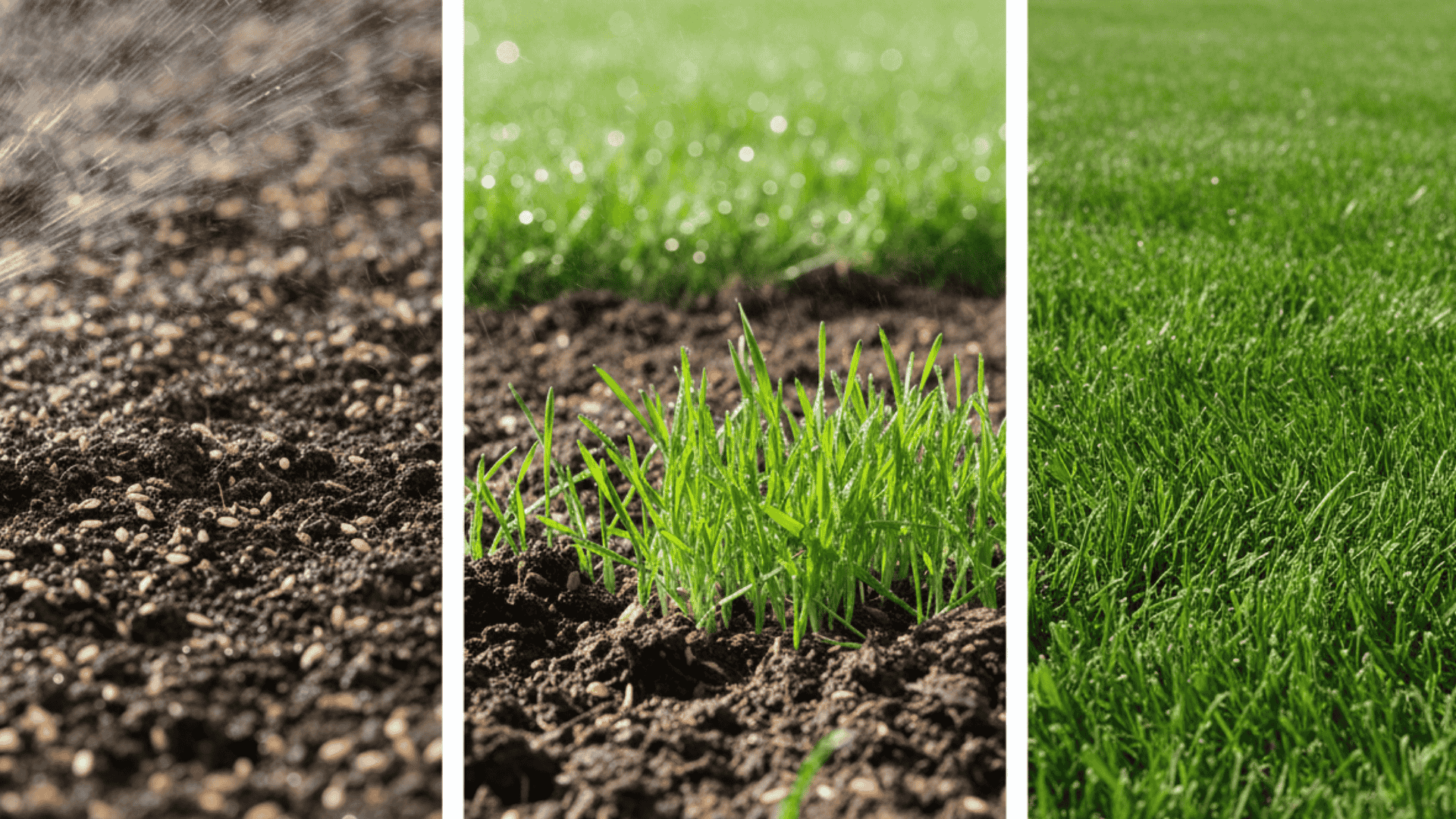
The watering schedule for grass seed changes as your lawn develops. Here’s what you need to know for each phase.
How Often to Water Grass Seed Immediately After Planting
- Water 2 to 4 times per day with light sessions
- Keep the top 1 to 2 inches of soil moist at all times
- Each session should dampen the soil, not create puddles or standing water
- Frequent light watering prevents seeds from drying out while they germinate
- Seeds sit close to the surface and need constant moisture to sprout
How Often to Water New Grass Seed After It Sprouts
- Reduce watering to 1 or 2 times per day after germination begins
- Germination typically starts within 5 to 14 days of planting
- Increase the duration of each watering session slightly
- Focus shifts from surface moisture to deeper root development
- Longer sessions help water reach 3 to 4 inches below the surface
How Long to Water Grass Seed Each Time?
The duration of each watering session depends on your sprinkler output and soil type. In the early stages, water for 5 to 10 minutes per zone to keep the surface moist.
As your grass grows, extend sessions to 15 to 30 minutes to reach deeper soil layers. Sandy soil drains water quickly and may need more frequent but shorter waterings.
Clay soil holds moisture longer, so you can water less often but may need more extended sessions. Test your soil by checking moisture depth with a screwdriver or your finger.
Adjust your timing based on how quickly water soaks in and how long the soil stays moist between sessions.
Watering Schedule by Growth Stage
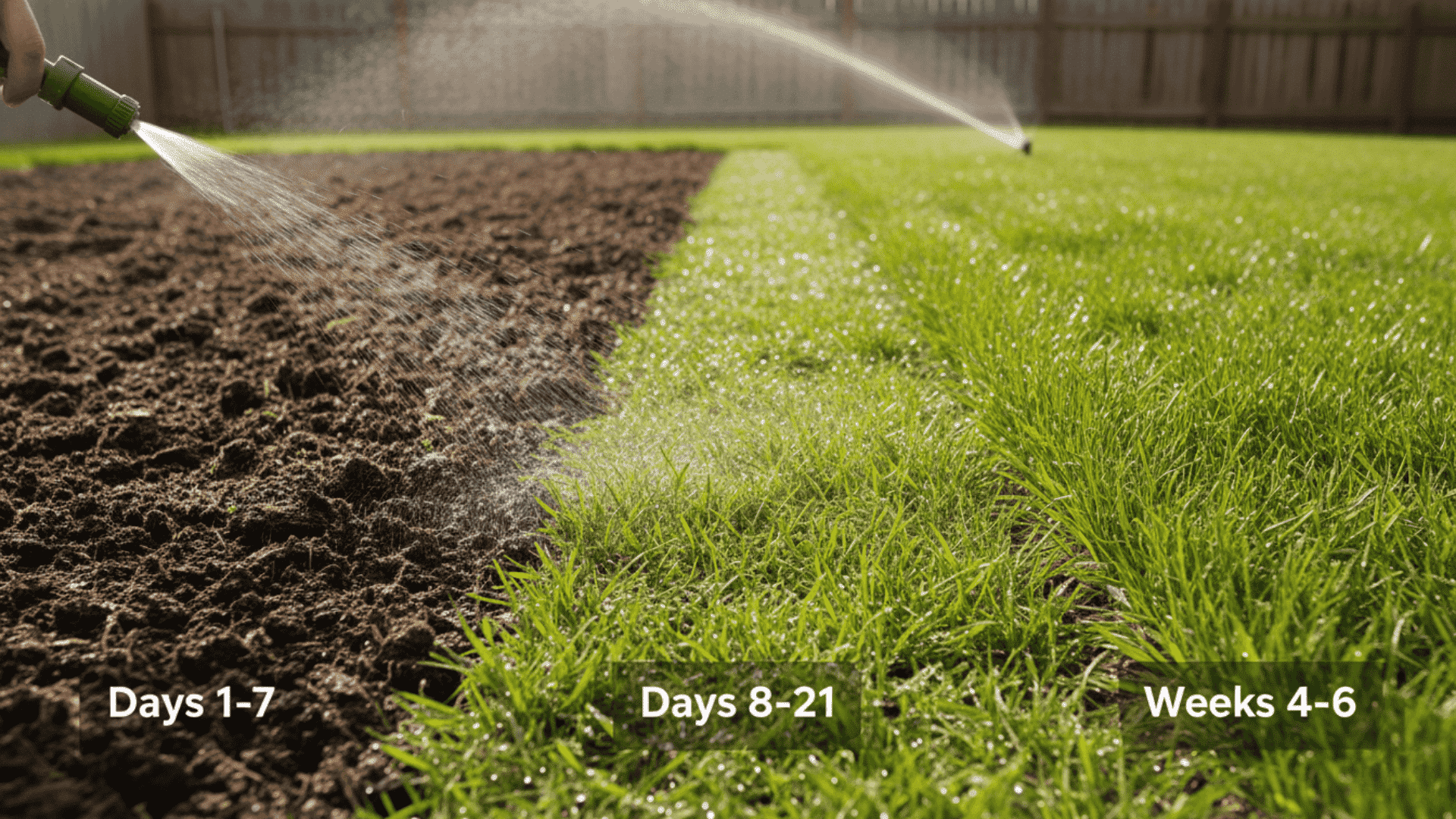
Your grass seed goes through distinct phases, and each one needs a different watering approach. Follow this timeline to support healthy growth from seed to established lawn.
Days 1–7: Pre-Germination
This is the most critical week for your new grass seed. The seeds are absorbing moisture and preparing to sprout. Missing even one watering can set back or stop the entire process.
- Water 2 to 4 times per day in short sessions
- Keep soil moist, but never let it dry out completely
- Avoid heavy watering that causes runoff or standing water
- Check soil moisture by touching it lightly with your finger
Days 8–21: Early Growth
Your grass seedlings are starting to appear and develop their first root systems. They need consistent moisture, but not as frequently as before. This phase builds the foundation for a strong lawn.
- Gradually reduce watering to 1 or 2 times per day
- Increase the duration of each watering session
- Water deeper to encourage roots to grow downward
- Monitor for dry spots and adjust coverage as needed
Weeks 4–6: Establishment Phase
Your grass is maturing and starting to look like an actual lawn. The roots are growing deeper, and the plants can handle more extended periods between waterings. This is when you transition toward a regular lawn care routine.
- Water every other day or every 2 to 3 days
- Use longer, deeper watering sessions of 15 to 30 minutes
- Focus on reaching soil depth of 4 to 6 inches
- Grass should be thick enough to walk on gently
Best Time of Day to Water Grass Seed
Timing your watering sessions can be just as important as how often you water. The right time of day helps your grass seed absorb more moisture while reducing the risk of disease and water waste.
- Early Morning Is Ideal: Water your grass seed between 6 AM and 10 AM for the best results. This timing gives your lawn everything it needs to thrive while avoiding common watering problems.
- Reduces Evaporation: Morning temperatures are cooler, and winds are typically calm. Less water evaporates into the air, so more reaches your grass seed. You get better results with less water waste.
- Allows Grass to Dry Before Evening: Grass blades have the entire day to dry out after morning watering. Dry grass before nightfall stays healthier and resists disease better than grass that stays wet.
- Avoid Late Night Watering: Never water grass seed late at night or right before bed. Wet grass sitting in darkness for hours creates the perfect environment for fungal diseases to grow and spread.
Second Best Option: If you cannot water in the morning, late afternoon between 4 PM and 6 PM works as your next best choice. Just make sure the grass has at least 2 to 3 hours to dry before sunset.
How to Know Your Grass Seed Is Getting Enough Water

Knowing if your watering routine is working helps you make adjustments early. Here are the key indicators that show your grass seed is getting the right amount of water.
1. Even Germination Across the Area
Your grass should sprout uniformly throughout the seeded area. If you see consistent green growth with no large bare spots, your watering schedule is on track. Uneven germination usually means some areas are getting more water than others.
2. Soil Feels Moist but Not Muddy
Press your finger into the soil to check moisture levels. It should feel damp and cool to the touch, similar to a wrung-out sponge. If the soil sticks to your finger or feels soggy, you are watering too much.
3. Seedlings Stand Upright and Remain Green
Healthy grass seedlings grow straight up with bright green blades. The young plants should look firm and vibrant, not wilted or yellowing. Green, upright growth means the roots are getting enough water to support the plant.
4. No Bare or Washed-Out Patches
Check for areas where seeds have been displaced or washed away. Properly watered lawns show no erosion or seed movement. If you notice bare spots or seed clumps in low areas, your water pressure may be too strong.
Signs of Overwatering or Underwatering

Getting the water balance wrong can damage your grass seed. Here’s how to spot the warning signs and fix the problem quickly.
| Problem | Signs to Look For | What’s Happening |
|---|---|---|
| Overwatering | Mushy, waterlogged soil that feels spongy when you walk on it | Too much water suffocates seeds and prevents oxygen from reaching them |
| Overwatering | Seeds floating on the surface or washing into low spots | Water pressure is too strong, or sessions are too long |
| Overwatering | White, gray, or green fungal growth on soil or grass blades | Excess moisture creates perfect conditions for disease |
| Underwatering | Patchy germination, with some areas sprouting while others remain bare | The soil dried out between waterings and killed some seeds |
| Underwatering | Dry, hard, crusted soil surface that cracks when touched | Not enough water is reaching the seeds to trigger germination |
| Underwatering | Seeds remain dormant and fail to sprout after 2 to 3 weeks | Seeds need consistent moisture to break dormancy and grow |
If you notice any of these signs, adjust your watering schedule immediately. Overwatering requires longer breaks between sessions. Underwatering needs more frequent or longer watering times.
When to Reduce Watering and Treat It Like a Lawn?
You can transition to a regular lawn watering schedule once your grass reaches mowing height, usually around 3 to 4 inches tall.
This typically happens between 6 and 8 weeks after planting. At this point, shift from frequent light watering to deeper, less frequent sessions. Water 2 to 3 times per week instead of daily, and let each session soak the soil 6 to 8 inches deep.
This change encourages roots to grow downward in search of water, creating a stronger and more drought-resistant lawn.
Your new grass is now established and can handle the same care routine as a mature lawn.
Summing It Up
Watering grass seed correctly makes the difference between a thick, green lawn and a patchy mess. Start with frequent light watering 2 to 4 times per day during germination.
Gradually reduce frequency as your grass grows and roots develop deeper. By weeks 6 to 8, you’ll be watering like a normal lawn. Remember, consistency matters more than perfection.
Check your soil daily, adjust for weather, and watch for signs of overwatering or underwatering. Your grass will tell you what it needs. Now that you know the schedule, it’s time to put it into action.
Got questions about your lawn? Drop them in the comments below.