You’ve probably seen the question before: how many cubic feet in a yard of mulch? It sounds simple, but once you start thinking about bags, depth, and square footage, it gets confusing fast.
A lot of people mix up square feet and cubic feet. Others think a “yard” just means three feet, which isn’t wrong, but it’s not the full picture either. Mulch is sold in volume, not just length or area.
In this guide, I’ll walk through it step by step. You’ll see where the number comes from, why it never changes, and how it connects to bags and coverage in real terms.
How Many Cubic Feet are in A Yard of Mulch?
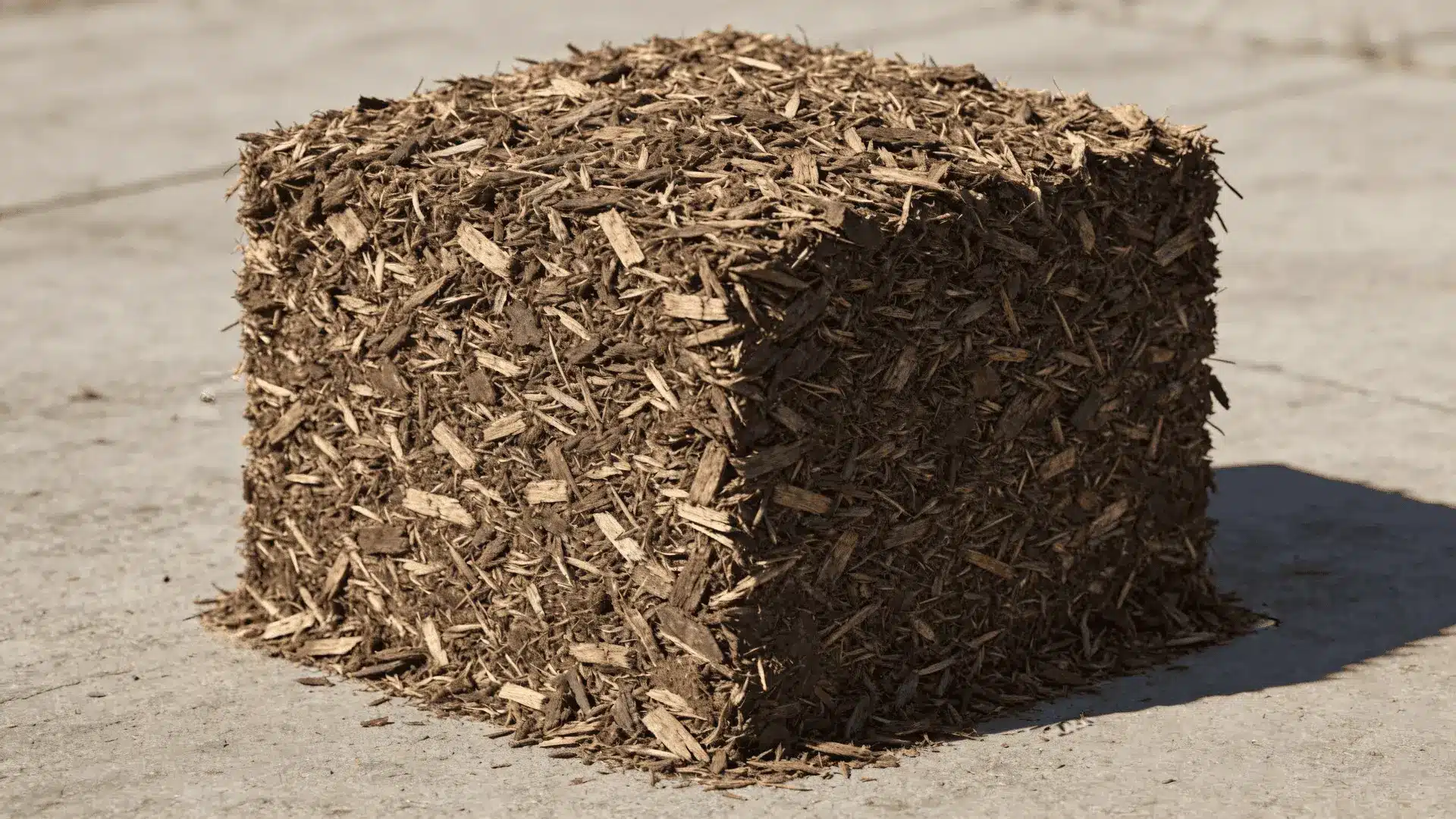
The direct answer is simple: 1 cubic yard equals 27 cubic feet.
That number does not change. It doesn’t depend on the type of mulch or where you buy it. It’s a fixed measurement. A cubic yard is a space that measures 3 feet long, 3 feet wide, and 3 feet tall. When you multiply those dimensions:
3 × 3 × 3 = 27
So a cube that is 3 feet in every direction holds 27 cubic feet of material.
Some people hear “yard” and assume it means 3 cubic feet. That’s the common mix-up. A yard is 3 feet in one direction. A cubic yard is 3 feet in all three directions.
That difference is what creates the number 27.
Why a Cubic Yard Equals 27 Cubic Feet: The Spatial Breakdown
To really understand it, you have to separate three kinds of measurement:
- Linear feet (length only): A linear foot is just a line. One direction.
- Square feet (length × width): A square foot measures flat surface area. Two directions.
- Cubic feet (length × width × height): A cubic foot measures space in three dimensions.
Once height enters the picture, the number grows quickly. That’s why 3 feet doesn’t become 9. It becomes 27.
If you picture mulch spread across the ground, you’re thinking in area. But when mulch is sold in bulk, it’s measured as a pile, and that pile has height. That height is the third dimension, and it’s what volume captures.
Volume measures how much space something fills. Area measures only the surface.
Those are related, but they are not interchangeable. You can’t move from square feet to cubic feet unless you know the height involved. That added dimension is what changes the math.
How to Convert Cubic Yards to Cubic Feet (and Back)
Once you know that 1 cubic yard equals 27 cubic feet, the rest is simple multiplication or division. Here’s the conversion laid out clearly so you can scan it fast:
| Conversion Direction | What You Do | Example | Result |
|---|---|---|---|
| Cubic yards → Cubic feet | Multiply by 27 | 2 yd³ × 27 | 54 ft³ |
| Cubic feet → Cubic yards | Divide by 27 | 54 ft³ ÷ 27 | 2 yd³ |
| Partial yard example | Multiply decimal yards × 27 | 1.3 yd³ × 27 | 35.1 ft³ |
| Reverse partial example | Divide cubic feet ÷ 27 | 35.1 ft³ ÷ 27 | 1.3 yd³ |
If you calculate 1.3 cubic yards, suppliers may round differently depending on how they measure or deliver. The math stays exact, but ordering practices can vary slightly. That variation comes from handling, not from the formula itself.
How Many Mulch Bags Equal One Cubic Yard?
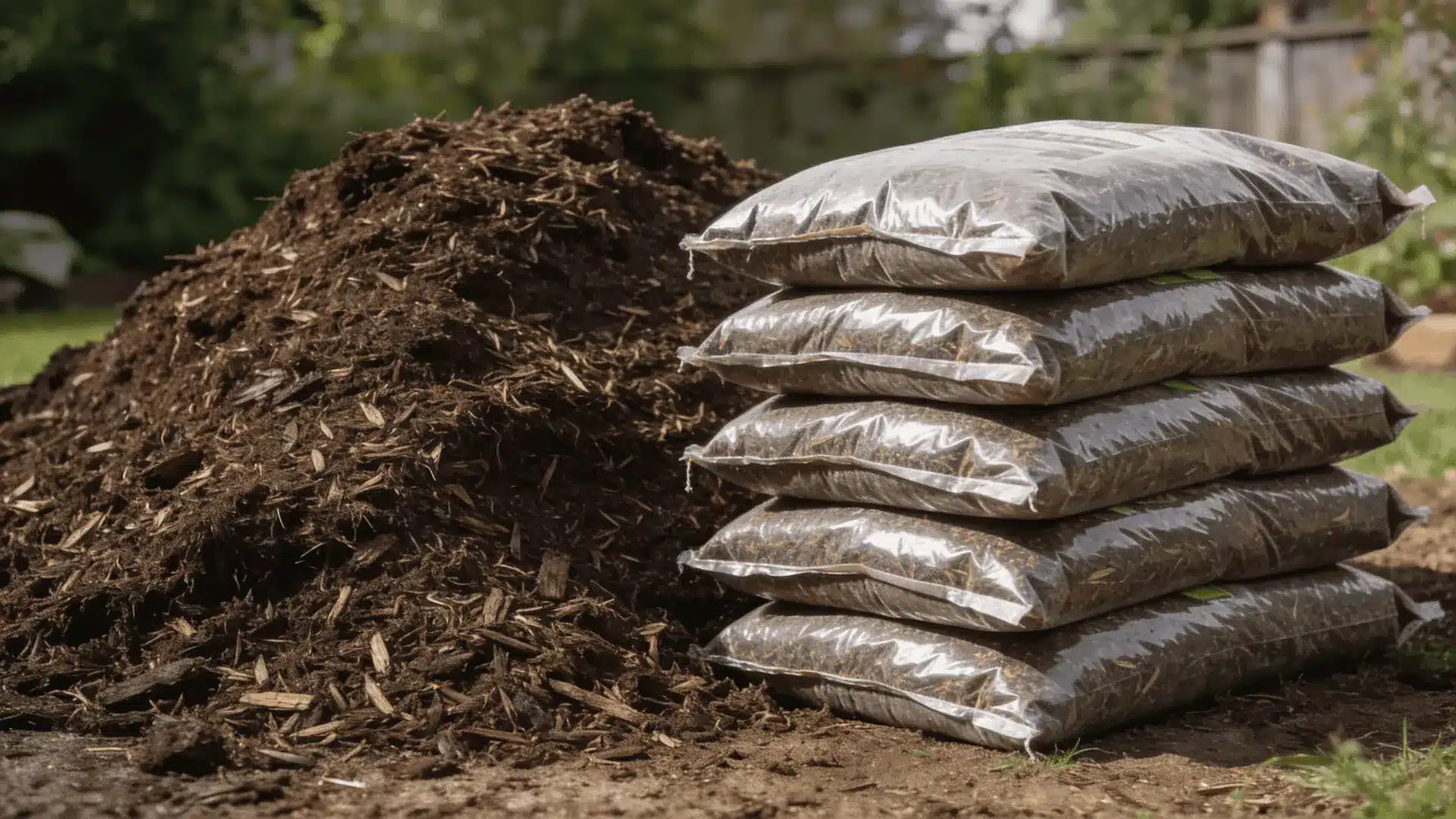
Most mulch bags are sold in either 2 cubic feet or 1.5 cubic feet.
Most mulch bags are sold in standard sizes. Since 1 cubic yard equals 27 cubic feet, you just divide 27 by the size of the bag to see how many you need.
| Bag Size (Cubic Feet) | Math | Bags Needed for 1 Cubic Yard |
|---|---|---|
| 2 cu ft | 27 ÷ 2 = 13.5 | 14 bags (rounded up) |
| 1.5 cu ft | 27 ÷ 1.5 = 18 | 18 bags |
You always round up when the number isn’t whole, since you can’t buy a fraction of a bag. In real situations, though, volume on paper and what you see in a pile can look slightly different.
Bagged mulch is often fluffed during packaging. Bulk mulch may settle during transport. Moisture can also change how tightly the material packs together.
The volume measurement remains 27 cubic feet. But density and compaction can make the pile appear larger or smaller. That’s why rounding up is usually the safer move.
How Volume Relates to Mulch Coverage Area
Now let’s connect volume to ground coverage. Volume is measured in cubic feet. Coverage is measured in square feet. The link between them is depth.
The formula is: Coverage area = volume ÷ depth
But depth must be converted to feet.
If you spread mulch 2 inches deep: 2 inches = 2 ÷ 12 = 0.167 feet (about)
So: 27 cubic feet ÷ 0.167 ≈ 162 square feet
If you spread mulch 3 inches deep: 3 inches = 3 ÷ 12 = 0.25 feet
So: 27 ÷ 0.25 = 108 square feet
The volume never changed. It stayed at 27 cubic feet. What changed was how high you stacked it. As depth increases, the same material covers less surface area. Coverage is not fixed. It shifts based on thickness.
Many people assume one yard always covers the same space. It doesn’t. The spread depends entirely on how deep you apply it.
Wrapping Up
When people ask how many cubic feet are in a yard of mulch, they usually want a quick number. That number is 27. But the understanding behind it matters just as much.
A yard is three feet in one direction. A cubic yard is three feet in every direction. That added height turns 3 into 27.
Once you think in terms of volume as space, not just length, the rest becomes steady and predictable. Conversions feel simple. Bag math lines up. Coverage stops seeming random.
Start with the fixed number: 27 cubic feet per yard. Then adjust for depth and rounding as needed. With that in place, the numbers will stay consistent every time.
Frequently Asked Questions
How many 2 cubic foot bags of mulch are in a yard?
There are 13.5 two-cubic-foot bags in 27 cubic feet. Since you can’t buy half a bag, you’ll need 14 bags to equal one cubic yard.
How much area will 1 yard of mulch cover?
It depends on depth. At 2 inches deep, it covers about 162 square feet. At 3 inches deep, it covers about 108 square feet.
How many 1.5 cubic foot bags are in a cubic yard?
Divide 27 by 1.5. The result is 18 bags, which equals one full cubic yard.
How do you convert cubic yards to cubic feet?
Multiply cubic yards by 27. To convert back, divide cubic feet by 27. The material type does not affect the math.