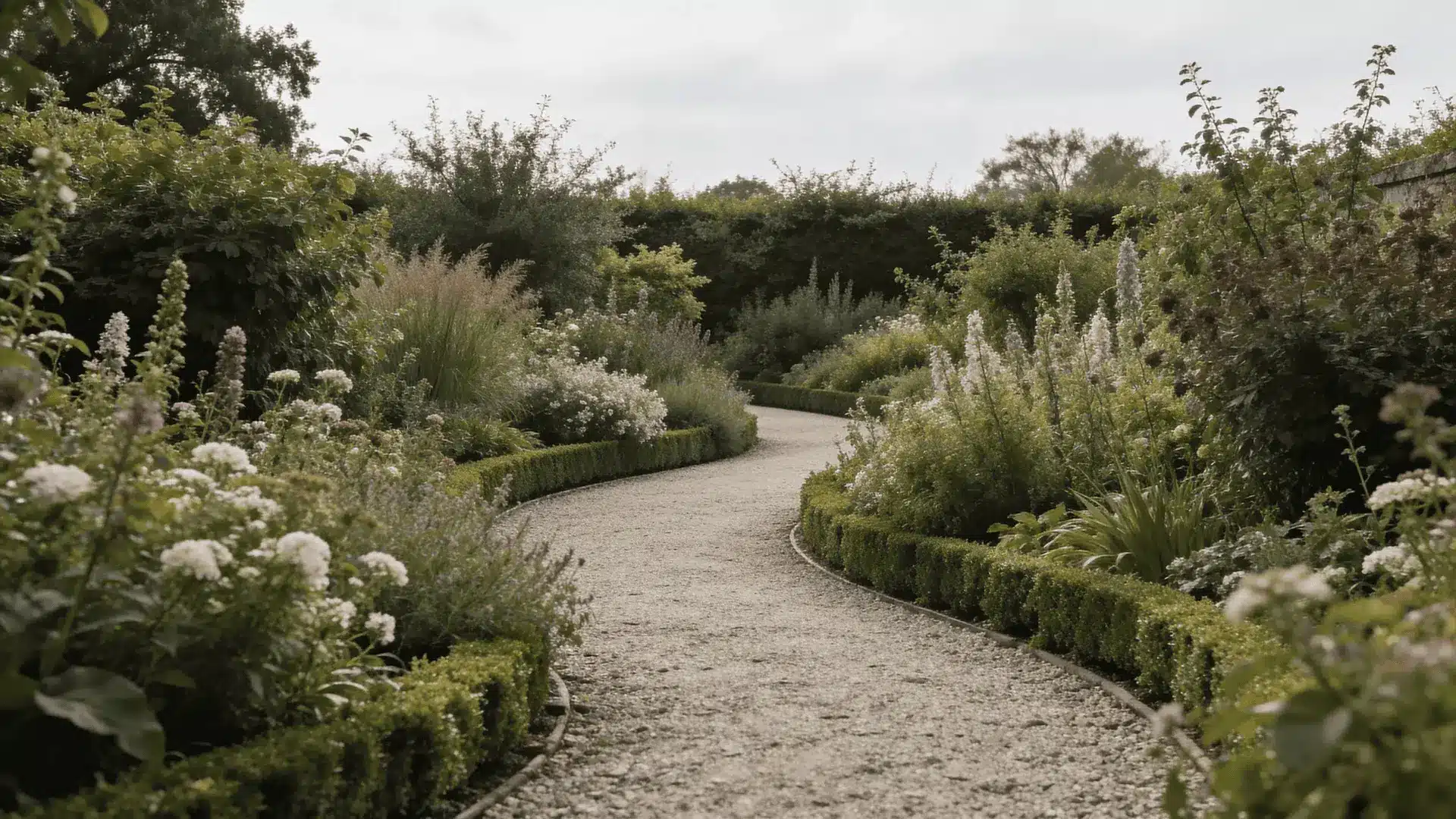
A lot of people think cottage garden layouts just “happen.” Like you throw in flowers, let them spill everywhere, and call it charming. I used to believe that too.
But when you look closely at gardens that truly feel full and romantic without looking messy, there’s always structure underneath. The looseness is planned.
If you’re trying to design your own space, the layout matters more than the plant list. Paths, boundaries, sightlines, and layers decide whether the garden feels calm or chaotic.
Let’s break down how the structure actually works and how you can build it the right way from the start.
What Makes a Cottage Garden Layout Structurally Different?
At first glance, a cottage garden looks informal. Plants lean into paths. Edges blur. Nothing seems rigid. But that softness sits on top of a clear framework.
The difference between visual looseness and structural planning is simple. Visual looseness is what you see. Structural planning is what holds everything together.
A cottage layout depends on three connected elements: boundaries, paths, and planting masses.
The boundary contains the space. The path guides movement. The planting fills and softens everything inside that frame.
Containment creates freedom. When the outer edges are defined, plants can spill and sway without feeling messy. Without that boundary, the same density feels uncontrolled.
Cause leads to structure. Structure leads to confidence. Confidence allows abundance. That’s how you get a wild look without chaos.
People often assume there are no rules at all. In reality, the rules are just quiet.
How Do You Plan the Layout Before Choosing Plants?
It’s tempting to start with flowers. I’ve done it. You see something beautiful at the nursery and imagine it blooming in your yard. But when plants come first, the layout gets forced to adjust around them. That creates compromise.
The correct sequence is simple:
Boundaries → paths → focal points → beds.
This order works because each step defines space before filling it.
1. Define the Outer Shape and Boundaries
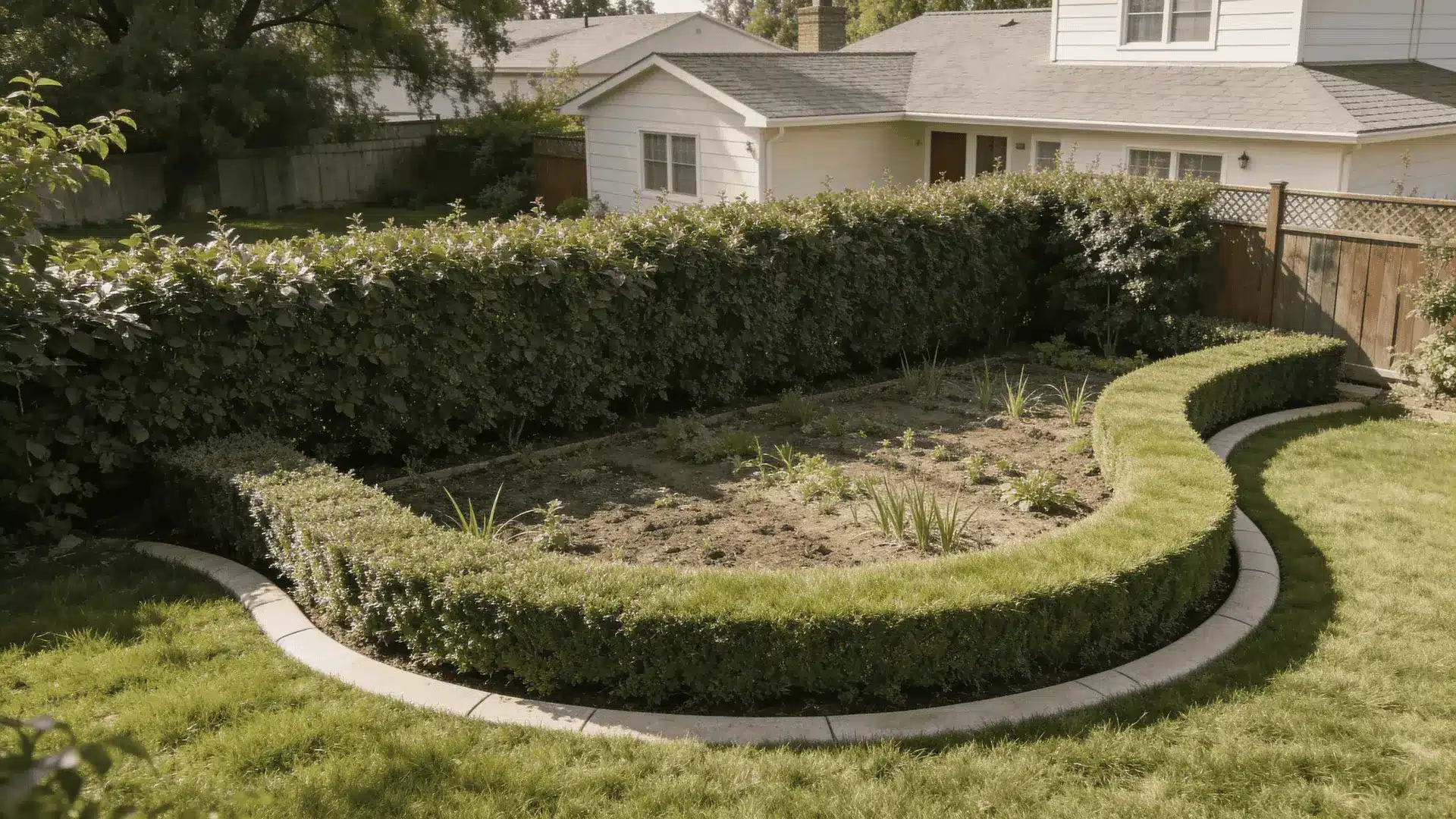
Start by deciding where the garden begins and ends. That might be a fence line, a hedge, a low wall, or even a shift in lawn edge.
The boundary gives the eye a stopping point. Without one, dense planting feels like it’s spilling into nowhere. With one, even heavy planting feels intentional.
In larger yards, boundaries can be softer and farther apart. In smaller spaces, they need to be clearer. Small gardens feel chaotic faster because there’s less room for visual error.
2. Map Pathways and Circulation
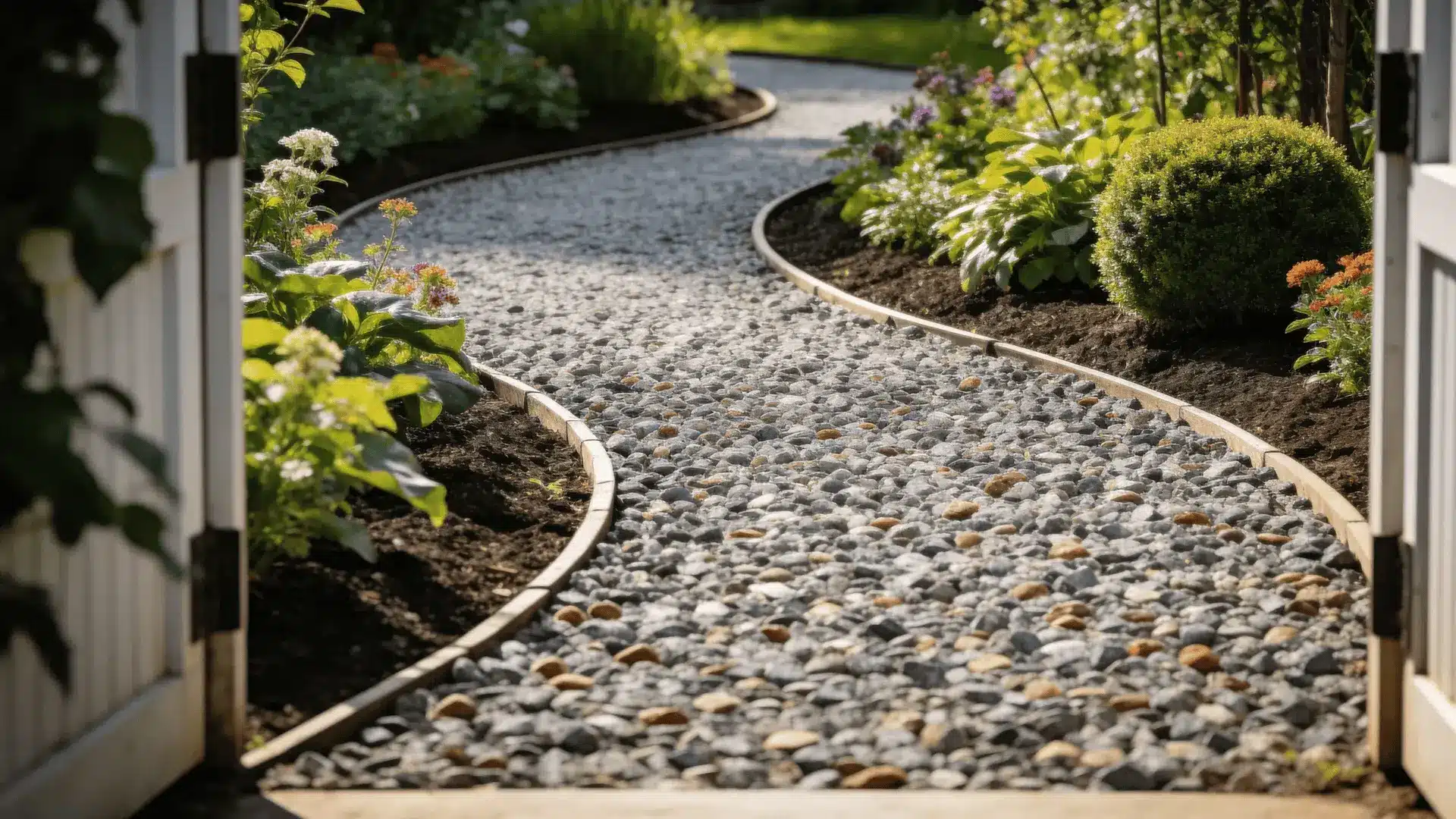
Paths control how you move through the garden. Movement affects perception.
A narrow path creates intimacy. A wider path feels social and open. In a tight yard, a path that’s too wide eats valuable planting space. In a large yard, a path that’s too narrow feels cramped.
The path also determines how much planting you can support. More curves mean more edges. More edges mean more planting opportunities.
If you buy plants first, you often end up squeezing paths in later. That usually results in awkward, straight shortcuts that break the cottage feel.
3. Place Focal Points for Direction and Pause
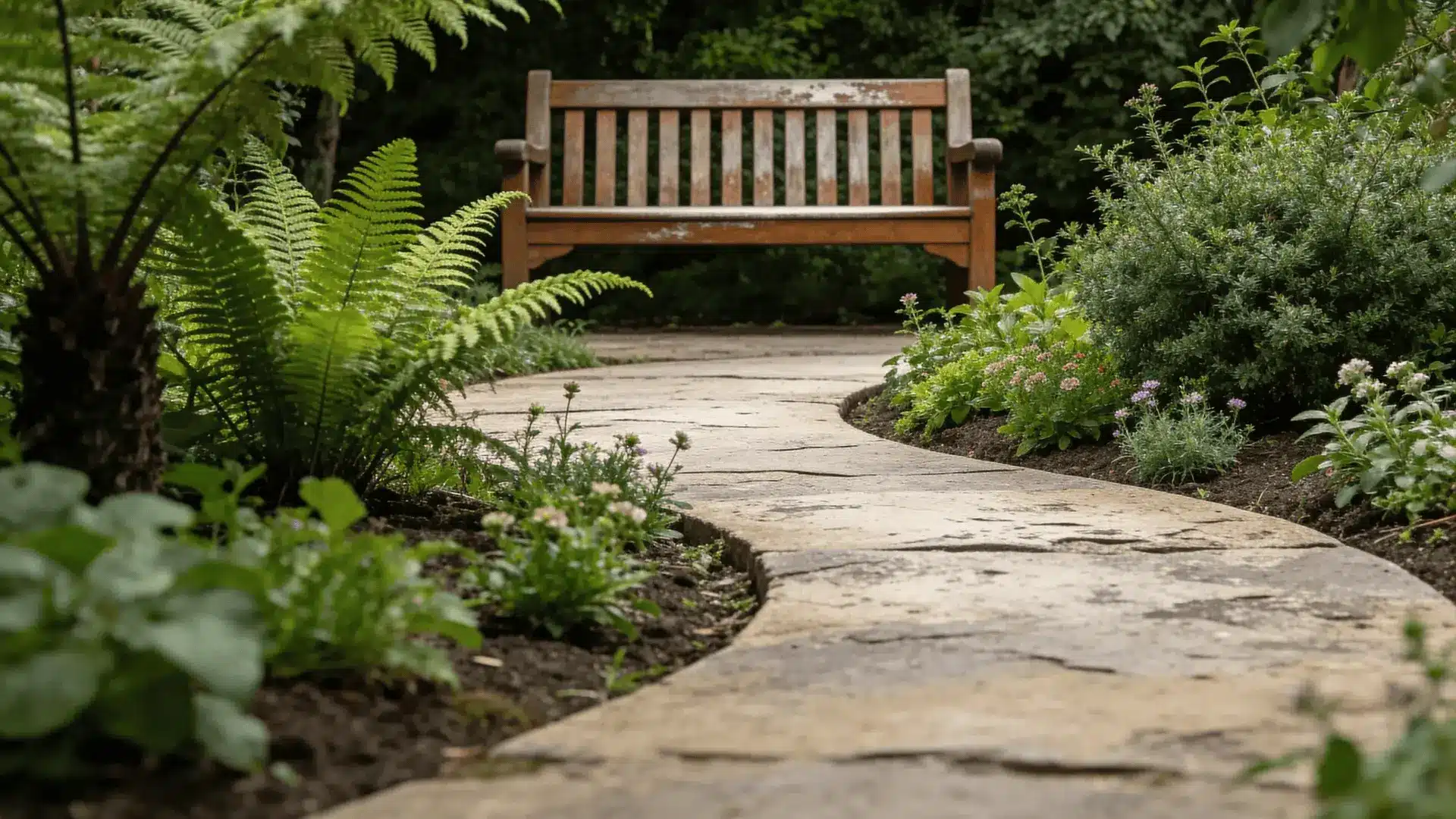
Focal points give the eye somewhere to land. That might be a bench, a small tree, or a vertical feature.
They work because humans look for endpoints. When a path gently leads to something, the garden feels complete.
In small spaces, one focal point is usually enough. In larger spaces, you can use multiple, but they must relate to the path system. Isolated features floating in random spots feel disconnected.
Plants should support these focal points, not compete with them.
How Should Pathways Be Shaped and Positioned?
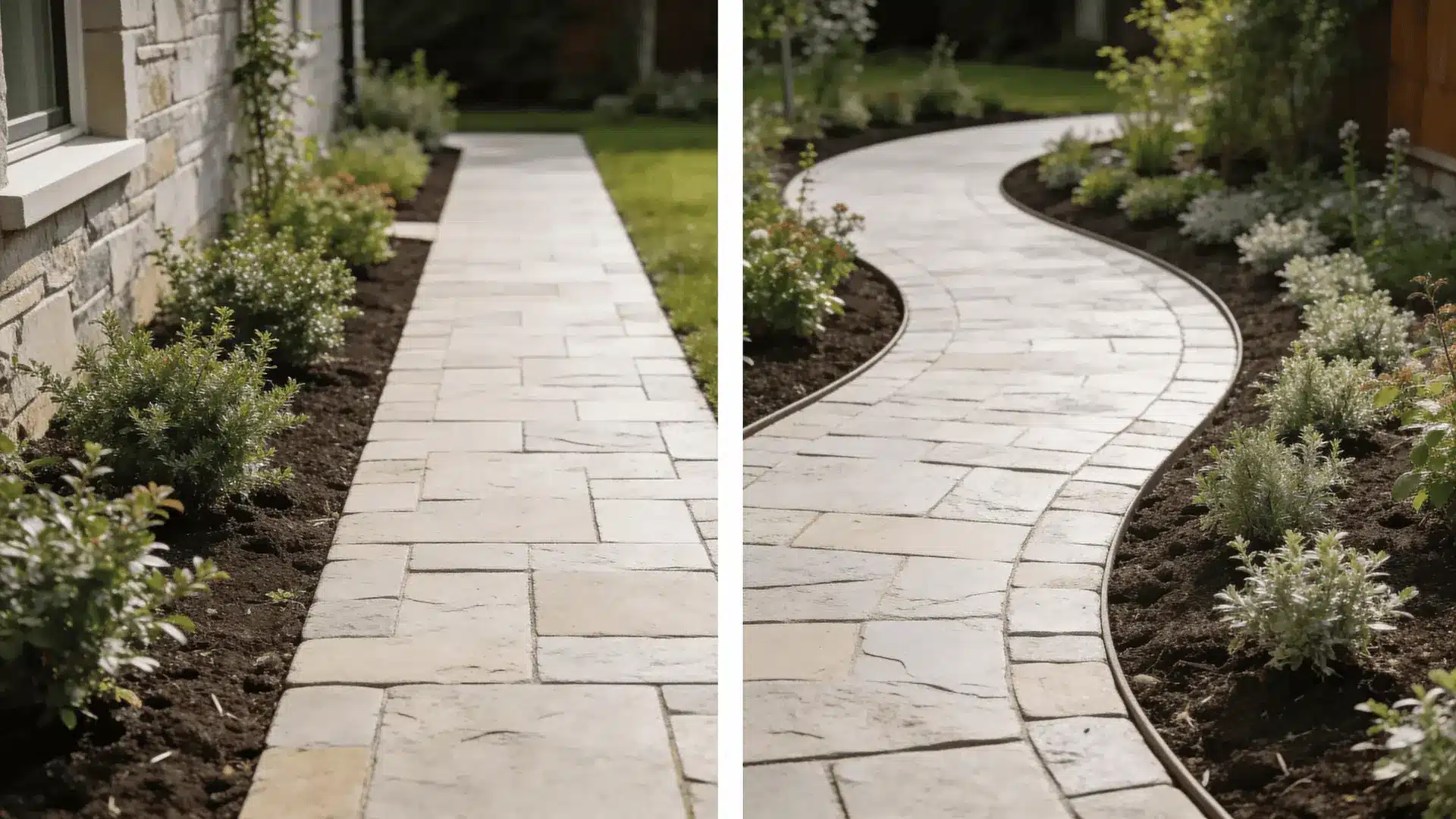
Path geometry changes how the garden feels. Straight paths feel direct and formal, moving you from point A to point B without pause. In a cottage setting, too many straight lines create stiffness.
Curved paths slow you down and hide what’s ahead, which builds curiosity. But not all curves work the same way.
A gentle, wide curve feels relaxed, while a tight, sharp curve in a small yard can feel awkward and forced. When curves become too tight, the path starts to look artificial rather than natural.
Sightlines matter here. When you stand at the entrance, you should see part of the path but not all of it, since that partial reveal creates depth.
Path width changes the experience as well. In a small garden, a path that’s too wide dominates the space and leaves little room for planting mass. In a large garden, a path that’s too narrow feels pinched.
Curves can fail in very tight spaces. If the yard is narrow, a single gentle bend is often better than adding multiple twists. Accessibility needs also matter, because sharp turns and very narrow paths can limit use.
A curve alone doesn’t create cottage character. It needs to connect meaningful points and support the planting around it
How Does Layered Planting Actually Work in a Layout?
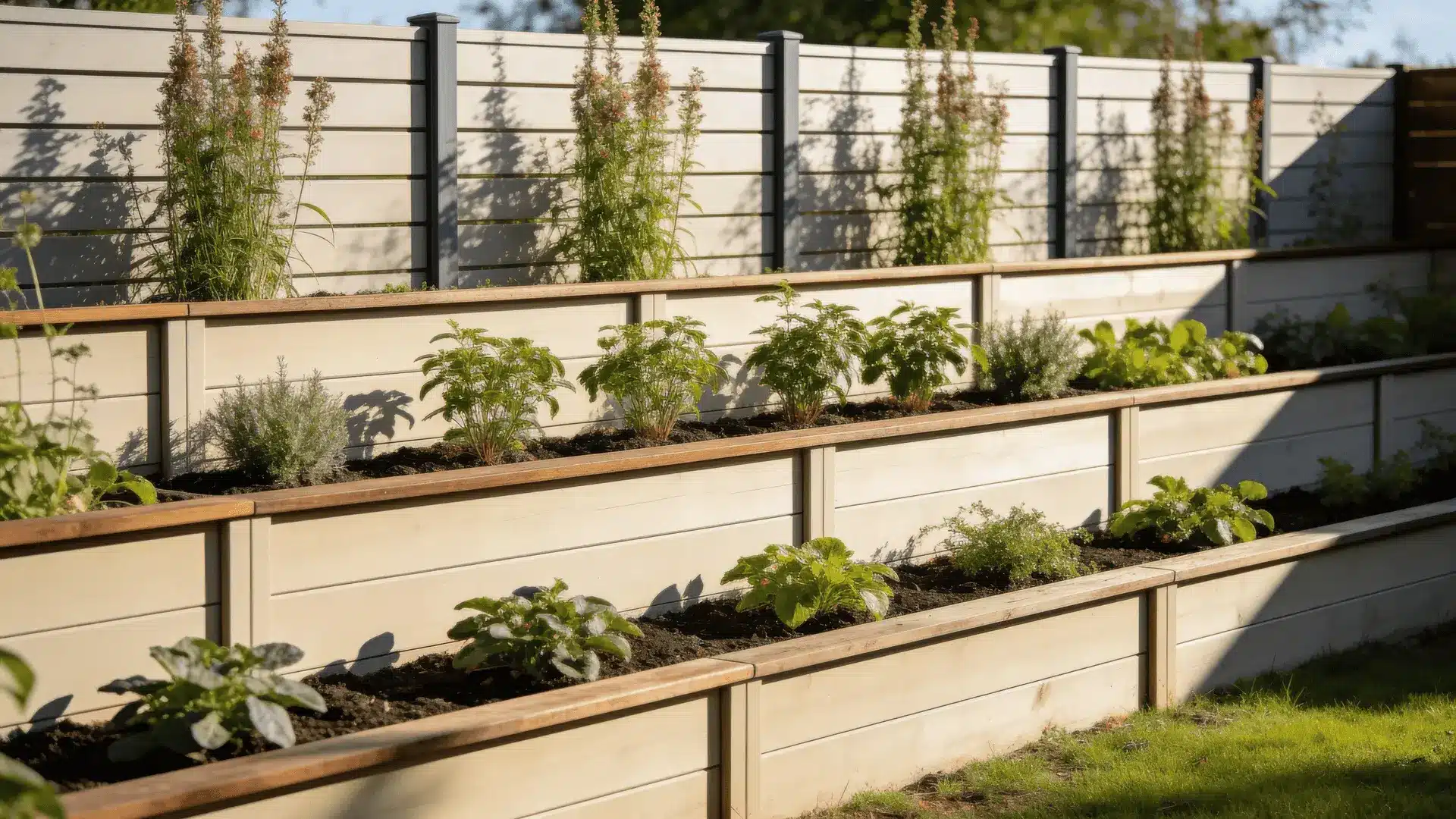
You’ve probably heard “tall in the back, short in the front.” That’s a useful starting point, but it isn’t the whole system.
Layering controls sightlines.
When heights step down gradually, the eye moves smoothly across the space instead of stopping abruptly. If a tall plant sits in front of a shorter one, it blocks light and breaks that flow.
Layering also creates the illusion of density. When plants overlap slightly from back to front, small gaps disappear, and the garden feels full without being packed shoulder to shoulder.
Airflow and light are part of the equation as well. Too tight and plants struggle. Too spaced out and the garden starts to feel thin.
Border Beds Along Fences or Walls
In border beds, the fence acts as the visual backdrop. Tall plants belong near that edge because they won’t block anything behind them.
Height should taper toward the path. That keeps the walkway open and prevents the garden from feeling like it’s closing in.
In narrow borders, extreme height differences can feel abrupt. In deeper borders, you can create smoother transitions.
Island Beds in Open Spaces
Island beds work differently. They’re viewed from all sides.
The tallest elements belong in the center. Heights step down evenly in every direction.
If the tallest plants are off to one side, the bed feels lopsided. Balance matters more in island layouts because there’s no wall to anchor them.
Managing Density without Blocking Light and Air
Density should overlap visually but not physically choke plants.
When leaves constantly press against each other with no space for air, disease risk rises and blooms decrease. The goal is layered depth, not suffocation.
A useful contrast: visual fullness comes from staggered placement and height change. Physical congestion comes from ignoring mature size and spacing entirely.
The system is spatial, not just about height.
How Do You Create Density Without Creating Chaos?
Cottage gardens are known for abundance. But abundance needs structure.
The rule of three helps here. Grouping plants in threes creates rhythm. Your eye reads clusters more easily than single scattered plants.
This grouping creates fullness because repetition builds cohesion.
Overcrowding happens when every inch is filled without regard for mature spread. At first, it looks lush. Over time, it becomes tangled.
Negative space is still necessary. Paths, small open pockets near focal points, and slight breathing room between clusters prevent overload.
Visual fullness happens when layers overlap and repeat. Physical congestion happens when spacing ignores growth.
More crowded is not always better. Controlled repetition is better.
Where and Why Should Vertical Elements Be Placed?
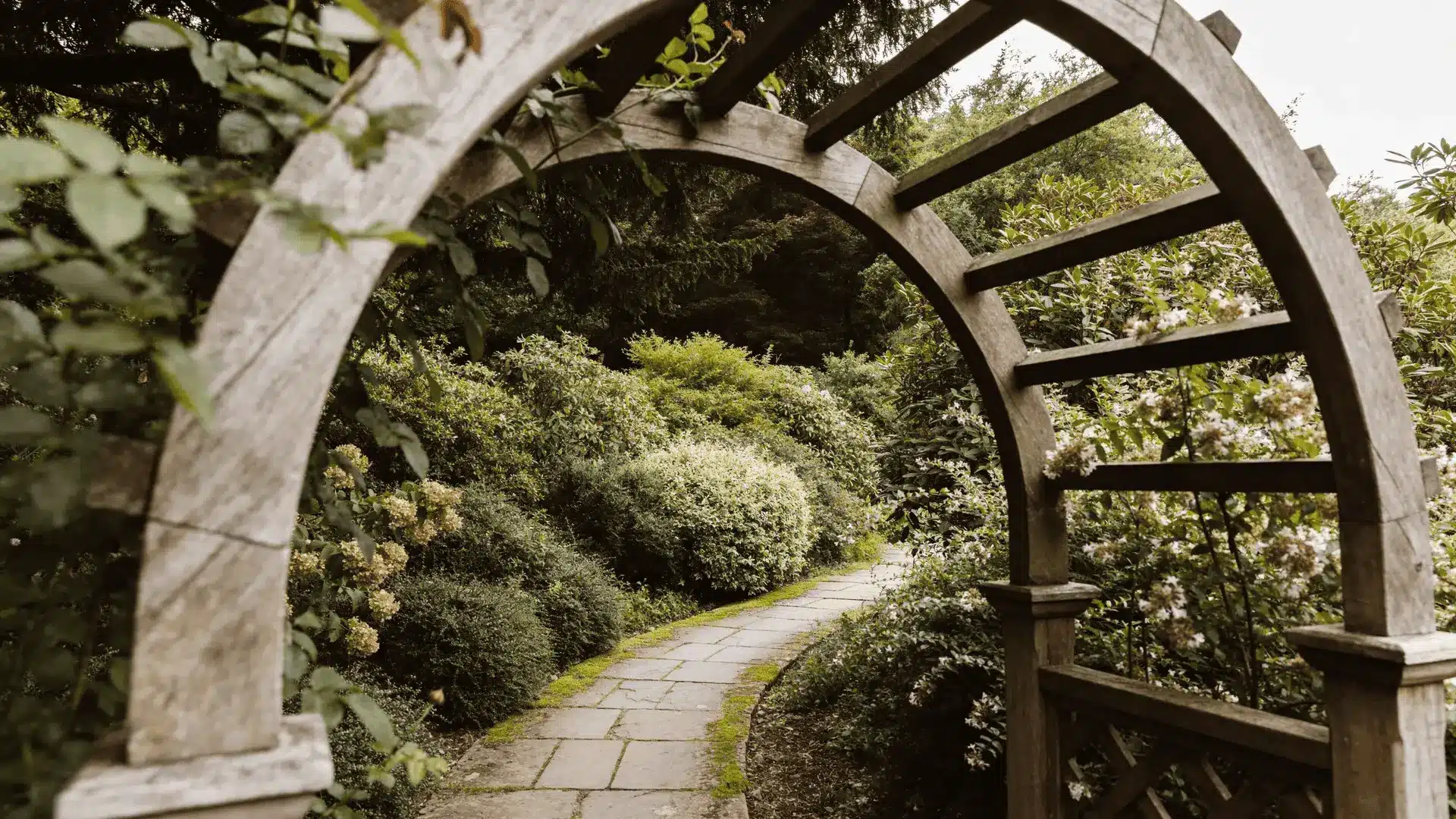
Vertical features like arches, trellises, and obelisks act as anchors.
Planting spreads outward and low. Without vertical punctuation, the garden can feel flat.
A vertical element works best where the path bends or where a focal point sits. It marks importance. It says, “Pause here.”
Scale matters. A tall arch in a tiny garden overwhelms the space. A small obelisk in a wide yard can disappear.
The proportion between vertical height and planting mass must feel balanced. If planting rises halfway up a structure, it feels integrated. If the structure towers far above everything else, it feels detached.
Vertical elements are not decoration alone. They stabilize the layout visually.
How Do Layout Strategies Change in Small Cottage Gardens?
Small gardens magnify mistakes.
Tight curves need moderation. One gentle bend is often enough, since too many twists create confusion.
Path width must shrink proportionally. If the path dominates, planting disappears. If it’s too narrow, the space starts to feel cramped.
Vertical stacking becomes more important in small spaces because height adds interest without taking up extra floor area.
Proportion is everything. Large features copied from big gardens often overpower small yards.
A small cottage garden can feel rich, but it requires stricter editing and clearer structure than a large one.
What Layout Mistakes Ruin the Cottage Effect?
Certain layout choices break the illusion quickly.
- Straight lines dominating the design
- Focal points placed randomly without path connection
- Severe under-planting that leaves wide gaps
- Severe over-planting that blocks circulation
- Hardscape that visually outweighs soft planting
Under-planting makes the garden look sparse and unfinished. Over-planting makes it feel stressful.
Hardscape becomes a problem when stone, gravel, or structural elements cover too much surface. Cottage style relies on planting mass as the dominant feature.
Most people blame plant choice when the style feels wrong. In reality, layout decisions usually cause the issue.
When the structure is sound, almost any cohesive planting palette can support the look.
Wrapping Up
Designing cottage garden layouts is less about randomness and more about quiet structure. Boundaries create safety, paths guide movement, and layering builds depth. Density adds romance when it’s controlled.
When these pieces connect clearly, the garden feels relaxed rather than messy. That’s the real goal.
Start with shape. Map movement. Anchor the space. Then let planting soften the edges.
If you move one steady step at a time and respect the framework beneath the flowers, your layout will hold together beautifully.