Nitrogen Tie Up + Wood Chips: The “Mulch Will Steal Your Nitrogen!” Scare (Mostly) Isn’t a Thing
If you’ve ever hesitated with a wheelbarrow of wood chips because you heard they’ll suck all the nitrogen out of your soil and leave your plants looking like sad, pale Victorian children… hi. Same. This rumor has been passed around garden circles like a cursed family recipe.
Here’s the truth: nitrogen tie up is real science, but it’s also wildly over applied. In most normal, everyday mulching situations chips on top of the soil around established plants you’re fine. In fact, long term, wood chips are one of the best things I’ve done for my garden beds (and I say that as someone who has made approximately 4,000 garden mistakes with confidence).
Let’s break down when this “nitrogen theft” actually happens, and when it’s basically a mulch ghost story.
The quick version: when wood chips are safe vs. when they’re spicy
Wood chips are generally safe when you:
- Keep them on top of the soil as mulch
- Use them around trees, shrubs, perennials, and established veggies
- Mulch after seedlings are up and growing (not on a bare seedbed)
Wood chips can cause real nitrogen problems when you:
- Mix/till fresh chips into the soil
- Mulch right on top of baby seedlings or shallow rooted greens before they’re established
- Use super fine stuff like sawdust (it breaks down fast and gets extra demanding)
That’s it. That’s the drama.
Why people think wood chips are villains
The story goes like this (and it sounds believable): wood is “high carbon,” microbes need nitrogen to break it down, so they grab nitrogen from the soil and your plants starve.
That can happen… but the part people skip is where the microbes are doing that work.
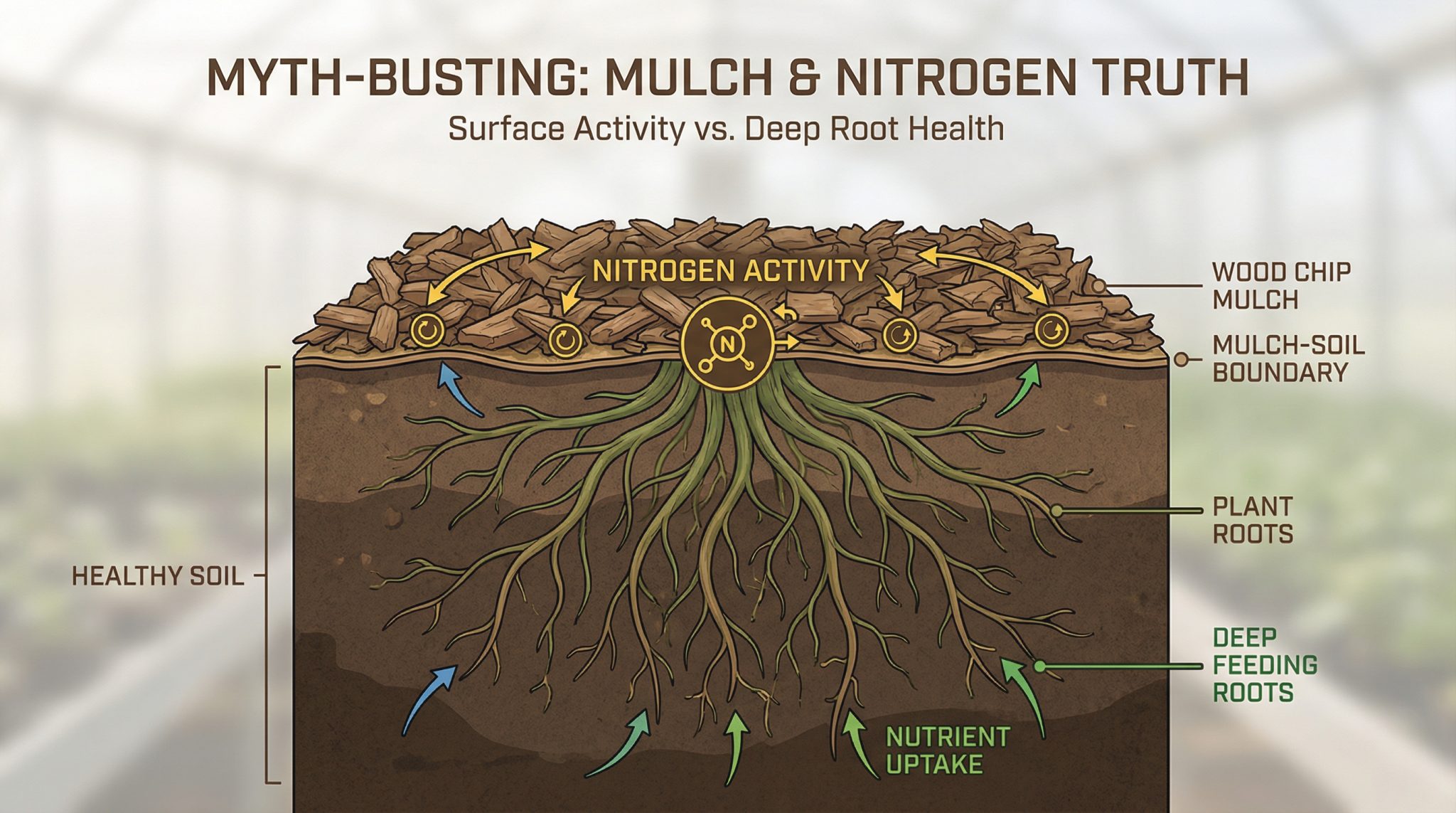
When wood chips are sitting on the surface, most of the action is right at that soil/mulch boundary like the top inch or so. A thin little “low nitrogen zone” can form up there, and it’s usually not where established plants are getting most of their nitrogen anyway.
Also: the nitrogen isn’t being teleported to another dimension. It’s temporarily held in microbial bodies, and later it cycles back as they die and decompose. Wood chips are basically a slow, long game.
(Annoying in year one if you mess up the placement. Amazing by year three when your soil starts acting like it finally got its life together.)
The 3 times nitrogen tie up is actually your problem
1) You tilled fresh chips into the soil
This is the big one. If you mix wood chips into your bed like you’re making a giant casserole microbes spread out through the root zone and compete directly with plants for nitrogen.
If you did this and planted right away, yes, you can see yellowing and slow growth. Don’t panic. Just… maybe don’t do it again unless you enjoy gardening on hard mode.
2) You mulched a seedbed or teeny seedlings
Seeds and tiny seedlings live in that top couple inches. If you throw fresh chips on top too early, you’re basically inviting a swarm of hungry decomposers right where your baby plants are trying to eat.
Wait until seedlings have true leaves and are a few inches tall, then mulch carefully around them.
3) You used sawdust or really fine wood particles
Fine material breaks down faster = microbes throw a bigger nitrogen party. Coarse chips are way more chill.
My personal rule: “chips on top, compost in the mix”
If you want to improve soil texture inside the bed, mix in compost. Use wood chips as a blanket on top and know when cedar mulch makes sense. That combo is chef’s kiss.
Wood chips are phenomenal for:
- moisture retention (hello, fewer dramatic “I forgot to water!” moments)
- weed suppression
- temperature buffering
- building soil over time
But again: they shine as mulch, not as something you rototill into your planting zone right before tomatoes go in.
Who’s most likely to get cranky about fresh chips?
If anything is going to show nitrogen deficiency first, it’s usually:
- shallow rooted greens like lettuce, spinach, basil
- brand new transplants in their first several weeks
- direct seeded beds during germination/early growth
Once plants have deeper roots (tomatoes, peppers, squash, established perennials), they’re typically unbothered by surface mulching.
How to tell if it’s nitrogen deficiency (and not something else)
Nitrogen deficiency usually shows up as:
- older/lower leaves turning yellow first
- fairly uniform yellowing across the leaf
If you’re seeing yellowing between leaf veins while the veins stay green, that’s often something else (like iron or magnesium issues). And if plants go downhill fast like, overnight keep reading, because that might be a mulch quality problem, not nitrogen tie up.
How to mulch with wood chips without inviting chaos
Here’s what actually works (and won’t make you spiral into fertilizer math):
Keep the depth reasonable
2-4 inches is the sweet spot. I usually aim for about 3 inches enough to help with weeds and moisture, not so much that the soil can’t breathe.
Don’t smother stems
Leave a mulch free ring around stems and trunks (a few inches is great). Piling mulch up against plants is how you get rot and pest nonsense. Mulch volcanoes are for actual volcanoes.
Don’t mulch a seedbed with fresh chips
Let seedlings get established first. If you’re transplanting, you can mulch lightly around them and add more later once they’ve settled in.
Want extra insurance for shallow rooted stuff?
Use one of these:
- A “buffer layer” under the chips (grass clippings, leafy greens like comfrey, etc.)
- Aged/composted chips (they smell earthy and look a little softened, not sharp and fresh)
- A modest nitrogen boost in sensitive areas (especially year one)
You don’t need to turn this into a chemistry exam. Just don’t starve your baby plants while the microbes are having a wood feast.
If your plants are already yellow: quick fixes that actually help
First, pull the mulch back a bit around the struggling plants. Give them access to the soil surface and reduce the competition right where they’re feeding.
Then choose your “nitrogen rescue”:
- Fish emulsion: gentle, beginner friendly, works over a couple weeks (and yes, it smells like low tide had a bad day).
- Blood meal: faster, stronger follow the label and water it in well.
- Foliar urea spray (fastest): this can green things up quickly, but do it carefully spray in early morning or evening, never in hot sun, and test a small area first so you don’t accidentally give your plants a chemical sunburn.
If you correct the nitrogen issue, new growth should start coming in greener.
Plot twist: sometimes it’s not nitrogen sometimes it’s “sour mulch”
If your mulch was sitting in a big, wet pile and went anaerobic, it can get… nasty. This can cause quick plant stress: sudden wilting, scorchy looking leaves, rapid yellowing.
The dead giveaway is the smell:
- Good mulch = earthy, forest floor vibe
- Sour mulch = vinegar/alcohol/ammonia-ish “something is wrong here” vibe
If it smells off, spread it out in a thin layer somewhere sunny and let it air out for a few days before using it.
Trust your nose. Your nose is smarter than half the garden advice on the internet.
Bottom line: wood chips aren’t the enemy (your rototiller might be)
If you remember nothing else, remember this:
Wood chips on top = great. Wood chips mixed in = potentially problematic (especially right before planting).
Mulch your beds in spring or fall, keep it a few inches deep, give stems some breathing room, and don’t bury seedlings in fresh chips like you’re tucking them in for winter.
Then sit back and enjoy the part where you water less, weed less, and your soil slowly turns into the kind of rich, happy place that makes you feel like you actually know what you’re doing.