You put real effort into your lawn, so noticing unfamiliar leafy plants quietly spreading through the grass is genuinely frustrating.
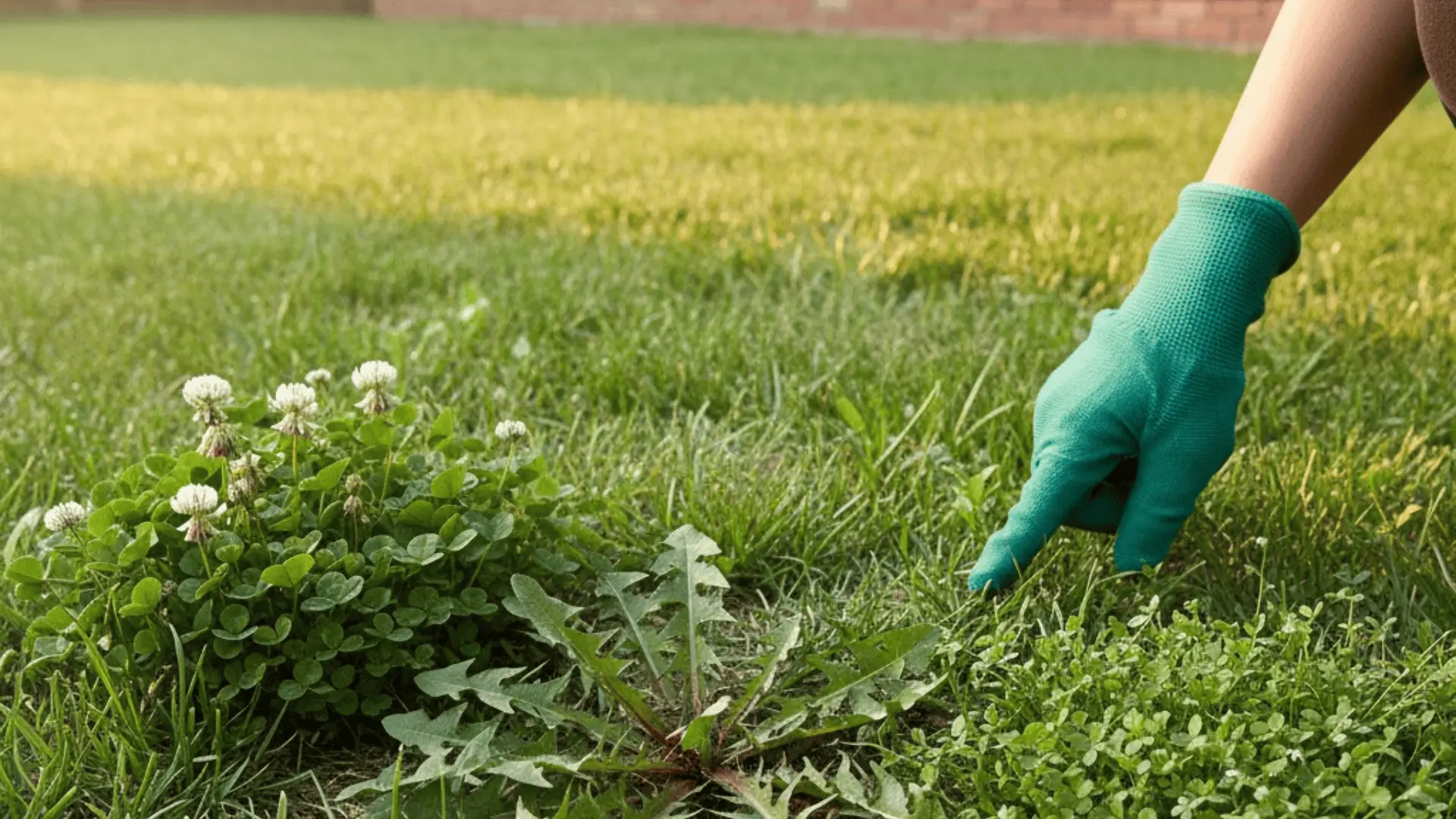
Those wide, veiny leaves that look nothing like your turf? They’re broadleaf weeds, a group of plants that stand out from grass because of their broad, flat leaves and visibly branching veins.
Pulling them without knowing what you’re dealing with rarely works, and the wrong treatment can do more harm than good.
Identification features, life cycles, common species, and control strategies that actually work are all covered here, so you can stop guessing and start seeing real results.
What are Broadleaf Weeds?
Broadleaf weeds are pretty easy to pick out once you know what to look for.
Their wide, flat leaves grow in various directions and carry a network of branching, netted veins across the surface, which is the opposite of how grass veins run.
Many produce flowers or seed heads, and their stems are thick and solid rather than hollow.
Look closely at the leaf edges too, since they’re often toothed, lobed, or rounded. Underground, most rely on a deep taproot or fibrous root network that makes them far more stubborn to remove than they look.
How to Control Broadleaf Weeds?
Knowing what type of broadleaf weed you’re dealing with changes everything about how you treat it. The same product applied at the wrong time in the wrong life stage can do almost nothing.
Here’s a breakdown of the three life cycles and what sets each one apart.
| Life Cycle | How It Works | Best Control Window | Common Examples |
|---|---|---|---|
| Summer Annual | Germinates in spring, flowers and seeds through summer, dies at first frost | Early spring, before germination | Prostrate knotweed, yellow woodsorrel, black medic |
| Winter Annual | Germinates in fall, blooms and sets seed in spring, then dies off | Late summer to early fall | Chickweed, henbit, shepherd’s purse |
| Perennial | Lives for more than two years; regrows from root fragments even after pulling | Active growth periods in spring and fall | Dandelion, clover, ground ivy, creeping Charlie |
| Biennial | Vegetative growth in year one, flowers and seeds in year two | End of year one, before flowering begins | Bull thistle, common mullein |
Pro Tip: Timing your herbicide application to the weed’s life cycle dramatically improves effectiveness. Treating a winter annual in summer, for example, is largely a wasted effort.
Common Types of Broadleaf Weeds
Even the most well-kept lawn can quietly become home to dozens of weed species without you realizing it. Learning to read their leaves, stems, and growth habits is the first step toward actually getting rid of them.
1. Dandelion (Taraxacum officinale)
Life Cycle: Perennial
Where Found: Almost any soil type, especially moist and sunny areas
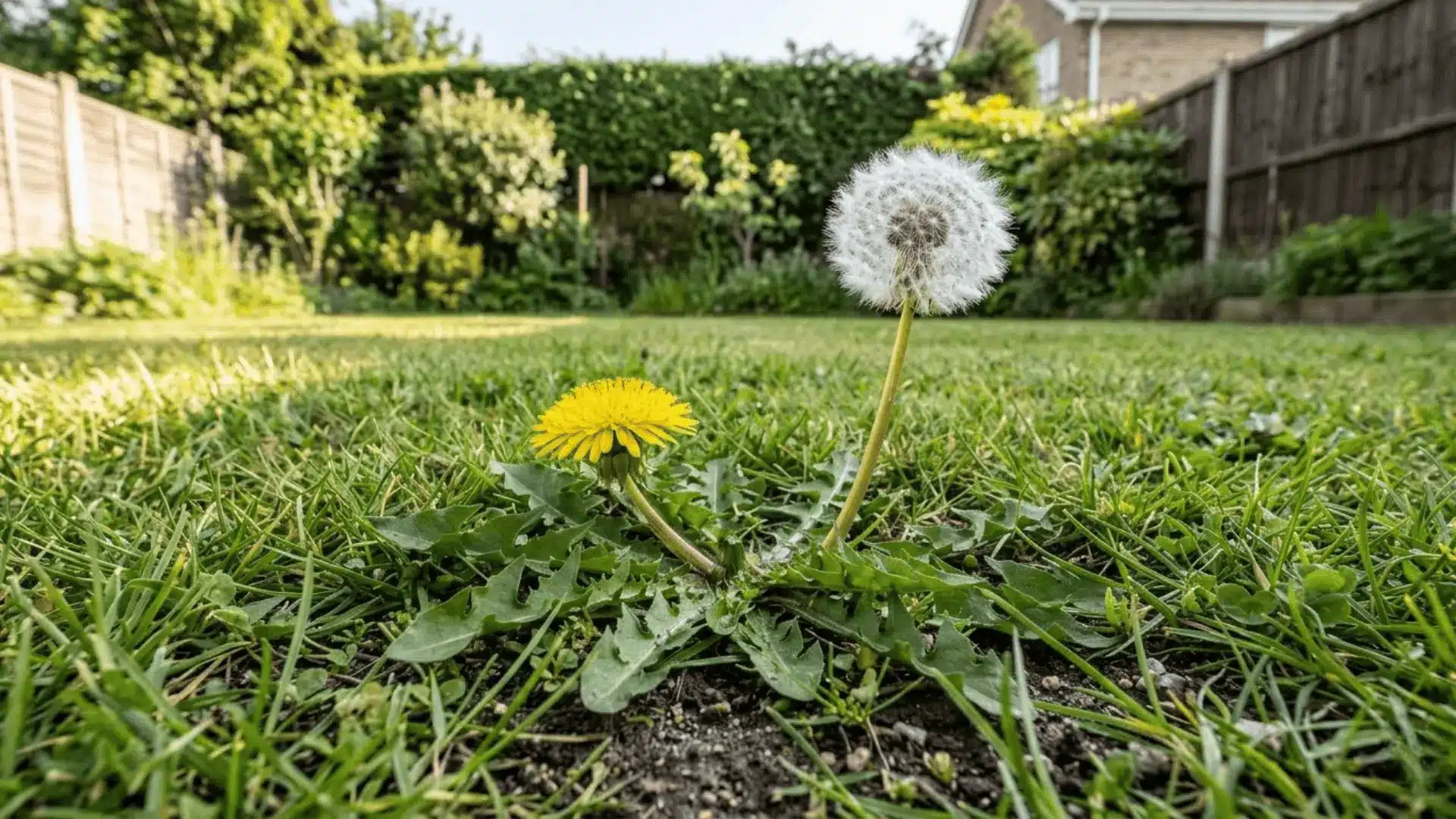
Those dark green rosette leaves with jagged, toothed edges are hard to miss. A bright yellow flower rises from a hollow stem and matures into the iconic white puffball that sends seeds drifting across your entire yard.
The deep taproot is the real problem since it regrows completely if even a small portion is left behind.
2. White Clover (Trifolium repens)
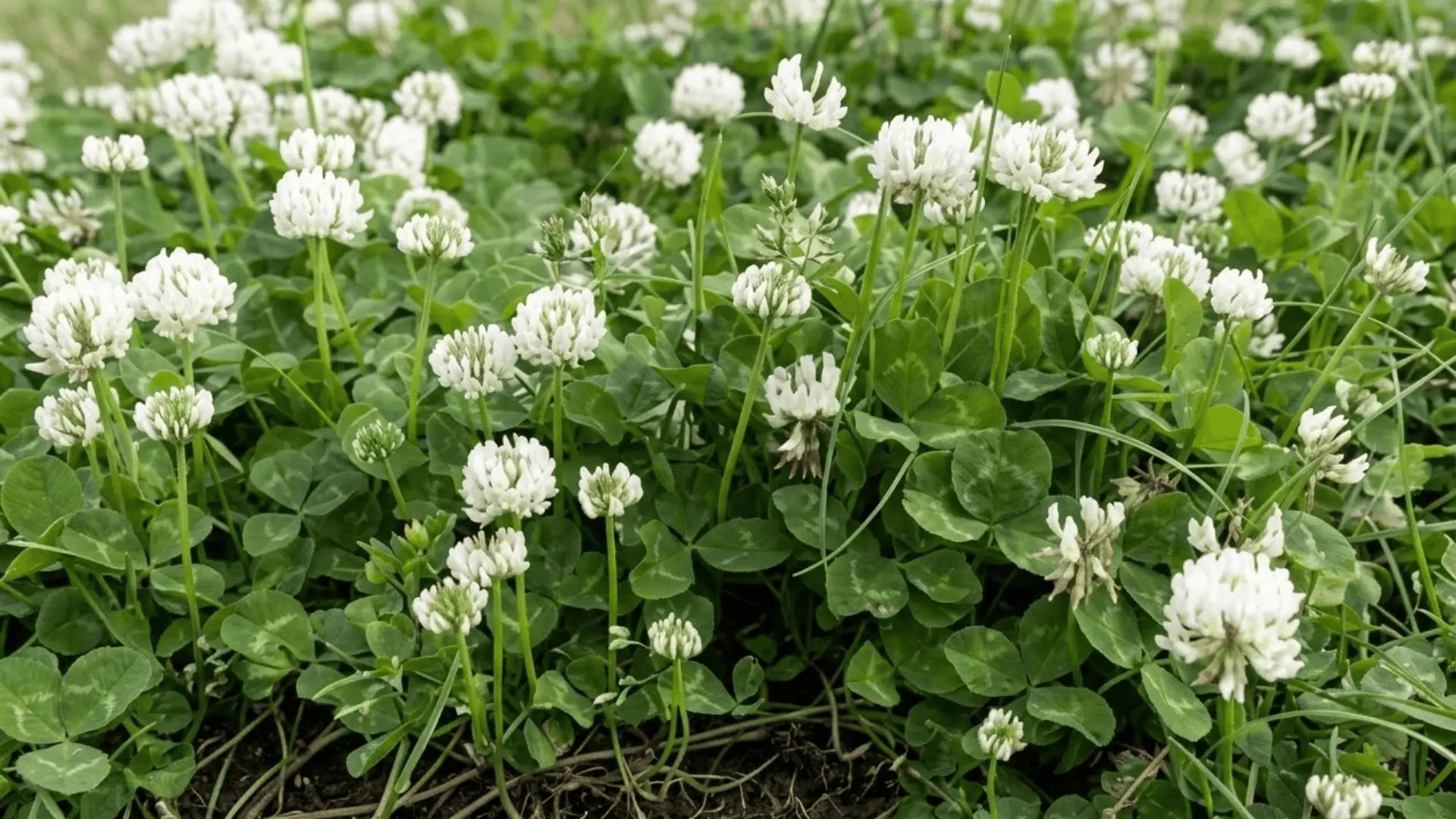
Life Cycle: Perennial
Where Found: Nutrient-poor, low-nitrogen lawns
Each leaf comes in a set of three round leaflets, often marked with a faint chevron pattern. White or pale pink oval flower clusters sit just above the foliage.
While it technically fixes nitrogen into the soil, it spreads aggressively and competes hard with surrounding grass, making it a weed worth managing despite its benefits.
3. Chickweed (Stellaria media)
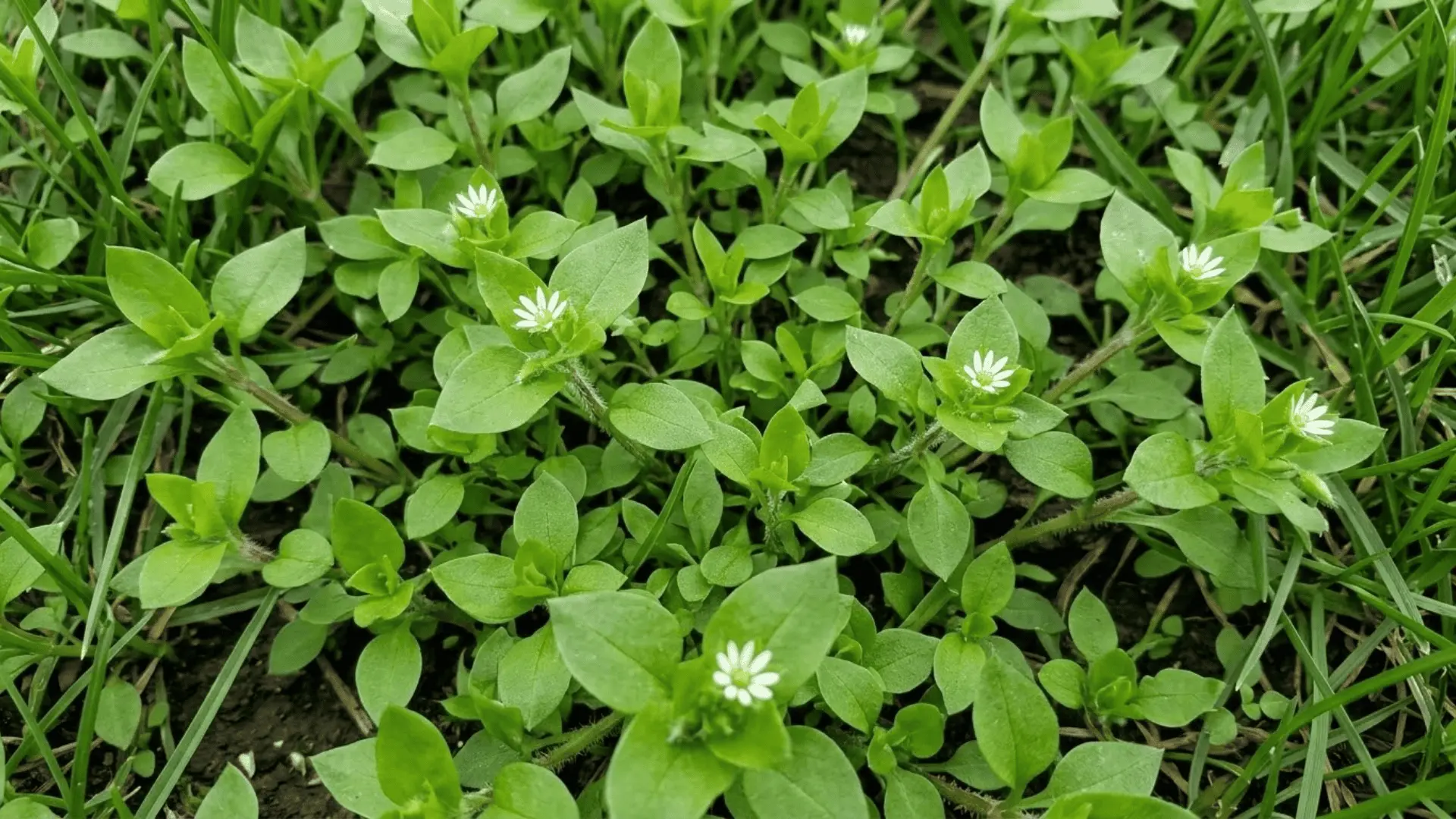
Life Cycle: Winter Annual
Where Found: Cool, moist, shaded areas and thin or newly seeded lawns
Chickweed creeps low to the ground, forming a bright green carpet of small, oval leaves that taper to a soft point. Tiny white star-shaped flowers appear early in the season.
It thrives in the cool months when most weeds sit out, which means it can establish itself quickly before your lawn has a chance to fill in.
4. Ground Ivy / Creeping Charlie (Glechoma hederacea)
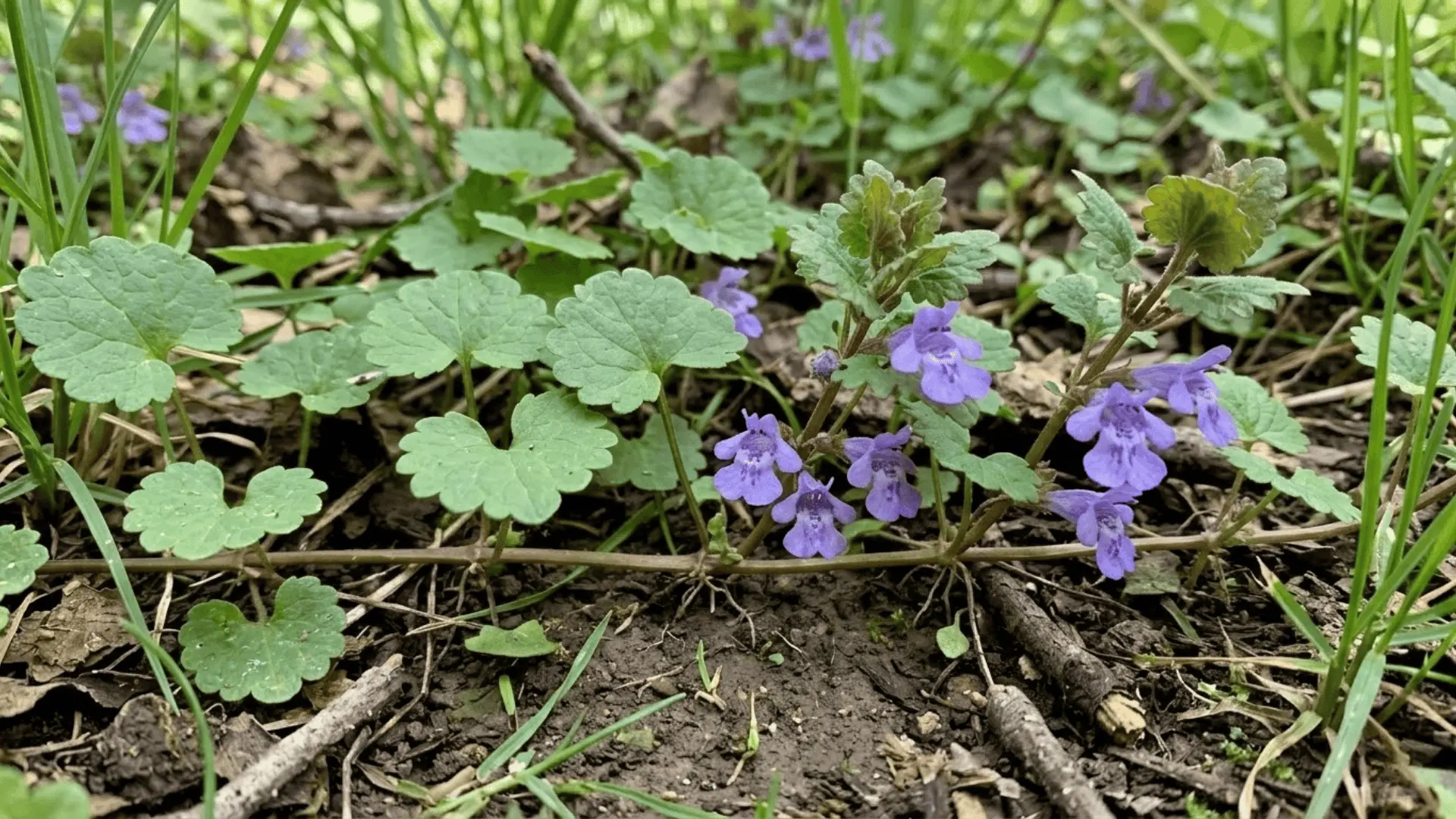
Life Cycle: Perennial
Where Found: Shaded, moist areas throughout the lawn
Round, coin-shaped leaves with scalloped edges and a distinct minty smell when mowed are the clearest giveaways. Small purple-blue flowers appear in spring.
What makes it especially difficult to control is that it has roots at every single node along its creeping stems, meaning it can reestablish itself from almost any fragment left on the soil.
5. Broadleaf Plantain (Plantago major)
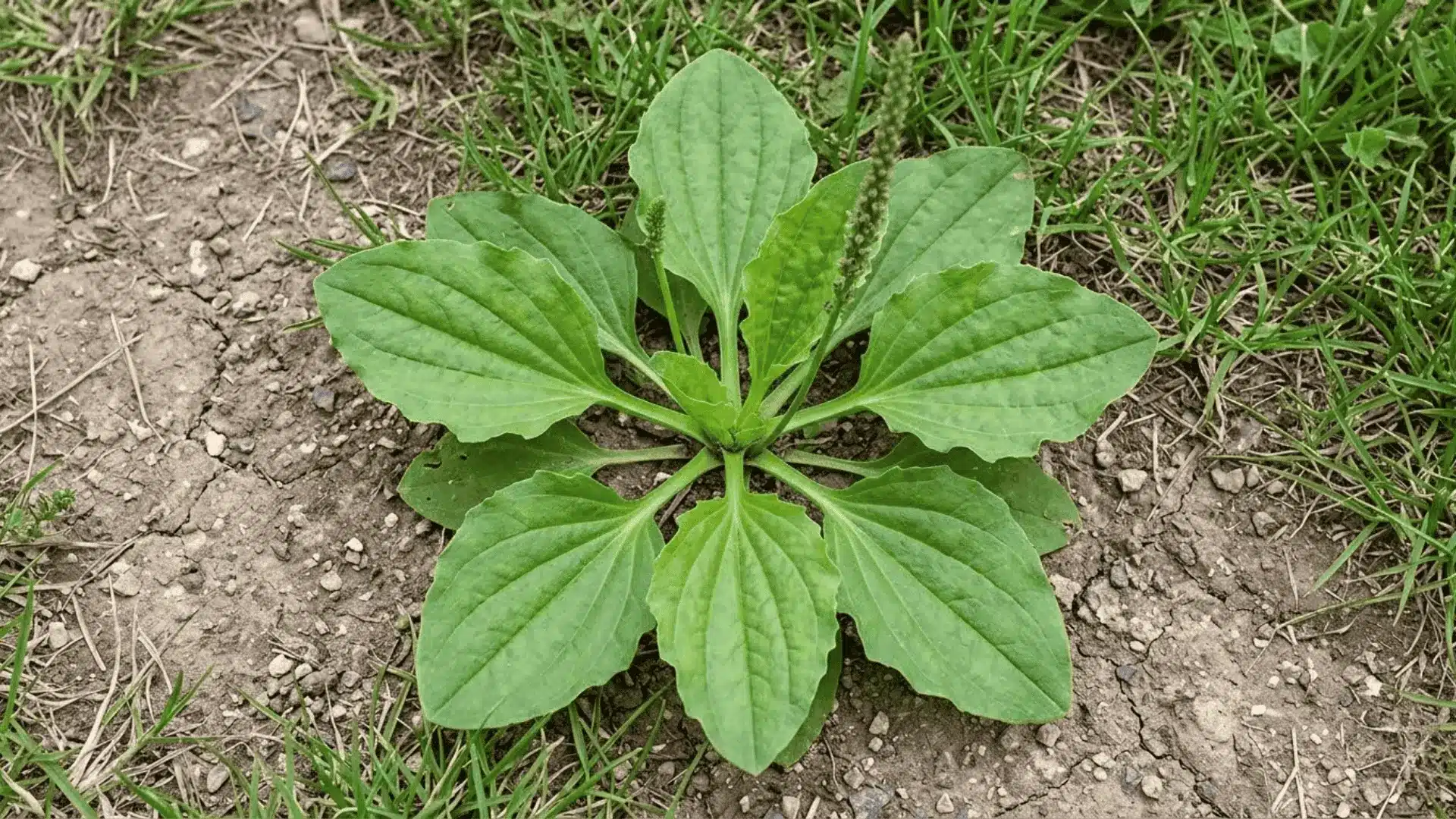
Life Cycle: Perennial
Where Found: Compacted soils, high-traffic areas, and roadsides
Broad, egg-shaped leaves with prominent parallel veins grow in a low rosette close to the ground. A slender flower stalk rises from the center between June and September.
It tends to show up wherever foot traffic has compressed the soil, making it a reliable sign that aeration might be overdue.
6. Buckhorn Plantain (Plantago lanceolata)
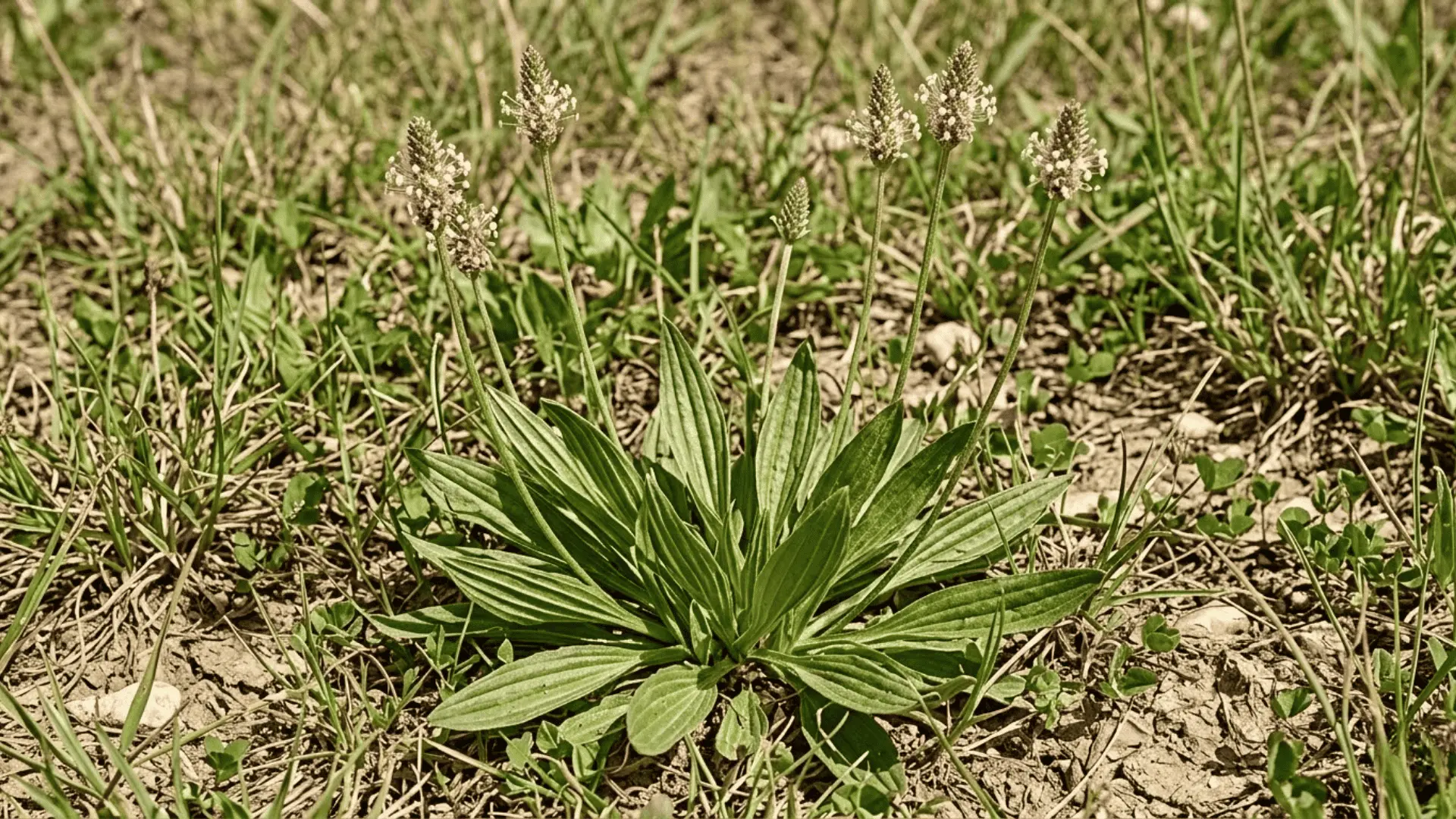
Life Cycle: Perennial
Where Found: Similar conditions to broadleaf plantain, open, disturbed areas
Unlike its broader cousin, buckhorn plantain has narrow, lance-shaped leaves with strong lengthwise veins. A leafless stalk carries a small cone-shaped spike of white flowers.
It tolerates poor, dry soil well and spreads readily by seed, so catching it before it flowers makes a meaningful difference in keeping populations manageable.
7. Henbit (Lamium amplexicaule)
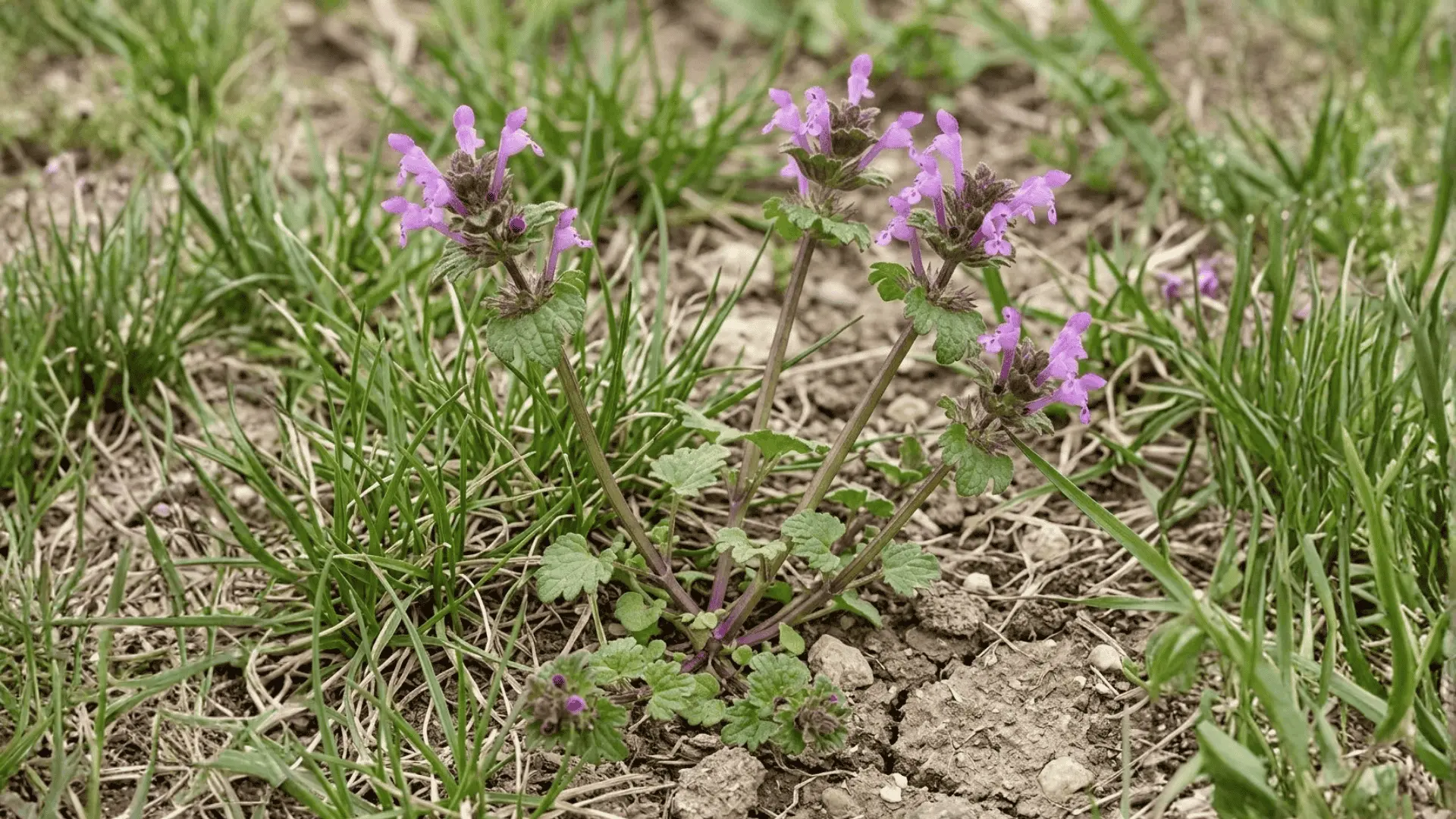
Life Cycle: Winter Annual
Where Found: Thin turf, gardens, and disturbed soil
Square stems and upper leaves that clasp directly onto the stem with no petiole help distinguish henbit from similar-looking weeds.
Purple-pink tubular flowers appear in early spring. It’s commonly mistaken for purple deadnettle, but the clasping leaves are the key difference. It germinates in the fall and is already well established by the time spring arrives.
8. Creeping Buttercup (Ranunculus repens)
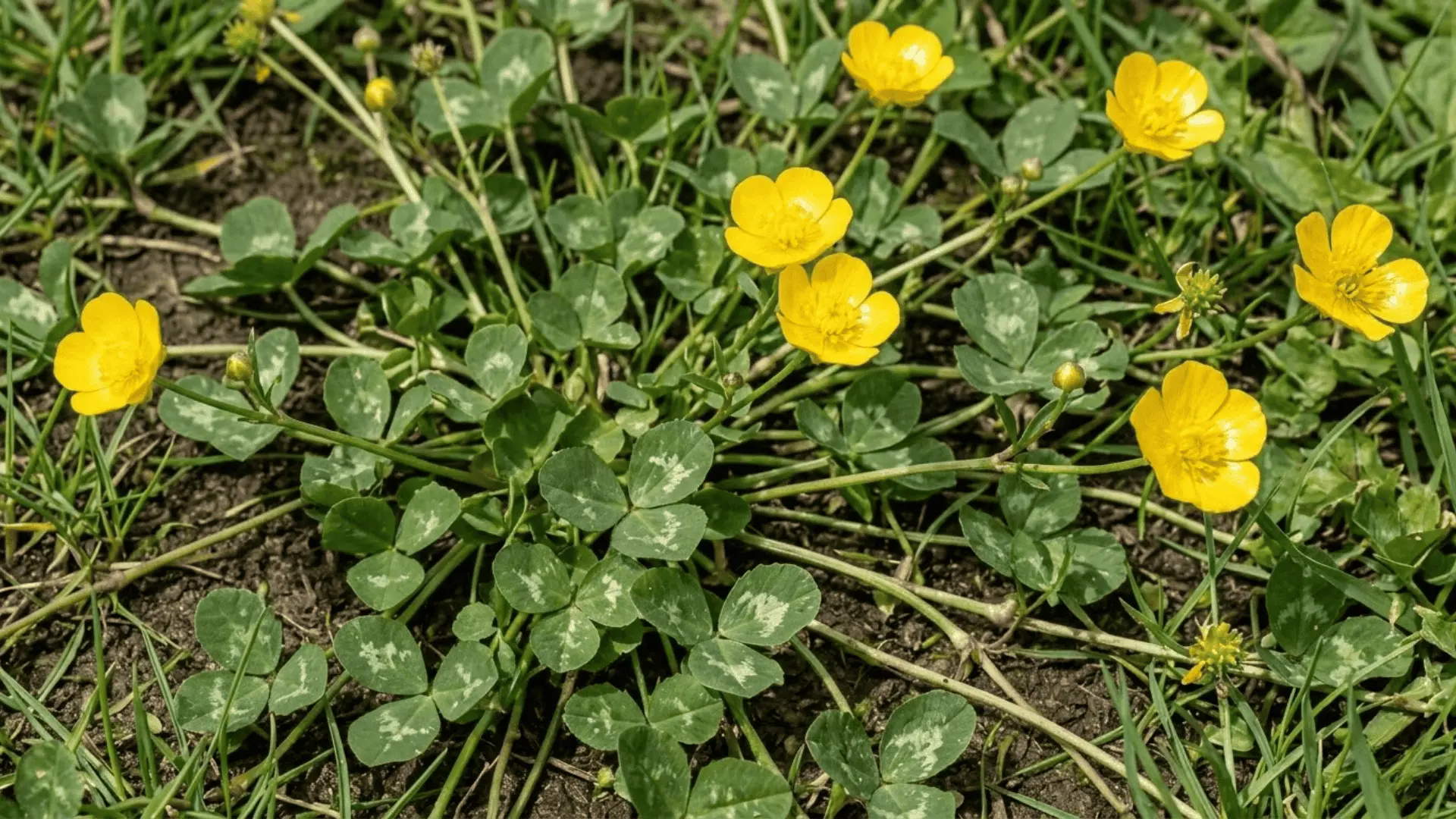
Life Cycle: Perennial
Where Found: Moist, poorly drained soils
Three-lobed, dark green leaves with lighter patches across the surface and glossy yellow flowers make this one relatively easy to identify. It spreads through surface runners called stolons that root wherever they touch the ground.
Waterlogged or compacted areas are where it thrives most, so improving drainage often helps reduce its foothold over time.
9. Yellow Woodsorrel (Oxalis stricta)
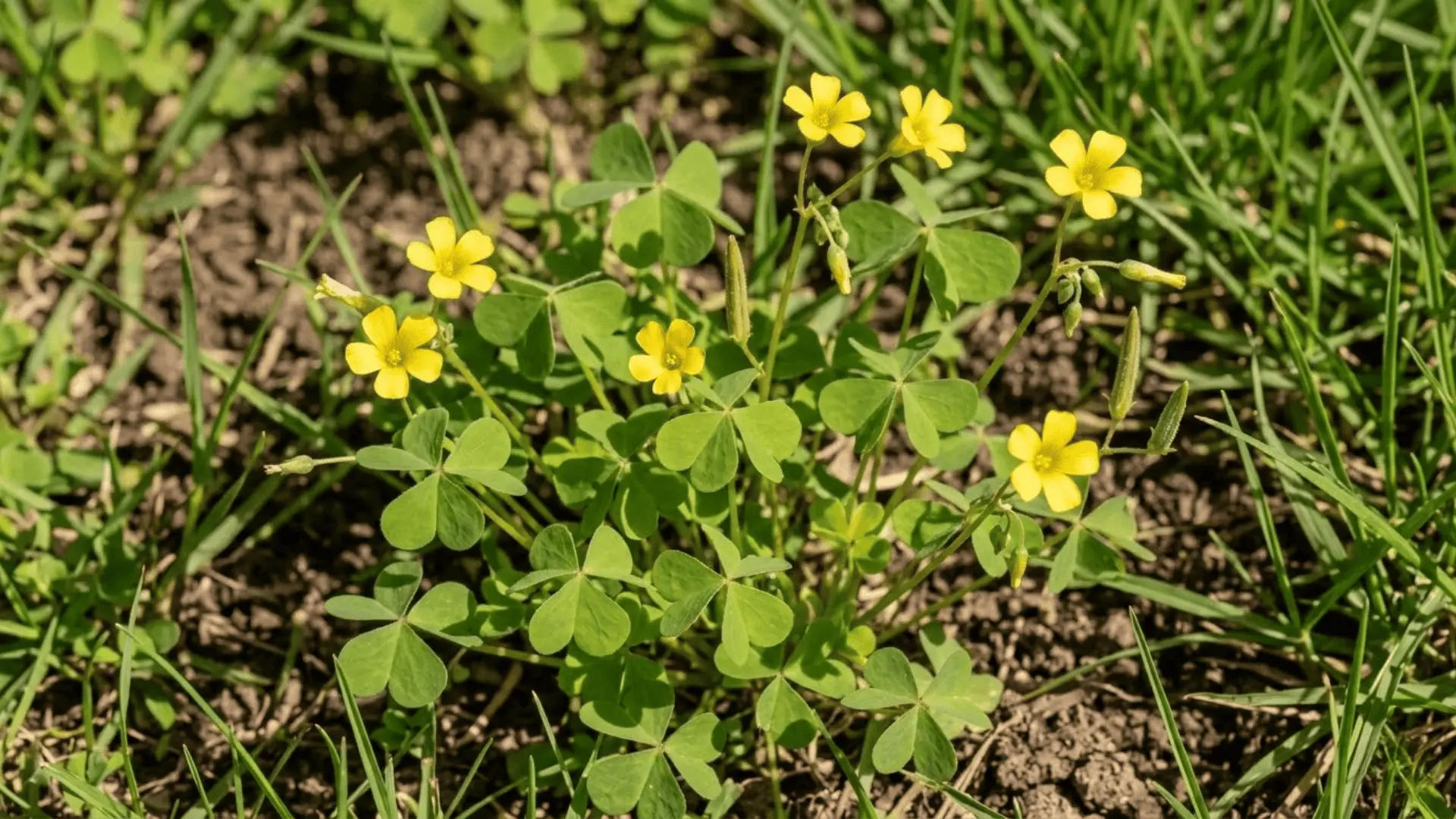
Life Cycle: Perennial or Summer Annual
Where Found: Moist but well-drained fertile soils, lawns, and garden beds
Three heart-shaped leaflets grouped together on a single stem give it a shamrock-like appearance that makes it easy to recognize.
Small yellow flowers bloom from spring through fall. Its seed pods can explode when disturbed, scattering seeds several feet away, which is part of why it spreads so efficiently across a lawn.
10. Prostrate Knotweed (Polygonum aviculare)
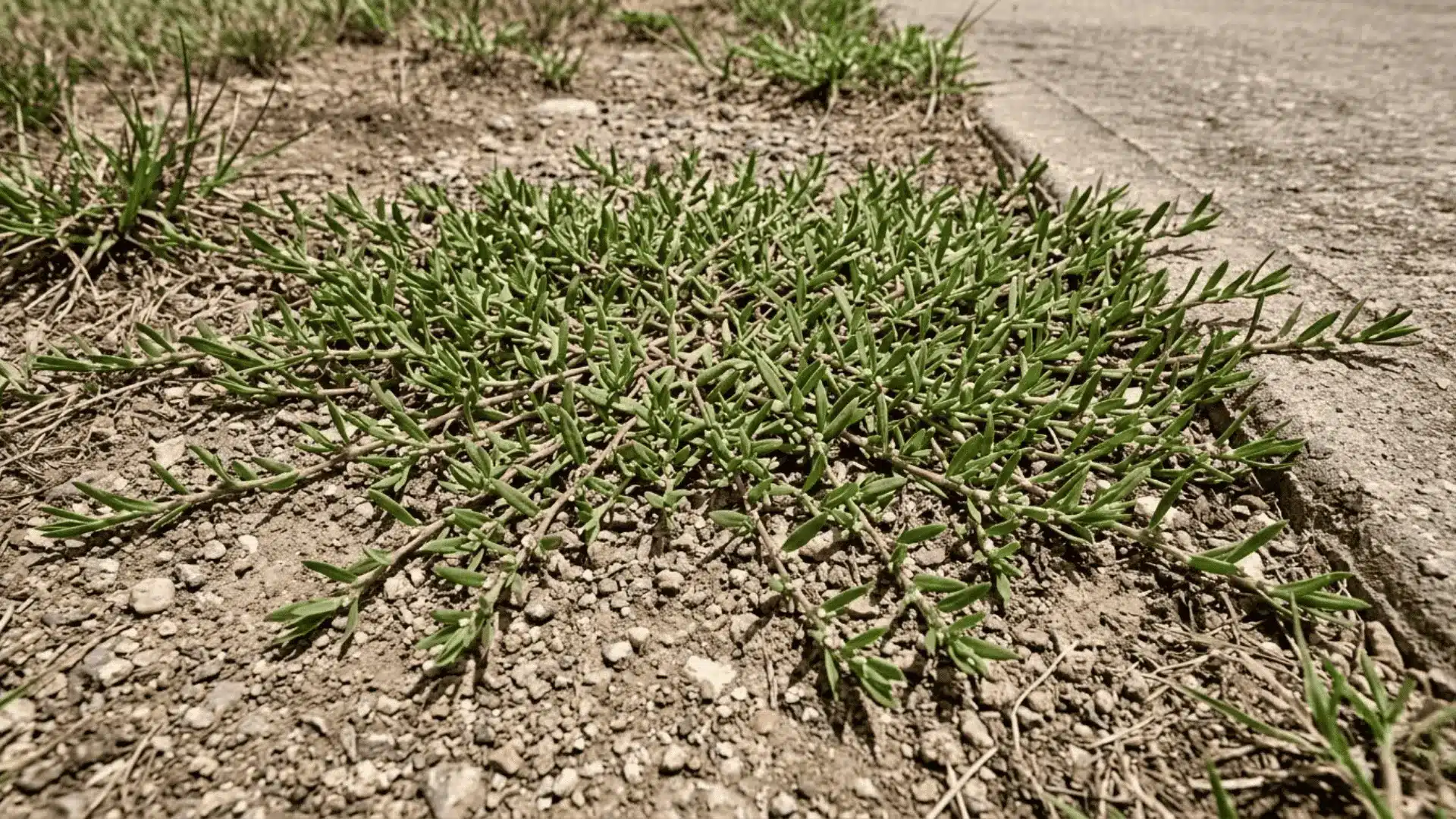
Life Cycle: Summer Annual
Where Found: Compacted soils, driveways, sidewalk cracks, and pathways
Wiry, mat-forming stems spread outward low to the ground, lined with small, narrow lance-shaped leaves. It can form dense mats several feet wide across a single season.
Compacted soil is where it gets its strongest foothold, so it often signals that the ground beneath needs some attention just as much as the weed itself does.
11. Dollarweed / Pennywort (Hydrocotyle spp.)
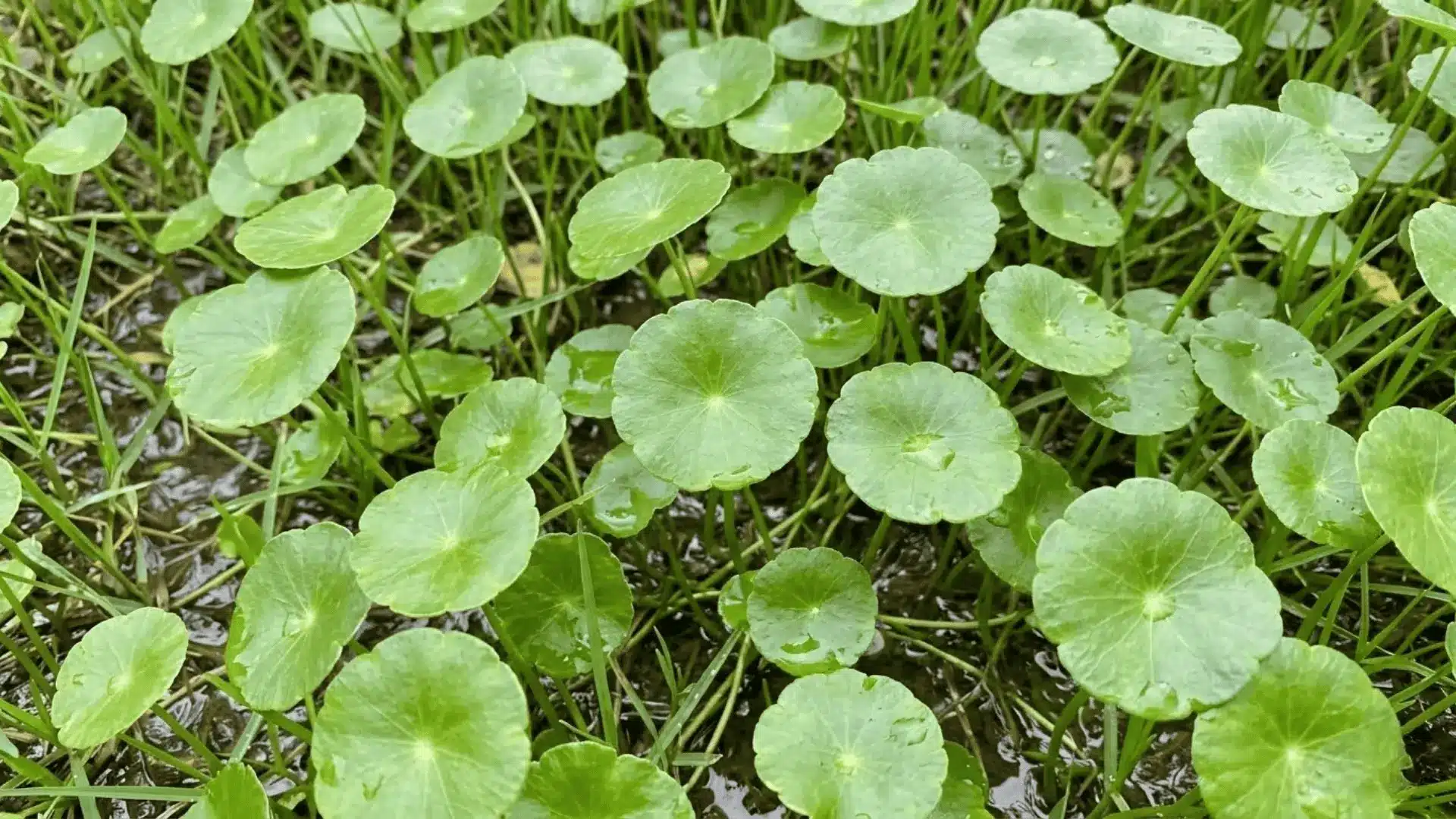
Life Cycle: Perennial
Where Found: Warm, humid environments with acidic, moist, or waterlogged soil
Round, bright green leaves that look remarkably like a silver dollar grow in thick, dense mats. It thrives in conditions most other weeds avoid, particularly areas that stay wet for long stretches.
Overwatering is a common reason it appears in otherwise healthy lawns, making irrigation habits worth reviewing when it starts showing up.
12. Spurge (Euphorbia spp.)
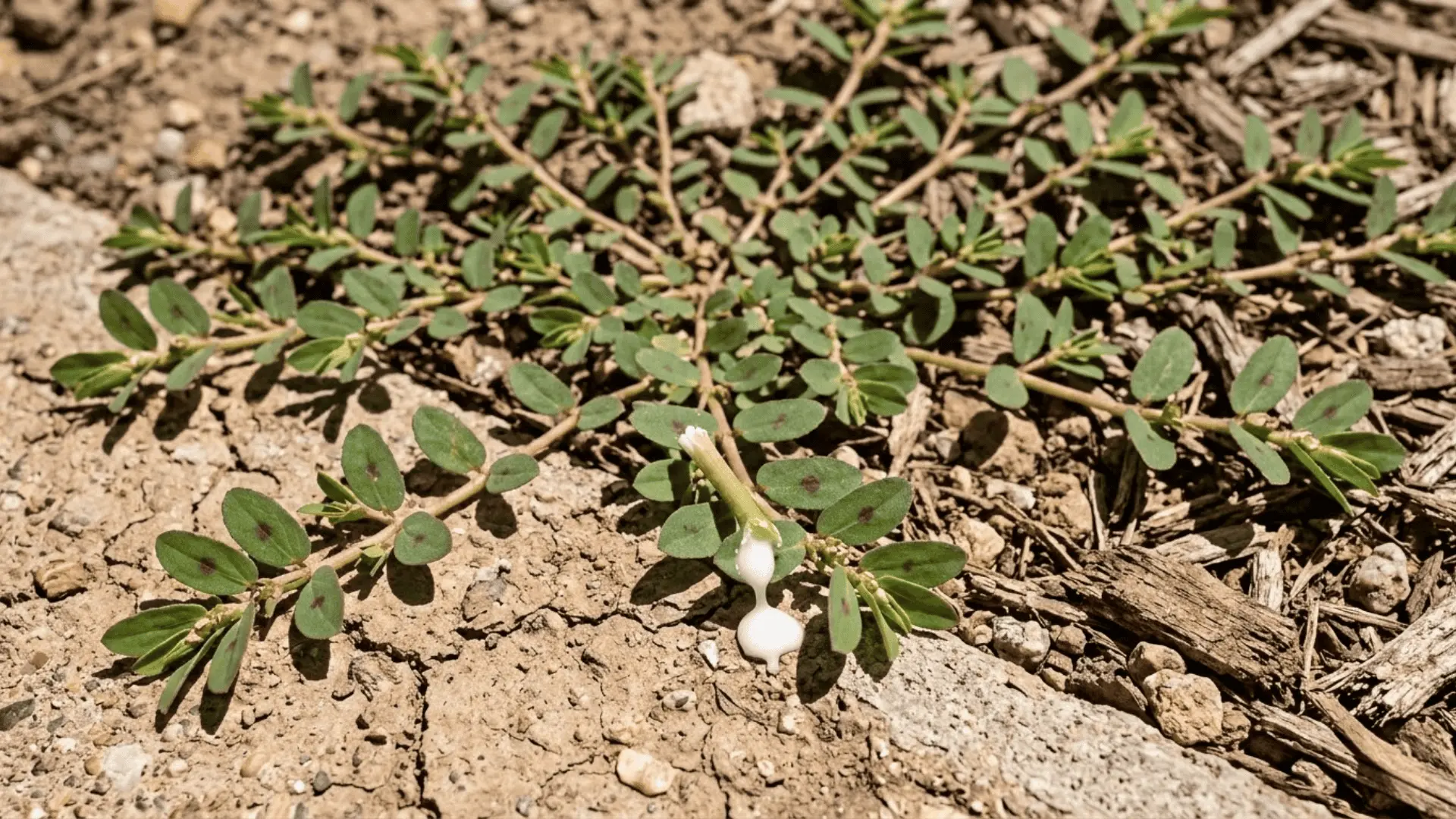
Life Cycle: Summer Annual
Where Found: Hot, dry, sunny areas, including driveways, garden beds, and bare soil
Small oval leaves, sometimes with a reddish spot at the center, spread outward in a low, mat-forming pattern. Breaking a stem releases a milky white sap that’s a reliable identifier.
It germinates in late spring and grows quickly in heat, filling in bare patches in lawns and garden beds before desirable plants have the chance to establish.
13. Shepherd’s Purse (Capsella bursa-pastoris)
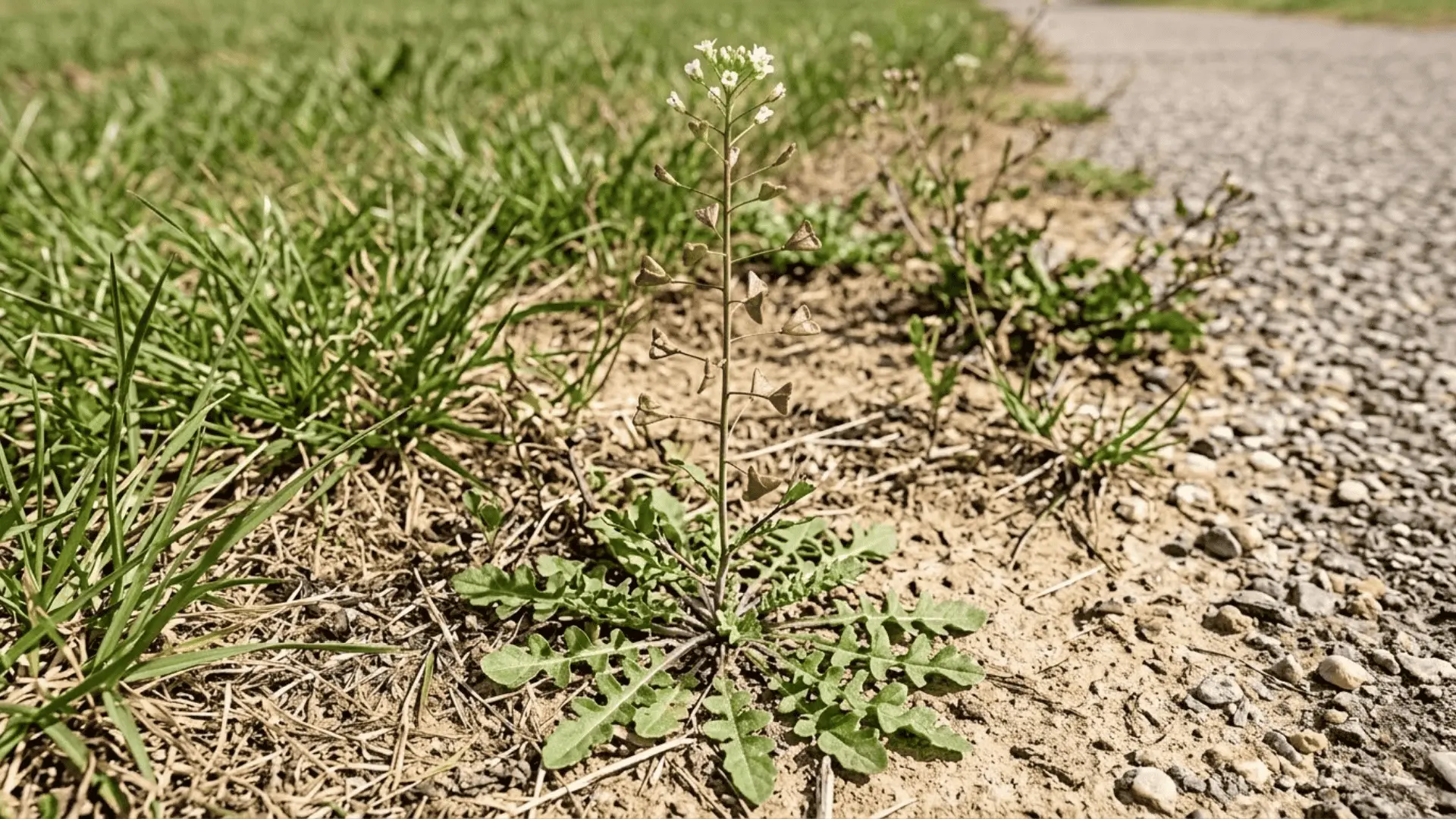
Life Cycle: Winter or Summer Annual
Where Found: Dry, sunny areas with clay to sandy loam soil
A basal rosette of dandelion-like leaves sits low to the ground, sending up a slender stem with small white flowers. The most distinctive feature is its seed pods, which are shaped like tiny hearts or old-fashioned purses.
It can complete multiple generations in a single year under the right conditions, making early intervention worthwhile.
14. Bull Thistle (Cirsium vulgare)
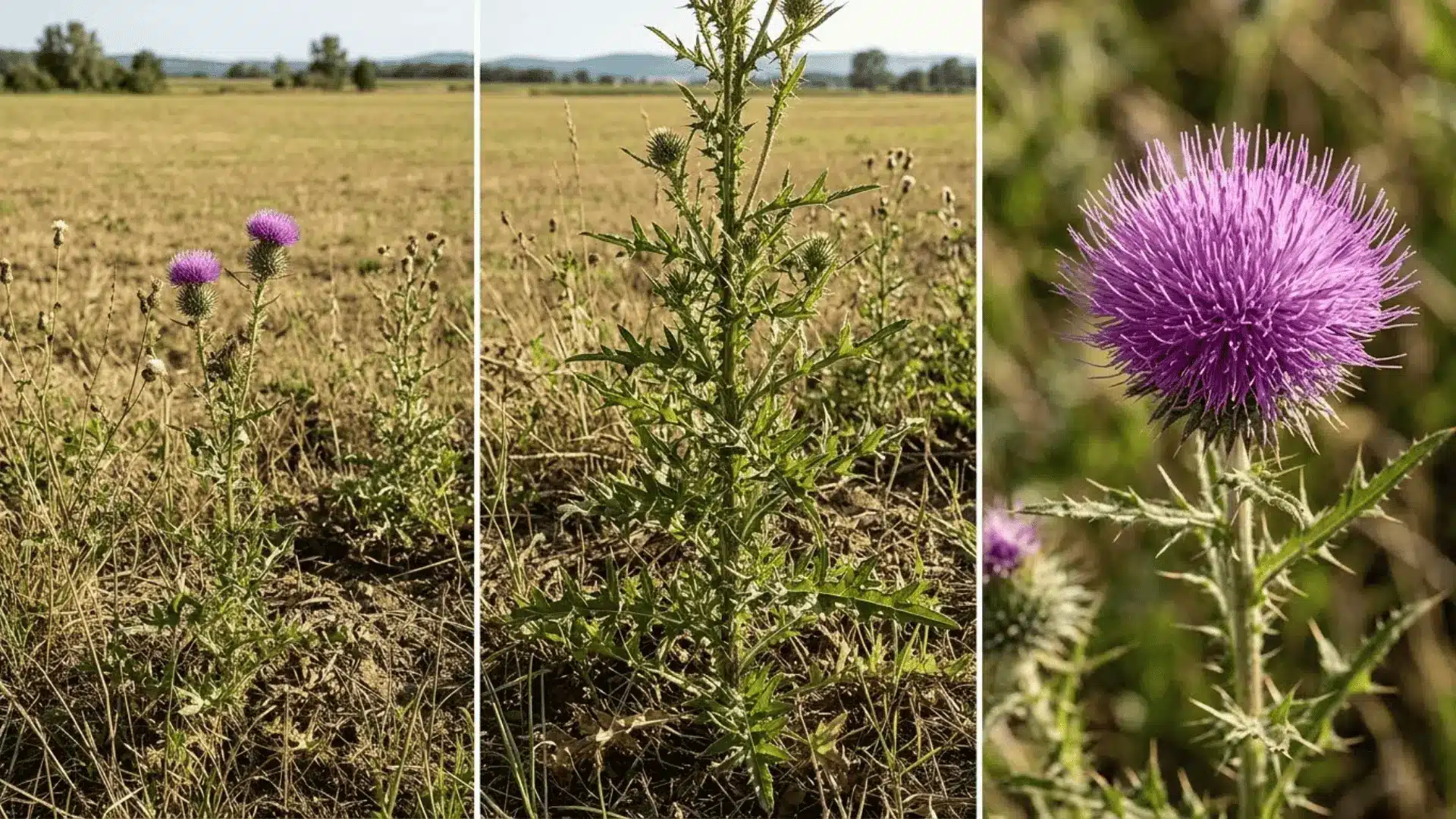
Life Cycle: Biennial
Where Found: Roadsides, disturbed areas, pastures, and garden edges
Deeply lobed, spiny leaves and tall spiny-winged stems topped with purple flower heads make bull thistle one of the more dramatic weeds on this list.
It can reach considerable height by its second year when it flowers and sets seed. Because it spends its first year as a low rosette, it’s easiest to treat before it ever gets the chance to bolt.
15. Black Medic (Medicago lupulina)
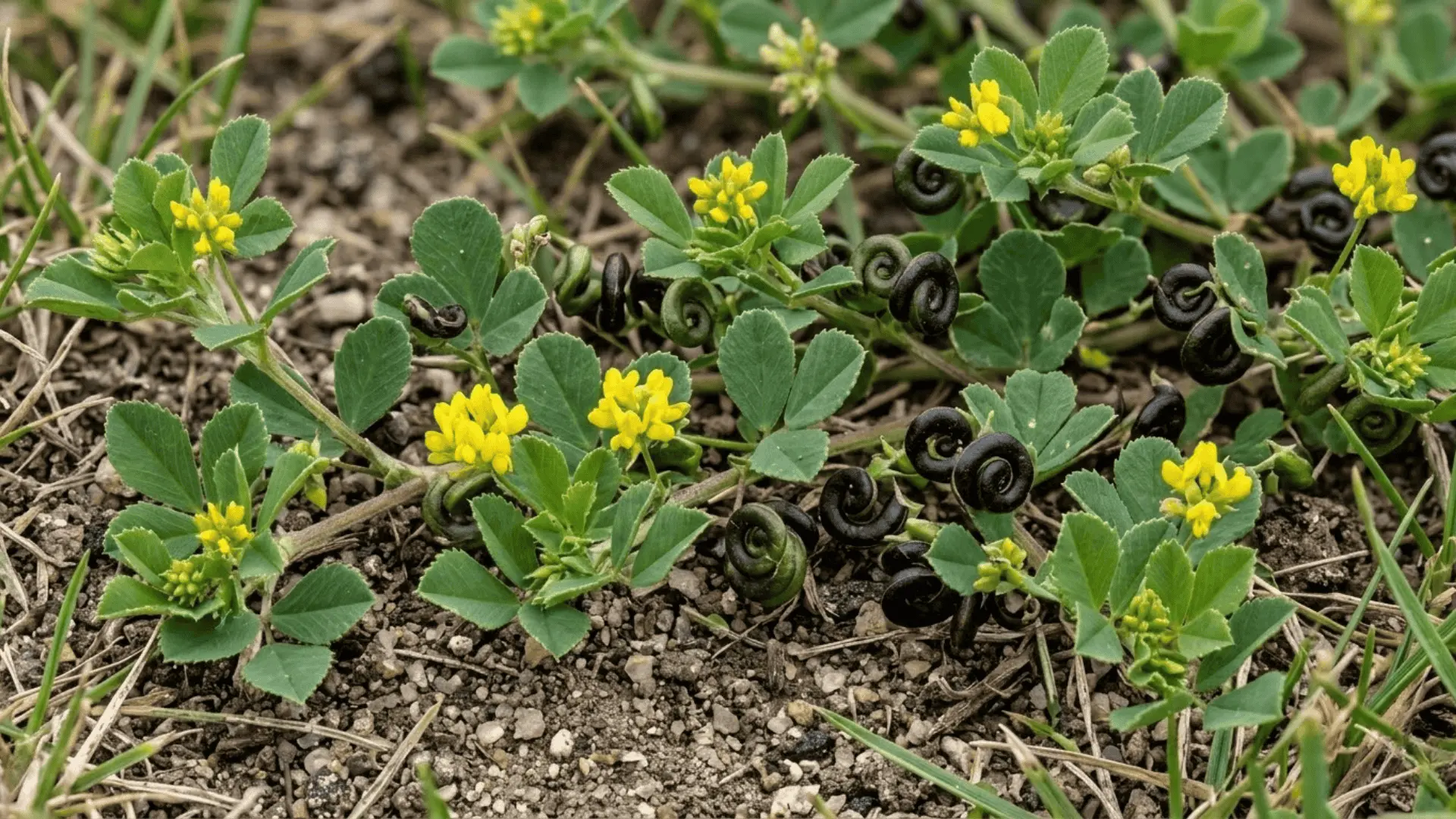
Life Cycle: Summer Annual
Where Found: Compacted soils low in nitrogen
Three small oval leaflets arranged similarly to clover make black medic easy to confuse with its more well-known look-alike. Tiny yellow flowers and distinctive black seed pods are what set it apart.
Like clover, its presence often points to low soil nitrogen, so addressing soil fertility alongside treatment gives you a much better long-term outcome.
What Causes Broadleaf Weeds in Your Lawn?
Weeds don’t show up randomly. They move into conditions your lawn has quietly created for them, and understanding those conditions is honestly half the battle.
- Thin or bare turf gives weed seeds an open invitation to germinate without any competition from grass.
- Compacted soil is a welcome mat for species like knotweed and plantain that struggle to grow anywhere else.
- Low nitrogen and poor mowing habits create the exact environment clover, black medic, and fast-spreading annuals need to take hold.
- Excess moisture and poor drainage set the stage for dollarweed, creeping buttercup, and ground ivy to move in and stay.
- Wind and contaminated compost carry seeds in from outside, meaning even a healthy lawn isn’t completely off the table.
Fixing the weed is only a temporary solution if the underlying condition stays the same.
A lawn that’s well-fed, properly mowed, and draining the way it should leaves very little room for broadleaf weeds to establish in the first place.
How to Get Rid of Broadleaf Weeds?
Getting rid of broadleaf weeds isn’t about one big effort; it’s about layering the right approaches in the right order. The most effective results almost always come from combining prevention, physical removal, and targeted treatment.
Cultural Control
The most sustainable form of weed control happens before a single weed appears. A dense, well-maintained lawn simply doesn’t leave room for broadleaf weeds to establish.
- Mow at the right height with sharp blades to keep the turf thick and avoid scalping that exposes bare soil.
- Fertilize consistently to prevent the nitrogen deficiency that invites clover and black medic.
- Overseed thin or bare patches with lawn seed and compost before weeds claim those spots first.
- Improve drainage in low-lying areas to discourage moisture-loving species like dollarweed and creeping buttercup.
- Apply mulch at a depth of two to three inches in garden beds to suppress germination at the soil surface.
Manual and Mechanical Removal
Hand removal works best when the soil is moist, and you can extract the full root system in one pull.
- Taprooted weeds like dandelion and plantain require a weeding tool or dandelion digger to pull the root completely, since any fragment left behind will regrow.
- Creeping weeds like ground ivy need every stolon and rooting node removed, not just the visible top growth.
- Repeat pulls over several weeks are often necessary for perennials with deep or spreading root systems.
Herbicide Control
Not all herbicides work the same way, and choosing the wrong type or applying it at the wrong time is one of the most common reasons treatments fail.
Here’s how the three main categories compare and when each one actually makes sense to use.
| Type | How It Works | Best Timing | Common Active Ingredients |
|---|---|---|---|
| Pre-Emergent | Creates a chemical barrier that prevents seeds from germinating | Early spring, before soil temperatures rise | Isoxaben, dithiopyr |
| Post-Emergent (Selective) | Targets broadleaf weeds without harming turfgrass; systemic options kill roots | Early summer during active growth | 2,4-D, MCPP, dicamba, triclopyr |
| Post-Emergent (Non-Selective) | Kills all vegetation on contact; use only in beds or areas being fully cleared | As needed, with caution | Glyphosate |
Important: Always read herbicide labels carefully before applying. Some formulations are not safe for all grass types. The EPA’s pesticide label database is a reliable resource for verifying product safety information.
When to Call a Professional?
DIY treatment covers most situations, but there are a few cases where professional help genuinely makes more sense than continuing to troubleshoot on your own.
- The infestation is widespread and hasn’t responded to repeated treatment attempts.
- You’re unsure of the weed species or which herbicide is appropriate for your grass type.
- You’re dealing with a combination of broadleaf and grassy weeds that require different control strategies applied at different times.
The National Association of Landscape Professionals can help you locate a qualified lawn care specialist in your area.
Broadleaf Weeds With Benefits?
Not every broadleaf weed deserves an eviction notice. Dandelions are actually one of the earliest food sources for bees and butterflies in spring, when very little else is blooming.
White clover pulls nitrogen from the air and releases it into the soil, doing quietly what a bag of fertilizer does artificially.
For homeowners leaning toward a low-maintenance or pollinator-friendly lawn, tolerating a modest amount of either isn’t a compromise so much as a choice.
Knowing which weeds to remove aggressively and which ones to simply manage puts you in a much more intentional position than treating every broadleaf as the enemy.
Broadleaf Weeds vs. Grassy Weeds
At first glance, a weed is a weed, but treating a grassy weed with a broadleaf herbicide, or the other way around, will get you nowhere fast.
Knowing your category guides product choice and timing.
| Feature | Broadleaf Weeds | Grassy Weeds |
|---|---|---|
| Leaf shape | Wide, flat, varied | Narrow, blade-like |
| Leaf veins | Netted/branching | Parallel |
| Plant type | Dicots (2 seed leaves) | Monocots (1 seed leaf) |
| Root system | Deep taproot or fibrous | Rhizomes or stolons |
| Visibility in the lawn | Stand out clearly | Blend in with the grass |
| Common examples | Dandelion, clover, chickweed | Crabgrass, foxtail, nutsedge |
Final Thoughts
Broadleaf weeds are persistent, but they’re not unbeatable.
The more familiar you get with what’s actually growing in your lawn, the easier it becomes to respond with the right approach at the right time rather than guessing and starting over every season.
A healthy, well-tended lawn really is the best long-term defense, and small, consistent habits go further than any single treatment ever will.
Have a broadleaf weed you’re still trying to identify, or a control method that’s worked surprisingly well for you? Drop it in the comments below; it might be exactly what someone else needs to read.