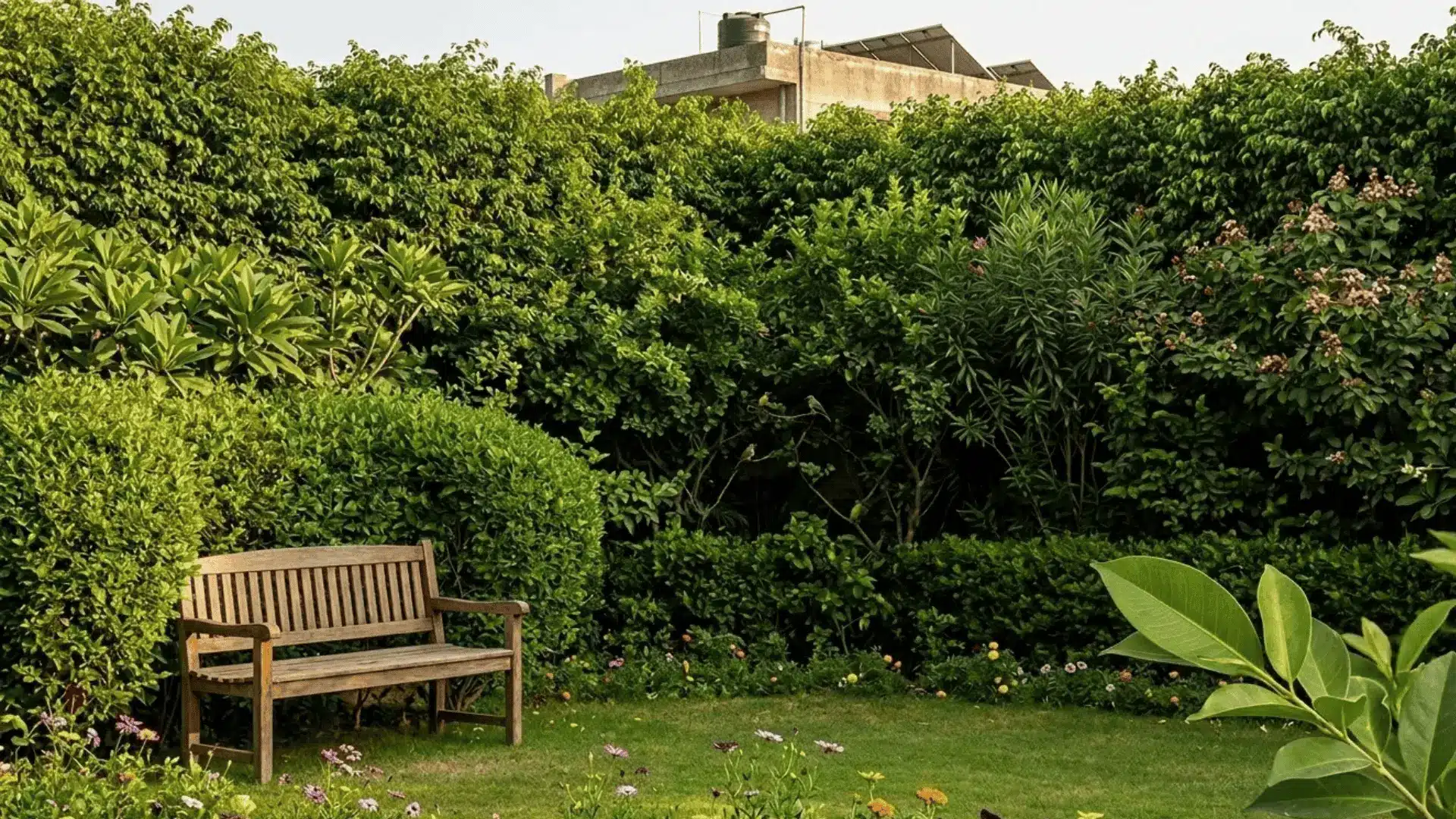
A fence does the job, sure, but a living wall of lush, green shrubs? That does something a fence never could.
Fast-growing shrubs have become a quiet favorite for homeowners who want privacy without sacrificing the soft, natural feel of their outdoor space.
They muffle street noise, invite birds and butterflies, and grow into something that actually belongs in a garden.
Stick around, because we’re covering the best picks, what to expect as they grow, and exactly how to get them started.
What Makes a Shrub Good for Privacy?
Picking the right shrub comes down to more than just liking how it looks.
You want something that grows fast enough to actually be useful, fills out densely so neighbors aren’t peeking through the gaps, and reaches a height that works like a proper living fence.
It also helps to decide early if you want year-round coverage with an evergreen or a deciduous variety that goes bare in winter but rewards you with beautiful blooms or fall color in return.
Get these basics right, and everything else falls into place.
Fast-Growing Shrubs for Privacy
Some shrubs just know how to show up, growing tall, filling in fast, and turning a bare yard into something that actually feels like a sanctuary.
Here are 25 of the best ones worth planting.
1. Arborvitae
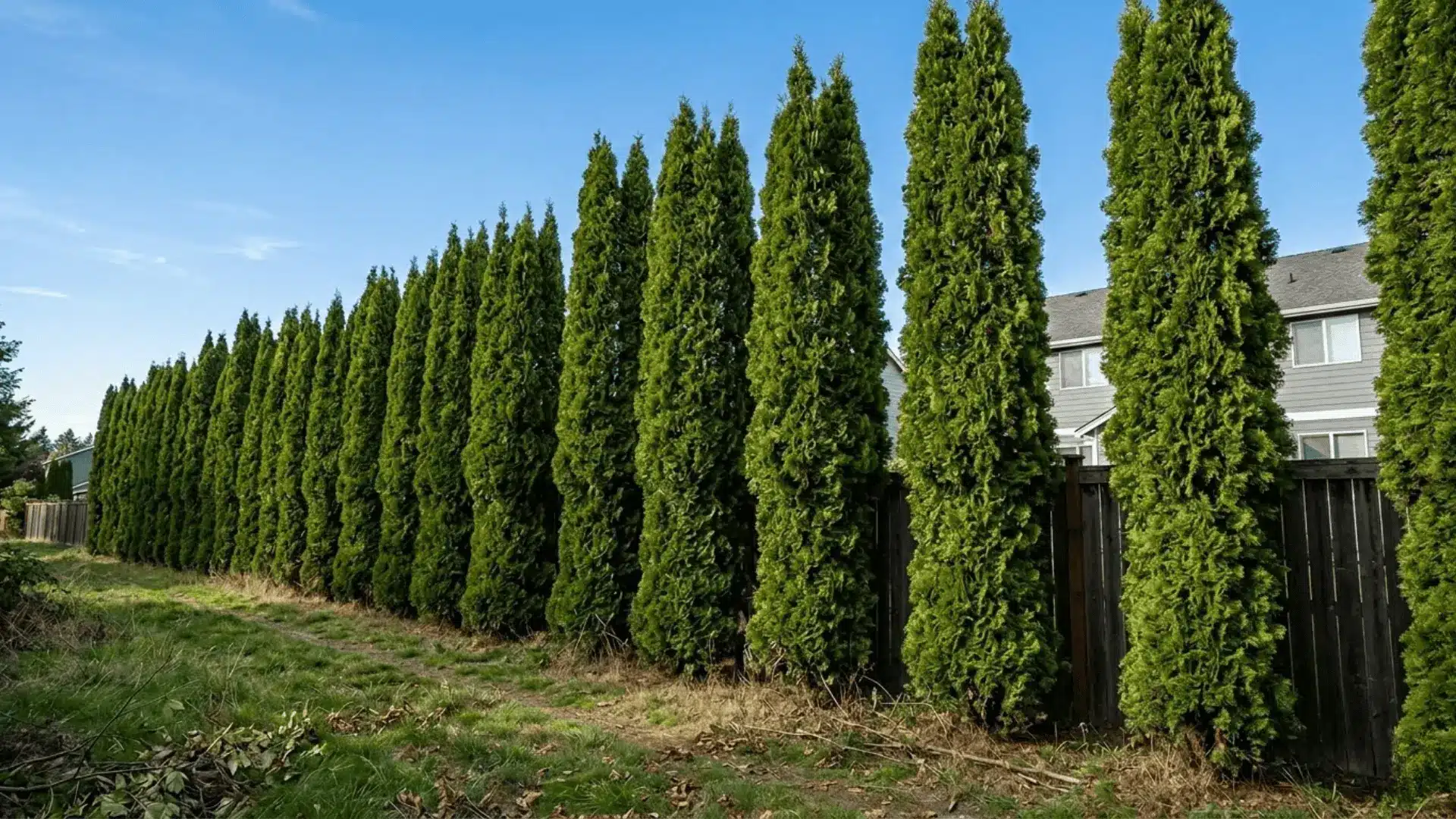
Full Grown In: 10 to 15 years
USDA Zone: 3 to 8
Arborvitae is the go-to evergreen for a reason. It grows in a naturally narrow, columnar shape that fits neatly along fence lines without taking over the yard.
The dense, feathery foliage stays green all year, making it one of the most reliable choices for year-round screening. It’s low maintenance, tolerates a light trim, and looks clean without much effort.
2. Privet
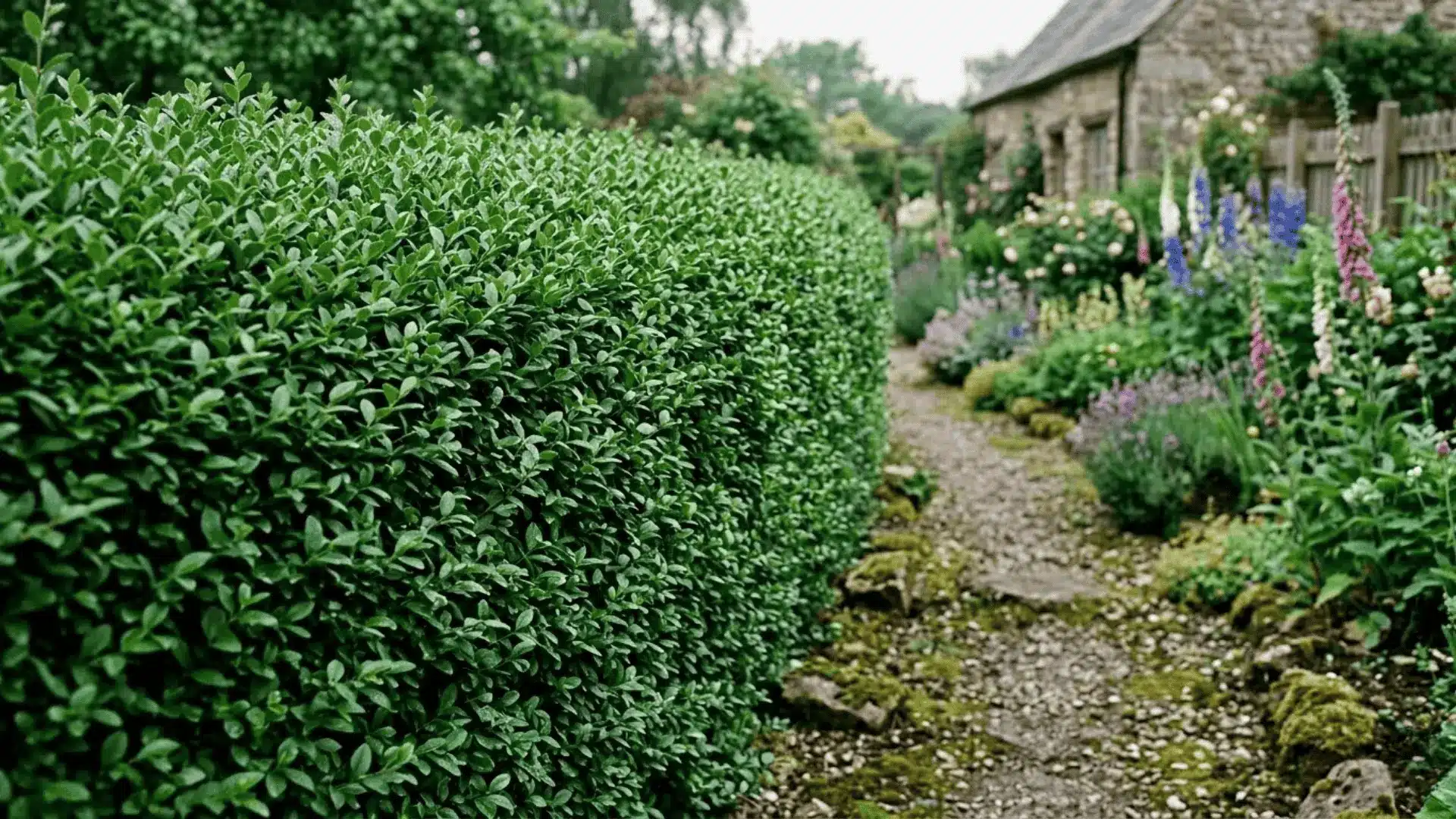
Full Grown In: 3 to 5 years
USDA Zone: 5 to 8
Privet is the classic hedge plant that’s been lining garden boundaries for generations, and it earns that reputation. It responds beautifully to trimming, which means you stay in control of the shape and size.
Left to grow freely, it fills out thick and tall, creating a wall of greenery that’s both functional and tidy. A dependable workhorse for any privacy garden.
3. Leyland Cypress
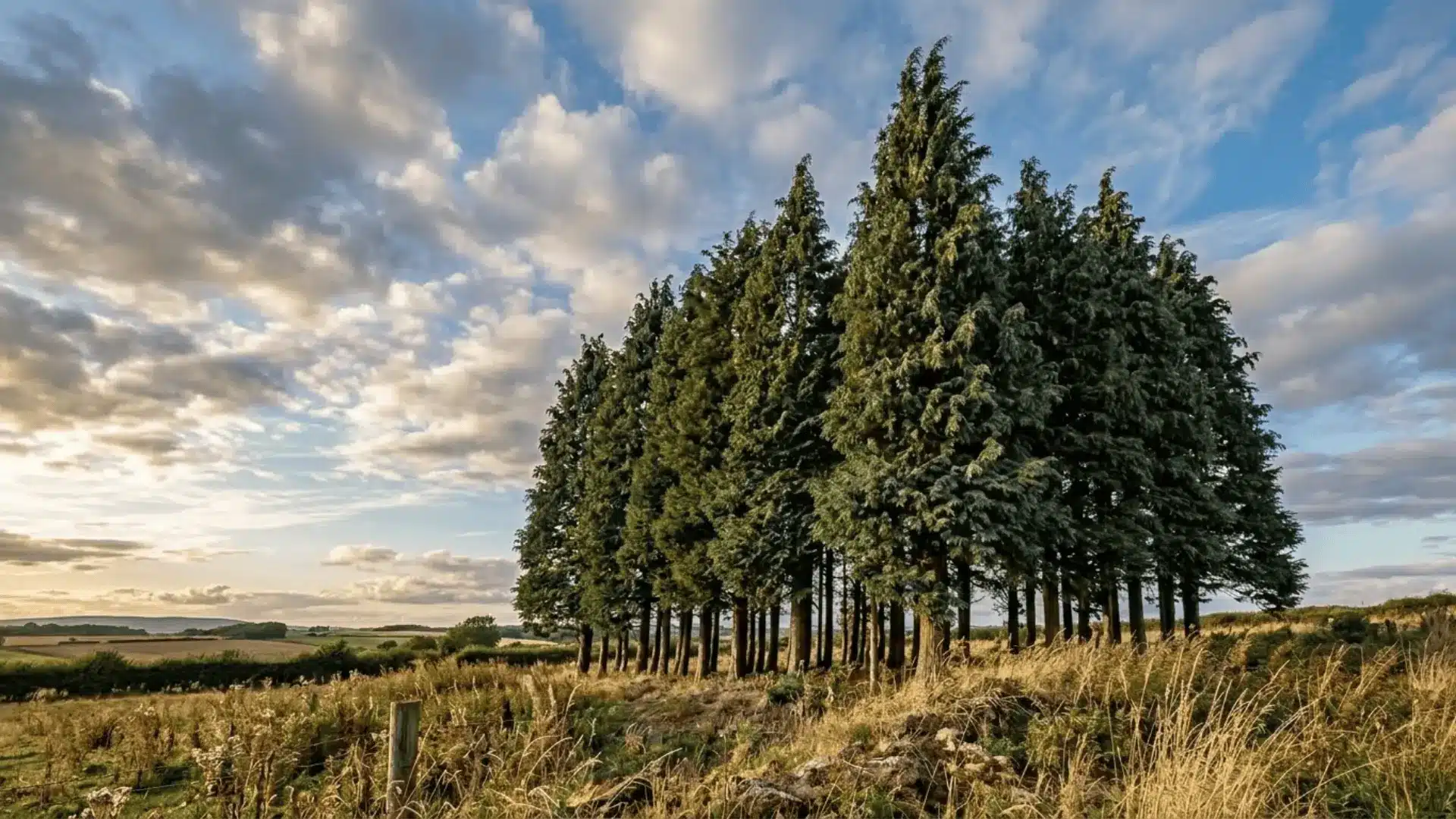
Full Grown In: 5 to 10 years
USDA Zone: 6 to 10
If fast is what you need, Leyland Cypress delivers. It puts on impressive height each year, making it one of the quickest routes to a tall, full privacy screen.
The soft, feathery foliage is evergreen and dense, giving you solid coverage without gaps. It’s especially popular for large properties where bold, statement hedging is the goal.
4. Boxwood
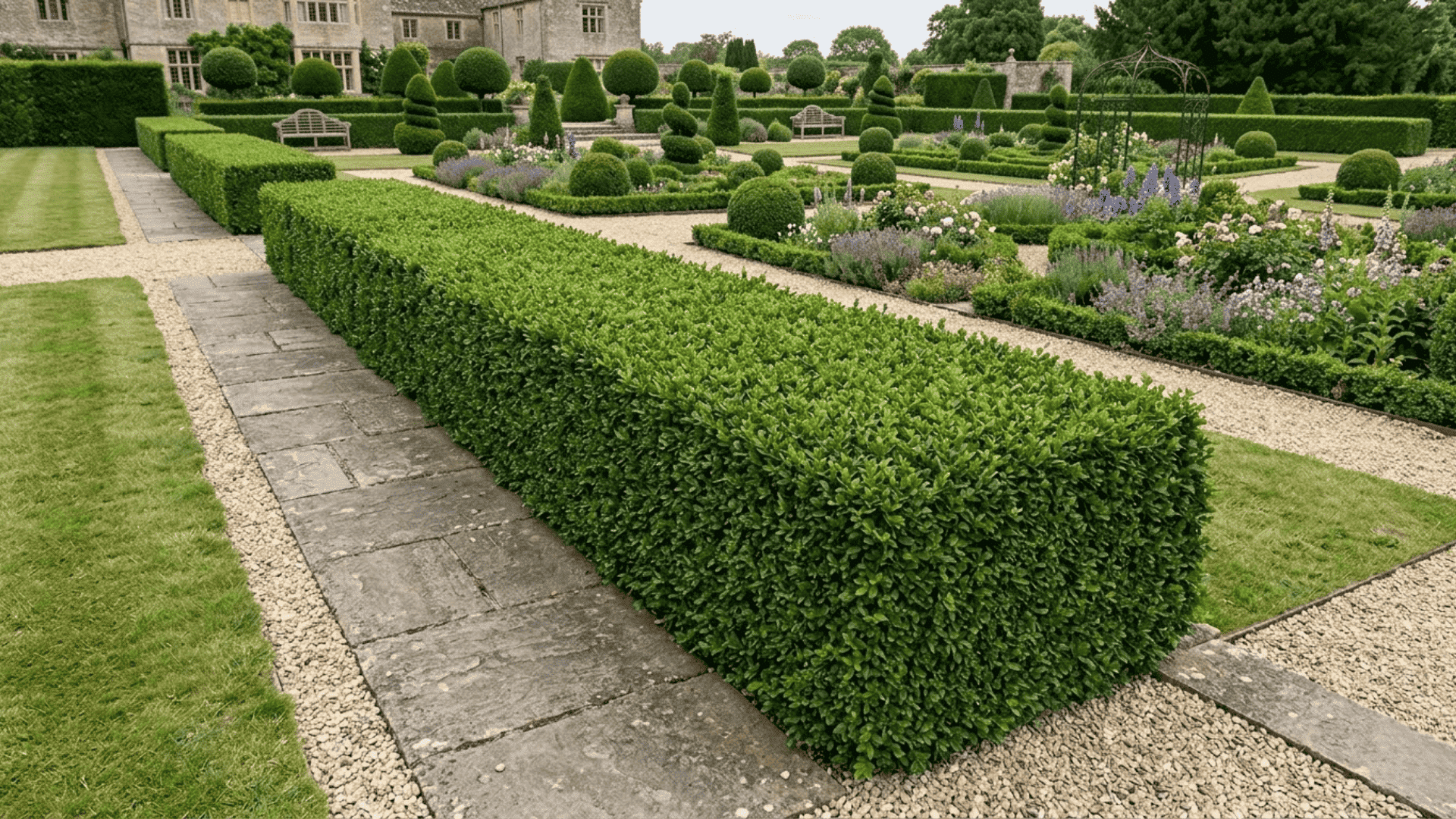
Full Grown In: 10 to 15 years
USDA Zone: 5 to 9
Boxwood brings that polished, tailored look to any garden space. It’s a dense, slow-but-steady grower that responds exceptionally well to shaping, making it a favorite for formal hedges and structured borders.
The small, glossy leaves stay evergreen, and once established, it holds its form with minimal fuss. Perfect for those who want their privacy screen to look intentional and refined.
5. Cherry Laurel
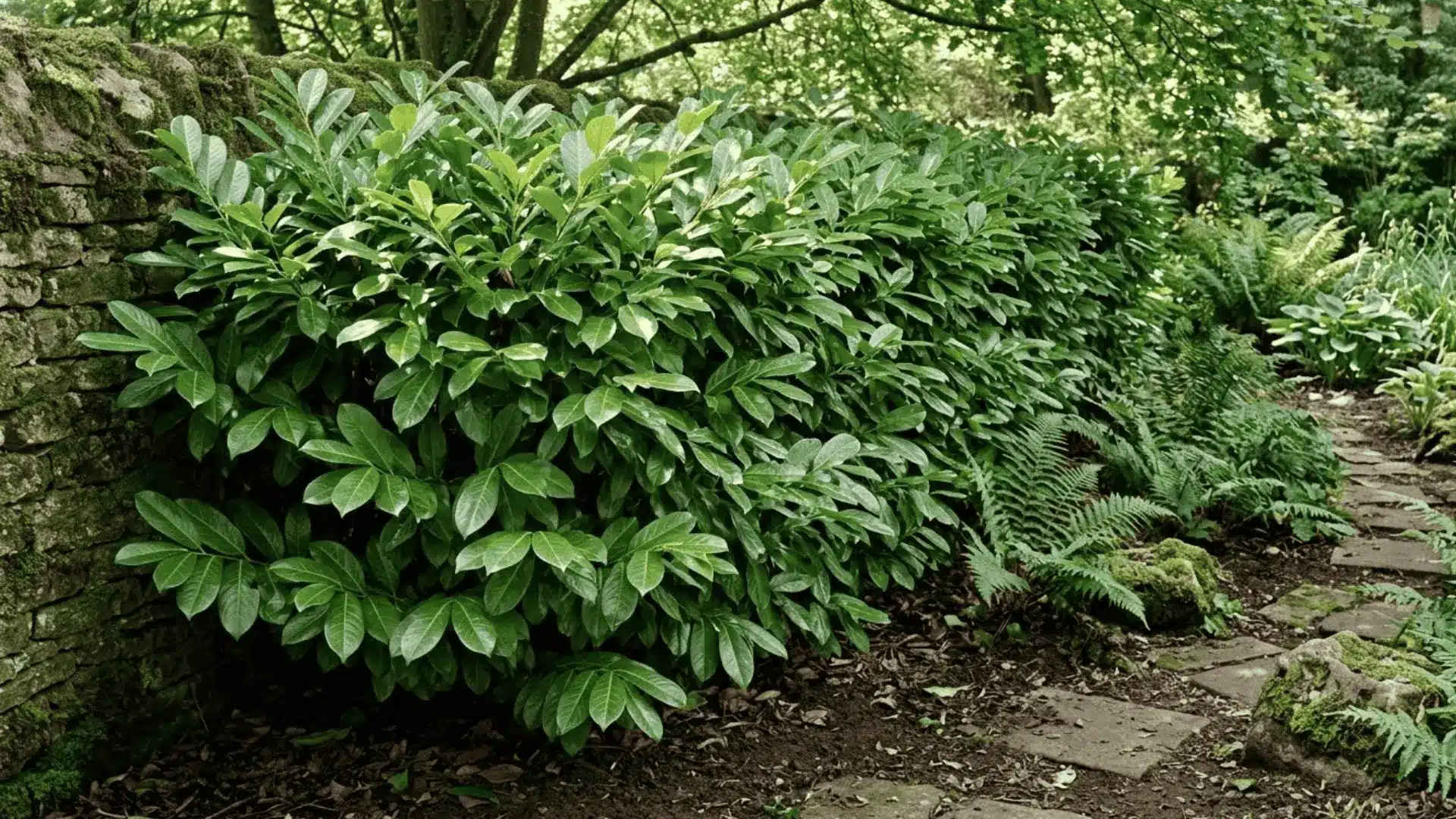
Full Grown In: 5 to 8 years
USDA Zone: 6 to 9
Cherry Laurel is a showstopper that works hard. The large, glossy leaves create a lush, tropical-looking hedge that’s surprisingly hardy.
It grows quickly and fills out generously, offering thick coverage that blocks both views and wind. It also tolerates shade better than most privacy shrubs, making it a smart pick for yards that don’t get full sun all day.
6. Viburnum
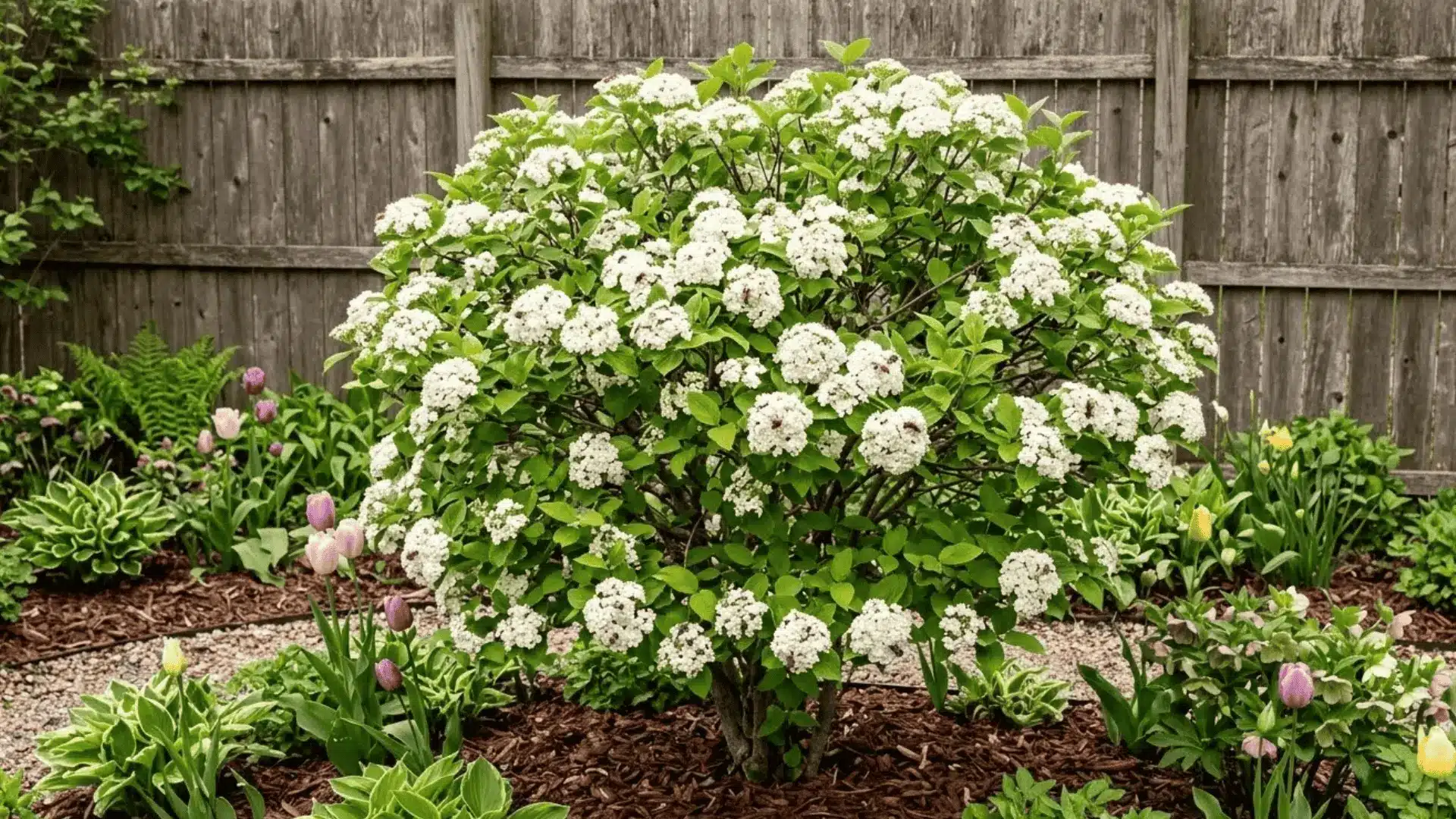
Full Grown In: 5 to 7 years
USDA Zone: 2 to 9
Viburnum brings more to the table than just greenery. It grows quickly into a full, rounded shrub with clusters of fragrant blooms in spring and colorful berries in fall that birds absolutely love.
The foliage is dense enough for solid screening, and wide varieties hold their leaves well into winter. It’s a privacy shrub that earns its place in the garden beautifully.
7. Photinia
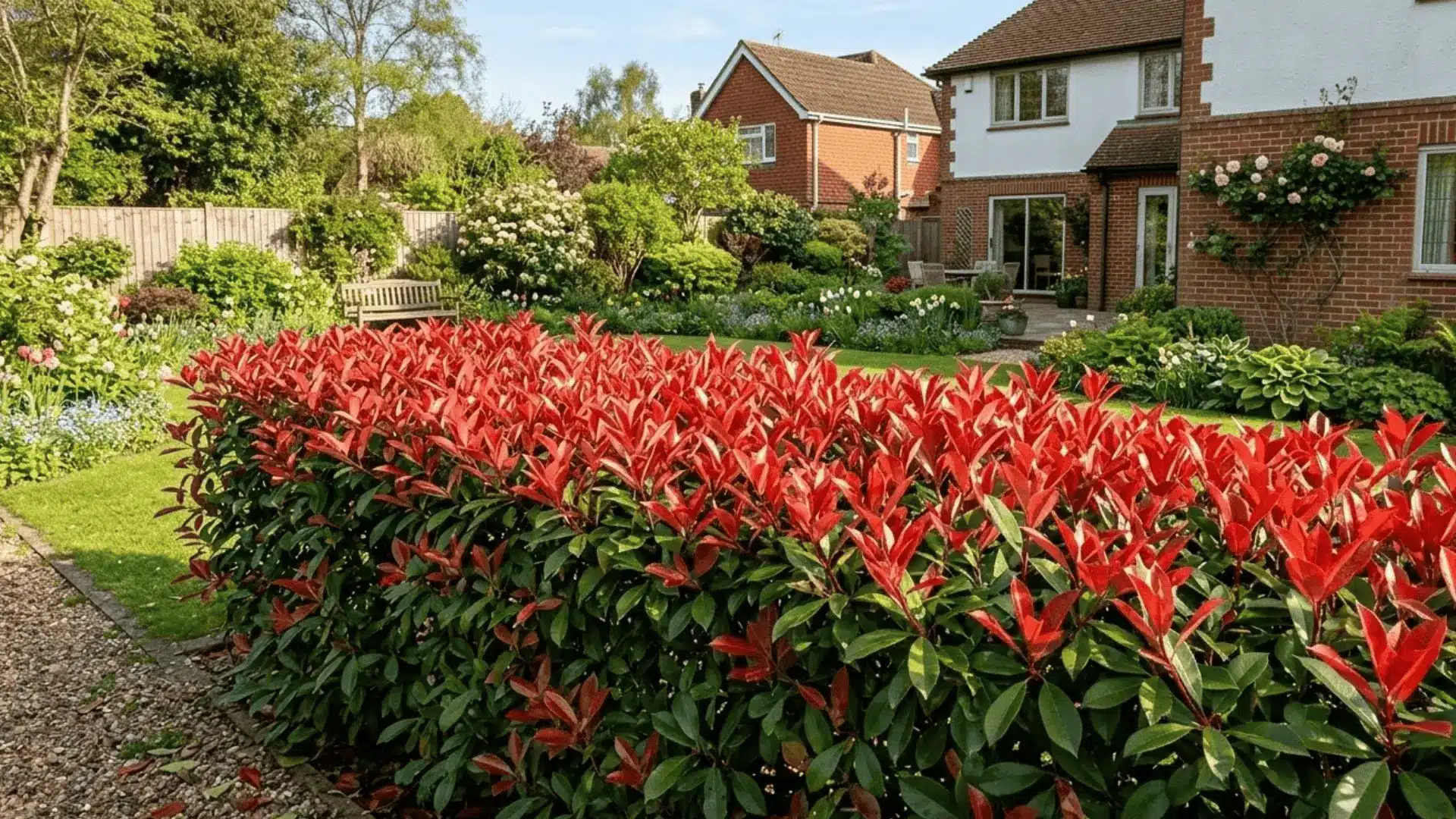
Full Grown In: 5 to 8 years
USDA Zone: 7 to 9
Photinia is the shrub that turns heads in spring when its bright red new growth flushes through the hedge like a seasonal refresh. As the season moves on, those leaves deepen to a rich green, and the cycle repeats.
It grows vigorously, fills out well, and makes for a hedge that’s as decorative as it is functional. A lovely option for adding color alongside coverage.
8. Holly
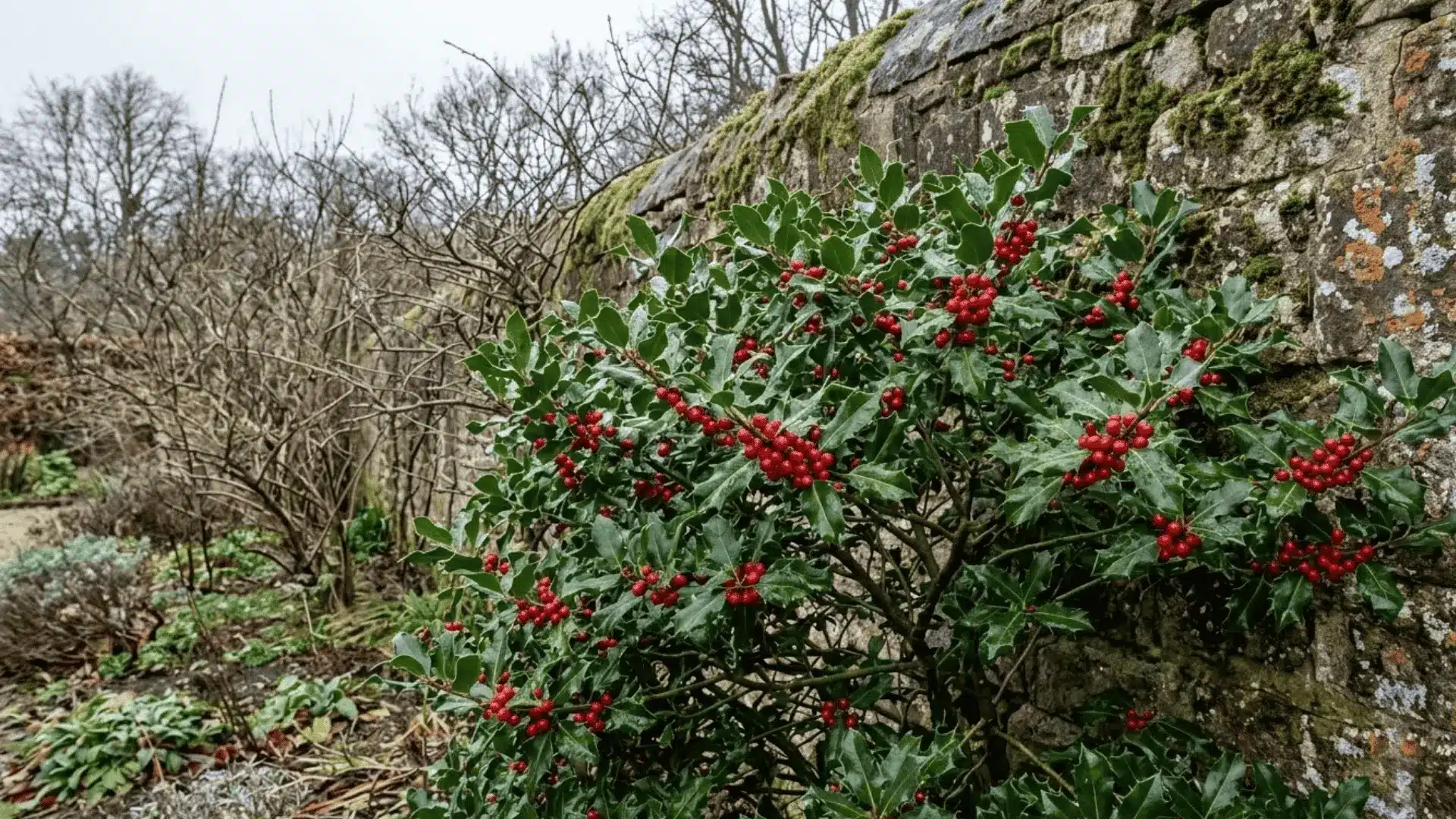
Full Grown In: 10 to 20 years
USDA Zone: 5 to 9
Holly is a classic for good reason. The deep green, glossy leaves and bright red berries create a hedge that looks striking year-round and doubles as a wildlife haven.
It’s naturally dense and forms a strong, evergreen barrier that’s also quite difficult to push through, making it as practical as it is pretty. A timeless choice for a formal or cottage-style garden.
9. Forsythia
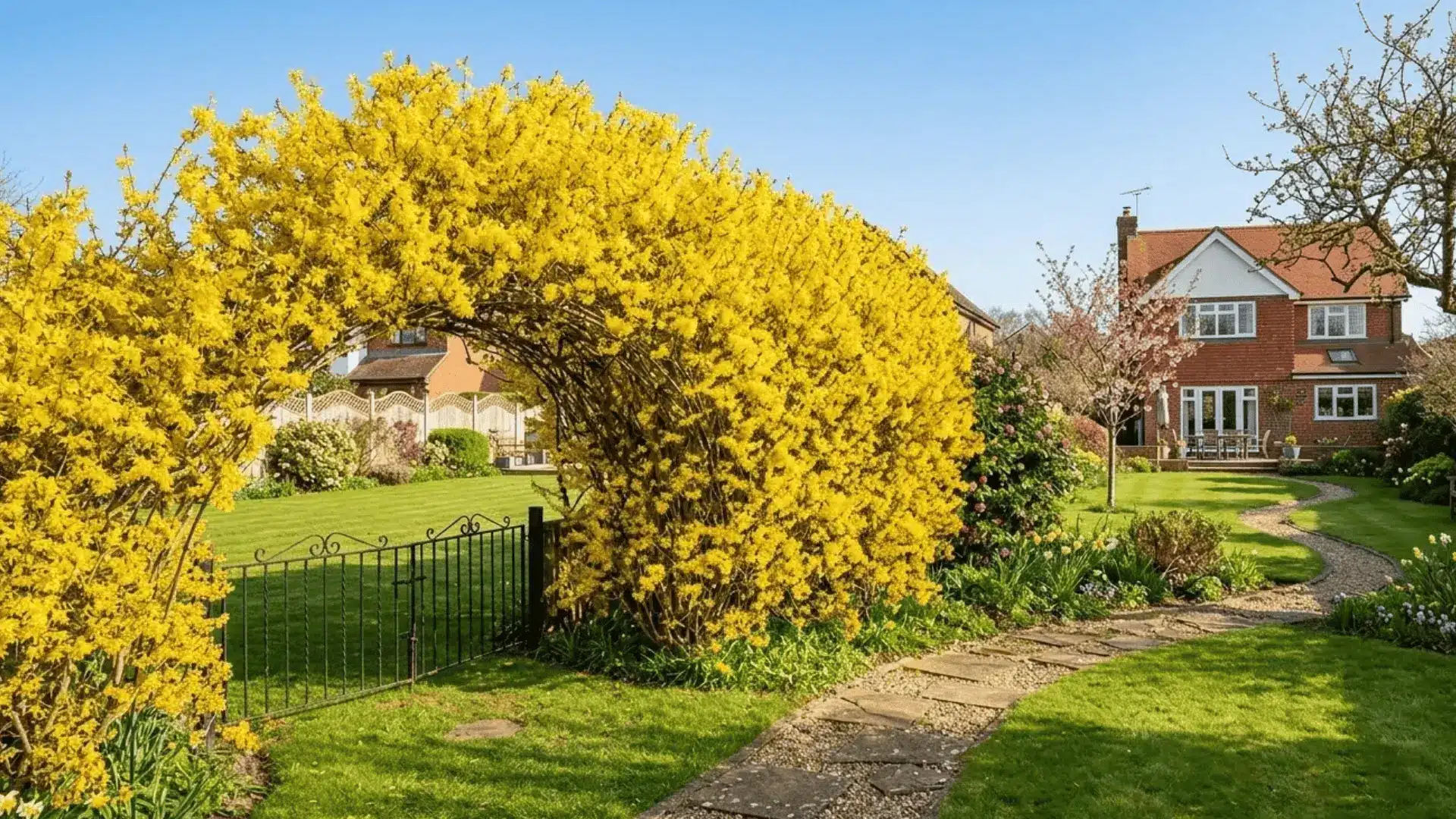
Full Grown In: 5 to 7 years
USDA Zone: 5 to 8
Forsythia is one of the first signs of spring, and it arrives with real drama. Bright yellow blooms burst along every branch before the leaves even appear, turning the hedge into a golden wall for weeks.
Once the flowers fade, the foliage fills in quickly and thickens up well for seasonal screening. It’s a deciduous shrub that trades winter coverage for pure springtime joy.
10. Spirea
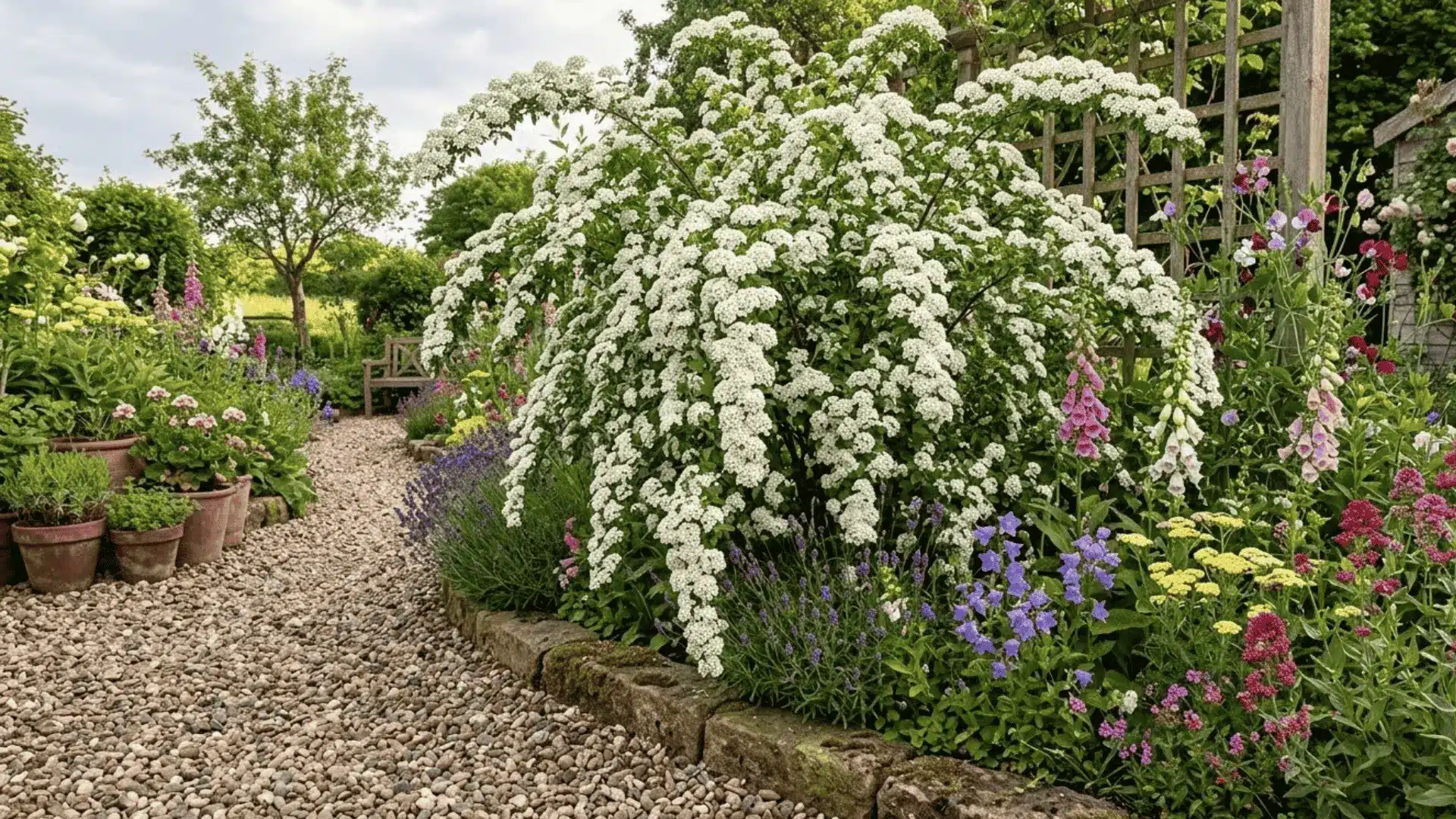
Full Grown In: 3 to 6 years
USDA Zone: 3 to 9
Spirea is compact, cheerful, and surprisingly fast to fill in. It produces delicate clusters of white or pink flowers that bloom generously and give the hedge a soft, romantic quality.
It works beautifully as a low to mid-height privacy border and requires very little upkeep once established. A great option for smaller gardens or for layering in front of taller screening shrubs.
11. Burning Bush
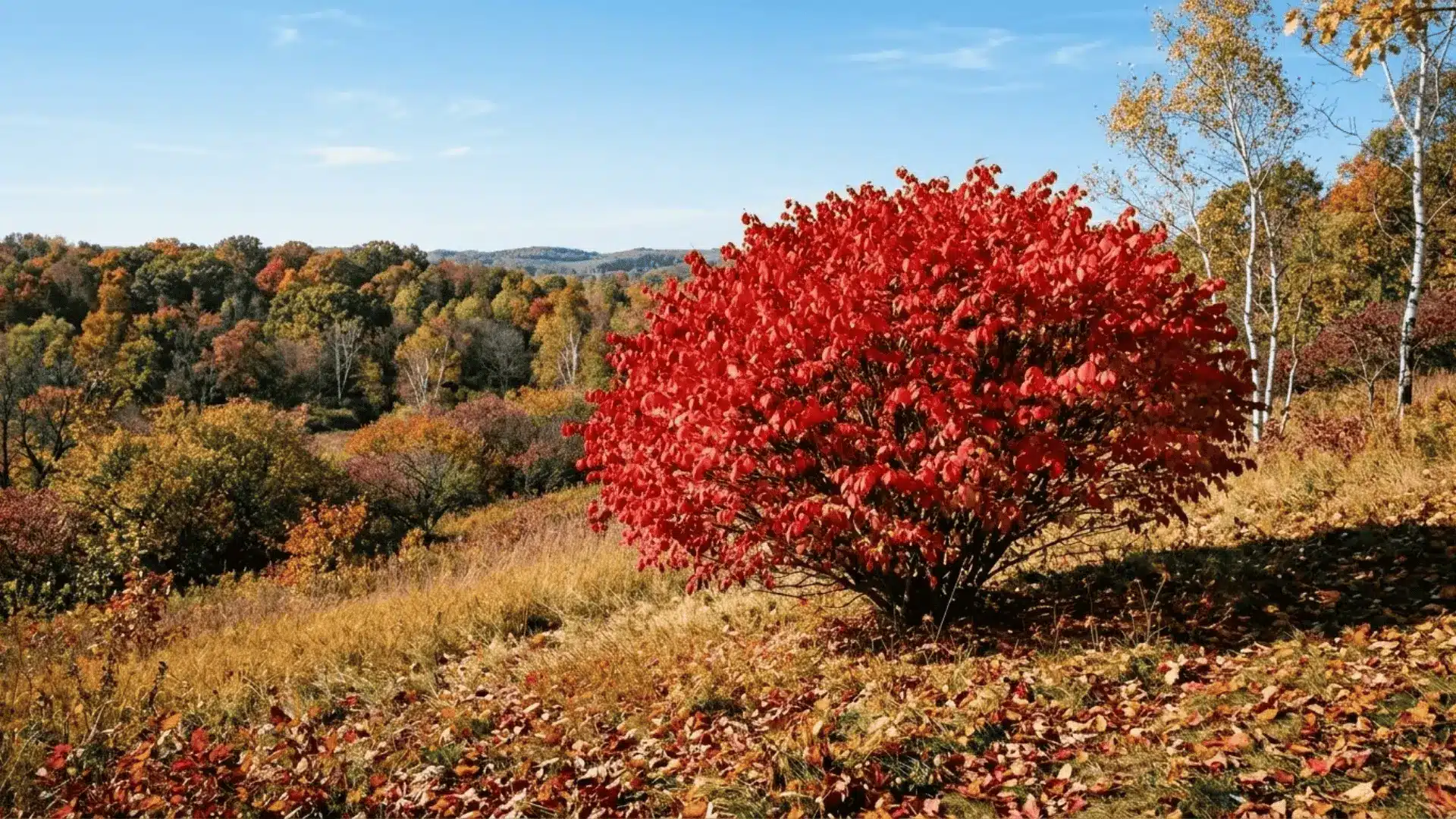
Full Grown In: 5 to 10 years
USDA Zone: 4 to 8
Burning Bush earns its name every single autumn. The foliage transforms into a vivid, fiery red that makes the whole hedge glow in the fall landscape.
Through spring and summer, it’s a neat, green, well-behaved shrub that fills out nicely. It’s deciduous, so it won’t screen in winter, but the seasonal display it puts on more than makes up for that trade-off.
12. Lilac
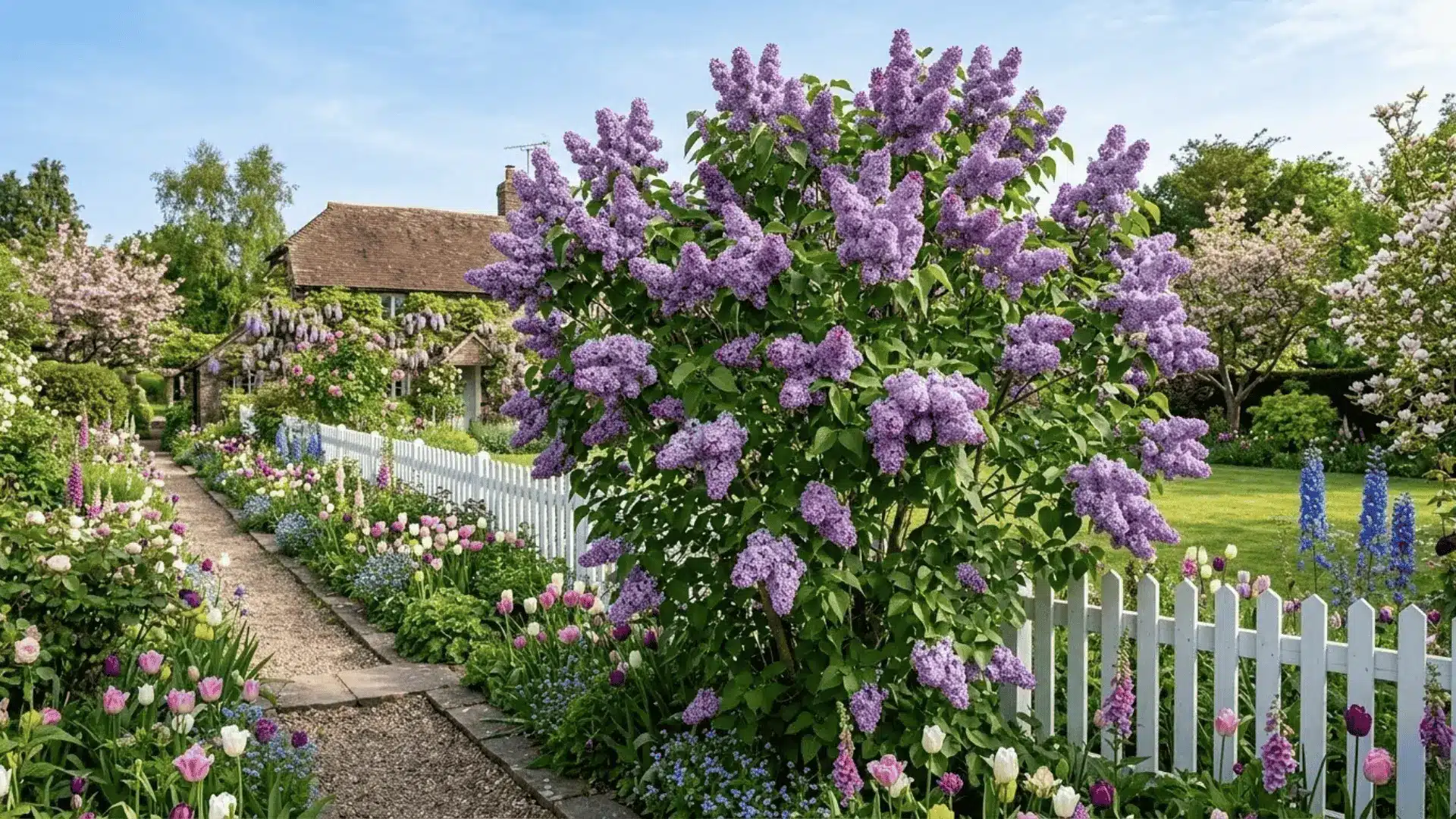
Full Grown In: 6 to 8 years
USDA Zone: 3 to 7
Lilac is the shrub that makes the whole garden smell like a dream in late spring. Beyond the intoxicatingly fragrant purple or white blooms, it grows into a tall, arching shrub with good density for informal hedging.
It’s deciduous, so it softens in winter, but in the warmer months it creates a lush, romantic screen that feels more like a garden feature than a boundary.
13. Hydrangea
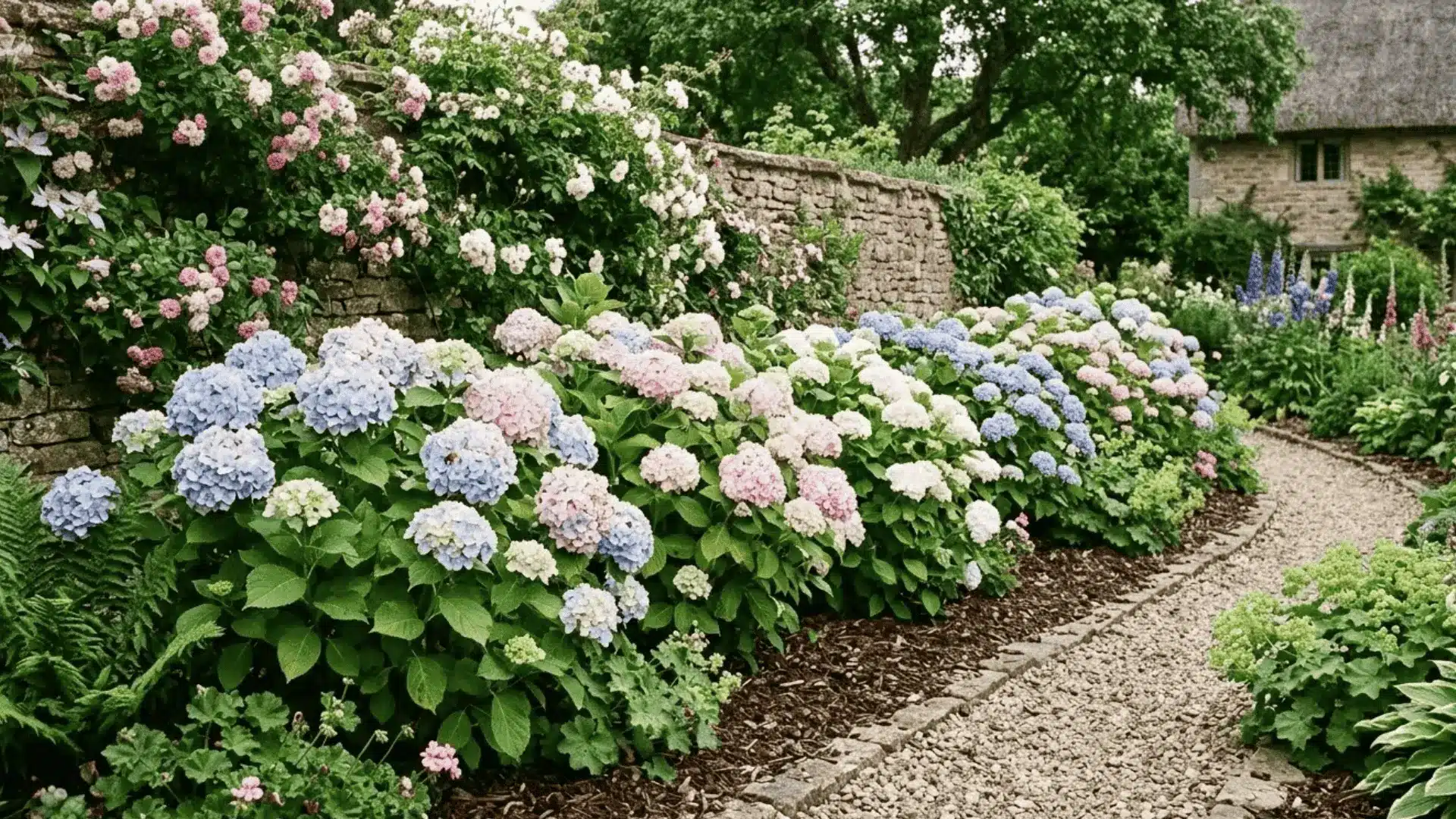
Full Grown In: 3 to 5 years
USDA Zone: 3 to 9
Hydrangea brings a softness to privacy screening that few shrubs can match. The oversized blooms in shades of white, pink, and blue make it feel more like a garden focal point than a border plant.
It grows quickly and fills out with broad, lush foliage that works well as a gentle screen. Ideal for creating a relaxed, cottage-style boundary that is more beautiful than utilitarian.
14. Rose of Sharon
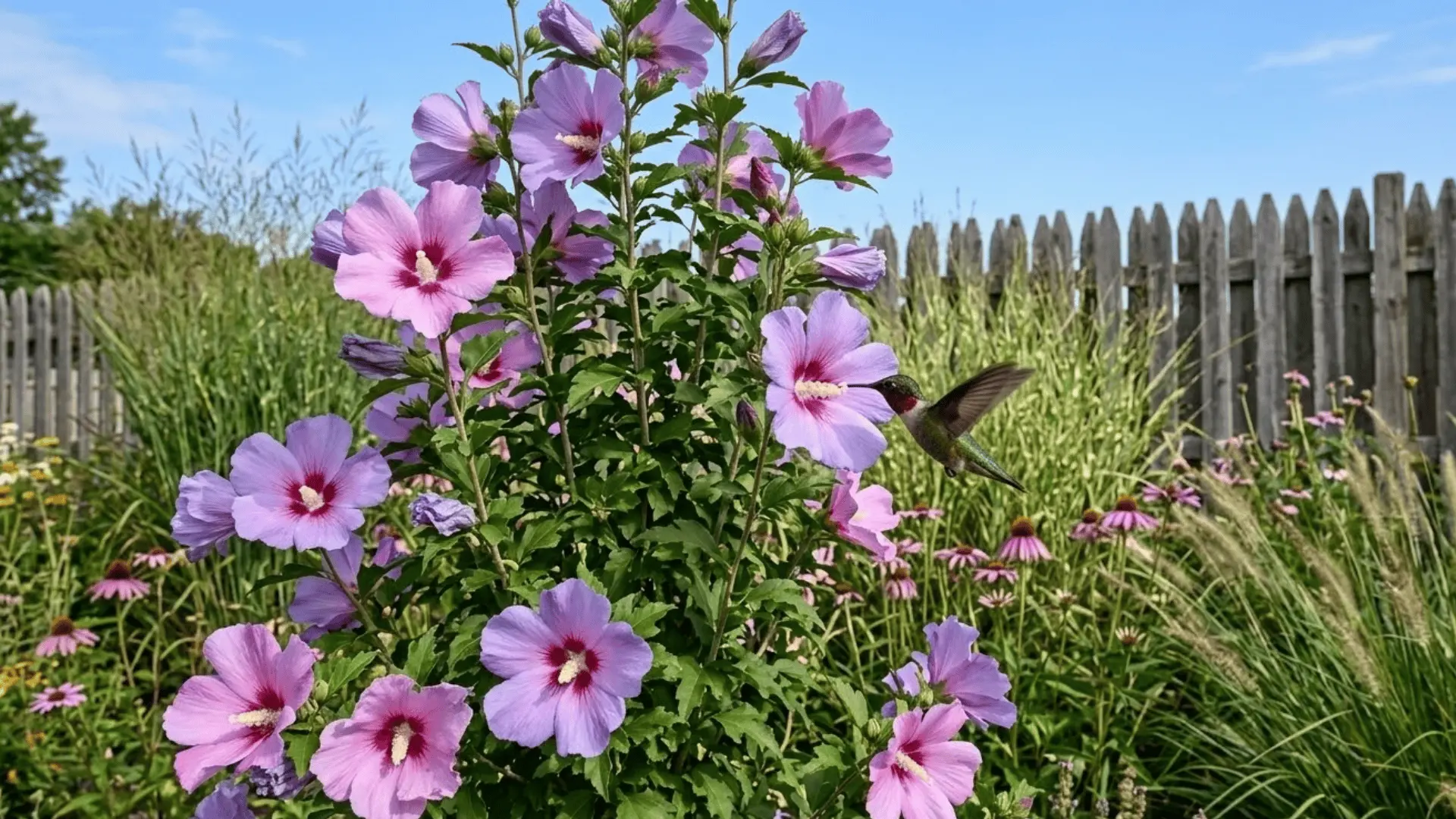
Full Grown In: 3 to 5 years
USDA Zone: 5 to 9
Rose of Sharon grows tall and graceful, suitable for formal and casual gardens. It blooms abundantly in late summer when most other shrubs have finished, producing large, hibiscus-like flowers that attract hummingbirds and pollinators.
It’s a deciduous shrub that fills in well during the growing season and adds real ornamental value to any privacy planting.
15. Butterfly Bush
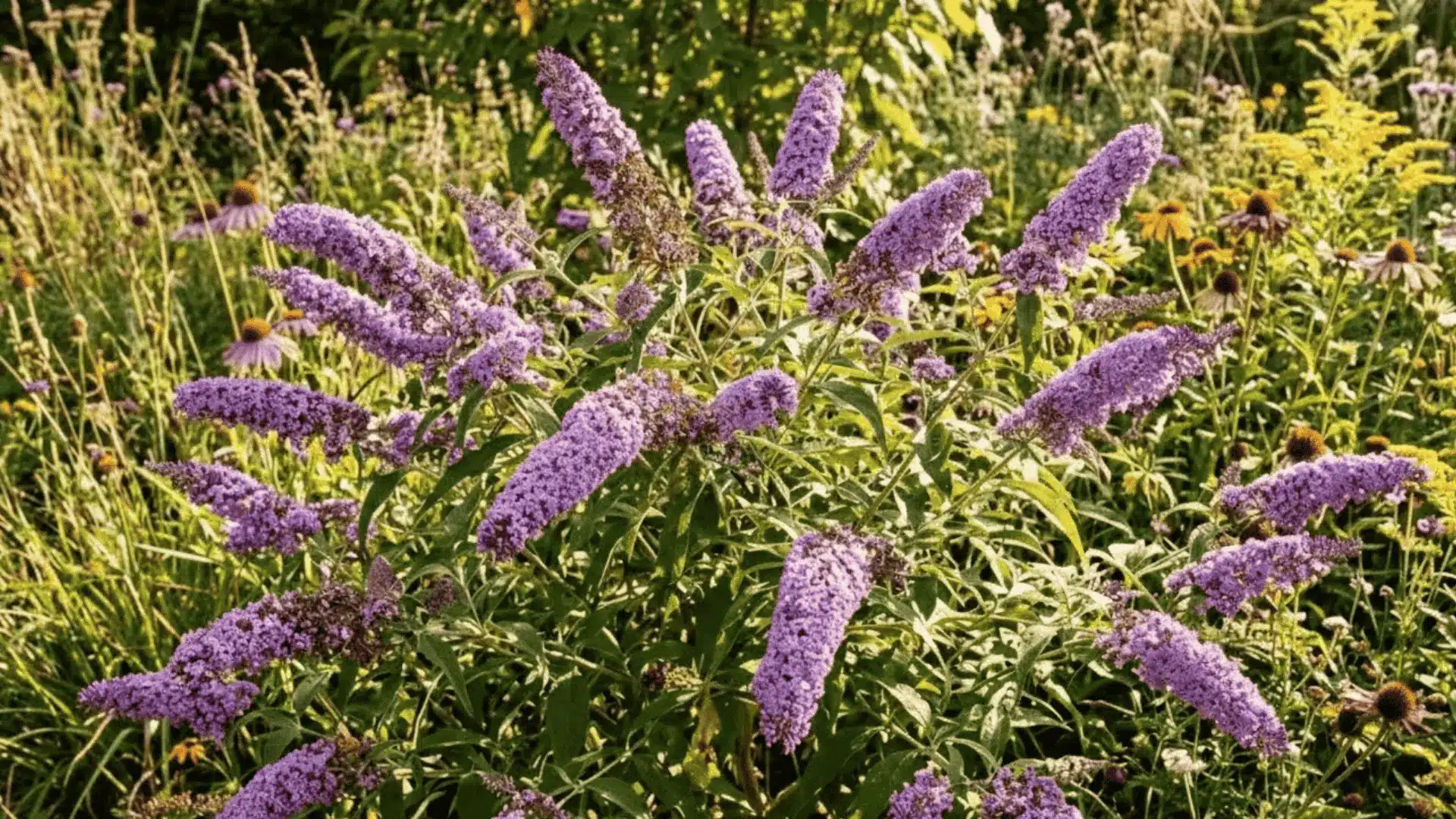
Full Grown In: 2 to 4 years
USDA Zone: 5 to 9
Butterfly Bush lives up to its name in the best way. The long, cone-shaped flower spikes in purple, pink, or white draw butterflies by the dozen throughout summer and into fall.
It’s a fast grower that reaches a good height quickly and fills the garden with both color and life. It works beautifully as a soft, naturalistic screen along borders or garden edges.
16. Mock Orange
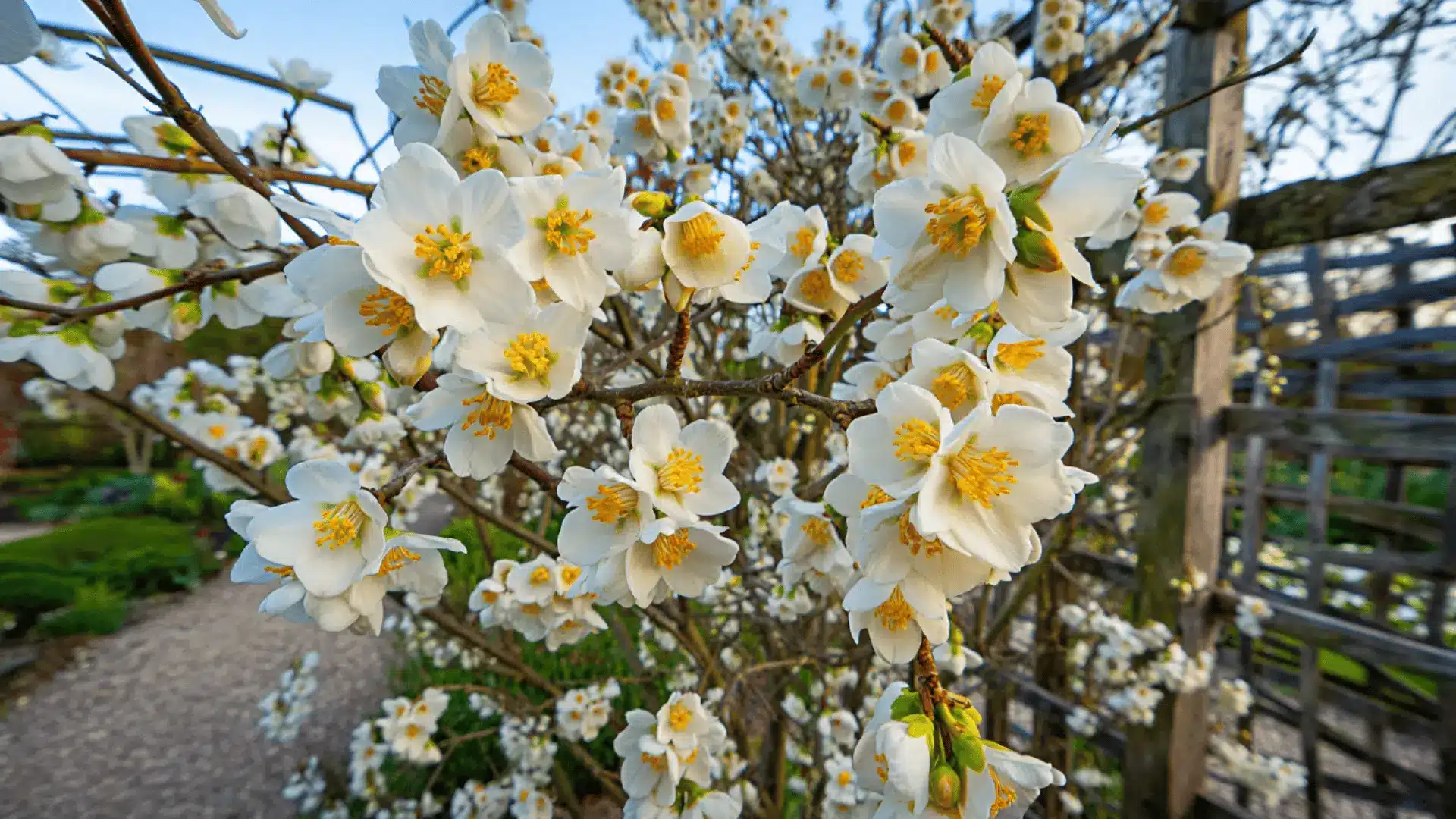
Full Grown In: 5 to 7 years
USDA Zone: 4 to 8
Mock Orange surprises with its sweet, citrusy scent from white blooms in early summer, and its dense branches can form a solid, informal hedge.
It grows reliably and fills out well, offering both privacy and a sensory experience that makes spending time in the garden genuinely lovely.
17. Ninebark
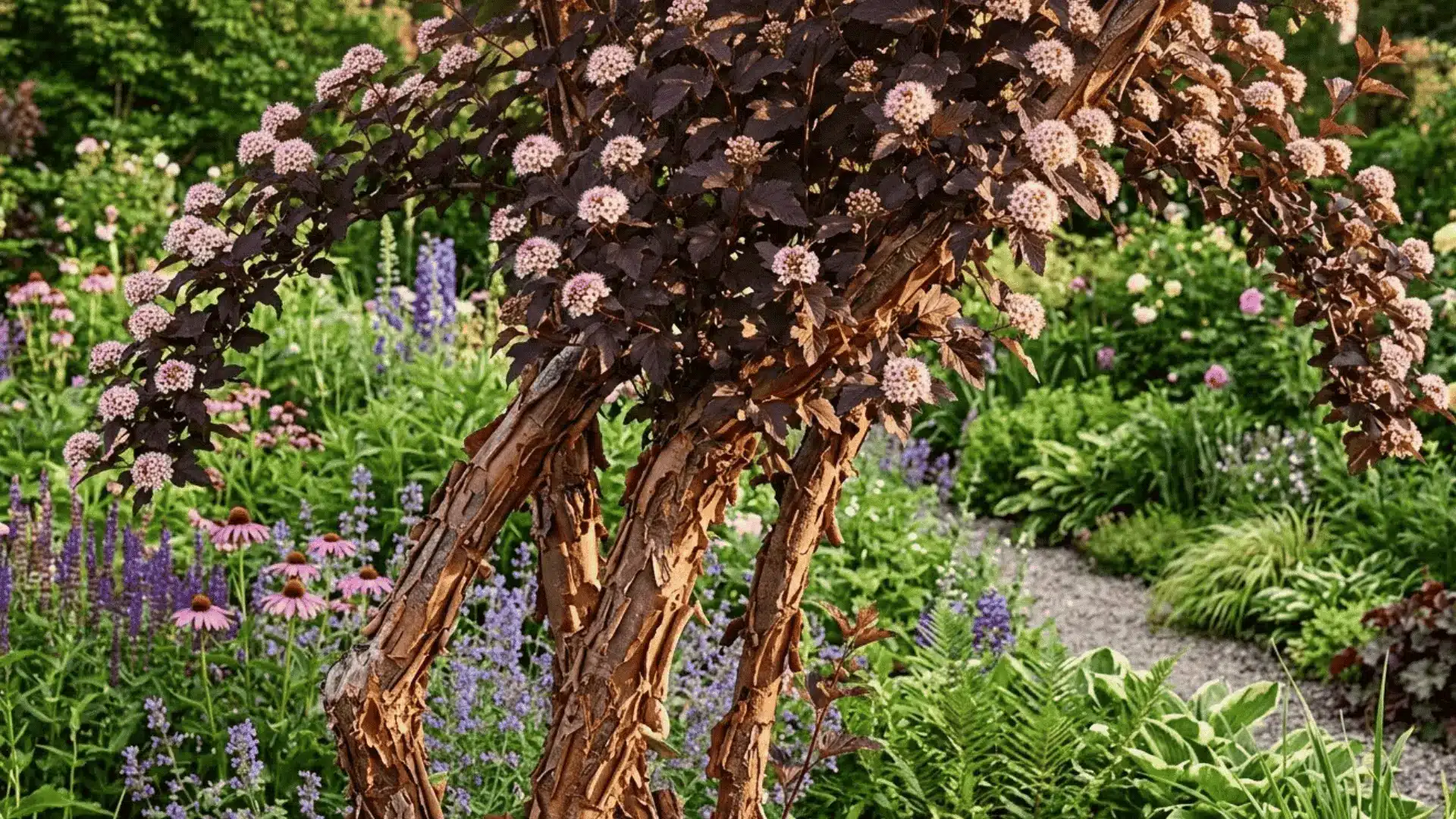
Full Grown In: 3 to 5 years
USDA Zone: 2 to 8
Ninebark is a tough, adaptable shrub that brings unexpected visual interest to a privacy planting. Varieties come in deep burgundy, golden yellow, or rich green foliage that makes the hedge feel designed rather than functional.
It grows quickly, handles poor soils well, and peeling bark adds winter texture when the leaves are gone. A great choice for gardeners who want privacy with personality.
18. Elderberry
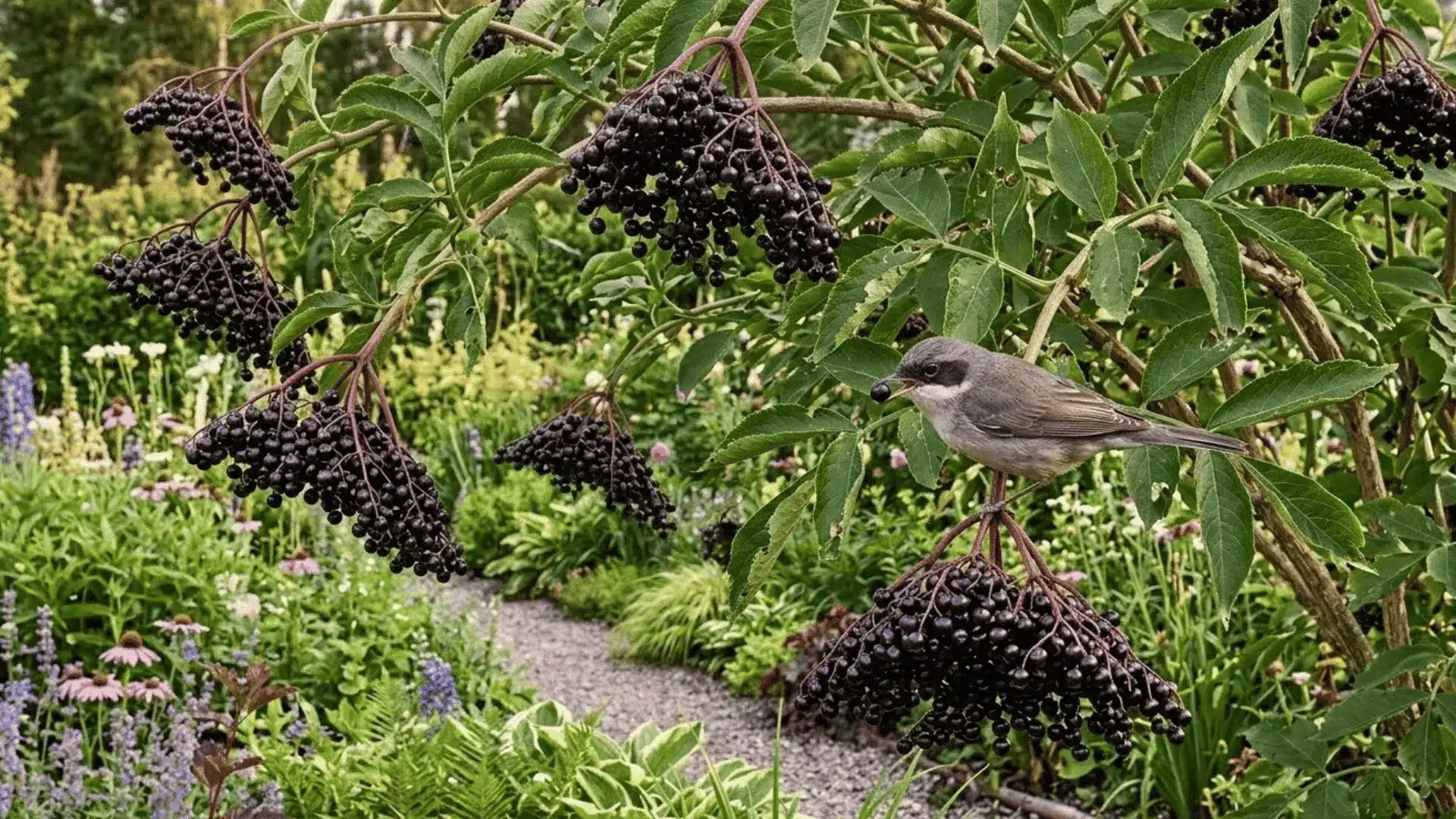
Full Grown In: 3 to 4 years
USDA Zone: 3 to 9
Elderberry is one of the fastest-growing shrubs, producing more than most. It grows into a tall, arching shrub with large spring flowers and deep purple berries valued by birds and in cooking.
The foliage is lush and full during the growing season, making it a productive and beautiful privacy option.
19. Barberry
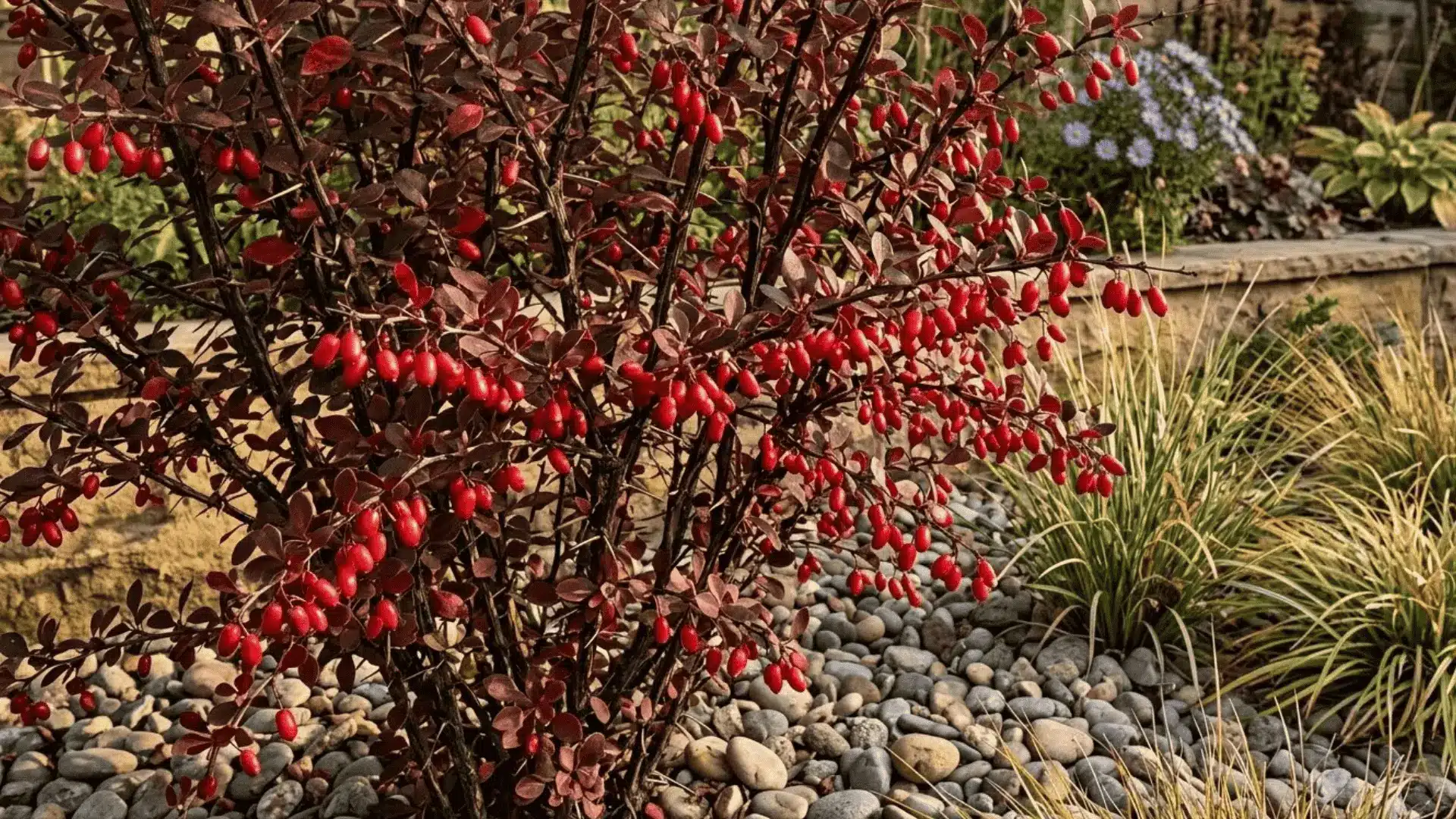
Full Grown In: 4 to 6 years
USDA Zone: 4 to 8
Barberry is the shrub that takes its boundary duties seriously. The dense, thorny branches form a barrier that’s genuinely difficult to push through, making it one of the most effective natural security hedges available.
It also happens to be beautiful, with rich purple or golden foliage depending on the variety and bright red berries that carry through into winter. Low maintenance and high impact.
20. Dogwood Shrub
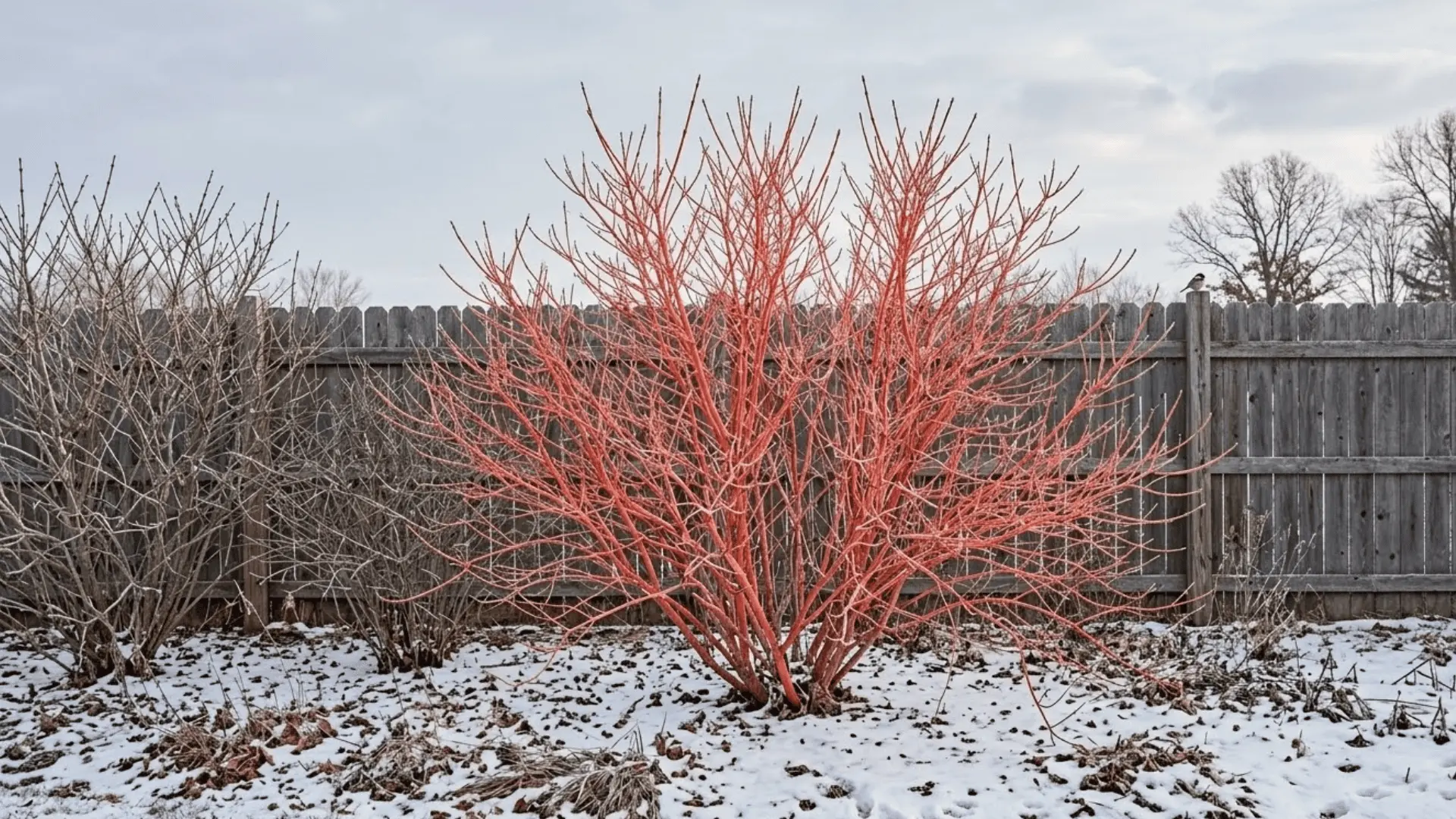
Full Grown In: 3 to 5 years
USDA Zone: 2 to 9
Shrub Dogwood earns its place in a privacy garden for every season. In summer, the foliage is full and lush. In fall, the leaves shift to warm reds and oranges.
And in winter, the bare stems glow in vivid shades of red or yellow, keeping the garden colorful even after everything else has gone quiet. It’s a four-season shrub that makes a privacy planting feel alive all year long.
21. Camellia
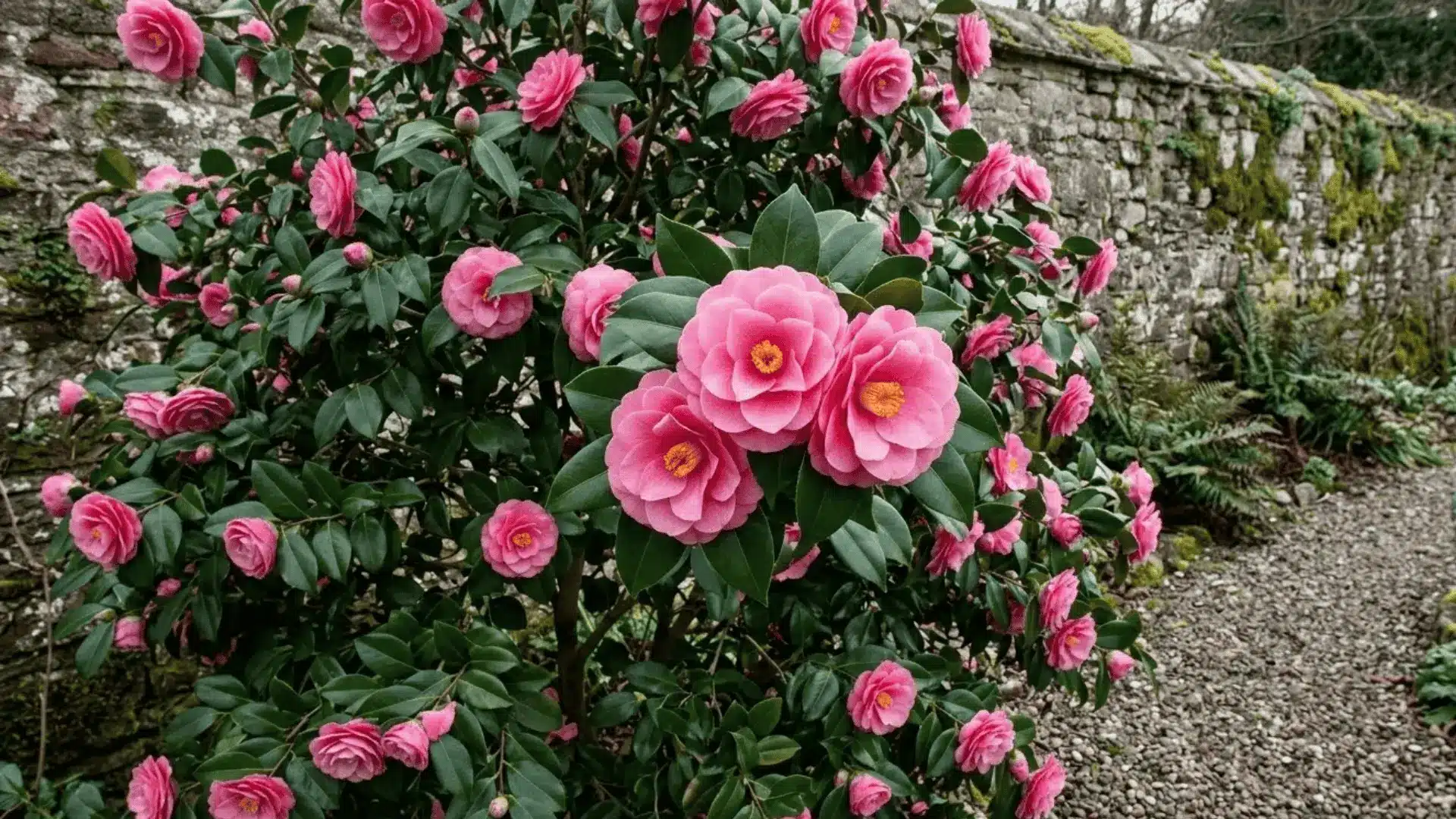
Full Grown In: 10 to 15 years
USDA Zone: 7 to 9
Camellia offers a refined privacy hedge with dense, glossy dark green foliage and soft white to deep rose blooms appearing in late winter or early spring when color is needed most.
It grows steadily into a full, beautiful hedge that feels like something out of a Southern garden in its prime.
22. Escallonia
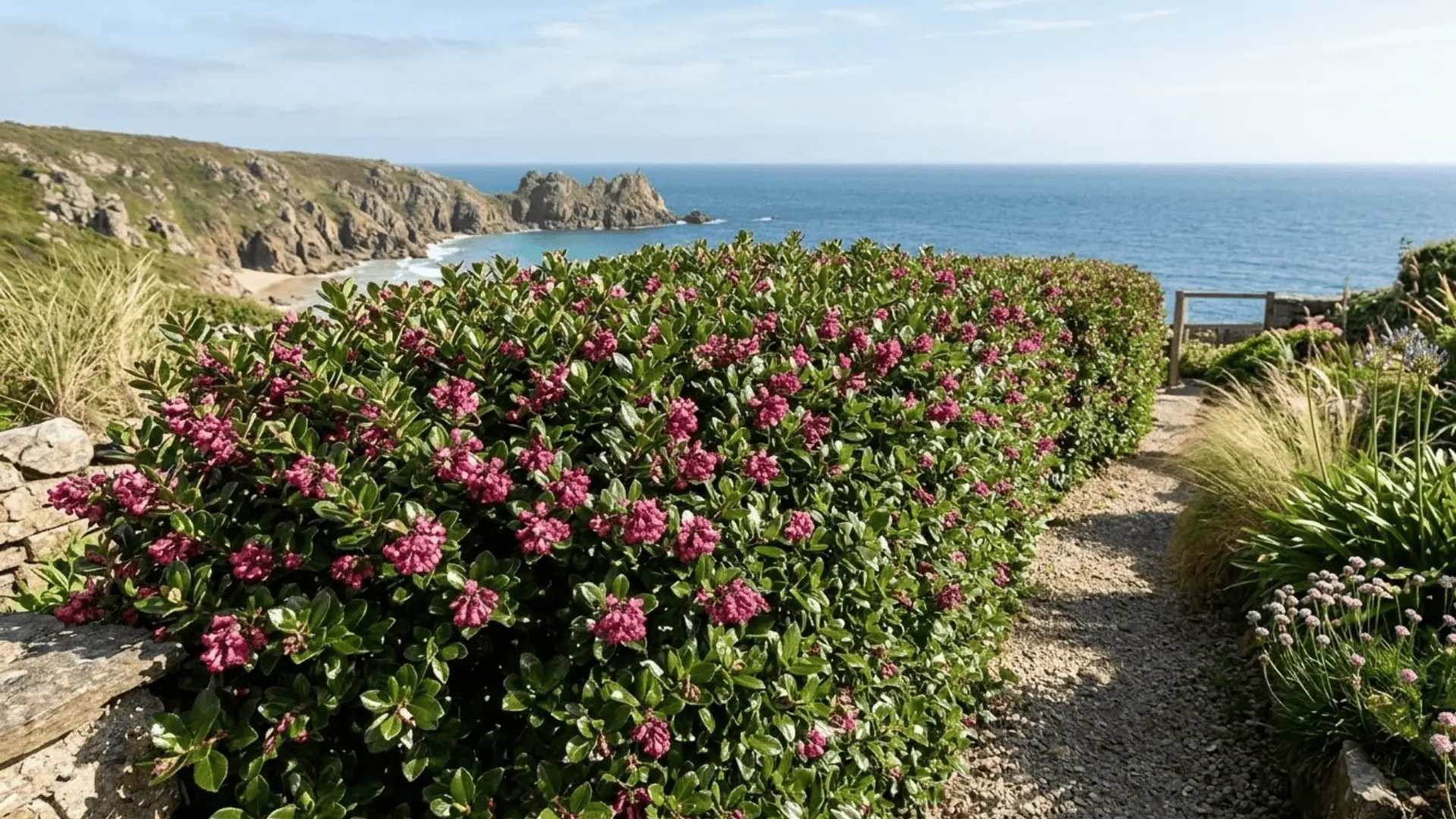
Full Grown In: 4 to 6 years
USDA Zone: 8 to 10
Escallonia is a coastal garden’s best friend. It handles salt spray and wind with ease, making it one of the most reliable evergreen hedging options for seaside and exposed gardens.
Small glossy leaves and clusters of pink or red flowers give it year-round appeal, and it trims well into a tidy, formal shape. Tough where it needs to be, pretty where it counts.
23. Wax Myrtle
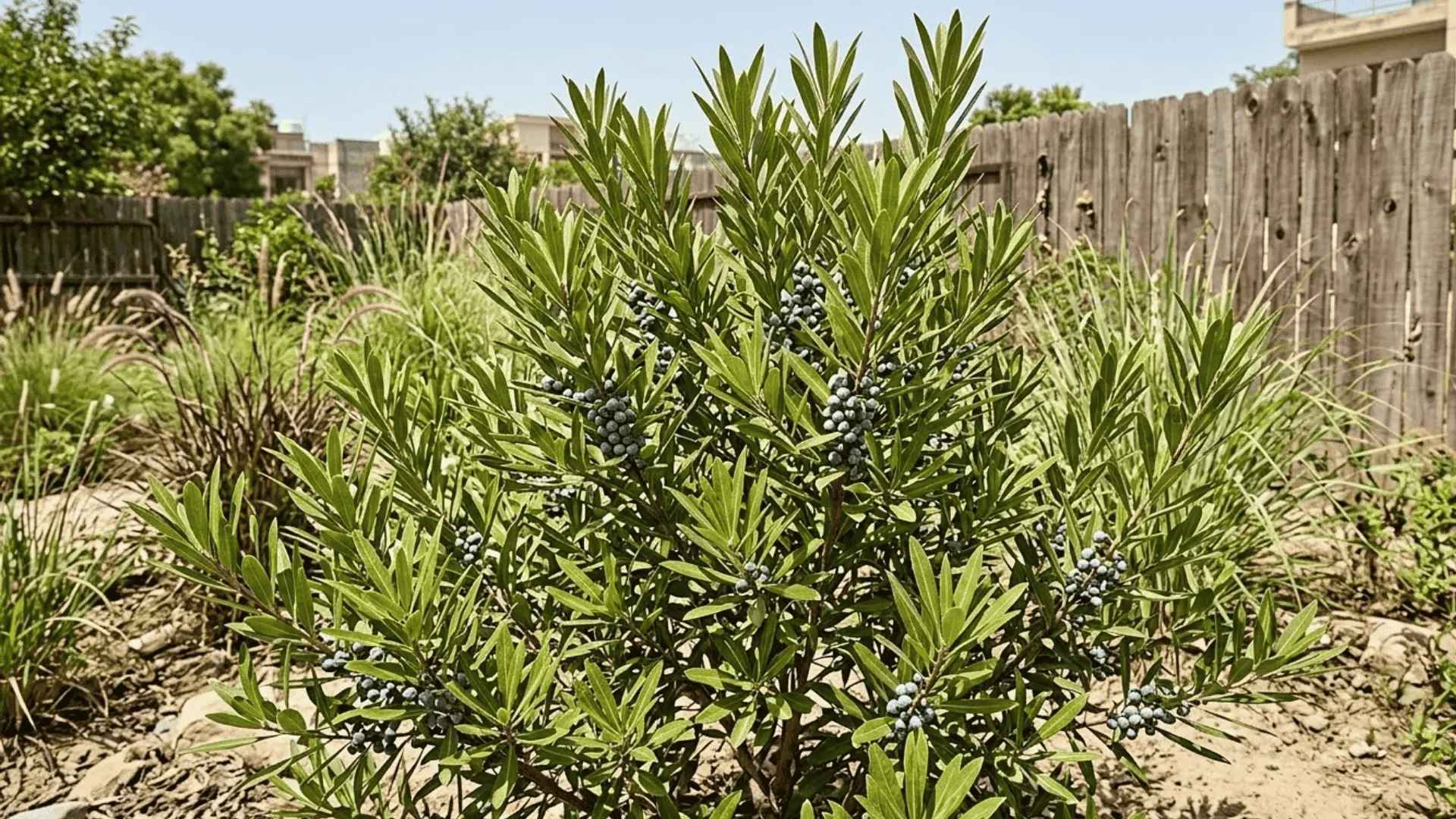
Full Grown In: 3 to 5 years
USDA Zone: 7 to 11
Wax Myrtle is a fast-growing evergreen that thrives in heat and humidity without complaint. The aromatic, olive-green foliage stays dense and full year-round, and small waxy berries add seasonal interest that birds enjoy.
It’s a natural choice for warm-climate gardens where other evergreens struggle, growing quickly into a tall, reliable screen that looks lush without needing much attention.
24. Oleander
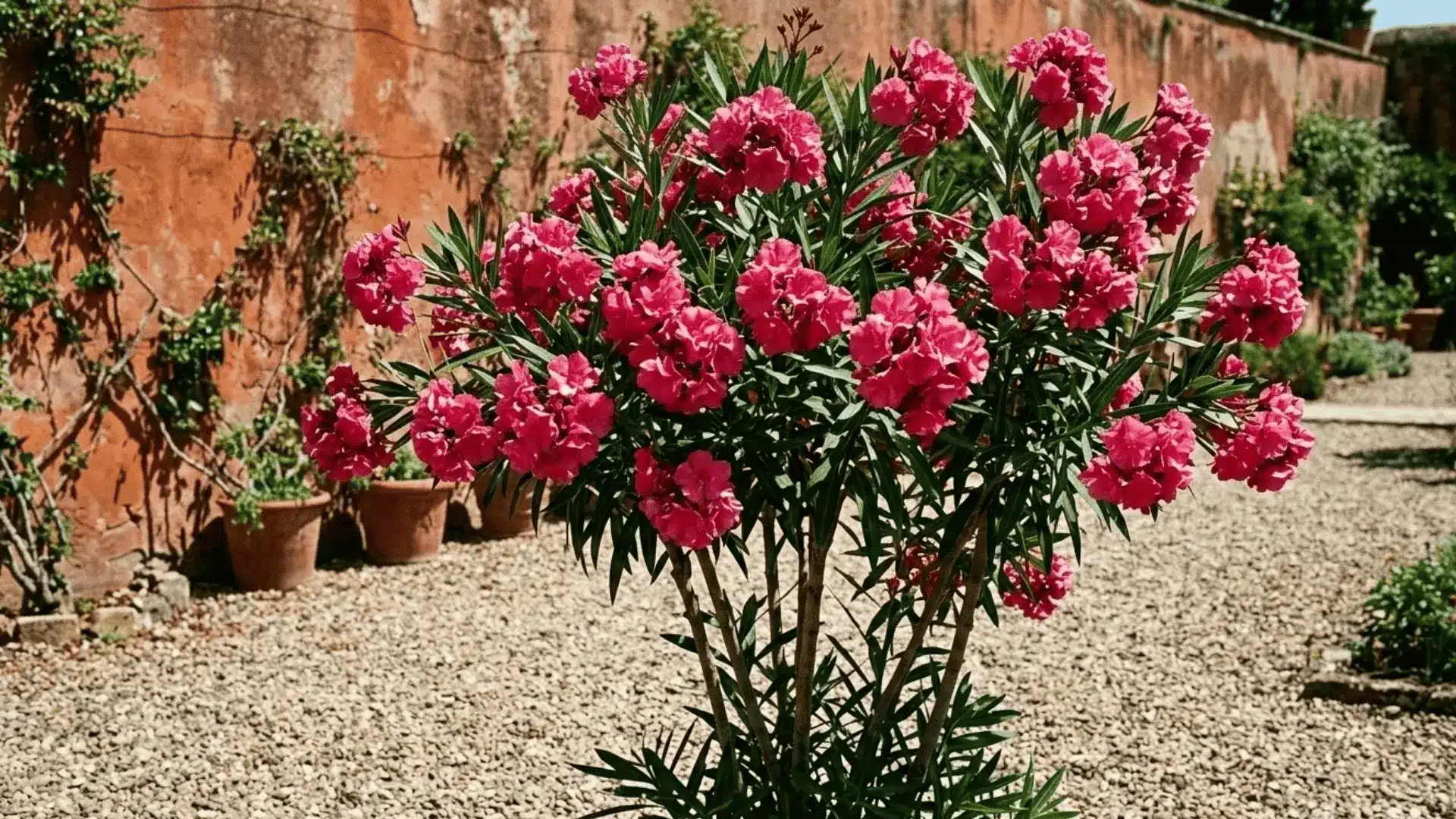
Full Grown In: 3 to 5 years
USDA Zone: 8 to 10
Oleander is a sun-loving shrub that thrives in heat and drought, thriving where many would give up. It grows tall with clusters of showy pink, red, white, or yellow flowers that bloom repeatedly in warm seasons.
It creates a dense, tropical-feeling screen with very little water once established. A striking and resilient choice for warm, sunny gardens.
25. Bamboo Shrub Varieties
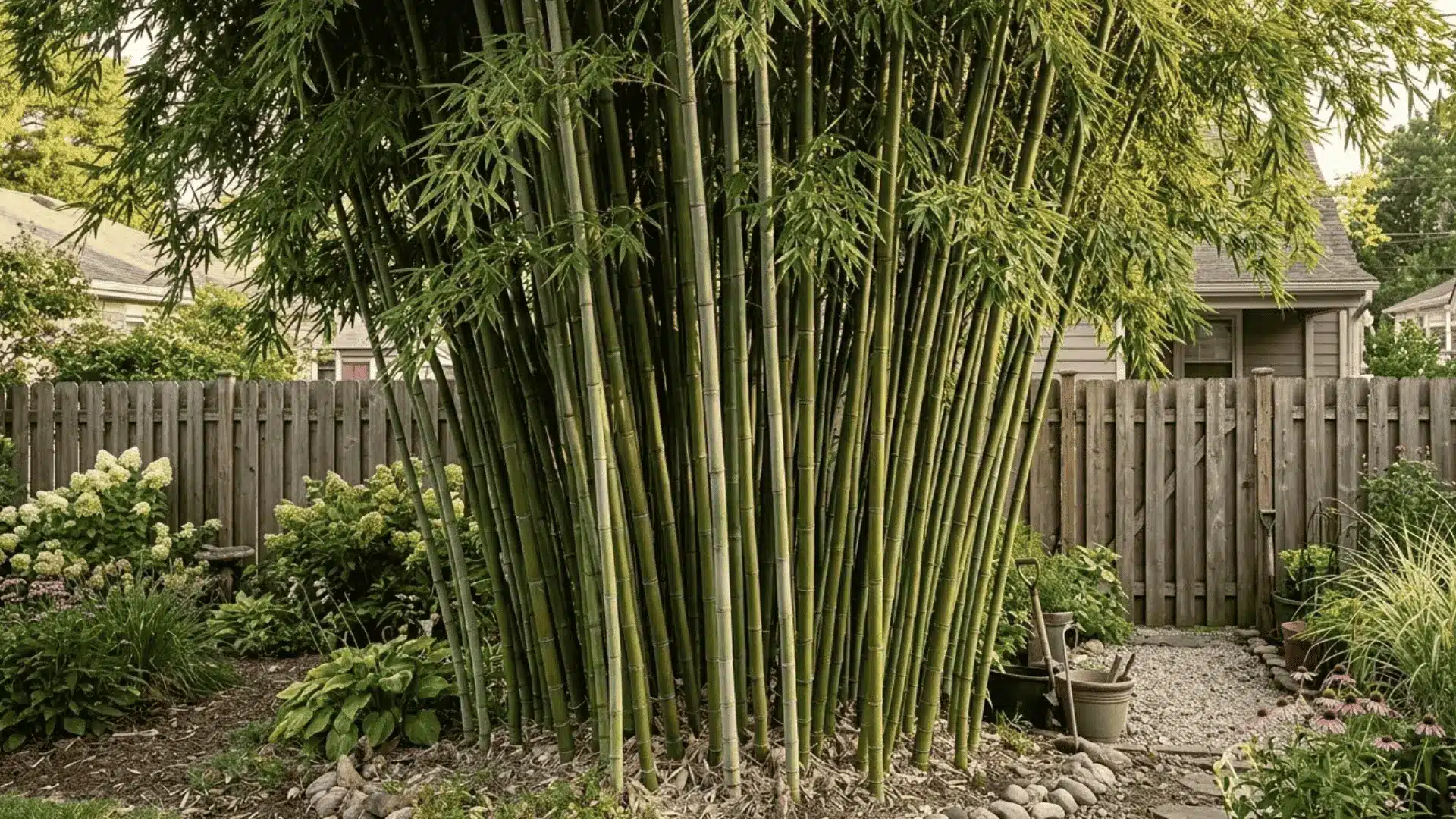
Full Grown In: 2 to 5 years
USDA Zone: 5 to 10
Clumping bamboo varieties provide some of the fastest, most dramatic privacy screens. Unlike running types, they grow upward in dense, graceful columns of tall, rustling canes.
The movement and sound it adds to a garden is unlike anything else, creating a screen that feels both exotic and incredibly effective. A striking statement for modern and naturalistic gardens alike.
Best Fast-Growing Shrubs for Different Privacy Needs
Every yard tells a different story, and the shrub that works perfectly for one space might feel completely off in another.
Here’s a quick guide to help you match the right shrub to what your garden actually needs.
| Privacy Need | Best Shrubs | Why They Work |
|---|---|---|
| Tall Privacy Screens | Arborvitae, Leyland Cypress, Cherry Laurel | Grow tall and fast with dense, full coverage that blocks views effectively |
| Small Yards | Boxwood, Spirea, Hydrangea | Stay compact and manageable without overwhelming a smaller space |
| Flowering Privacy Shrubs | Lilac, Rose of Sharon, Forsythia | Offer solid seasonal screening while adding color and fragrance to the garden |
| Year-Round Privacy | Holly, Wax Myrtle, Arborvitae | Evergreen foliage means consistent coverage through every season |
How to Plant Shrubs for a Privacy Hedge?
Planting a privacy hedge is one of those things that rewards a little upfront effort with years of low-maintenance beauty.
Get these basics right from the start, and your shrubs will settle in fast.
- Space shrubs according to their mature spread so they fill in naturally without crowding each other out.
- Loosen the soil deeply before planting and mix in compost to give roots an easy, nutrient-rich start.
- Water thoroughly right after planting, then keep the soil consistently moist through the first growing season.
- Lay mulch around the base of each shrub to lock in moisture, regulate soil temperature, and reduce weeds.
- Avoid planting too close to fences or structures; roots and branches need room to spread and breathe.
Give your shrubs a strong start, and they will take care of the rest, growing into exactly the lush, full hedge you had in mind.
Privacy Shrubs vs. Privacy Trees
Choosing between shrubs and trees for privacy comes down to what your space needs and how much patience you’re working with.
Here’s a side-by-side look at how they compare.
| Factor | Privacy Shrubs | Privacy Trees |
|---|---|---|
| Growth Rate | Wide varieties fill in within a few years | Generally slower to establish, but grows very tall over time |
| Maintenance | Regular trimming keeps them shaped and dense | Lower pruning needs, but harder to manage once mature |
| Space Requirements | Works well in compact yards and narrow borders | Need significantly more vertical and root space |
| Visual Impact | Create a lush, garden-like boundary at eye level | Add height, shade, and a more dramatic landscape presence |
That’s a Wrap
Fast-growing shrubs for privacy are really just the beginning of what a thoughtful garden can become.
Once they fill in and settle, what started as a practical decision quietly turns into one of the most beautiful corners of your yard.
The right shrubs bring shade, color, wildlife, and a sense of calm that no fence ever could. Pick what feels right for your space and let it grow into something you love.
Which shrub are you thinking of planting first? Drop it in the comments!