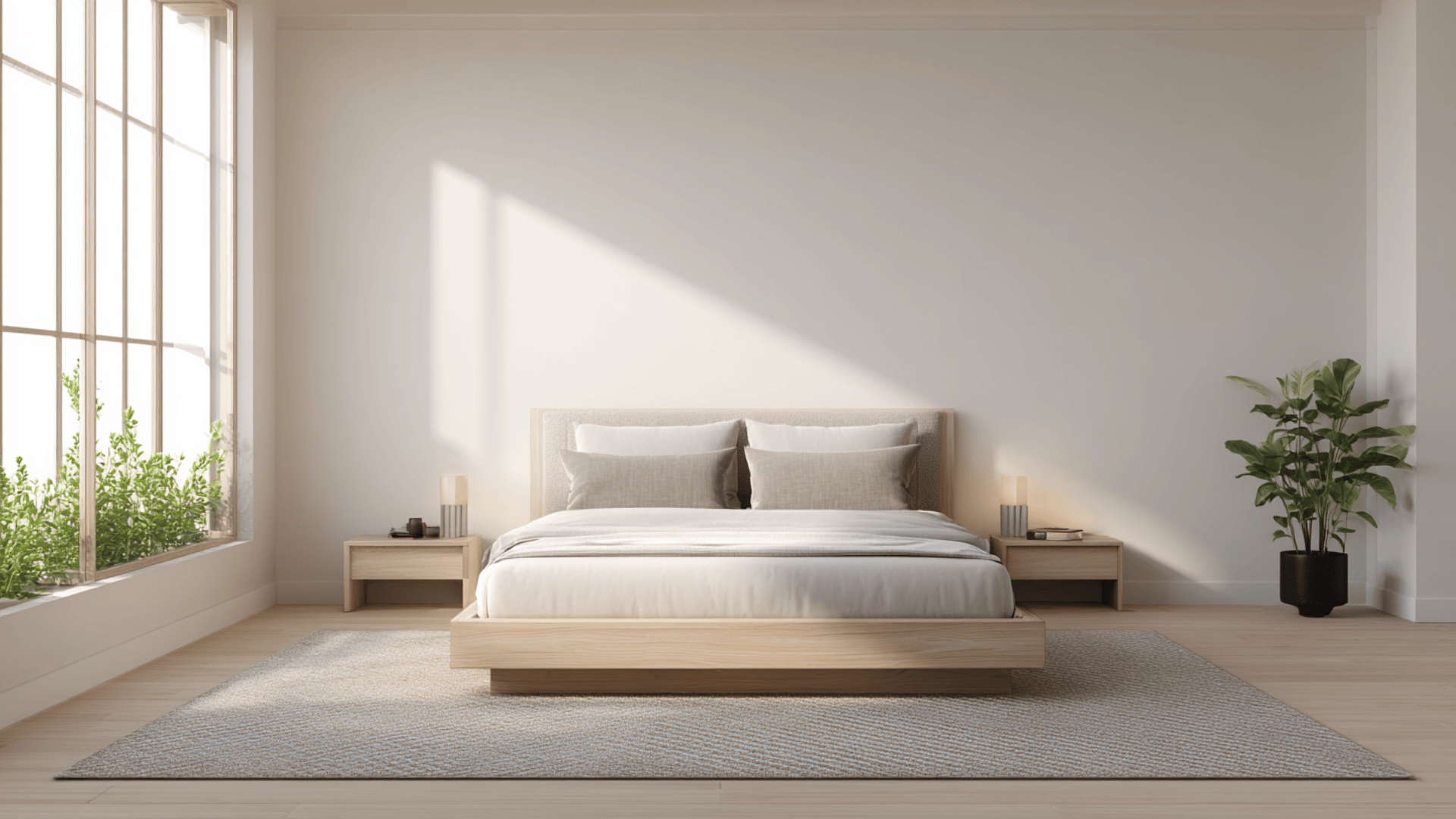
It’s funny how a bedroom can look almost right but still feel a little off, like something in the layout isn’t clicking yet. A rug usually solves that.
The trick is knowing where it should go and how big it needs to be, because bedroom rug placement shapes the whole flow of the room.
In my experience, once you understand how size, layout, and furniture all work together, everything gets easier. You start seeing simple choices that make the room feel calmer, softer, and more intentional.
In this guide, you’ll learn how to size a rug, place it cleanly, and work around tricky rooms. Let’s start with the basics.
Why Bedroom Rug Placement Matters
You know how a bedroom can look fine, but something feels a little off? Like the room is trying, but it’s not all the way there yet.
A rug fixes that. It gives the space this calm, warm base that your eyes settle into. I’ve seen it over and over. You put the right rug in the right spot, and the whole room relaxes. You do too.
A rug brings comfort because it’s soft under your feet first thing in the morning. It adds warmth, especially in rooms with hard floors. And it keeps the room balanced, so nothing feels scattered or floating around.
It also ties the furniture together, which makes the design feel intentional instead of random.
It even helps with sound. Bedrooms can get a little echoey when everything is wood or tile. A rug cuts all that down. The room gets quieter. More settled. More private. It’s one of those small changes that ends up doing a lot more than you expect.
How to Place a Rug Under a Bed
So here’s the thing. People always overthink this part. But the basics are pretty simple once you hear them laid out. These rules work in almost every bedroom, no matter the size or style. Like the room finally lines up with what your brain wanted the whole time.
The 3 Core Placement Rules
First rule. Make sure the rug sticks out at least 12 to 30 inches past the sides and the foot of your bed.
That extra space is what gives you that soft landing when you get up. It also makes the room feel steady instead of cramped.
Next one. Keep the rug about 6 to 8 inches away from your nightstands. Not touching them. Not hiding under them. Just a clean gap. That space keeps the room open and stops the rug from looking jammed in the corner.
And the big one. The rug has to anchor the bed. If the rug is floating out in the middle of the room or sitting halfway under nothing, the whole setup feels confused. You want the bed and the rug to work as one piece so the room has a center point.
Exact Rug Size Recommendations by Bed Type
- King beds need room to breathe, so the minimum you want is a 9×12. If your space is bigger, going larger usually looks better.
- Queen beds look balanced on an 8×10 or a 9×12. Both work. It depends on how much floor you want showing.
- Full beds sit well on a 6×9 or 8×10. The smaller one works in tight rooms. The bigger one makes everything feel more open.
- Twin beds are easy. A 5×7 or 6×9 works great. You can also use runners if the room is narrow or if the bed sits against a wall.
Formula for Choosing the Right Rug Size
If you want a simple method that works every time, use this.
Take the width of your bed. Add 24 to 30 inches to each side. That gives you your ideal rug width. Then take the length of your bed. Add the same amount to the foot. That’s your rug length.
It’s quick. It’s clean. And it takes the guesswork out of the whole thing. This little formula keeps your room balanced without you having to stand there squinting at floor plans for an hour.
The 5 Most Popular Bedroom Rug Layouts
People get stuck trying to imagine how a rug should sit under a bed. These layouts make it easier. You can picture each one as soon as you hear it. Every option has its own feel, its own trade-offs, and you can pick the one that matches your room and how you live.
1. Full Under-Bed Placement
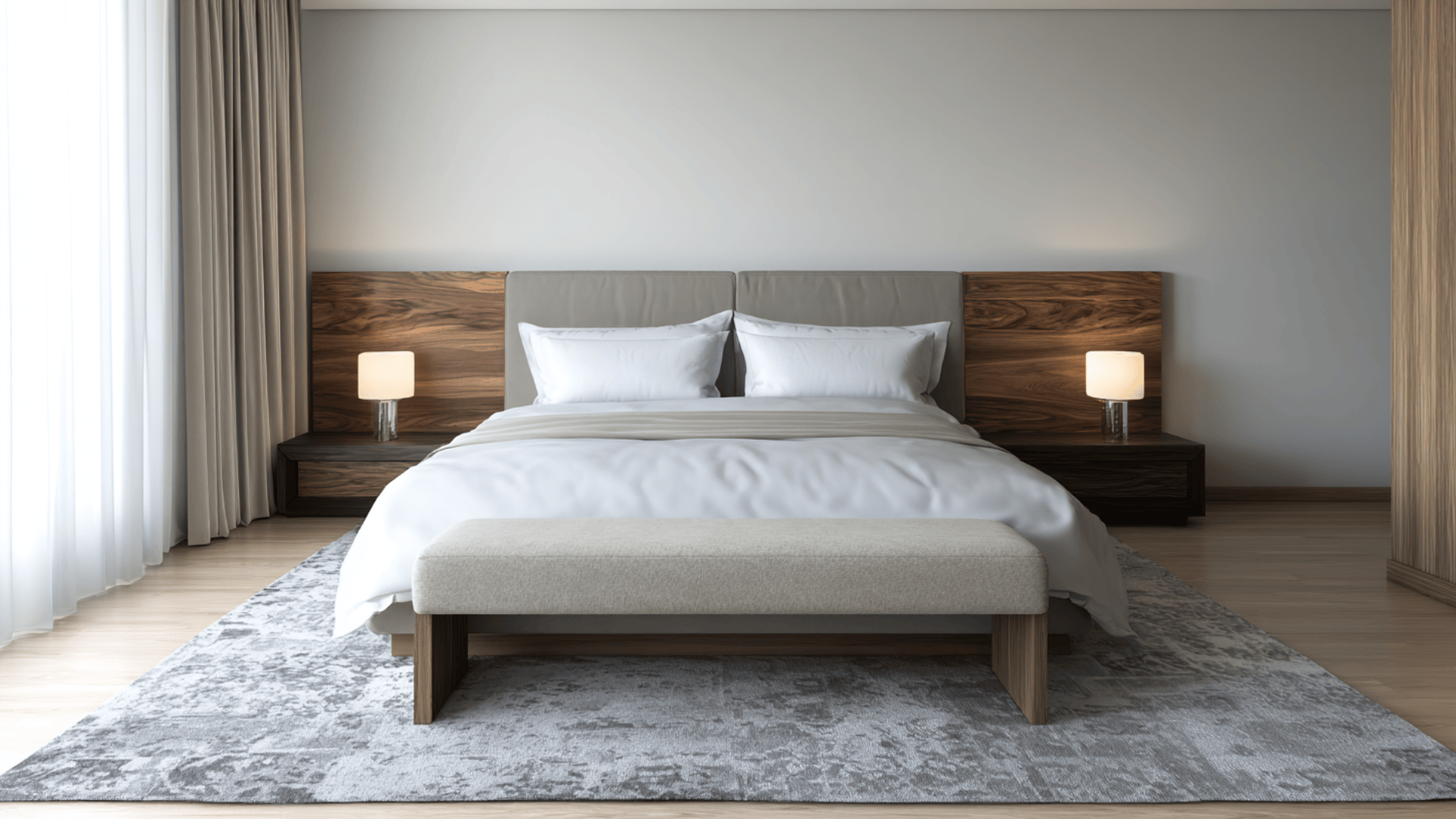
This covers the whole area under the bed, including the bench if you have one. It gives the room a grounded, hotel-style look. Great for bigger spaces. Not ideal for tight rooms because you lose a lot of visible floor.
2. Two-Thirds Under-Bed Placement
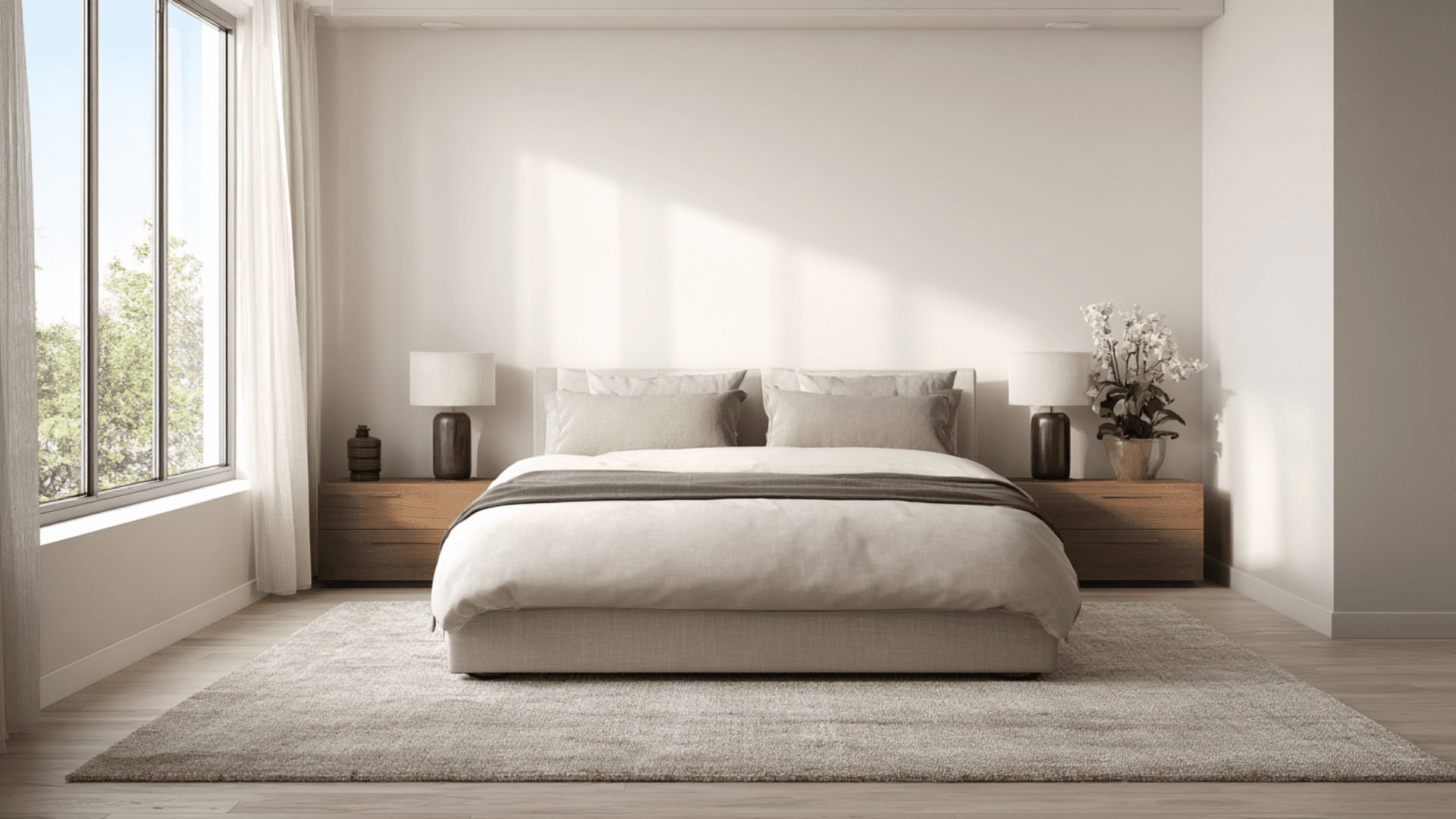
The rug starts around where your nightstands end and runs past the foot of the bed. It keeps the bed anchored without wasting rug under the top half. Works well in most bedrooms and gives you that soft step on all three sides.
3. Foot-of-Bed Rug
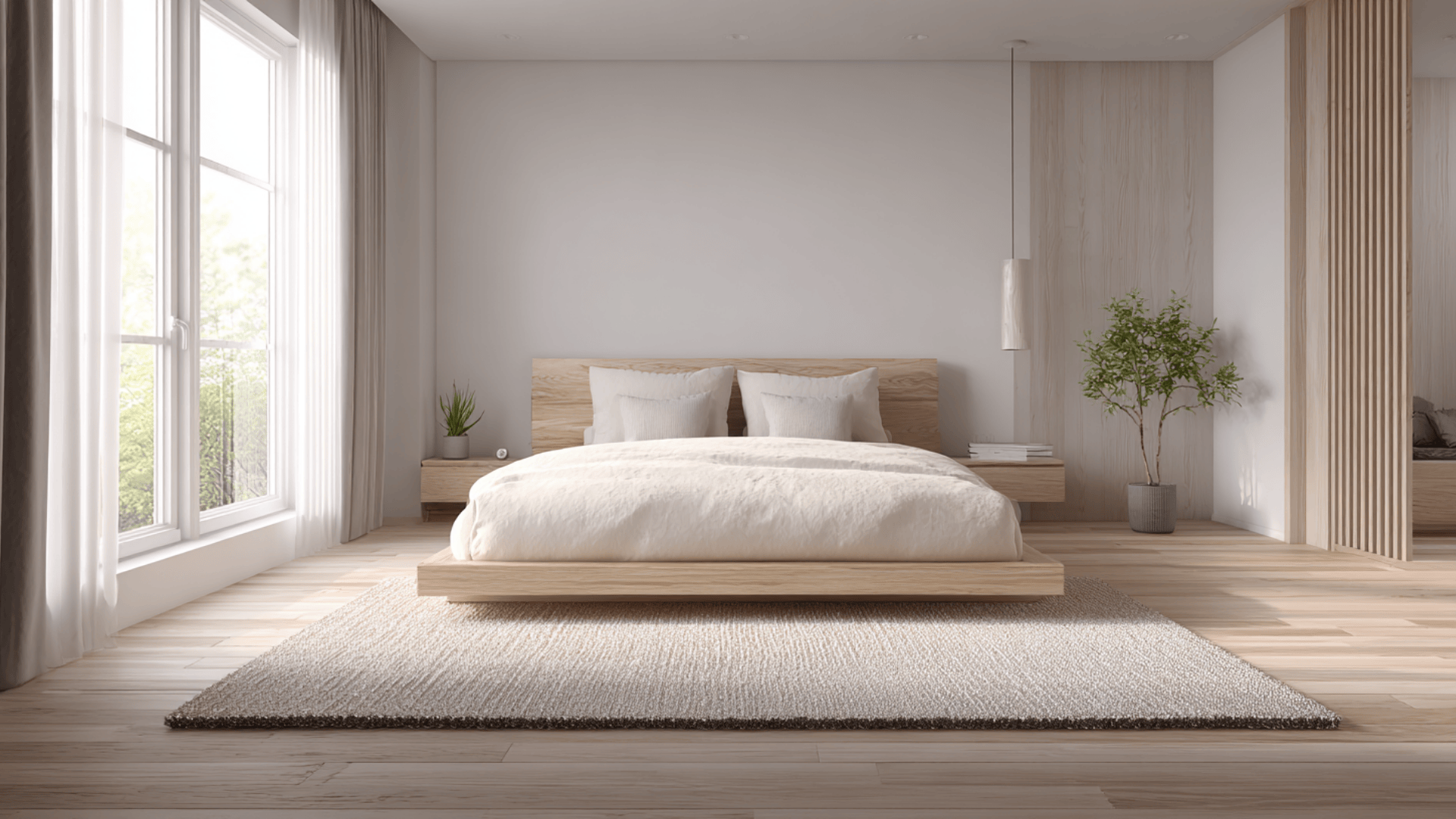
This one sits only at the bottom of the bed. It adds warmth and texture without using a huge rug. Good for small bedrooms or rooms with heavy furniture. It won’t fully anchor the bed, but it still makes the space feel finished.
4. Side Placement Rugs or Runners
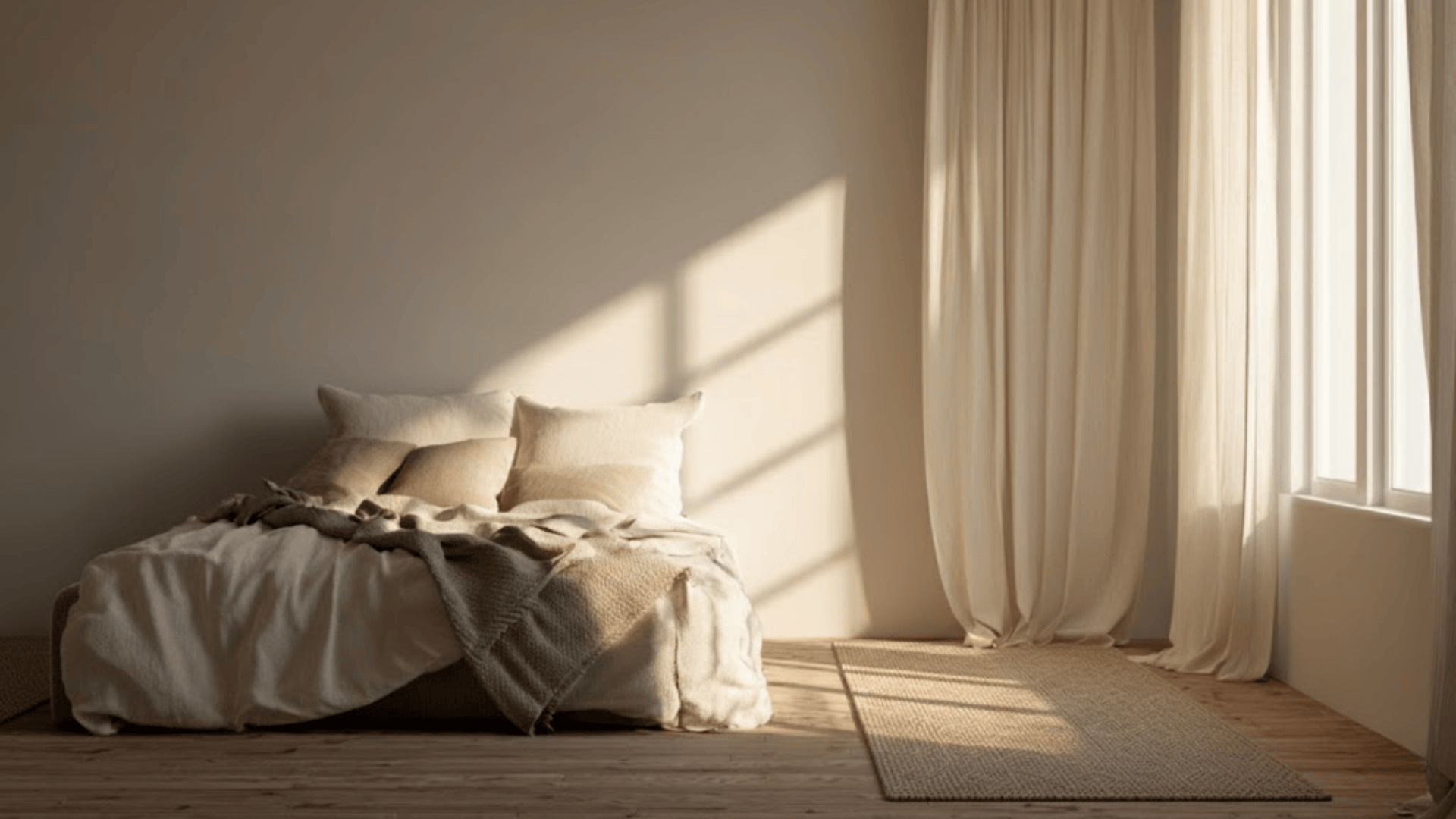
A long rug or two runners sit on the sides of the bed. Perfect for small or narrow rooms. You get that soft landing without crowding the layout. It’s also a good trick for beds against a wall where a standard rug won’t fit right.
5. Large Bedroom Layout with Seating Zone
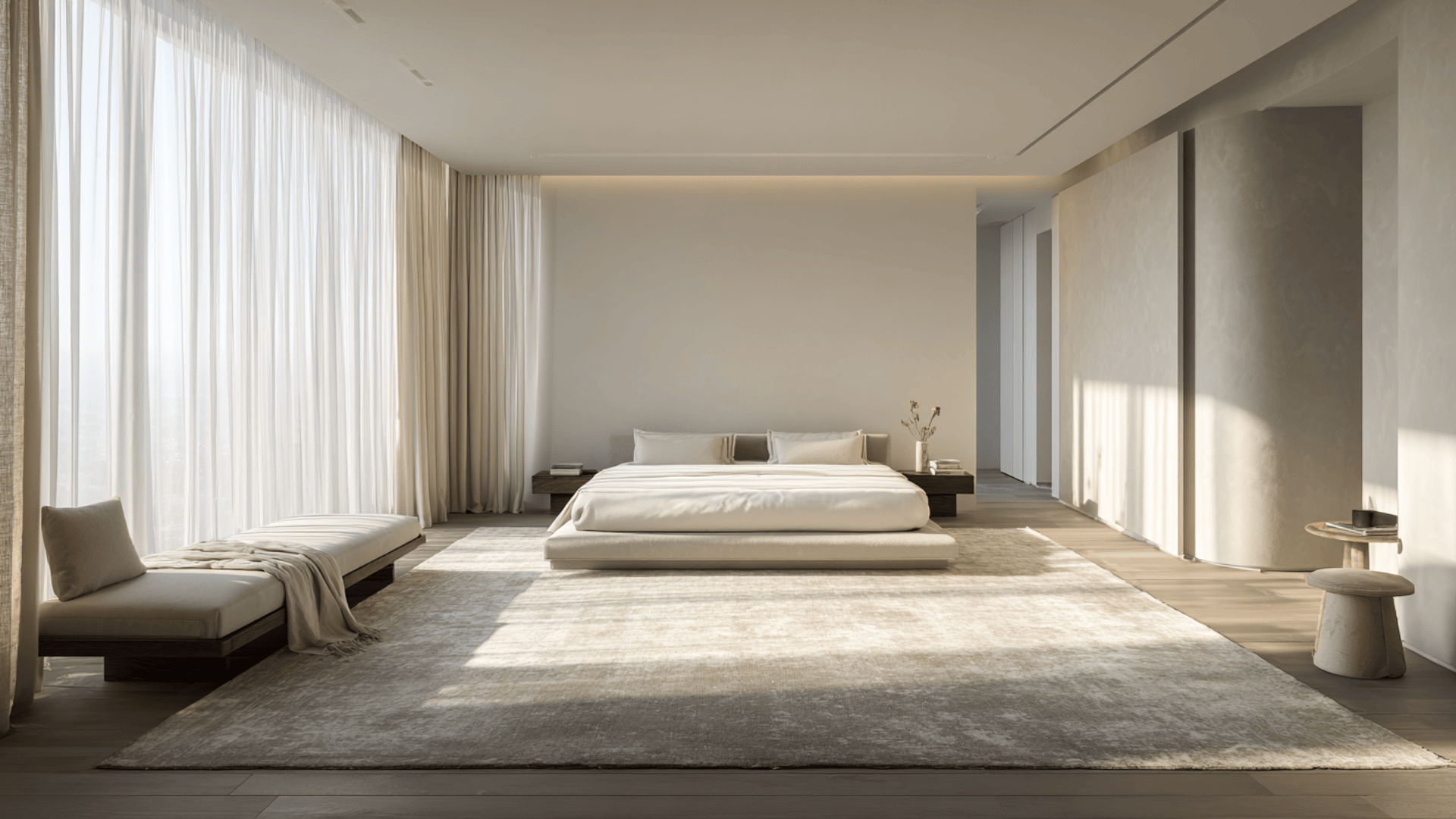
The rug goes under the bed and stretches into a seating area, covering both zones at once. It makes a big room feel connected. Works best when you have space for chairs or a loveseat near the foot of the bed. Creates a calm, unified layout.
Rug Placement for Tricky Room Layouts
Sometimes the room just isn’t built for the perfect setup, and you have to work with what you’ve got. This table lays out the easiest fixes for the most common awkward bedrooms so you can see what works at a glance.
| Tricky Layout | What Works Best | Why It Helps |
|---|---|---|
| Small Bedrooms | Use a 5×7, 6×9, or runners with a little floor showing | Keeps the room open and avoids that boxed-in look |
| Bed Against a Wall | Place the rug on the open side or use a long runner | Balances the layout and gives you a soft path |
| Corner Beds | Angle a 5×7 or 6×9 under the lower half of the bed | Pulls the bed forward so the room doesn’t feel packed into one corner |
| Shared or Kids’ Rooms | One rug per bed or one large rug for both | Makes the space feel connected instead of chaotic |
| Carpeted Bedrooms | Layer a structured rug with a rug pad | Adds warmth, stops slipping, and brings in texture |
These setups keep tricky rooms feeling balanced and easy to move around in. Once you see which option matches your space, everything gets a lot simpler.
Should a Rug Go Under Nightstands, Dressers, or Benches?
Nightstands: Let the rug reach under them only if it naturally fits. In small rooms, stop the rug a few inches before the nightstands to keep the layout open.
Dressers: Small dressers can sit with front legs on the rug. Heavy or tall dressers should stay off the rug so they stay steady and don’t drag or bunch the material.
Benches at the Foot of the Bed: Benches should sit fully on the rug. Whether it’s a full under-bed rug or a smaller foot-of-bed rug, keeping the bench completely supported makes the room feel balanced.
How to Choose a Bedroom Rug Style, Color, and Material
Picking the right rug isn’t just about size. It’s about how it feels, how it looks, and how it fits the vibe of your room. This part works like a simple style-matching matrix so you can line everything up without guessing.
Best Materials for Bedrooms
- Wool is soft, warm, and durable, making it one of the most comfortable options for everyday use.
- Cotton and synthetics work well if you want something lighter, easier to clean, and budget-friendly.
Style Guide (Modern, Minimalist, Boho, Farmhouse)
- Modern rooms look good with clean lines and simple patterns that don’t pull too much attention.
- Minimalist spaces pair well with solid colors or very subtle textures that keep the room calm and uncluttered.
- Boho bedrooms match with layered patterns, natural fibers, or rugs that feel relaxed and lived-in.
- Farmhouse styles connect with muted tones, soft textures, and rugs that bring warmth without being loud.
Color Rules that Always Work
- Neutral rugs are the easiest to live with because they blend into almost any setup.
- If the room feels plain, choose a rug one or two shades richer than your walls to add depth without overpowering the space.
The Most Common Bedroom Rug Mistakes to Avoid
People worry about messing this up, and it’s always the same problems showing up in different rooms. These quick points make it easy to spot what’s wrong before it happens:
- Rug Too Small: A small rug makes the room feel tight and unbalanced. You want enough rug around the bed so everything feels steady instead of floating.
- Rug Touching Nightstands: When the rug slides right up to the nightstands, the layout feels cramped. Leave a small gap so the room stays open and easier to move around in.
- Wrong Orientation: If the rug runs a different direction than the bed, the setup feels off. Keep the rug aligned with the bed so the flow stays clean and natural.
- Poor Room Balance: A rug pushed too far forward or backward throws off the whole room. Center it under the bed so the layout feels even from every angle.
These small mistakes add up fast, but once you see them, you can fix them in minutes. A few clean adjustments keep the whole bedroom looking sharper and more balanced.
Safety and Maintenance Tips
Rugs make a bedroom feel warm and calm, but they also need a little care so they stay safe and hold up over time. These points keep things simple and easy to manage:
| Topic | What to Do | Why It Helps |
|---|---|---|
| Preventing Slippage | Add a rug pad to keep everything steady | Stops sliding, keeps edges flat, and makes the rug feel softer |
| Cleaning and Care | Vacuum often and spot clean spills right away | Keeps dirt from settling and helps the rug last longer |
| Allergy-Friendly Options | Choose low-pile or natural fiber rugs, or go washable | Reduces dust buildup and makes cleaning faster and easier |
If you keep up with these basics, your rug stays cleaner, safer, and better looking without a lot of work.
Wrapping Up
A good rug does more than fill space. It sets the tone of the room and makes everything feel settled, and that’s why getting your bedroom rug placement right matters.
When you match the size to the bed, use layouts that fit your space, and avoid the mistakes people make, the whole room feels more balanced.
Even tricky layouts get easier once you know what to look for. Use the tips here as a simple roadmap and trust your eye as you go.
If you’re ready to dial in your space, start choosing the rug that matches your room and make the first move today.