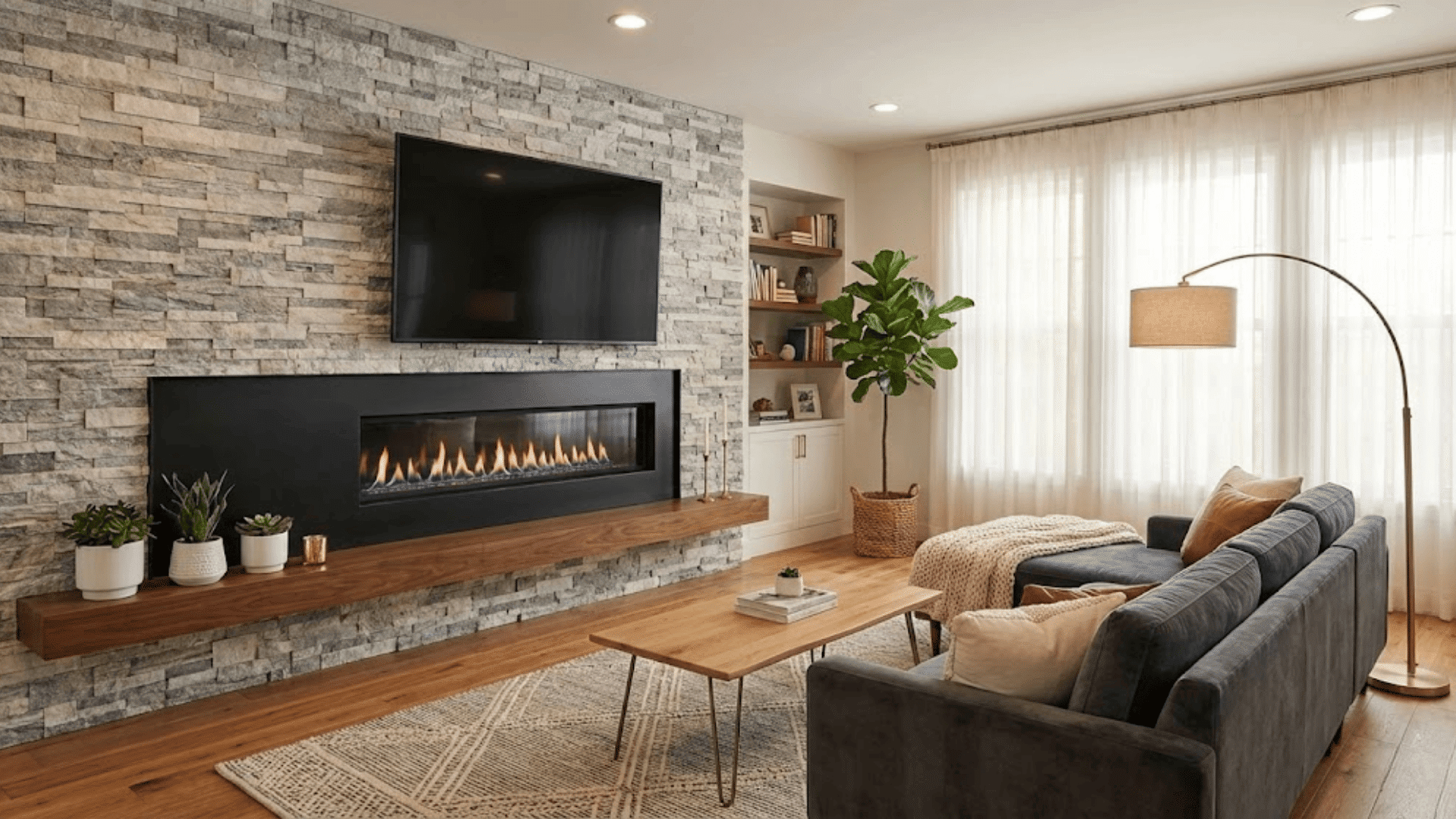
There’s something undeniably magnetic about a TV mounted above the fireplace: that picture-perfect centerpiece that anchors your living room with effortless style.
This setup has captured hearts across countless homes, and it’s easy to see why. The vertical symmetry creates a natural focal point that feels both intentional and inviting.
Yet beneath this beautiful arrangement lies a gentle tension between what looks gorgeous and what feels comfortable for everyday viewing.
If you’re reimagining your space, working through a remodel, or simply dreaming up your ideal room, understanding this balance helps turn a good design choice into one that truly works for your life.
Is It a Good Idea to Put a TV Above a Fireplace?
Placing a TV above a fireplace is a popular but debated design choice. It works well if you have limited wall space or want a single central focal point.
However, it fails if the viewing angle causes neck strain or if rising heat damages the electronics.
Key factors influencing success:
- Fireplace Type:Electric or gas inserts are safer for electronics than wood-burning options.
- Room Layout:Open floor plans often necessitate this placement.
- Viewing Distance: Sitting further back reduces neck strain.
- Ceiling Height: High mantels often force the TV too high for comfort.
Pros and Cons of a TV Above the Fireplace
Mounting a television above the mantel is a divisive design choice that balances aesthetic appeal with practical function.
Homeowners must carefully weigh the visual benefits of a unified focal point against the potential ergonomic and technical drawbacks.
The Advantages
This layout is frequently chosen for its ability to streamline a room’s design and maximize usable square footage.
- Saves Wall Space: Eliminates the need for a separate media console, freeing up floor area.
- Creates a Focal Point: Consolidates the fireplace and TV into a single visual center for furniture arrangement.
- Clean, Minimalist Look: Offers a sleek aesthetic that keeps technology from dominating the room.
The Disadvantages
Despite the visual appeal, this placement introduces significant physical challenges for viewers and risks to the device itself.
- Neck Strain Risk: Forces viewers to look up at an unnatural angle, potentially causing long-term discomfort.
- Heat Exposure Concerns: Rising heat and smoke from the fire can damage sensitive internal electronics.
- Height and Glare Issues: Higher placement often catches more reflection from overhead lights or windows.
Ideal TV Height Above a Fireplace
For optimal comfort, the center of your screen should ideally sit at eye level, roughly 42 to 48 inches from the floor.
Since mantels often make this impossible, aim to mount the TV 6 to 12 inches above the mantel to balance aesthetics and safety.
Crucially, maintain a clearance of at least 20 inches from the firebox to protect electronics from heat.
TV Sizing & Placement Guide
This table outlines the relationship between your mantel height, the maximum TV size that comfortably fits before hitting a standard ceiling, and how far back you should sit to minimize neck strain.
| Mantel Height (From Floor) | Max Suggested TV Size | Min. Viewing Distance |
| Low ( | Up to 75″+ | 8 – 10 ft |
| Standard (48″ – 54″) | Up to 65″ | 10 – 12 ft |
| High (55″ – 60″) | Up to 55″ | 12+ ft |
Note on High Mantels: If your mantel is above 55 inches, standard mounting often places the TV too high. In these cases, a pull-down mount (like a MantelMount) is highly recommended to bring the screen to eye level when in use.
Heat & Safety: Protecting Your TV from Thermal Damage
Protecting your electronics from thermal damage is the most critical aspect of mounting a television above a fireplace, as excessive heat can void warranties and shorten the device’s lifespan.
- Impact of Heat: Electronics begin to suffer failure and pixel damage when exposed to temperatures consistently exceeding 90°F–100°F.
- Safe Clearance Standards: Maintain a vertical clearance of at least 20 inches between the top of the firebox and the bottom of the TV.
- Fuel Source Matters: Gas inserts are generally safer due to controlled heat output, whereas wood fires create unpredictable heat spikes and smoke.
- Mantels as Shields: A mantel acting as a heat shield should protrude at least 8 inches to effectively divert rising hot air away from the screen.
- When to Abstain: Do not mount a TV if the wall surface temperature exceeds the manufacturer’s maximum operating limit (usually 104°F) after one hour of fire use.
Before installation, always tape a thermometer to the wall while a fire is burning to verify the area remains cool enough for sensitive technology.
Design Rules for Mounting a TV Above a Fireplace
To prevent a large black screen from dominating your living space, the installation must treat the television as part of the overall architectural design.
The goal is to ensure the technology complements, rather than competes with, the fireplace’s aesthetic.
| Design Rule | Best Practice | Visual Impact |
| Balance Proportions | Ensure the TV is narrower than the mantel width | Avoids a “top-heavy” appearance |
| Keep it Flush | Use recessed niches or zero-gap mounts | Mimics framed art; hides side gaps |
| Avoid Bulky Mounts | Opt for ultra-slim fixed or tilting brackets | Keeps the side profile clean |
| Symmetry & Alignment | Center align with the firebox | Creates visual calm and order |
| Match Finishes | Coordinate frame bezels with room hardware | Blends the TV into the decor |
Styling Ideas to Make a TV Above a Fireplace Look Good
Transforming a black screen into a design asset requires creative styling to integrate the technology. These strategies help the television enhance rather than detract from your room’s overall aesthetic.
1. Built-in Cabinets and Millwork
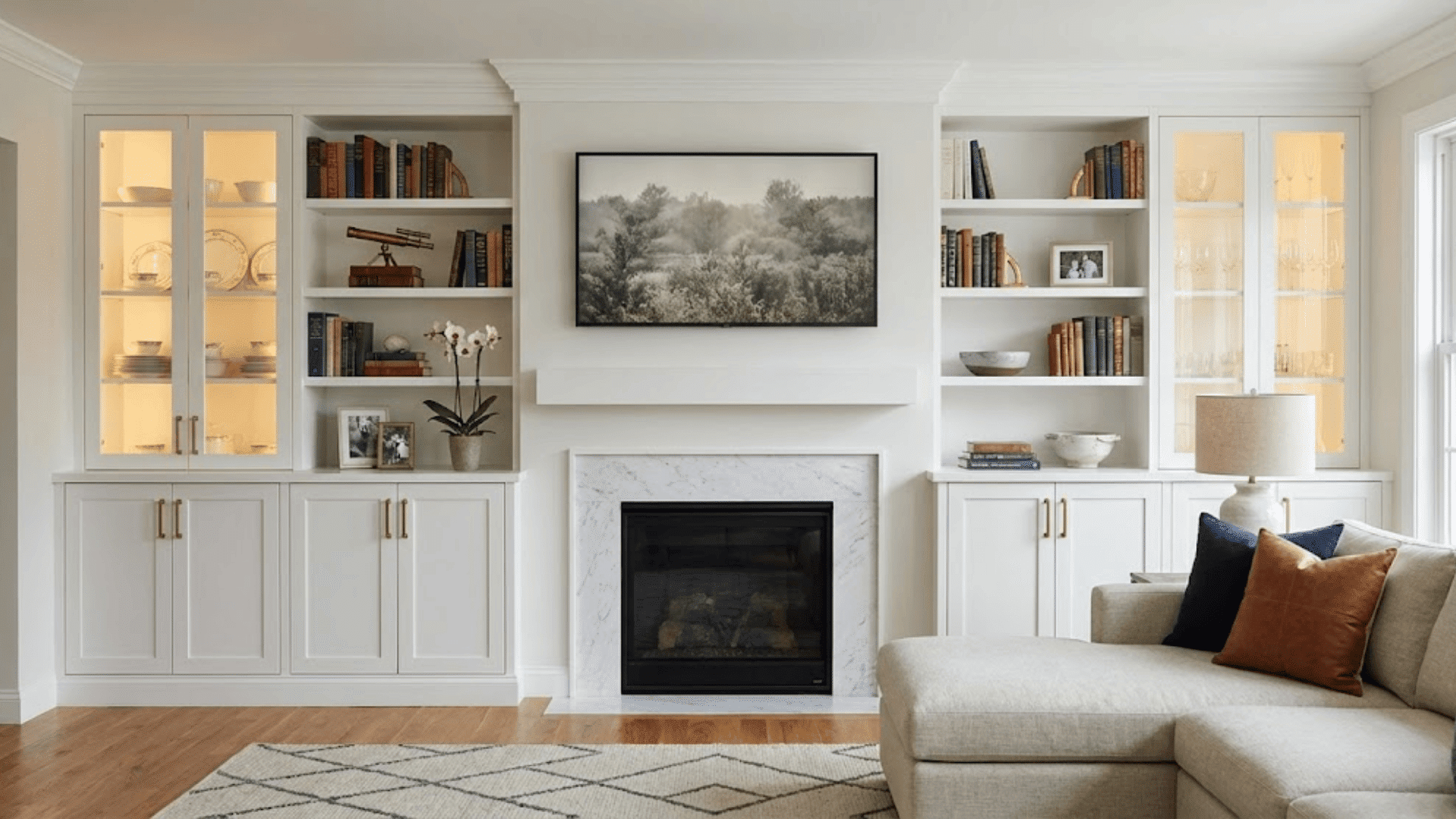
Surrounding the fireplace with custom built-ins creates a cohesive wall unit that anchors the room. By incorporating open shelving or closed cabinets on either side, you draw the eye across the entire wall rather than just the screen.
This approach adds valuable storage and allows for decorative styling with books and objects, making the TV feel like one intentional part of a larger architectural feature rather than an isolated afterthought.
2. Frame TVs and Art-Style Displays
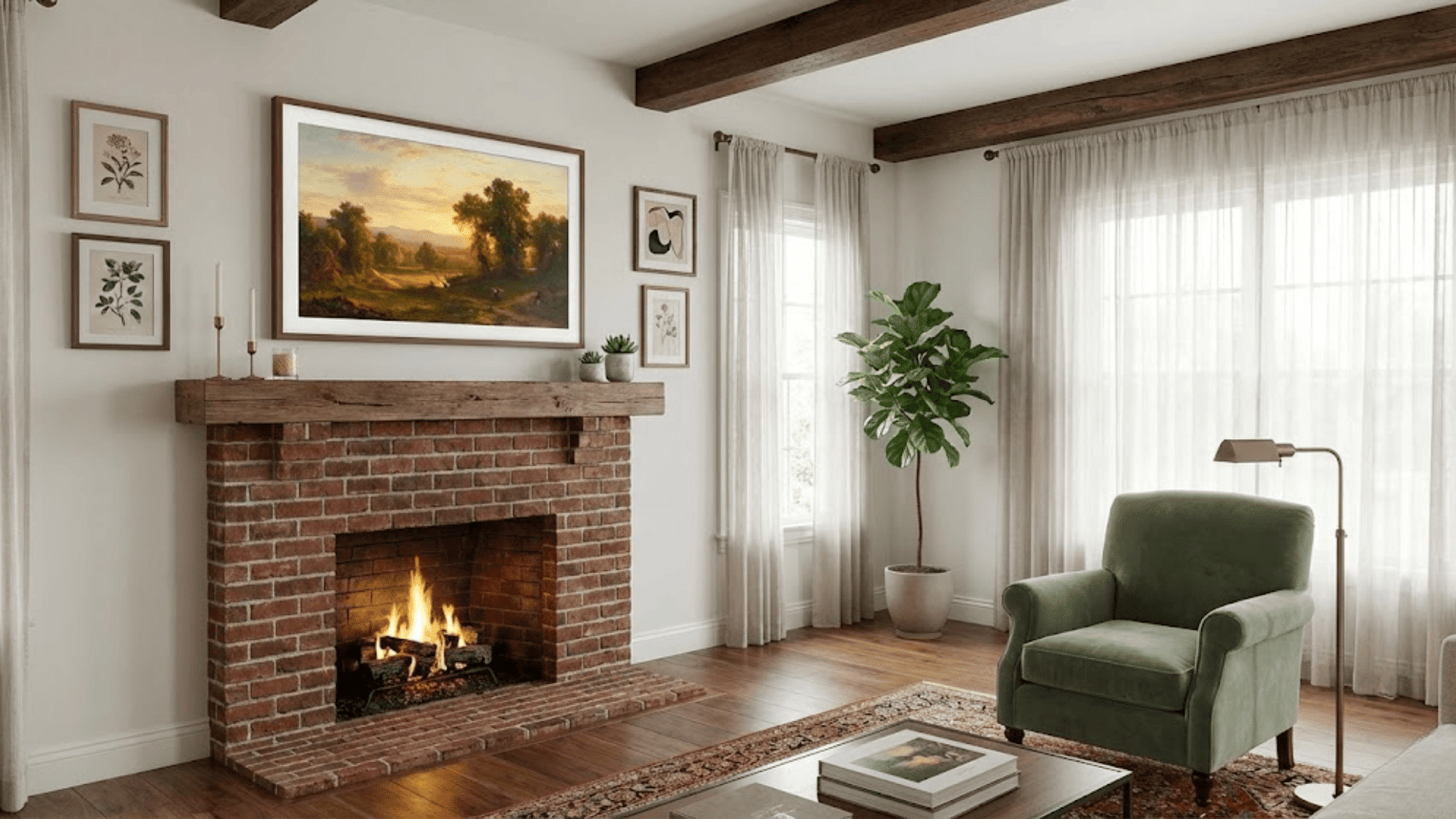
The most effective way to hide a TV is to make it look like art. Devices like the Samsung Frame TV display high-resolution artwork when turned off and feature customizable bezels that mimic real picture frames.
This trick effectively eliminates the “black hole” effect, allowing the television to sit above the mantel as a curated piece of decor that complements your gallery wall or interior style.
3. Dark Accent Walls to Blend the TV
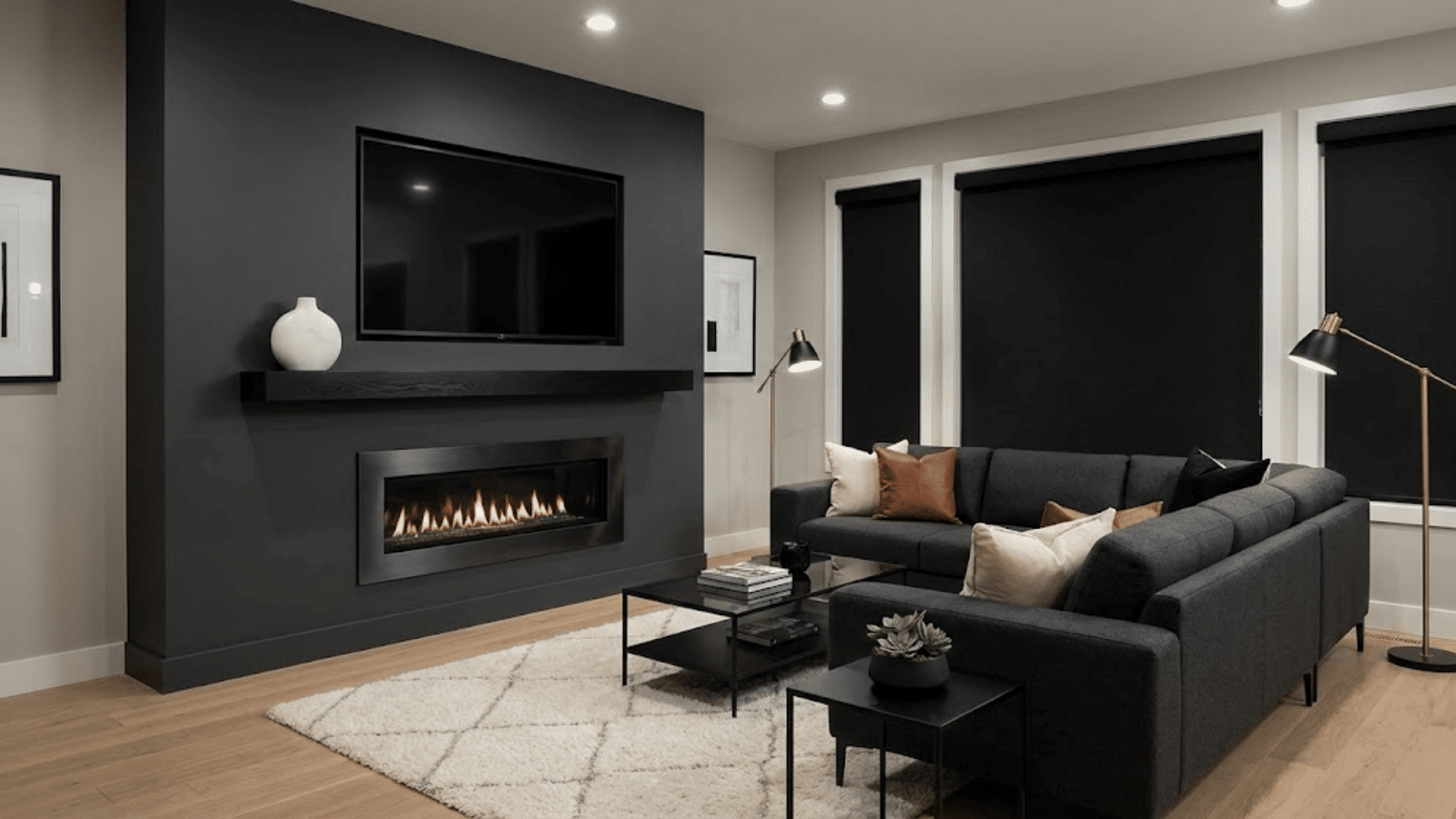
Paint the fireplace wall in a deep, moody hue like charcoal, navy, or black to minimize the visual impact of the screen. The dark TV bezel blends into the background, making the device nearly invisible when unused.
This camouflage technique reduces visual clutter and creates a sophisticated, dramatic focal point that highlights the flickering fire rather than the electronics above it.
4. Stone, Tile, or Wood Feature Surrounds
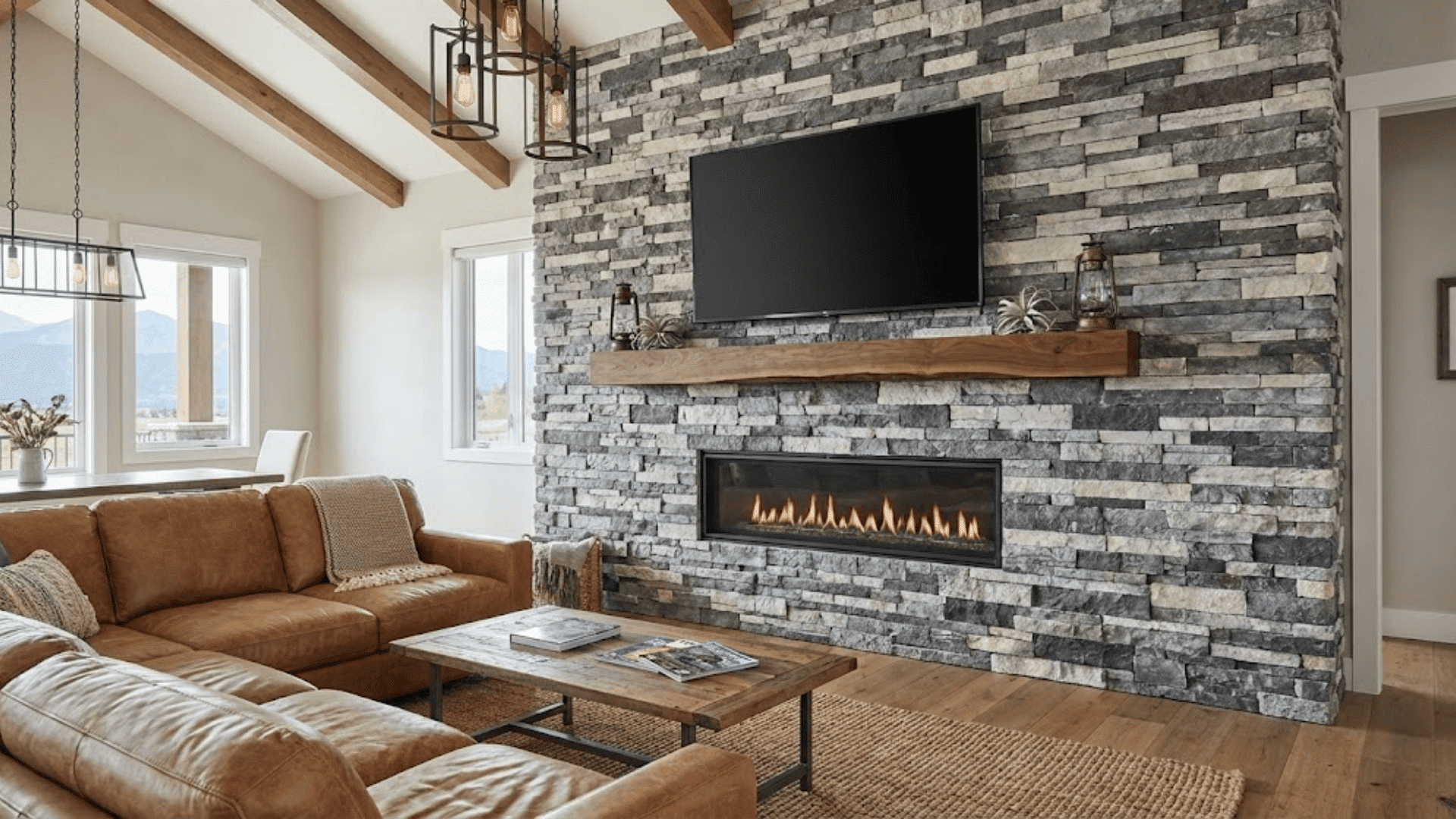
Adding texture behind the TV creates visual interest that distracts from the glossy screen. Materials like shiplap, stacked stone, or geometric tile extend the fireplace upward, anchoring the TV with a solid architectural element.
The varied textures provide a rich backdrop that makes the technology feel grounded and deliberate, rather than looking like an afterthought stuck on a plain drywall surface.
5. Concealed and Recessed Designs
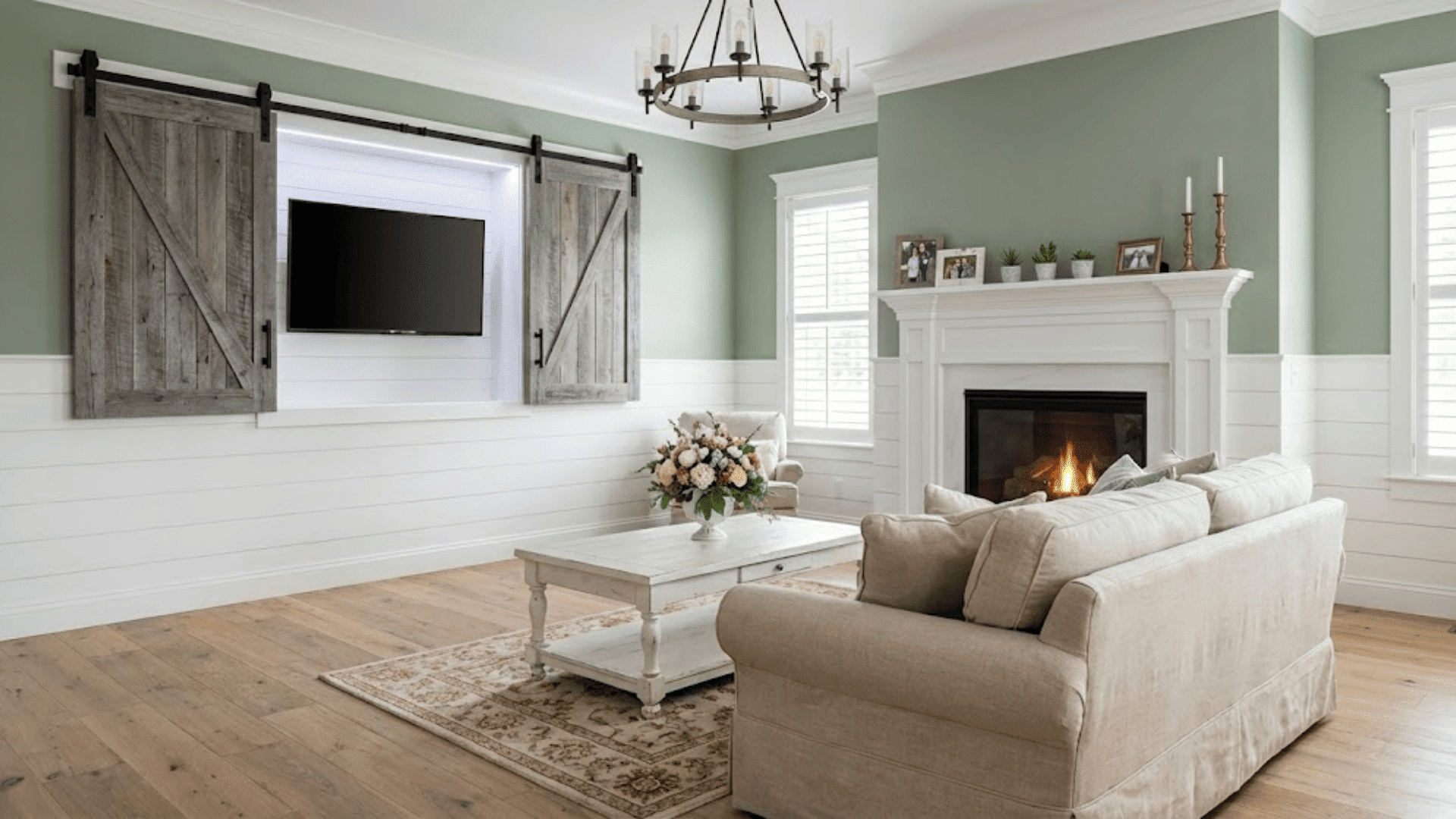
For the ultimate minimalist look, physically hide the TV when it’s not being watched. Install the screen inside a recessed niche flush with the wall, or cover it with sliding barn doors, folding panels, or a motorized canvas.
These hidden solutions preserve the traditional charm of a fireplace hearth, ensuring the room feels like a gathering space rather than a media center.
TV Above Fireplace in Different Design Styles
Integrating a television above the mantel requires adapting the installation to match the specific architectural language of your home, ensuring the screen boosts the vibe rather than breaking it.
- Modern & Minimalist: Use recessed niches and zero-gap mounts to maintain clean, unbroken lines against monochrome walls.
- Traditional Living Rooms: Conceal the screen behind sliding panels or use “Frame” technology to preserve classic elegance.
- Farmhouse & Rustic: Ground the high-tech screen with a chunky reclaimed wood mantel and a textured shiplap backdrop.
- Contemporary & Transitional: Balance the visual weight with symmetrical built-in shelving and consistent millwork on either side.
Regardless of the style, the key is ensuring the TV acts as a complementary layer in the design rather than a disruption to the room’s established character.
Alternatives to a TV Above the Fireplace
If mounting the TV above the mantel proves unsafe or uncomfortable, shifting the placement can improve both viewing ergonomics and room functionality.
These layouts separate the technology from the hearth, allowing each feature to stand on its own without compromising neck comfort or aesthetics.
| Alternative Layout | Best For | Key Benefit |
| Adjacent Wall Placement | Rooms with built-ins or wide walls next to the chimney breast. | Keeps the TV at eye level while maintaining a shared focal wall. |
| Corner TV Setup | Small spaces or rooms with limited wall area due to windows/doors. | Utilizes “dead space” and allows flexible viewing angles. |
| Opposite Wall Console | Long, narrow rooms where the sofa can float in the middle. | Offers the perfect viewing height and separates conversation from media. |
| Dual Focal-Points | Open floor plans with L-shaped sectionals or swivel chairs. | Creates distinct zones for watching TV versus enjoying the fire. |
Mantel Design Tips When Installing a TV
Your mantel serves a dual purpose in this setup: it acts as a visual anchor for the room and a critical heat barrier that protects your television from rising thermal damage.
- Ideal Depth: Ensure the mantel projects at least 8 inches outward to effectively divert heat away from the screen above.
- Height Considerations: Mount the mantel as low as code allows to keep the TV at a comfortable viewing level without neck strain.
- Floating Mantels: Opt for non-combustible materials like concrete or metal for a sleek, modern look that withstands high temperatures.
- Heat-Shield Designs: Consider specialized mantels with internal insulation or metal deflectors if your fireplace has a high heat output.
- Minimalist Styling: limit decor to low-profile items like garlands or small candles to avoid blocking the screen or remote sensor.
By selecting the right mantel depth and material, you create a safe buffer zone that preserves both your electronics and your design aesthetic.
Best Mounts for TVs Above Fireplaces
Choosing the right hardware is essential to solve the ergonomic challenges of a high-mounted screen. While a basic fixed mount works for low fireplaces, specialized pull-down mounts are often the only way to achieve a comfortable, neck-safe viewing angle.
| Mount Type | Best For | Why It Works | Top Pick |
| Fixed | Low Mantels (Eye-level) | Flush profile; keeps TV close to the wall | Sanus Super Slim |
| Tilt | Standard Mantels ( | Angles down ~15° to cut glare | Sanus Advanced Tilt |
| Pull-Down | High Mantels (> 50″) | Lowers TV ~25″ to comfortable eye level | MantelMount MM540 |
| Motorized | Smart Homes | Auto-lowers & retracts if heat spikes | MantelMount MM815 |
| Budget | Value Seekers | Essential drop-down features at a lower cost | Monoprice Fireplace Mount |
Is an adjustable mount worth it? Yes, if your mantel is above 50 inches. Lowering the screen prevents chronic neck pain and restores a proper eye-level viewing experience.
That’s a Wrap
Deciding to mount a TV above a fireplace is rarely a straightforward choice; it requires finding the perfect balance between architectural style and practical function.
While this setup offers a streamlined focal point, it only truly succeeds when you prioritize safety measures like proper heat clearances and ergonomic mounts.
By carefully weighing the design rules and safety tips we’ve covered, you can achieve that sleek, modern aesthetic without sacrificing your viewing comfort or risking your electronics.
Have you tried this setup in your own home? Share your experience or your favorite alternative layout in the comments below!