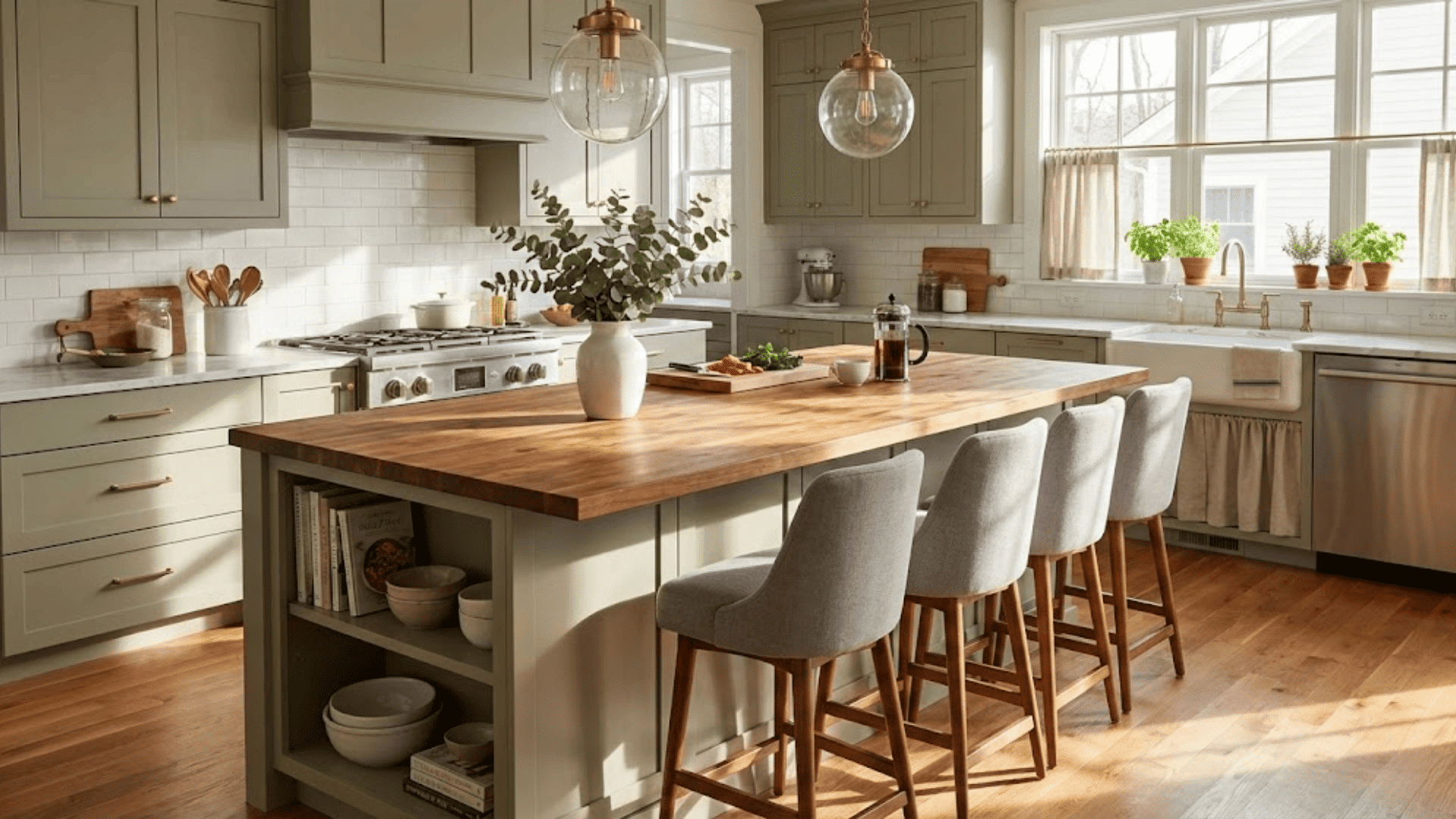
Your kitchen island should feel like the heart of your home, a place where morning coffee flows into meal prep, and casual dinners turn into lingering conversations. But that magic only happens when the dimensions are just right.
Too large and you’re squeezing past corners; too small and you’re losing valuable counter space and seating potential.
Getting your island proportions correct creates that effortless flow you see in perfectly curated spaces, where every inch works beautifully with your daily rhythm.
Homeowners planning a remodel or DIY project should understand kitchen island dimensions to create a space that’s both functional and appealing, balancing practical needs with aesthetics.
Kitchen Island Height Guidelines
The height of your island sets the tone for how you’ll use it daily. From comfortable food prep to relaxed seating, getting this measurement right ensures your island feels intuitive and inviting.
- Standard counter height sits at 36 inches, perfect for chopping, mixing, and everyday meal prep without strain.
- Bar height reaches 42 inches, ideal for casual dining and creating defined zones in open-concept spaces.
- Multi-level islands combine both heights, offering prep space on one side and elevated seating on the other for versatile entertaining.
- Counter height works best for kids and shorter family members, making the island accessible and comfortable for everyone.
- Bar-height seating creates a café vibe, encouraging guests to linger while keeping the cooking mess subtly hidden from view.
Once you’ve settled on the right height, your island becomes more than a surface. It becomes the spot where function and comfort naturally meet.
Kitchen Island Width & Length
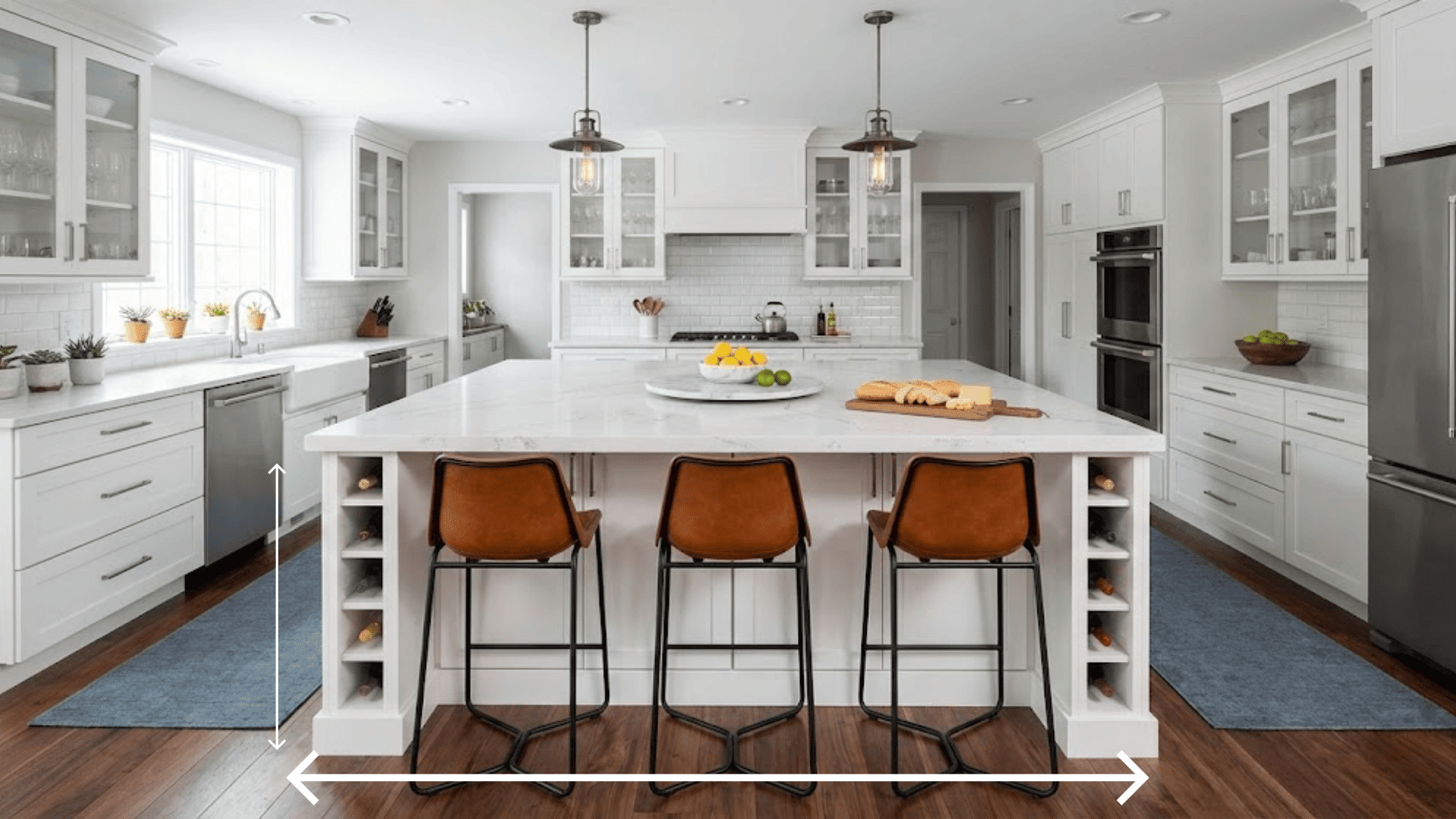
Finding the sweet spot for your island’s footprint means balancing prep space, seating comfort, and that all-important walkway clearance.
Here’s how to size it perfectly for your kitchen’s unique layout.
Minimum Dimensions for a Functional Island
Your island needs at least 24 inches of width to feel useful, though 36 to 48 inches is where real functionality begins.
For length, aim for a minimum of 48 inches to accommodate basic prep work. Anything smaller risks feeling like an afterthought rather than a hardworking centerpiece.
These baseline measurements ensure you have enough surface area for cooking tasks while maintaining comfortable traffic flow around all sides.
Sizing Up for Prep and Seating
When adding seating, plan for 60 to 72 inches in length to comfortably fit two to three stools with proper elbow room.
Large kitchens can handle islands up to 96 inches or longer, offering expansive prep zones and dining space.
But beware: an oversized island can make your kitchen feel cramped if it leaves less than 42 inches of clearance around the perimeter, turning your dream feature into a bulky obstacle.
Minimum Kitchen Size for an Island
Not every kitchen can accommodate an island, and that’s perfectly okay. Understanding the space requirements helps you decide whether an island fits your layout or if a peninsula makes more sense.
1. Space Requirements for a Kitchen Island
Before committing to an island, you need adequate room to move comfortably around it while maintaining functional work zones.
| Kitchen Element | Minimum Requirement |
|---|---|
| Overall kitchen size | 100-120 square feet |
| Clearance around the island | 36-42 inches on all walkways |
| Island width | 24-36 inches for compact spaces |
| Island length | 48 inches minimum for functionality |
2. When Does a Peninsula Work Better?
Sometimes, a peninsula attached to your existing cabinetry offers all the benefits of an island without the spatial demands.
Consider this alternative when your kitchen needs a smarter solution.
- Kitchens under 100 square feet often lack the clearance needed for a freestanding island without feeling cramped.
- Galley kitchens benefit from peninsulas that extend from one wall, adding counter space without blocking the natural corridor.
- Narrow or oddly shaped layouts work better with attached features that guide traffic flow rather than interrupting it.
- Single-cook households may find a peninsula provides ample prep and seating space without the footprint of a full island.
3. Layout-Specific Island Considerations
Different kitchen layouts have unique spatial characteristics that determine whether an island will enhance or hinder your workflow.
| Kitchen Layout | Island Compatibility | Key Considerations |
|---|---|---|
| Galley kitchens | Generally too narrow | Works only if the galley spans at least 8 feet wide; opt for slim island designs |
| L-shaped kitchens | Ideal for islands | Configuration creates a natural open zone in the center for smooth traffic flow |
| Open-concept kitchens | Maximum flexibility | Islands can float freely as room dividers while maintaining sightlines to living areas |
Clearance & Walkway Space Around a Kitchen Island
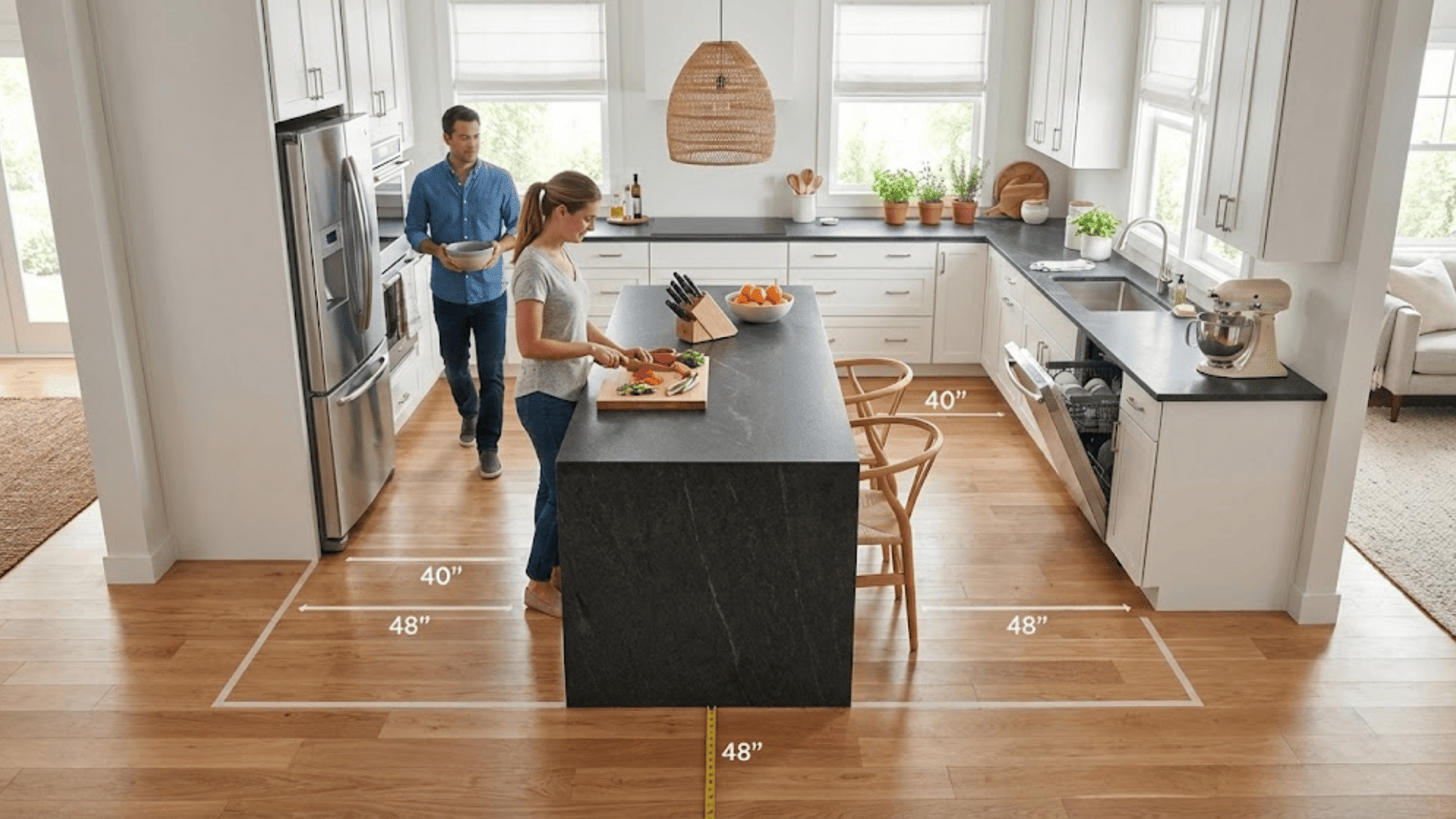
Proper clearance around your island isn’t just a design nicety; it’s what keeps your kitchen from feeling like an obstacle course.
These measurements ensure smooth traffic flow and comfortable access to everything you need.
Minimum Clearance Standards
The space surrounding your island determines how comfortably you can move, open appliances, and work alongside others during meal prep.
- 36 inches is the absolute minimum clearance on all sides, though this works best for single-cook kitchens with limited traffic.
- 42 to 48 inches feels more comfortable for everyday use, allowing two people to pass each other without turning sideways.
- Appliance doors and drawers need their own buffer, requiring at least 48 inches of clearance in front of dishwashers and ovens when open.
- Multiple cooks working simultaneously benefit from 48 to 54 inches of space, preventing bottlenecks during busy cooking sessions.
Accessibility and Special Considerations
Creating an inclusive kitchen means thinking beyond standard measurements to accommodate different needs and movement patterns.
- Wheelchair accessibility requires 60 inches of clearance for a comfortable turning radius and maneuverability around the island.
- Islands with seating on one side need extra room behind the stools, typically 36 inches from the seat back to the nearest wall or counter.
- High-traffic kitchens benefit from wider walkways of 54 inches or more, especially in open layouts where guests naturally congregate.
- Corner placements demand careful planning since tight angles can create pinch points that feel cramped even with adequate straight-line clearance.
Kitchen Island Seating Dimensions
Adding seating to your island turns it into a gathering spot, but comfort depends entirely on getting the measurements right.
Here’s how much space each person actually needs.
| Seating Element | Recommended Dimension | Notes |
|---|---|---|
| Space per stool | 24-30 inches wide | Allows comfortable elbow room without crowding |
| Overhang depth | 12-15 inches | Provides enough knee space for standard counter stools |
| Knee clearance height | 12-18 inches | Measured from the seat to the underside of the counter |
| Legroom depth | 15 inches minimum | Ensures feet rest comfortably without hitting cabinetry |
| 2-seat island length | 48-60 inches | Compact but functional for small households |
| 3-seat island length | 72-84 inches | Sweet spot for most family kitchens |
| 4+ seat island length | 96+ inches | Requires a spacious kitchen with ample clearance |
Pro Tip:Bar-height seating requires a 15 to 18-inch overhang due to increased leg angles from elevation. Always test your measurements with real stools before finalizing your island design to ensure genuine comfort.
Kitchen Island Dimensions by Function
Your island’s purpose should drive its dimensions. Whether you’re prioritizing prep work, entertaining, or appliance integration, tailoring the size to your specific needs creates a more intentional space.
- Prep-focused islands thrive at 36 to 48 inches wide, offering generous counter space for chopping, mixing, and plating without built-in seating constraints.
- Seating-only islands can be narrower at 24 to 30 inches, since they don’t need deep work zones, just enough overhang for comfortable knee clearance.
- Storage-heavy islands require 24 to 36 inches of depth to accommodate full-depth cabinets and drawers that hold pots, pantry items, and kitchen essentials.
- Islands with sinks need at least 36 inches of width around the basin for functional workspace, plus plumbing access underneath and proper clearance on both sides.
- Cooktop islands demand 42 to 48 inches of width minimum, allowing safe clearance from the burners, ventilation space above, and heat-resistant zones on either side.
When you align your island’s footprint with how you’ll actually use it, every inch earns its place. Function and form become inseparable, creating a kitchen that works as beautifully as it looks.
Small Kitchen Island Dimensions
Compact kitchens deserve hardworking islands too.
These scaled-down dimensions prove you don’t need sprawling square footage to enjoy the benefits of extra prep space and storage.
| Island Type | Typical Dimensions | Best For |
|---|---|---|
| Minimum fixed island | 24″ W × 48″ L × 36″ H | Tight spaces needing a permanent prep surface and modest storage |
| Slim island | 18-24″ W × 48-60″ L × 36″ H | Narrow kitchens where every inch of walkway clearance matters |
| Rolling/portable island | 20-30″ W × 30-48″ L × 34-36″ H | Renters or flexible layouts needing moveable workspace |
| Space-saving with fold-down | 24-30″ W × 36-48″ L (extends to 48-60″ L) | Multi-use kitchens requiring an occasional extra surface that tucks away |
| Compact with seating | 30″ W × 54-60″ L × 36″ H | Small families wanting both a prep zone and a two-stool dining spot |
Large & Custom Kitchen Island Dimensions
Spacious kitchens open the door to statement islands that do it all.
These generous proportions accommodate multiple functions while becoming the undeniable focal point of your space.
| Island Type | Typical Dimensions | Best For |
|---|---|---|
| Oversized island | 48-60″ W × 96-120″ L × 36″ H | Large kitchens needing expansive prep, seating for 4-6, and abundant storage |
| Double island layout | Two islands: 36-48″ W × 72-96″ L each | Open-concept kitchens with 200+ sq ft, separating prep and entertaining zones |
| Waterfall-edge island | 36-48″ W × 72-96″ L (plus 36″ drop on ends) | Showcase designs where the countertop cascades to the floor for a dramatic effect |
| Custom L-shaped island | 48″ W × 96″ L with 48″ × 48″ extension | Multi-functional spaces dividing the kitchen from the living area with distinct work zones |
| Butler’s pantry island | 30-36″ W × 84-96″ L × 36″ H | Homes with separate prep kitchens needing secondary workspace and beverage stations |
Custom Considerations: Oversized islands provide great functionality but need expert planning for support, electrical, plumbing, and ventilation for built-in appliances.
Common Kitchen Island Dimension Mistakes
Even the most beautifully designed island can become a daily frustration if the measurements are off. Avoiding these common pitfalls ensures your island improves your kitchen rather than complicating it.
- Skimping on clearance space creates bottlenecks, forcing you to squeeze past corners or wait for someone to move before accessing cabinets.
- Oversized islands in compact kitchens dominate the room, leaving you with cramped walkways that make cooking feel like a chore instead of a joy.
- Insufficient overhang for seating leaves knees bumping cabinetry, turning what should be comfortable dining into an awkward perch no one wants to use.
- Placing islands too close to appliances blocks oven and dishwasher doors, creating dangerous situations when hot dishes need clearance or someone’s loading dishes mid-prep.
- Ignoring the kitchen’s work triangle disrupts natural flow, forcing you to walk extra steps between sink, stove, and fridge instead of moving efficiently.
Getting the dimensions right from the start saves you from costly renovations and daily annoyances. A well-measured island becomes the kitchen feature you always reach for, not the obstacle you constantly work around.
Final Thoughts
Getting your kitchen island dimensions right is the difference between a space that flows effortlessly and one that constantly works against you.
Every measurement plays a role in creating that perfect balance of beauty and function, from clearance guidelines to seating comfort and storage needs.
Thoughtful planning ensures your island becomes the heart of your home, no matter your layout or square footage.
When you nail the proportions, you create a kitchen that feels intentional, inviting, and utterly yours.
Have questions about sizing your dream island? Drop a comment below and let’s chat about what would work best for your unique kitchen. We’d love to help bring your vision to life.