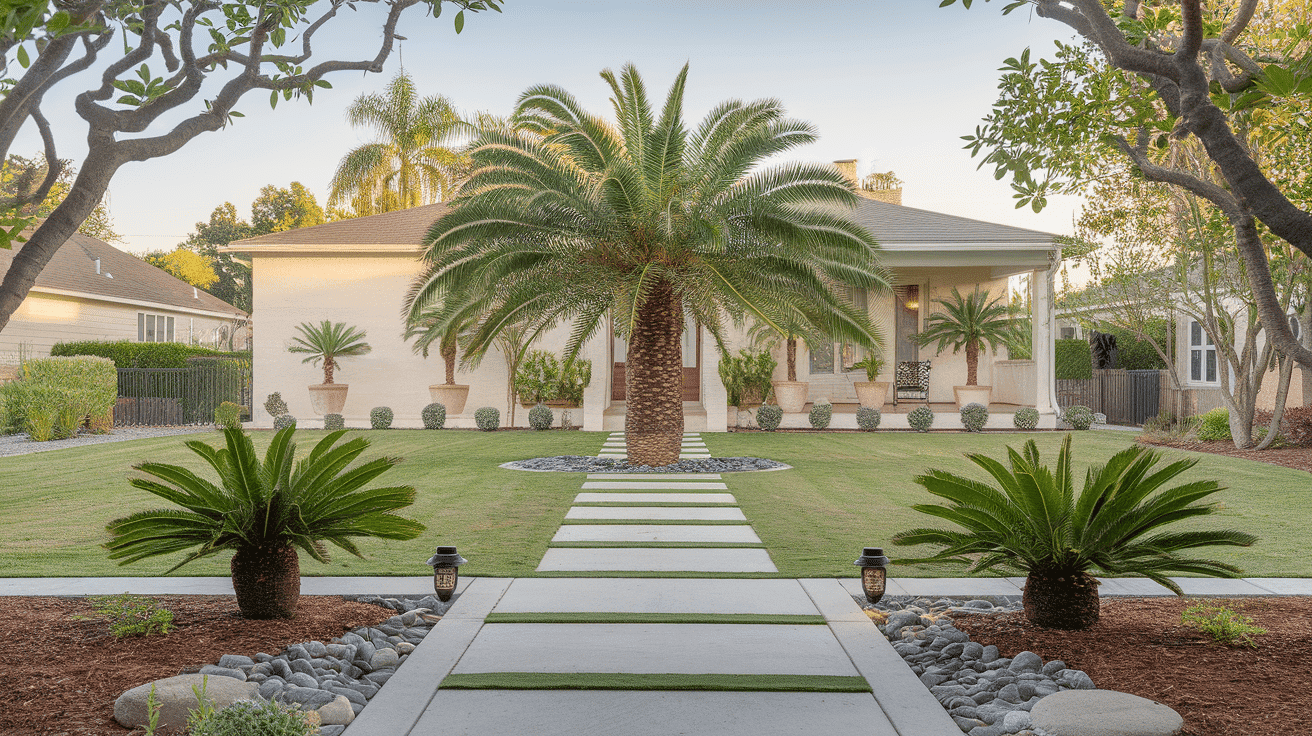
A lush, green lawn that practically waters itself while you sip your morning coffee is the magic of thoughtful sprinkler system design.
For homeowners dreaming of greenery, landscapers crafting outdoor sanctuaries, contractors executing flawless installations, and property managers overseeing multiple spaces, understanding how to map out an efficient irrigation system changes everything.
Gone are the days of guesswork and garden hoses dragged across patios. Today’s approach blends creativity with precision, reshaping how we nurture our outdoor environments.
Sketching layouts by hand or leveraging professional design tools both lead to the same beautiful destination: perfectly hydrated landscapes that thrive with minimal effort and maximum impact.
What is Sprinkler / Irrigation System Design?
Sprinkler system design is the art and science of planning how water reaches every corner of your landscape.
It maps out where sprinkler heads go, what type works best for each zone, and how to deliver moisture evenly across your entire property.
The goals are simple yet vital: achieving consistent coverage so no patch gets left behind, maximizing water efficiency to keep bills low and resources conserved, and creating conditions where plants genuinely flourish.
Poor design tells its own story through brown, thirsty patches in some areas and puddles in others.
Uneven distribution means you’re either overwatering or underwatering, wasting precious resources while your greenery struggles to thrive.
Why Use a Sprinkler System Design Tool or Software?
Planning your irrigation layout becomes infinitely easier with the right digital support.
Online sprinkler design tools bring precision and efficiency that manual sketches simply can’t match, helping you avoid costly mistakes before you ever break ground.
- Pinpoint Accuracy: Software calculates exact sprinkler head placement based on coverage patterns, eliminating guesswork and ensuring no gaps or overlaps in your watering zones.
- Smart Zoning Made Simple: Tools automatically group areas by water needs, sun exposure, and plant types, so your roses get different care than your lawn.
- Pressure Perfection: Built-in calculators determine if your water pressure can handle your design, preventing weak spray patterns and system failures.
- Manual vs. Digital: Hand-drawn plans work for tiny yards, but software handles complex properties with multiple zones, elevation changes, and varying soil types effortlessly.
- Free or Professional: Basic free tools suit straightforward residential lawns, while paid professional software offers advanced features for commercial properties and intricate landscape designs.
The right tool matches your project’s complexity, turning what could be weeks of trial and error into hours of confident planning.
Key Factors in Sprinkler System Design
Every successful sprinkler system starts with understanding your unique outdoor space. These core factors shape how you’ll design zones, choose equipment, and program watering schedules for optimal results.
| Factor | What to Consider | Design Impact |
|---|---|---|
| Yard size and shape | Total square footage, corners, and narrow sections | Number of zones, sprinkler head types, coverage radius needed |
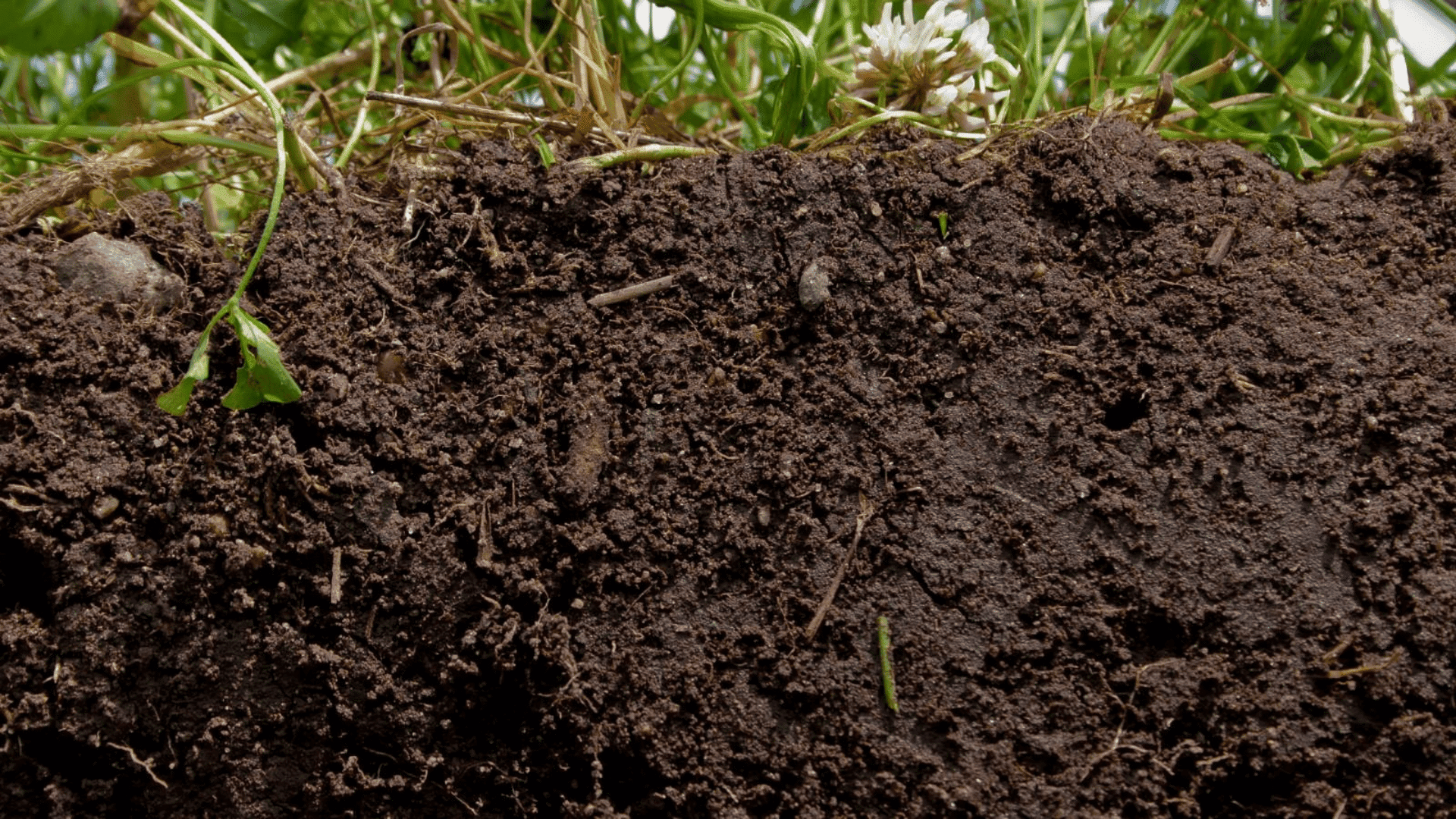
| Soil type and slope | Sandy vs clay drainage, grade percentage | Application rate, runoff prevention, and head spacing |
| Sun vs. shade exposure | Hours of direct sunlight per area | Separate zones for different watering frequencies |
| Water pressure and flow rate | PSI available, gallons per minute | Compatible sprinkler types, heads per zone limit |
| Local watering regulations | EPA guidelines, city restrictions, drought rules | Scheduling limits, smart controller requirements |
| Plant types and watering needs | Turf, flowers, shrubs, trees | Zone grouping by water requirements, drip vs spray |
Sprinkler System Design Layout Basics
Getting your layout right is half the battle won. These foundational principles ensure every drop of water lands exactly where it should, creating that enviable, evenly green landscape you’re after.
- Irrigation Zones Divide and Conquer: Group areas by similar water needs, sun exposure, and plant types for independent control.
- Head-to-Head Coverage Eliminates Gaps: Position sprinklers so each head’s spray reaches the next one, creating overlap that prevents dry spots.
- Spray Heads for Tight Spaces, Rotors for Open Areas: Spray heads cover up to 15 feet for beds and small lawns; rotors handle larger turf expanses.
- Drip Irrigation Targets Roots Directly: Delivers water slowly at the soil level for garden beds and shrubs, minimizing evaporation compared to overhead spray.
- Rectangular Lawns Follow Grid Patterns: Simple yards use straightforward rows of heads with uniform spacing for predictable, even coverage.
- Irregular Yards Need Creative Placement: Curved borders and tight corners require mixing head types and adjusting spacing to match unique shapes.
Master these layout basics, and you’ll avoid the most common pitfalls that plague DIY irrigation projects, setting yourself up for a system that performs beautifully season after season.
How to Design a Sprinkler System: Step-by-Step Overview
Designing your own sprinkler system might sound daunting, but breaking it down into clear steps makes the process surprisingly manageable.
Follow this roadmap to create a layout that delivers consistent coverage while keeping water waste to a minimum.
Step 1: Measure Your Yard and Map Key Features
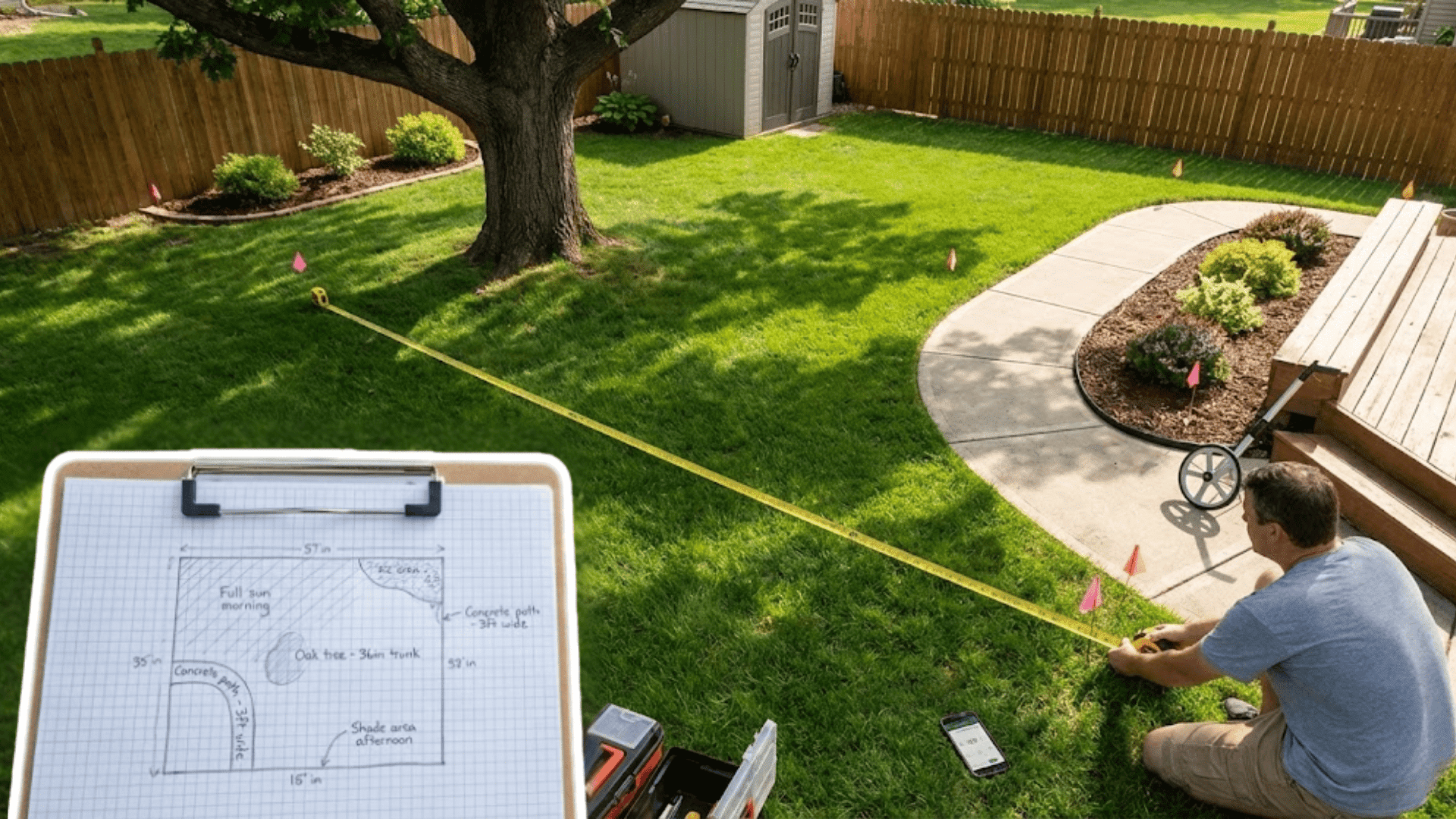
Start by measuring your property’s dimensions, noting obstacles like trees, walkways, and structures. Sketch a rough overhead view showing these elements, marking sunny versus shaded areas and different landscape types.
This visual foundation guides every decision that follows, helping you understand where water needs to go and what challenges you’ll face during installation.
Step 2: Identify Water Source and Test Pressure
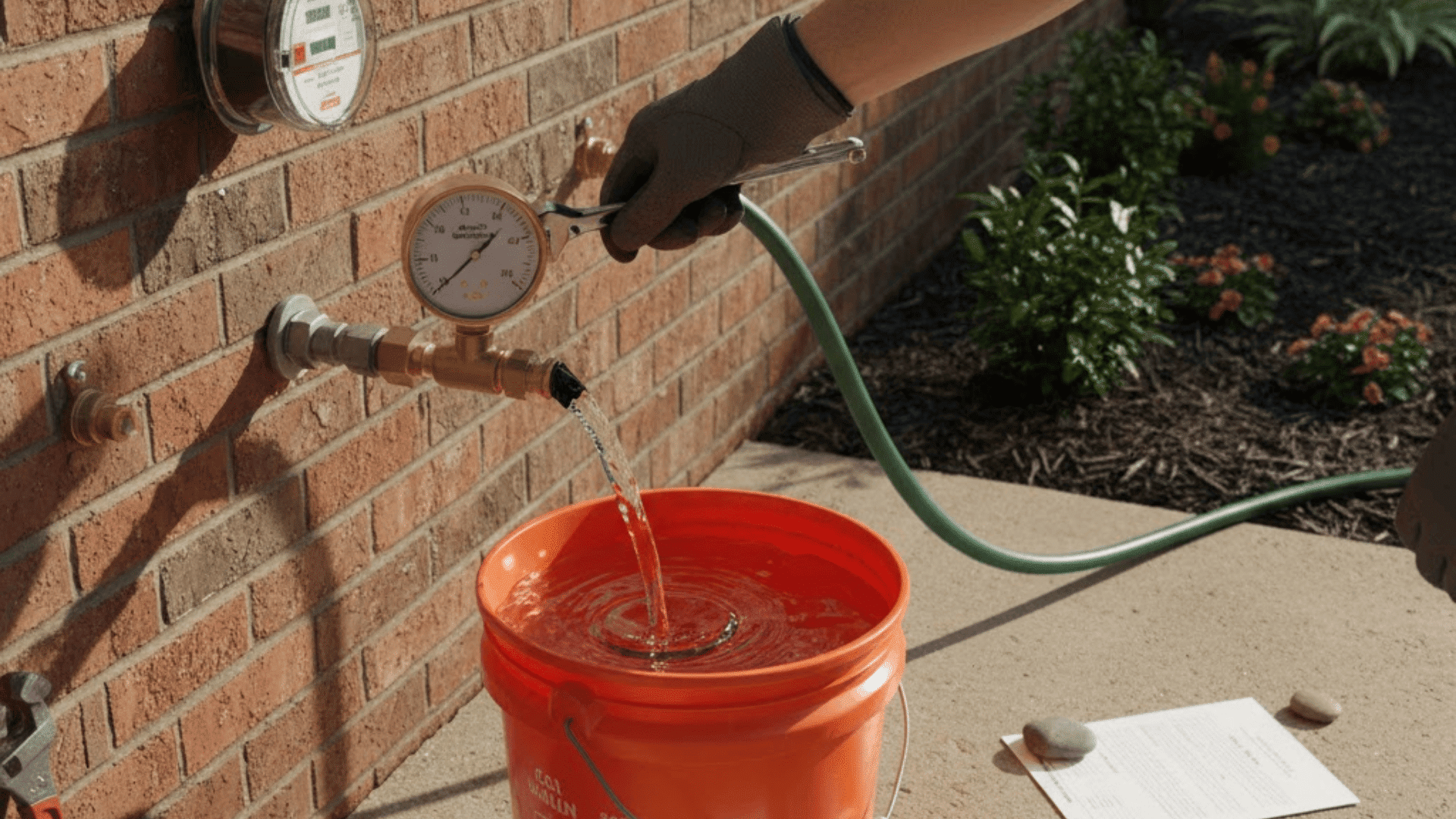
Locate your main water supply and measure both static pressure using a gauge and flow rate by timing how long it takes to fill a bucket.
These numbers determine which sprinkler types will work effectively and how many heads can run simultaneously per zone without weak performance or system strain.
Step 3: Divide Property Into Irrigation Zones
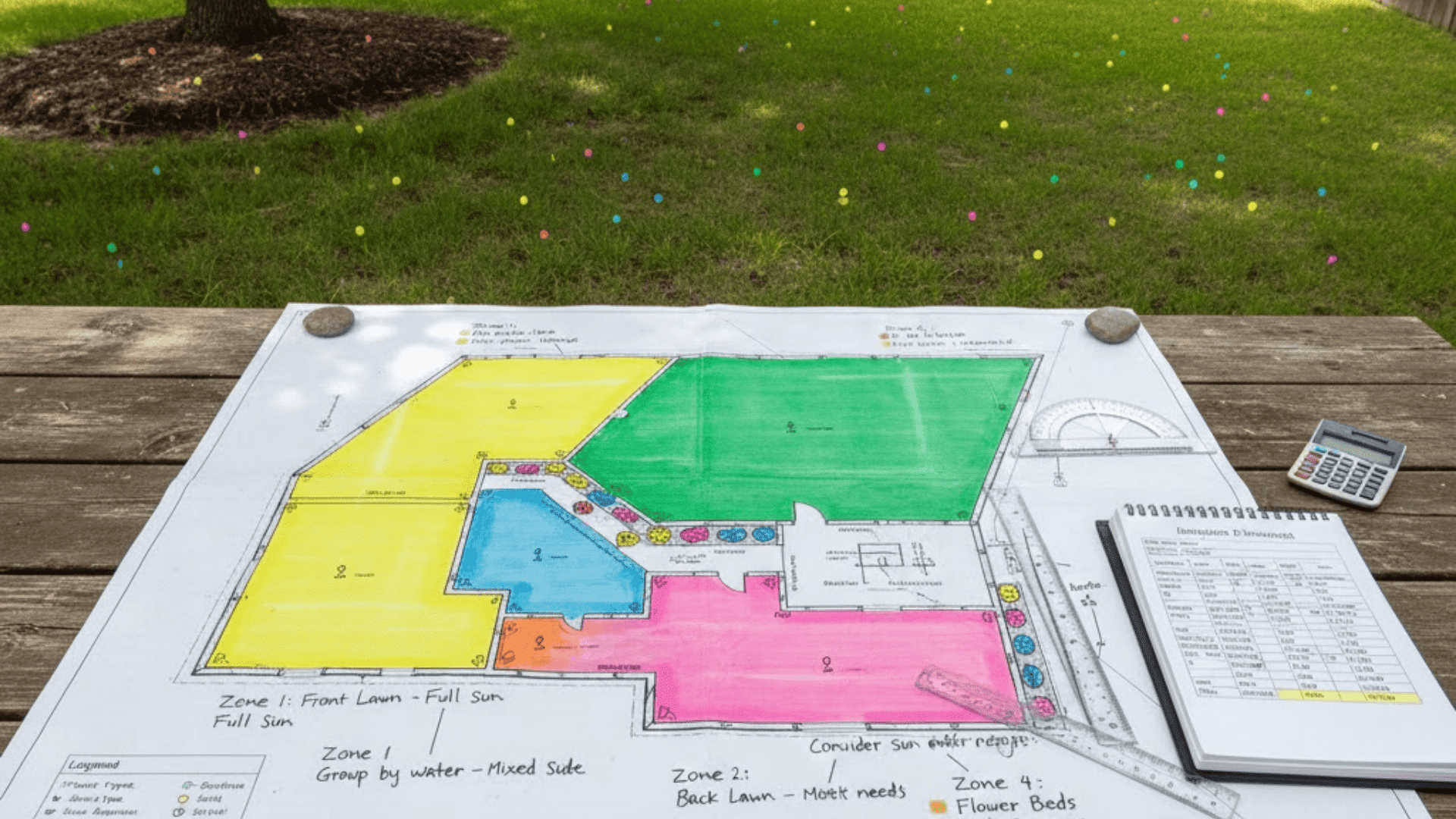
Group areas with similar watering needs together: front lawn separate from backyard, sunny spots apart from shade, turf distinct from garden beds.
Each zone should match plant types, sun exposure, and soil conditions so you can tailor watering schedules. Consider your water pressure capacity when determining how many heads each zone can support.
Step 4: Select Appropriate Sprinkler Heads and Create Layout
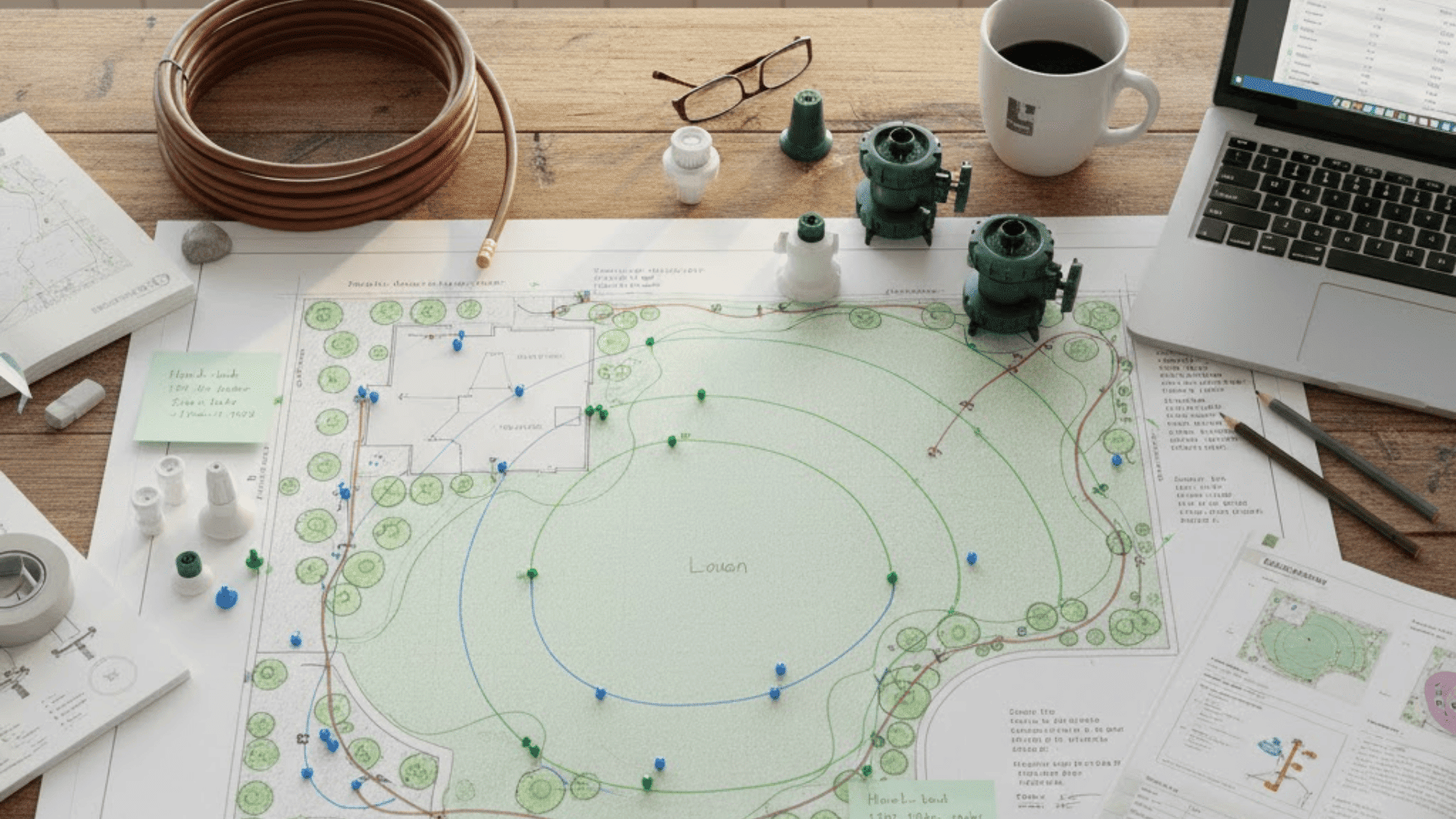
Choose spray heads for smaller areas and flower beds, rotors for large lawn expanses, and drip lines for shrubs or gardens. Position heads using the head-to-head coverage principle, ensuring spray patterns overlap.
Mark each head location on your map with specifications, checking that spacing matches manufacturer recommendations for your pressure levels.
Step 5: Calculate Flow Requirements and Adjust for Efficiency
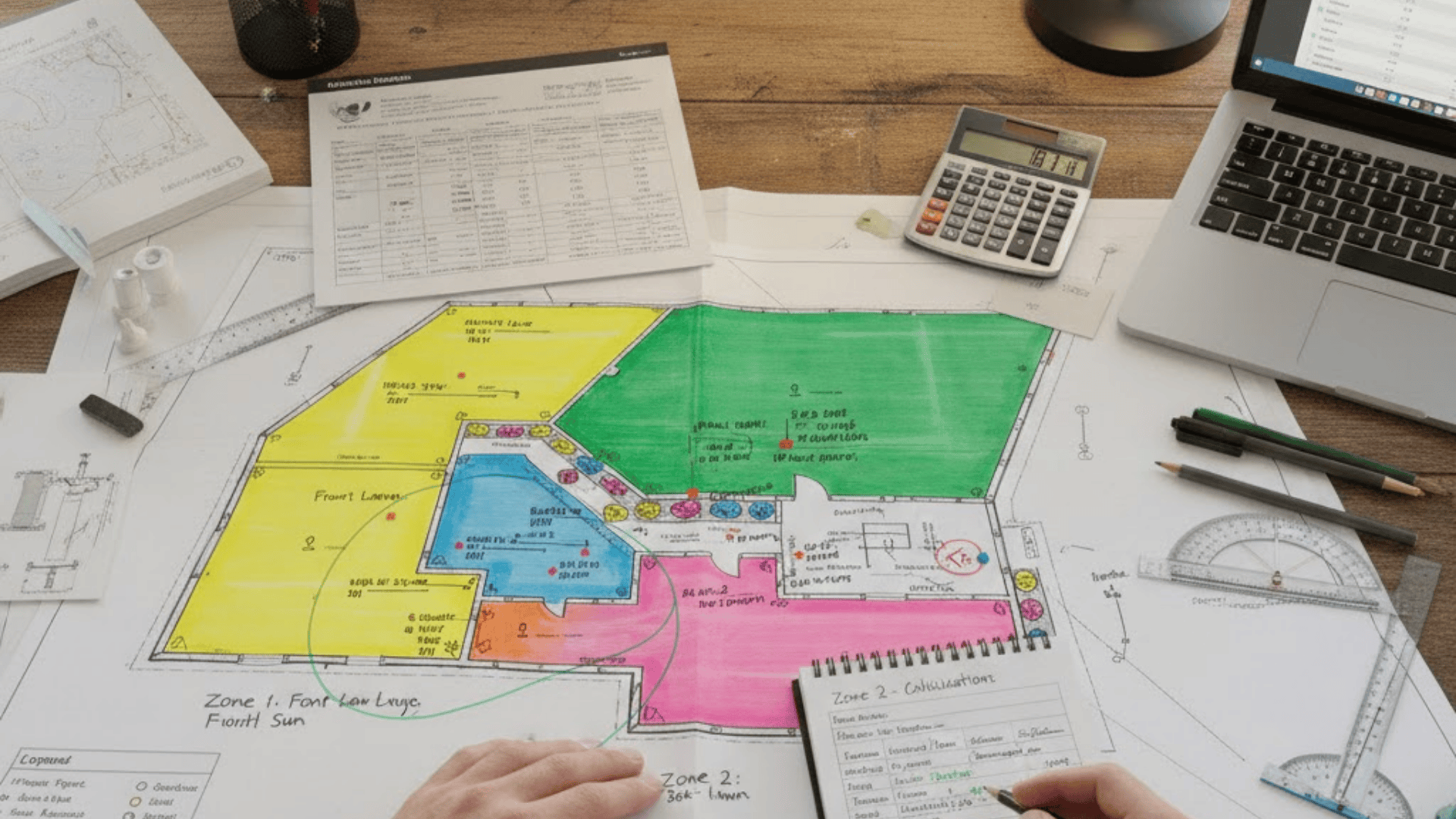
Add up gallons per minute for all heads in each zone, confirming your water supply can handle the demand. Adjust head placement or reduce heads per zone if needed.
Fine-tune for maximum efficiency by eliminating coverage gaps, minimizing overspray onto hardscapes, and ensuring uniform distribution across every watering area.
Online Sprinkler System Design Tools & Software
Choosing the right design tool can make or break your irrigation planning experience.
These digital platforms range from simple free planners to robust professional software, each offering different features to match your skill level and project complexity.
| Tool | Features | Best For | Cost |
|---|---|---|---|
| Orbit Designer | Google map integration, instant parts list | Basic DIY homeowners | Free |
| Rain Bird Design Service | Professional custom plans, PDF layouts | Residential projects | From $19.99 |
| AquaFlow by Toro | Drip system focus, mobile app | Drip irrigation specialists | Free |
| IRRICAD | Hydraulic analysis, 3D modeling | Commercial projects | Paid |
| Pro Contractor Studio | CAD drafting, material takeoffs | Professional contractors | Trial available |
| Irrigateplus | Advanced calculations, pipe optimization | Complex hydraulics | Free version |
What makes a design tool worth using:
- Accurate calculations: Pressure and flow rates match real performance
- Intuitive interface: Easy drag-and-drop without training
- Exportable plans: Save and share layouts for installation
- Product compatibility: Updated sprinkler specs built in
Free vs. Paid Irrigation System Design Software
Free tools like Orbit Designer and AquaFlow suit simple residential lawns, providing basic mapping and parts lists without cost. Ideal for DIY homeowners with single-property, simple layouts.
Paid software becomes worthwhile when precision matters. Professional contractors and landscapers benefit from advanced hydraulic calculations, multi-property management, and detailed documentation that free versions lack.
Commercial designers handling complex installations with elevation changes, large zones, or strict compliance requirements need the robust features only paid platforms provide.
The tipping point? If you’re designing multiple systems annually or managing commercial properties, paid software saves enough time and prevents costly errors to justify the subscription cost within just a few projects.
Residential vs. Commercial Sprinkler System Design
The approach to sprinkler system design shifts dramatically based on property type.
Residential and commercial projects have distinct priorities, from coverage needs to regulatory requirements, shaping everything about how systems are planned and installed.
| Aspect | Residential Design | Commercial Design |
|---|---|---|
| Primary priorities | Lawn aesthetics, water bill savings, and easy maintenance | Water efficiency at scale, durability, and regulatory compliance |
| Coverage area | Typically under 10,000 sq ft, simple zones | Multiple acres, complex terrain, diverse plantings |
| Zone management | 3-8 zones with basic grouping | 15+ zones with precise scheduling per area type |
| Automation level | Simple timers or WiFi controllers | Advanced systems with weather sensors, flow monitoring, and central control |
| Equipment durability | Residential-grade components, 10-15 year lifespan | Commercial-grade materials built for heavy use and longevity |
| Design complexity | Straightforward layouts, DIY-friendly | Requires professional engineering, detailed documentation |
Smart Irrigation & Modern Design Technology
Smart technology has revolutionized how we approach sprinkler system design, moving beyond simple timers to intelligent systems that respond to real-time conditions.
Modern irrigation uses automation, data, and connectivity to create healthier landscapes and reduce water waste.
Smart Controllers and Weather-Based Systems
Today’s smart controllers connect to WiFi and adjust watering schedules automatically based on weather forecasts, soil moisture sensors, and seasonal changes.
Rain sensors pause systems during storms, while soil moisture probes detect when roots actually need water rather than following rigid schedules.
Advanced weather-based systems pull real-time data from local stations, factoring in temperature, humidity, wind, and rainfall to calculate precise daily watering needs and even predict upcoming weather patterns.
Water Savings and Software Integration
The financial and environmental benefits of smart irrigation design are compelling, making these systems increasingly popular for both residential and commercial properties.
- Reduces water consumption by 20-50% compared to traditional timer-based systems
- Eliminates watering during rain, wind, or freezing conditions automatically
- Adjusts seasonal schedules without manual reprogramming each month
- Detects leaks and system malfunctions through flow monitoring alerts
- Qualifies for utility rebates in many regions, offsetting initial investment costs
Modern design software includes smart controller compatibility, enabling intelligent system planning.
Programs determine optimal sensor placement, suggest compatible devices, and simulate weather-responsive scheduling year-round.
Common Sprinkler System Design Mistakes
Even the most well-intentioned irrigation plans can falter when common design pitfalls go unnoticed.
Avoiding these mistakes upfront saves you from frustrating dry patches, flooded areas, and expensive system overhauls down the road.
- Overlapping or Under-Watering Zones: Improper head spacing creates wasteful puddles or dry patches between coverage areas.
- Ignoring Water Pressure Limits: Running too many heads per zone causes weak spray patterns and uneven coverage.
- Poor Head Placement Near Obstacles: Sprinklers too close to walls or trees waste water on hardscape and create blocked spray.
- Mixing Incompatible Sprinkler Types: Combining spray heads and rotors in one zone causes uneven watering due to different application rates.
- Failing to Plan for Landscape Changes: Ignoring future growth or hardscape additions creates systems that quickly become inefficient.
Recognizing these mistakes before installation begins means the difference between a system that works flawlessly for decades and one that constantly needs adjustment, repair, or complete redesign.
When to Use a Professional Sprinkler Design Service?
Some projects demand professional expertise from the start. Complex landscapes with steep slopes, multiple elevation changes, or intricate garden beds require precise hydraulic calculations that go beyond basic DIY tools.
Large properties over an acre require advanced zone management and commercial-grade equipment. Commercial setups must meet strict building codes, backflow, and ADA standards, which amateurs may misjudge.
Properties governed by HOA rules or strict city watering ordinances benefit from professionals who understand local regulations and can provide stamped plans for permit approval.
When the stakes involve significant investment, legal compliance, or potential property damage from poor design, hiring an expert saves money and headaches long-term.
Wrapping Up
Thoughtful sprinkler system design is the foundation of a thriving, low-maintenance landscape that practically cares for itself.
With the right tools, understanding your property’s needs, and proper planning, you can create an irrigation system that conserves water and keeps your outdoor spaces lush.
Ready to bring your vision to life? Share your biggest design challenge or success story in the comments below.
Your experience might be exactly what another reader needs to hear as they start their own irrigation planning project.