You plant flowers. They die. You plant again. Sound familiar?
Most gardeners waste money replanting the same beds every spring. They don’t know which plants come back and which ones don’t.
Here’s what changes everything: some plants live one season, others survive for years. That simple difference affects your time, budget, and how your garden looks twelve months from now.
This guide breaks down annual vs perennial plants in plain terms. You’ll learn what makes them different, which ones fit your goals, and how to use both types without overthinking it.
Let’s fix your garden strategy.
What Are Annual Plants?
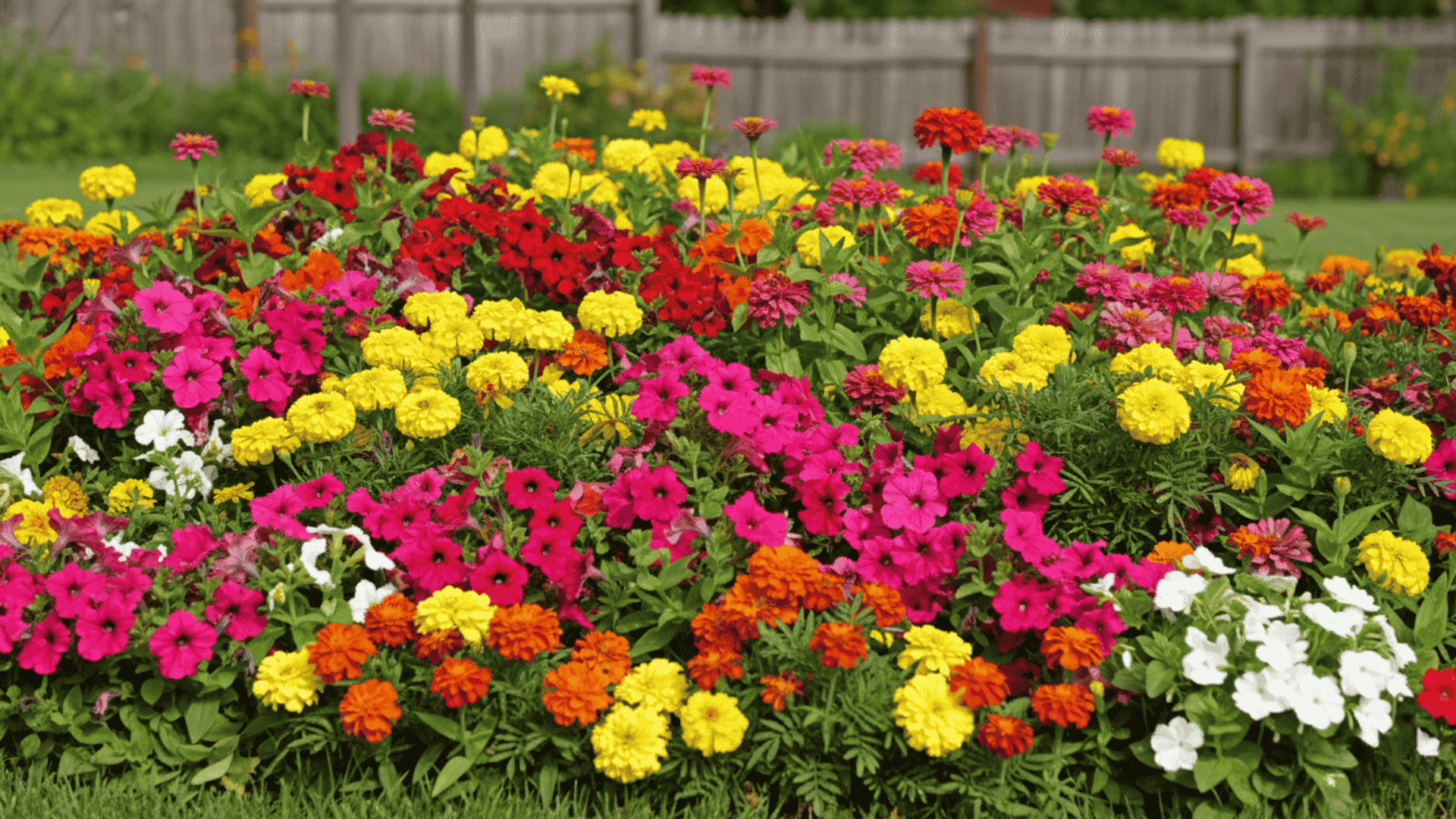
Annual plants live for just one growing season. They sprout from seed, grow leaves and stems, produce flowers, set seeds, and then die, all within a single year.
Once the season ends, they won’t return on their own. You’ll need to plant new seeds or seedlings the following spring.
Annuals grow fast and bloom heavily, making them perfect for gardeners who want quick color and don’t mind replanting each year.
Key traits of annuals:
- Complete their whole life in one season
- Bloom continuously throughout the summer
- Need replanting every year
- Grow and flower quickly
- Focus energy on producing blooms and seeds
Types of Annual Plants:
| Type | Purpose | Common Examples |
|---|---|---|
| Flowering Annuals | Grown for color and visual appeal in gardens | Petunias, Marigolds, Zinnias, Impatiens |
| Vegetable and Herb Annuals | Grown for food and a quick harvest | Tomatoes, Peppers, Basil, Lettuce |
| Tender Perennials Grown as Annuals | Perennials in warm climates, treated as annuals in cold regions | Begonias, Vinca, Geraniums |
What Are Perennial Plants?
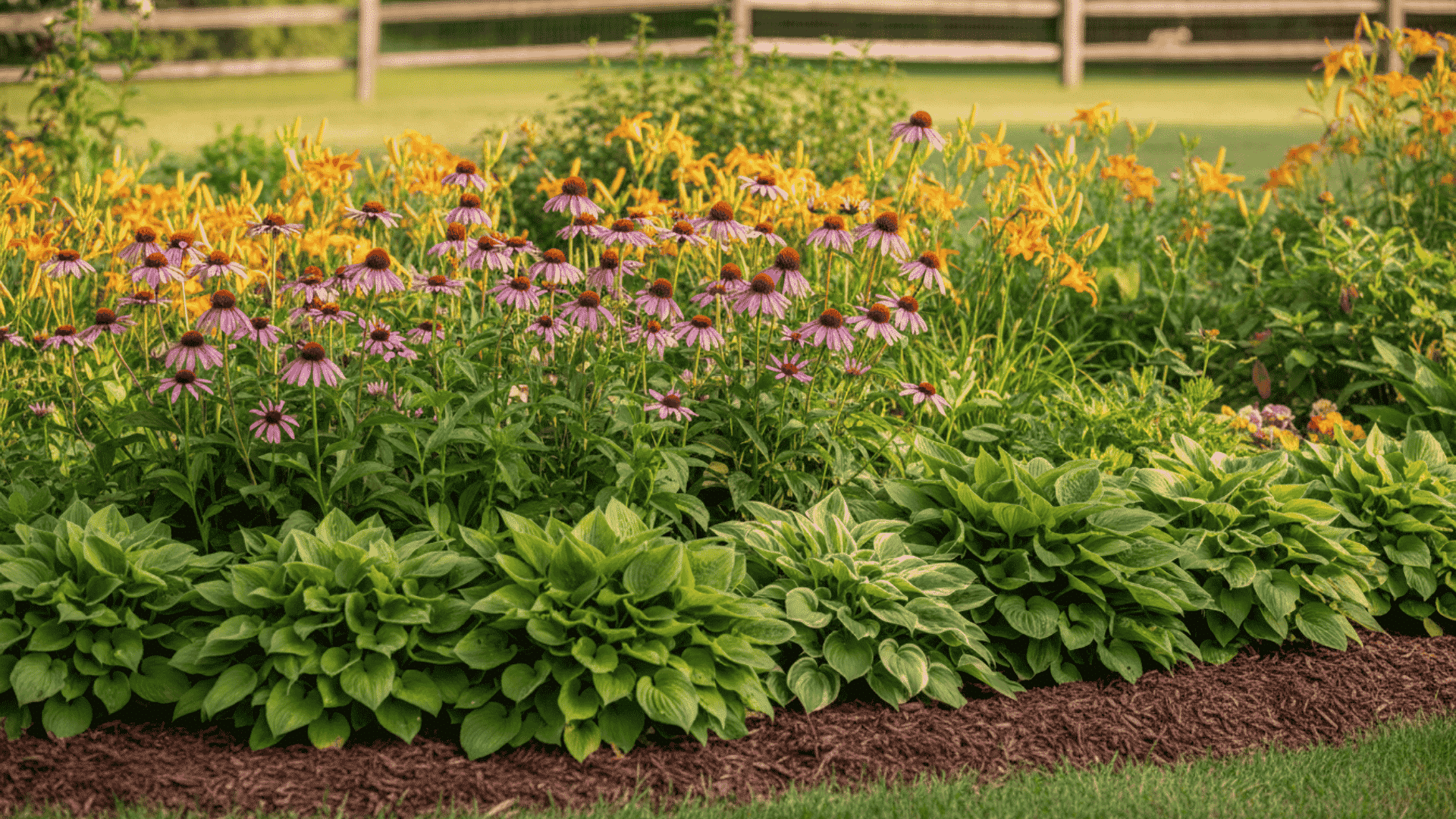
Perennial plants live for more than two years and return season after season. Unlike annuals, they don’t die after one growing cycle.
Instead, their root systems stay alive underground, even when the plant appears dead above ground during winter. When spring arrives, perennials regrow from those same roots.
They take longer to get established compared to annuals, but once settled, they require less replanting work. Most perennials bloom during specific periods rather than all season long.
Key traits of perennials:
- Live and return for multiple years
- Grow back from the same root system
- Often go dormant in the winter months
- Take one to two years to establish fully
- Bloom during specific seasonal windows
- Save time and money over the long term
Types of Perennial Plants:
| Type | Characteristics | Common Examples |
|---|---|---|
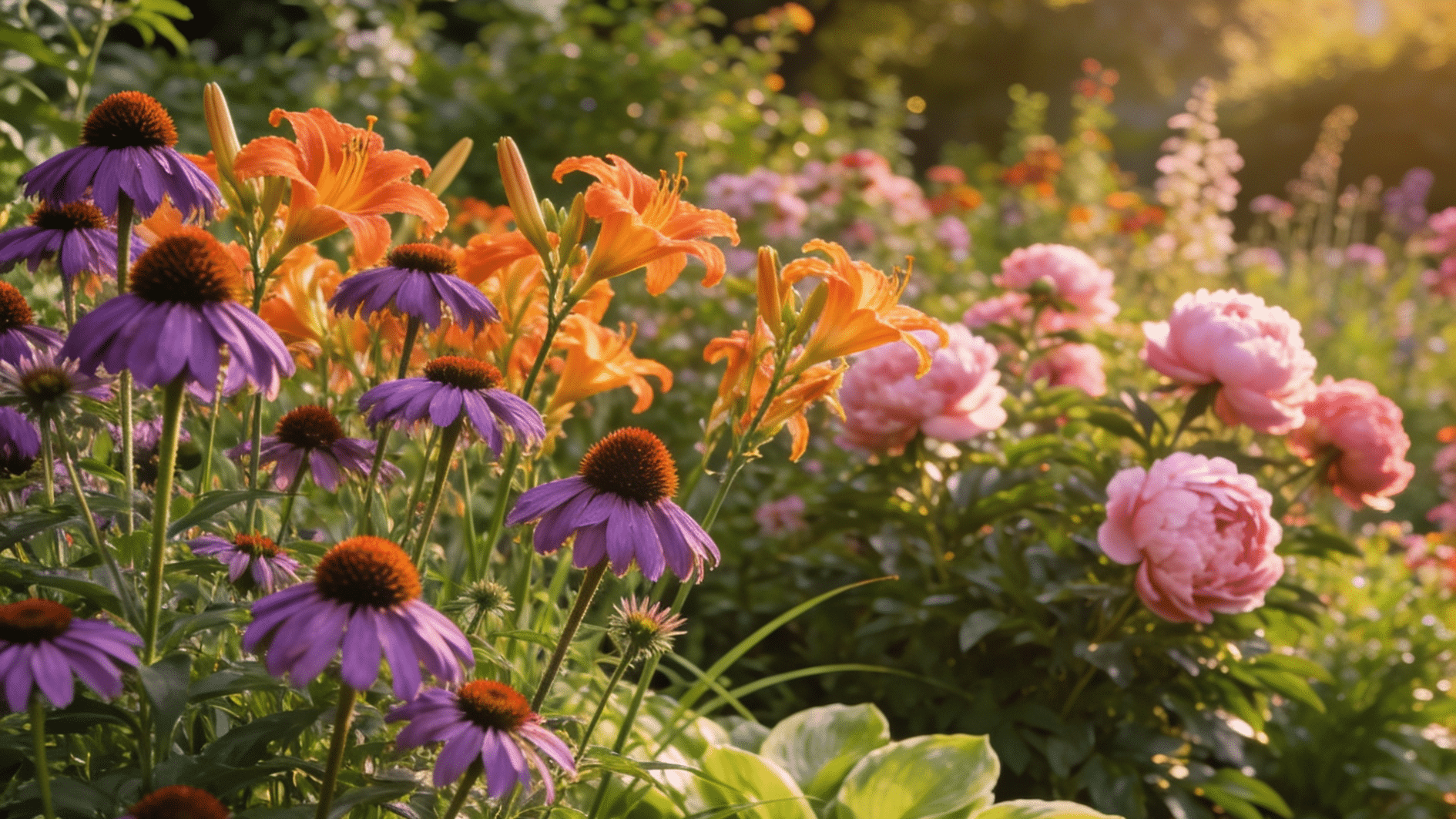
| Herbaceous Perennials | Die back to the ground each winter and regrow in spring | Hostas, Daylilies, Coneflowers |
| Woody Perennials | Keep woody stems above ground year-round | Roses, Shrubs, Flowering vines |
| Evergreen Perennials | Retain green foliage throughout the year in mild climates | Lavender, Hellebores, Coral Bells |
| Monocarpic Perennials | Live for many years but flower only once before dying | Agave, some bamboo species |
What Are Biennial Plants?
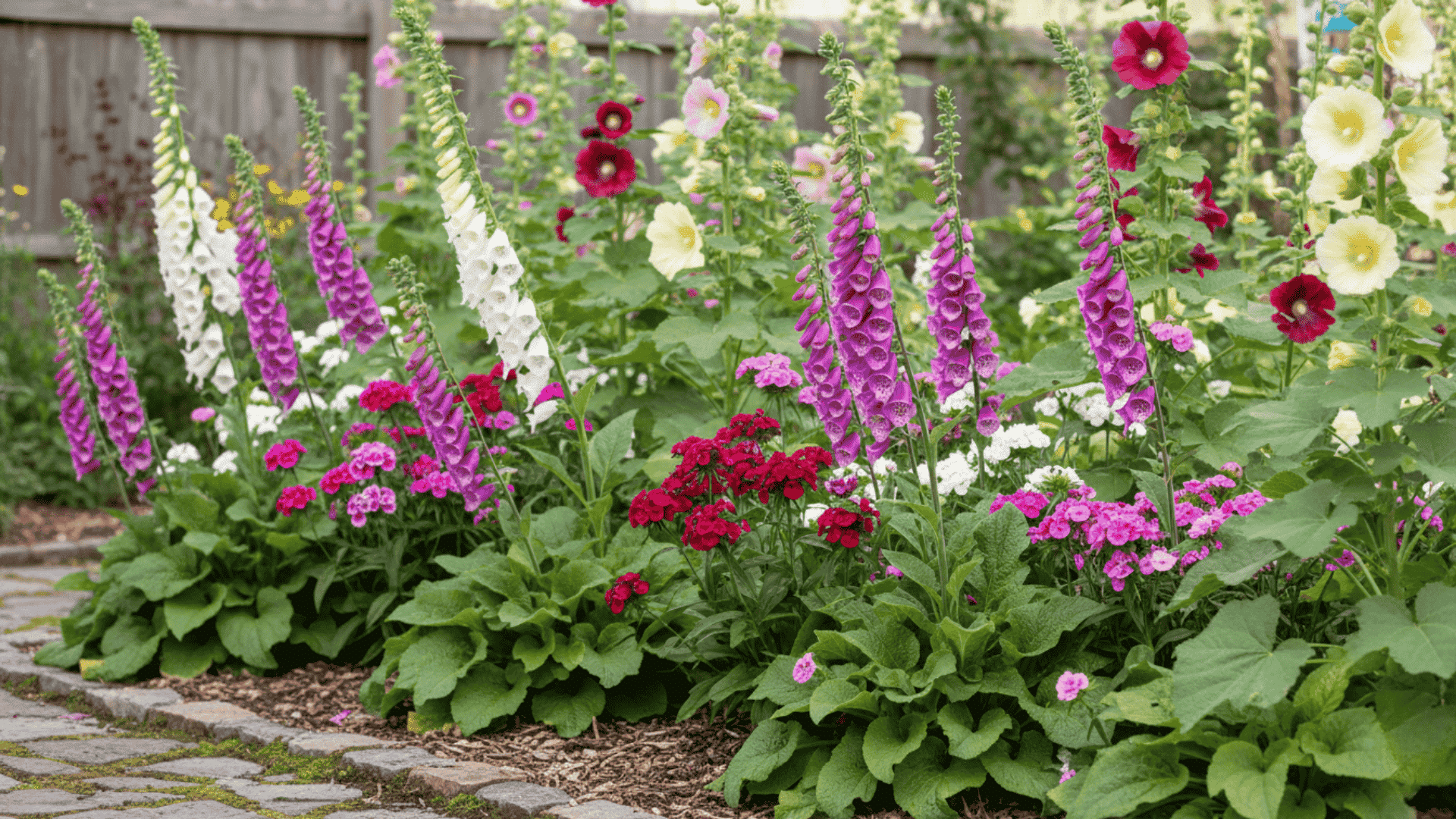
Biennial plants have a two-year life cycle that falls between annuals and perennials. In the first growing season, they focus entirely on developing strong roots, stems, and leaves.
They don’t produce flowers or seeds during this time. In the second year, they bloom, set seeds, and then die.
This unique growth pattern often confuses gardeners who expect them to behave like annuals or perennials. Biennials aren’t as common in gardens, but they serve specific purposes in vegetable and flower beds.
Key traits of biennials:
- Complete their life cycle over two years
- Produce only foliage in the first year
- Flower and set seeds in the second year
- Die after completing the reproductive cycle
- Often mistaken for perennials during year one
- Require patience but offer rewarding blooms
Common Examples of Biennial Plants:
| Type | Common Examples | Primary Use |
|---|---|---|
| Flowering Biennials | Foxglove, Sweet William, Canterbury Bells, Hollyhock | Ornamental gardens and borders |
| Vegetable Biennials | Carrots, Onions, Cabbage, Beets, Parsley | Food production and herb gardens |
| Self-Seeding Biennials | Forget-Me-Nots, Honesty Plant | Low-maintenance garden filler |
Perennial vs Annual Plants: Key Differences
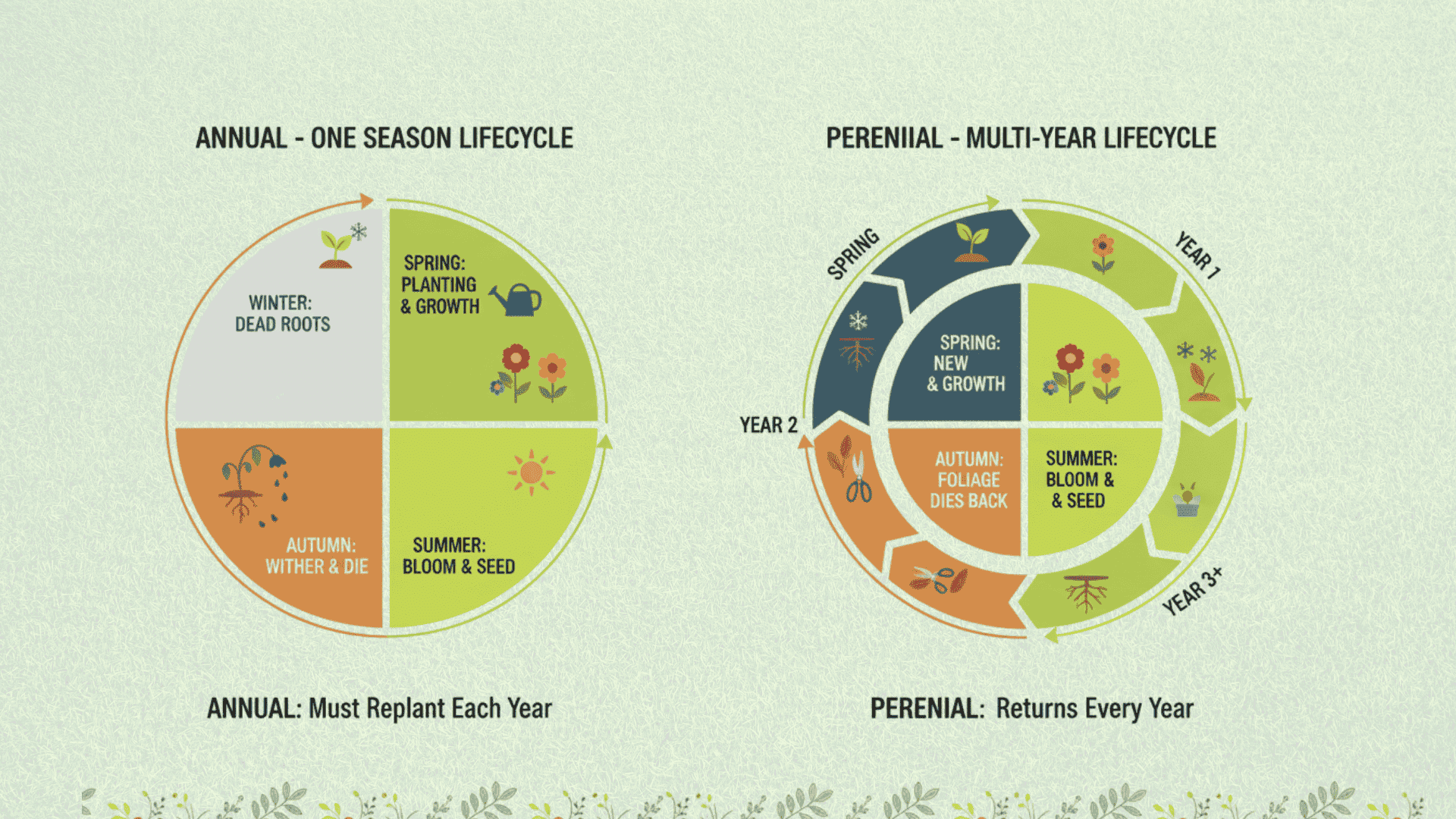
Understanding the differences between perennial vs annual plants helps you make better choices for your garden. Each type has unique characteristics that affect how you plan, plant, and maintain your outdoor space.
Lifespan
- Annual: Live for one growing season only. They complete their entire life cycle and die within a year, meaning you start fresh each spring.
- Perennial: Live for multiple years and keep coming back. They return each season from the same root system, saving you time and replanting effort.
Bloom Time
- Annual: Blooms continuously throughout the growing season. They provide steady, reliable color from spring until the first frost hits in fall.
- Perennial: Blooms during specific times each year. Their flowering periods are shorter, but arrive at predictable times you can plan around.
Cost Over Time
- Annual: Must be purchased and replanted every year. This creates higher ongoing costs, though the initial investment per plant is usually lower.
- Perennial: One-time purchase that lasts for years. They cost more upfront but save significant money over time since you don’t need to replace them.
Maintenance
- Annual: Needs frequent watering and feeding throughout the summer. They require consistent attention and care during the entire growing season to keep blooming.
- Perennial: Need seasonal care like pruning, mulching, and occasional dividing. Once their roots are established, they demand much less frequent maintenance.
Root System
- Annual: Develop shallow roots that grow quickly near the surface. They focus their energy on producing flowers and seeds rather than building deep root structures.
- Perennial: Build deep, established root systems over time. These strong, extensive roots help plants survive harsh winters and return stronger each year.
This comparison shows why the annual vs perennial debate matters. Your choice depends on your budget, available time, and specific garden goals.
How to Grow Annual Plants?
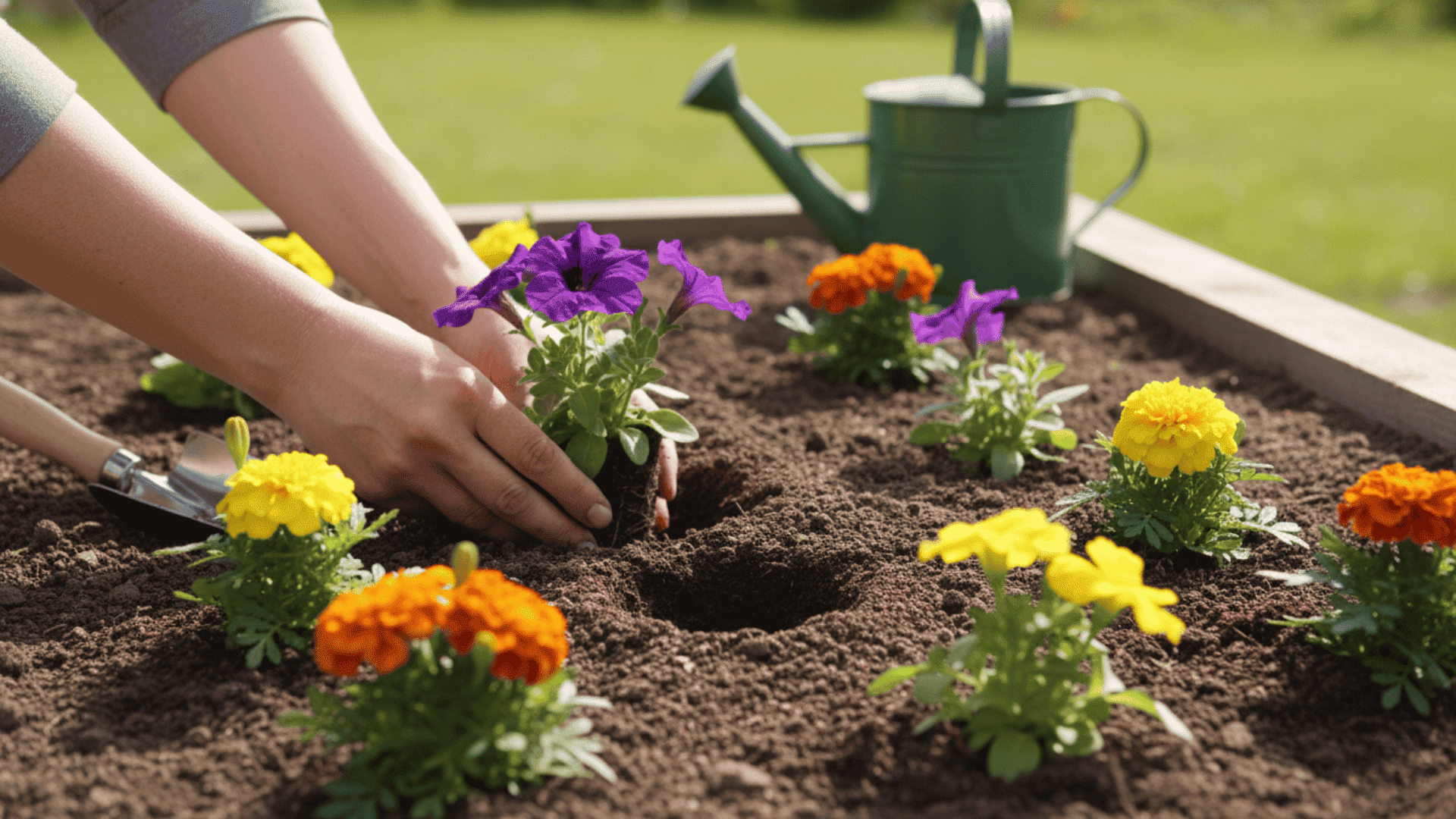
Annuals grow quickly and reward you with continuous blooms, but they still need the right conditions to thrive. Setting them up correctly from the start makes all the difference in how well they perform throughout the season.
1. When to Plant Annuals
Plant annuals after the last frost date in your area. Cold-sensitive plants can die if exposed to freezing temperatures, so wait until the soil warms up.
Check your local frost calendar and make sure nighttime temperatures stay above 50°F consistently before planting outdoors.
2. Soil Requirements
Annuals need loose, well-draining soil that doesn’t become waterlogged. Heavy clay soil can suffocate roots and prevent proper growth, so amend it with compost or peat moss.
Soil rich in organic matter provides the nutrients annuals need to fuel their fast growth and heavy blooming throughout the season.
3. Sunlight Needs
Most annuals prefer full sun, which means at least six to eight hours of direct sunlight daily. This amount of light helps them produce the most flowers and maintain compact, healthy growth.
Some varieties like impatiens and begonias tolerate partial shade, making them good choices for spots under trees or on north-facing sides of buildings.
4. Watering Annual Plants
Water annually to keep soil evenly moist but not soggy. They have shallow root systems that dry out faster than perennials, especially during hot summer days.
Avoid letting the soil completely dry out between waterings, as this stresses plants and reduces blooming.
5. Fertilizing Annuals
Annuals benefit from regular feeding since they bloom heavily and grow fast. Use a balanced, water-soluble fertilizer every two to three weeks during the growing season.
This steady supply of nutrients keeps flowers coming and prevents plants from running out of energy mid-season.
How to Care for Annual Plants
Ongoing care keeps annuals looking their best throughout the season.
- Deadheading: Remove spent flowers regularly to encourage more blooms and prevent plants from setting seeds too early.
- Pest Control: Watch for common pests like aphids, whiteflies, and spider mites that can damage leaves and reduce flowering.
- End-of-Season Cleanup: Pull out plants after the first hard frost, compost healthy material, and refresh soil with compost before next season.
How to Grow Perennial Plants?
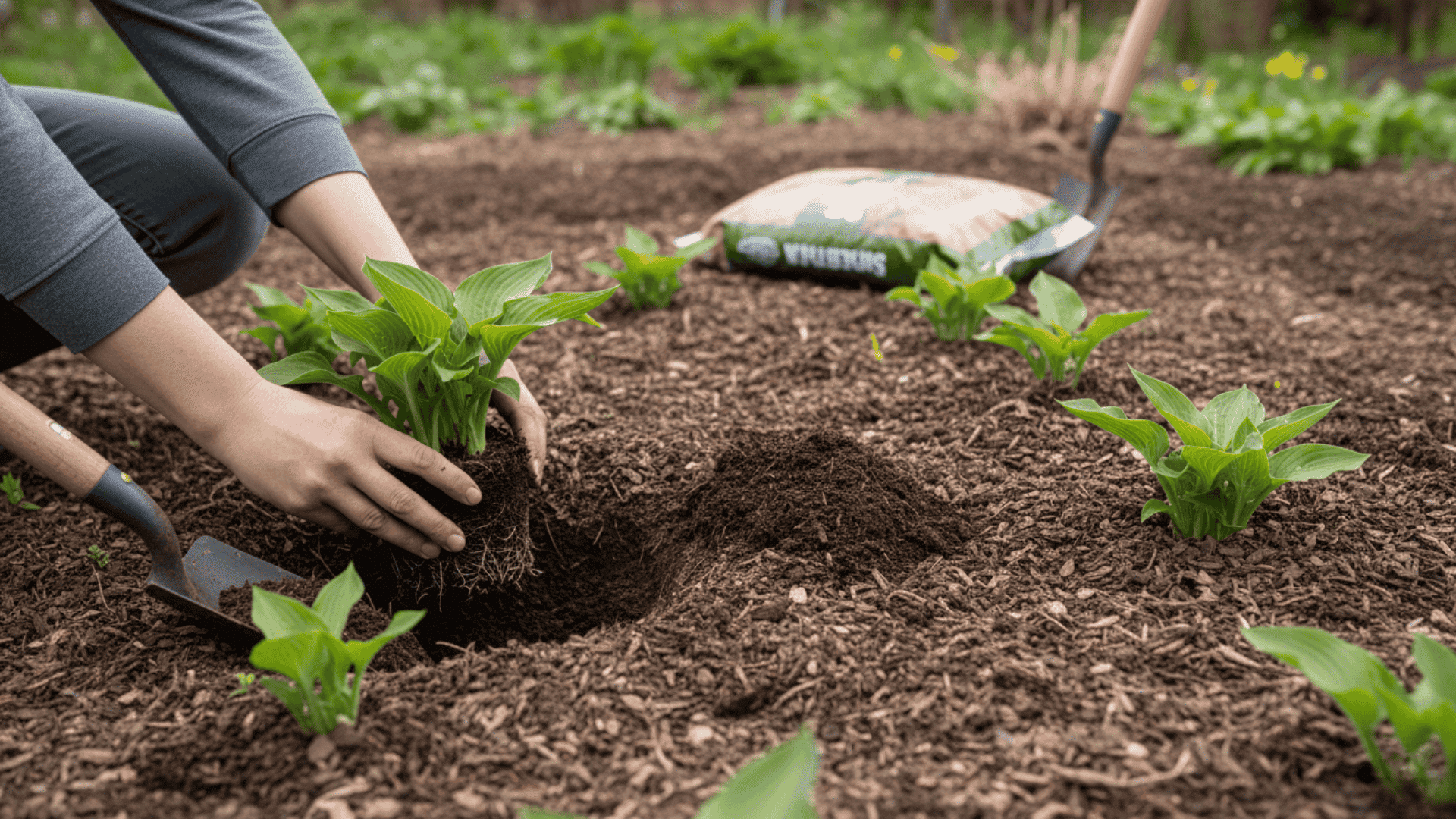
Perennials focus on long-term growth rather than instant results. They spend their first year or two building strong root systems, so patience pays off. Once established, they require less work than annuals and come back stronger each season.
1. Best Time to Plant Perennials
Early spring or fall is ideal for planting perennials. Cooler weather allows roots to establish without the stress of intense summer heat or winter cold.
Spring planting gives plants a full growing season to settle in, while fall planting takes advantage of warm soil and cooler air temperatures that encourage root development before winter dormancy.
2. Soil Preparation
Improve soil drainage and structure before planting perennials. Poor drainage can rot roots and kill plants over winter, so work in compost or aged manure to loosen heavy clay soil.
Adding organic matter also provides slow-release nutrients that feed plants for years, creating the foundation for healthy, long-lived perennials.
3. Sun and Spacing
Follow spacing guidelines carefully when planting perennials. They may look small at first, but mature plants need room to spread without competing for light, water, and nutrients.
Avoid overcrowding by checking the plant tag for mature width and leaving enough space between each one, even if it looks sparse initially.
4. Watering During Establishment
Water deeply during the first year to encourage roots to grow down rather than stay near the surface.
Deep watering once or twice a week works better than frequent shallow watering for building strong root systems.
Reduce watering frequency once roots are established, usually after the first full growing season, as mature perennials tolerate dry periods better.
How to Care for Perennial Plants
Perennial care changes with the seasons and requires different tasks throughout the year.
Seasonal Maintenance
- Spring: Remove dead growth and winter mulch once new shoots appear to prevent rot and allow light to reach emerging plants.
- Summer: Water during extended dry periods and deadhead flowers to keep plants looking tidy and encourage reblooming varieties.
- Fall: Cut back dead foliage after frost, divide crowded clumps, and apply fresh mulch to protect roots from temperature swings.
- Winter: Add a thick layer of mulch for insulation in cold climates to protect roots from freeze-thaw cycles that can heave plants out of the ground.
Pruning and Cutting Back
Timing matters when pruning perennials. Spring-blooming varieties should be pruned right after flowering ends, while summer and fall bloomers get cut back in early spring before new growth starts.
Dividing Perennials
Many perennials benefit from division every three to five years to stay healthy and prevent overcrowding. Dig up the entire clump, split it into sections with roots attached, and replant divisions to rejuvenate plants and create more for other garden areas.
Annual vs Perennial Plants for Different Garden Goals
Choosing between perennial vs annual plants often depends on what you want from your garden. Different goals require different plant types, and understanding which works best for your situation helps you make smarter decisions.
| Garden Goal | Best Choice | Why |
|---|---|---|
| For Continuous Color | Annual Plants | Bloom nonstop from spring through fall without breaks |
| For Low-Maintenance Gardens | Perennial Plants | Return on their own each year with less watering and feeding |
| For Budget-Friendly Gardening | Perennial Plants | Costs more upfront but lasts for years, saving money over time |
| For Long-Term Landscape Structure | Perennial Plants | Create a stable framework and a predictable design foundation |
Many successful gardens use both plant types together. Perennials provide the backbone, while annuals fill gaps and add seasonal color that changes each year.
How to Use Annuals and Perennials Together?
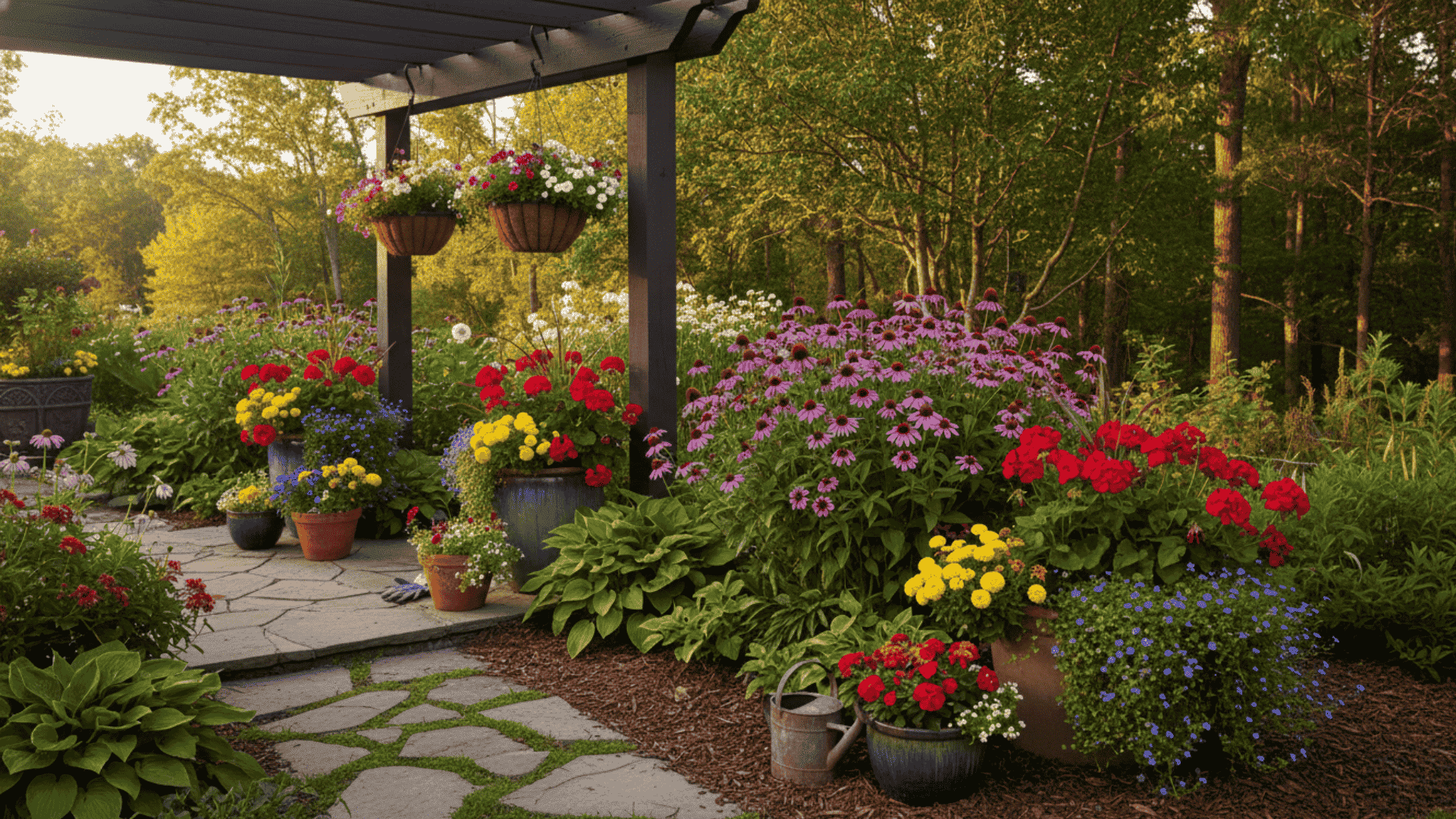
Combining both plant types creates balance and gives you the best of both worlds.
Use perennials as the foundation and backbone of your garden, planting them in key spots where you want reliable structure year after year.
Fill gaps between perennials with annuals for seasonal color that you can change based on your mood or current trends.
Rotate different annual varieties yearly to keep your garden feeling fresh and exciting without making long-term commitments.
This approach delivers a stable framework from perennials plus the flexibility and vibrant blooms that annuals provide, making your garden both practical and beautiful.
Wrapping It Up
Understanding perennial vs annual plants takes the guesswork out of gardening. Annuals give you fast color and flexibility.
Perennials offer long-term structure and less replanting work. Neither choice is wrong; it depends on your time, budget, and what you want your garden to do.
Most successful gardens mix both types. Perennials create the foundation. Annuals add seasonal color you can switch up each year.
Start small. Pick a few perennials for structure, then fill gaps with your favorite annuals. Test what works in your space.
What’s your biggest challenge with choosing plants? Drop a comment below and let’s figure it out together.