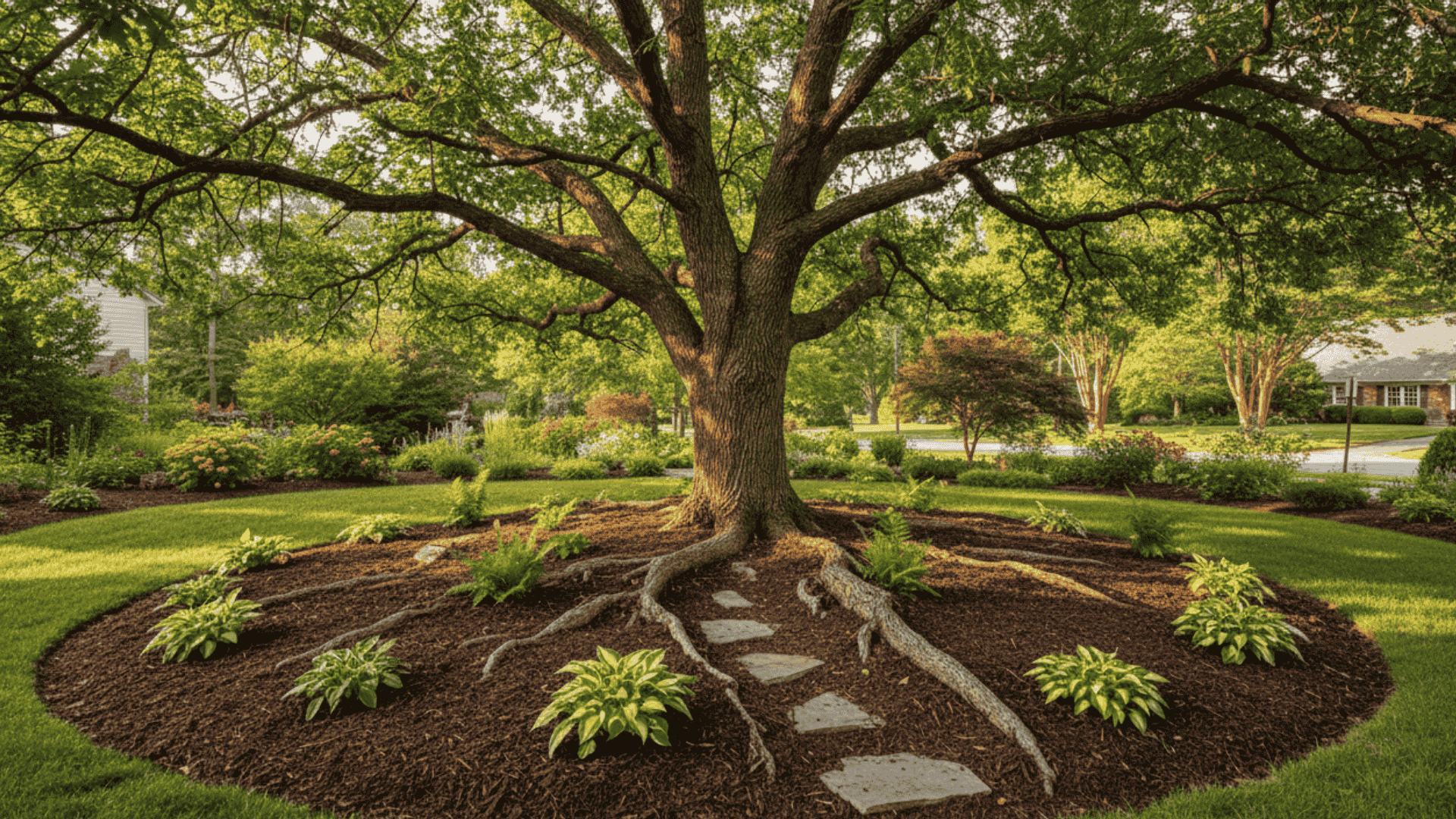
That mature oak in your yard looks bare underneath. Grass won’t grow. The exposed roots feel like a tripping hazard. So you think about adding some plants or mulch to clean things up.
But wait. One wrong move and you could damage roots that keep your tree alive. Cutting into major roots stresses trees. Piling soil over them blocks oxygen.
Many trees die years after someone tried to beautify the base. This post shows you safe landscaping ideas around tree roots that protect your tree while fixing that bare ground problem.
You’ll learn which root zones you’re working with, when to skip the project entirely, and practical ways to add life under your tree without killing it.
What Are Landscaping Around Tree Roots?
Landscaping around tree roots means adding plants or features within the area where tree roots grow. Most tree roots stay in the top 12 to 18 inches of soil.
They spread out wide, not deep. This is why you see roots near the surface. The trunk flare is where the trunk widens at the base before roots spread out. You must keep this area clear and visible.
Covering it with soil or mulch can kill your tree. When you landscape near a tree, you work around these roots without cutting or burying them.
Types of Tree Root Areas You May Be Landscaping
Every tree creates different growing conditions based on its roots and canopy. Knowing which type you have helps you pick the right landscaping approach.
| Root Area Type | Main Challenge |
|---|---|
| Trees With Exposed Surface Roots | Roots rise for oxygen; covering them causes suffocation |
| Trees With Compacted Soil Under the Canopy | Foot traffic blocks air and water from reaching roots |
| Heavy Shade and Dry Soil Zones | Tree canopy blocks rain and sunlight from ground below |
| Sloped or Erosion-Prone Root Zones | Water runs off quickly, washing away soil and plants |
11 Landscaping Ideas Around Tree Roots
Now that you know how to work safely around roots, here are practical ideas you can use. Pick one that fits your tree’s conditions and your style preferences.
1. Mulch-Only Clean Circle
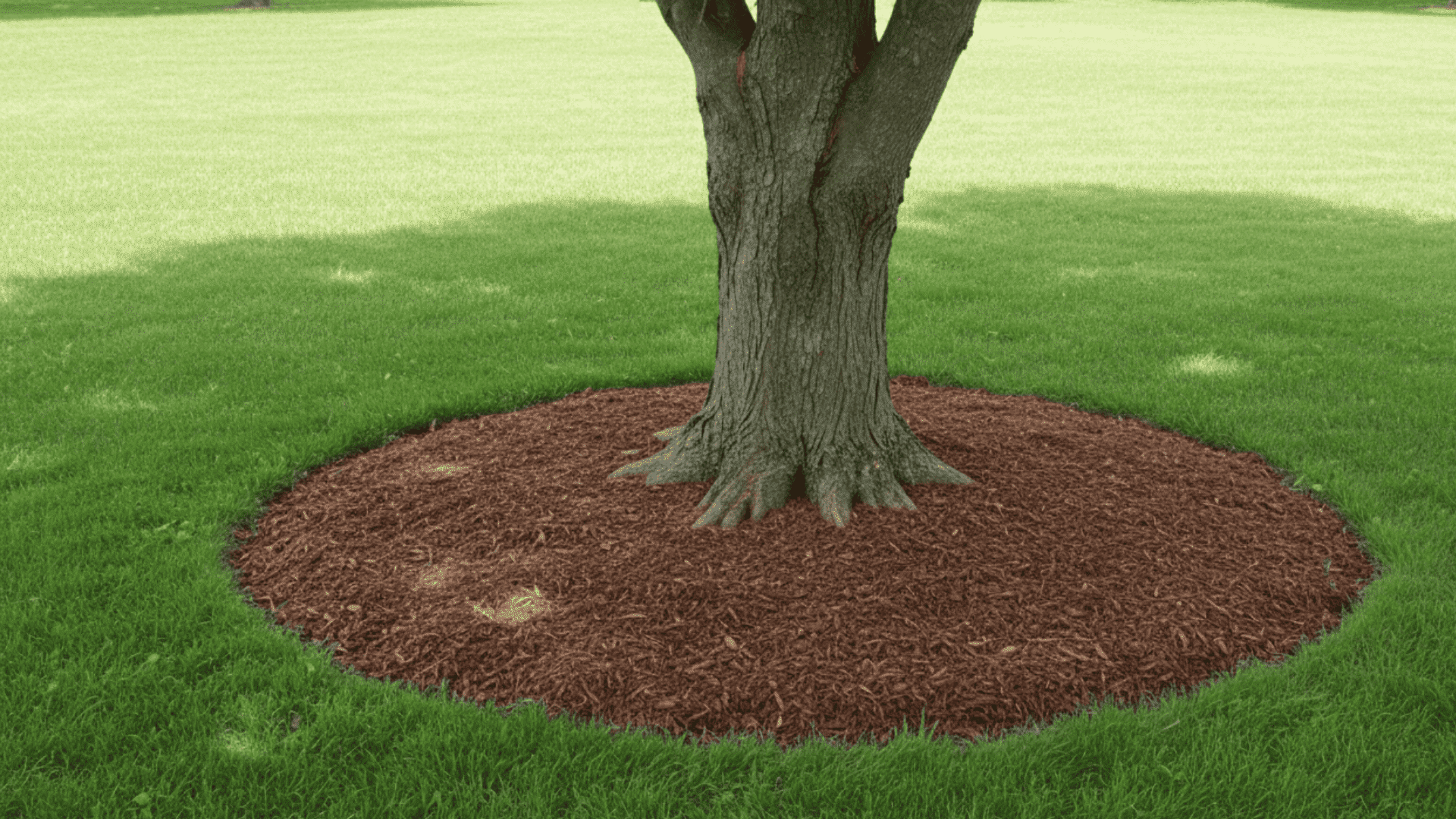
Spread a layer of organic mulch in a wide circle around the tree trunk. This is the simplest and safest option for any tree.
Key details:
- Use 2 to 3 inches of shredded bark or wood chips
- Keep mulch 3 to 6 inches away from the trunk
- Refresh mulch once or twice per year
- No digging or planting required
2. Wide Mulch Ring With Shade Plants
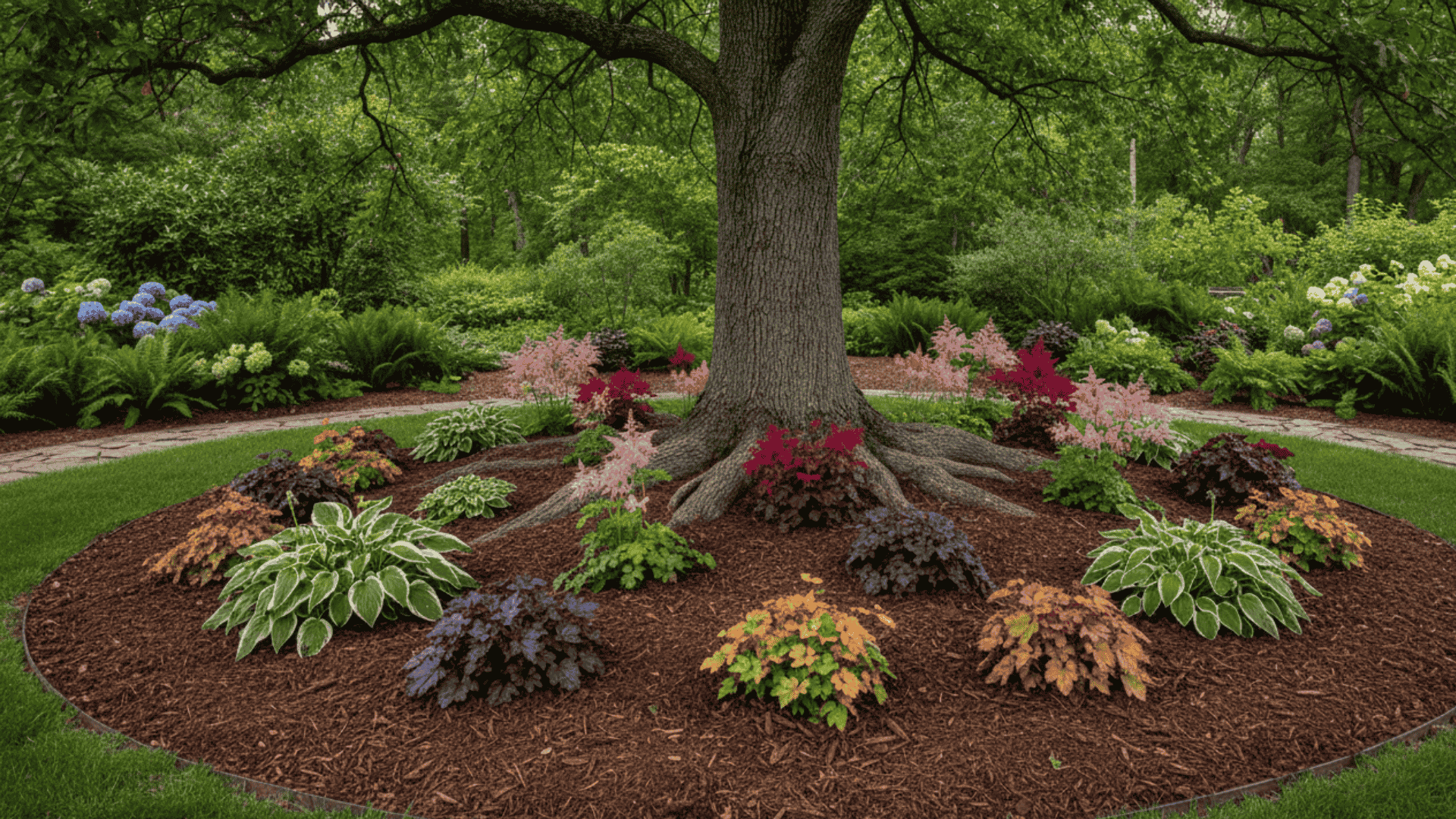
Create a mulch ring and add a few shade-loving plants between visible roots. This adds color without disturbing the tree.
What to plant:
- Hostas in medium to deep shade
- Astilbe for partial shade areas
- Coral bells for texture and color
- Plant in small groups of 3 to 5
3. Low Ground Cover Instead of Grass
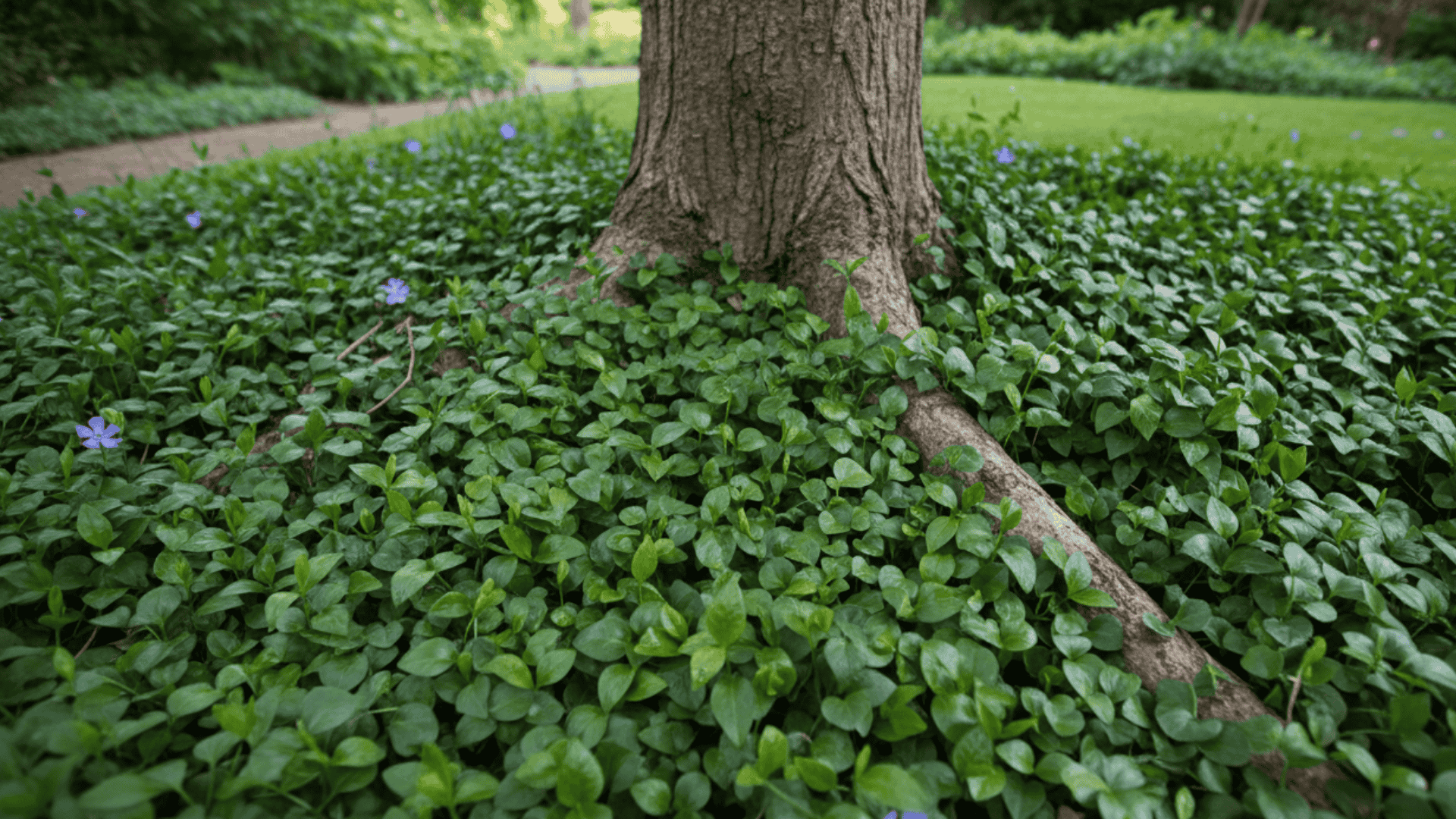
Replace grass with ground cover plants that tolerate shade and dry soil. These plants spread naturally and need less maintenance than lawn.
Best ground covers:
- Periwinkle for quick spreading coverage
- Ajuga for dense, low growth
- Creeping Jenny in moist spots
- Sweet woodruff for fragrant foliage
4. Woodland-Style Natural Garden
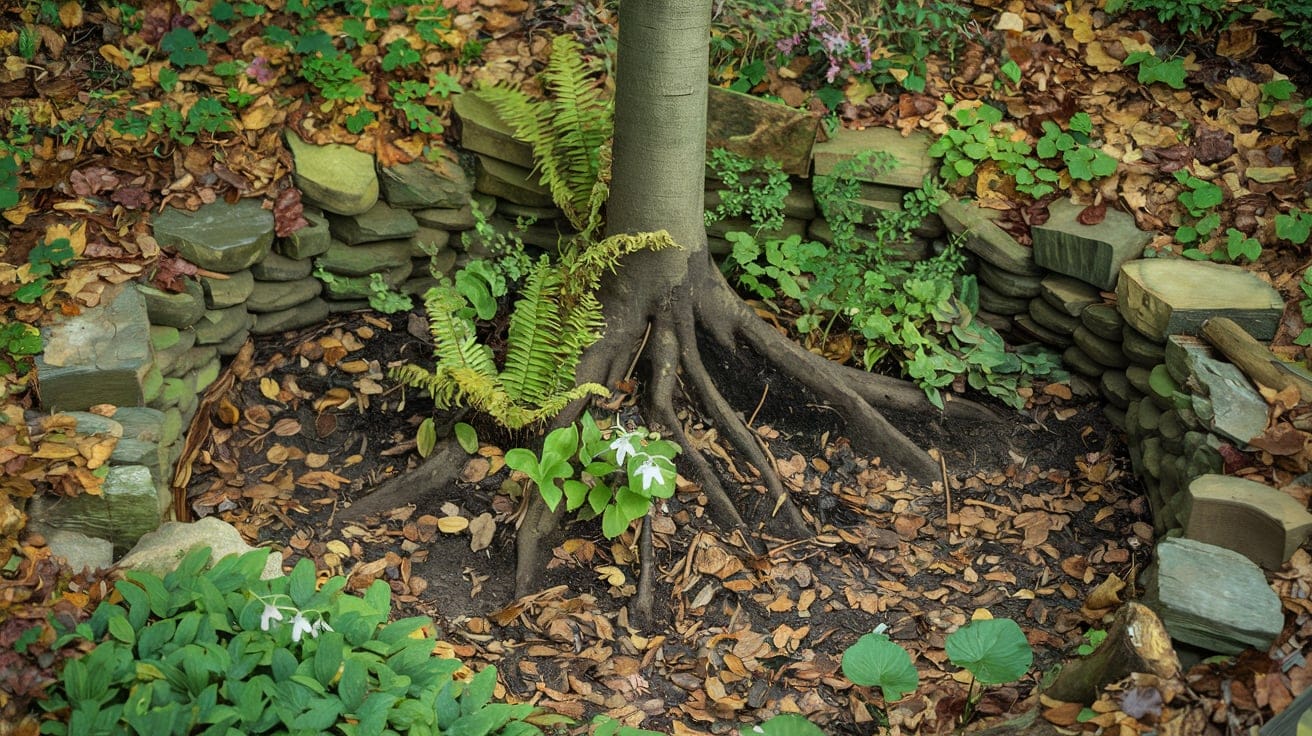
Let leaves and natural debris collect under the tree for an organic look. Add native woodland plants that thrive in similar conditions.
How to create it:
- Leave fallen leaves as natural mulch
- Add ferns, wild ginger, or trillium
- Use logs or rocks as natural borders
- Water only during very dry spells
5. Stepping-Stone Walkway
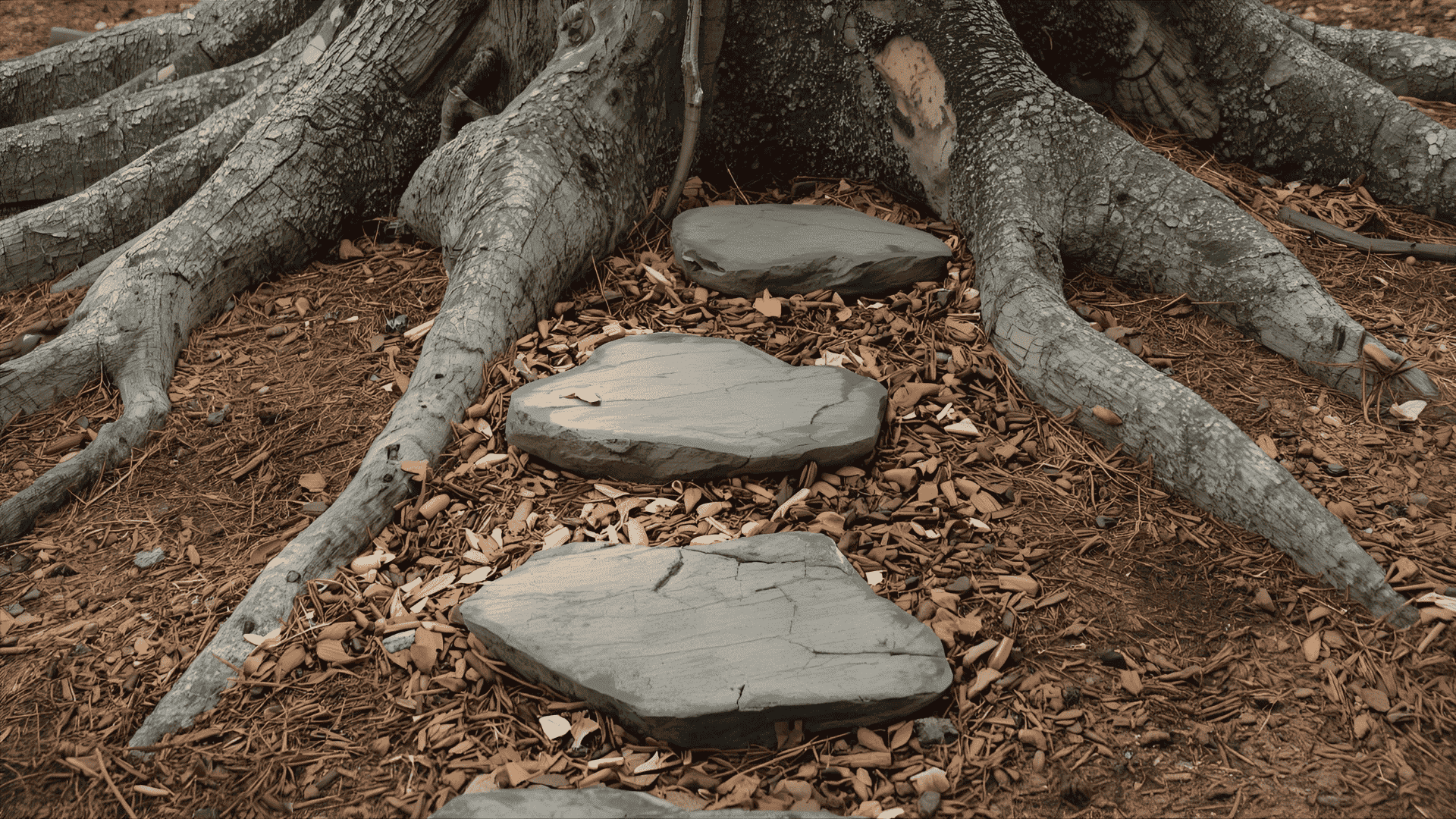
Place flat stones between roots to create a path without digging. Stones rest on top of the soil and protect roots from foot traffic.
Installation tips:
- Set stones on the surface, not buried
- Space them 18 to 24 inches apart
- Choose flat, stable stones
- Fill gaps with mulch or gravel
6. Permeable Gravel Accent Area
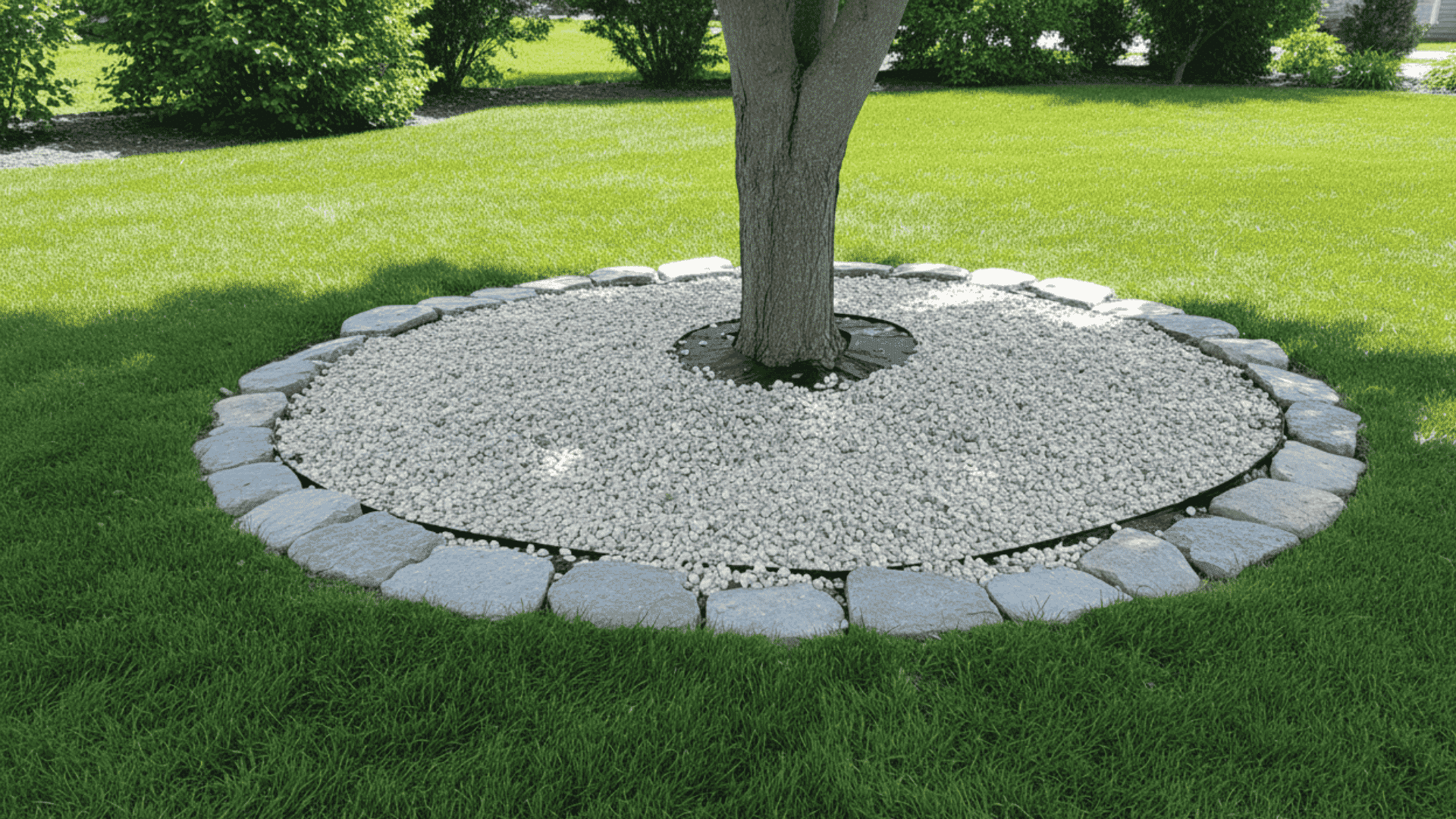
Spread a thin layer of small gravel over landscape fabric for a clean look. Water and air can still reach roots through the gravel.
How to install:
- Lay down breathable landscape fabric
- Add 1 to 2 inches of pea gravel or small stones
- Keep gravel away from the trunk base
- Edge with larger stones if desired
7. Fern and Shade Plant Clusters
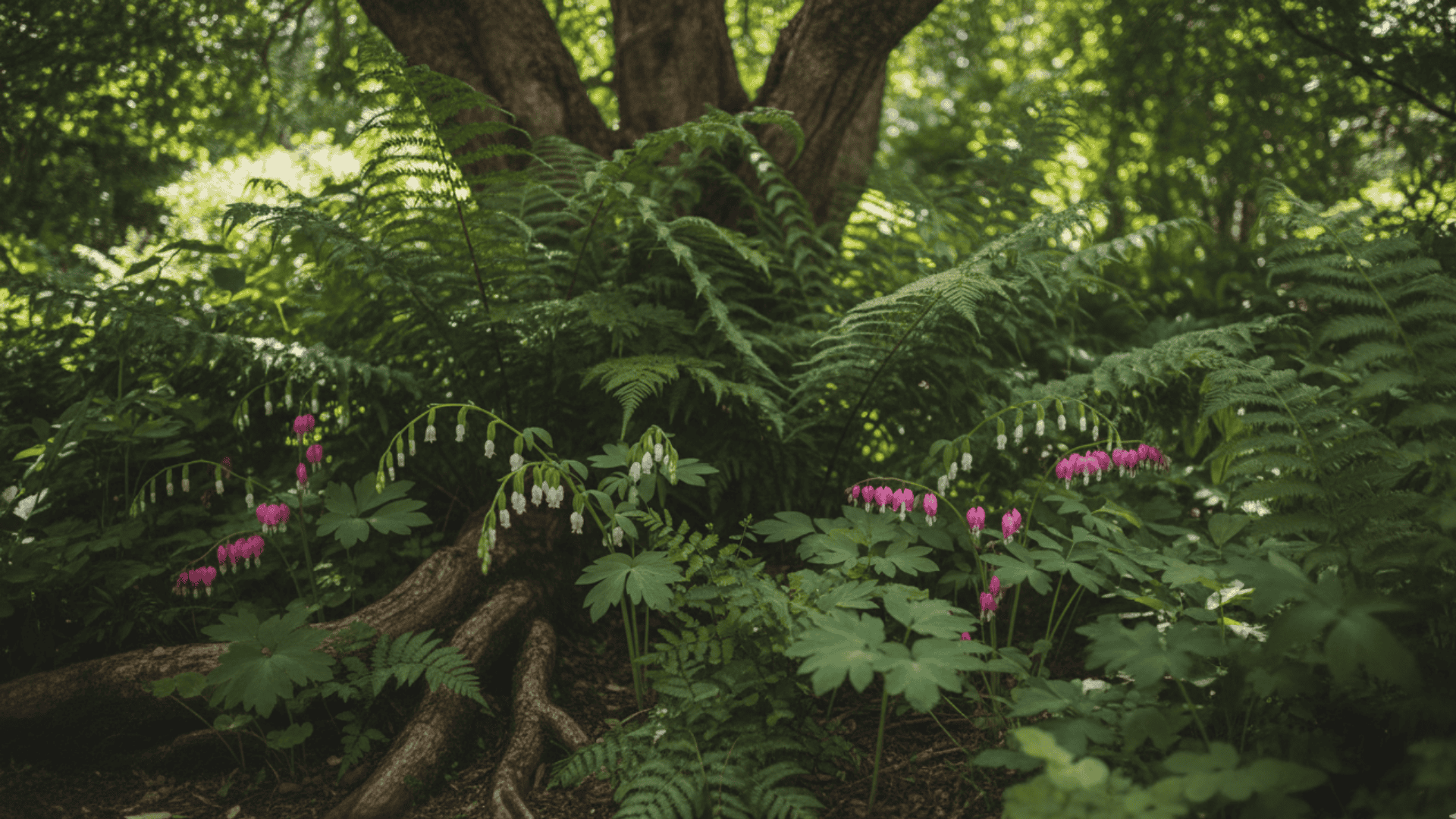
Group ferns and other shade plants in natural clusters between tree roots. This creates a lush look without covering the entire area.
Plant combinations:
- Combine different fern varieties for texture
- Add Solomon’s seal for vertical interest
- Include bleeding heart for spring blooms
- Plant in odd numbers for a natural feel
8. Moss Garden for Deep Shade
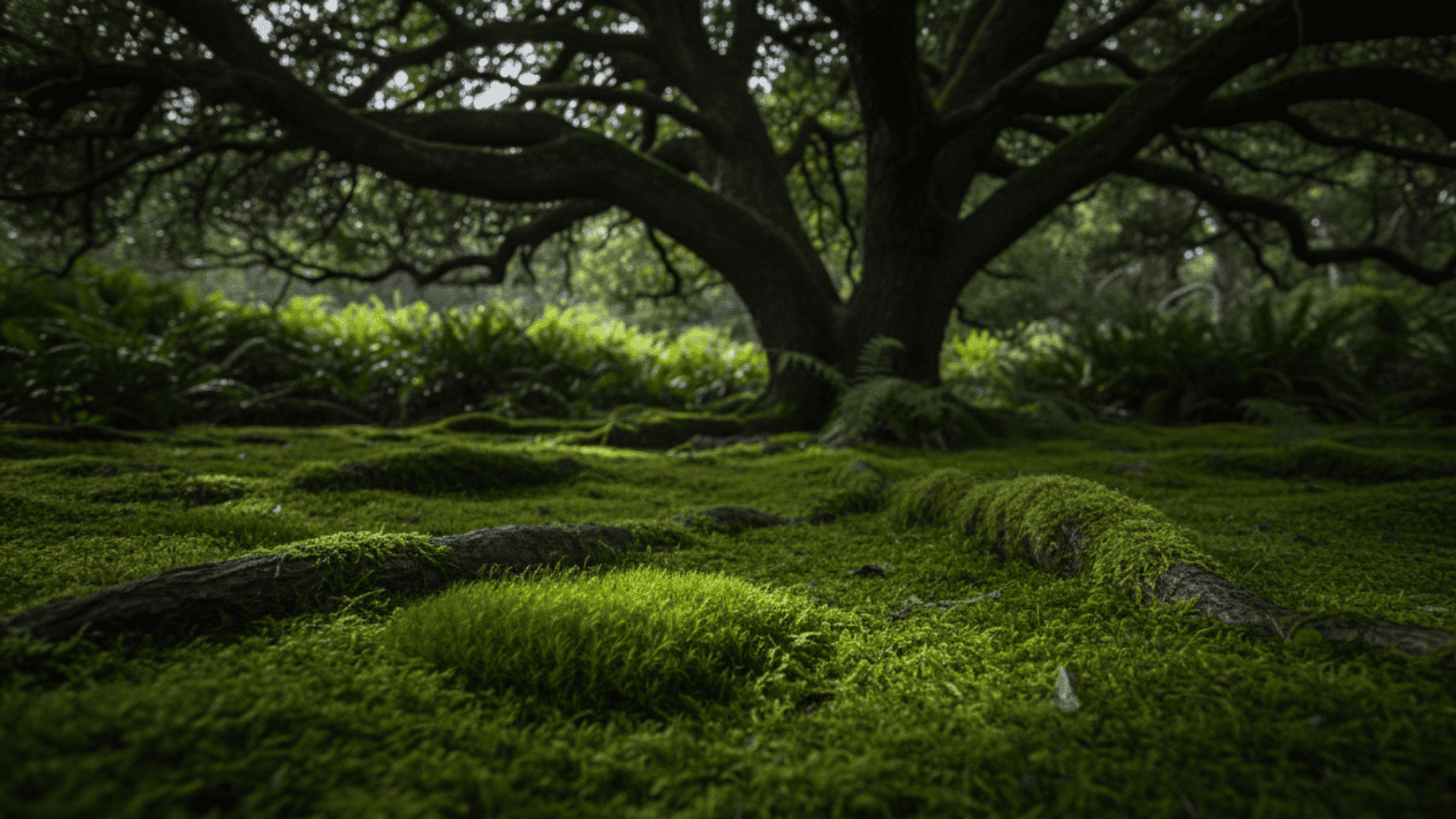
Encourage moss to grow in areas with heavy shade and moisture. Moss needs no soil depth and won’t harm tree roots.
Growing moss:
- Keep the area moist in early stages
- Remove competing weeds by hand
- Avoid walking on moss while it establishes
- Works best under dense canopies
9. Seating Area Outside the Root Zone
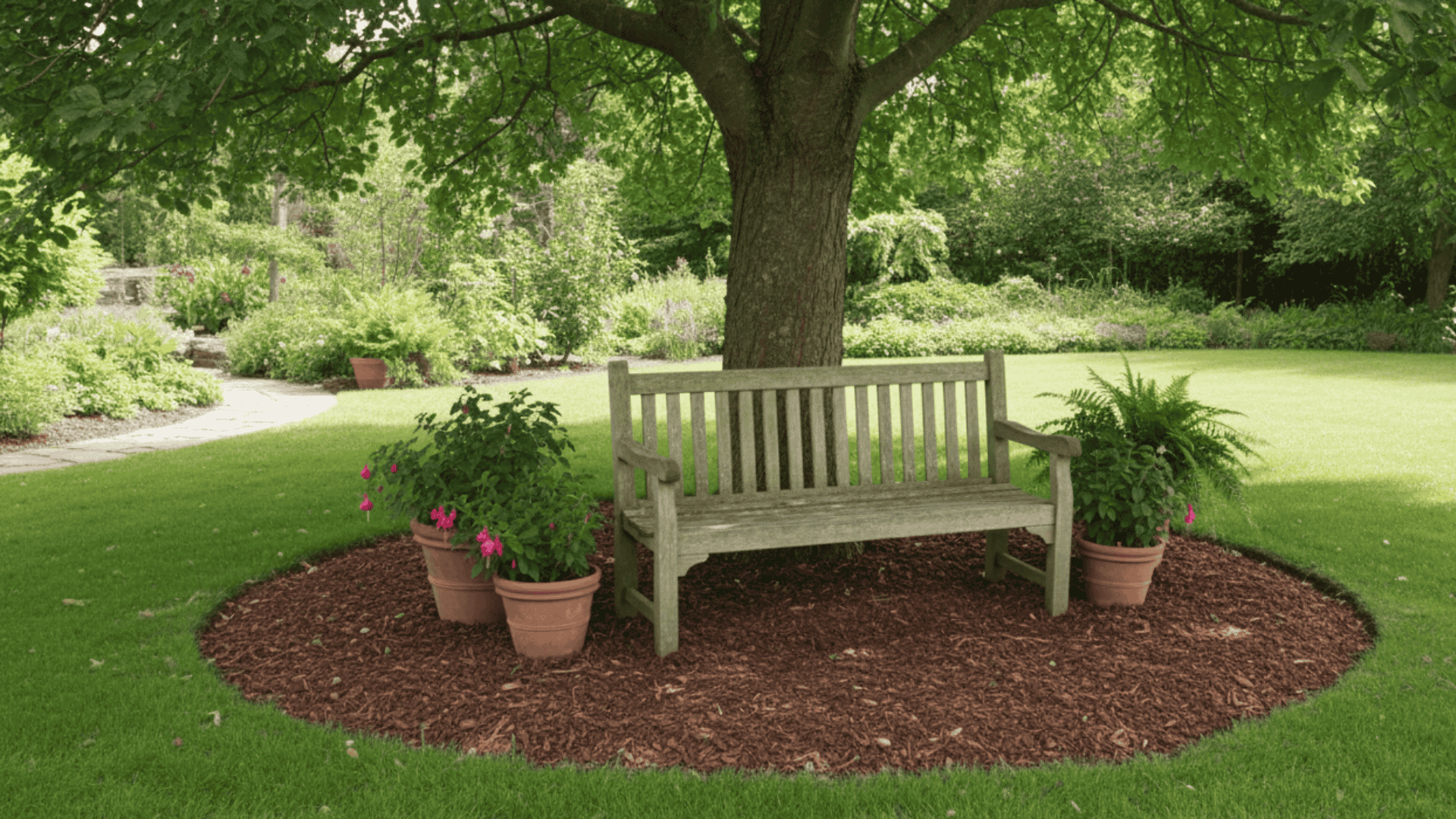
Build a bench or seating space just beyond where roots spread. This gives you a place to enjoy the tree without damaging roots.
Setup ideas:
- Place furniture at least 3 feet from the trunk
- Use a portable bench that you can move
- Add potted plants around the seating area
- Keep the root zone clear and mulched
10. Container Plants Near the Tree
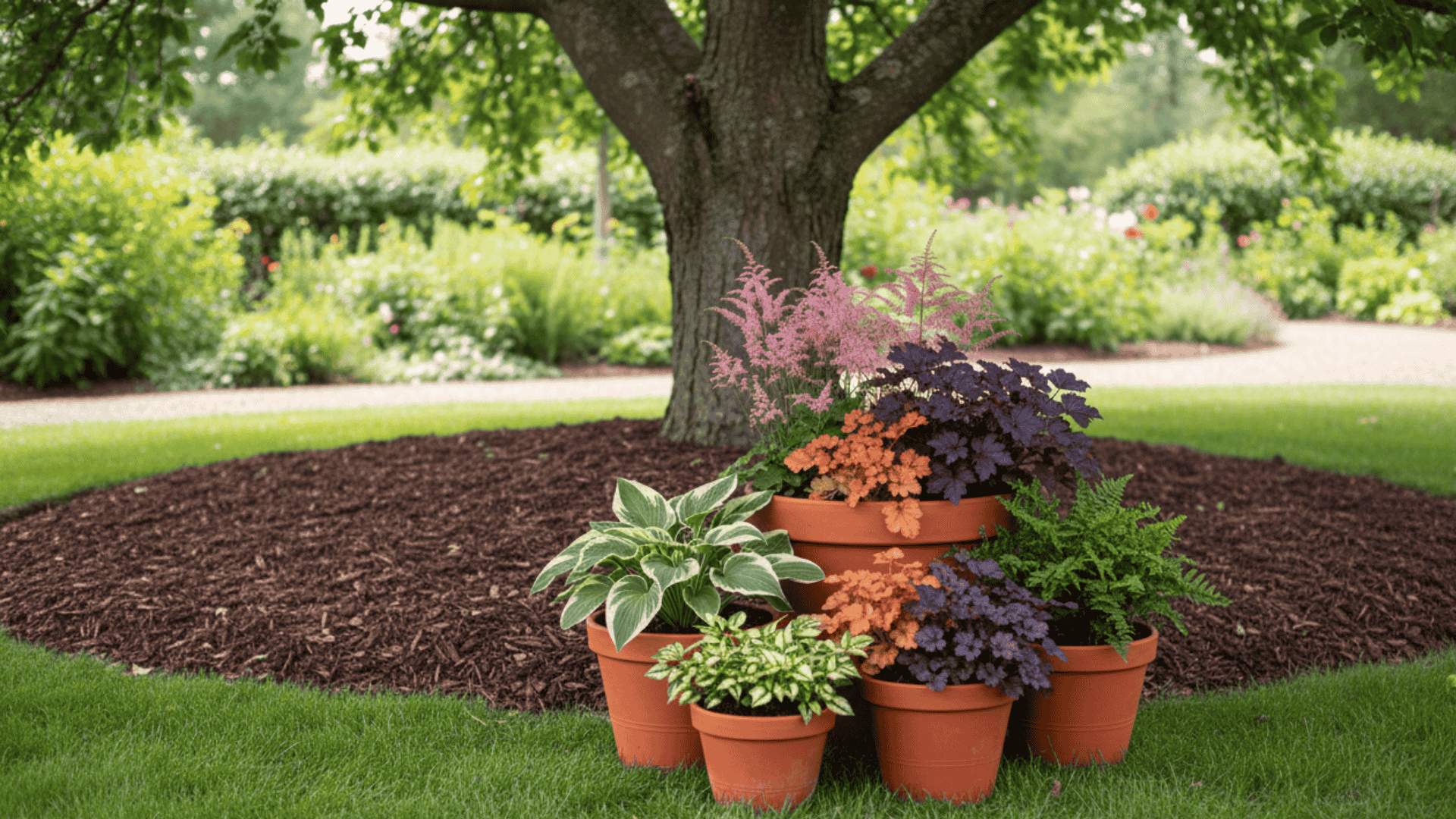
Set potted plants around the tree base instead of planting in the ground. Containers add color without any digging or root disturbance.
Container tips:
- Choose plants suited for shade conditions
- Use pots with drainage holes
- Group pots in odd numbers
- Water containers more often than ground plants
11. Erosion Control Ground Covers for Slopes
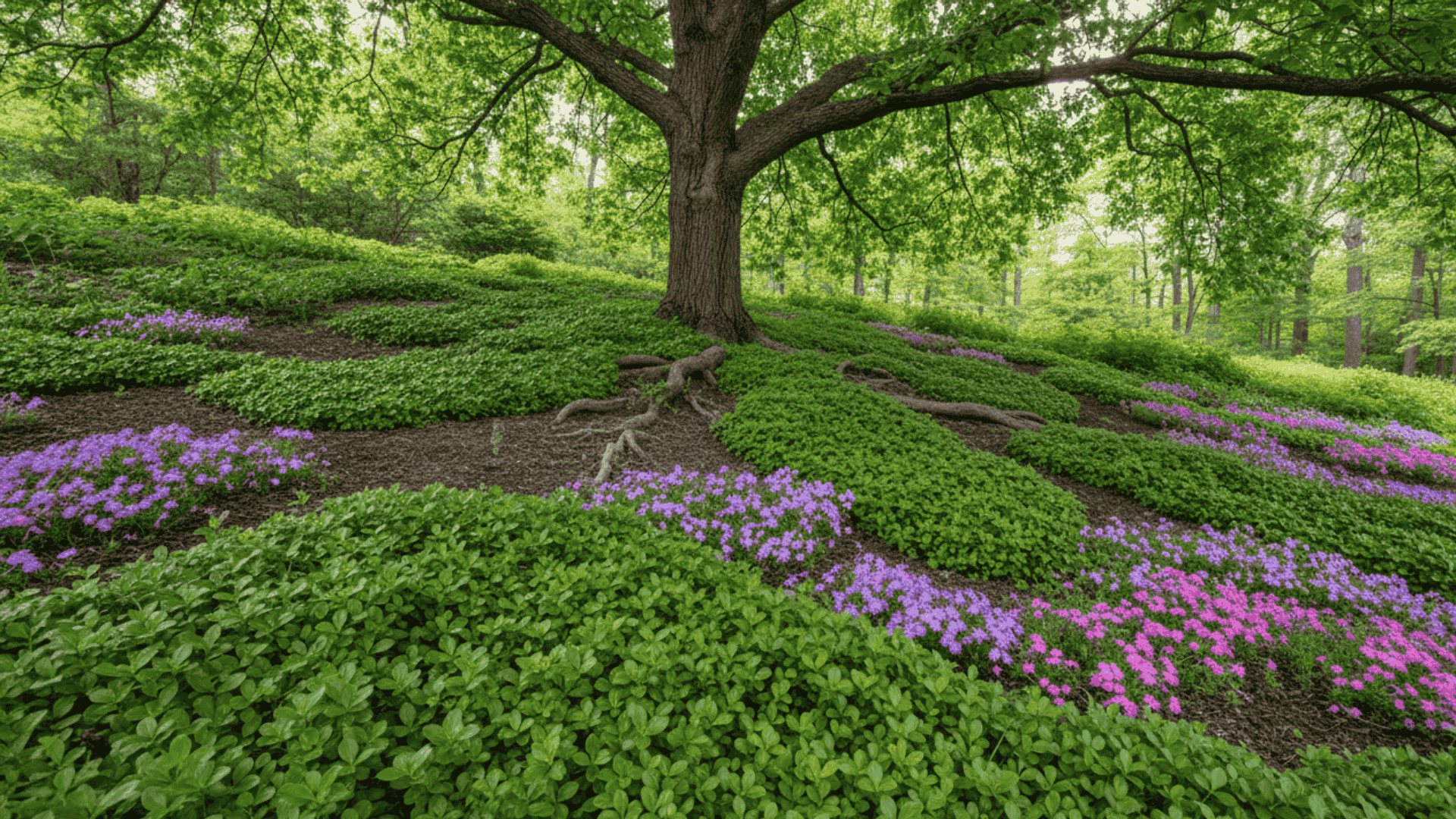
Plant ground covers with strong root systems to hold soil on slopes. These plants prevent runoff and protect exposed tree roots.
Best slope plants:
- Pachysandra for dense coverage
- Creeping phlox for spring color
- Liriope for grass-like texture
- Plant on contour to slow water flow
Best Plant Traits for Landscaping Around Trees
Not all plants work under trees. Choose plants with these four traits to avoid competition with tree roots and ensure long-term success.
- Shallow root systems: Plants with fibrous roots stay near the surface and won’t compete with deep tree roots for space.
- Shade tolerance: These plants can grow and thrive with limited sunlight under a tree canopy.
- Low water needs: Drought-tolerant plants survive on minimal rainfall since tree roots absorb most available moisture.
- Non-invasive growth habits: Plants that stay in place won’t spread aggressively or choke out the tree over time.
Check plant tags at the nursery for these traits. Staff can help you find options that meet all four requirements.
How to Landscape Around Tree Roots in 5 Steps
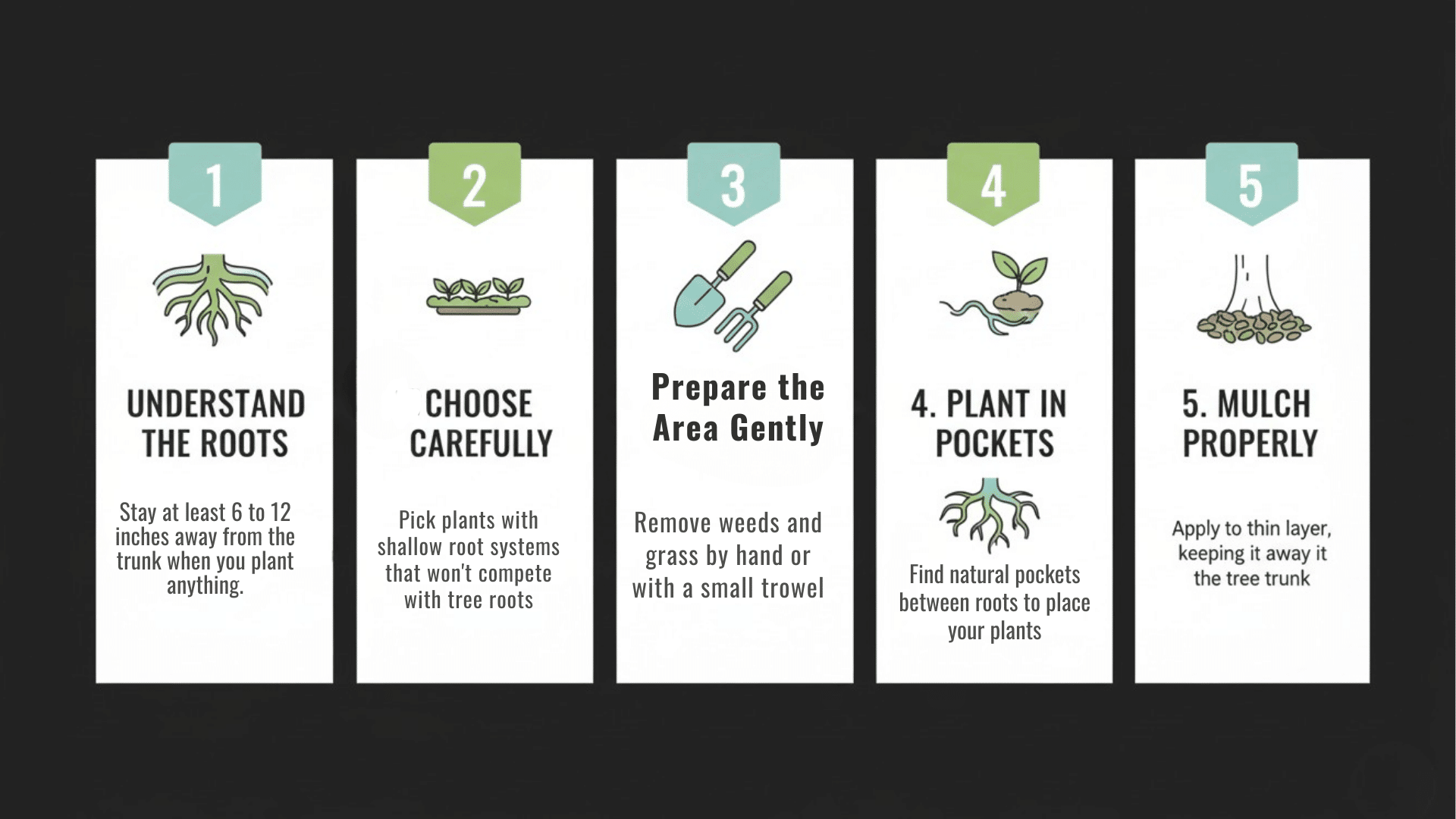
Ready to start your project? Follow this simple process to add plants or features without harming your tree’s root system.
Tools and Materials You’ll Need
| Tools | Materials |
|---|---|
| Hand trowel | Mulch (2 to 3 inches) |
| Small hand rake | Shallow-rooted plants |
| Garden gloves | Compost (optional) |
| Watering can or hose | Stepping stones or gravel (if needed) |
| Soft measuring tape | Garden fabric (optional) |
Step 1: Identify the Root-Safe Zone
Look at the ground around your tree and spot visible roots. Stay at least 6 to 12 inches away from the trunk when you plant anything.
How to do it:
- Walk around the tree and mark where large roots appear on the surface
- Measure 6 to 12 inches out from the trunk base
- Avoid areas where the trunk flare is visible
- Choose spots between roots rather than on top of them
- Keep the root collar completely exposed
Step 2: Choose Root-Friendly Plants or Materials
Pick plants with shallow root systems that won’t compete with tree roots. Use materials that let air and water pass through easily.
What works best:
- Select shade-tolerant ground covers like hostas or ferns
- Choose plants with fibrous roots instead of taproots
- Use organic mulch such as shredded bark or wood chips
- Pick native plants that grow well in dry shade
- Avoid plants that need frequent watering or full sun
Step 3: Prepare the Area Gently
Use only hand tools to work the soil. Never bring heavy equipment or dig deep holes near tree roots.
Preparation tips:
- Remove weeds and grass by hand or with a small trowel
- Loosen only the top 2 to 3 inches of soil
- Do not till or turn over large sections of ground
- Clear away debris without disturbing existing roots
- Work slowly and stop if you hit a root
Step 4: Plant Without Cutting Roots
Find natural pockets between roots to place your plants. If a root is in the way, move to a different spot instead of cutting through it.
Planting instructions:
- Dig small holes only where no roots block the way
- Make holes just deep enough for plant root balls
- Tuck plants gently into spaces between tree roots
- Firm soil around plants without pressing down hard
- Water each plant immediately after placing it
Step 5: Mulch and Water Correctly
Add a thin layer of mulch around plants but keep it away from the tree trunk. Water slowly so moisture reaches roots without running off.
Final care steps:
- Spread 2 to 3 inches of mulch over the planted area
- Pull mulch 3 to 6 inches back from the trunk
- Water plants at their base, not from overhead
- Let water soak in slowly over 15 to 20 minutes
- Check soil moisture weekly during dry periods
Dos and Don’ts of Landscaping Around Trees
Some practices protect your tree while others cause serious harm. Follow these clear guidelines to keep your tree healthy while improving the area around it.
| Dos | Don’ts |
|---|---|
| Proper mulch depth: Keep mulch 2 to 3 inches deep and pull it back 3 to 6 inches from the trunk | Cutting roots: Never cut or saw through roots thicker than your finger, as this weakens the tree |
| Gentle planting techniques: Use hand tools only and dig small holes between roots, not through them | Raised beds over roots: Do not build planting beds on top of the root zone, as this smothers roots |
| Shade and drought-tolerant plants: Choose plants that can survive with limited water and little sunlight | Piling soil or mulch against the trunk: Keep the trunk flare exposed, as burying it causes rot and disease |
Should You Landscape Around Tree Roots?
You can landscape around tree roots when your tree looks healthy with full leaves and strong branches. The tree should be stable with no signs of disease or damage.
Make sure you can plant without digging deep or cutting major roots. Avoid landscaping if your tree shows stress like yellowing leaves, dead branches, or peeling bark.
Skip the project if large roots cover most of the ground and leave no room for plants.
Before you start, check for visible problems like cracks in the trunk, mushrooms growing at the base, or thin canopy coverage. A quick walk around the tree will tell you if it’s safe to proceed.
Wrapping It Up
Landscaping ideas around tree roots don’t need to be complicated. The best approach is always the simplest one. Mulch works. Shade plants between roots work.
Stepping stones work. What doesn’t work is digging deep, cutting roots, or burying the trunk. Your tree has been growing for years or even decades.
It deserves respect when you add anything near its base. Start small with one mulch ring or a few hostas. Watch how your tree responds over the next season.
If something looks off, stop and call an arborist. What’s your biggest challenge with the area under your trees? Drop a comment below and let’s figure it out together.