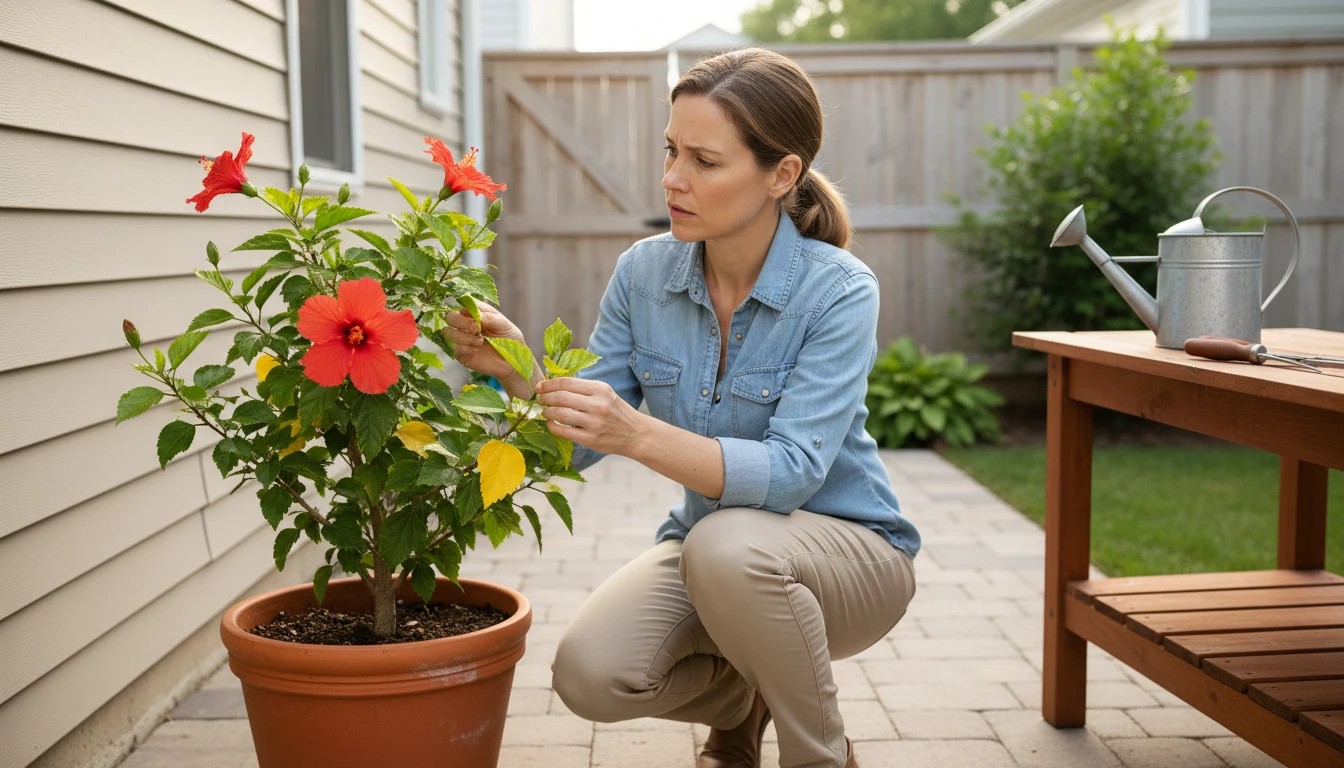
My neighbor called me over last month because her potted hibiscus looked like it was giving up right in front of her. Yellow leaves everywhere, and she was ready to toss the whole plant in the compost pile. I get calls like that more often than you’d think.
Seeing hibiscus leaves turn yellow can be worrying, but it usually points to something fixable, not a plant on its way out. The trick is slowing down long enough to notice where the yellowing starts and what else is going on with the plant.
Keep reading, and you will be able to match what you are seeing with the most likely cause and the right fix.
What Yellow Leaves on a Hibiscus Usually Mean
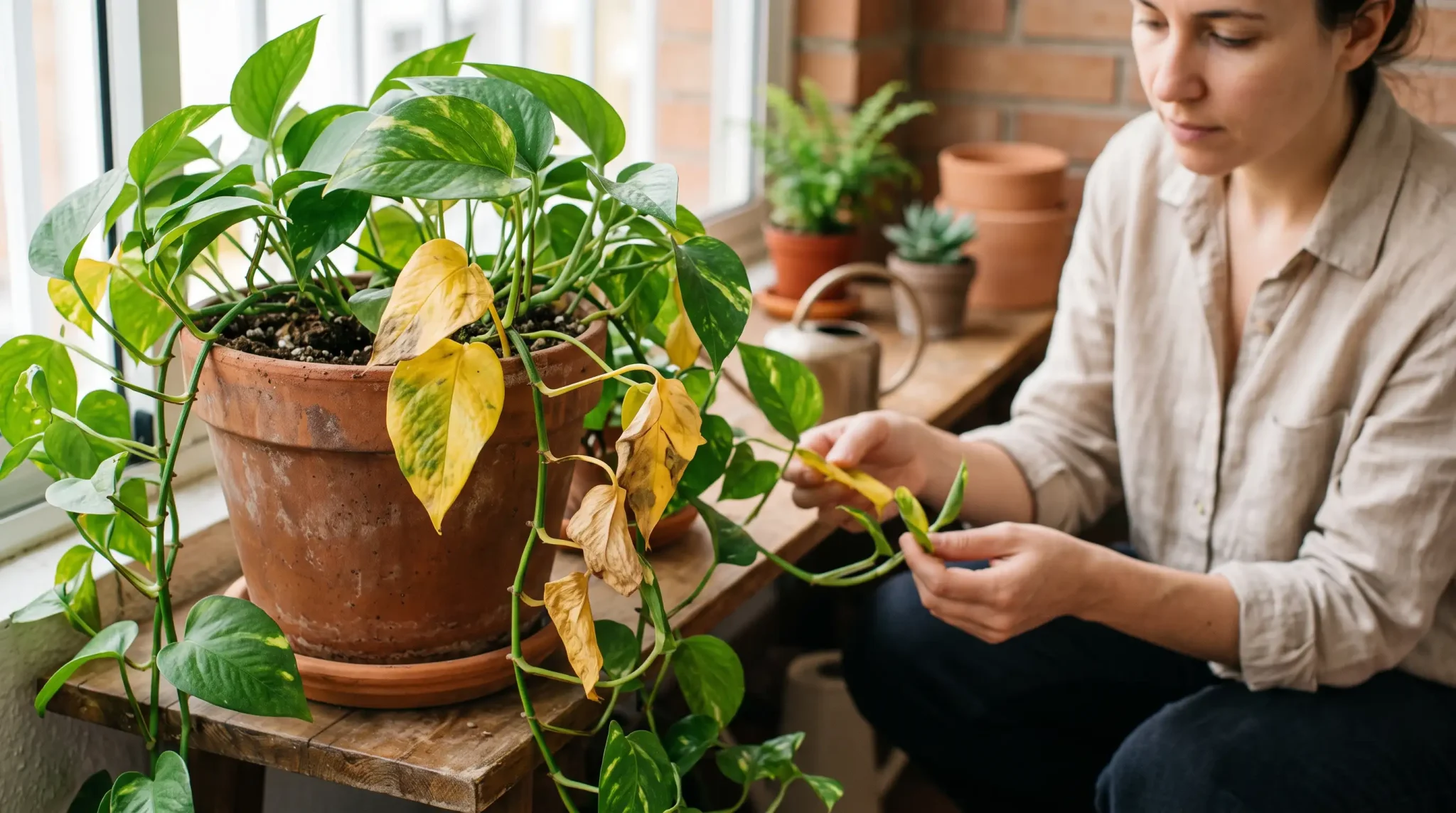
Yellow leaves usually mean your hibiscus is under some stress rather than fighting one specific disease. Where the yellowing starts can point you to the cause before you check anything else.
- Older or lower leaves: A few yellow leaves near the bottom can be normal aging or a seasonal response.
- Many leaves at once: Fast, widespread yellowing often links to watering problems, root stress, temperature swings, or pests.
- Green veins with yellow tissue: This pattern usually points to a nutrient problem or a soil pH issue.
Expert tip: Pay attention to which leaves change first. Older and newer leaves react differently to stress, and that difference helps narrow down the cause before you touch the plant’s care routine.
How to Diagnose the Problem Before You Treat It
Before you change anything about your hibiscus care, check what the plant is actually showing you. A quick inspection points you toward the likely cause so you are not just guessing.
|
Symptom |
Likely cause |
First check |
|---|---|---|
|
Soil stays wet for days |
Too much water or poor drainage |
Check if water drains freely from the pot or soil |
|
Soil feels very dry |
Too little water or heat stress |
Check moisture a few inches below the surface |
|
Brown, soft, or mushy roots |
Root rot |
Inspect the roots and drainage holes |
|
Older or lower leaves turn yellow first |
Normal aging, nitrogen shortage, or excess water |
Check how many leaves are affected, then check soil moisture and feeding |
|
Webbing, sticky residue, insects, or cottony patches |
Pests |
Check leaf undersides, stems, and branch joints |
|
Yellowing starts after a recent change |
Environmental stress |
Think about heat, cold, wind, repotting, moving the plant, or pesticide use. |
|
New leaves turn yellow while veins stay green |
Iron shortage or soil pH problem |
Check soil pH before adding more fertilizer |
Once you know what to check first, you can match the symptoms to the most likely cause and choose the right fix.
Hibiscus Leaves Turning Yellow: Causes and Fixes
Yellow hibiscus leaves often come from problems with water, light, nutrients, pests, temperature, roots, disease, or chemical exposure. Match the signs you see with the cause below, then make the needed care change.
1. Overwatering and Poor Drainage
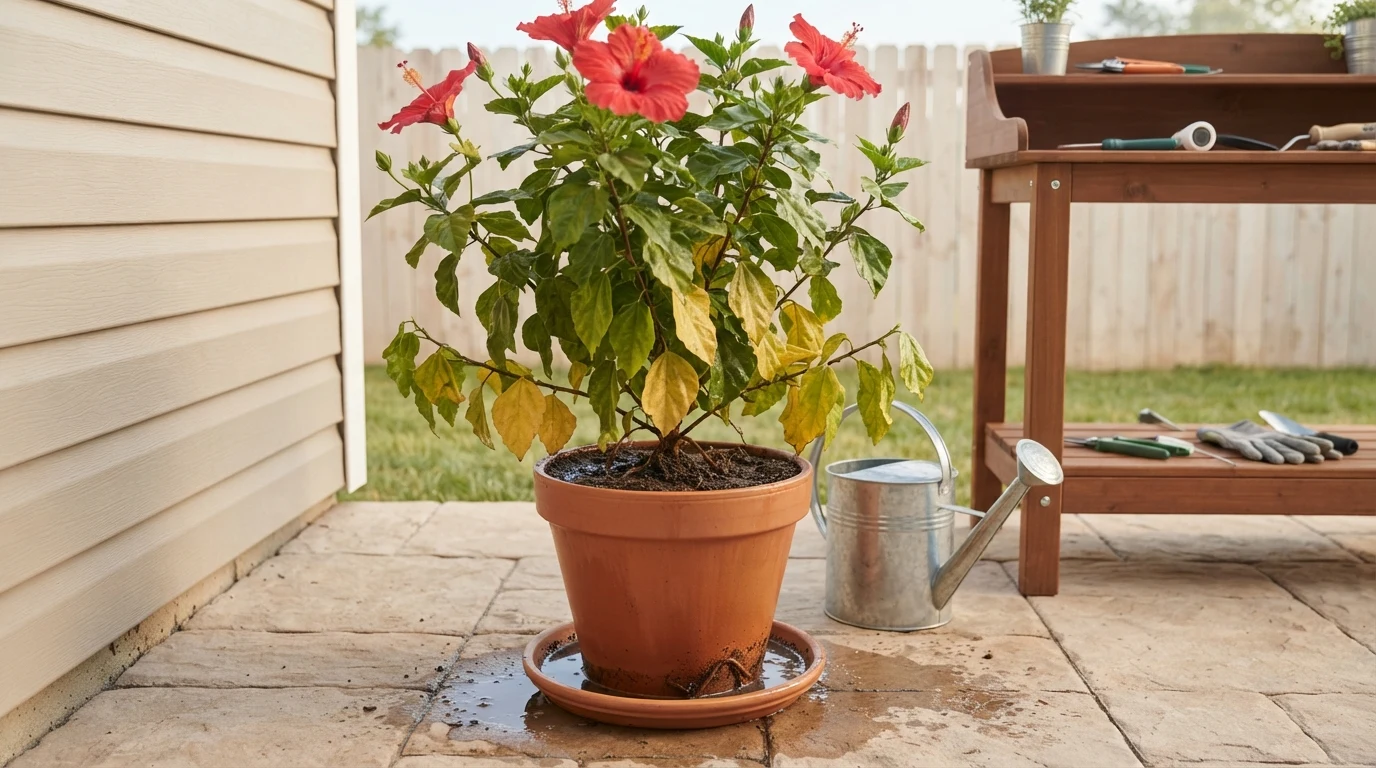
Soggy soil, yellow lower leaves, and wilting even when the soil is wet can point to excess water. Brown or mushy roots may mean root rot, since standing water damages roots directly, unlike the crowding that causes root-bound stress. A closer look at how to identify and fix an overwatered plant walks through the same signs and recovery steps in more detail.
Fix: Let the topsoil dry before watering again, clear any blocked drainage holes, improve the potting mix if needed, and carefully inspect damaged roots.
2. Underwatering and Heat Stress
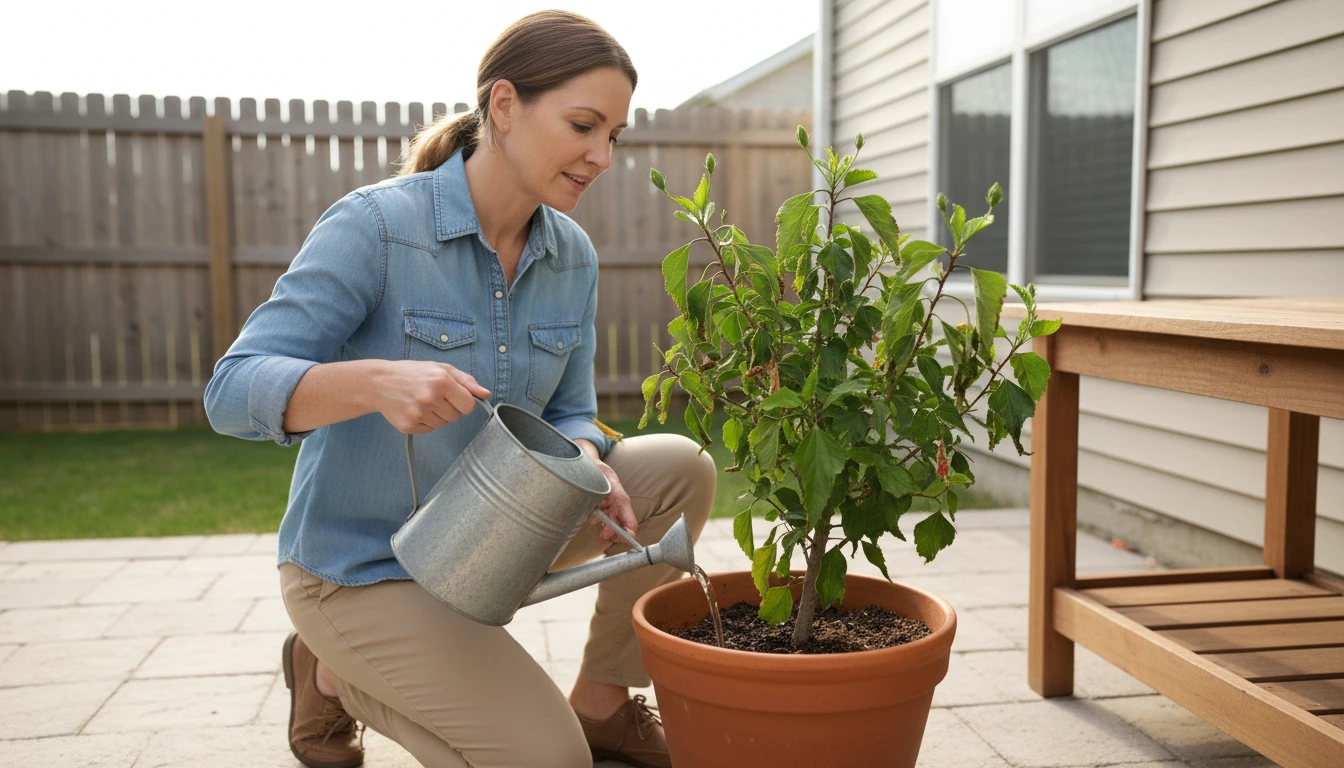
Underwatering often shows up as dry soil, crisp leaf edges, and wilting during hot weather. Container plants can dry out quickly when temperatures rise, or strong winds pull moisture from the soil.
Fix: Water deeply so moisture reaches the roots. Adjust how often you water based on heat, wind, pot size, and season, rather than following the same schedule year-round.
3. Too Much or Too Little Sunlight

Too little light can leave hibiscus foliage pale or yellow and growth weak. On the other hand, moving an indoor or shade-grown plant straight into strong sun can scorch the leaves.
Fix: Give the plant enough sunlight, but increase direct sun exposure slowly after it has been indoors or in shade. During very hot weather, provide some afternoon shade to reduce leaf stress.
4. Nutrient Deficiencies or the Wrong Soil pH
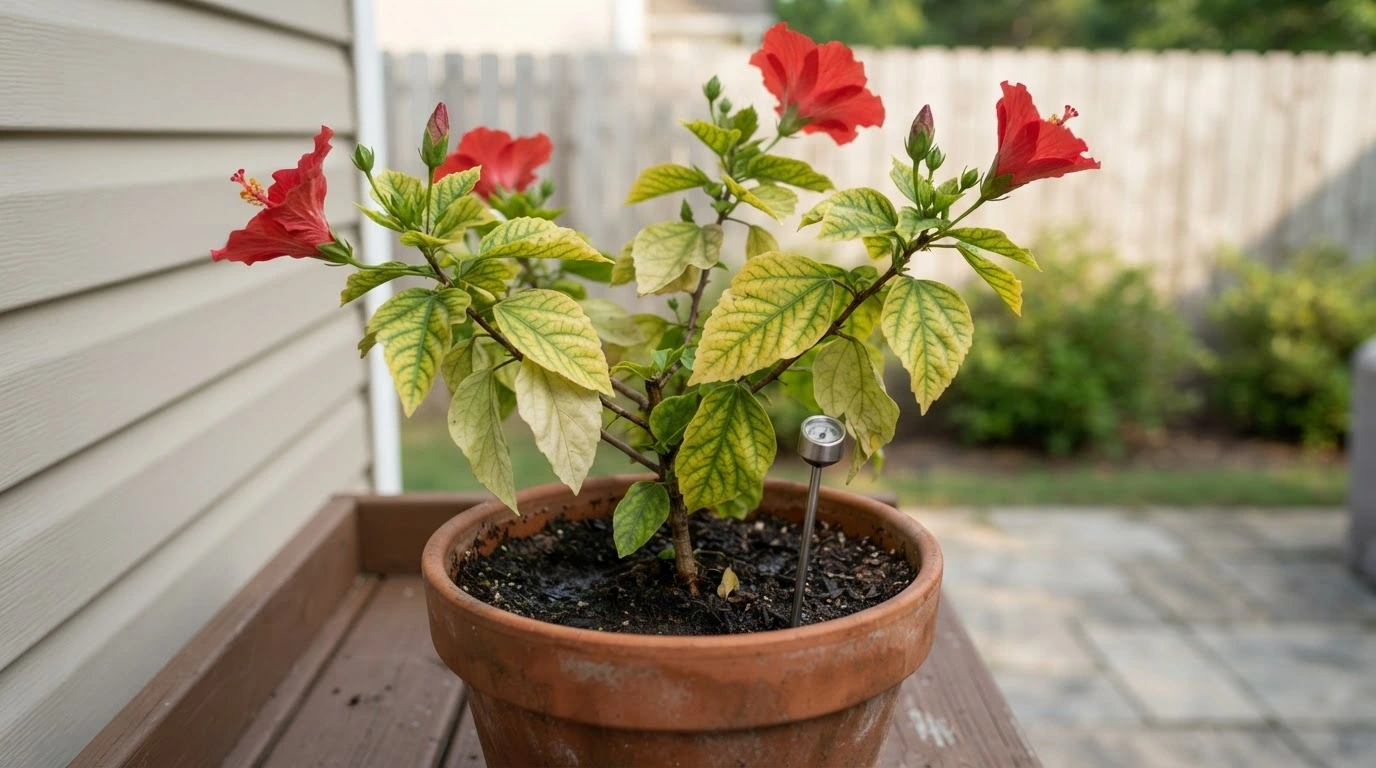
A nutrient problem often creates a clear yellowing pattern. Nitrogen deficiency commonly affects older leaves first, while iron chlorosis tends to turn newer leaves yellow while the veins stay green.
The University of Maryland Extension explains that this green-veined yellowing is usually tied to high soil pH, which limits how much iron a plant can absorb.
Fix: Test the soil before adding fertilizer. Aim for slightly acidic soil (pH 6.0 to 6.5), then use a balanced 10-10-10 fertilizer during active growth as directed.
5. Aphids, Spider Mites, Whiteflies, Mealybugs, or Scale
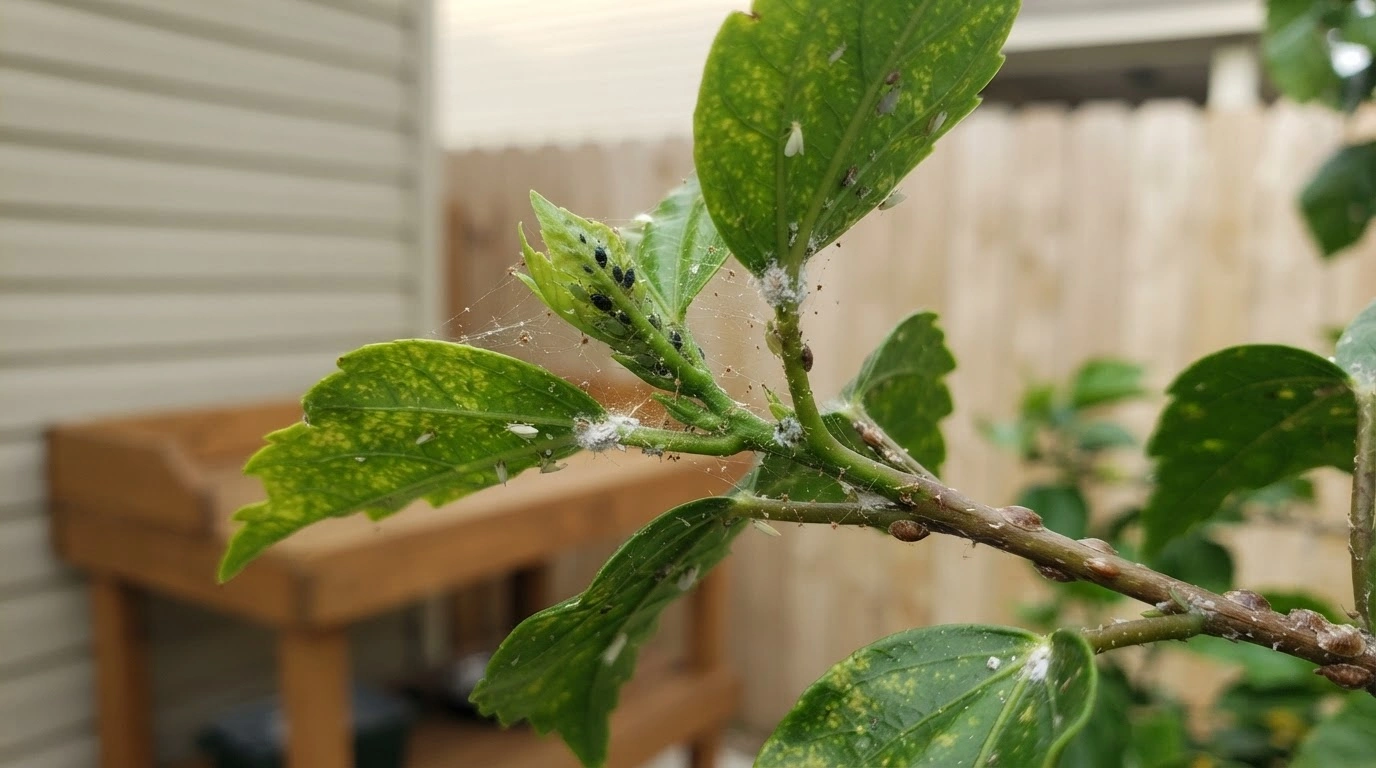
Pests often hide on the undersides of leaves, buds, stems, and branch joints. Fine webbing can point to spider mites, sticky honeydew may signal aphids, whiteflies may fly up when disturbed, and mealybugs can look like cottony patches.
Small, fixed bumps on stems or leaves usually mean scale.
Fix: Start by washing pests off with a firm stream of water. If they remain, use insecticidal soap or neem oil according to the product directions.
6. Temperature, Wind, Drafts, or Sudden Environmental Changes

Hibiscus can react to cold nights, frost, very hot weather, drying winds, and indoor drafts. Yellowing may also begin if you move a plant quickly between indoor and outdoor conditions.
This is common with tropical hibiscus brought indoors for winter, since lower light, dry indoor air, and a sudden temperature change can trigger yellowing within a few weeks of the move.
Fix: Keep temperatures as steady as possible, shield the plant from strong wind and cold, and change its light or outdoor exposure slowly so it has time to adjust.
7. Root-Bound Plants or Compacted Soil
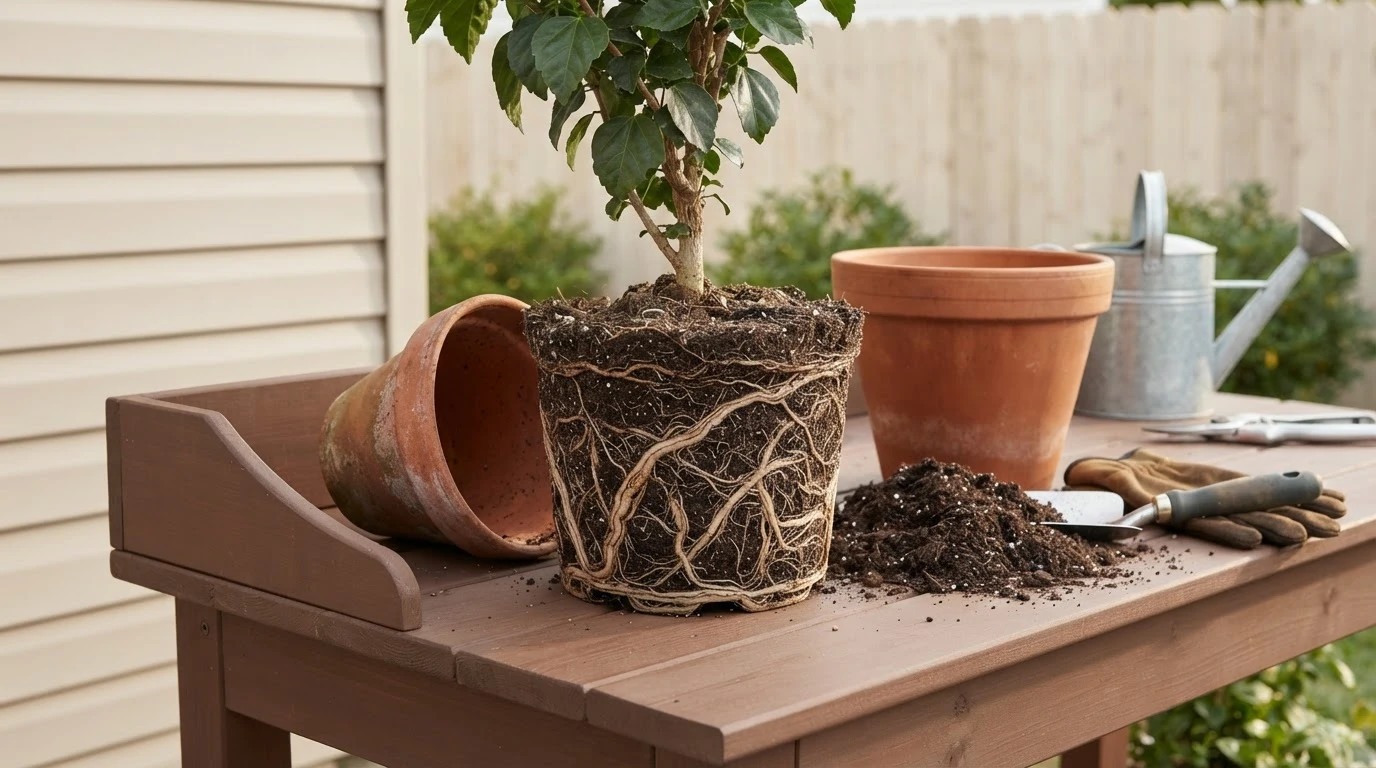
When roots circle tightly inside a pot, they have less room to take up water, air, and nutrients. Compacted soil can cause a similar problem. Unlike overwatering, where roots are damaged by soil that stays too wet, root-bound roots are crowded simply because the container is too small, so yellowing can continue even after you correct watering or feeding.
Fix: Check for roots filling the container or growing through drainage holes. Repot only when crowding is clear, using fresh, well-draining soil and a larger container.
8. Disease or Chemical Damage
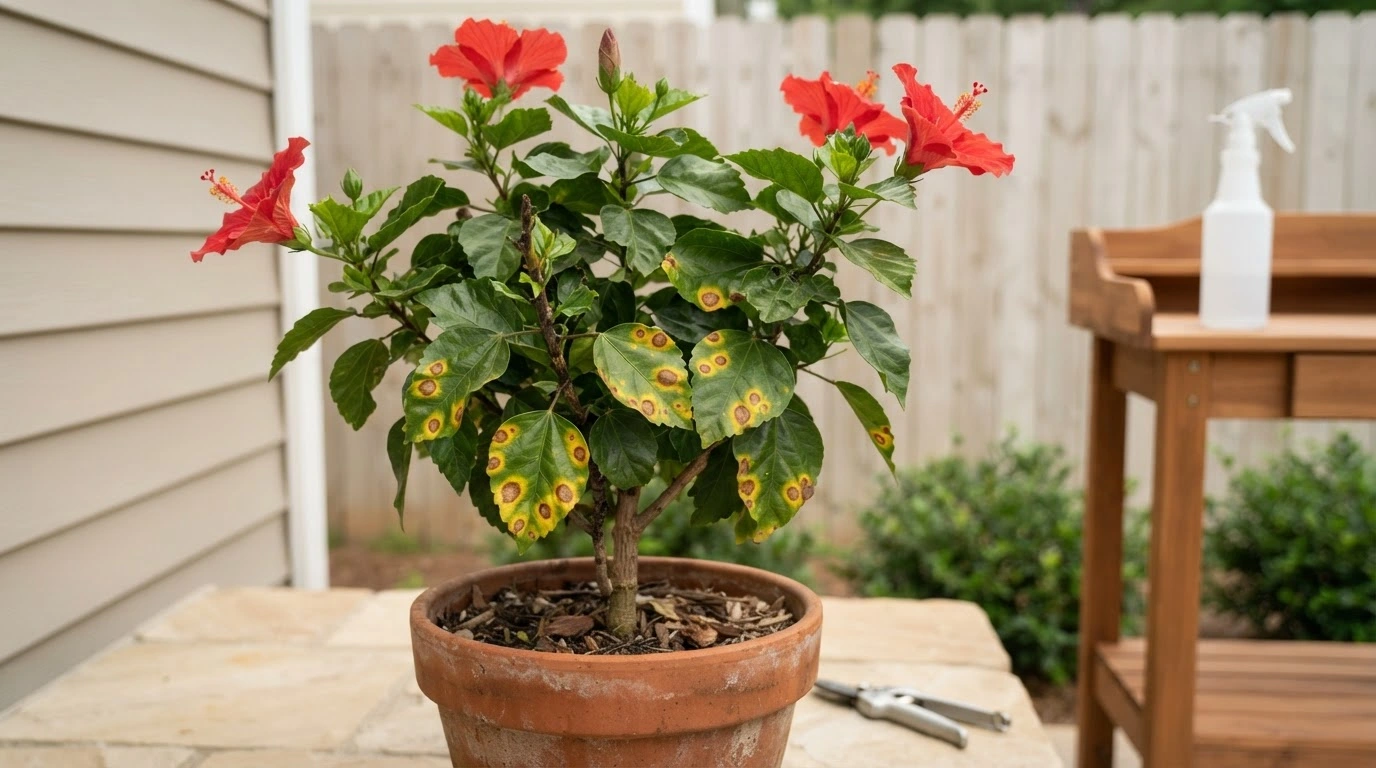
Disease and chemical damage are less common causes of yellow leaves. Watch for leaf spots with yellow halos, rapid branch decline, damaged stems, or symptoms that appear after pesticide or herbicide use.
Disease is more likely when yellowing shows up alongside visible tissue damage.
Fix: For leaf spot, remove affected leaves, keep foliage dry, improve airflow, and use an appropriate fungicide as directed if it continues; if symptoms followed a pesticide or herbicide application, stop further use while the plant recovers.
Important note: Hardy hibiscus can naturally lose leaves in fall after flowering slows, entering winter dormancy. Tropical hibiscus grown as houseplants or in warm climates does not handle cold well and may react to dropping temperatures by yellowing and dropping leaves, so protect it before temperatures drop.
How to Prevent Hibiscus Leaves From Turning Yellow
You can lower the risk of yellow leaves by building a few habits into regular plant upkeep, especially around moisture and airflow. The University of Minnesota Extension recommends keeping hibiscus soil evenly moist rather than soggy or bone dry, which lines up with most of the fixes above.
- Add mulch outdoors: Spread organic mulch around an in-ground hibiscus to help soil hold moisture more evenly.
- Keep leaves dry: Water the soil directly instead of soaking the foliage, since wet leaves can make leaf spot more likely.
- Prune at the right time: Prune during the warmer part of spring, and remove dead or diseased growth as you notice it.
- Use sprays carefully: Follow pesticide directions closely, avoid stronger mixtures than recommended, and don’t spray during hot midday sun.
Expert tip: Prevention works best when care changes follow the plant’s growth and the season, not a fixed calendar.
Frequently Asked Questions
Should I cut off the yellow leaves on my hibiscus?
Yes. Remove fully yellow leaves with clean pruners since they will not turn green again and can hide signs of an ongoing problem. Watch the next flush of new growth to see if the plant is recovering.
Why are my hibiscus leaves yellow but the veins stay green?
This pattern usually points to iron chlorosis, which happens when soil pH is too high for the plant to absorb enough iron. A soil test can confirm the pH before you add any iron or fertilizer products.
Can an overwatered hibiscus recover?
Often, yes, if the roots are still mostly healthy. Let the soil dry out, improve drainage, and trim away any mushy or blackened roots. New growth is the clearest sign the plant is bouncing back.
What fertilizer should I use for yellow hibiscus leaves?
Only fertilize once you know the cause. A true nutrient deficiency may need feeding, but fertilizer will not fix a watering, root, or pest problem, and it can stress the plant further if used too soon.
Why are the leaves turning yellow and falling off?
Yellow leaves with leaf drop often happen because of watering stress, sudden temperature changes, moving the plant, or seasonal dormancy. Check the soil moisture and any recent changes in the plant’s surroundings first.
Summing Up
I still think about that neighbor’s hibiscus sometimes. A little patience and one soil check were really all it needed. Most yellow-leaf cases are like that: less dramatic than they look at first.
A good rule is to fix the source of stress instead of trying to save leaves that are already fully yellow. Make one care change at a time, then give the plant time to respond. Fewer new yellow leaves and healthy, fresh growth are the signs that the correction is working.
Check your plant today, note what you see, and use those signs to choose the right fix rather than guessing.