Every hedge you plant, every wheelbarrow of mulch you spread, and every foot of turf you let grow tall against the siding is a decision about more than curb appeal. Gardeners spend whole seasons perfecting bloom schedules and soil pH, yet the same choices that make a landscape lush and layered can also build a bridge from the garden bed straight to the baseboards.
Understanding how plants, moisture and mulch interact with a home’s exterior belongs in the same conversation as pruning schedules and fertilizer timing, because a beautiful yard and a pest free house are not automatically the same thing.
City Wide Pest Control, a family owned and locally operated pest control company serving Phoenix and all of Maricopa County since 1986, has spent decades watching the same landscaping habits show up again and again in homes with recurring pest problems.
The company holds Arizona pest control license #2317 and works on both residential and commercial properties, which means its technicians see the full range of yards, from tightly clipped foundation beds to sprawling desert landscapes with mesquite and palo verde. What they keep noticing is not exotic infestations but ordinary plant choices that quietly work against the homeowner.
Good horticulture already asks you to think about airflow, drainage and how close a plant’s mature size will bring it to a structure. Pest prevention asks the same questions from a different angle. A shrub that is planted too close, watered too often, or mulched too heavily is not just a maintenance headache down the road, it is an invitation.
Why Do Shrubs Planted Against the Foundation Cause So Much Trouble?
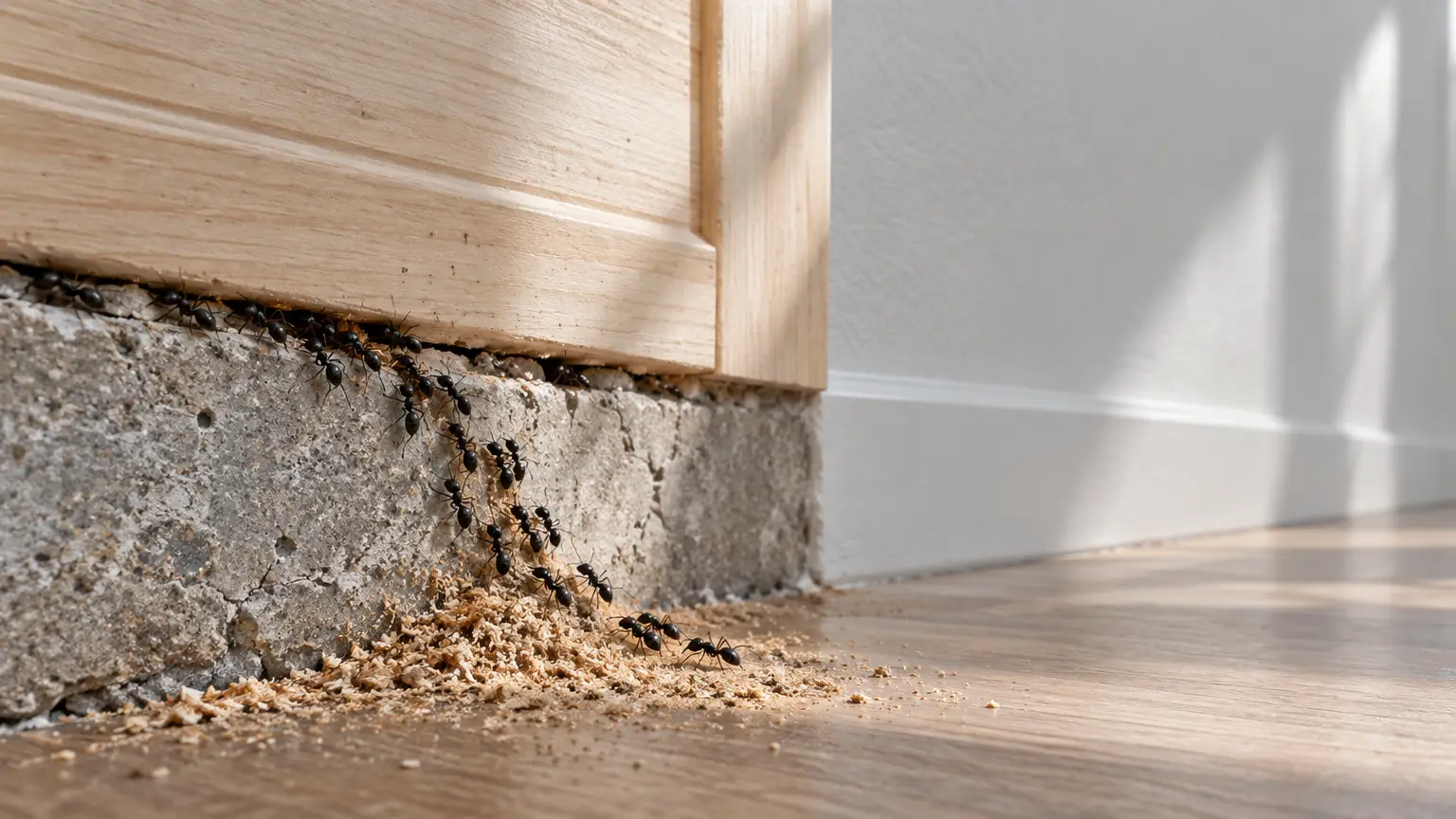
Shrubs pressed tight against a foundation trap moisture against the wall and give crawling insects a shaded, humid corridor straight to the siding. In a hot, dry climate, that pocket of shade and dampness is exactly what ants, roaches and spiders look for during the warmer months.
The plant itself is rarely the problem. The spacing is. As a general horticultural rule, leaving at least a foot or two of open, sunlit ground between mature shrub growth and the wall lets soil dry out between waterings and removes the shaded bridge insects rely on to travel unseen.
Pruning the lowest branches so foliage does not touch siding or stucco accomplishes the same goal without sacrificing the plant’s visual presence in the bed.
Does Mulch Attract Pests Toward the House?
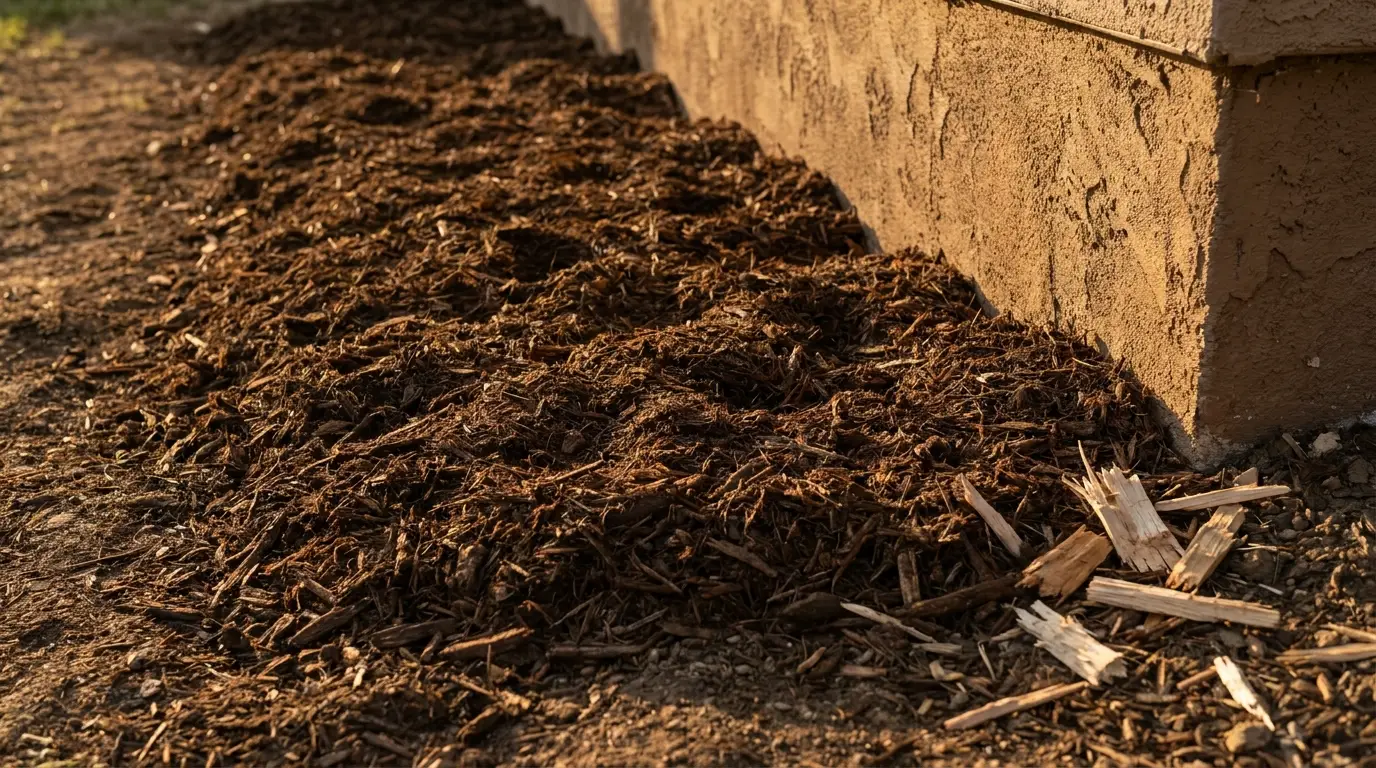
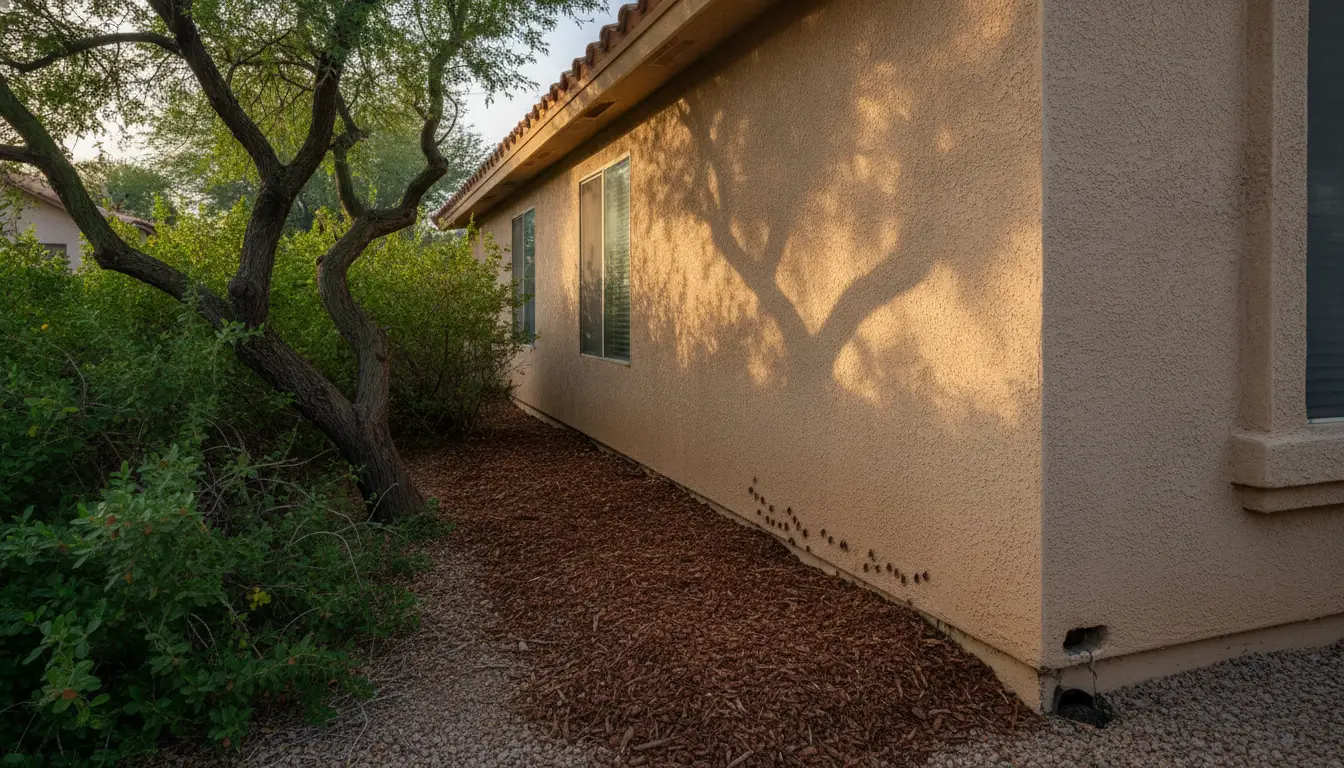
Yes, thick mulch beds hold moisture and organic matter that draw in wood loving insects and small crawling pests, and then offer them cover as they move toward a structure. Organic mulch breaks down over time, and that decomposition process is attractive to insects that feed on decaying plant material.
None of this means mulch should be abandoned, since it genuinely helps with weed suppression and moisture retention for the bed itself. It means the mulch ring should stop a few inches short of the foundation rather than running right up against it, and it should be raked and refreshed rather than left to pile up year after year in the same spot.
The table below lines up a few common landscaping choices against the pest pressure they tend to create, along with the adjustment most gardeners can make without reworking the whole bed.
- Shrubs touching the foundation (Pest Risk It Invites: Ants, roaches and spiders using shaded, humid cover to reach the wall; Better Horticultural Practice: Prune for a gap between mature foliage and siding)
- Deep mulch piled against stucco or siding (Pest Risk It Invites: Wood destroying insects drawn to moisture and decaying organic matter; Better Horticultural Practice: Keep mulch a few inches back from the foundation line)
- Standing water in saucers, low spots or clogged drip lines (Pest Risk It Invites: Mosquitoes breeding in still water within days; Better Horticultural Practice: Check irrigation lines and empty standing water weekly)
- Tree limbs overhanging the roofline (Pest Risk It Invites: Rodents and ants using branches as a bridge onto the roof; Better Horticultural Practice: Cut back limbs so they do not touch the structure)
- Woodpiles or dense ground cover against exterior walls (Pest Risk It Invites: Scorpions, spiders and termites sheltering close to entry points; Better Horticultural Practice: Store wood away from the house and keep ground cover trimmed)
Landscaping decisions like these compound over a season, which is why prevention works best as a habit rather than a one time cleanup. Pairing smart plant placement and mulch management with a periodic professional inspection rounds out a yard’s defenses, and for homeowners who want that second layer of coverage, pest control for Phoenix homeowners is worth having on the schedule alongside routine lawn care.
What Should Gardeners Do With Overhanging Tree Limbs?
Tree and shrub limbs that touch the roofline give ants, roaches and rodents a direct route indoors that skips the ground entirely. Pruning is already part of any well kept landscape, but the pest angle adds a specific target: any branch heavy enough to brush the eaves, gutter line or roof deserves a cut regardless of how it affects the tree’s silhouette.
This is especially true for fast growing shade trees planted near patios, where a few seasons of unchecked growth can close what used to be several feet of open air between canopy and roof.
Water management deserves the same scrutiny. Drip irrigation and hand watering are essential in a desert climate, but a dripping emitter, a clogged line that pools water, or a saucer left under a potted plant creates standing water that mosquitoes can use within days.
Checking irrigation components on a regular rotation, the same way a gardener checks soil moisture before deciding whether to water, closes off one of the most common breeding opportunities around a home.
Firewood and dense ground cover deserve a mention too, since both are common in yards that lean into a cottage or naturalistic look.
A woodpile stacked against an exterior wall is comfortable shelter for scorpions, spiders and, in some cases, termites looking for a way into the structure itself. Moving stacked wood even a modest distance from the house, and trimming ground cover so it does not form a solid mat against the foundation, removes that shelter without changing the overall design of the bed.
Seasonal cleanup rounds out the picture. Fallen leaves, spent blooms and dropped fruit left to decompose near the house create the same moisture and shelter conditions as overgrown mulch.
A fall and spring cleanup that clears this debris away from the foundation, paired with the pruning and mulch adjustments already mentioned, keeps a landscape doing what it is supposed to do: framing the house, not feeding a path into it.
None of this requires giving up a full, layered landscape. It requires treating the space closest to the foundation as its own zone, one where spacing, drainage and tidiness matter a little more than they do farther out in the yard.
Gardeners who already think this carefully about soil and sun exposure have most of the skills needed to keep pests out too. It is simply a matter of pointing that same attention at the few feet where the garden meets the house.