A sunroom can still feel dark, crowded, too warm, or oddly cut off from the outdoors, even with all that glass, if the windows aren’t planned well from the start. This is a problem many homeowners run into once the space is built, and by then, changes get expensive.
The right windows shape far more than how the room looks. They decide how much daylight reaches every corner, what view you get from your chair, how well air moves on a warm day, and where your furniture can sit without blocking a window.
Below, we will go through a few sunroom window ideas for a bright, beautiful space, covering layouts, glass types, frame materials, and treatments that work well together.
The short answer up front: a sunroom feels its best when generous glass pairs with a clear plan for airflow, shade, and privacy.
What Makes Sunroom Windows Different From Regular Windows?
Windows are the sunroom’s main design feature, not a small supporting piece. They often stretch across several walls and can extend into the roof too.
Their main job:
- Bring in natural light
- Frame the view outside
- Make the room feel open
- Allow fresh air in
- Create a real connection between indoors and outdoors
More glass does not automatically mean a better room. A good sunroom balances light with heat, glare, and privacy, including options like adding extra privacy fencing outside, along with energy performance and enough wall space for furniture.
These main window formats include fixed or picture windows, operable windows, sliding glass panels, skylights, and decorative feature windows. Each brings its own benefits, and picking the right mix matters more than piling on glass alone.
Sunroom Window Ideas for a Brighter, Better-Looking Space
Every sunroom has its own shape, light, and view, so treat these as starting points, not fixed designs. Weigh your room size, best view, home style, climate, and privacy needs first, since a busy street calls for different choices than a quiet garden.
The ideas below cover glass placement, shape, framing, and how you use the space near the window. Mix and adjust to fit what your room actually needs.
1. Create a Floor-to-Ceiling Fixed Window Wall
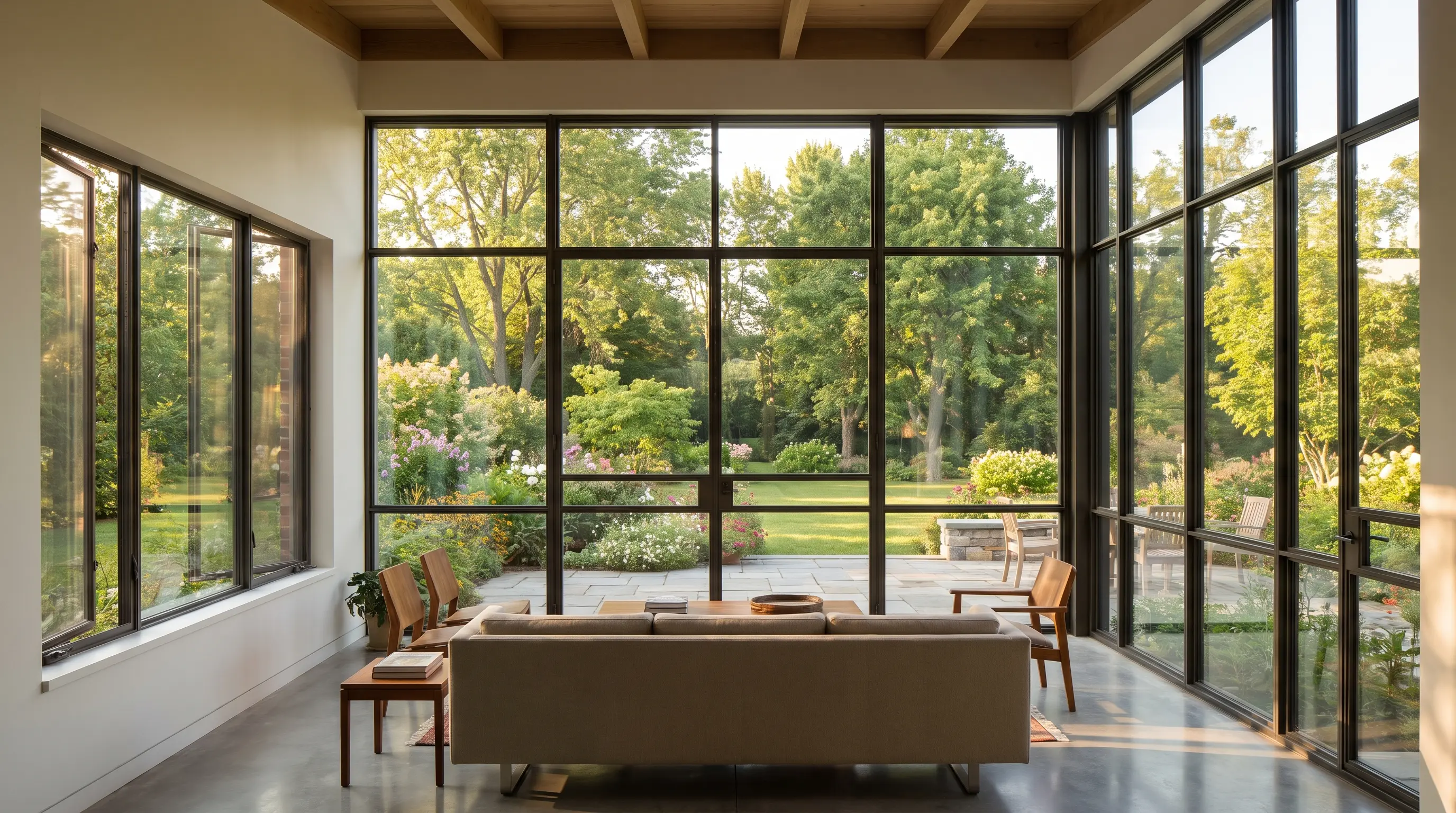
A wall made mostly of large fixed windows, with few frame divisions, keeps the view open and uninterrupted.
It works best when one side of the room faces a garden, patio, pool, or wooded area more strongly than the rest, especially if you’re already browsing patio garden design ideas for that side of the yard.
Use one main glass wall instead of competing windows on every side. Since fixed glass doesn’t open, pair it with operable windows or a roof vent elsewhere.
Tip: Keep seating low, skip tall cabinets against the glass, and plan for glare control if the wall gets direct sun.
2. Wrap Windows Around the Corner
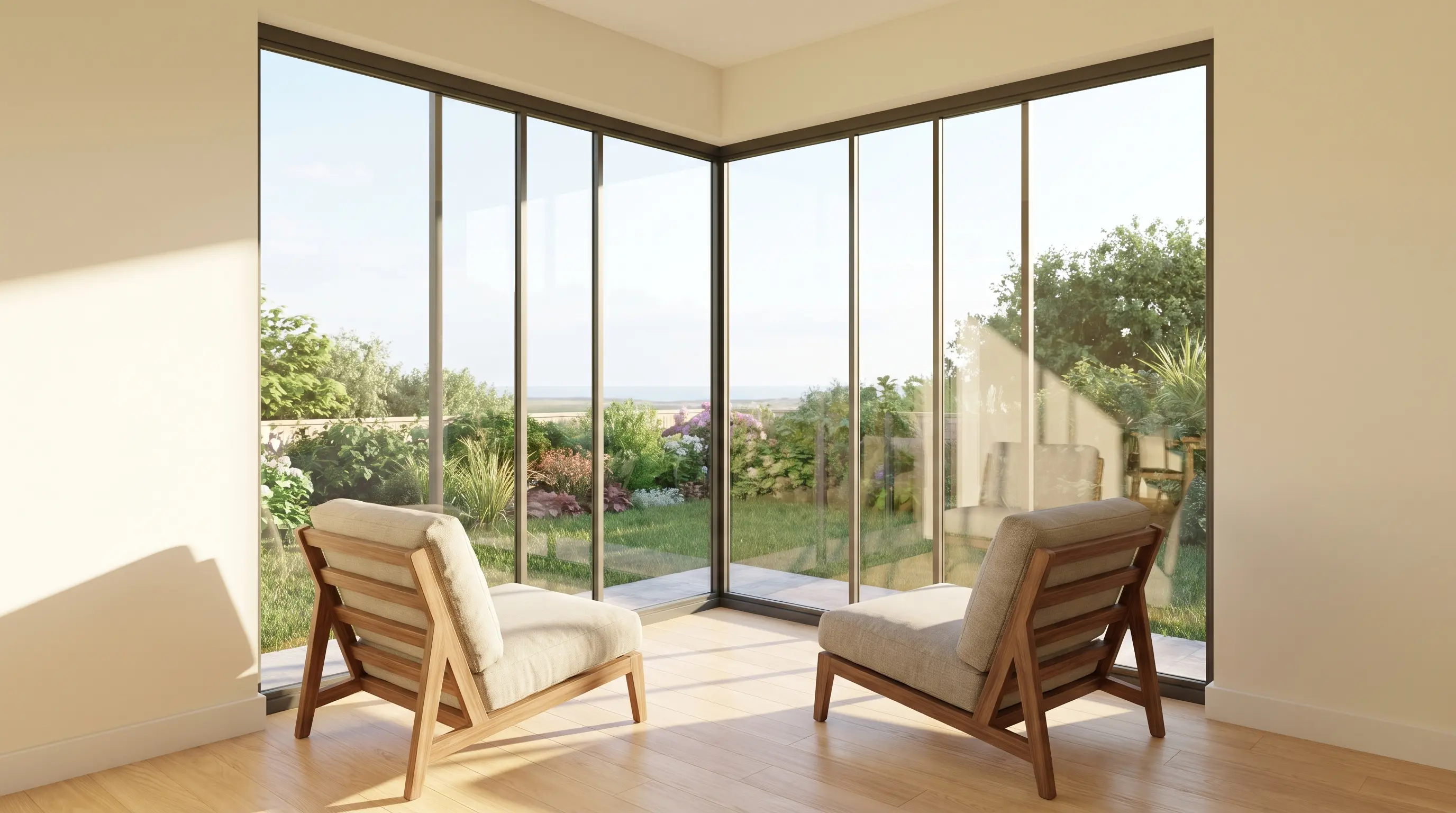
Windows on two joining walls bring light in from more than one direction, making the solid corner feel like it nearly disappears. This works well in small square sunrooms, garden-facing corners, or breakfast nooks.
Pick the corner based on the best outdoor view, not just symmetry. Add two chairs or a small table nearby rather than blocking it with tall plants or bulky furniture.
Tip: check frame thickness and structural support early, since corner glass needs careful planning.
3. Open One Wall With Stacking Glass Panels
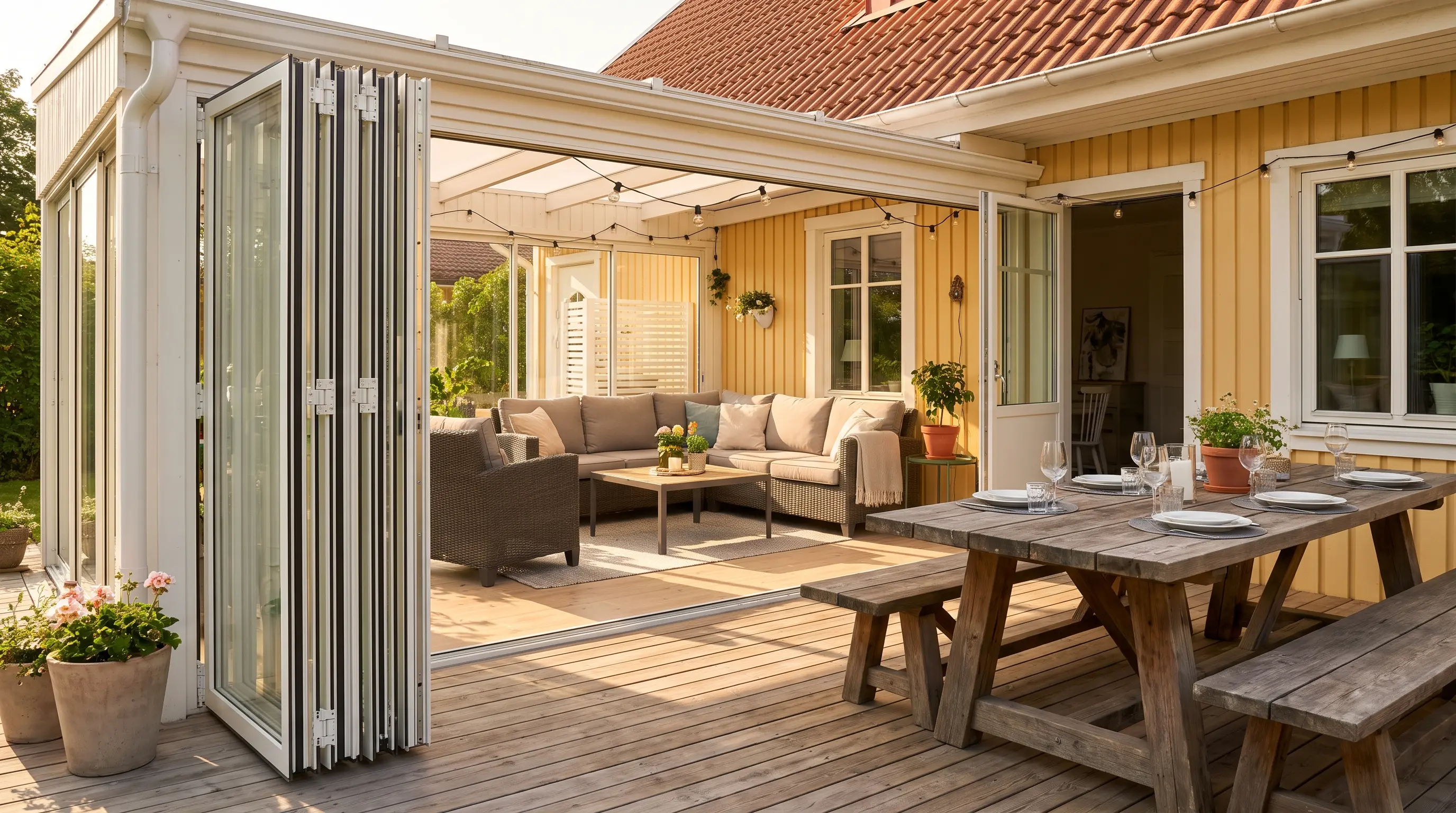
Sliding or folding panels that stack to one side let the room stay closed in poor weather and fully open on good days.
This suits sunrooms used for entertaining, indoor-outdoor dining, or easy garden access. Plan for a level transition between indoor and outdoor flooring, plus room for the panels to stack, tracks, and screens.
Tip: This idea works best when the outdoor area is already usable and inviting, not an afterthought.
4. Bring in Overhead Light With Skylights
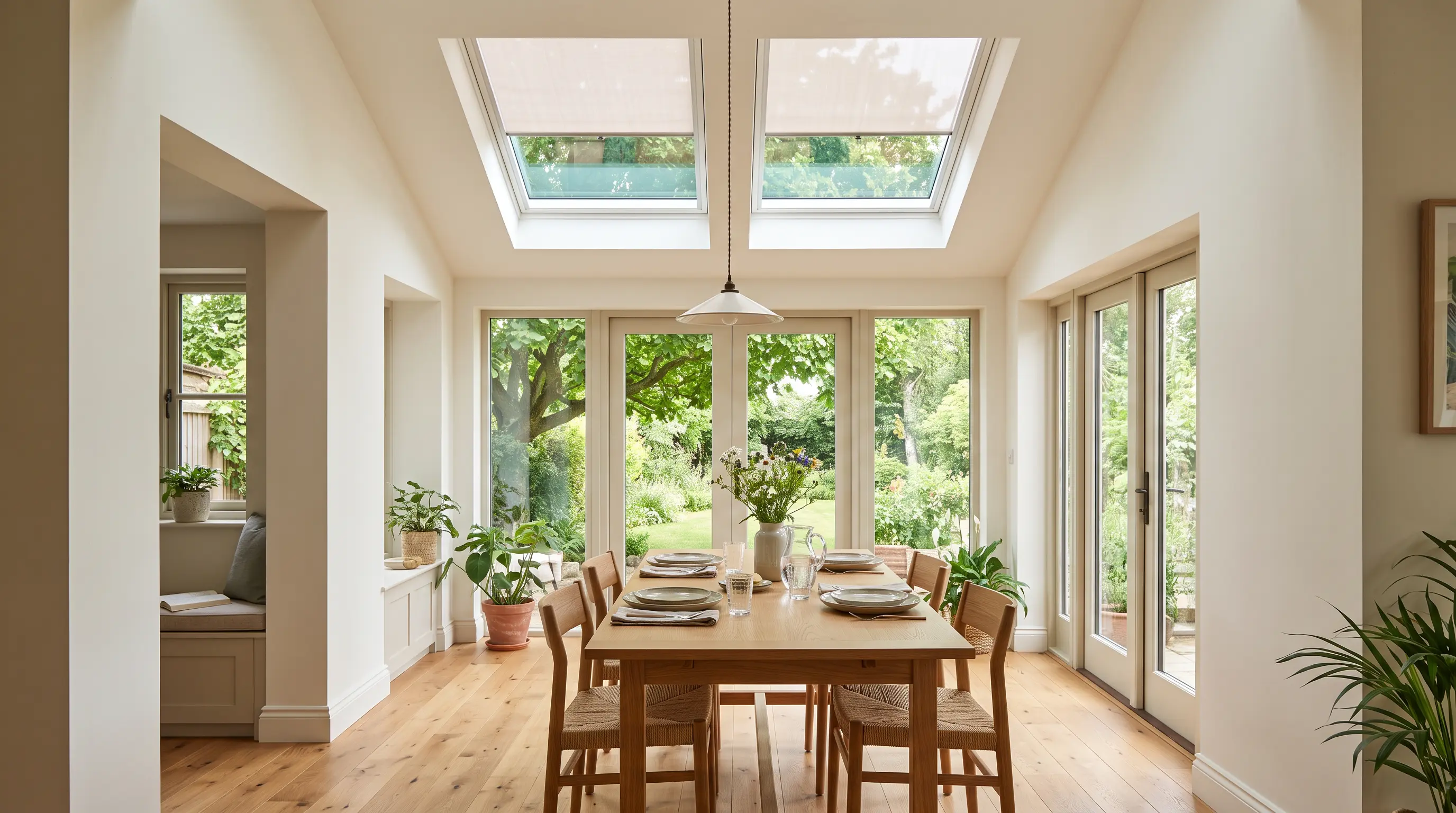
Skylights add daylight to the center of the room, reaching spots that wall windows often miss. They work well in deep rooms, narrow additions, or sunrooms shaded by trees or nearby buildings.
Position one large skylight, or a few smaller ones, above a dining table, reading chair, or main walkway. Ventilating models can release warm air near the ceiling.
Tip: plan for proper flashing, shading, and safe access for cleaning, and avoid covering most of the roof with glass.
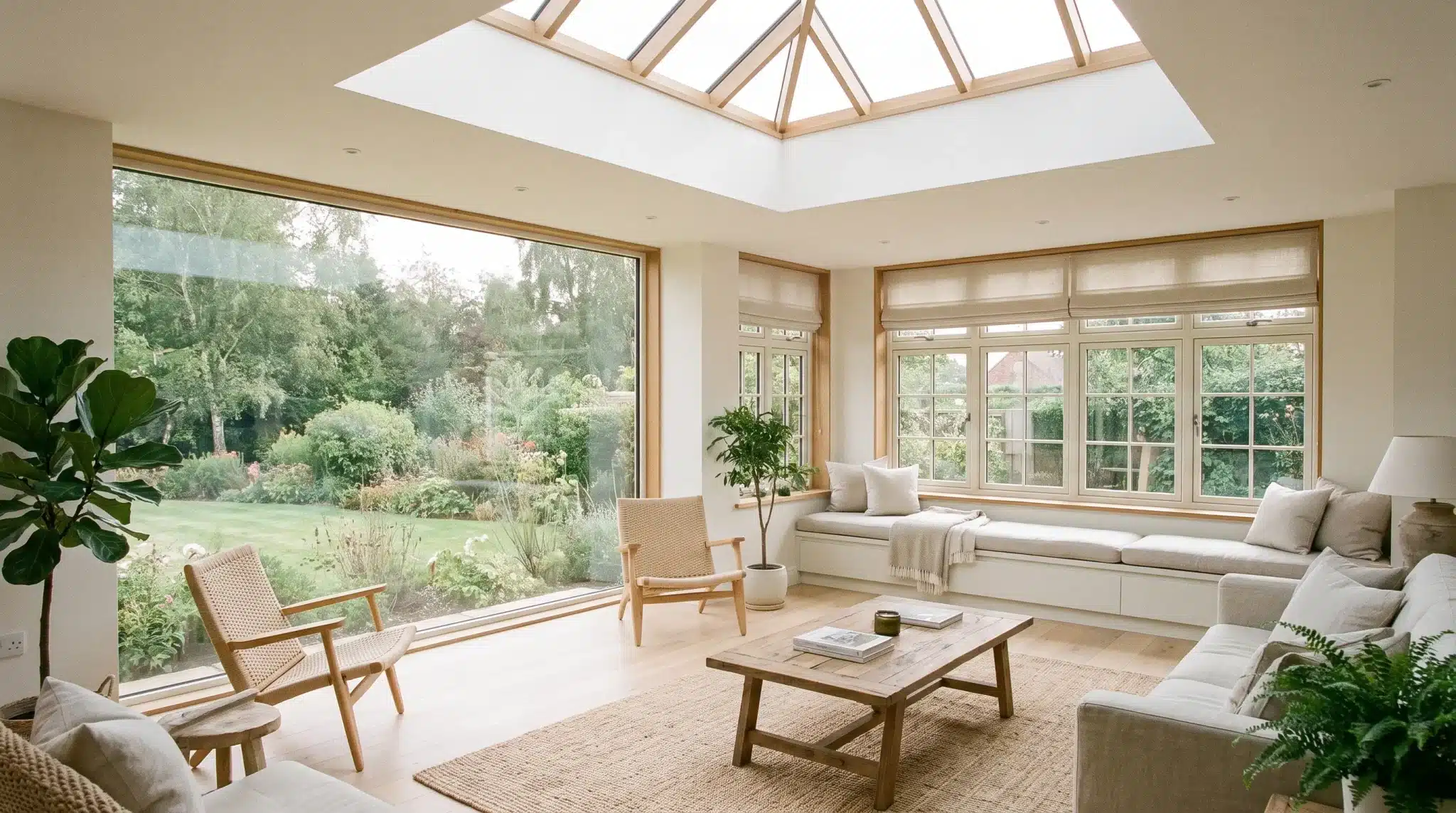
5. Use a Roof Lantern as the Main Feature
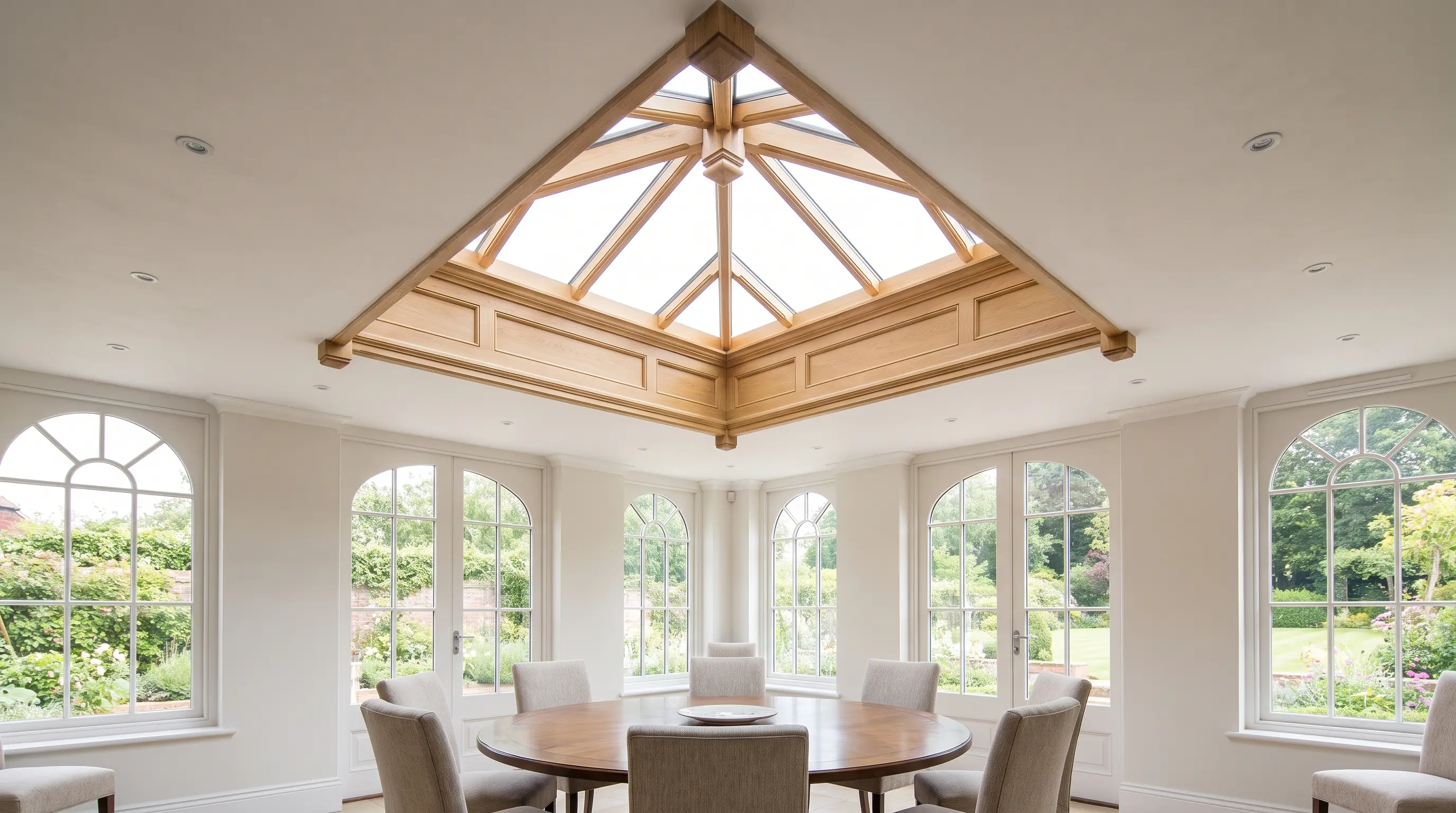
A roof lantern is a raised, glazed structure built above the roofline, giving a taller, more architectural feel than a flat skylight, somewhat like the added height you’d get from an open-feel patio cover design. It suits larger square sunrooms, formal garden rooms, or dining-focused spaces.
Align it with a dining table or central seating so it draws the eye toward the middle of the room. Keep the rest of the ceiling simple.
Tip: plan for shade, drainage, and structural support ahead of time, since summer heat can build up quickly under a lantern.
6. Build a Bay or Bow Window Reading Nook
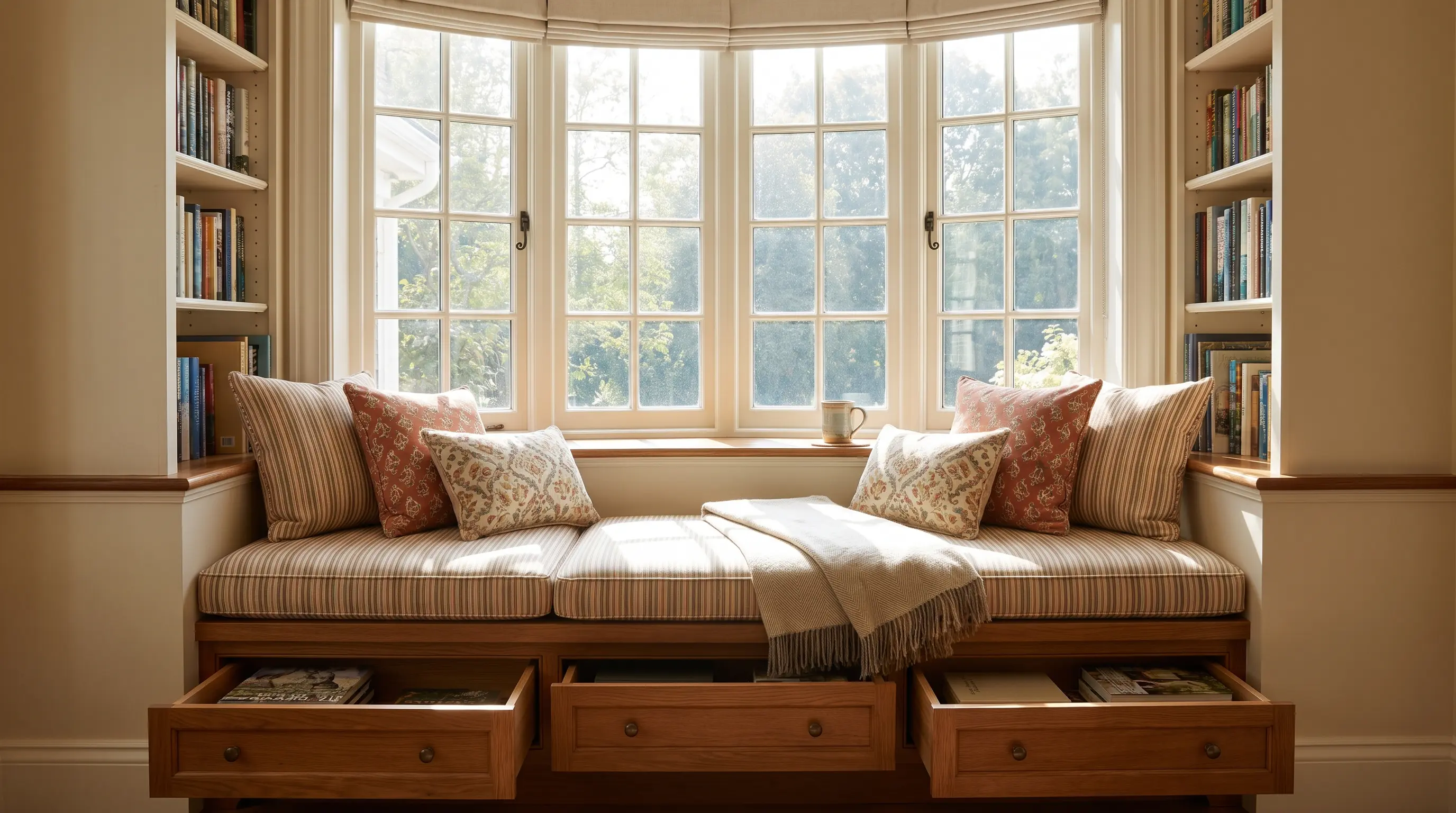
A bay window has more defined angles, while a bow window curves outward more softly, and both create a natural spot to sit. Add a fitted bench, storage drawers, and soft cushions for a small, traditional sunroom.
Side panes bring in light and views from several angles at once. Match the seat height to the windowsill height, and use fabrics that resist fading.
Tip: This nook works just as well for plants or breakfast seating as it does for reading.
7. Add One Arched Feature Window
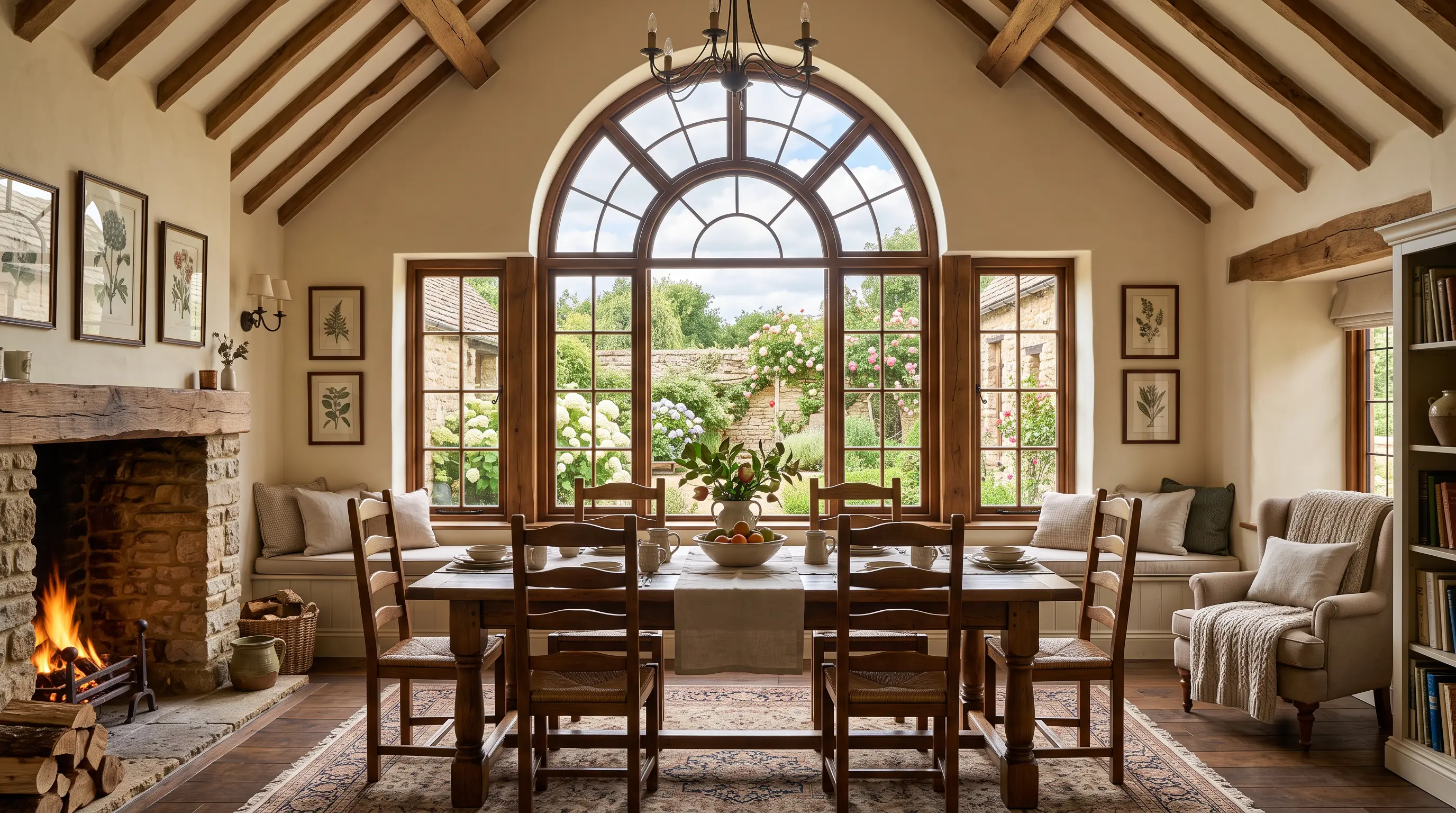
One arched window, used as a focal point rather than repeated across every wall, softens a room full of straight lines and flat roof edges. Place it on the main end wall, above a doorway, or in line with the room’s center.
This suits traditional, Mediterranean, or cottage-style sunrooms. Keep the surrounding windows simple so the arch stands out.
Tip: custom shapes can affect price and treatment options, so plan for that early rather than as an afterthought.
8. Choose Slim White Frames for an Airy Coastal Look
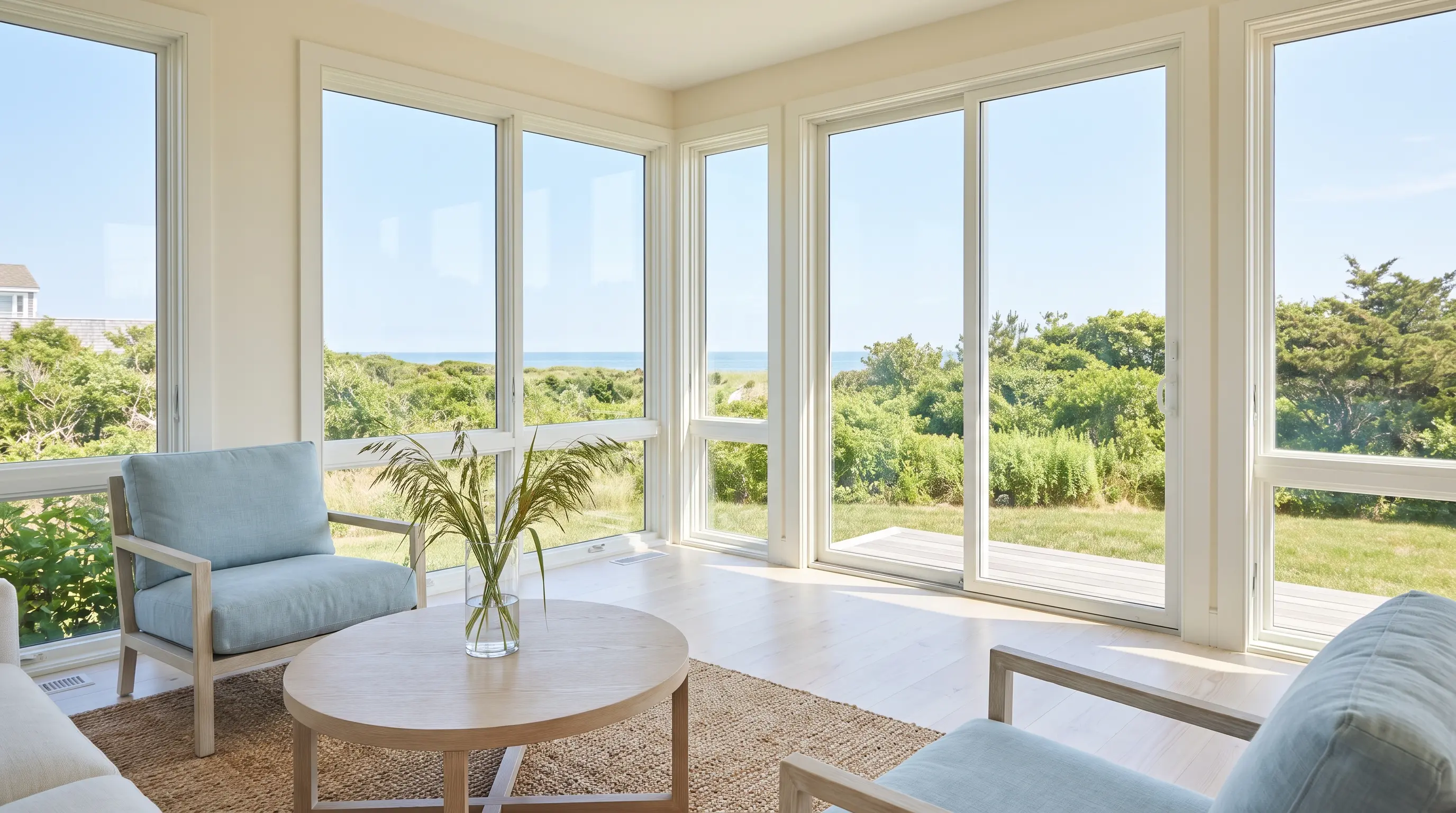
White or warm-white frames blend with pale walls and trim, and slim profiles keep the glass from feeling boxed in. Pair them with linen fabrics, pale wood, and light flooring for a relaxed look that suits more than just beach homes.
Repeat the same white across trim, doors, and ceiling details rather than mixing several shades.
Tip: frame material and performance still matter as much as color, so don’t choose white frames on looks alone.
9. Add Warm Wood-Framed Windows
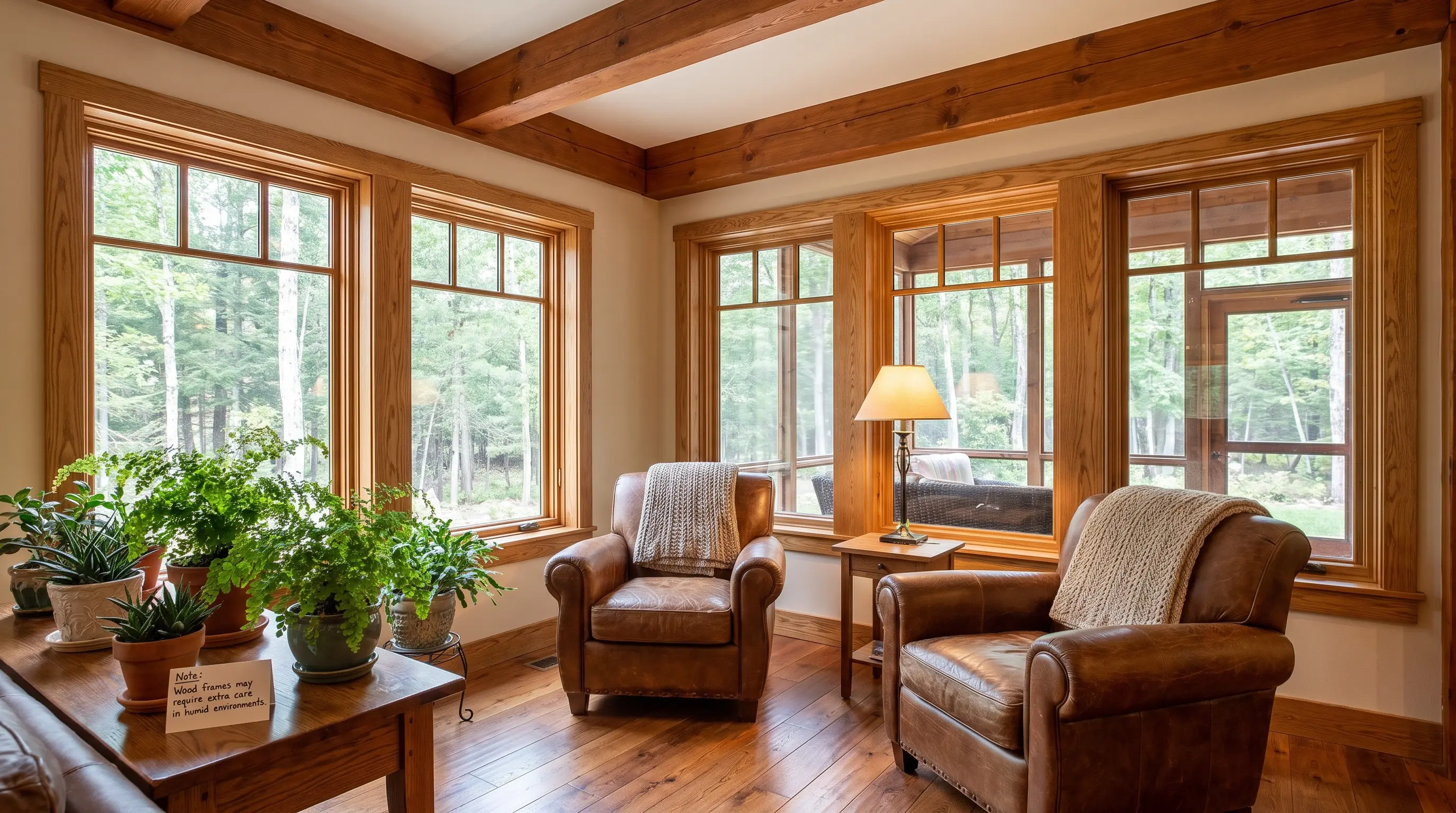
Wood frames bring warmth to a room that’s otherwise mostly glass. Match or coordinate the wood tone with ceiling beams, flooring, or nearby furniture for a connected look.
This suits rustic, craftsman, cabin, or organic modern sunrooms, and helps the space feel closer to the garden outside. Customize further with stain, paint, or a grille pattern.
Tip: wood needs more upkeep in direct sun and moisture, so factor maintenance into your choice, and avoid mixing too many wood tones.
10. Turn a Window Wall Into a Built-In Seat
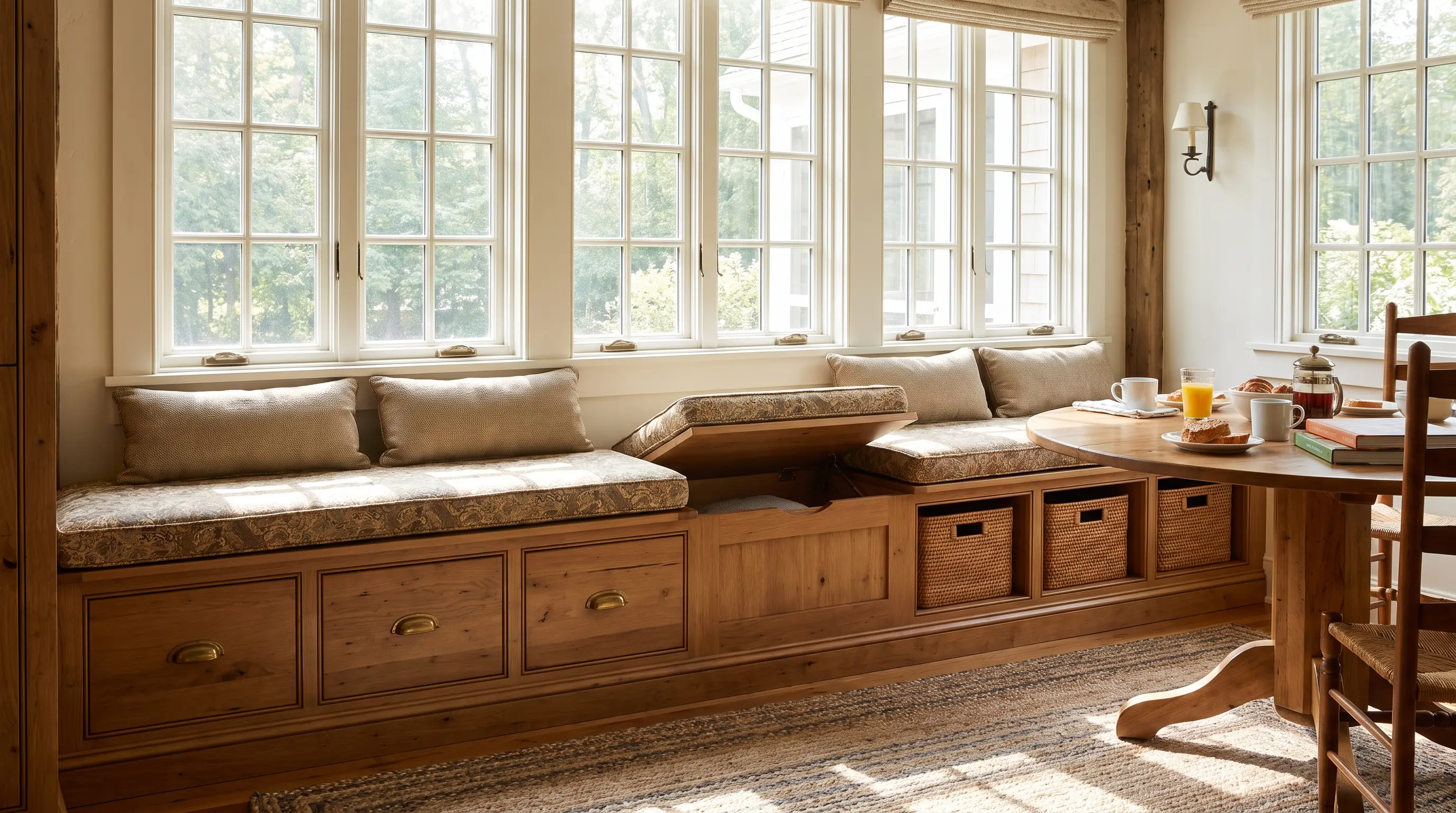
A long bench built beneath a row of windows turns unused space below the sill into real seating. Use it for breakfast, reading, a kids’ play spot, or hidden storage with drawers or lift-up compartments.
Keep the bench low so it doesn’t block the view, and choose fade-resistant cushions. This works especially well in a small sunroom, cutting down on freestanding furniture.
Tip: Make sure the bench doesn’t cover any heating or ventilation equipment below the windows.
Which Sunroom Window Layout Works Best for Your Room Shape?
The best layout highlights the strongest outdoor view while still leaving enough wall and floor space for furniture, movement, ventilation, and privacy. Room shape changes where that view sits and how the windows should be grouped around it.
| Room Shape | Best General Layout | Main Benefit | Main Risk |
|---|---|---|---|
| Narrow | One dominant window wall | Strong view | Dark interior side |
| Square | Balanced windows around one focal point | Even light | Too many competing views |
| Long | Repeated window groups | Clear visual rhythm | Corridor effect |
| Small | Fewer, larger panes | Less visual clutter | Limited furniture walls |
| Converted porch | Repeated units between supports | Works with existing structure | Uneven or patched appearance |
Once the layout fits your room, the next question is how that space interacts with the sun. Even a well-placed window wall can feel too bright, too hot, or oddly dim depending on which way it faces. That’s where direction comes in.
How Does the Sun’s Direction Affect the Window Plan?
Direction is not a minor detail. It decides when sunlight enters the room, how strong the glare feels, how hot the space gets, which views are comfortable at different times of day, and what glass or treatments the room will actually need.
Climate, nearby trees, roof overhangs, and surrounding buildings all shift the exact result, so treat these as general patterns rather than fixed rules.
- North-Facing Sunroom: North-facing rooms generally get softer, more even daylight, with less harsh sun in many Northern Hemisphere homes. This suits reading, art, work, or plants that dislike intense light. A skylight or pale surfaces can help if trees or nearby buildings leave the room feeling dim.
- South-Facing Sunroom: South-facing rooms often get strong daylight and, in colder climates, welcome winter warmth. More glass isn’t always better here. Overhangs, shades, and suitable low-E coatings often matter more, since results vary by climate and season.
- East-Facing Sunroom: East-facing rooms catch morning sunlight, making them a good fit for breakfast, plants, or early risers. Light softens later in the day. Some treatment for morning glare is still worth planning for.
- West-Facing Sunroom: West-facing rooms tend to get the strongest afternoon and evening heat and glare. This calls for exterior shade, solar-control glazing, and treatments more than the other directions need. Avoid placing screens or work areas directly facing this glare.
Once you know your room’s direction, matching the glass, shading, and layout to it becomes far easier. Walk the space at different times of day before finalizing plans, since real light rarely behaves exactly as expected on paper, and small adjustments now save costly fixes later.
Which Glass and Frame Features Matter Most?
The glass and frame do more work than most people expect, quietly shaping comfort, energy bills, and noise levels. A window that looks right but performs poorly can leave a sunroom too hot in summer, too cold in winter, or noisy every time it rains.
Double-pane and triple-pane glass traps insulating air to manage heat and cold, though more panes aren’t automatically best for every climate or budget.
Low-E coatings manage how heat moves through the glass, with different products letting in different amounts of solar heat and daylight.
Three numbers explain real performance: U-factor for overall heat flow, SHGC for solar heat gain, and visible transmittance for daylight, all found on the NFRC label. The National Fenestration Rating Council is the official certifying body behind that label, and its site explains exactly how each rating is tested and what the numbers mean for your climate.
Safety glass is often required near doors, low panes, and walking surfaces, based on local codes. The federal baseline for this comes from the Safety Standard for Architectural Glazing Materials, which sets the impact-resistance requirements that tempered and laminated glass must meet in these locations.
Frame material, whether vinyl, wood, fiberglass, aluminum, or composite, shapes both looks and long-term upkeep, so weigh climate, budget, and style together before deciding.
What Window Treatments Work Best in a Sunroom?
A sunroom’s treatments need to control light without closing off the open feeling that makes the room worth having.
The right choice depends on how the room gets used, how much glare or heat builds up, how much privacy you need, whether plants are involved, and how easily the treatment operates day to day.
- Solar Roller Shades: Cut glare and UV while keeping the view. Fabric density controls how open or protected it feels. Exterior shades add stronger heat control.
- Cellular or Honeycomb Shades: Trap air for year-round insulation. Available in light-filtering or room-darkening. Top-down, bottom-up gives privacy without blocking upper light.
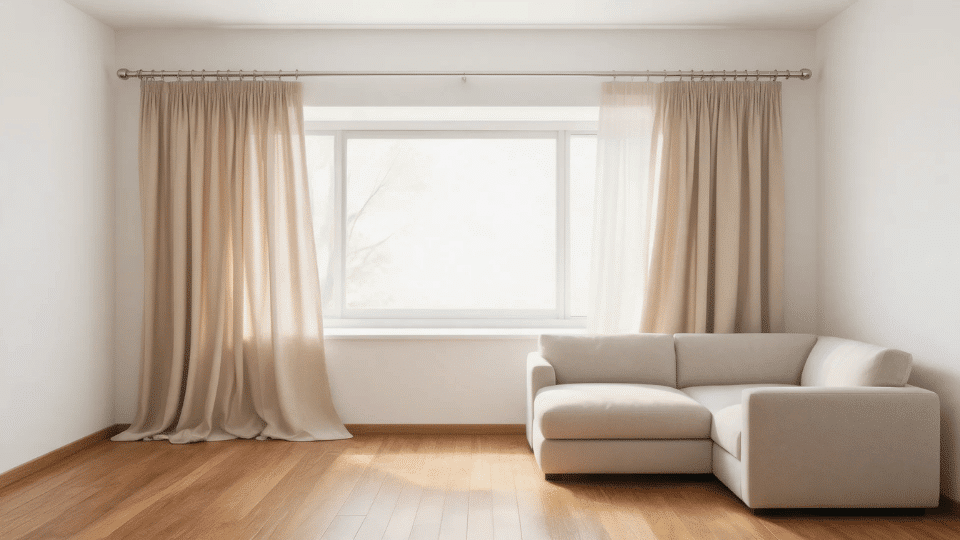
- Sheer Shades or Light Curtains: Soften sun for a relaxed, coastal feel while keeping the room bright. Layer with another treatment for stronger privacy or heat control. Choose fade-resistant fabric.
- Woven Wood Shades: Add texture, suited to garden-facing, coastal, or traditional rooms. Liners help with privacy and light. Pick materials that hold up to humidity and direct sun.
- Motorized Treatments: Best for skylights, roof lanterns, tall windows, or matched units needing grouped control. Easier access for hard-to-reach spots. Plan wiring before installation.
- Blinds Between Glass: Stay protected from dust and damage, with no cords to worry about around kids or pets. Adds privacy without an extra layer. Availability depends on the window product.
The right treatment often ends up being a mix rather than one single choice, layered to match how light shifts through the day. Test samples in the actual room first, since glare, heat, and privacy needs rarely look the same on paper as they feel in person.
Common Sunroom Window Mistakes to Avoid
Even great planning can fall apart in small ways once the windows go in. Here are six mistakes worth catching before they become part of the finished room.
| Mistake | Why It Creates a Problem | What to Recommend Instead |
|---|---|---|
| Making every wall the focal point | Too many competing views can make the room feel busy and leave little space for furniture | Choose one main view and keep the other window walls simpler |
| Planning windows before furniture | The finished room may have nowhere for a sofa, storage, outlets, lighting, or heating equipment. | Sketch the furniture layout and walking paths before finalizing the windows. |
| Ignoring the architecture of the home | The sunroom may look like a separate addition instead of a natural part of the house. | Repeat suitable frame colors, trim details, grille patterns, roof lines, or materials from the main home. |
| Forgetting privacy outside the room | A beautiful window wall may feel exposed when it faces neighbors, roads, or shared outdoor areas. | Check sightlines early and use higher windows, landscaping, partial frosting, or carefully placed furniture where needed |
| Overlooking cleaning and maintenance access | Tall panes, roof lanterns, and overhead glass can become difficult to clean or inspect | Plan safe access and choose finishes, hardware, and glass locations that are practical to maintain |
The strongest designs aren’t always the ones with the most glass. They’re the ones that balance views, room use, appearance, privacy, and long-term care.
Frequently Asked Questions
Should every sunroom window open?
No, not every window needs to open. A smaller number of well-placed opening windows can bring in enough airflow without adding too many frames. Screens help where insects or outdoor debris are a concern.
Are floor-to-ceiling windows a good choice for a sunroom?
They work well when the room has a strong outdoor view. Furniture placement, privacy, safety, glare, and heat control all need planning alongside them. They’re one option worth considering, not a requirement for every sunroom.
How can I keep a sunroom comfortable in strong sunlight?
Suitable glazing, exterior shade, operable windows, roof shades, interior treatments, and fans all help. The right combination depends on which direction the room faces and the local climate, so plan around your specific setup.
Final Thoughts
The best sunroom window design starts with the view you want to keep and how the room will actually be used day to day.
Once those two things are clear, the rest comes down to balance: large glass areas for light, operable sections for airflow, suitable glazing and treatments for comfort, and a layout that still leaves enough room for furniture and movement.
You don’t need to combine every idea from this post into one room. Pick two or three that work well together, fit your climate, and match how you live, then build the rest around them.
Drop a comment below and let me know which is your favorite pick.