Palm trees have a way of making a space feel relaxed, welcoming, and full of life. But choosing one is not as simple as picking the prettiest plant at a garden center. Some palms stay compact and thrive in living rooms for years. Others grow into towering landscape trees that need sun, heat, and plenty of room.
I often see people buy a palm based on appearance alone, only to realize later that it needs completely different growing conditions. That is why understanding the different types of palm trees matters before you plant one.
This guide groups palm trees into the environments where they perform best. Whether you want a low-maintenance indoor plant or a striking focal point in a tropical garden, you’ll find options that match your space and climate.
Should You Plant a Palm Tree?
Palm trees are worth planting because they add a warm, relaxed look to almost any space. Their tall trunks and leafy fronds can make a garden, patio, or indoor corner feel more complete.
Some palms stay small enough for pots, balconies, and rooms, while others grow tall and work well in tropical gardens or large yards. Many types are also low maintenance once settled.
Some handle heat, drought, salt, wind, or poor soil better than many plants. Taller palms can give light shade, while clumping types can add privacy and improve curb appeal.
How to Choose the Right Palm Tree for You
With hundreds of palm species available, choosing the right one depends on your climate, available space, and maintenance preferences. Considering a few key factors before planting can help you select a palm that will thrive for years.
- Indoor or outdoor use: Some palms, such as parlor and Kentia palms, adapt well indoors, while others require outdoor conditions to reach their full potential.
- Available space: Compact palms suit patios and small yards, while larger species need ample space to grow.
- Light requirements: Match the palm to the amount of sunlight your location receives, whether full sun, partial shade, or filtered light.
- Cold tolerance: Check the palm’s hardiness range to ensure it can survive winter temperatures in your area.
- Water needs: Some palms prefer consistently moist soil, while others become drought-tolerant once established.
- Container suitability: Not all palms grow well in pots, so choose container-friendly varieties if space is limited.
- Safety considerations: If you have pets or children, avoid species with sharp spines, heavy falling fronds, or toxic fruits and seeds.
Taking these factors into account will make it easier to find a palm tree that matches both your landscape and lifestyle. The best types of palm trees are the ones that match your real growing conditions, not just your preferred look.
Best Indoor Palm Trees
Indoor palm trees are a smart choice when you want greenery that feels calm, fresh, and easy to style. Some are great for beginners, while others need brighter rooms, steady moisture, or higher humidity.
The best options for homes usually remain manageable in size, adapt to containers, and handle indoor light better than large outdoor palms do.
1. Parlor Palm
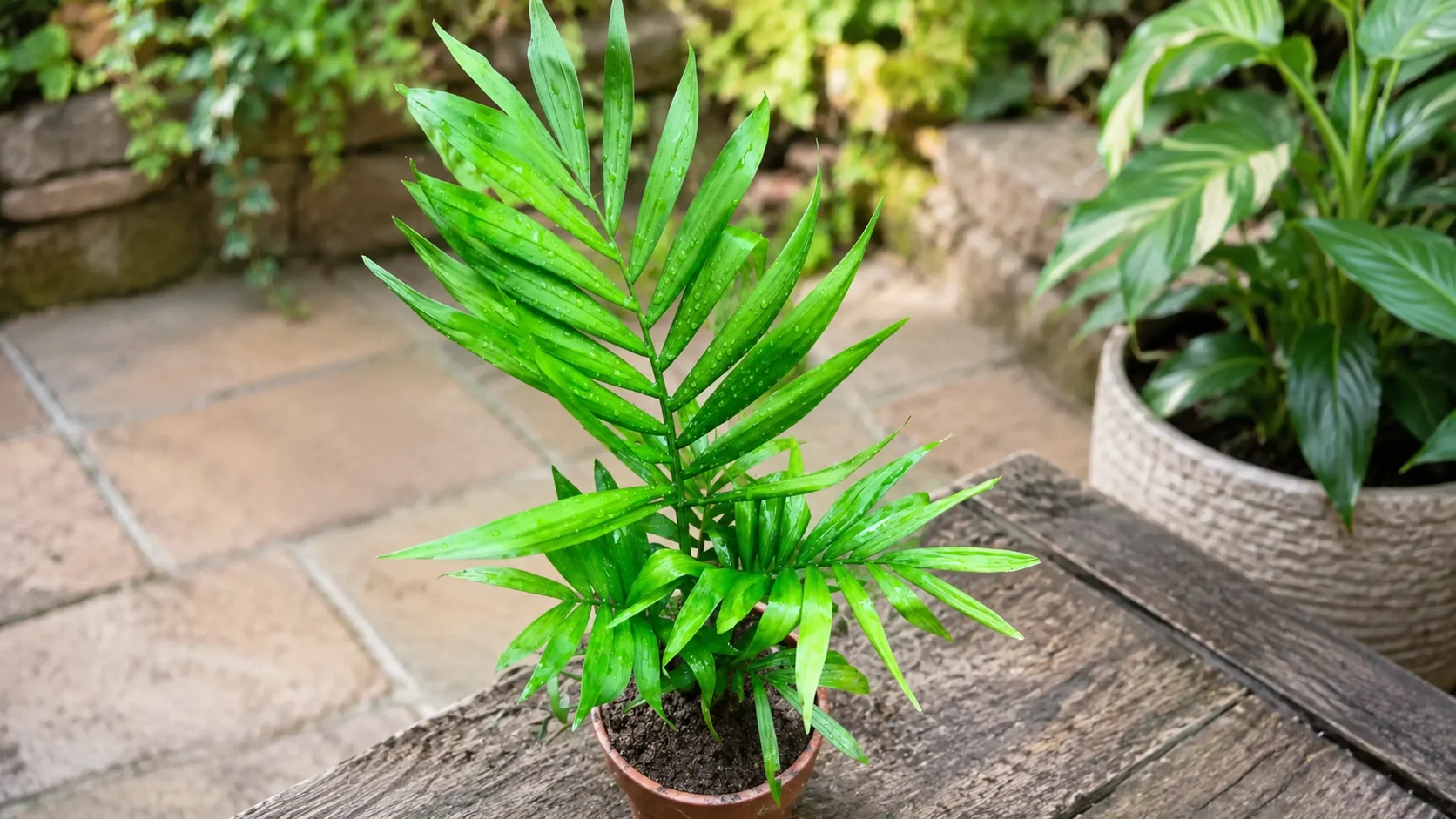
Parlor palm is one of the easiest indoor palms for beginners because it handles lower-light rooms better than many other types. It has soft, arching fronds that bring a gentle green look without taking over the space.
This palm works well on plant stands, side tables, or quiet corners. Keep the soil lightly moist, but avoid letting it sit in water. It is a good pick for apartments and offices.
| Botanical Name | Plant Type | Sun Requirements | Height and Spread | USDA Zone |
|---|---|---|---|---|
| Chamaedorea elegans | Perennial palm | Partial shade to full shade | 2-6 ft. tall, 2-3 ft. wide indoors | 10-12 |
2. Areca Palm
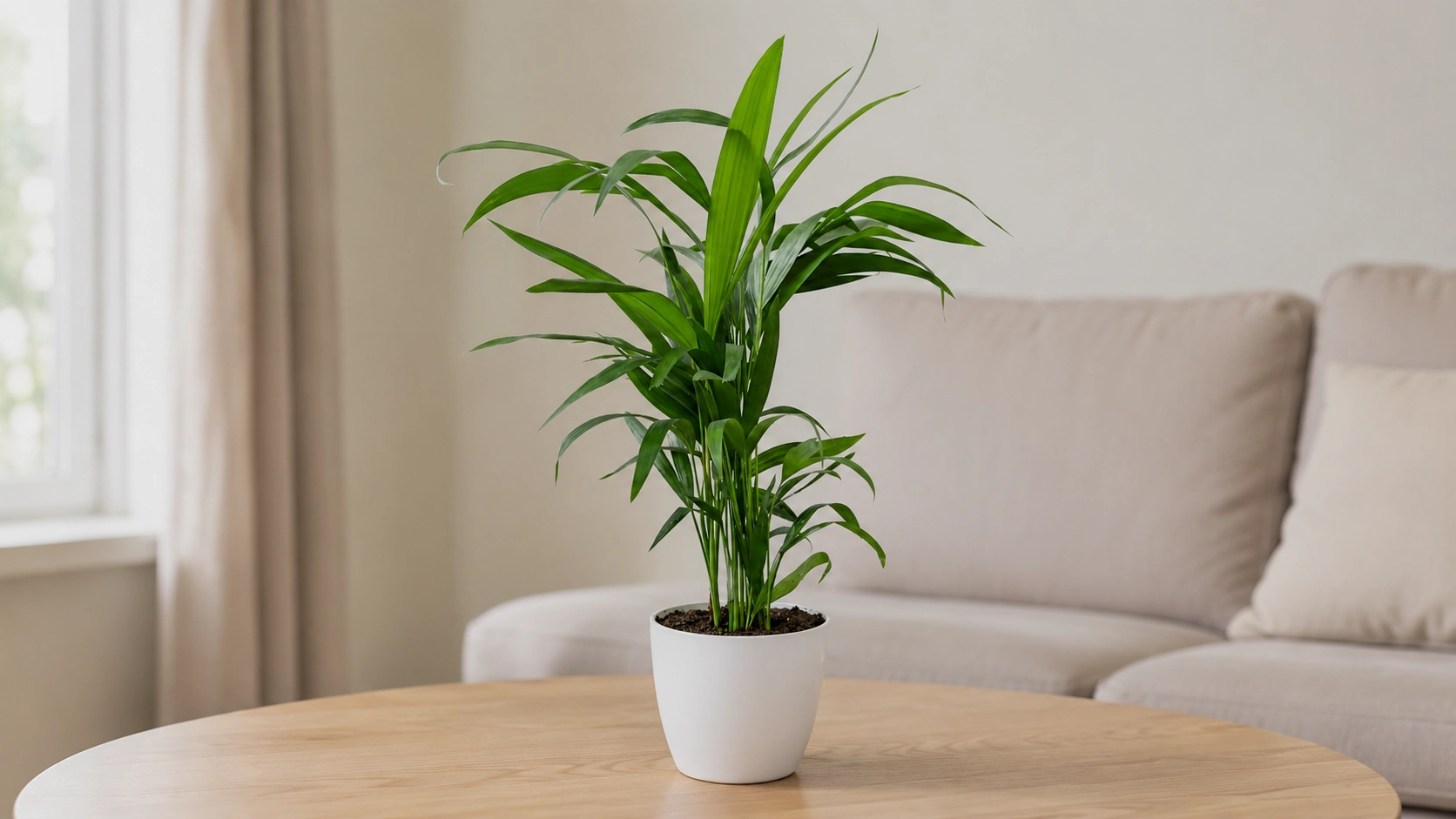
Areca palm is a popular indoor choice for bright corners because its feathery fronds create a soft, full look. Its bamboo-like clumping growth makes it useful for creating a natural screen or a fuller plant near a window.
It is commonly grown indoors in the U.S. and Europe, but it does best with steady light and regular care. Let the top layer of soil dry slightly before watering again.
| Botanical Name | Plant Type | Sun Requirements | Height and Spread | USDA Zone |
|---|---|---|---|---|
| Dypsis lutescens | Perennial palm | Bright, indirect light | 6-8 ft. tall, 3-5 ft. wide indoors | 10-11 |
3. Kentia Palm
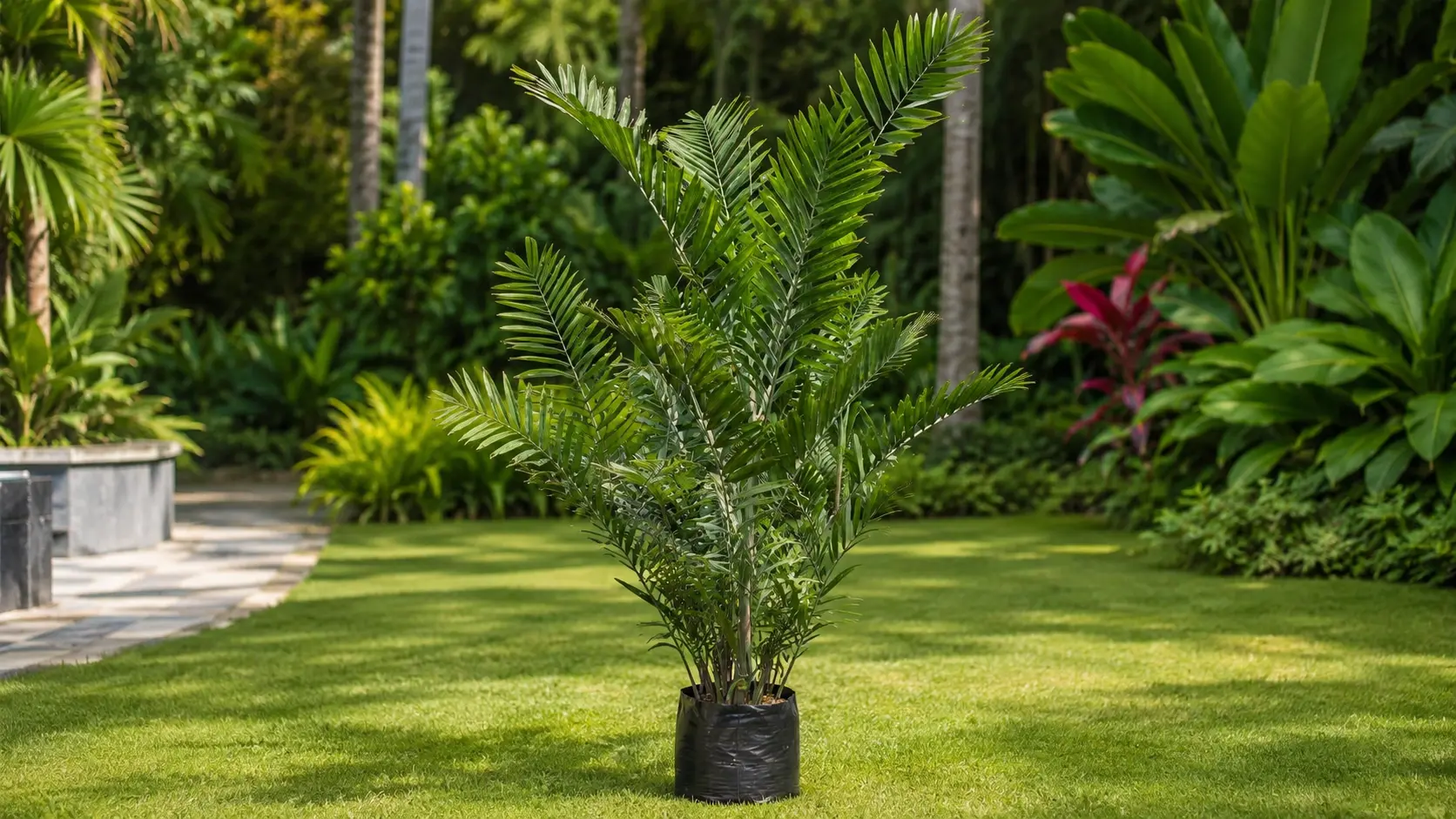
Kentia palm has a graceful, upright shape that suits living rooms, offices, and formal indoor spaces. It grows slowly, which makes it easier to manage inside the home.
This palm is valued because it can handle lower light better than many indoor palms, though it still looks best with filtered brightness. Its long fronds add height without looking messy.
| Botanical Name | Plant Type | Sun Requirements | Height and Spread | USDA Zone |
|---|---|---|---|---|
| Howea forsteriana | Perennial palm | Partial shade to bright indirect light | 5-10 ft. tall, 3-6 ft. wide indoors | 9-11 |
Watering Tip: Water when the upper soil feels dry, and avoid overwatering.
4. Lady Palm
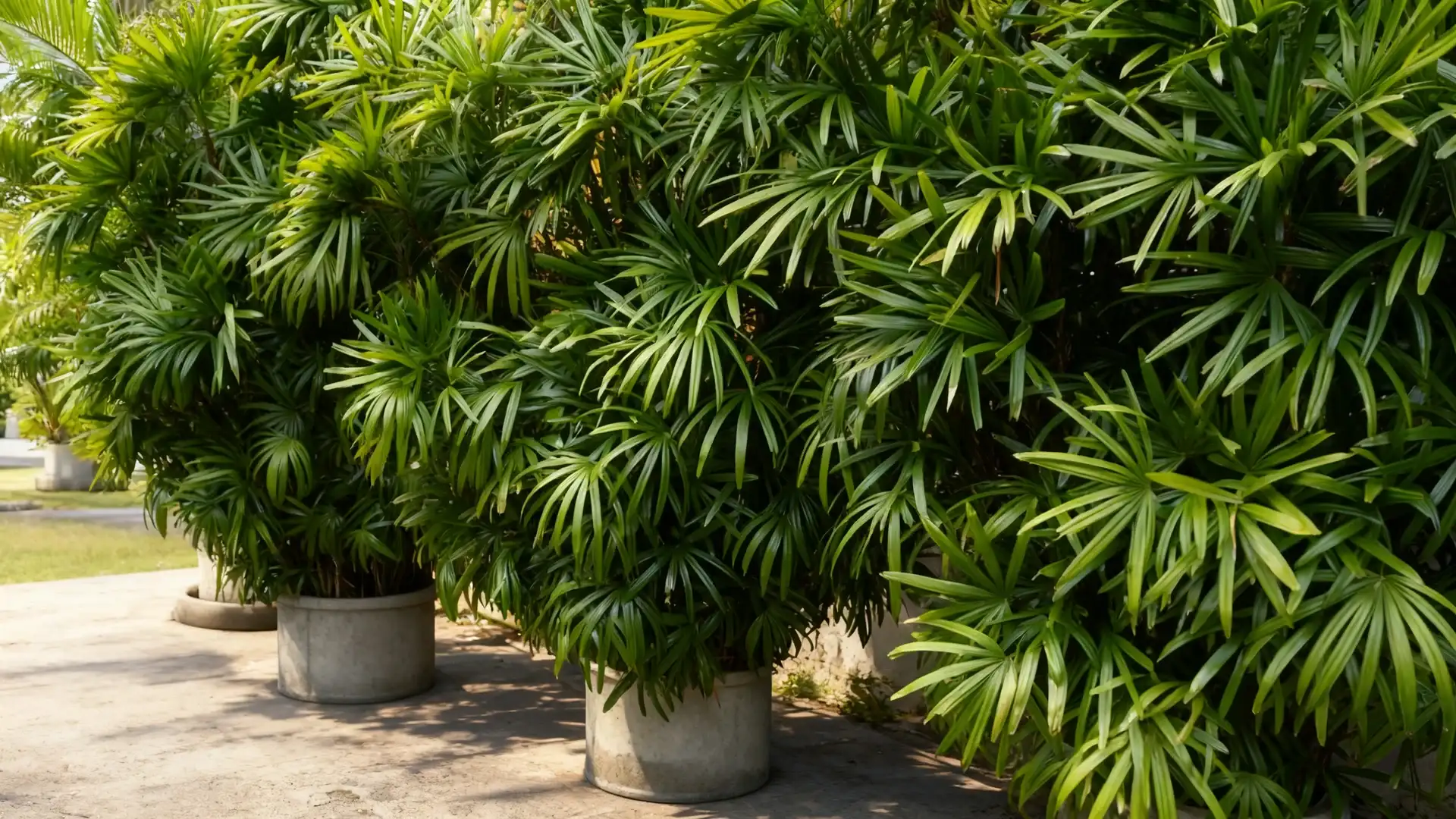
Lady palm is a strong choice for low-light homes because it grows in dense clumps and keeps a neat, structured shape. Its fan-like leaves give it a different look from feather-frond palms.
You can use it to fill an empty corner or create a soft indoor screen. It is also fairly forgiving when indoor humidity is not perfect. Keep the soil evenly moist, but let extra water drain fully after each watering.
| Botanical Name | Plant Type | Sun Requirements | Height and Spread | USDA Zone |
|---|---|---|---|---|
| Rhapis excelsa | Perennial palm | Partial shade | 4-8 ft. tall, 3-6 ft. wide indoors | 9-11 |
5. Cat Palm
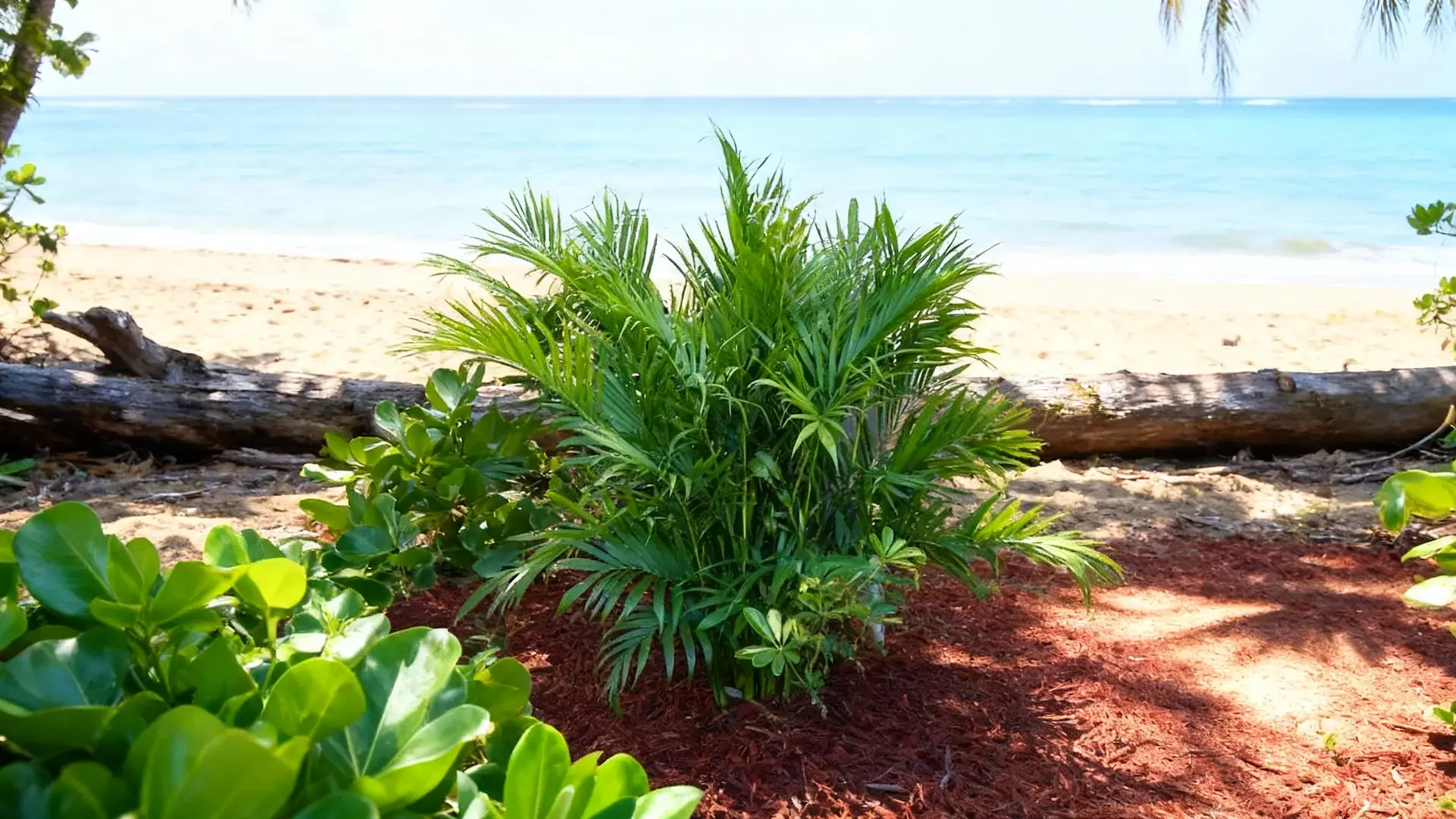
Cat palm is a good fit for small indoor spaces because it has a full, leafy shape without becoming too tall. Its glossy green fronds can brighten corners, bedrooms, and living areas.
This palm does not like harsh, direct sun, which can burn the leaves. It prefers steady moisture, so it may need more attention than tougher indoor palms.
| Botanical Name | Plant Type | Sun Requirements | Height and Spread | USDA Zone |
|---|---|---|---|---|
| Chamaedorea cataractarum | Perennial palm | Partial shade to bright indirect light | 3-6 ft. tall, 3-5 ft. wide indoors | 10-11 |
Growing tip: Good drainage is important because soggy soil can quickly lead to root trouble.
6. Majesty Palm
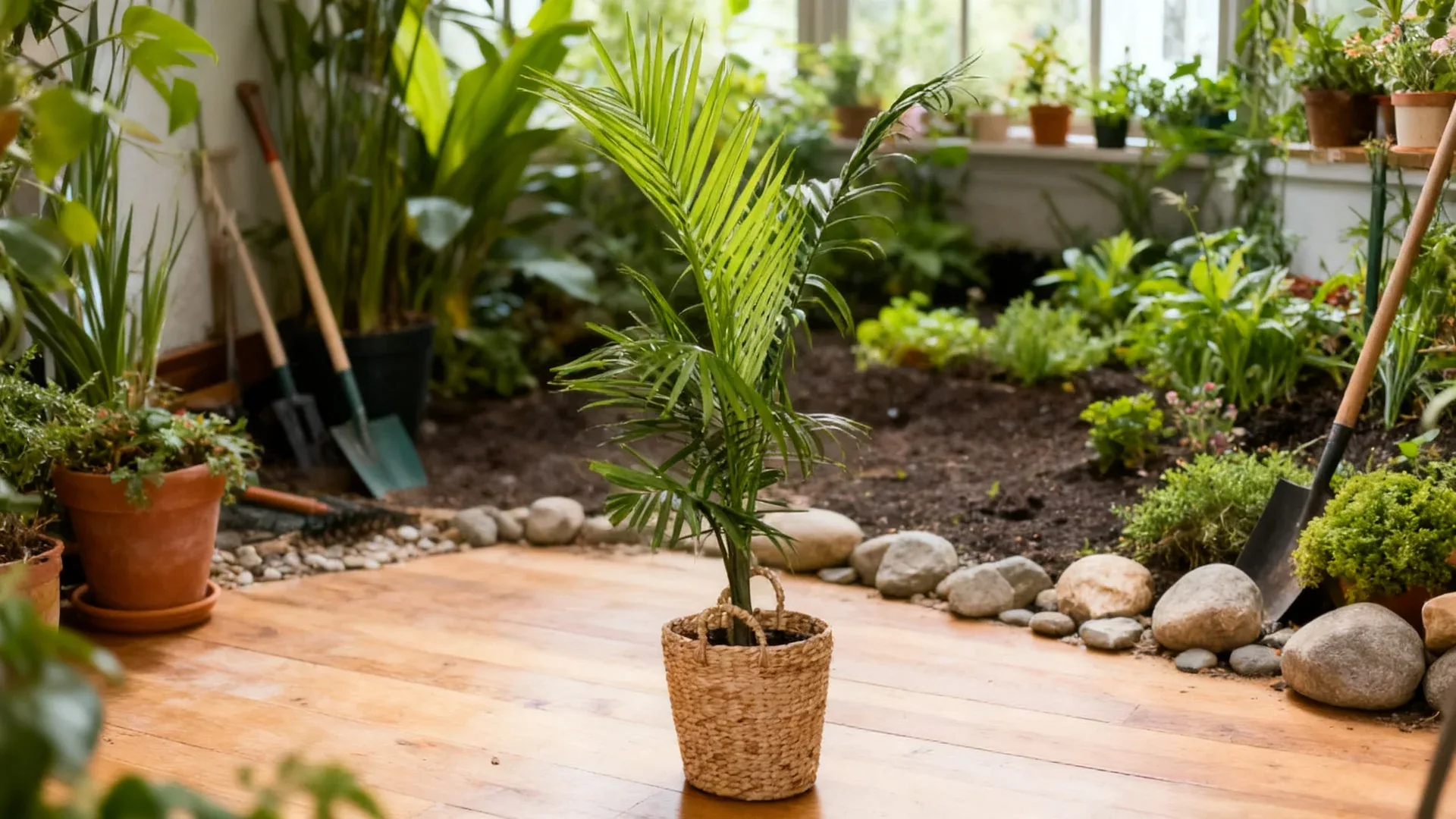
Majesty palm is best for bright rooms where humidity is easier to maintain. It has long, arching fronds that give a bold indoor look, but it is not the easiest palm for beginners.
This plant can struggle in dry air, low light, or irregular watering. It needs steady moisture without becoming waterlogged. Place it near a bright window with filtered light, and use a pot with drainage to help keep roots healthy.
| Botanical Name | Plant Type | Sun Requirements | Height and Spread | USDA Zone |
|---|---|---|---|---|
| Ravenea rivularis | Perennial palm | Bright, indirect light | 5-10 ft. tall, 3-5 ft. wide indoors | 10-11 |
7. Pygmy Date Palm
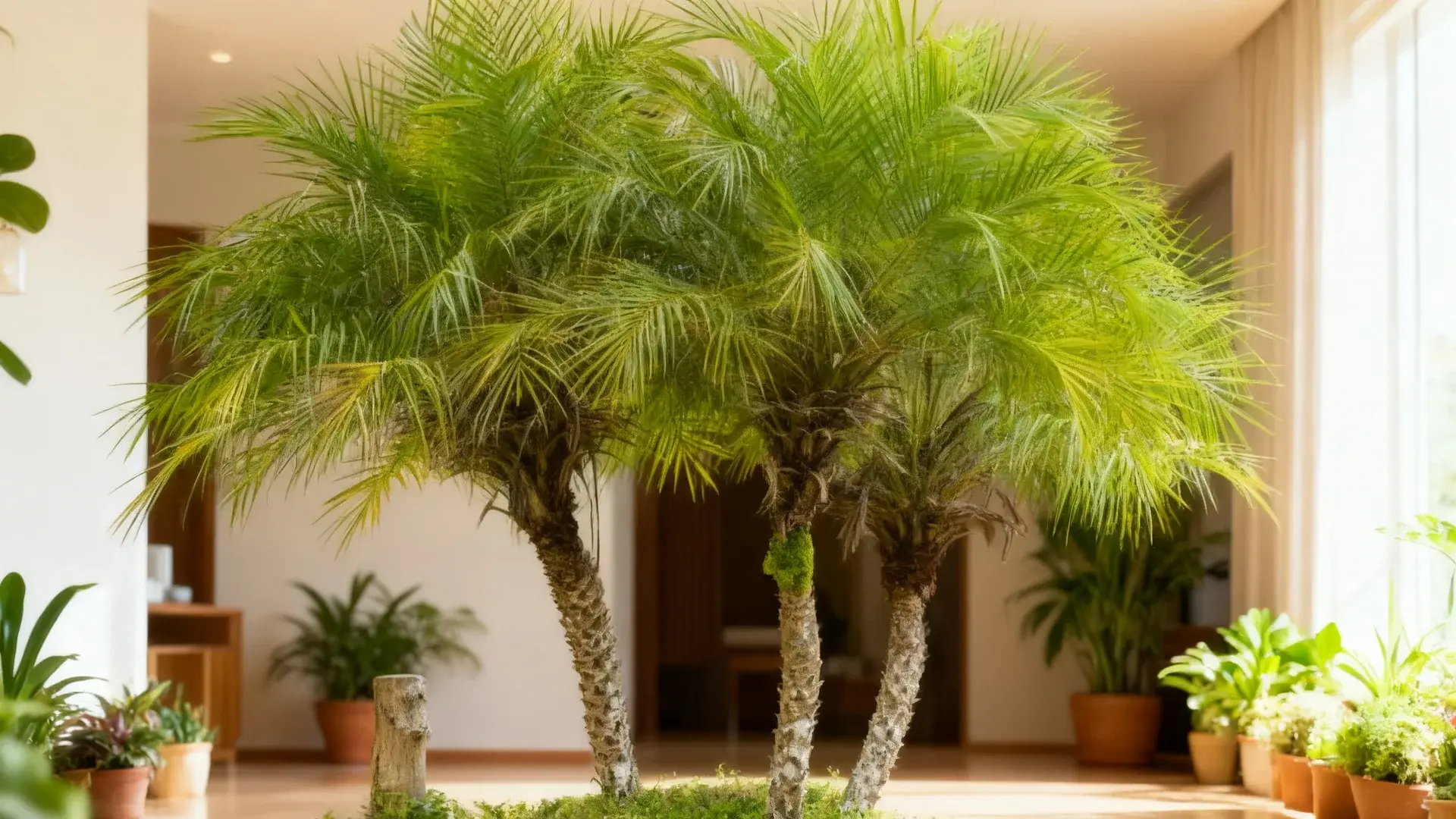
Pygmy date palm, also called Robellini palm, works well in containers, patios, and warm indoor spaces with enough light. It has a refined shape with narrow fronds that give it a clean, tropical look.
Since it stays smaller than many date palms, it is easier to manage near entryways, decks, or sunny rooms. It does best when watered deeply, then allowed to dry slightly before the next watering.
| Botanical Name | Plant Type | Sun Requirements | Height and Spread | USDA Zone |
|---|---|---|---|---|
| Phoenix roebelenii | Perennial palm | Bright light to partial sun | 4-8 ft. tall, 3-5 ft. wide indoors | 9-11 |
8. Bamboo Palm
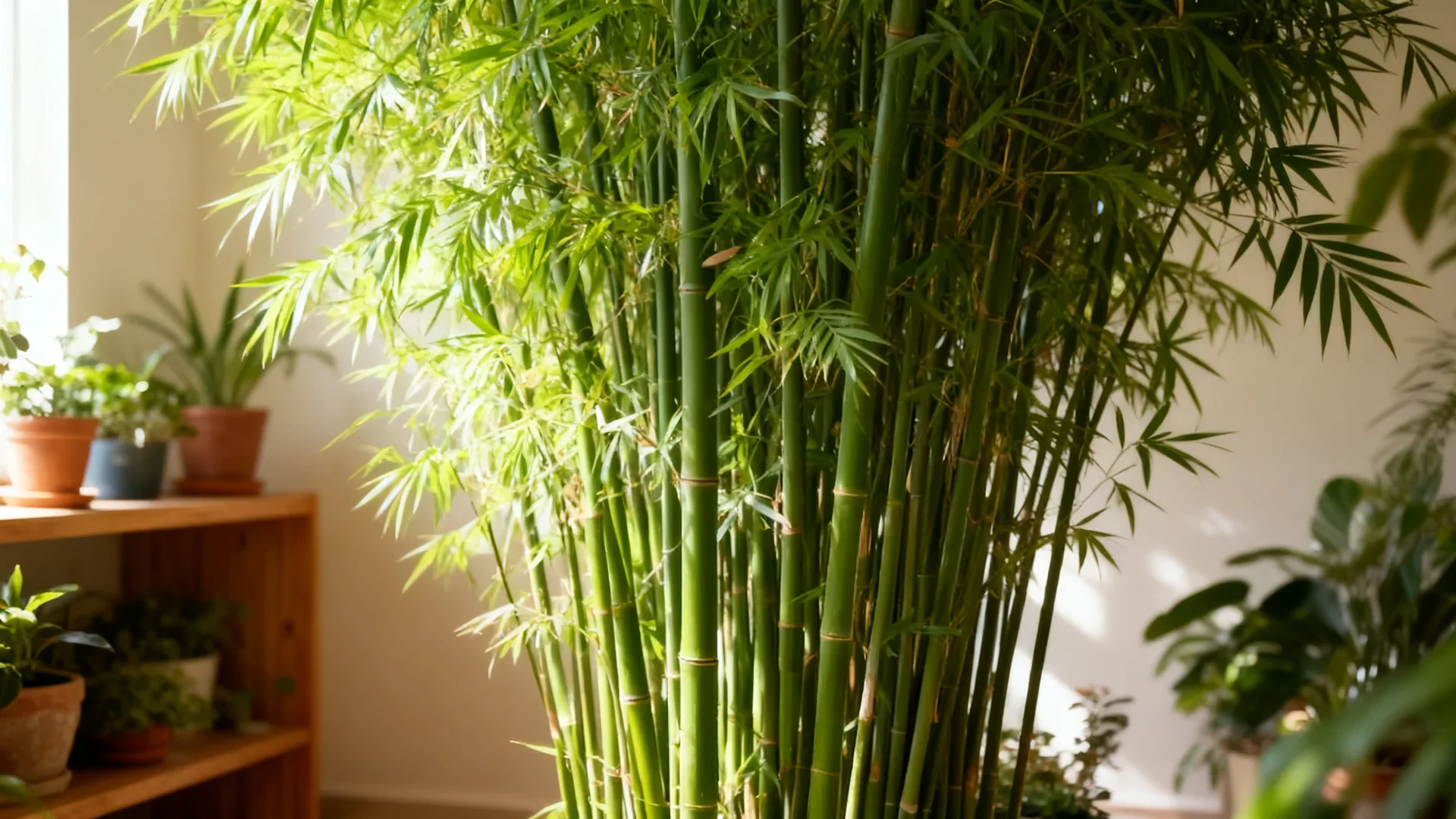
Bamboo palm is a good indoor choice when you want height without a heavy, crowded look. Its cane-like stems and soft green fronds work well near windows, room dividers, and larger corners.
This palm prefers bright, indirect light but can handle some lower-light indoor conditions. Keep the soil lightly moist, and avoid letting the pot sit in standing water.
| Botanical Name | Plant Type | Sun Requirements | Height and Spread | USDA Zone |
|---|---|---|---|---|
| Chamaedorea seifrizii | Perennial palm | Partial shade to bright indirect light | 4-10 ft. tall, 3-5 ft. wide indoors | 10-12 |
9. Ivory Cane Palm
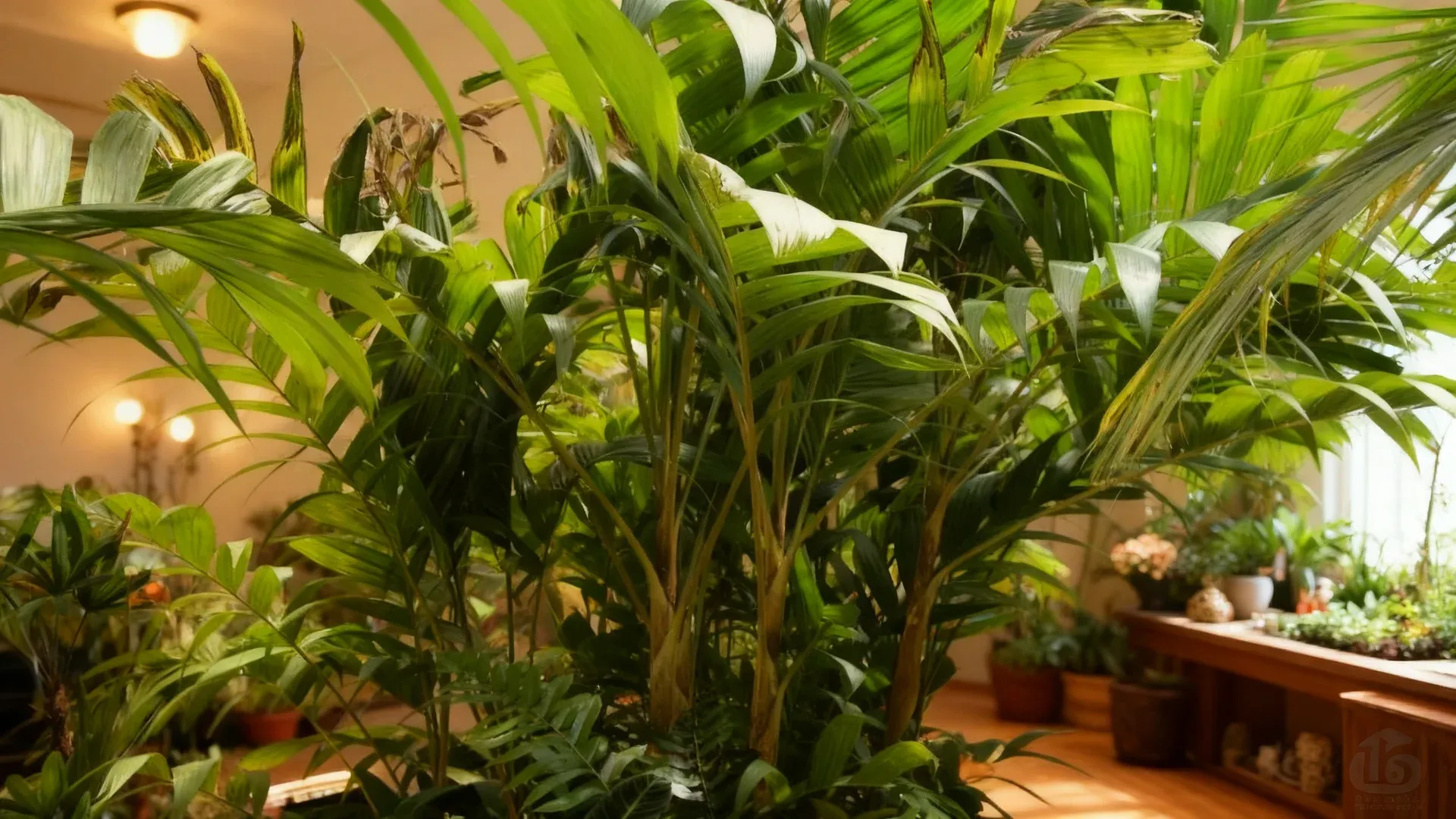
Ivory cane palm is a graceful indoor palm with slim, pale stems and soft green fronds that give rooms a light, fresh look. It works well in bright indoor spaces where you want height without a heavy shape.
This palm prefers filtered light, warm temperatures, and steady moisture. Use it in a roomy corner or near a bright window, but avoid harsh direct sun and soggy soil.
| Botanical Name | Plant Type | Sun Requirements | Height and Spread | USDA Zone |
|---|---|---|---|---|
| Pinanga coronata | Perennial palm | Bright indirect light to partial shade | 4-8 ft. tall, 3-5 ft. wide indoors | 10-11 |
10. Fishtail Palm
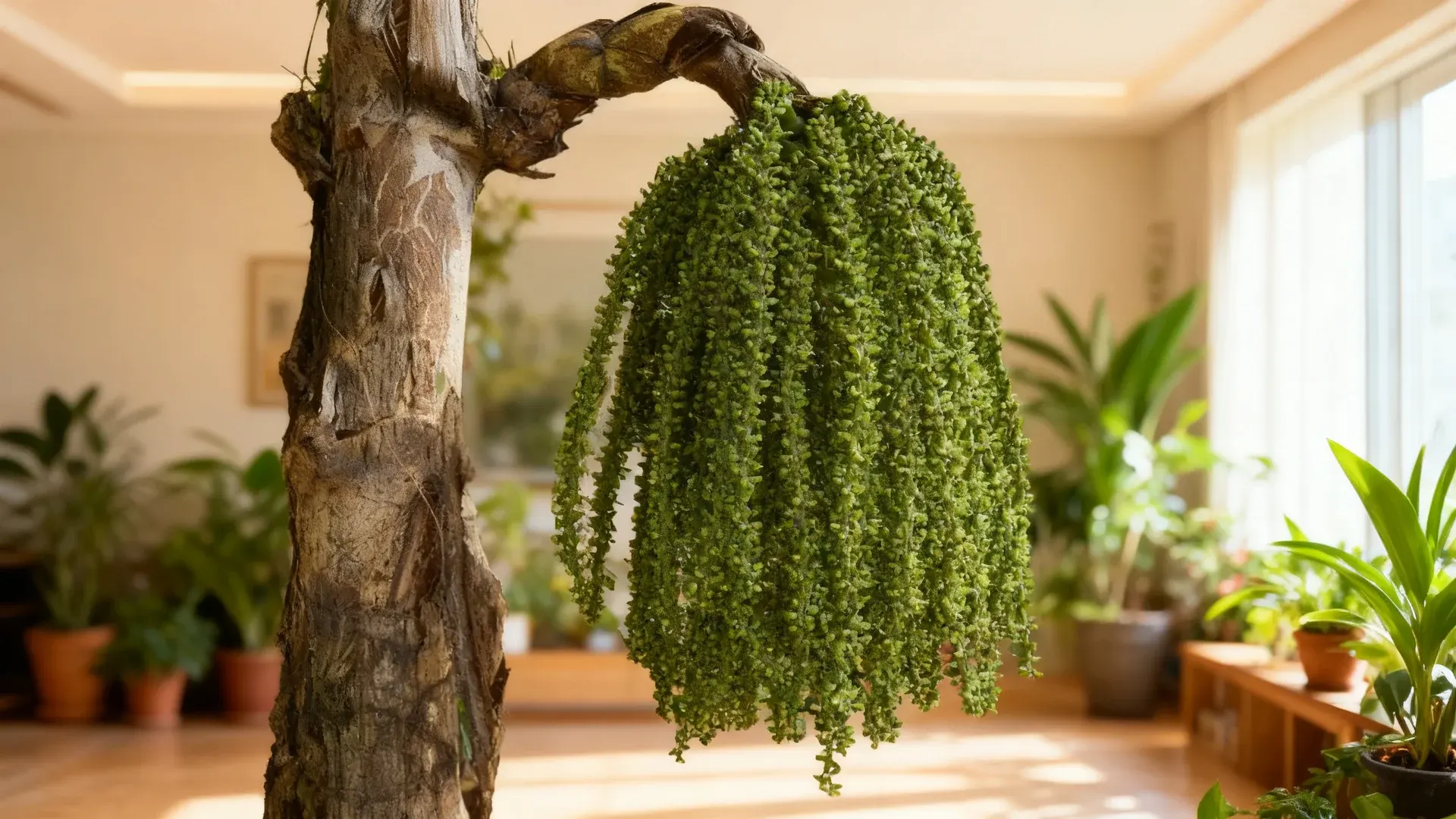
Fishtail palm stands out because its leaflets have jagged edges that look like fish tails. It works best in large rooms, sunrooms, or indoor spaces where the plant has enough width to spread.
This palm needs bright, filtered light and steady moisture. It can grow large indoors over time, so it is better for open spaces than narrow corners.
| Botanical Name | Plant Type | Sun Requirements | Height and Spread | USDA Zone |
|---|---|---|---|---|
| Caryota mitis | Perennial palm | Bright indirect light to partial shade | 6-10 ft. tall, 4-8 ft. wide indoors | 10-11 |
11. Dwarf Sugar Palm
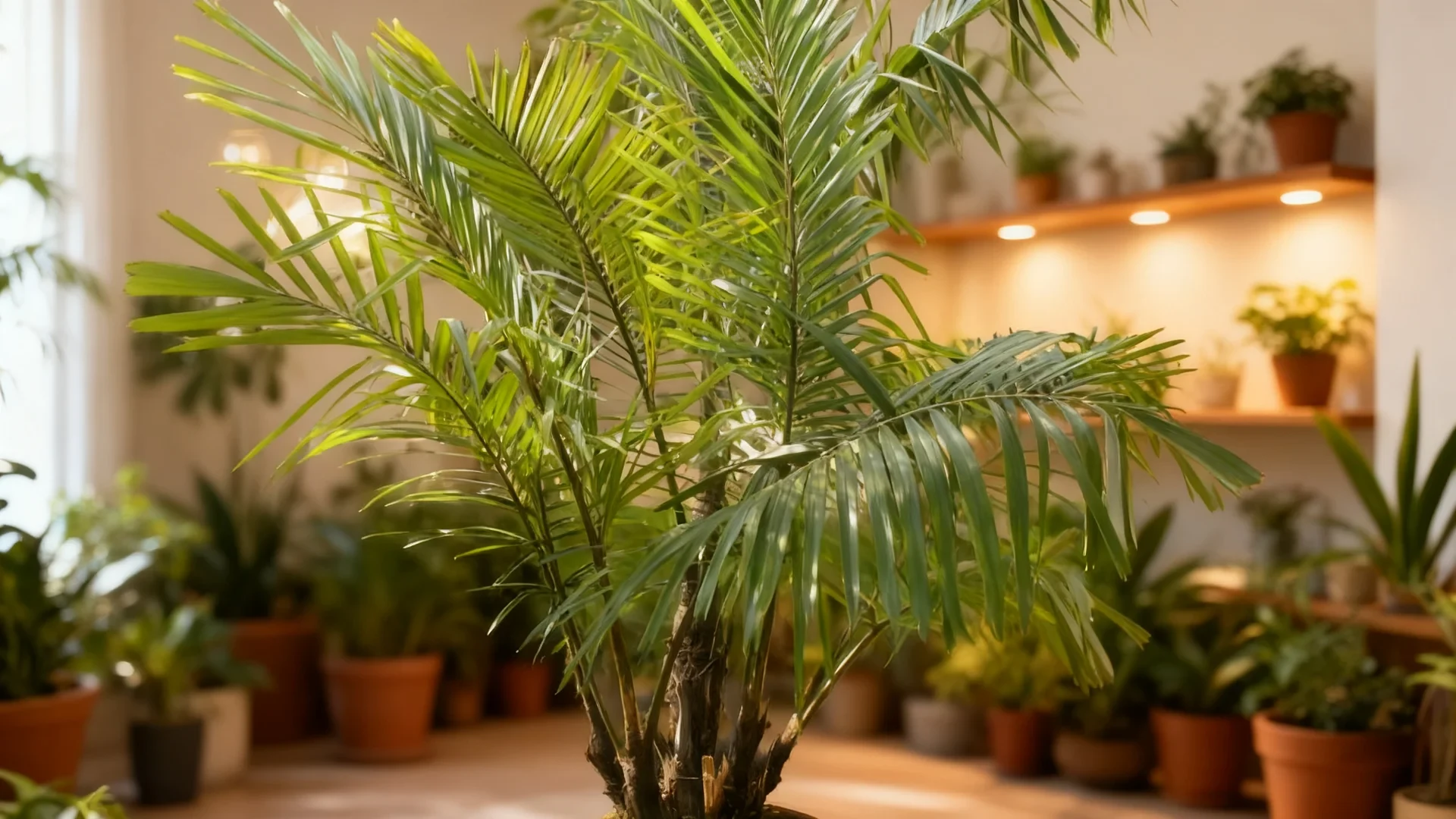
Dwarf sugar palm is a good choice for plant collectors who want something less common than standard indoor palms. It has a compact form, deep green fronds, and a slow-growing habit that can work well in containers.
It prefers warmth, filtered light, and well-drained soil. Since it is not as widely grown indoors, consistent care matters more than neglect tolerance.
| Botanical Name | Plant Type | Sun Requirements | Height and Spread | USDA Zone |
|---|---|---|---|---|
| Arenga engleri | Perennial palm | Partial shade to filtered light | 6-10 ft. tall, 6-10 ft. wide | 9-11 |
12. Reed Palm
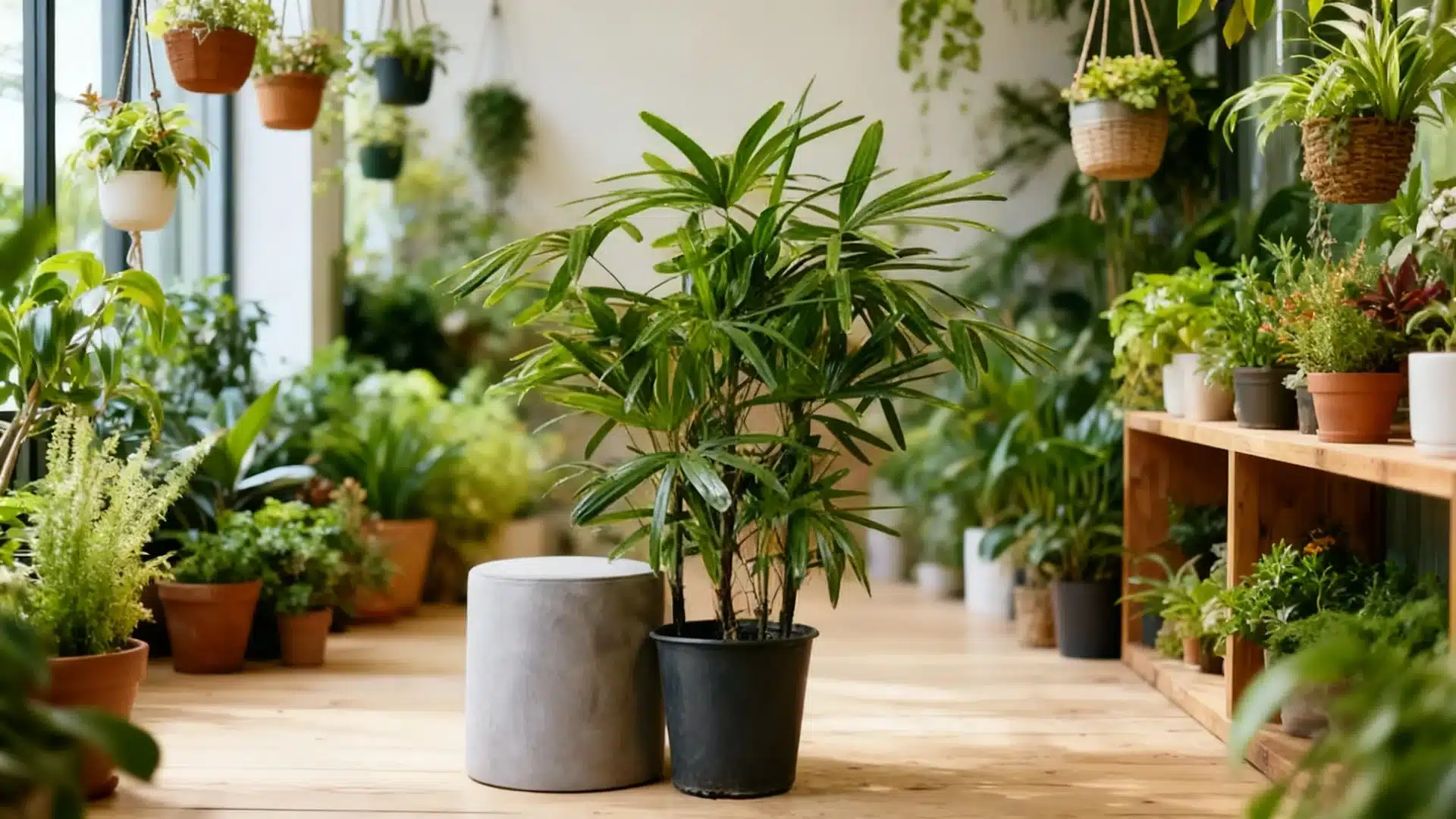
Reed palm is helpful for narrow indoor areas because it grows upright with slim, cane-like stems. It can soften empty corners without spreading too widely, making it useful for apartments, offices, and hallway spaces.
This palm prefers filtered light, regular moisture, and good drainage. It gives a calm indoor look without needing the heavy space required by larger palms.
| Botanical Name | Plant Type | Sun Requirements | Height and Spread | USDA Zone |
|---|---|---|---|---|
| Chamaedorea radicalis | Perennial palm | Partial shade to filtered light | 3-8 ft. tall, 2-4 ft. wide indoors | 8-11 |
13. Metallica Palm
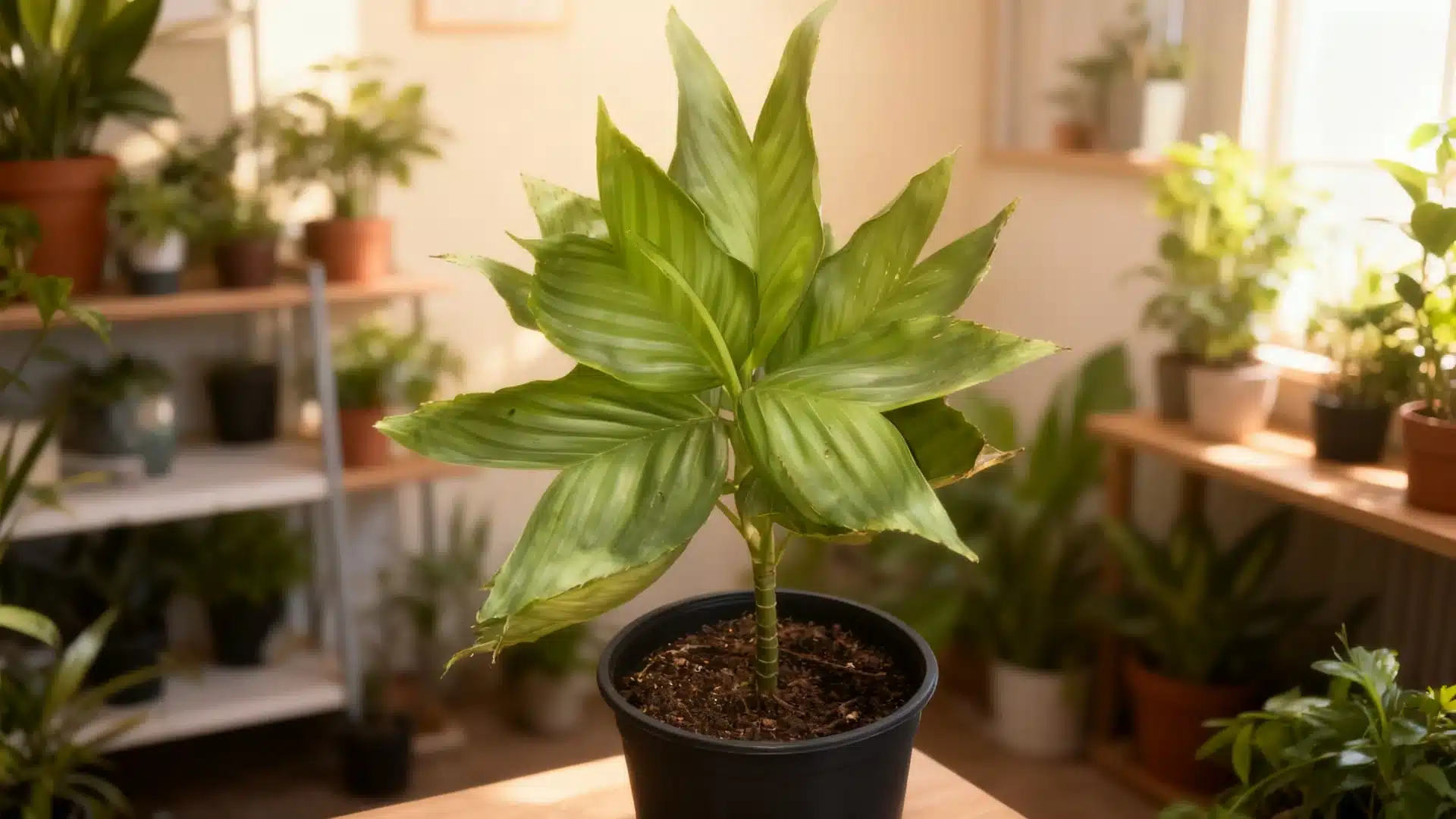
Metallica palm is a compact indoor palm with dark blue-green leaves that can look almost metallic in soft light. It is a good option for collectors or readers who want something different from feathery palms.
It handles lower light better than many palms and stays fairly small. Keep it in a warm room with gentle moisture and avoid harsh direct sunlight.
| Botanical Name | Plant Type | Sun Requirements | Height and Spread | USDA Zone |
|---|---|---|---|---|
| Chamaedorea metallica | Perennial palm | Partial shade to full shade | 3-5 ft. tall, 2-3 ft. wide indoors | 10-12 |
Best Palm Trees for Tropical Gardens
Tropical gardens need palm trees that can withstand heat, full sun, and open outdoor space. These palms bring bold leaves, tall forms, colorful fruit, or sculptural trunks to the landscape.
Some are better for small tropical yards, while others need wide lawns or large garden beds where their full shape can stand out.
14. Foxtail Palm
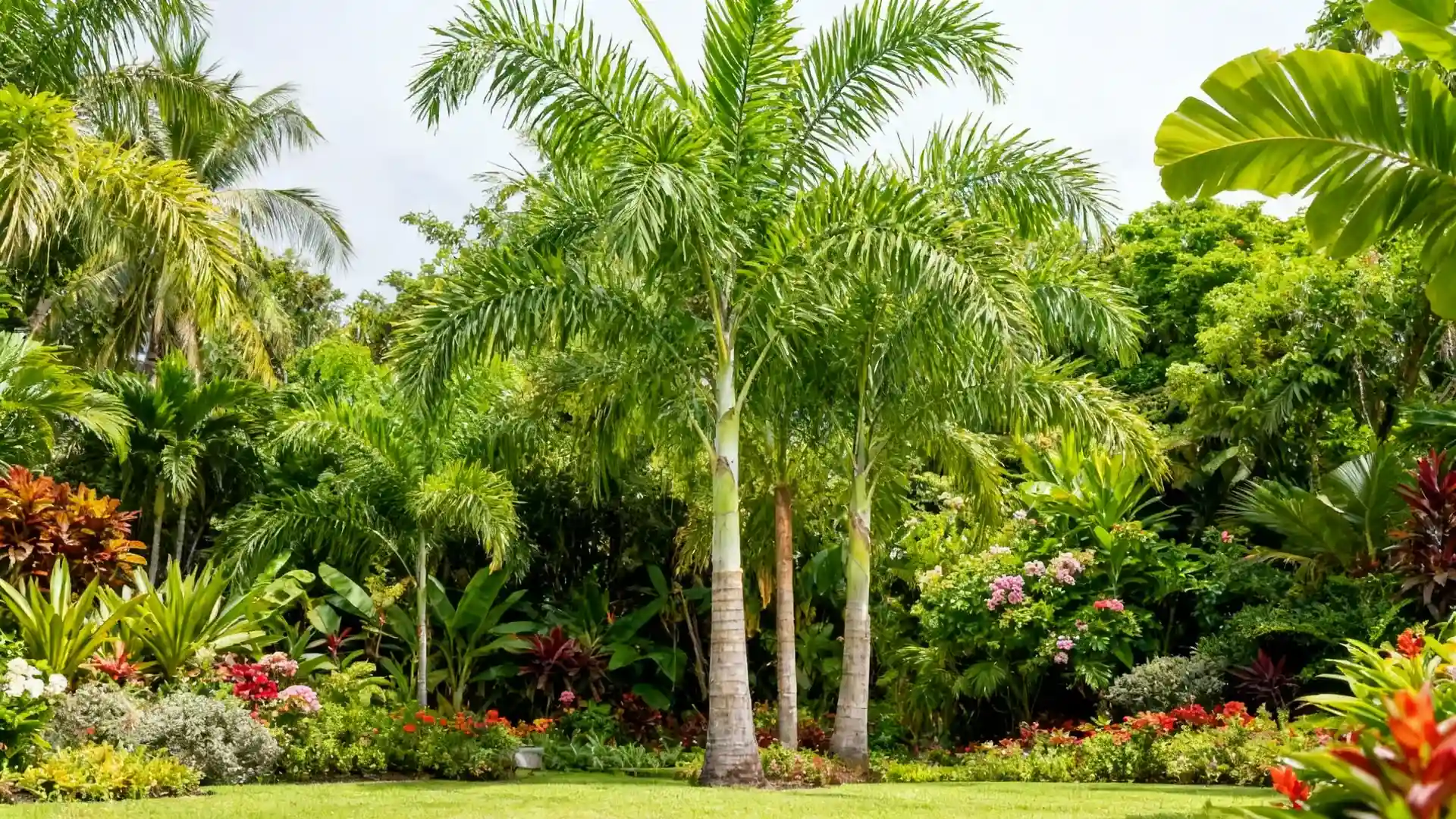
Foxtail palm is a strong choice for tropical-style landscapes because its full, bushy fronds create a soft but bold garden look. It grows quickly in warm climates and becomes drought-tolerant once established.
This palm works well near pools, driveways, and sunny garden beds. Give it enough room around the crown so the fronds can spread naturally without crowding nearby plants.
| Botanical Name | Plant Type | Sun Requirements | Height and Spread | USDA Zone |
|---|---|---|---|---|
| Wodyetia bifurcata | Perennial palm | Full sun to partial shade | 8-30 ft. tall, 10-15 ft. wide | 9-11 |
15. Queen Palm
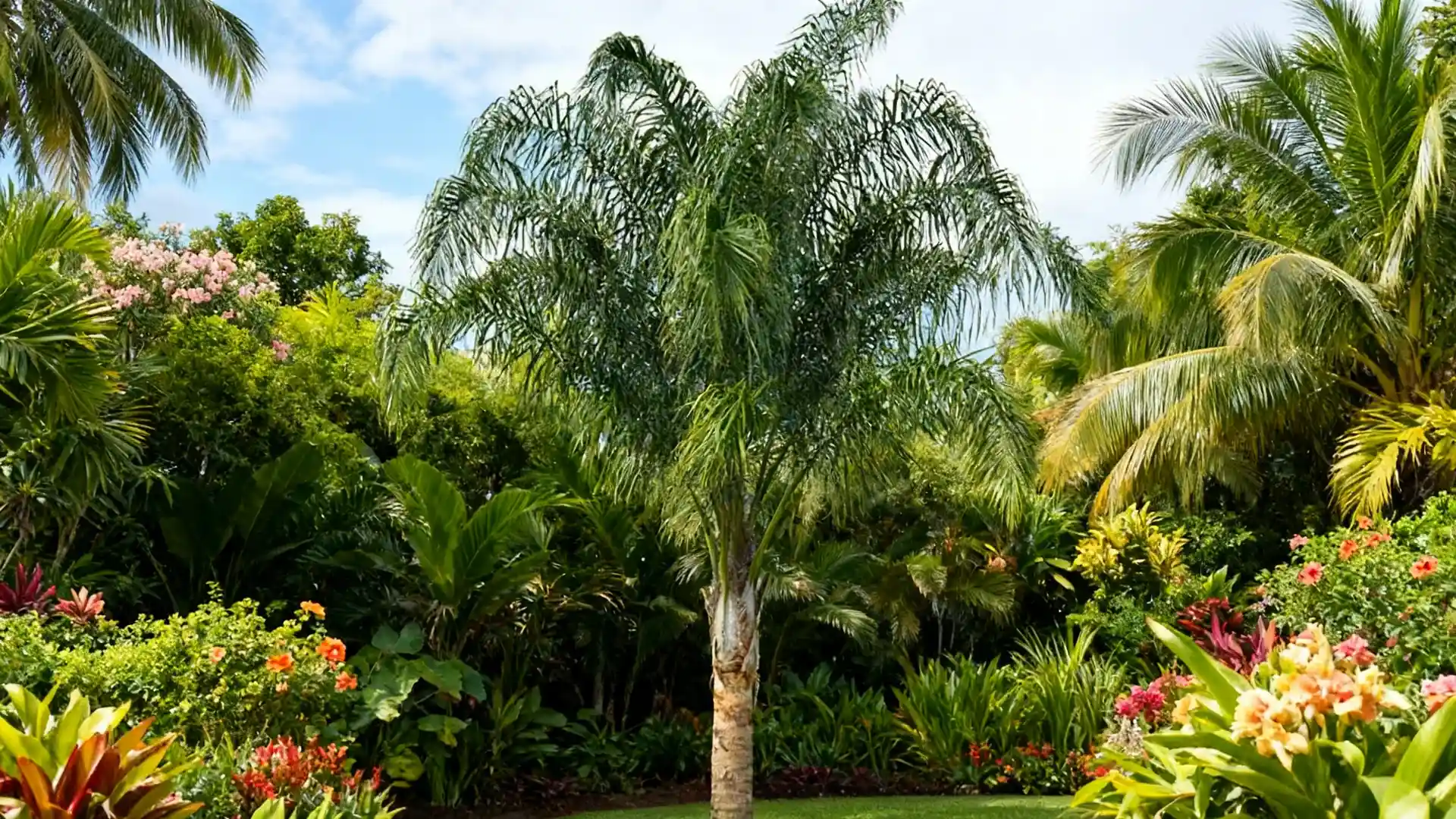
Queen palm works best in large sunny yards where its soft, feather-like fronds have space to arch and move. It gives a classic tropical look without feeling too heavy in the landscape.
Once settled, it can handle short dry periods, but it looks better with steady care and proper feeding. This palm is often used along streets, lawns, and wide garden borders.
| Botanical Name | Plant Type | Sun Requirements | Height and Spread | USDA Zone |
| Syagrus romanzoffiana | Perennial palm | Full sun | 50-60 ft. tall, 20-25 ft. wide | 9-11 |
16. Manila Palm
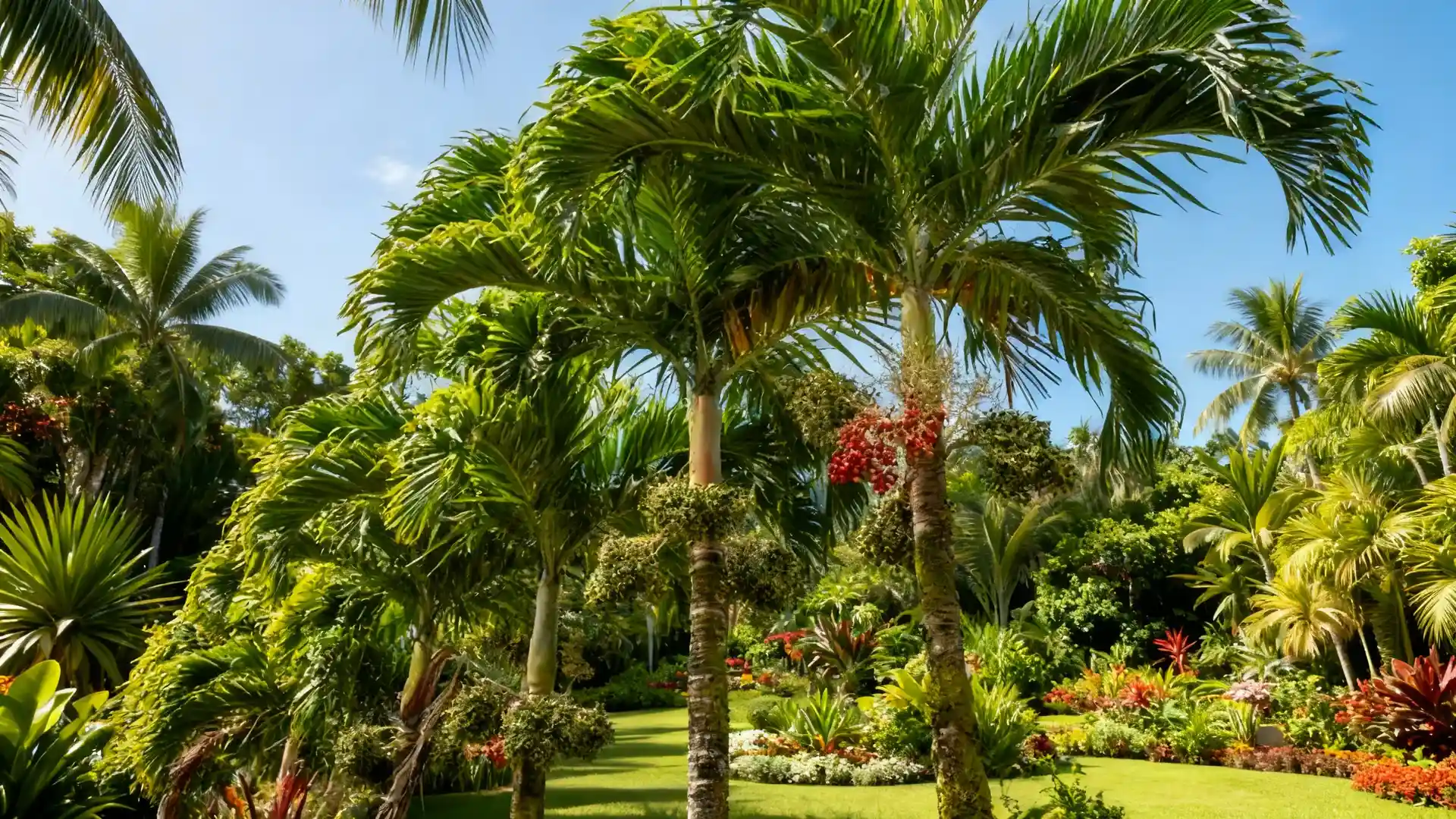
Manila palm, also called Christmas palm, is a neat option for small, warm gardens because it adds a tropical look without becoming too massive. Its smooth trunk, tidy crown, and red fruit clusters make it useful near patios, entries, and pool areas.
It works well when planted alone or in small groups. This palm is sensitive to freezing weather, so it performs best in frost-free regions.
| Botanical Name | Plant Type | Sun Requirements | Height and Spread | USDA Zone |
| Adonidia merrillii | Perennial palm | Full sun to partial shade | 15-25 ft. tall, 5-8 ft. wide | 10-11 |
17. Bottle Palm
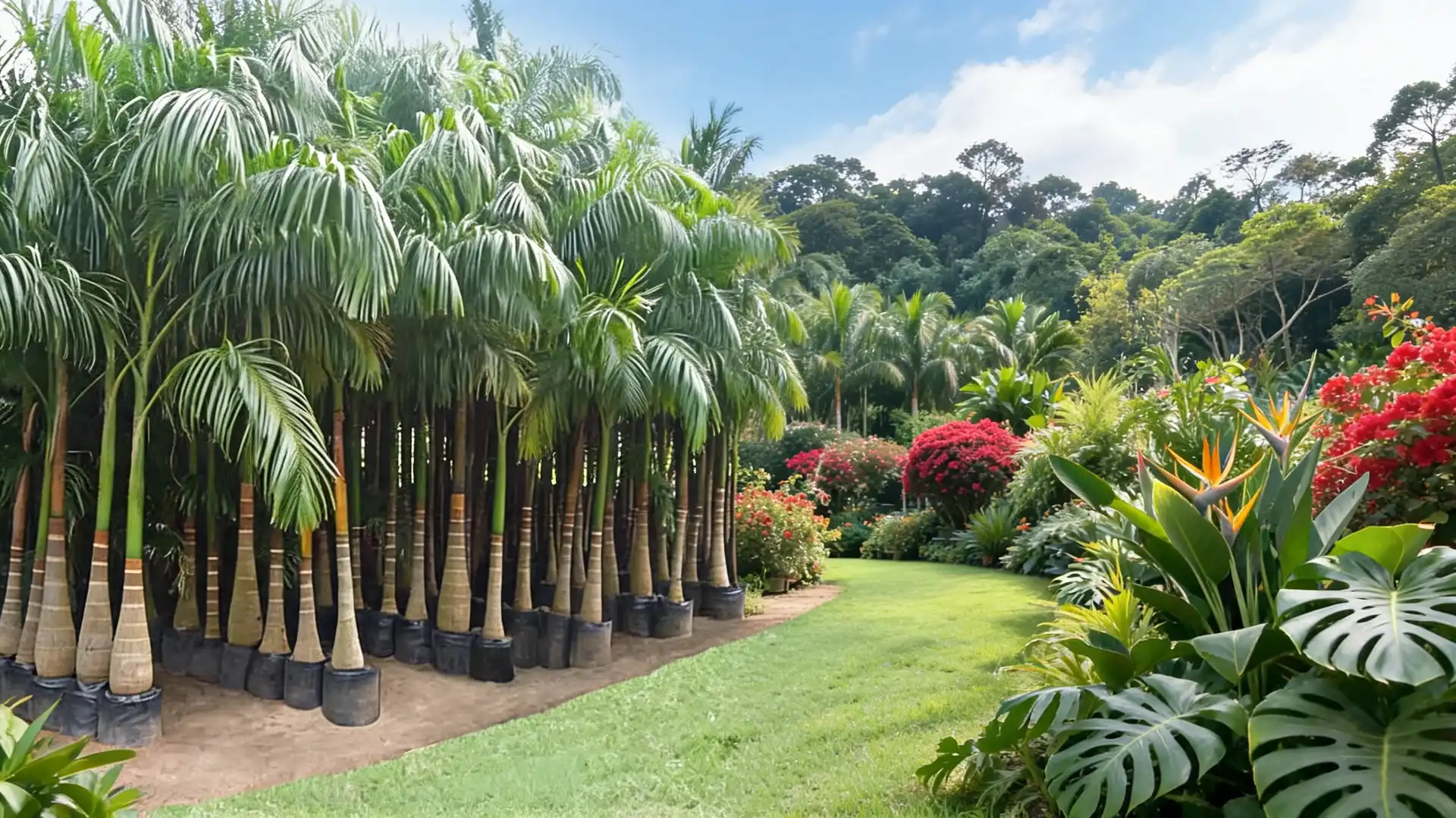
Bottle palm stands out in compact tropical gardens because of its swollen, bottle-shaped trunk and tidy crown. It grows slowly, so it is easier to manage in small spaces than many fast-growing palms.
This palm also works well in containers, especially on patios or near entrances where its sculptural shape can be noticed. It prefers warm, humid conditions and should be protected from cold snaps.
| Botanical Name | Plant Type | Sun Requirements | Height and Spread | USDA Zone |
| Hyophorbe lagenicaulis | Perennial palm | Full sun to partial shade | 10-15 ft. tall, 6-10 ft. wide | 10-11 |
18. Ruffled Fan Palm
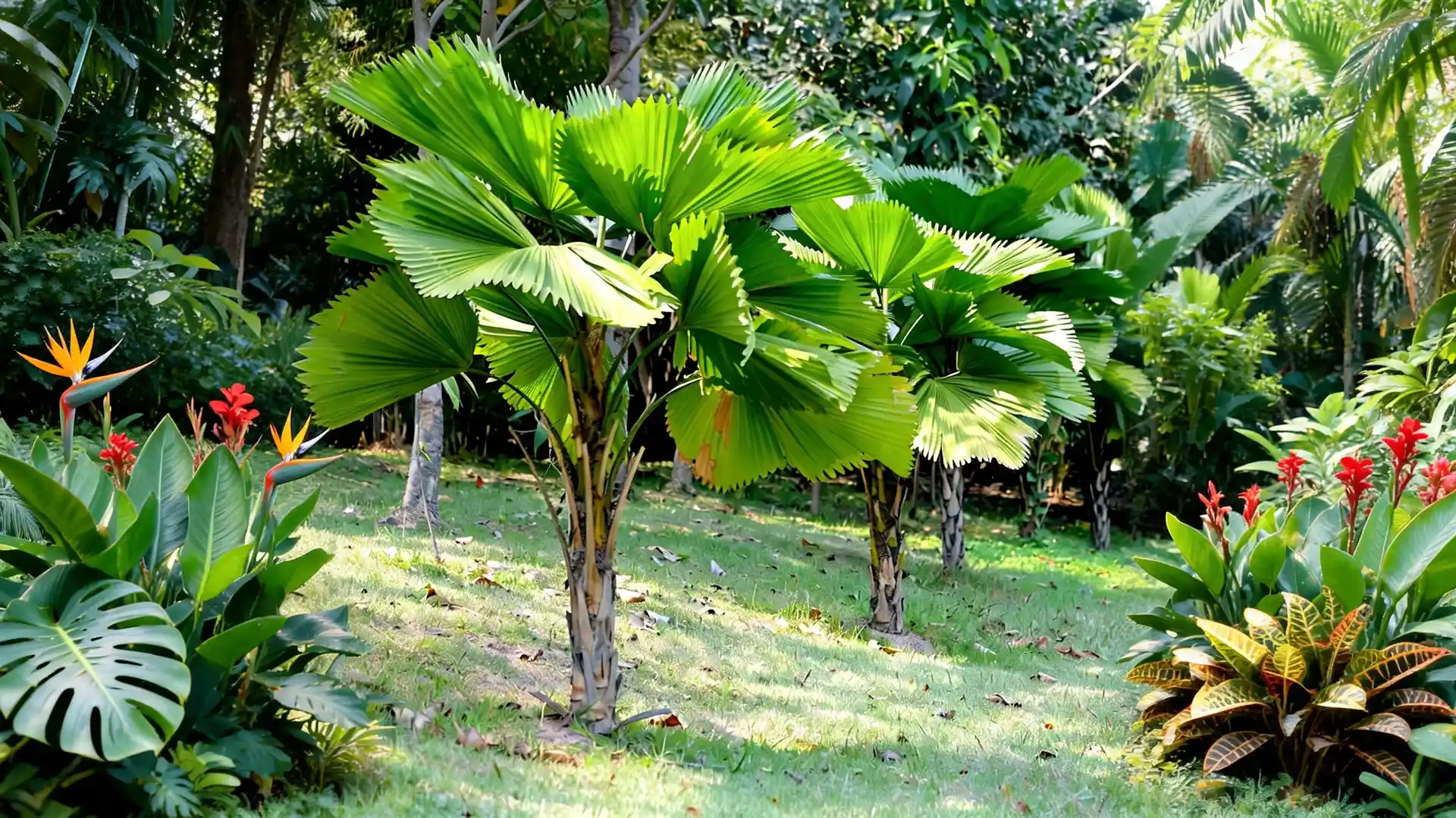
Ruffled fan palm is best for gardeners who want statement foliage rather than height. Its round, pleated leaves look like folded fans, giving shady tropical beds and protected patios a rich, leafy feel.
This palm needs warmth, humidity, and protection from harsh conditions to look its best. It is often used as a feature plant in small gardens, courtyards, and indoor-outdoor spaces with filtered light.
| Botanical Name | Plant Type | Sun Requirements | Height and Spread | USDA Zone |
| Licuala grandis | Perennial palm | Partial shade to filtered light | 6-10 ft. tall, 5-10 ft. wide | 10-11 |
19. King Palm
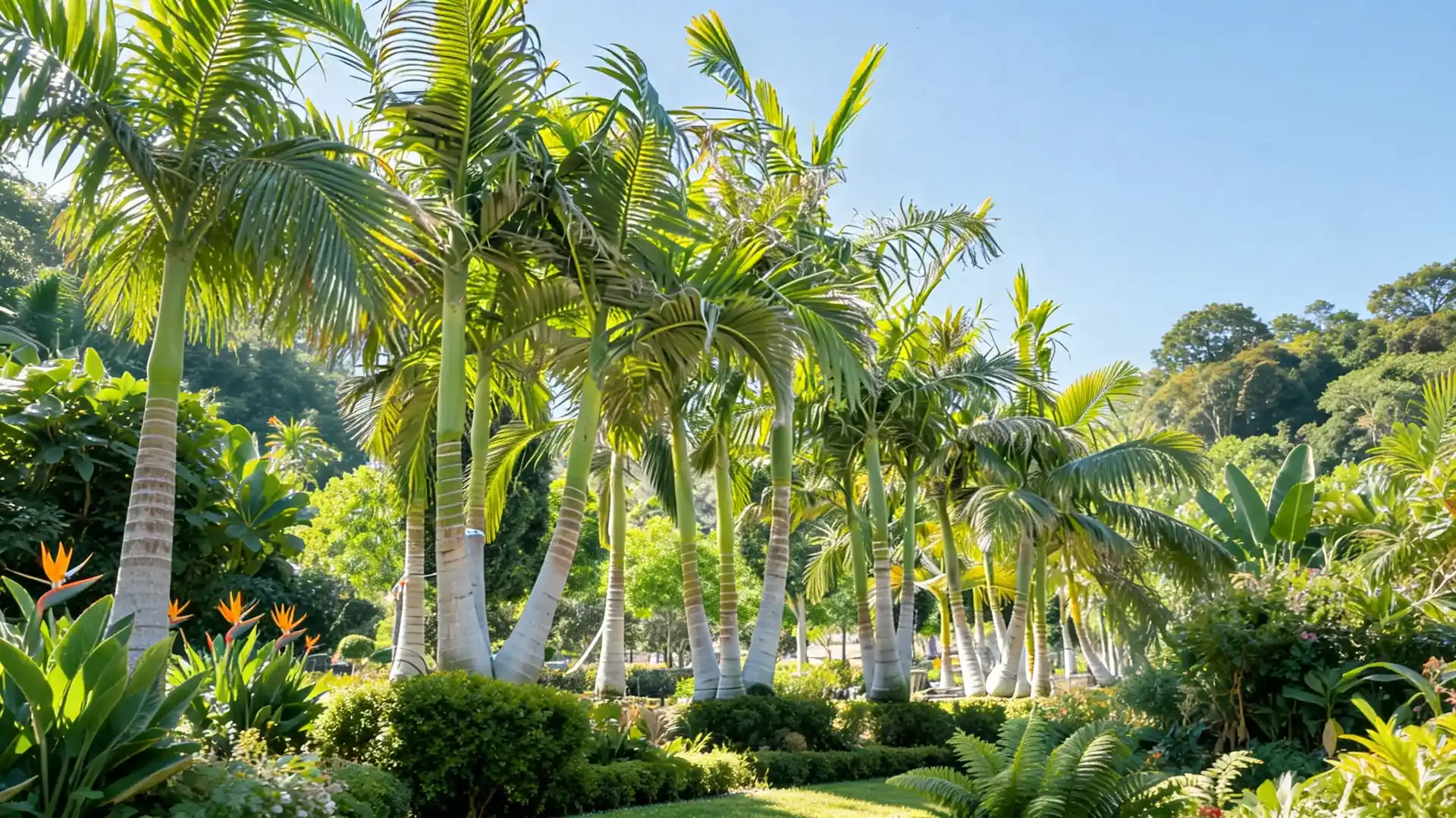
King palm is a good fit for lush tropical yards where a clean, tall trunk and full green crown can add height without looking bulky. It grows well in warm, moist conditions and often looks best when planted in groups or rows.
Unlike drought-tough palms, this one appreciates regular watering, especially during dry weather. Use it around lawns, pools, or large garden beds where you want a polished tropical look.
| Botanical Name | Plant Type | Sun Requirements | Height and Spread | USDA Zone |
| Archontophoenix alexandrae | Perennial palm | Full sun to partial shade | 40 ft. tall, 10-15 ft. wide | 9-11 |
20. Royal Palm
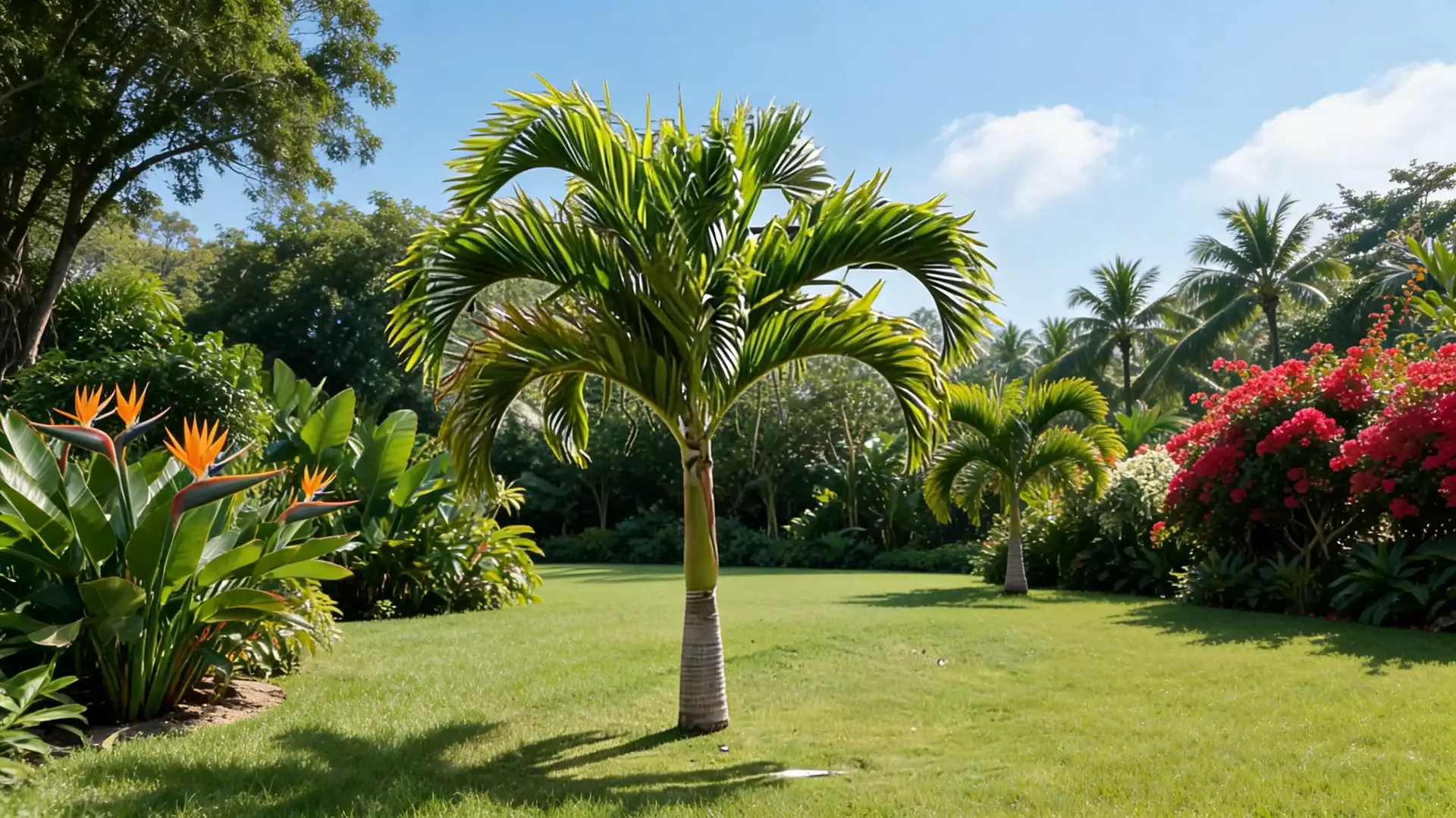
Royal palm is best suited to large tropical landscapes, not tight spaces. Its smooth trunk and formal crown give gardens, avenues, and estate-style properties a grand look.
Because it grows very tall, it should be planted well away from roofs, narrow walkways, and small patios. This palm works best where it has open sky, deep soil, and enough distance from buildings.
| Botanical Name | Plant Type | Sun Requirements | Height and Spread | USDA Zone |
| Roystonea regia | Perennial palm | Full sun | 50-70 ft. tall, 20-25 ft. wide | 10-11 |
21. Coconut Palm
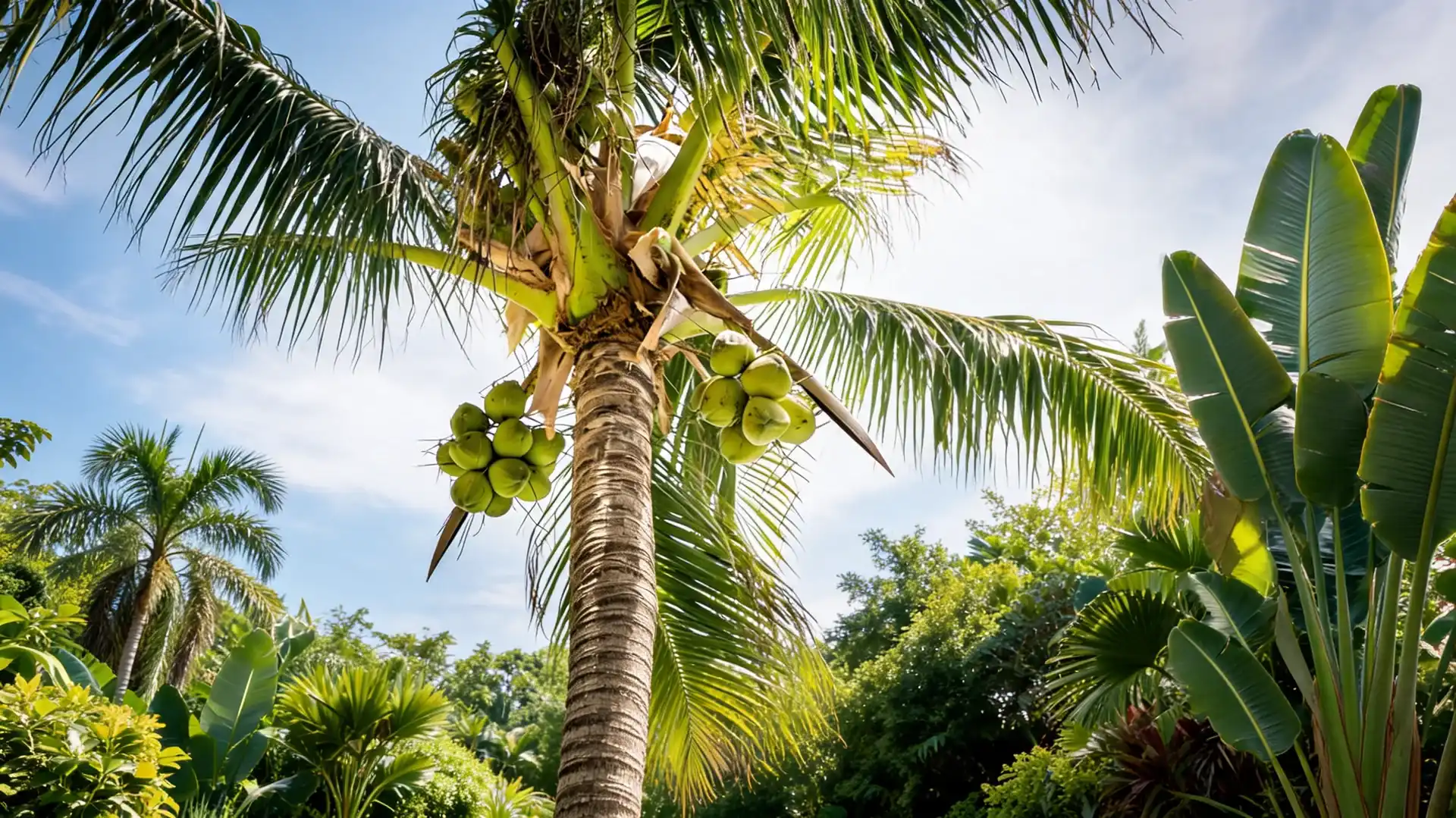
Coconut palm is best for warm coastal gardens where full sun, sandy soil, and tropical weather are available. It gives a classic beach-like look with a tall trunk and long arching fronds.
This palm is not practical for cold regions and does not work well as a long-term indoor plant. It needs space, warmth, and excellent drainage to grow properly.
| Botanical Name | Plant Type | Sun Requirements | Height and Spread | USDA Zone |
| Cocos nucifera | Perennial palm | Full sun | 50-100 ft. tall, 20-30 ft. wide | 10-12 |
22. Pindo Palm
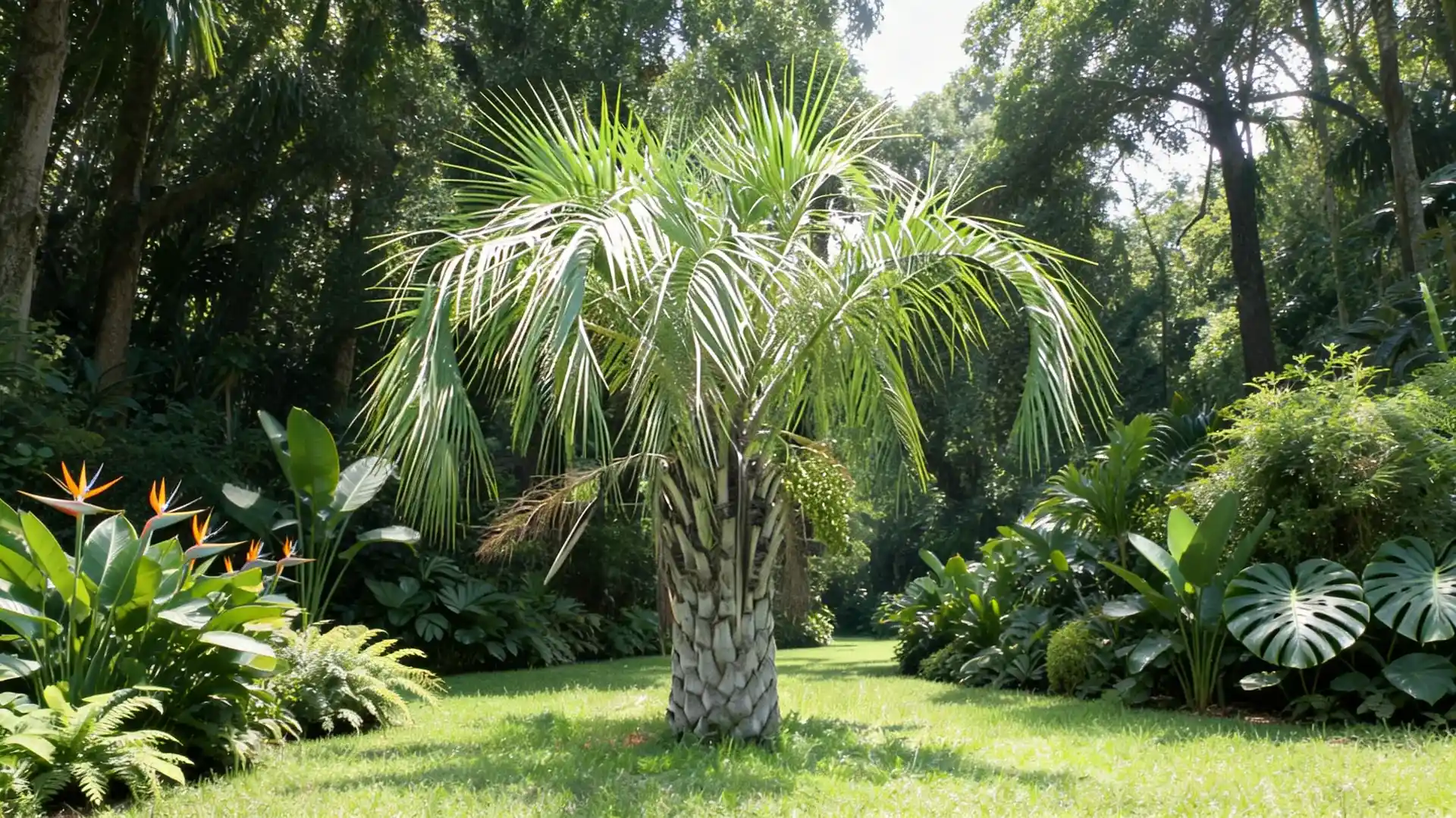
Pindo palm, also called jelly palm, is a strong choice for warm gardens that need a palm with better cold tolerance. Its blue-green arching fronds give the landscape a soft, relaxed shape.
This palm stays smaller than many tall landscape palms and can suit medium yards. It prefers full sun, good drainage, and enough room for its wide crown.
| Botanical Name | Plant Type | Sun Requirements | Height and Spread | USDA Zone |
| Butia capitata | Perennial palm | Full sun | 15-25 ft. tall, 10-15 ft. wide | 8-11 |
23. Paurotis Palm
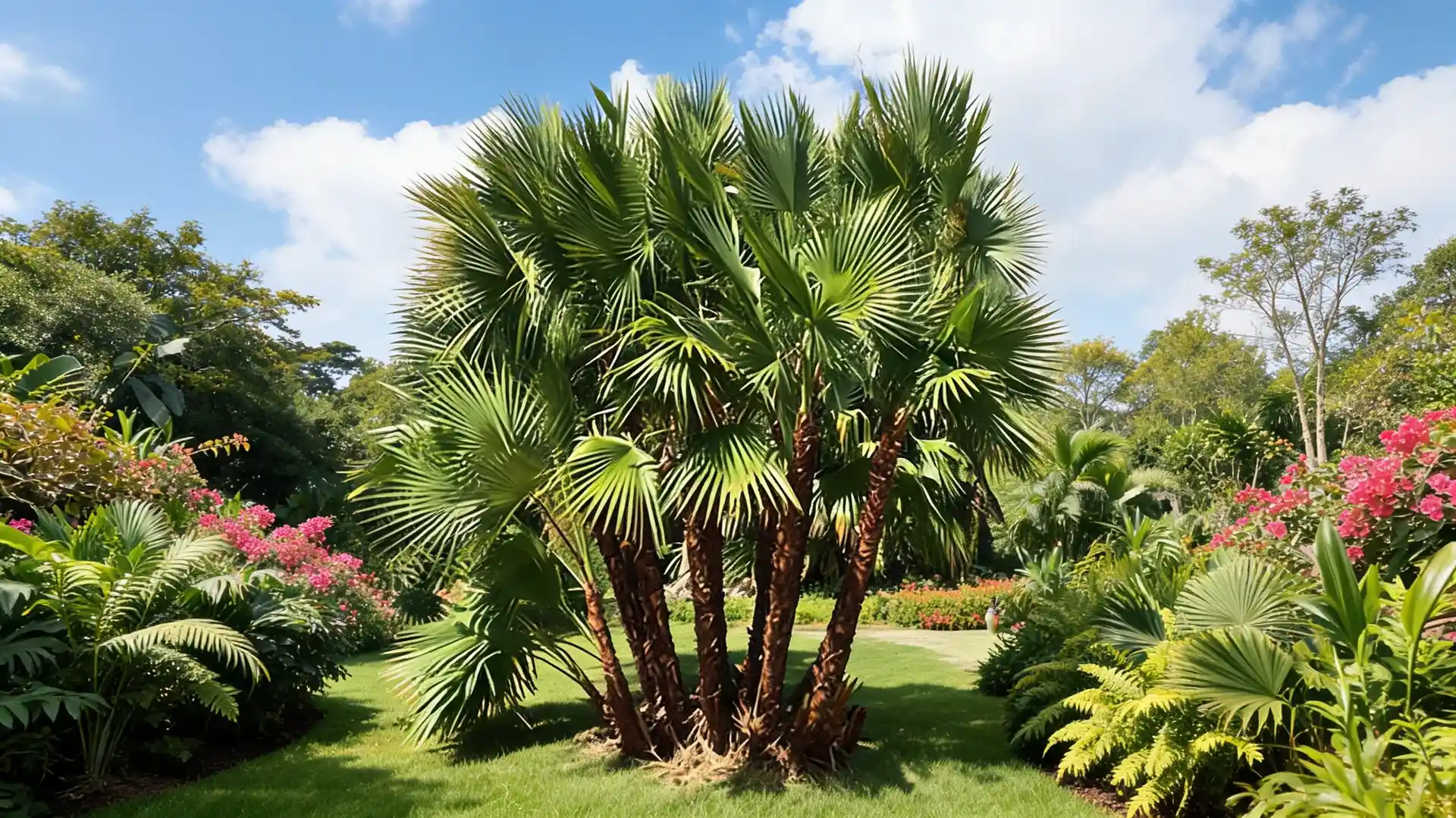
Paurotis palm works well in tropical gardens with moist soil or areas near water features. It grows in clusters, so it can create a full, natural screen or background planting.
This palm needs room to spread and looks best where its multiple trunks can be seen. It suits warm regions and may need light trimming to keep the clump tidy.
| Botanical Name | Plant Type | Sun Requirements | Height and Spread | USDA Zone |
| Acoelorrhaphe wrightii | Perennial palm | Full sun to partial shade | 20-30 ft. tall, 10-15 ft. wide | 9-11 |
24. Triangle Palm
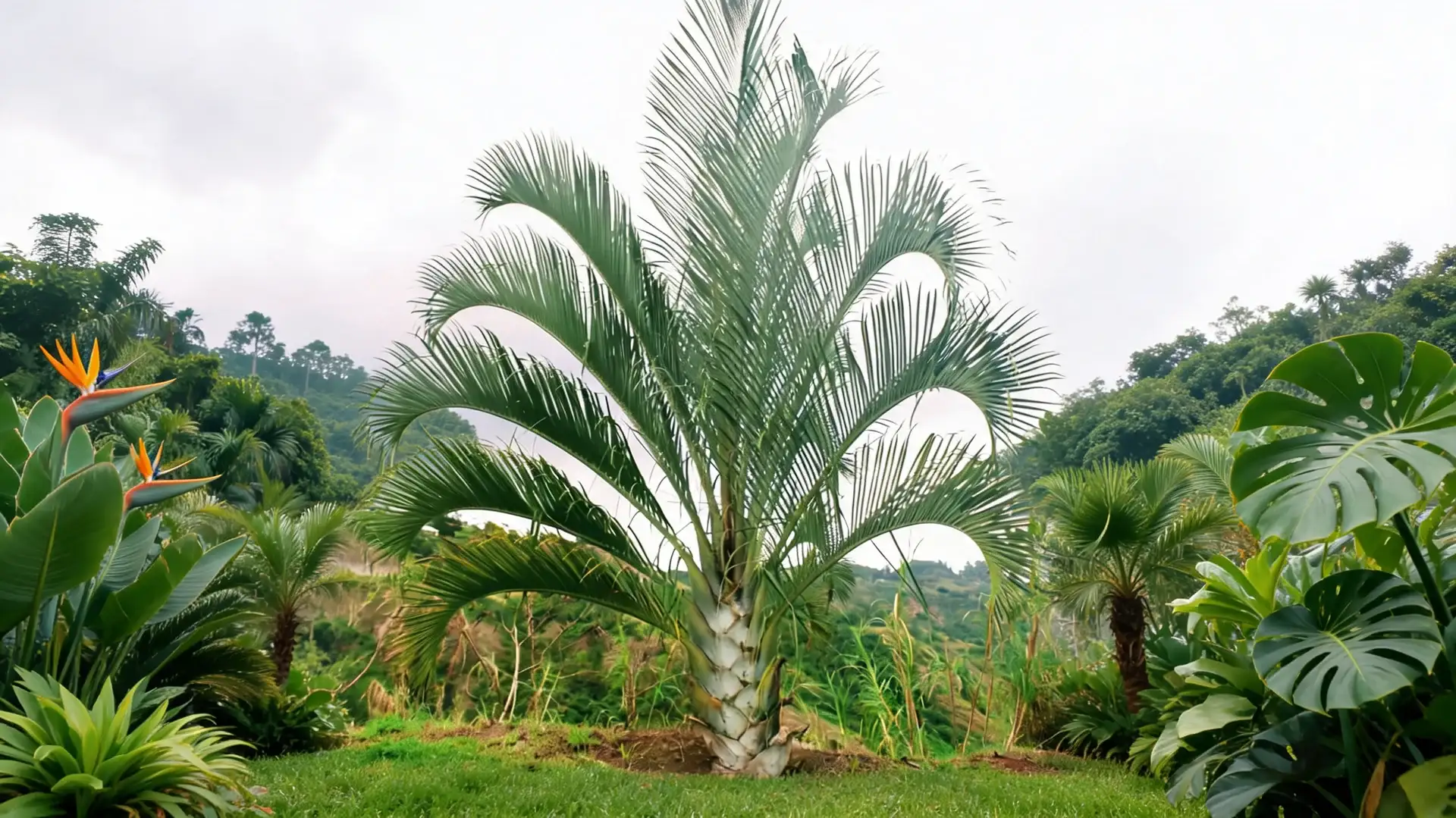
Triangle palm is a strong option for tropical gardens where shape matters. Its fronds grow in a three-sided pattern, giving it a clean and sculptural look that stands apart from softer feather palms.
It prefers full sun, warm weather, and well-drained soil. Use it as a feature palm in open beds where the unusual crown shape can be seen clearly.
| Botanical Name | Plant Type | Sun Requirements | Height and Spread | USDA Zone |
| Dypsis decaryi | Perennial palm | Full sun | 20-25 ft. tall, 10-15 ft. wide | 10-11 |
Best Palm Trees for Small Yards
Small yards need palm trees that add shape and greenery without crowding the space. The best choices usually stay compact, grow slowly, or form neat clumps that are easy to manage.
Some small palms also tolerate cold, salt, drought, or partial shade, making them useful for tight garden beds, patios, borders, and coastal spaces.
25. European Fan Palm
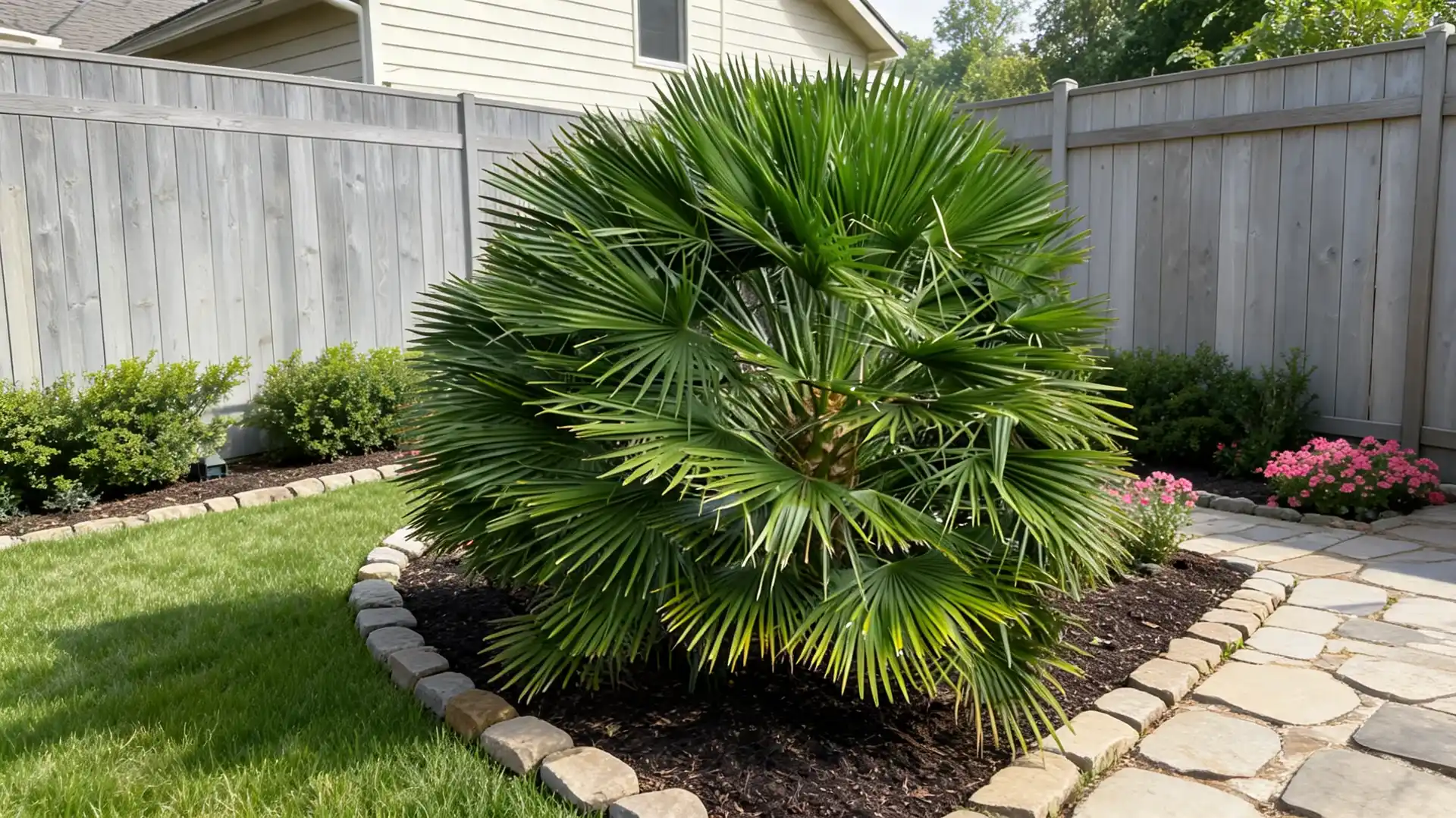
European fan palm is a strong pick for compact gardens because it grows in a shrub-like, clumping form rather than becoming a huge single-trunk palm. Its fan-shaped leaves create texture near patios, walkways, and small garden beds.
This palm is also cold-hardy and low-maintenance once established, so it suits gardeners who want a tough plant with a tropical look. Give it enough space to spread slowly over time.
| Botanical Name | Plant Type | Sun Requirements | Height and Spread | USDA Zone |
|---|---|---|---|---|
| Chamaerops humilis | Perennial palm | Full sun to partial shade | 6-15 ft. tall, 6-20 ft. wide | 8-11 |
26. Dwarf Palmetto
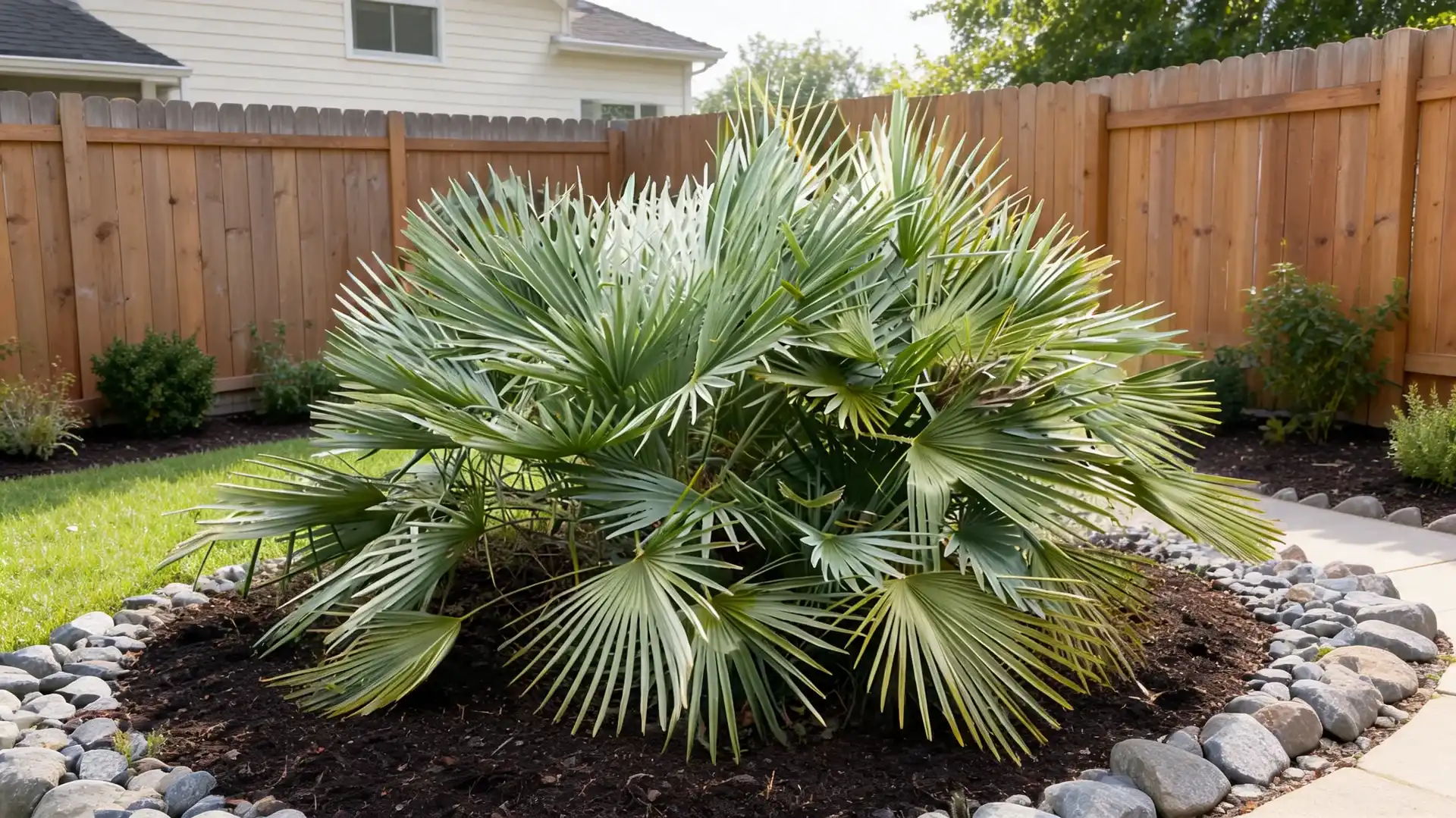
Dwarf palmetto is useful for small gardens because it stays low and works well near the ground. Its broad fan leaves can fill bare spaces without blocking views or overpowering nearby plants.
This palm is extra hardy compared with many tropical-looking palms, which makes it a good choice for cooler areas. It can handle sun or partial shade, so you can use it under taller trees, along borders, or in mixed planting beds.
| Botanical Name | Plant Type | Sun Requirements | Height and Spread | USDA Zone |
| Sabal minor | Perennial palm | Full sun to partial shade | 2-10 ft. tall, 3-6 ft. wide | 7-10 |
27. Saw Palmetto
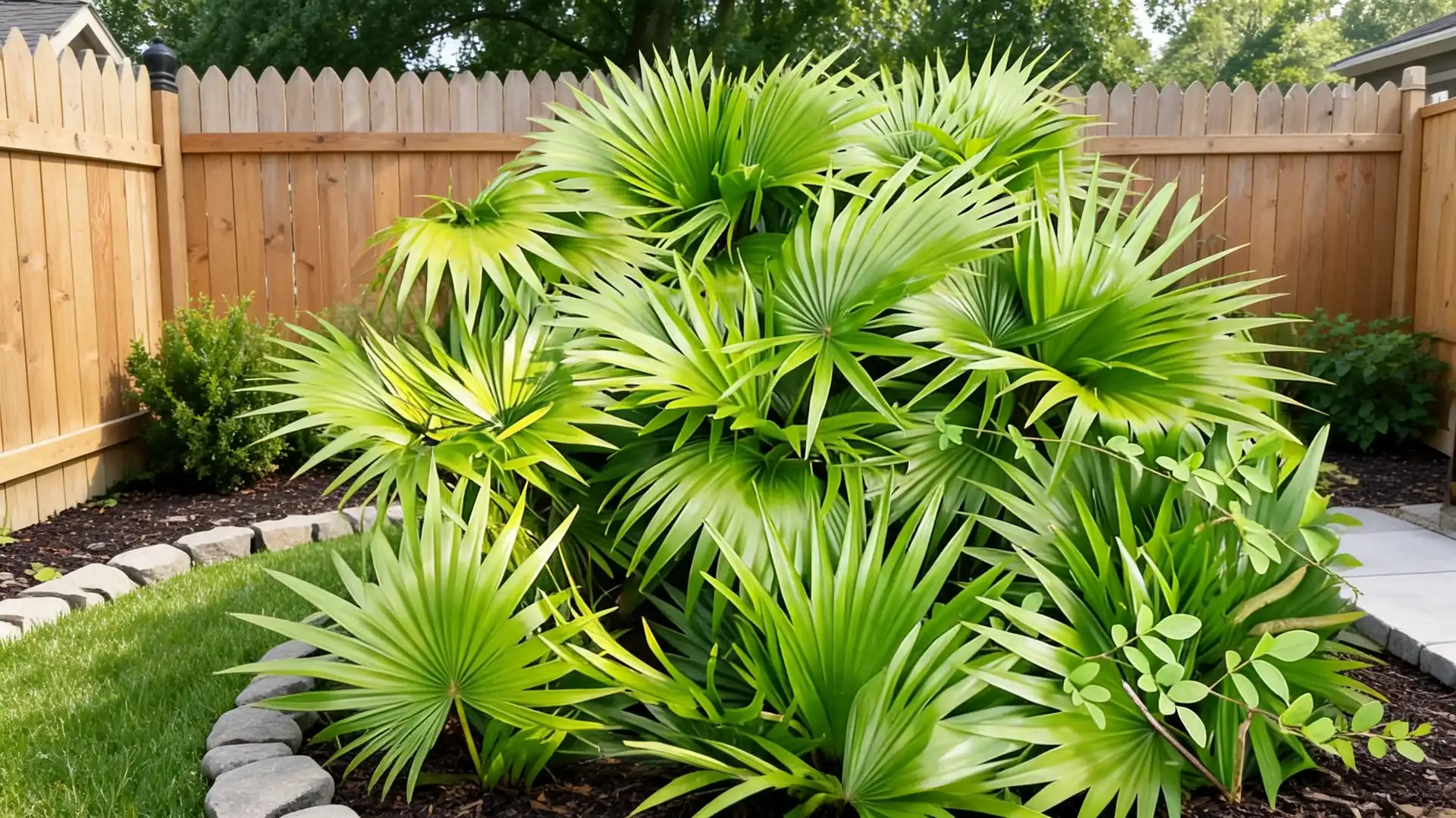
Saw palmetto is a smart option for coastal and wildlife-friendly gardens because it handles salt, wind, and dry spells better than many plants. It grows slowly, so it is easier to manage in small yards, but it can spread over time if given room.
Its flowers and fruits can support birds and other wildlife. Use it as a low, natural-looking palm in sandy borders, coastal beds, or informal native-style landscapes.
| Botanical Name | Plant Type | Sun Requirements | Height and Spread | USDA Zone |
| Serenoa repens | Perennial palm | Full sun to partial shade | 5-15 ft. tall, 4-10 ft. wide | 8-10 |
28. Needle Palm
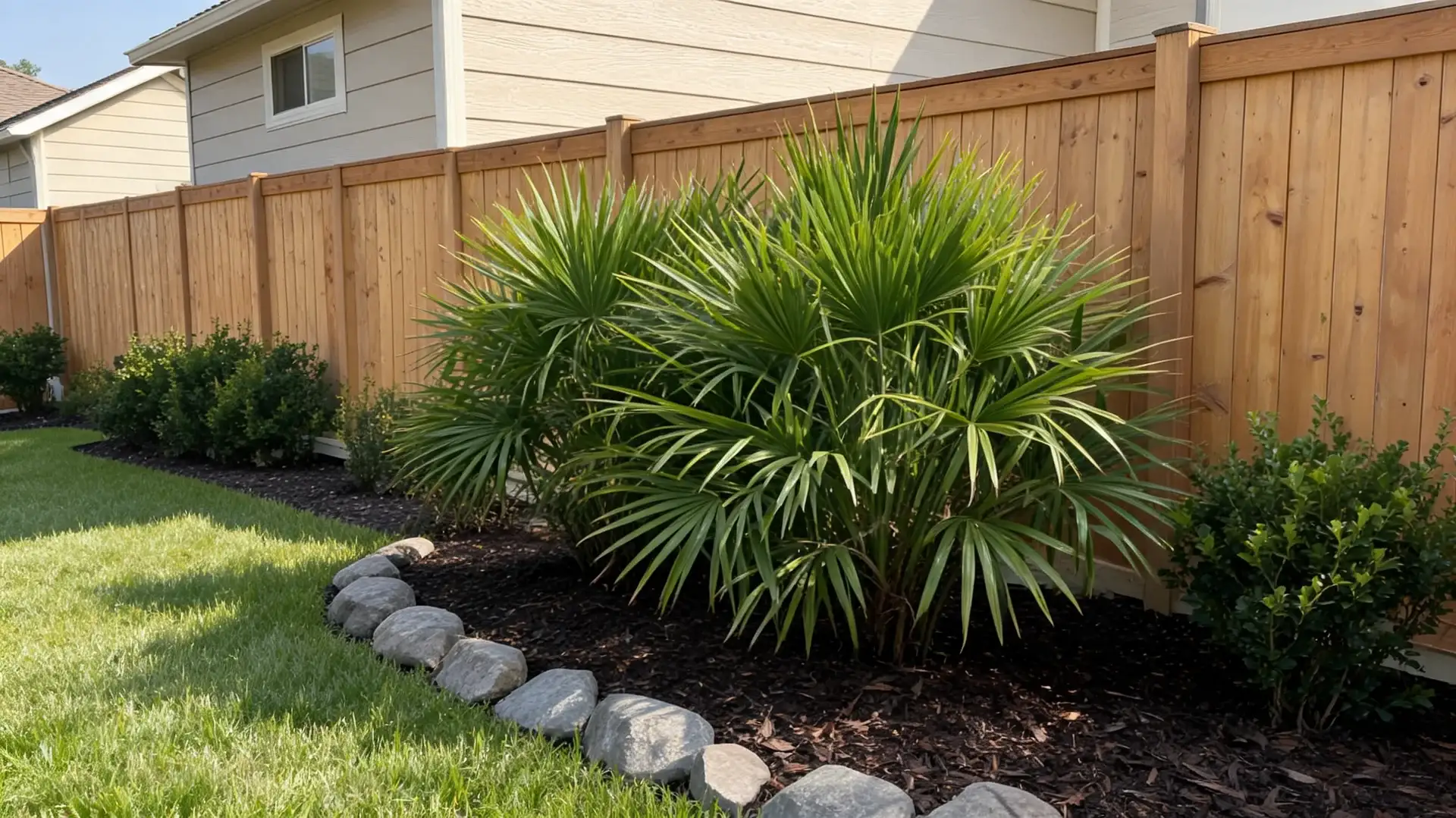
Needle palm is one of the best choices for cold-prone gardens because it is widely known as one of the hardiest palms. It has a shrub-like form with stiff fan leaves, giving small spaces a tropical look without the need for a tall trunk.
This palm works well in foundation beds, protected corners, and woodland-style gardens. Be careful when handling it, as sharp needle-like spines can grow near the base.
| Botanical Name | Plant Type | Sun Requirements | Height and Spread | USDA Zone |
| Rhapidophyllum hystrix | Perennial palm | Full sun to partial shade | 4-6 ft. tall, 4-8 ft. wide | 6-10 |
29. Florida Thatch Palm
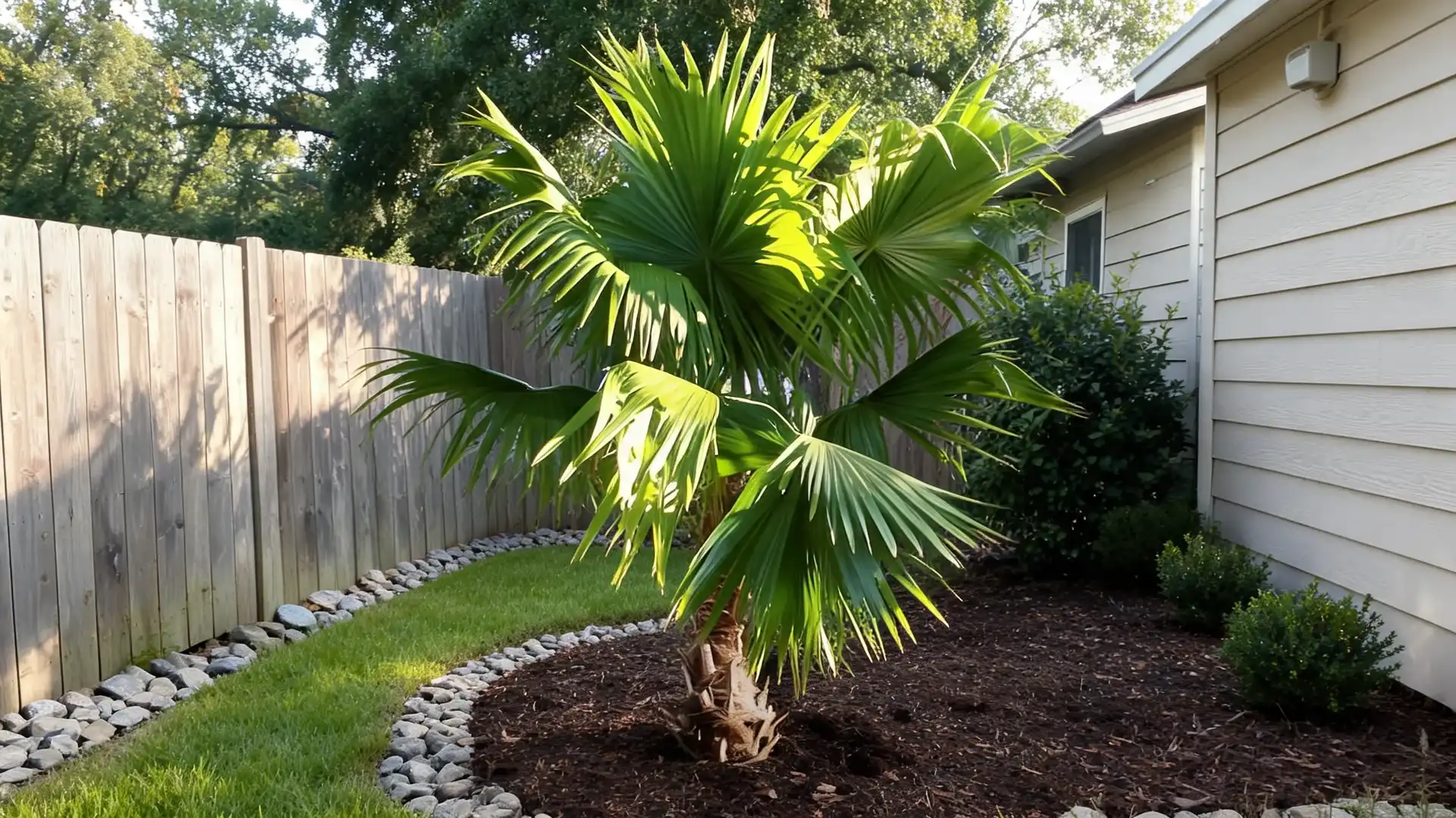
Florida thatch palm is well-suited to small coastal gardens because it has a slender trunk, fan-shaped leaves, and a clean, tropical look without taking up too much ground space.
It handles salt and drought once established, which makes it useful near beaches, patios, and sunny borders. This palm grows best in warm areas and needs protection from cold weather.
| Botanical Name | Plant Type | Sun Requirements | Height and Spread | USDA Zone |
| Thrinax radiata | Perennial palm | Full sun to partial shade | 15-20 ft. tall, 6-10 ft. wide | 10-11 |
30. Buccaneer Palm
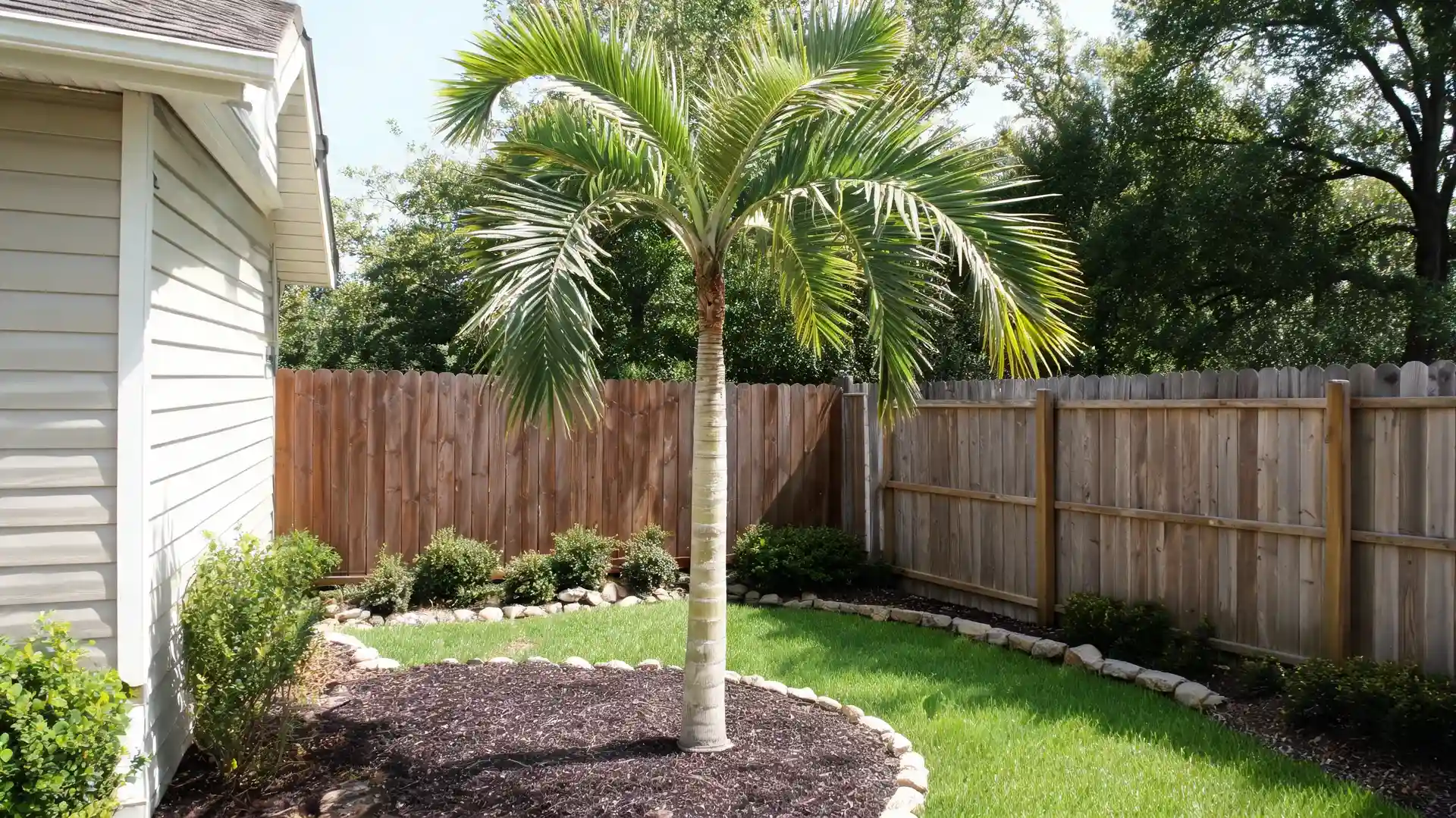
Buccaneer palm is a low-maintenance choice for small, warm gardens because it grows slowly and remains compact for many years. It handles salt and drought once established, making it useful for coastal landscapes and dry sunny spots.
Its smooth trunk and graceful fronds give it a clean look without heavy upkeep. Since it grows slowly, it can also work in containers while young or in tight garden spaces.
| Botanical Name | Plant Type | Sun Requirements | Height and Spread | USDA Zone |
| Pseudophoenix sargentii | Perennial palm | Full sun to light shade | 10-25 ft. tall, 5-10 ft. wide | 10-11 |
31. Windmill Palm
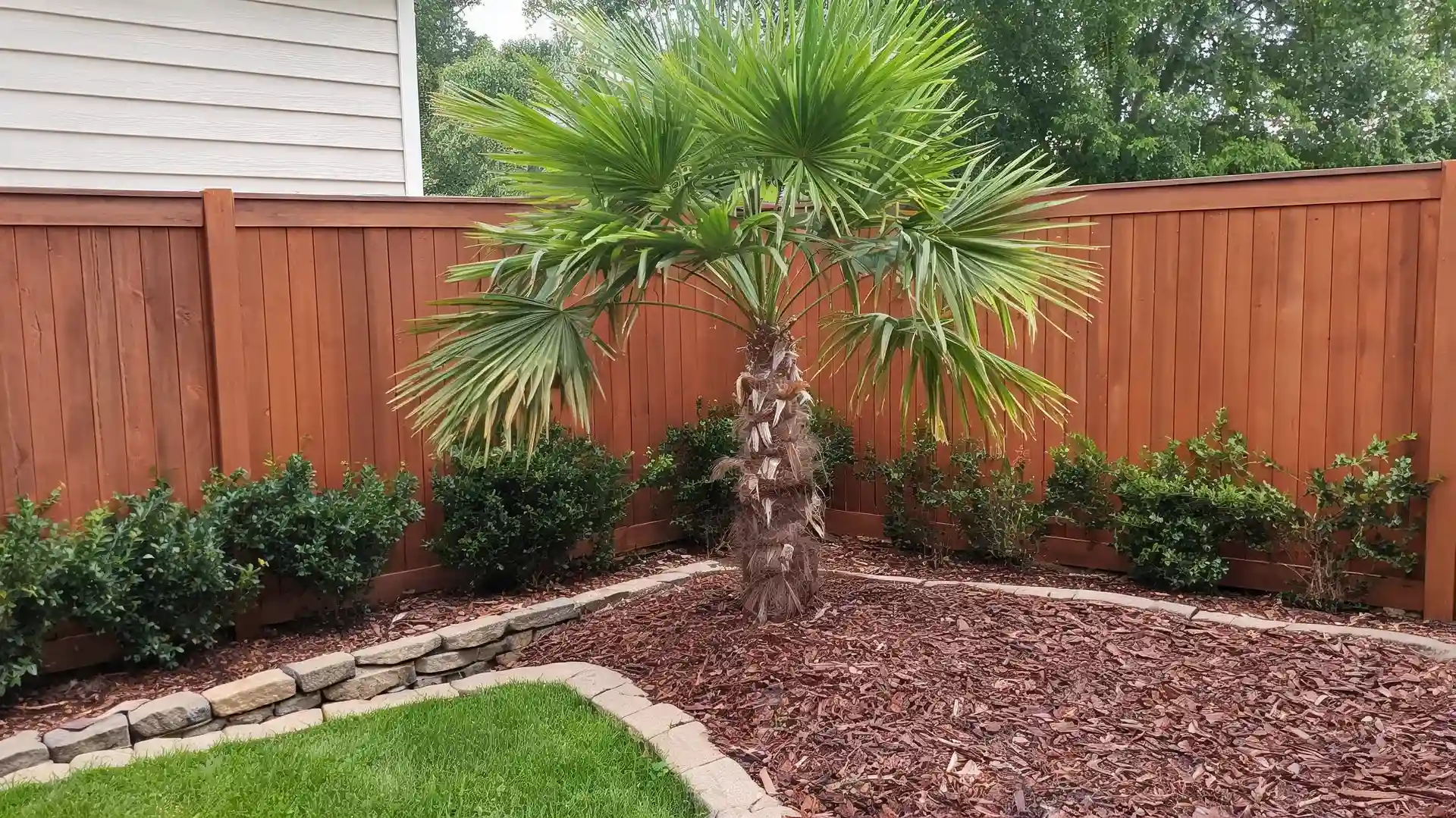
Windmill palm is one of the best palms for gardeners who want a tropical look in cooler climates. Its fibrous trunk and fan-shaped leaves give it a strong, textured appearance without requiring extreme heat.
This palm works well in small yards, courtyards, and protected garden beds. It prefers good drainage and performs best when sheltered from harsh winter winds.
| Botanical Name | Plant Type | Sun Requirements | Height and Spread | USDA Zone |
| Trachycarpus fortunei | Perennial palm | Full sun to partial shade | 10-40 ft. tall, 6-10 ft. wide | 7-11 |
32. Chinese Fan Palm
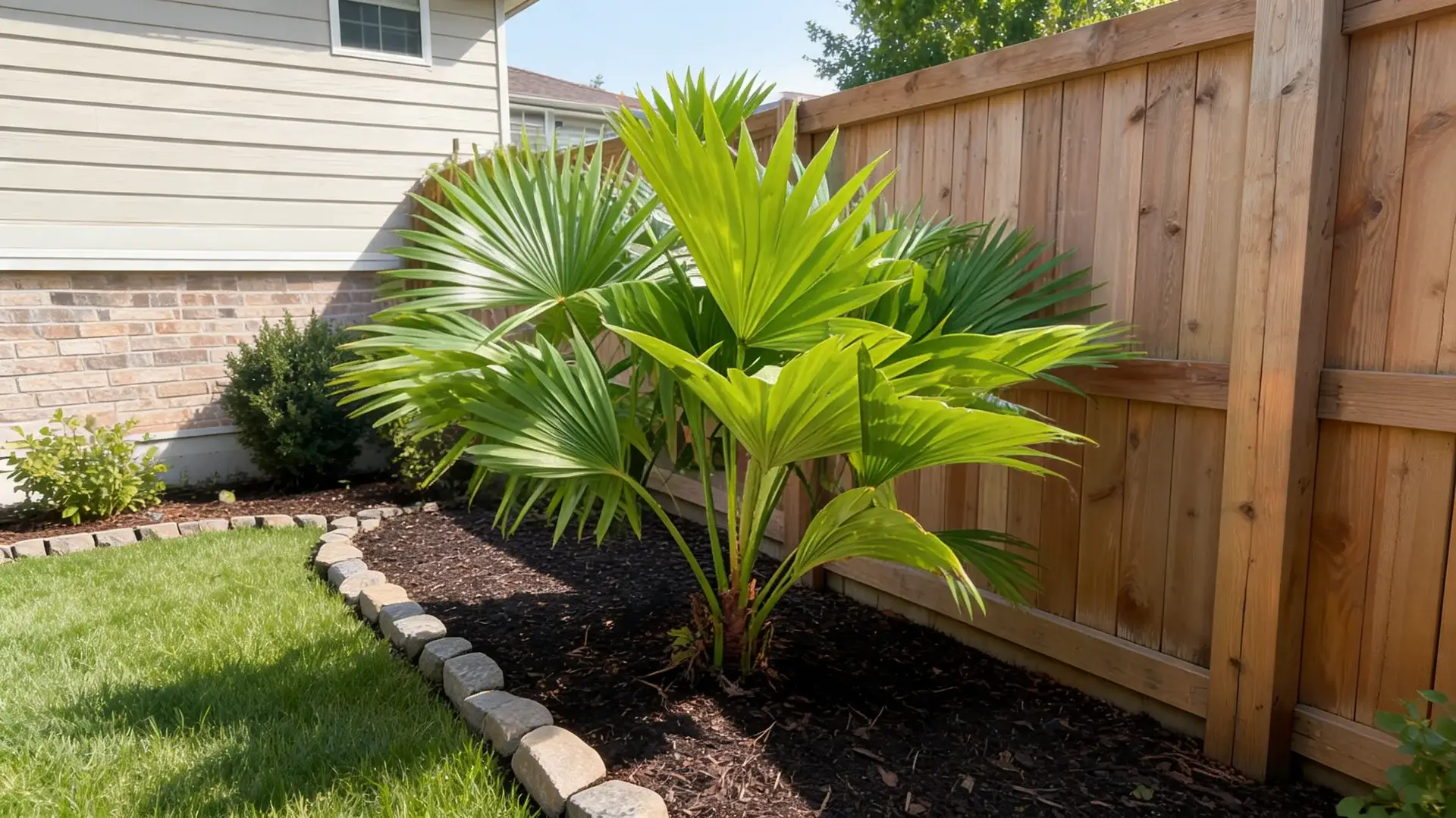
Chinese fan palm works well in medium to small yards when planted with enough space for its wide, drooping leaves. It has a soft fan shape that gives patios, courtyards, and garden borders a full tropical look.
This palm grows slowly compared with many tall palms, but it can still become large over time. Use it where the crown has room to spread without crowding walkways or walls.
| Botanical Name | Plant Type | Sun Requirements | Height and Spread | USDA Zone |
| Livistona chinensis | Perennial palm | Full sun to partial shade | 30-50 ft. tall, 10-12 ft. wide | 9-11 |
33. Christmas Palm
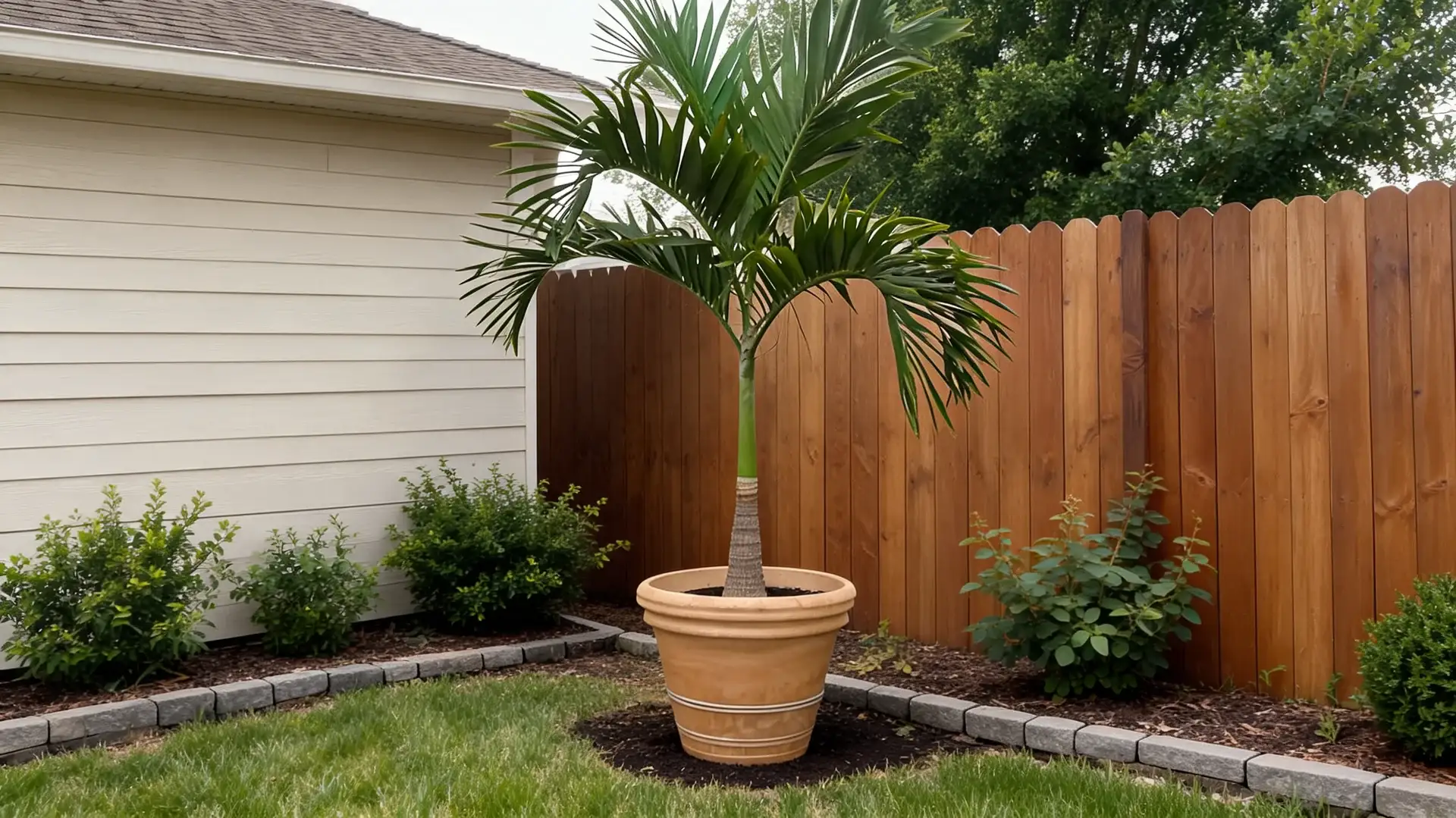
Christmas palm is a tidy choice for small tropical yards because it has a smooth trunk, neat crown, and colorful red fruit clusters in warm regions. It gives a clean tropical look without becoming as massive as many landscape palms.
This palm works well near patios, entries, and pool areas. It needs warmth and protection from freezing weather, so it is best for frost-free gardens.
| Botanical Name | Plant Type | Sun Requirements | Height and Spread | USDA Zone |
| Adonidia merrillii | Perennial palm | Full sun to partial shade | 15-25 ft. tall, 5-8 ft. wide | 10-11 |
34. Date Palm
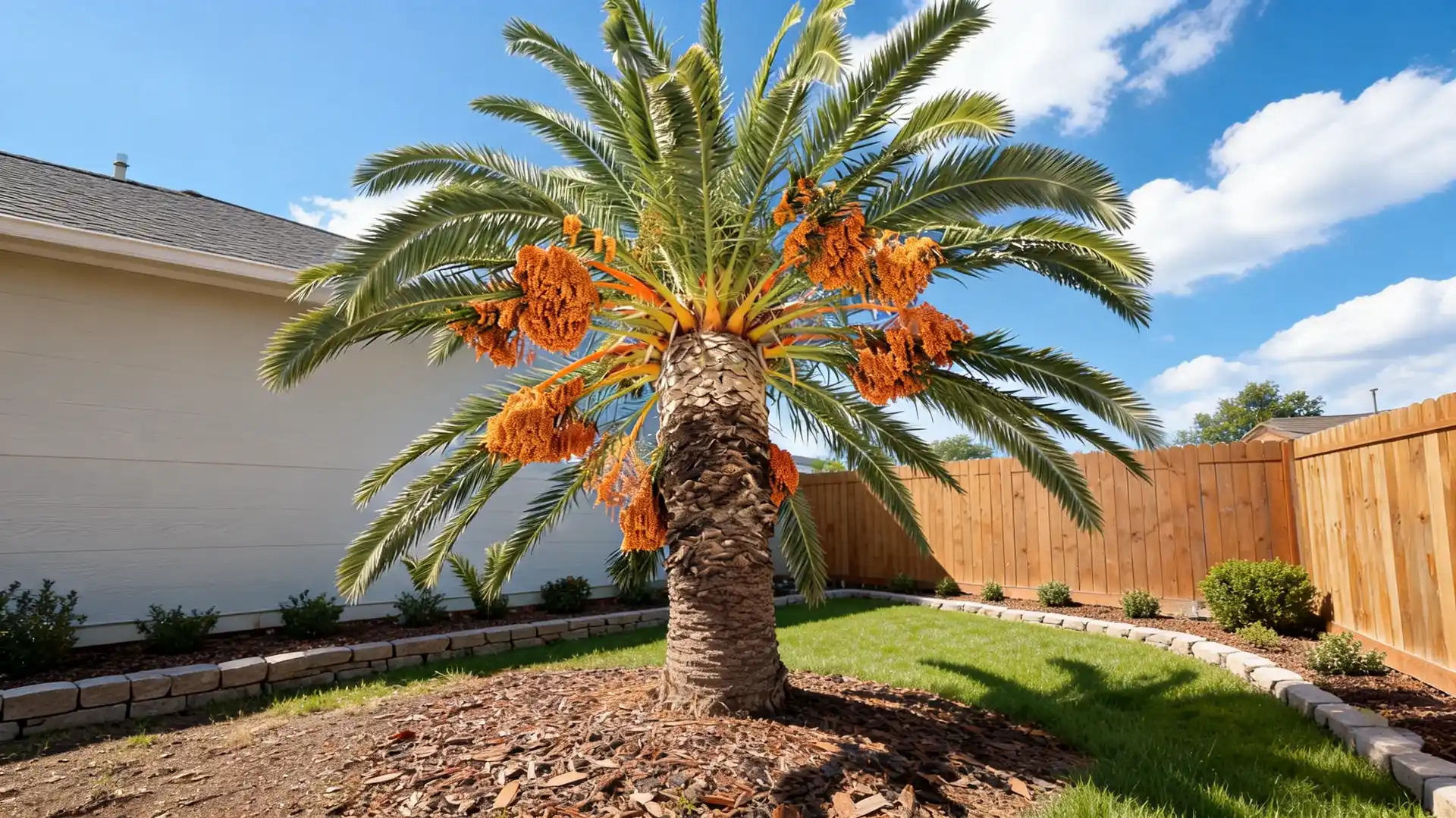
Date palm can work in larger small-yard designs only when there is enough open space for its mature size. It has a strong trunk, arching fronds, and a dry-climate look that suits sunny, warm gardens.
This palm is better for open corners than narrow beds. It needs full sun, good drainage, and careful placement away from tight paths or nearby structures.
| Botanical Name | Plant Type | Sun Requirements | Height and Spread | USDA Zone |
| Phoenix dactylifera | Perennial palm | Full sun | 50-80 ft. tall, 20-40 ft. wide | 9-11 |
35. Canary Island Date Palm
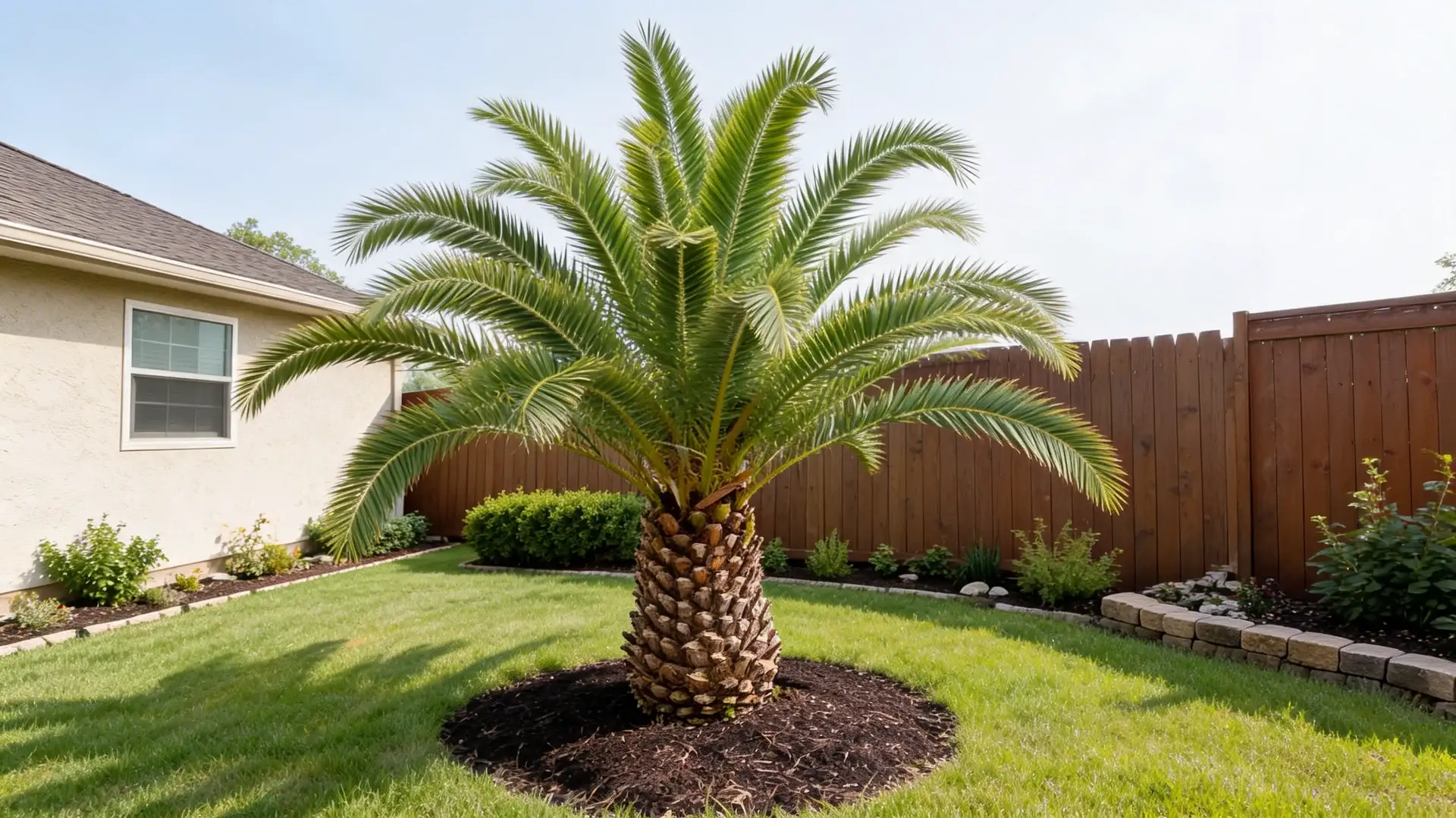
Canary Island date palm is best for small yards only when the yard has a wide, open focal area. It has a thick trunk and broad crown, so it can easily overpower tight spaces if planted too close to buildings.
Use it only where the full shape has room to mature. This palm works better as a single statement tree than as part of a crowded planting bed.
| Botanical Name | Plant Type | Sun Requirements | Height and Spread | USDA Zone |
| Phoenix canariensis | Perennial palm | Full sun | 40-60 ft. tall, 20-40 ft. wide | 9-11 |
36. Mexican Fan Palm
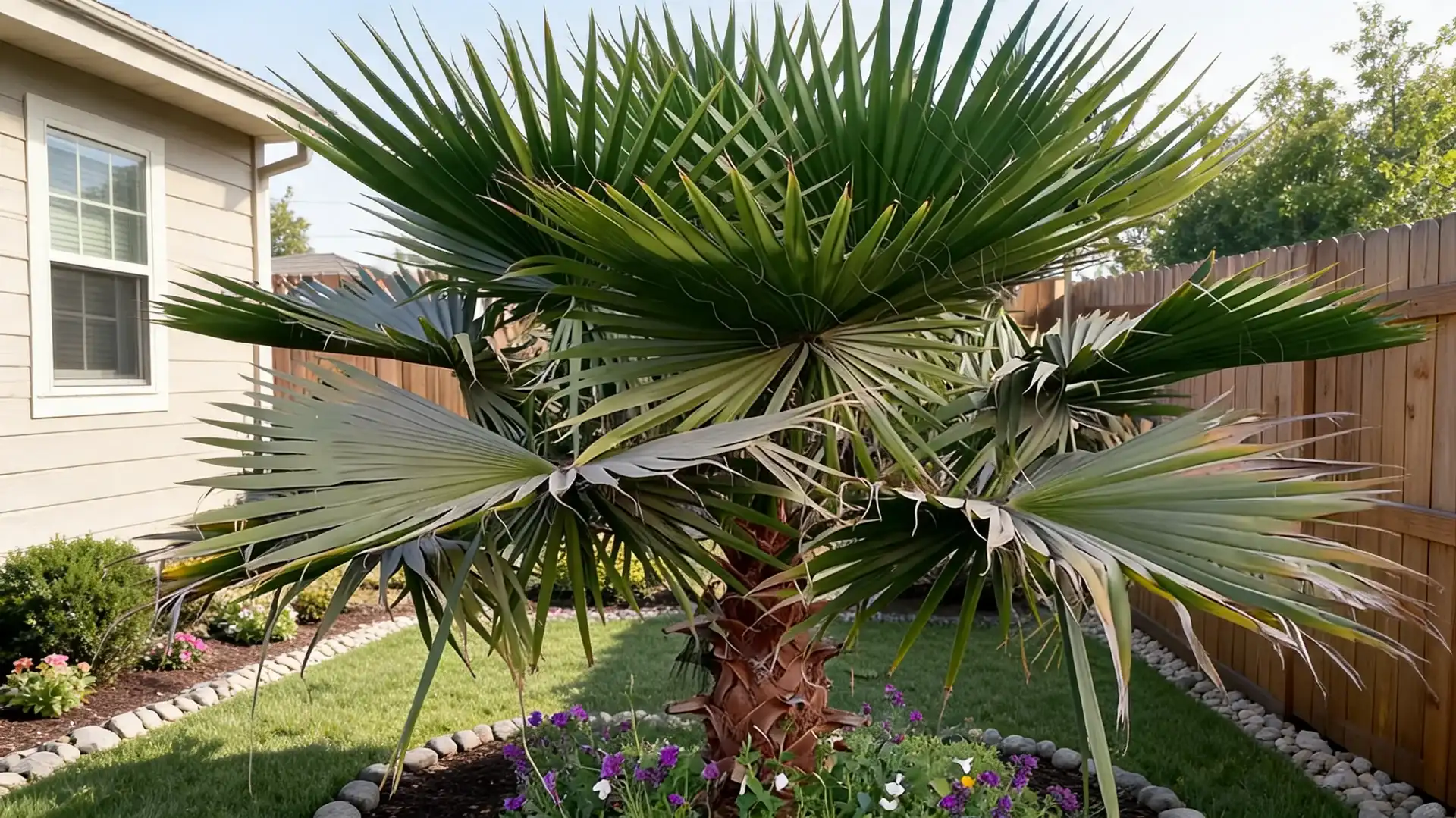
Mexican fan palm is tall and narrow, so it can fit visually in some small yards if overhead space is not an issue. Its slim trunk and high crown create height without taking much ground width.
Still, this palm grows very tall and should not be placed near power lines, roofs, or tight courtyards. Use it only where vertical space is open and long-term maintenance is realistic.
| Botanical Name | Plant Type | Sun Requirements | Height and Spread | USDA Zone |
| Washingtonia robusta | Perennial palm | Full sun | 50-100 ft. tall, 10-15 ft. wide | 9-11 |
37. California Fan Palm
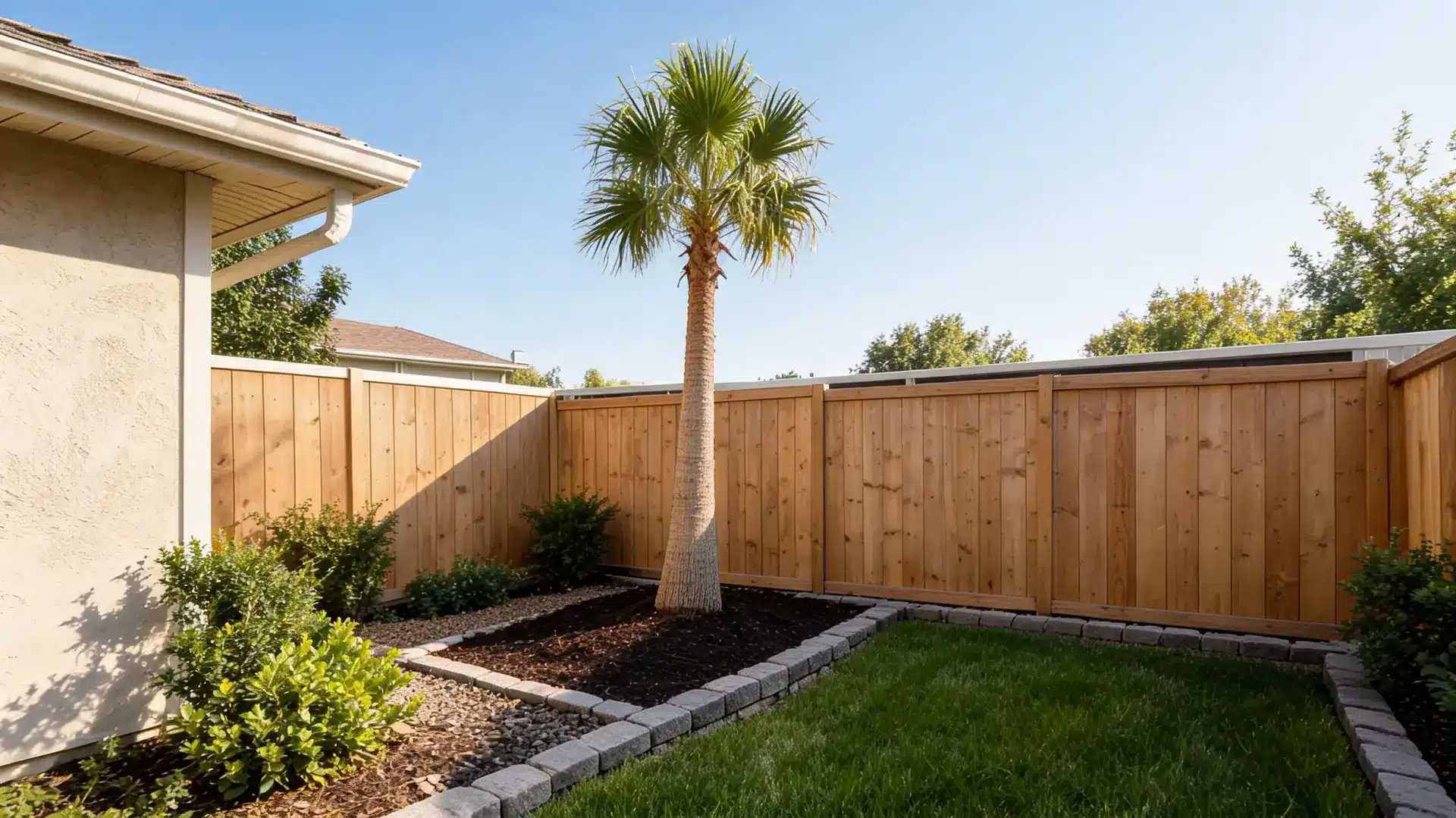
California fan palm is a tough choice for warm, dry gardens with enough vertical space. It has a thick trunk and large fan leaves that create a strong structure in the landscape.
It is better for small yards with open edges rather than tight patios. Dead fronds can remain attached and form a heavy skirt, so pruning and placement should be considered before planting.
| Botanical Name | Plant Type | Sun Requirements | Height and Spread | USDA Zone |
| Washingtonia filifera | Perennial palm | Full sun to partial shade | 30-80 ft. tall, 10-20 ft. wide | 8-11 |
38. Cabbage Palm
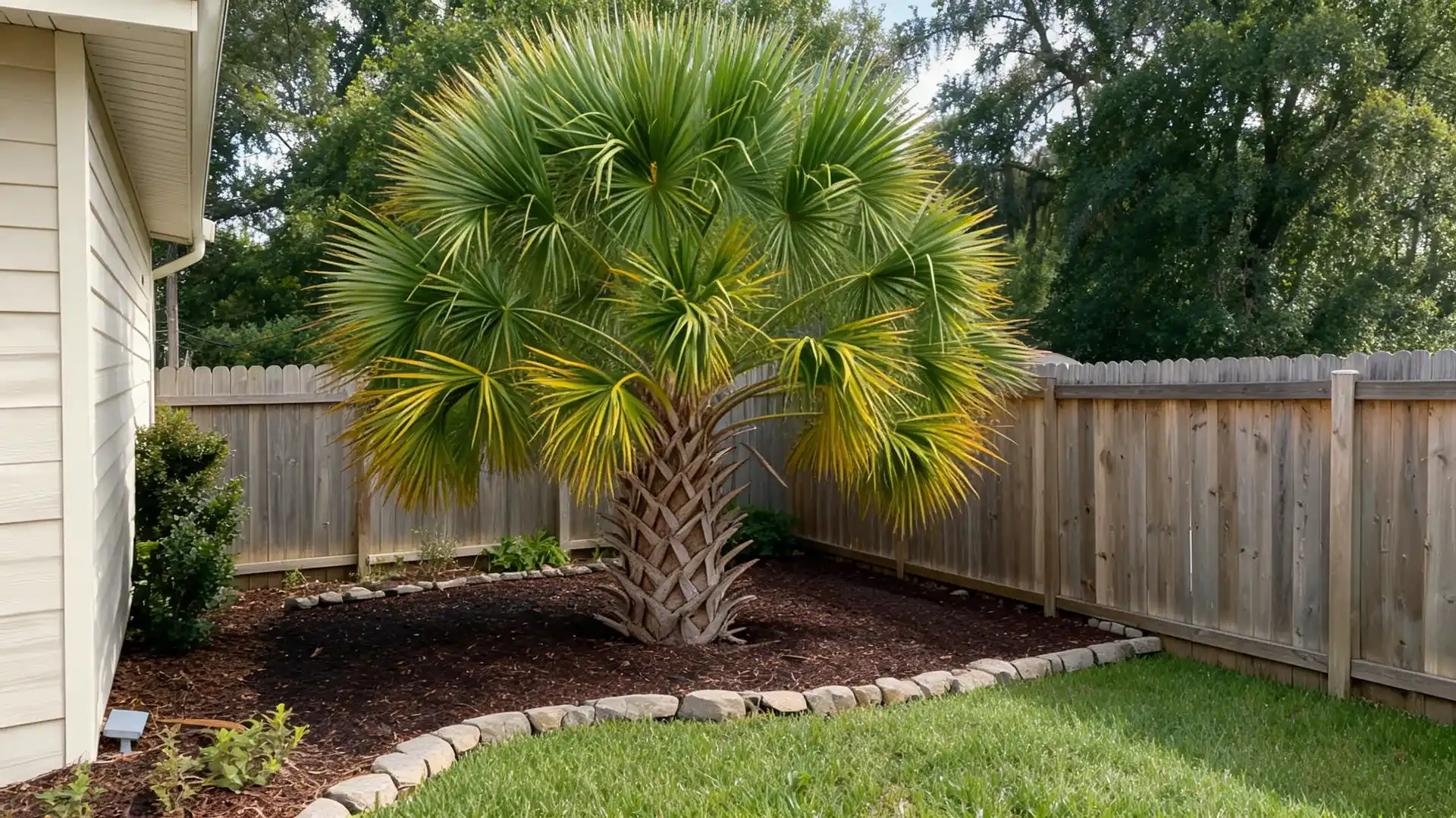
Cabbage palm is a reliable option for small yards in coastal or windy regions when planted with long-term height in mind. It has a clean upright trunk and a native Southern look that fits natural gardens and simple landscapes.
This palm handles salt, wind, and tough outdoor conditions better than many tropical palms. Place it where the crown has space and falling fronds will not become a problem.
| Botanical Name | Plant Type | Sun Requirements | Height and Spread | USDA Zone |
| Sabal palmetto | Perennial palm | Full sun | 30-80 ft. tall, 10-15 ft. wide | 8-11 |
Know Your USDA Zone Before You Pick a Palm
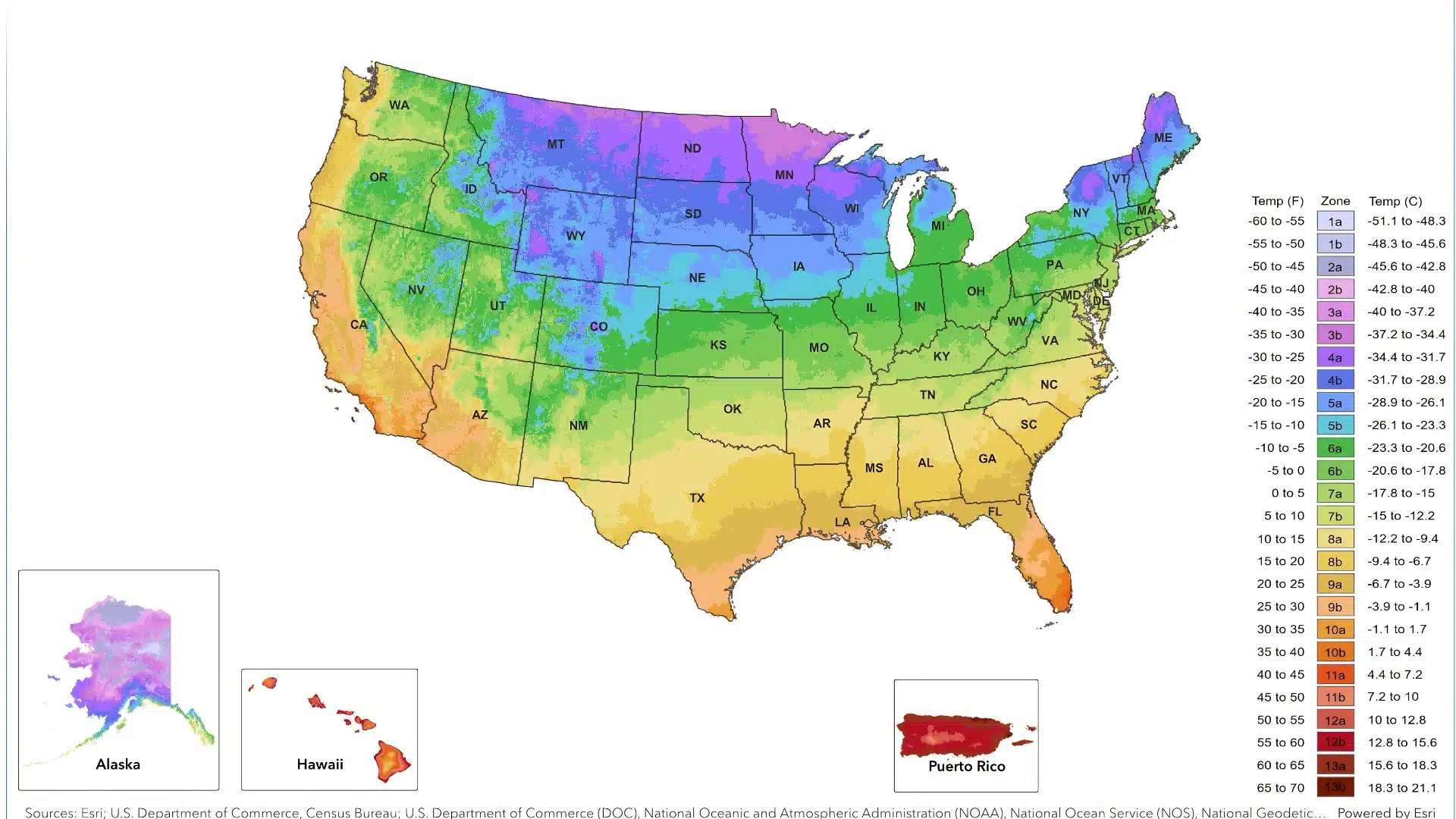
USDA zones help you understand how cold your area usually gets in winter, which matters a lot when choosing outdoor palm trees. The USDA Plant Hardiness Zone Map is based on average annual extreme minimum winter temperatures and divides areas into 10°F zones, with smaller 5°F half-zones like 9a and 9b.
This matters because many tropical palms can look healthy in warm months but suffer serious damage after one cold snap. Bottle palm and Manila palm usually need warmer zones, while needle palm and windmill palm can handle cooler conditions better.
Still, USDA zones are not the whole story. They do not measure summer heat, humidity, wind exposure, soil drainage, or protected microclimates near walls and patios. Always match the palm’s zone range with your local zone, then check your yard’s real growing conditions before planting
Most tropical palms, such as bottle palm and Manila palm, grow best in zones 10 to 11. Cold-hardy types, such as needle palm and windmill palm, can handle cooler areas.
Indoor Palms vs Tropical Garden Palms: Which Should You Choose?
Indoor and tropical garden palms can both look beautiful, but they serve different needs. This section helps you compare the basics before choosing. The table simplifies the decision by showing how light, space, height, care, climate, and growth rate differ between the two settings.
| Factor | Indoor Palms | Tropical Garden Palms |
| Light | Indirect or filtered | Full sun |
| Space | Containers and rooms | Open landscapes |
| Height | Usually manageable | Often very tall |
| Maintenance | Moderate | Varies by species |
| Climate | Controlled environment | Warm outdoor climates |
| Growth Rate | Usually slower | Often faster |
If your goal is a houseplant, compact indoor varieties are usually the safer choice. If you want a bold outdoor focal point, tropical garden palms can work better when your climate and space allow it.
How Can You Identify Different Palm Trees?
Palm identification becomes easier when you stop guessing based on one feature. Many palms look similar at first, especially when they are young. Look at the leaves, trunk, growth pattern, fruit, and growing setting together to get a clearer answer.
- Leaf shape: Fan palms have rounded, hand-like leaves. Feather palms have long fronds with narrow leaflets arranged along both sides, almost like a soft green feather.
- Trunk appearance: Some palms have smooth trunks, while others show rings, fibers, old leaf bases, or swollen shapes. The trunk can quickly narrow down possible palm types.
- Growth habit: Some palms grow as one upright trunk. Others form clumps, canes, or several stems from the base, which helps separate indoor palms from landscape palms.
- Fruit: Dates, coconuts, red clusters, black berries, or small round fruits can help with identification. Fruit is especially useful when two palms have similar leaves.
- Growing environment: Indoor palms usually stay smaller and grow in containers. Outdoor palms often need more sun, deeper soil, and space for a wider crown.
What Care Do Most Palm Trees Need?
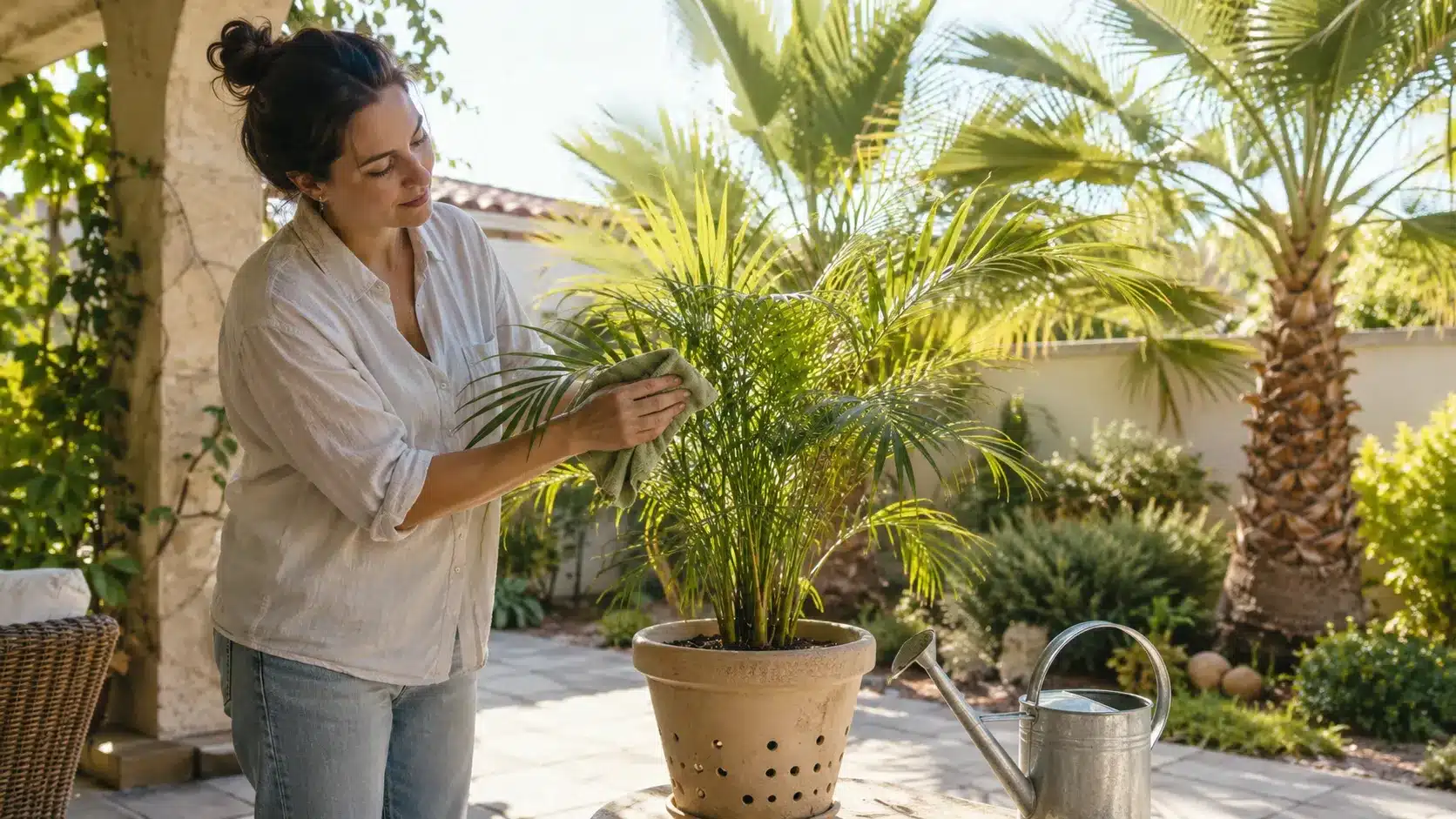
Once you choose the right palm, the next step is to keep its routine steady. Most palms do not like sudden changes, so care should be simple, regular, and based on how the plant responds.
Water deeply when needed, then let extra water drain away. For potted palms, empty saucers so roots do not sit in water. Dust indoor fronds gently so they can absorb light better. Rotate container palms every few weeks so growth stays even.
For outdoor palms, watch the newest fronds because they often show stress first. Yellowing, browning tips, weak growth, or spots can point to watering, nutrient, pest, or weather issues. Check the plant early instead of waiting until the whole palm looks tired.
Frequently Asked Questions
Can palm trees grow successfully in containers for many years?
Yes. Many palm species grow comfortably in containers for years when given proper drainage, suitable light, and occasional repotting. Parlor Palm, Kentia Palm, Lady Palm, and European Fan Palm are especially popular choices because their growth remains manageable and they adapt well indoors.
Do palm trees grow quickly or slowly?
Growth speed depends on the species and environment. Queen Palm and Mexican Fan Palm can grow relatively fast outdoors, while Parlor Palm and Kentia Palm grow much more slowly. Light, temperature, water, and soil conditions also influence how quickly a palm develops.
Are palm trees safe around swimming pools?
Many palms work well near pools because they create a tropical atmosphere without producing large surface roots. Christmas Palm, Foxtail Palm, and Bottle Palm are commonly used. Always consider mature size and falling fruit before selecting a poolside planting location.
Why do palm leaves turn brown at the tips?
Brown tips often result from low humidity, inconsistent watering, excess fertilizer, or mineral buildup from tap water. The issue does not always mean the plant is unhealthy. Reviewing watering habits and environmental conditions usually helps identify the cause.
Can palm trees increase property appeal?
Yes. Well-placed palms often improve curb appeal because they provide structure, height, and a distinctive tropical appearance. Landscape designers frequently use palms as focal points, entry accents, or framing plants to create a more polished outdoor environment.
Final Thoughts
Choosing among the manytypes of palm trees becomes much easier when you start with the environment rather than the appearance. A palm that matches your available light, climate, and space will usually perform better and require less maintenance.
For indoor spaces, compact and adaptable palms often provide the best long-term results. For outdoor landscapes, larger tropical species can create structure, shade, and year-round interest. Understanding the difference helps prevent common planting mistakes.
If you are considering palm tree varieties for your home or garden, start by measuring your space and evaluating your light conditions. That simple step often narrows the options quickly and leads to a healthier, more successful plant.
Which palm are you considering growing indoors or outdoors? Share your location, growing space, and light conditions, and I’ll help you narrow down the best option.