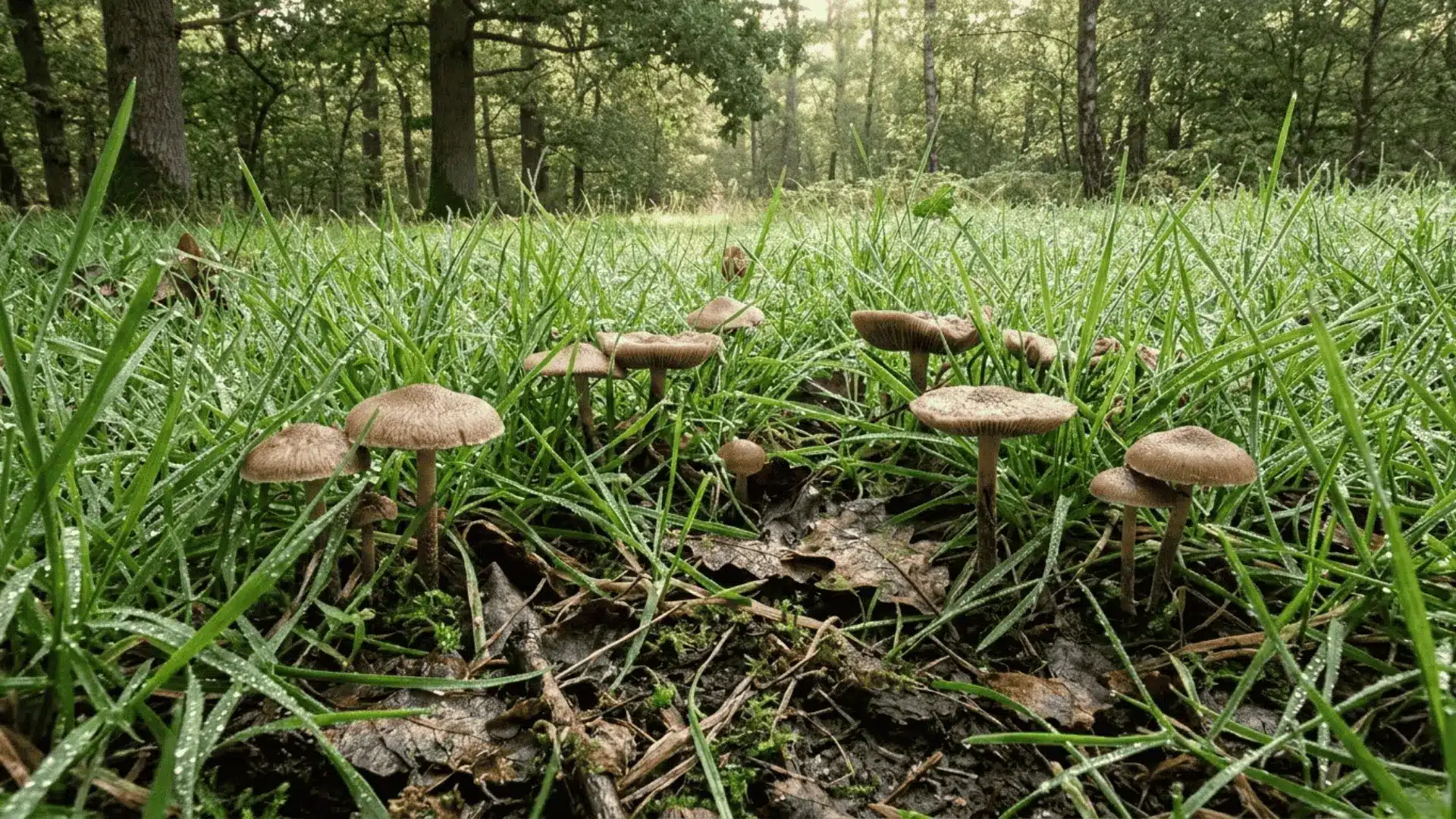
One morning, you step outside, coffee in hand, and your lawn is suddenly dotted with mushrooms that were not there yesterday.
Honestly, your yard is just doing what nature does best.
Beneath the grass, a whole fungal world is quietly thriving, and those little caps popping up are simply its way of saying hello. Most of them are completely harmless, though a few are worth knowing about.
Stick around, and we will walk through why mushrooms love your yard, which types tend to show up, and how to gently get rid of them for good.
Why are Mushrooms Growing in My Yard?
Those mushrooms are not random. They are the visible fruiting bodies of fungi that have been living underground all along, and they surface when conditions feel just right.
A few things that usually invite them out:
- Too much moisture from overwatering, poor drainage, or heavy rain
- Decaying matter like buried roots, old mulch, or decomposing wood
- Shady spots with little sunlight
- Surprisingly rich, nutrient-dense soil
If your lawn checks most of these boxes, mushrooms are almost a given. The good news is that their presence is mostly harmless.
Are Mushrooms in the Yard Dangerous?
It depends. Most lawn mushrooms are doing quiet, helpful work, breaking down organic matter and enriching the soil.
But some varieties are genuinely toxic to humans and pets, which is reason enough to take them seriously. Eating wild mushrooms from your yard is never a good idea since identifying them without expert knowledge is risky.
If you have kids or pets, remove them as soon as they appear and avoid touching unfamiliar varieties with your bare hands.
You do not need to panic every time one pops up, but staying cautious is always the smarter approach.
Common Mushrooms Growing in Yards
Not every mushroom in your yard is cause for concern. Here are some of the most familiar types you might spot growing in the grass.
1. Fairy Ring Mushrooms
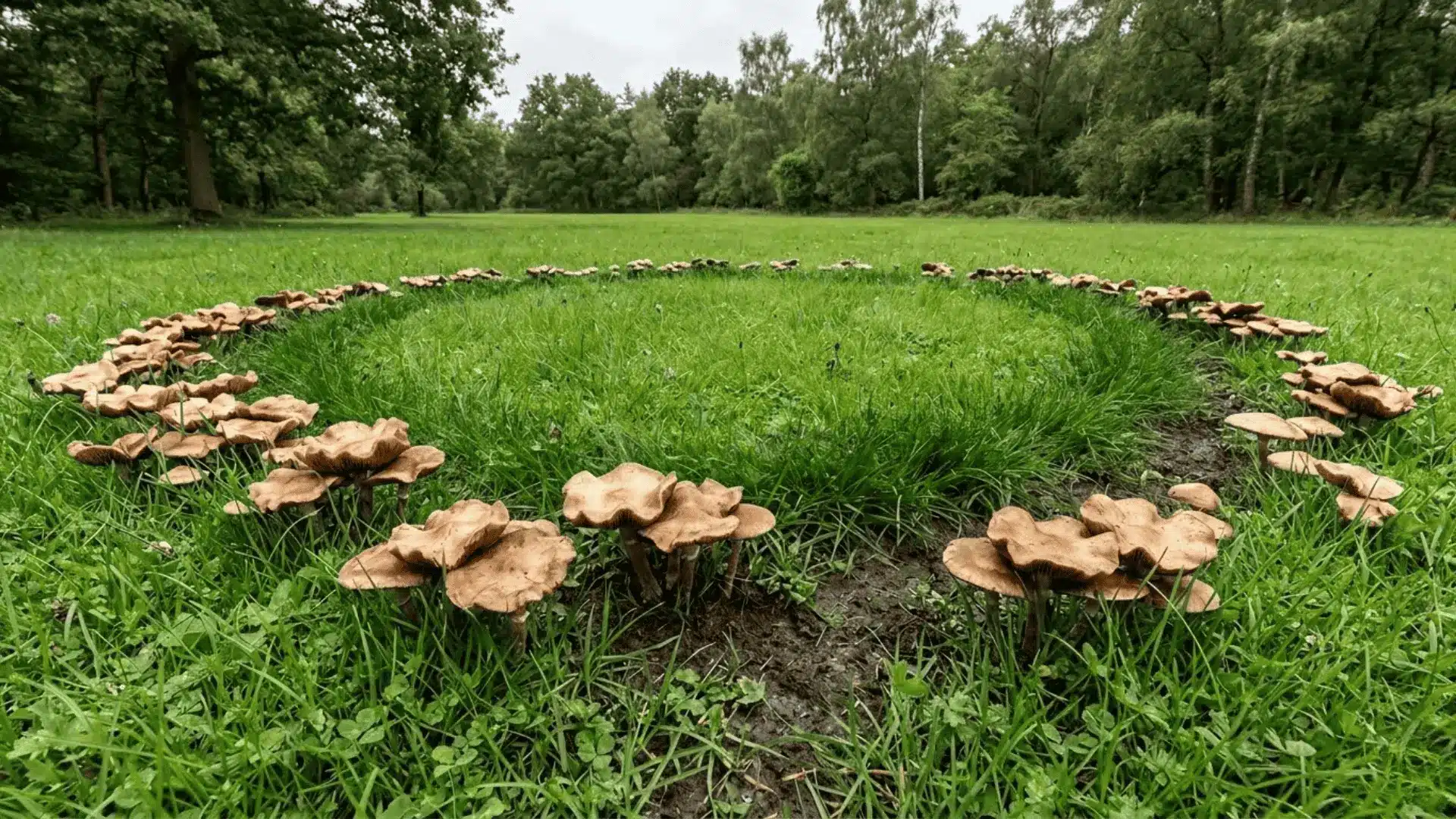
Appearance: Tan to brown caps with a slightly wavy edge
Size: 1 to 3 inches wide
These grow in curved or circular patterns across lawns and are one of the most recognizable sights in a grassy yard. They follow underground fungal networks, which is what gives them that distinct ring shape.
The grass around them often looks darker or grows faster than the rest of the lawn, which is usually the first sign that a fairy ring is forming beneath the surface.
2. Puffball Mushrooms
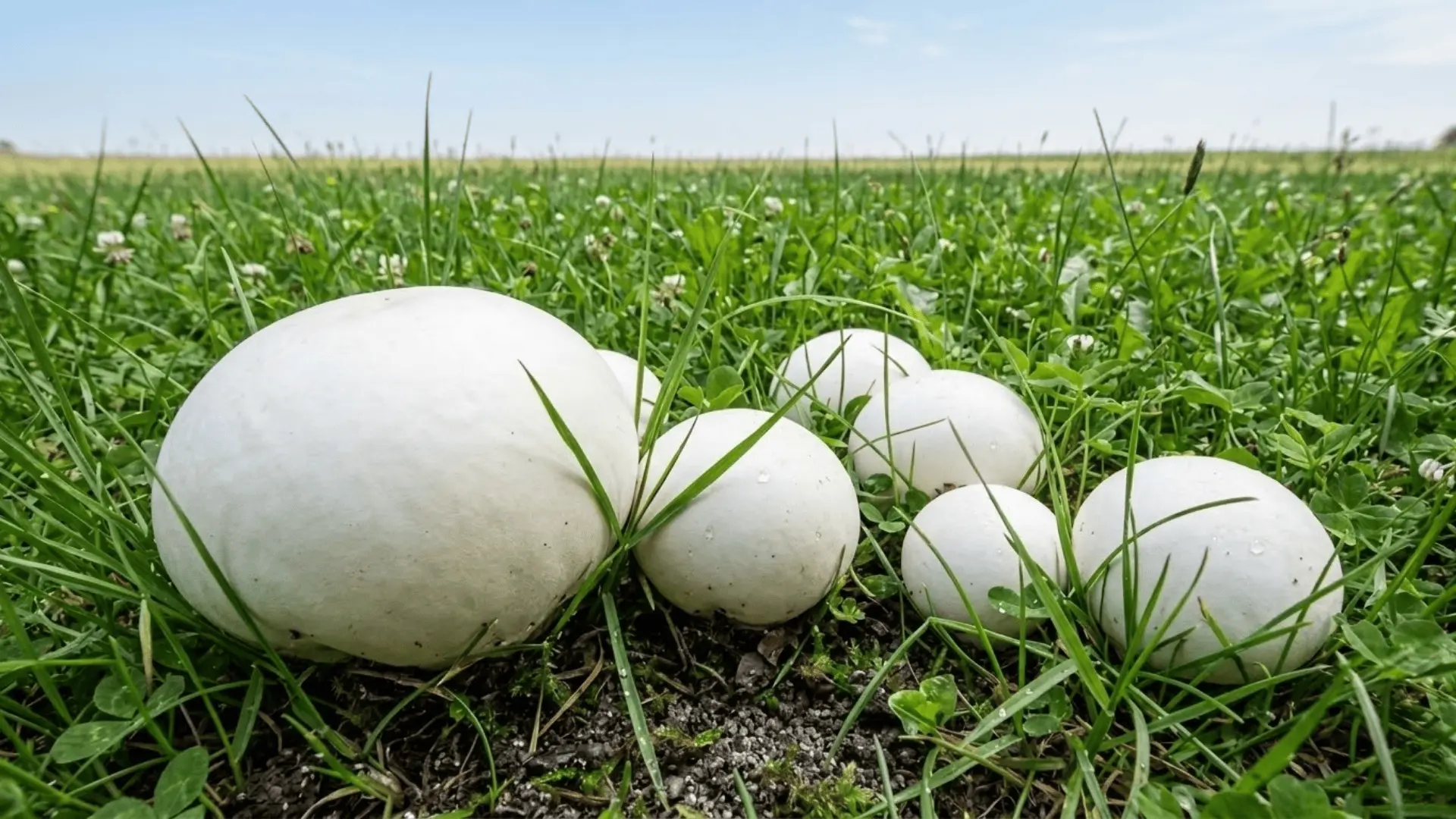
Appearance: Round, white, and smooth on the outside
Size: 1 to 10 inches in diameter, depending on the variety
As they mature, puffball mushrooms release spores into the air, which is their way of spreading further across your lawn. They are one of the easier mushrooms to spot, given their distinctive round shape.
Most varieties are harmless, though it is always worth confirming the species before getting too comfortable around them, as some lookalikes can be problematic.
3. Lawn Mower’s Mushroom
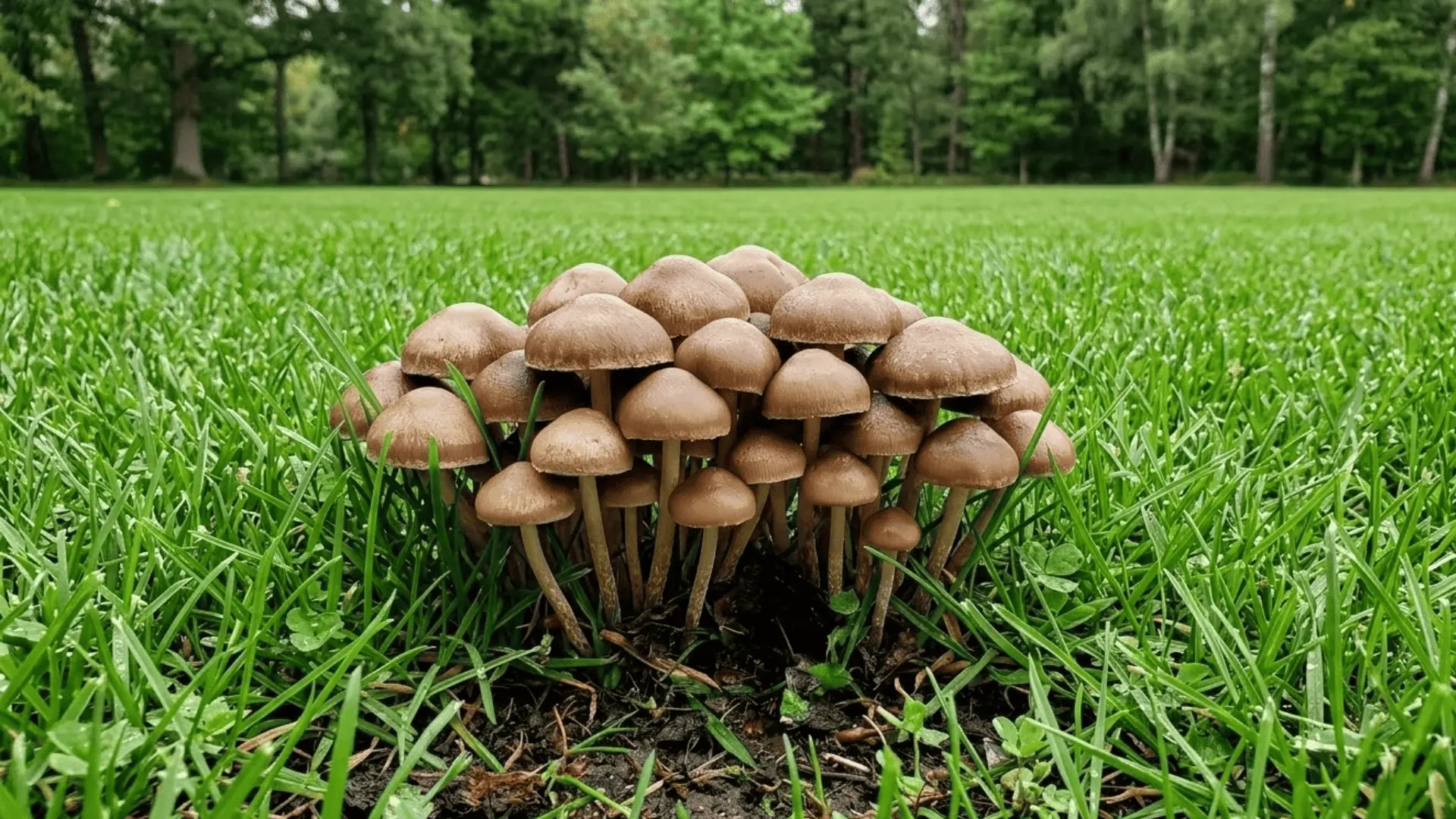
Appearance: Small brown caps with a slender stem
Size: 1 to 2 inches wide, easy to overlook in thick grass
These are among the most common mushrooms found in moist grass and tend to grow in clusters rather than alone.
They pop up frequently, especially after mowing or a spell of wet weather, which is exactly how they got their very fitting name. While they are not considered dangerous, they are not edible either and are best left alone.
4. Inkcap Mushrooms
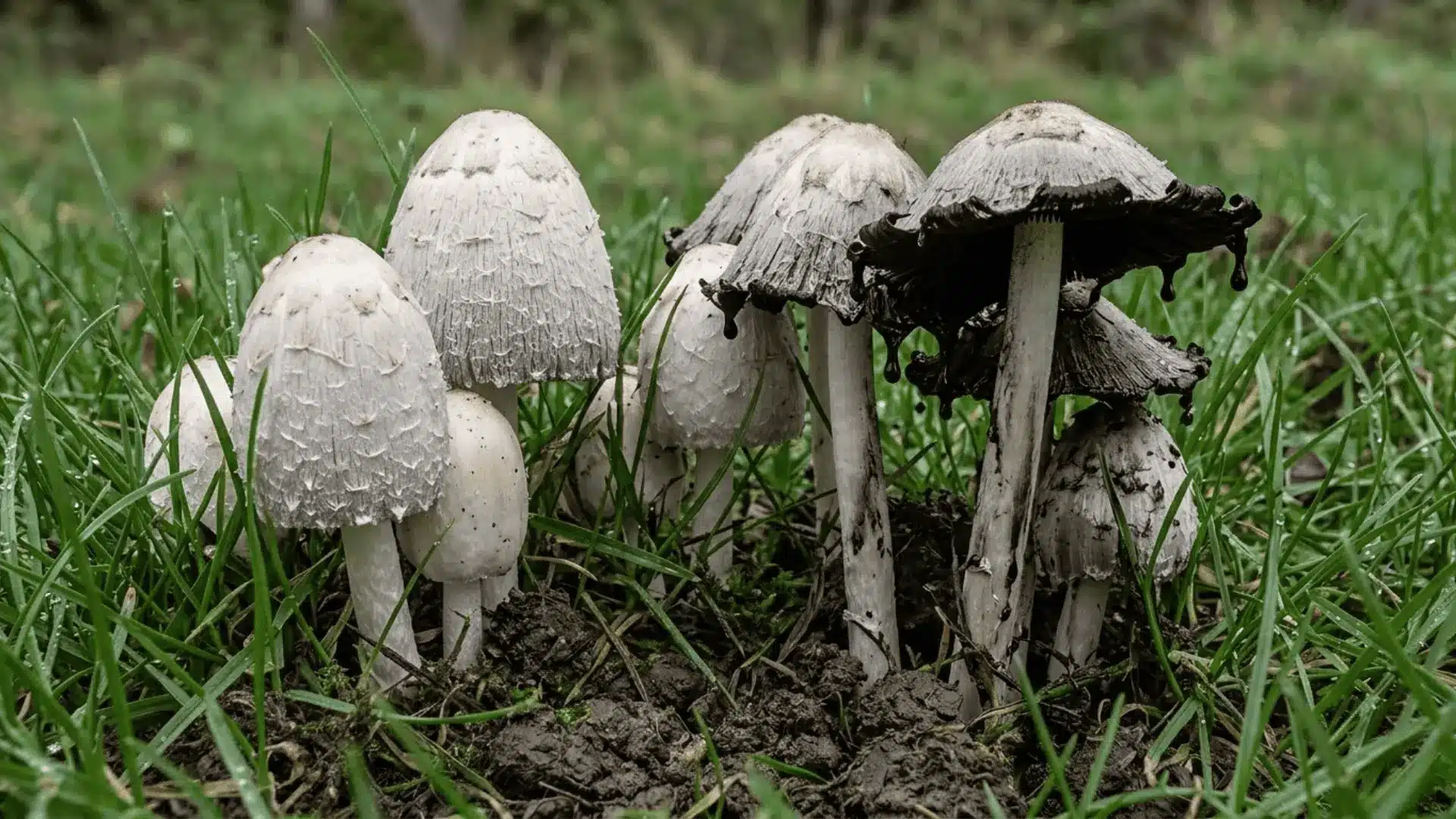
Appearance: Pale caps that darken and dissolve with age
Size: 1 to 4 inches tall, depending on the variety
Inkcap mushrooms have one of the more unusual life cycles you will come across in a lawn. As they age, their caps slowly dissolve into a dark, inky liquid in a process called deliquescence.
This makes them fairly easy to identify once you know what you are looking for. They are mostly harmless but not recommended for consumption, and some varieties can cause unpleasant reactions when mixed with alcohol.
5. Stinkhorn Mushrooms
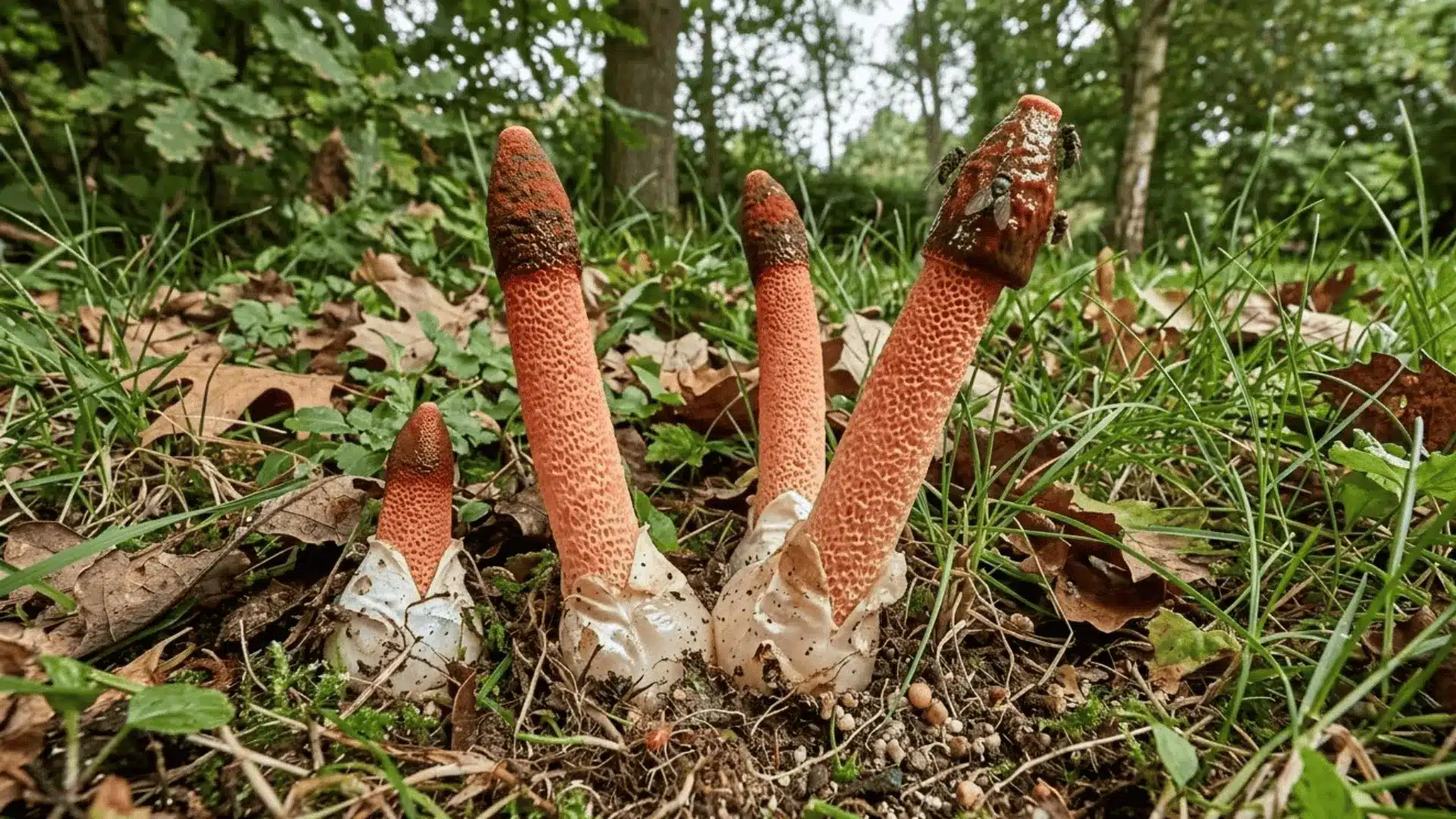
Appearance: Unusual elongated shape, often reddish or pale
Size: 4 to 8 inches tall once fully grown
If something smells unusually off in your garden, stinkhorns are very likely the culprit. Their strong, unpleasant odor is actually a clever biological strategy to attract insects, which then help with spore dispersal.
They tend to emerge from a white egg-like structure in the soil and grow surprisingly fast. Odd-looking and hard to ignore, stinkhorns are one of the more memorable and peculiar lawn visitors you will ever encounter.
Poisonous Mushrooms That May Appear in Lawns
Some mushrooms that show up in yards are far less innocent. These are the ones worth knowing by sight, especially if you have children or pets around.
6. Death Cap Mushrooms
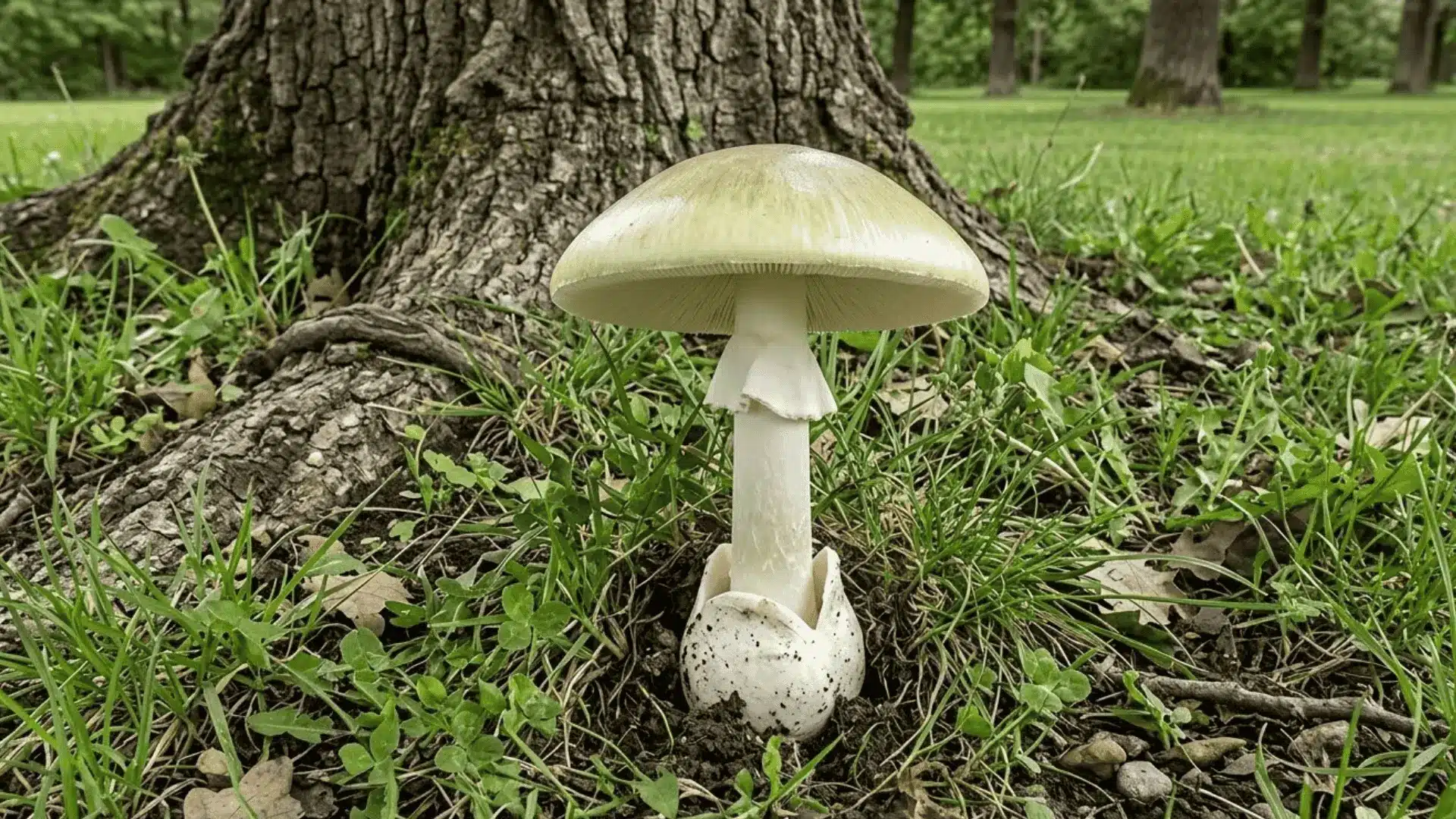
Appearance: Pale green to yellowish cap with white gills
Size: 2 to 5 inches wide
Often found near trees, death caps are among the most dangerous mushrooms in existence and are responsible for a significant number of poisoning cases worldwide. What makes them alarming is how unremarkable they look.
They blend in easily with other lawn mushrooms, show no immediate smell or taste warning, and symptoms of poisoning can take hours to appear, by which point serious damage may already be done.
7. Destroying Angel Mushrooms
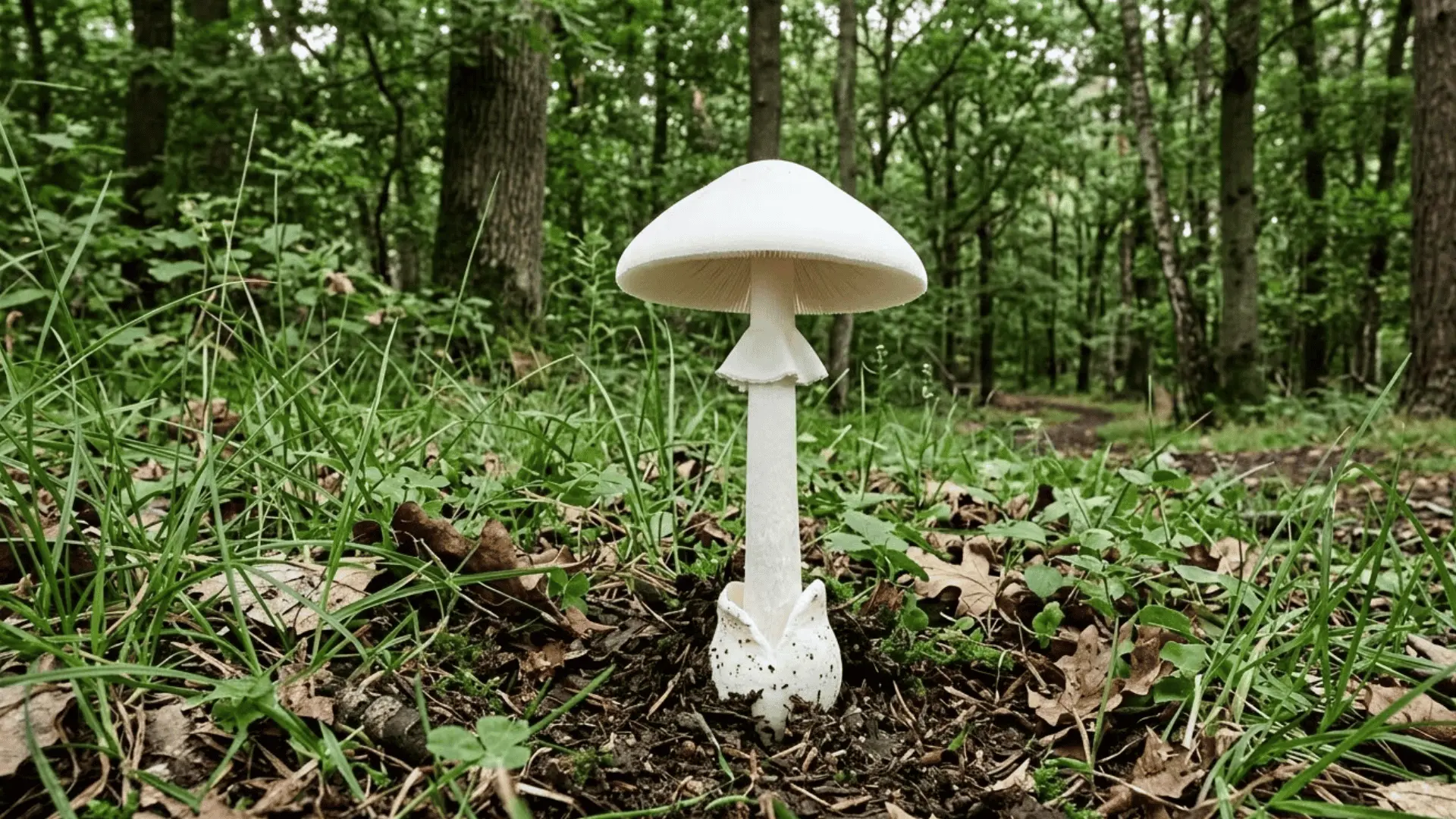
Appearance: Pure white cap, stem, and gills throughout
Size: 3 to 5 inches wide with a stem up to 6 inches tall
Deceptively delicate and almost tasteful in appearance, destroying angel mushrooms are extremely toxic despite looking harmless. They closely resemble certain edible varieties, which makes them particularly dangerous.
Ingesting even a small amount can lead to severe organ damage, and unfortunately, symptoms are often delayed long enough that treatment becomes more difficult by the time they appear.
8. False Parasol Mushrooms
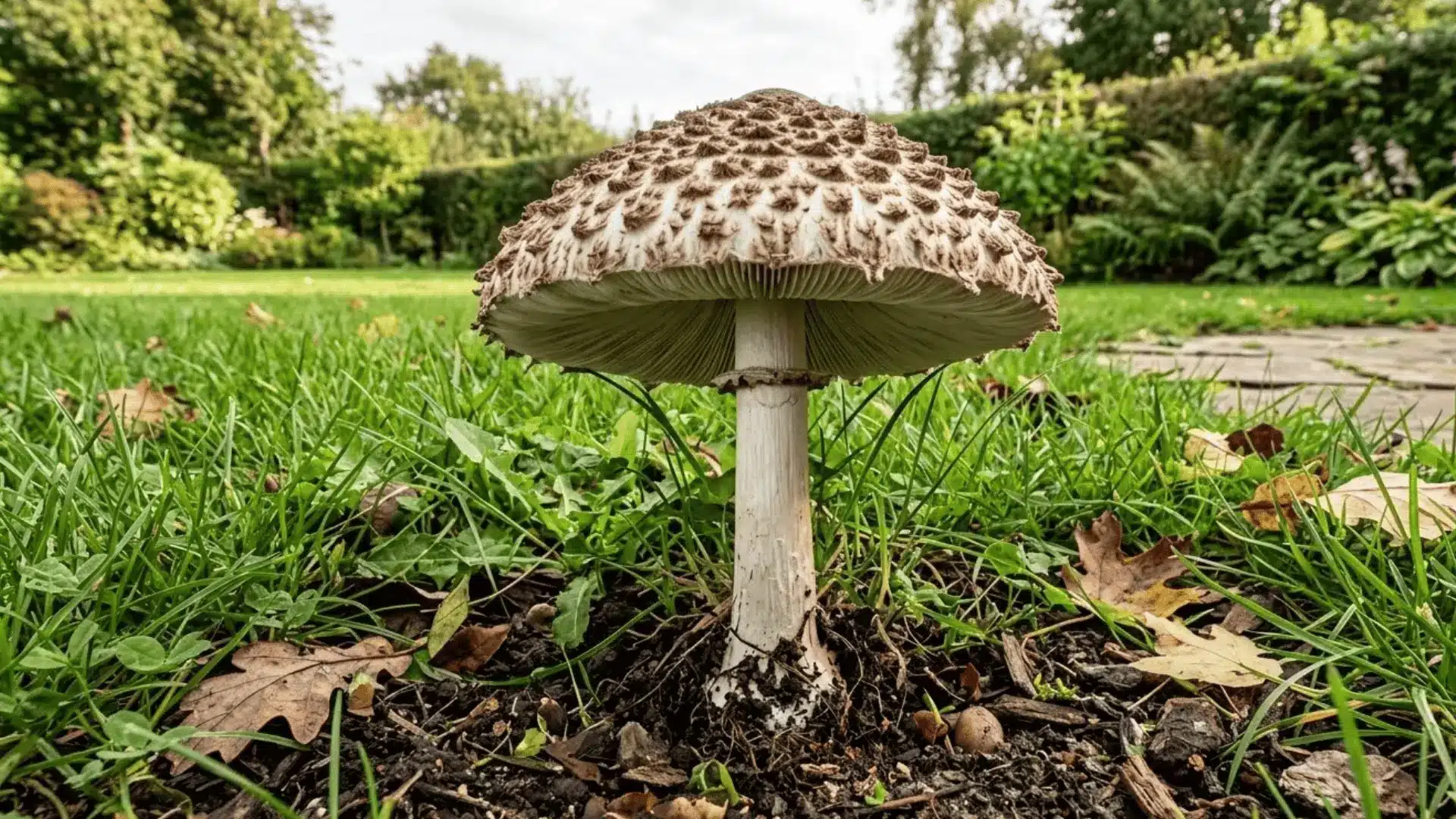
Appearance: Brownish scaly cap with white to pale gills
Size: 2 to 6 inches wide
These tend to show up in lawns and garden beds more often than people expect and can cause severe gastrointestinal illness even in small amounts.
They look strikingly similar to edible parasol mushrooms, fooling even fairly attentive gardeners. Treating any parasol-shaped mushroom in your yard with real caution is always the safest approach.
Note: Many poisonous mushrooms look almost identical to harmless ones, and even experienced foragers can struggle to tell them apart. When in doubt, do not touch and do not taste.
Signs That Mushrooms Are About to Grow in Your Lawn
Your lawn usually gives a few quiet hints before mushrooms actually appear on the surface.
Learning to read these early signs can save you a lot of trouble and help you get ahead of the problem before it spreads.
- Soil that stays damp for long periods after watering or rain
- A thick thatch layer that traps moisture close to the ground
- Decaying tree stumps or buried roots breaking down beneath the surface
- Shady areas where sunlight rarely reaches the grass
- A spell of heavy rainfall followed by warm, humid conditions
Spot more than a couple of these in your yard, and mushrooms are probably not far behind. The earlier you catch these conditions, the easier it becomes to make small adjustments that discourage fungal growth before it takes hold.
How to Get Rid of Mushrooms in Your Yard?
Getting rid of lawn mushrooms is more straightforward than it seems. A few consistent habits and the right approach can make a noticeable difference fairly quickly.
Step 1: Remove Mushrooms by Hand
The simplest and most immediate first step is pulling or digging them out as soon as they appear, before they get the chance to release spores and spread further across your lawn.
Always dispose of them in sealed bags rather than composting, since composting can actually help the spores survive and cycle back into your soil. Wearing gloves during removal is a good habit, especially when the variety is unfamiliar.
Step 2: Improve Lawn Drainage
Poor drainage is one of the biggest invitations for fungal growth, so addressing it goes a long way toward keeping mushrooms at bay.
Here is where to start:
- Aerate compacted soil to help water move through more freely
- Fill or regrade low-lying areas where water tends to pool
- Consider adding drainage channels in particularly soggy spots
Step 3: Reduce Excess Moisture
Overwatering is a surprisingly common reason mushrooms keep coming back season after season. Adjusting your irrigation schedule and switching to deep but infrequent watering gives the soil enough time to dry out.
This small shift in routine makes your lawn a far less welcoming environment for fungi without compromising the health of your grass.
Step 4: Remove Organic Debris
Decaying matter sitting in or beneath your lawn is essentially a buffet for fungi, so clearing it out regularly is one of the more effective long-term fixes.
Old roots, wood pieces, fallen leaves, and any buried organic debris all contribute to mushroom growth. Making debris removal a consistent part of your lawn care routine can noticeably reduce how often mushrooms reappear.
Step 5: Reduce Lawn Thatch
A thick thatch layer traps moisture right at the soil surface and creates exactly the kind of damp, dense environment that fungi love to settle into.
Dethatching your lawn once the buildup becomes significant helps improve airflow, allows the soil to breathe more freely, and reduces the persistently moist conditions that keep inviting mushrooms back.
Step 6: Increase Sunlight
Shady, poorly ventilated lawns promote mushroom growth. Opening up the canopy by trimming trees and shrubs lets in more light and airflow, reducing mushrooms.
Even moderate increases in sunlight exposure can shift conditions enough to make your yard noticeably less hospitable to fungal growth over time.
Natural Ways to Prevent Mushrooms in Lawns
Prevention is always easier than removal. These simple, natural practices can go a long way in keeping mushrooms from making a permanent home in your yard.
| Method | What to Do | Frequency |
|---|---|---|
| Lawn Aeration | Use a core aerator to pull out small plugs of soil and relieve compaction | Once a year, ideally in early fall or spring |
| Proper Watering | Water in the early morning and aim for 1 inch per week | Deep watering 2 to 3 times a week |
| Regular Maintenance | Mow at the right height, rake fallen leaves, and remove dead roots or stumps promptly | Weekly during the active growing season |
| Soil Improvement | Test soil pH and keep it between 6.0 and 7.0; go easy on nitrogen-heavy fertilizers | Test the soil once a year |
Should You Use Fungicides for Lawn Mushrooms?
Fungicides are rarely the answer here.
Mushrooms are just the visible symptom of what is happening beneath the soil, and applying fungicide without addressing the root cause is essentially a temporary fix.
That said, if you are dealing with a severe or recurring fungal problem that simply will not respond to lawn care adjustments, a targeted fungicide application might offer some relief.
Even then, pairing it with long-term fixes like improving drainage, reducing moisture, and clearing organic debris will always deliver better, more lasting results than fungicide alone ever could.
Are Mushrooms Good for Your Lawn?
Surprisingly, mushrooms are not always the enemy.
The fungi behind them play a genuinely helpful role in breaking down organic matter, improving soil structure, and releasing nutrients back into the ground, all of which benefit your grass in the long run.
The problem arises when toxic species appear or when large clusters start affecting the overall health and appearance of your lawn.
So while the occasional mushroom is more of a sign of a living, active soil ecosystem, consistent or widespread growth is worth paying attention to and managing before it gets out of hand.
Final Thoughts
Mushrooms growing in your yard are rarely cause for alarm, but they do tell you something worth listening to about the health of your lawn.
With a little consistency in your lawn care routine, the right moisture balance, and timely cleanup, keeping them in check is very manageable.
Think of it less as a battle and more as learning to understand what your yard needs.
Got persistent mushrooms or a variety you cannot quite identify? Drop your questions in the comments, and we will help you figure it out.