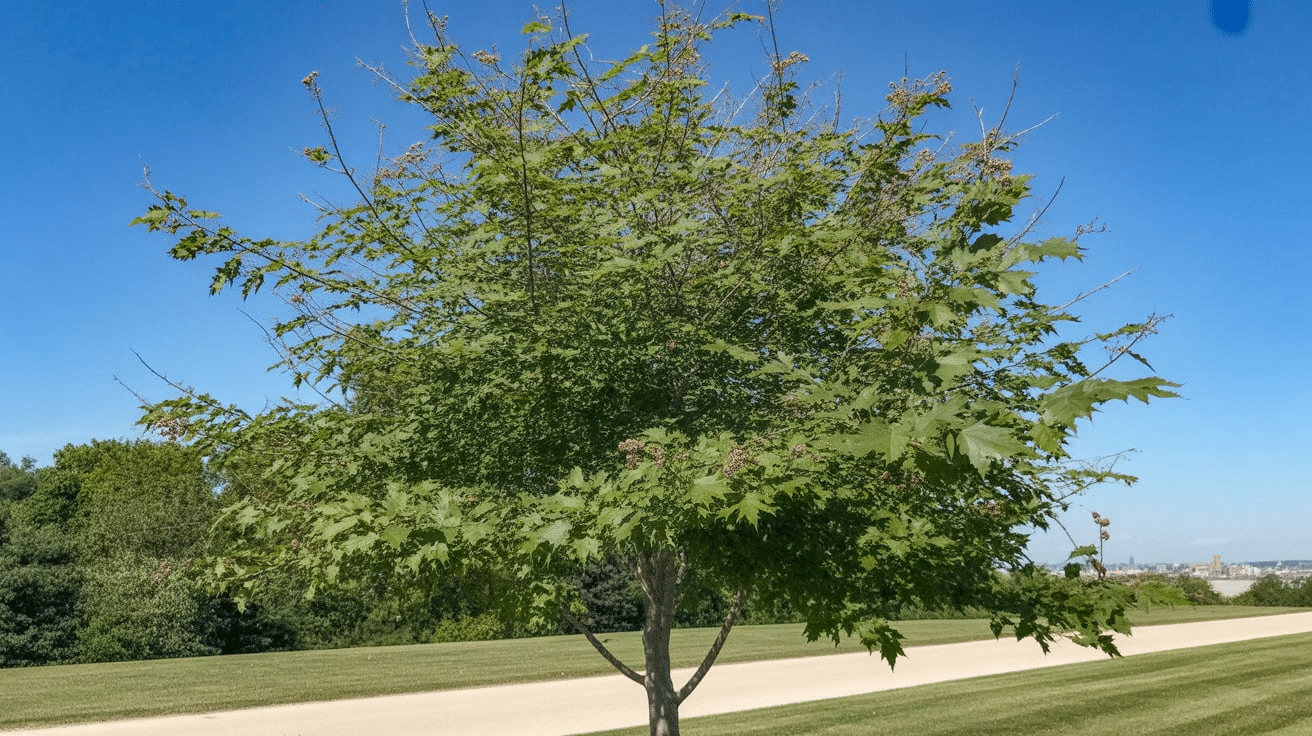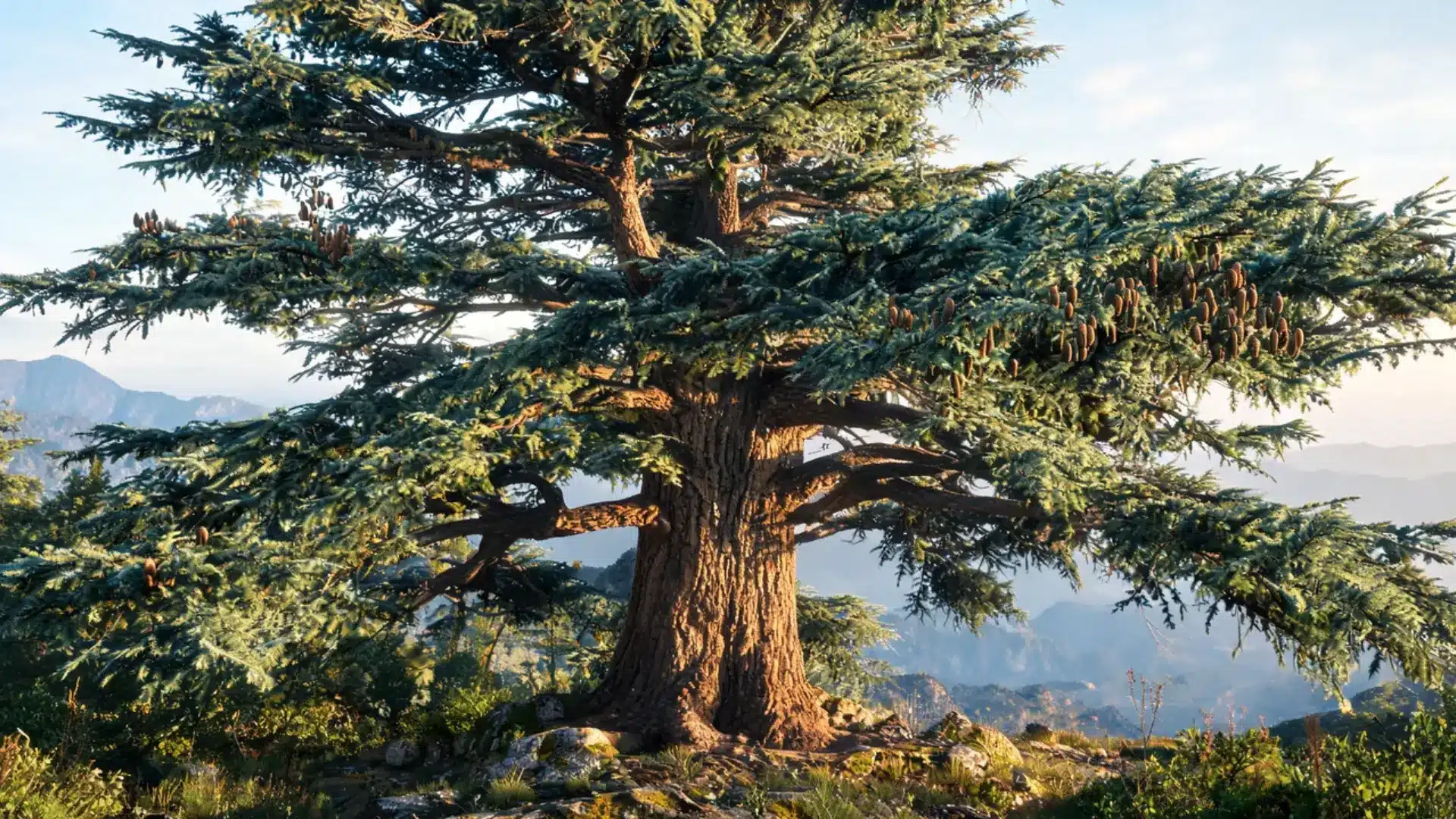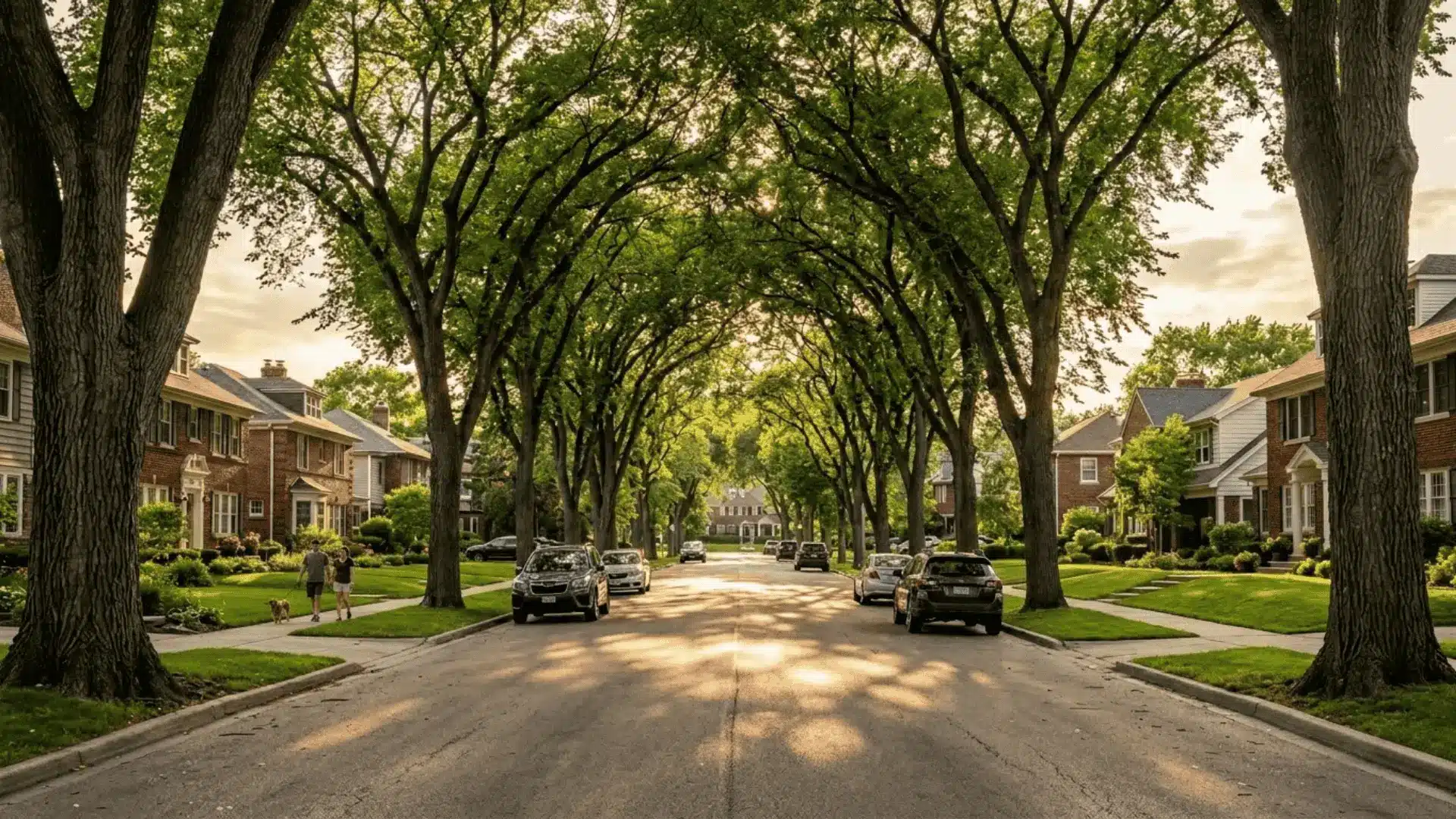
Few trees carry the kind of quiet, unhurried beauty that an elm does.
Landscapes soften around them, streets feel more storied, and neighborhoods somehow look like they belong on a postcard.
Across North America and Europe, elm-lined avenues have long been a symbol of graceful urban living, the kind that makes you slow your walk just to look up.
At the heart of it all sits the American elm, beloved and iconic for good reason.
Stick around, and we’ll walk you through how to identify them, get to know different species, understand how they grow, and learn how people are working to bring them back.
What is an Elm Tree?
Elm trees belong to the genus Ulmus, a group of deciduous trees recognized by their graceful, vase-shaped canopy and distinctively serrated leaves.
They grow tall and spread wide, producing dense shade that makes them a favorite for streets, parks, and open landscapes for centuries.
Their fast growth rate and natural arching form gave neighborhoods that dreamy, canopied look that feels both timeless and intentional.
Practical yet beautiful, elm trees earned their place in urban forestry not just for how well they grew, but for how effortlessly they made every streetscape feel complete.
Elm Tree Identification: How to Recognize One?
Spotting an elm gets easier once you know what to look for.
Here are the key features that give them away:
- Leaves are oval-shaped with uneven bases and double-serrated edges.
- Bark appears gray to brown with deep ridges and furrows running through it.
- Seeds come as flat, circular samaras that ripen and drop in spring.
- Mature trees form a classic vase-shaped canopy that is hard to miss.
- The overall silhouette is tall, wide-spreading, and gracefully arched at the top.
Once you’ve seen a true elm in its full form, you’ll find yourself recognizing them everywhere you go.
Types of Elm Trees
Not all elms are created equal, and that’s honestly what makes them so interesting to learn about. Each species brings its own character, growing conditions, and story to the table.
1. American Elm
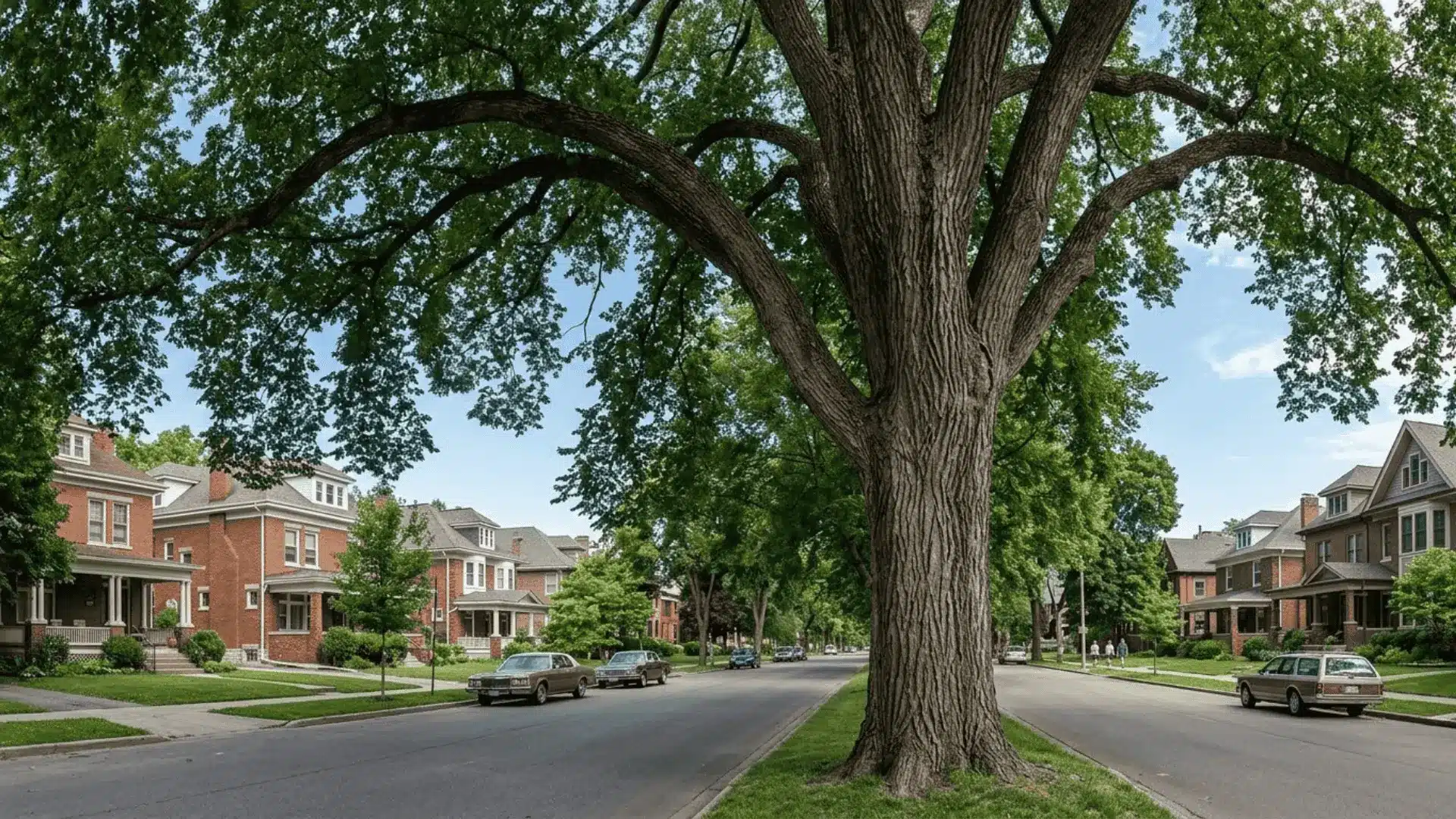
Scientific Name:Ulmus americana
Habitat: Floodplains, riverbanks, and open landscapes across North America
Flowering Period: Early spring, before leaves appear
One of the most iconic shade trees on the continent, the American elm is celebrated for its tall, dramatically arching branches that form that signature vase shape.
It once lined countless streets across North America, creating canopied corridors that felt almost ceremonial, before Dutch elm disease swept through and reshaped the landscape entirely.
2. Chinese Elm
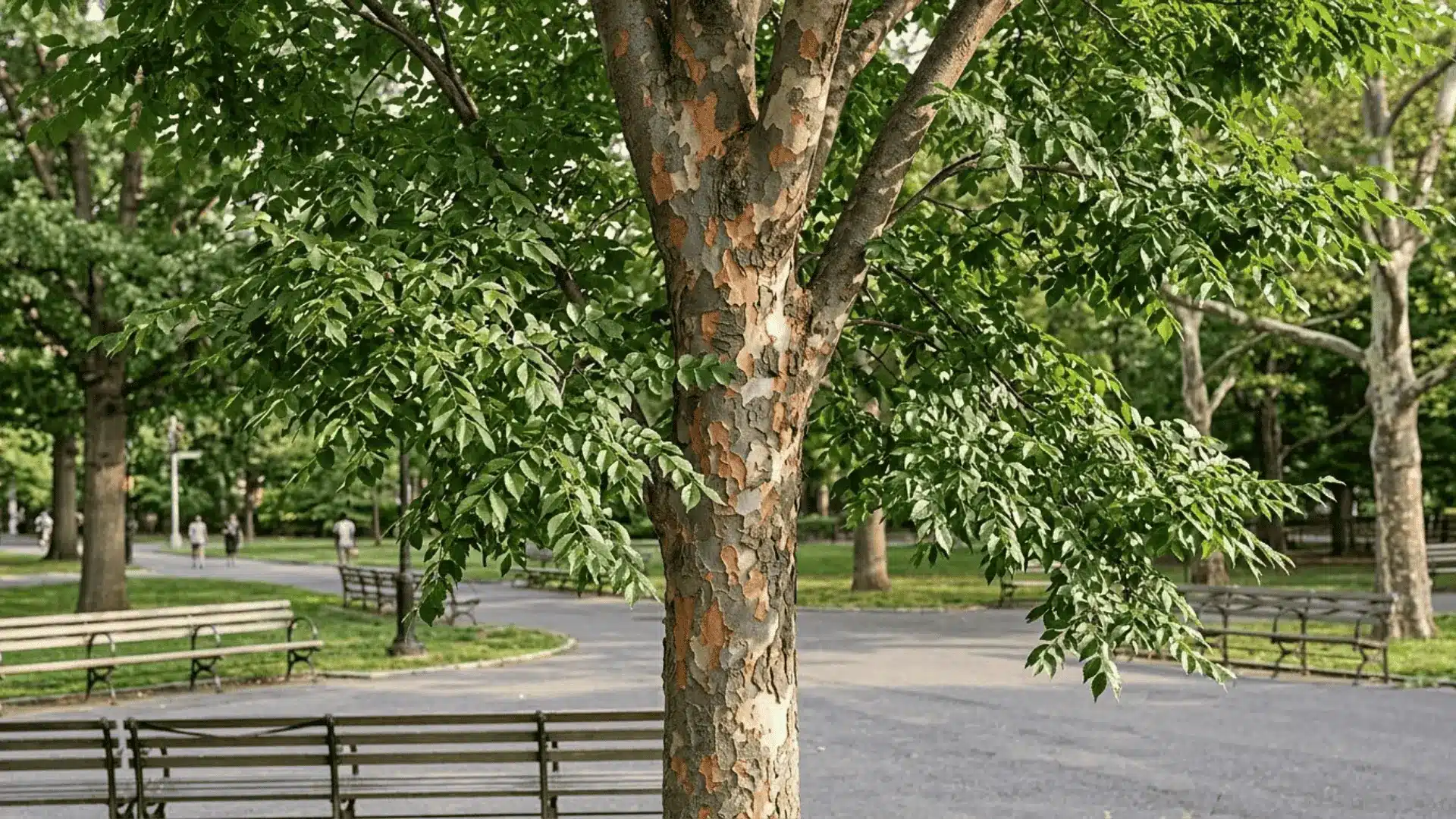
Scientific Name:Ulmus parvifolia
Habitat: Forests and urban landscapes across East Asia
Flowering Period: Late summer to early fall
Highly adaptable and more resilient than many of its relatives, the Chinese elm handles pollution, drought, and varied soil types with quiet ease.
Its natural resistance to common elm diseases makes it a dependable choice for modern landscaping, and its lacy, fine-textured foliage gives it a delicate appearance that feels anything but ordinary.
3. Slippery Elm
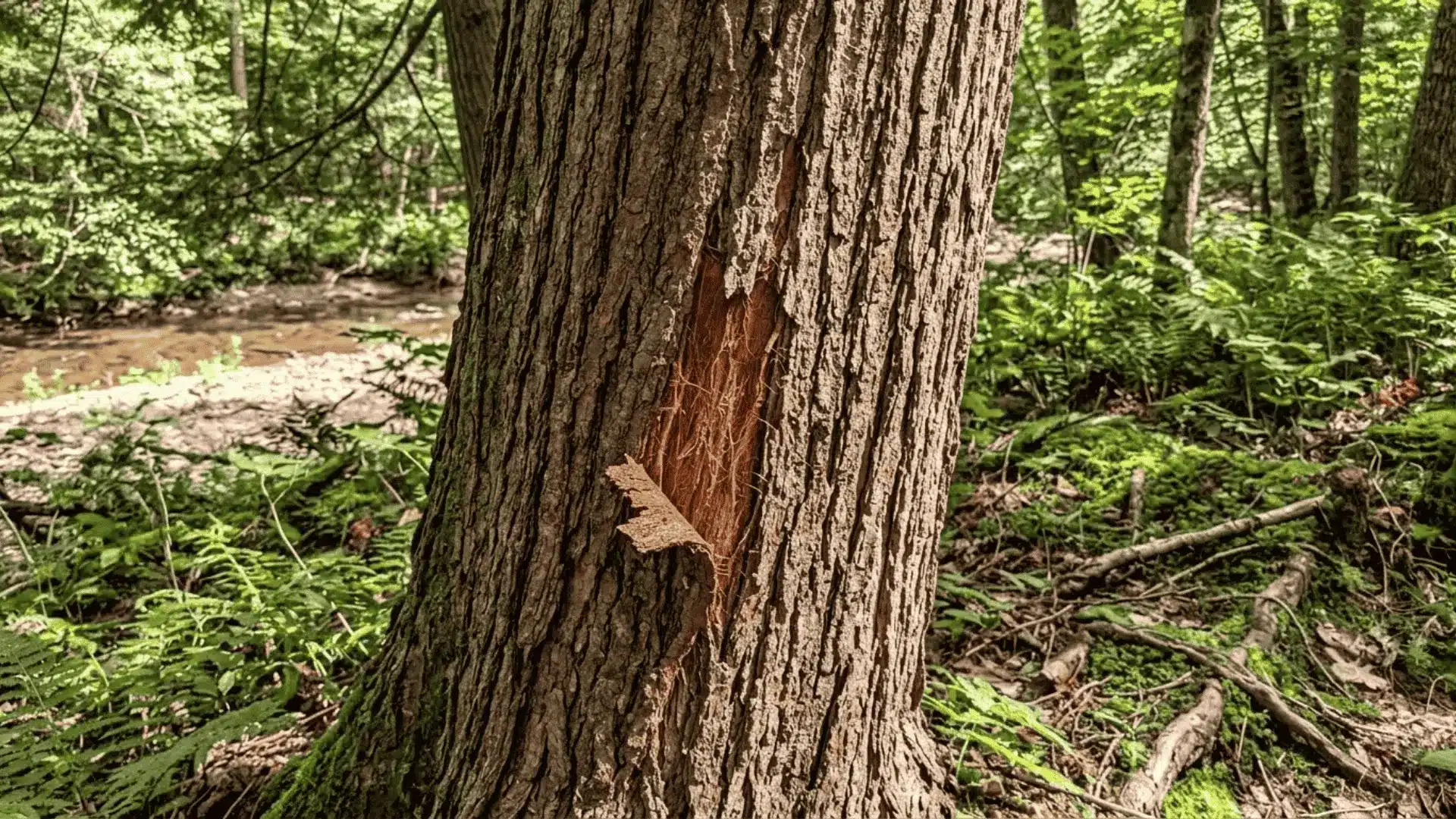
Scientific Name:Ulmus rubra
Habitat: Moist woodlands and riverbanks in eastern North America
Flowering Period: Early spring, before leaves emerge
Known as much for its inner bark as its appearance, the slippery elm carries a long and respected history in traditional medicine.
Its mucilaginous bark was used for generations as a natural remedy for sore throats and digestive concerns, making it one of the most culturally layered and purposeful elm species in existence.
4. Siberian Elm
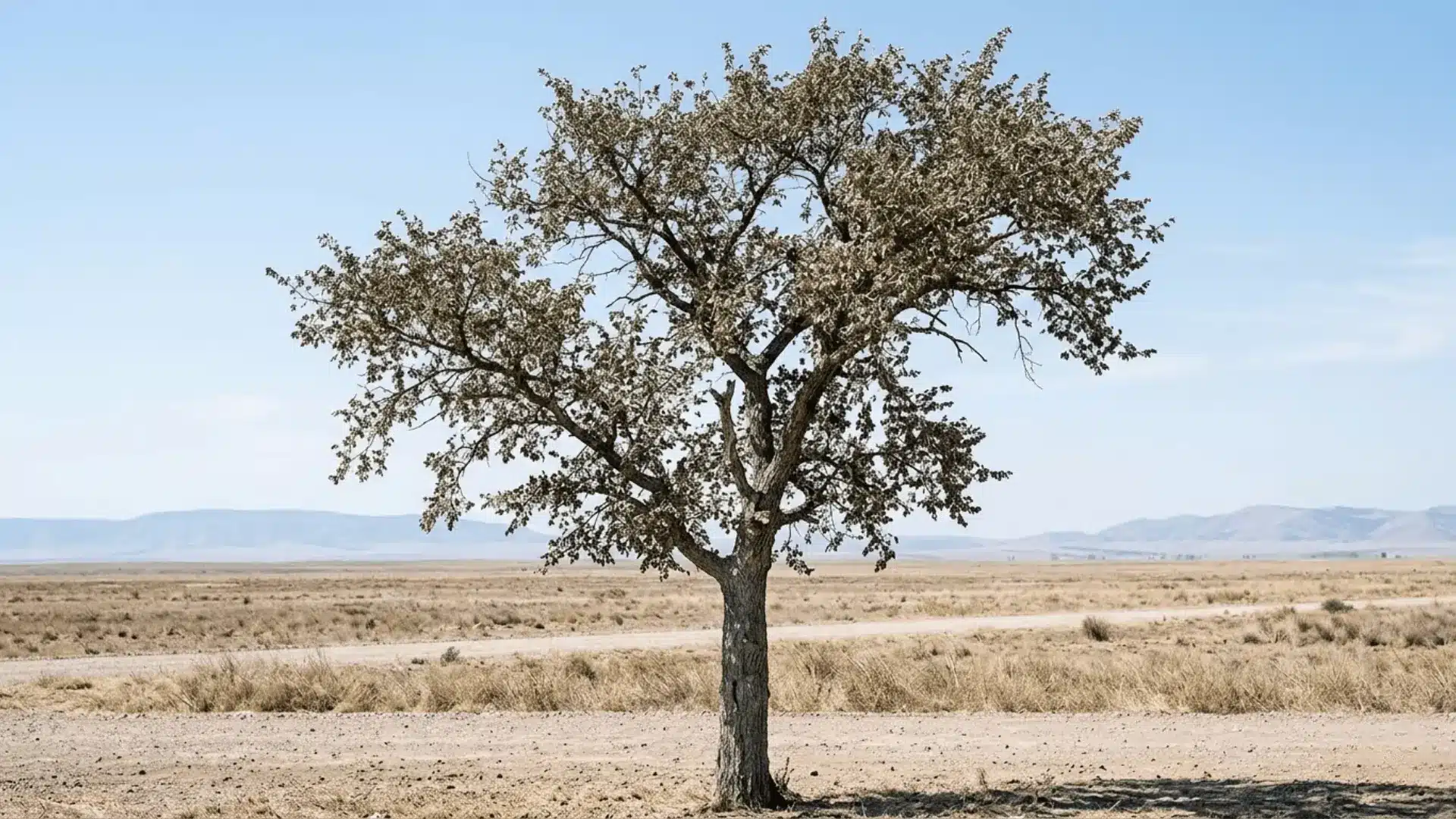
Scientific Name:Ulmus pumila
Habitat: Dry plains, roadsides, and disturbed areas across Asia and North America
Flowering Period: Early spring
Tough enough to push through harsh winters, poor soils, and dry conditions, the Siberian elm is built for survival. That same toughness, however, comes with a downside.
Its aggressive spreading habit has earned it an invasive label in several regions, where it quietly outcompetes native vegetation and establishes itself where it was never intended to grow.
5. Rock Elm
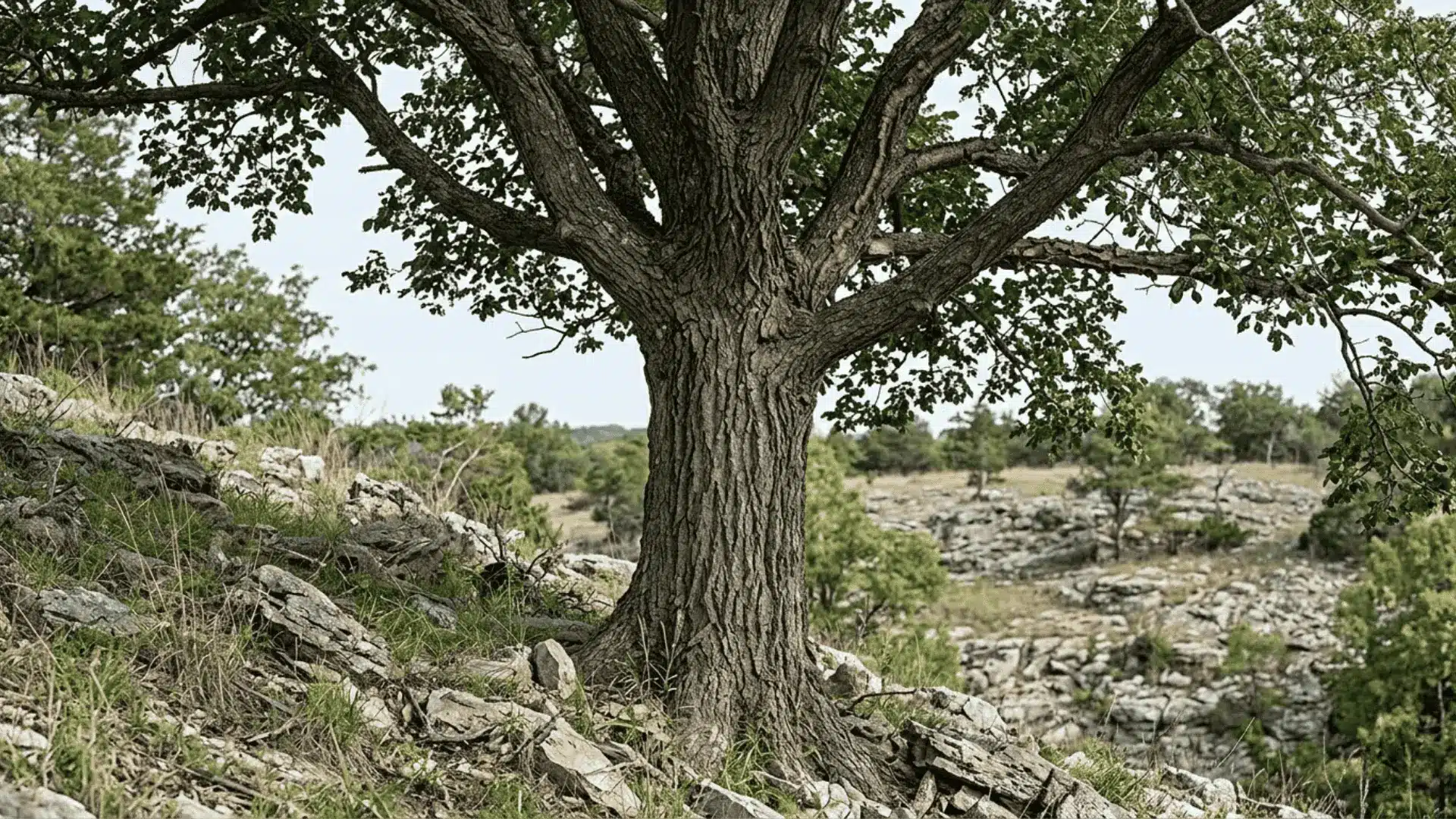
Scientific Name:Ulmus thomasii
Habitat: Rocky uplands and well-drained slopes in central and eastern North America
Flowering Period: Early spring, before leaves appear
Slower to grow but genuinely worth the wait, the rock elm is prized for its exceptionally strong and dense wood.
Historically relied upon in shipbuilding and heavy construction, it stands as one of the sturdier members of the elm family, thriving in well-drained, rocky soils where other trees might struggle to take hold.
Spotlight on the American Elm Tree
Of all the elm species, the American elm holds a particularly special place in the story of North American landscapes. It is the one people picture when they close their eyes and imagine a perfect, tree-lined street.
History and Origin
Long before urban forestry became a formal practice, communities across North America were planting American elms almost instinctively.
Celebrated as the crown jewel of shade trees, these elms shaped the character of countless towns and cities, their canopies arching over streets like a natural cathedral.
Their widespread planting reflected a deep, collective appreciation for beauty that was both functional and quietly poetic.
Physical Characteristics and Natural Range
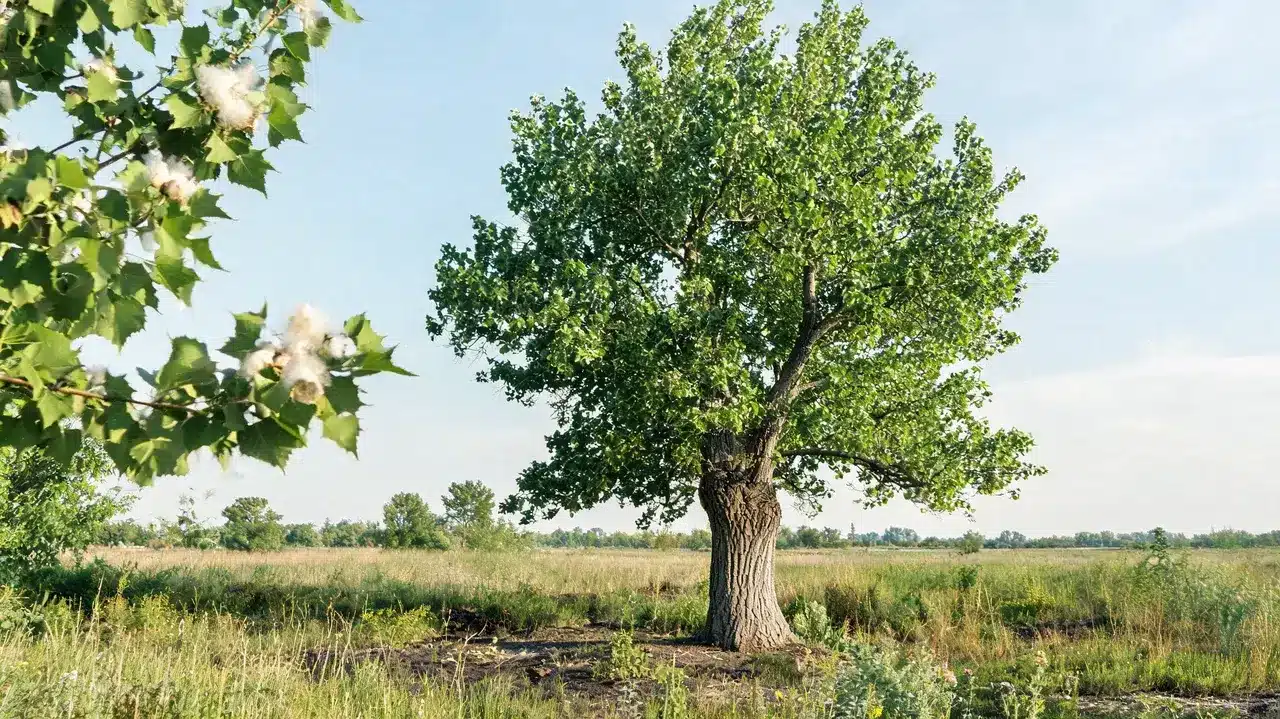
Native to eastern North America, the American elm thrives in floodplains, riverbanks, and rich, well-drained soils where it has the space to grow into its full, magnificent self.
Here is what makes it so visually distinct:
- Grows impressively tall, reaching heights between sixty and one hundred feet at full maturity.
- Forms a broad, umbrella-like canopy that spreads wide and arches gracefully outward.
- Leaves are oval with uneven bases and sharply serrated edges, deep green through the growing season.
- Naturally distributed across much of eastern and central North America, from Saskatchewan down to Florida.
- Prefers moist, fertile soils but adapts reasonably well to urban conditions when given room to grow.
The Impact of Dutch Elm Disease
Dutch elm disease is a devastating fungal infection spread by bark beetles that essentially rewrote the landscape of North America after its arrival in the early twentieth century.
What followed was one of the most widespread tree losses the continent had ever seen, with millions of elms declining and dying within years of exposure.
The symptoms tend to follow a heartbreaking pattern:
- Leaves are turning yellow and wilting unexpectedly
- Branches dying back progressively
- Overall, tree decline leading to death
Its arrival changed how people thought about urban tree planting forever.
Elm Tree Conservation and Recovery Efforts
The loss of so many elms was significant, but the story doesn’t end there.
Researchers, cities, and conservation groups have been quietly and steadily working to bring these beloved trees back in a meaningful way.
Disease-Resistant Elm Varieties
One of the most promising developments in elm conservation has been the breeding of disease-resistant cultivars.
Scientists at USDA’s Agricultural Research Service and the U.S. National Arboretum spent years screening thousands of American elms for disease tolerance, leading to several reliable cultivars now available to homeowners and landscapers.
Some widely recognized ones include:
- Princeton Elm (Ulmus americana ‘Princeton’)
- Valley Forge Elm (Ulmus americana ‘Valley Forge’)
- New Harmony Elm (Ulmus americana ‘New Harmony’)
For a full list of disease-resistant varieties, the University of Minnesota Extension and the Morton Arboretum are reliable references worth bookmarking.
Urban Replanting Programs
Cities are actively reintroducing disease-resistant elms into streetscapes and parks, slowly restoring that canopied character so many neighborhoods lost.
These programs are as much about community identity as they are about ecology, with local governments, nonprofits, and research institutions all working in tandem to give elms a second chapter in urban landscapes.
Research and Tree Breeding Programs
Long-term recovery depends heavily on continued scientific effort. Researchers identify and clone wild survivor trees, testing for resistance, then reintroduce resilient specimens into urban and natural areas.
The National Park Service has an active genetics-based restoration program dedicated to protecting the American elm’s future for generations to come.
Where Elm Trees Grow Best?
Elm trees are fairly accommodating, but they do have their sweet spots.
They thrive in temperate climates where seasons are distinct, and conditions don’t lean toward extremes.
When it comes to soil, moist, well-drained ground gives them the best foundation to grow strong and steady. Overly dry or waterlogged conditions tend to work against them over time.
As for sunlight, elms are happiest in full sun to partial shade, making them adaptable to a range of planting situations, from open parks to tree-lined streets where buildings might filter the light throughout the day.
Elm Tree Growth Rate and Lifespan
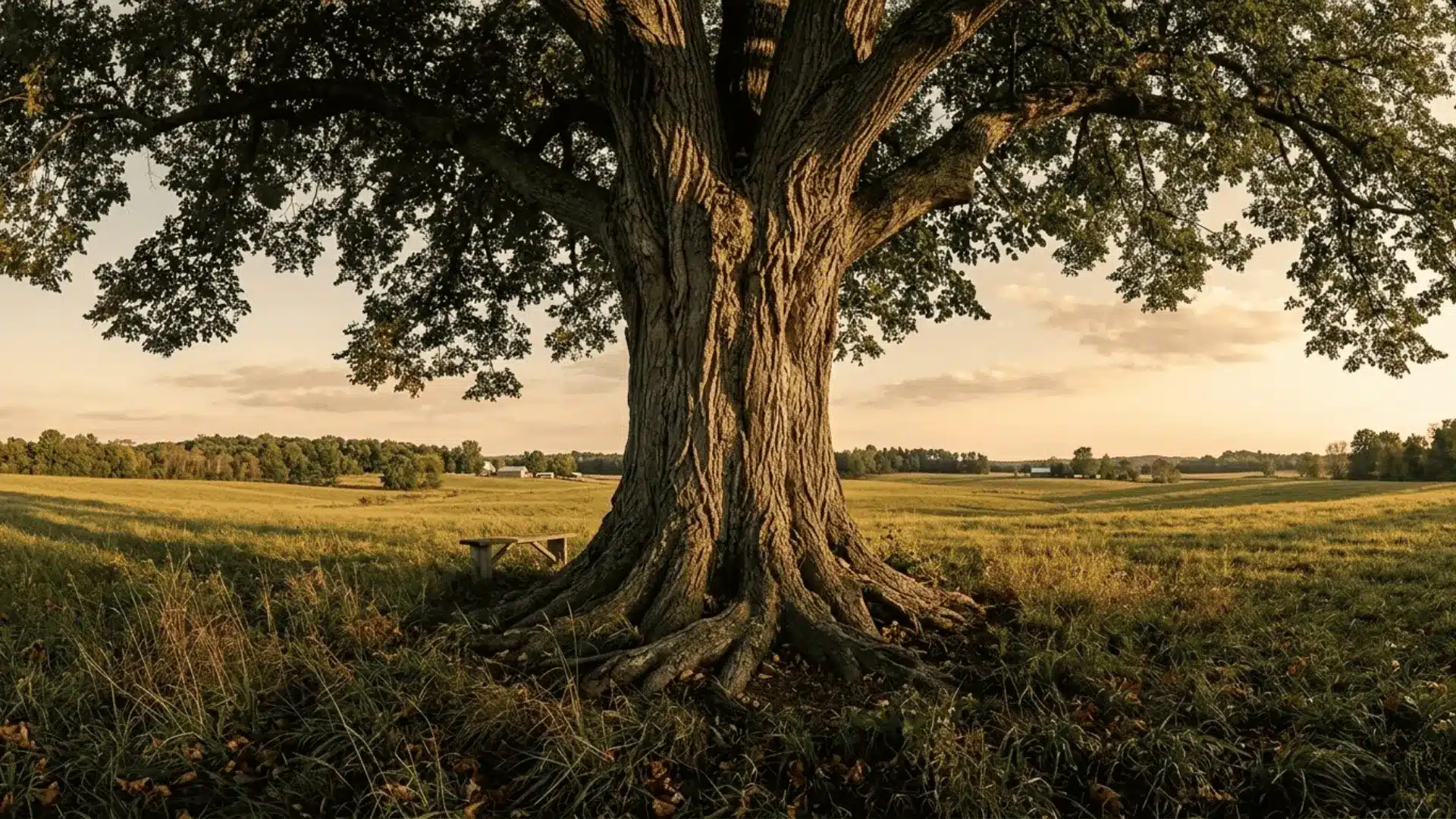
For a shade tree, elms move at a pretty satisfying pace. Most species are considered fast growers, putting on enough height and canopy each year that you don’t feel like you’re waiting forever to see results.
And once they’re established, they’re in it for the long haul.
Under the right conditions, many elm species can live well beyond a hundred years, quietly outlasting the generations that planted them.
It’s part of what makes them such a meaningful addition to any landscape, the kind of tree you plant not just for yourself, but for everyone who comes after.
Benefits of Elm Trees
Elms give back in more ways than most people realize. Here is what makes them such a worthy addition to any landscape:
- Their broad, arching canopy delivers deep, reliable shade that cools everything underneath it.
- They serve as a natural habitat for birds, insects, and other wildlife throughout the seasons.
- In urban settings, they help lower street temperatures, making neighborhoods noticeably more comfortable in summer.
- Their foliage actively works to improve air quality by filtering pollutants and capturing particulate matter.
- Planted along streets and parks, they add lasting visual character that few other trees can replicate.
For a single tree, that’s quite a lot to offer, and elms have been delivering on all of it for centuries.
How to Care for an Elm Tree?
Elms are relatively low-maintenance once settled in, but giving them the right start makes all the difference.
Here is what consistent elm care looks like:
- Plant in moist, well-drained soil with full sun and enough space for the canopy to spread freely.
- Water deeply but infrequently, allowing the soil to breathe between sessions rather than staying constantly wet.
- Prune during late fall or winter when the tree is dormant to encourage healthy structure and reduce disease risk.
- Inspect regularly for early signs of Dutch elm disease, including wilting leaves or dying branches, and act quickly if symptoms appear.
Stick to these basics and your elm will reward you with decades of shade, beauty, and quiet, steadfast presence in your landscape.
Elm Tree vs. Similar Trees
Elms are often confused with a few other beloved shade trees, and understandably so.
Here is a side-by-side look at how they compare in terms of identification and landscaping use:
| Feature | Elm Tree | Ash Tree | Oak Tree | Zelkova Tree |
|---|---|---|---|---|
| Leaf Shape | Oval, uneven base, double-serrated edges | Compound leaves with multiple leaflets | Lobed leaves with rounded or pointed tips | Oval, single-serrated edges, symmetrical base |
| Canopy Shape | Vase-shaped, wide-arching | Oval to rounded, upright | Broad, rounded, and dense | Vase-shaped, similar to elm but more upright |
| Bark Texture | Gray-brown with deep ridges and furrows | Gray with interlacing ridges | Deeply furrowed, rough, and thick | Gray, smooth when young, flaky with age |
| Growth Rate | Fast | Moderate to fast | Slow to moderate | Moderate to fast |
| Shade Quality | Excellent, dense canopy | Moderate to good | Excellent, very dense | Good, slightly lighter than elm |
| Landscaping Use | Street trees, parks, and large open spaces | Streets, parks, residential yards | Parks, large estates, and natural landscapes | Street trees, urban landscaping, elm substitute |
| Disease Concerns | Dutch elm disease | Emerald ash borer | Oak wilt | Generally disease-resistant |
If you are planting for shade and street appeal, elms and zelkovas are neck and neck, with zelkova often used as a direct elm substitute precisely because the two are so visually similar.
Wrapping Up
The elm tree has a way of staying with you, long after you have learned its name.
Its canopied streets, storied past, and quiet comeback make it one of the most compelling trees in the landscape world, and honestly, one of the most deserving of attention.
Understanding it a little better only deepens the appreciation. If you have an elm growing nearby, take a moment to look at it differently now.
And if you have thoughts, memories, or questions about elm trees, the comments section is all yours. We would love to hear what you have to say.