Most people think every evergreen tree is just a pine. It is not.
Walk through any neighborhood, and you will spot dozens of different evergreen trees, each one built differently for a different purpose.
But here is what most homeowners miss. They pick a tree based on how it looks at the nursery, not how it fits their yard. That mistake shows up fast, too tall, too wide, wrong climate.
This guide covers types of evergreen trees. You will see what makes each one different, where it grows best, and what job it does well.
What Are Evergreen Trees?
An evergreen tree is a tree that holds onto its leaves or needles year-round. Unlike maple or birch trees that go bare in fall, evergreens stay green through every season.
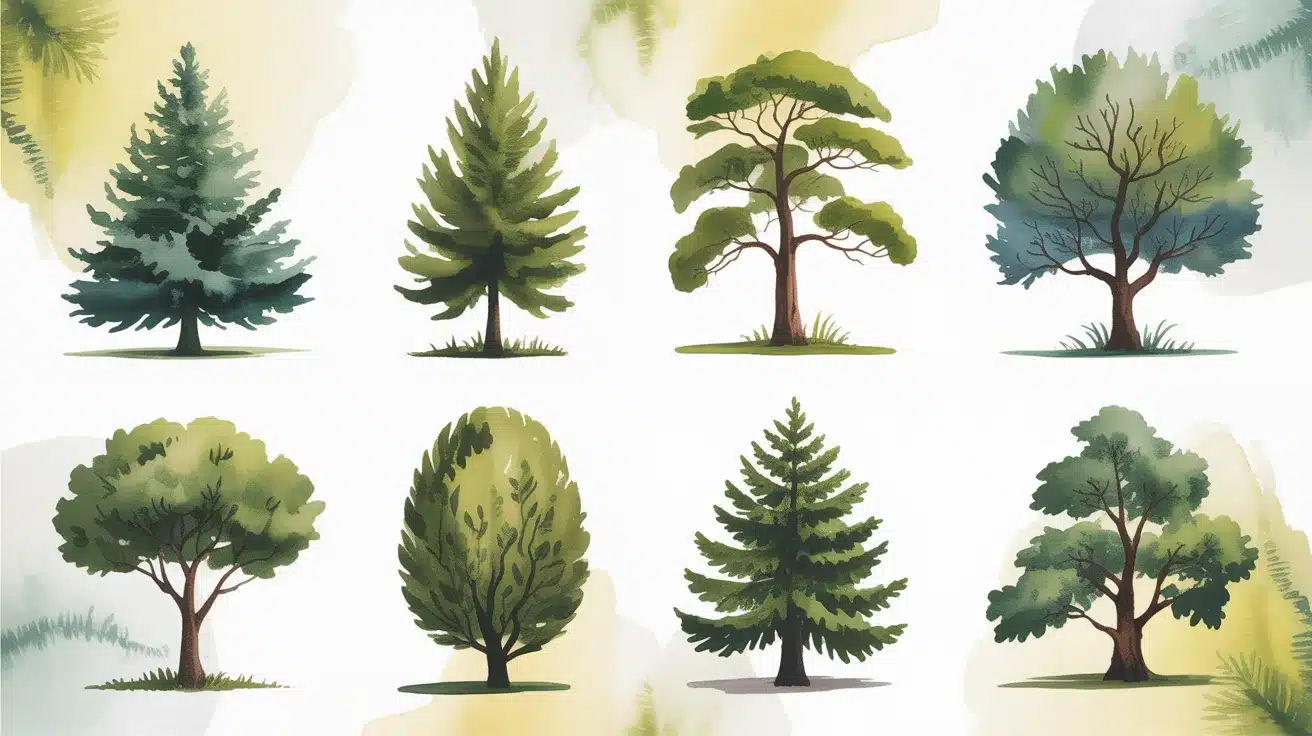
They come in two main forms: needle-leaf trees like pines and spruces, and broadleaf trees like holly and magnolia.
Evergreens do shed their older needles or leaves gradually over time, but they always keep fresh new growth on the branches, which is what keeps them looking green year-round.
Main Types of Evergreen Trees
Not all evergreen trees look the same or grow the same way. Before you pick one for your yard, it helps to know the two main groups they fall into.
| Type | Leaf Form | Climate Preference | Common Examples |
|---|---|---|---|
| Coniferous (needle-leaf) | Needles or scale-like foliage | Cold to moderate | Pine, Spruce, Fir, Cedar, Cypress, Arborvitae |
| Broadleaf Evergreen | Wide, flat leaves | Mild to warm | Holly, Magnolia, Wax Myrtle, Live Oak |
19 Types of Evergreen Trees
Now that you know the two main groups, here is a closer look at specific evergreen tree varieties. Each one has its own strengths, size, and ideal use, so read through and see which one fits your yard best.
1. Eastern White Pine
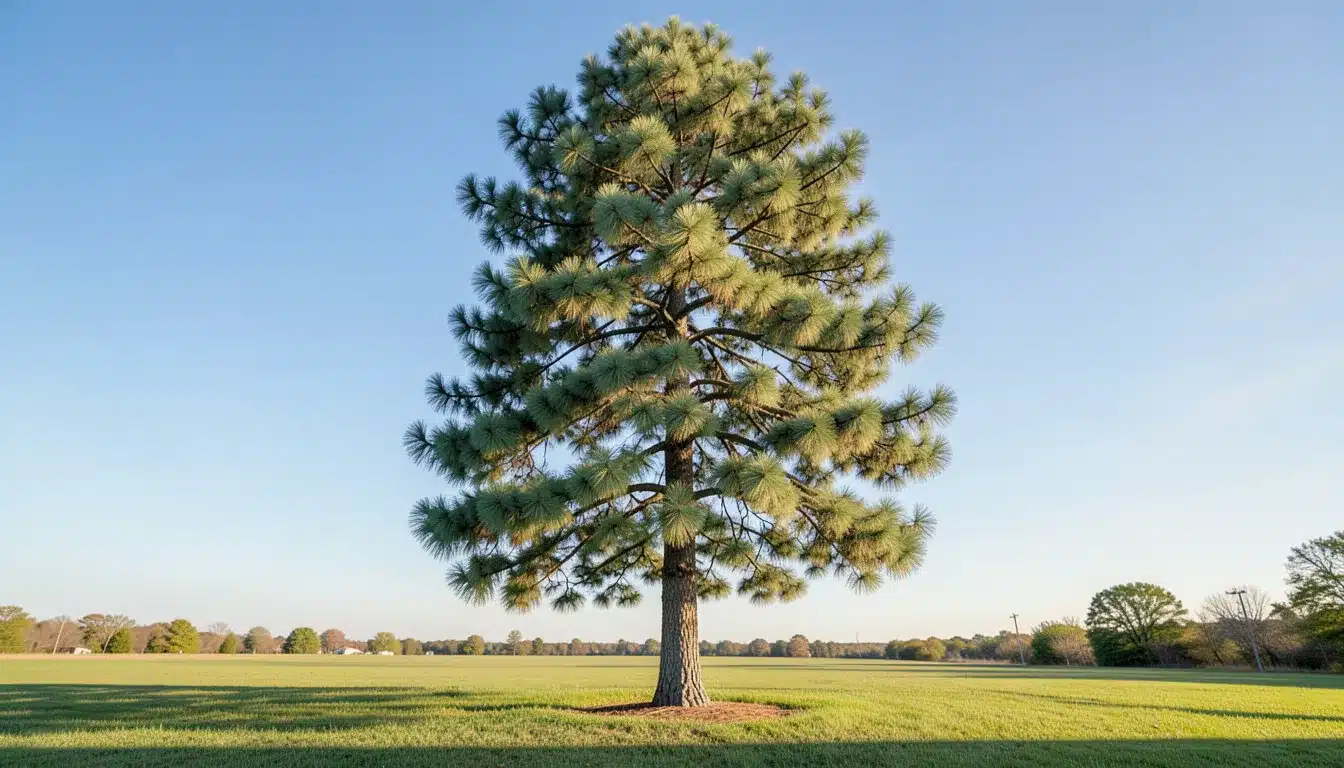
- Scientific Name: Pinus strobus
- Height: Up to 80 feet
- Growing Zones: 3 to 8
- Best Use: Windbreaks, large privacy screens
- Key Feature: Soft, long needles in bundles of five
Eastern White Pine is one of the most recognized needle-leaf evergreens in North America. Its tall, straight form and soft blue-green needles make it a go-to for windbreaks and large property screens.
It is also a natural carbon absorber, making it a smart pick for homeowners who want beauty and environmental value at the same time.
2. Colorado Blue Spruce
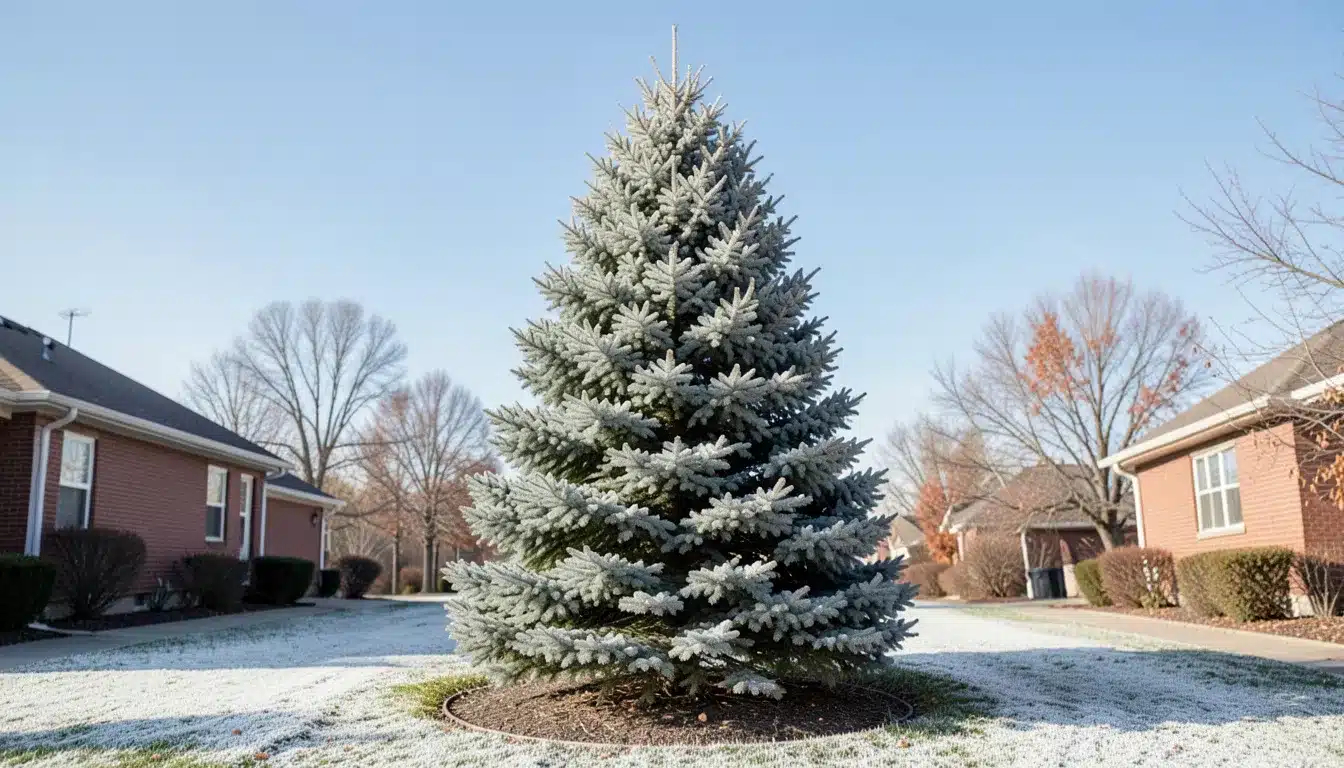
- Scientific Name: Picea pungens
- Height: 30 to 60 feet
- Growing Zones: 2 to 7
- Best Use: Focal point, windbreak
- Key Feature: Silvery-blue needles, pyramid shape
The Colorado Blue Spruce is hard to miss. Its bold silvery-blue color and clean pyramid shape make it one of the most eye-catching evergreen trees you can plant.
Native to the Rocky Mountains, it handles freezing temperatures well. Plant one as a single-stem tree, or line them up for a strong wind barrier.
3. Douglas Fir
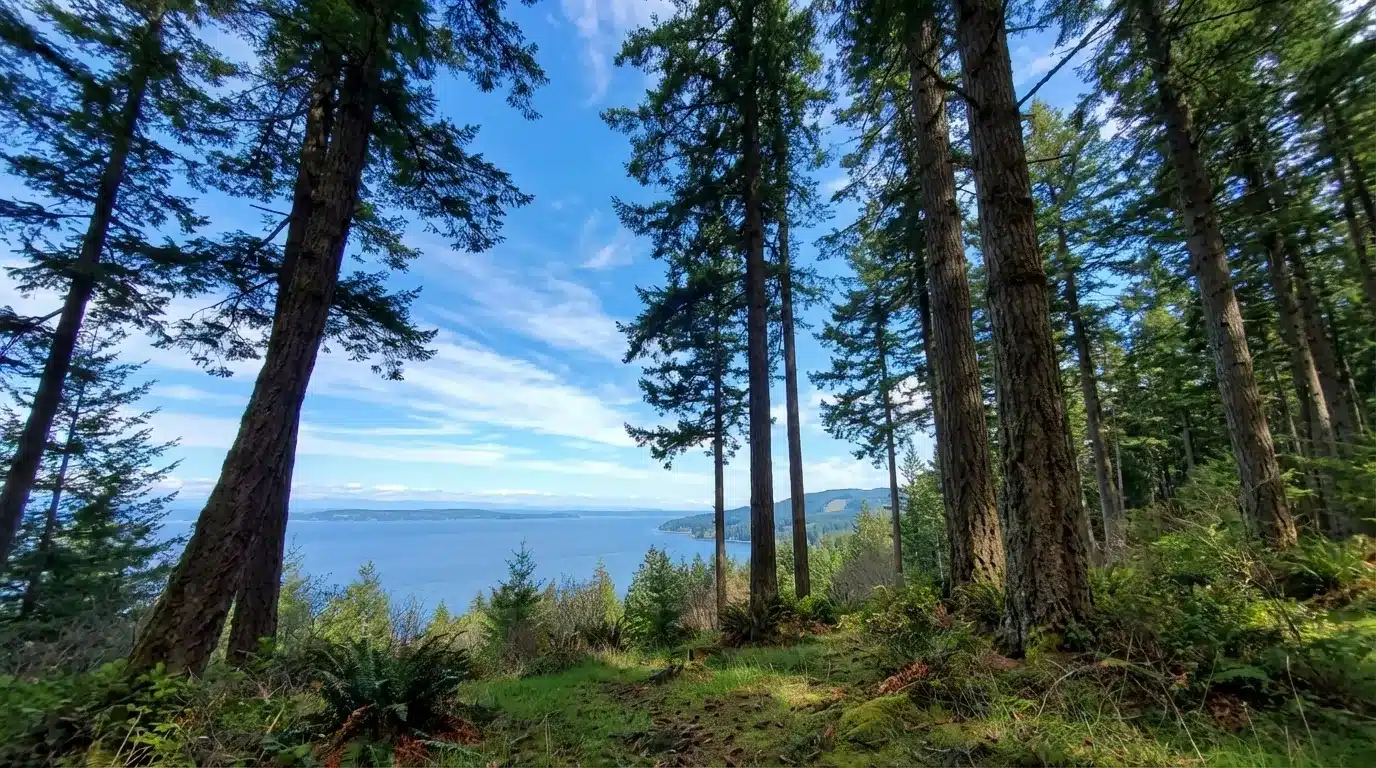
- Scientific Name: Pseudotsuga menziesii
- Height: 40 to 70 feet
- Growing Zones: 4 to 6
- Best Use: Tall backdrop, large property border
- Key Feature: Full pyramid crown, soft flat needles
Douglas Fir is one of the tallest types of evergreen trees you can plant in a yard. Its full, pyramid-shaped crown and soft needles give it a classic, clean look. It thrives in the Pacific Northwest and works best as a tall backdrop or border along large properties.
4. Fraser Fir
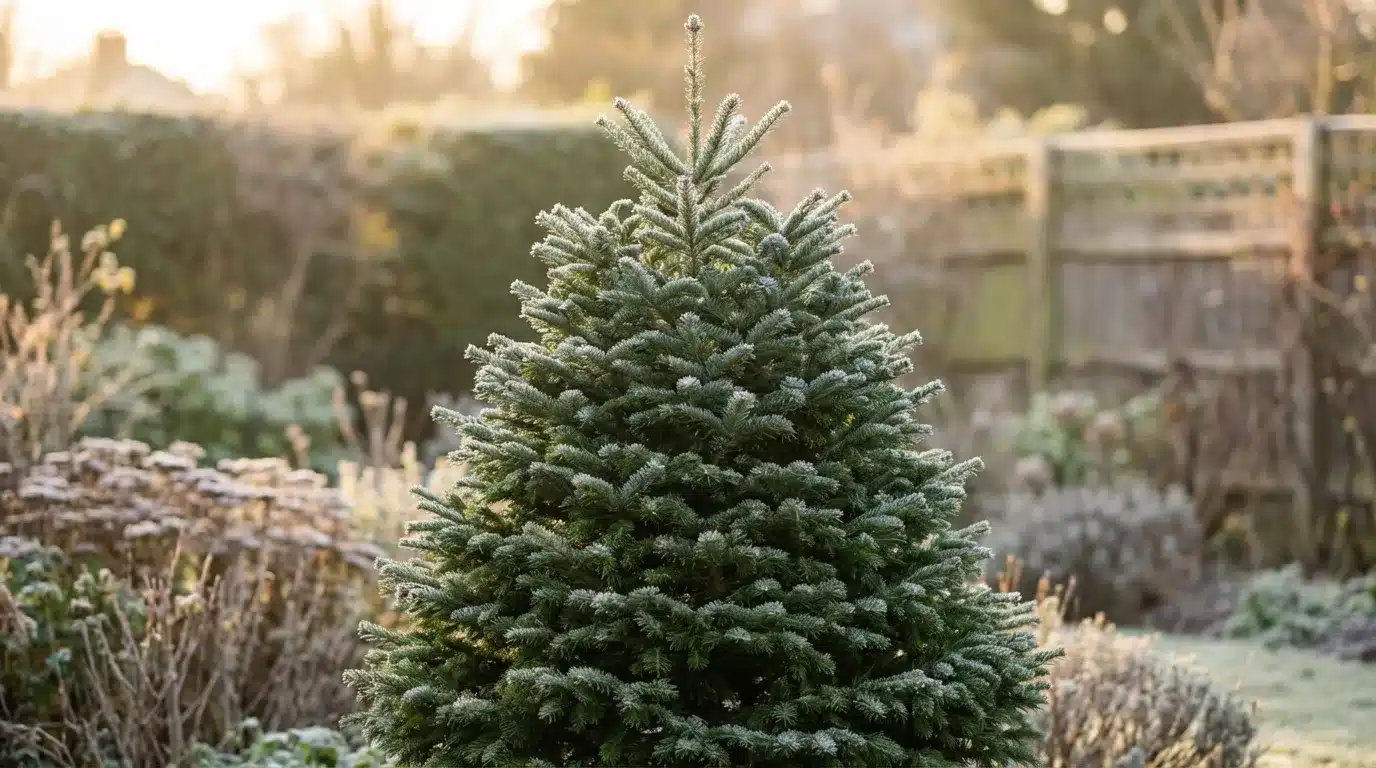
- Scientific Name: Abies fraseri
- Height: 30 to 40 feet
- Growing Zones: 4 to 7
- Best Use: Specimen tree, yard focal point
- Key Feature: Soft, flat needles, pleasant natural scent
Fraser Fir is the most popular Christmas tree in the United States, but it holds up just as well as a yard tree year-round. It stays neatly shaped with very little pruning. Its soft needles, full form, and natural fragrance make it one of the most appealing firs you can grow.
5. Leyland Cypress
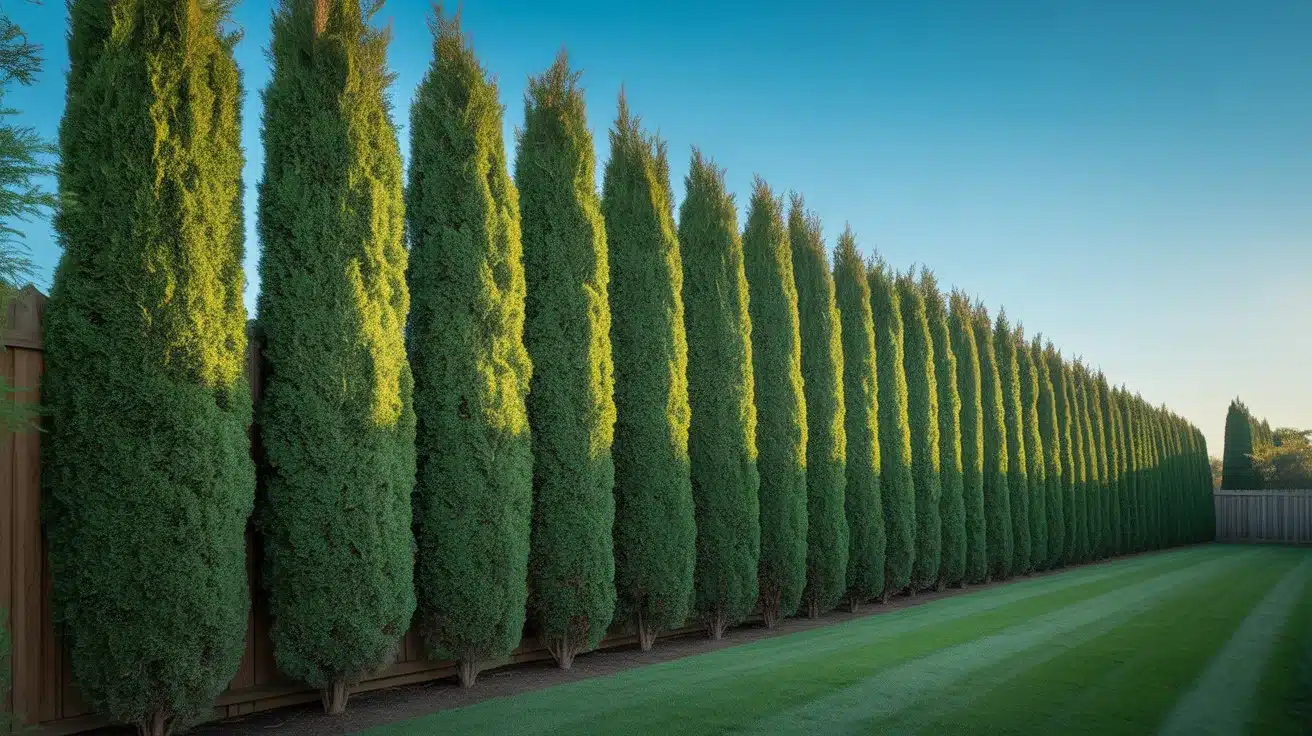
- Scientific Name: Cupressus x leylandii
- Height: 40 to 60 feet
- Growing Zones: 6 to 10
- Best Use: Fast privacy hedge, tall screen
- Key Feature: Grows 3 to 5 feet per year, dense foliage
Leyland Cypress is the most widely planted privacy tree in American yards. It fills in fast, adapts to a wide range of soil types, and stays dense from top to bottom. If you need a tall green wall in a short amount of time, this is one of the most reliable evergreen trees for that job.
6. Italian Cypress
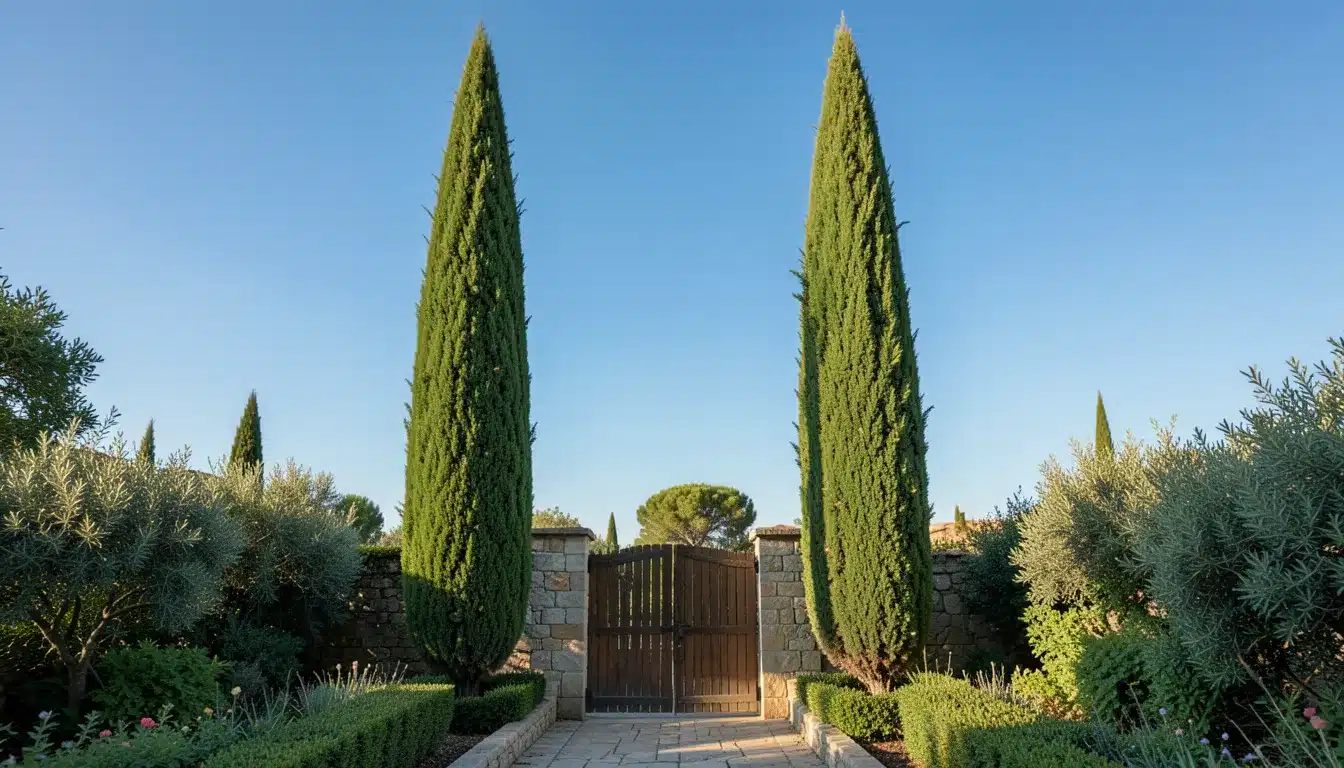
- Scientific Name: Cupressus sempervirens
- Height: 40 to 70 feet
- Growing Zones: 7 to 11
- Best Use: Narrow spaces, formal landscape design
- Key Feature: Very slim, column-like shape
Italian Cypress is the best evergreen tree option for tight, narrow spaces. It grows very tall but stays only 3 to 5 feet wide, making it a perfect fit along driveways, property lines, or formal garden entries. It performs best in warm, dry climates.
7. Green Giant Arborvitae
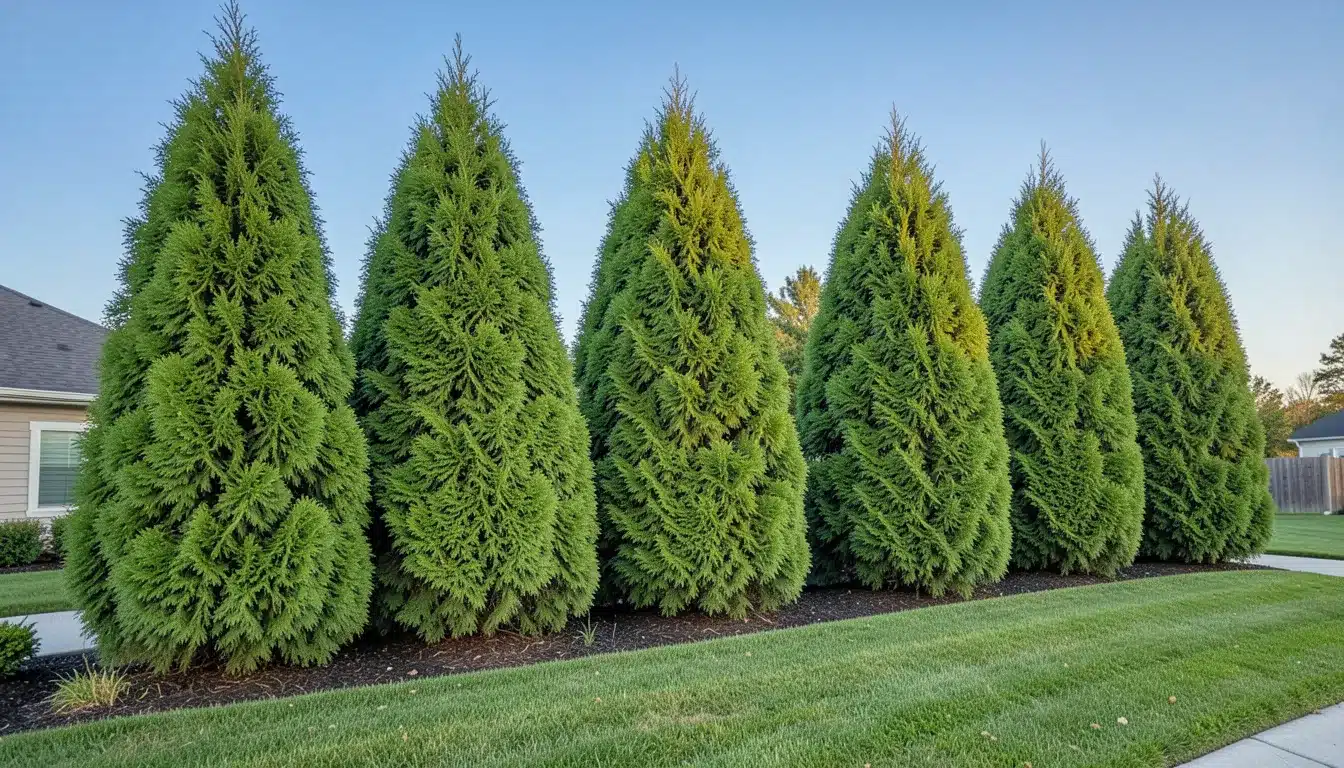
- Scientific Name: Thuja standishii x plicata
- Height: 30 to 60 feet
- Growing Zones: 5 to 8
- Best Use: Privacy screen, hedge wall
- Key Feature: Fast-growing, feathery green foliage, pest-resistant
Green Giant Arborvitae is one of the most widely used privacy trees across the country. It grows quickly, resists pests and disease, and stays full and green year-round. You can plant several in a row and have a solid living privacy wall in just a few seasons.
8. Emerald Green Arborvitae
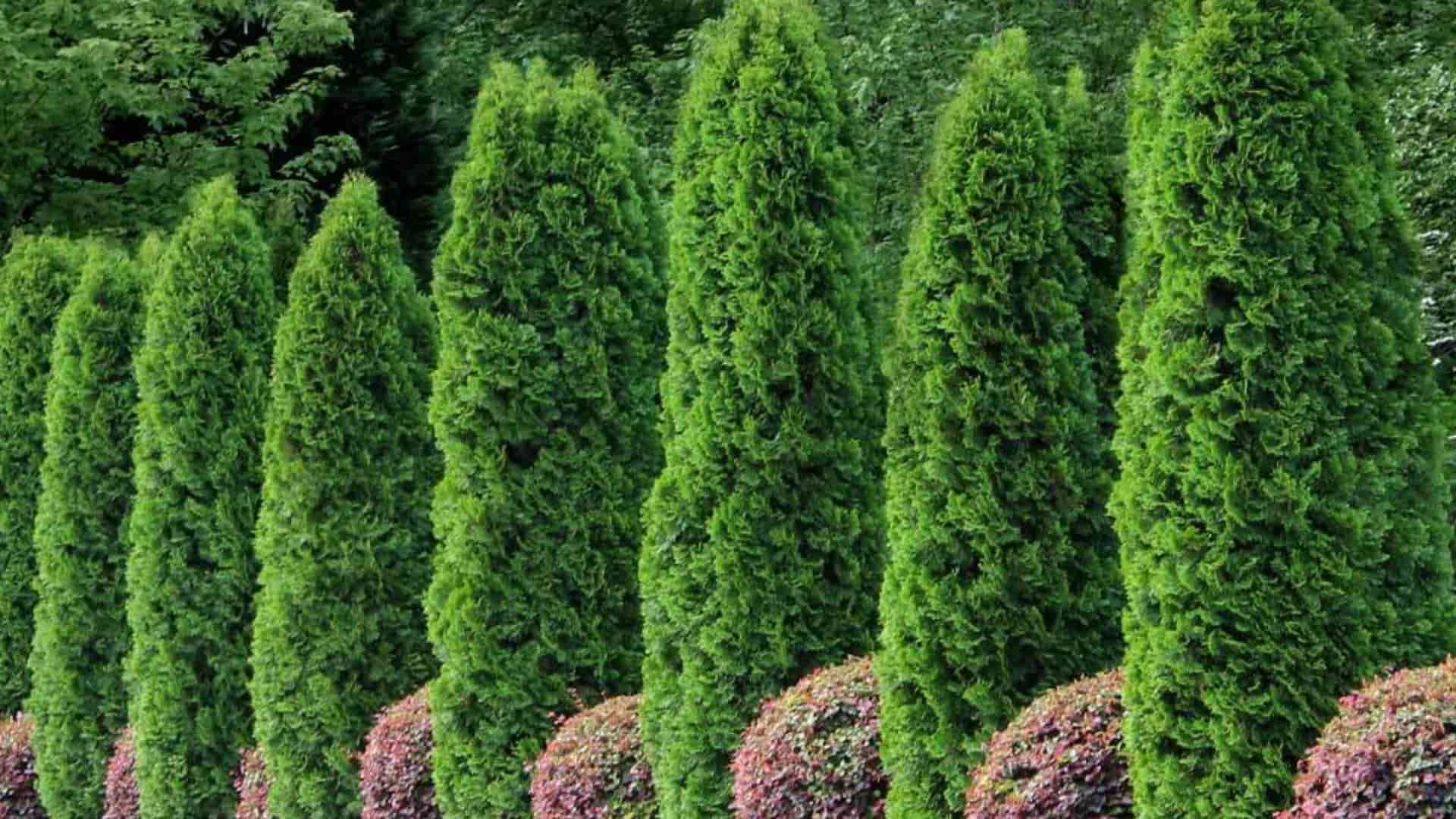
- Scientific Name: Thuja occidentalis’ Smaragd.’
- Height: 10 to 15 feet
- Growing Zones: 2 to 8
- Best Use: Formal hedges, small yards, tight spaces
- Key Feature: Narrow columnar shape, holds color in winter
Emerald Green Arborvitae is the smaller, slower-growing option compared to Green Giant. It fits perfectly in tight spaces, along fences, or as a formal hedge. It stays neat without heavy pruning and keeps its bright green color even through cold winters, which is rare in small evergreen trees.
9. Eastern Red Cedar
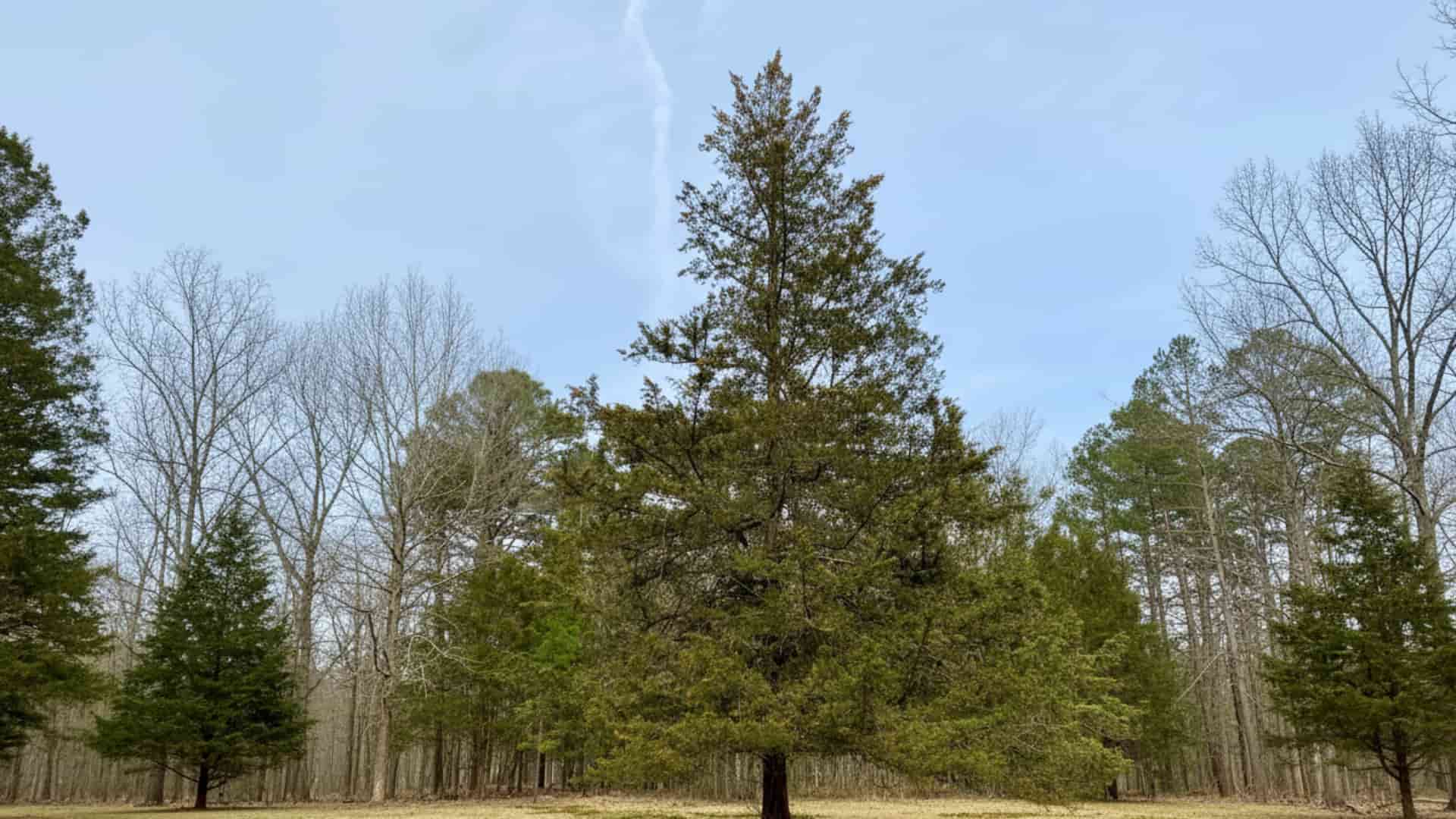
- Scientific Name: Juniperus virginiana
- Height: 20 to 40 feet
- Growing Zones: 2 to 9
- Best Use: Windbreaks, native planting, wildlife habitat
- Key Feature: Highly adaptable, survives poor soils, heat, and cold
Eastern Red Cedar is one of the toughest native evergreen trees in North America. It handles heat, cold, wind, salt, and poor soil better than almost any other tree. Wildlife counts on it heavily in winter, as birds eat its berries and nest in its dense branches.
10. Deodar Cedar
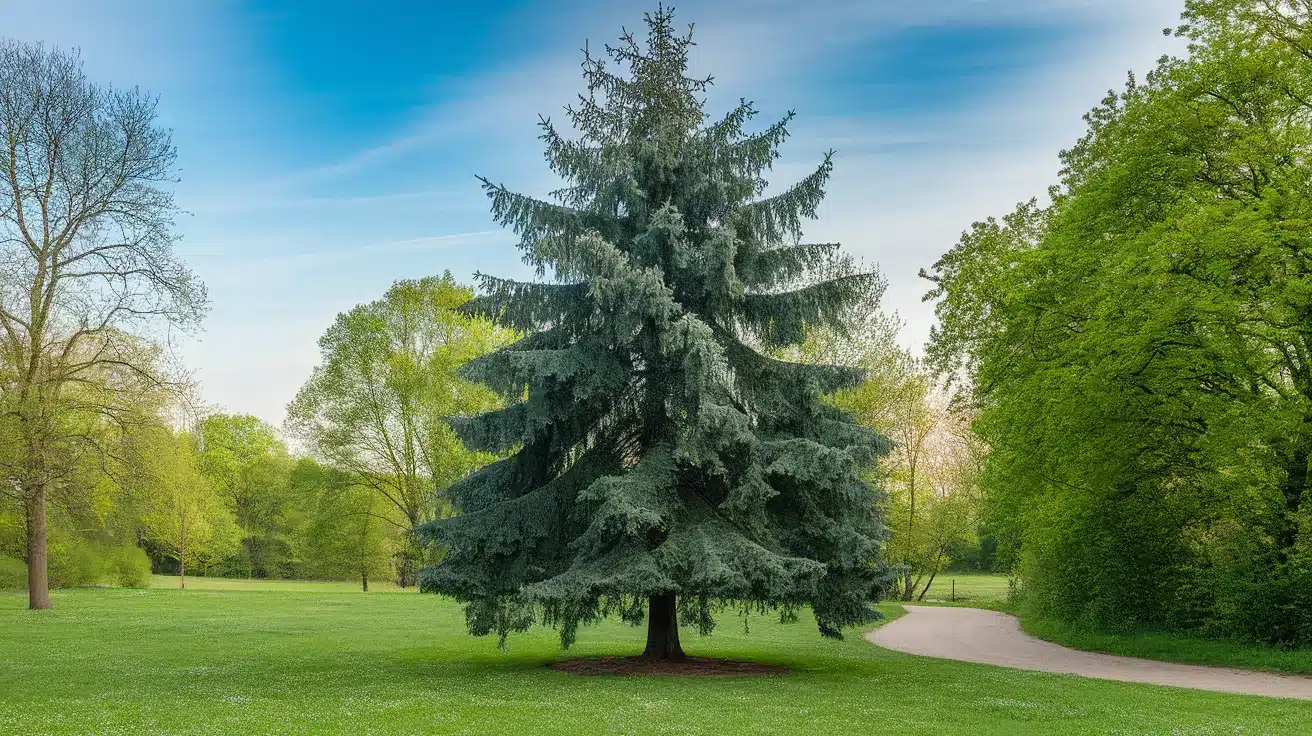
- Scientific Name: Cedrus deodara
- Height: 40 to 70 feet
- Growing Zones: 7 to 11
- Best Use: Large yard focal point, statement tree
- Key Feature: Long drooping branches, aromatic wood
Deodar Cedar is one of the most graceful-looking evergreen trees you can grow. Its long, drooping branches and soft blue-green needles give it a very distinct, flowing look unlike most other conifers. It thrives in warm climates and makes a strong focal point in large, open yards.
11. Blue Point Juniper
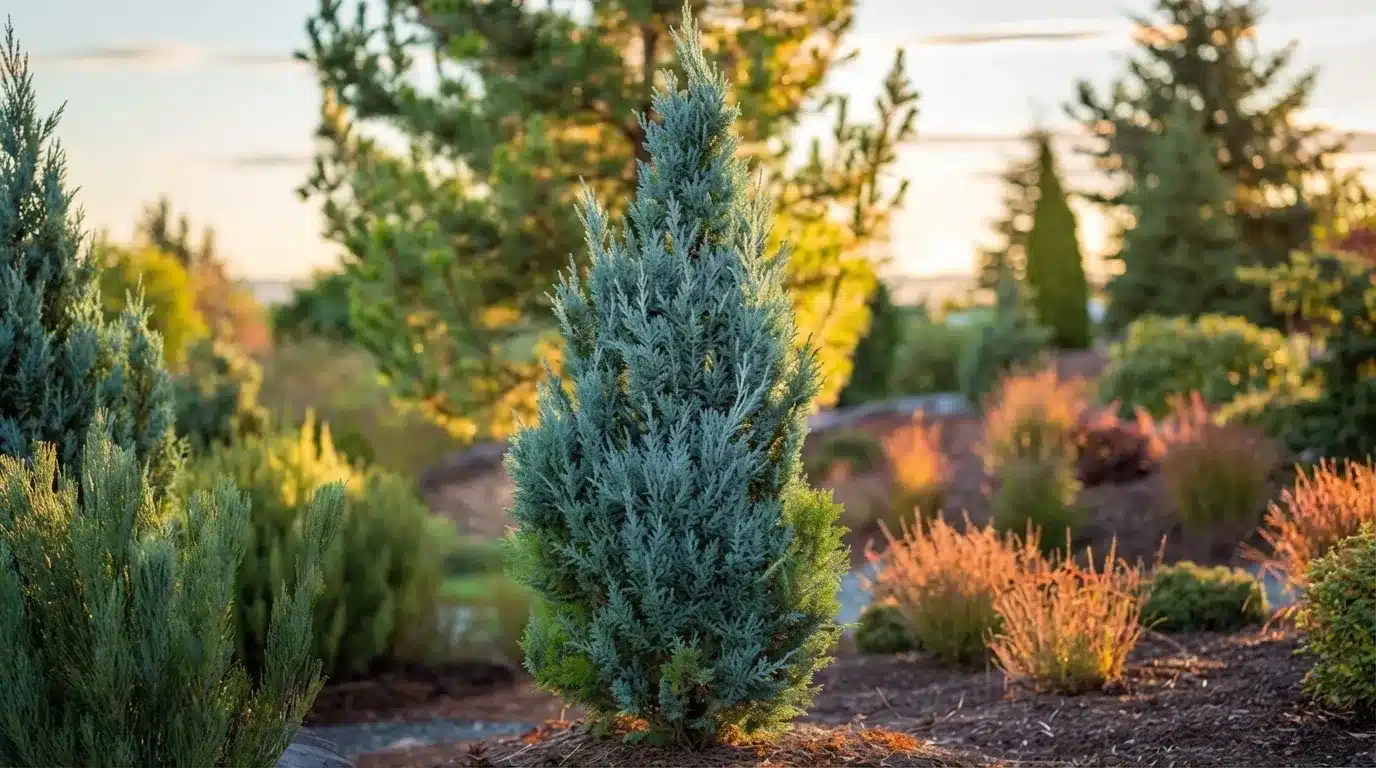
- Scientific Name: Juniperus chinensis’ Blue Point’
- Height: 10 to 12 feet
- Growing Zones: 4 to 9
- Best Use: Accent tree, small yard specimen
- Key Feature: Blue-green foliage, very low maintenance
Blue Point Juniper is a compact, upright evergreen that is one of the easiest trees to care for once it settles in. Its attractive blue-green foliage adds year-round color without demanding much attention. Deer tend to skip it, making it a reliable choice for properties in rural or suburban areas.
12. Eastern Hemlock
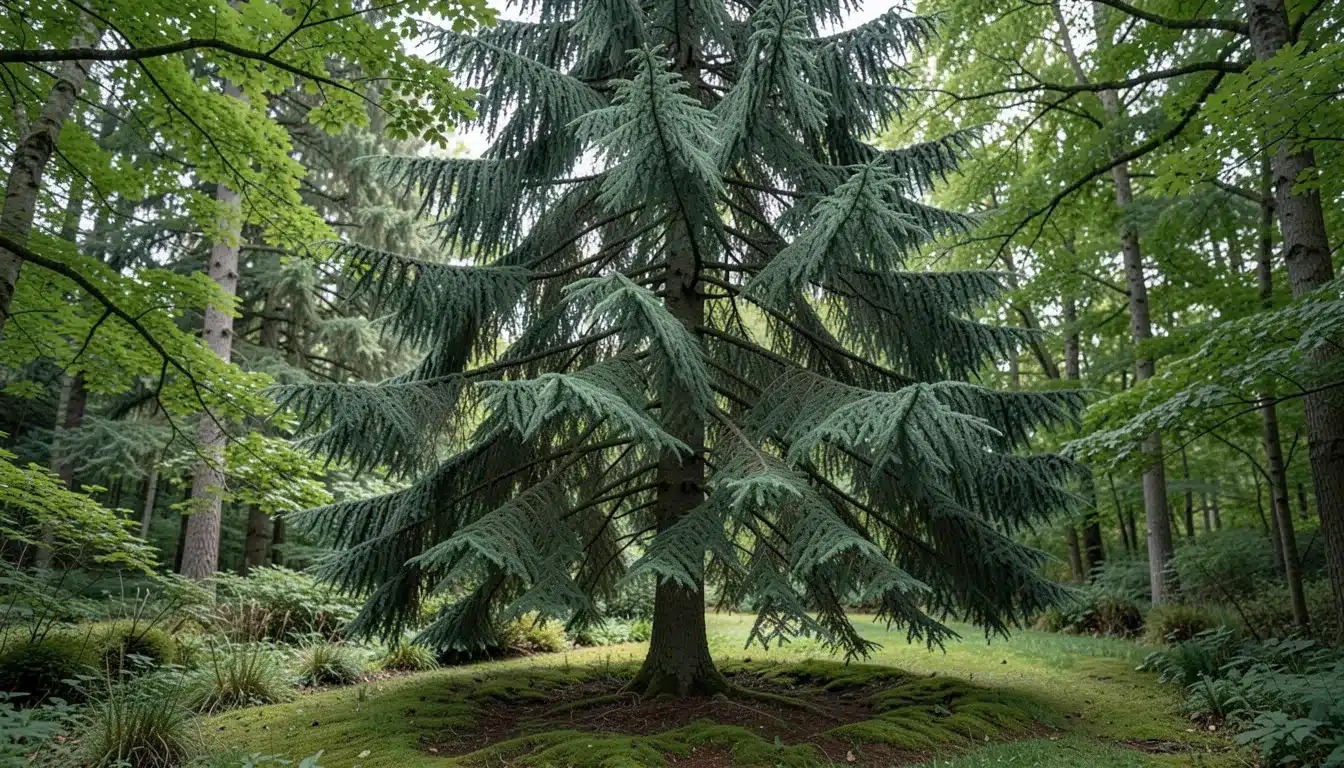
- Scientific Name: Tsuga canadensis
- Height: 40 to 70 feet
- Growing Zones: 3 to 7
- Best Use: Shaded areas, naturalized and woodland gardens
- Key Feature: Best shade-tolerant conifer available
Eastern Hemlock is the top choice when you need an evergreen tree in a shaded spot. Most conifers demand full sun, but Hemlock does very well under a tree canopy or on the north side of a building.
It prefers moist, well-drained soil and a cool climate to perform at its best.
13. Nellie Stevens Holly
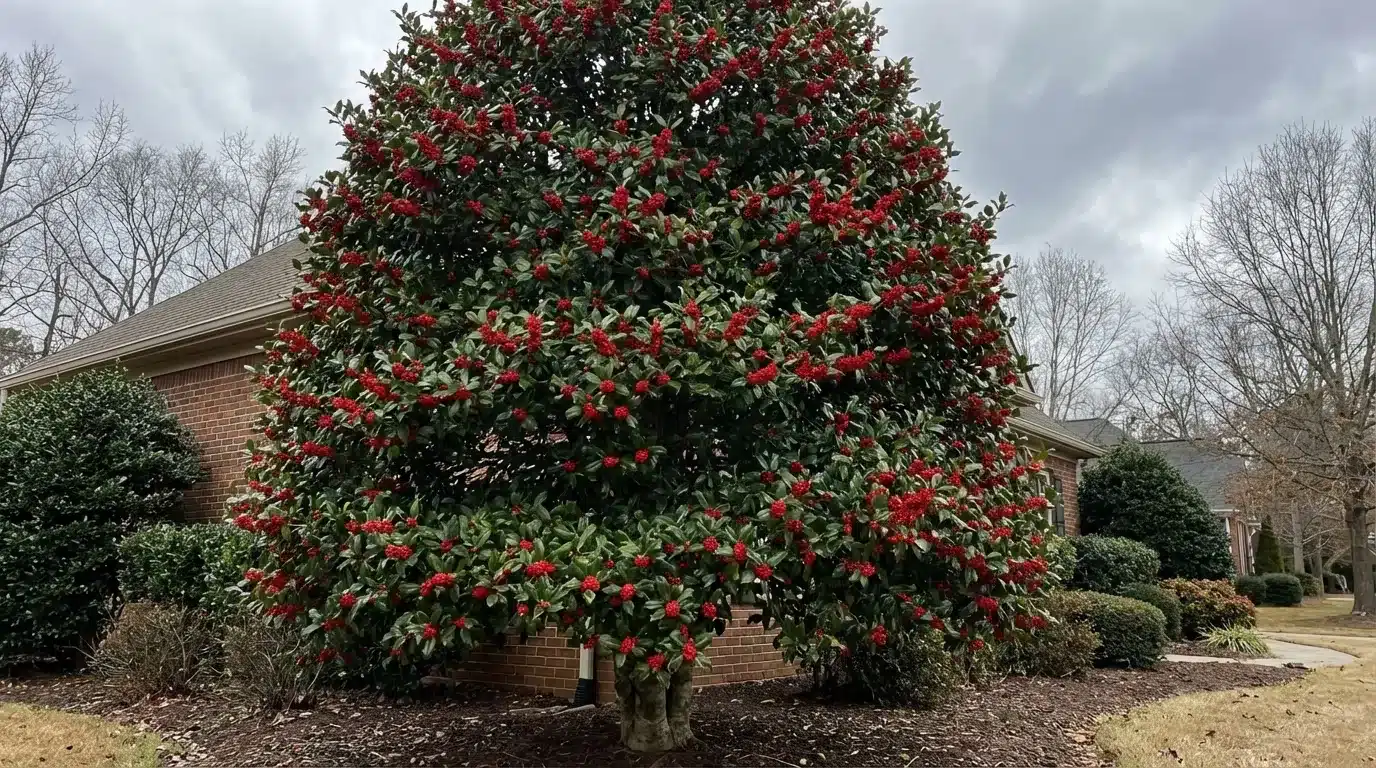
- Scientific Name: Ilex x ‘Nellie R. Stevens’
- Height: 15 to 25 feet
- Growing Zones: 6 to 9
- Best Use: Privacy hedge, wildlife-friendly planting
- Key Feature: Shiny leaves, bright red winter berries, drought-tolerant
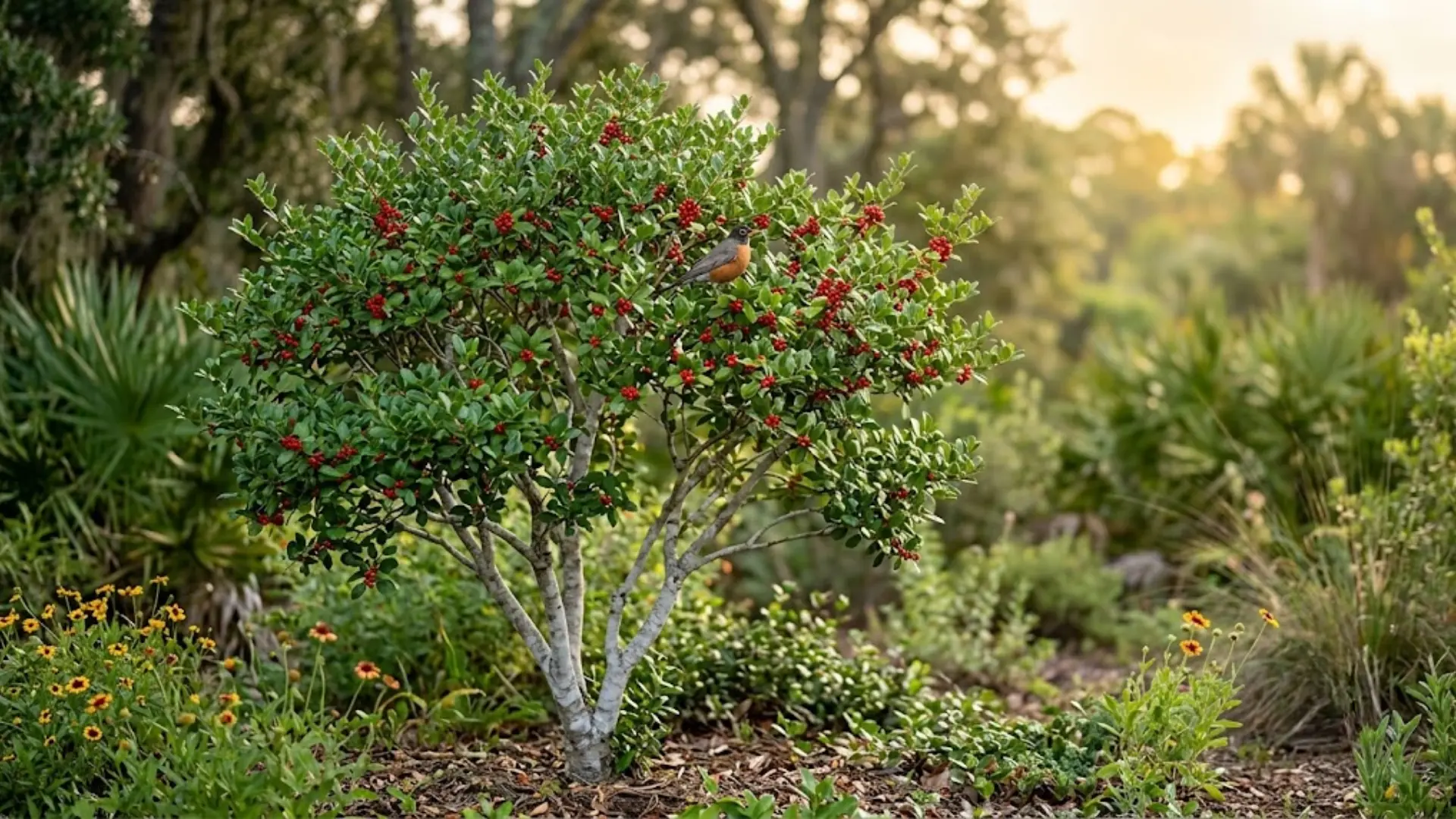
Nellie Stevens Holly is a broadleaf evergreen with deep green, shiny leaves and vivid red berries that appear in winter. Its broadly pyramidal shape fills in well as a privacy screen.
Birds feed on the berries through the colder months, making this one of the most wildlife-friendly types of evergreen trees on this list.
14. Sky Pencil Holly
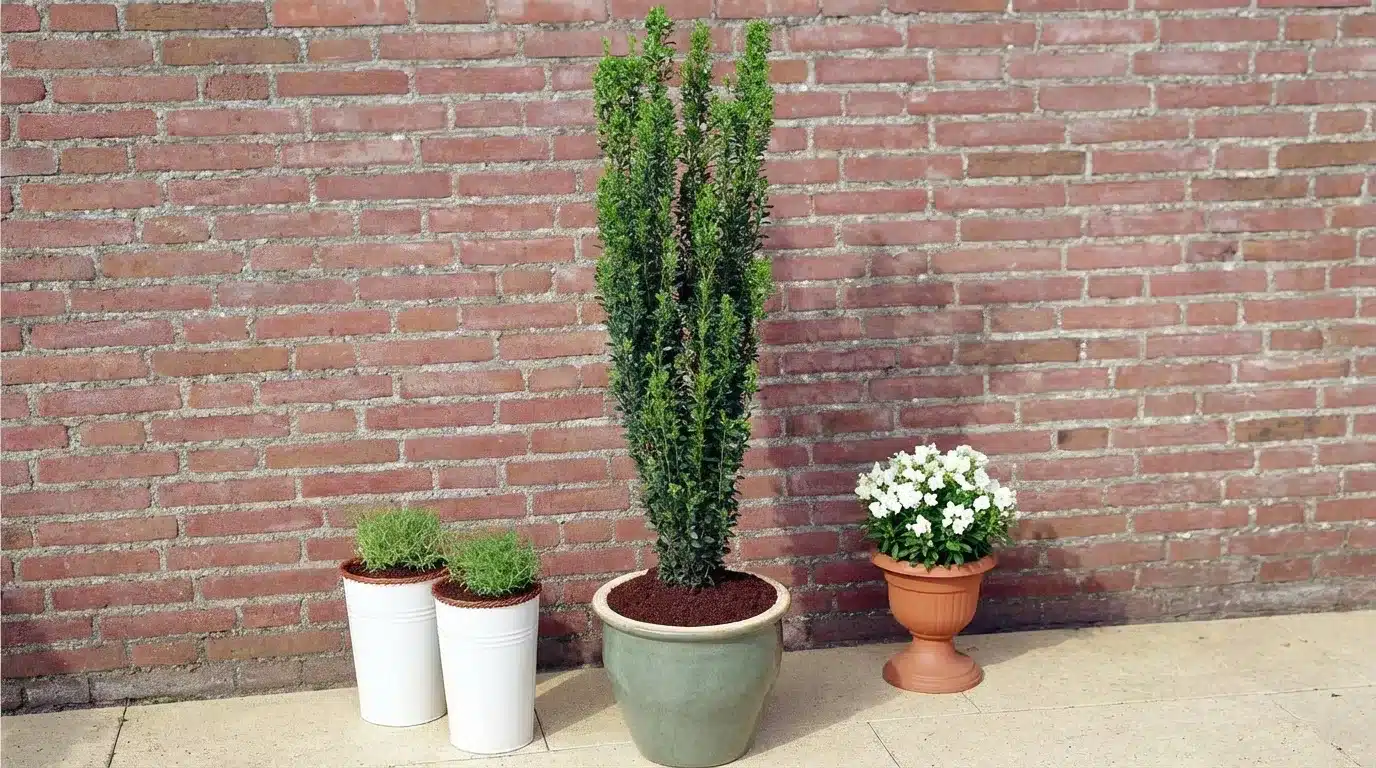
- Scientific Name: Ilex crenata ‘Sky Pencil’
- Height: 6 to 10 feet
- Growing Zones: 5 to 9
- Best Use: Very tight spaces, container planting
- Key Feature: Grows tall but stays only about 2 feet wide
Sky Pencil Holly is built for the smallest of spaces. It grows upright like a green column but barely takes up any width, making it one of the narrowest evergreen trees you can find.
It works very well in containers, along narrow walkways, or in spots where no other tree will fit.
15. Southern Magnolia
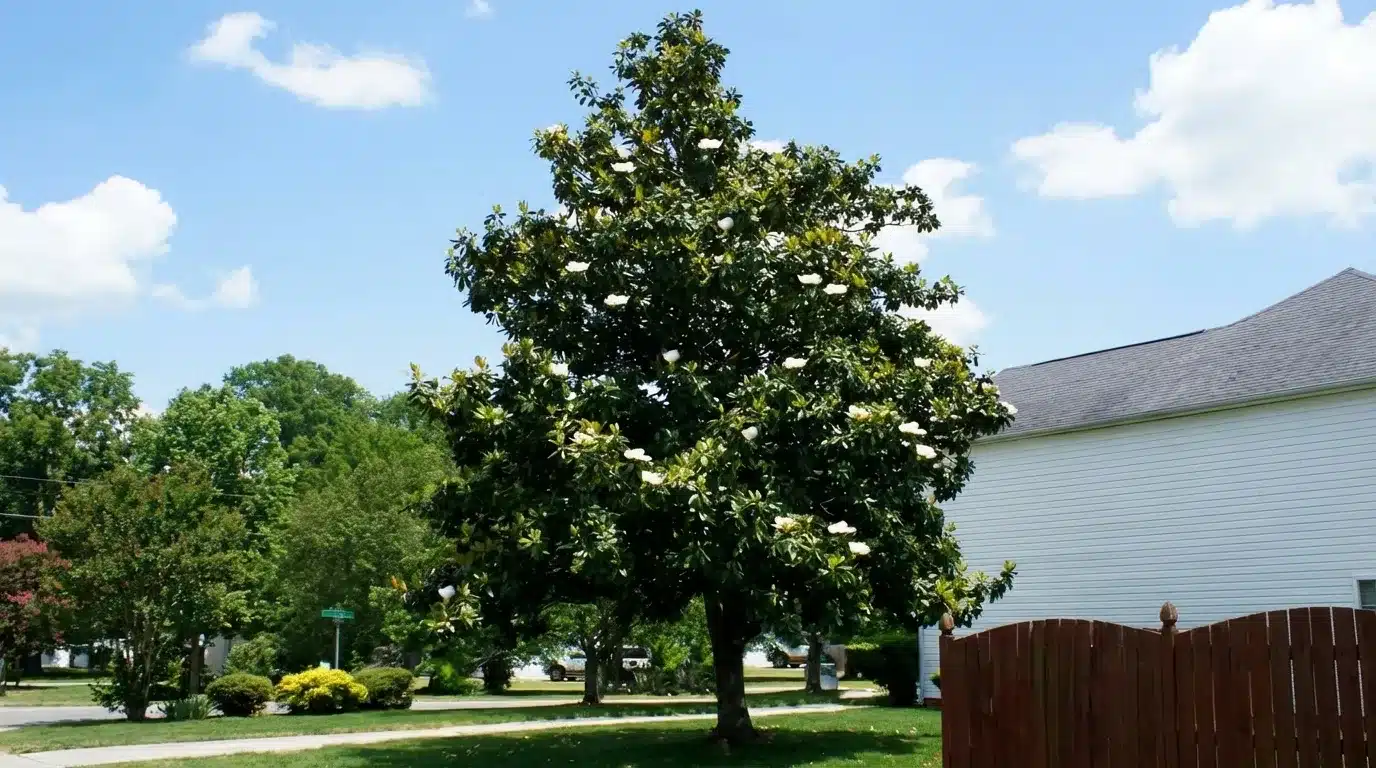
- Scientific Name: Magnolia grandiflora
- Height: 60 to 80 feet
- Growing Zones: 7 to 9
- Best Use: Shade tree, large yard focal point
- Key Feature: Large glossy leaves with rust-toned undersides, large white blooms
Southern Magnolia is a broadleaf evergreen that defines the American South. Its large, glossy leaves and oversized white flowers in late spring make it one of the most visually striking types of evergreen trees.
It provides deep shade, produces wildlife value year-round, and adds real presence to any large yard.
16. Cryptomeria (Japanese Cedar)
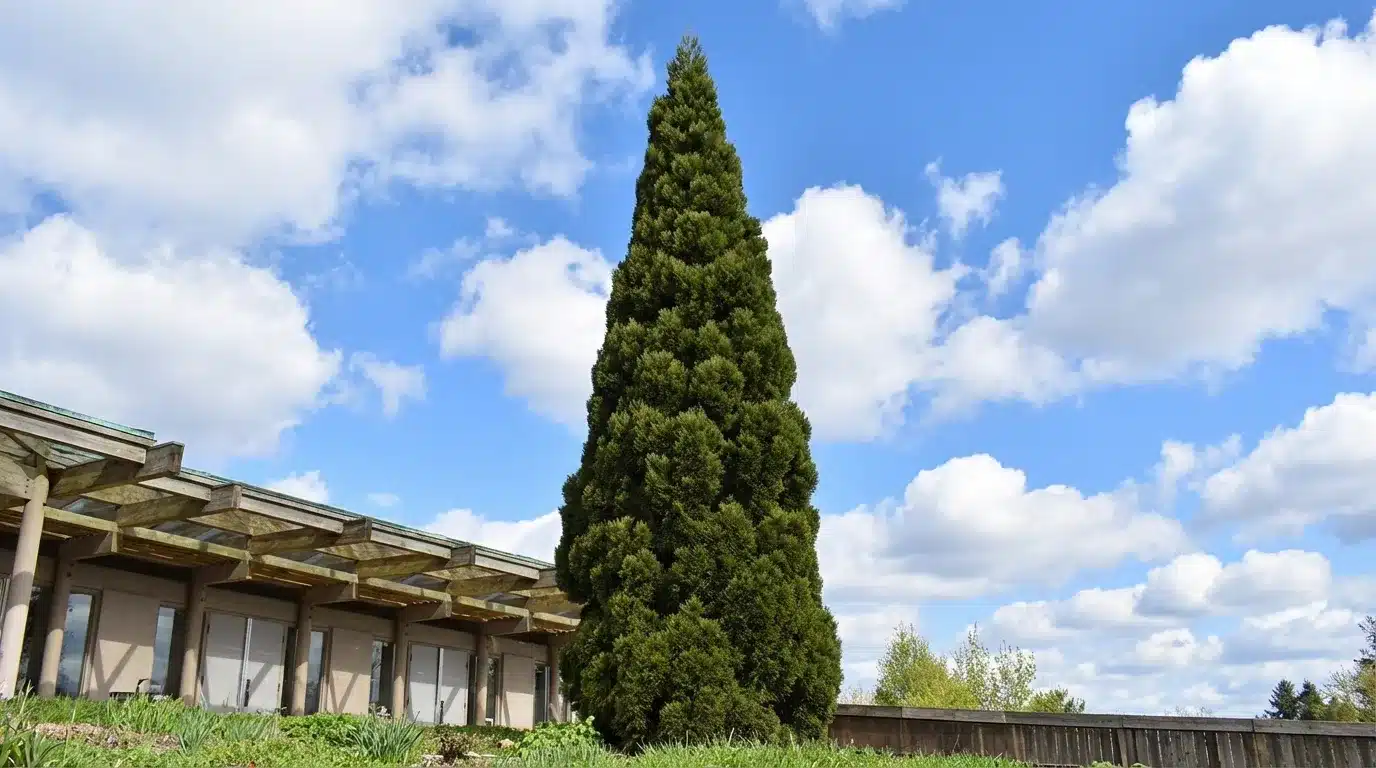
- Scientific Name: Cryptomeria japonica
- Height: 50 to 60 feet
- Growing Zones: 5 to 9
- Best Use: Privacy screen, specimen planting
- Key Feature: Dense fragrant foliage, fast growth, bronze winter color
Cryptomeria, also known as Japanese Cedar, is a fast-growing evergreen with soft, dense, fragrant foliage and an upright pyramidal shape.
It resists deer and disease, which makes it low-maintenance once planted. In cold months, the foliage shifts to a warm bronze hue and returns to green when spring arrives.
17. Austrian Pine
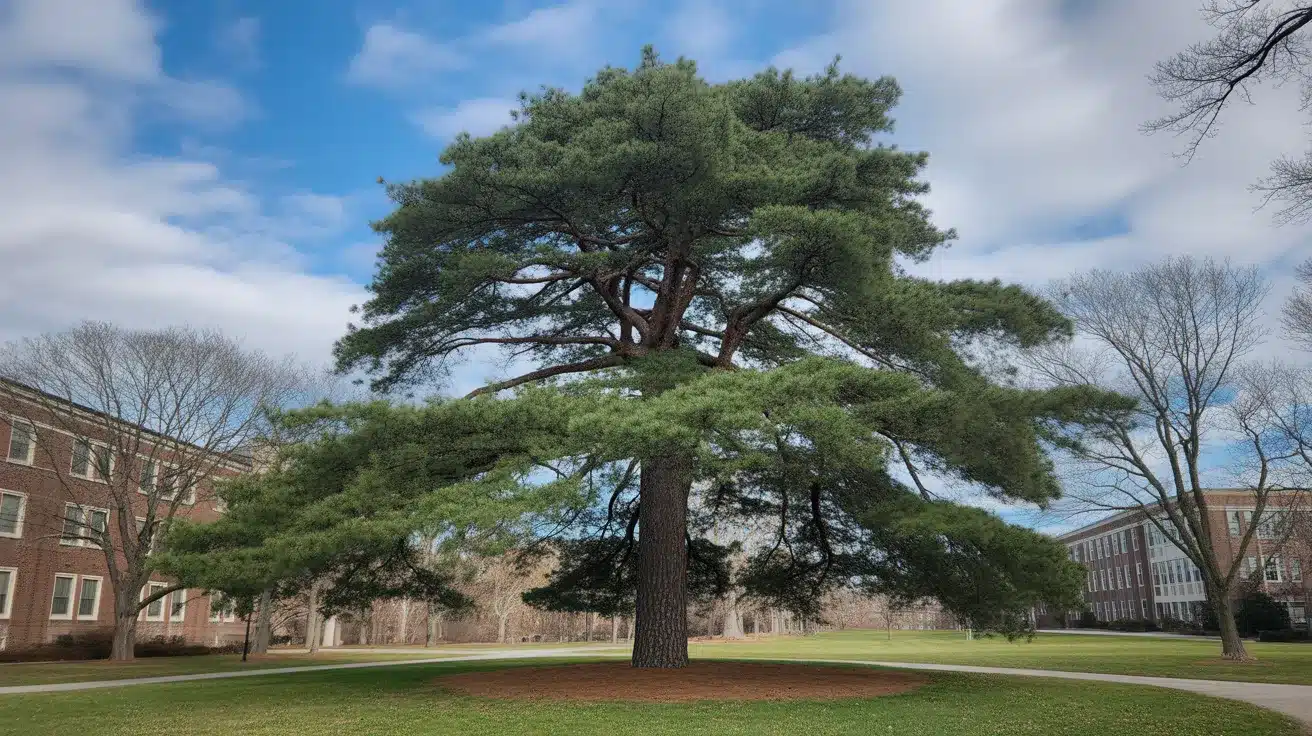
- Scientific Name: Pinus nigra
- Height: 40 to 60 feet
- Growing Zones: 3 to 7
- Best Use: Privacy screens, tough or disturbed sites
- Key Feature: Dark green foliage, highly adaptable to varied soils
Austrian Pine is one of the toughest pines you can plant. Its deep green needles and conical shape give it a bold, full look year-round.
It adapts well to compacted, poor, or urban soils where many other evergreen trees would struggle, making it a practical choice for challenging yards.
18. Serbian Spruce
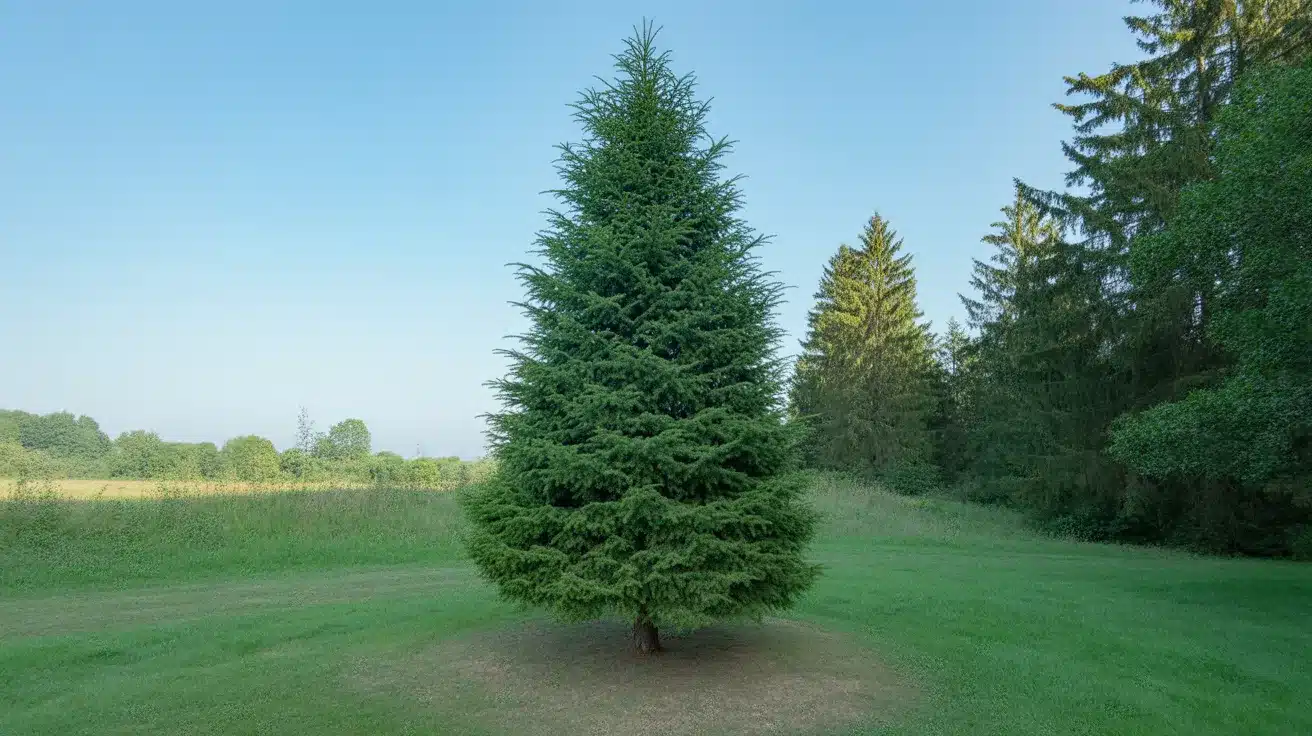
- Scientific Name: Picea omorika
- Height: 30 to 50 feet
- Growing Zones: 4 to 7
- Best Use: Smaller yards, ornamental specimen
- Key Feature: Naturally narrow form, two-tone needles (green above, white below)
Serbian Spruce is one of the most graceful spruces available for home yards. Its naturally slim shape makes it a good fit for yards that cannot handle a wide-spreading tree.
The needles are green on top and silvery-white underneath, giving the tree a beautiful two-tone effect as it moves in the wind.
19. Wax Myrtle
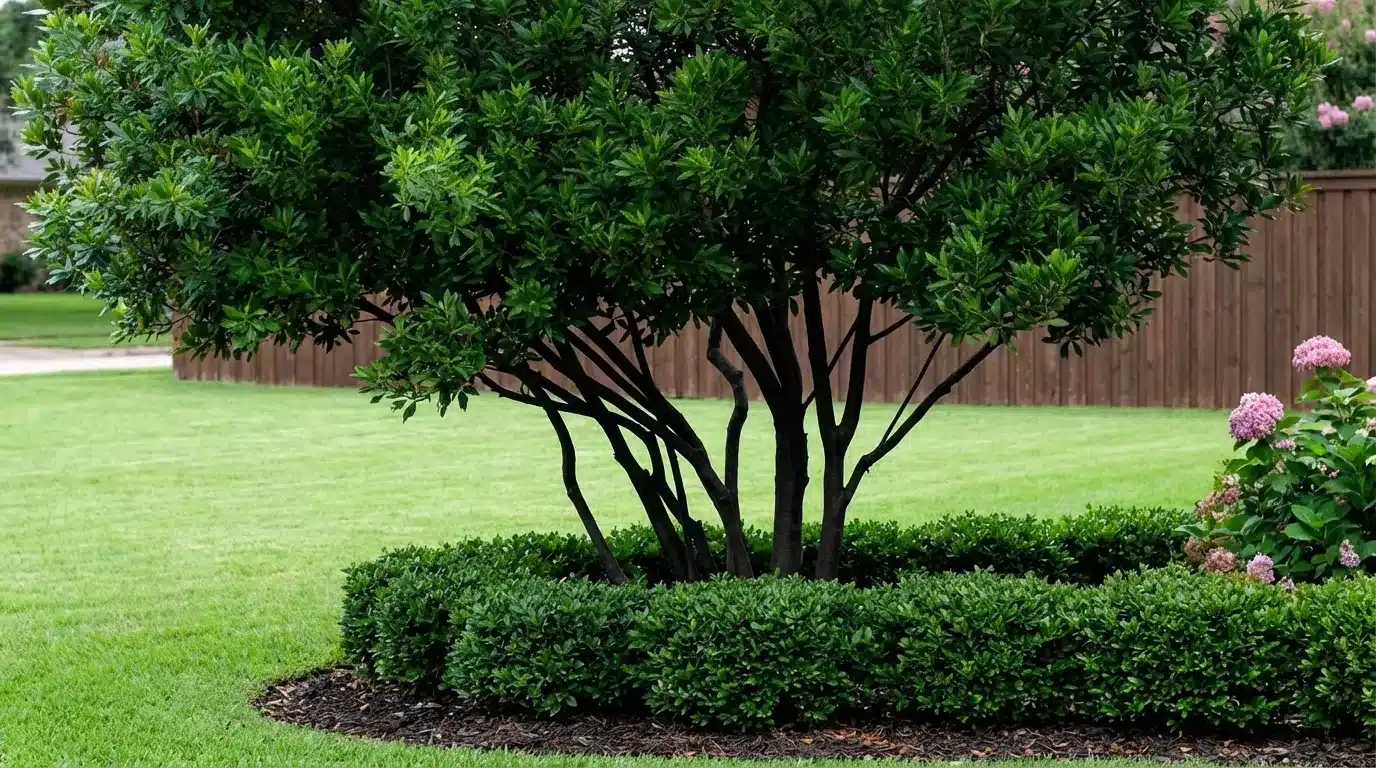
- Scientific Name: Morella cerifera
- Height: 10 to 20 feet
- Growing Zones: 7 to 11
- Best Use: Informal screens, native warm-climate planting
- Key Feature: Aromatic leaves, fast growth, tolerates wet or dry soil
Wax Myrtle is a broadleaf evergreen native to the southeastern United States. It grows quickly, adapts to both wet and dry soils, and releases a pleasant scent from its leaves when brushed.
It is deer-resistant, supports local wildlife, and is among the lowest-maintenance evergreen trees for warm-climate yards.
Evergreen Trees vs. Deciduous Trees: Key Differences
You have probably noticed that not all trees shed their leaves in the fall. Here is a quick, side-by-side look at how evergreen trees compare to deciduous ones, so you know exactly what sets them apart before you choose.
| Feature | Evergreen Trees | Deciduous Trees |
|---|---|---|
| Keep leaves or needles year-round | Yes | No |
| Year-round privacy | Yes | Only during the growing season |
| Winter color in the yard | Yes | No (bare branches only) |
| Wildlife habitat in winter | Strong, consistent | Limited |
| Better for cold, snowy climates | Most needle-leaf types | Many species, yes |
| Typical water needs in winter | Low but consistent | Very low |
| Common examples | Pine, Holly, Cedar, Spruce | Maple, Oak, Birch, Cherry |
How to Plant and Care for Evergreen Trees
Picking the right tree is only half the work. Planting it correctly and giving it basic care makes a big difference in how well it grows. Here are the key steps to follow.
- Best planting time: Plant in early spring or early fall for the strongest root establishment.
- Hole size: Dig a hole twice as wide as the root ball, but no deeper than the root ball itself.
- Planting depth: Set the top of the root ball slightly above the existing soil line to prevent water from pooling at the base.
- Mulch: Apply 1 to 2 inches of pine straw or bark mulch around the base. Extend it a few inches past the canopy edge to hold moisture and keep weeds down.
- Watering in the first 3 months: Water deeply at the base 1 to 2 times per week.
- Watering through the first summer: Water once a week, especially in hot or dry climates.
- Pruning: Prune in early spring. Skip late-fall pruning, as new growth triggered by cutting is vulnerable to frost.
- Brown needles or leaves: Dry, crispy browning usually means drought. Soft, limp browning often points to overwatering or poor drainage.
- Bagworms: Treat between late May and June using Bacillus thuringiensis or spinosad. Treatment after this window is not effective.
- Ongoing care: For unusual browning, persistent pest issues, or disease signs, consult a certified arborist or your local cooperative extension service for an accurate diagnosis.
How to Choose the Right Evergreen Tree for Your Yard?
Start with your USDA hardiness zone, as not every tree survives every climate. Then think seriously about space, because a tree that reaches 70 feet tall in a small yard quickly becomes a real problem.
Match the tree to its purpose: privacy, shade, wind protection, or a single focal point. Factor in sun exposure, soil drainage, and whether a native species is suitable for your area.
Native evergreens generally need less water once established and do more for local wildlife than imported varieties.
For the most reliable guidance specific to your region, your local cooperative extension service is the best resource available.
Final Thoughts
Every yard has room for at least one great evergreen tree.
The types of evergreen trees in this guide each bring something different. Some grow tall and fast for privacy. Some stay small and fit the tightest spaces. Some attract birds through winter.
Some block wind and protect your home. The right one comes down to your yard, your climate, and what you need it to do.
You do not need to be an expert to pick well. You just need the right information matched to the right tree for your space. Now you have both.
So, whichever evergreen tree are you planning to add to your yard this season? Drop your answer in the comments below. We would love to know which one caught your eye!