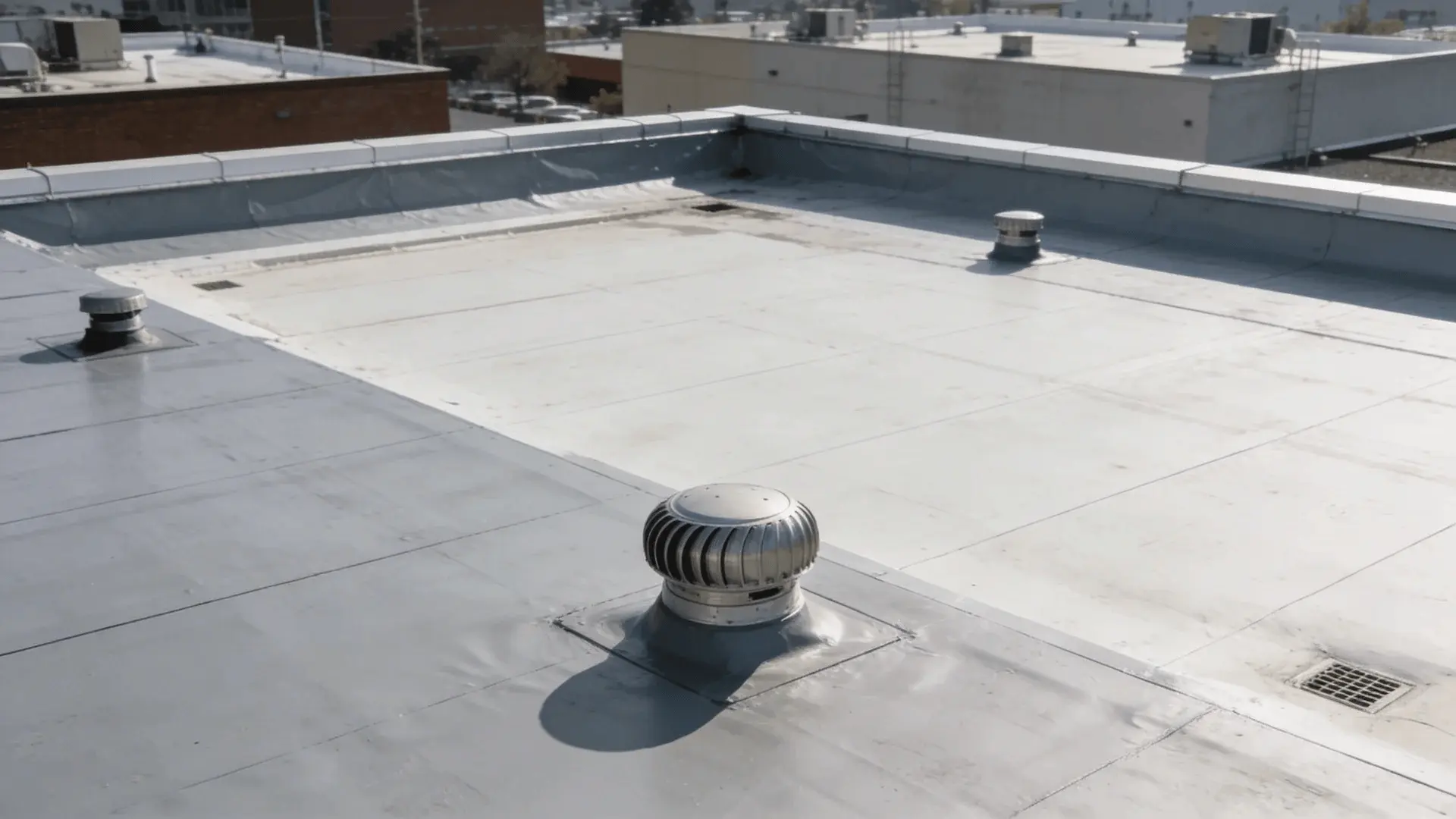
Most people think a flat roof is fine until it leaks. If water dries up, they assume no harm was done, and if they don’t see cracks, they think everything is solid. That thinking is what causes most early failures.
Flat roof maintenance is not about reacting to leaks. It’s about interrupting the slow damage that builds under the surface over time.
Water pressure, sun exposure, temperature swings, and small seam gaps all work quietly in the background.
In this guide, I’ll walk you through what actually matters, why it matters, and how to maintain a flat roof with real understanding instead of guesswork.
Flat Roof Maintenance Checklist (Step-by-Step Execution Plan)
This is the basic maintenance plan. Each step stops small problems before they turn into leaks or bigger damage. Follow these steps regularly, and your roof will last longer and perform better.
Tools and Supplies You’ll Need
- Soft push broom
- Leaf blower
- Plastic scoop or dustpan
- Garden hose with spray nozzle
- Gloves
- Flashlight
- Phone or camera for photos
- Trash bags or bucket
These tools clean without damaging the membrane. You’re not repairing anything here; just preventing stress buildup.
What Not to Use
- Wire brushes
- Stiff bristle scrub brushes
- Metal shovels
- Pressure washers
- Harsh solvents
Flat roof membranes are durable but not abrasion-proof. Scraping or blasting the surface creates micro-tears that invite moisture.
Quick safety and access check: Only work in dry conditions. Use a stable ladder. Avoid soft or spongy areas. Stay clear of roof edges and never work in wind or rain. Maintenance is preventive, not urgent rescue work.
Step 1: Clear Debris from Roof Surface and Drainage Paths
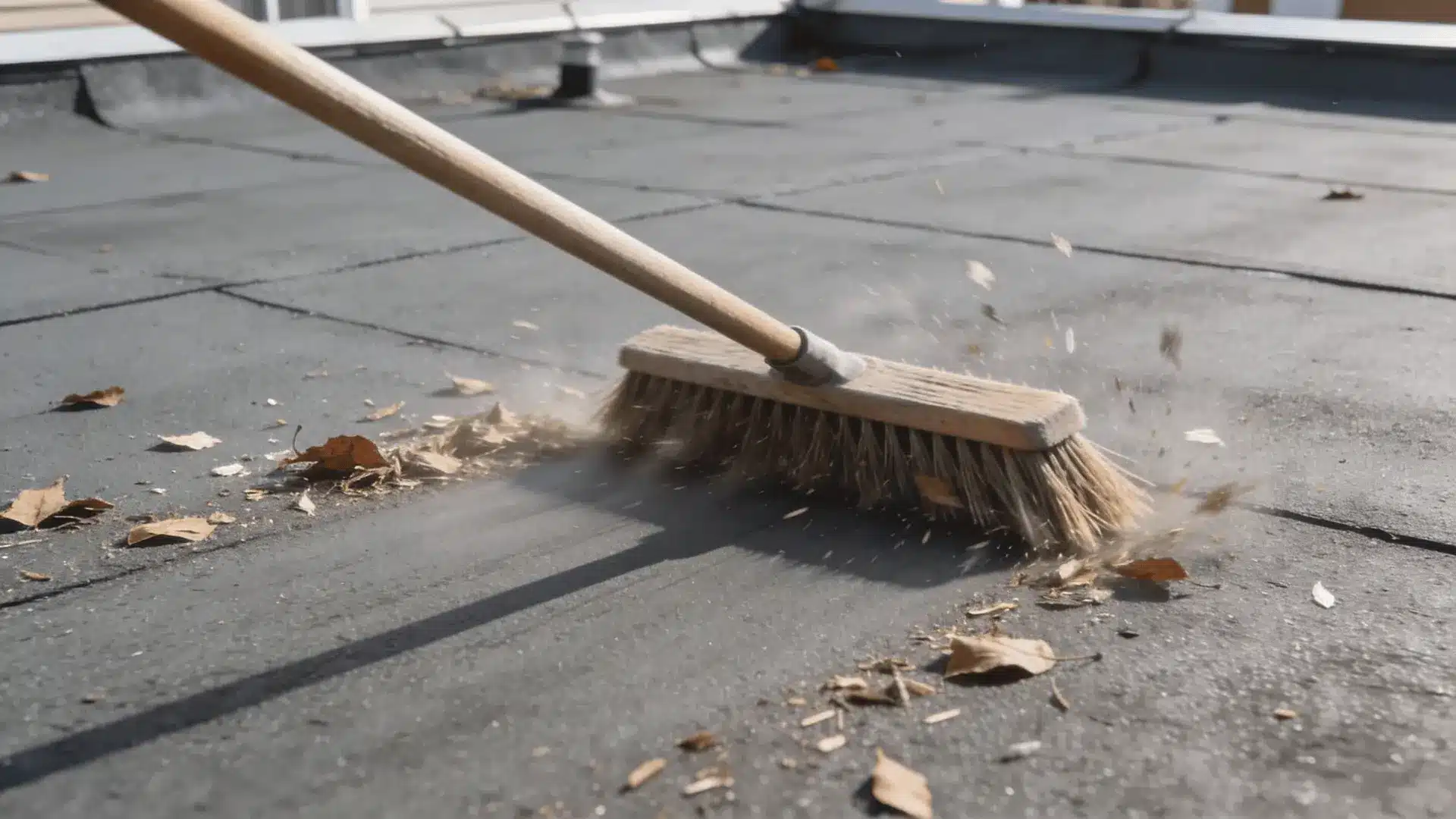
Leaves and dirt are not just cosmetic. They trap moisture. When moisture sits on the membrane, UV breakdown speeds up and materials soften. At the same time, grit shifts with wind and acts like sandpaper.
You won’t see damage right away. It builds gradually across seasons.
Use a soft broom or blower. Move debris toward drains without grinding it into the surface. Wet debris after storms is more urgent than dry dust during summer. Moisture retention accelerates wear much faster than dry buildup.
Step 2: Inspect and Clear Drains, Scuppers, and Gutters
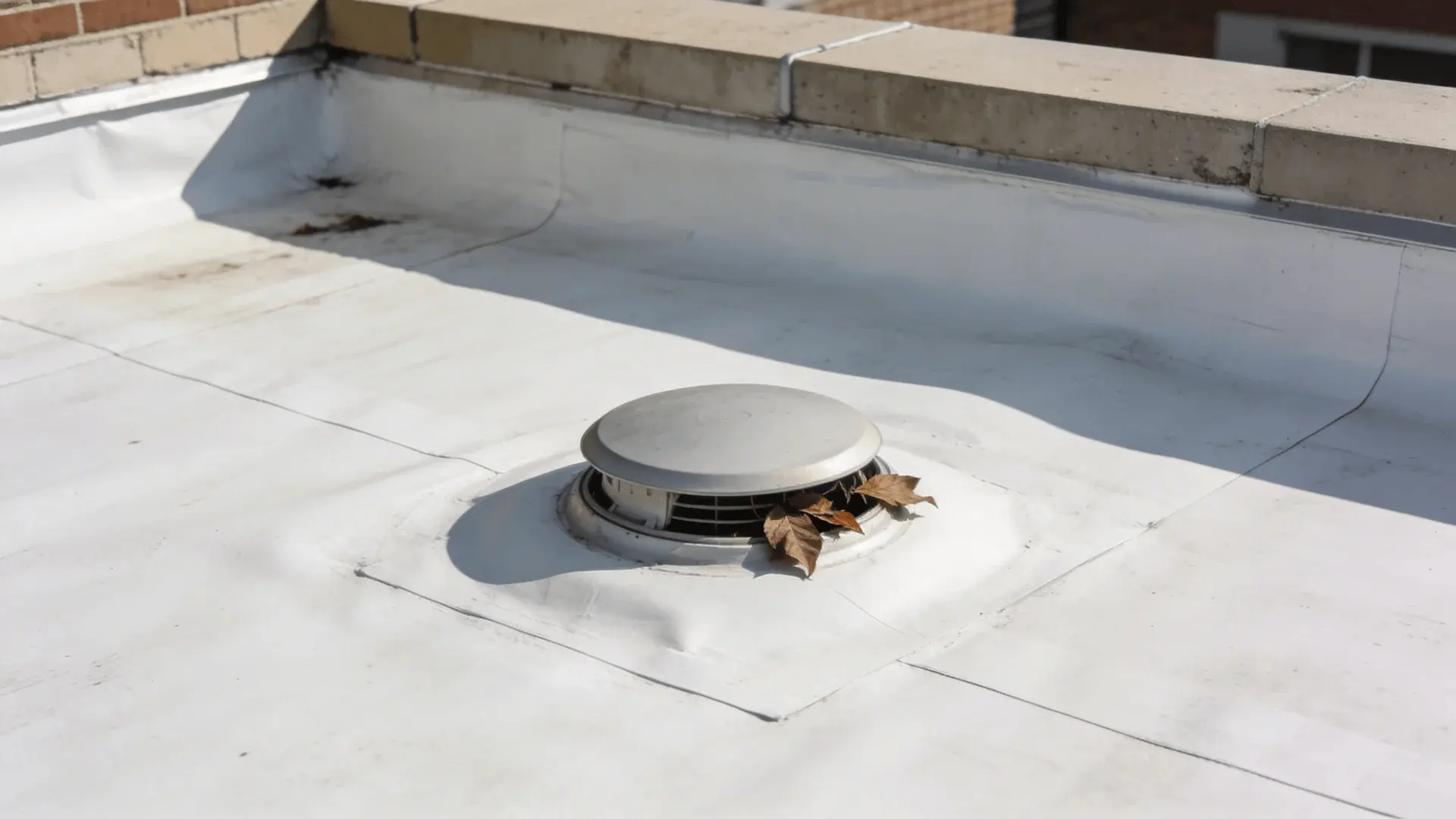
Drainage is the pressure control system of a flat roof. When drains clog, water pools. Pooling creates hydrostatic pressure.
Even shallow standing water adds significant weight. That weight pushes laterally against seams. Repeated pressure causes seams to flex. Adhesives fatigue. Small gaps widen.
The chain usually looks like this:
Drain clogs → Water collects → Pressure builds → Seams flex → Adhesive weakens → Separation begins
Even if water evaporates within a day, the pressure cycle already stresses the roof.
Twice a year is the standard, once in spring and once in fall, because debris and weather stress change with the seasons. After heavy storms or high winds, it’s smart to inspect the roof sooner rather than waiting for the next scheduled check.
Step 3: Check for Ponding Water Patterns
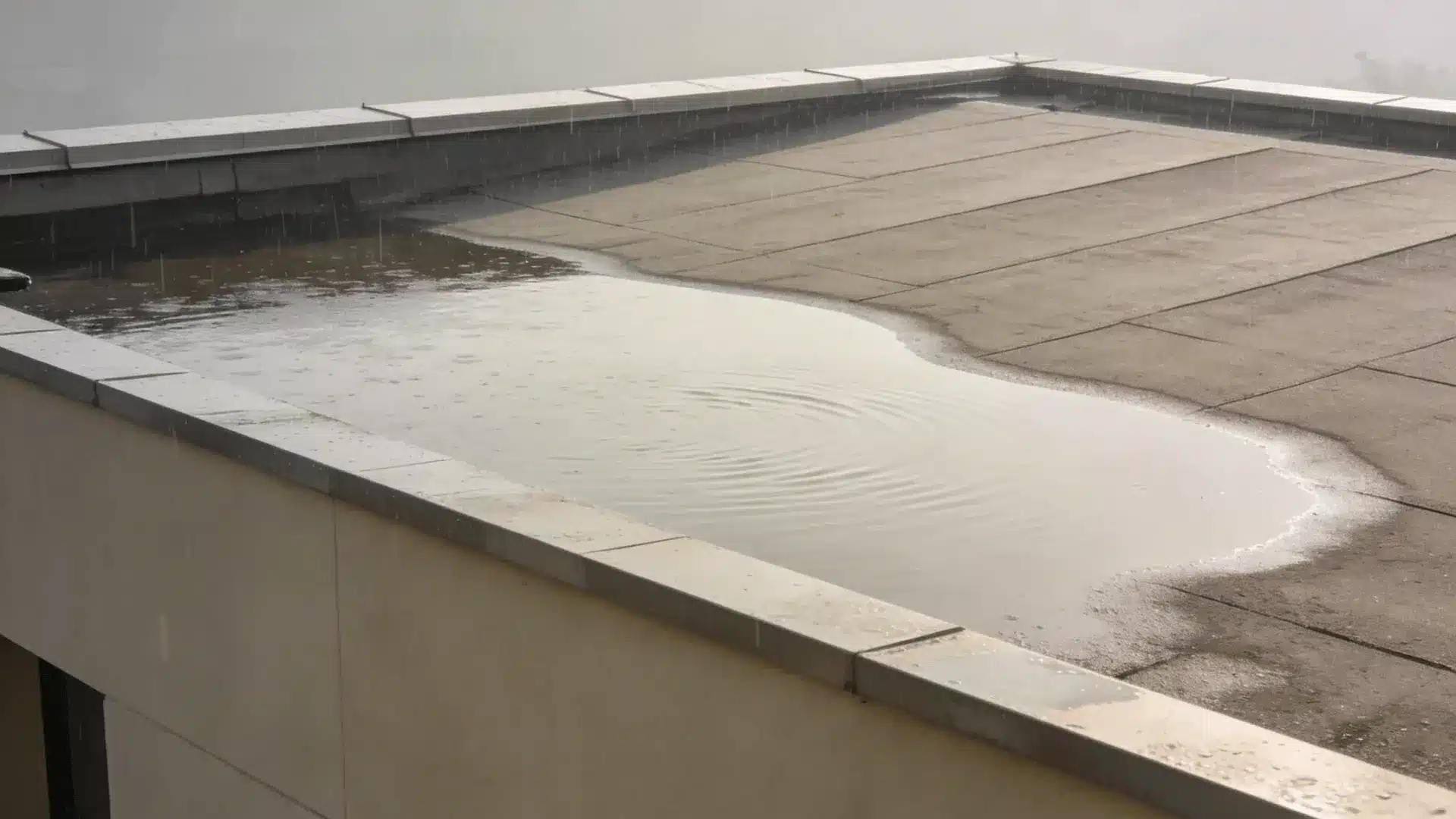
Ponding is not just leftover rain. It’s repeated stress in the same location.
Water heats during the day and cools at night. That expansion and contraction cycle weakens bonding layers. In colder climates, freeze–thaw expands trapped water inside small openings, forcing materials apart.
There’s also a structural feedback loop. Water weight causes slight deck deflection. That low spot holds more water next time. Over time, the depression deepens.
If water remains more than 48 hours after rainfall, that’s a warning sign. Temporary puddles may be normal. Persistent pooling in the same area signals slope or structural movement.
Step 4: Inspect Seams, Flashing, and Penetrations
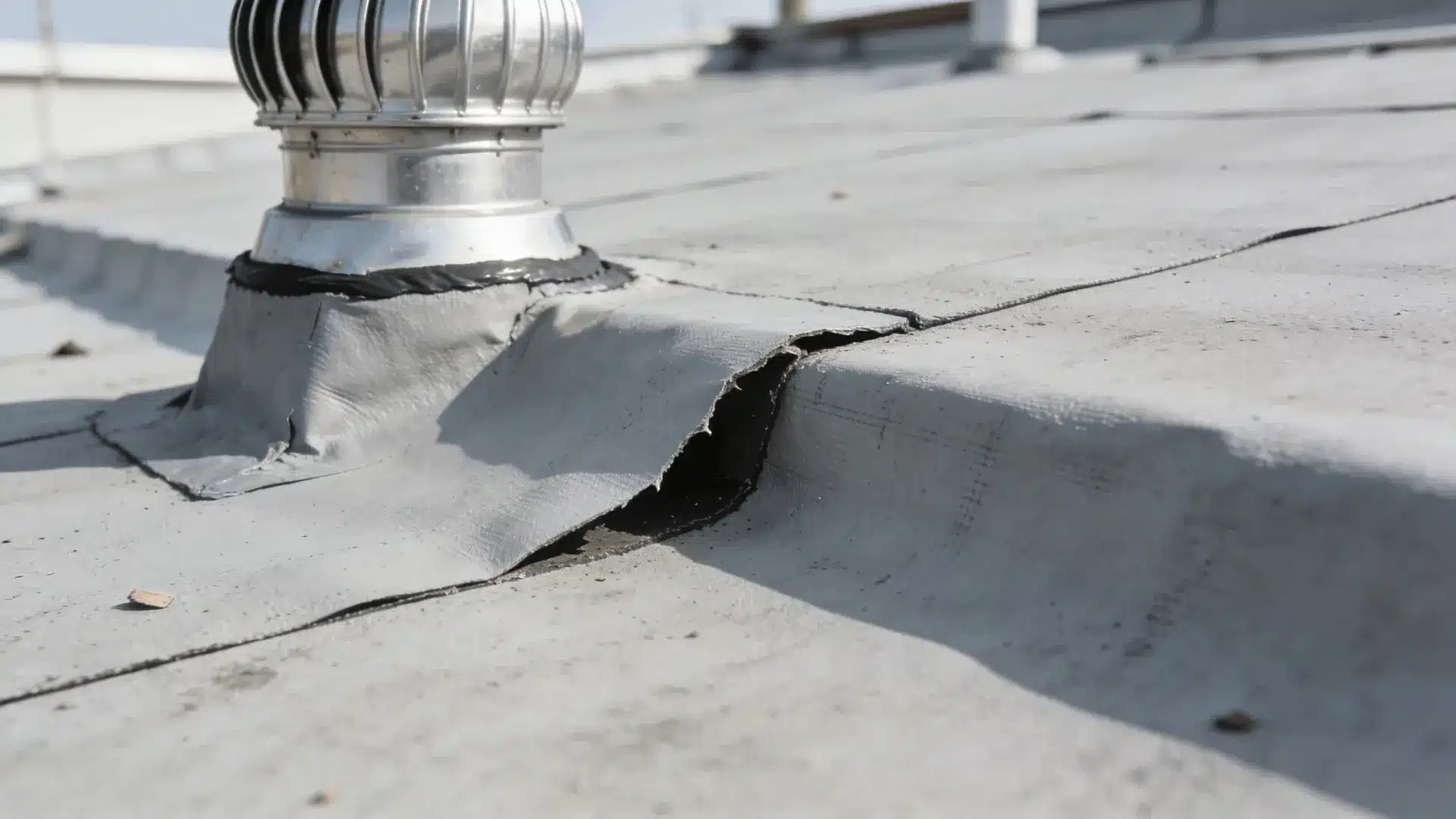
Flat roofs usually fail at transitions.
Seams and flashing experience movement from multiple directions. The roof surface expands with heat. Penetrations and vertical surfaces move differently. That differential movement stresses joints.
You may notice small lifted edges or fish mouths. Early lifting is minor. Wide separation allows water entry beneath the membrane, where it can travel sideways before appearing inside.
Minor edge lifting can remain stable for years. Widespread seam separation often signals deeper adhesive fatigue.
Step 5: Identify Membrane Surface Changes
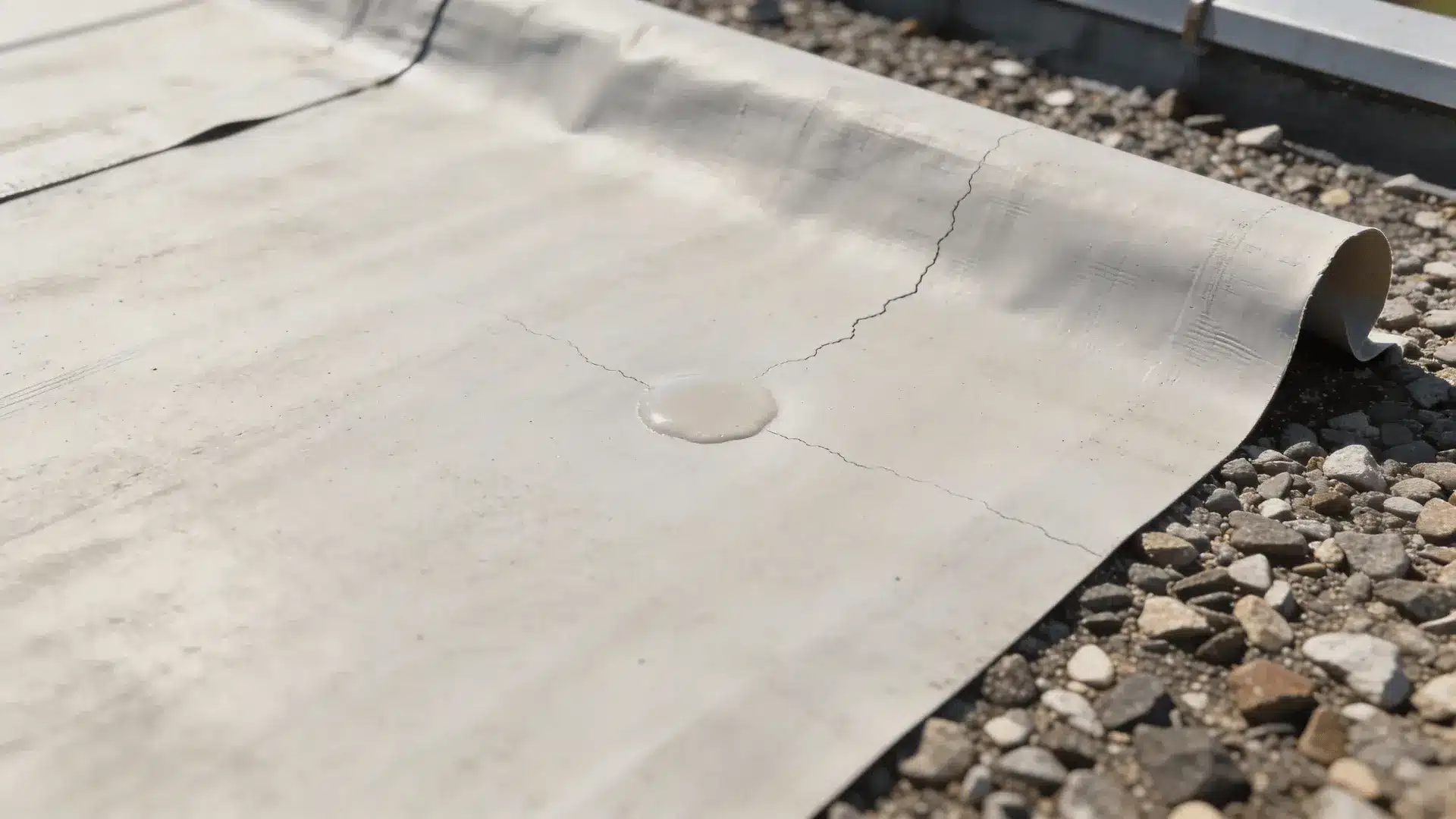
Surface changes often show early stress.
Blisters form when air or moisture becomes trapped between layers. Heat expands the pocket. Small blisters may remain stable. Larger or growing ones suggest active moisture beneath the membrane.
UV exposure slowly reduces elasticity. The roof may look intact, but flexibility decreases.
Hairline surface cracks are different from full membrane splits. Surface cracks often affect coatings only. Full splits penetrate through the membrane and allow direct water entry.
Surface aging is gradual. Structural splits require faster intervention.
Step 6: Address Minor Issues Immediately
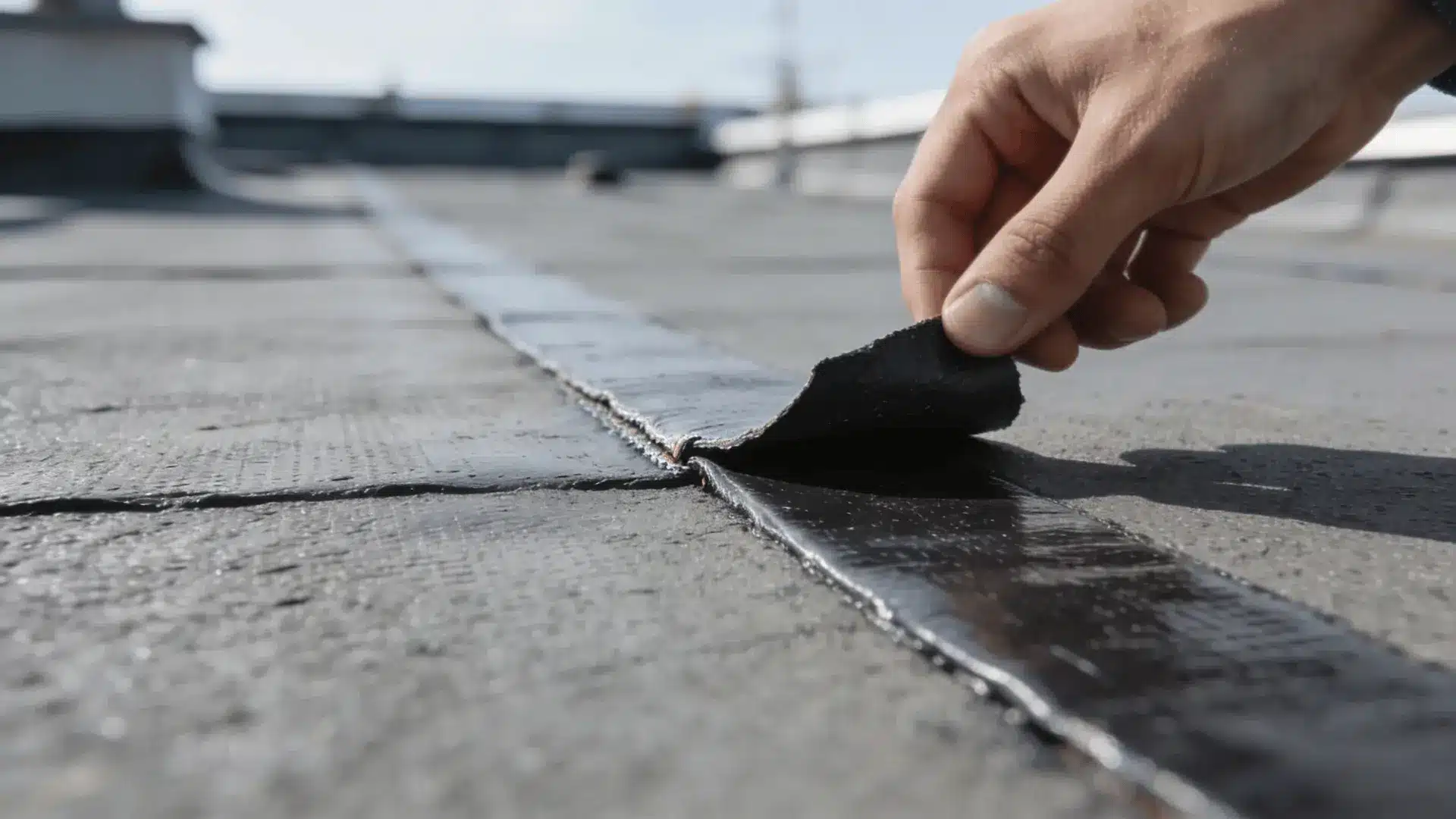
Small issues rarely stay small. A tiny seam gap lets water enter. Water spreads under the membrane and saturates insulation. Wet insulation adds weight and reduces thermal performance.
Sealants may help in limited cases, but compatibility matters. Some membranes reject certain products. Poor bonding traps moisture instead of sealing it out.
If the same area repeatedly needs patching, that often signals structural movement beneath. At that point, maintenance shifts toward repair territory.
The goal is early interruption before damage reaches the substrate.
Why Drainage is the Primary Failure Trigger on Flat Roofs
Drainage doesn’t just remove water. It controls how much stress your roof carries and for how long.
What Standing Water Does to Seams
- Adds constant lateral pressure against seam edges
- Increases movement as water heats during the day and cools at night
- Speeds up adhesive fatigue through repeated stress cycles
- Weakens bonding slowly, without obvious surface warning
Seams are already the most vulnerable points. Water simply accelerates what they’re prone to over time.
What Repeated Ponding Does to The Structure
- Adds weight across the same area repeatedly
- Causes slight deck flex, even if you can’t see it
- Creates low spots that hold more water next time
- Reinforces sag through repeated loading
This becomes a feedback loop: more water → more deflection → more water.
In colder climates, freeze–thaw adds expansion pressure at weak points, widening small separations.
When Ponding Shifts from Normal to Structural
- Water lasting less than 24–48 hours after heavy rain can be normal
- Water remaining beyond 48 hours in the same area is not
- Repeated pooling in identical spots signals slope or deck movement
At that point, cleaning drains alone won’t solve the root issue.
When and How Often Should a Flat Roof Be Inspected?
A schedule matters, but timing matters more than the calendar.
At a minimum, inspect twice per year, spring and fall, because seasonal transitions create the most movement in roofing materials. Temperature swings cause expansion and contraction, and that’s when seams are most likely to shift.
More important than the calendar are trigger events:
- After heavy storms or high winds
- After hail
- After nearby construction work
- If new ponding appears where it didn’t before
Seasonal inspections catch cumulative stress. Event-based inspections catch sudden stress.
Skipping a season means small seam gaps or drainage issues can sit undetected for months, compounding quietly across weather cycles.
Warning Signs that Signal Early Roof Failure
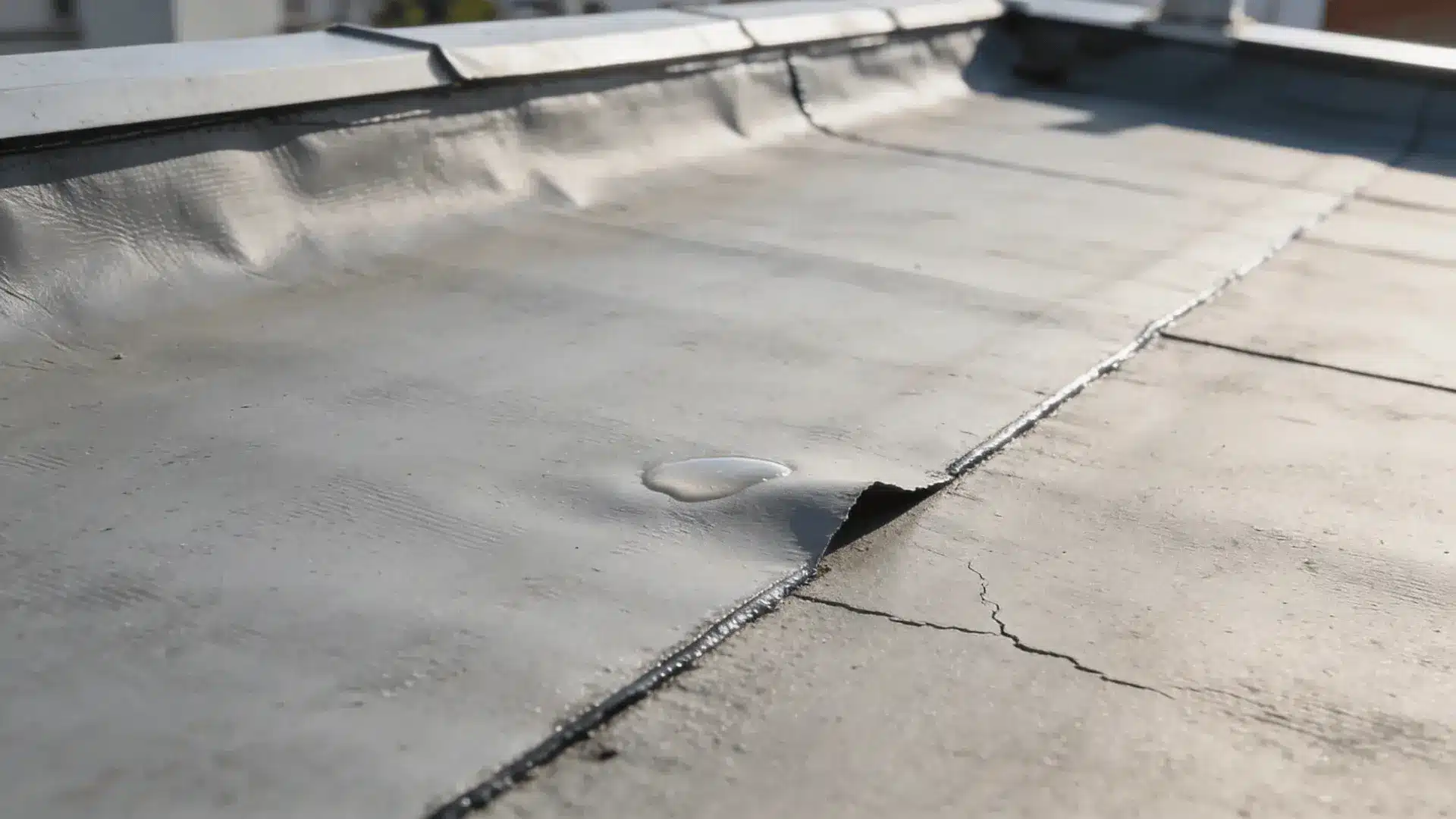
Most flat roof problems start small and easy to miss. The table below helps you match what you see with what’s actually happening underneath:
| Problem | Likely Cause | Mitigation |
|---|---|---|
| Blisters and bubbles | Trapped moisture or air between membrane layers; heat expansion enlarges the pocket | Monitor small, stable blisters; prevent further moisture entry; evaluate growing blisters before rupture exposes lower layers |
| Open seams and fish mouths | Adhesive fatigue from thermal movement; repeated flexing under drainage pressure | Address minor lifting early; reseal compatible seams; investigate recurring separation for structural movement |
| Flashing separation | Differential expansion between horizontal roof surface and vertical penetrations | Reseal small gaps promptly; check for broader adhesion failure if detachment spreads |
| Surface cracks | UV exposure and surface aging affecting top coating only | Monitor progression; maintain protective coatings where compatible |
| Membrane splits | Advanced material fatigue or stress concentration penetrating full membrane thickness | Prompt professional repair to prevent direct water intrusion and insulation saturation |
Not every issue means immediate failure, but some demand quicker action. The earlier you respond, the easier the fix.
What You Can Safely Do Yourself vs. When to Call a Professional
You can safely:
- Remove debris with soft tools
- Clear drains and gutters
- Visually inspect seams and flashing
- Monitor ponding patterns
These tasks reduce surface stress and prevent buildup. They don’t alter the roof system itself.
Call a professional when the issue involves structure, adhesion, or hidden moisture. That includes:
- Repeated leaks in the same location
- Soft or spongy areas underfoot
- Widespread seam separation
- Persistent ponding despite clear drainage
Professionals can test for trapped moisture, assess insulation saturation, and evaluate structural deflection; things that aren’t visible from the surface.
Maintenance protects what you can see. Structural repair requires diagnosing what you can’t.
When Maintenance Stops and Structural Repair Begins
Maintenance addresses surface stress. Structural repair begins once damage moves below the membrane.
If insulation becomes saturated, moisture spreads sideways beneath the roof covering. From above, the surface can still look fine while the layers underneath continue to weaken.
Warning signs include:
- Repeated leaks in the same area
- Soft or spongy spots underfoot
- Persistent ponding even after drains are clear
At that point, cleaning or resealing won’t solve the problem. Maintenance can slow wear, but it cannot restore compromised structure.
Does Maintenance Differ by Flat Roof Type?
Yes, it does. The inspection steps stay mostly the same, but materials age and fail in different ways.
EPDMdepends heavily on adhesive seams. Over time, those adhesives can fatigue from repeated expansion and contraction, making seam checks especially important.
TPOuses heat-welded seams instead of glue. With TPO, the focus shifts to weld integrity and edge lifting rather than adhesive breakdown.
Modified bitumenis built in layers. You may see surface cracking from UV exposure while the lower layers are still intact, which can make damage look worse or milder than it actually is.
Coating compatibility also varies. A sealant or coating that bonds well to one membrane may not adhere properly to another.
The maintenance checklist stays consistent. What changes is how each material shows stress and where it tends to fail first.
Wrapping Up
Flat roof maintenance works best when you understand the mechanics behind deterioration.
Pressure builds, materials move, and sunlight and moisture interact in ways that are easy to overlook. Small issues often expand quietly.
When you interrupt those processes early, the roof behaves predictably and lasts longer. If you stay consistent with inspections and drainage care, you avoid most early failures.
And if you’re unsure whether an issue is still surface-level or deeper, that’s the right time to seek professional input before it escalates.
Frequently Asked Questions
What maintenance does a flat roof need?
Debris removal, drain clearing, seam inspection, and monitoring for ponding or surface changes twice per year.
How often should a flat roof be inspected?
At least twice annually, ideally spring and fall, and after major storms.
Is ponding water always a problem?
Short-term puddles may be normal. Water lasting more than 48 hours suggests drainage or structural concerns.
How often should a flat roof be resealed?
Resealing depends on the membrane type and wear. It is not automatically required every few years.
Can I fix minor seam gaps myself?
Small surface gaps may be manageable, but recurring separation or moisture beneath the membrane needs professional evaluation.