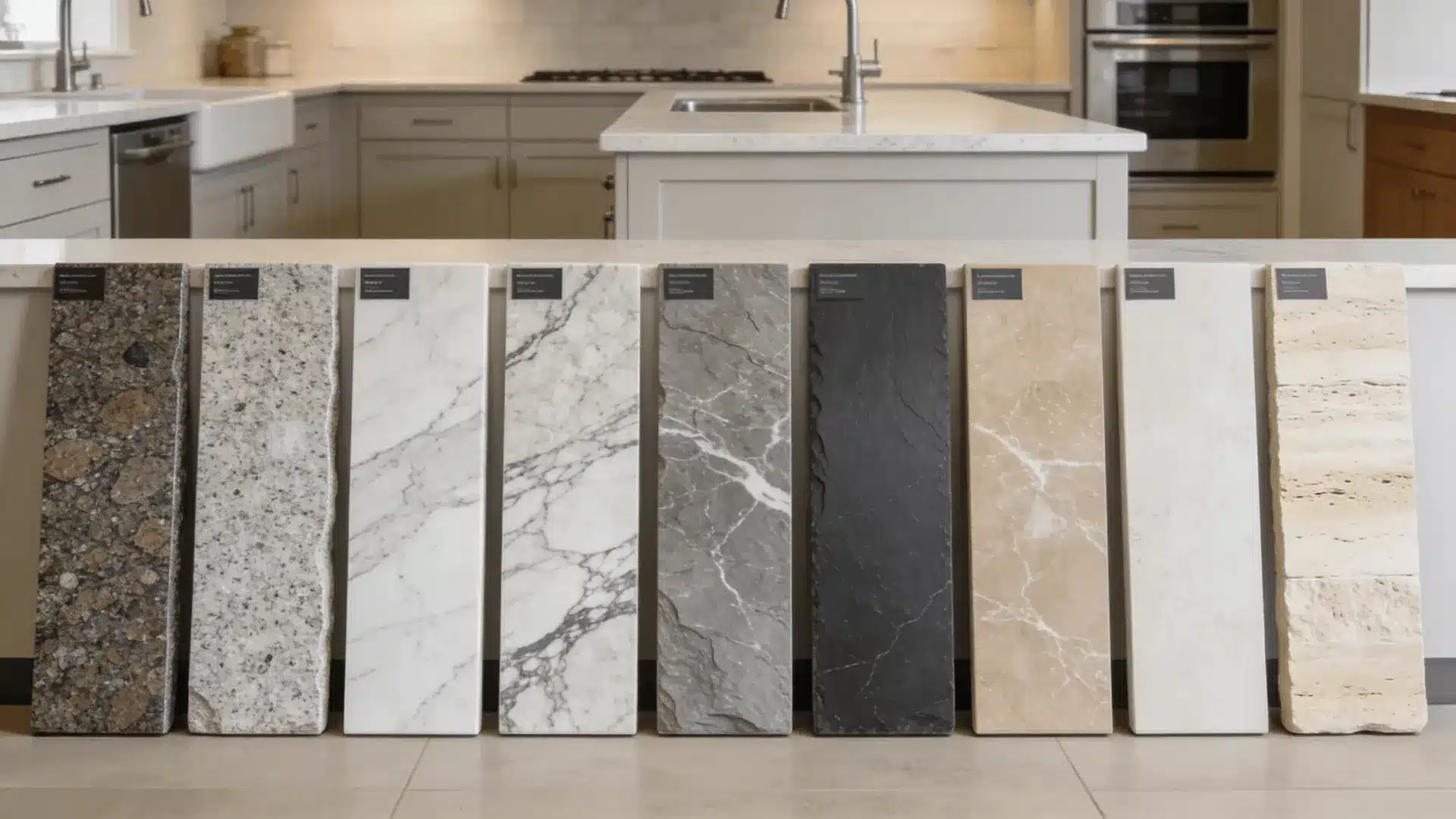
Choosing a countertop sounds simple at first. It’s just stone, right? But once you start comparing types of stone countertops, things get confusing fast.
Some need sealing. Some don’t. Some handle heat well but stain easily. Others resist stains but can scorch under a hot pan.
I’ve seen people assume that all stone behaves the same because it comes from the ground. That’s not true. Structure matters more than the name.
In this guide, we’ll break down what each material is made of, how that affects daily use, and where each one shines or struggles. Then we’ll compare performance, cost, and priorities so you can make a steady, informed decision.
Types of Stone Countertops Worth Trying
Not all stone is created equal. Some are natural slabs cut from quarries. Others are engineered using crushed stone and binders. Their internal structure determines how they react to heat, spills, pressure, and time.
1. Granite
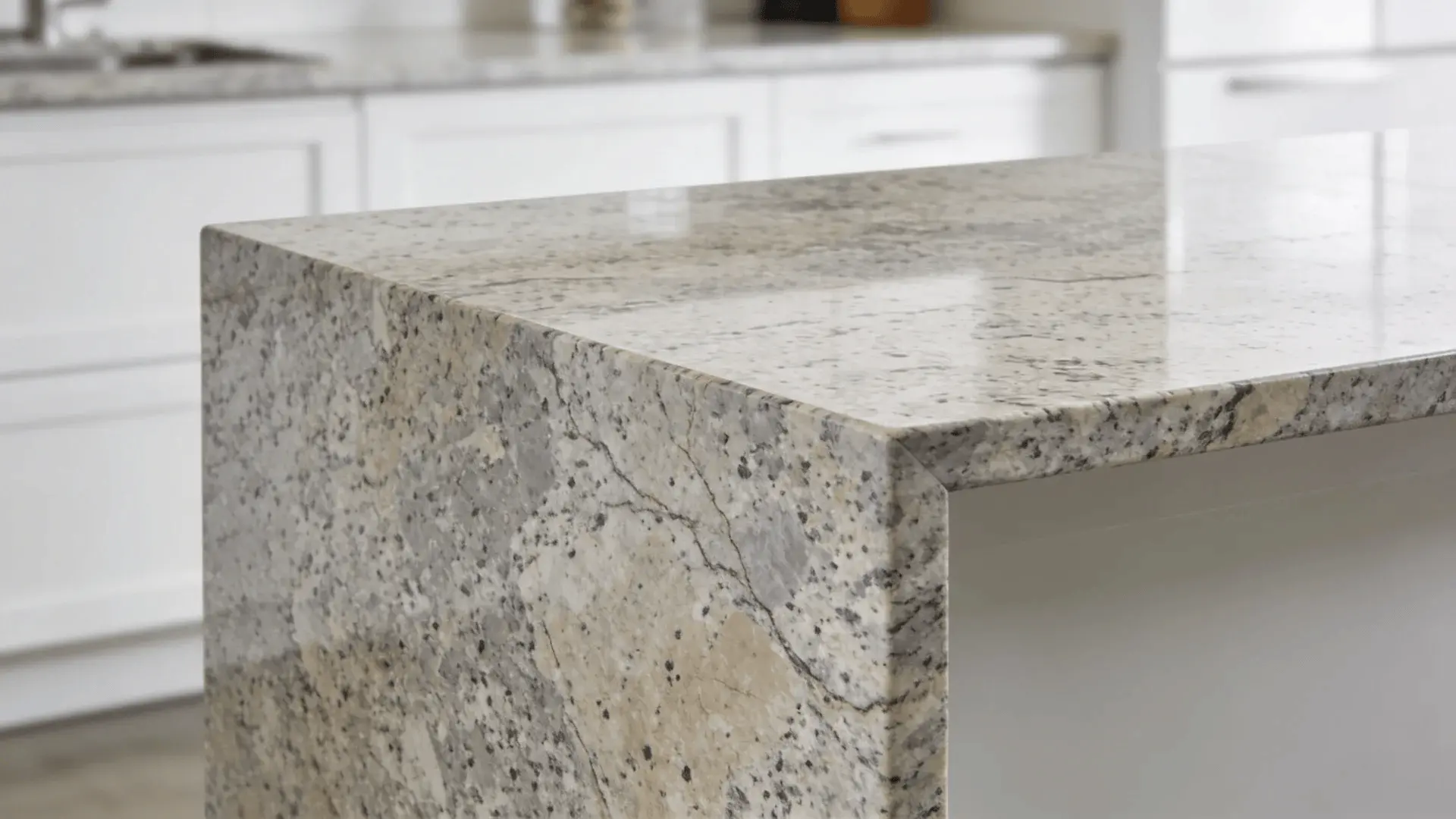
Granite is a natural stone made of quartz, feldspar, and mica, formed under intense heat and pressure. That structure makes it hard and resistant to heat.
It does contain microscopic pores, so sealing is required to slow staining. Density varies by slab and quarry. It performs well in busy kitchens but can chip under strong impact. It sits in the mid to upper cost tier.
2. Quartz (Engineered Stone)
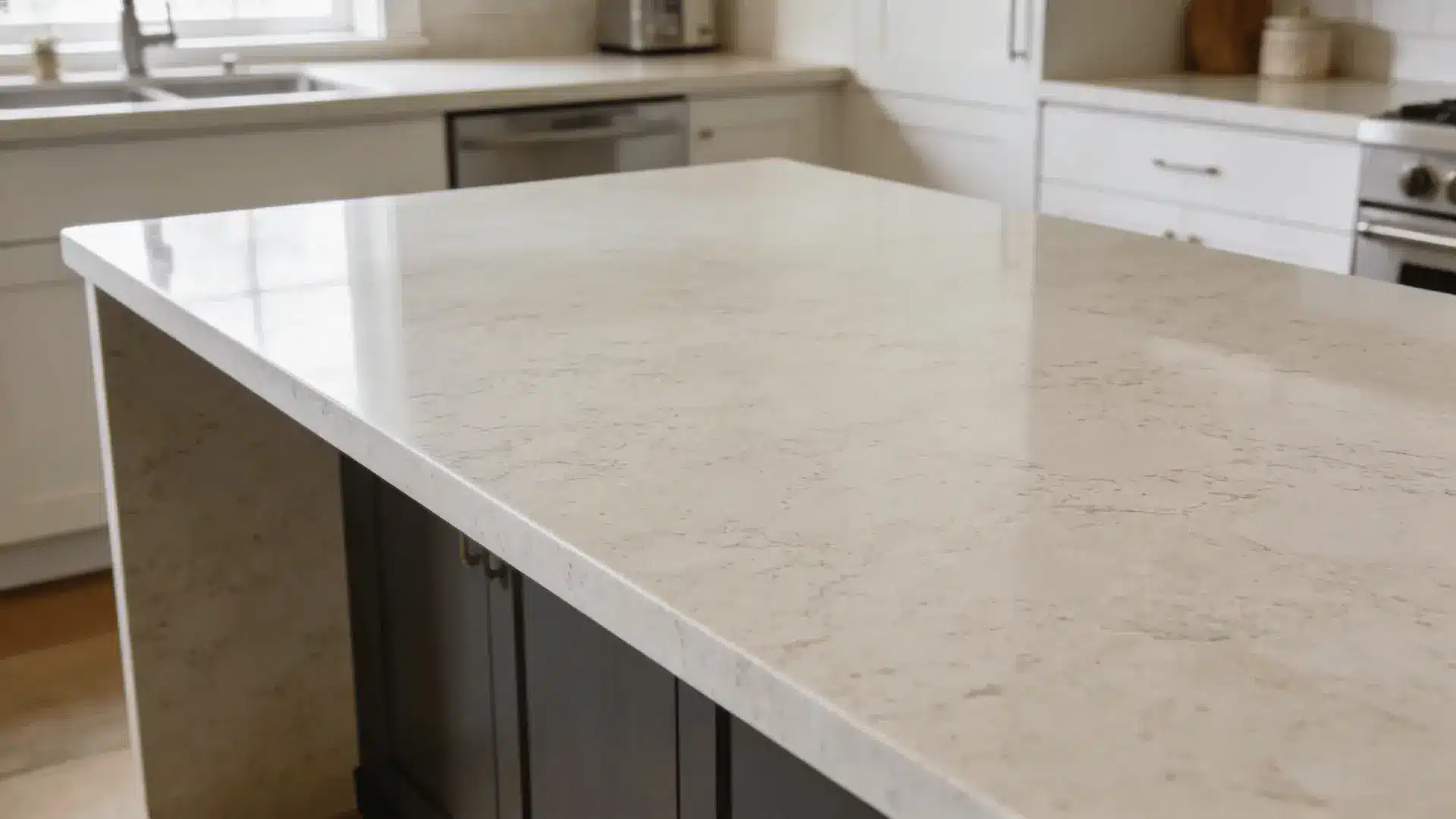
Quartz countertops are made from crushed quartz bound with resin and pigment. The resin creates a non-porous surface, so sealing isn’t needed and staining is minimal.
However, resin limits heat tolerance, and extreme heat can scorch or discolor the surface. It offers consistent color and pattern. It works well for low-maintenance needs. It falls in the mid to upper price range.
3. Marble
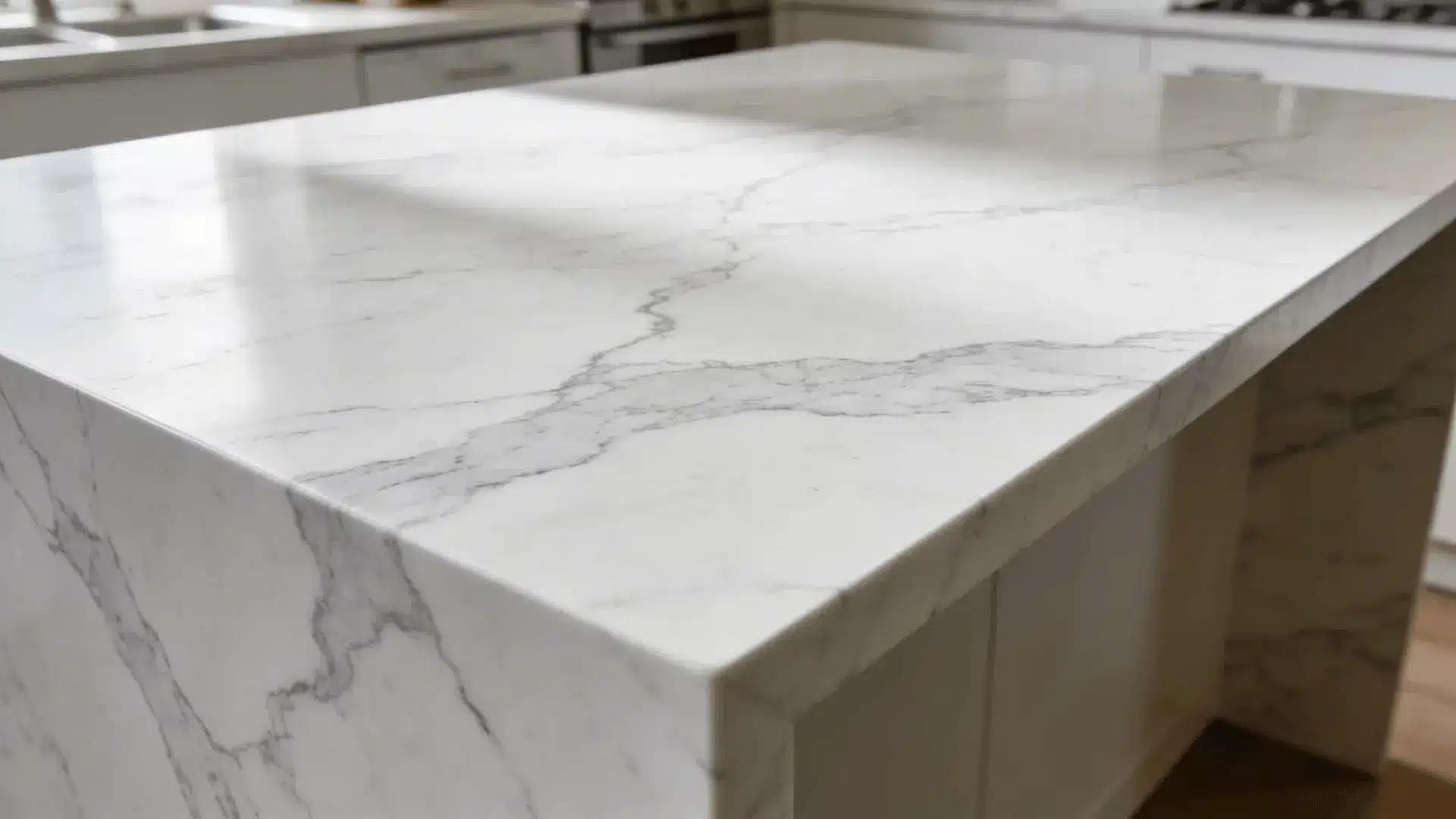
Marble is composed mainly of calcite, which reacts with acids and causes etching. Etching dulls the surface and differs from staining. Marble is softer than granite and more porous, so sealing is required.
It delivers dramatic veining and a classic look. It performs best in lighter-use kitchens. It sits in the upper price tier and requires realistic expectations about aging.
4. Quartzite
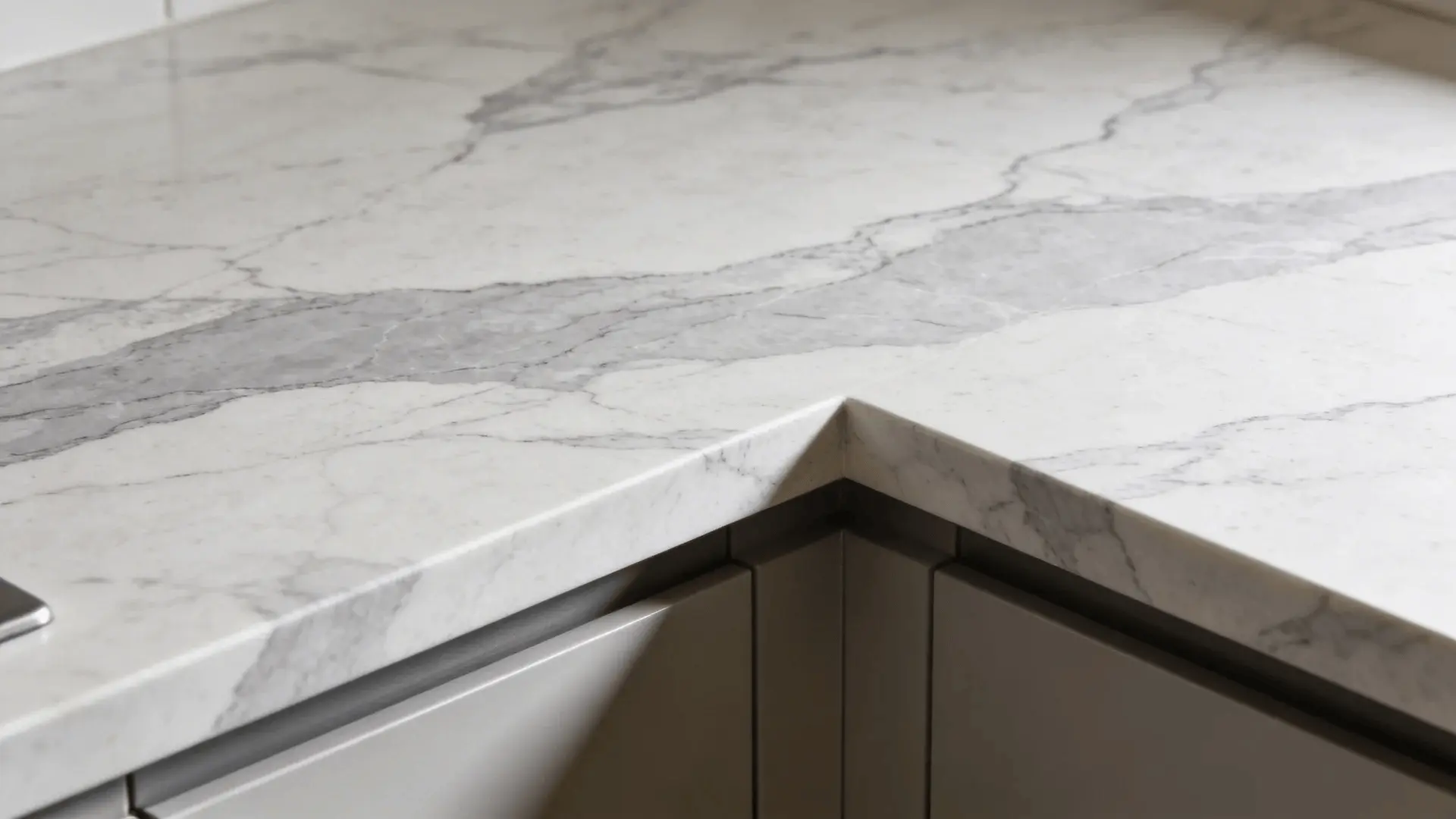
Quartzite forms when sandstone undergoes extreme pressure and heat, creating a very hard natural stone. It resists scratches and heat well but still has pores, so sealing is necessary.
Some slabs are mislabeled, so true density matters. It offers a marble-like appearance with greater strength. It is generally high in cost and requires ongoing maintenance awareness.
5. Soapstone
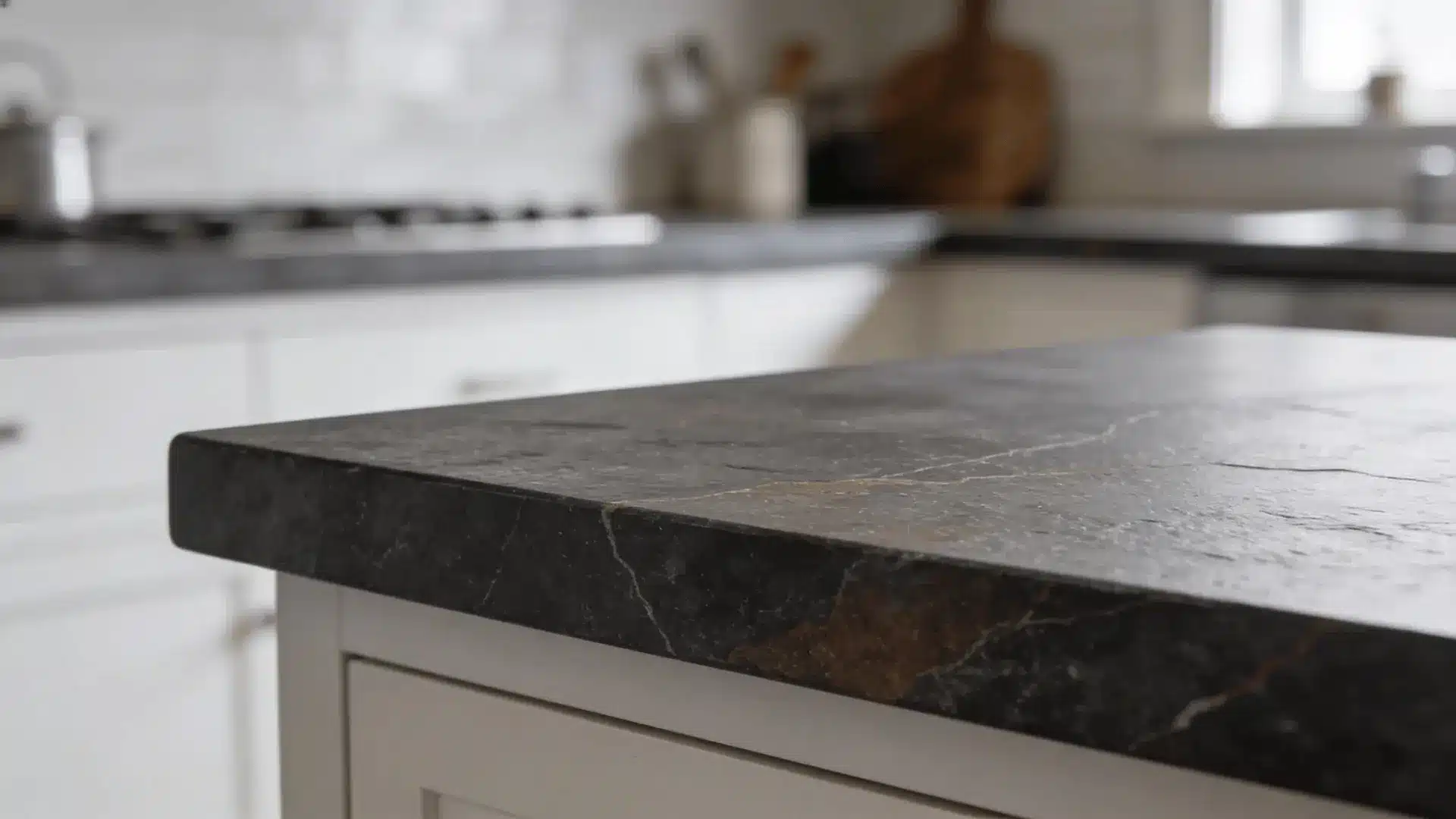
Soapstone contains talc, making it softer than granite and easier to scratch. Despite that softness, it is dense and non-porous, so sealing isn’t required and stains are uncommon.
Over time, it develops a natural dark patina. It suits homeowners who accept surface wear as character. It sits in the mid to upper price range.
6. Slate
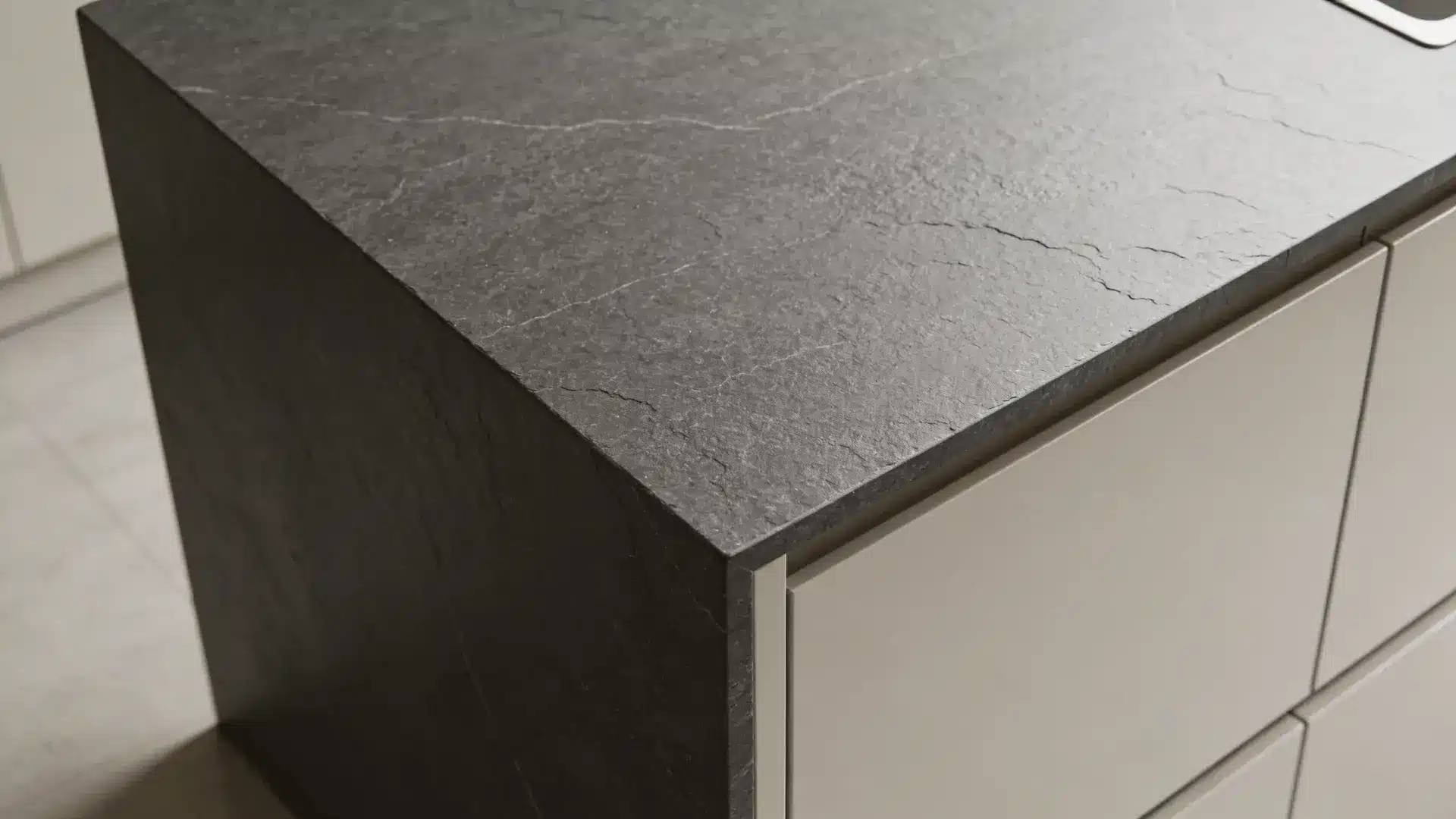
Slate is a fine-grained natural stone known for its density and relatively low porosity. It resists staining better than marble or limestone and handles daily use well.
Color choices are limited, often dark gray or green tones. Edges may chip under strong impact. It is typically priced in the mid range and favored for practical kitchens.
7. Onyx
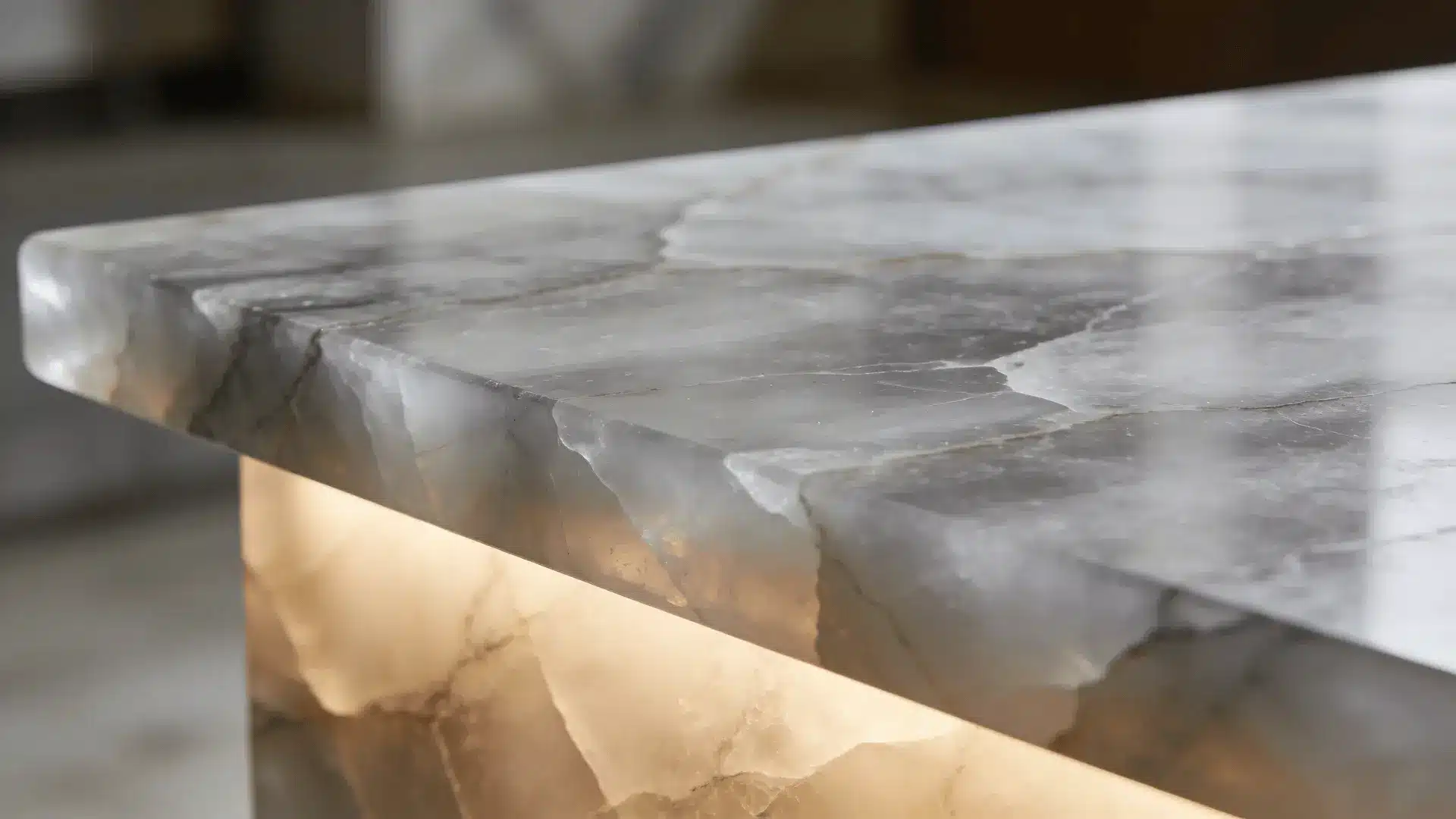
Onyx is a translucent natural stone prized for its visual impact. It is softer and more fragile than granite or quartzite, making it prone to scratches and chips.
It is also porous and requires sealing. It works best in low-use areas or decorative spaces. Due to rarity and appearance, it sits in a higher price tier.
8. Limestone
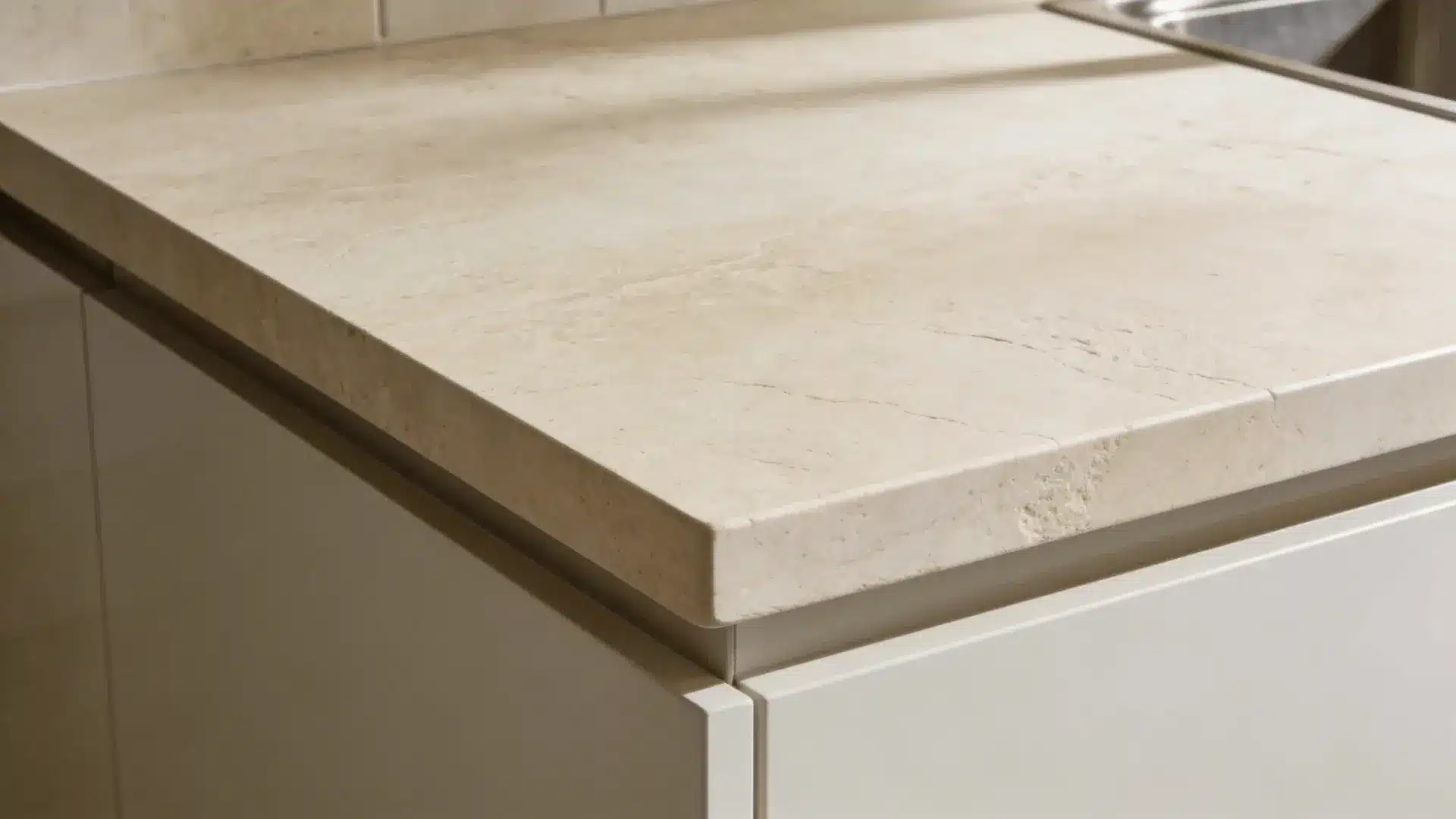
Limestone is made largely of calcium carbonate, which reacts with acid and causes etching. It is softer and more porous than granite, requiring regular sealing to reduce staining, creating a warm, natural look.
It performs best in calmer kitchens with lighter use. It falls in the mid to upper cost range depending on source and finish.
9. Travertine
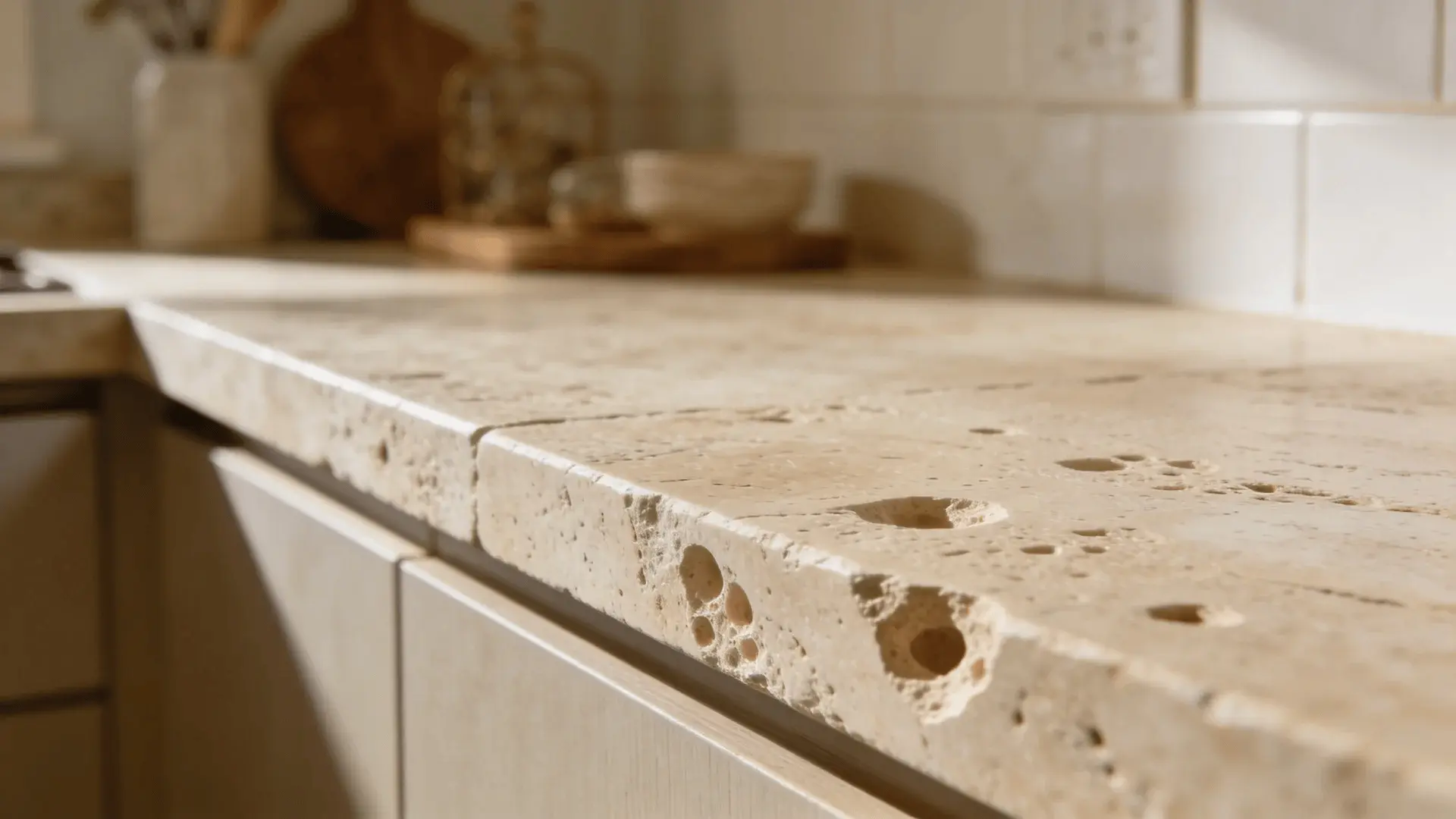
Travertine is a type of limestone with natural voids that are often filled during fabrication.
Even when filled, it remains porous and needs sealing. It can stain and etch under acidic spills. It offers a textured, earthy appearance. It works best in lower-impact kitchens. It is usually priced in the mid-range.
How Stone Countertops Differ in Daily Performance
At a glance, most stone countertops look strong and solid. But daily performance is not about appearance. It comes down to internal structure and how that structure reacts to spills, heat, pressure, and impact.
| Performance Factor | What Controls It | What Happens in Real Life | Where People Get Confused |
|---|---|---|---|
| Stain resistance | Porosity (open vs. closed pore structure) | More open pores allow liquids to soak in; sealing slows absorption but doesn’t stop it; non-porous quartz blocks absorption entirely | Thinking sealing makes stone stain-proof |
| Scratch resistance | Hardness (mineral composition) | Harder stones resist surface scratches better; softer stones mark more easily | Assuming harder also means more stain-resistant |
| Chipping & cracking | Density and internal structure | Denser stones resist fractures; layered or softer stones may chip along edges | Confusing surface scratches with structural damage |
| Heat tolerance | Mineral vs. resin composition | Pure mineral stones like granite handle high heat well; resin in quartz can soften or discolor under extreme heat | Believing all stone is heatproof |
| Etching resistance | Acid sensitivity (calcium carbonate content) | Marble and limestone react with acidic foods, dulling the surface | Mistaking etching for staining |
Harder does not always mean better. It depends on what kind of stress your kitchen sees.
What Do Stone Countertops Cost and What Drives the Price?
Countertop pricing can feel confusing at first. The material name is only one piece of the final number you see on a quote.
- Material rarity: Exotic colors and dramatic patterns cost more because they are harder to source and available in smaller quantities.
- Quarry origin: Stone imported from overseas carries higher transportation costs. Shipping heavy slabs long distances adds up quickly.
- Slab thickness: Thicker slabs use more raw material and often require reinforced cabinets or added support, increasing total cost.
- Fabrication complexity: Detailed sink cutouts, waterfall edges, and tight corner work require more labor time and precision.
- Edge profiles: A simple eased or straight edge is usually included in base pricing. Decorative edges increase labor and tooling time.
- Labor and regional rates: Installation costs vary by city and region based on demand, wages, and local market conditions.
Two slabs labeled “granite” can differ greatly in price if one is rare with bold movement and the other is common and widely stocked. The material category sets a range, but the details determine the final cost.
Which Stone Countertop is Best for Different Priorities?
There isn’t one perfect stone for everyone. The right choice depends on how you use your kitchen and what matters most to you.
| Priority | Best-Fit Options | Why They Work | Trade-Off to Accept |
|---|---|---|---|
| Low maintenance | Quartz | Non-porous surface resists staining and does not require sealing | Lower heat tolerance due to resin content |
| High heat tolerance | Granite, Quartzite | Dense mineral structure handles high temperatures well | Requires periodic sealing |
| Luxury appearance | Marble, Quartzite | Dramatic veining and natural movement create high-end visual impact | More maintenance and risk of etching (especially marble) |
| Budget-conscious | Common Granite, Mid-range Quartz | Widely available materials keep supply steady and pricing competitive | Fewer rare patterns or exotic colors |
| Heavy daily cooking | Granite, Quartzite, Quartz | Strong scratch resistance and better stain control for busy kitchens | Must manage sealing (natural stone) or heat limits (quartz) |
Every option comes with trade-offs. When you match your daily habits to how the material actually performs, the “best” choice becomes much clearer and easier to live with.
Common Mistakes to Avoid
Most countertop regrets don’t come from bad materials. They come from wrong assumptions about how the material will behave in real life.
- Ignoring sealing commitment: Natural stones like granite, marble, quartzite, limestone, and travertine need periodic sealing. Skipping it increases the risk of staining over time.
- Confusing etching with staining: Etching is a surface reaction, common with marble and limestone, that dulls the finish. It is not a dark spill soaking into the stone.
- Assuming showroom samples represent full slabs: Small samples don’t show full veining, movement, or color shifts. Natural stone can look very different across one slab.
- Overestimating heat resistance: Granite and quartzite handle heat well, but quartz contains resin that can scorch or discolor under high temperatures.
- Choosing based only on appearance: A dramatic stone may look stunning, but daily cooking, spills, and cleaning habits put real stress on the surface.
Not all marks mean failure. Many small changes are normal wear, not structural damage. When expectations match reality, satisfaction tends to last much longer.
Wrapping Up
Choosing between different types of stone countertops isn’t about finding a perfect material. It’s about matching structure to lifestyle. Porosity affects staining. Hardness affects scratching. Resin changes heat limits. Calcium content determines acid reaction.
When you understand those mechanisms, the decision feels less overwhelming. You stop chasing labels and start weighing trade-offs.
Take a moment to think about how your kitchen actually functions each day. Then compare that reality to what each stone is built to handle. That simple alignment makes selecting the right surface feel steady and practical instead of stressful.
Frequently Asked Questions
What is the best type of stone for countertops?
There is no universal best. Quartz suits low maintenance needs. Granite and quartzite handle heat well. Marble offers beauty but requires care.
Is quartz cheaper than granite?
Sometimes. Common granite and mid-range quartz overlap in price. Rare granite or premium quartz can both cost more depending on source and fabrication.
Which stone is good for a countertop?
Granite, quartz, and quartzite are popular for durability. Marble suits lower-traffic kitchens. The right choice depends on how you cook and clean.
What is the most durable stone countertop?
Quartzite and granite are among the most durable natural options. Quartz resists stains well but has heat limits due to resin content.