Spinach loves good company, and the right neighbors can turn your leafy greens from ordinary to absolutely thriving.
You’ll notice stronger plants with deeper color, fewer pests causing trouble, and a garden bed that works smarter instead of harder.
Those broad, low-growing leaves create a living mulch that keeps soil cool and moist for taller companions, while deep-rooted friends loosen the earth and pull up nutrients spinach can’t quite reach on its own.
When you pair spinach thoughtfully, you’re not just growing vegetables but building a little ecosystem where each plant supports the others, naturally keeping problems at bay while maximizing every precious inch of garden space.
What is Companion Planting and Why Spinach Benefits?
Companion planting pairs plants that naturally help each other thrive. Some combinations repel pests, others improve soil health, and many simply share space without competing for the same resources.
Spinach is particularly well-suited for this approach because of its shallow root system and preference for cooler temperatures.
Since those roots stay near the surface, spinach can coexist beautifully with deeper-rooted vegetables that mine nutrients from lower soil layers.
Its low, sprawling leaves also appreciate a bit of afternoon shade from taller neighbors during warmer months, preventing the dreaded early bolting.
The right companions don’t just coexist with spinach; they actively create better growing conditions, deterring common pests like aphids while keeping the soil consistently cool and moist exactly how spinach likes it.
What to Look for in Good Spinach Companion Plants?
When choosing companions for your spinach patch, you want plants that complement rather than compete.
Here’s what to look for:
- Similar Water Preferences: Spinach needs consistent moisture, so pair it with plants that enjoy the same regular watering schedule rather than drought-tolerant varieties.
- Taller Growth for Natural Shade: As spring warms into summer, companions like peas or lettuce can provide just enough dappled cover to keep spinach from bolting too quickly.
- Aromatic Pest Deterrents: Strong-scented herbs and alliums naturally confuse or repel aphids, leaf miners, and other common spinach pests without any spraying.
- Deep or Non-Competing Root Systems: Look for plants that either root much deeper than spinach’s shallow network or have complementary nutrient needs so nobody’s fighting for the same resources.
- Compatible Growing Seasons: Cool-season crops make the best partners since they’ll thrive in the same conditions and won’t overtake your spinach bed when temperatures shift.
Get these factors right, and your spinach will have the perfect support system from seed to harvest.
Leafy Greens & Cool-Season Crops
These fellow cool-lovers share spinach’s preference for mild weather and consistent moisture, making them natural bedfellows in spring and fall gardens.
1. Lettuce
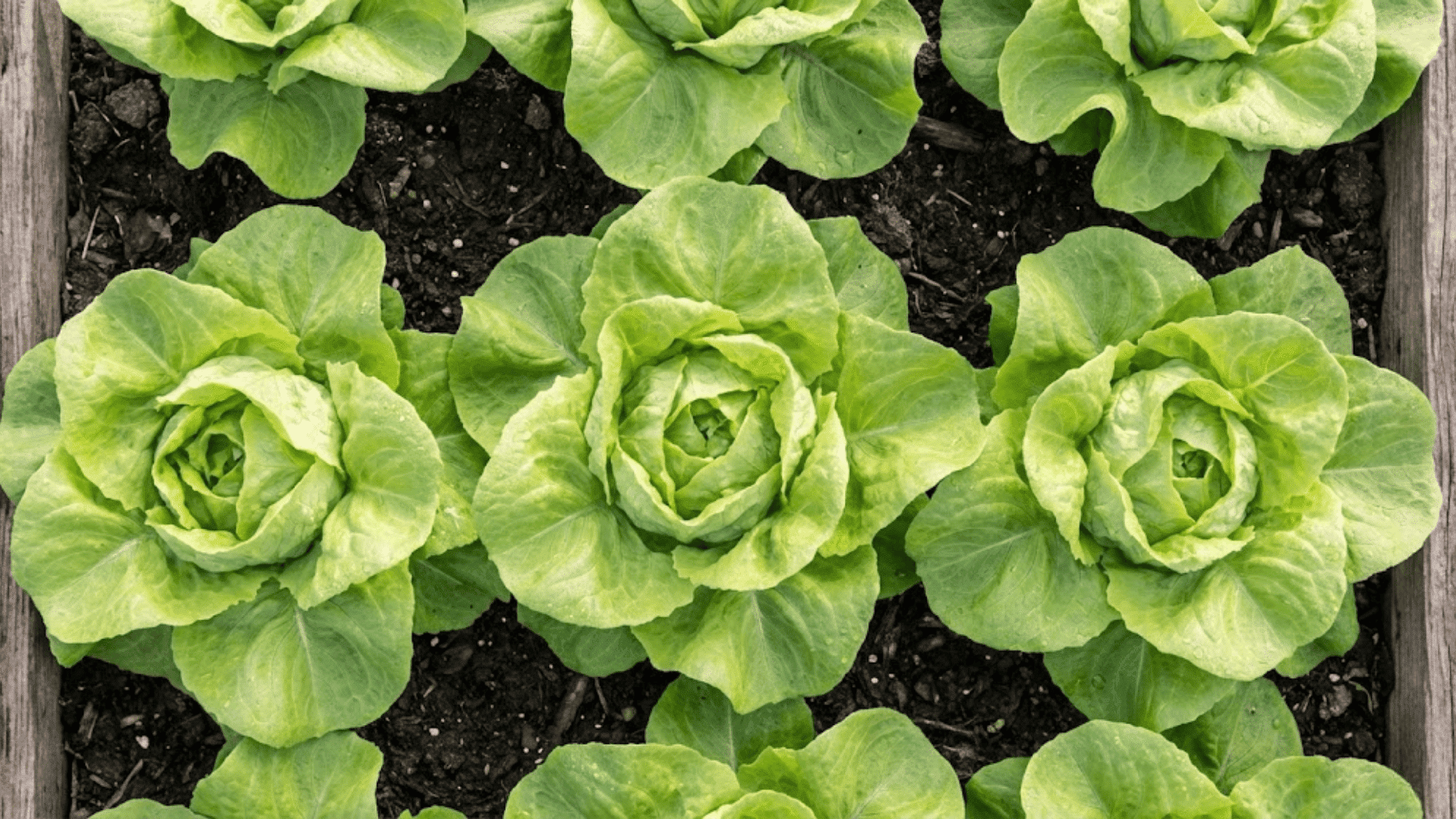
Lettuce and spinach are practically twins in their growing requirements. Both appreciate cool soil, regular water, and a bit of shade as temperatures climb.
Plant them together for a continuous salad harvest, and their shallow roots won’t compete since they’re feeding from the same soil layer at similar rates. The varied leaf textures also make your garden bed visually interesting.
2. Arugula
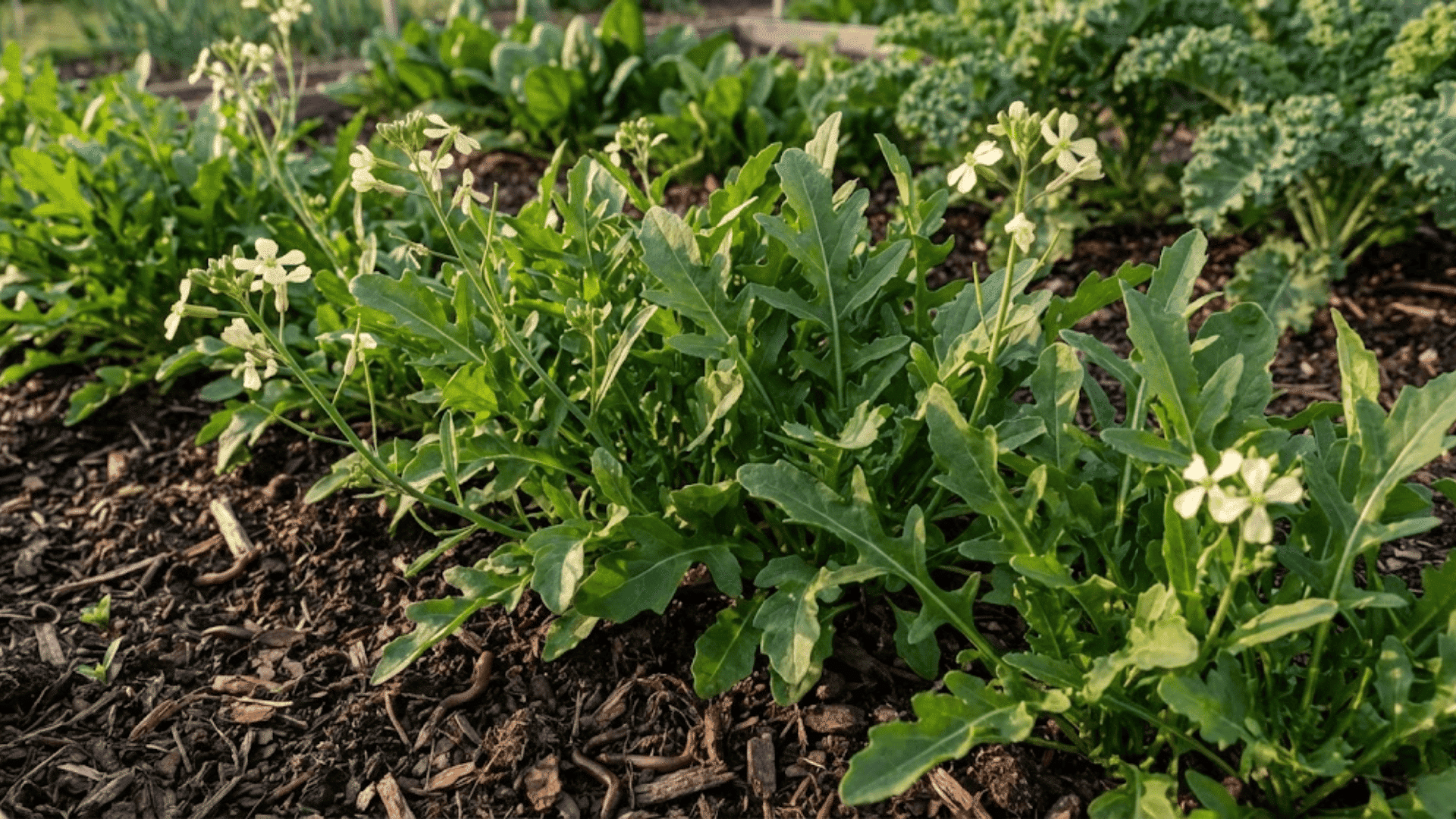
This peppery green grows at lightning speed alongside spinach, often ready to harvest even sooner. Arugula’s compact size means it tucks beautifully between spinach plants without crowding.
Both bolt when the weather warms, so you can pull them simultaneously and replant the bed for summer crops. The spicy flavor contrast makes mixed salads infinitely more exciting.
3. Kale
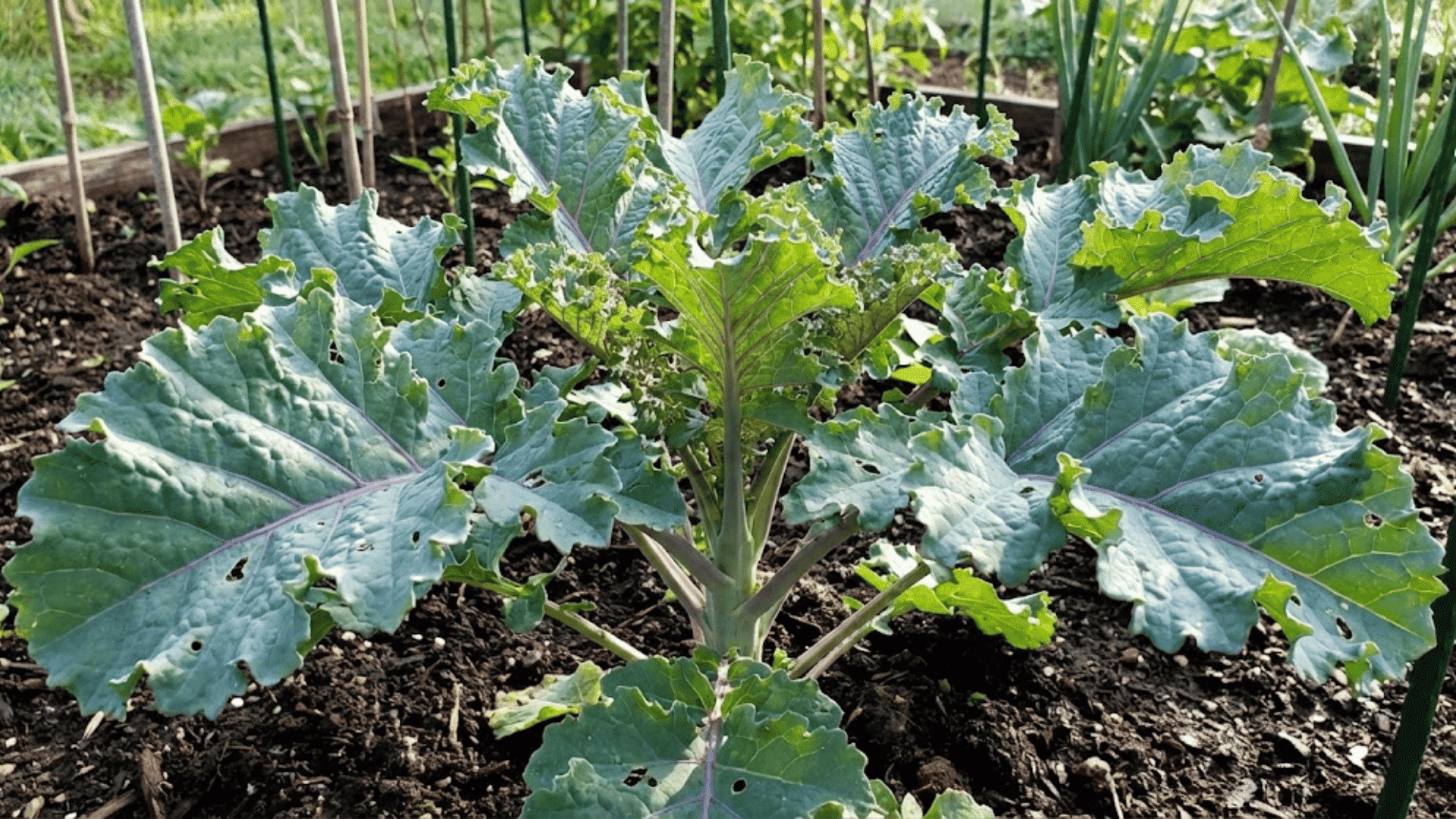
Kale’s upright growth habit provides gentle shade for spinach below while its deeper roots tap nutrients from lower soil layers.
Kale tolerates both cool and warm weather better than spinach, so it can continue producing after your spinach season is done. They’re both heavy feeders, though, so ensure your soil is well-amended with compost.
4. Swiss Chard
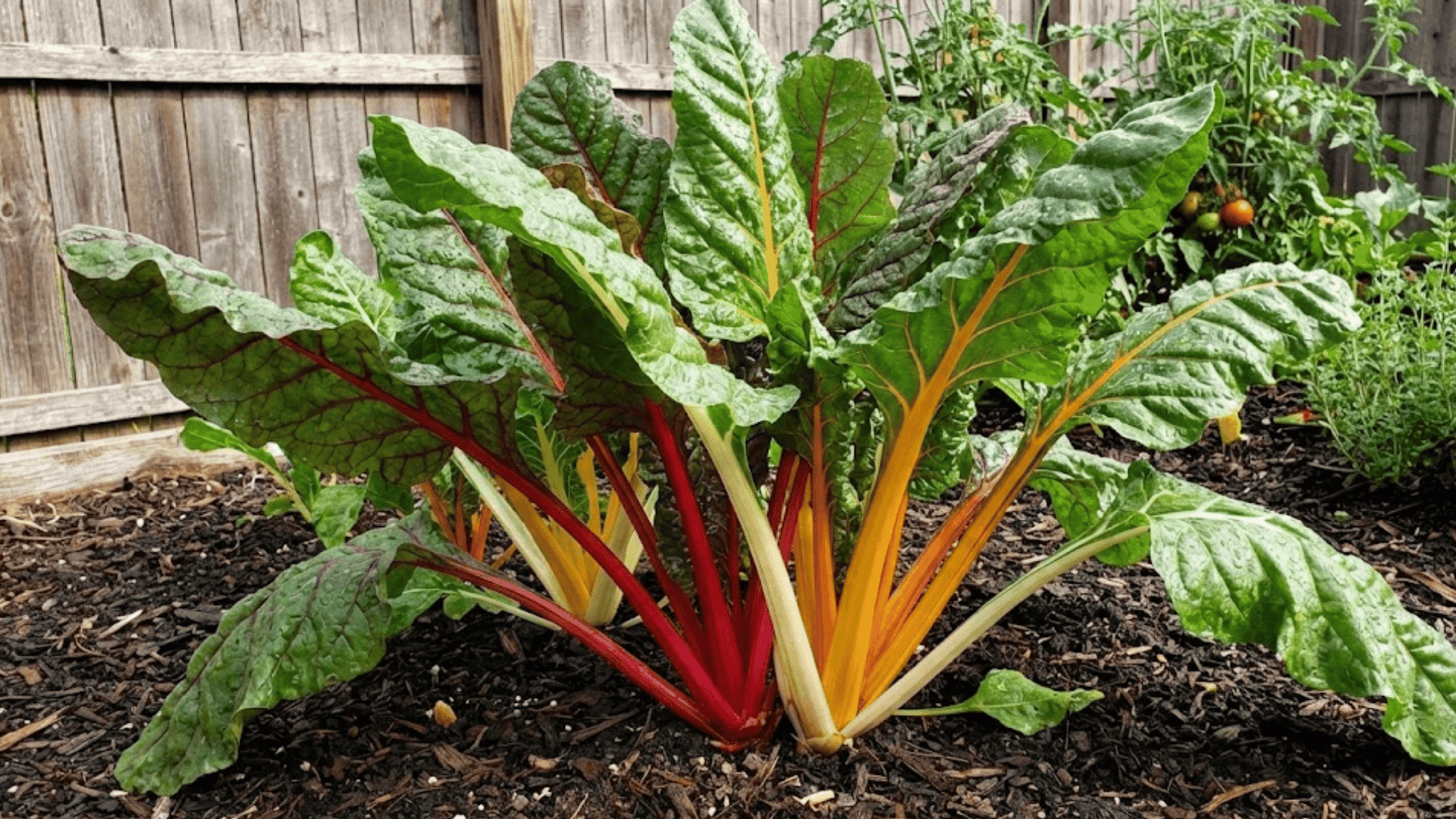
With its vibrant stems and large leaves, chard adds height and color above your spinach patch. The two share similar water needs, but chard’s slightly deeper roots mean less competition.
Chard also handles heat better, providing that crucial afternoon shade when spinach needs it most. Plant chard on the sunny side to cast protective shadows.
5. Mustard Greens
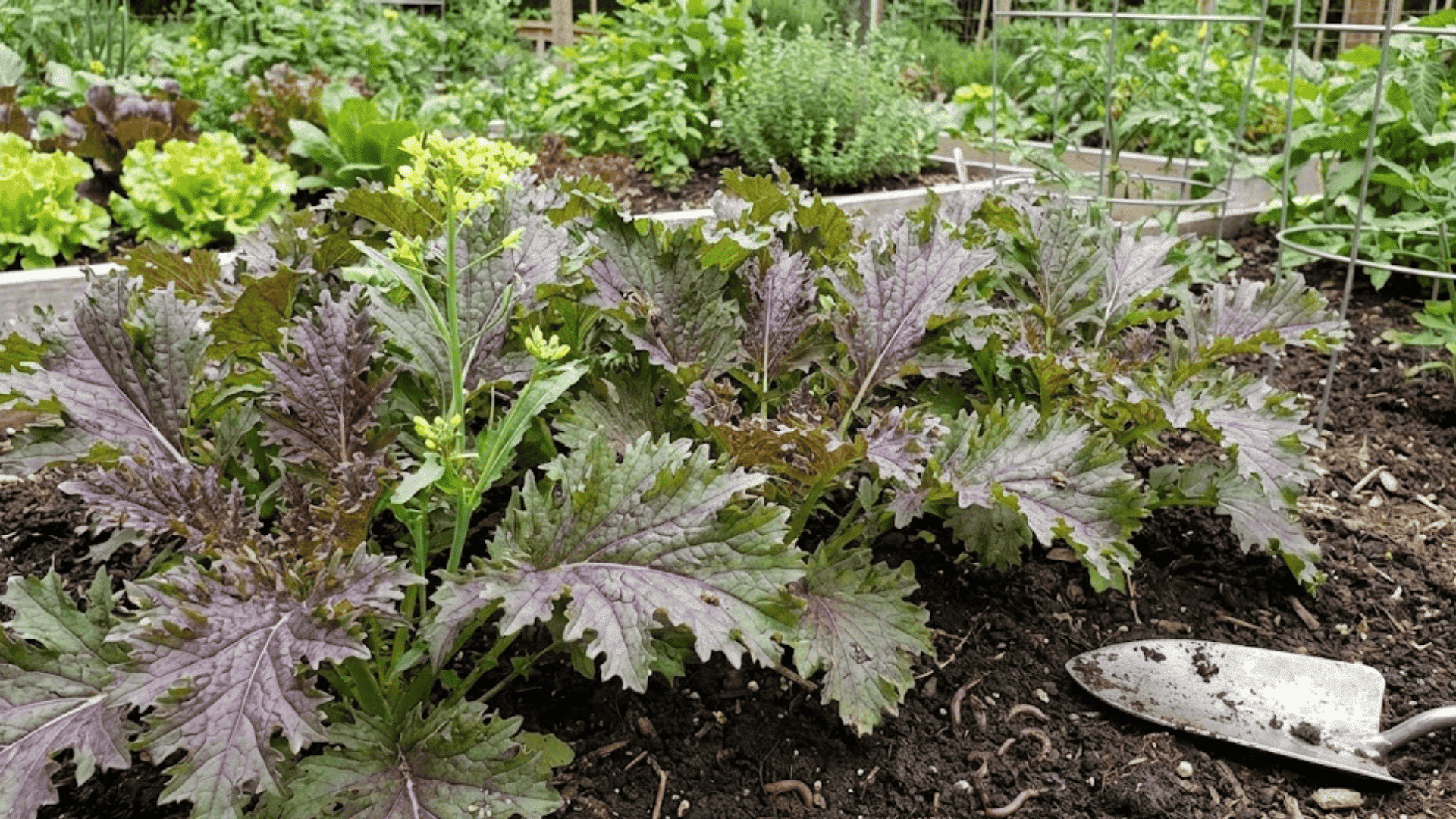
Mustard greens grow quickly, and their slightly spicy leaves can actually help deter some pests that might otherwise nibble on your spinach.
They share the same cool-season window and soil preferences, making garden management simpler. Both can be harvested as baby greens or left to mature, giving you flexibility in your salad bowl throughout the season.
Alliums
The onion family brings powerful pest protection to your spinach bed. Their pungent oils confuse and repel aphids, thrips, and other soft-bodied insects that love tender spinach leaves.
6. Onions
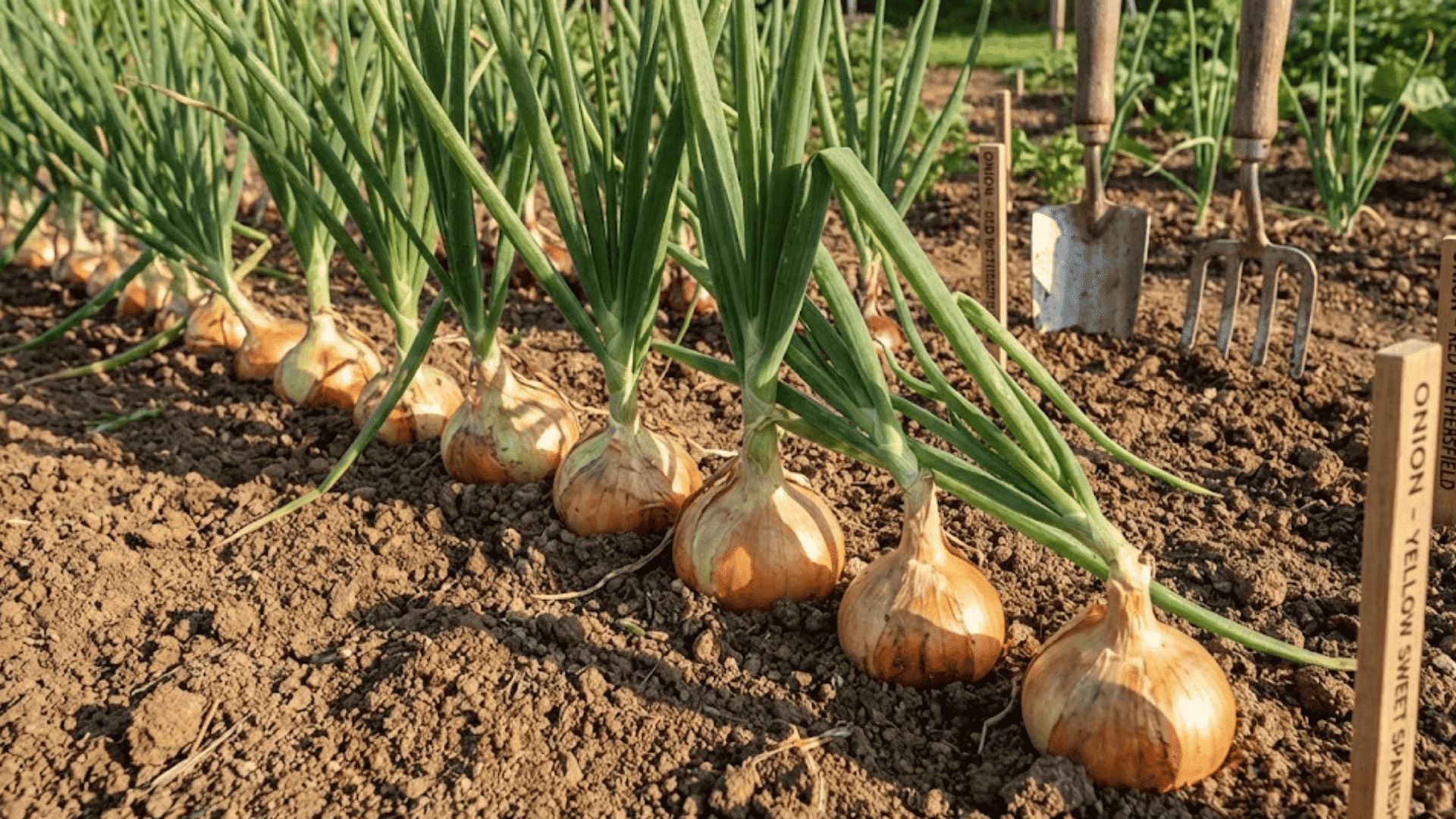
Onions are excellent pest deterrents, with sulfur compounds repelling aphids and pests. Their upright, slender growth takes up minimal space, and their roots grow deeper than spinach, reducing competition.
Plant onion sets between spinach rows for maximum protection. As your spinach finishes, onions will still be bulking up for a summer harvest.
7. Garlic
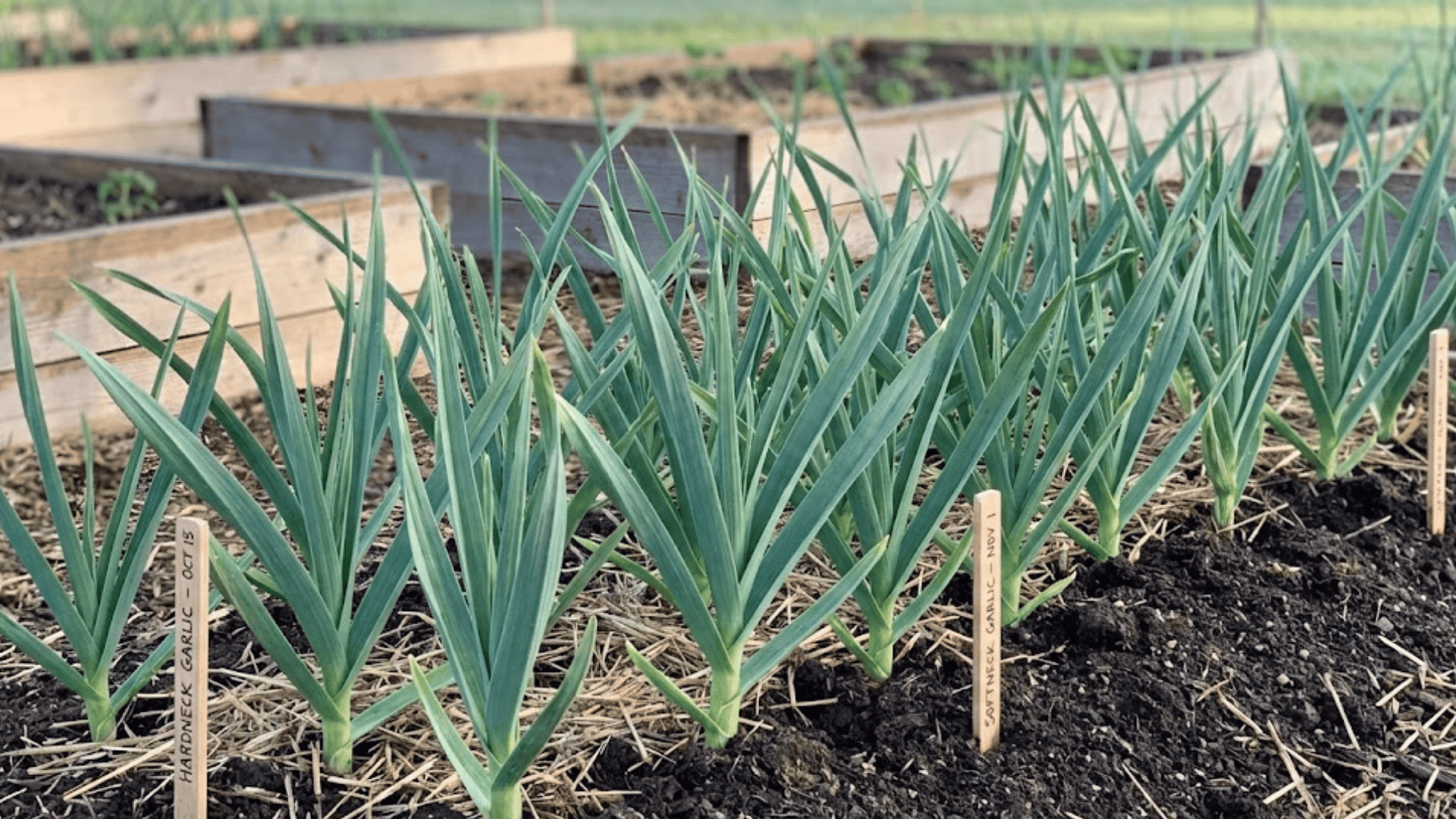
Garlic’s intense aroma creates an invisible shield around your spinach, discouraging everything from aphids to larger nibbling pests. Fall-planted garlic grows slowly through winter and spring, aligning with spinach’s cool-season growth.
The vertical garlic shoots don’t shade spinach much, and their roots reach well below spinach’s feeding zone. Plus, you can harvest garlic scapes in late spring.
8. Green Onions
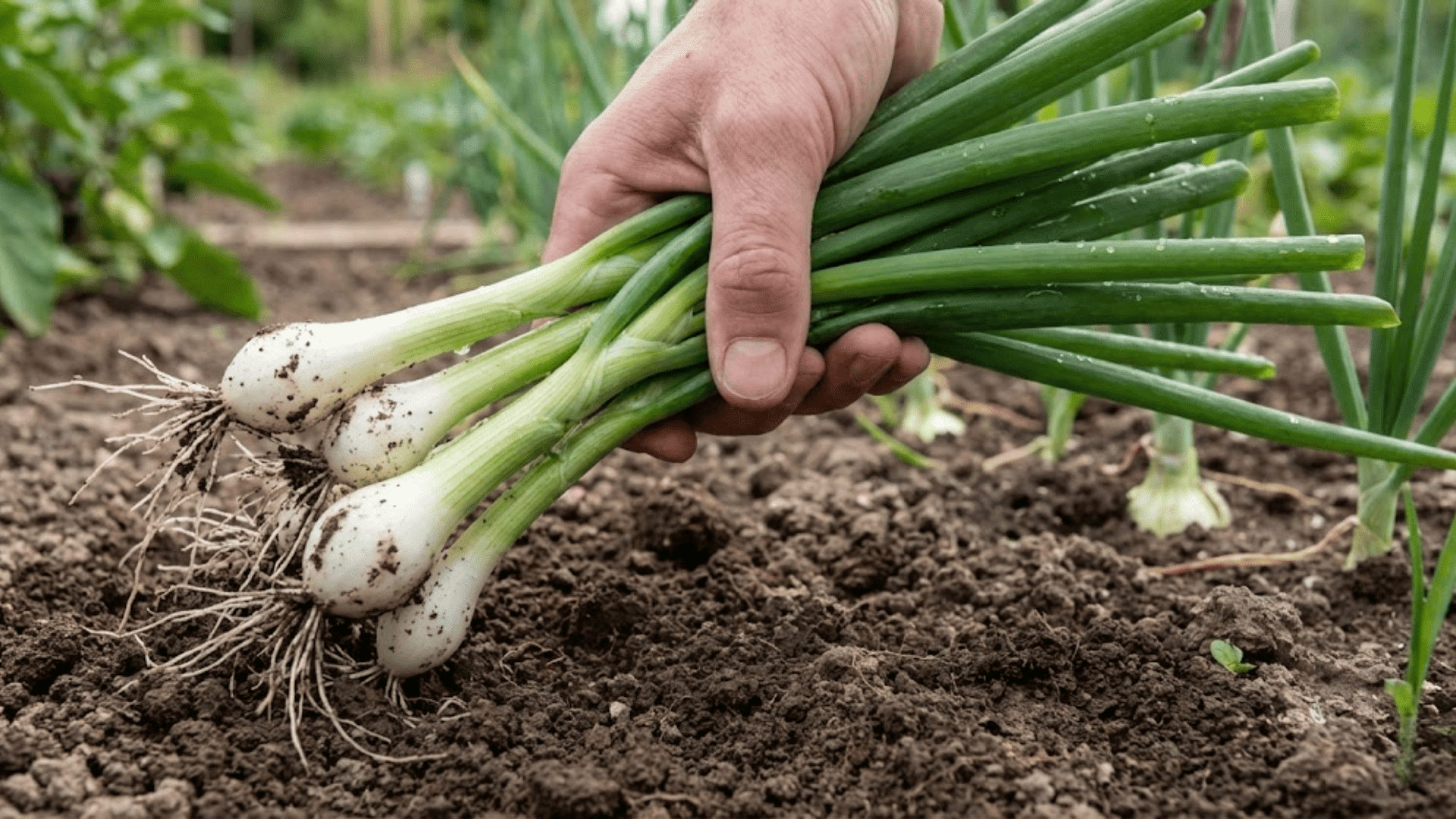
Also called scallions, these quick-growing alliums can be tucked into any gap in your spinach bed. They mature rapidly for continuous harvest, and their mild flavor won’t overpower nearby plants.
Green onions need frequent watering just like spinach, simplifying your irrigation routine. Succession plant them every few weeks for a steady supply alongside your greens.
9. Chives
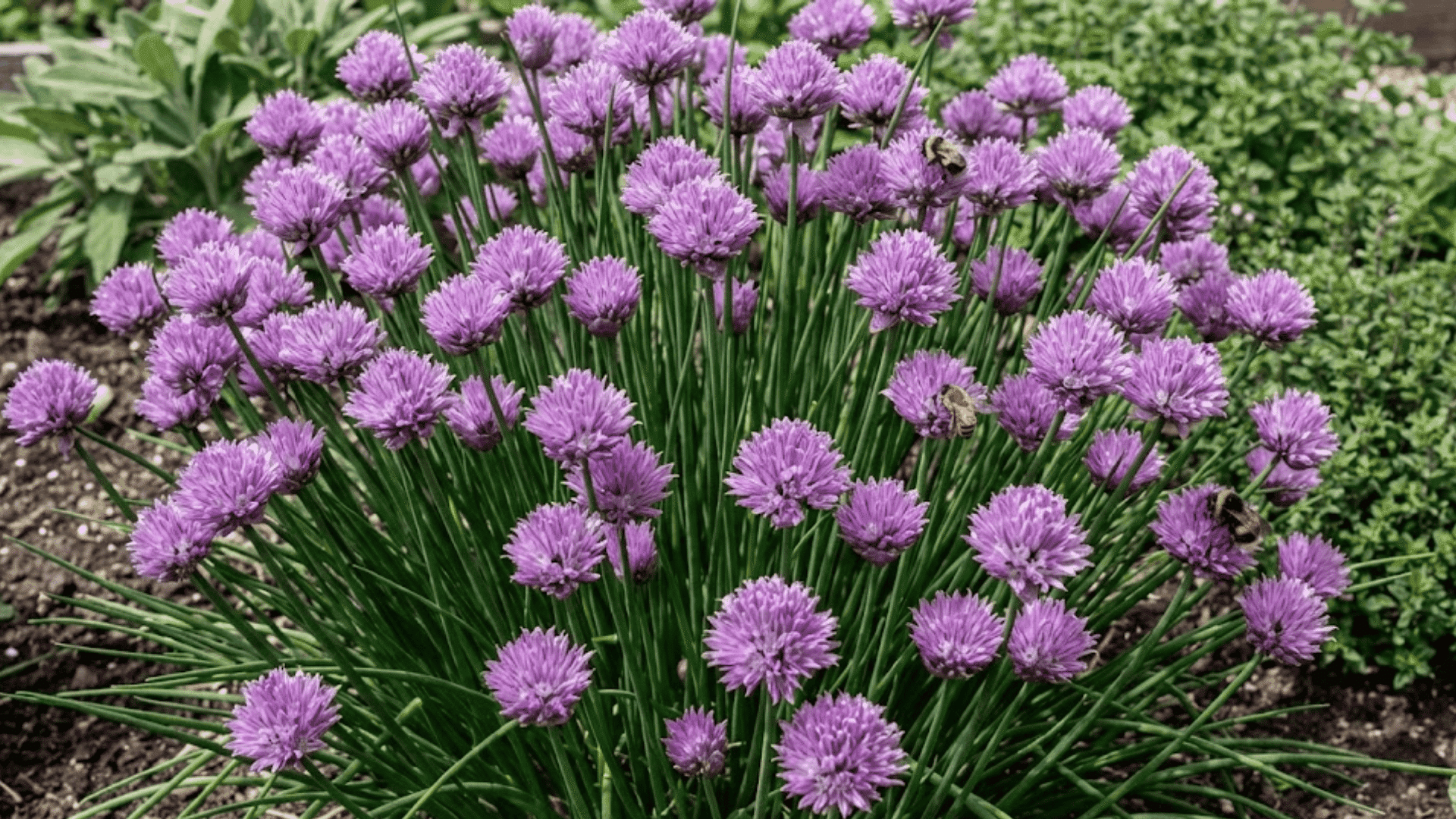
These perennial alliums come back year after year, providing long-term pest protection for your spinach patch. Their pretty purple blooms attract beneficial insects while repelling harmful ones.
Chives grow in tidy clumps that won’t spread aggressively, and you can snip the hollow leaves repeatedly without harming the plant. They also tolerate partial shade, so position them wherever fits best.
Legumes
Legumes are garden superheroes that actually enrich your soil while growing. Their roots host nitrogen-fixing bacteria that convert atmospheric nitrogen into a form spinach can readily absorb.
10. Peas
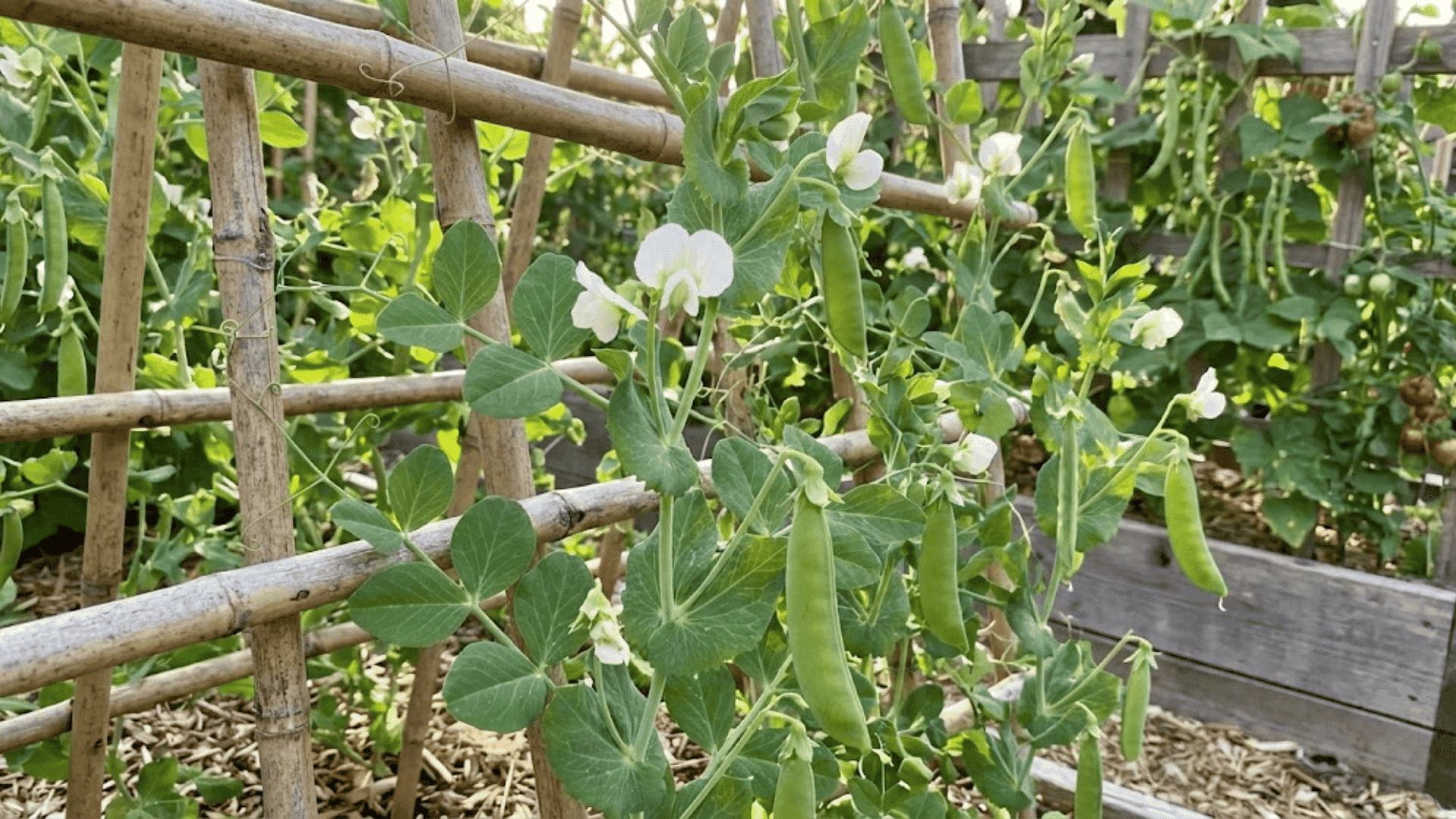
Peas and spinach are the ultimate spring pairing, both thriving in cool weather and moist soil. As pea vines climb upward, they create dappled shade that protects spinach from bolting when temperatures rise.
The nitrogen peas fix in the soil directly benefit your leafy greens. Plant them together in early spring, and you’ll harvest both around the same time.
11. Bush Beans
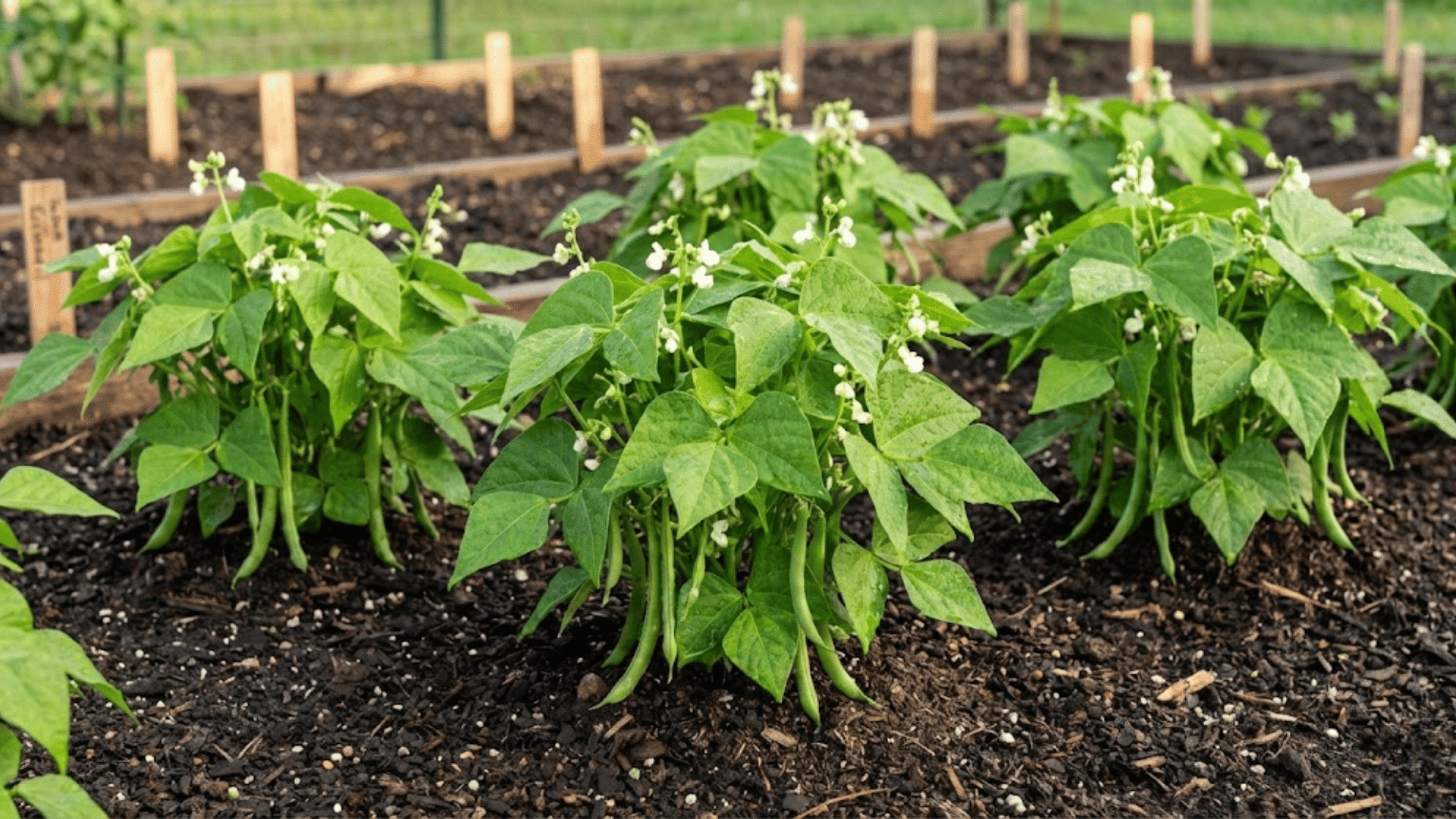
Bush beans have a tidy, compact growth habit that won’t overwhelm your spinach. While they prefer slightly warmer soil than spinach for germination, you can succession plant beans as your early spinach matures.
The nitrogen they add improves soil fertility for your next spinach planting. Their moderate height provides just enough shade without completely blocking the sun from the lower leaves.
12. Fava Beans
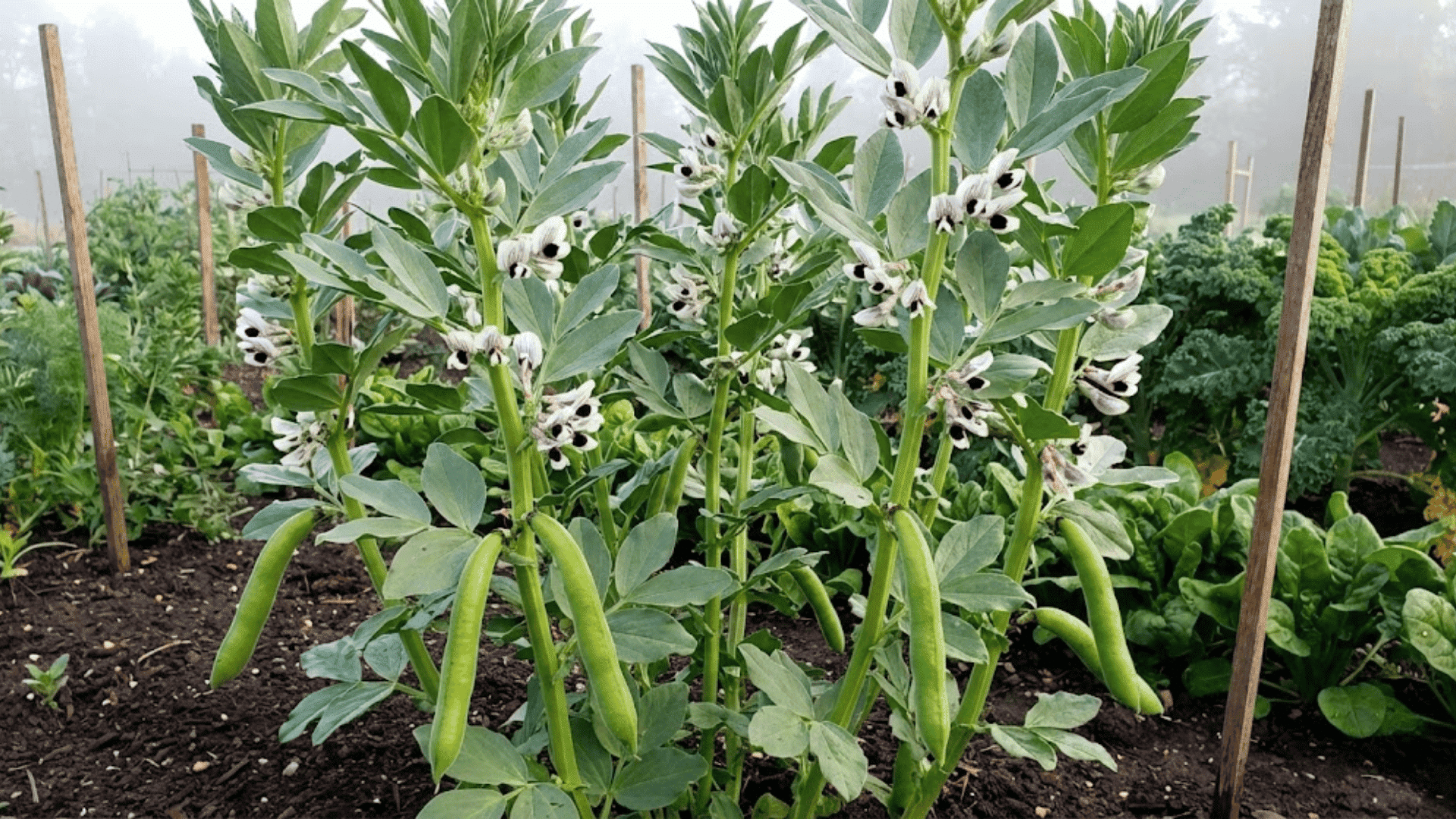
These cool-season legumes are perfect spinach companions in regions with mild winters. Favas grow tall and sturdy, offering wind protection and partial shade for spinach below.
They’re especially generous nitrogen fixers, leaving soil richer than they found it. In warmer climates, plant them in the fall alongside spinach for a productive winter garden that feeds itself.
Root Vegetables
Root crops and spinach make excellent spatial companions since they’re literally growing in different zones. Spinach feeds near the surface while these vegetables develop their edible portions underground.
13. Carrots
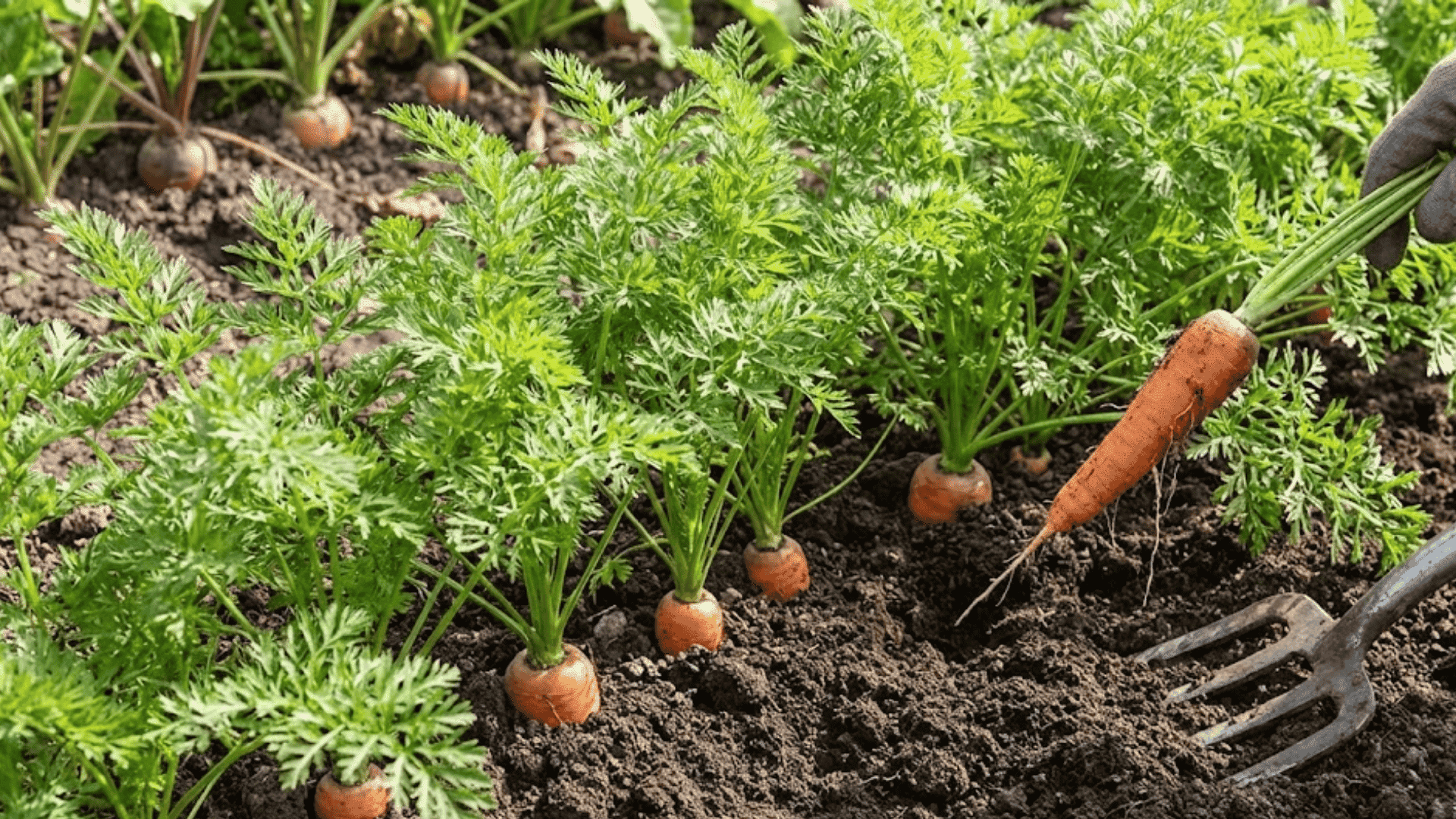
Carrots send their taproots deep while spinach spreads shallow, so they’re never competing for nutrients or space. The ferny carrot tops provide minimal shade, and both appreciate consistent moisture without waterlogging.
Interplanting them maximizes your bed’s productivity since you’re essentially growing two layers. Just ensure your soil is loose enough for carrots to develop properly.
14. Beets
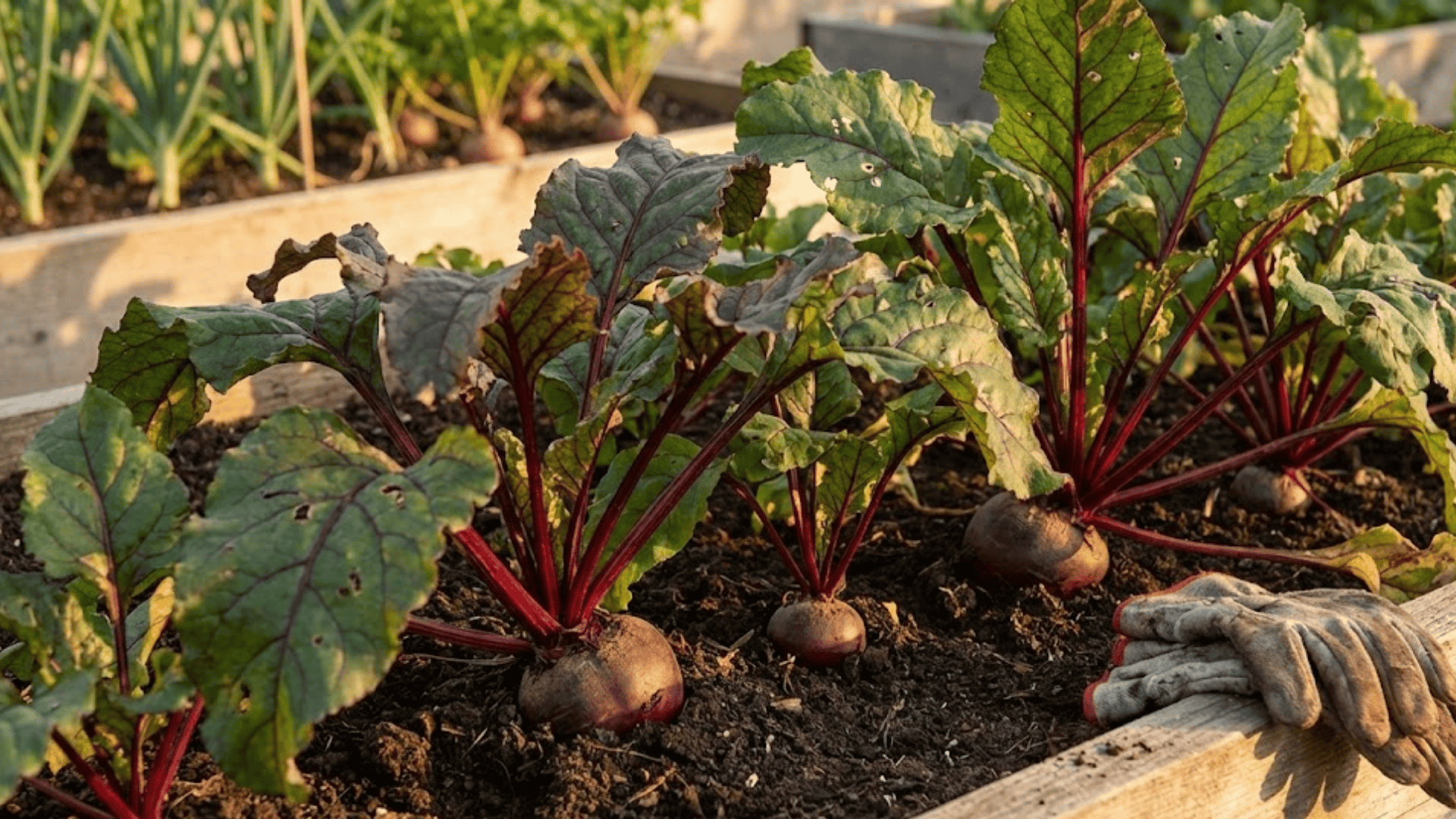
Beets are wonderfully versatile companions because both their greens and roots are edible. They grow slightly deeper than spinach and tolerate the same cool temperatures.
You can harvest baby beet greens right alongside spinach leaves for colorful salads, or let the roots mature while your spinach finishes its season. Beets also appreciate the same rich, well-draining soil.
15. Radishes
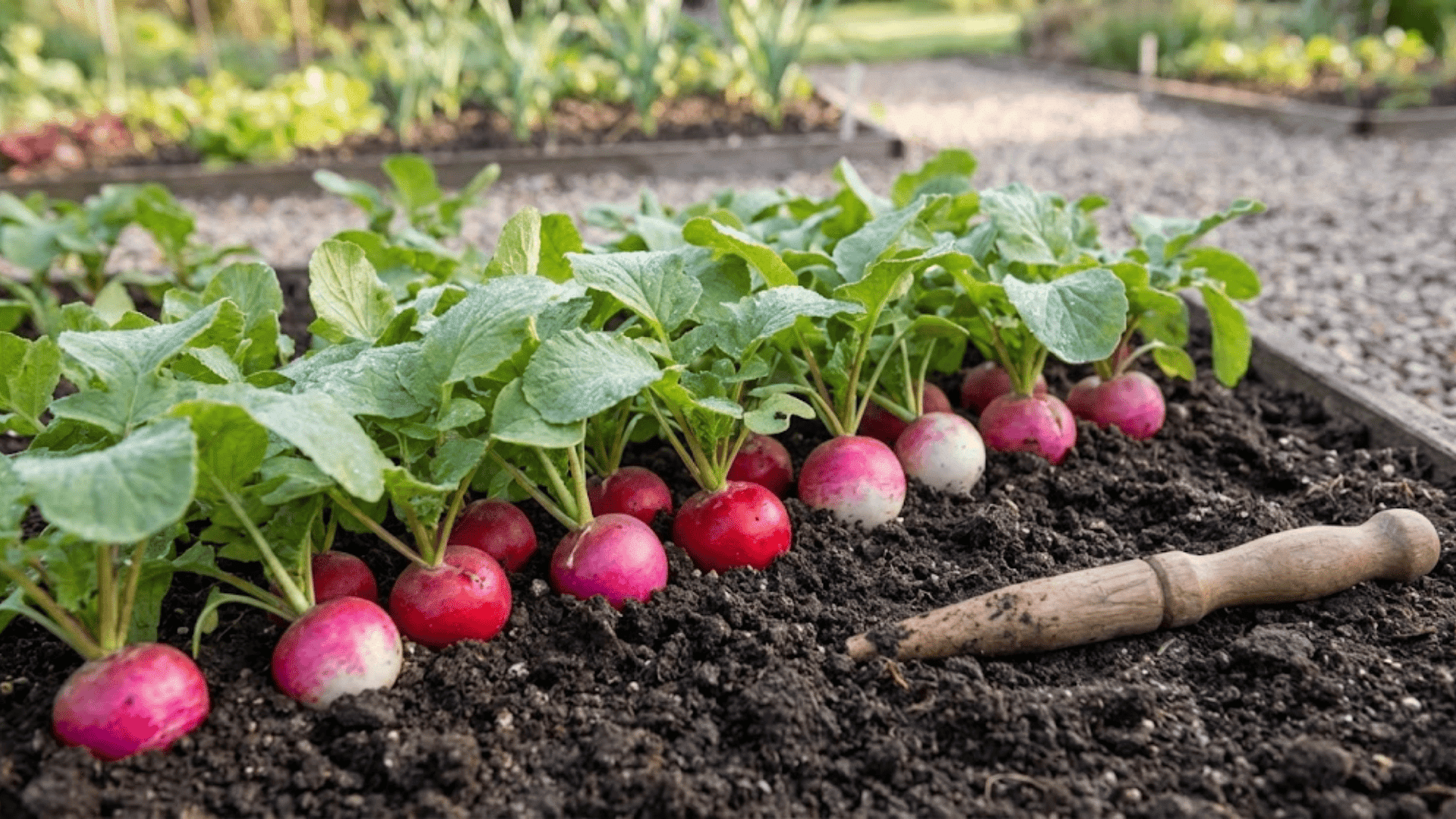
Fast-growing radishes are ready to harvest in just a few weeks, often before your spinach even reaches full size. Their quick maturation means you can pull them and give spinach more elbow room to spread.
Radishes help break up compacted soil with their roots, improving conditions for everything growing nearby. Plant them as row markers between slower-germinating spinach seeds.
16. Turnips
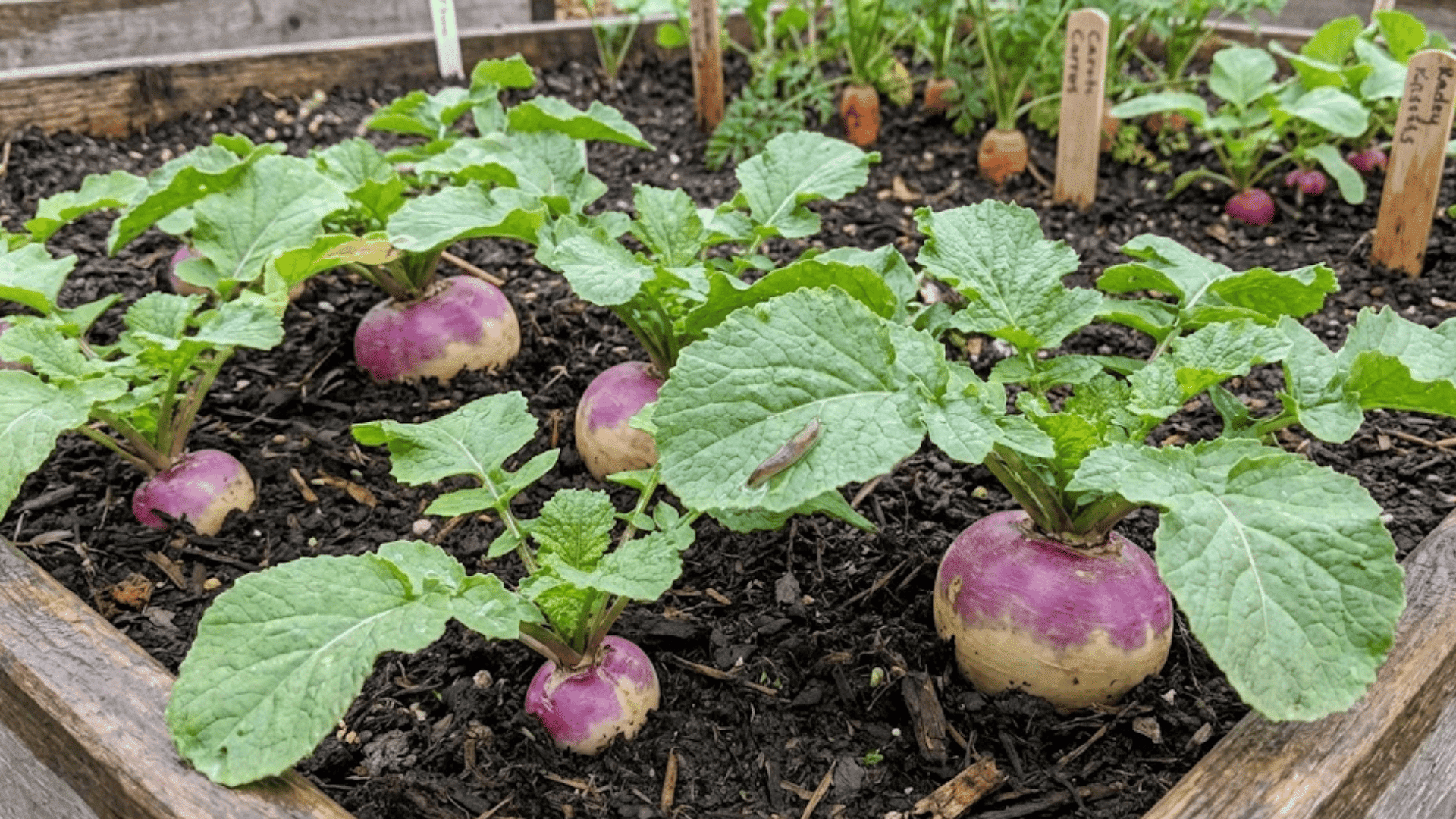
Turnips develop their bulbous roots below ground while their leafy tops grow upright, coexisting peacefully with low-growing spinach. Both greens and roots are edible, giving you multiple harvests from the same plant.
They share spinach’s love of cool weather and consistent moisture. Plant smaller turnip varieties to avoid overcrowding, or space them generously between spinach patches.
Brassicas
Fellow members of the cabbage family make natural companions for spinach. They share similar pest pressures and growing conditions, and many provide beneficial shade as they mature.
17. Broccoli
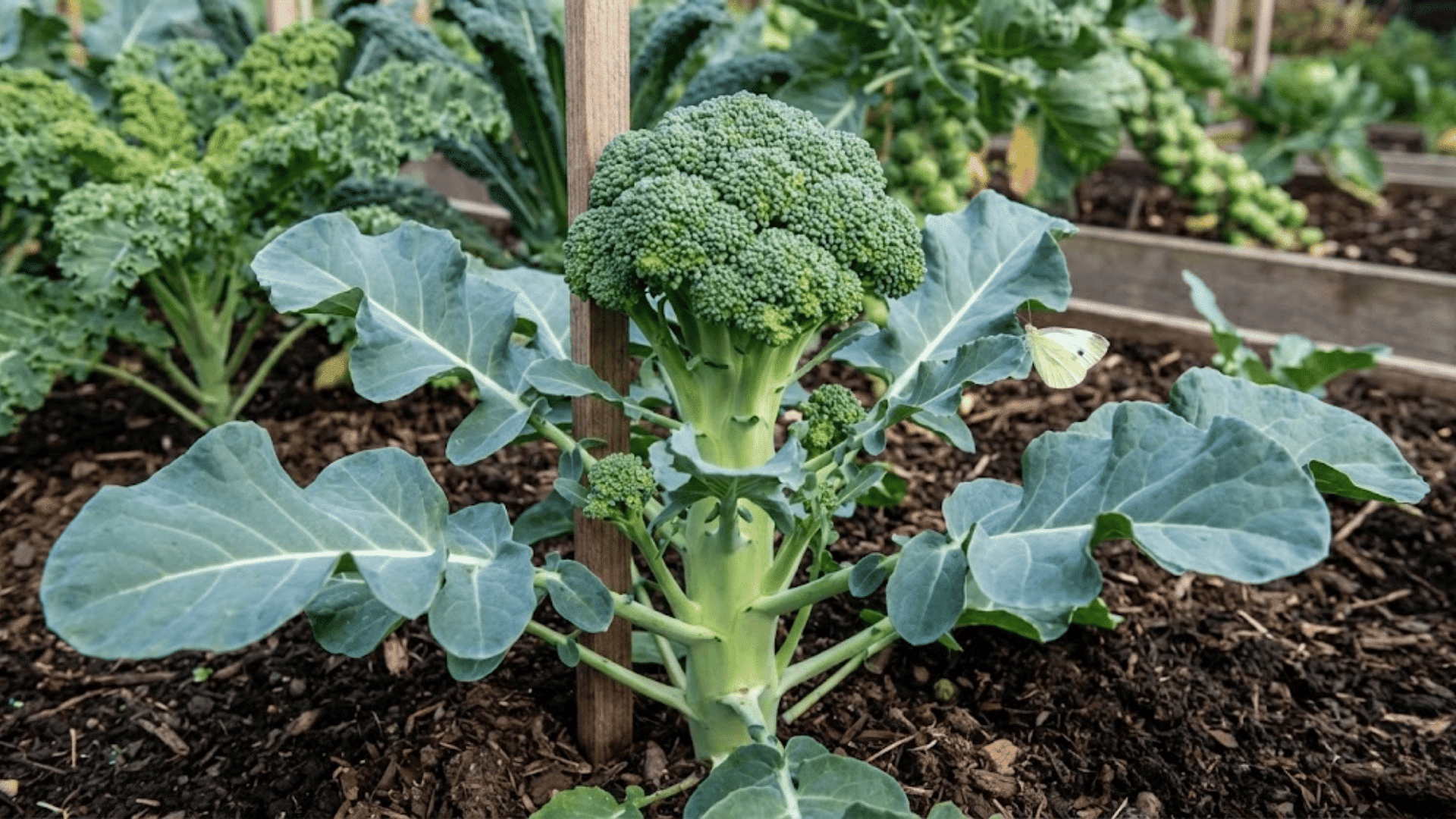
Broccoli’s large leaves create cooling shade for spinach below as plants mature, extending your spinach harvest into warmer weather. Both are heavy feeders requiring rich soil, so amend generously with compost.
Broccoli takes much longer to mature than spinach, so you can harvest your greens while broccoli continues developing its crown. The height difference uses vertical space efficiently.
18. Cauliflower
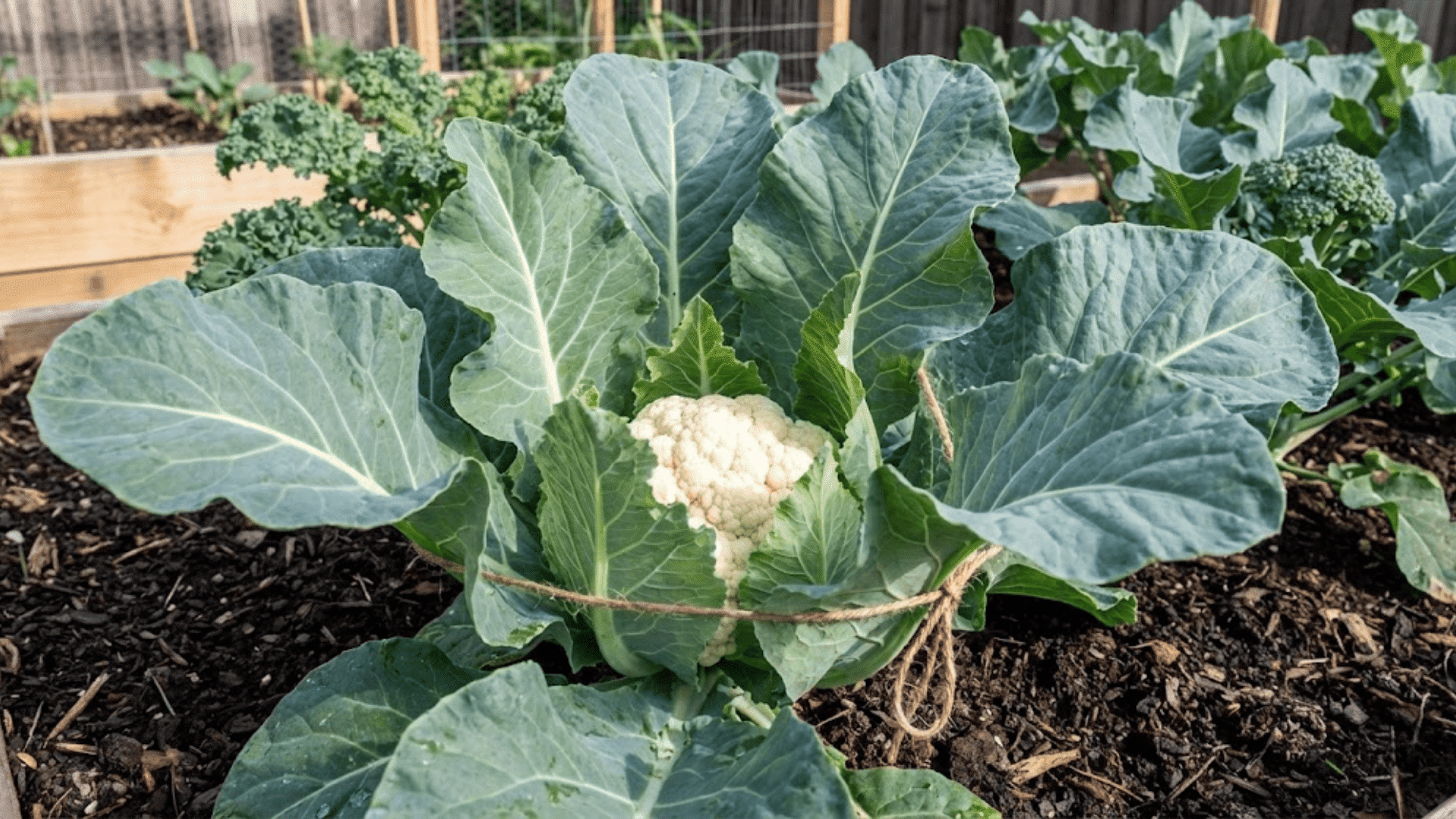
Like broccoli, cauliflower develops a broad canopy that shelters spinach from intense sun. The two share nutrient needs and cool-season preferences, making care straightforward.
Cauliflower’s slower growth means spinach has time to flourish before competition becomes an issue. Plant spinach around young cauliflower transplants for early spring harvests while your cauliflower heads are still forming.
19. Cabbage
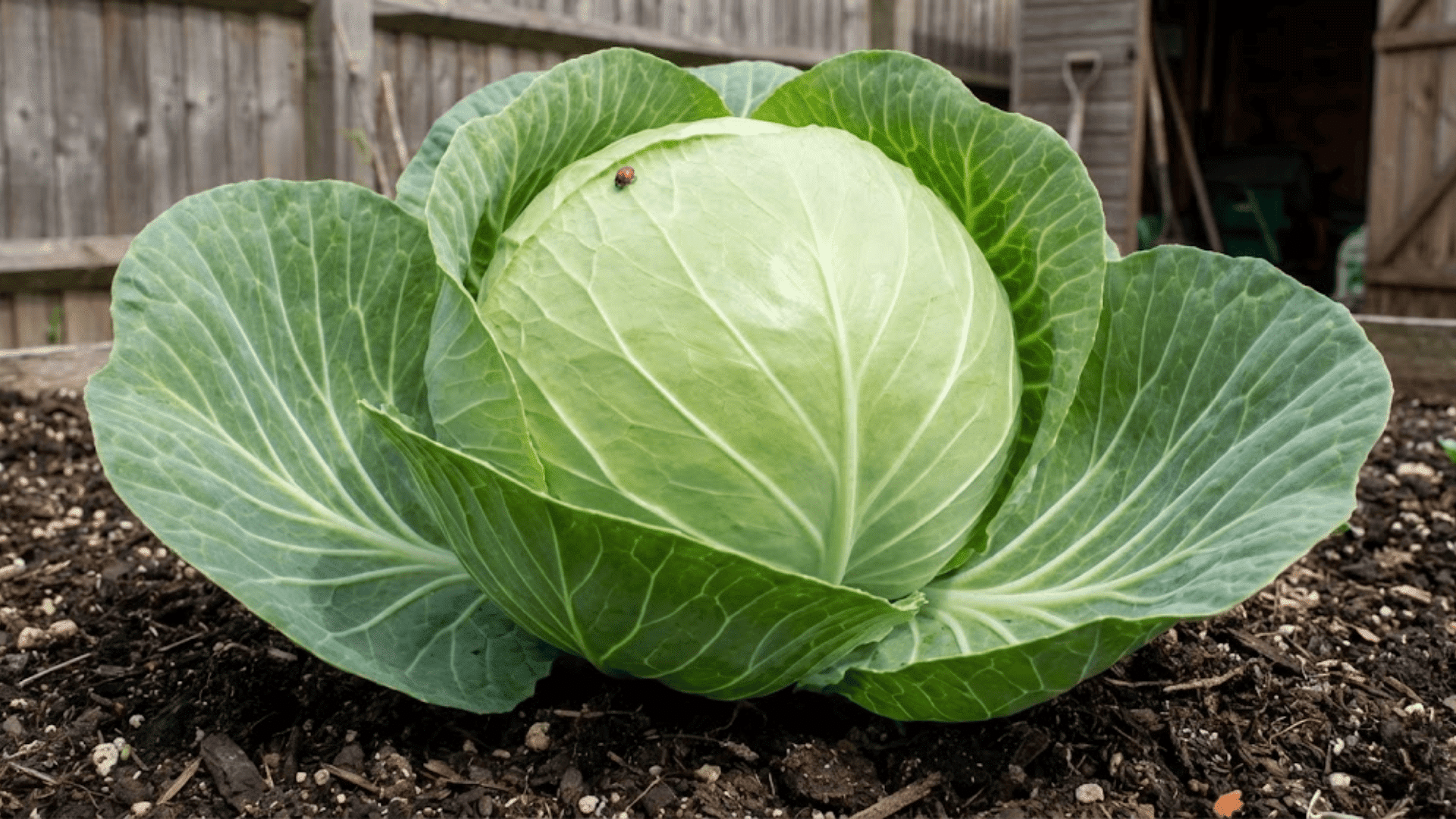
Cabbage forms dense heads that take months to develop, giving quick-growing spinach plenty of time to produce. The spacing between cabbage plants is perfect for tucking in spinach, maximizing bed productivity.
As cabbage leaves expand, they create a living mulch effect similar to spinach itself. Both resist similar pests, so companion planting won’t concentrate problems in one area.
20. Kohlrabi
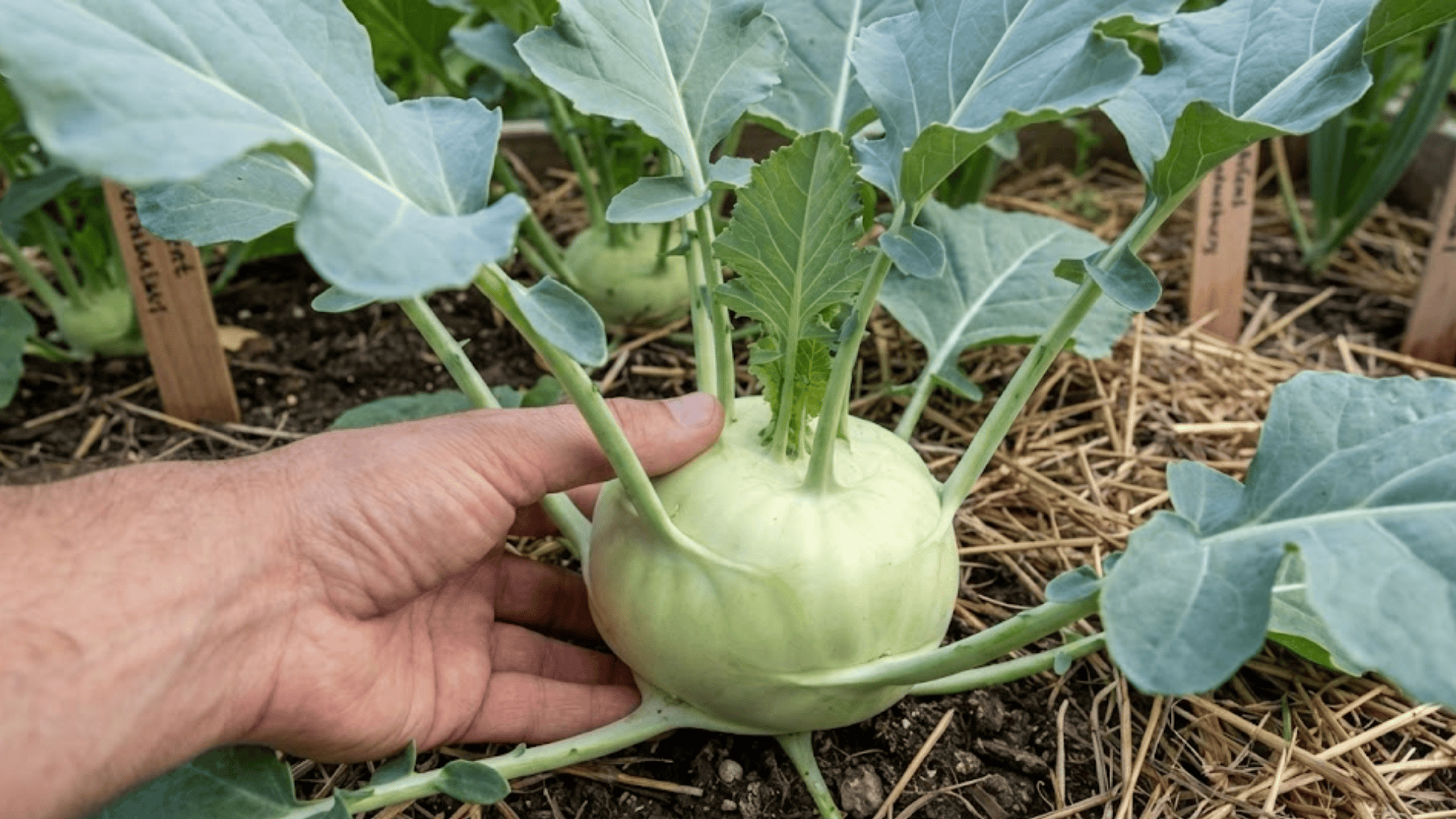
This quirky brassica grows its edible bulb above ground on a thick stem, leaving plenty of room for spinach around its base. Kohlrabi matures relatively quickly for a brassica, and its upright growth habit casts minimal shade.
The mild, crisp bulbs are ready around the same time late-spring spinach finishes. Both enjoy cool weather and consistent watering.
Herbs That Support Spinach Growth
Aromatic herbs do double duty in the garden, repelling pests while adding fragrance and culinary variety. Many herbs thrive in the same conditions spinach prefers.
21. Dill
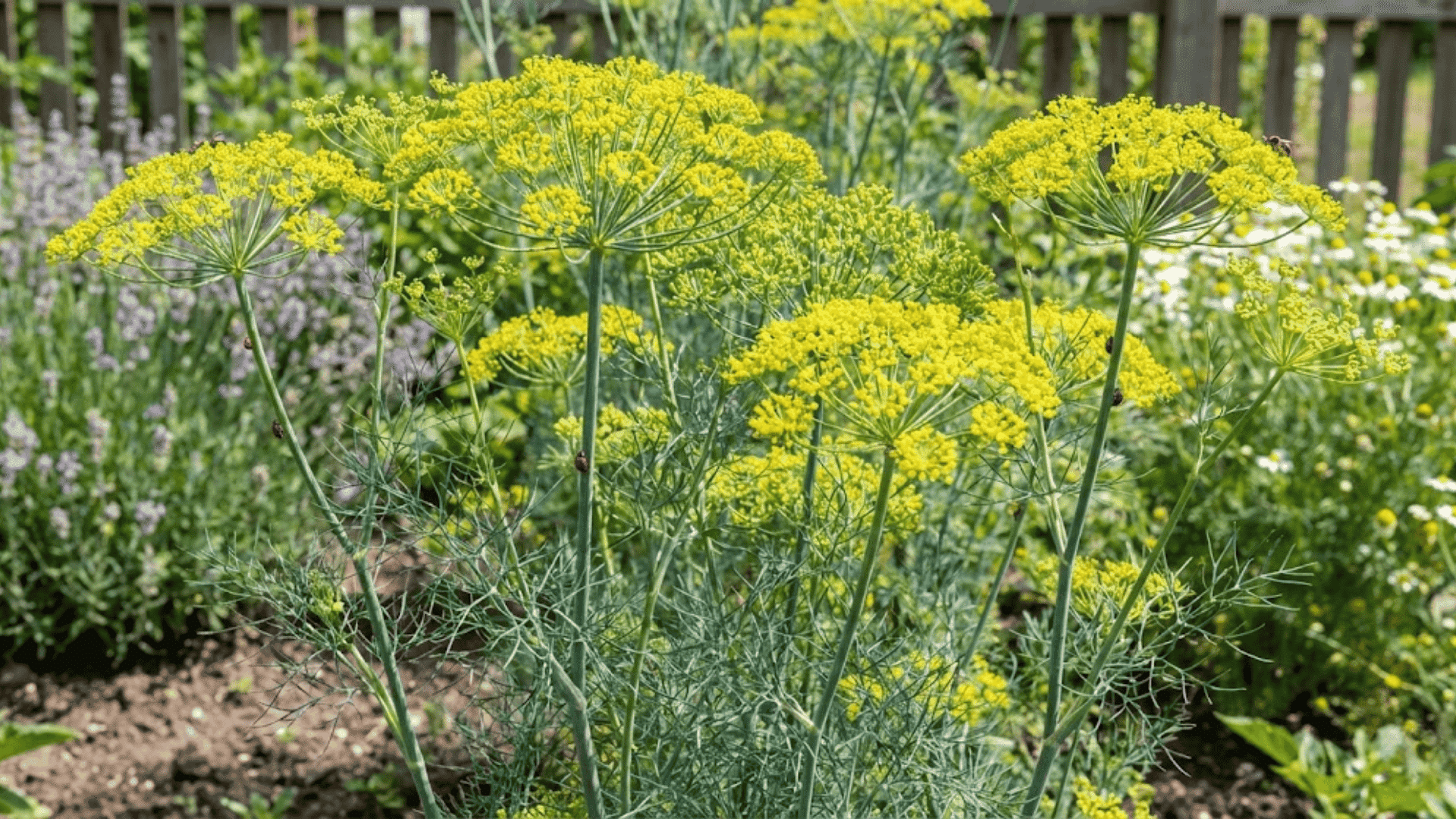
Dill’s feathery foliage attracts beneficial insects like ladybugs and parasitic wasps that prey on spinach pests. It grows tall and airy, allowing light to filter through to the spinach below.
Dill self-seeds readily, so you’ll have volunteers popping up season after season. Harvest dill leaves continuously for fresh flavor while your spinach produces nearby.
22. Cilantro
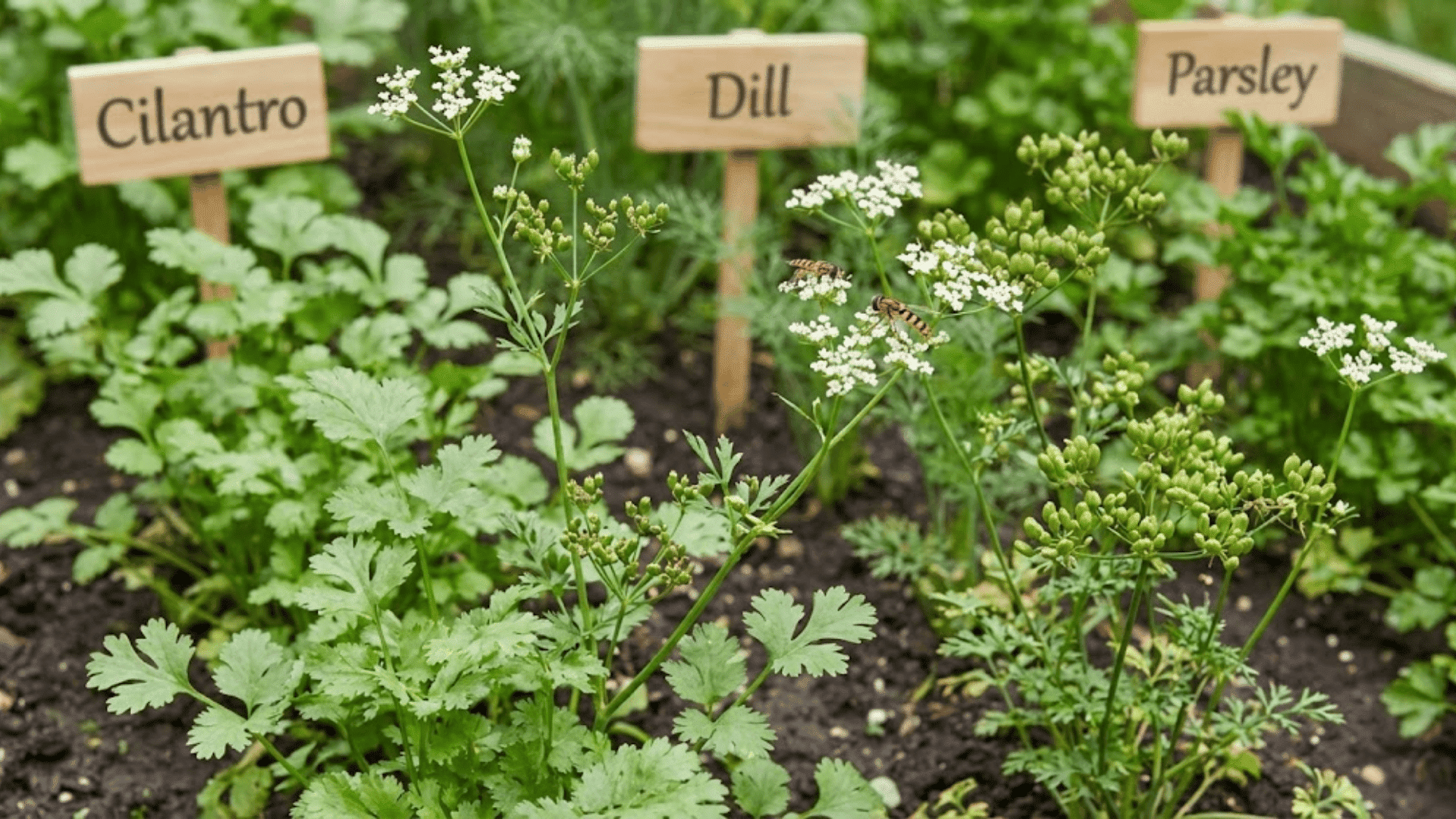
Cilantro bolts quickly in warm weather, just like spinach, making them perfectly synchronized companions. The herb’s delicate leaves don’t compete for light, and its roots stay shallow and unobtrusive.
Cilantro flowers attract hoverflies and other beneficial insects that control aphid populations. Let some plants go to seed for coriander spice and future plantings.
23. Parsley
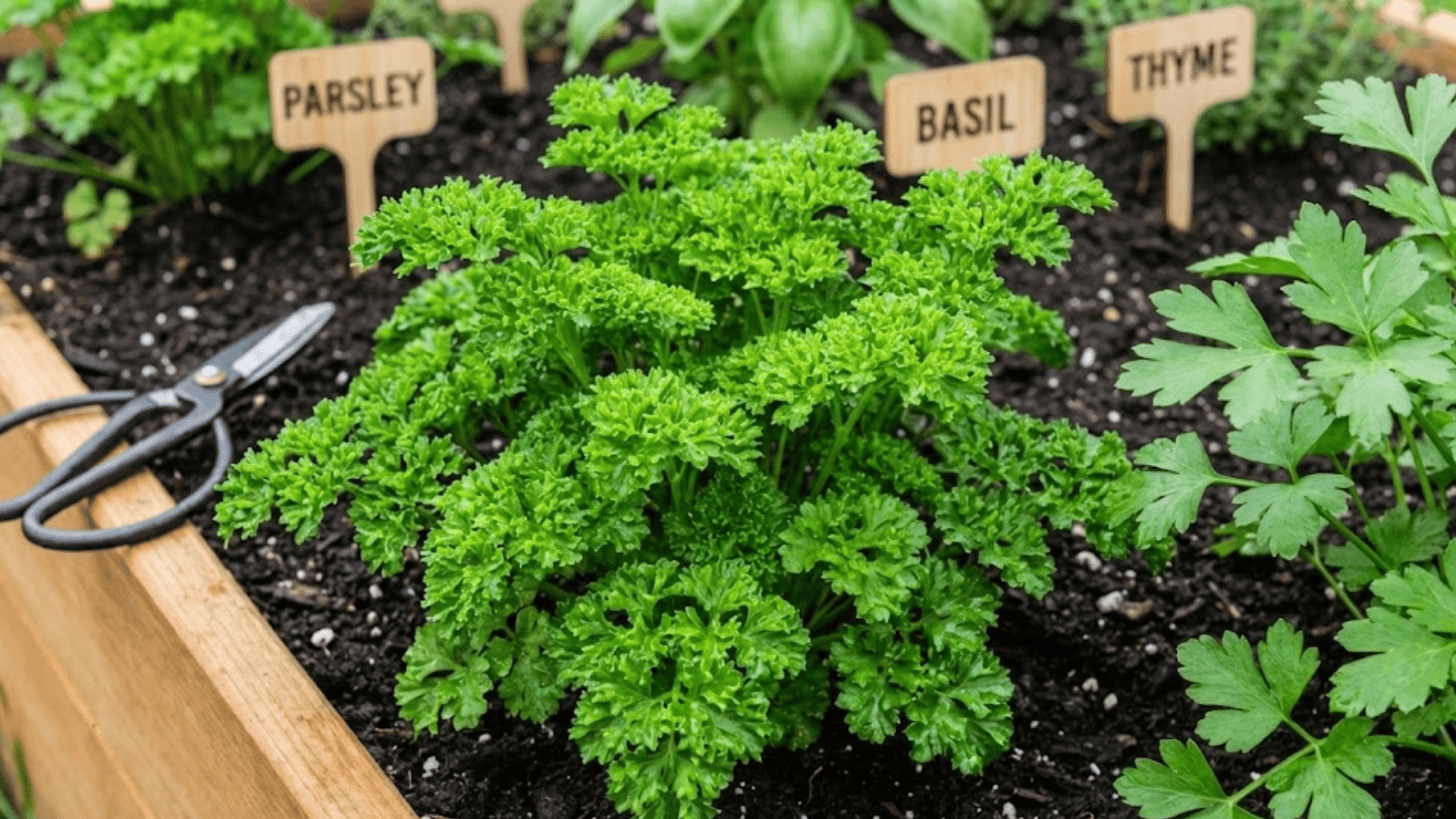
This biennial herb grows slowly in its first season, forming a tidy rosette that fits between spinach plants. Parsley tolerates partial shade well, so it can nestle under taller companions.
Its deep taproot mines nutrients from lower soil layers without competing with spinach. Harvest outer leaves regularly to encourage bushier growth and extended production.
24. Mint
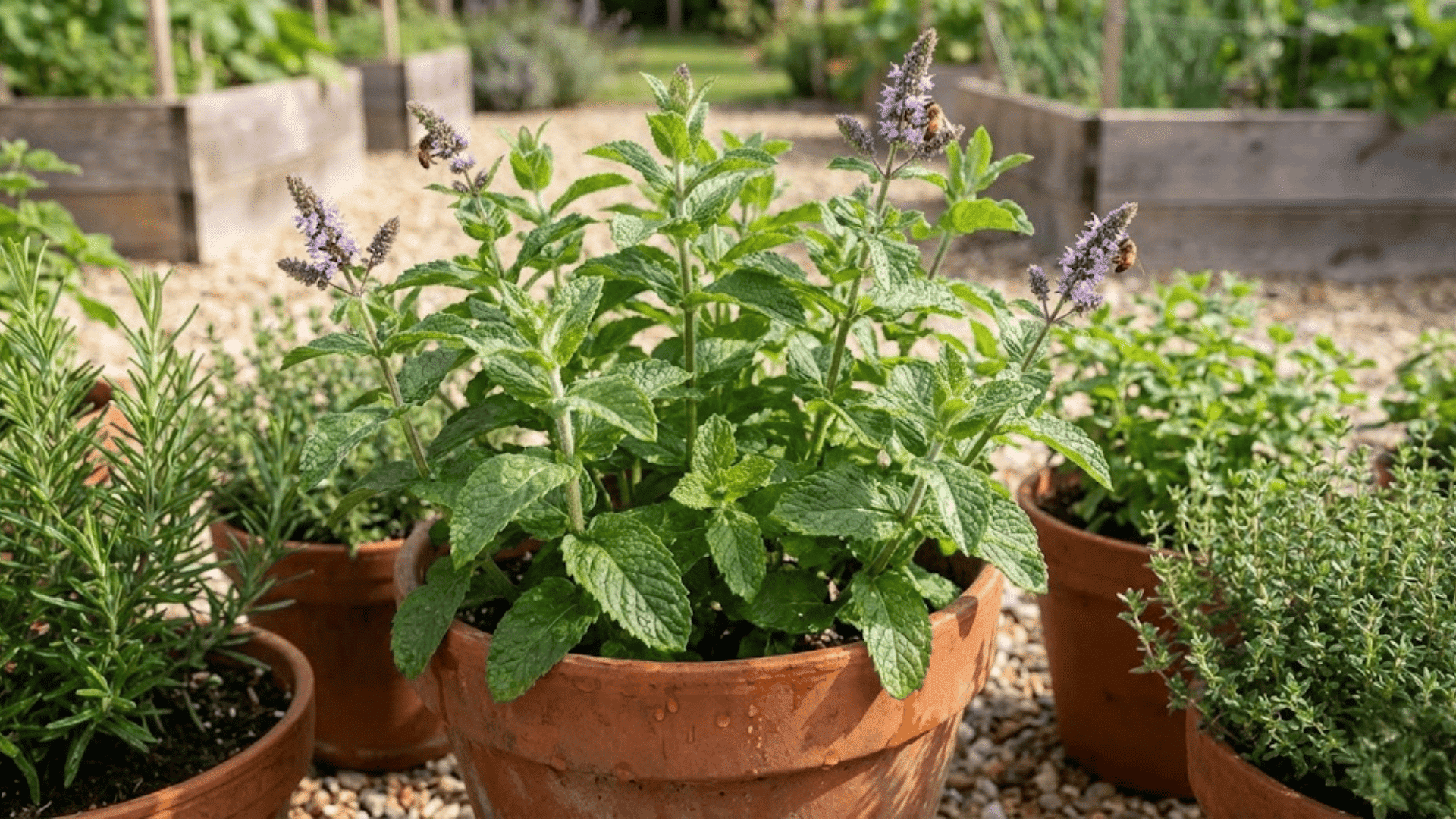
Mint’s aggressive spreading habit requires careful management, but its pest-repelling properties are incredibly valuable. Plant mint in buried containers or pots placed near your spinach bed rather than directly in the ground.
The strong menthol scent deters aphids, flea beetles, and even rodents. Just keep it contained, and you’ll enjoy its benefits without the invasive takeover.
Flowers & Beneficial Plants
Flowering companions attract pollinators and beneficial insects while adding beauty to your productive garden beds. These blooms serve practical purposes beyond their good looks.
25. Marigolds
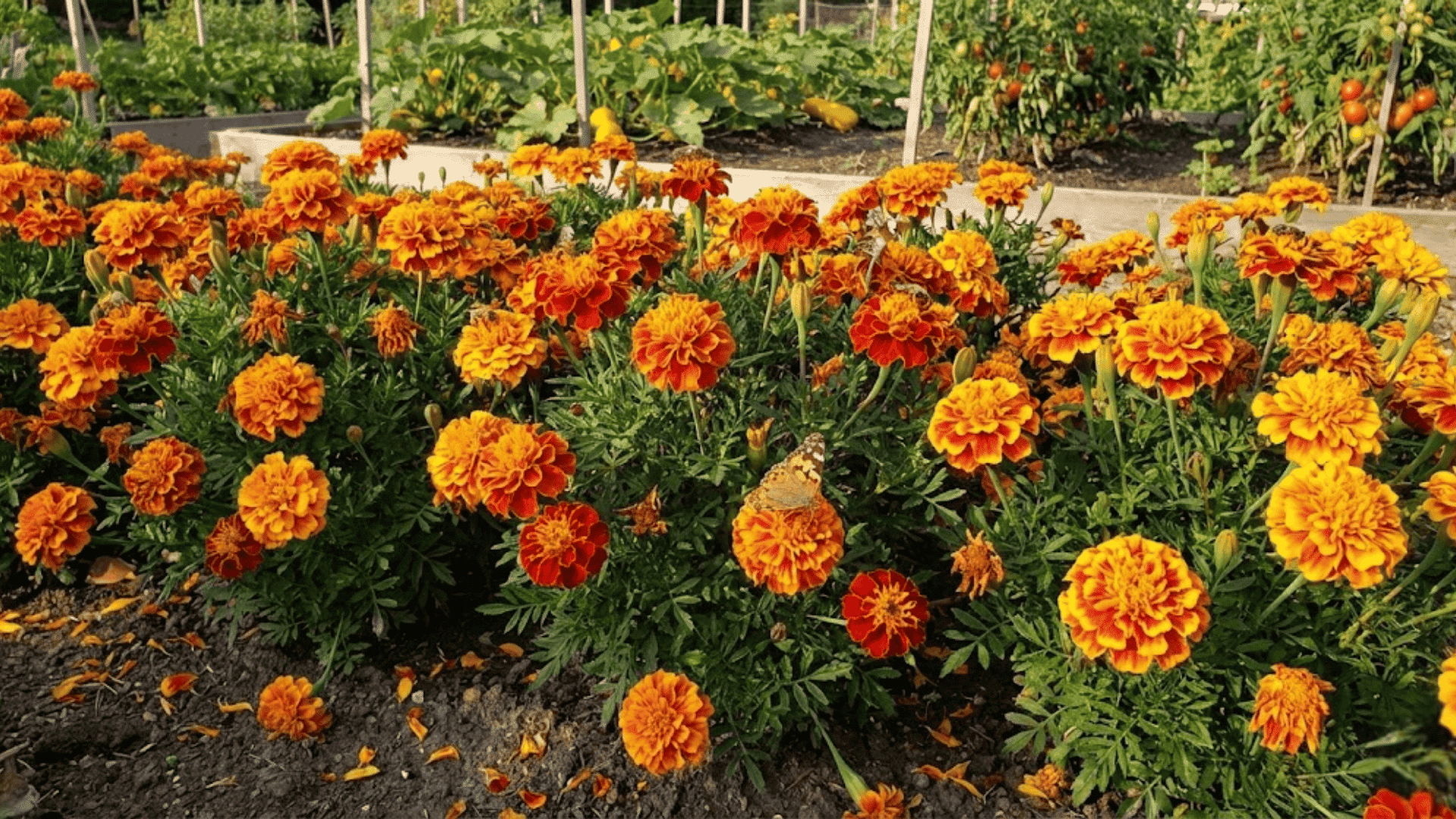
Marigolds are famous for deterring aphids, whiteflies, and other pests with their pungent scent. Their bright blooms attract pollinators and beneficial predatory insects to your garden.
French marigolds stay compact enough to border spinach beds without crowding. The flowers also suppress certain soil nematodes, protecting root health for everything growing nearby.
26. Nasturtiums
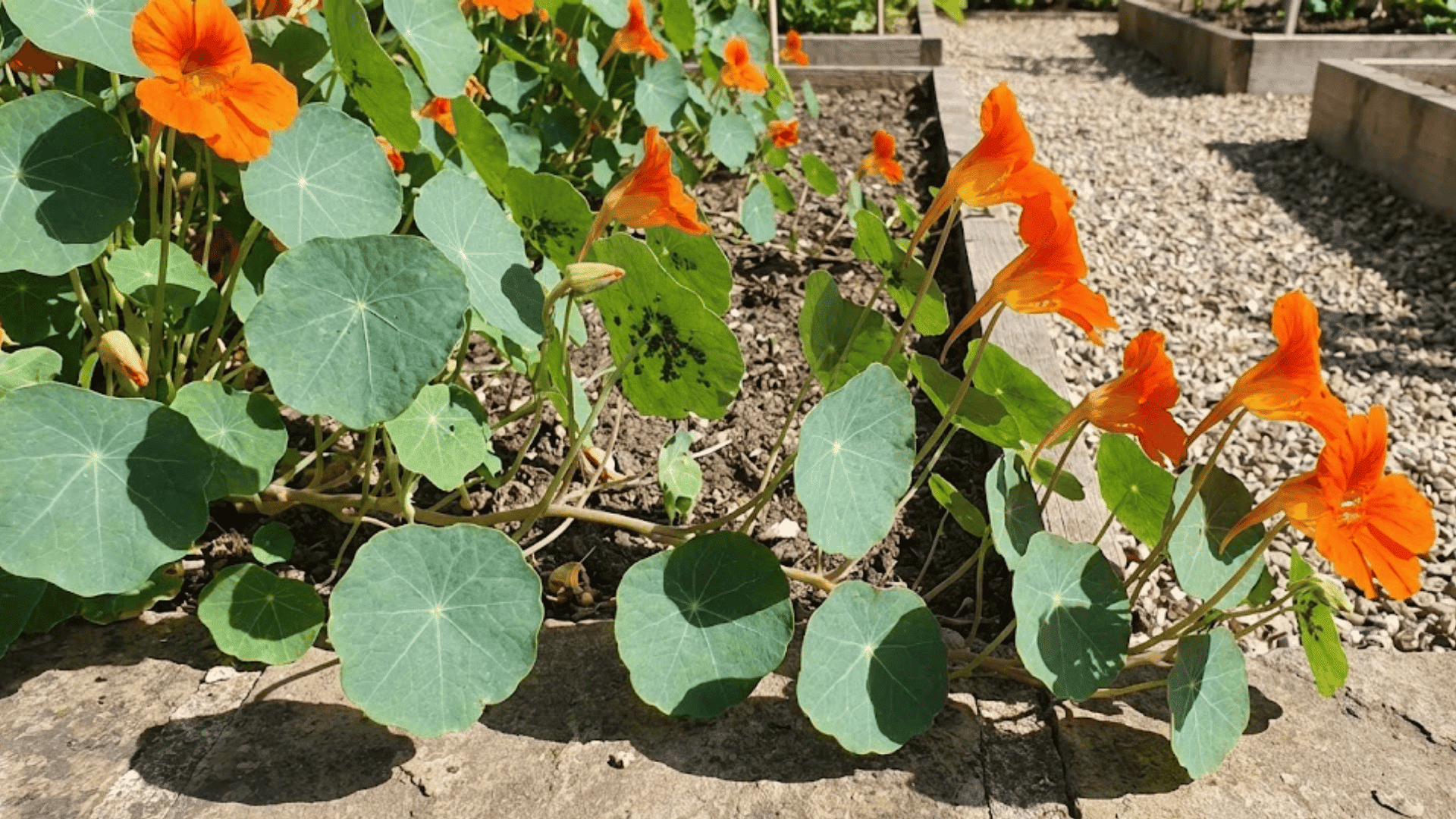
These edible flowers act as trap crops, luring aphids away from your precious spinach. Nasturtiums grow quickly, and their round leaves create ground cover that suppresses weeds.
Both flowers and leaves are peppery additions to salads. Plant them around bed edges where they can trail without smothering your greens, and monitor for aphid buildup.
27. Calendula
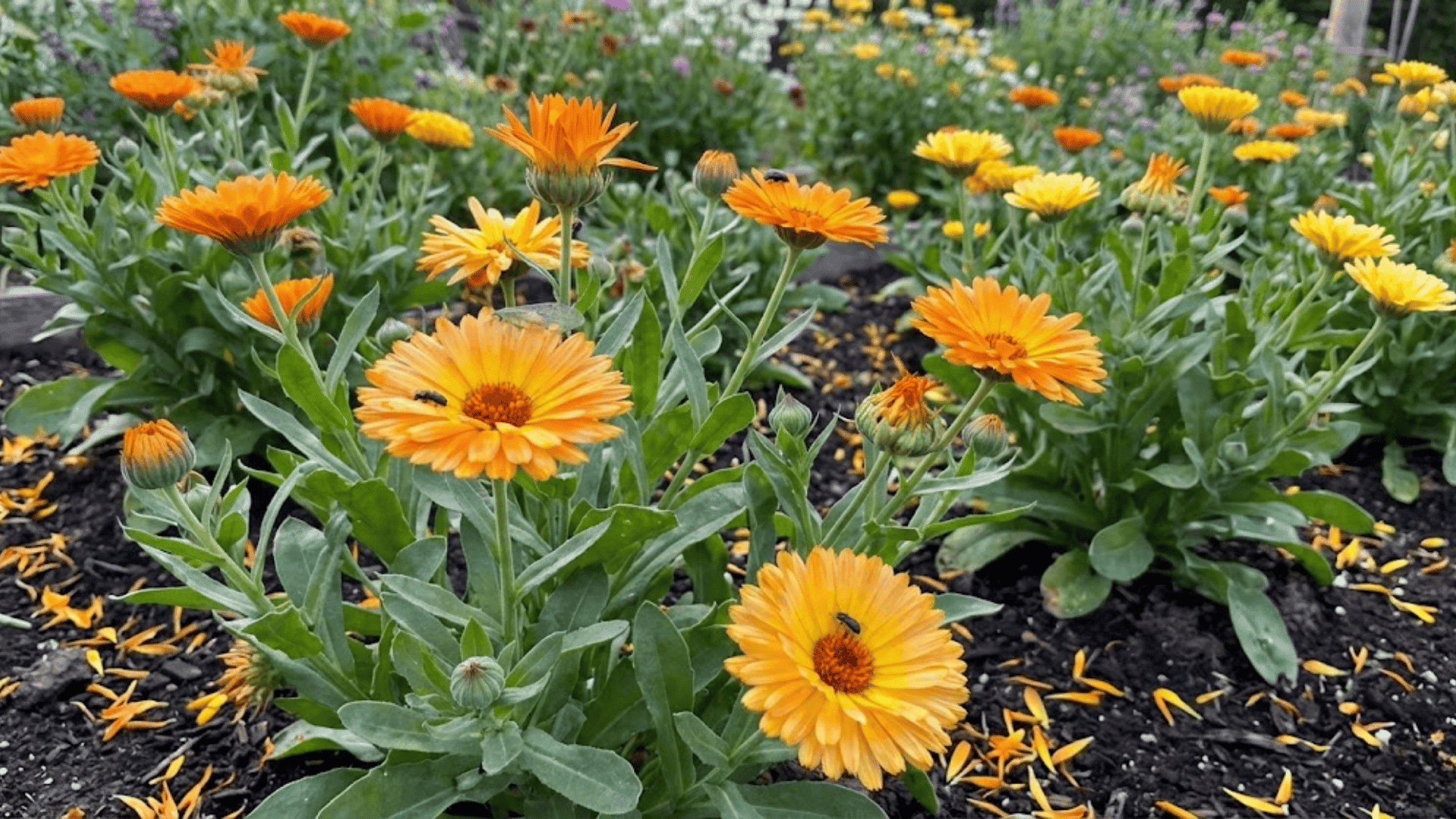
Calendula’s cheerful orange and yellow blooms attract beneficial insects while repelling certain pests. The flowers are edible, and the petals add color to salads alongside spinach.
Calendula tolerates cool weather beautifully, blooming throughout spinach’s growing season. Its compact growth habit makes it suitable for interplanting or border plantings in mixed beds.
Shade-Providing & Structural Companions
Some companions offer physical benefits like shade, wind protection, or vertical structure that helps spinach thrive in challenging conditions.
28. Strawberries
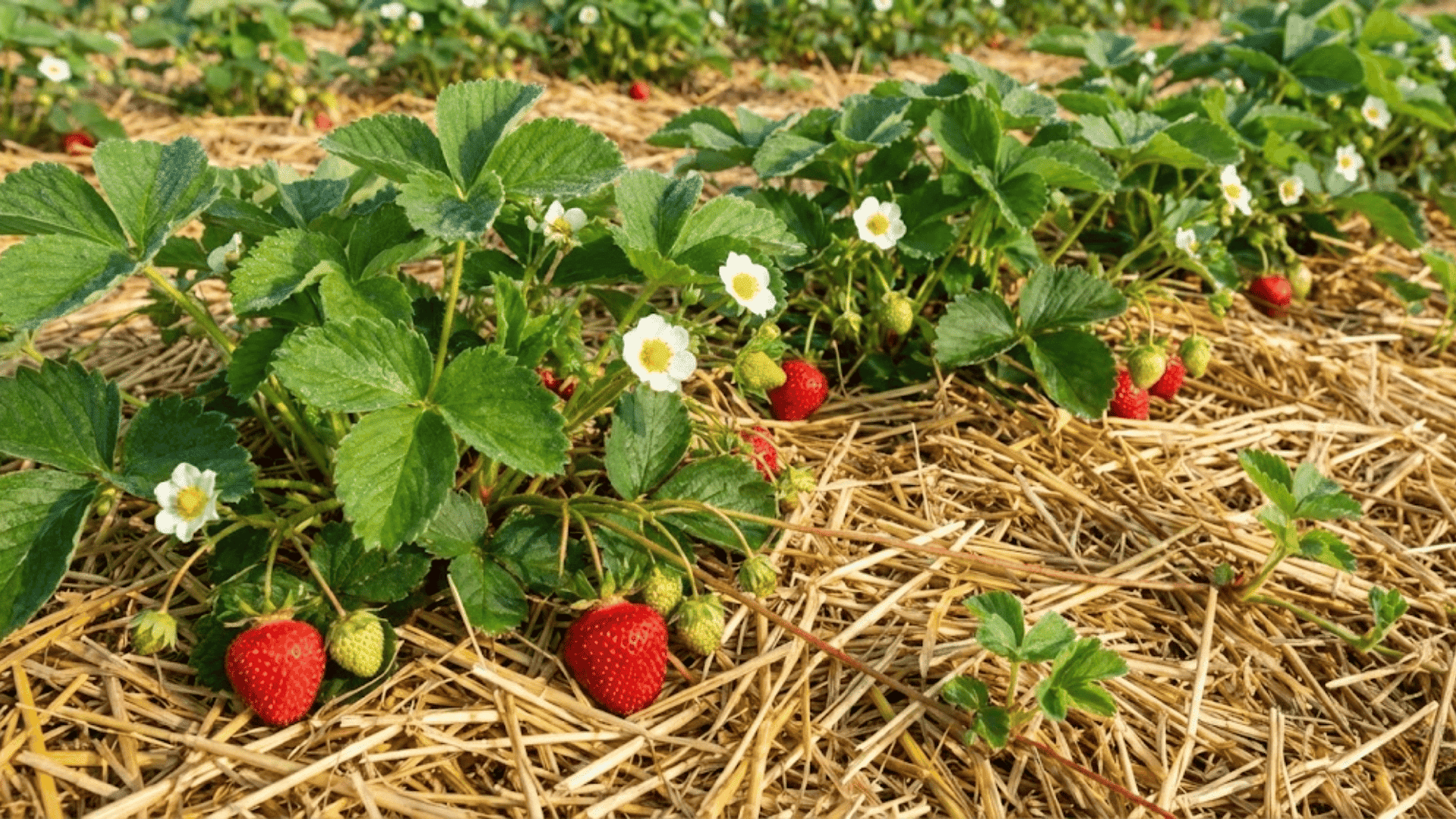
Strawberries create a living mulch around spinach with their spreading growth habit and similar water needs. Both plants appreciate slightly acidic soil and cool growing conditions.
The strawberry leaves help suppress weeds while their shallow roots don’t compete aggressively. As a bonus, you’ll harvest sweet berries and nutritious greens from the same space.
29. Corn
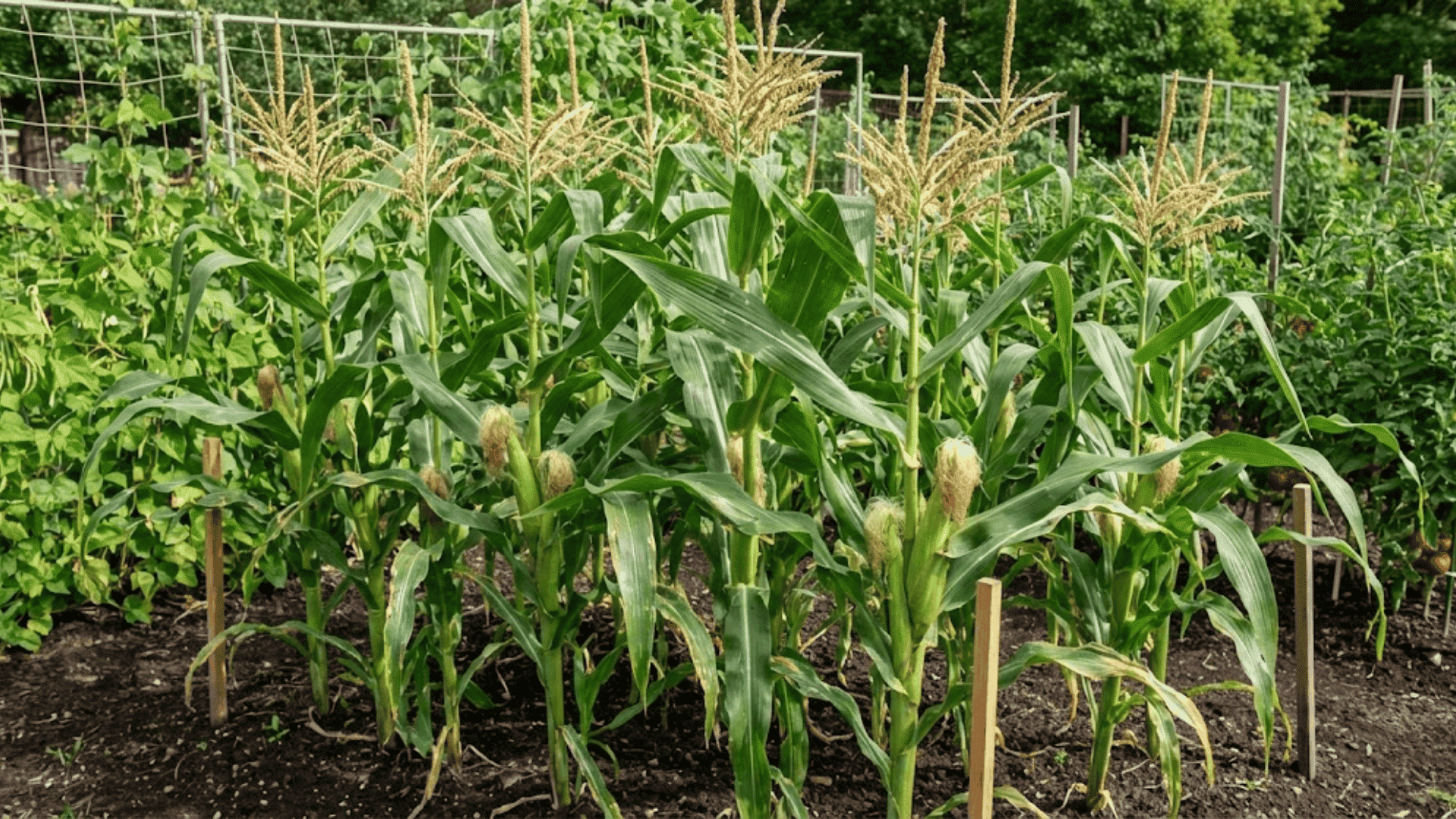
Corn seems like an unusual companion, but tall stalks provide valuable shade for late-spring or early-summer spinach plantings in warmer climates. Plant spinach on the shaded side of corn rows as temperatures climb.
The corn’s deep roots won’t interfere with shallow spinach, and the height difference maximizes vertical growing space. This pairing works best in areas with longer cool seasons.
Plants That Do NOT Grow Well With Spinach
Not every plant makes a good neighbor for spinach. Some companions create more problems than they solve, competing for resources or creating unfavorable growing conditions.
- Potatoes: Their dense foliage blocks light from low-growing spinach, and both are susceptible to similar fungal diseases that can spread quickly when planted together.
- Sunflowers: These towering plants cast heavy shade that’s too intense for spinach, and their roots aggressively compete for water and nutrients in the same soil zone.
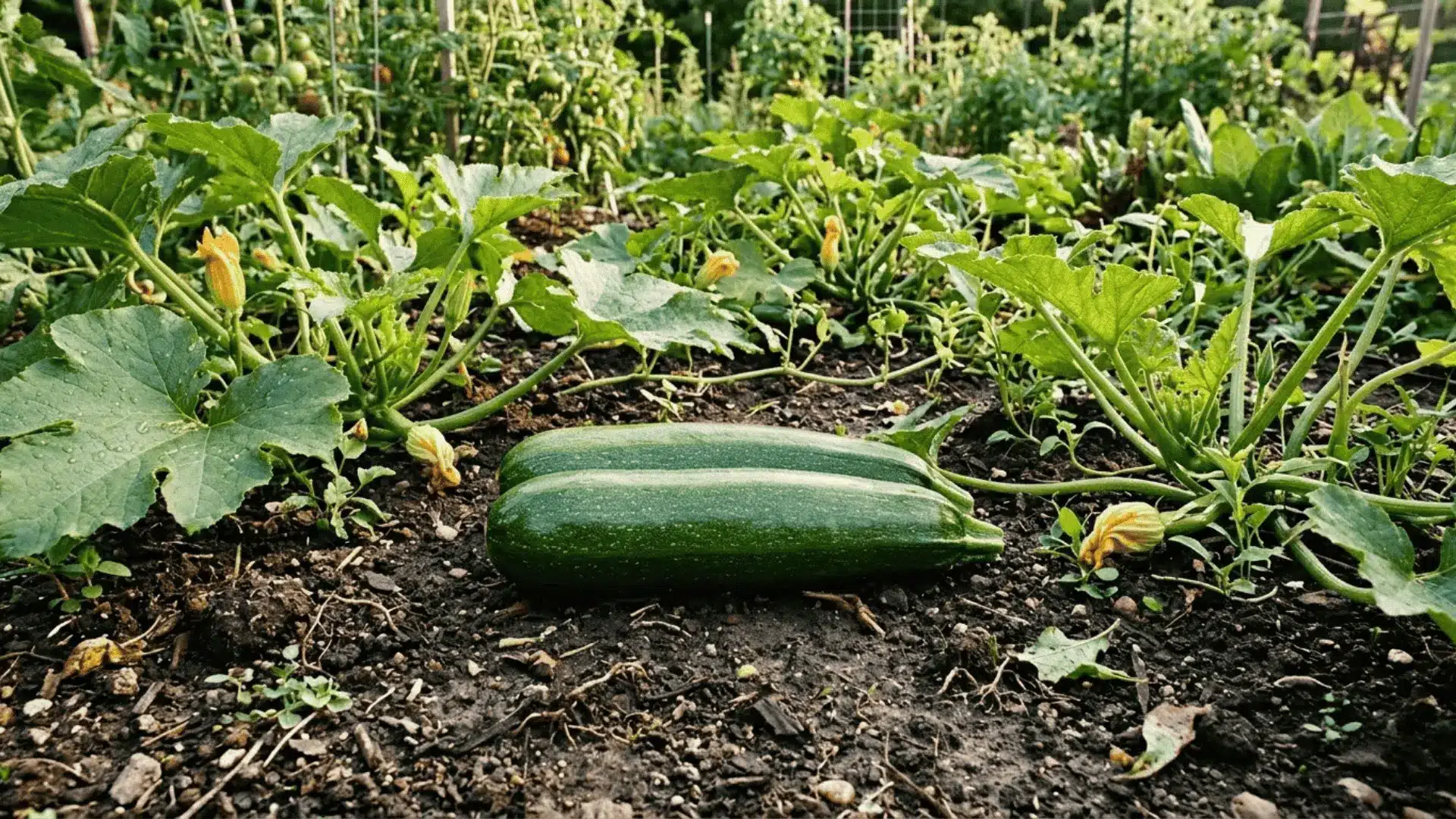
- Large Squash or Pumpkins: Sprawling vines quickly overwhelm spinach beds, smothering plants with their massive leaves while their heavy feeding demands deplete soil nutrients rapidly.
- Fennel: This herb releases compounds that inhibit growth in many plants, including spinach, and its deep taproot competes aggressively for moisture.
Keep these plants in separate areas of your garden, and your spinach will thank you with healthier, more abundant harvests.
Companion Planting Layout Ideas for Spinach
Knowing which plants pair well with spinach is just the beginning.
How you arrange them in your garden beds determines whether they truly support each other or end up competing for space.
| Layout Style | Best Companions | Arrangement | Main Benefit |
|---|---|---|---|
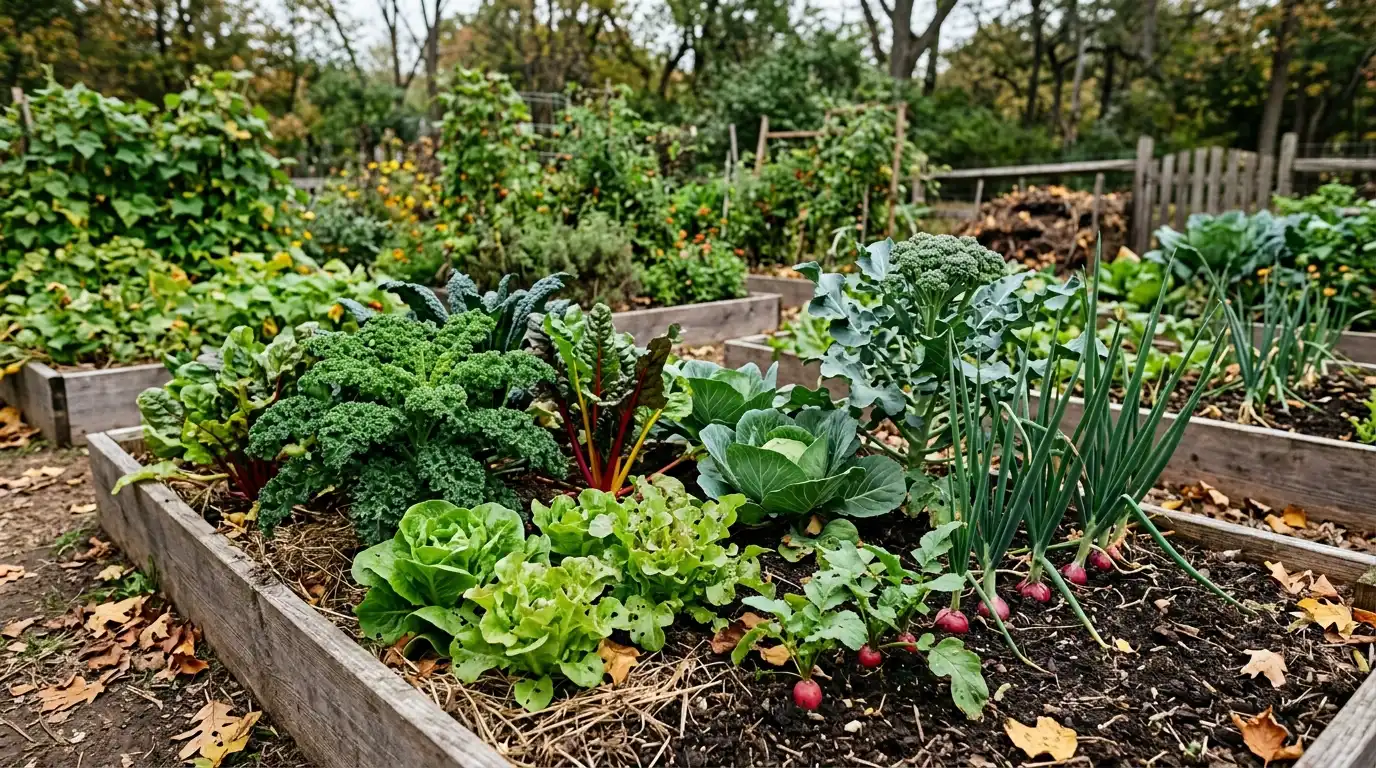
| Raised Bed Combinations | Lettuce, radishes, chives, carrots | Interplant fast growers, succession plant | Continuous spring harvest |
| Square-Foot Gardening | Peas, beets, herbs | 9 spinach per square, tall crops north | No wasted space |
| Intercropping | Broccoli, cabbage, cauliflower | Sow between young transplants | Double harvest per bed |
| Border Planting | Marigolds, nasturtiums | Flowers edge, spinach center | Natural pest barrier |
| Vertical Layering | Trellised peas or beans | Spinach at a shaded base | Nitrogen boost plus shade |
Whichever layout you choose, remember that spinach appreciates good air circulation and shouldn’t be crammed too tightly, even with compatible companions.
Seasonal Companion Planting Tips
Spinach thrives in cool weather, which means your companion choices should shift with the seasons to match changing temperatures and daylight.
- Early Spring Pairings: Plant spinach with peas, lettuce, and radishes as soon as the soil can be worked, taking advantage of their shared love for cool, moist conditions.
- Late Spring Strategy: Add taller companions like broccoli or chard that will provide shade as temperatures climb, helping prevent premature bolting.
- Fall Planting Companions: Pair spinach with garlic, kale, and other cold-hardy crops that will continue producing even as frost arrives.
- Succession Planting Method: Sow new spinach seeds every two weeks alongside staggered companion plantings for continuous harvests throughout the season.
- Seasonal Transitions: As spring spinach finishes, replace it with heat-loving crops while leaving established companions like herbs and flowers in place.
Time your plantings with the seasons, and you’ll keep your garden productive from the last frost of spring through the first freeze of fall.
Wrapping Up
Choosing the right spinach companion plants isn’t complicated once you understand what spinach needs to flourish.
Tucking it between towering brassicas, surrounding it with pest-repelling alliums, or creating a colorful border with nasturtiums all bring their own magic to your garden.
The real joy comes from watching these plant relationships unfold, seeing healthier leaves, fewer pest problems, and beds that produce more than you imagined possible.
Start small with proven combinations, observe what works, and experiment.
What companion combinations have worked wonders in your garden? Share your experiences in the comments below!