Growing sweet potatoes in containers is very doable, but it works differently than growing them in the ground. A lot of guides make it sound easier than it is. You plant something, vines explode, and months later you dig up a pile of potatoes.
In reality, containers change how sweet potatoes grow below the soil, and that changes everything.
This guide to growing sweet potatoes in containers explains what’s actually happening under the surface and what you need to do to support them.
By the end, you’ll understand the setup, the timing, and the signals to watch so you can grow them start to finish on your own.
Can Sweet Potatoes Actually Grow Well in Containers?
Yes, sweet potatoes can grow well in containers, but only when a few conditions are met. Containers limit root space, hold moisture differently, and heat up faster than garden soil. All of those factors affect whether the plant forms tubers or just produces vines.
Sweet potatoes grow tubers when the plant feels stable. That means enough space, steady moisture, warm soil, and plenty of light. In containers, those conditions can shift quickly. When something is off, the plant stays in growth mode instead of storage mode.
Compared to in-ground planting, container yields are usually smaller, but they are more controlled. You’re trading volume for flexibility. That’s normal and expected.
A common mistake is assuming thatvigorous vine growth equals success. In containers, vines can look great even when tubers are small or missing.
What Kind of Container Do Sweet Potatoes Need to Form Tubers

Sweet potatoes don’t grow straight down. Their tubers form along thickened roots that need room to expand in multiple directions. Because of that, container volume matters more than container height alone.
A good container needs:
- Enough depth for roots to establish
- Enough width for tubers to swell
- Good drainage so roots can breathe
When roots hit hard container walls too early, the plant senses restriction. That often delays or reduces tuber formation. Wider containers reduce this stress and allow more even growth.
Drainage is critical. Tubers grow best when soil stays moist but airy. If water sits too long, oxygen drops, roots struggle, and tubers can crack or rot. Drainage holes aren’t optional. They are part of the growing system.
The common misunderstanding here is thinking any large pot will work. The plant fitting above the soil doesn’t mean the roots are comfortable below it.
Why Sweet Potatoes Must Be Grown From Slips in Containers
Sweet potatoes should be grown from slips, not whole potatoes, especially in containers. Slips are young shoots that already know how to form independent root systems.
When you plant a whole sweet potato, it often produces too many shoots in a small space. In a container, those shoots compete immediately. Roots tangle, energy gets divided, and tuber formation suffers.
Slips behave differently. Each slip becomes one focused plant with clearer root development. That matters more in containers, where mistakes show up faster and are harder to recover from.
The biggest misconception is thinking planting a whole potato is simpler or more natural. In containers, it usually creates overcrowding and poor results.
How Many Slips to Plant in One Container and Why
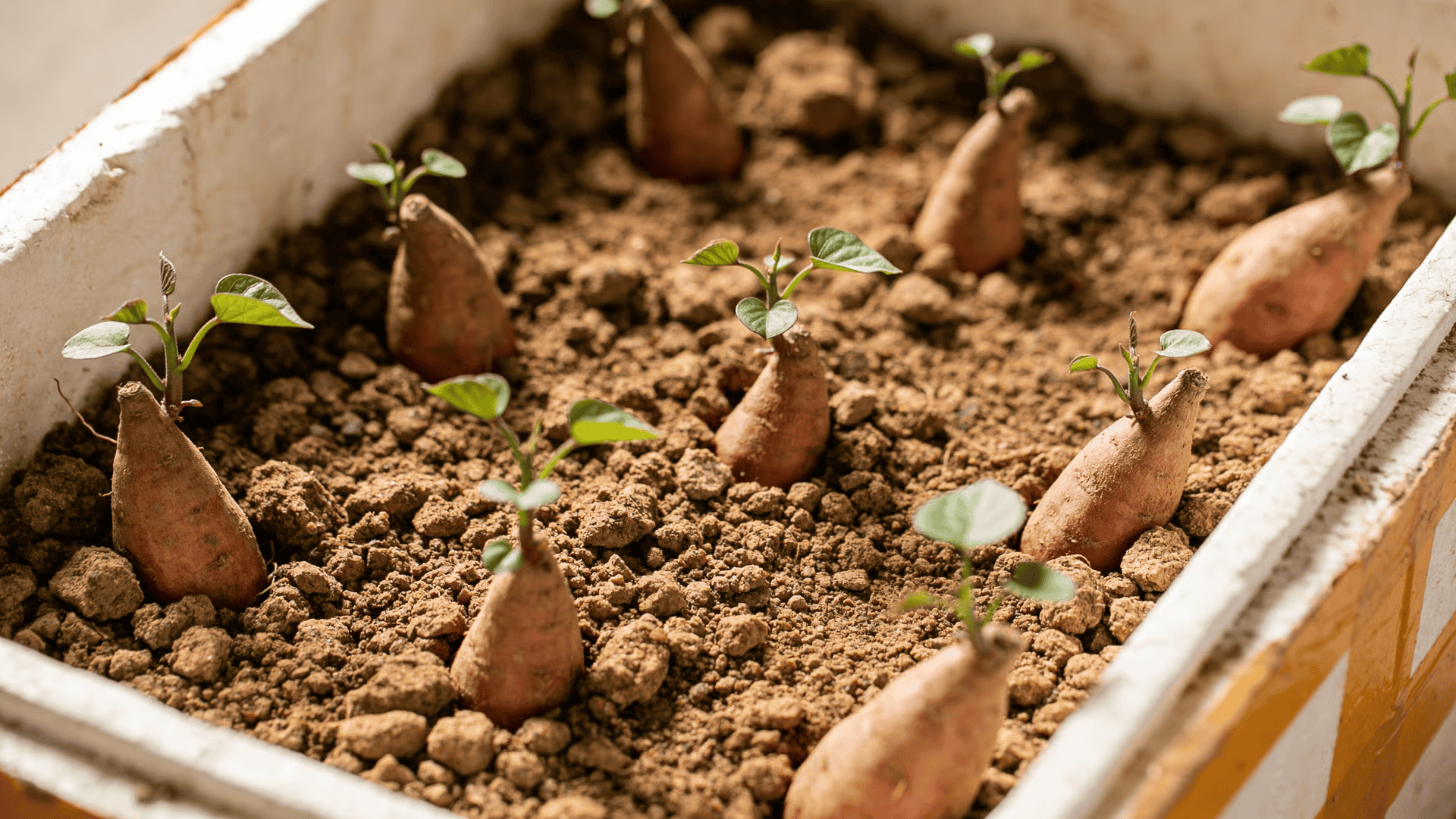
Every slip you plant competes for the same soil, water, and root space. Above the soil, that competition looks harmless. Below the soil, it decides how big your tubers get.
When slips are crowded:
- Roots overlap early
- Tubers stay small
- The plant favors vines over storage
Fewer slips give each plant more room to store energy. That often leads to larger, better-shaped tubers, even if the total number is lower.
Container size determines how many slips you can support. Bigger containers allow more plants, but there is always a limit where adding one more slip reduces the overall harvest.
The common mistake is assuming more plants mean more potatoes. In containers, that logic often backfires.
Soil, Water, and Drainage Requirements in Containers
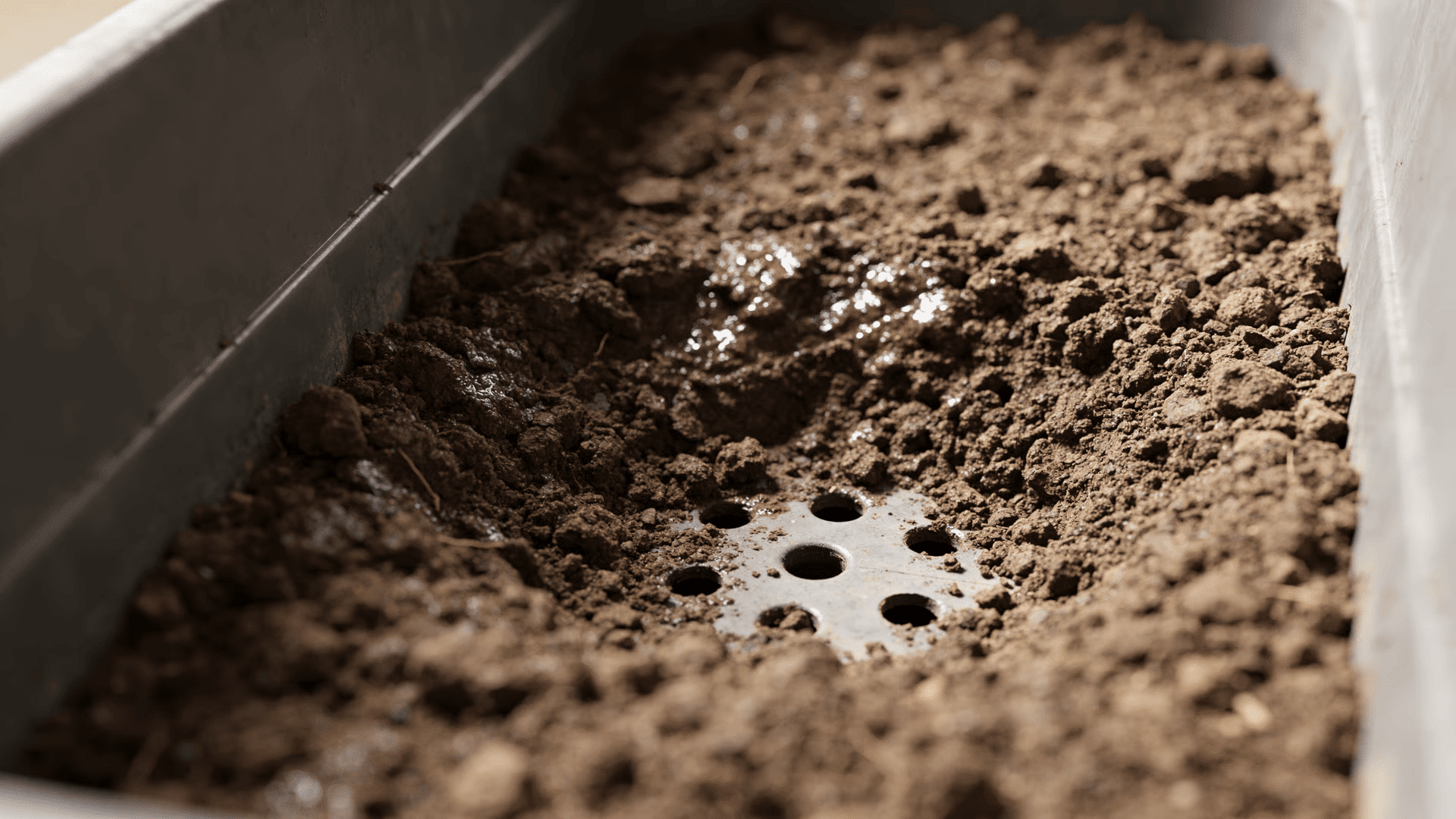
Soil structure directly affects tuber quality. Sweet potatoes need loose, well-draining soil so tubers can expand without resistance. Dense soil causes twisting, splitting, or stalled growth.
Water behaves differently in containers than in the ground. Containers:
- Drain slower at the bottom
- Dry faster at the surface
- Hold less consistent moisture overall
Overwatering is one of the most common problems. When soil stays saturated, oxygen levels drop. Roots weaken, and tubers crack or rot. Underwatering causes stress that interrupts tuber development.
The goal is consistent moisture, not constant moisture. The soil should feel damp, not soggy.
A frequent misunderstanding is thinking frequent watering helps tubers grow bigger. In containers, it often causes the opposite problem.
Sunlight and Vine Growth in Container-Grown Sweet Potatoes
Sunlight fuels photosynthesis, which produces the sugars that tubers store. Without enough light, the plant uses sugars immediately instead of storing them underground.
In containers, vines can grow long even with limited light. That can be misleading. Long vines don’t guarantee good tuber development.
Sweet potato vines naturally trail. They don’t need to climb to be productive. Excessive vine growth can actually reduce tuber size by pulling energy away from storage.
The key is strong light exposure, not unlimited vine length. When light is right, the plant balances growth and storage on its own.
When to Plant and When to Harvest Sweet Potatoes in Containers
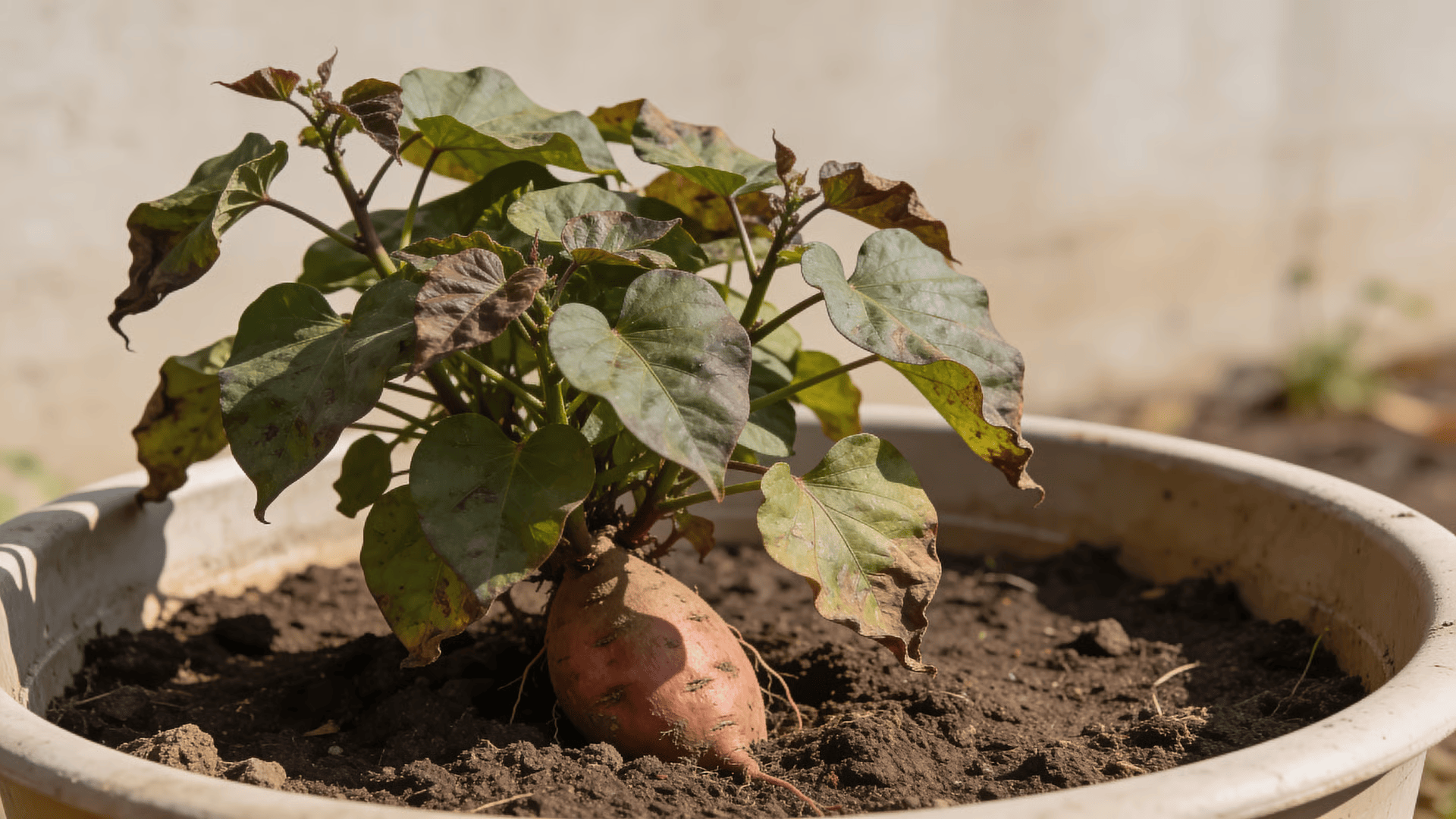
Planting time depends on soil temperature, not just the calendar. Sweet potatoes need warm soil to establish roots and start tuber formation. Containers warm up faster than garden beds but also cool down faster later in the season.
Harvest timing matters just as much. Harvest too early and tubers stay small. Wait too long and cooling temperatures or plant stress slow growth.
Leaf color alone isn’t a reliable signal. A plant can look healthy while tuber growth has already stopped.
Good timing means:
- Warm soil at planting
- Enough growing time for storage
- Harvest before cold stress sets in
The common mistake is using vine size or age alone to decide when to harvest.
Container Sweet Potato Setup at a Glance
| Metric | Recommended Range | Why It Matters |
|---|---|---|
| Container size | 15–20 gallons minimum | Wider volume reduces root restriction and supports even tuber expansion below the soil line |
| Container shape | Wide, not narrow | Tubers form outward along roots, not straight down |
| Slips per container | 1–2 slips | Fewer plants reduce competition and allow each plant to store more energy |
| Soil texture | Loose, airy, fast-draining | Dense soil resists tuber swelling and increases cracking or rot |
| Drainage | Multiple large holes | Excess moisture must exit quickly to maintain oxygen around roots |
| Watering rhythm | Consistently damp, never soggy | Fluctuations interrupt tuber development and stress roots |
| Sun exposure | 6–8+ hours direct light | Strong light supports sugar production needed for storage |
| Planting timing | Warm soil, no cold nights | Cold stress delays root establishment and tuber initiation |
| Harvest window | Before sustained cool weather | Cooling soil slows or stops tuber growth |
This setup won’t guarantee massive yields, but it removes the most common container-related limits.
Once these conditions are in place, the plant does the rest on its own.
Conclusion
Once you understand how containers change root growth, growing sweet potatoes in containers becomes much more predictable.
The plant isn’t complicated, but it is specific. It needs space below the soil, steady moisture, strong light, and enough warm time to store energy.
Containers don’t remove those needs. They make them more obvious.
When you focus less on vines and more on what supports tuber formation, container-grown sweet potatoes become far less frustrating and far more reliable.