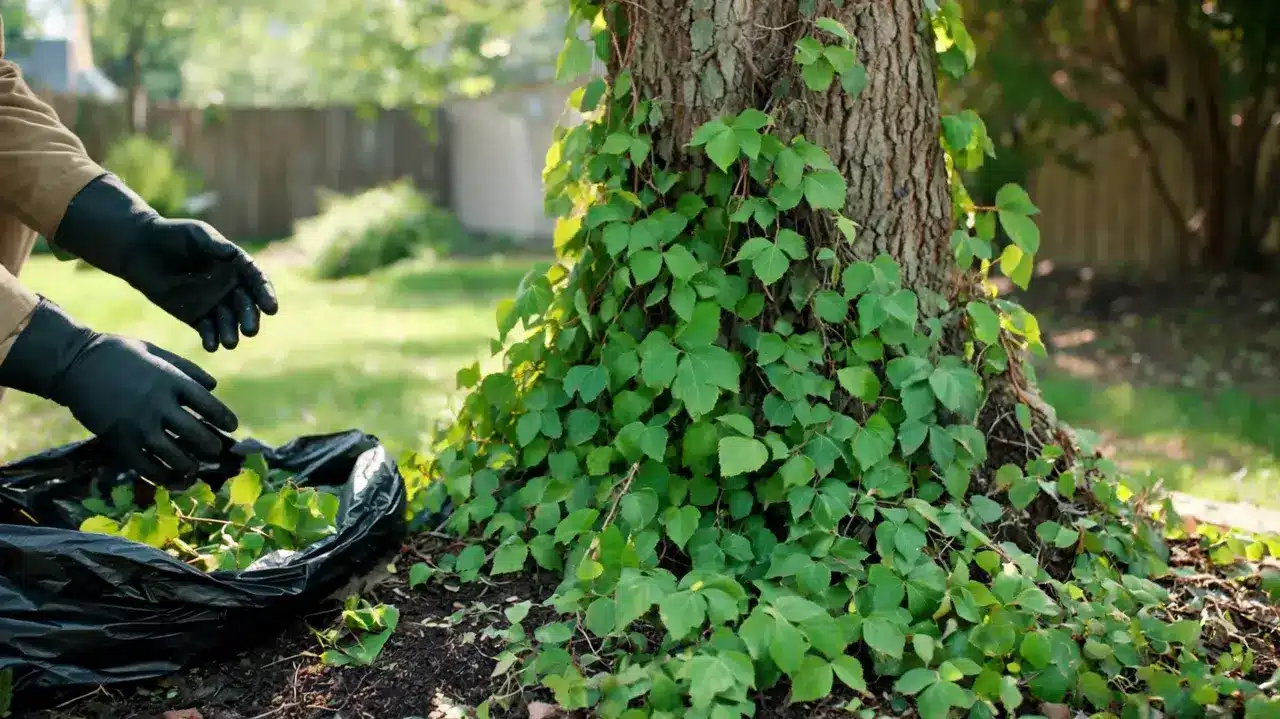
Why Your Vine Root Removal Keeps Failing (and How to Finally Win)
You know that feeling when you cut a vine down to the ground, stand back like, “Ha. I am the captain now,” and then two days later it’s back like a clingy ex with a key to your house?
Yeah. That.
It’s not that you’re lazy or doing it “wrong.” It’s that vines are petty little underground accountants. You cut the top, and they cash in the savings account you didn’t even know existed.
So let’s talk about where vines actually keep their “I will return” energy, what you should be aiming for (spoiler: not 6 feet underground), and the methods that work in real life yards with real life soil and real life levels of patience.
The part you’re missing: vine roots aren’t just “roots”
Most of the vine’s troublemaking isn’t coming from some dramatic 20 foot taproot like it’s auditioning for a nature documentary. Yes, some vines can go very deep in ideal conditions… but the roots that drive fast regrowth are usually much closer to the surface.
Here’s the helpful mental picture:
- The top 8-10 inches is root central: lots of fine feeder roots living their best life.
- Most of the action you care about is still in the top few feet.
- The “big, woody, stored energy” roots the ones that let it pop back up like nothing happened often sit roughly 7-32 inches down.
And horizontally? They’re not polite. Roots can spread about as wide as the vine’s canopy… and often wider. If you’ve got a vine that sprawls 6 feet above ground, it’s not weird for roots to be reaching 6-8 feet out.
So if you’ve been snipping at ground level and hoping for the best, you’ve basically been trimming bangs while the rest of the hair is still attached.
The three root types (only one of them should haunt your dreams)
Not all roots are equally evil. Here’s the quick version:
- The woody “structural” roots
These are the thick, tougher roots that store energy. They’re the reason your vine can regrow fast. These are your main targets. - The branching side roots
These shoot off the big roots and spread outward. If you pull one chunk and leave a bunch of side roots attached elsewhere, the vine can still have plenty of “fuel” to resprout. - The tiny hair like feeder roots
They’re everywhere, they’re replaceable, and they’re not what’s keeping the vine alive long term. Don’t waste your sanity trying to “get every little string.”
If you take nothing else from this post: you’re trying to interrupt the vine’s stored energy system, not perform root hair micromanagement.
Why cutting at ground level basically never works
When you cut a vine off at the soil line, you’ve removed the part you can see… and left behind the part that has reserves.
Think of the root system like a fully charged battery buried underground. When you cut the vine, it immediately starts spending that stored energy to push up fresh green shoots sometimes within days.
Also: woody root chunks can resprout. If you dig and leave behind pieces that are basically “pencil thick or bigger,” you may have just created multiple smaller vines with big attitudes. (Ask me how I learned that one. I’ll wait while I glare at the corner of my yard.)
So, the real question becomes: how deep do you need to go in your yard?
How deep should you dig? It depends on your soil (because of course it does)
Two houses on the same street can have totally different vine root situations. Here are the big factors that change what you’re dealing with:
1) Soil type
- Sandy soil: Roots travel down more easily. You may be dealing with deeper roots, and digging can turn into an archaeological dig pretty fast.
- Clay soil: Roots don’t love going down through dense, wet clay, so they often spread sideways instead (whee!). You might not need to go quite as deep, but you may need to go wider.
- Loam: The “reasonable middle child” of soils. Still annoying, just less dramatic.
2) Compacted ground
If your soil is compacted (heavy foot traffic, hardpan, dense layers), roots hit that resistance and go, “Cool, I’ll just spread sideways like a spider.”
So you might find a ton of root mass at a shallower depth, but spread out farther than you expected.
3) How the area gets watered
- Drip irrigation: Roots may stay more concentrated near the base and in the upper soil.
- Sprinklers / broad watering: Roots tend to roam outward.
4) How old the vine is
This one’s big.
- Young vines (1-3 years): Much easier to remove with digging/pulling.
- Mid age vines (4-8 years): More established, more lateral spread, more “surprise roots.”
- Old vines (9+ years): Full removal can be unrealistic without heavy equipment or a long term strategy. This is where you stop trying to “one and done” it and start thinking like a vine exterminator.
A quick “what am I even dealing with?” test (before you wreck your back)
Before you commit to a whole weekend of digging and regret, do this:
The screwdriver probe:
Grab a long screwdriver and push it into the soil about a foot away from the base.
- If it slides in easily, roots can likely go deeper.
- If it stops hard fast, you’ve probably got compaction meaning the vine may be shallower but wider.
This isn’t fancy science. It’s just you and a screwdriver having a heart to heart with the ground.
Okay, so how do you actually get rid of it?
Here are the methods I’ve seen work, depending on how intense your vine situation is and how much you enjoy suffering.
Option 1: Dig it out (best for younger vines)
If the vine is fairly young and you can dig without hitting rocks, roots, and existential dread, manual removal can work.
What matters most: get the crown and the woody roots you can reach. Any root chunk left behind that’s thick and healthy may decide to start a new career as a vine.
This works best when:
- the vine isn’t ancient
- the soil is workable
- you’re willing to be thorough
This fails when:
- you leave big woody chunks behind
- the vine is old enough to have a whole underground subway system
Option 2: Cut and treat (fastest for most established vines)
If you want the most bang for your effort, this is usually it: cut the grape vine low, then treat the fresh grape vine cut stump with the correct product immediately.
Safety/common sense stuff (because I like you):
Read and follow the label exactly (seriously the label is the law and poison ivy lookalike tests). Wear chemical resistant gloves and eye protection. Don’t apply on windy days or right before rain. Keep it off plants you like. Don’t apply near water/storm drains.
The basic process looks like:
- Cut the vine at soil level (or slightly below)
- Apply the product meant for cut stump application right away
- Make sure you cover the full cut surface, especially the outer ring
Timing matters here because the stump starts sealing/callusing, and then it won’t take up the treatment as well. Translation: don’t cut it, go make lunch, and come back later. This is not a “circle back” task.
Option 3: Starve it out (chemical free but VERY committed)
If you don’t want chemicals and don’t want to dig up half your yard, you can exhaust the root system:
- Cut every new shoot at soil level
- Repeat every 2-3 weeks through the growing season
- Keep doing it until the plant runs out of stored energy
This is the “I’m patient and relentless” method. It works… but it’s a long game. If you’re the kind of person who forgets to water their houseplants (hi, it’s me sometimes), set reminders.
Option 4: Heavy machinery (when the vine has chosen violence)
For truly massive, old vines (or if you’re clearing an area quickly), bringing in equipment can be worth it. A backhoe can remove much deeper root mass than you ever will with a shovel.
One note: stump grinding alone usually doesn’t solve vine regrowth. Grinding removes the visible part, but if the crown/roots are still alive, you’ll likely see it again.
When to do it (because timing can make you look like a genius)
If you can choose your moment:
- Best window: late winter to early spring, before the vine is actively growing
- Worst timing: fall, when the plant has been storing energy and is basically “fully charged”
And if you’re doing a cut and treat approach, applying at the right growth stage can help the treatment move into root tissues better. (Again: label directions first, always.)
If it comes back (because sometimes it will), here’s what that means
This is the part that makes people think they “failed.” You didn’t. Vines just don’t die politely.
- Shoots popping up right at the base quickly: you likely didn’t remove/kill the crown, or treatment was delayed. Cut lower and treat immediately.
- Shoots popping up farther away: roots spread wider than you thought. Time to widen your search area and go after those laterals.
- Random sprouts later when you’re planting something new: you left woody debris in the soil. (Annoying, but common.)
I always tell people to keep an eye on the area for up to two growing seasons. Not because I love drama because deep or stubborn pieces can take a while to fully give up.
My personal “choose your battle” cheat sheet
If you want the simplest way to decide:
- One established backyard vine: cut and treat is usually the quickest, least backbreaking route.
- Young vine and you’re motivated: dig it out and remove the crown/woody roots.
- No chemicals, no machines: commit to repeated cutting all season (and then some).
- You need it gone fast or it’s huge: equipment/pro help may actually be cheaper than months of fighting it.
The real secret: aim for the crown and the woody roots, not the leaves
If you’ve been losing the vine war, it’s because you’ve been fighting the part you can see. The win happens underground right around that crown area at/just below the soil line and the thicker roots that store energy.
Pick a method you can actually stick with (because consistency is the unsexy hero here), and then stay annoyingly persistent. You deserve a yard that doesn’t feel like it’s plotting against you.