Ever spotted tiny flies hovering around your kitchen or circling your houseplants and wondered what they actually are?
Those little wingers buzzing about might look similar at first glance, but fruit flies and fungus gnats are completely different creatures with their own quirks and habits.
Getting the identification right isn’t just about satisfying your curiosity. It changes everything about how you deal with them.
When you know exactly what you’re up against, you can tackle the problem at its source instead of wasting time on solutions that simply won’t work.
We’ll walk you through the telltale differences, from their appearance and behavior to the specific strategies that actually send each type packing for good.
What are Fruit Flies?
Fruit flies are those tiny, tan or light brown insects with distinctive bright red eyes that seem to materialize out of nowhere around your kitchen.
They’re incredibly small, usually just 1/8 of an inch long, making them easy to miss until they’re everywhere.
These little pests have a shockingly fast breeding cycle, going from egg to adult in about 7 days under the right conditions.
They’re drawn to anything sweet and fermenting, which explains why they love overripe bananas, wine bottles, and even that splash of juice you didn’t wipe up. Warmth and moisture create the perfect storm for their sudden arrival.
What are Fungus Gnats?
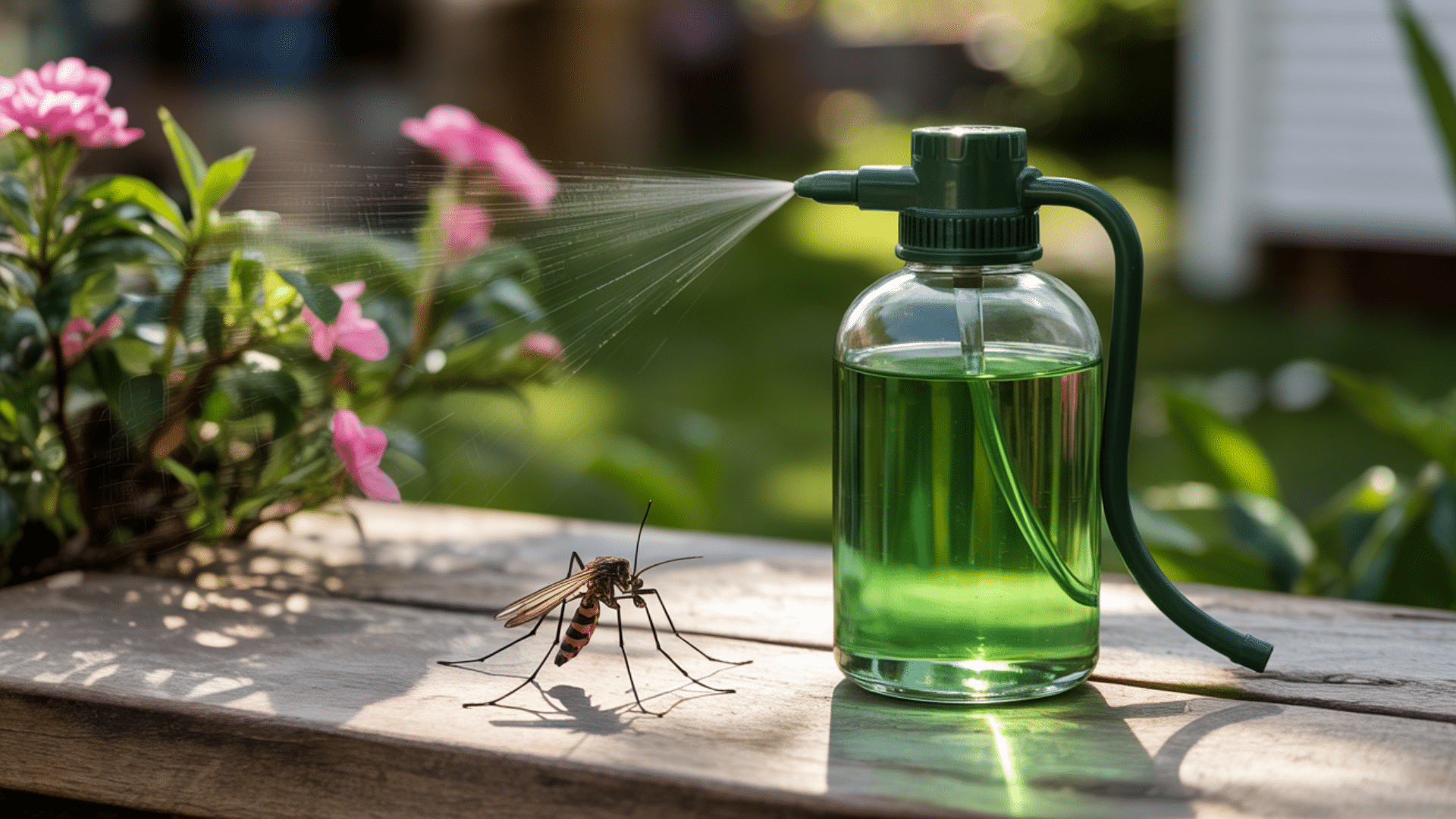
Fungus gnats are delicate, dark gray or black flies with long, dangly legs that make them look almost mosquito-like as they flutter weakly around your plants.
At about 1/8 of an inch, they’re similar in size to fruit flies but much darker in color.
These gnats live out their entire life cycle in moist potting soil, where females lay eggs that hatch into tiny larvae feeding on organic matter and plant roots.
Overwatering is their best friend, creating the damp environment they absolutely thrive in. You’ll often spot them hovering near plant pots or resting on windows, drawn to light but never straying too far from their soggy soil homes.
Fruit Flies vs. Fungus Gnats: Key Differences
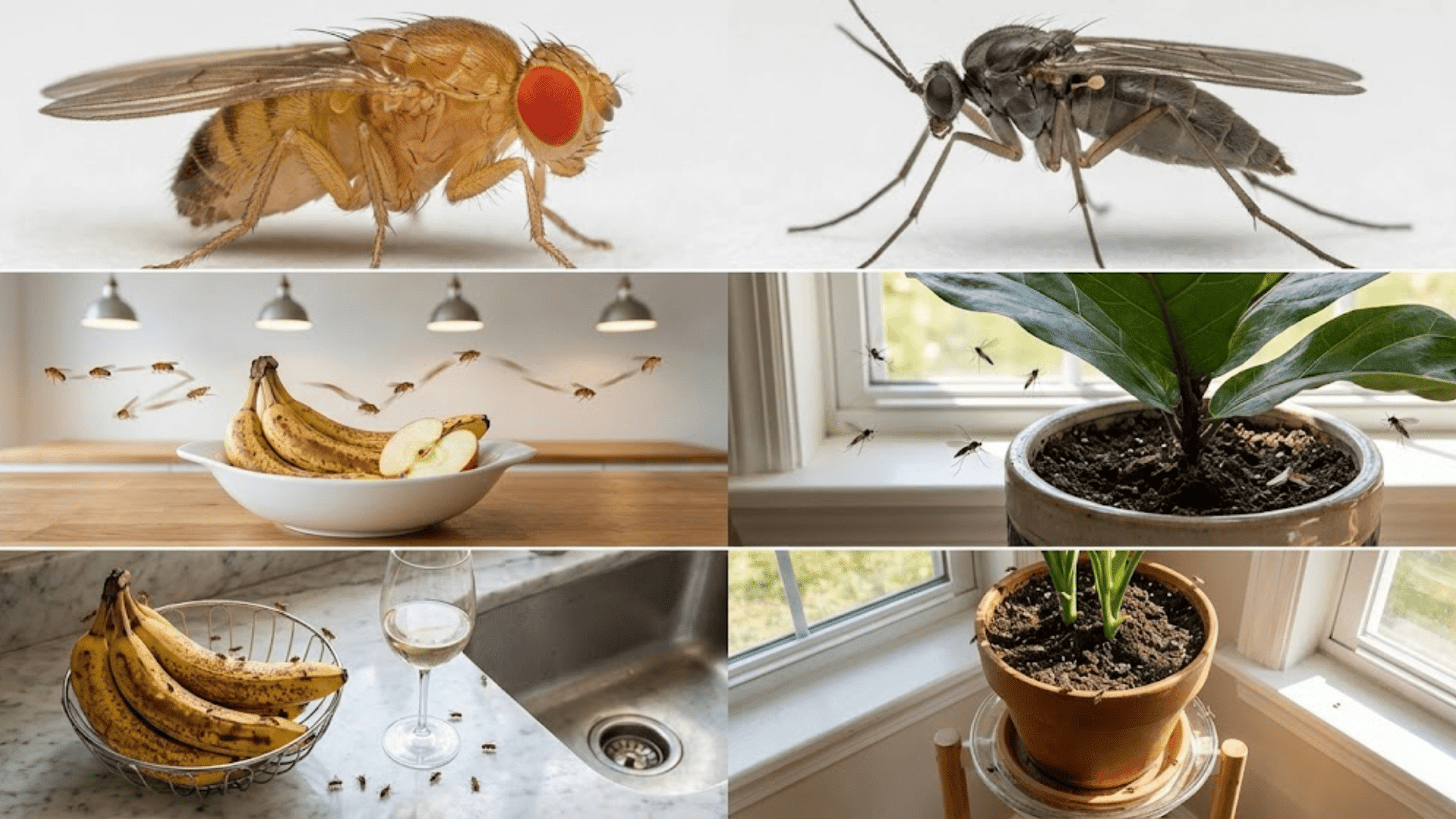
Once you know what to look for, telling these two apart becomes second nature. Their differences show up in how they look, move, and where they choose to hang out.
Appearance Differences
Fruit flies have a rounded, compact body with short, stubby legs and wings that sit neatly along their backs.
Fungus gnats are more delicate with long, spindly legs that dangle as they fly, and narrower wings that give them a mosquito-like silhouette.
The color contrast is your biggest clue: fruit flies sport tan or yellowish-brown bodies with those telltale red eyes, while fungus gnats are much darker, appearing almost black or deep gray with less noticeable eyes.
Behavior Differences
Watch how they move, and you’ll spot the difference immediately. Fruit flies are quick and purposeful, darting around in erratic, zippy patterns and often hovering confidently over their food sources.
Fungus gnats are weak fliers, doing more of a slow, aimless flutter near soil level.
Fruit flies don’t care much about light, but fungus gnats are drawn to windows and bright spots. Disturb a plant pot and fungus gnats scatter lazily, while fruit flies bolt away fast when you approach their fruit stash.
Location Clues
Where you find them tells you everything:
- Fruit Flies: Hanging around fruit bowls, trash cans, sink drains, compost bins, open wine bottles, and anywhere sticky residue collects in the kitchen.
- Fungus Gnats: Clustered near houseplant soil, hovering over freshly watered pots, crawling on drainage trays, and resting on windowsills close to plants.
- Overlapping Zones: Both might appear in bathrooms with moisture issues, but fruit flies gravitate toward any fermenting matter, while fungus gnats stick close to damp organic material.
Fruit Flies vs. Gnats: Identification Checklist
Still not sure which pest you’re dealing with? Use this quick reference table to match what you’re seeing with the likely culprit.
| What You’re Observing | What It Means |
|---|---|
| Flies hovering around fruit bowls, trash cans, or sink drains | Likely fruit flies – they’re after fermenting organic matter |
| Flies suddenly scatter upward when you water your plants | Likely fungus gnats – you’ve disturbed them from the soil surface |
| Tiny worm-like larvae are visible in potting soil or on the top layer | Fungus gnats – their larvae live and feed in moist soil |
| Infestation started after bringing home produce from the store | Fruit flies – eggs often hitchhike on fruits and vegetables |
| Flies clustering near windows close to houseplants | Fungus gnats – they’re drawn to light but stay near their soil habitat |
| Flies gathering around open beverages or sticky spills | Fruit flies – anything sweet and fermenting attracts them |
Common Misidentification Scenarios
Mix-ups happen constantly because these pests are so similar in size and often share the same spaces.
Here’s where people get tripped up and what’s actually going on.
Scenario 1: “I have fruit flies because I see tiny flies in my kitchen.”
Reality: If your kitchen has potted herbs or plants nearby, those could easily be fungus gnats emerging from damp soil. Location alone doesn’t tell the whole story when plants and produce coexist in the same room.
Scenario 2: “These are gnats because they’re so small and weak-looking.”
Reality: Baby fruit flies are just as tiny as fungus gnats when freshly hatched. The real giveaway is color and eye shade; fruit flies have that distinctive tan body with red eyes that gnats lack entirely.
Scenario 3: “My plants and fruit bowl are close together, so it’s the same pest.”
Reality: You might actually be hosting both species at once. Fungus gnats stick to the soil while fruit flies circle the banana bunch, and treating for just one leaves the other problem untouched.
Scenario 4: “It’s winter, so these must be fruit flies coming in from outside.”
Reality: Both pests move indoors when it gets cold, and overwatered winter houseplants create prime fungus gnat breeding grounds. The timing overlaps, making it feel like one invasion when dealing with two.
Where They Come From
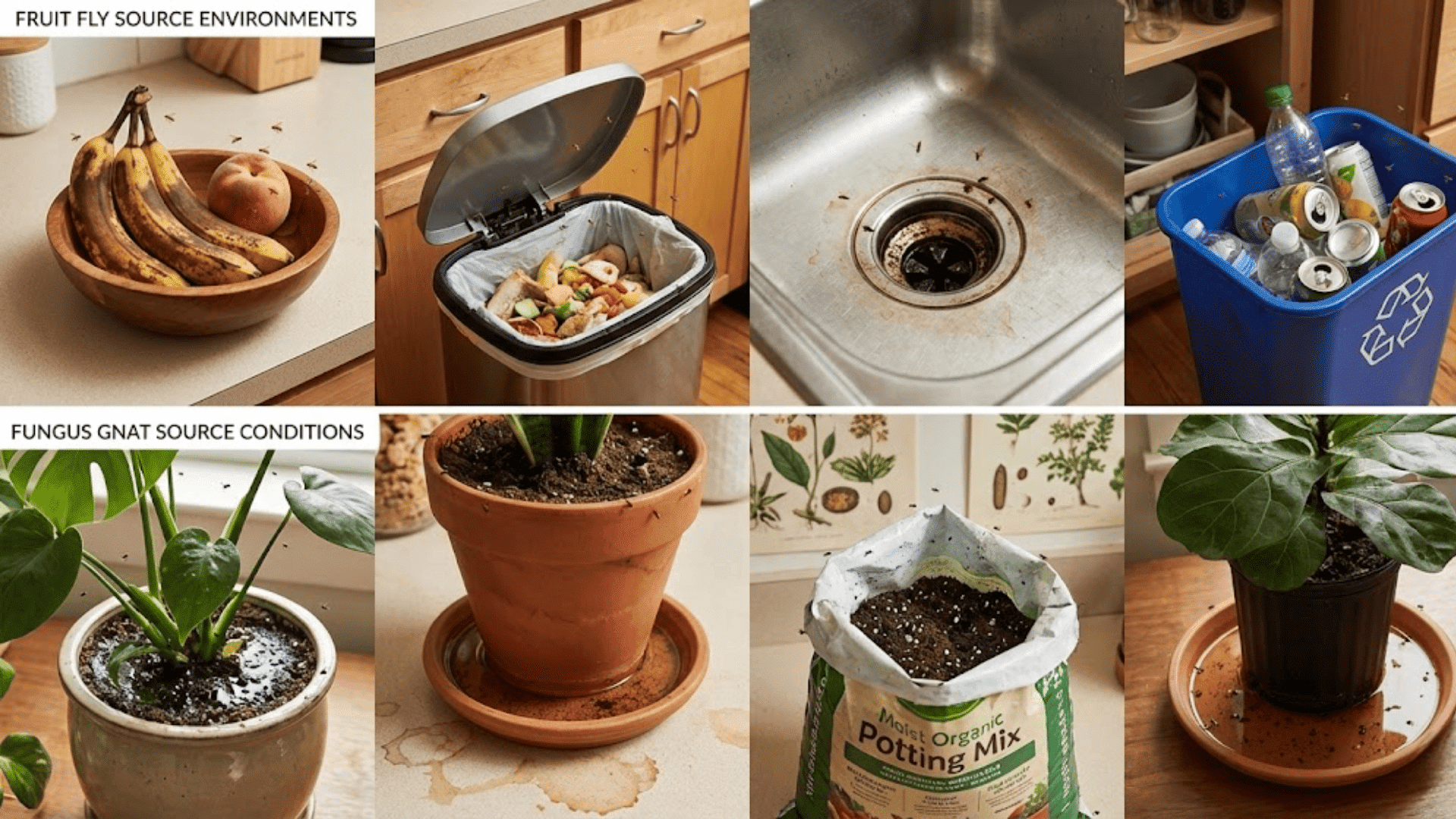
Understanding the source is half the battle. Each pest has specific conditions that bring them into your space and keep them thriving.
What Brings Fruit Flies Into Your Home?
Fruit flies don’t just appear randomly; they’re following the scent of fermentation and decay. Once they find a food source, they multiply incredibly fast.
- Overripe or rotting fruit sitting on counters or in bowls creates the perfect breeding ground and irresistible attraction.
- Dirty sink drains with built-up food residue and moisture provide hidden spots for eggs and larvae to develop.
- Trash cans with food scraps that aren’t emptied regularly become breeding hotspots, especially in warm weather.
- Recycling bins with unwashed containers still coated in juice, wine, or soda residue draw fruit flies like magnets.
What Triggers Fungus Gnat Infestations?
Fungus gnats need one thing above all else: consistently moist soil. Without it, they simply can’t complete their life cycle.
- Overwatered houseplants with constantly soggy soil create ideal conditions for larvae to thrive and multiply.
- Pots without proper drainage holes trap water at the bottom, keeping soil wet far longer than it should be.
- Potting mixes high in organic matter, like peat or compost, provide abundant food for fungus gnat larvae.
- Indoor humidity and standing water in plant saucers or poorly ventilated rooms keep the moisture levels that gnats love.
How to Get Rid of Fruit Flies?
Getting fruit flies under control means attacking both the adults you see and the breeding sites you don’t.
A two-pronged approach works fastest and prevents them from coming back.
Eliminate Their Food Sources and Breeding Grounds
Cut off their access to food and moisture, and fruit flies lose their ability to reproduce. Focus on these high-impact areas where they breed most successfully.
- Refrigerate all fruit or store it in sealed containers, especially overripe produce.
- Wipe surfaces daily to remove sticky spills and residue that ferments.
- Empty trash and recycling often, rinsing containers before disposal.
- Flush drains weekly with boiling water to clear organic buildup.
Set Traps and Monitor Results
Once you’ve cleaned their breeding sites, traps help catch the remaining adults and show you whether the population is dropping.
| Trap Type | How It Works | Best For |
|---|---|---|
| Apple cider vinegar bowl | Vinegar with dish soap, covered with poked plastic wrap | Quick DIY fix |
| Wine or beer trap | Small amount left in the bottle, narrow neck traps flies | Catching stragglers |
| Sticky traps | Pre-baited adhesive surfaces | Monitoring over time |
| Fruit jar trap | Overripe fruit in a jar with a paper funnel | Heavy infestations |
How to Get Rid of Fungus Gnats?
Fungus gnats thrive in one condition above all: wet soil. Dry out their habitat and interrupt their breeding cycle, and the infestation collapses on its own.
Fix Your Watering Routine and Dry Out Soil
The fastest way to stop fungus gnats is to make your soil less hospitable. These changes target the larvae where they live and breed.
- Let the soil dry completely between waterings, checking 2 inches deep before adding more water.
- Remove standing water from saucers immediately after watering to prevent moisture buildup.
- Add a layer of sand or gravel on top of the soil to create a dry barrier that larvae can’t cross.
- Improve airflow around plants with fans or spacing to help soil surfaces dry faster.
Use Traps and Natural Treatments
Combining physical traps with natural interventions helps you tackle both adult gnats and the larvae hidden in soil.
| Method | How It Works | Best For |
|---|---|---|
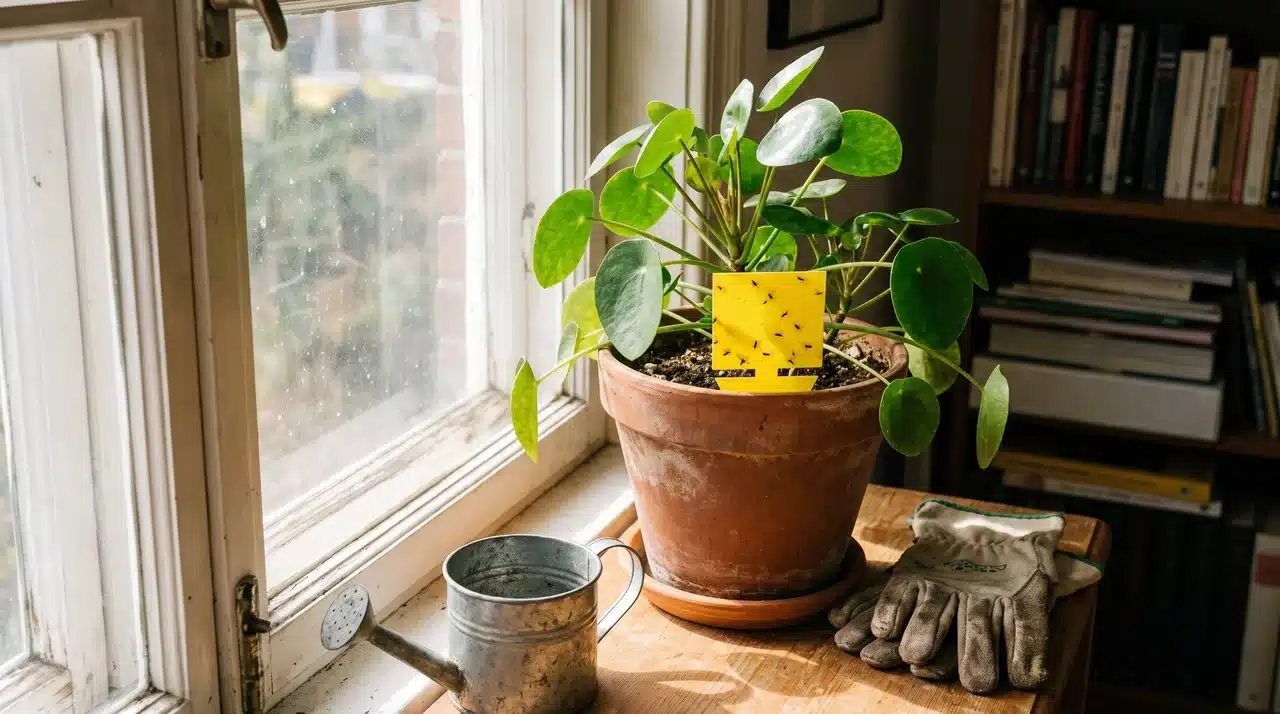
| Yellow sticky traps | Placed near the soil surface to catch flying adults | Reducing the adult population quickly |
| Hydrogen peroxide soil drench | 1 part peroxide to 4 parts water kills larvae on contact | Active infestations in soil |
| Mosquito bits (BTI) | Sprinkle on soil or steep in water, targets larvae specifically | Ongoing prevention and treatment |
| Neem oil soil treatment | Disrupts larval development when mixed into water | Natural, plant-safe option |
| Complete repotting | Fresh dry soil in a clean pot removes all life stages | Severe infestations not responding to other methods |
Community Tips & Shared Experiences
Real people dealing with these pests have learned what works through plenty of trial and error.
The biggest mistake homeowners admit to is treating the wrong pest entirely, wasting weeks on fruit fly traps when fungus gnats were the actual problem.
For fungus gnats, the bottom-watering method backfired for many since water still sits in saucers. What consistently works according to gardening forums is the let-it-dry approach combined with yellow sticky traps.
One Reddit discussion highlights how persistence matters more than products, with most success stories involving 4-6 weeks of consistent soil drying before seeing real improvement.
Final Thoughts
Now that you can confidently tell fruit flies vs fungus gnats apart, you’re already ahead of the game.
No more guessing which pest you’re dealing with or why your traps aren’t working. Cleaning up fermenting fruit or letting that soil dry out properly becomes so much easier when you know exactly what you’re up against.
You’ve got the right tools to tackle each problem at its source. Have you dealt with either of these pests before?
Drop a comment below and share what finally worked for you or what surprised you most about getting rid of them. Your experience might be exactly what someone else needs to hear.