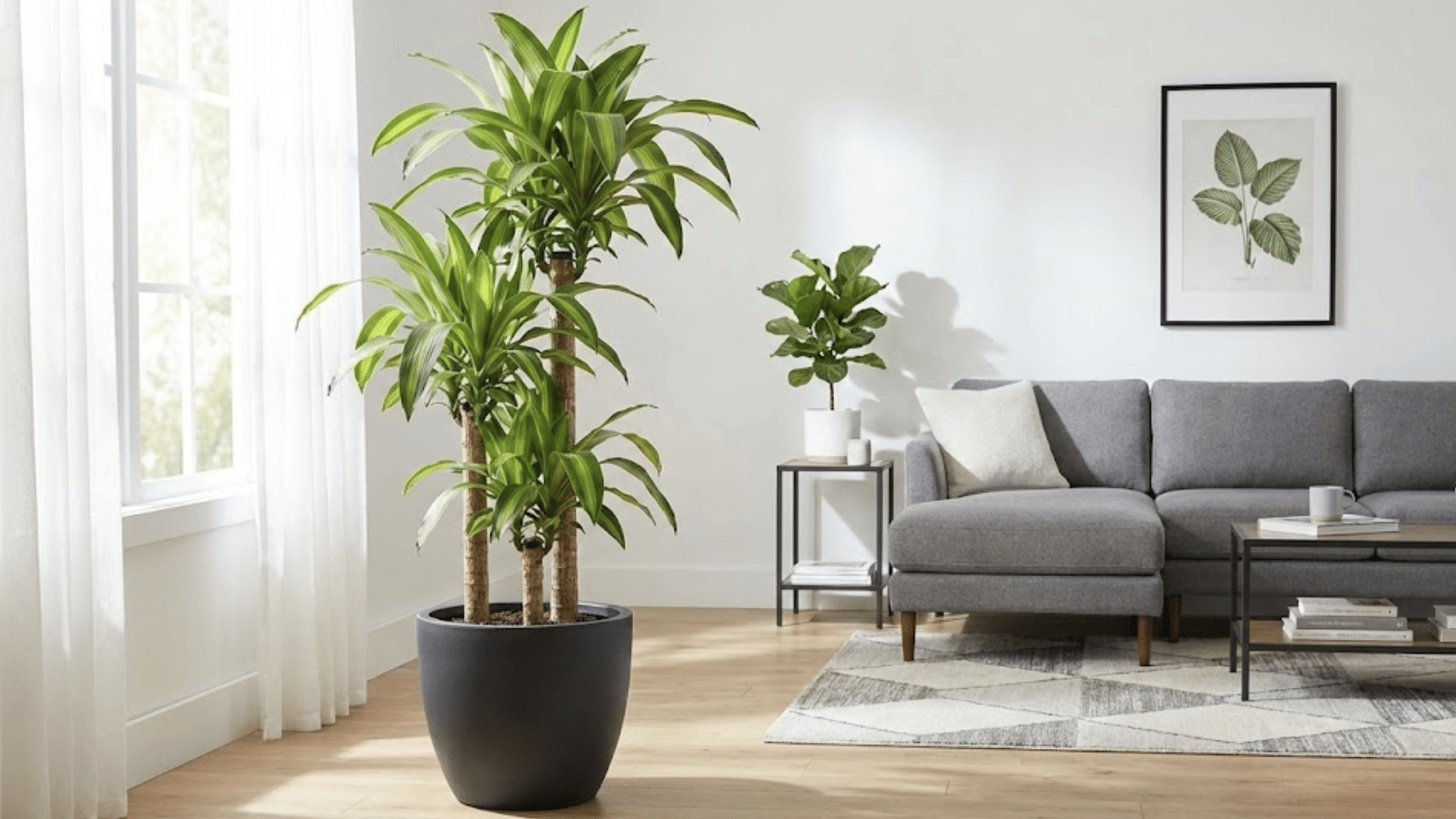
That tall, leafy plant with arching foliage you see gracing office lobbies and living rooms?
That’s likely a corn plant, and it’s earned its reputation as one of the most forgiving houseplants around.
Despite the name, this isn’t actual corn but Dracaena fragrans, a tropical plant that happens to look like a corn stalk. Many people assume corn plants need constant attention or tricky care routines, but the reality is far simpler.
This guide covers everything from light and watering to troubleshooting brown tips, so you can keep your corn plant looking lush for years to come.
What is a Corn Plant?
The corn plant goes by the botanical name Dracaena fragrans and gets its common name from the resemblance its foliage has to actual corn leaves.
In its native tropical African habitat, this plant grows as an understory shrub beneath taller trees, reaching for filtered light through the canopy.
Unlike true corn that grows from seed each season, corn plants are woody perennials that develop thick canes and can live for decades indoors.
The most popular varieties include ‘Massangeana’ with yellow-striped leaves and ‘Compacta’ with darker, more compact growth.
People often confuse them with other dracaenas, but corn plants are distinct for their corn-like appearance and tolerance for lower light than most houseplants.
Ideal Growing Conditions for Indoor Corn Plants
Getting the basics right means your corn plant will thrive with minimal fuss. Light and temperature work together to keep growth steady and leaves vibrant.
Light Requirements
Corn plants do best in bright, indirect light but are surprisingly adaptable to lower light conditions, making them perfect for rooms without south-facing windows.
While they tolerate dim corners better than most plants, growth slows considerably, and variegated varieties may lose their striping in very low light.
Too much direct sun causes bleached or scorched patches on the leaves, while insufficient light leads to leggy growth and smaller leaves. A spot several feet from a window or in a room with filtered natural light works beautifully.
Temperature and Humidity
Keep your corn plant between 60-75°F for optimal growth, though it tolerates brief temperature dips to around 50°F without major damage.
Anything colder risks leaf damage and stunted growth. These tropical plants appreciate humidity levels around 40-50%, which is comfortable for most homes.
While they’re not as humidity-demanding as some tropicals, dry air can contribute to brown leaf tips. A simple pebble tray or occasional misting helps if your indoor air is particularly dry during the winter months.
How to Water a Corn Plant Indoors?
Watering correctly prevents most corn plant problems and keeps those leaves looking their best.
Let the top 2-3 inches of soil dry before watering thoroughly until water drains from the bottom.
During spring and summer, this typically means watering every 7-10 days, while winter often stretches that to every 2-3 weeks as growth slows and soil stays moist longer.
Overwatered corn plants show yellowing leaves and soft, mushy stems at the base, often with a foul smell from rotting roots.
Underwatering looks different: leaves develop brown edges, the plant droops noticeably, and the soil pulls away from the pot sides.
Corn plants are fairly drought-tolerant and prefer slightly dry conditions over sitting in wet soil, so when in doubt, wait an extra day or two before watering.
Best Soil and Potting Mix for Corn Plants
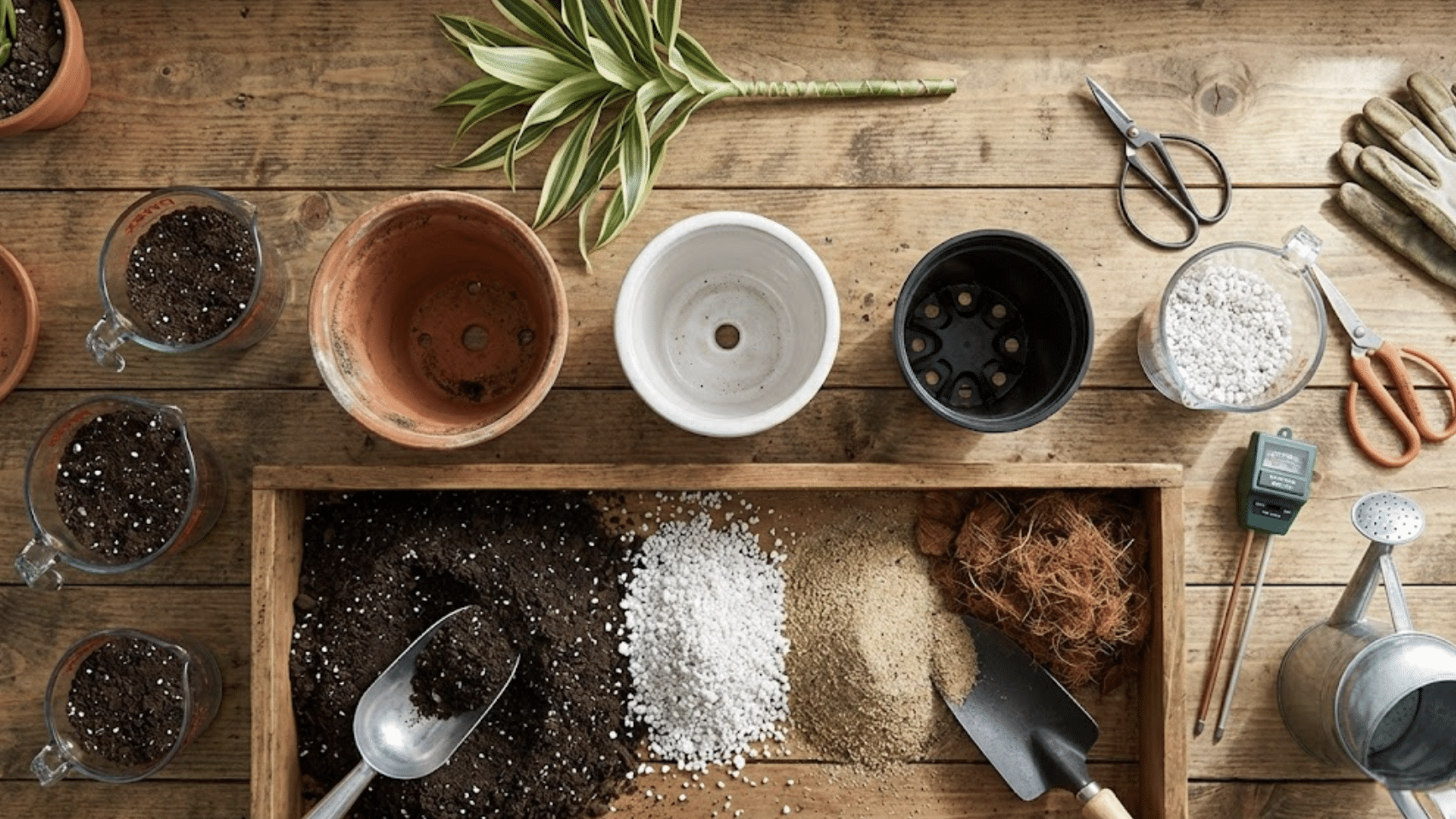
The right growing medium keeps your corn plant’s roots healthy and prevents common watering issues.
Why Drainage Matters and What to Use?
Corn plant roots need oxygen to function properly, which is why compacted or waterlogged soil leads to root rot. The ideal mix drains well but retains some moisture between waterings.
A standard potting mix works fine, or create your own by combining 2 parts potting soil with 1 part perlite or coarse sand for extra drainage.
Corn plants aren’t particularly picky about soil as long as water doesn’t pool on the surface or stay soggy for days. Adding a handful of peat moss or coco coir helps retain just enough moisture without creating a swamp.
Choosing the Right Container
Always use pots with drainage holes at the bottom so excess water has somewhere to go.
Terracotta breathes and dries faster, which helps if you tend to overwater, while ceramic or plastic pots hold moisture longer and work well if you sometimes forget to water.
Only size up one pot size when repotting, since too much soil around the roots stays wet and invites problems. A pot that’s 2 inches larger in diameter than the current one gives plenty of room for growth without overwhelming the root system.
Fertilizing Indoor Corn Plants
Feeding your corn plant supports steady growth and keeps foliage vibrant without overdoing it.
When and What to Feed?
Feed your corn plant once a month during spring and summer when it’s actively growing, then reduce to every 6-8 weeks or stop entirely in fall and winter.
A balanced liquid fertilizer diluted to half strength works perfectly, or use a slow-release granular formula applied every 3-4 months.
Corn plants aren’t heavy feeders, so less is more. Consistent, light feeding beats heavy doses that shock the plant and build up salts in the soil.
Recognizing Fertilizer Problems
Watch for these signs to adjust your feeding routine:
- Brown, crispy leaf tips signal over-fertilization and fluoride/salt buildup in the soil.
- White or crusty residue on the soil surface indicates excess fertilizer salts that need flushing out.
- Pale or slow-growing leaves suggest your plant needs more nutrients during the growing season.
- Yellowing lower leaves with brown edges can mean fertilizer burn if you’ve been feeding heavily.
Pruning and Maintenance
Keeping your corn plant tidy improves its appearance and encourages healthy new growth.
Prune in spring or early summer when the plant is actively growing and can recover quickly. Remove yellow or brown leaves by cutting them at the base where they meet the cane using clean scissors.
If your corn plant has grown too tall, you can cut the cane to your desired height, which triggers new growth below the cut and creates a bushier appearance.
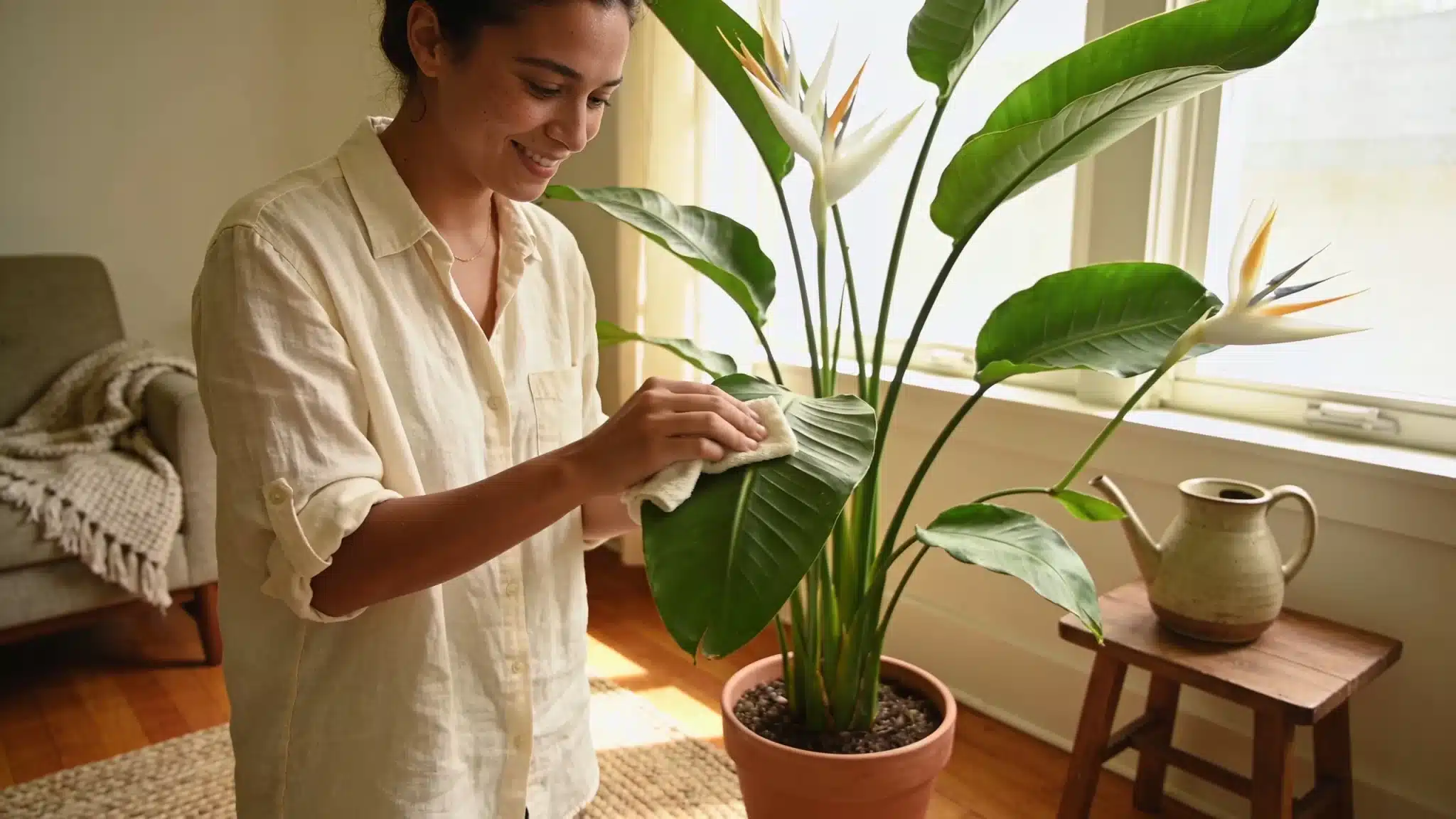
Always make cuts just above a leaf node or growth point. Wipe leaves down every few weeks with a damp cloth to remove dust, which helps the plant photosynthesize more efficiently and keeps pests at bay.
Don’t use leaf shine products, as these can clog the pores and cause more harm than good.
Repotting a Corn Plant
Giving your corn plant fresh soil and more space keeps it growing strong without becoming root-bound.
- Step 1: Repot every 2-3 years in spring when growth is active, or when roots circle the pot or emerge from drainage holes.
- Step 2: Choose a pot one size larger with drainage holes, and gently remove the plant by tipping the pot and supporting the canes.
- Step 3: Loosen the root ball, trim any dead or circling roots, and place in the new pot with fresh, well-draining soil.
- Step 4: Water thoroughly after repotting and place back in its usual spot, skipping fertilizer for 4-6 weeks to let roots settle.
Corn plants have relatively slow-growing root systems compared to other houseplants, so they don’t mind being slightly pot-bound.
If your plant is still growing well and doesn’t show signs of being cramped, you can skip repotting for another year.
Common Indoor Corn Plant Problems and Solutions
Most corn plant issues trace back to watering, water quality, or light conditions. Spotting problems early makes fixing them straightforward.
Problem 1: Leaves are turning yellow.
Solution: Overwatering or poor drainage is likely the culprit. Let the soil dry out more between waterings and ensure your pot has drainage holes.
Problem 2: Leaf tips are turning brown.
Solution: Switch to filtered or distilled water to avoid fluoride, increase humidity with a pebble tray, and flush soil monthly to remove salt buildup.
Problem 3: Stems are drooping or feel soft.
Solution: This signals root rot from overwatering. Let the soil dry completely, reduce watering frequency, and remove mushy canes if rot is severe.
Problem 4: The plant has slow or no growth.
Solution: Move your plant closer to a window for more light and resume monthly feeding during spring and summer.
Problem 5: Pests are visible on the leaves.
Solution: Wipe affected areas with rubbing alcohol, spray with insecticidal soap or neem oil weekly, and isolate the plant from others.
Corn Plant Care by Season
Your corn plant’s needs shift with the seasons as light levels and indoor temperatures change throughout the year.
| Season | Watering | Fertilizing | Care Adjustments |
|---|---|---|---|
| Spring & Summer | Every 7-10 days | Monthly with balanced fertilizer at half strength | Active growth period; best time to repot and prune |
| Fall & Winter | Every 2-3 weeks | Every 6-8 weeks or stop entirely | Growth slows; move closer to windows for shorter days |
Is Corn Plant Safe for Pets?
Corn plants are toxic to cats and dogs if ingested, containing compounds called saponins that cause digestive upset.
Symptoms include drooling, vomiting, loss of appetite, and dilated pupils in cats. While not usually life-threatening, ingestion is uncomfortable for pets and requires veterinary attention.
Place your corn plant on high shelves, in rooms pets don’t access, or choose pet-safe alternatives like spider plants or Boston ferns if you have curious cats or dogs that chew on greenery.
Propagating a Corn Plant
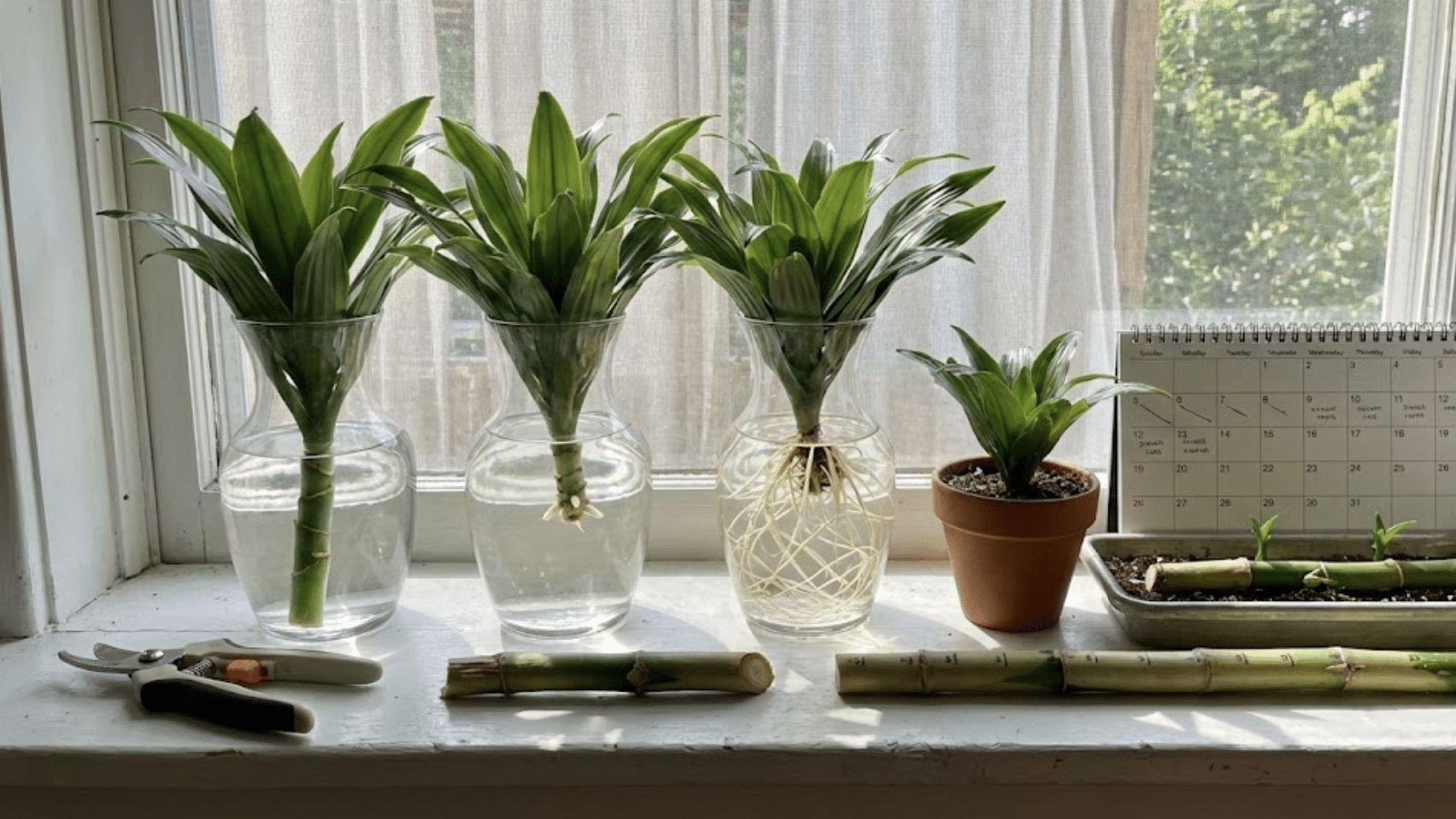
Creating new corn plants from cuttings is simple and lets you multiply your collection or share with friends.
- Step 1: Cut a 6-8-inch section of cane using clean, sharp shears, making the cut just below a node or growth ring.
- Step 2: Remove any leaves from the bottom half and place the cutting in water or directly into moist, well-draining soil.
- Step 3: Keep water-rooted cuttings in bright, indirect light and change water weekly; soil cuttings need consistent moisture without waterlogging.
- Step 4: Wait 3-6 weeks for roots to develop in water (transplant when roots reach 2-3 inches) or 6-8 weeks for soil cuttings to establish.
The most common mistake is cutting between nodes rather than just below one, which prevents rooting.
You can also propagate by laying cane sections horizontally in soil, where they’ll sprout new growth from multiple points along the stem.
Corn Plant Care Tips for Beginners
Learning from common mistakes helps your corn plant thrive without frustration.
Avoid These Mistakes:
- Using tap water high in fluoride or chlorine, which causes brown leaf tips over time.
- Watering on a schedule instead of checking if the soil has dried in the top few inches.
- Placing it in direct sunlight where leaves get scorched and bleached.
Signs Your Corn Plant is Thriving:
- New growth emerges regularly from the top of canes with vibrant color.
- Leaves stay mostly green with minimal browning, and stems remain firm and upright.
Corn plants are remarkably forgiving and bounce back from minor neglect better than most houseplants.
Many plant owners share their experiences with troubleshooting corn plant issues and find that adjusting water quality or humidity solves most issues.
Final Thoughts
Corn plant care indoors doesn’t require perfection, just consistency with the basics.
Water when the top few inches of soil dry out, provide bright indirect light, and feed lightly during the growing season. These adaptable plants forgive occasional mistakes and thrive in conditions that challenge fussier houseplants.
If your corn plant develops brown tips or yellow leaves, trace it back to watering habits or water quality rather than assuming something is seriously wrong.
With minimal effort and attention to what your plant is showing you, your corn plant will add tropical vibes to your space for years. Got questions about your corn plant? Drop a comment below!