Is Sweet Almond Verbena Actually Deer Resistant? (Or Are the Deer Just Laughing at Us?)
Sweet almond verbena is one of those plants the internet loves to stamp with a cheerful “deer resistant!” label… and then you plant it, feel smug for approximately three days, and suddenly you’re staring at a shrub that looks like it lost a fight.
So what’s the truth?
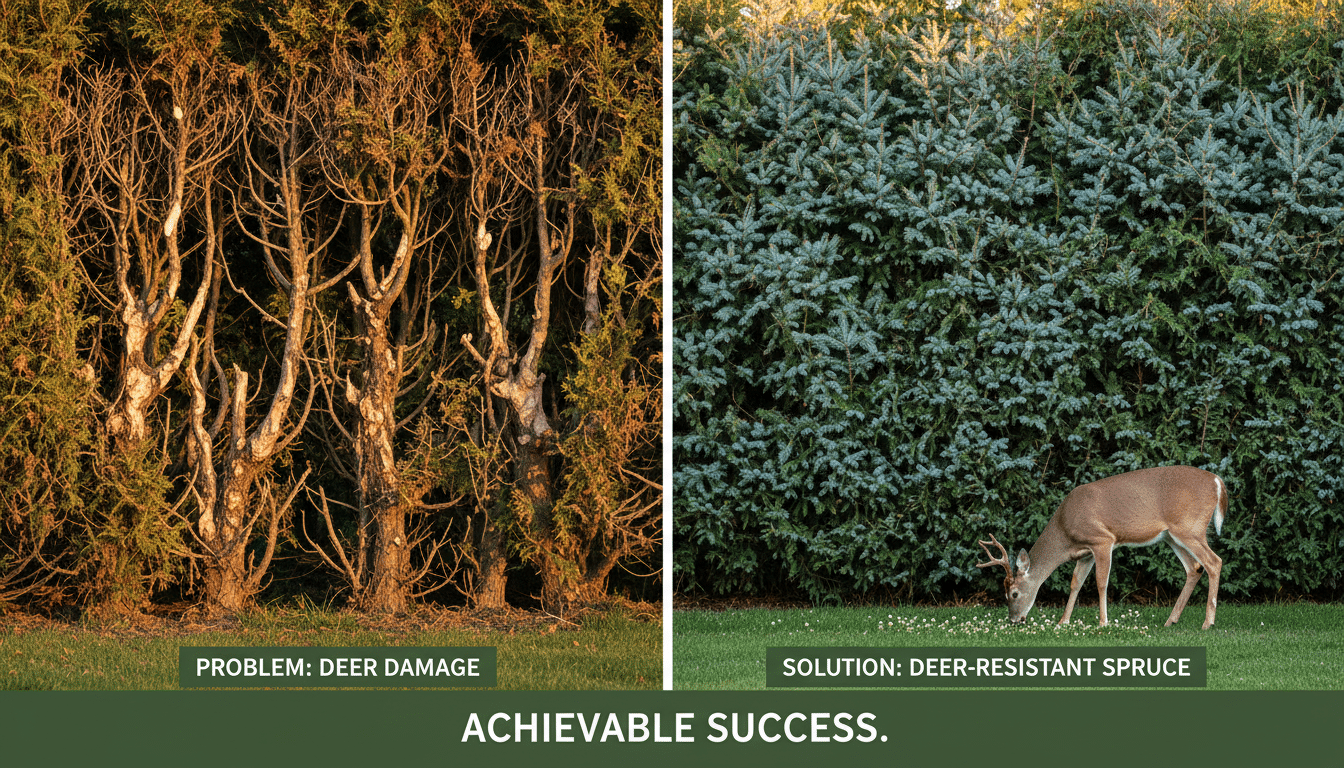
It’s often deer resistant… but it’s not deer proof. And whether deer leave it alone or treat it like a drive thru depends on a few annoyingly real life factors: your growing zone, the time of year, how hungry your local deer are, and whether your plant is putting out that famous fragrance (or sitting there unscented like a bland salad).
Let’s talk about when sweet almond verbena usually gets a pass from deer, when it becomes a target, and what I’d actually do in a normal person yard to keep it from becoming woodland tapas.
Quick “Meet the Plant” Moment: Why Everyone Loves Sweet Almond Verbena
Sweet almond verbena (Aloysia virgata) is a fast growing shrub from South America that can get huge in frost free climates—like 10-15 feet huge. (One minute you’re planting a “cute fragrant shrub,” the next minute you’re squinting at it like, “So… do you pay rent now?”)
The main event is the scent: vanilla almond, sweet, warm, a little dreamy. In my experience, it’s strongest later in the day—like the plant clocks in for its shift at 4 p.m. and starts showing off.
It blooms with white flower spikes from midsummer into fall (and longer in warmer zones), and it’s related to other aromatic, generally avoided by browsers plants in the verbena family.
Which brings us to deer.
So… Is Sweet Almond Verbena Deer Resistant or Not?
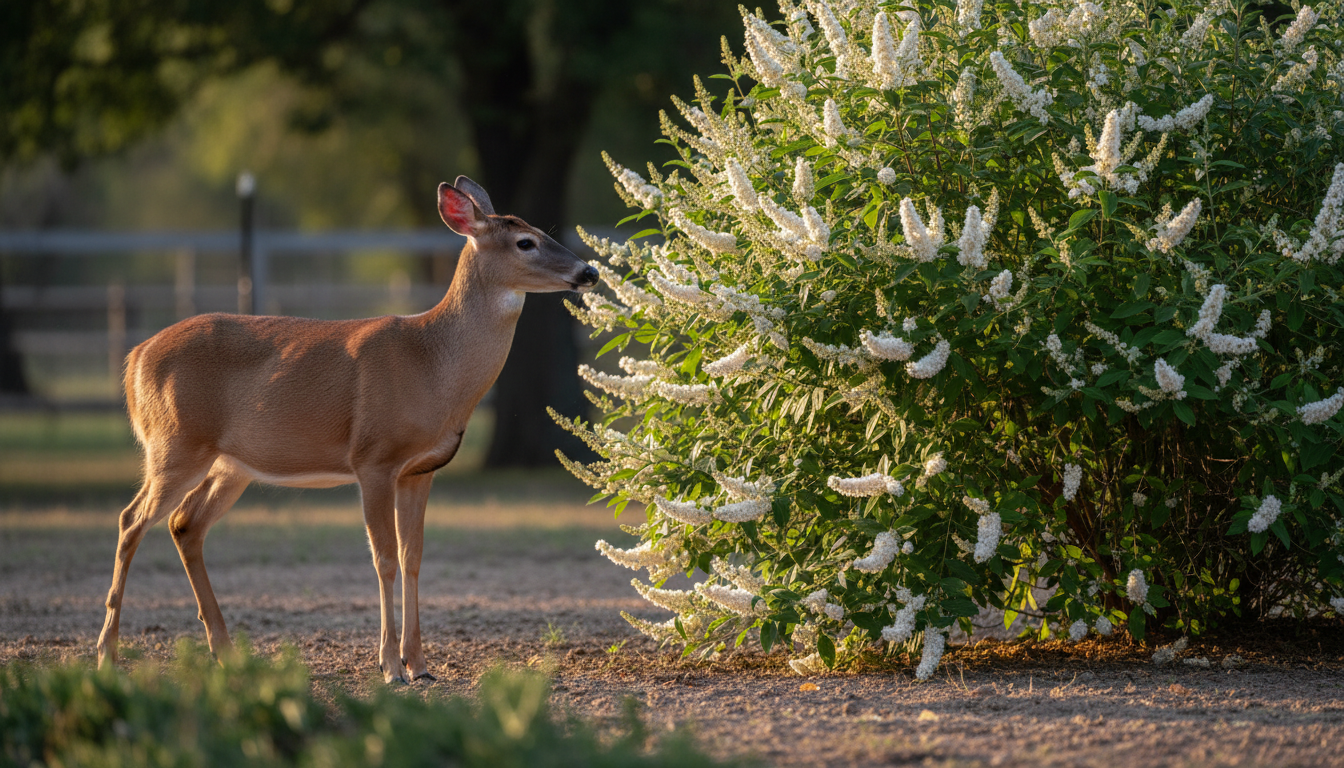
Most reputable gardening sources call it deer resistant. And in a lot of yards, that’s true—deer sniff it, decide it’s weird, and move on to something tastier.
But I need you to hear me on this:
Deer resistant is not a force field. It’s more like… a “not my first choice” menu item.
If your deer population is high, if it’s late winter/early spring and they’re hungry, or if they’ve already decided your yard is their personal buffet, they will absolutely sample plants they’d normally ignore. Deer have zero respect for lists.
The Real Reason Deer Often Skip It (And When That Doesn’t Work)
Sweet almond verbena’s “defense” is mostly scent based. It’s not thorny. It’s not tough and leathery. It’s basically relying on, “Ew, I smell intense,” and hoping the deer agree.
That matters because scent based resistance is strongest when:
- the plant is healthy
- it’s getting enough sun to bloom
- it’s producing plenty of fragrant foliage and flowers
And it’s weakest when:
- it’s young and not very fragrant yet
- it’s stressed (poor drainage, not enough sun, etc.)
- it’s pushing a bunch of tender new growth (aka: deer snacks)
Your Zone Changes Everything (Yep, Even With Deer)
Zones 10-11: Easiest Mode
In frost free climates, sweet almond verbena can stay evergreen-ish, bloom for a long stretch, and eventually get tall enough that a lot of foliage ends up above typical deer browsing height.
That said, deer can still reach the soft tips where new growth and flowers happen—so don’t assume height makes it invincible. (Deer are basically long legged ninjas.)
Zones 8-9: The Sneaky Danger Zone
This is where people get annoyed, because the plant often dies back after frost and resprouts in spring. And that spring resprout is basically a neon sign that says:
“Fresh, tender, delicious growth available right now!”
The highest risk window is usually about 4-6 weeks in early spring (often March/April depending on your timing). Deer are coming off winter, natural browse is limited, and your verbena is pushing soft new shoots all at once.
Zone 7 and below: Container Life
Most people in Zone 7 and colder treat this as a container overwintering approach and bring it in for winter. That definitely reduces outdoor deer problems… while increasing your “why is there a shrub in my house” problems.
(If you’ve ever tried overwintering a plant indoors, you know the vibes: it drops leaves, you question your choices, and a random spider appears to judge you.)
The 3 Times Deer Are Most Likely to Mess With It
If you only read one section, read this one—because this is where you can protect the plant without turning your yard into a prison yard all year.
- The first 6-12 months (baby plant era)
Young plants don’t bloom much, don’t smell as strong, and they’re fully within reach. This is when deer are most likely to “test” it. - Spring regrowth in Zones 8-9
Tender shoots + hungry deer = heartbreak. - Any time it’s pushing soft tips (basically the flowering season)
Flowers form on new growth at branch ends, which means there are always nibble able tips. Even a big, mature plant can get “haircut” by deer if they’re persistent.
The good news: if deer do browse it, it usually rebounds pretty fast. The bad news: fast regrowth can become a repeat invitation if deer decide they like it.
What I’d Do to Protect Sweet Almond Verbena (Without Losing My Mind)
Your strategy should match your actual deer situation. Not your neighbor’s. Not a random comment on Facebook. Yours.
If deer pressure is light (occasional sightings)
- Plant it where it gets full sun and can bloom hard (more scent = better natural deterrence).
- Protect it during the first season with a simple cage or netting.
- Place it closer to the house, not out by the deer highway.
If deer pressure is moderate (they browse in the neighborhood)
- Use a cage or netting during the establishment year and during known risk windows (hello, early spring in Zones 8-9).
- Consider surrounding it with plants deer tend to avoid (think: salvia, ornamental grasses, conifers—the “you don’t want this” bouncer plants).
If deer pressure is high (they treat your yard like a cafeteria)
I’m not going to sugarcoat it: you’ll likely need real physical barriers.
- Perimeter fencing is the most reliable long term answer.
- Deer can clear 6-7 feet, so 8 feet is the typical recommendation if you’re serious.
- Individual cages can help, but in heavy pressure areas they can become a constant game of “move the cage, fix the cage, swear at the cage.”
My simple “do this first” plan
- Protect from day one. Don’t wait for the first bite. (Deer don’t do warning nibbles. They do renovations.)
- In Zones 8-9: put your barrier up in late February before spring growth starts.
- Reassess after one season. If it’s getting chewed repeatedly, upgrade your defenses. Don’t keep hoping the deer will suddenly develop manners.
Care Tips That Make It Less Appealing (AKA: Make It Stink In a Good Way)
If you want sweet almond verbena to pull its weight in the deer resistance department, treat it like the fragrant diva it is.
Full sun, please
At least 6 hours, and 8+ is even better. In part shade, it tends to flower less, smell less, and basically lose its superpower.
(If you’re in Zones 10-11, a little afternoon shade can be fine—just don’t tuck it into a gloomy corner and expect miracles.)
Well draining soil or don’t bother
Root rot is one of the most common ways this plant fails. And a stressed plant is a less fragrant plant… which makes it more likely to get browsed.
Water when the soil is dry a couple inches down. Once established, it can handle some dryness, and mild drought stress can even concentrate fragrance a bit.
Prune like you’re living with deer
Here’s the tricky part: hard pruning encourages fresh, tender growth—which deer love.
- In low deer yards, a harder spring prune can mean more blooms (yay scent).
- In high deer yards, a hard prune can be like ringing a dinner bell.
Personally? If deer are an issue where you live, I’d do lighter, selective pruning and avoid pushing huge flushes of soft new growth right when deer are most motivated.
Also: I’d skip heavy nitrogen late in the season (especially after early August) so you’re not encouraging tender growth right as natural food starts dropping off.
So… Should You Plant Sweet Almond Verbena?
Plant it and feel pretty confident if:
- You’re in Zones 8-11
- You can give it sun
- Deer pressure is light to moderate
- You’re willing to protect it while it gets established
Plant it, but plan backup if:
- Deer already browse your other “deer resistant” plants (rude)
- You’re in Zones 8-9 and you know spring browsing is intense
- You’re planting it out in the open where deer wander through nightly
Skip it (or commit to serious fencing) if:
- Deer pressure is high and constant
- Winter food is scarce and deer get desperate in your area
- You don’t have enough sun to keep it fragrant and blooming
- You’re in Zone 6-ish and don’t want the container/overwintering commitment
My Bottom Line
Sweet almond verbena for deer resistance is one of the better bets for a fragrant shrub that deer often ignore—when it’s healthy, sunny, and blooming. But because its resistance is mostly scent based, it has predictable weak spots: young plants, spring regrowth (especially Zones 8-9), and all those tender flowering tips.
If you protect it during those windows instead of panicking year round, you’ve got a much better chance of enjoying that vanilla almond perfume without hosting the neighborhood deer dinner party.
And if a deer still takes a bite? Try not to take it personally. Deer don’t read plant tags. They just freeload.