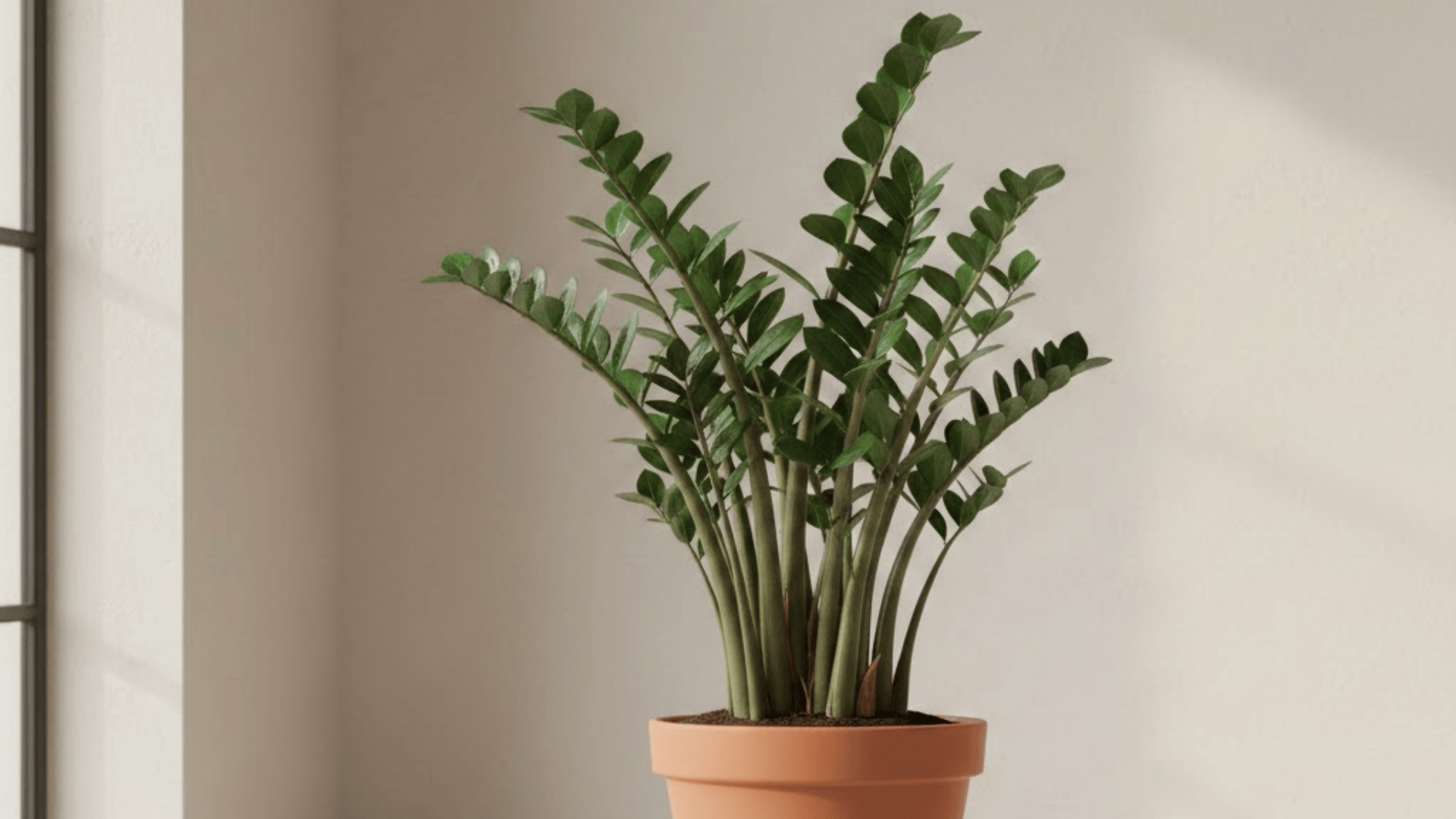
When people talk about easy houseplants, the ZZ plant usually sneaks into the conversation without trying. It’s one of those plants that fits into almost any home and stays healthy even when life gets busy.
If you’ve been curious about the benefits of the ZZ plant, there’s a lot more to it than glossy leaves and low effort.
This guide breaks down what makes the plant so dependable, how it helps your space, and what to expect when you bring one in.
You’ll get simple care tips, placement ideas, and a clear look at the different varieties so you know exactly what you’re choosing. Now, let’s start with the basics and look at what the plant actually is.
What is a ZZ Plant?
So the ZZ plant is one of those houseplants that just makes life easier. It looks sharp, stays green, and doesn’t fall apart on you if you forget to water it for a while.
People like it because it handles low light, stays tidy, and doesn’t turn into a high-maintenance project. It’s the kind of plant you keep around when you want your place to look better without adding more work to your day.
| Thing You Want to Know | Quick Answer |
|---|---|
| Botanic Name | Zamioculcas zamiifolia |
| Common Name | ZZ plant or Zanzibar Gem |
| Why People Love It | Tough, low-maintenance, looks good anywhere |
| Light Needs | Low to medium light; avoids direct sun |
| Water Needs | Infrequent; stores water in rhizomes |
| Growth Style | Slow, upright, stays tidy |
| Best For | Busy people, low-light rooms, beginners |
| Notable Traits | Glossy leaves, drought-tolerant, pest-resistant |
Main Benefits of Keeping a ZZ Plant at Home
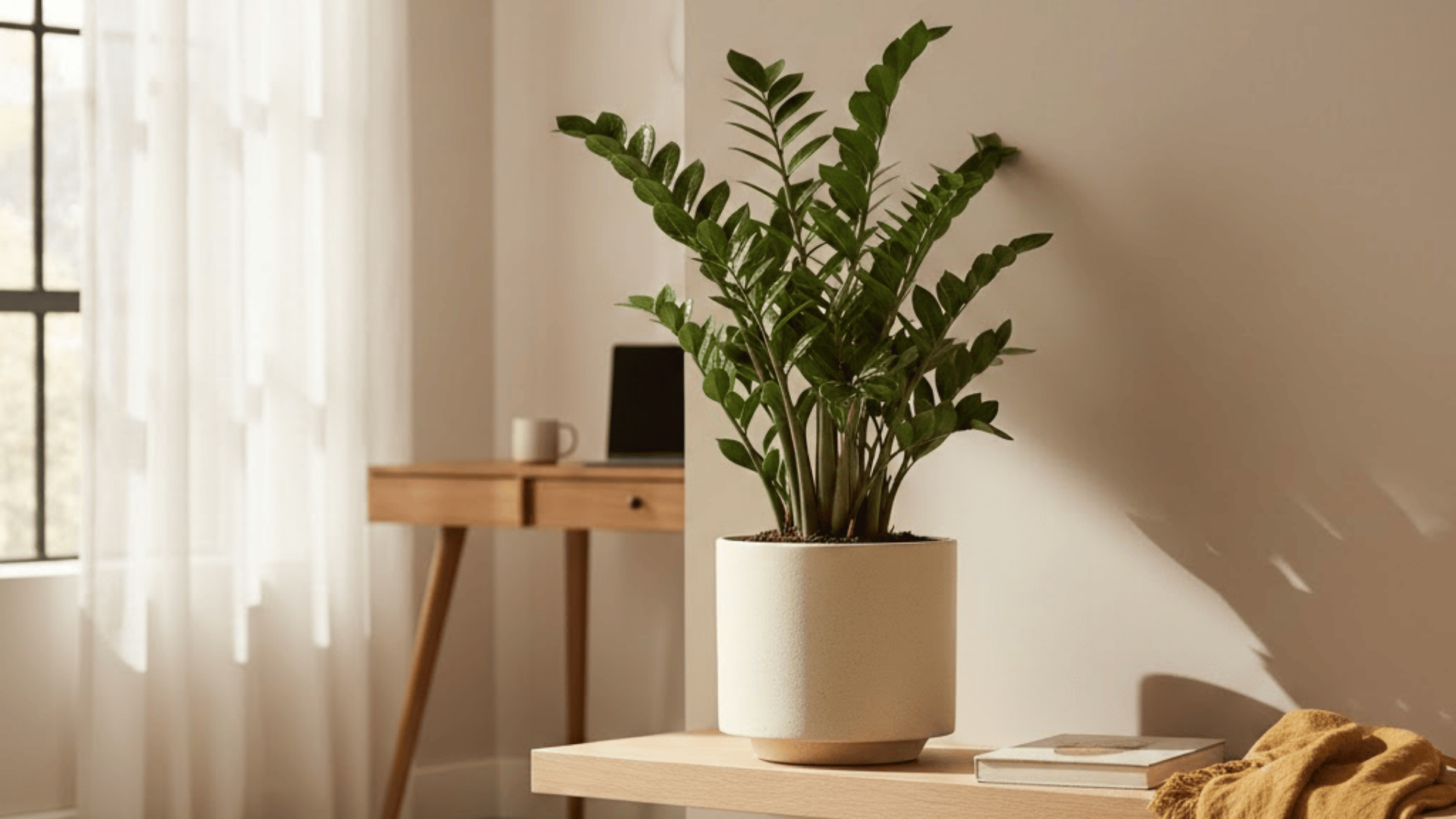
People keep ZZ plants because they quietly improve a space in a few different ways at once. Here’s what you actually get, backed by real research:
1. Improves Indoor Air Quality
Houseplants have been studied for their ability to reduce certain airborne chemicals in controlled environments.
The well-known NASA Clean Air Study on plant-based VOC removal showed that plants, along with soil microorganisms, were able to reduce compounds like benzene and formaldehyde in sealed test chambers.
Later research clarified the limits of those findings. A large-scale review explained that while plants can absorb VOCs, the effect in real homes is small compared to ventilation, unless a very high number of plants are used, as outlined in peer-reviewed research on indoor plants and air pollution reduction.
So a ZZ plant contributes in a small, natural way, but it doesn’t replace fresh air or mechanical filtration.
2. Thrives in Low Light
ZZ plants tolerate low light because of their biological structure. They grow thick underground rhizomes that store water and energy, allowing the plant to function even when light is limited.
This survival mechanism is well documented in botanical references describing Zamioculcas zamiifolia’s growth and storage system.
That’s why the plant stays stable in hallways, bedrooms, and shaded corners where other plants slowly fall apart.
3. Drought-Tolerant and Beginner-Friendly
The same rhizomes that help with low light also make the ZZ plant highly drought-tolerant. Because it stores water internally, missed waterings rarely cause damage.
Horticultural research and cultivation guides consistently describe ZZ plants as tolerant of irregular care due to this structure, as outlined in plant physiology and drought tolerance explanations.
That’s why it’s often recommended for beginners or people who don’t want a strict watering schedule.
4. Boosts Focus, Productivity, and Indoor Calm
There is strong evidence showing that indoor plants influence stress levels and mental state.
A controlled study published in the Journal of Physiological Anthropology found that interacting with indoor plants reduced physiological and psychological stress responses, as documented in scientific research on indoor plants and stress reduction.
Broader reviews also show that visual exposure to indoor greenery can support attention and mental restoration, which aligns with Attention Restoration Theory in environmental psychology. The ZZ plant fits into this effect simply by being present and stable, without needing constant care.
5. Adds Aesthetic Value
Studies show that plants affect how people perceive a space, even beyond measurable environmental changes.
Research published in Building and Environment found that indoor greenery improved perceived comfort, well-being, and satisfaction with interior spaces, as shown in research on plant appearance and perceived indoor quality.
The ZZ plant’s upright form and glossy leaves make it especially effective in modern and minimal spaces where visual order matters.
6. Allergy-Friendly and Low Pest Risk
There is limited direct research comparing allergy responses across specific houseplant species.
However, studies on indoor environmental health note that non-flowering, low-debris plants reduce exposure to airborne pollen compared to flowering varieties, as discussed in systematic reviews on indoor plants and human health.
ZZ plants also have thick, waxy leaves, which horticultural research associates with lower pest susceptibility compared to softer foliage, reducing the likelihood of infestations in indoor environments.
7. Light Humidity Boost
Plants naturally release water vapor through transpiration. Research connected to controlled plant environments confirms that living plants contribute moisture to the surrounding air as part of normal metabolic processes, described in NASA research on plant transpiration and indoor air interaction.
A single ZZ plant won’t change humidity levels dramatically, but over time, especially when grouped with other plants, it adds a small, steady contribution.
Spiritual and Cultural Benefits of The ZZ Plant
People look up these meanings because the ZZ plant has a reputation for steady growth and good energy. It’s simple, but it connects with how people want their homes to feel.
Is the ZZ Plant Lucky?
The ZZ plant is seen as a lucky plant because it grows slowly and steadily, which turned into a symbol for wealth and long-term stability.
Its upright stems and full leaves are linked to abundance and steady progress, so people keep it near entryways or work areas for good fortune.
Feng Shui Benefits
In Feng Shui, the ZZ plant brings calm, stable energy. It works well in corners, living rooms, and home offices, especially in spots that feel dull or stagnant.
People also place it near the entrance to support fresh, balanced energy coming into the home.
Vastu Benefits
In Vastu, the ZZ plant fits best in the north, northeast, or east parts of the home. These directions support clarity, focus, and growth.
It’s often used in workspaces or study areas because its slow, stable growth matches the energy people want in those rooms.
ZZ Plant Care Basics: Beginner-Proof Guide
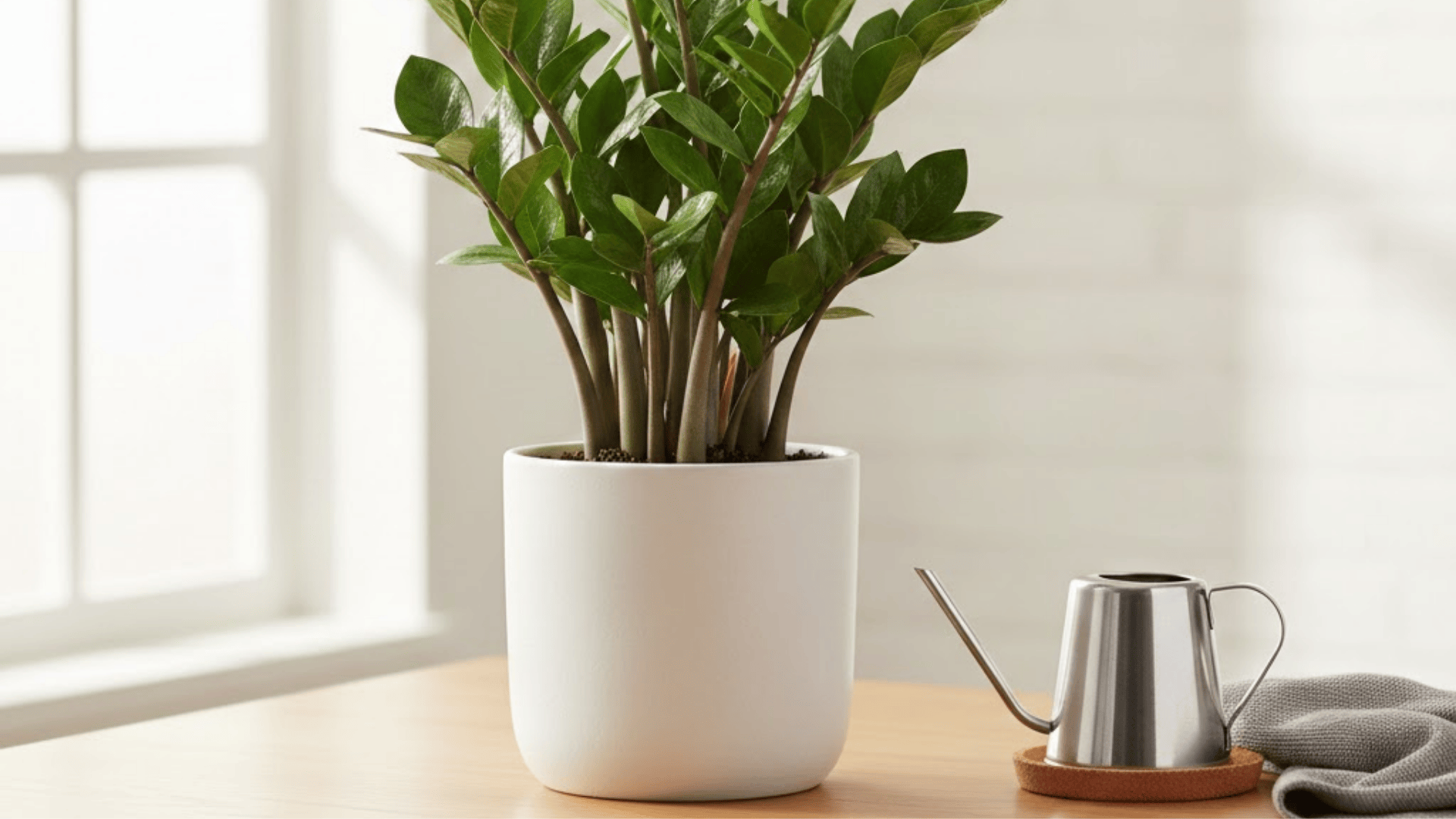
This part is all about giving you the stuff that actually matters: the basics you need so your ZZ plant stays alive, looks good, and doesn’t become another “yeah, I killed that one too” story.
1. Watering
You don’t have to water this plant much. Every 2 to 3 weeks is normal, and sometimes even longer if your place runs cooler. The plant stores water in those thick rhizomes underground, so it can ride out your forgetful days without falling apart.
Signs it’s getting too much water:
- Leaves turning yellow
- Stems getting soft or mushy
- Soil always feeling wet
Signs it’s getting too little water:
- Leaves curling inward
- Dry, crispy soil
- The whole plant looking a little droopy or tired
When in doubt, wait before you water. ZZ plants hate sitting in soggy soil.
2. Light
ZZ plants don’t need much light to stay happy. That’s one of the reasons they’re so popular. Here’s the simple breakdown:
- Low light: Totally fine. This is where the plant really shows off.
- No light: Not going to work. It still needs some light to survive.
- Bright indirect light: This is the sweet spot if you want faster growth and that deep, glossy look.
Avoid direct sun. It’ll burn the leaves and make them look rough.
3. Soil and Potting
Go with something that drains fast. A simple indoor mix works, but it gets even better if you add a little perlite. The goal is to keep the soil light so water doesn’t hang around too long.
Best picks:
- Indoor potting soil mixed with perlite
- Cactus or succulent mix if you want something even quicker draining
Pot recommendations:
- A pot with drainage holes is non-negotiable
- Terracotta works great because it lets the soil dry a little faster
- Plastic is fine too; just be careful with watering
4. Common Problems
Even though this plant is tough, you’ll see a few issues pop up if something’s off.
Yellow leaves: Usually watering too much. Let the soil dry before you water again.
Mushy stems: This is a sign of root rot starting. The soil stayed wet too long. Trim any damaged stems and let the plant dry out.
Slow growth: Totally normal for ZZ plants. They’re slow growers. If it feels too slow, check that it’s getting at least a bit of light and not sitting in cold conditions.
Where to Place a ZZ Plant at Home
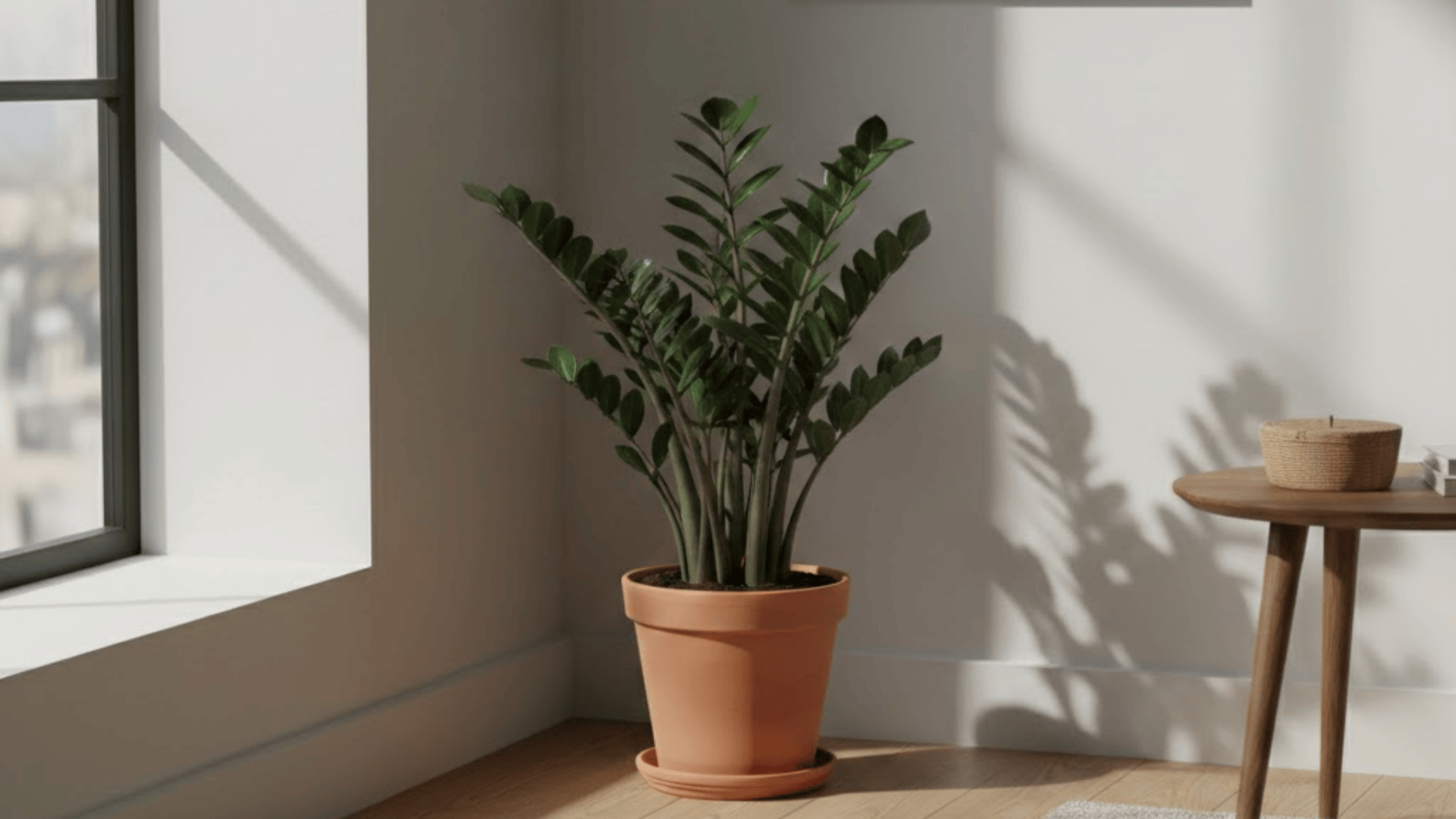
Where you place a ZZ plant matters because the right spot helps it grow well and lets you get the most out of its benefits, whether you care about looks, energy, or easy upkeep.
Best Spots for Growth
ZZ plants don’t need much light, but they still appreciate a steady, soft glow. Here’s how to keep it happy without overthinking it.
Living room corners: Good place for low, indirect light. The plant stays upright and steady without stretching.
Hallways: Works well if the hallway gets a little natural light. The plant stays neat and doesn’t take up much space.
Bedrooms: Great for low-light bedrooms. The plant stays calm and doesn’t need constant attention.
Bathrooms: It handles humidity fine, and it grows slowly enough that it doesn’t crowd the space. Just make sure some light gets in.
Placement for Luck (Feng Shui and Vastu Combined)
If you’re placing the ZZ plant for good energy, the main spots people choose are the entryway, living room, or the north and northeast areas of the home.
These spaces support ideas of growth, stability, and fresh energy coming in. The plant’s upright stems match the kind of slow, steady progress people want in those areas.
Avoid direct sun and extreme temperatures. Harsh sunlight can burn the leaves, and spots near heaters, vents, or drafty windows cause stress. The plant stays healthier in steady, stable conditions.
ZZ Plant Safety: Pets, Kids, and Handling
The ZZ plant is mildly toxic to pets and kids because it contains calcium oxalate crystals. These can irritate the mouth, skin, or throat if chewed or if the sap gets on the skin.
If Ingested:
- Rinse the mouth with clean water.
- Watch for drooling, mouth irritation, or discomfort.
- Contact a doctor or vet if symptoms seem serious.
Safe Handling:
- Wash hands after cutting, pruning, or repotting.
- Avoid getting sap on skin.
Safe Placement:
- Keep the plant out of reach of pets and small children.
- Use high shelves, plant stands, or low-traffic corners.
ZZ Plant Varieties You Can Choose
Standard ZZ: The classic version with glossy green leaves, slow upright growth, and strong tolerance for low light, making it the most common and beginner-friendly option for homes and offices.
Raven ZZ: Starts bright green before turning a deep black-purple as it matures, giving you a dramatic, modern look without changing the simple care routine the plant is known for.
Dwarf Varieties: Compact plants that stay naturally small, with short stems and tight foliage, working well for desks, shelves, or small rooms where a full-size ZZ might feel too big.
Variegated Varieties (Rare): Hard-to-find plants with mixed leaf colors like cream or yellow, growing slower and needing brighter indirect light to maintain patterns without fading or turning fully green.
These all behave like the same plant, so pick the one that fits your space and the look you want.
Disadvantages of ZZ Plants
Here’s a clear look at the drawbacks, so expectations stay realistic:
- Slow growth means the plant won’t fill space quickly, even in better light.
- Overwatering sensitivity makes it easy to damage the roots if the soil stays wet.
- Weak air purification in real-world conditions keeps it from making a noticeable impact on indoor air.
- Limited light response means it won’t speed up or change much even when you give it brighter conditions.
- Higher cost for uncommon varieties can make options like Raven or variegated plants harder to access.
ZZ Plant vs. Other Easy Houseplants
Here’s a quick side-by-side look so you can see how the ZZ plant stacks up against other popular, low-effort houseplants:
| Plant | What Makes It Easy | Where It Beats the ZZ Plant | Where the ZZ Plant Wins |
|---|---|---|---|
| Pothos | Fast growth, flexible light needs | Grows quicker, easier to propagate | Handles neglect better, survives lower light |
| Spider Plant | Low-maintenance, produces baby plants | Safer for pets, improves air more noticeably | Tolerates darker spaces and inconsistent watering |
| Aglaonema | Strong in low light, colorful foliage | More leaf variety and fuller growth | More drought-tolerant and harder to kill |
| Jade Plant | Long-lived, simple care, stores water | Can live for decades and becomes a woody plant | Handles low light better and resists pests more naturally |
All four are great options, but the ZZ plant stays the winner for people who want something that survives forgetful weeks and low-light corners without falling apart.
Wrapping Up
The ZZ plant has a way of making home care feel easier. It stays healthy in low light, forgives missed waterings, and brings a steady, calm look to your rooms.
Understanding the ZZ plant benefits at home gives you a clearer sense of why it’s such a reliable choice for busy spaces.
Its simple care needs and strong resilience make it useful for beginners and anyone who wants a plant that won’t create extra work.
If you’re thinking about adding one to your home, now’s the time to do it. Pick the variety you like, set it up in the right spot, and enjoy how easy it is to keep this plant going.
Frequently Asked Questions
Is ZZ plant lucky at home?
Many people see it as a good-luck plant because it symbolizes steady growth and calm energy, making it a popular choice for wealth and positivity in the home.
Where should I place a ZZ plant in my house?
Put it in low-light corners, living rooms, or entry areas. It stays healthy with minimal light and works well in spots where other plants struggle.
Is it good to have a ZZ plant at home?
Yes. It handles low light, needs little care, and stays clean and tidy, making it a solid choice for homes that want simple plants without extra work.