Ever thought when to start cucumber seeds indoors for the biggest, crunchiest harvest possible this season? Getting the timing right is crucial; it’s the key to turning your cucumber plants from weak to strong, resulting in a bountiful harvest.
Starting seeds indoors extends your growing season and ensures you’ll get the most out of your cucumbers. Homegrown cucumbers are packed with vitamins and nutrients, offering more flavor and benefits than those from the store.
Here, I’ll share when to start your seeds based on your climate, the best seedling care tips, and foolproof transplanting techniques that will lead to your most successful harvest yet. Let’s plunge in!
Why Start Cucumber Seeds Indoors?
Starting cucumber seeds indoors gives your plants a big head start compared to planting outdoors. You can control moisture, light, and temperature, ensuring ideal growing conditions in those crucial early weeks.
By starting indoors, you get earlier harvests and a longer growing season, especially in cooler climates. Your seedlings establish strong root systems, so they’re ready to face the outdoors.
This method also protects your plants from late frosts, heavy rain, or pests that can destroy outdoor seedlings. Indoors, conditions are stable, unlike the unpredictable weather outside.
In short, indoor starting maximizes growing time, especially in places with short summers or unpredictable weather.
Ideal Growing Conditions for Cucumbers
The right conditions from the get-go can make or break your cucumber seedlings. Follow these simple guidelines to set them up for healthy, strong growth.
| Condition | Requirement | Why It Matters |
|---|---|---|
| Temperature | 70-85°F (21-29°C) for germination | Warm soil encourages faster sprouting and stronger seedlings. |
| Soil Moisture | Consistently moist, not soggy | Too much water can rot seeds before they sprout. |
| Lighting | 12-14 hours of bright light daily | Seedlings need plenty of light to grow healthy, strong stems. |
| Drainage | Well-draining seed starting mix | Good drainage prevents root rot and reduces disease risk. |
With these conditions in place, your cucumber seeds will flourish and give you more rewarding harvests.
When to Start Cucumber Seeds Indoors
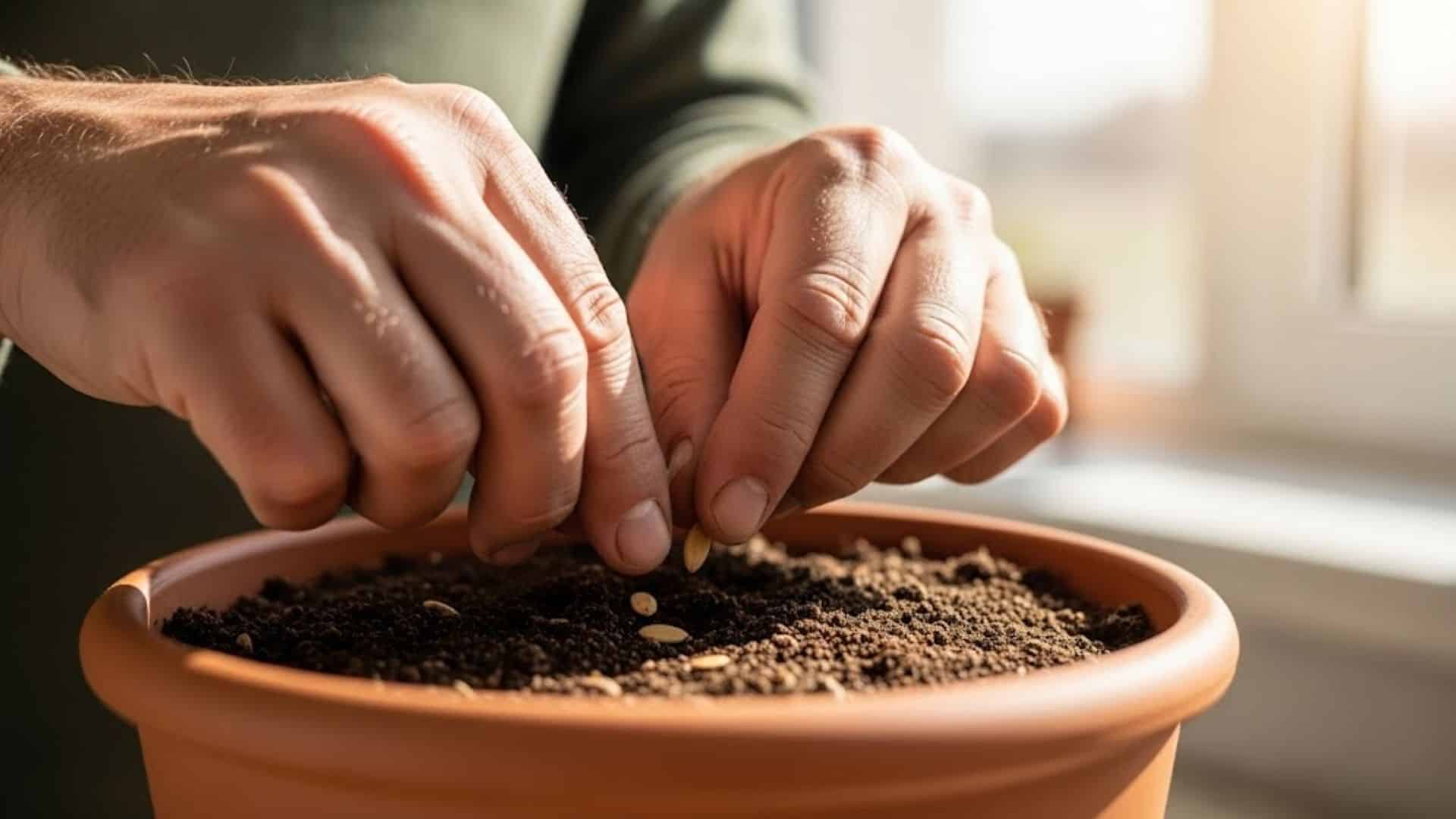
Timing is key when starting cucumbers indoors. The right timing ensures your seedlings are strong and ready for the great outdoors once the weather is right.
Understanding Your Last Frost Date
Your last frost date marks the average day when freezing temperatures stop. It tells you when it’s safe to plant cucumbers outside without frost damage.
You can easily find your frost date online or by checking with your local county extension office. While the date is based on historical weather, it can still vary.
Keep an eye on the weather as your date approaches and be prepared for any late frosts.
General Timing Guidelines for Starting Cucumber Seeds
The timing chart below helps you know when to start cucumber seeds indoors based on your zone. This will help you stay on track for a healthy transplant and a successful outdoor move.
| USDA Zone | Last Frost Date | Start Seeds Indoors | Transplant Outdoors |
|---|---|---|---|
| Zone 6 | Mid to late April | Late March | Mid to late May |
| Zone 7 | Early to mid April | Mid March | Early May |
| Zone 8 | Mid to late March | Late February | Mid April |
| Zone 9 | Early to mid March | Early February | Early April |
| Zone 10 | Late February | Late January | Mid March |
This chart is a helpful guideline, but always check your local conditions for accuracy. Microclimates can impact timing by a few days.
Signs that You’re Starting at the Right Time
The best way to know if your cucumber seedlings are ready to move outdoors is by their growth. Here are key signs to look for:
- Seedlings have two to three sets of true leaves.
- Plants stand 3–4 inches tall with thick, sturdy stems.
- The outdoor soil temperature stays consistently above 60°F.
- No frost warnings in the 10-day forecast.
Trust the plants and your local weather to guide you, not just the calendar. Nature’s timing is often the best indicator.
Hardening Off and Transplanting Cucumber Seedlings Outdoors
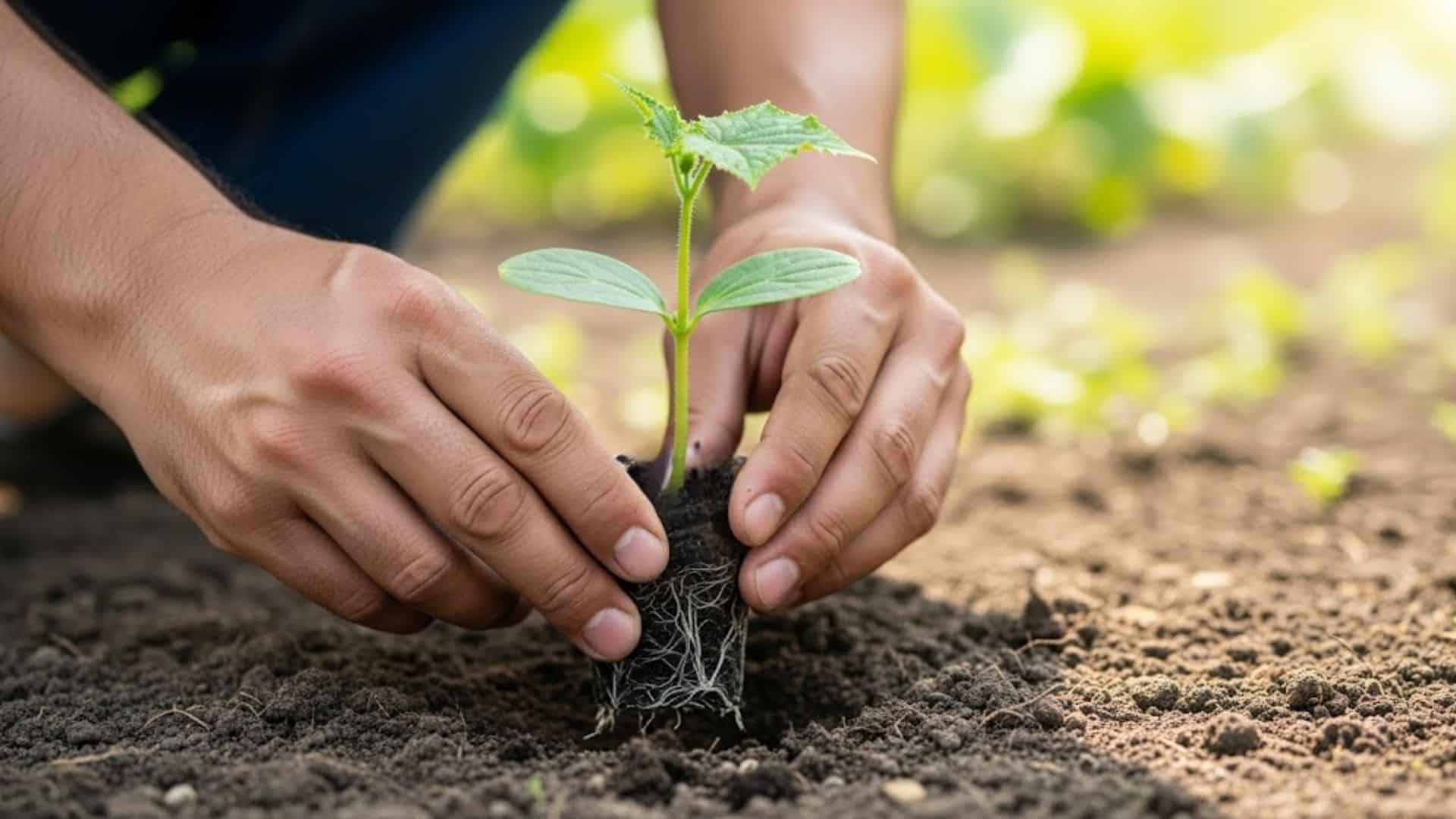
Hardening off is a gradual process that prepares your cucumber seedlings for outdoor conditions, helping them acclimate to the environment and avoid shock.
Start by placing them outside for just one hour in a shaded spot on the first day. Each day, add an hour and gradually introduce them to more direct sunlight and light wind exposure.
After seven to ten days, your seedlings should be ready for full outdoor conditions. Ensure the soil temperature is above sixty degrees and check the forecast to avoid any late frosts.
Dig planting holes slightly larger than the containers and water the area well before transplanting.
Gently remove seedlings from their containers, keeping the root ball intact. Plant them at the same depth as they grew indoors and water thoroughly after transplanting to ensure they establish themselves well.
Tips to Care for Cucumber Seedlings Indoors
Caring for your cucumber seedlings indoors is about attention to detail. A few small steps each day will keep them healthy and strong until they’re ready for the garden.
- Handle seedlings gently; cucumber stems are delicate, and breaking them can stunt growth.
- Rotate containers daily to keep plants growing straight, preventing them from leaning toward the light source.
- If seedlings become leggy, move grow lights closer to avoid weak stems.
- Remove yellow or damaged leaves promptly to stop disease from spreading to healthy parts of the plant.
- Check daily for pests like aphids or spider mites, which can quickly damage indoor seedlings.
- Gradually reduce watering as transplant day nears to help plants adjust to outdoor conditions.
By following these easy care tips, your seedlings will grow sturdy and strong, ready to succeed outdoors. Healthy indoor plants make for great outdoor transplants!
Common Mistakes to Avoid When Starting Cucumbers Indoors
These rookie mistakes can quickly turn your cucumber-growing dreams into frustrating failures. Learning what not to do saves time, money, and prevents disappointment.
- Starting seeds too early: Creates tall, weak plants that struggle with transplant shock outdoors.
- Starting too late: Shortens your harvest season and may not give plants enough time to mature.
- Planting multiple seeds in small containers: Leads to crowded, competing seedlings that remain weak and small.
- Overwatering: Drowns roots and causes deadly fungal diseases, such as damping-off.
Avoiding these simple errors will dramatically improve your success rate with indoor cucumber seed starting. Most failures occur because people rush the process or fail to follow basic growth principles consistently.
Wrapping It Up
Now you know exactly when to start cucumber seeds indoors to get the best possible results and a bumper harvest. Timing is everything when it comes to nurturing strong seedlings that flourish once they’re transplanted outdoors.
Monitor your local weather patterns and frost dates throughout the growing season. Your microclimate may vary from general zone recommendations, so be flexible and adjust as needed.
By following these smart timing tips and care methods, you’ll have healthy plants that give you an abundant cucumber harvest. Nothing beats the taste of homegrown cucumbers!
Get ready to grow your fresh veggies, and share your success stories in the comments below! Happy gardening!