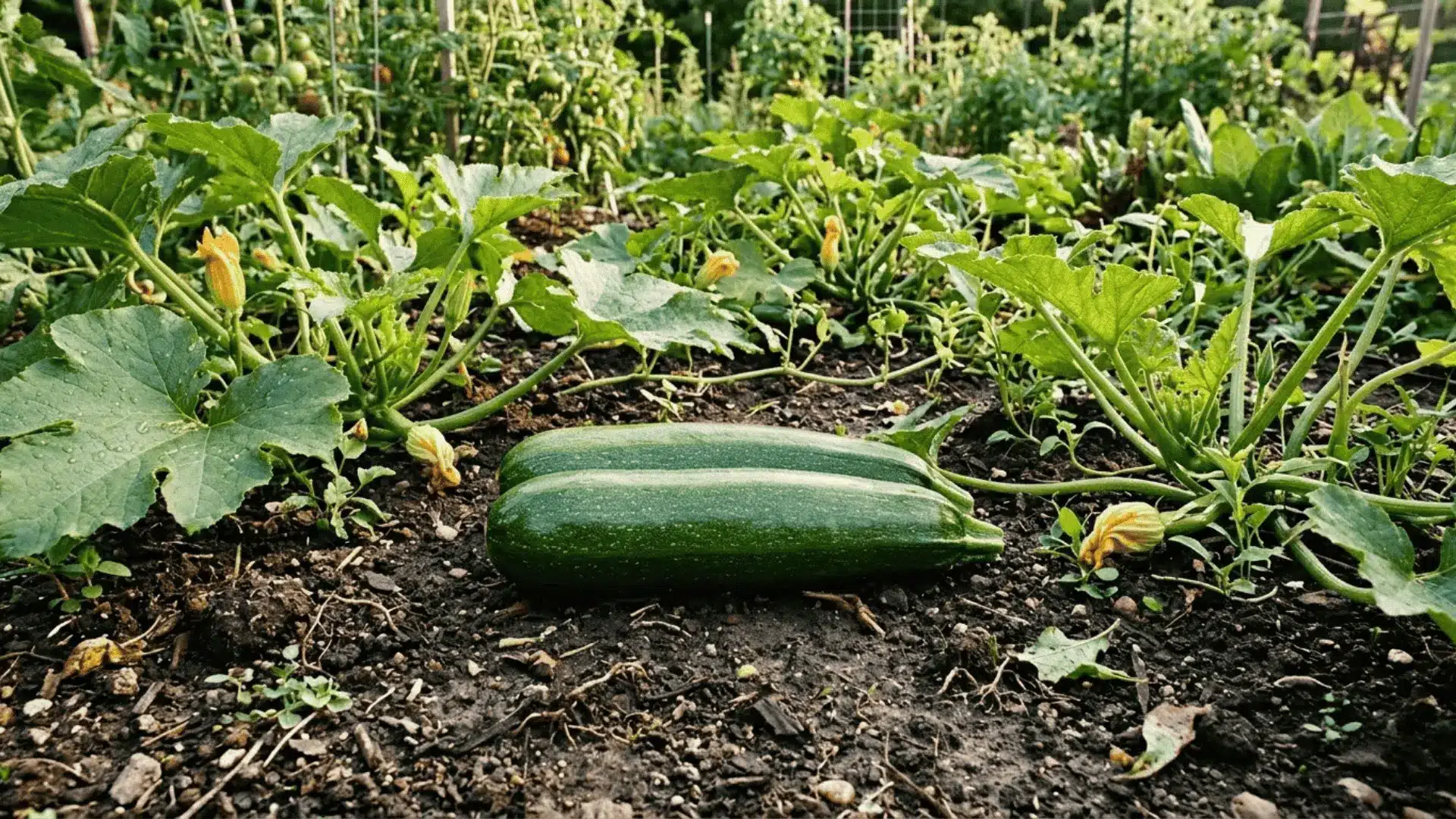
Zucchini has a quiet reputation for being easy to grow, but knowing when to pick it is where the real magic happens.
Harvest too late, and what could have been tender and sweet turns tough, watery, and full of seeds.
Cucurbita pepo, the species behind every zucchini in your garden, rewards the attentive gardener generously. Get the timing right, and the flavor speaks for itself.
Stick around, because we’re walking through the visual cues, ideal sizing, and harvesting habits that’ll keep your zucchini thriving all season long.
Why Harvest Timing Matters for Zucchini?
When it comes to zucchini, timing is everything. Picking them young means you get that tender, mild flavor most recipes are actually built around.
Let them linger on the vine, and the texture gets spongy, the seeds toughen up, and the skin turns almost too thick to enjoy.
What most gardeners don’t realize is that an overripe zucchini sitting on the plant is quietly slowing down new fruit production. The plant shifts its energy toward maturing that one oversized fruit rather than setting new ones.
Staying on top of your harvest keeps the plant generous and productive all season.
When to Harvest Zucchini?
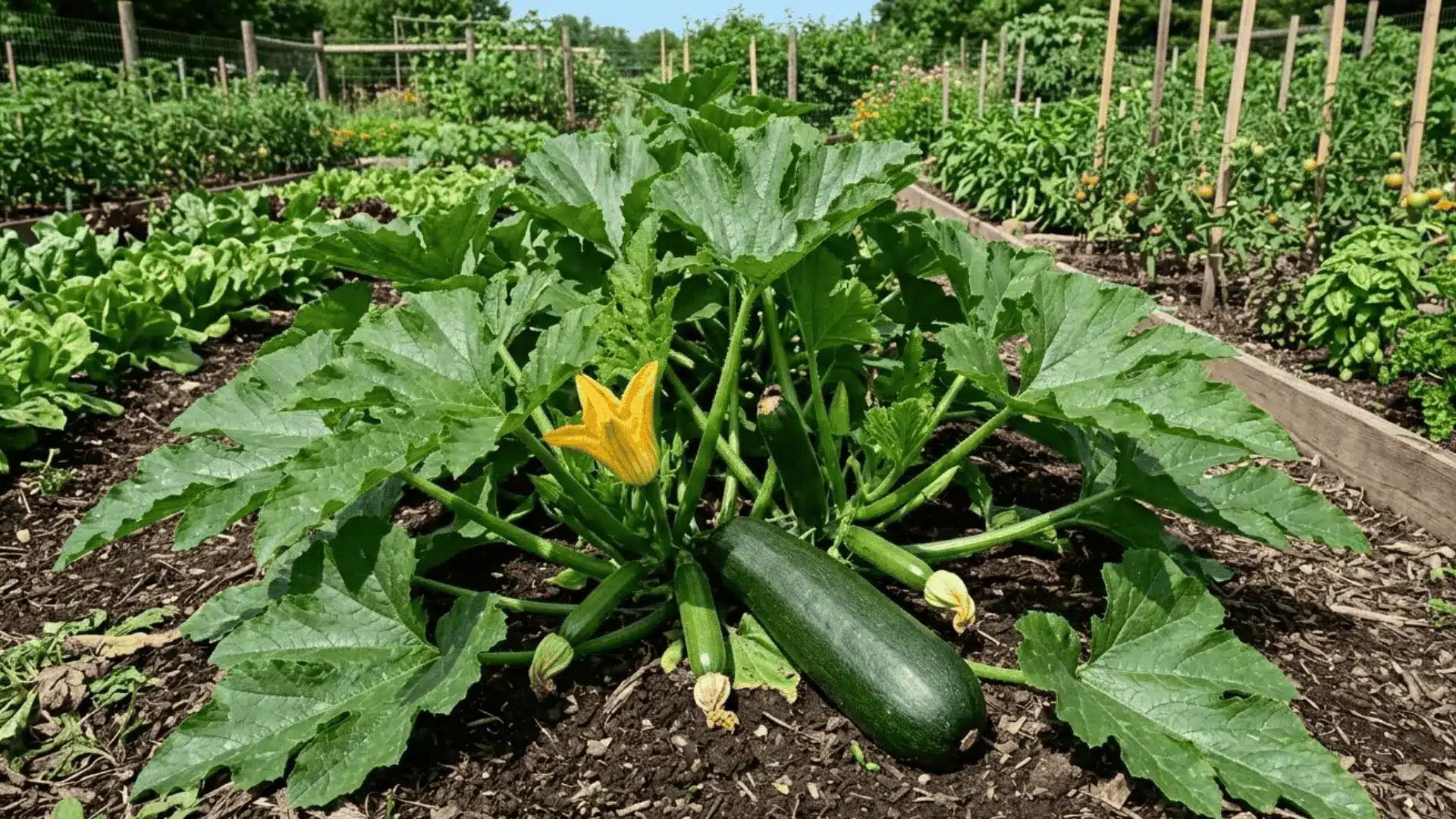
Getting the timing right starts with knowing what to look for, and it’s more intuitive than most people think. Before that though, pollination has to happen successfully since a garden light on bees will show up directly in your harvest.
How to pollinate zucchini when bees aren’t around is worth a read before the season picks up.
Ideal Zucchini Size for Harvest
Size is your most reliable indicator. Zucchini picked at a finger-length to roughly palm-sized stage tends to have the best flavor and texture.
At this point, the skin is still smooth and easy to pierce with a fingernail, the flesh is firm, and the seeds are barely noticeable. Going beyond that sweet spot is where most gardeners lose the plot, quite literally.
Average Days to Harvest After Planting
Patience pays off, but not for too long. Most zucchini varieties are ready to harvest within a month and a half to nearly two months after planting. That window can shift based on climate, soil, and variety.
Warmer conditions tend to speed things up, so keep a loose mental note of when you planted and start checking the vines regularly after the first month.
Seasonal Harvest Timeline
Zucchini tends to follow a fairly predictable seasonal rhythm. Here’s a general idea of what to expect throughout the growing season:
| Growth Stage | Timeframe | What to Expect | Gardener’s Note |
|---|---|---|---|
| Seeds planted | Early to mid spring | Sow into warm, frost-free soil | Wait until the soil is consistently warm before planting |
| Germination | One to two weeks | First leaves push through | Thin seedlings early for better airflow |
| First flowers appear | Around one month in | Male flowers come before female flowers | Bees are essential here; avoid pesticides |
| First harvest | Mid to late summer | Fruits size up fast after flowering | Check vines every couple of days |
| Peak production | Midsummer to early fall | Heavy fruiting period begins | Harvest frequently to keep production going |
| End of season | First frost | The plant slows and stops producing | Pull remaining fruits before frost hits |
Signs Zucchini is Ready to Pick
Before you reach for those garden shears, a quick once-over of the fruit can tell you everything you need to know.
Here’s what a harvest-ready zucchini looks like:
- Firm to the touch with no soft spots or give when gently squeezed.
- Glossy, bright skin that catches light and feels smooth under your fingers.
- Easily pierced through the skin with just a fingernail, no force needed.
- Vibrant, even color throughout with no yellowing or dull patches.
- Compact and proportionate in size, nothing oversized or bloated looking.
When all these signs line up together, your zucchini is at its peak. Miss that window, and the plant will remind you with a fruit that’s more work than it’s worth.
How to Harvest Zucchini Properly?
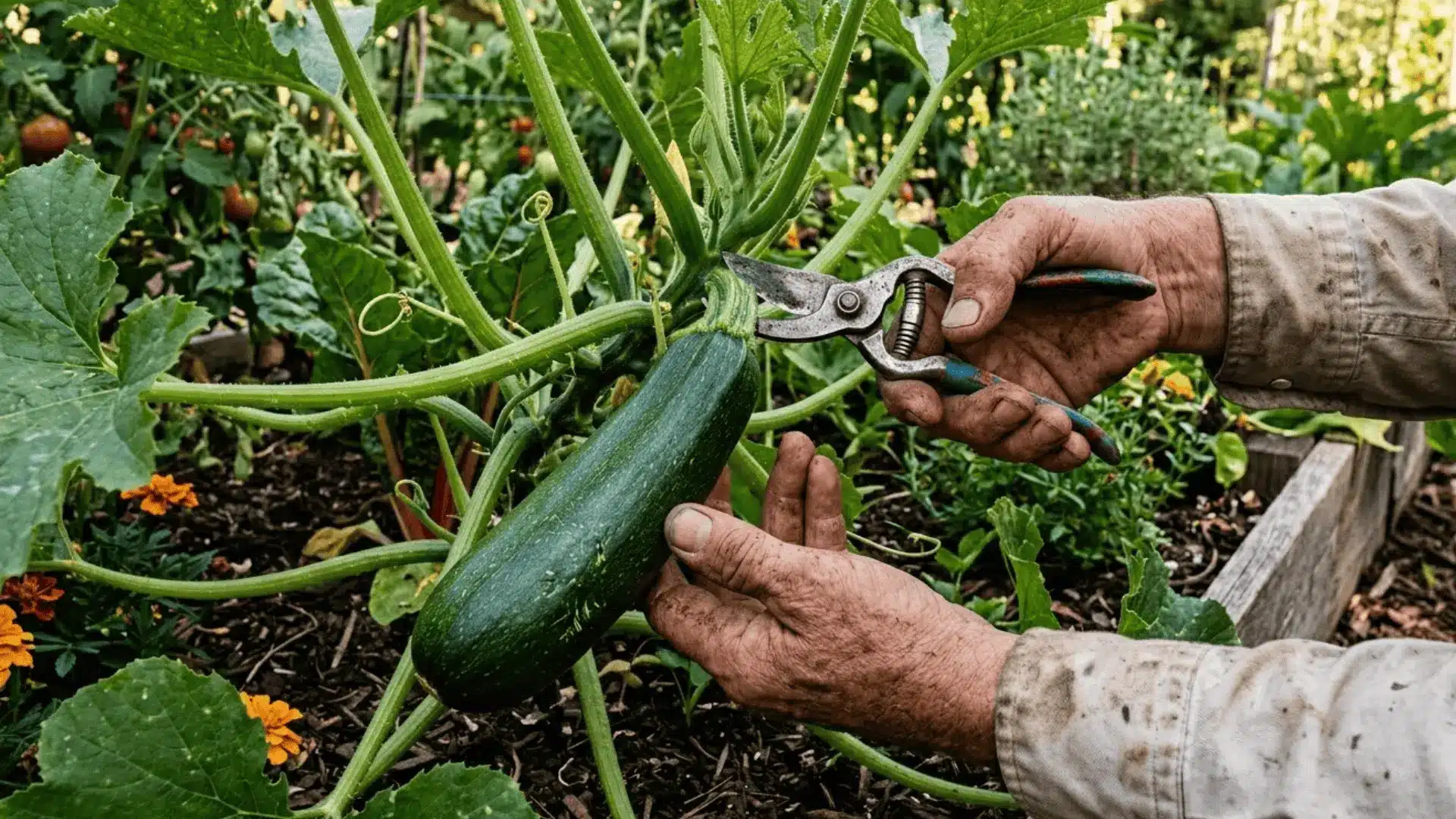
Harvesting zucchini is less about technique and more about being gentle and consistent.
Always cut the stem cleanly with a sharp knife or garden shears rather than pulling or twisting the fruit off. Yanking it can damage the vine and stress the plant more than you’d expect.
While you’re at it, move carefully around the vines since they’re more fragile than they look. The habit that makes the biggest difference, though, is harvesting every two to three days during peak season.
The more you pick, the more the plant produces. It really is that straightforward.
How Often Should You Harvest Zucchini?
Zucchini has a reputation for growing fast, and it earns that reputation every single summer.
During warm weather, a fruit that looks perfectly sized in the morning can be overgrown by evening.
Checking your plants daily is less of a chore and more of a habit worth building early in the season.
Every time you remove a mature fruit, the plant reads it as a signal to keep producing, so frequent harvesting directly feeds your yield.
Skip a few days, and you’ll likely find a zucchini the size of a baseball bat hiding under the leaves. Consistency is everything here.
What Happens if a Zucchini Gets Too Big?
Even the most attentive gardeners occasionally miss one hiding beneath the leaves. Knowing what to do with an overgrown zucchini is just as useful as knowing how to avoid it.
Changes in Flavor and Texture
Once zucchini crosses that ideal size, the eating quality drops off noticeably.
Here’s what changes:
- Flesh turns watery and loses that fresh, mild flavor it’s known for.
- Seeds grow large and tough, making the texture unpleasant in most dishes.
- Skin thickens and hardens, often requiring peeling before any cooking.
- Overall taste turns bland, sometimes with a faintly bitter edge.
Alternative Uses for Large Zucchini
An oversized zucchini isn’t a lost cause; it just needs a different purpose.
Here’s where it still holds its own:
| Use | Why It Works | Best Method |
|---|---|---|
| Baking | Moisture keeps baked goods soft | Grate and fold into bread or muffin batter |
| Stuffing | Thick walls hold up well | Hollow out, fill, and roast until tender |
| Fritters or patties | Texture blends in once grated | Squeeze out excess moisture before mixing |
| Soups or stews | Long cooking softens tough flesh | Chop roughly and simmer until broken down |
| Composting | Returns nutrients to the soil | Chop before adding to speed up the breakdown |
Tips to Increase Zucchini Harvest
A productive zucchini plant doesn’t happen by accident. A few mindful habits early in the season can make a noticeable difference in how much your plant yields:
- Full sun is non-negotiable; aim for at least six to eight hours of direct light daily.
- Water deeply and consistently at the base, keeping the soil moist but never waterlogged.
- Welcome pollinators by avoiding pesticides and planting nearby flowers that attract bees.
- Feed the soil with a balanced fertilizer or compost to support steady fruit development.
- Remove dying leaves regularly to improve airflow and keep the plant focused on fruiting.
Small, consistent efforts compound over a season in ways that genuinely show up in your harvest basket.
Wrapping Up
Learning when to harvest zucchini is one of those gardening skills that quietly transforms your whole growing season.
Once you get a feel for the signs, the sizing, and the rhythm of checking your plants regularly, it starts feeling less like a task and more like a ritual you actually look forward to.
Your garden is generous when you pay attention to it, and zucchini is proof of that.
Here’s to full harvest baskets and happy plants all season long.
Grown your own zucchini this season? Drop your harvest tips or questions in the comments below!
Frequently Asked Questions (FAQs)
How Big Should Zucchini Be Before Harvesting?
The sweet spot is when the fruit is roughly finger-length to palm-sized. At this stage, the flesh is tender, the seeds are small, and the flavor is at its best.
Can You Eat Zucchini That Grows Too Large?
Yes, but with some adjustments. Oversized zucchini works better in baked goods, soups, and stuffed dishes where the tougher texture and extra moisture are less noticeable.
How Long Does a Zucchini Plant Keep Producing?
A healthy zucchini plant can produce continuously for several months through the growing season. Regular harvesting and consistent care are what keep the yields coming strong.