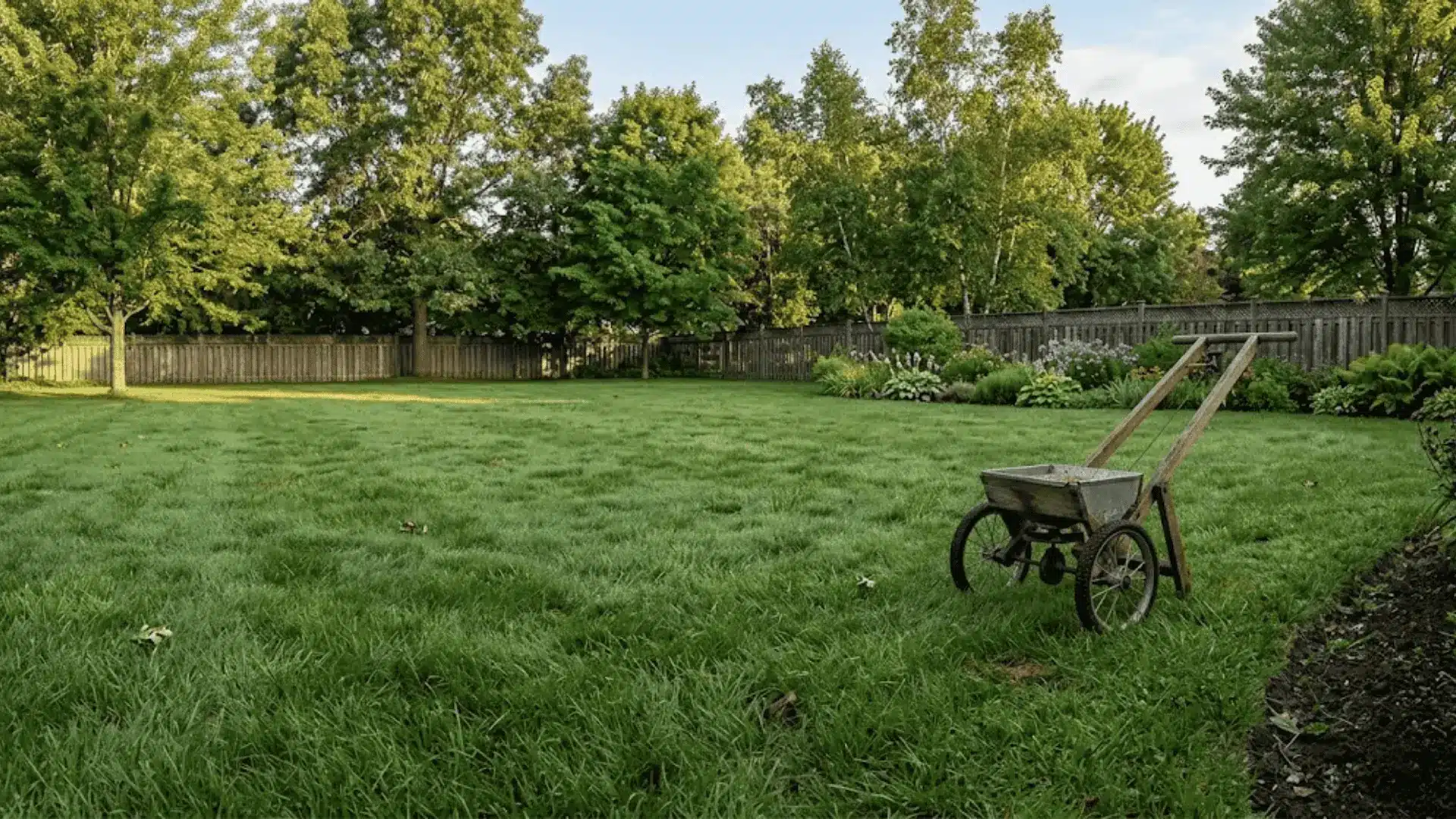
Your lawn knows when it’s hungry, and most people miss the signal by feeding it on their own schedule instead.
Knowing when to fertilize your lawn naturally can genuinely change how your grass looks and feels through every season.
And it is not as simple as picking a month on the calendar. Your grass type matters, your climate matters, and getting those two things aligned makes all the difference.
Stick around, because this guide covers everything season by season, so nothing gets left to guesswork.
Why Timing Matters for Lawn Fertilization?
Grass does not grow at a steady pace all year; it moves through natural growth cycles where roots and blades take turns being the priority.
Feeding your lawn during the wrong phase means nutrients sit unused or, worse, burn the grass instead of helping it.
Root development happens quietly underground and needs support at the right moment, just as much as visible blade growth does.
When timing aligns with your lawn’s actual cycle, nutrient absorption becomes far more efficient, and your fertilizer does the full job it was meant to do.
The Best Time to Fertilize Lawn by Grass Type
Not every lawn follows the same calendar, and blanket fertilizing advice often falls flat because of it. Knowing your grass type is the first step to feeding it in a way that actually works.
Cool-Season Grasses (Kentucky bluegrass, fescue, ryegrass)
Cool-season grasses thrive in mild temperatures, making fall and spring their prime feeding windows.
| Season | Timing | Why It Matters | What To Do |
|---|---|---|---|
| Fall | Early fall | Peak growing cycle; roots absorb nutrients most efficiently | Primary feeding; the highest fertilizer dose of the year |
| Spring | Late spring | Growth resumes, but the soil is still manageable | Light feeding; avoid overloading the lawn |
| Summer | Peak heat months | Heat stress makes grass highly vulnerable to burn | Skip fertilizing entirely until temperatures drop |
Warm-Season Grasses (Bermuda, zoysia, St. Augustine)
Warm-season grasses follow the heat, so fertilizing within their active growing window makes the biggest difference.
| Season | Timing | Why It Matters | What To Do |
|---|---|---|---|
| Spring | Late spring after green-up | Grass is actively waking up and ready to absorb | Begin primary feeding once full green-up is visible |
| Summer | Mid-summer | Peak growth phase; grass needs sustained nutrition | Secondary feeding to maintain density and color |
| Fall/Winter | Dormancy period | Grass stops absorbing; nutrients sit and cause damage | Avoid fertilizing until active growth resumes |
Seasonal Lawn Fertilizing Schedule
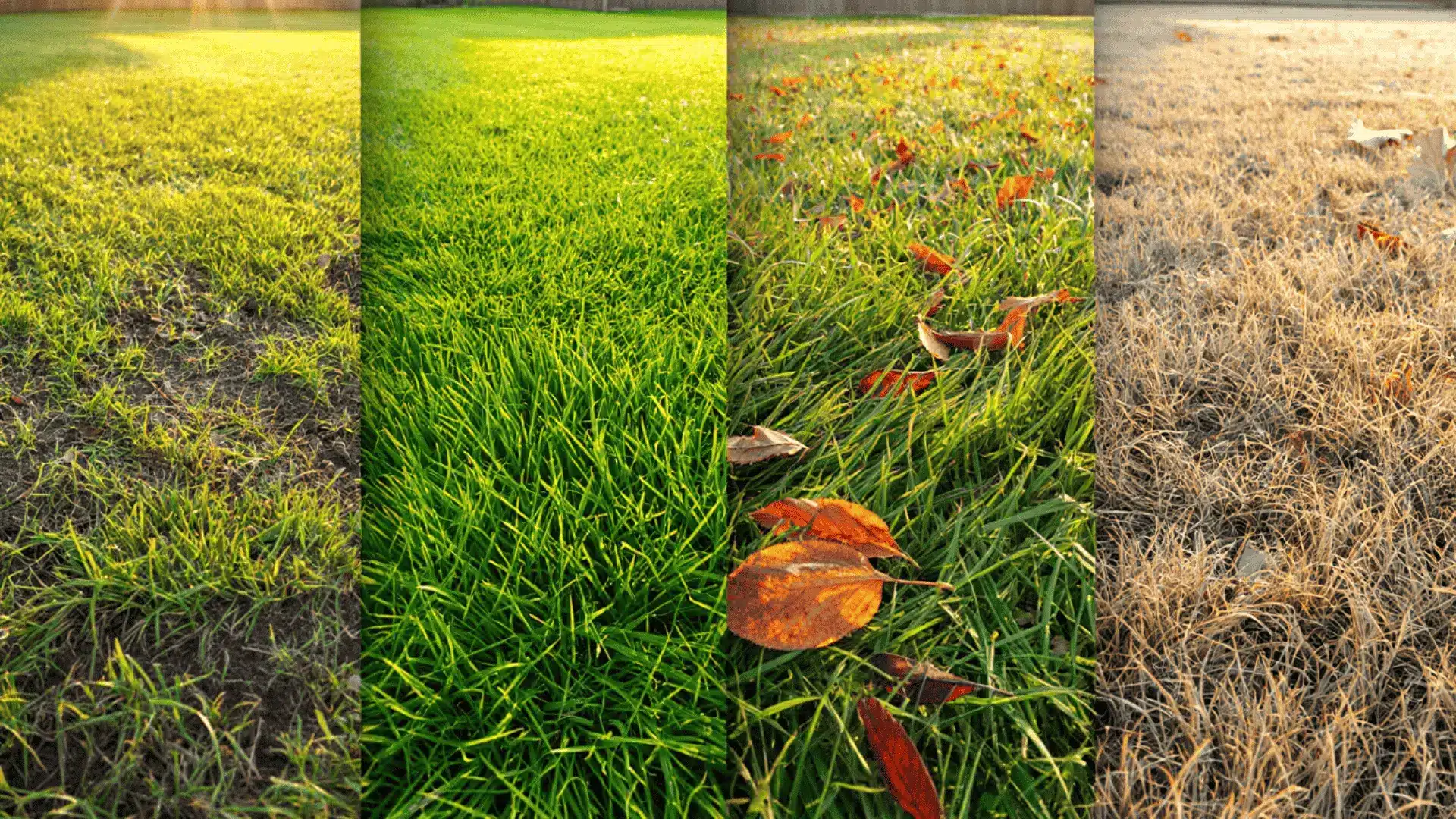
Your lawn’s needs shift with every season, and feeding it on a fixed schedule without reading those shifts is where most people go wrong.
Here is what each season actually calls for.
1. Spring Fertilizing
Soil temperature reaching 55°F is your real green light, not the calendar date.
In USDA zones 5 to 7, that usually falls between March and April. Going in too early pushes top growth before roots are ready to support it.
A slow-release balanced fertilizer during this window builds steady, lasting growth rather than a quick flush that fades within weeks.
2. Summer Fertilizing
Cool-season grasses in zones 5 to 7 are best left alone since heat already stresses them enough.
Warm-season grasses in zones 8 to 10 are actively growing and respond well to a light early summer feeding.
Once temperatures cross 90°F, though, even warm-season lawns need a break. Feeding during a heat spike is one of the fastest ways to burn an otherwise healthy lawn.
3. Fall Fertilizing
Most lawn care professionals consider this the most critical feeding of the year.
As temperatures drop, grass pushes energy into root development rather than blade growth.
A fall application between September and November, especially in zones 5 to 6, builds deep roots and stores nutrients that carry the lawn through winter and fuel a noticeably stronger spring comeback.
4. Winter Fertilizing
In zones 3 to 6, dormant grass cannot absorb nutrients, making winter fertilizing more harmful than helpful.
In zones 8 to 10, where grass stays active through mild winters, a low-nitrogen feed maintains root activity without triggering frost-vulnerable growth.
Simple rule: Lawn still green means a light feed is reasonable, straw-colored means wait for spring.
How to Tell If Your Lawn Needs Fertilizer?
Your lawn communicates when something is off; you just have to know what to look for. These are the four most telling signs that a feeding is overdue.
- Pale or yellowing grass signals nitrogen deficiency, the most common nutrient gap in unfed lawns.
- Slower than usual growth, even through the active growing season, points to a soil lacking essential nutrients.
- Thin or bare patches that are not recovering on their own often indicate the soil has little left to give.
- Soil test results showing low NPK levels take the guesswork out entirely and tell you exactly what is missing.
A quick soil test from your local extension office is genuinely the most reliable way to confirm what your lawn needs before you reach for any fertilizer bag.
How Often Should You Fertilize Your Lawn?
Most lawns do well with two to four feedings per year, but that number shifts depending on your grass type.
Cool-season grasses generally need fewer applications, with fall and late spring being the priority windows.
Warm-season grasses are hungrier through summer and can handle more frequent feeding during their active growth phase.
Over-fertilizing is a real concern, though, as too much too often leads to excessive blade growth, weakened roots, and higher burn risk.
A soil test once a year keeps you from guessing and ensures every application is actually doing something worthwhile.
Choosing the Right Fertilizer
The right timing means little if the fertilizer itself is not matched to what your lawn actually needs.
Here is a straightforward breakdown to help you choose wisely.
| Type | What it is | Best For | Watch Out For |
|---|---|---|---|
| Slow-Release | Breaks down gradually over weeks | Steady, long-term feeding | Slower visible results |
| Quick-Release | Delivers nutrients immediately | Fast green-up after dormancy | High burn risk if overapplied |
| Organic | Derived from compost or bone meal | Long-term soil health | Less precise nutrient control |
| Synthetic | Chemically formulated | Targeting specific deficiencies | Degrades soil biology over time |
| N-P-K Ratio | Nitrogen, Phosphorus, Potassium balance | Matching nutrients to lawn needs | High-nitrogen suits most, not all |
| Weed-and-Feed | Fertilizer and herbicide combined | Nutrient gaps with weed pressure | Timing must align for both to work |
For trusted product options, the Scotts Lawn Care and Espoma Organic ranges are widely referenced by lawn care professionals and backed by transparent ingredient labeling.
How to Apply Lawn Fertilizer Correctly?
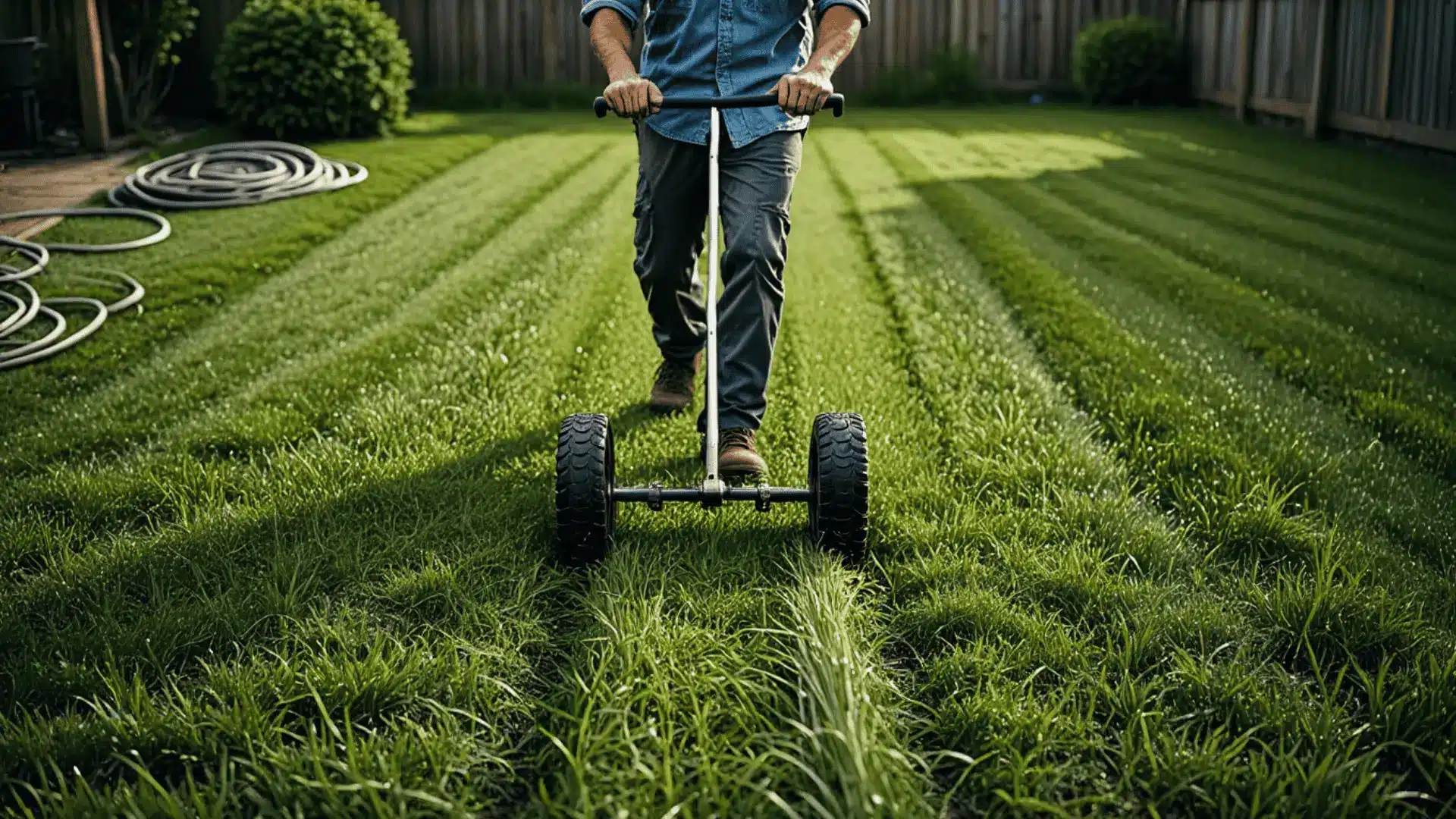
Getting the timing and product right only takes you halfway there. How you actually apply fertilizer determines whether your lawn absorbs it evenly or ends up with burned strips and patchy growth.
- Use a broadcast spreader for even distribution across larger lawns rather than applying by hand, which almost always leads to uneven coverage.
- Water your lawn lightly after application to help nutrients move through the soil and reach the root zone where they are actually needed.
- Work in straight, overlapping rows at a consistent pace to ensure no area gets missed or double-dosed during the pass.
- Avoid overlapping spreader passes, as going over the same strip twice concentrates fertilizer and raises burn risk significantly in those areas.
Taking an extra ten minutes to apply carefully saves you weeks of dealing with an uneven, patchy lawn afterward. Slow and steady genuinely wins here.
Regional Considerations
Fertilizing advice that works in Georgia will not work in Minnesota, and that disconnect is where a lot of lawn care goes sideways.
Your region shapes your grass type, your growing season, and ultimately your entire fertilizing calendar.
| Region | Grass Type | Primary Feeding Window | Key Consideration |
|---|---|---|---|
| Northern States (zones 3 to 6) |
Cool-season grasses | Early fall and late spring | Avoid summer feeding; heat stress is a real risk |
| Southern States (zones 8 to 10) |
Warm-season grasses | Late spring through mid-summer | Skip feeding once dormancy sets in during cooler months |
| Transition Zone (zones 6 to 7) |
Mixed cool and warm-season | Varies by dominant grass type | Requires the most careful timing; neither schedule fits perfectly |
Wrapping Up
Knowing when to fertilize your lawn naturally shifts the whole experience from guesswork to something that actually feels rewarding.
Your grass has a rhythm, and once you start working with it rather than against it, the results speak for themselves.
Every lawn is different, every region has its own pace, and now you have everything you need to feed yours with confidence.
Try it this season and see what a difference right timing makes.
Got questions about your specific grass type or region? Drop them in the comments below!