Peace lilies have stolen hearts everywhere with their sculptural glossy leaves and those graceful white blooms that seem to glow against dark green foliage.
They’re the kind of plant that makes any corner of your home feel like a serene botanical retreat. Yet so many plant lovers find themselves waiting and wondering why their lush, thriving peace lily refuses to flower.
If you’re staring at a perfectly healthy plant that just won’t bloom, trust me, plenty of us have been there, too.
We’ll walk through everything about peace lily flowering cycles, uncover why those blooms might be hiding, and share the exact conditions that coax them into showing off their signature white spathes.
When Do Peace Lilies Bloom Naturally?
Peace lilies typically bloom in spring and early summer when conditions align just right. Outdoors in their native tropical habitat, they flower more reliably with the seasons, but indoors, blooming becomes a bit less predictable.
You might see those white spathes appear once or twice a year if your plant is happy, and sometimes they’ll surprise you with a second flush in fall.
The difference comes down to consistent light and temperature cues that outdoor plants receive naturally.
Indoor peace lilies need us to recreate those ideal conditions, which is why timing can feel more unpredictable when you’re growing them inside.
How Long Do Peace Lily Blooms Last?
Each peace lily bloom can last anywhere from 1 to 2 months, which is pretty impressive for a houseplant flower.
As they age, you’ll notice the white spathe gradually turning green. This happens because the spathe is actually a modified leaf, and it’s simply returning to its natural chlorophyll-filled state as the flower completes its cycle.
Once your blooms have turned fully green and started looking tired, that’s your cue to snip them off at the base.
Removing spent flowers helps redirect your plant’s energy back into producing new growth and potentially more blooms down the line.
Why Your Peace Lily is Not Blooming?
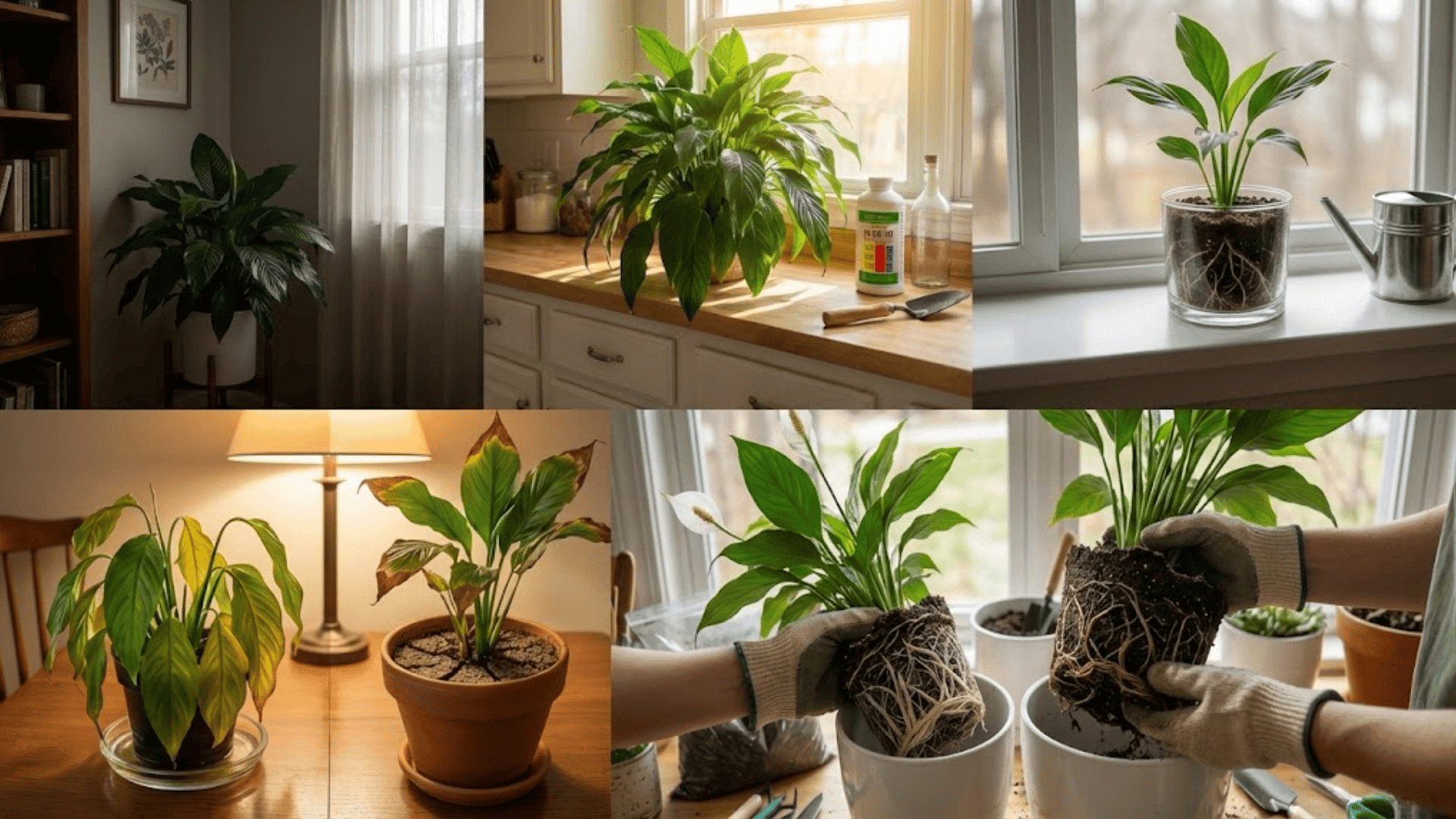
When a peace lily refuses to flower, it’s usually trying to tell you something about its environment or care routine.
Most of the time, it’s not about neglect but rather one or two specific conditions that need tweaking.
1. Insufficient Light
Peace lilies survive in low light, but they won’t bloom there. Bright indirect light is what triggers flowering, think a few feet from an east or north-facing window where the light is soft but plentiful.
If your plant keeps pushing out new leaves but no blooms, or the leaves look darker and smaller than usual, it’s probably begging for more light.
The difference between surviving and thriving really comes down to those extra lumens your plant receives daily.
2. Incorrect Fertilizing
Too much nitrogen creates a lush, leafy peace lily that forgets to bloom because it’s too busy making foliage.
What your plant actually needs for flowering is phosphorus, the nutrient that encourages bud formation. If you’ve been feeding regularly but only seeing green growth, check your fertilizer’s NPK ratio.
A balanced or bloom-focused formula applied monthly during the growing season works better than heavy nitrogen feeds that prioritize leaves over flowers.
3. Plant Age and Maturity
Peace lilies need to reach maturity before they’ll bloom, usually around one year old or when they’ve developed a substantial root system.
If you recently propagated your plant or bought a young nursery specimen, patience is key here.
Nursery-grown plants sold in bloom have often been treated with hormones to flower early for retail appeal, so they might take a break after that initial show while they settle into normal growth patterns.
4. Stress From Watering Issues
Watering problems create stress that puts flowering on the back burner while your plant focuses on survival instead.
- Overwatering leads to root rot and a stressed plant that won’t waste energy on flowers when it’s fighting to survive.
- Underwatering causes similar stress as the plant focuses on basic survival rather than reproduction.
- Poor drainage keeps roots sitting in soggy soil, creating the same problems as overwatering and preventing the healthy root system needed for blooming.
5. Root Conditions
Your peace lily’s roots directly influence its ability to bloom. Slightly rootbound plants actually flower more readily because the crowded roots signal it’s time to reproduce.
Severely rootbound or over-potted peace lilies struggle because cramped roots limit nutrients, and excess soil keeps roots wet, diverting energy from flowering.
Finding that sweet spot where roots are snug but not strangled makes all the difference.
How to Get a Peace Lily to Bloom?
Getting your peace lily to bloom is about creating the right environment and sticking to consistent care habits. Follow these steps in order to give your plant everything it needs for those stunning white flowers.
Step 1: Provide the Right Light
Start by relocating your peace lily to a spot with bright indirect light, ideally near an east or north-facing window where it gets plenty of ambient brightness without harsh rays.
If direct sun is unavoidable, sheer curtains can diffuse the intensity.
When natural light falls short, especially in winter or darker rooms, a grow light positioned about 2 feet above your plant for 10 to 12 hours daily works beautifully to mimic ideal conditions and encourage blooming.
Step 2: Adjust Your Feeding Routine
Feed your peace lily monthly during spring and summer with a balanced liquid fertilizer diluted to half strength, or choose a bloom-boosting formula with higher phosphorus content.
Avoid heavy nitrogen fertilizers that push leafy growth at the expense of flowers, and skip feeding entirely during fall and winter when growth naturally slows.
Overfertilizing causes salt buildup and burnt roots, so less is genuinely more with these plants.
Step 3: Optimize Watering Habits
Water when the top inch of soil feels dry to the touch, usually once a week, but adjust based on your home’s conditions.
Peace lilies appreciate consistent moisture without sitting in waterlogged soil, so always ensure your pot has drainage holes and empty any excess water from saucers.
The goal is to keep soil evenly moist but never soggy, creating the stable conditions that allow your plant to focus energy on flowering rather than surviving drought or drowning.
Step 4: Temperature and Humidity Tips
Keep your peace lily in a space that stays between 65 and 80 degrees Fahrenheit with no sudden temperature swings from drafty windows or heating vents.
These tropical plants adore humidity levels around 50 percent or higher, which you can achieve by grouping plants together, placing a water-filled pebble tray underneath the pot, or running a humidifier nearby.
Consistent warmth and moisture in the air replicate their native environment and signal that conditions are perfect for blooming.
Seasonal Bloom Boost Techniques
Timing your care adjustments with the seasons can dramatically improve your peace lily’s blooming performance.
Here’s how to work with your plant’s natural rhythms throughout the year.
| Season | Adjustment | Timing | Expected Result |
|---|---|---|---|
| Late Winter | Increase light exposure gradually | 6-8 weeks before spring | Triggers internal bloom clock for spring flowering |
| Early Spring | Start monthly fertilizing with a bloom-focused formula | When new growth emerges | Provides phosphorus for bud formation during peak bloom season |
| Winter | Reduce watering, stop fertilizing | November through February | Allows natural dormancy; conserves energy for stronger spring blooms |
Peace Lily Propagation and Blooming
Propagating your peace lily gives you more plants to enjoy, but it does come with a temporary trade-off when it comes to flowering.
Understanding this relationship helps set realistic expectations for your newly divided plants.
How Peace Lily Propagation Affects Flowering?
When you divide a peace lily, each section needs time to rebuild its root system and reach maturity again before blooming becomes a priority.
Propagated divisions typically take 6 months to a year before they’re ready to flower, sometimes longer if the division was small.
The plant channels all its energy into establishing strong roots and foliage first, which means patience is essential. Younger, smaller divisions will take longer than larger, more established sections to produce their first blooms.
How to Propagate Peace Lilies for Future Blooms?
Proper propagation technique sets your new plants up for healthy growth and eventual flowering down the line.
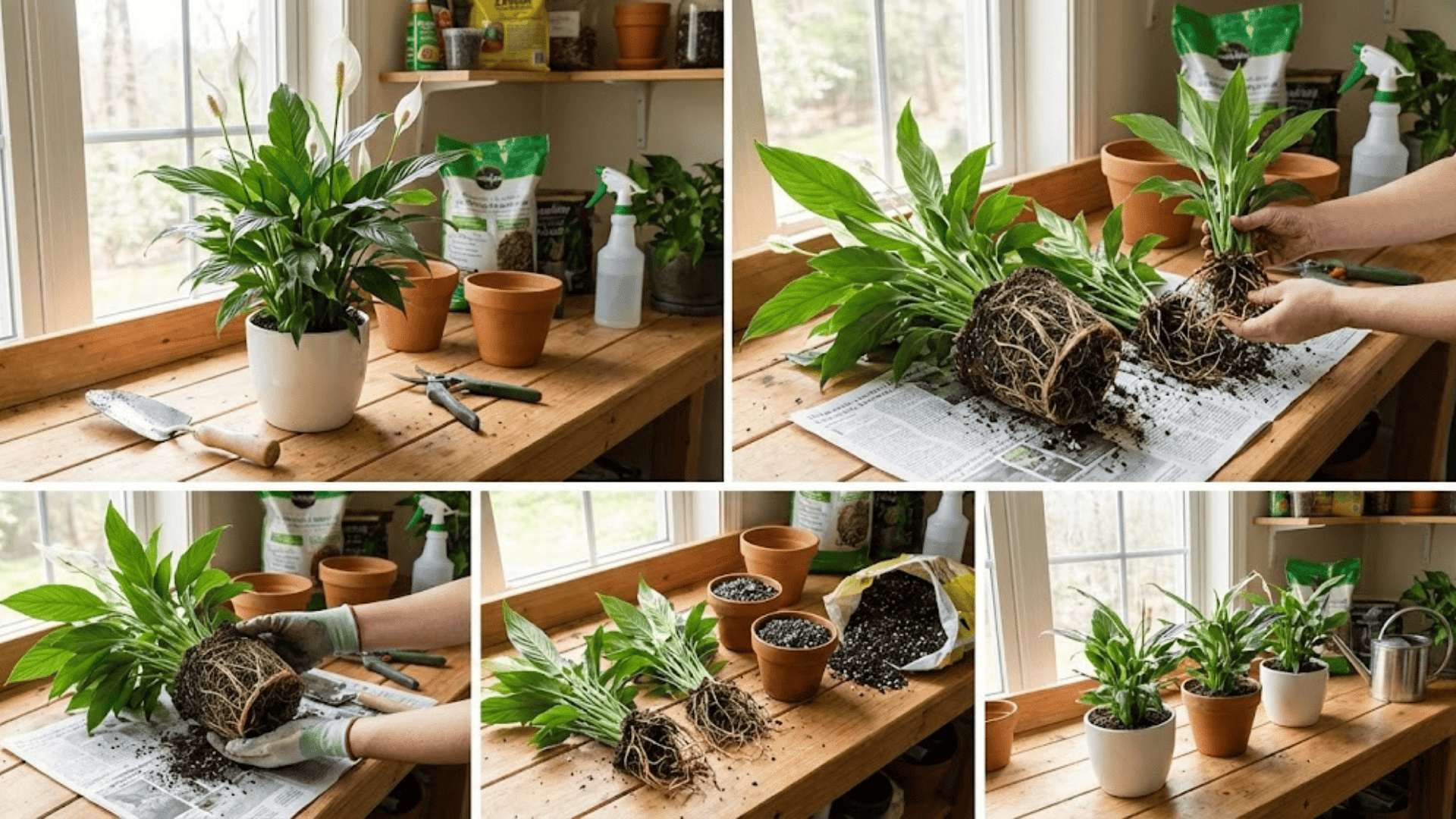
- Step 1: Propagate in early spring when the plant is actively growing and has the best chance of recovering quickly.
- Step 2: Remove the plant from its pot and gently separate root clumps, ensuring each division has at least 3 to 5 leaves and a healthy root section.
- Step 3: Plant each division in fresh, well-draining potting mix in appropriately sized pots with drainage holes.
- Step 4: Keep soil consistently moist and place in bright indirect light, avoiding fertilizer for the first month while roots establish.
Should You Repot to Encourage Blooms?
Repotting can be tricky because slightly rootbound peace lilies actually bloom better than those with too much room. If roots are circling densely or pushing through drainage holes, moving up just one pot size helps.
However, repotting into an overly large container delays flowering as the plant focuses on root growth instead.
Choose a pot that’s only an inch or two larger than the current one. Use a well-draining mix with peat moss, perlite, and compost that retains some moisture while preventing waterlogging.
Repot in spring so your plant has time to adjust before its natural blooming season.
Common Peace Lily Blooming Myths
Peace lily care advice online is full of well-meaning but misleading information that can actually prevent your plant from flowering.
Let’s clear up the most persistent myths that might be standing between you and those beautiful blooms.
Myth 1: “Peace lilies bloom best in low light.”
Fact: Peace lilies tolerate low light for survival, but they need bright indirect light to actually produce flowers. Dim conditions keep them alive but rarely trigger blooming.
Myth 2: “Bigger pots mean more flowers.”
Fact: Peace lilies bloom better when slightly rootbound in snug pots. Oversized containers cause them to focus on root development rather than flowering, delaying blooms significantly.
Myth 3: “They bloom year-round without care changes.”
Fact: Even the happiest peace lilies follow seasonal rhythms and won’t flower continuously. Proper light, fertilizing, and allowing winter dormancy are essential for reliable spring and summer blooms.
Final Thoughts
Getting your peace lily to bloom isn’t about complicated tricks or perfect conditions.
It really comes down to understanding when peace lilies bloom naturally and giving them the bright light, proper feeding, and consistent care they need to feel ready for flowering.
Your plant might bloom once a year or surprise you with multiple flushes, and either way, those white spathes are absolutely worth the wait.
Have questions about your own peace lily’s blooming experience or tips that worked for you? Drop a comment below and let’s keep the conversation growing.