Watering new grass seed feels simple until the sprouts appear. Then the questions start. How often should I water now? When do I stop the daily routine? Can I switch to regular watering yet?
Most lawn care advice skips the middle part. They tell you to water daily, then suddenly suggest weekly deep watering. But what happens in between? That gap is where most new lawns fail.
Stopping too soon kills fragile roots. Watering too long keeps them weak and shallow. The timing matters more than you think.
This guide explains exactly when to reduce watering, how to transition safely, and what signs tell you the grass is ready.
You’ll learn the stages of growth, common mistakes to avoid, and how factors like grass type and weather change the timeline.
Why Watering Is Critical During Early Grass Seed Growth?
Water is the single most important factor for grass seed success. Seeds need consistent moisture to soften their outer shell and trigger germination. Without it, the seed stays dormant or dies.
Once sprouts appear, water helps tiny roots push into the soil and absorb nutrients. If you stop watering too soon, the fragile roots dry out and the grass dies before it can establish.
But if you water too long or too often, roots stay shallow and weak. They never learn to grow deep into the soil. Surface moisture keeps the top layer wet, which is great for germination.
Deep soil hydration happens when water soaks down 6 to 8 inches. This encourages roots to follow the moisture downward. Strong roots mean healthier grass that can survive heat, drought, and foot traffic later on.
Stages of New Grass Seed Growth and Water Needs
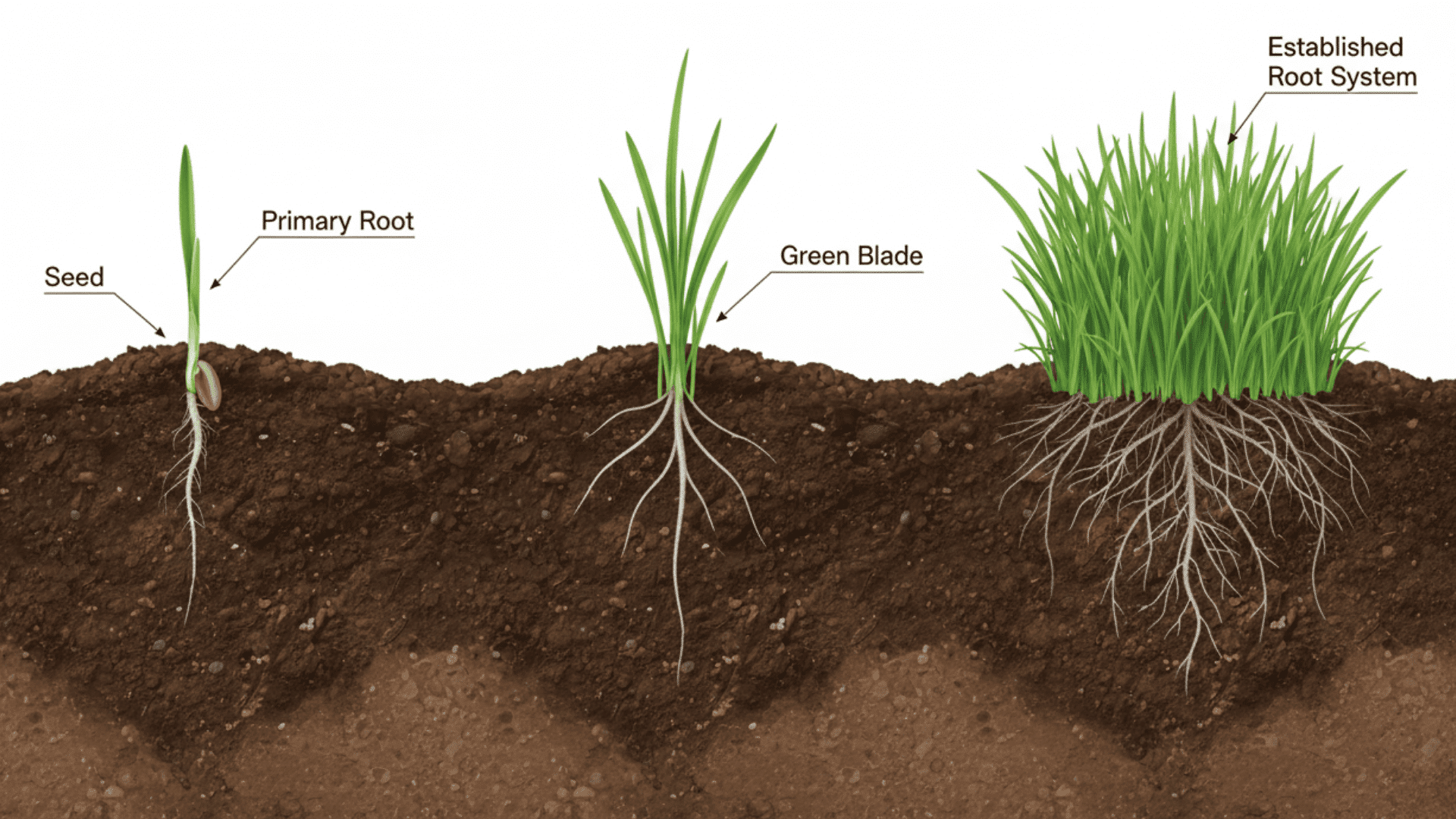
Understanding how grass grows helps you water smarter at each stage. The needs change as roots develop and blades strengthen.
Before Germination
The soil must stay consistently moist but not soaking wet. Water lightly 2 to 3 times per day to keep the top half inch damp.
Focus on frequent, shallow watering instead of deep soaks. Deep watering at this stage wastes water since seeds sit near the surface.
After Germination Begins
Once you see tiny green sprouts, keep watering daily, but watch for puddles. The roots are still very short, usually less than an inch long.
They can only pull moisture from the top layer of soil. This is why shallow roots form first. They need surface water to survive.
Establishment Phase
Grass is considered established when roots reach 2 to 3 inches deep. You will notice thicker blades, a darker green color, and the lawn bounces back after you step on it.
At this point, the grass can handle less frequent watering. Roots start growing deeper to find moisture below the surface.
When to Stop Watering New Grass Seed Daily?
You can stop daily watering once your grass reaches about 2 inches tall and has been mowed at least once.
This usually happens between 2 and 4 weeks after germination, depending on grass type and weather. Daily watering typically lasts 14 to 21 days for most lawns.
Do not stop watering suddenly, or the grass will stress and turn brown. Instead, transition slowly by cutting back from twice daily to once daily. Then shift to every other day for another week.
Finally, move to deep watering 2 to 3 times per week. This gradual change helps roots grow deeper and stronger without shocking the young grass.
Signs to Stop Watering New Grass Daily

Your grass will show clear signs when it is ready for less frequent watering. Watch for these indicators to know when to make the change.
- Root strength indicators: Gently tug on a few grass blades. If they resist and do not pull up easily, the roots have anchored into the soil.
- Color, blade thickness, and growth behavior: The grass turns a rich green color instead of pale or yellowish. Blades look thicker and stand upright rather than lying flat.
- How grass responds to foot traffic: Walk across the lawn and watch what happens. Established grass springs back up quickly after being stepped on.
- Soil moisture retention: The top inch of soil stays moist longer between waterings. You do not see it drying out within a few hours like it did early on.
- Consistent growth rate: New blades grow steadily without sudden browning or patchy spots. The lawn looks uniform across the entire seeded area.
How to Transition from Frequent Watering to Normal Lawn Watering
Start by reducing watering from twice daily to once daily for 5 to 7 days. Then move to every other day for another week while increasing the amount of water each time.
Light watering means wetting just the top inch of soil, which you did during germination. Deep watering soaks the soil 6 to 8 inches down, forcing roots to grow deeper to find moisture.
Once your grass matures, aim for deep watering 2 to 3 times per week instead of daily sprinkles. Each session should deliver about 1 to 1.5 inches of water total.
You can test depth by pushing a screwdriver into the soil. If it slides in easily 6 inches down, you have watered enough.
How Long Does It Take for New Grass to Be Fully Set
The time it takes for grass to establish fully depends on the type you planted. Here is a breakdown of average timelines and what to expect.
| Grass Type | Germination Time | First Mowing | Fully Established |
|---|---|---|---|
| Kentucky Bluegrass | 14 to 30 days | 4 to 6 weeks | 8 to 10 weeks |
| Perennial Ryegrass | 5 to 10 days | 3 to 4 weeks | 6 to 8 weeks |
| Tall Fescue | 7 to 14 days | 3 to 5 weeks | 6 to 9 weeks |
| Fine Fescue | 7 to 14 days | 4 to 5 weeks | 6 to 8 weeks |
| Bermuda Grass | 10 to 30 days | 4 to 6 weeks | 10 to 12 weeks |
| Zoysia Grass | 14 to 21 days | 5 to 7 weeks | 10 to 14 weeks |
Why patience matters even after mowing starts: Just because you mowed once does not mean the grass is fully established. Roots are still growing deeper during this time. Cutting back watering too fast can stress the lawn and cause thin or brown patches.
How establishment affects drought tolerance: Fully established grass has roots 3 to 6 inches deep or more. These roots can reach moisture stored deeper in the soil. This means your lawn can survive more extended periods without water and bounce back faster after heat or dry spells.
Factors That Affect When You Can Stop Watering

Not all lawns are the same. Several factors determine when your grass is ready for less frequent watering.
Grass Type
Cool-season grasses like Kentucky bluegrass and fescue grow best in spring and fall. They establish faster in moderate temperatures, often within 6 to 8 weeks.
Warm-season grasses like Bermuda and zoysia thrive in summer heat. They take longer to establish, sometimes 10 to 14 weeks, because they grow more slowly in cooler weather.
Weather and Climate Conditions
Hot, dry weather dries out soil faster and extends the daily watering period. Wind increases evaporation, so you may need to water more often during windy days.
Rainfall can reduce or replace your watering schedule if it soaks the soil properly. High humidity slows evaporation, which means soil stays moist longer between waterings.
Soil Type and Drainage
Clay soil holds water longer but drains slowly, which can lead to pooling if you overwater. Sandy soil drains quickly and dries out fast, so you may need to water more frequently.
Loamy soil offers the best balance. It holds moisture well while draining excess water, making it easier to manage watering schedules.
Sun Exposure
Lawns in full sun dry out faster because heat and direct light increase evaporation. You may need to water more often and watch the soil closely.
Shaded lawns stay moist longer since they receive less heat and light. This means you can reduce watering frequency sooner than in sunny areas.
Why Your New Grass Died: Common Watering Errors
Many people make avoidable errors when reducing their watering schedule. Here are the most common ones and why they hurt your lawn.
- Letting soil dry out too quickly: Cutting back watering too fast causes the top layer of soil to dry and crack, which kills shallow roots before they can grow deeper.
- Assuming mowing equals establishment: Just because the grass is tall enough to mow does not mean the roots are strong enough to handle less water.
- Overwatering after roots have formed: Continuing daily watering once roots reach 2 to 3 inches keeps them shallow and weak instead of encouraging deep, healthy growth.
Can You Overwater New Grass Seed?
Yes, you can definitely overwater new grass seed, and it causes serious problems.
Symptoms include standing water or puddles on the surface, a spongy feeling when you walk on the lawn, yellowing grass, and a sour or musty smell from the soil.
Overwatering creates the perfect environment for fungal diseases like damping off and brown patch. It also keeps roots shallow because they have no reason to grow deeper for water.
To correct overwatering, stop watering for 1 to 2 days and let the top inch of soil dry out slightly. Then resume watering, but reduce the frequency or duration. Make sure water soaks in rather than pooling.
This gives roots oxygen and encourages them to grow down instead of staying near the surface.
Final Thoughts
Knowing when to stop watering new grass seed daily makes the difference between a weak lawn and a strong one. The key is watching your grass, not just following a strict calendar.
Look for signs like deeper roots, thicker blades, and how the lawn responds to foot traffic. Transition slowly from daily watering to deep watering 2 to 3 times per week.
This builds strong roots that can handle heat, drought, and regular use. Be patient during the establishment phase. Your effort now creates a healthier, more resilient lawn for years to come.
Have questions about your specific grass type or climate? Drop a comment below and let’s help your lawn flourish.