Ever noticed those thick, waxy leaves that seem almost sculpted from jade?
Meet the Hoya, affectionately called the wax plant for its glossy, porcelain-like foliage that catches light like living art.
These trailing beauties have captured hearts everywhere with their low-maintenance charm and stunning star-shaped blooms that smell like pure heaven.
You’ll learn everything about keeping your Hoya happy and flourishing, understanding their quirks and preferences along the way.
We’re talking perfect lighting conditions, that tricky watering balance, and why these plants have become absolute favorites among plant lovers who crave beauty without the fuss.
What is a Wax Plant (Hoya)?
Hoyas belong to a diverse genus of over 200 tropical species, mostly native to Southeast Asia, Australia, and the Pacific Islands.
In their natural habitat, these plants grow as epiphytes, clinging to trees and rocks while their vines cascade through the canopy.
The nickname “wax plant” comes from their thick, waxy leaves and porcelain-like flowers that look almost artificial in their perfection.
While people often use “wax plant” and “Hoya carnosa” interchangeably, Hoya carnosa is actually just one popular species within the larger Hoya family.
Each variety brings its own leaf shapes, growth patterns, and those famously fragrant blooms that make collectors obsessed.
Popular Types of Wax Plants
Choosing your first Hoya can feel overwhelming with so many stunning varieties available. Each type brings its own personality, growth style, and care needs.
Here’s a quick comparison to help you find your perfect match.
| Variety | Leaf Shape | Growth Rate | Bloom Frequency | Care Difficulty |
|---|---|---|---|---|
| Hoya carnosa | Thick, oval, glossy | Moderate to fast | Regular (mature plants) |
Beginner-friendly |
| Hoya pubicalyx | Long, slender, speckled | Fast | Frequent bloomer | Easy |
| Hoya australis | Round, waxy, bright green | Fast | Reliable bloomer | Very easy |
| Hoya compacta (Hindu rope) |
Twisted, curled, rope-like | Very slow | Infrequent | Moderate |
| Variegated varieties | Varies (cream/pink edges) |
Slower than solid green | Less frequent | Moderate to advanced |
The carnosa and australis make excellent starter Hoyas, while collectors often graduate to the striking compacta or hunt down rare variegated beauties once they’ve mastered the basics.
Ideal Growing Conditions for Wax Plants
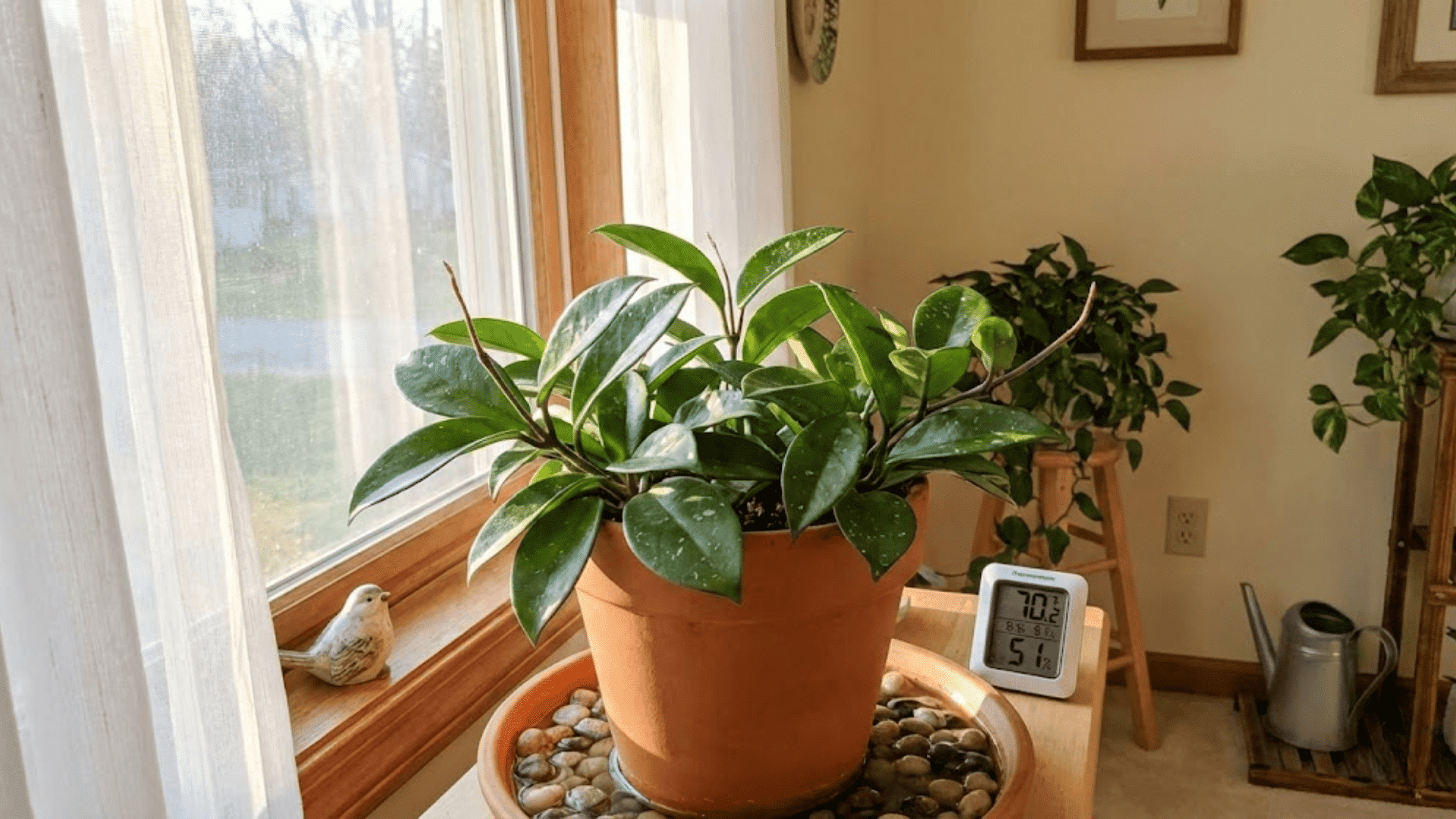
Getting the environment right makes all the difference between a surviving Hoya and a thriving one. These tropical plants have specific preferences that, once understood, are surprisingly easy to meet indoors.
Light Requirements
Hoyas thrive in bright, indirect light near east or west-facing windows. While they tolerate some morning sun, harsh afternoon rays can scorch their leaves, causing brown patches.
Too little light results in leggy growth and no blooms. They can survive lower light, but won’t flower. Look for slow growth or pale leaves as signs your plant needs repositioning closer to natural light sources.
Temperature and Humidity
Keep your Hoya comfortable between 60-85°F, though they prefer warmer conditions. Temperatures below 50°F can cause damage, so keep them away from drafty windows in winter.
These tropical plants appreciate moderate to high humidity (around 40-60%), though they’re more forgiving than other houseplants. Boost moisture with pebble trays, grouping plants, or occasional misting during dry months.
How to Water a Wax Plant?
Watering might be the trickiest part of Hoya care, but once you understand their preferences, it becomes second nature. These plants actually prefer a bit of neglect over constant attention.
The Right Way to Water Your Hoya
Hoyas store water in their thick leaves, making them semi-succulents that despise soggy roots. Always let the soil dry out between waterings to prevent root rot.
Here’s your foolproof watering routine:
- Step 1: Check the soil by sticking your finger two inches deep; if it feels dry, it’s time to water
- Step 2: Water thoroughly until liquid drains from the bottom holes, ensuring the entire root ball gets moistened
- Step 3: Empty the drainage tray after 15 minutes so roots don’t sit in standing water
- Step 4: Wait until the top half of the soil dries completely before watering again
Seasonal Watering Schedule
Hoyas need different watering frequencies as seasons change and growth slows. Adjust your routine based on environmental conditions and your plant’s active growth periods.
| Season | Watering Frequency | Notes |
|---|---|---|
| Spring/Summer | Every 7-10 days | Active growth period, soil dries faster |
| Fall | Every 10-14 days | Growth slows, reduces frequency, reduced gradually |
| Winter | Every 14-21 days | Dormant period, water sparingly |
Overwatering Symptoms: Yellowing leaves, mushy stems, root rot smell.
Underwatering Signs: Wrinkled leaves, dry leaf tips, stunted growth.
Best Soil and Potting Mix for Hoya Plants
The right soil mix can make or break your Hoya’s health. These epiphytic plants need a balance that mimics their natural tree-dwelling lifestyle, where roots enjoy airflow and quick drainage.
Why Drainage is Everything?
Hoyas evolved clinging to trees, not sitting in dense ground soil. Their roots need oxygen-rich environments that prevent water from pooling around them.
Poor drainage leads to root rot, the number one killer of these otherwise resilient plants.
A chunky, well-draining mix allows water to flow through quickly while retaining just enough moisture. Think of it as creating a forest canopy environment right in your pot.
Creating the Perfect Soil Mix
DIY Recipe: Mix equal parts potting soil, perlite, and orchid bark for ideal drainage and aeration. Add a handful of activated charcoal to keep things fresh.
Store-Bought Options: Cactus and succulent mixes work beautifully, or look for orchid potting media. You can also use African violet soil with added perlite.
Best Containers: Choose pots with drainage holes (non-negotiable) in terracotta, ceramic, or plastic. Terracotta dries faster, perfect if you tend to overwater.
Hoyas actually prefer being slightly rootbound, so don’t rush to upsize; they bloom better when cozy.
Fertilizing Wax Plants
Hoyas aren’t heavy feeders, but strategic fertilizing encourages lush foliage and those spectacular blooms everyone craves.
A light touch goes much further than overdoing it with these low-maintenance plants.
Fertilizing Frequency and Types
Feed your Hoya once a month during spring and summer when it’s actively growing. Use a balanced liquid fertilizer (10-10-10 or 20-20-20) diluted to half strength to avoid overwhelming the roots.
Once your plant matures and you want to encourage more flowers, switch to a bloom booster formula higher in phosphorus during the blooming season. Always apply fertilizer to damp soil, never dry, to prevent root burn.
Seasonal Feeding Schedule
Your Hoya’s nutritional needs shift dramatically throughout the year as growth patterns change. Matching your fertilizing routine to these natural rhythms keeps your plant healthy without waste.
| Season | Frequency | Fertilizer Type |
|---|---|---|
| Spring/Summer | Monthly | Balanced liquid fertilizer (half strength) |
| Fall | Every 6-8 weeks | Balanced or skip entirely |
| Winter | None | Plants are dormant, no feeding needed |
Over-Fertilizing Warning Signs: Brown leaf tips, white salt crust on the soil surface, leaf drop, or stunted growth. If you notice these symptoms, flush the soil with plain water and skip fertilizing for several months.
Remember, underfed Hoyas recover easily, but chemical burn from too much fertilizer causes lasting damage.
How to Encourage Wax Plant Blooms?
Hoya blooms are absolutely worth the wait; fragrant, star-shaped clusters that appear on mature plants, typically after two to three years.
If yours isn’t flowering, the culprit is usually insufficient bright light or the plant simply needs more time to mature. Placement near a sunny window makes all the difference.
Here’s a crucial tip: never cut off the flower spurs (those small stems where blooms appear) because Hoyas rebloom from the same spots year after year.
Once blooming starts, expect flowers mainly in spring and summer, with some varieties producing multiple flushes throughout the growing season when conditions are ideal.
Pruning and Training Wax Plants
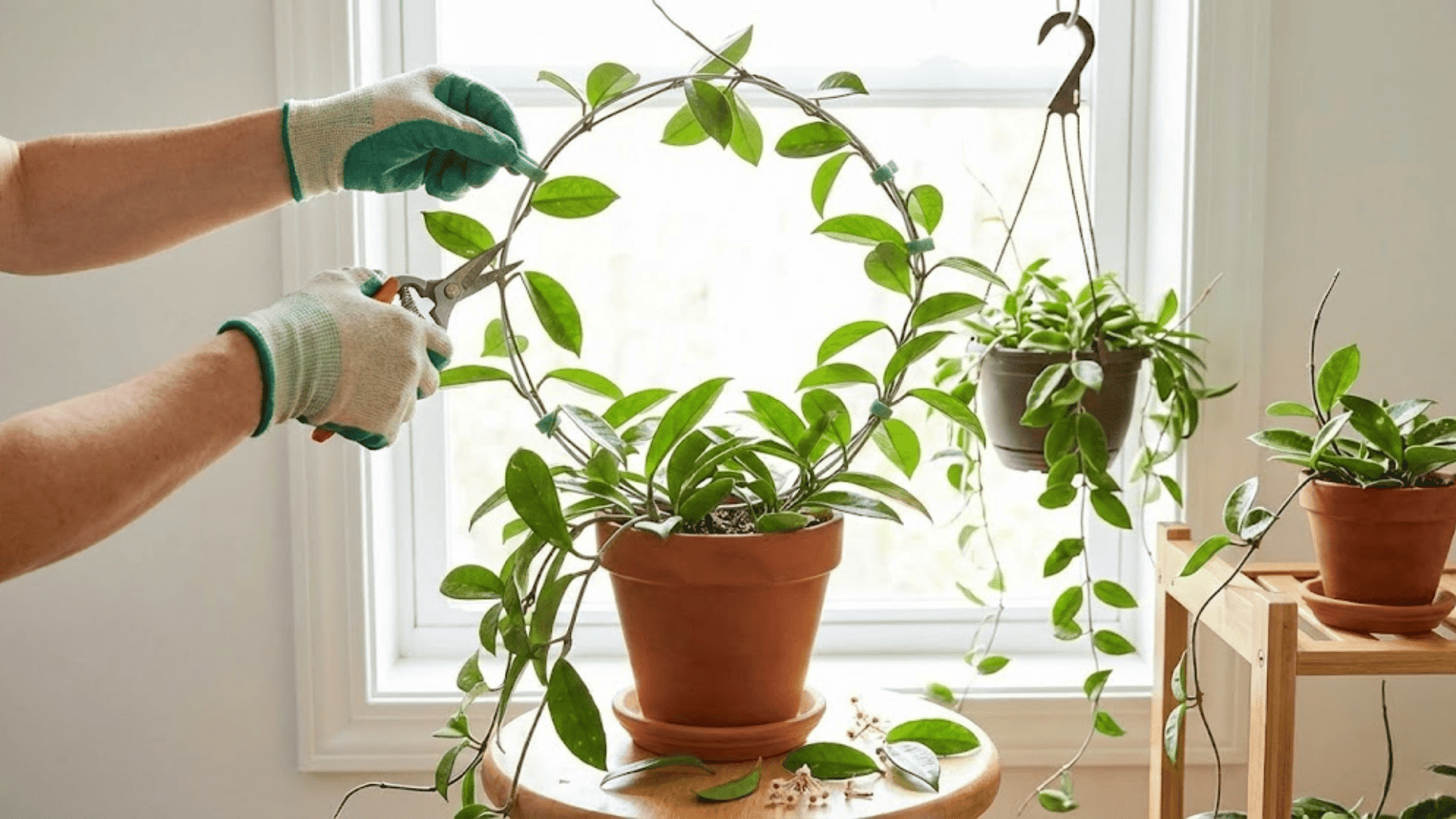
Hoyas work beautifully whether you let them trail or train them to climb, and a little pruning keeps them looking their best.
These plants respond well to training, letting you create the exact aesthetic you want.
Pruning Your Hoya
Prune in early spring before new growth begins, using clean, sharp scissors.
Remove dead or yellowing leaves, and trim back leggy vines to encourage bushier growth. Cut just above a node (where leaves meet the stem) to promote branching.
Remember, never remove flower spurs; those tiny peduncles produce blooms year after year. Light pruning throughout the year is fine for shaping, but avoid heavy cuts during blooming season.
Training and Display Options
Hoyas naturally trail or climb, depending on how you support them. Left alone, they cascade beautifully in hanging baskets, creating living curtains of foliage.
For a fuller look, wrap vines around the pot’s edge or use circular hoops and trellises to guide upward growth. Training stems horizontally encourages more blooms. Use soft ties or clips to secure vines gently.
If your Hoya gets leggy with long stretches between leaves, it needs more light; move it closer to a window and prune back sparse sections to redirect energy into healthier growth.
How to Propagate Wax Plants?
Propagating Hoyas is incredibly rewarding and surprisingly easy once you know the basics. Stem cuttings root reliably, giving you new plants to expand your collection or share with friends.
The Propagation Process
Stem cutting is the most reliable method for multiplying your Hoya collection. Follow these simple steps for successful rooting every time.
- Step 1: Cut a healthy stem with at least two nodes and a few leaves using clean, sharp scissors.
- Step 2: Remove the bottom leaves so nodes are exposed; roots grow from these points.
- Step 3: Place in water (change weekly) or directly in moist, well-draining soil mix.
- Step 4: Keep in bright, indirect light and wait patiently for roots to develop in 3-6 weeks.
- Step 5: Once roots reach 2 inches long, pot water-rooted cuttings in soil and water lightly.
Common Propagation Mistakes
Even simple propagation can go wrong if you miss a few key details. Avoid these common pitfalls that slow down or completely stall root development.
- Taking Cuttings Without Nodes: Roots only grow from nodes, so stemless pieces won’t root at all.
- Using Dirty or Dull Tools: Bacteria and fungi enter through jagged cuts, causing rot before roots appear.
- Letting Water Get Stagnant: Murky water suffocates developing roots and breeds harmful bacteria.
- Moving Cuttings Constantly: Repeatedly checking and relocating them disrupts the rooting process.
Water propagation lets you watch roots develop, while soil propagation skips the transition shock. Both methods work beautifully, so choose whichever feels more natural to you.
Common Wax Plant Problems and Solutions
Even the easiest plants have their off days, and Hoyas are no exception. Catching problems early and understanding their causes makes fixing them straightforward.
Problem 1: Overwatering turns leaves yellow and mushy.
Solution: Let the soil dry out completely between waterings and ensure proper drainage with pots that have drainage holes.
Problem 2: Temperature changes or inconsistent watering cause leaf drop.
Solution: Keep plants away from AC vents and drafty windows, and water consistently, allowing the top half of the soil to dry between waterings.
Problem 3: Insufficient light stalls growth for months.
Solution: Move your plant closer to a bright window where it receives several hours of indirect light daily.
Problem 4: Mealybugs, spider mites, and aphids infest leaves and stems.
Solution: Isolate the plant immediately and wipe pests off with rubbing alcohol on cotton swabs or spray with insecticidal soap weekly until eliminated.
Repotting a Wax Plant
Hoyas actually prefer being slightly root-bound and bloom better when cozy in their pots. Repotting too frequently can stress them and delay flowering, so only repot when truly necessary.
- Step 1: Look for roots circling drainage holes, water running straight through without absorbing, or severely stunted growth despite good care.
- Step 2: Repot in early spring before active growth begins, never during blooming season or winter dormancy.
- Step 3: Select a pot only 1-2 inches larger than the current one; oversized pots hold too much moisture and increase root rot risk.
- Step 4: Remove the plant, shake off old soil, trim any dead roots, then place it in a fresh, well-draining mix at the same depth.
Most Hoyas only need repotting every 2-3 years since they genuinely thrive when slightly cramped. After repotting, wait a few days before watering to allow damaged roots to heal. Then, resume normal care and watch for new growth in weeks.
Wax Plant Care by Season
Hoyas respond to seasonal changes just like they would in their native tropical habitats. Adjusting your care routine throughout the year keeps them healthy and encourages vigorous growth when conditions are right.
| Season | Watering | Feeding | Temperature | Growth Pattern |
|---|---|---|---|---|
| Spring | Every 7-10 days | Monthly | 65-80°F | New growth and blooming begin |
| Summer | Every 7-10 days | Monthly | 65-85°F | Peak growth and flowering |
| Fall | Every 10-14 days | Reduce or stop | 60-75°F | Growth slows down |
| Winter | Every 14-21 days | None | 50-65°F | Dormant, minimal growth |
Your Hoya won’t die back in winter like some plants, but it does enter a rest phase where growth nearly stops.
This dormancy is completely natural and actually beneficial, allowing the plant to store energy for explosive spring growth and abundant flowering when warmer weather returns.
That’s a Wrap
Wax plant care really comes down to understanding what these tropical beauties need and then mostly leaving them alone.
Give them bright light, let the soil dry between drinks, and resist the urge to fuss over them constantly.
They reward patience with fragrant, waxy blooms and trailing vines that add life to any space. Now that you know the essentials, you’re ready to keep your Hoya thriving for years to come.
Have questions about your own wax plant or tips to share? Drop a comment below and let’s chat about these amazing plants!