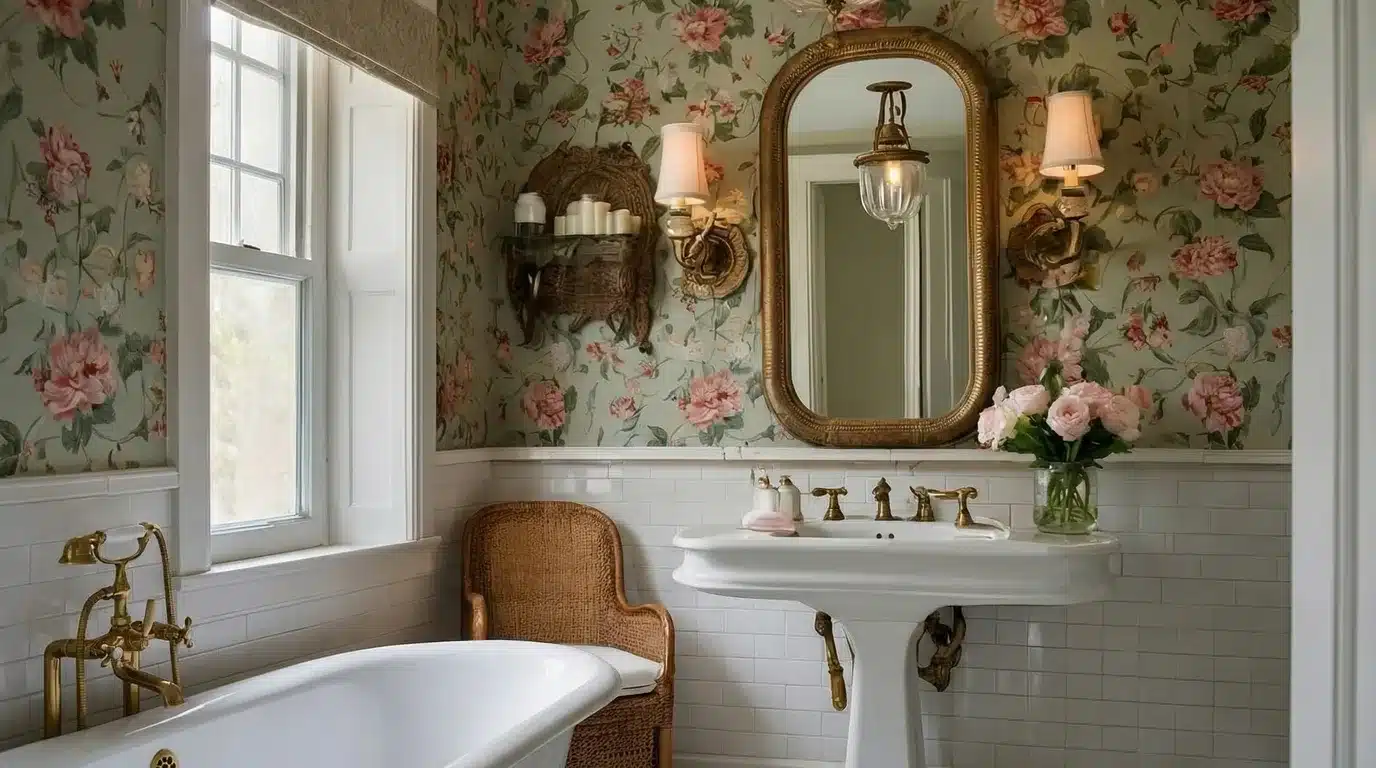
Some bathrooms are just a place to get ready in the morning. A Victorian bathroom is something else entirely. It stops you at the door.
A deep freestanding tub, warm brass taps, and a bold tile floor that looks like it belongs in a century-old home. Yet, somehow, it still feels completely relevant today.
The Victorian bathroom has outlasted every design trend that followed it. Not because it is old. Because it is well thought out.
This guide covers everything you need to bring that look into your own home. From key fixtures and tile choices to color ideas, budget tips, and small-space tricks, you will find practical advice here that actually helps.
Let us get into it.
What Is a Victorian Bathroom?
A Victorian bathroom is a style inspired by the design of bathrooms in Britain during Queen Victoria’s reign, which ran from 1837 to 1901.
Back then, only wealthy households had indoor bathrooms, and they were designed with care, featuring ornate details, exposed metalwork, patterned tiles, rich colors, and high-quality materials like cast iron and porcelain.
The style draws on Gothic, Rococo, and Neoclassical design influences.
Today, it blends those original period details with modern plumbing and everyday comfort, giving you a bathroom that looks rich in history but works just as well as any contemporary space.
Key Elements of a Victorian Bathroom
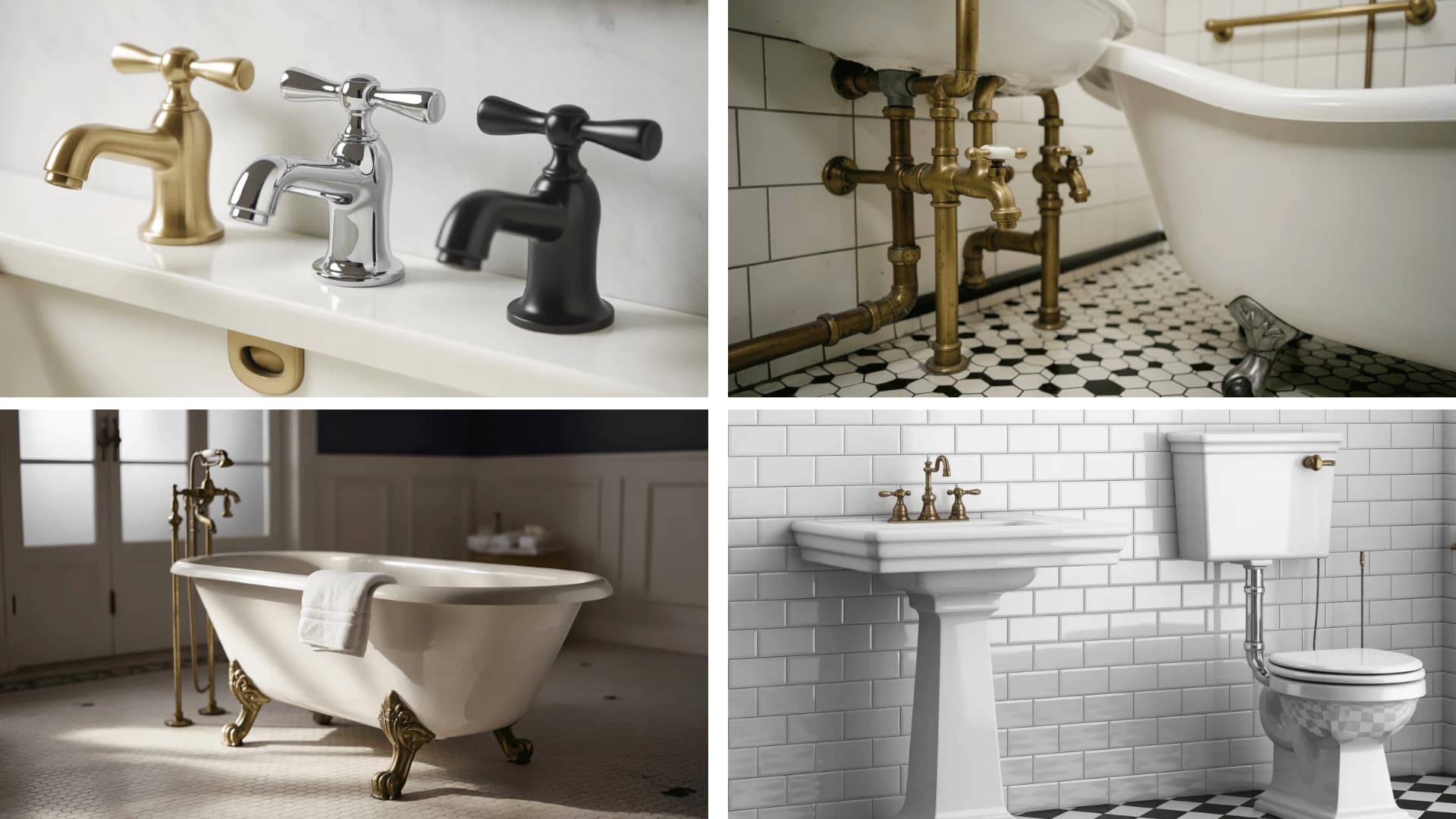
A Victorian bathroom is built on a handful of core pieces. Get these right, and the rest of the room falls into place naturally.
- Clawfoot or Roll-Top Bath: The centerpiece of any Victorian bathroom; it stands on four decorative feet and is deep enough for a long, comfortable soak.
- Pedestal Sink: A single-column sink base that keeps the floor visually open and pairs well with cross-head brass or chrome faucets.
- High-Level Toilet: A wall-mounted cistern with a long flush pipe and a pull-chain; adds instant period character and works best in rooms with ceilings above 8 feet.
- Exposed Pipework: Floor-mounted bath taps and visible plumbing connections are a signature detail of Victorian bathroom design, not something to hide.
- Wainscoting and Wall Panelling: Painted timber panels on the lower half of the wall add structure, protect against moisture, and give the room a grounded, period feel.
- Patterned Floor Tiles: Small hex tiles, encaustic patterns, or checkerboard designs in black and white are the most recognized Victorian flooring choices.
- Brass or Chrome Fixtures: All hardware, from faucets to towel bars, should use a single metal finish for a cohesive, intentional look.
- Ornate Mirror: A large, framed mirror with carved or gilded details adds reflected light and acts as a decorative focal point on the wall.
Victorian Bathroom Color Palette
Color does much of the heavy lifting in a Victorian bathroom. The right combination can make a plain room feel rich, layered, and genuinely period-appropriate.
| Color | Where to Use It | Best Paired With |
|---|---|---|
| Deep Navy | Walls or wall panelling | White tiles, brass fixtures |
| Forest Green | Vanity, lower wall panels | Chrome taps, white sanitaryware |
| Burgundy | Accent wall or decorative tiles | Cream walls, gold hardware |
| Cream / Off-White | Main wall color | Any bold accent color |
| Charcoal / Dark Grey | Grout lines, window frames | White subway tiles, brass |
| Dusty Rose | Soft accent in textiles or tiles | Sage green, pale grey |
| Rich Teal | Feature wall or painted furniture | White porcelain, brushed brass |
How to Design a Victorian Bathroom?
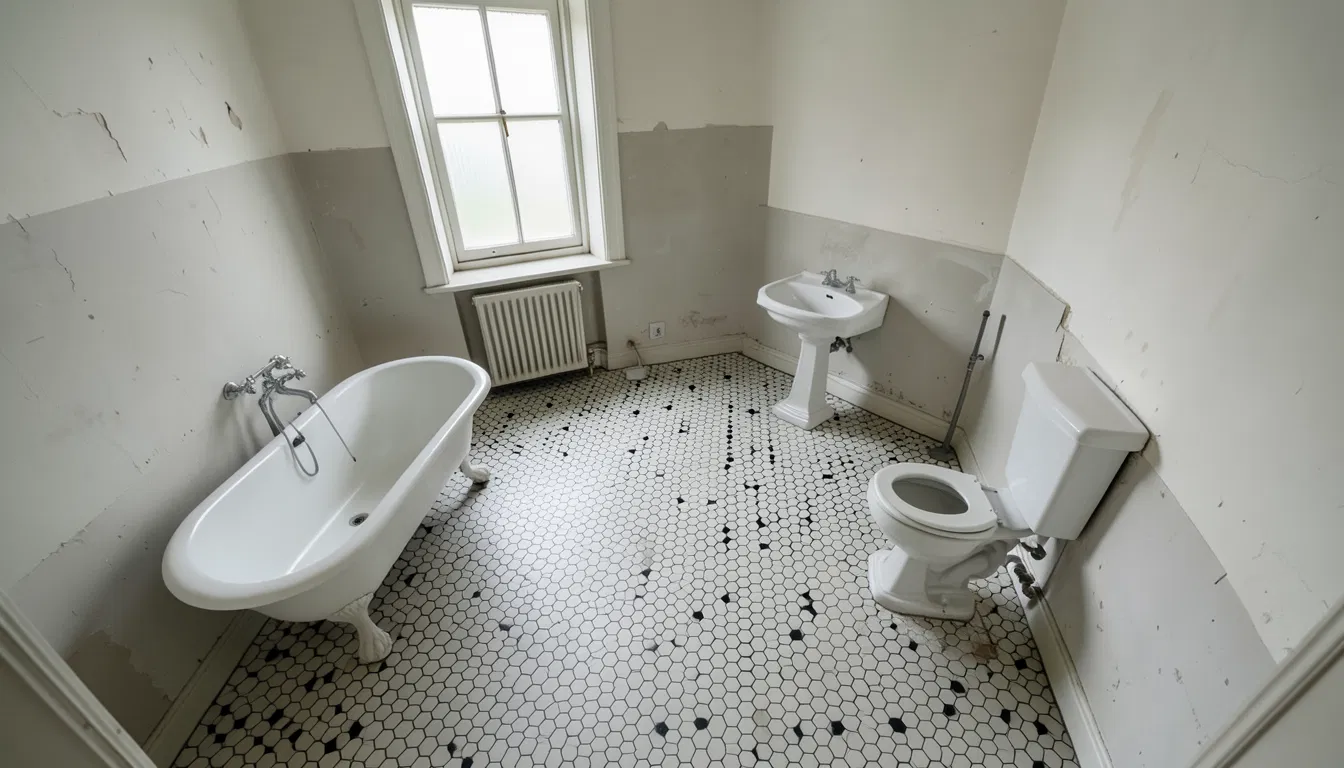
Designing a Victorian bathroom does not have to be overwhelming. Follow these steps, and you will have a clear plan before you spend a single dollar.
Step 1: Start with the Layout
Decide where your main fixtures will sit before choosing anything else. A clawfoot tub needs enough floor space to be seen from all sides. A pedestal sink works best near natural light. Think about flow and make sure all plumbing connections are planned before purchasing any fittings.
Step 2: Choose Your Centerpiece
Every Victorian bathroom needs one standout piece. This is usually the freestanding bath. Pick your tub first, then build the rest of the room around it, including color, tile, and hardware choices.
Step 3: Pick Your Tile
Choose your floor tile before your wall tile. A bold hex or encaustic floor pattern sets the tone for the whole room. Keep wall tiles calmer, like white metro tiles, so the floor can lead without competition.
Step 4: Select a Metal Finish and Stick to It
Choose brass, chrome, or a dark finish and use it on every piece of hardware in the room. Faucets, towel bars, mirror frames, and light fittings should all match. Mixing metal finishes is the most common design mistake in this style.
Step 5: Layer the Details Last
Wainscoting, wall color, lighting, and decorative accessories come last. These are the layers that bring the room together. A painted wall panel, an ornate wall sconce, or a framed botanical print can do a lot without adding cost.
7 Victorian Bathroom Ideas
There is more than one way to bring a Victorian bathroom to life. Here are seven ideas, from classic period setups to modern spins, each one practical and worth considering for your own space.
1. The Classic Victorian Setup
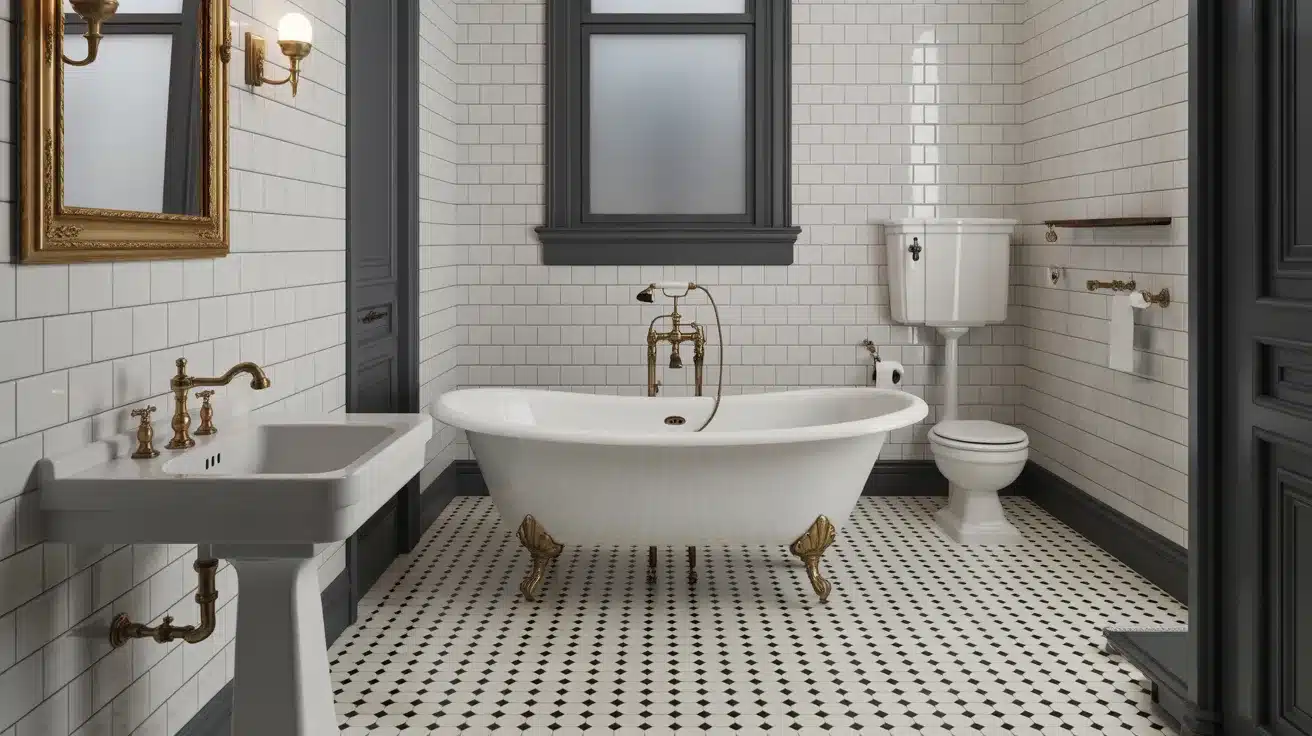
This is the full period look: clawfoot tub, high-level toilet, pedestal sink, and black-and-white hex tile floor. It works best in larger bathrooms where each piece has room to stand on its own.
- Choose a cast iron or acrylic clawfoot tub in white, with claw feet finished in gold or black
- Pair with cross-head brass faucets and a pull-chain toilet for full period accuracy
- Use white metro wall tiles with dark grout to keep walls clean but textured
2. The Dark and Moody Victorian Bathroom
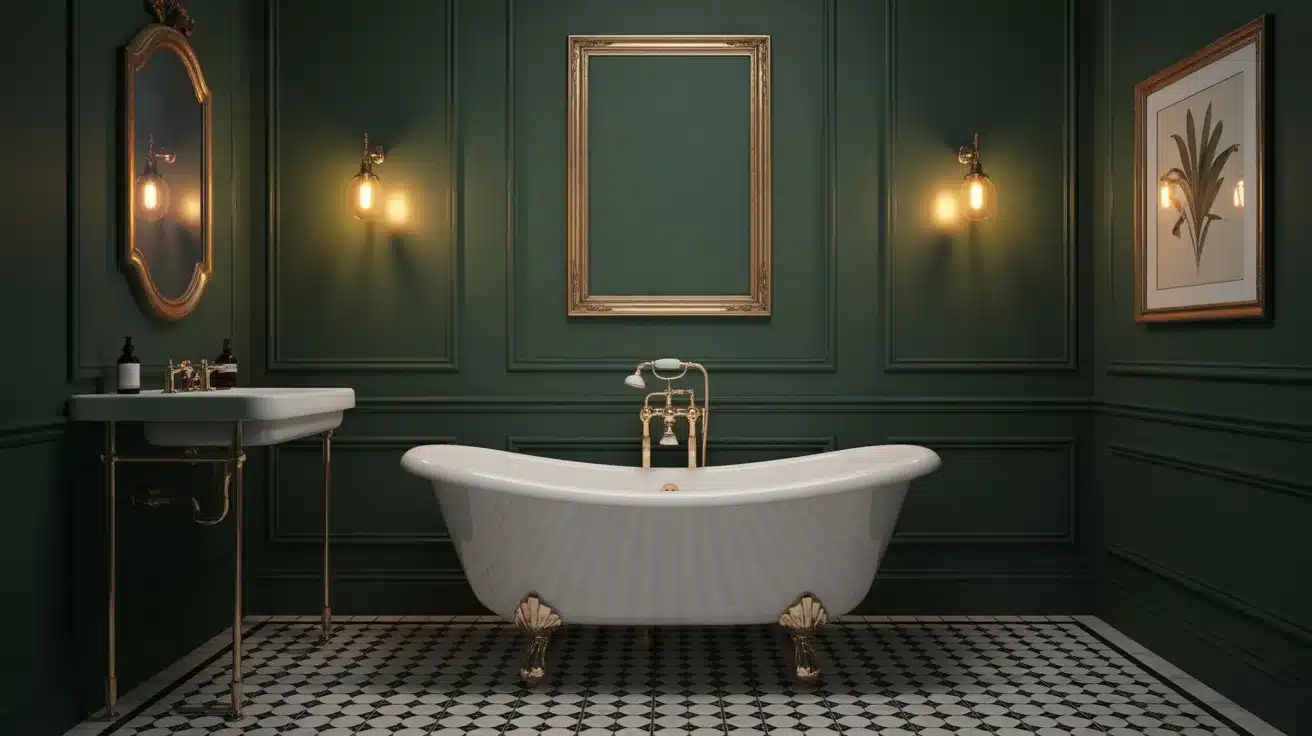
Deep, rich wall colors give a Victorian bathroom a dramatic feel without adding cost. This works especially well in bathrooms with strong natural light.
- Paint walls in deep navy, forest green, or charcoal for a bold, confident tone
- Use white porcelain fixtures and brass hardware as a contrast against the dark backdrop
- Add a large gilded or dark-framed mirror to reflect light back into the room
3. The Small Victorian Bathroom
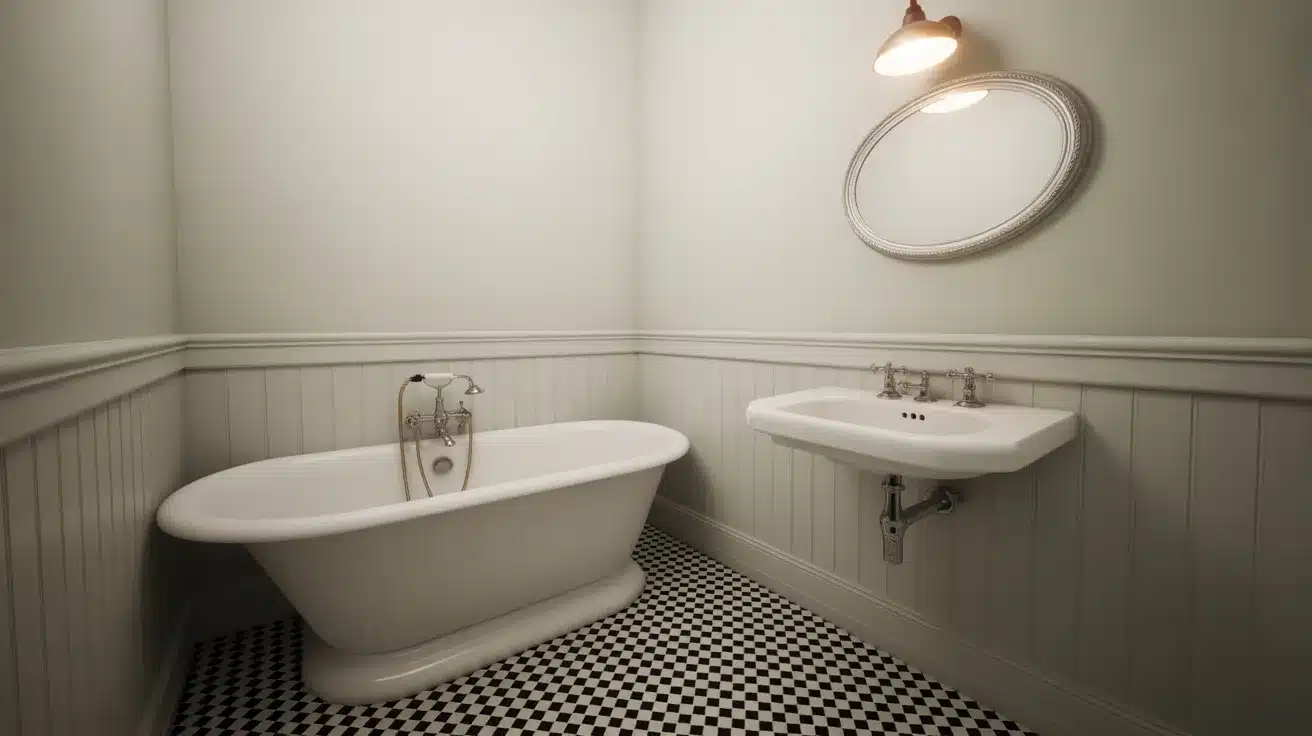
A compact bathroom can carry Victorian style well. The key is choosing the right scale of fixtures and keeping the floor pattern strong.
- Use a shorter roll-top tub or a compact slipper bath paired with a handheld shower attachment
- Choose a wall-mounted or pedestal sink to free up visual floor space
- Go bold on the floor tile and keep walls light to maintain a sense of openness
4. The Victorian Bathroom on a Budget
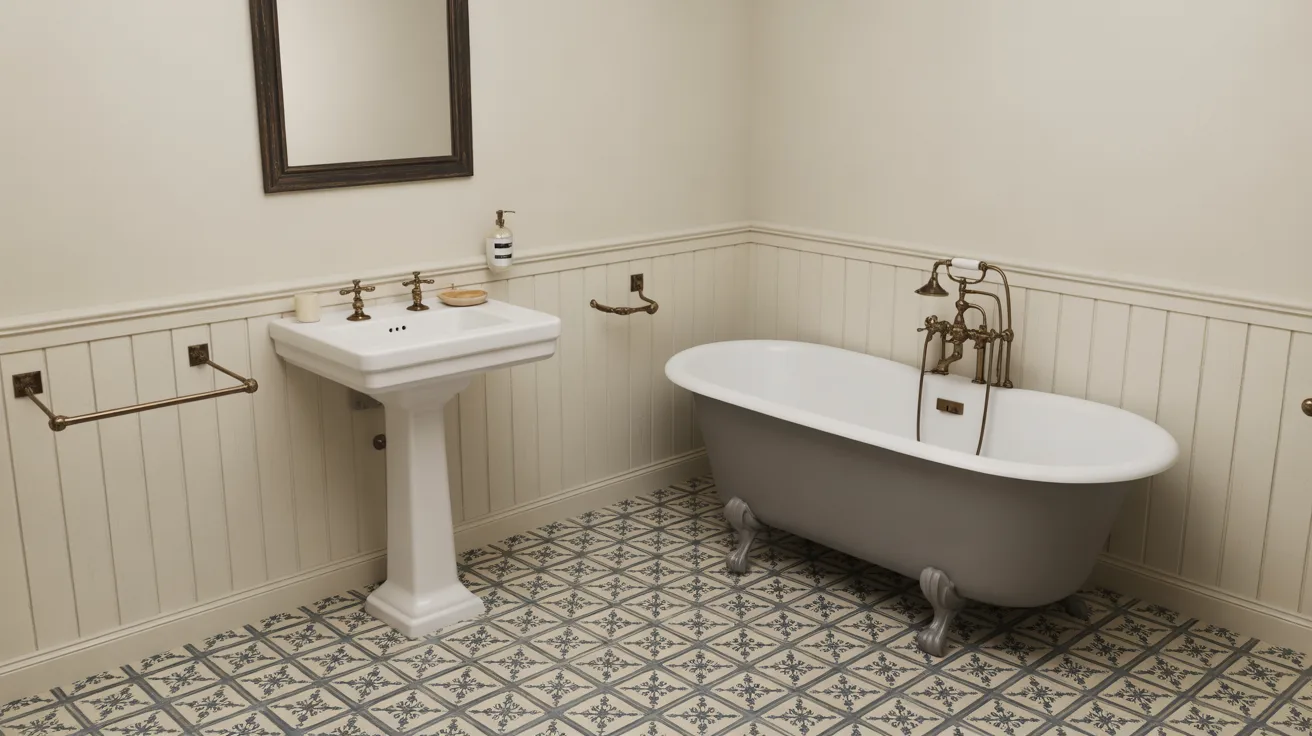
You do not need to spend big to get this look. A few high-impact changes can shift the entire feel of a room without a full remodel.
- Swap existing faucets for vintage-style cross-head brass options, a low-cost, high-impact upgrade
- Add black-and-white hex or encaustic-look porcelain floor tiles for an authentic period base
- Paint lower wall panels or add timber wainscoting to create a period feel at an affordable cost
5. The Modern Victorian Mix
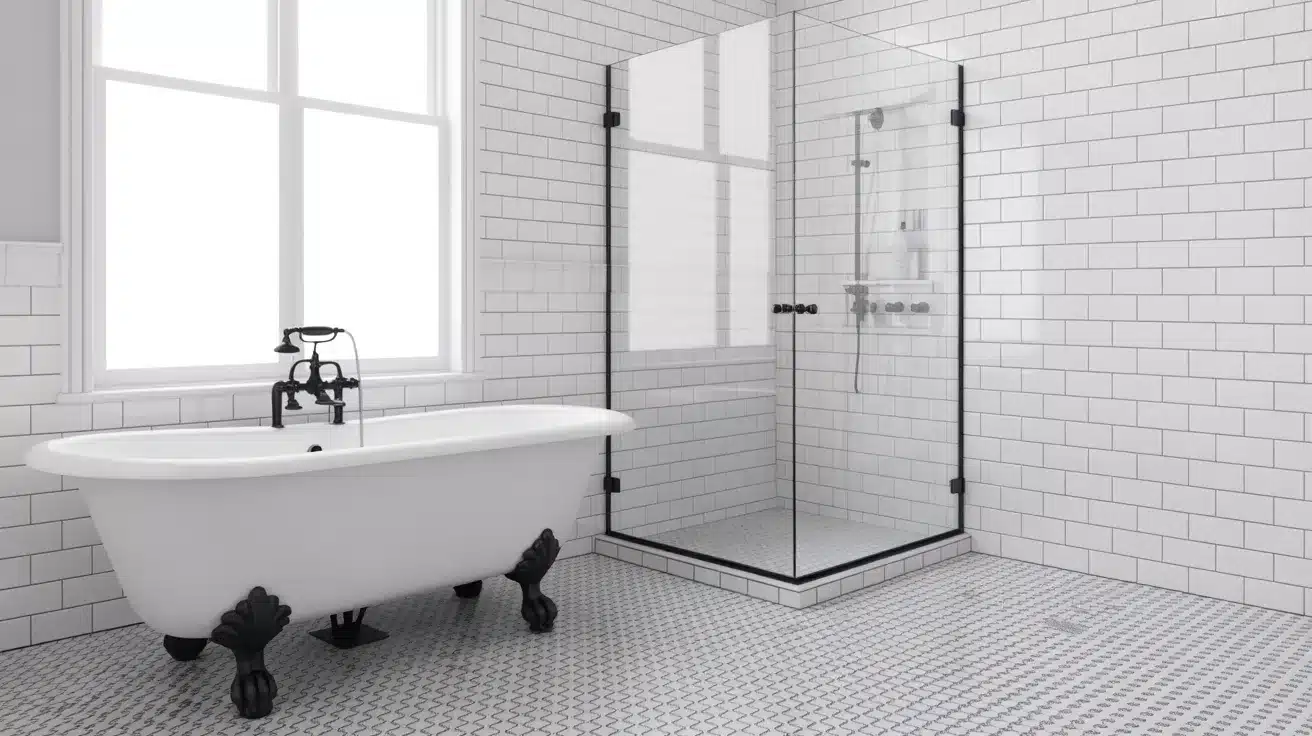
This approach uses Victorian shapes and materials but keeps the overall design clean and very current.
- Pair a clawfoot tub with a frameless glass shower in the same room for both character and convenience
- Use black-finish Victorian-style faucets against white tiles for a sharp, up-to-date contrast
- Keep color minimal: white, black, and one warm metal tone covers everything you need
6. The Victorian Bathroom with Wallpaper
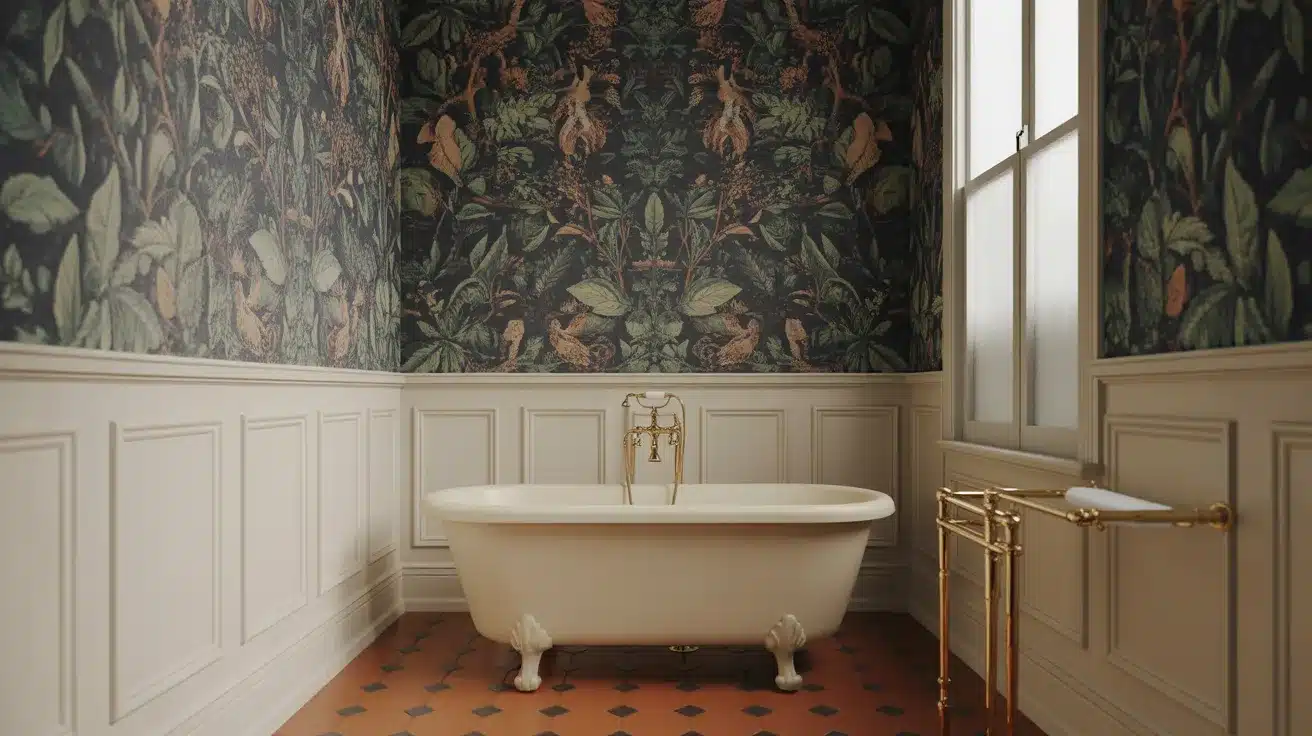
A bold wallpaper can carry the entire decorative weight of a Victorian bathroom when used on one feature wall.
- Choose a floral, damask, or botanical print in deep, rich tones to set the period mood
- Always use moisture-resistant or vinyl-coated wallpaper to handle bathroom humidity
- Pair the wallpapered wall with plain painted panelling below and simple white fixtures above
7. The Victorian Bathroom with Vintage Furniture
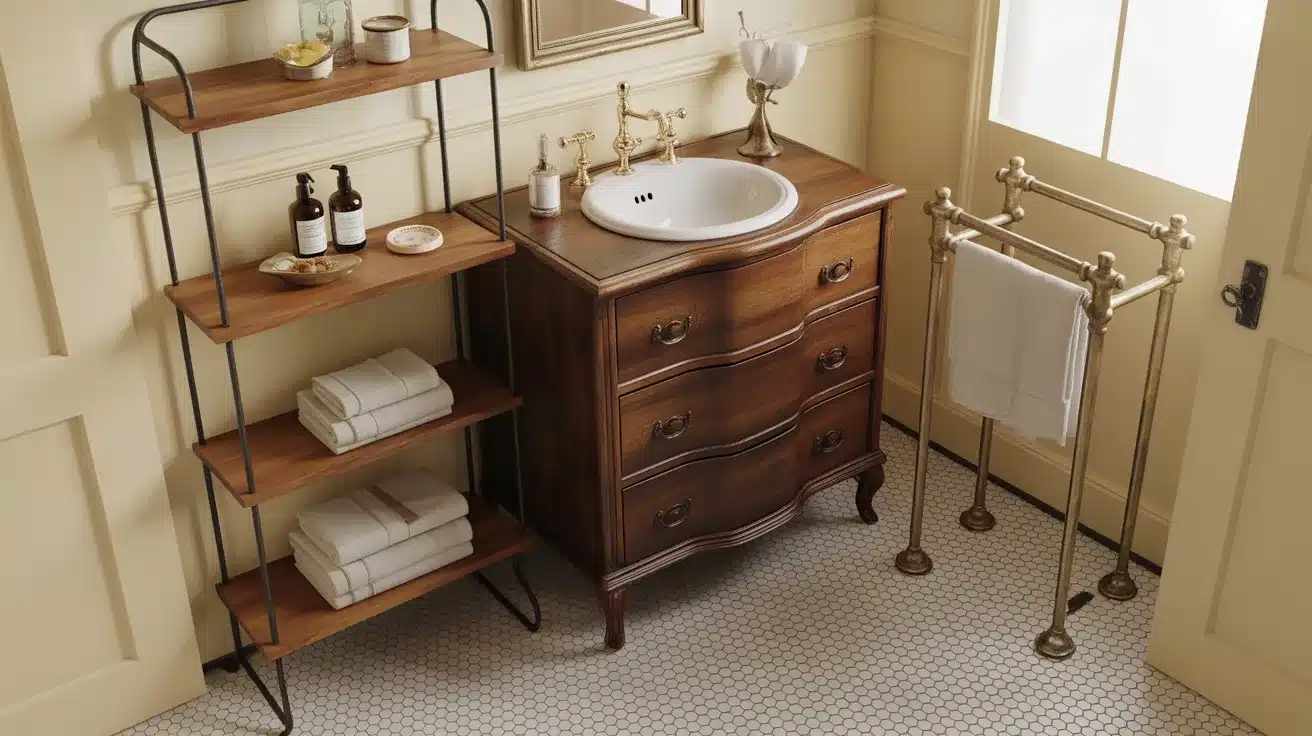
Freestanding furniture pieces add warmth and authenticity to a Victorian bathroom without a full refit.
- Use an upcycled wooden chest of drawers topped with a countertop basin as a vanity unit
- Add open shelving in dark wood or wrought iron for toiletry storage with a period feel
- Choose a freestanding towel rail in brass or chrome with thick, traditional horizontal bars
Tips for Getting Your Victorian Bathroom Right
The smallest decisions often have the biggest impact in a Victorian bathroom. These tips are drawn from real design practice and will save you time, money, and second-guessing.
- Choose one metal finish and commit to it. Use brass, chrome, or black across all hardware in the room; mixing metals makes the space feel unplanned.
- Go bold on the floor first. Hex, encaustic, or checkerboard tiles set the visual tone for the whole room before anything else goes in.
- Keep your walls calmer than your floor. White or off-white metro tiles on the walls help the room feel less visually busy.
- Always use dark grout with light tiles. Black or charcoal grout adds contrast and hides daily splashes far better than white grout ever will.
- Install wainscoting before you consider wallpaper. Wall panelling on the lower half provides structure to the room and protects the walls from moisture.
- Spend more on one hero fixture, less on everything else. A well-chosen freestanding tub or pedestal sink does more for the room than ten average accessories combined.
- Match your mirror frame to your tap finish. A brass-framed mirror with brass taps effortlessly pulls the whole room together.
- Check your ceiling height before buying a high-level toilet. These fittings need at least 8 feet of clear height to install correctly.
- Use porcelain lookalikes if you are on a budget. Porcelain tiles that mimic encaustic patterns cost far less and hold up better in wet conditions.
- Layer your lighting; never rely on just one source. Wall sconces alongside a central overhead fitting add warmth and depth that a single ceiling light simply cannot.
Victorian Style vs. Other Styles
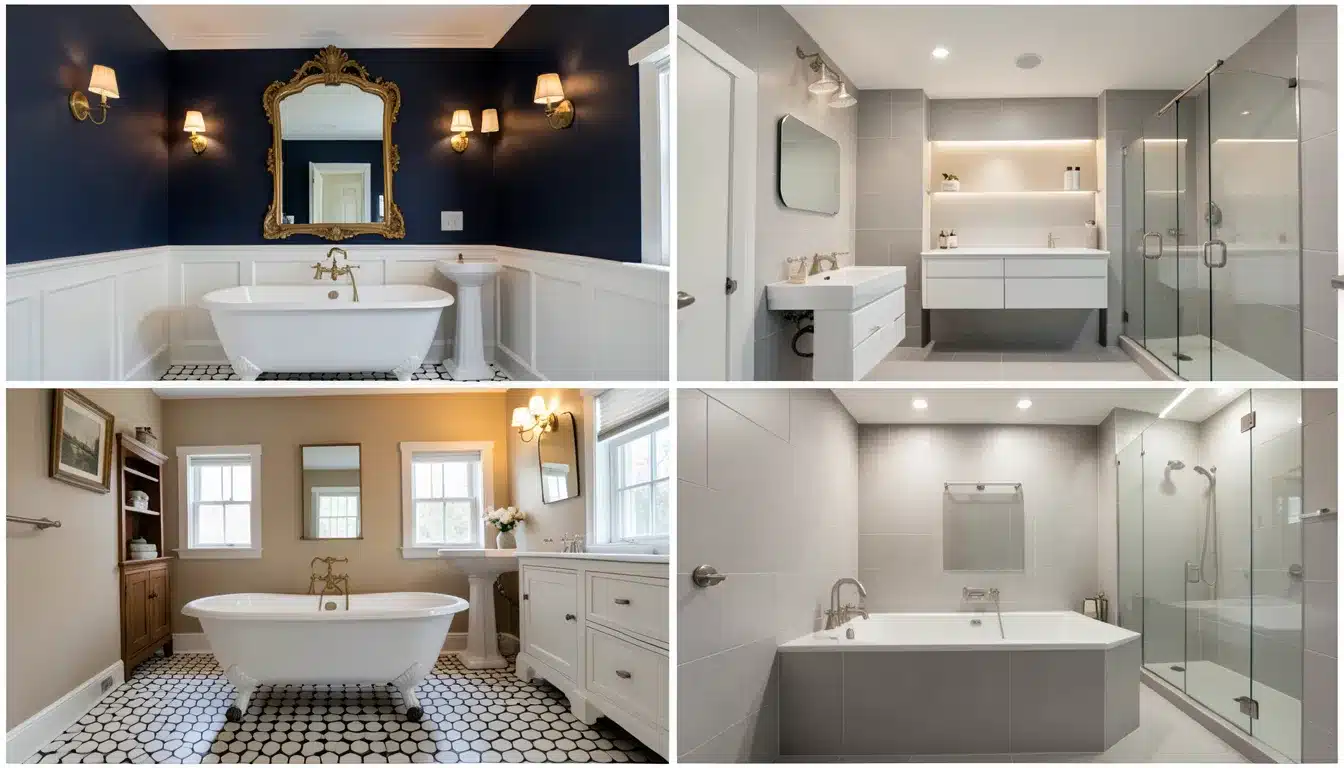
It helps to see how Victorian bathroom design sits alongside other popular styles. This comparison gives you a clear sense of what makes the Victorian look distinct.
| Feature | Victorian | Modern / Contemporary | Farmhouse | Industrial |
|---|---|---|---|---|
| Bathtub Style | Freestanding clawfoot or roll-top | Built-in soaking tub or walk-in shower | Freestanding slipper or drop-in tub | Exposed concrete or a deep soaking bath |
| Fixtures | Brass or chrome with cross-head handles | Matte black or brushed nickel, minimal form | Oil-rubbed bronze or antique brass | Pipe-style fittings in black or gunmetal |
| Floor Tiles | Hex, encaustic, or checkerboard patterns | Large-format porcelain in plain finishes | Terracotta, wood-look, or small hex | Concrete-look or raw stone tiles |
| Wall Treatment | Wainscoting, metro tiles, bold wallpaper | Flat paint, large tiles, no moulding | Shiplap, subway tiles, open shelving | Exposed brick, metro tiles, bare walls |
| Color Tone | Deep jewel tones with white accents | Neutral whites, greys, and blacks | Warm whites, creams, and soft greens | Dark greys, blacks, and rust tones |
| Overall Feel | Ornate, warm, historically layered | Clean, minimal, and very current | Relaxed, homey, and casual | Raw, urban, and stripped back |
Mixing Victorian Style with Modern Design
You do not have to commit fully to the Victorian era to get a great result. The most livable version of this style sits right between old and new.
Take a clawfoot tub in a classic shape, pair it with a frameless glass shower, and use black-finish faucets instead of traditional brass. Keep the hex tile floor, but go for a clean white on the walls.
This kind of balance keeps the space feeling warm and rich without making it feel like a museum. The goal is a bathroom that looks considered, not costumed.
One or two strong Victorian pieces, surrounded by cleaner choices, will do more than a room full of period details ever could.
Final Thoughts
A Victorian bathroom is not just a design choice. It is a long-term investment in a space that actually feels good to be in every single day.
The clawfoot tub, the patterned tiles, the warm brass fittings, none of these things go out of style. They have been around for over 150 years, and they are not going anywhere.
The best part? You do not need a huge budget or a listed period home to pull it off. A few smart choices go a long way. Start with the floor tiles. Add one strong fixture. Build from there.
Which part of the Victorian bathroom look are you most drawn to? Drop your thoughts in the comments below. We would love to hear what you are planning.