You know what makes the difference between a garden that limps along and one that absolutely thrives?
It’s not about finding the perfect tomato variety or the fanciest compost. It’s about giving your plants enough elbow room to actually grow.
When vegetables are crammed together, they compete for everything: sunlight, water, nutrients. And disease spreads like wildfire.
But space them thoughtfully, and suddenly you’re dealing with stronger plants, bigger harvests, and way fewer headaches. Think of it as designing a neighborhood where everyone gets along beautifully.
We’re walking through practical layouts and spacing guidelines that’ll help you create a garden that works smarter, not harder.
Vegetable Garden Planning Basics
Start with sunlight because it’s non-negotiable. Full sun crops like tomatoes and peppers need at least six hours of direct light, while leafy greens tolerate some shade.
Orient your beds north to south when possible so plants don’t shadow each other.
Next, assess your soil. Poor drainage? Raised beds solve compaction and pooling issues fast. Good native soil works beautifully in-ground with some amendments.
Finally, consider water access before planting. Position beds within hose reach or plan for drip irrigation early. Nothing’s worse than realizing the back corner can’t be watered. Smart placement now prevents frustration later.
Popular Vegetable Garden Layout Plans
Choosing the right layout isn’t about following trends; it’s about matching your garden to your actual space and how you like to work. Some layouts maximize every inch, others prioritize easy access.
Here’s how 5 proven approaches stack up with real dimensions and plant lists you can copy straight into your yard.
1. Traditional Row Garden
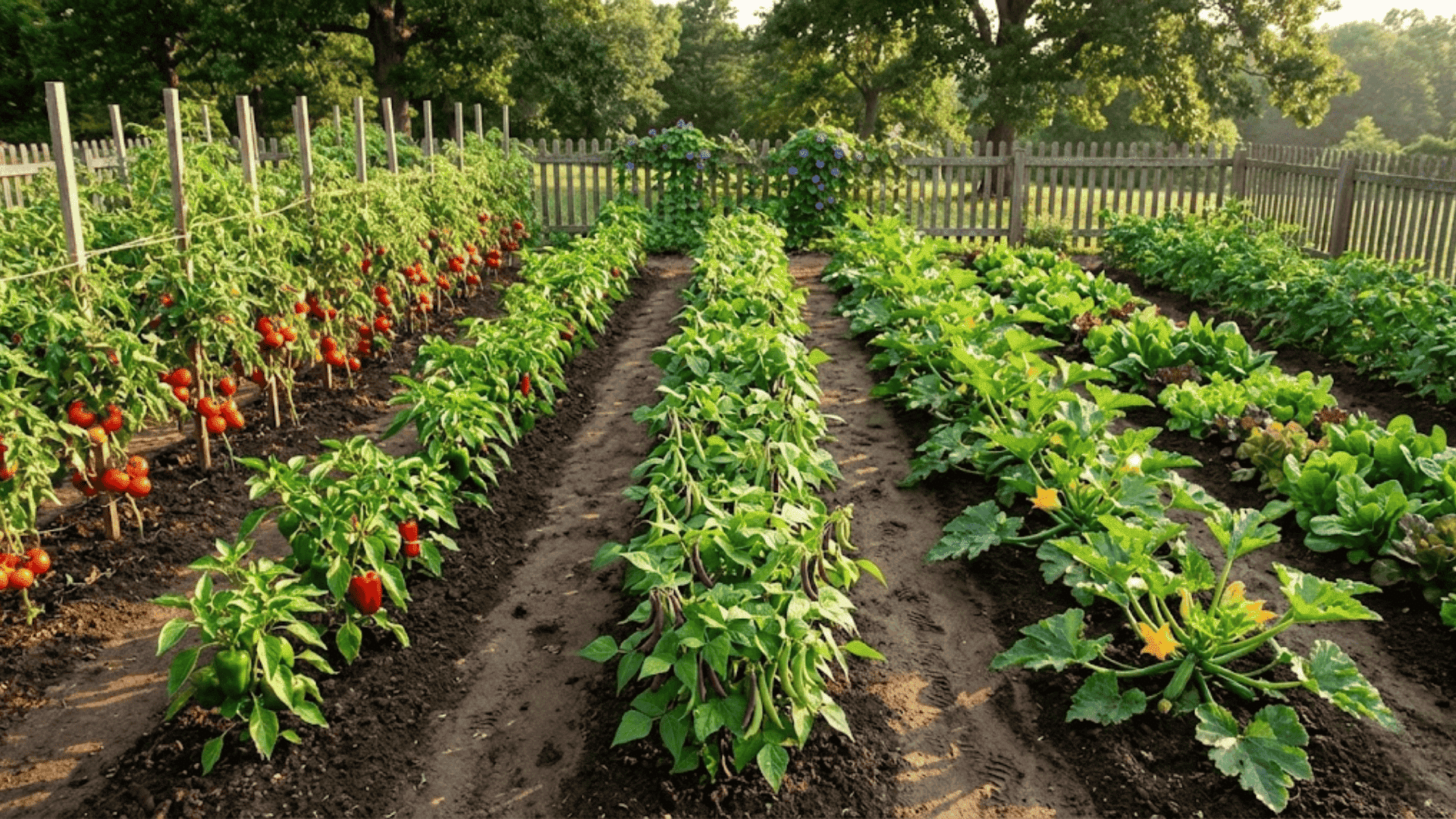
Style: Classic parallel rows with walking paths between them
Best For: Large backyards, rural properties, gardeners who prefer straightforward organization
Garden Size: 20′ × 30′ plot
Plant List:
- Row 1: Tomatoes (5 plants)
- Row 2: Peppers (8 plants)
- Row 3: Bush beans (continuous)
- Row 4: Zucchini (4 plants)
- Row 5: Lettuce and spinach (continuous)
Spacing & Arrangement:
Space rows 3 feet apart for comfortable walking and tool access. Within rows, follow individual plant spacing: tomatoes get 2 feet between plants, peppers 18 inches, bush beans 4 inches.
This layout wastes some ground but makes weeding and harvesting incredibly simple. You can walk right up to every plant without stepping over anything or losing your balance.
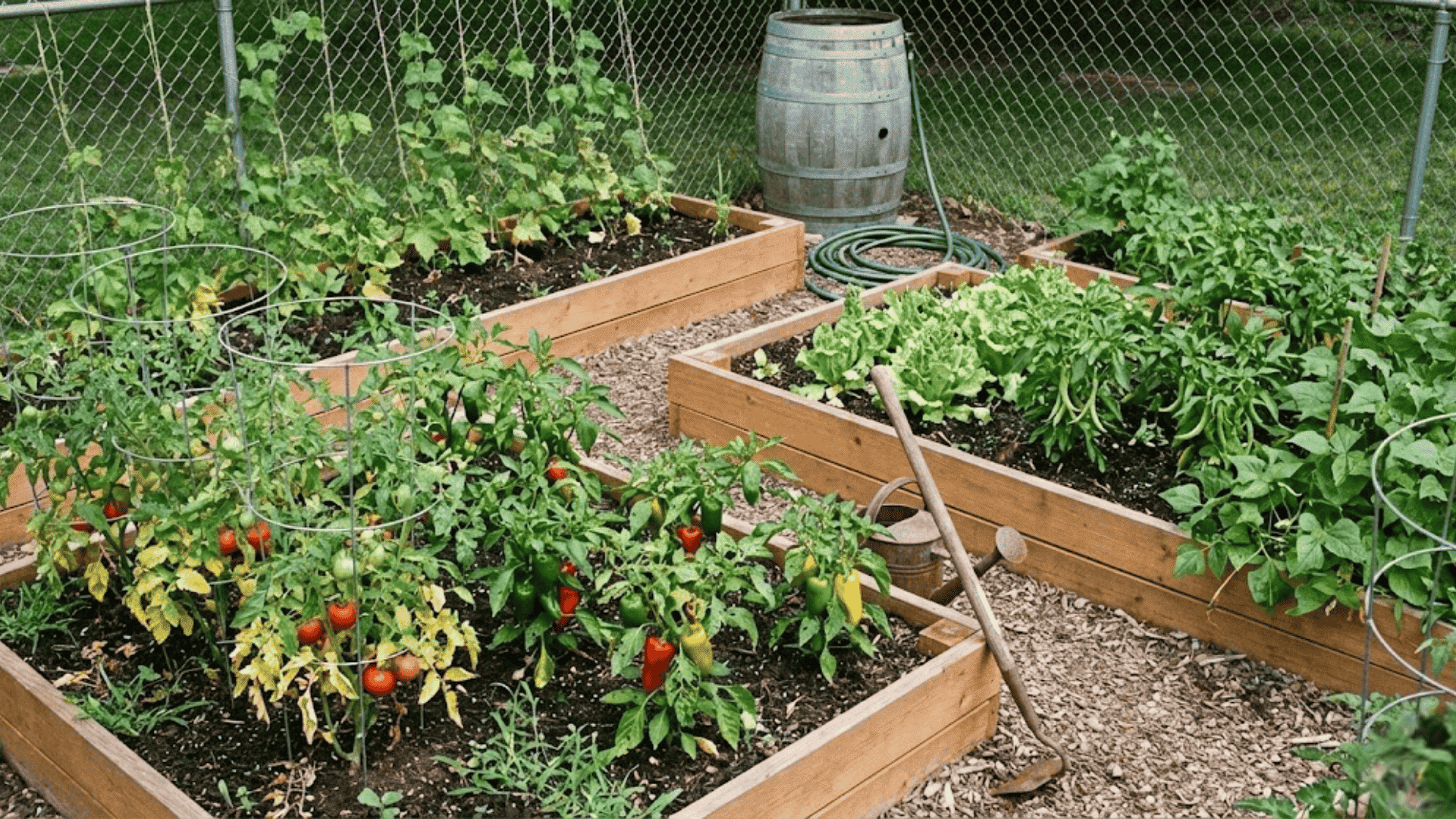
2. Raised Bed Garden Layout
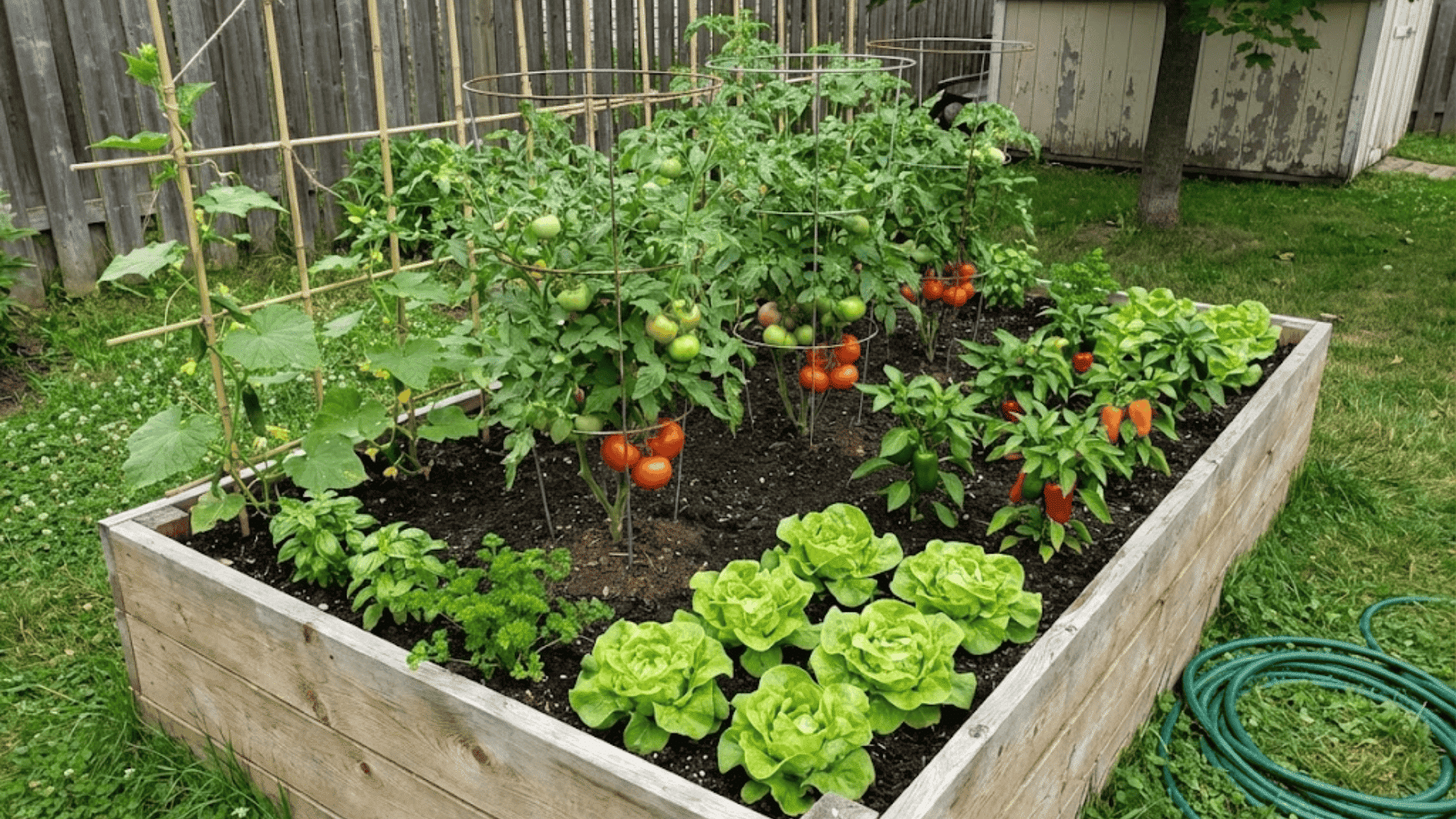
Style: Contained wooden or stone beds filled with quality soil
Best For: Small to medium yards, areas with poor native soil, gardeners wanting season extension
Garden Size: 4′ × 8′ bed (typical starter size)
Plant List:
- 3 tomato plants
- 4 pepper plants
- 6 lettuce heads
- 1 cucumber (with trellis)
- Basil and parsley around the edges
Spacing & Arrangement:
Plant in blocks rather than rows since you never walk on the soil. Tomatoes go down the center, 2 feet apart. Peppers flank one side at 18-inch spacing.
Lettuce fills gaps with 8 inches between heads. The cucumber climbs vertically to save floor space. This intensive approach nearly doubles what you’d grow in the same ground-level area.
3. Square Foot Garden Layout
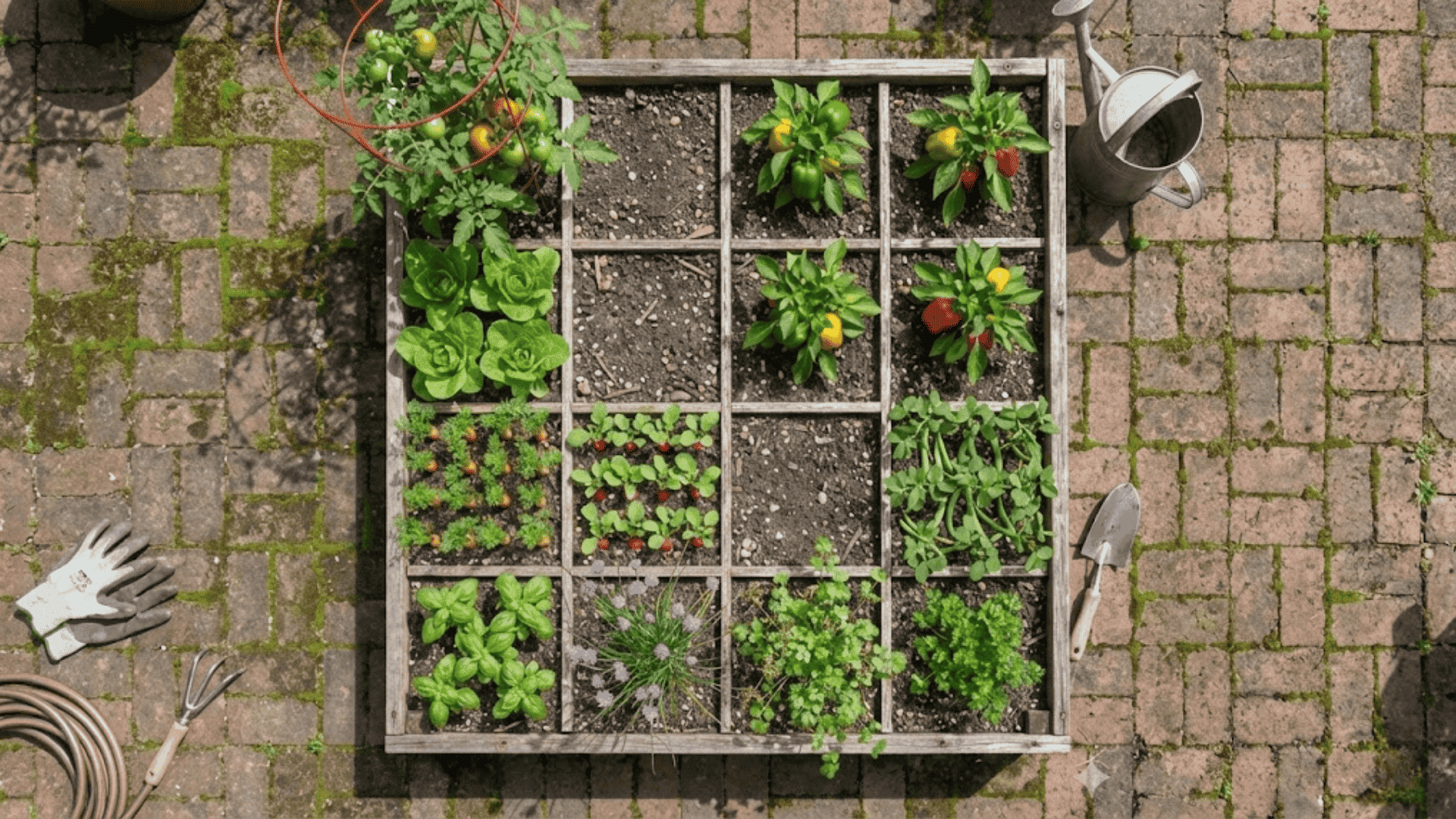
Style: Grid system with 1-foot squares, each planted according to vegetable size
Best For: Beginners, precise planners, anyone with limited space who wants maximum variety
Garden Size: 4′ × 4′ bed (16 squares)
Plant List:
- 1 tomato (1 square)
- 4 peppers (4 squares, 1 per square)
- 4 lettuce (1 square)
- 16 carrots (1 square)
- 16 radishes (1 square)
- 9 bush beans (1 square)
- Remaining squares: herbs and greens
Spacing & Arrangement:
The grid eliminates guesswork completely. Large plants like tomatoes and peppers get their own square. Medium plants like lettuce go 4 per square. Small crops like radishes pack 16 per square.
Mark your grid with string or wood strips. This system particularly shines for succession planting since you harvest and replant individual squares throughout the season.
4. Container Vegetable Garden Layout
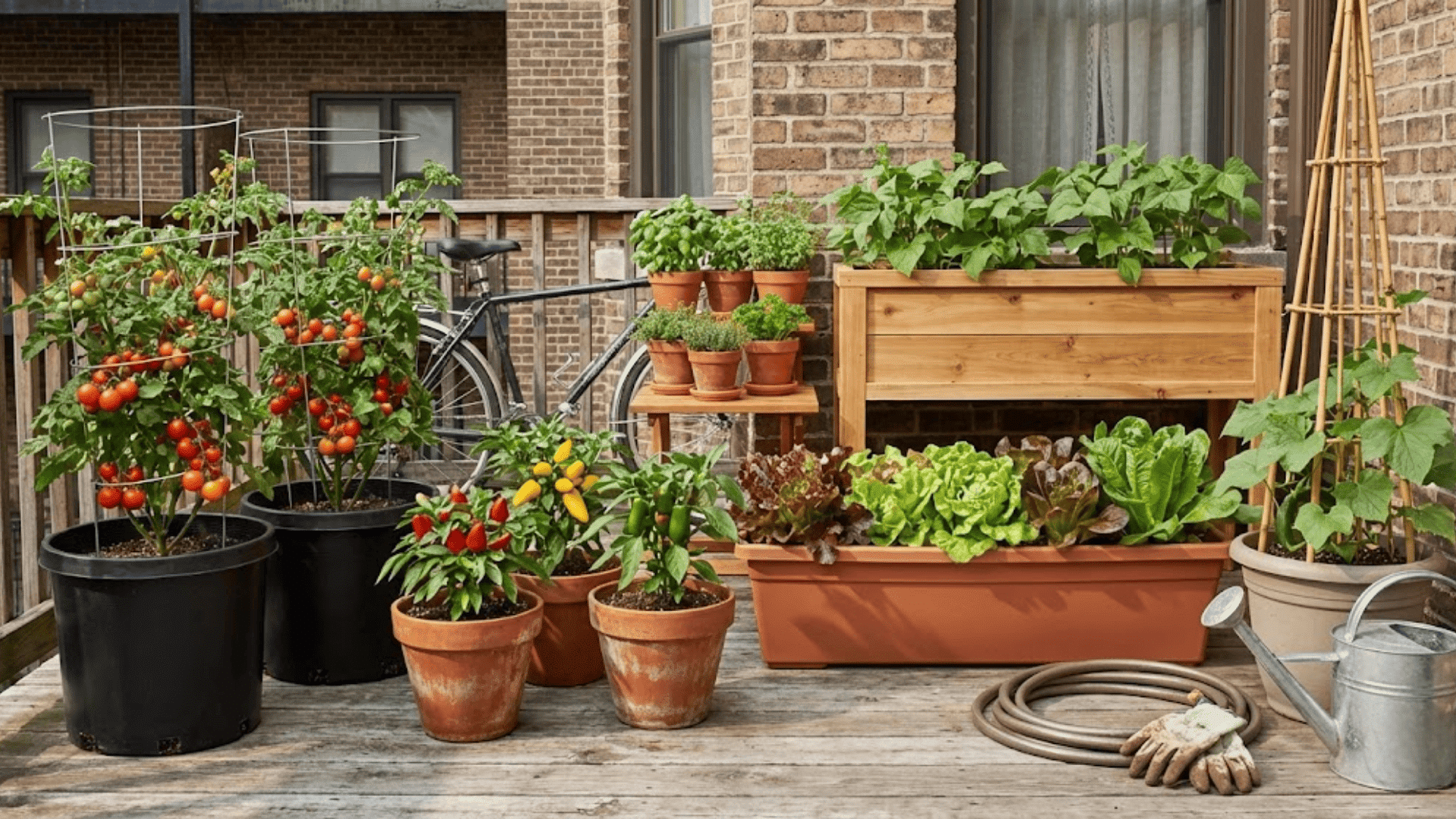
Style: Individual pots, grow bags, and planters on patios or balconies
Best For: Renters, balcony gardeners, anyone without yard space
Garden Size: 8′ × 10′ patio area
Plant List:
- 2 tomatoes (5-gallon pots)
- 3 peppers (3-gallon pots)
- Lettuce mix (shallow 18″ planter)
- Bush beans (10″ deep window box)
- Herbs (clustered small pots)
Spacing & Arrangement:
Match container depth to root needs. Tomatoes and peppers need deep pots with excellent drainage. Lettuce thrives in wide, shallow containers.
Arrange taller pots toward the back or sides so they don’t shade smaller plants. Add trellises to pots for vertical crops. Group containers that need similar watering together to simplify your routine.
5. Small Backyard & Urban Layout
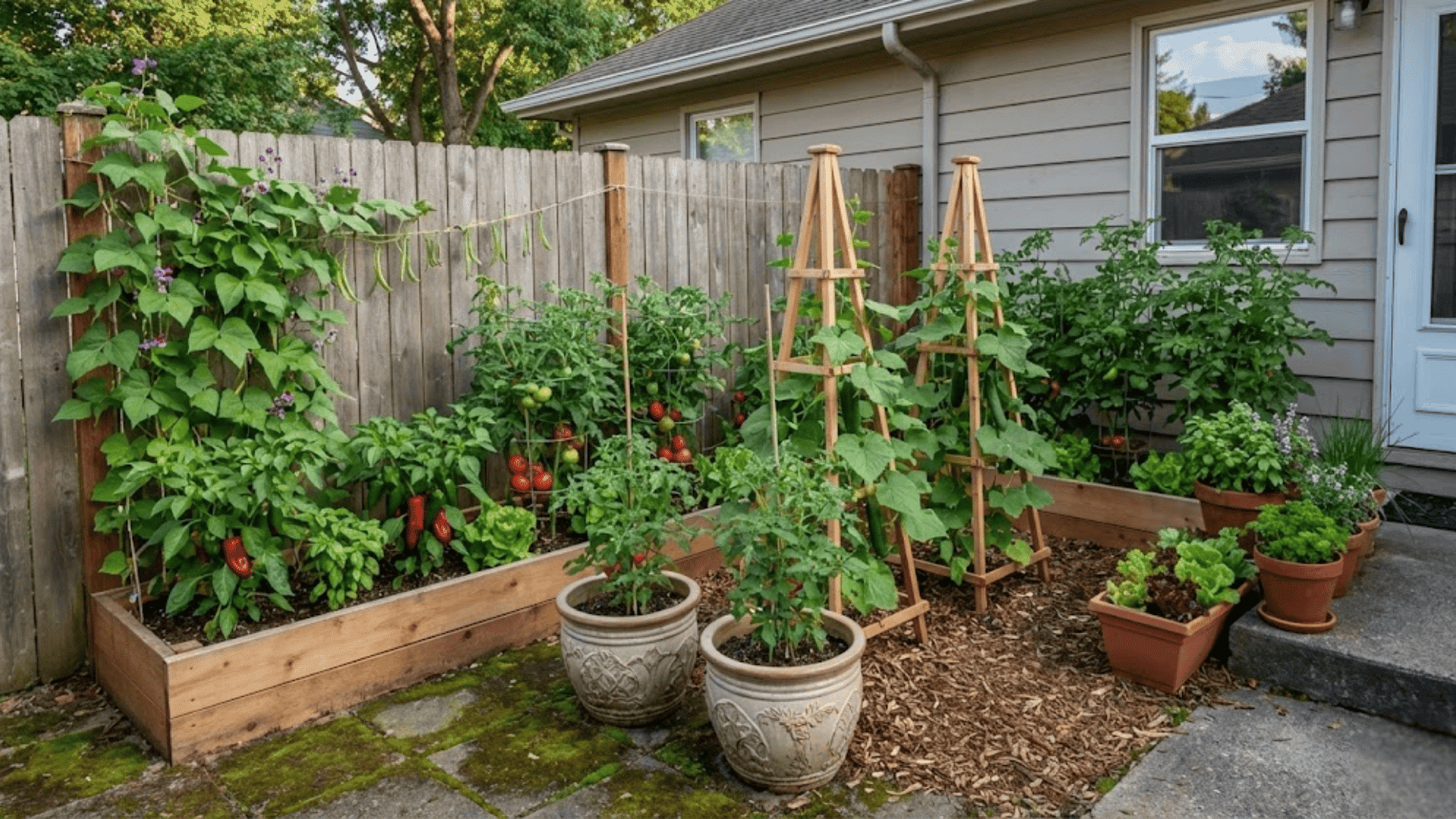
Style: Mixed approach combining raised beds, containers, and vertical supports
Best For: Compact yards, urban lots, gardeners maximizing every available spot
Garden Size: 10′ × 15′ total space (mixed elements)
Plant List:
- 4 tomatoes (2 in bed, 2 in containers)
- Pole beans on fence trellis
- 6 peppers in a raised bed
- Lettuce and herbs in containers near the kitchen
- Cucumbers climbing vertical supports
Spacing & Arrangement:
Layer your garden vertically and horizontally. Run a raised bed along the back fence for tomatoes and peppers with standard spacing. Train pole beans up the fence itself.
Cluster containers near your door for easy herb access. Cucumbers climb obelisks or string trellises. Companion plant basil between tomatoes and tuck lettuce underneath taller crops where it gets afternoon shade.
Understanding Vegetable Spacing
Spacing isn’t arbitrary; it’s about survival. When plants grow too close, their roots tangle underground, fighting for the same nutrients and water, leaving everyone stunted and stressed.
Above ground, crowded leaves trap moisture and block airflow, creating the perfect breeding ground for fungal diseases like powdery mildew and blight.
Tight spacing also means plants shade each other out, and without adequate sunlight, they stretch tall and weak instead of growing strong and productive.
Give your vegetables proper room, and you’re not just following rules; you’re letting each plant access everything it needs to actually thrive and produce heavily.
Vegetable Garden Spacing Chart
Here’s the spacing breakdown you can actually use. Row spacing is the distance between your planted rows, while plant spacing is how far apart individual plants sit within that row.
Get these numbers right, and you’ve solved half your garden problems before they start.
| Vegetable | Plant Spacing | Row Spacing | Notes |
|---|---|---|---|
| Tomatoes | 24-36 inches | 36-48 inches | Determinate closer, indeterminate wider |
| Peppers | 18-24 inches | 24-36 inches | Compact at 18″, large bells at 24″ |
| Cucumbers | 12-18 inches | 48-60 inches | Vining 18″, bush 12″ |
| Lettuce | 6-10 inches | 12-18 inches | Leaf 6″, head 10″ |
| Carrots | 2-4 inches | 12-18 inches | Thin after germination |
| Beans (Bush) | 4-6 inches | 18-24 inches | Plant thick, thin if needed |
| Beans (Pole) | 6-8 inches | 30-36 inches | Needs vertical support |
| Squash (Summer) | 24-36 inches | 48-60 inches | Zucchini sprawls wide |
| Squash (Winter) | 36-48 inches | 60-72 inches | Butternut needs serious room |
| Broccoli | 18-24 inches | 24-36 inches | Crowding = small heads |
Want this spacing information at your fingertips while you’re actually planting? We’ve compiled all the spacing charts, layout dimensions, and plant lists into a printable PDF you can take straight to your garden.
[Download Your Free Vegetable Garden Spacing Guide Here]
Companion Planting & Spacing
Companion planting isn’t just about which plants like each other; it’s about spacing them so everyone benefits. Some combinations actually let you plant closer, while others need extra breathing room to work their magic.
- Classic Pairings that Save Space: Basil tucked between tomatoes at standard spacing repels pests and uses otherwise wasted ground.
- Combinations Needing Extra Room: Beans and brassicas both love nitrogen but need their full spacing, or they compete hard.
- Pest Control Through Strategic Spacing: Marigolds planted every 24″ along bed edges create a protective barrier without crowding vegetable roots.
- Vertical Companions: Tall crops like corn or sunflowers provide afternoon shade for heat-sensitive lettuce planted 12″ away on the south side.
Vertical Gardening and Space Efficiency
Growing up instead of out multiplies your garden’s capacity without adding square footage.
Cucumbers, pole beans, peas, and indeterminate tomatoes all climb happily, freeing ground space for lettuce, herbs, or radishes planted underneath.
Install sturdy trellises or cages before planting so you don’t damage roots later. Vertical crops need the same root spacing as their sprawling cousins, but their leaves take up zero horizontal real estate.
A cucumber on a trellis uses 1 square foot at ground level instead of sprawling across 3.
Train vines early by gently wrapping new growth around supports, and suddenly your small garden produces like a much larger one.
Common Vegetable Garden Spacing Mistakes
Even experienced gardeners fall into these spacing traps. Recognizing them now saves you from stunted plants and disappointing harvests later.
- Overcrowding Seedlings: Planting seeds at final spacing feels wasteful, but thinning later is essential because cramped seedlings never recover their growth potential.
- Ignoring Mature Plant Size: That tiny tomato transplant will sprawl 3 to 4 feet wide by summer, so plan for the full-grown beast, not the starter plant.
- Planting Too Close to Bed Edges: Leave at least 6 inches from any edge, or plants lean out searching for space, and their roots hit barriers.
- Forgetting Airflow Needs: When mature leaves touch constantly, they trap moisture against stems, inviting fungal diseases that spread through the entire bed.
Spacing mistakes compound over the season. A few extra inches now prevents weeks of struggle with disease, competition, and poor yields down the line.
Sample Vegetable Garden Layout Plans
Sometimes the best way to understand spacing is to see it mapped out completely. Here are three ready-to-copy garden plans with exact measurements you can replicate in your own space.
4×8 Raised Bed Layout
The perfect starter size that holds a real variety without overwhelming you.
Crop Placement:
- Back row: 3 tomato plants spaced 30″ apart
- Middle section: 6 peppers in 2 rows, 20″ between each plant
- Front section: 8 lettuce heads in staggered rows at 8″ spacing
- Front edge: basil and parsley every 10″
Spacing Breakdown:
| Element | Distance from Edge/Row | Notes |
|---|---|---|
| Tomatoes from the back edge | 6″ | Room for cages |
| Between tomato plants | 30″ | Prevents overlap |
| Tomato to pepper row | 24″ | Breathing room between crops |
| Between pepper plants | 20″ | Tight but functional grid |
| Pepper to lettuce row | 18″ | Space for pepper bush-out |
| Between lettuce heads | 8″ | Staggered pattern |
| Herbs from the front edge | 4″ | Easy access for harvesting |
Total Capacity: 3 tomatoes, 6 peppers, 8 lettuce leaves, plus herbs in 32 square feet
10×10 In-Ground Garden Layout
A hundred square feet gives you serious production with manageable weekend care.
Crop Grouping:
- Create 4 beds at 4′ × 4′ each with 2′ paths crossing through the middle
- Northwest bed: 4 tomatoes in corners with basil center
- Northeast bed: 9 peppers in a 3×3 grid at 18″ spacing
- Southeast bed: pole beans on trellises with lettuce underneath
- Southwest bed: 2 zucchini in back, radishes and carrots in front
Spacing Breakdown:
| Bed Section | Crop | Plant Spacing | Row/Grid Pattern |
|---|---|---|---|
| Northwest | Tomatoes | 24″ between plants | 4 corners arrangement |
| Basil | 12″ spacing | Center fill | |
| Northeast | Peppers | 18″ all directions | 3×3 grid |
| Southeast | Pole beans | 6″ along trellis | North and east edges |
| Lettuce | 8″ spacing | Underneath beans | |
| Southwest | Zucchini | 36″ between plants | Back half only |
| Radishes/Carrots | 3″ spacing | Front succession area |
Walkway Spacing:
- 2′ paths let you reach 2′ into any bed from either side
- No stepping on growing soil needed
- Mulch paths with wood chips for clean walking surfaces
Beginner-Friendly Garden Plan
Never grown food before? Start here with crops that forgive mistakes.
Easy Crops (4′ × 6′ space):
- 2 cherry tomatoes down the center, 30″ apart
- 4 peppers (2 per side) at 20″ spacing
- 6 lettuce plants up front at 8″ apart
- Basil filling gaps every 10″
Spacing Breakdown:
| Crop | Position | Plant Spacing | Edge Clearance |
|---|---|---|---|
| Cherry tomatoes | Centerline | 30″ between plants | 6″ from each end |
| Peppers | Flanking tomatoes | 20″ from tomato stems | 2 plants per side |
| Lettuce | Front section | 8″ between heads | 2 rows |
| Basil | Gap filler | 10″ spacing | Wherever space allows |
Maintenance: Water everything together, harvest as you go, 15 minutes weekly care
Seasonal Layout Planning
Your garden shouldn’t sit empty after spring harvests or stay locked into one planting all season. Smart spacing means planning for what comes next so you’re harvesting continuously from April through October.
| Season | Crops | Spacing | Timeline |
|---|---|---|---|
| Early Spring | Lettuce, spinach, peas, radishes, carrots | Standard spacing | 4-6 weeks before last frost |
| Late Spring | Tomatoes, peppers, cucumbers, beans | Full spacing, 60°F+ soil | After the last frost |
| Summer Peak | All warm-season crops | Maintain spacing | June-August production |
| Mid-Summer Succession | Bush beans, lettuce, cucumbers | Same as spring | 8-10 weeks before first frost |
| Fall Cool Season | Kale, broccoli, cabbage, spinach | Full spacing | 6-8 weeks before first frost |
Tools to Help Plan Garden Layout & Spacing
You don’t need to eyeball spacing or hope for the best. A few simple tools take the guesswork out of layout planning and help you visualize exactly where everything goes before you plant a single seed.
- Graph Paper: Use quarter-inch grid paper where each square equals 6 inches or 1 foot, sketch your beds, pencil in plants with proper spacing, and erase until it’s perfect.
- Garden Planner Apps: Digital tools like GrowVeg Garden Planner and Old Farmer’s Almanac Garden Planner let you drag and drop vegetables with automatic spacing guides and offer free 7-day trials to test before committing.
- Printable Spacing Charts: Download and laminate the spacing chart from this guide, slip it into a sheet protector, and keep it in your shed for instant reference while planting.
The best tool is whichever one you’ll actually use consistently. Start simple with graph paper or jump to digital planning, but having a visual plan beats winging it every time.
The Bottom Line
Smart vegetable garden layout plans and spacing aren’t about perfection; they’re about setting yourself up to actually enjoy the growing season.
When every plant has the room it needs, you spend less time battling problems and more time harvesting.
From sketching your first small bed to redesigning an entire backyard, these spacing guidelines give you a reliable foundation to build on. Your garden will thank you with healthier plants, bigger yields, and fewer frustrations.
Now get out there and start planning. Got questions or want to share your layout? Drop a comment below, we’d love to hear what’s working in your garden.