

Companion planting often gets treated like a set of rigid rules. Follow the chart, plant the pairs, and hope for the best. That approach leaves a lot of people confused when results don’t match expectations.
The truth is quieter and more practical. Vegetable garden companion planting is less about matching plants and more about understanding how they share space, resources, and time.
When you understand those interactions, decisions get easier, and mistakes feel less costly.
In this guide, I’ll break down how companion planting actually works, why some combinations help while others struggle, and how to apply the idea without overthinking it. Let’s start by getting clear on what companion planting really means.
What is Companion Planting?
Companion planting means growing certain plants close together because they interact in useful ways. Sometimes one plant helps protect another. Sometimes they share space better. Sometimes they simply don’t get in each other’s way.
This is different from monocropping, where one crop fills an entire bed or row. Monocropping makes planning simple, but it also creates problems. Pests find food easily. Soil nutrients get drained in one direction. Diseases spread fast.
Gardeners use companion planting to break those patterns. Instead of asking one plant to do everything alone, they let plants share the work. That sharing can look small on the surface, but over a season it adds up.
In short, companion planting is the practice of growing certain plants near each other to reduce stress, limit pest damage, and use space and soil more efficiently. It works through physical effects like scent, root depth, and shading rather than strict formulas. Results depend on spacing, timing, and growing conditions rather than fixed pairings.
How Companion Planting Works in Practice
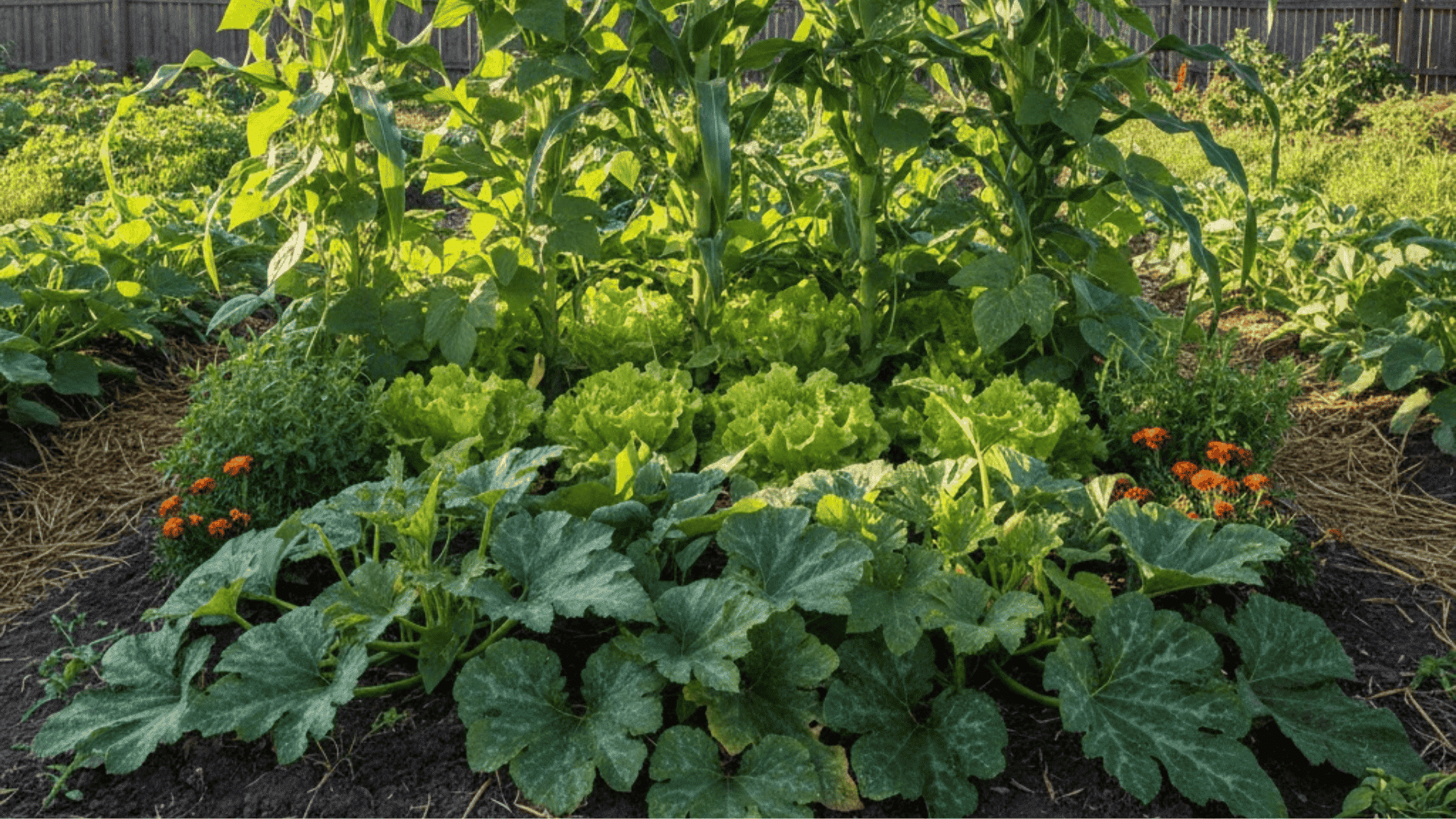
Companion planting works through a few basic mechanisms. They are slow, physical processes that happen whether we notice them or not.
1. Pest Control Benefits
Some plants give off strong scents. Others have leaf shapes or flowers that confuse insects. When pests can’t easily find their target, the damage they do also drops.
There are also trap crops. These are plants pests prefer more than your main crop. The pests go where the food is easiest.
For example, basil near tomatoes can make it harder for certain insects to locate tomato plants. Nasturtiums near cabbage often pull pests away from the cabbage itself. The key is not that pests disappear. It’s that their attention shifts.
2. Soil Health and Nutrient Sharing
Legumes like beans and peas work with soil bacteria to add nitrogen to the soil. That nitrogen becomes available to nearby plants over time.
Root depth matters too. Shallow-rooted plants pull nutrients from the top layer. Deep-rooted plants pull from lower layers. When you mix them, they are less likely to compete directly.
This only works when plants have enough space. Crowding cancels the benefit.
3. Growth Support and Shade
Tall plants can block harsh sun. Vining plants can climb sturdy neighbors. Wide leaves can shade soil and reduce moisture loss.
Together, these effects shape a small microclimate around the plants. Soil temperatures stay more stable. Moisture doesn’t disappear as fast after watering or rain.
Overall, plants experience less stress, which often leads to steadier growth, even if it doesn’t look fast or dramatic at first.
Benefits of Companion Planting in Vegetable Gardens
When companion planting works, the benefits are gradual but steady.
- Fewer pests because insects struggle to focus on one crop
- Better yields from reduced stress, not faster growth
- Healthier soil due to varied root activity
- Less need for chemicals because problems build more slowly
- More efficient space use when plants occupy different layers
None of these happen overnight. They show up over a full season.
Common Vegetable Companion Planting Combinations
These examples are starting points, not rules. Always adjust based on space, sunlight, and soil.
For a crop-specific example, this guide explains how companion planting plays out with strawberries in everyday garden conditions.
1. Tomatoes
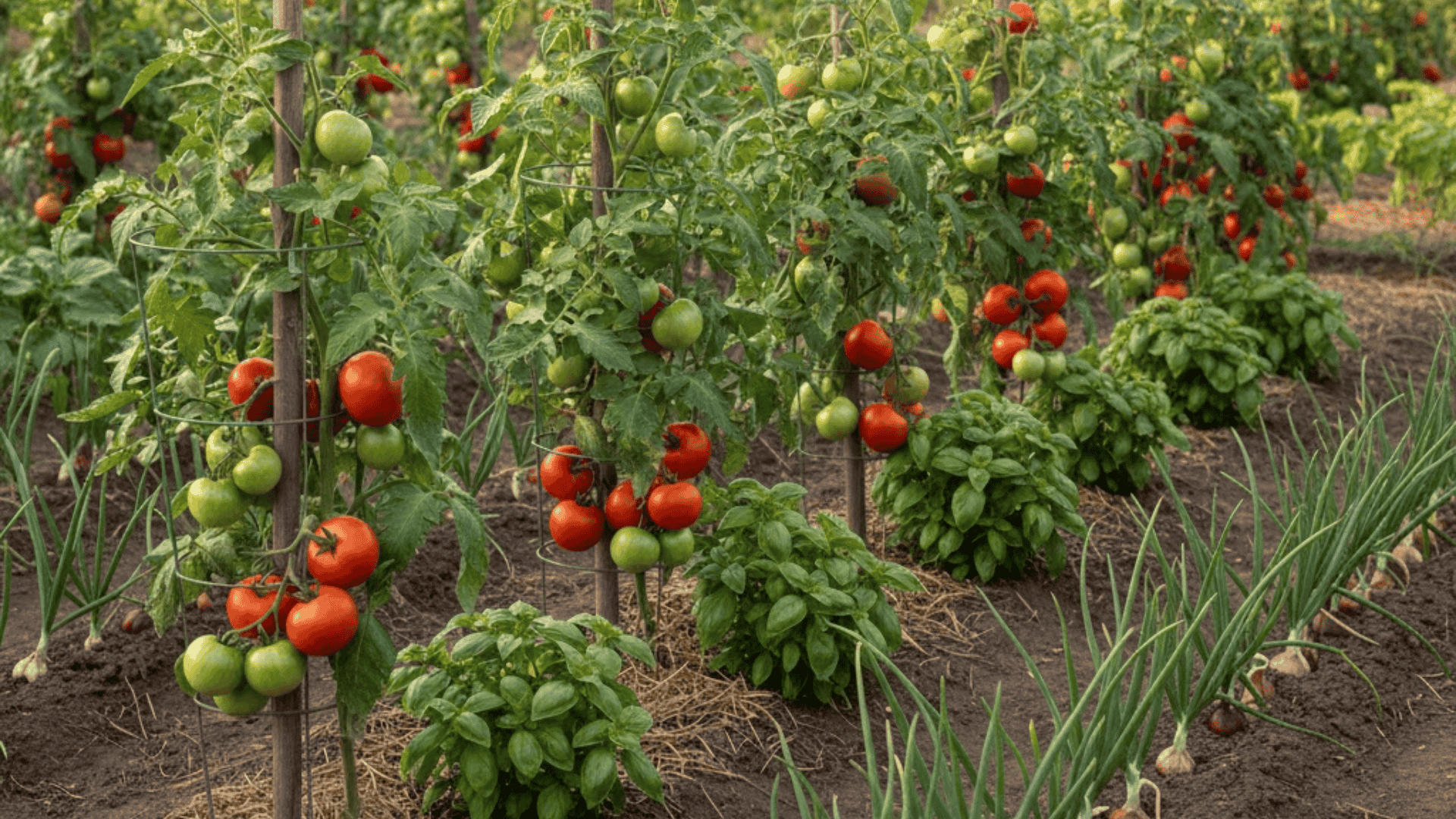
Tomatoes take up a lot of space above and below the soil. They pull heavily from nutrients and need steady airflow to stay healthy.
The best companions either stay compact, grow in a different soil layer, or help reduce stress around the plant. Issues show up when nearby crops demand the same resources or share the same diseases.
These examples show common patterns, not rules.
| Tomatoes – Companion Guide | Why It Matters |
|---|---|
| Basil (choose) | Disrupts pest movement and stays compact |
| Marigolds (choose) | May help reduce soil pests over time |
| Carrots (choose) | Use deeper soil later in the season |
| Onions (choose) | Shallow roots and strong scent |
| Corn (avoid) | Competes for nutrients and shares pests |
| Potatoes (avoid) | Shares disease risks and heavy feeding needs |
2. Cucumbers
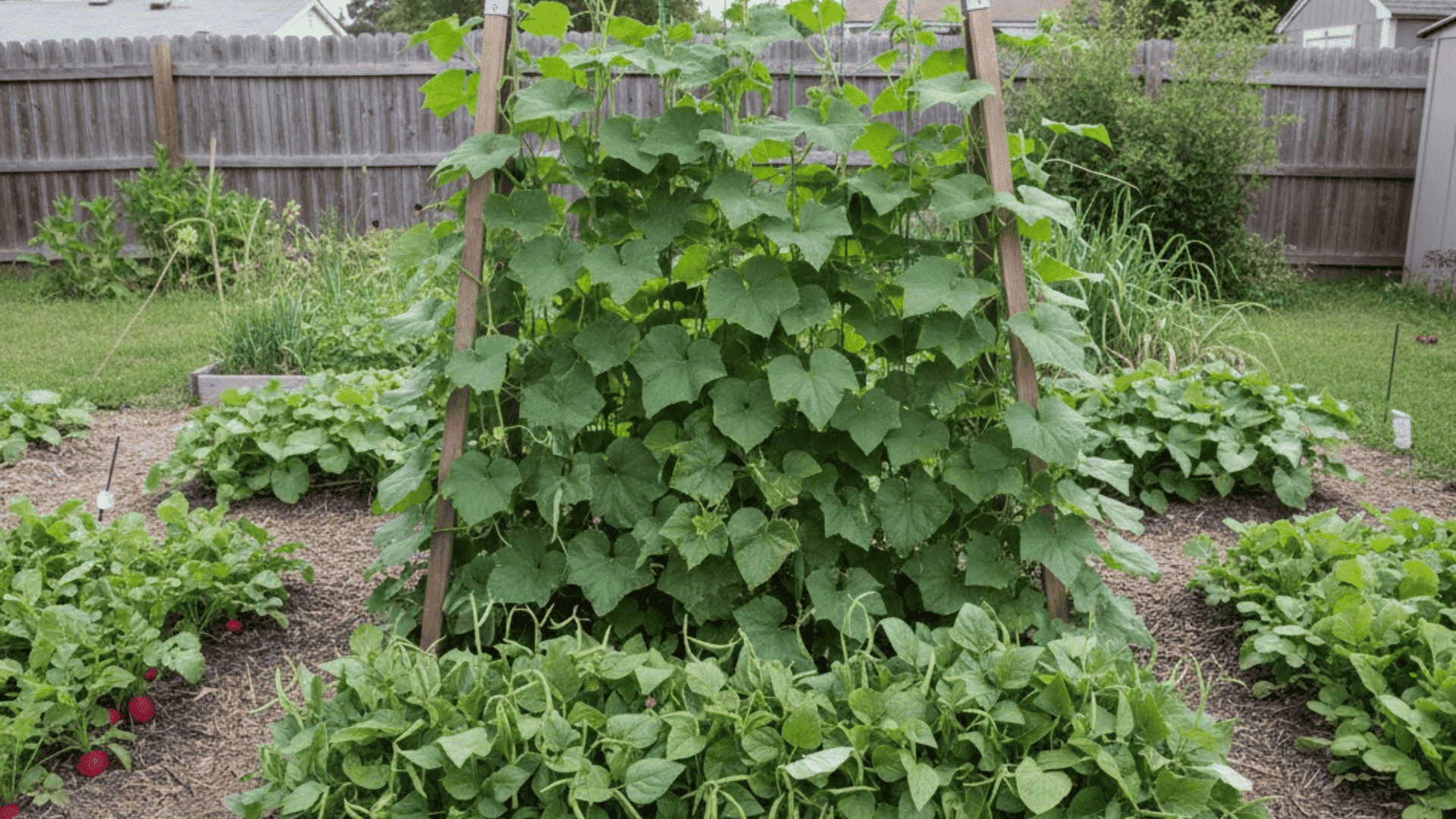
Cucumbers grow quickly and spread wide. They respond strongly to soil quality and airflow. Good companions either improve the soil or mature fast and clear space. Poor companions tend to crowd them early or compete for the same nutrients.
| Cucumbers – Companion Guide | Why It Matters |
|---|---|
| Beans (choose) | Add nitrogen and grow upright |
| Peas (choose) | Improve soil without heavy competition |
| Radishes (choose) | Harvest early and free up space |
| Dill (choose) | Attracts beneficial insects |
| Potatoes (avoid) | Compete for nutrients and space |
| Sage (avoid) | Growth habits and root needs clash |
3. Broccoli and the Cabbage Family
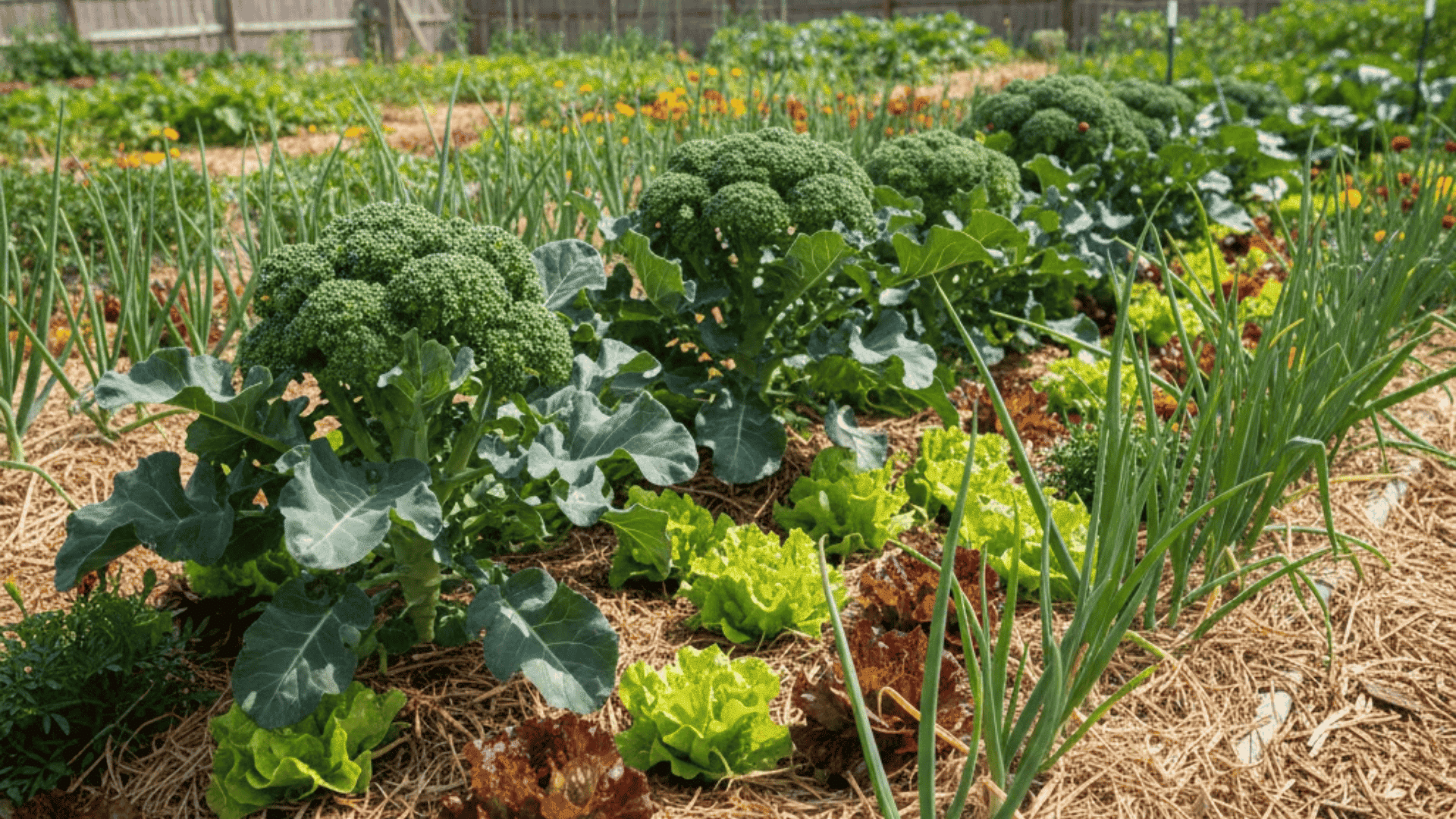
These plants grow slowly at first and attract persistent pests. Helpful companions interfere with pest behavior or protect the soil while brassicas establish. Problems arise when nearby plants pull too many nutrients or attract overlapping pest pressure.
| Broccoli & Cabbage – Companion Guide | Why It Matters |
|---|---|
| Onions (choose) | Strong scent disrupts pest activity |
| Garlic (choose) | Helps interfere with insect behavior |
| Dill (choose) | Attracts beneficial insects |
| Lettuce (choose) | Shades soil and matures quickly |
| Strawberries (avoid) | Compete for nutrients and space |
| Tomatoes (avoid) | Heavy feeders with shared pest issues |
4. Root Vegetables
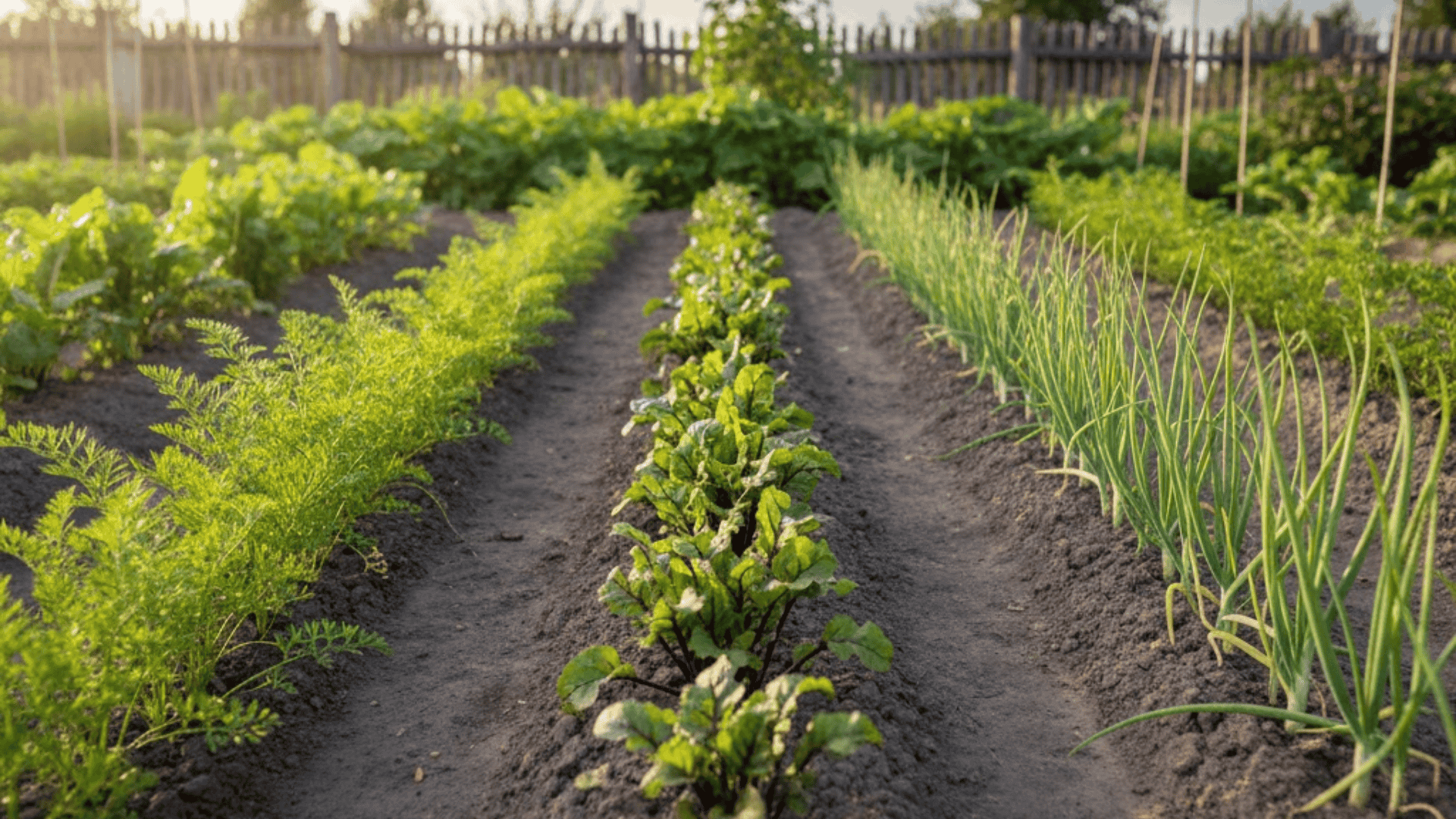
Root crops rarely conflict above ground. Their success depends on what happens underground. Depth, spacing, and timing matter more than plant type. Companion planting works when roots have room to expand without pressure.
| Root Vegetables – Companion Guide | Why It Matters |
|---|---|
| Carrots (choose) | Grow deep with minimal lateral spread |
| Beets (choose) | Moderate depth and steady growth |
| Onions (choose) | Shallow roots and narrow footprint |
| Crowding (avoid) | Restricts root expansion and reduces yield |
Plants You Should Not Grow Together
Some plant combinations fail for predictable reasons. Problems usually come from overlap. When plants compete for the same nutrients, attract the same pests, or grow at mismatched speeds, stress builds over time.
These issues don’t usually kill plants. They show up as weaker growth, smaller harvests, and ongoing problems that are hard to pin down.
| Plant Combination to Avoid | Main Issue | What Goes Wrong |
|---|---|---|
| Tomatoes + Potatoes | Shared diseases | Blight and soil pathogens spread easily |
| Tomatoes + Corn | Pest overlap | Attract similar insects and compete for nutrients |
| Onions + Beans | Growth interference | Onions slow bean growth |
| Cabbage + Strawberries | Nutrient competition | Both pull heavily from the soil |
| Cucumbers + Potatoes | Space and nutrients | Roots and vines compete aggressively |
| Carrots + Dill (mature) | Root interference | Dill can inhibit carrot development |
| Peppers + Fennel | Growth suppression | Fennel releases compounds that hinder growth |
| Beans + Garlic | Growth suppression | Garlic can stunt bean plants |
| Lettuce + Broccoli | Light competition | Broccoli shades lettuce too early |
When plants overlap too much in what they need or how they grow, problems follow. Separating those plants usually fixes the issue without any extra effort.
Companion Planting Charts and How to Use Them Correctly
Charts are useful for spotting patterns and avoiding obvious conflicts. They’re not instructions for how much to plant or how close to plant it.
Most charts don’t account for spacing, plant size, or timing. A pairing that works in a large garden can fail in a small bed simply because there isn’t enough room.
Use charts to rule out bad combinations first. Then choose one or two companions that fit your space. After that, let plant health and growth guide your decisions. Observation matters more than any chart.
Companion Planting for Raised Beds and Small Gardens
Small gardens leave less room for error. In tight spaces, spacing matters more than the pairing itself. Plants that do fine together in a large garden can struggle when they’re packed too closely.
Vertical growth makes a big difference. Trellised crops free up ground space and improve airflow.
Herbs tend to work best along edges or corners instead of being mixed directly into dense plantings. Compact herbs can be helpful, but larger ones can quickly crowd out nearby vegetables.
Overcrowding causes more problems than poor plant choices. When light can’t reach leaves and air can’t move, stress builds fast. No companion combination can make up for a lack of space.
Common Companion Planting Mistakes to Avoid
Most companion planting problems start with good intentions but poor follow-through. These mistakes show up often, especially when advice is followed without adjusting for real garden conditions.
- Overplanting companions by adding too many plants at once, which leads to crowding, reduced airflow, and stress that cancels out any potential benefit from pairing
- Ignoring mature plant size , planting based on seedlings instead of full-grown spacing, causing shade, root competition, and slow growth later in the season
- Relying on folklore alone without observing how plants actually respond, which leads to repeating advice that may not fit your soil, climate, or layout
- Mixing very different growth speeds , where fast growers overtake slow ones before they establish, creating competition that no companion benefit can offset
Charts can feel reassuring, but plants respond to space, light, water, and soil conditions first.
Is Companion Planting Backed by Science?
Some aspects of companion planting are well supported by research. Nitrogen fixation from legumes is documented. Root depth differences reduce direct competition. Plant canopy and ground cover measurably affect soil temperature and moisture. These effects are consistent and repeatable.
“Biological nitrogen fixation: an efficient solution for global sustainability?” explains how legumes form partnerships with soil bacteria to convert atmospheric nitrogen into usable nutrients, and how different root structures affect soil competition and plant interactions.
Other claims come from long-term observation rather than controlled trials. That doesn’t make them meaningless. It means results depend on context. Soil type, climate, spacing, and timing all shape whether a pairing helps or has little effect.
“Plant diversity and biological pest control in intercropping systems” shows how increased plant diversity can disrupt pest patterns, while also explaining why results vary by environment, spacing, and timing.
Companion planting works best when it’s treated as informed guidance, not a guarantee. When the conditions behind a recommendation are present, benefits are more likely to appear. When they aren’t, results fade.
“Companion planting alters soil microbial function under different conditions” documents measurable changes in soil biology when plants are grown together, while emphasizing how strongly outcomes depend on local conditions.
Getting Started with Companion Planting
- Start small. Choose one or two plant pairings instead of trying to redesign your entire garden at once. This makes it easier to see what’s actually working.
- Pay attention as plants grow. Don’t judge results based on seedlings. Watch how plants behave as they mature, especially how they share space, light, and water.
- Adjust from season to season. Weather, soil conditions, and spacing change every year. What works one season may need tweaking the next.
- Focus on understanding, not perfection. Companion planting is about learning how plants respond over time, not following rules or chasing ideal combinations.
Conclusion
Companion planting works best when you approach it as a way to understand plant behavior, not as a checklist to follow.
When you pay attention to space, timing, and how plants respond over a full season, patterns become easier to spot. That’s where confidence comes from.
Vegetable garden companion planting isn’t about forcing plants to help each other. It’s about removing unnecessary stress so they can do what they’re already good at.
Start small, observe carefully, and adjust as you learn.
If you’re planning your next planting, pick one bed or pairing to try this season and watch how it develops from start to finish.