Plywood is one of those materials that quietly holds so much of our everyday world together, from the furniture you style your home around to the walls that frame your favorite spaces.
It’s strong, versatile, and surprisingly beautiful when used right.
But not all plywood is created equal, and picking the wrong type can turn a dream project into a frustrating detour.
Stick around, because we’re breaking down everything from types and grades to sizes and how to choose exactly what your project needs.
What is Plywood?
Plywood is made by bonding thin layers of wood veneer together, with each layer’s grain running in opposite directions.
This cross-grain construction is what gives plywood its signature strength without the bulk of solid wood. It holds up well against warping and cracking, making it a go-to for builders and makers alike.
More affordable than solid wood and easier to work with, plywood shows up everywhere, from furniture and cabinetry to flooring, roofing, and wall sheathing.
It’s the kind of material that works just as hard behind the scenes as it does front and center.
Main Different Types of Plywood
Knowing your plywood types before you shop saves you from costly mistakes down the line. Each variety is built with a specific purpose in mind, and the right one can genuinely make or break your project.
1. Softwood Plywood
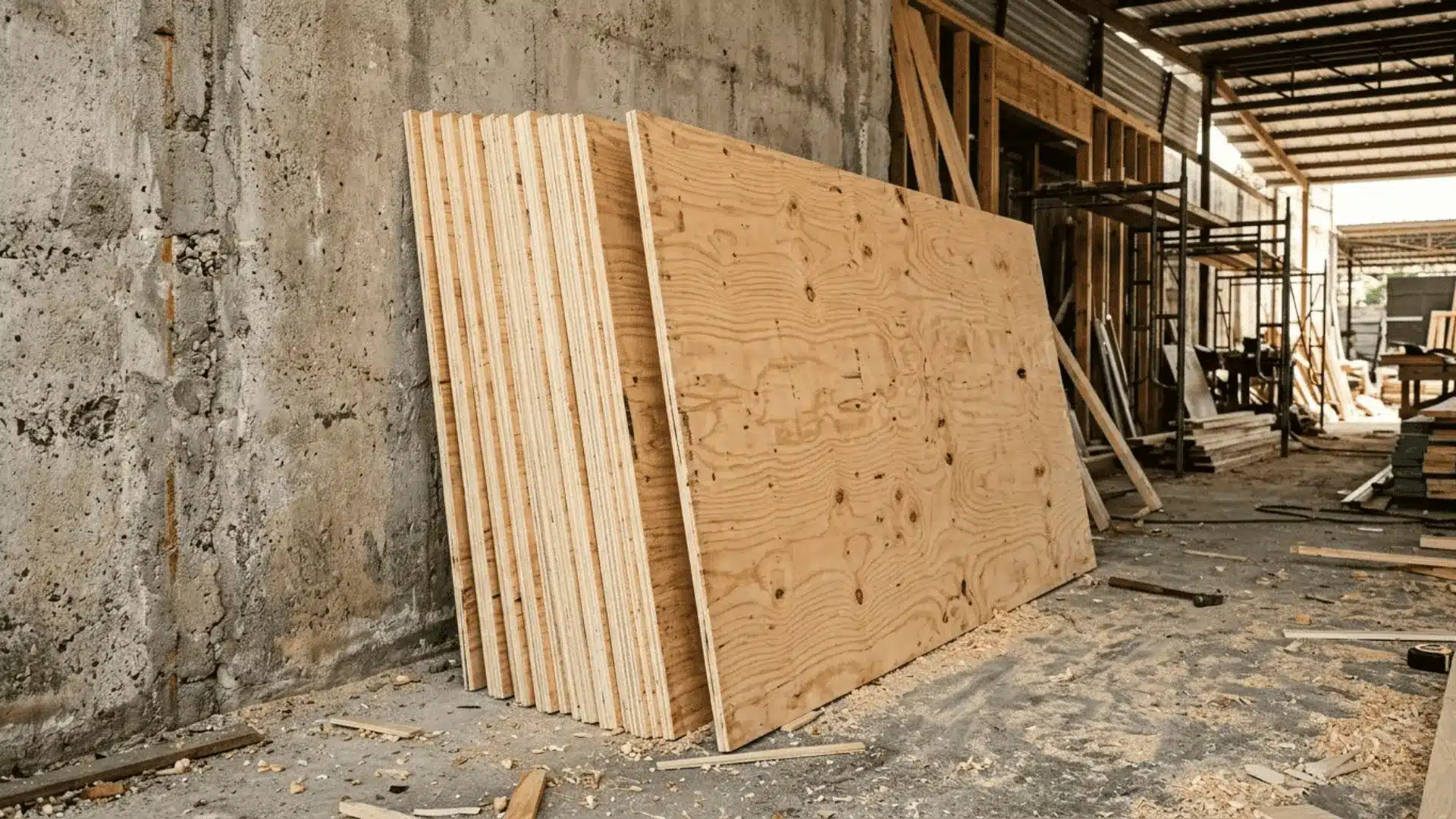
Made from trees like pine, fir, or spruce, softwood plywood is the backbone of most construction sites.
It’s strong, readily available, and cost-effective, making it the default choice for structural work like wall sheathing, roofing, and subfloors.
It’s not the prettiest option, but when the goal is durability and function over finish, softwood plywood consistently delivers.
2. Hardwood Plywood
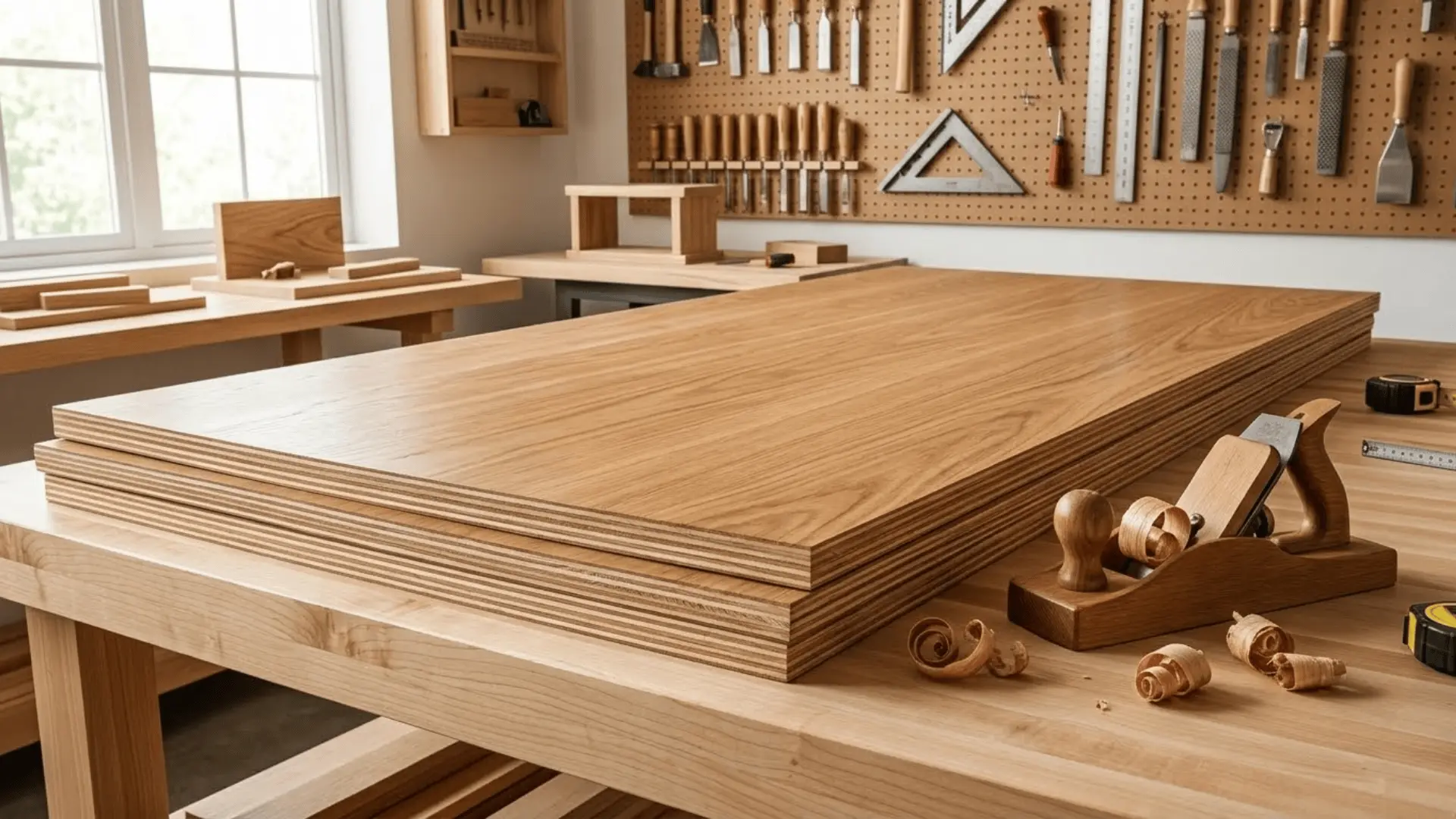
If aesthetics matter as much as strength, hardwood plywood steps in beautifully.
Crafted from veneers of oak, maple, birch, or walnut, it offers a refined surface that works wonderfully for furniture, cabinetry, and interior millwork.
The smooth, attractive face makes it a favorite among furniture makers and interior designers who want both structural integrity and a finish worth showing off.
3. Marine Plywood
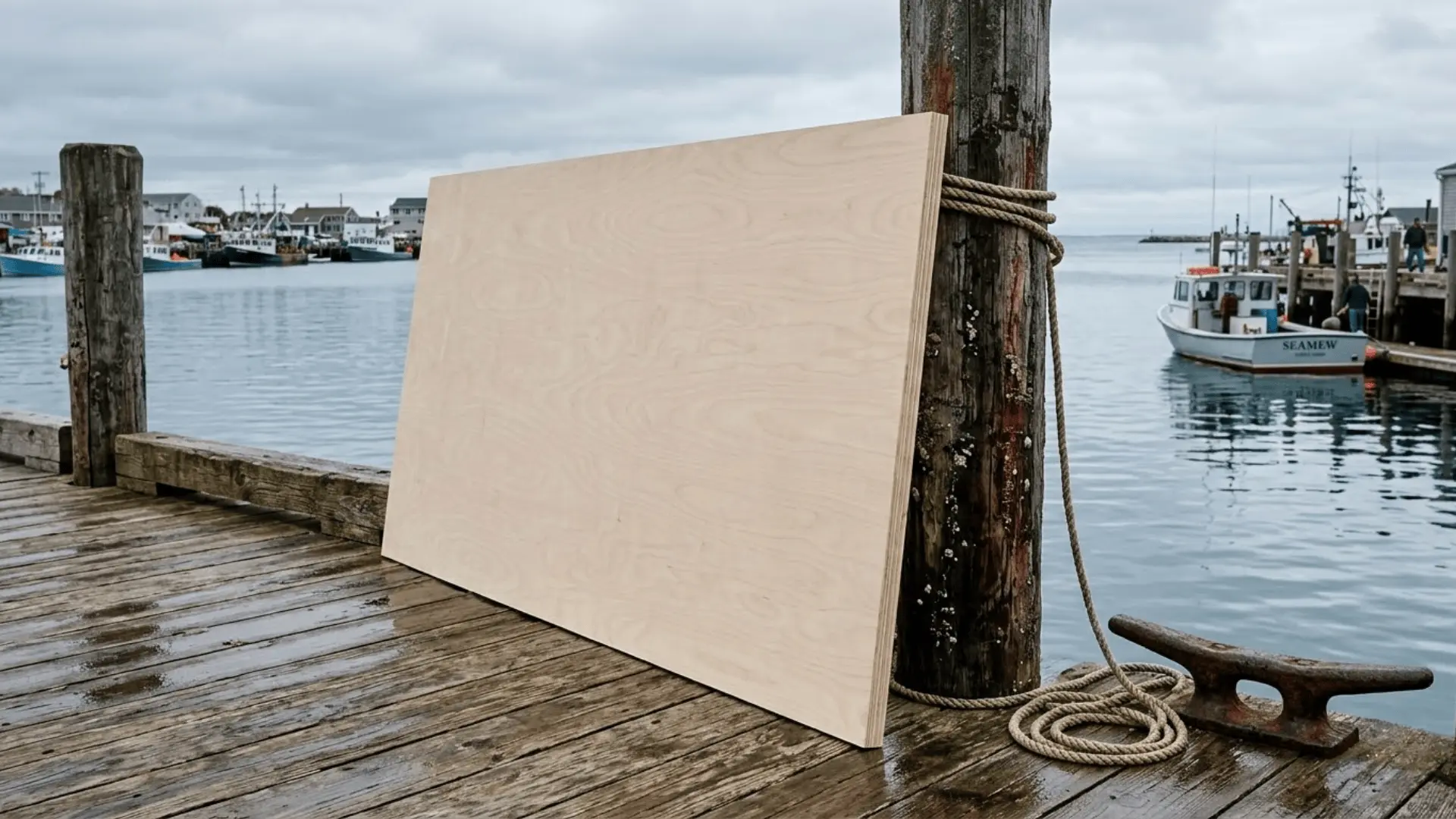
Built to handle constant moisture exposure, marine plywood is bonded with waterproof adhesive and crafted with minimal core gaps.
Originally designed for boats and docks, it also performs exceptionally well in outdoor structures and humid environments.
It’s one of the highest-quality plywood types available, which does reflect in the price, but the longevity it offers makes it worth every bit.
4. Exterior Plywood
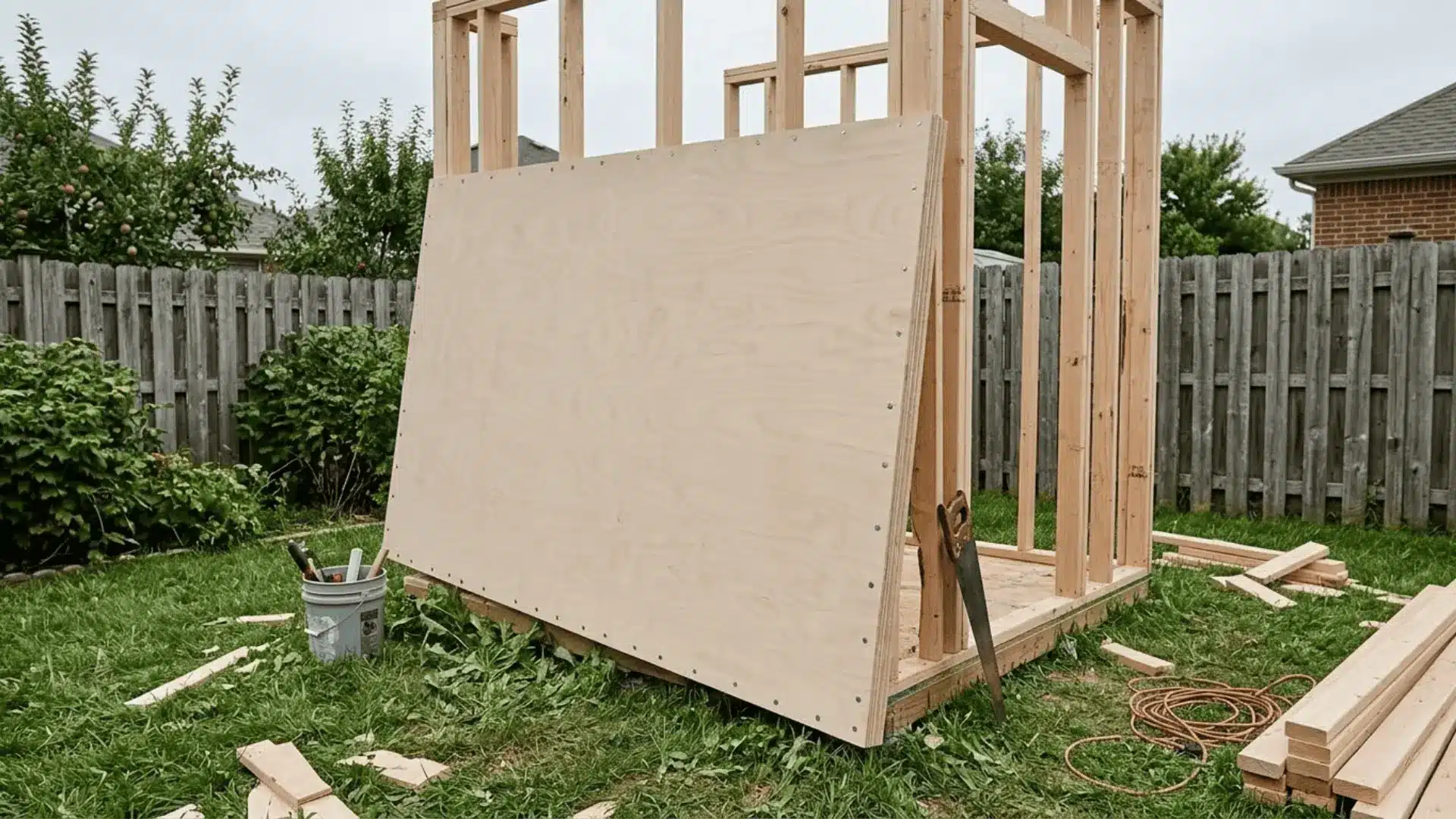
Exterior plywood is treated with weather-resistant adhesives that hold up against rain, humidity, and temperature shifts.
It’s a practical choice for outdoor construction projects like fences, garden sheds, and cladding.
While it handles moisture well, it’s worth noting that it isn’t fully waterproof like marine plywood, so it works best in applications where it isn’t submerged or in constant water contact.
5. Interior Plywood
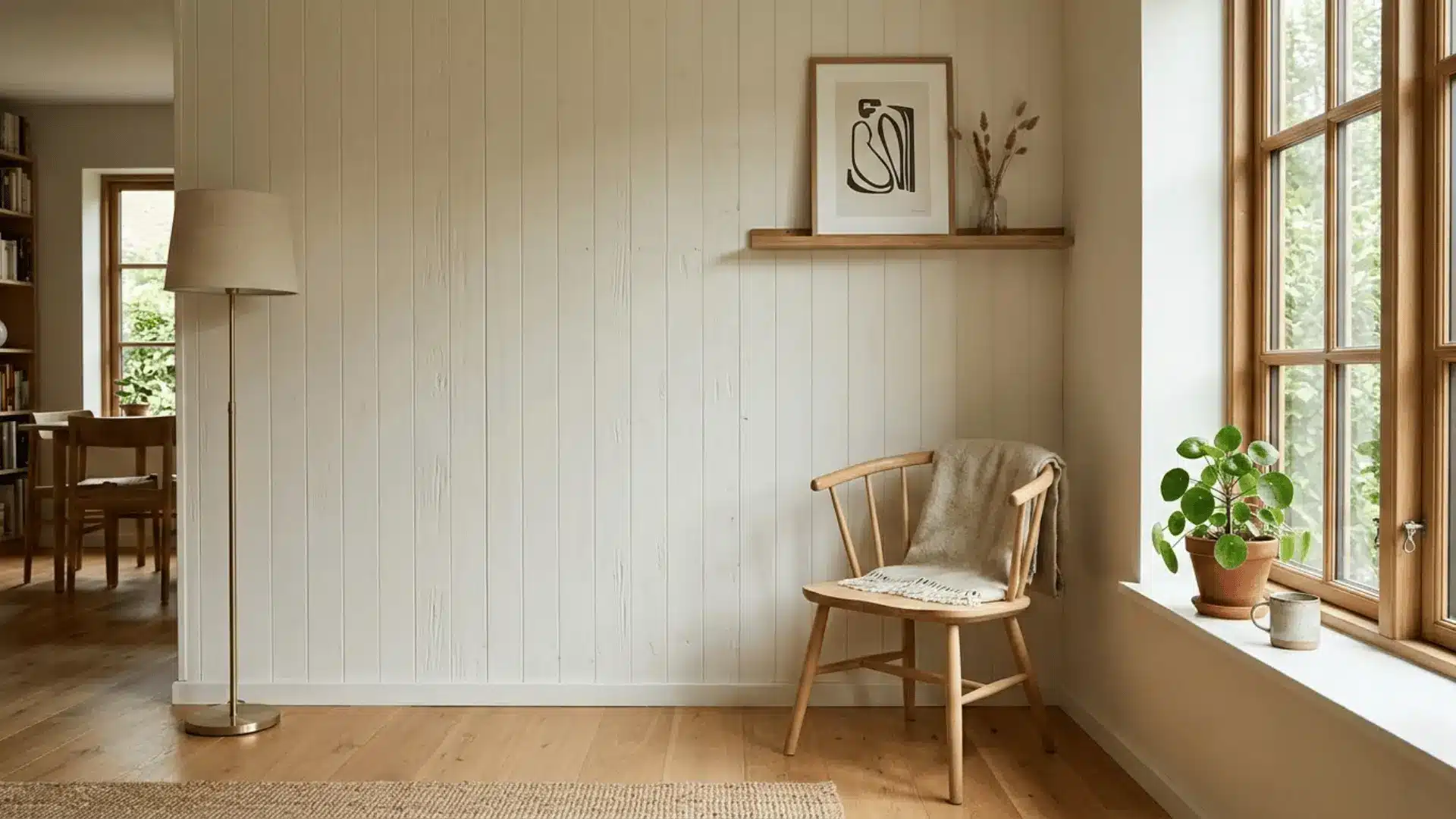
Designed specifically for indoor use, interior plywood prioritizes a clean surface finish over weather resistance.
It’s commonly used in furniture, wall paneling, and decorative installations where looks matter.
Since it isn’t treated for moisture, keeping it in dry, controlled environments is key. It’s a cost-effective and visually appealing option when your project lives entirely inside four walls.
6. Structural Plywood
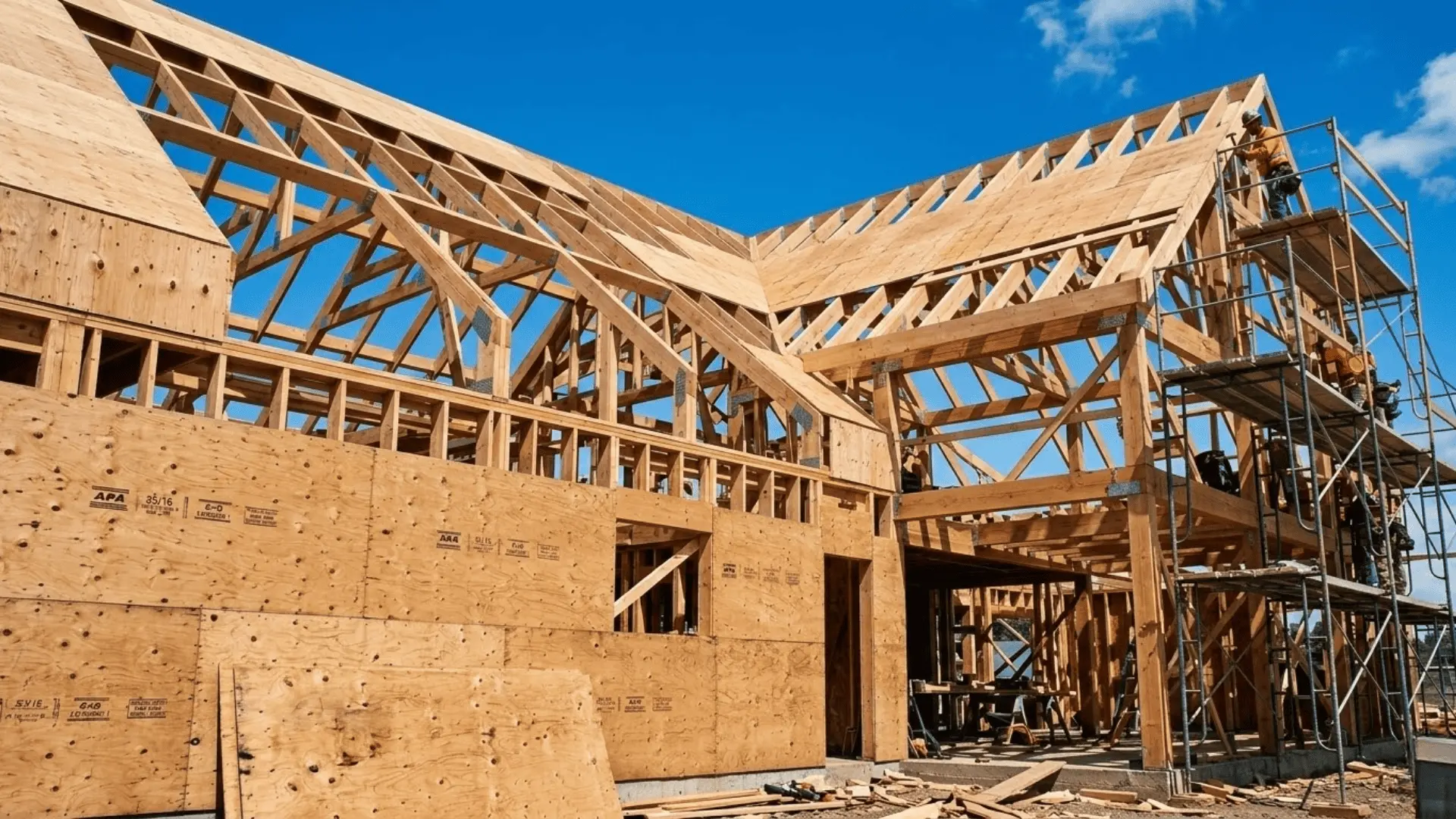
When a project needs to carry real weight, structural plywood is what engineers and builders reach for.
Manufactured to meet strict load-bearing standards, it’s used in building frames, flooring systems, and roof structures.
The grading of structural plywood is tightly regulated, ensuring consistent strength and reliability. It may not have the smoothest face, but its performance under pressure is what matters most here.
7. Flexible (Bendy) Plywood
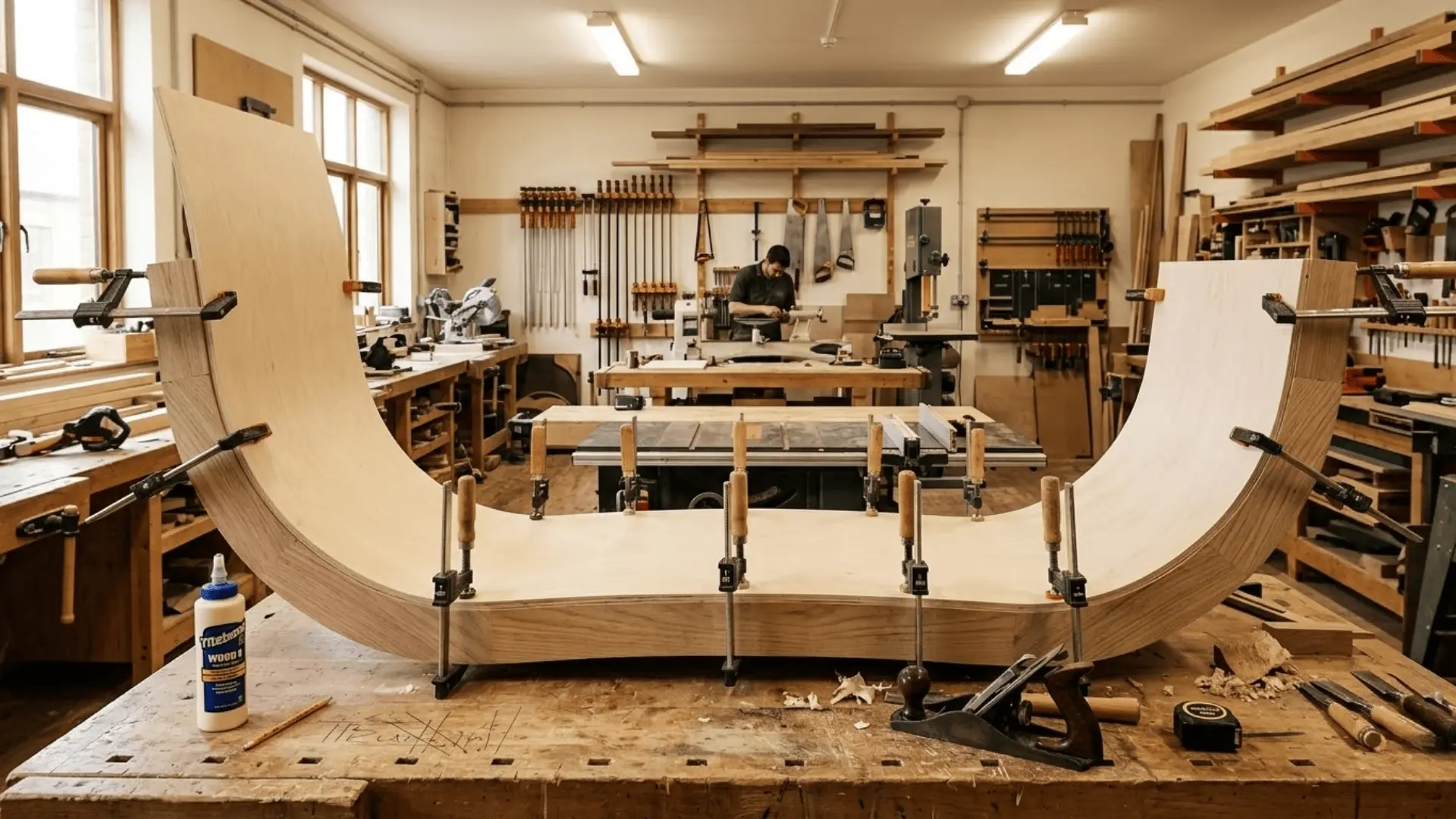
Flexible plywood, often called bendy ply, is specially manufactured with a thin core that allows it to curve without cracking.
It’s a dream material for designers working on curved walls, archways, rounded furniture, and creative interior installations.
Available in single or double-curve varieties, it opens up a world of design possibilities that standard rigid plywood simply can’t accommodate.
8. Fire-Retardant Plywood
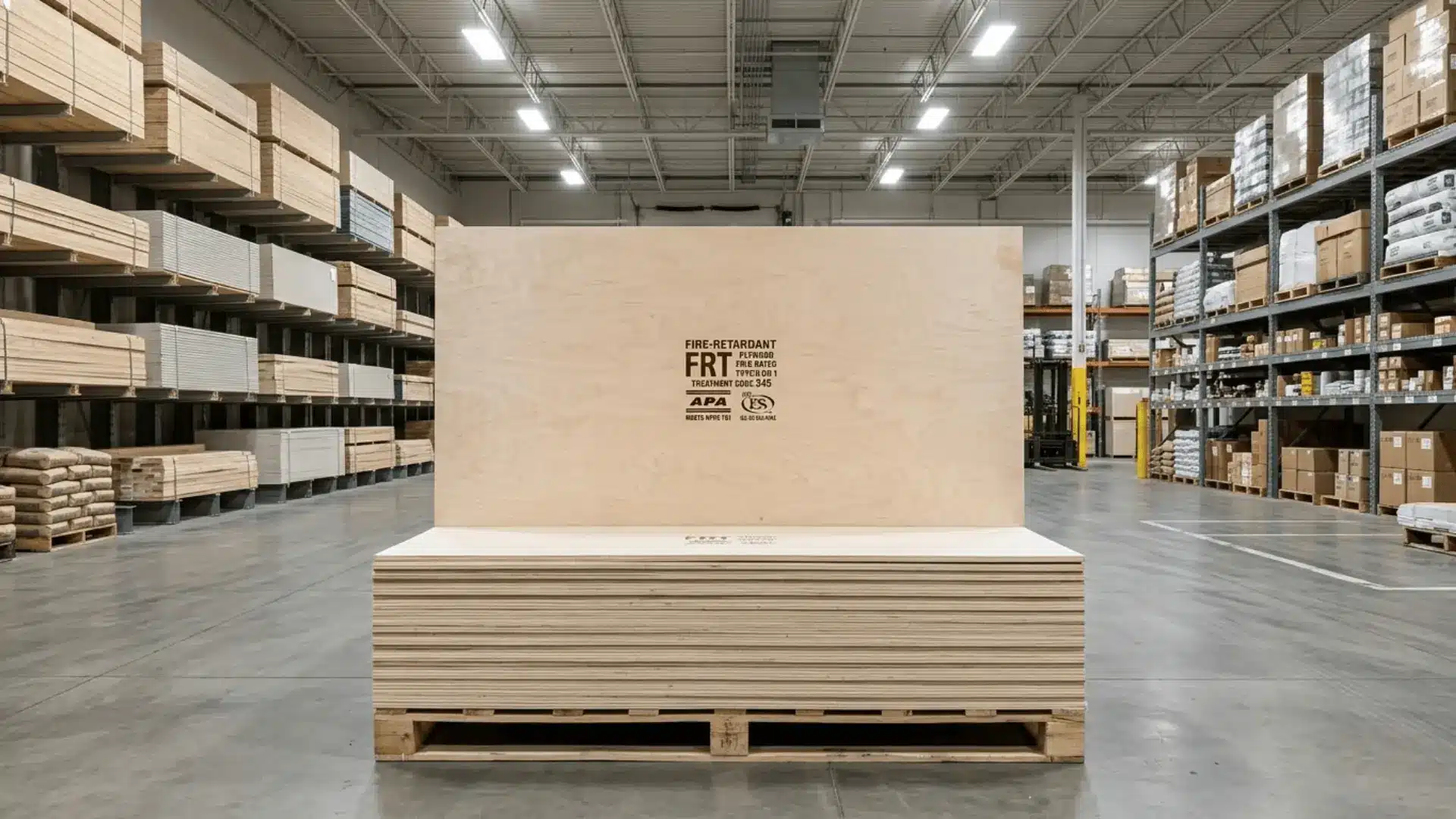
Fire-retardant plywood is pressure-treated with chemical compounds that slow the spread of flames, making it a critical material in commercial buildings, schools, and spaces with strict fire codes.
It looks just like standard plywood from the outside, but its treated core gives it a meaningful edge in safety.
For any project where building regulations require fire resistance, this is the type to specify.
9. Moisture-Resistant Plywood
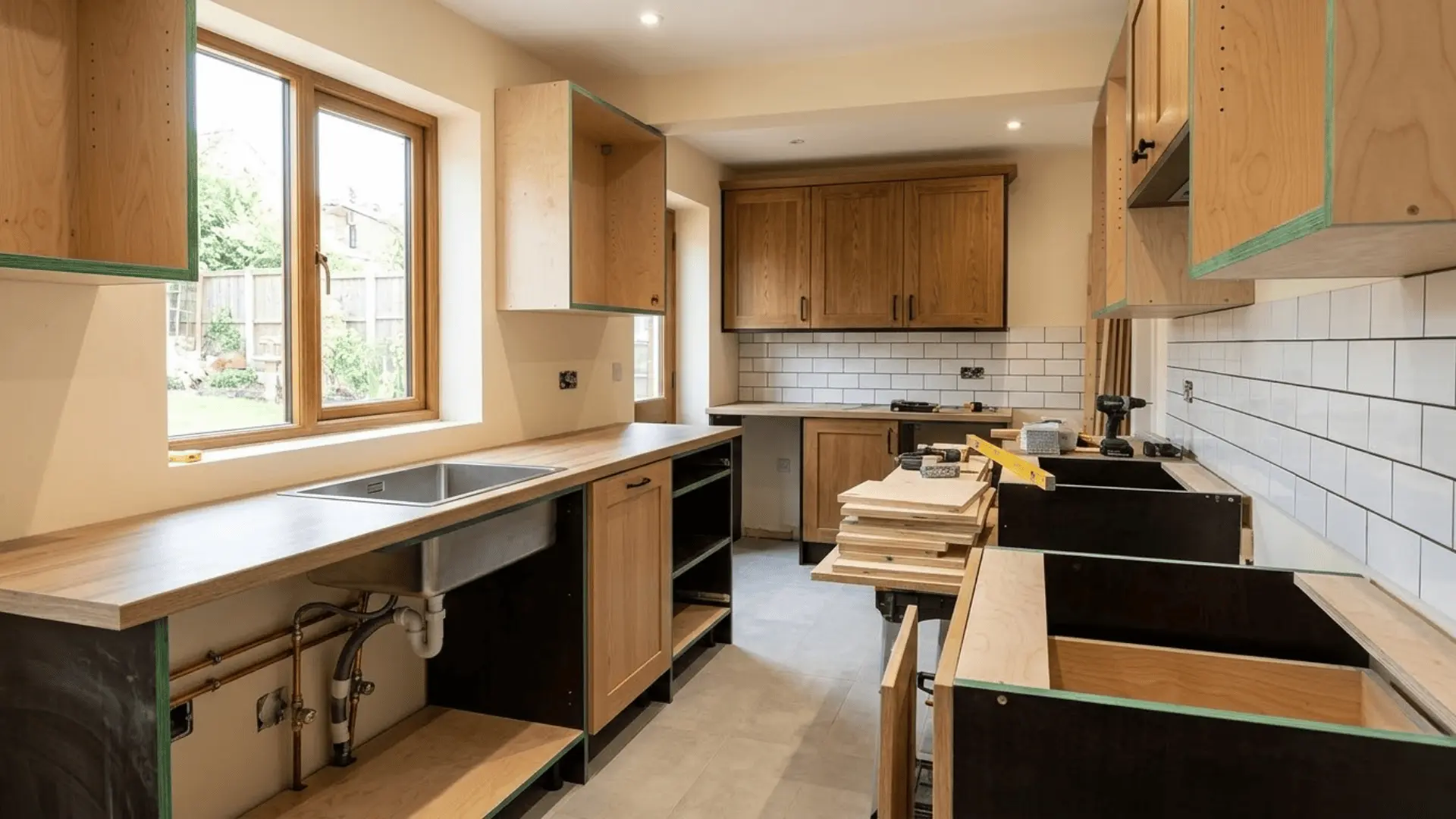
Moisture-resistant plywood, often marked as MR grade, is engineered to handle humidity and occasional dampness without swelling or delaminating.
It’s a smart pick for kitchens, bathrooms, and laundry spaces where the air tends to stay humid.
While it handles moisture well, it isn’t waterproof, so it’s best used in areas with indirect exposure rather than direct or prolonged contact with water.
Plywood Grades Explained
Plywood isn’t just sorted by type; it’s also graded by surface quality, and that grade tells you a lot about where and how it should be used.
Here’s a quick breakdown to help you match the right grade to your project.
| Grade | Surface Quality | Best For |
|---|---|---|
| A-Grade | Smooth, sanded, minimal to no knots | Furniture, cabinetry, visible surfaces |
| B-Grade | Slightly rough with minor patches and repairs | Painted surfaces, structural uses with some visibility |
| C-Grade | Visible knots, cracks, and imperfections | Hidden structural layers, underlayment |
| D-Grade | Rough, unrepaired knots and gaps | Non-structural construction, base layers |
Plywood sheets are often graded on both faces, so you’ll commonly see combinations like A-C or B-D.
The first letter refers to the front face and the second to the back, giving you a practical and cost-effective way to get a finished look on one side without paying for premium quality all the way through.
Plywood Core Materials and How They Affect Performance?
The core of a plywood sheet does more work than most people realize. It directly influences how strong, heavy, and versatile the final panel turns out to be.
1. Veneer Core
Veneer core plywood is built from multiple thin layers of wood stacked and glued in alternating grain directions. This construction makes it notably strong and lightweight compared to other core types.
It handles screws well and resists warping reliably, making it a solid pick for furniture, cabinetry, and structural applications where both strength and weight need to stay balanced.
2. MDF Core
MDF core plywood swaps the wood layers for a dense, smooth medium-density fiberboard center. The result is a panel with an exceptionally flat, uniform surface that paints and veneers beautifully.
It’s heavier than veneer core and doesn’t hold screws at the edges quite as well, but for cabinet doors, shelving, and decorative furniture pieces where a flawless finish is the priority, MDF core is hard to beat.
3. Particleboard Core
Particleboard core is the most budget-friendly of the three, made from compressed wood chips and resin. It’s heavy, less resistant to moisture, and not the strongest option for load-bearing use.
That said, it offers a stable, flat surface at a lower price point, making it a practical choice for laminated furniture, countertops, and built-ins where cost matters and the core stays hidden.
Plywood Thickness and Sizes
Plywood sheets most commonly come in 4×8-foot panels, though larger and smaller sizes exist, depending on the supplier.
Thickness varies quite a bit depending on what you’re building, with 1/4 inch suiting lightweight backing and decorative work best.
For heavier applications, 1/2 inch holds up well for shelving and cabinet sides, while 3/4 inch is the go-to for flooring, countertops, and anything demanding real structural support.
Matching thickness to your project’s load and stress requirements from the start saves you from having to reinforce or redo work later down the line
How to Choose the Right Type of Plywood?
Choosing the right plywood comes down to understanding what your project actually demands. Run through these key considerations before you buy, and you’ll be in good shape.
- Match the Plywood Type to the Setting: Interior grades for indoor projects, exterior or marine grades for anything facing moisture or weather.
- Assess the Load Your Project Needs to Carry: Structural and veneer core options for heavy-duty work, MDF or particleboard core for lighter decorative builds.
- Let Appearance Guide Your Grade Selection: A or B grade for visible surfaces, C or D grade where the panel stays hidden.
- Factor in Your Environment: Moisture-resistant or fire-retardant treatments matter more than most people realize until something goes wrong.
- Set a Realistic Budget: Premium types like marine plywood offer outstanding durability, but matching quality to actual project needs keeps costs from climbing unnecessarily.
Getting these decisions right from the start means less rework, better results, and a finished project that holds up exactly the way you intended.
Plywood vs. Other Engineered Woods
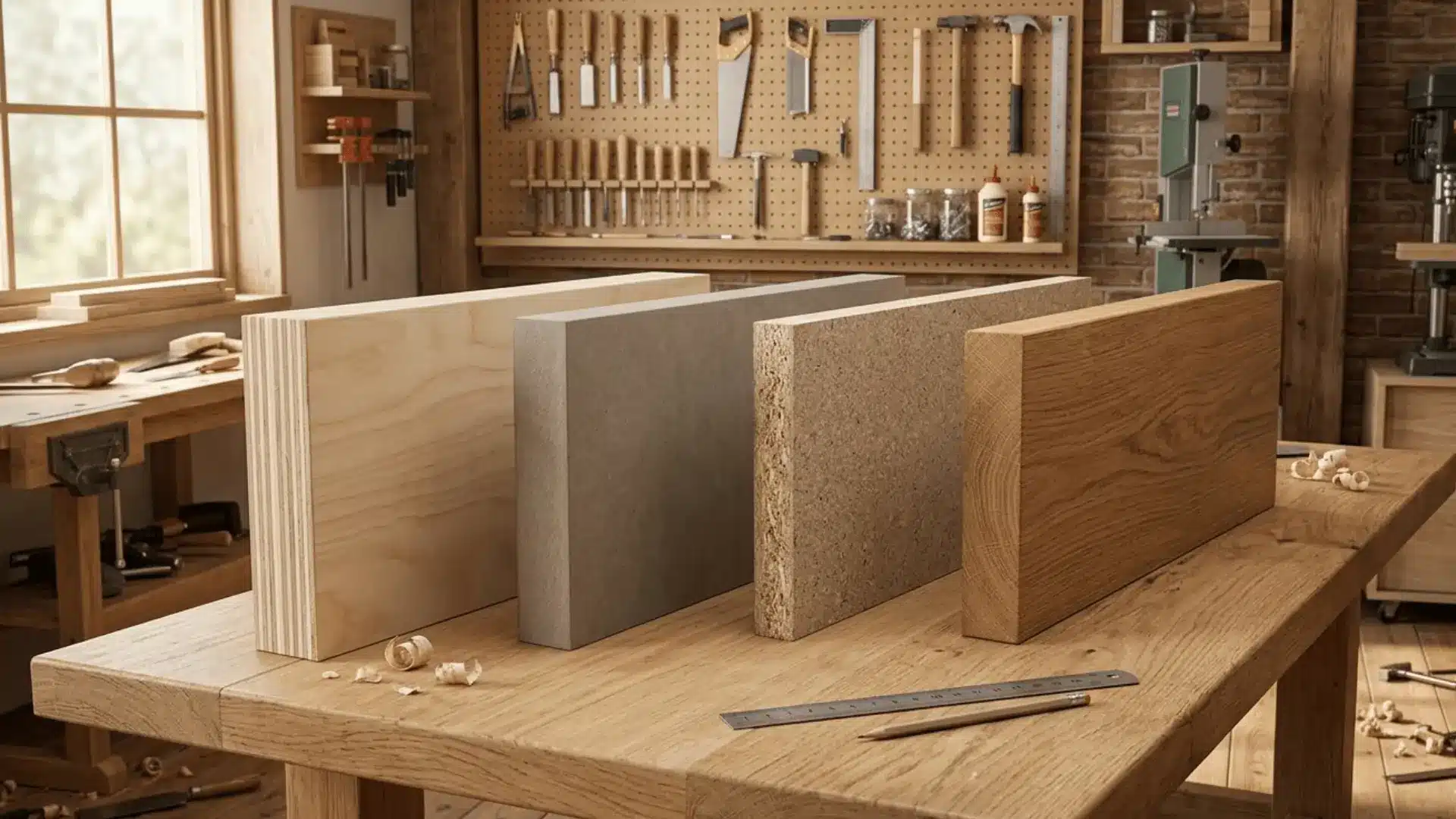
Plywood often gets grouped together with other engineered wood products, but each material has its own strengths and trade-offs.
Here’s how they stack up side by side.
| Material | Strength | Weight | Moisture Resistance | Cost | Best For |
|---|---|---|---|---|---|
| Plywood | High | Moderate | Good | Moderate | Construction, furniture, cabinetry |
| MDF | Moderate | Heavy | Poor | Low | Painted surfaces, decorative work |
| Particleboard | Low | Heavy | Poor | Lowest | Laminated furniture, countertops |
| Solid Wood | Very High | Heavy | Moderate | Highest | Premium furniture, flooring |
Tips for Working With Plywood
Working with plywood is straightforward once you know a few basics that make the whole process cleaner and more professional. Keep these in mind before you start cutting.
- Use a fine-tooth blade when cutting to get cleaner edges and significantly reduce splintering along the face veneer.
- Apply masking tape along cut lines before sawing to hold the wood fibers in place and keep the surface looking tidy.
- Seal all exposed edges with edge banding, wood filler, or veneer tape to prevent moisture from sneaking in and compromising the layers.
- Sand progressively and prime before painting for a smooth, even finish that actually adheres well and lasts.
A little preparation goes a long way with plywood. These small steps are what separate a rough, unfinished look from results that feel intentional and well-crafted.
Wrapping Up
Understanding the different types of plywood genuinely changes how you approach a project, from the materials you pick off the shelf to the confidence you carry into the build.
Framing walls, designing furniture, or tackling a creative DIY, there’s a plywood type that fits every vision perfectly.
The right choice always comes down to knowing what your project needs and respecting those requirements from the start.
Take that knowledge into your next build and see the difference it makes.
Which type of plywood are you planning to work with? Drop your project in the comments below!