Your garage door breaks down on a rainy Monday morning. Or maybe it’s just old, loud, and making your home look dated.
Shopping for a new one feels overwhelming with so many choices out there. Steel, wood, aluminum, sectional, roller, which one actually fits your needs and budget?
This guide breaks down popular types of garage doors.
You’ll learn how each one works, what it costs, and which suits different homes and climates. We’ll also cover maintenance tips to keep your door running smoothly for years to come.
By the end, you’ll know exactly which garage door makes sense for your home, with no sales pressure or confusing jargon.
How Your Garage Door Functions?
Most garage doors rely on a spring system to lift and lower the door smoothly. This system balances the door’s weight, making it easy to operate either manually or with an electric opener.
The materials and design you choose will directly impact how well your door performs over time.
Different types of garage doors use similar mechanics, but their construction affects energy efficiency and durability.
Understanding these basics helps you pick the right door for your home and maintain it properly for years to come.
Types of Garage Doors
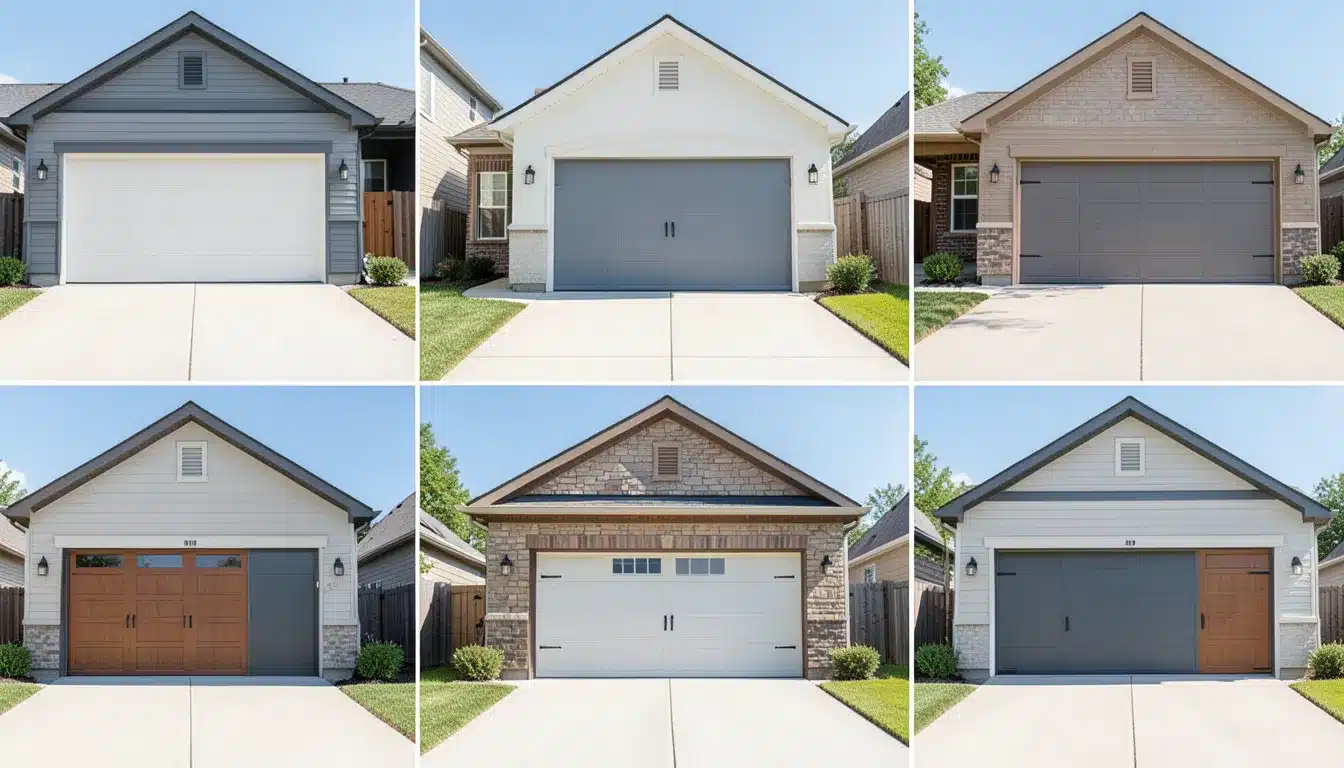
Choosing the right garage door depends on your space, budget, and style preferences. Here are eight common types of garage doors, each offering unique benefits to match different home needs.
1. Sectional Garage Doors
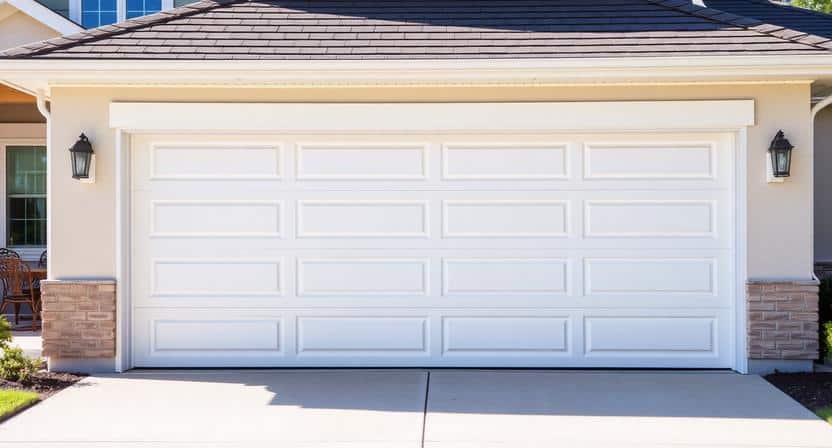
Sectional doors are the most popular choice for modern homes. They offer great insulation and work well in tight spaces since they lift vertically.
- How They Work: Panels connected by hinges slide up along tracks mounted on the ceiling.
- Key Features: Energy efficient, available in various designs, and saves space inside and outside the garage.
- Pros: Excellent insulation keeps your garage warm, secure locking systems, and customizable styles.
- Cons: Needs adequate vertical clearance, and tracks can sometimes need adjustment or repair.
2. Roller Garage Doors
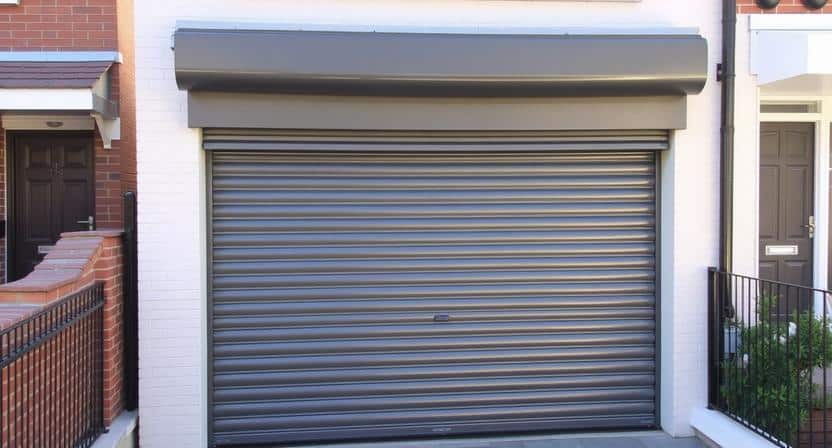
Roller doors are perfect for garages with limited headroom. They coil up into a compact drum, freeing up ceiling space for storage.
- How They Work: A single metal sheet rolls into a drum positioned above the door opening.
- Key Features: Compact design, fast opening and closing, ideal for small garages.
- Pros: Requires minimal overhead space and works well in tight garages.
- Cons: Fewer design choices available and provides less insulation than sectional options.
3. Tilt Up Canopy Garage Doors
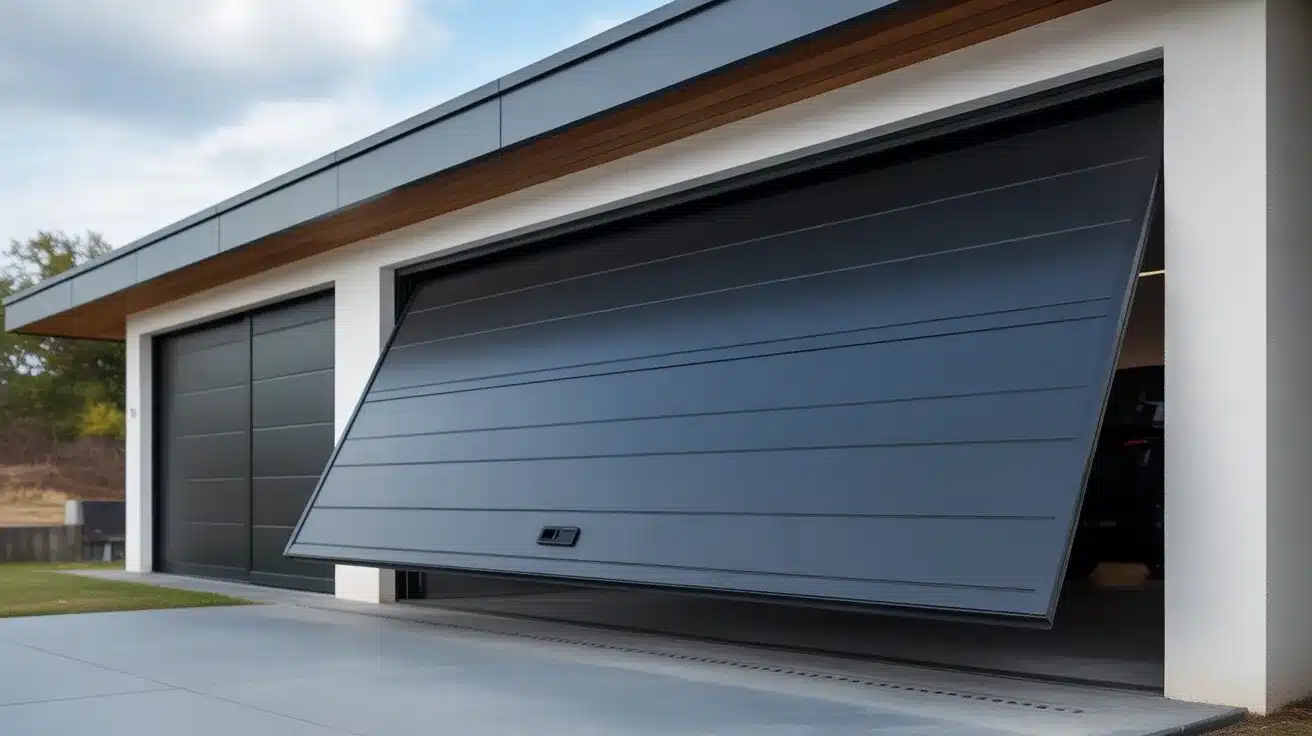
Tilt-up canopy doors offer a budget-friendly option with simple mechanics. The single panel tilts outward before lifting, creating a small canopy outside.
- How They Work: One solid panel tilts outward and lifts up, with part extending beyond the garage opening.
- Key Features: Simple mechanism, can operate manually, affordable price point.
- Pros: Low maintenance requirements and cost-effective for basic garage needs.
- Cons: Requires clear space in front of the garage for the door to tilt outward.
4. Side Hinged Garage Doors
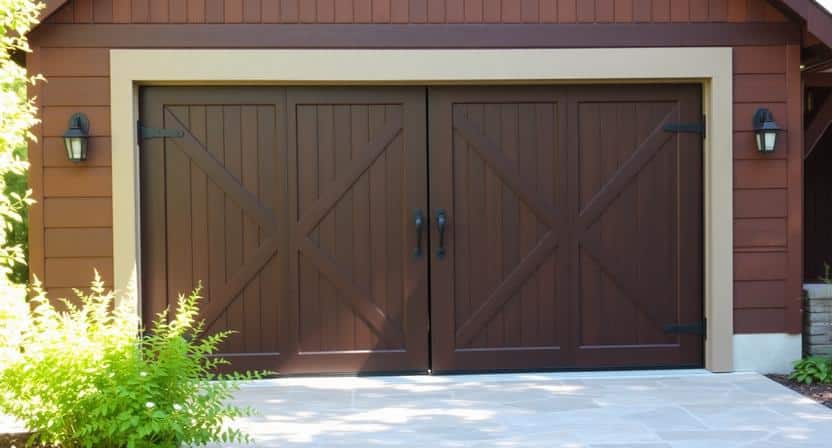
Side-hinged doors bring a traditional look to your garage. They swing open like regular double doors, making pedestrian access convenient.
- How They Work: Two door panels hinged on each side swing outward or inward to open.
- Key Features: Classic appearance, easy walk-through access, simple design.
- Pros: Perfect for frequent foot traffic and gives a timeless, barn-style look.
- Cons: Needs adequate driveway clearance for doors to swing open fully.
5. Sliding Garage Doors
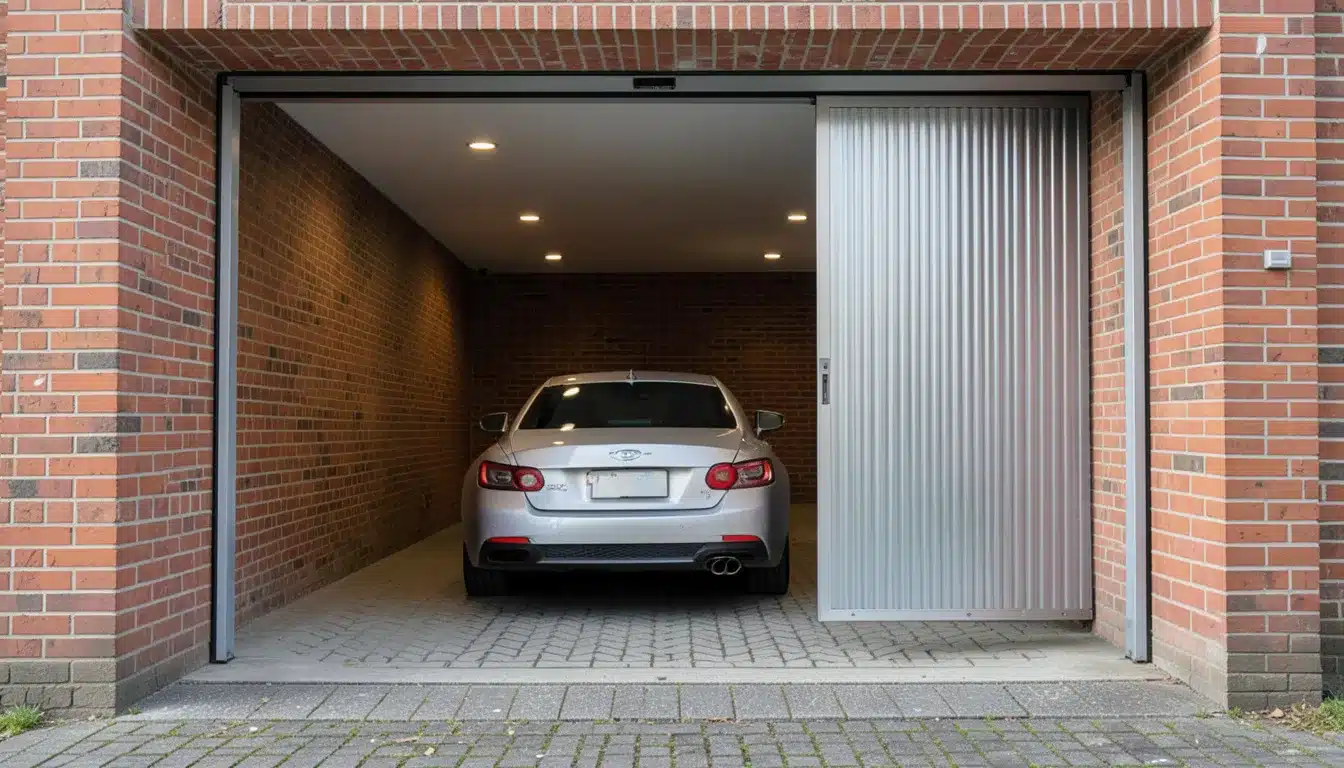
Sliding doors move sideways along a track instead of lifting up. This makes them ideal for garages with low ceilings or unusual layouts.
- How They Work: Panels slide horizontally along a wall-mounted track system.
- Key Features: No overhead tracks needed, contemporary appearance, space-saving vertically.
- Pros: Works great in garages with limited ceiling height and offers a modern look.
- Cons: Requires more wall space and may be less secure than overhead garage doors.
6. Composite Garage Doors
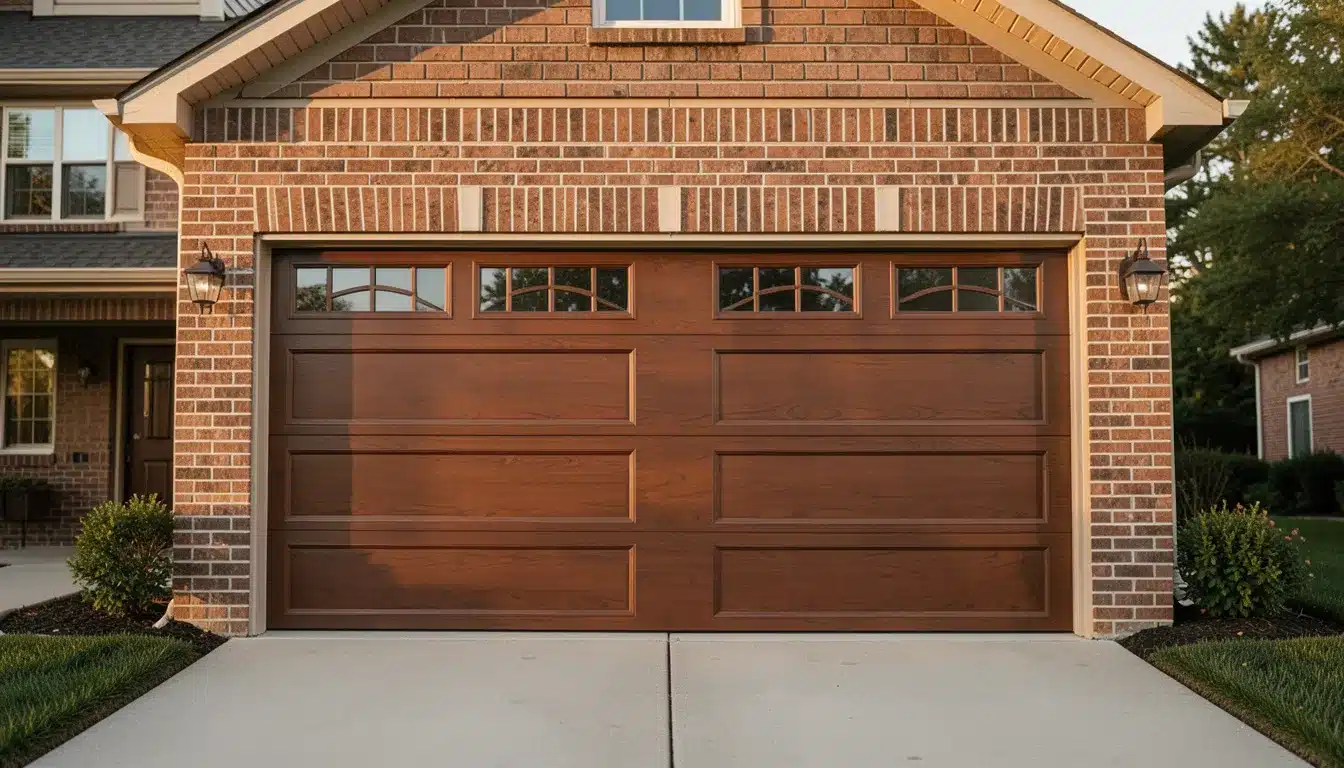
Composite doors blend wood fibers with synthetic materials for durability. They give you the warm look of wood without the high maintenance.
- How They Work: Panels made from wood composites and resins function like sectional doors on track systems.
- Key Features: Weather-resistant, low upkeep, traditional wood appearance.
- Pros: Looks like real wood but resists warping, rotting, and weather damage better.
- Cons: Heavier than some alternatives and typically costs more than basic steel doors.
7. Aluminum Garage Doors
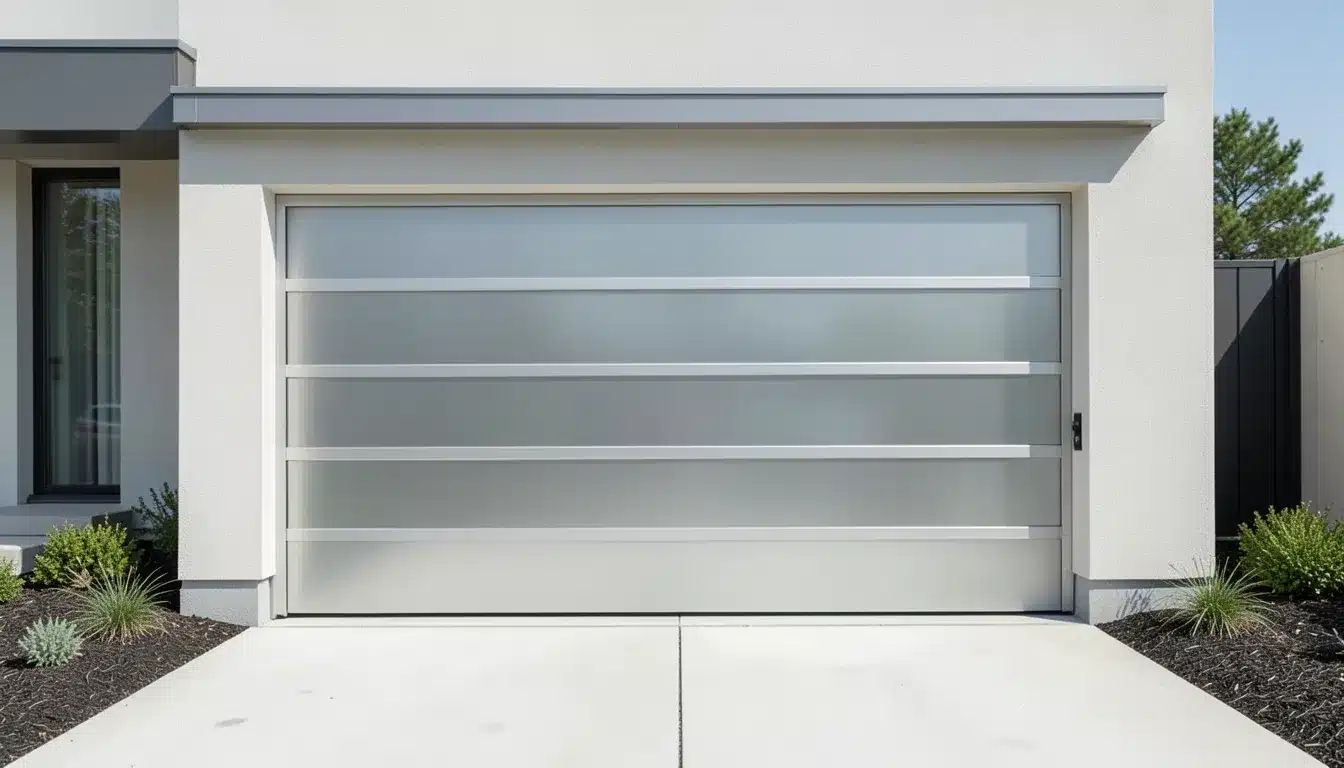
Aluminum doors offer a sleek, modern look with lightweight construction. They resist rust, making them great for humid or coastal areas.
- How They Work: Lightweight aluminum panels with optional insulation cores operate on standard track systems.
- Key Features: Rust-proof, contemporary style, available in various finishes.
- Pros: Excellent choice for salt air environments and requires minimal maintenance.
- Cons: Dents more easily than steel and usually has a higher price tag.
8. Fiberglass Garage Doors
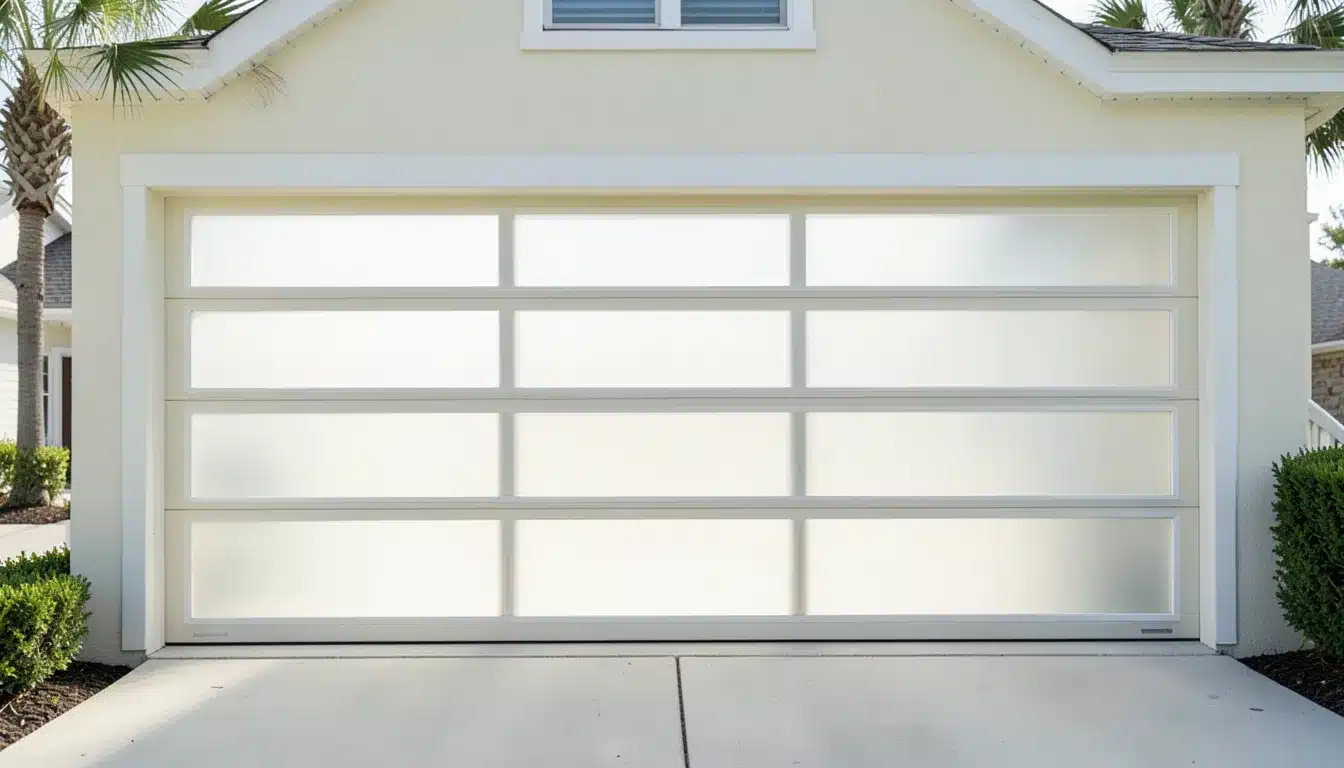
Fiberglass doors let natural light into your garage while providing decent insulation. They are lightweight and easy to maintain over time.
- How They Work: Fiberglass panels mounted in frames operate similarly to sectional types of garage doors.
- Key Features: Translucent options for natural lighting, lightweight construction, and energy efficiency.
- Pros: Simple to clean and maintain, allows sunlight in without windows.
- Cons: Can crack on hard impact and is less durable than metal options.
Cost of Different Garage Doors
Garage door prices vary widely based on material, size, and features. Here’s a breakdown of what you can expect to pay for different types of garage doors.
| Garage Door Type | Price Range |
|---|---|
| Sectional Garage Doors | $800 – $4,000 |
| Roller Garage Doors | $700 – $2,500 |
| Tilt Up Canopy Doors | $500 – $1,500 |
| Side Hinged Doors | $1,000 – $3,500 |
| Sliding Garage Doors | $1,200 – $4,000 |
| Composite Garage Doors | $1,500 – $4,500 |
| Aluminum Garage Doors | $1,200 – $3,500 |
| Fiberglass Garage Doors | $1,000 – $3,000 |
Cost factors include: material quality, insulation, automation, custom sizing, and installation labor.
Garage Door Maintenance Tips
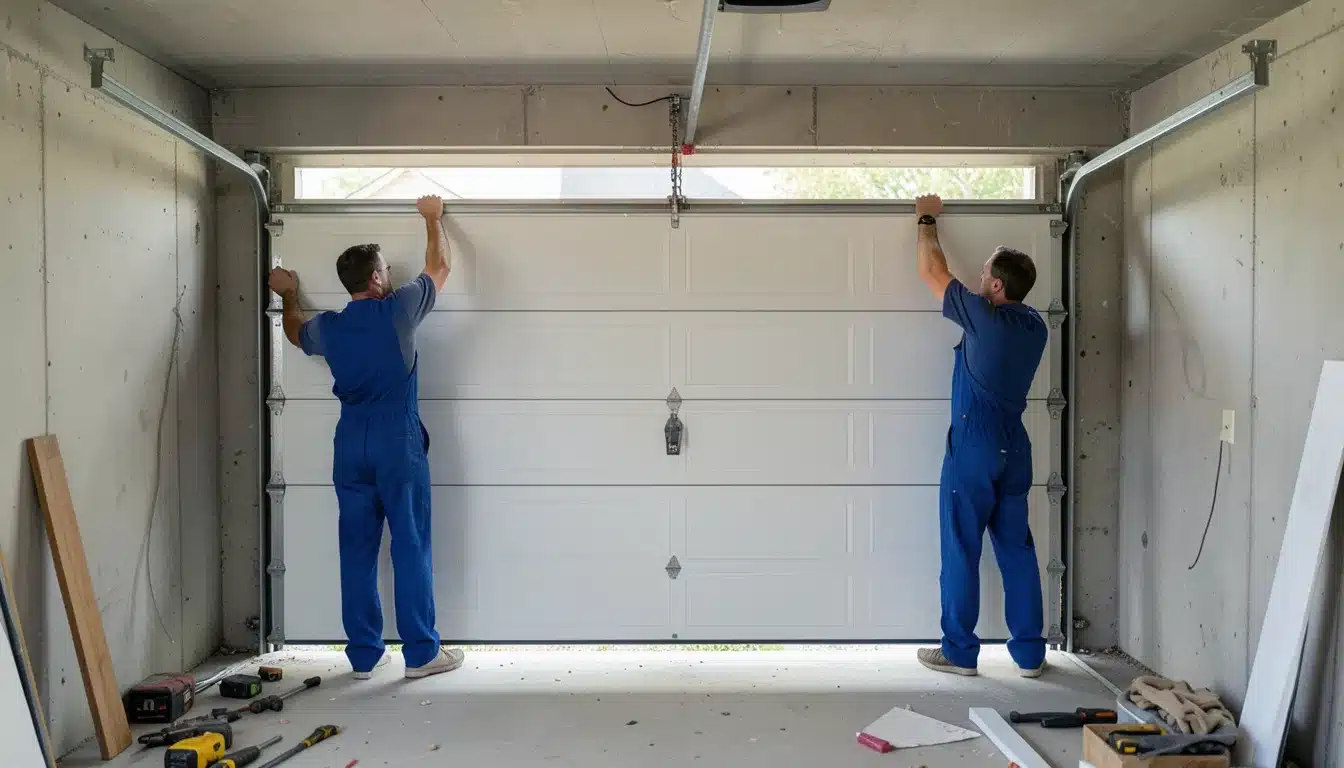
Regular maintenance keeps your garage door running smoothly and prevents costly repairs. Follow these simple tips to extend the life of your door and keep it working safely.
- Inspect the door monthly: Look for worn parts, loose hardware, and signs of damage or rust.
- Lubricate moving parts: Apply lubricant to springs, hinges, rollers, and tracks every three to six months.
- Test the balance: Disconnect the opener, then manually lift the door halfway to see if it stays in place.
- Clean the tracks: Remove dirt and debris with a damp cloth or brush.
- Check the weatherstripping: Replace worn seals at the bottom to keep out moisture, pests, and drafts.
- Tighten loose hardware: Check and tighten bolts, screws, and brackets on all types of garage doors.
- Test safety features: Ensure auto reverse sensors work by placing an object in the door’s path.
- Listen for unusual sounds: Strange noises, such as grinding or squeaking, often indicate parts that need attention.
- Keep it clean: Wash the door surface with mild soap and water to prevent corrosion and maintain appearance.
- Schedule professional inspections: Have a technician check your door annually for safety and performance issues.
How to Choose the Right Garage Door for Your Home?
Selecting the right garage door starts with understanding your specific needs and priorities. Consider your budget first, as prices range from basic models to premium options with advanced features.
Think about your local climate since extreme temperatures, humidity, or salt air affect which materials last longest. Match the door style to your home’s exterior for better curb appeal and resale value.
Check security features such as solid construction, high-quality locks, and automatic sensors to protect your home. Insulation matters if your garage connects to your house or you use it as a workspace.
Finally, decide between manual and automatic operation based on convenience and your daily routine. Balancing these factors helps you choose the best option among the available garage door types.
Final Take
Choosing the right garage door doesn’t have to be complicated. We’ve covered types of garage doors, from budget-friendly tilt-up options to modern aluminum designs.
Each type offers different benefits depending on your space, climate, and style preferences. The key is matching the door to your specific needs rather than just picking the cheapest or fanciest option.
Consider your budget, maintenance willingness, and how the door complements your home’s look. Regular upkeep keeps any type of door working well for years. Ready to make your choice?
Compare prices from local installers and ask about warranties. Still unsure which door fits your situation? Drop a comment below with your questions, and we’ll help you find the perfect match for your home.