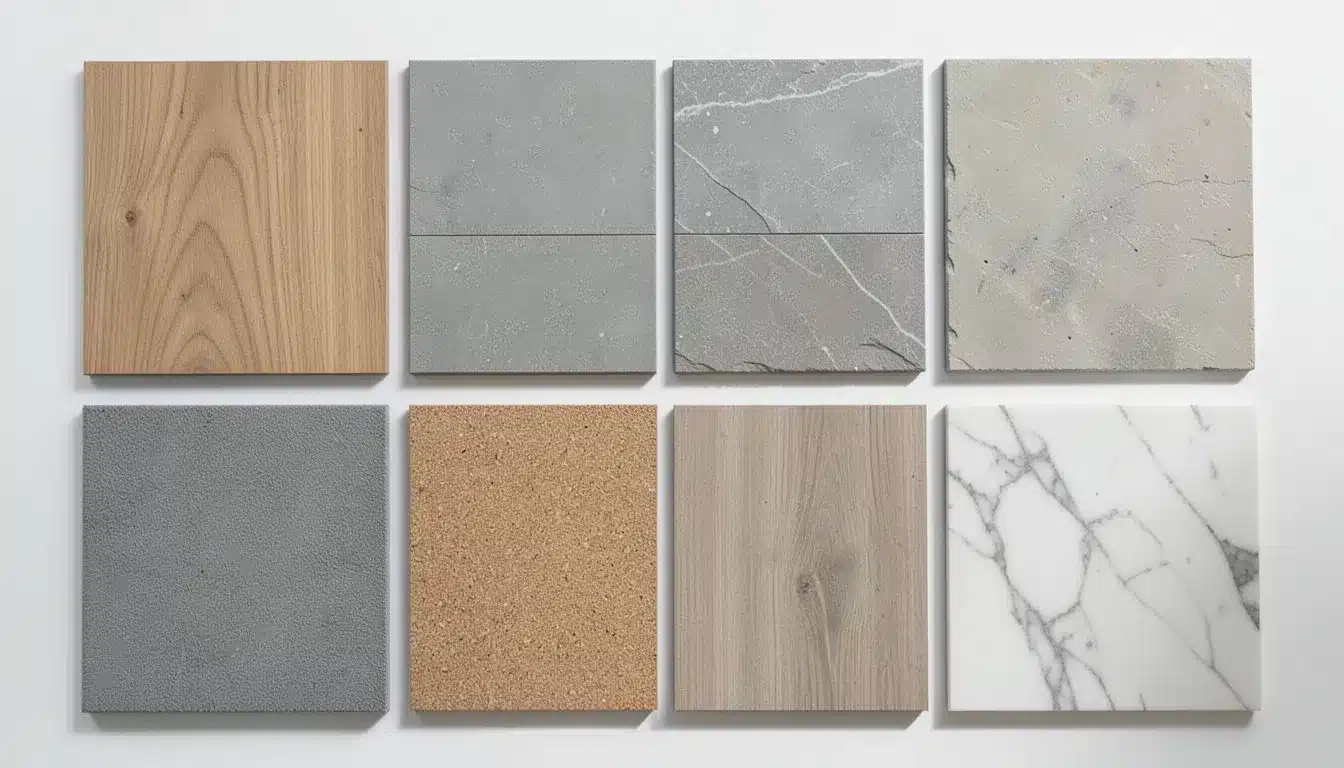
You walk into a room, and the floor is the first thing your feet tell you about it. Too cold, too hard, or too loud, and something just feels off.
Pick the wrong flooring, and you’ll live with that mistake for years. Pick the right one, and you barely notice it, which is exactly the point.
The problem is that most guides list options without telling you what actually matters: how a floor holds up in real life, what it costs beyond the showroom price, and whether it fits the room you have in mind.
This guide covers all types of flooring with honest pros, cons, costs, and room-by-room advice so you can choose with full confidence and zero guesswork.
What to Think About Before You Pick a Floor
The right floor is not always the one that looks best in the store. Before you make a final call, there are a few things worth thinking through.
- Room type: Is it a wet area like a bathroom or kitchen, or a dry space like a bedroom?
- Foot traffic: High-traffic areas need harder, more scratch-resistant floors.
- Budget: Factor in installation costs, not just the price of the material.
- Moisture levels: Basements and bathrooms need waterproof or water-resistant flooring.
- Pets or children: Some floors scratch and stain far more easily than others.
- Resale plans: If you plan to sell soon, certain floors add more value than others.
- Your climate: Humidity and temperature swings affect how some floors hold up over time.
Once you have a clear picture of these factors, your shortlist practically writes itself.
10 Types of Flooring
Not all floors are built the same, and that difference matters more than most people realise when they are standing in a showroom trying to decide. Here is a clear breakdown of all types so you know exactly what you are getting before you spend a single dollar.
1. Hardwood Flooring
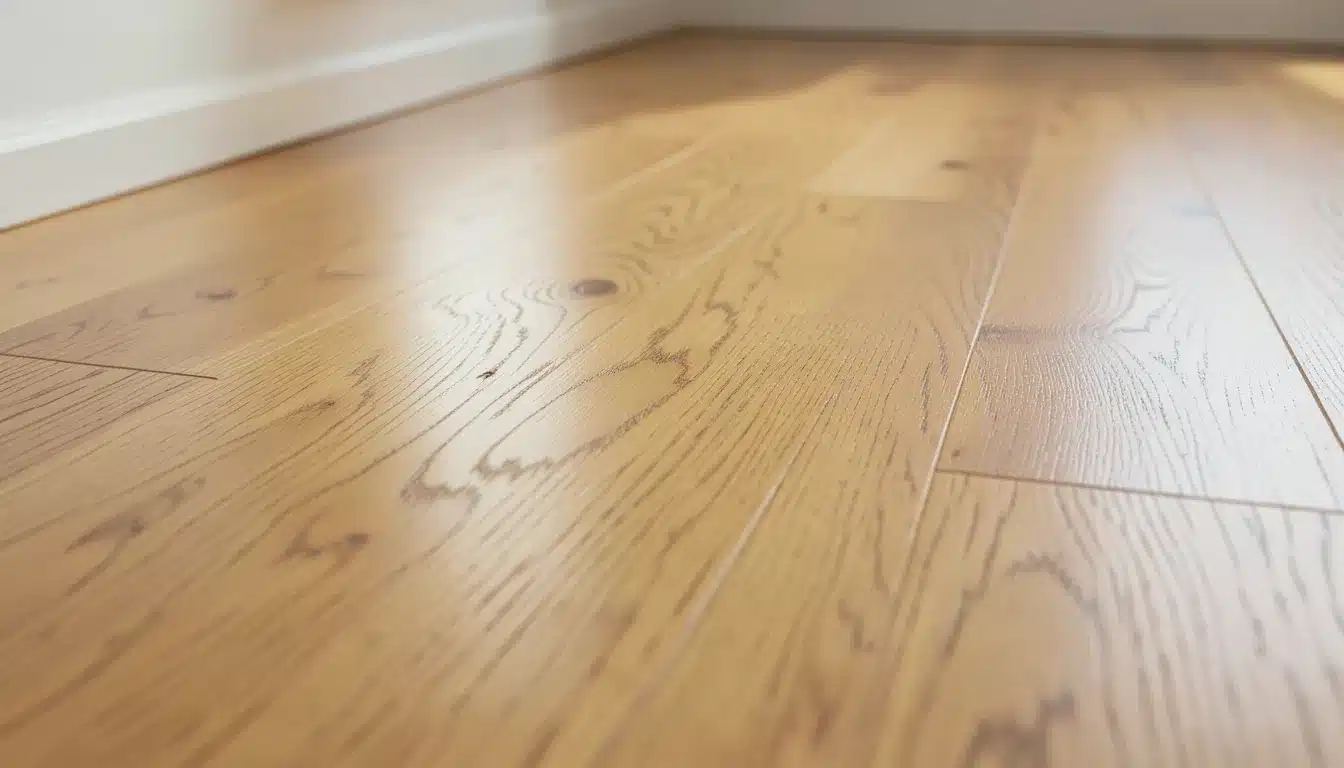
Solid hardwood is made from a single piece of wood, cut from species like oak, maple, cherry, or walnut. Homeowners love it for its warmth and the fact that it can last 50 years or more with proper care. It is one of the few floors you can sand and refinish when it starts to show its age.
- Best For: Living rooms, dining rooms, and bedrooms
- Durability: Very high; can be sanded and refinished multiple times
- Cost: $6 to $12 per sq ft (material); $3 to $6 per sq ft (installation)
- Maintenance: Regular sweeping, avoid excess moisture, refinish every 7 to 10 years
- Watch Out For: Scratches from pet claws and water damage in wet areas
2. Engineered Wood Flooring
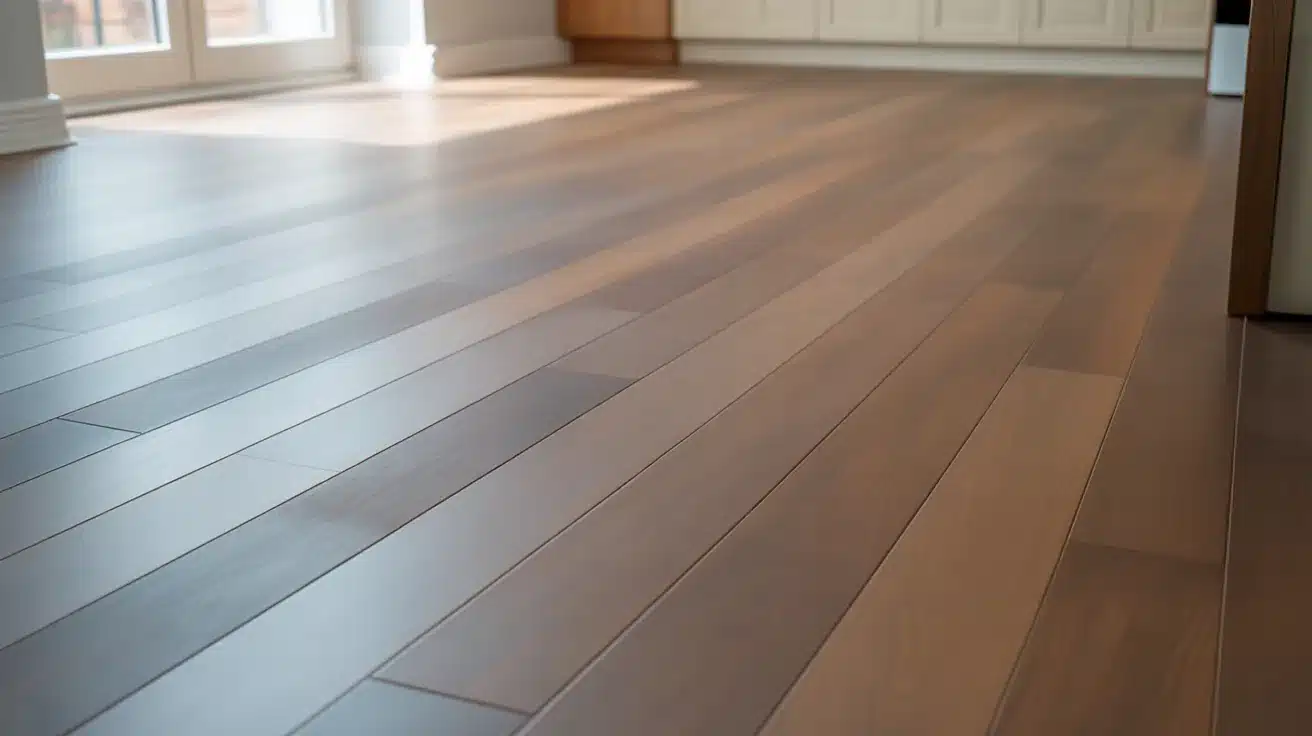
Engineered wood has a real wood veneer on top and a plywood or HDF core underneath. This build makes it far more stable than solid wood in areas where humidity and temperature change often. It looks nearly identical to solid hardwood but handles real-world conditions better.
- Best For: Kitchens, basements, and areas with underfloor heating
- Durability: High, though it can only be sanded 1 to 3 times, depending on veneer thickness
- Cost: $4 to $9 per sq ft (material); $2 to $5 per sq ft (installation)
- Maintenance: Same care as hardwood, but needs extra attention around moisture
- Watch Out For: Thinner veneers wear down faster and offer fewer refinishing options
3. Laminate Flooring
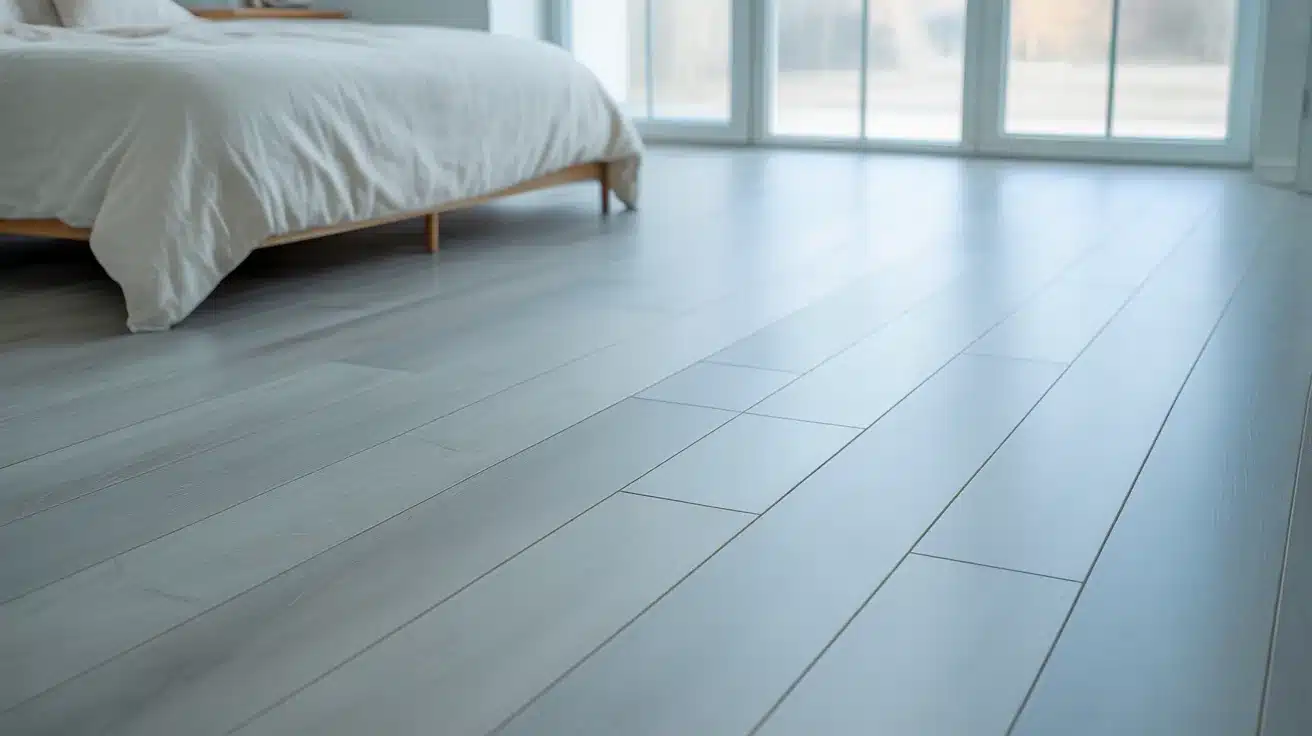
Laminate is a layered synthetic product where a photographic layer mimics the look of wood or stone. It is one of the most budget-friendly options on the market and very easy to install thanks to its click-lock design. However, once the surface wears through, it cannot be refinished.
- Best For: Bedrooms, hallways, and lower-traffic living spaces
- Durability: Moderate; resists scratches but cannot be repaired once the surface is worn
- Cost: $1 to $5 per sq ft (material); $1 to $3 per sq ft (installation)
- Maintenance: Easy to clean with a damp mop; avoid soaking or standing water
- Watch Out For: Standard laminate is not waterproof and can swell if water gets underneath
4. Luxury Vinyl Plank (LVP) and Luxury Vinyl Tile (LVT)
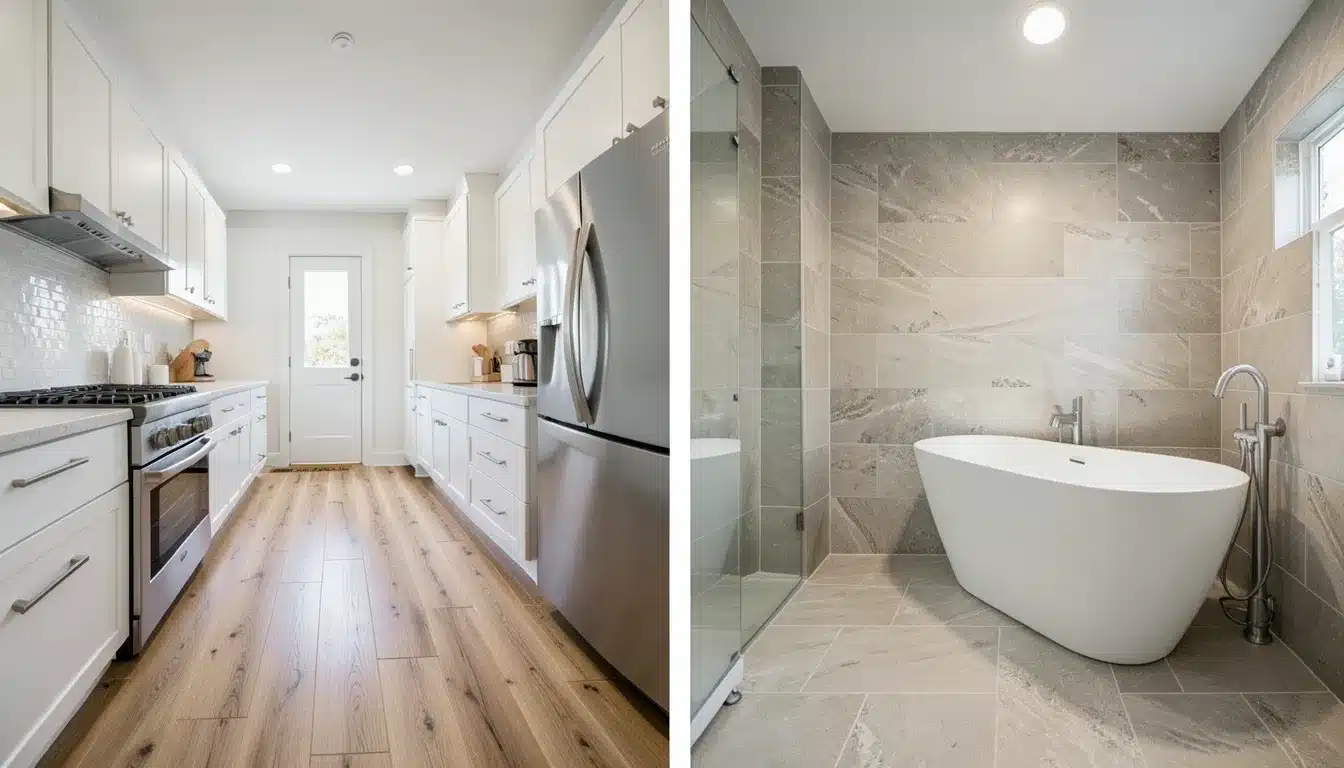
Luxury vinyl is 100% waterproof, soft underfoot, and comes in styles that closely mimic wood or stone. LVP comes in plank format, while LVT comes in tile format. Both share the same core construction and practical benefits, making them a strong choice for almost any room.
- Best For: Bathrooms, kitchens, basements, and laundry rooms
- Durability: High; wear layers resist scratches and everyday dents
- Cost: $2 to $7 per sq ft (material); $1 to $3 per sq ft (installation)
- Maintenance: Sweep and mop with a damp cloth; no sealing or refinishing needed
- Watch Out For: Cannot be refinished; lower-priced options may look less realistic up close
5. Ceramic and Porcelain Tile
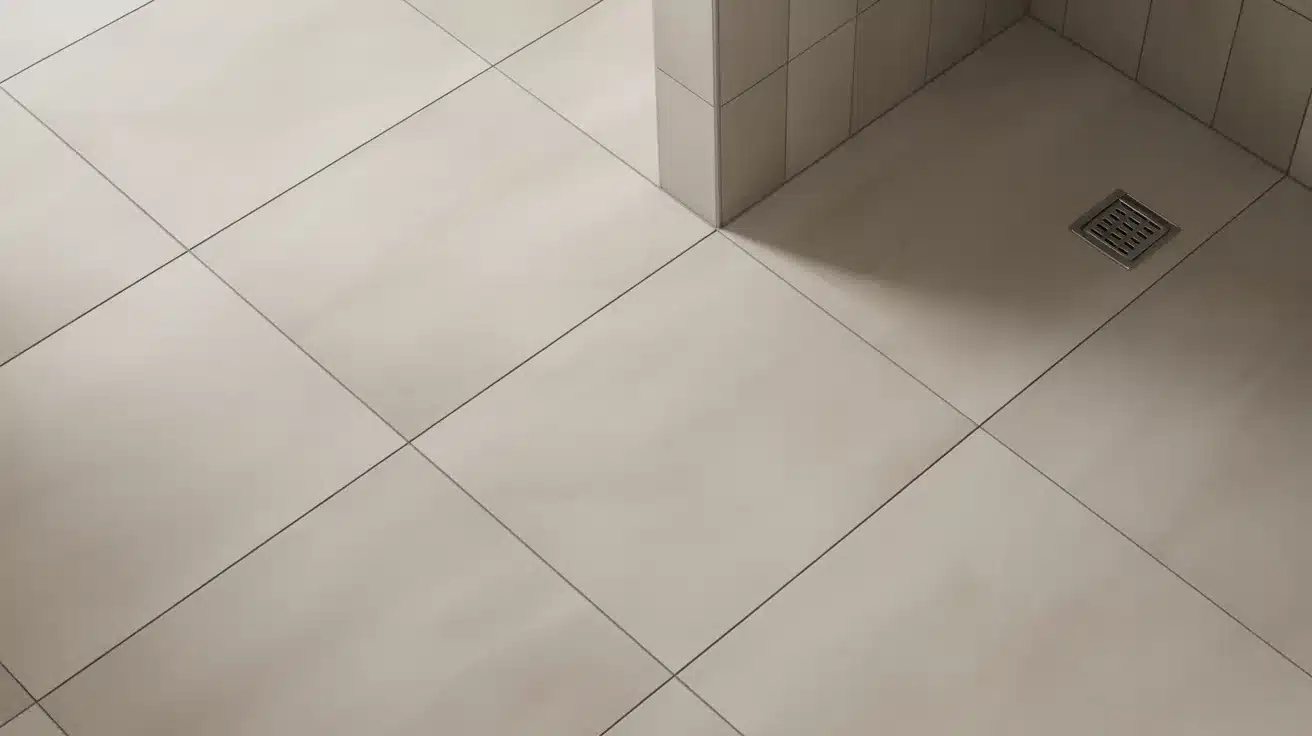
Tile is one of the toughest flooring materials available and is a reliable choice for wet areas. Porcelain is denser and less porous than ceramic, which makes it more resistant to water and staining. Both come in a wide range of sizes, colors, and finishes to suit any space.
- Best For: Bathrooms, kitchens, entryways, and laundry rooms
- Durability: Very high; tiles can last a lifetime when grout is properly maintained
- Cost: Ceramic: $1 to $10 per sq ft; Porcelain: $3 to $20 per sq ft
- Maintenance: Easy to clean, but grout lines need sealing regularly to prevent staining
- Watch Out For: Hard and cold underfoot; not ideal for areas where people stand for long periods
6. Natural Stone Flooring
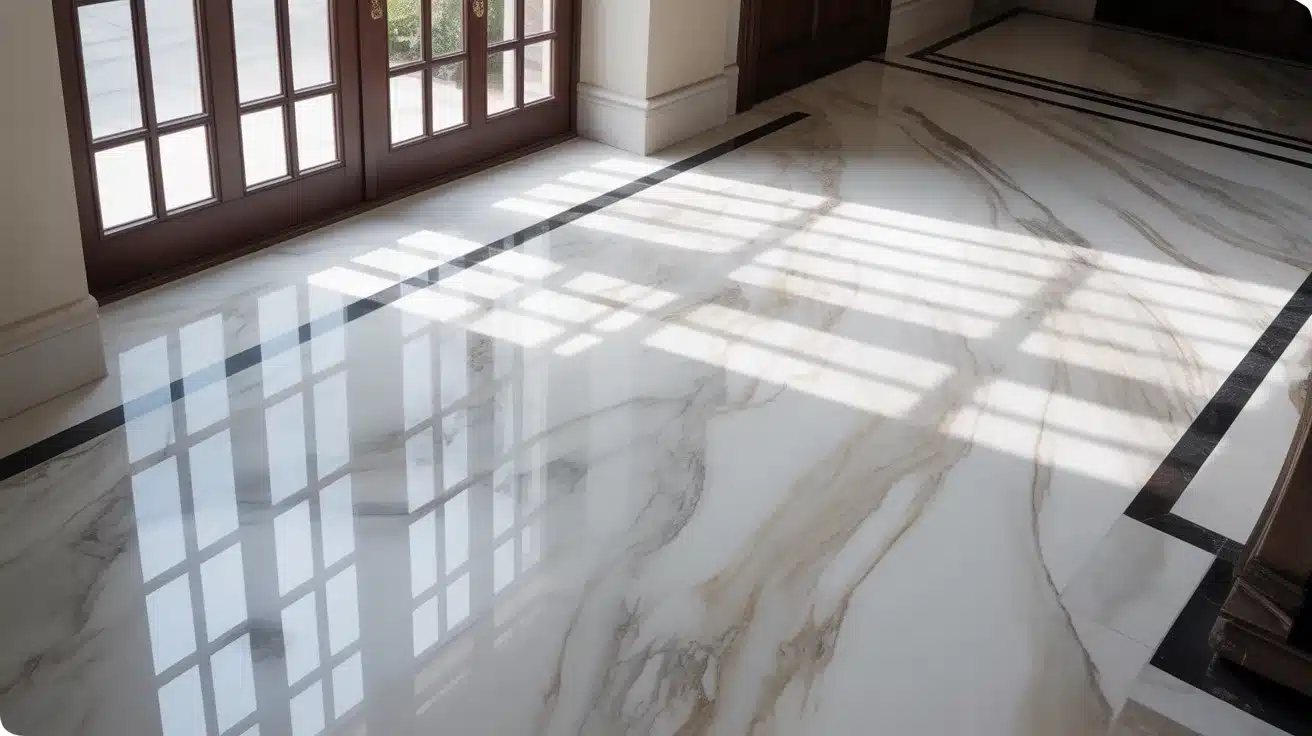
Natural stone includes marble, granite, slate, limestone, and travertine. Each piece is unique because it comes directly from the earth. It adds real character and long-term value to a home, though it requires more upkeep than most other flooring types.
- Best For: Entryways, bathrooms, kitchens, and outdoor patios
- Durability: Extremely high when properly sealed and maintained
- Cost: $5 to $20 per sq ft (material); installation adds more due to weight and complexity
- Maintenance: Must be sealed regularly to prevent staining and moisture damage
- Watch Out For: Porous stones like marble and limestone stain quickly if left unsealed
7. Carpet Flooring
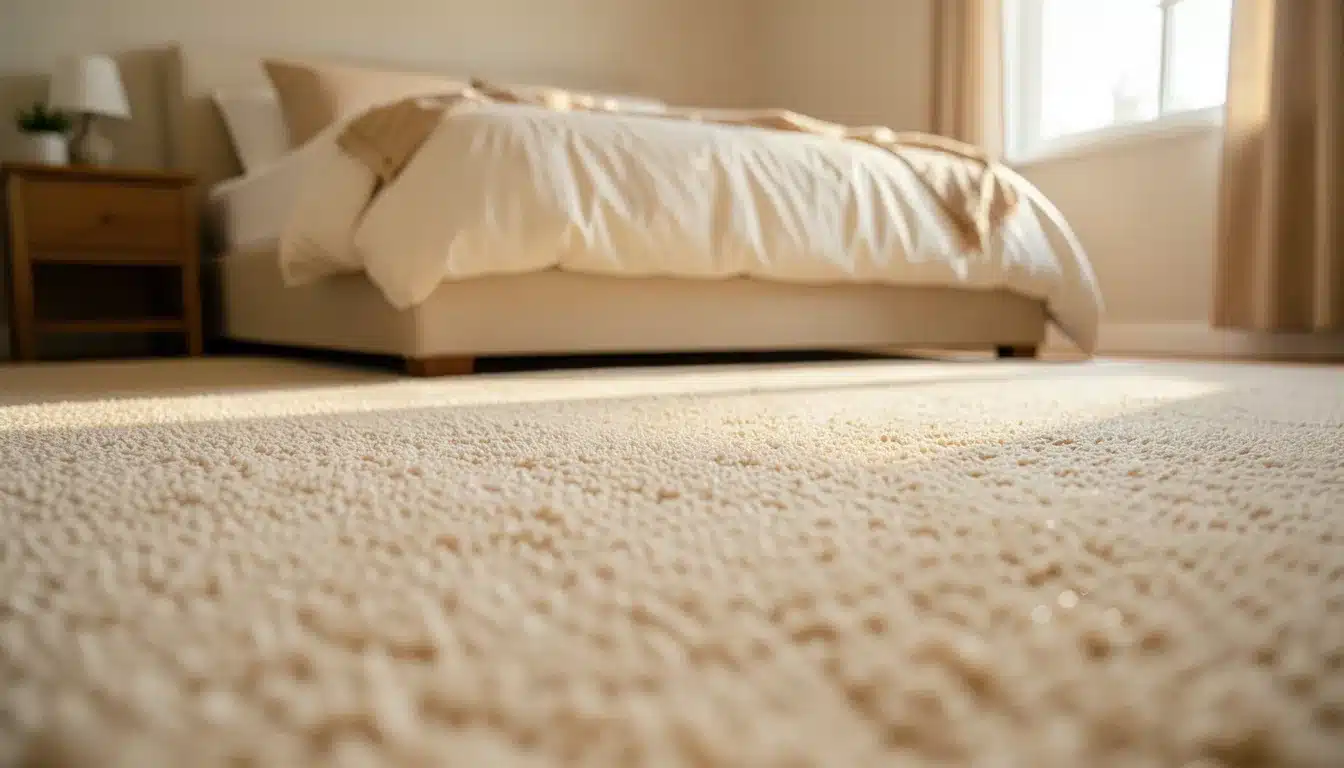
Carpet remains a top choice for bedrooms and living spaces because of its softness and warmth underfoot. It is available in fibers like nylon, polyester, and wool, each with different levels of durability and comfort. It also absorbs sound well, which is a real benefit in multi-story homes.
- Best For: Bedrooms, living rooms, home theaters, and dry basements
- Durability: Low to moderate; typically replaced every 5 to 15 years
- Cost: $1 to $5 per sq ft (material); $1 to $2 per sq ft (installation)
- Maintenance: Regular vacuuming plus professional deep cleaning every 1 to 2 years
- Watch Out For: Traps allergens, pet hair, and odors; not suitable for wet or high-traffic areas
8. Bamboo Flooring
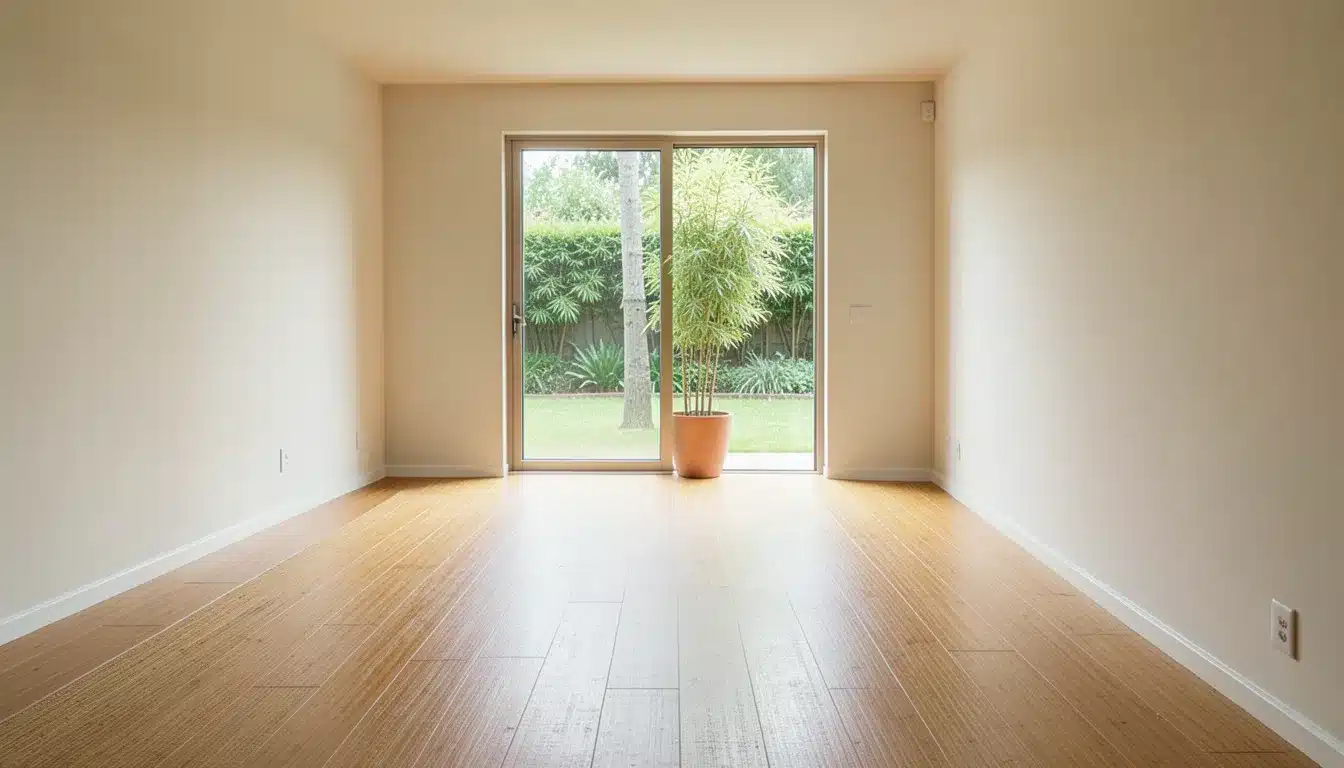
Bamboo is often grouped with hardwood, but it is technically a grass. It is one of the more eco-friendly flooring options because bamboo plants grow back quickly after harvesting. Strand-woven bamboo, in particular, is harder than most hardwoods and holds up well in active households.
- Best For: Living rooms, bedrooms, and home offices
- Durability: High, especially strand-woven varieties
- Cost: $2 to $8 per sq ft (material); $2 to $4 per sq ft (installation)
- Maintenance: Regular sweeping and occasional damp mopping; avoid excess moisture
- Watch Out For: Quality varies greatly by brand; lower-quality options can dent and scratch more easily
9. Cork Flooring
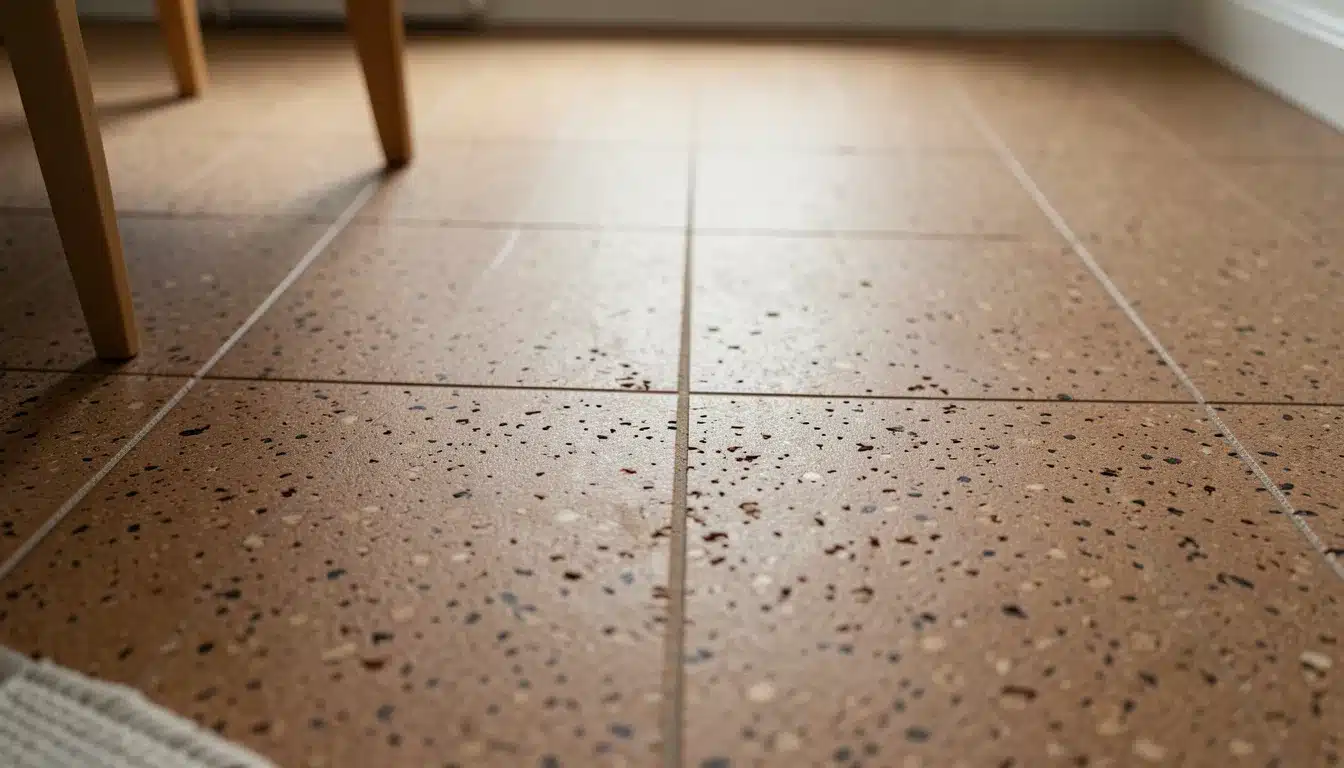
Cork comes from the bark of cork oak trees and is one of the most comfortable floors to stand on for long stretches of time. It naturally absorbs sound and acts as a heat insulator, which makes it a strong option for home offices and children’s rooms. It is also naturally antimicrobial.
- Best For: Home offices, children’s rooms, kitchens, and bedrooms
- Durability: Moderate; resists everyday wear but dents under heavy furniture
- Cost: $2 to $8 per sq ft (material); $2 to $4 per sq ft (installation)
- Maintenance: Needs sealing every 3 to 4 years to stay protected against moisture
- Watch Out For: Direct sunlight causes fading; heavy furniture legs can cause permanent dents
10. Concrete Flooring
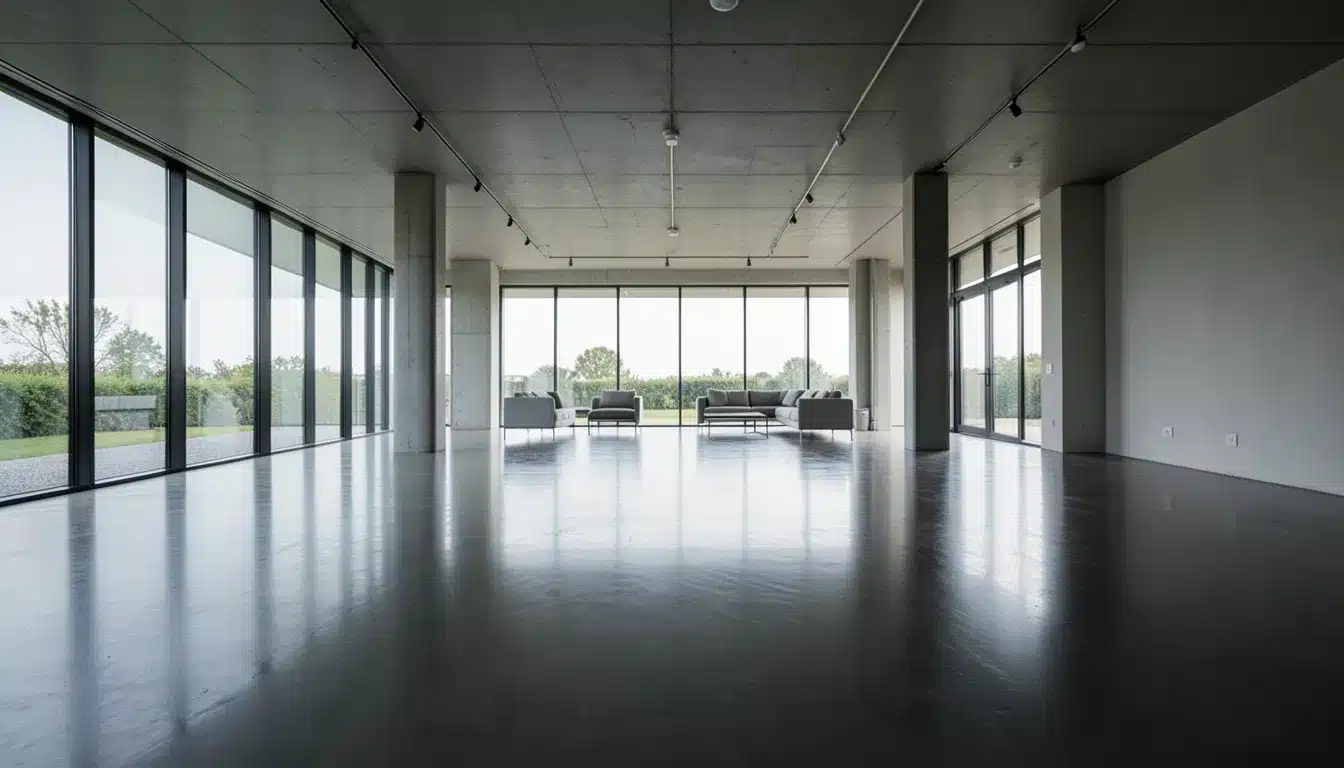
Polished or sealed concrete is no longer just for garages. It has become a popular choice in modern homes for its clean look and very low maintenance needs. It is one of the most durable floors available and works well with radiant underfloor heating systems.
- Best For: Basements, modern open-plan living areas, garages, and commercial spaces
- Durability: Extremely high with proper sealing
- Cost: $2 to $15 per sq ft, depending on finish type (polished, stained, or plain sealed)
- Maintenance: Regular sweeping and mopping; reseal every 3 to 9 years
- Watch Out For: Hard and cold underfoot; can crack over time without proper installation and expansion joints
Side-by-Side Comparison: All Flooring Types
Now that you know what each floor brings to the table, here is a quick look at how they all stack up. Use this to narrow down your options before you visit a showroom or call a contractor.
| Flooring Type | Water Resistance | Material Cost (per sq ft) | Installation Cost (per sq ft) | Eco-Friendly | Durability | Overall Rating |
|---|---|---|---|---|---|---|
| Hardwood | Low | $6 to $12 | $3 to $6 | Moderate | ⭐⭐⭐⭐⭐ | ⭐⭐⭐⭐ |
| Engineered Wood | Moderate | $4 to $9 | $2 to $5 | Moderate | ⭐⭐⭐⭐ | ⭐⭐⭐⭐ |
| Laminate | Low to Moderate | $1 to $5 | $1 to $3 | Low | ⭐⭐⭐ | ⭐⭐⭐ |
| Luxury Vinyl (LVP/LVT) | High | $2 to $7 | $1 to $3 | Low | ⭐⭐⭐⭐ | ⭐⭐⭐⭐ |
| Ceramic Tile | High | $1 to $10 | $4 to $8 | Moderate | ⭐⭐⭐⭐⭐ | ⭐⭐⭐⭐ |
| Porcelain Tile | High | $3 to $20 | $4 to $10 | Moderate | ⭐⭐⭐⭐⭐ | ⭐⭐⭐⭐ |
| Natural Stone | Moderate (when sealed) | $5 to $20 | $5 to $15 | High | ⭐⭐⭐⭐⭐ | ⭐⭐⭐⭐ |
| Carpet | Low | $1 to $5 | $1 to $2 | Varies | ⭐⭐ | ⭐⭐⭐ |
| Bamboo | Moderate | $2 to $8 | $2 to $4 | High | ⭐⭐⭐⭐ | ⭐⭐⭐⭐ |
| Cork | Low to Moderate | $2 to $8 | $2 to $4 | High | ⭐⭐⭐ | ⭐⭐⭐ |
| Concrete | High (when sealed) | $2 to $15 | $3 to $8 | Moderate | ⭐⭐⭐⭐⭐ | ⭐⭐⭐⭐ |
Best Flooring for Each Room in Your Home
The right flooring depends as much on where it goes as what it looks like. Here is a straight, room-by-room answer to help you make a fast decision.
- Kitchen: Luxury vinyl or porcelain tile handles spills and daily foot traffic without much fuss.
- Bathroom: Porcelain tile or luxury vinyl are the only real choices here since full waterproofing is non-negotiable.
- Bedroom: Carpet, hardwood, or engineered wood all work well since comfort and warmth take priority over water resistance.
- Living Room: Hardwood or luxury vinyl offers the best balance of looks, durability, and everyday use.
- Basement: Luxury vinyl is the top pick because moisture from below the slab is a constant risk.
- Entryway / Hallway: Tile, natural stone, or luxury vinyl holds up best against dirt, water, and constant foot traffic.
- Home Office: Cork or carpet keeps things quiet and comfortable for long hours at a desk.
- Children’s Room: Cork, carpet, or luxury vinyl flooring works best because they are soft underfoot, safe to fall on, and easy to clean.
Which Flooring Type Adds the Most Home Value?
Hardwood consistently tops the list for resale value, and most real estate professionals agree that buyers are willing to pay more for homes with it, especially in living rooms, hallways, and main bedrooms.
Natural stone in kitchens and bathrooms also adds solid long-term value. Luxury vinyl has become a strong second choice because modern buyers recognize it as a practical, well-finished upgrade.
Carpet, on the other hand, can reduce buyer interest in the main living areas since many buyers plan to replace it.
The short answer: hardwood first, then stone and luxury vinyl, with carpet being the least likely to boost your sale price.
Closing Remarks
Flooring is one of those decisions that follows you around the house every single day. The good news is that there is no single right answer for every home. There is only the right answer for your space, your budget, and the way you actually live.
If you want warmth and long-term value, hardwood is hard to beat. If you have kids, pets, or a basement, luxury vinyl is worth a serious look. If you care about the environment, bamboo and cork belong on your shortlist.
Go back to what matters most to you: cost, durability, room type, or resale value. That answer will point you to the right floor faster than any trend ever will.
Still unsure? Drop your question in the comments, and we will help you figure it out.