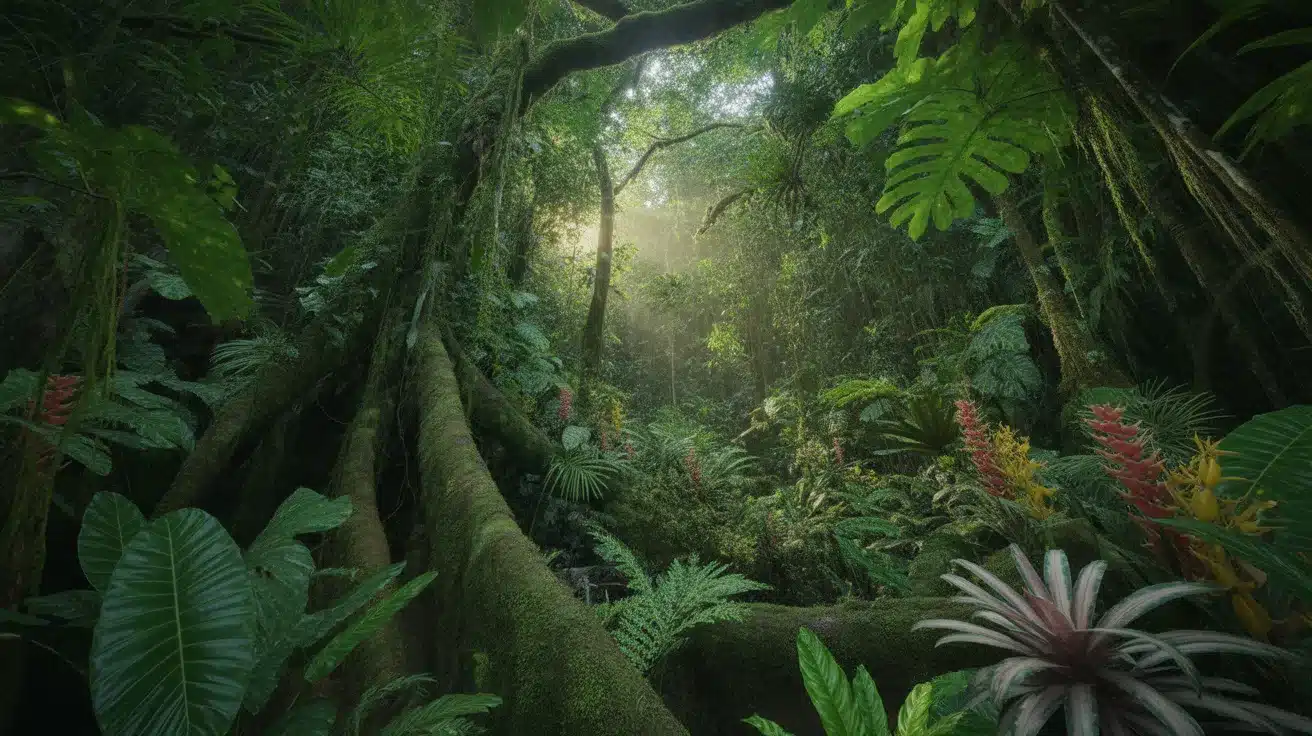
Tropical rainforests cover less than 6% of the Earth. Yet they hold more than half of all known plant species on the planet. That is worth pausing on.
The medicine in your cabinet, the chocolate on your shelf, the coffee in your cup, many of these trace back to plants growing deep inside a rainforest.
These plants are not just part of nature. They are woven into everyday life in ways most people never think about.
This guide covers the most well-known tropical rainforest plants, how they survive in one of the toughest places on Earth, what threatens them today, and what we stand to lose if they disappear.
Let’s get into it.
What Are Tropical Rainforests?
Tropical rainforests are warm, wet forests located close to the equator. They receive between 79 and 394 inches of rain every year.
The three major regions are South America (the Amazon), Central Africa (the Congo Basin), and Southeast Asia. These forests have remained largely stable for millions of years.
That long, unbroken history gave plants the time to grow into thousands of very specific forms.
Today, they support more than half of all known plant and animal life on Earth, and a new plant species is found in these regions roughly every two days.
4 Layers of a Tropical Rainforest and the Plants in Each
A tropical rainforest is not just a thick bunch of trees. It is a structured system with four distinct vertical layers, each holding its own set of plants adapted to survive in very different conditions.
| Layer | Height Range | Light Level | Key Plants |
|---|---|---|---|
| Emergent Layer | 100 to 200+ feet | Full sunlight | Kapok Tree, Brazil Nut Tree |
| Canopy Layer | 60 to 100 feet | Filtered sunlight | Orchids, Bromeliads, Lianas, Strangler Figs |
| Understory Layer | 10 to 60 feet | Low light | Ferns, Small Palms, Climbing Vines |
| Forest Floor | Ground level | Less than 2% sunlight | Moss, Fungi, Rafflesia |
Most Well-Known Tropical Rainforest Plants
Some of these plants feed entire communities. Others have reshaped medicine, global trade, and the way we know food. Here is a closer look at the plants that make tropical rainforests unlike any other place on Earth.
1. Kapok Tree
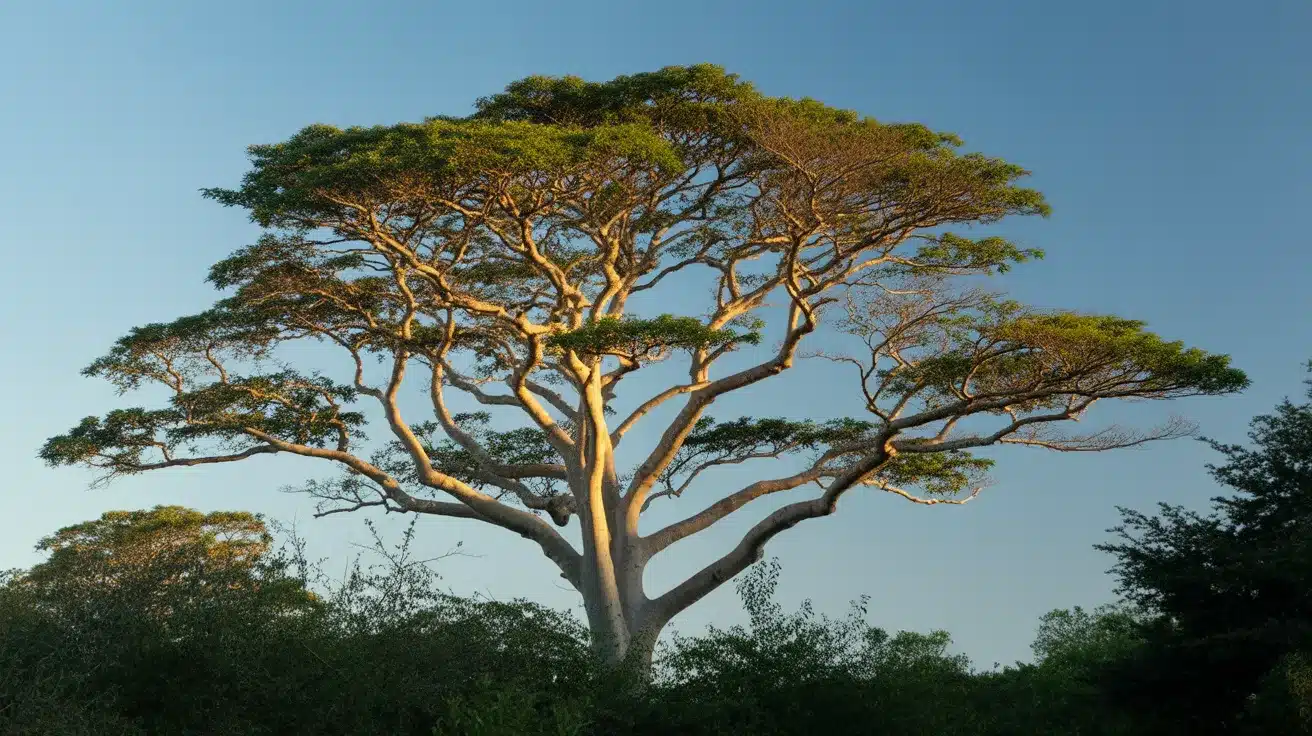
The Kapok tree is among the tallest in the Amazon rainforest. It stretches over 200 feet above the ground and stands above the main canopy. Wide, flat roots spread out from its base to hold it steady in shallow soil.
- Scientific Name: Ceiba pentandra
- Region: Amazon rainforest, South America
- Height: Over 200 feet
- Known For: Seed fibers used in life jackets, pillows, and insulation materials
2. Orchids
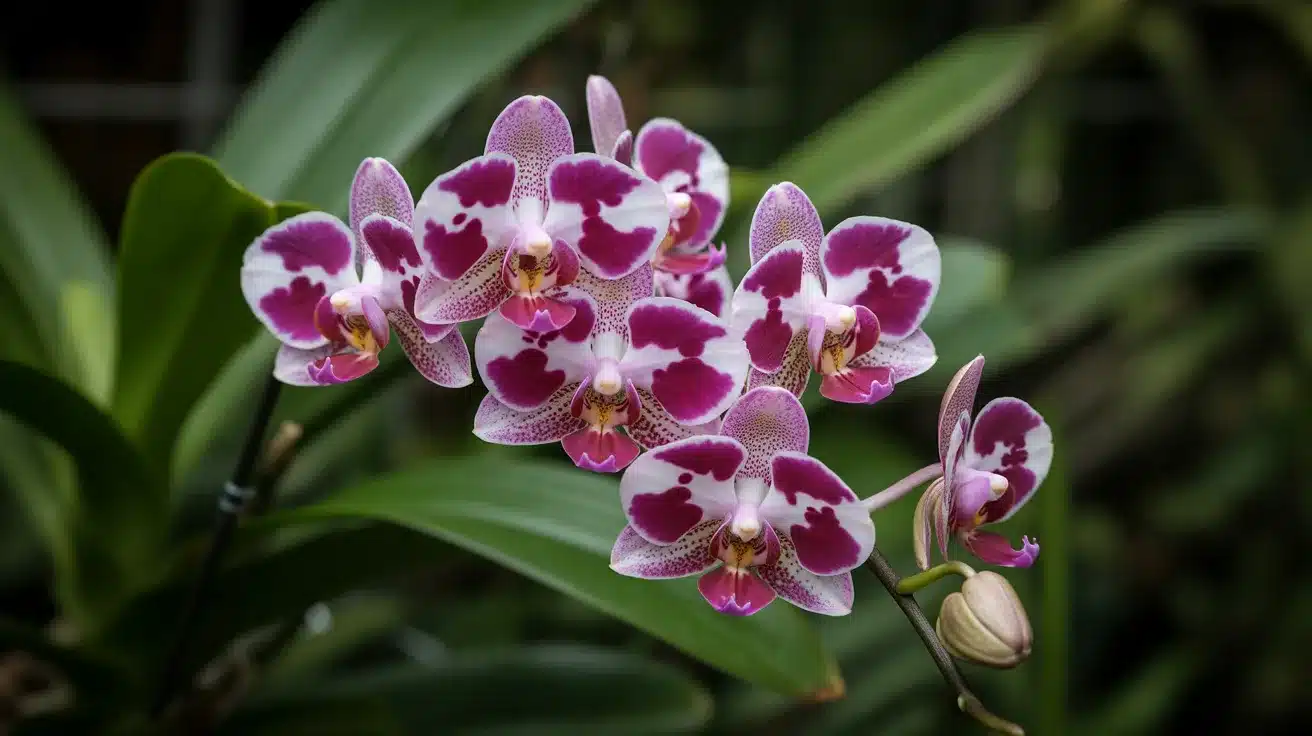
Orchids make up the largest plant family in the world. Over 10,000 species live in tropical forests alone. Most grow on tree branches rather than in soil, absorbing moisture directly from the air.
- Scientific Name: Family Orchidaceae
- Region: Tropical forests worldwide
- Species Count: Over 25,000 globally, 10,000+ in tropical forests
- Known For: Surviving without soil by pulling water from humid air
3. Bromeliads
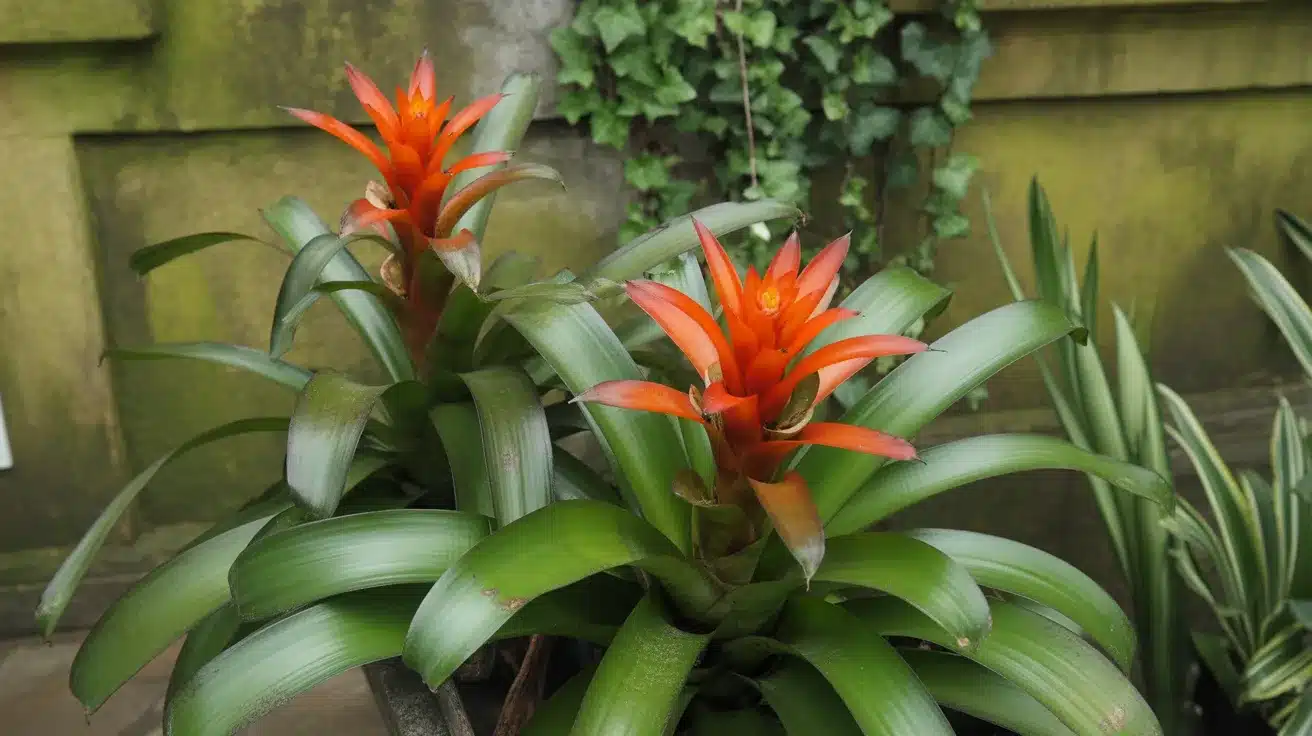
Bromeliads arrange their leaves in a cup shape that collects rainwater. A single plant can hold up to 7 liters of water at a time. That small pool becomes a living space for frogs, insects, and even small crabs.
- Scientific Name: Family Bromeliaceae
- Region: Americas, including the Amazon rainforest
- Unique Trait: Stores water in a leaf cup; the pineapple is a bromeliad
- Known For: Supporting entire small ecosystems within a single plant
4. Rubber Tree
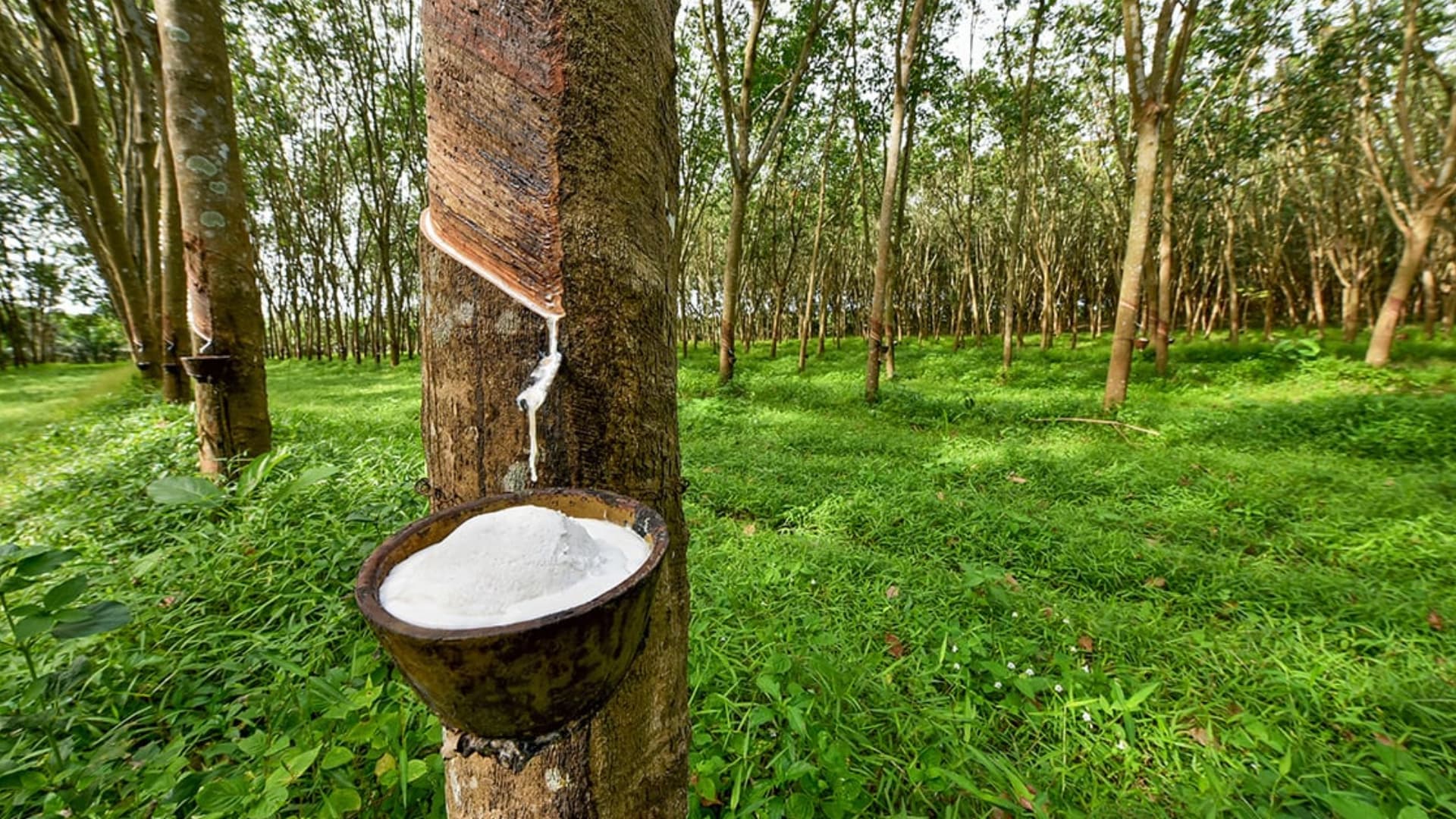
The rubber tree produces latex, the raw material used to make natural rubber. Indigenous communities in the Amazon used it for centuries before it became a global resource. In the 19th century, seeds were smuggled out and planted in Southeast Asia, where the tree now grows on a large scale.
- Scientific Name: Hevea brasiliensis
- Region: Originally Amazon; now grown widely in Southeast Asia
- Height: Around 100 feet
- Known For: Being the primary source of natural rubber worldwide
5. Heliconia (Lobster Claw)

Heliconia stands out for its bright, claw-shaped flowers in bold shades of red, orange, and yellow. Hummingbirds rely on it for food and, in return, carry its pollen between plants.
- Scientific Name: Heliconia spp.
- Region: Amazon and other South American rainforests
- Known For: Being a key food source for hummingbirds
- Found in: Canopy and forest edge areas
6. Pitcher Plant
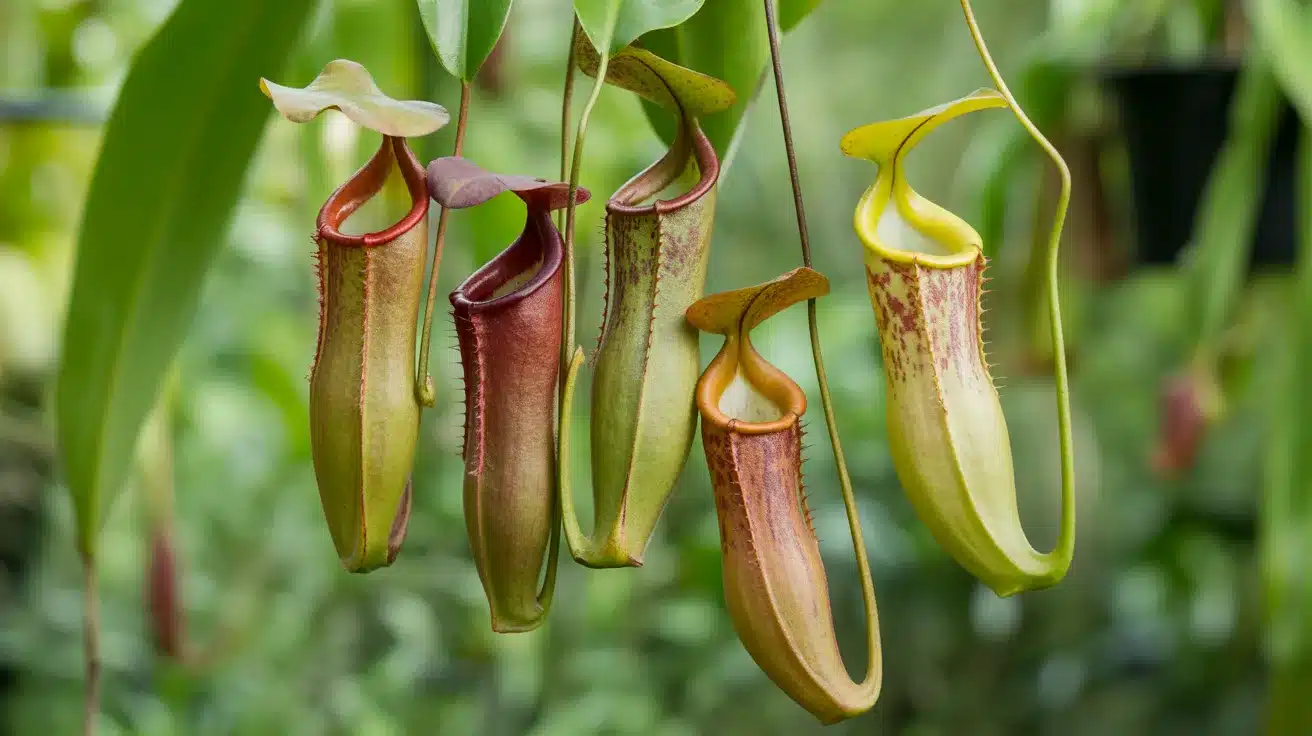
The pitcher plant grows in areas with very few nutrients in the soil. Instead of drawing what it needs from the ground, it traps insects in a deep, tube-shaped leaf filled with digestive fluid.
- Scientific Name: Nepenthes (Asia), Sarracenia (Americas)
- Region: Southeast Asia and parts of South America
- Unique Trait: Carnivorous; feeds on insects and small animals
- Known For: One of the most specialized survival methods in the plant world
7. Rafflesia
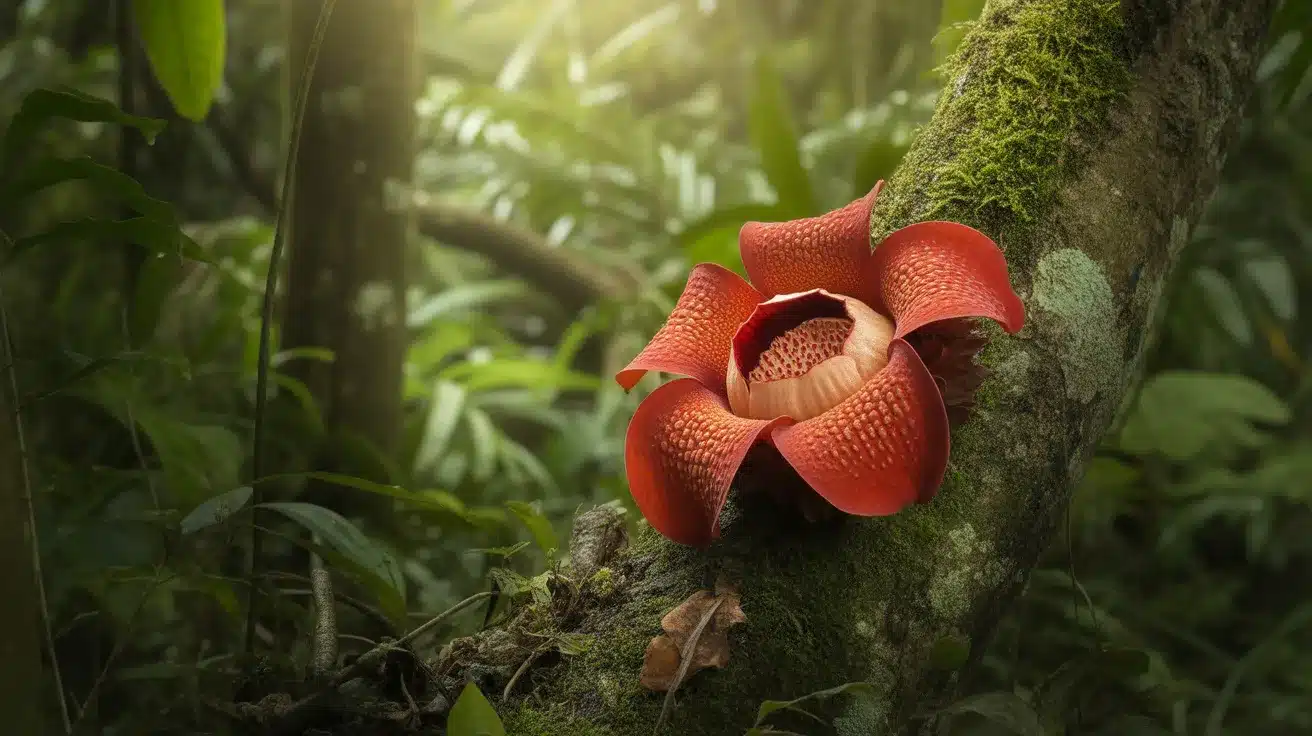
Rafflesia has no leaves, stems, or roots of its own. It lives entirely within another vine as a parasite and becomes visible only when it flowers. It cannot be grown in captivity.
- Scientific Name: Rafflesia arnoldii
- Region: Borneo and Sumatra, Southeast Asia
- Flower Size: Up to 3 feet wide
- Known For: Releasing a smell like rotting meat to attract pollinators
8. Victoria Amazonica (Giant Water Lily)
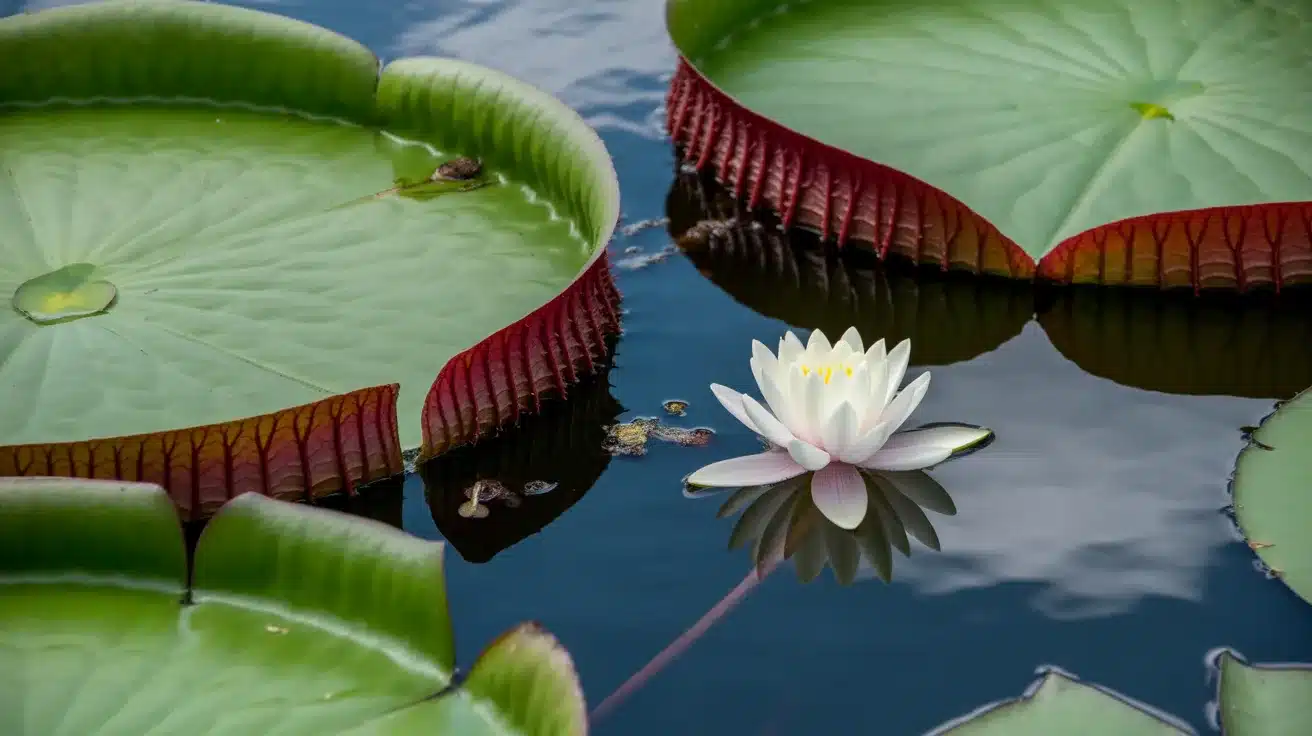
The giant water lily has floating leaves wide enough to hold the weight of a small child. They grow up to 10 feet across on the surface of slow-moving rivers and lakes.
- Scientific Name: Victoria amazonica
- Region: Amazon River basin, South America
- Leaf Size: Up to 10 feet wide
- Known For: Flowers that bloom at night and shift from white to pink after pollination
9. Cinchona Tree
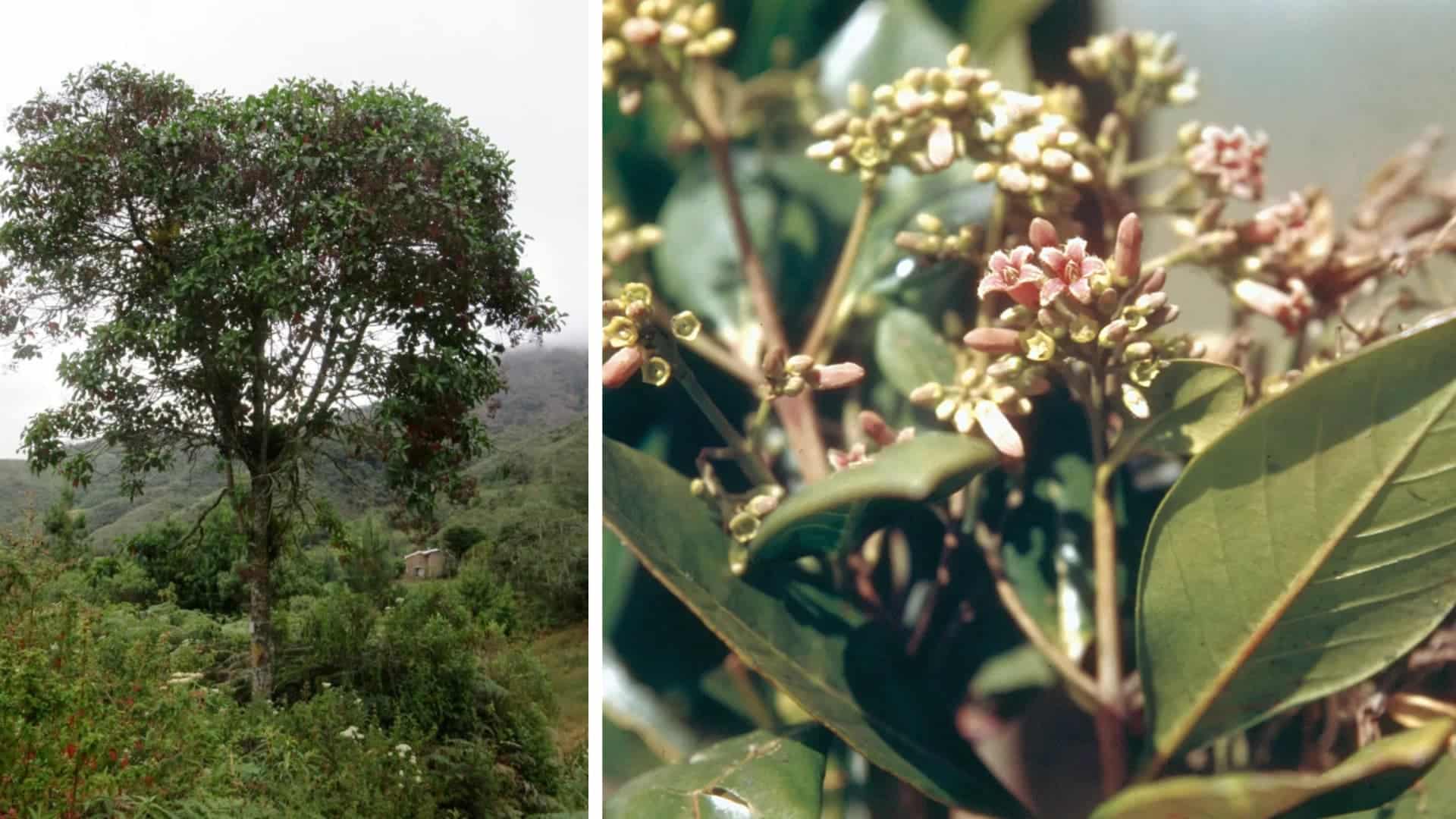
The bark of the Cinchona tree contains quinine, one of the first known treatments for malaria. It still plays a role in medicine and is used in tonic water today.
- Scientific Name: Cinchona officinalis
- Region: Andean regions of South America
- Height: 50 to 80 feet
- Known For: Producing quinine, a historic malaria treatment still in use
10. Lianas (Climbing Vines)
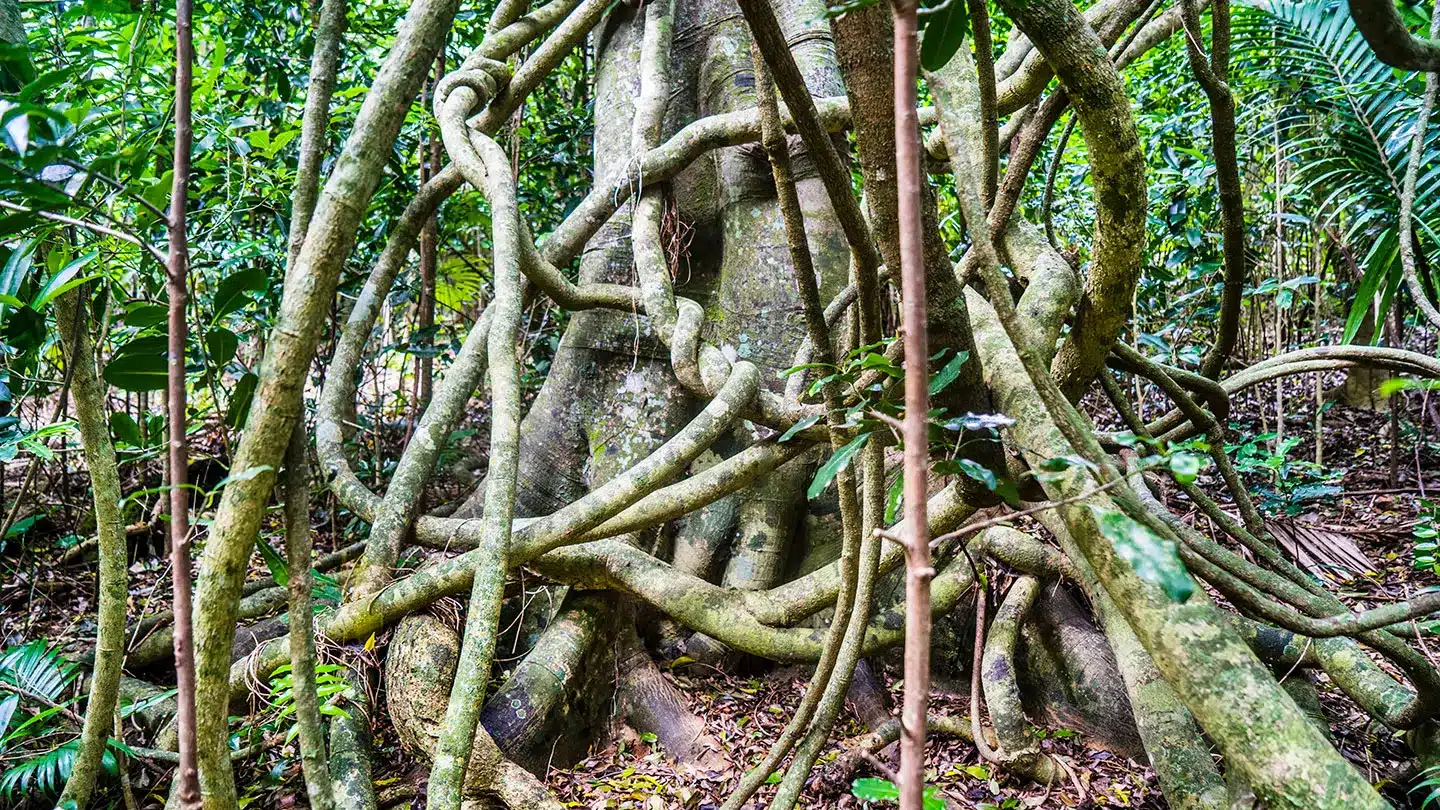
Lianas are long, woody vines that start at the ground and climb toward light at the top of the canopy. Some grow hundreds of meters long. They form natural bridges that monkeys and other animals use to move through the forest.
- Type: Woody vines (multiple species)
- Region: Amazon and Congo rainforests
- Length: Can reach several hundred meters
- Known For: Connecting different forest levels and supporting animal movement
11. Cacao Tree
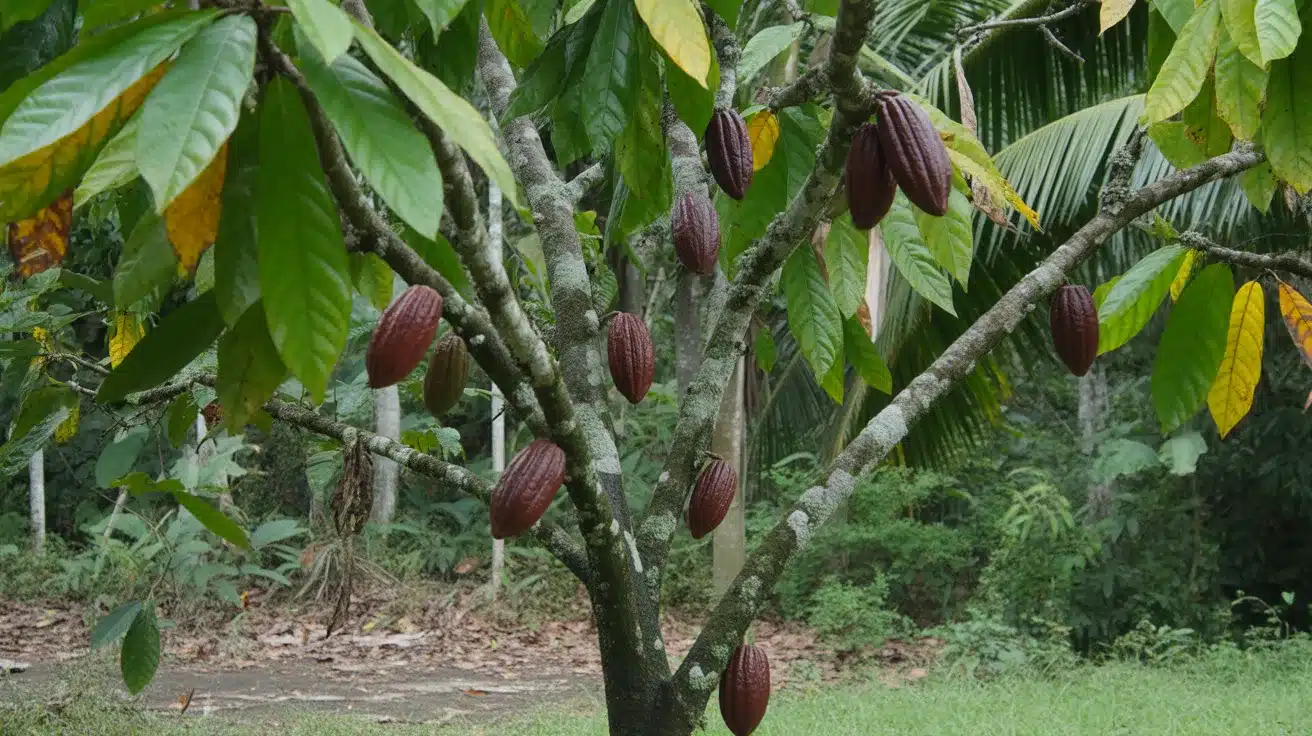
The cacao tree grows in the shaded understory of the Amazon. Its fruit grows directly from the trunk, an uncommon trait in the plant world. The seeds inside that fruit are processed into chocolate.
- Scientific Name: Theobroma cacao
- Region: Amazon and Central American rainforests
- Known For: Being the source of all chocolate
- Unique Trait: Fruit grows from the trunk, not from branches
12. Coffee Plant
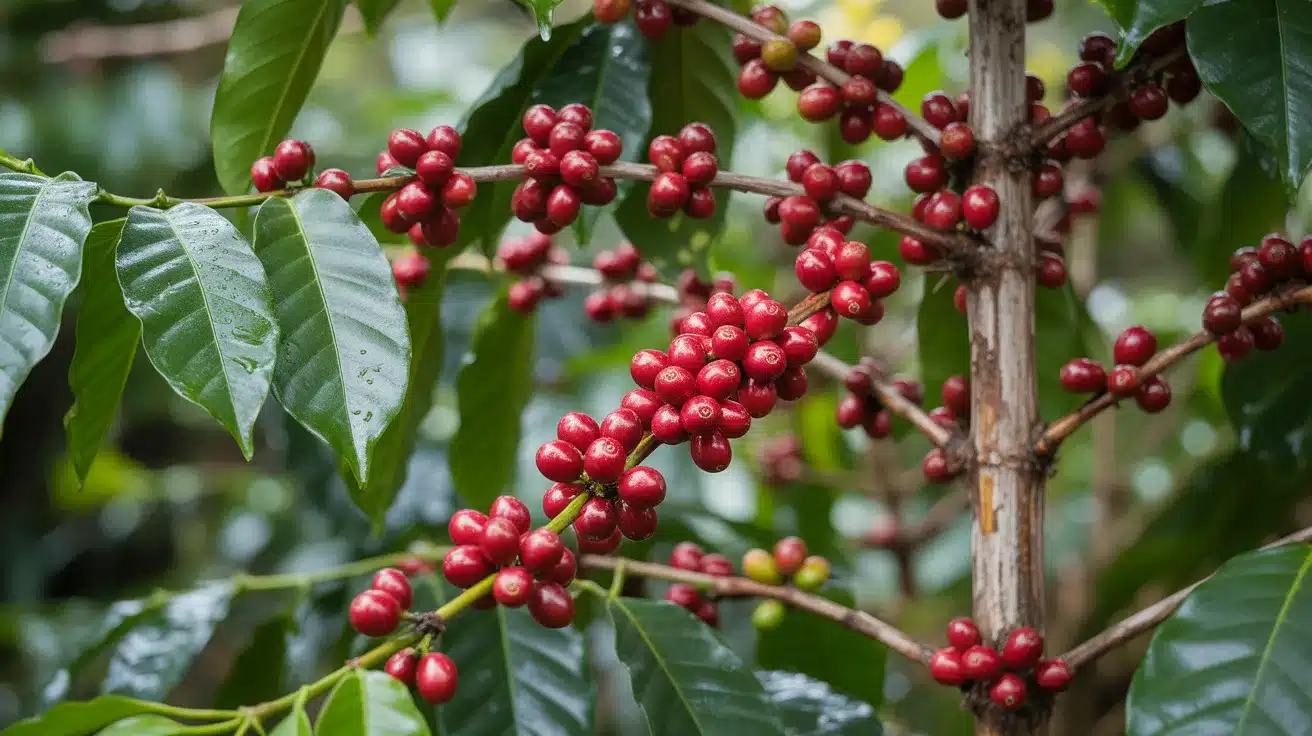
The coffee plant thrives under the shade of taller trees in South American rainforests. It grows up to 30 feet tall. The coffee beans found inside its small red berries are among the most traded agricultural products in the world.
- Scientific Name: Coffea arabica
- Region: Tropical forests in Peru, Brazil, and Ecuador
- Height: Up to 30 feet
- Known For: Producing coffee beans, one of the world’s most widely consumed products
How Tropical Rainforest Plants Have Adapted to Survive
Living in a rainforest sounds ideal, but it is fiercely competitive. Every plant fights for light, water, and nutrients, and some have developed highly specialized strategies to survive.
- Drip Tips on Leaves: Pointed leaf tips help rain run off quickly, preventing mold and fungi from growing on constantly wet surfaces.
- Epiphytes: Plants That Live on Other Plants. Epiphytes grow on tree trunks or branches to reach sunlight, pulling water from the humid air rather than from soil.
- Buttress Roots Large, flat roots spread out from the base of tall trees to provide balance and support in shallow, nutrient-poor soil.
- Carnivorous Behavior Plants like the Pitcher Plant trap and digest insects to get nitrogen and other nutrients that are missing from the soil around them.
- Large Leaf Surfaces Plants in darker, lower layers grow wide leaves to catch as much of the limited available light as possible.
- Waxy Leaf Coatings: A thin waxy layer on certain leaves controls water loss and protects the plant from fungal infections in high-humidity conditions.
Tropical Rainforest Plants by Region
Not all tropical rainforests are the same. The plants in the Amazon look and behave quite differently from those in the Congo or Southeast Asia, largely because each forest has its own climate, soil type, and history.
| Region | Forest Name | Notable Plants | Key Fact |
|---|---|---|---|
| South America | Amazon Rainforest | Kapok Tree, Rubber Tree, Victoria Amazonica, Cacao, Bromeliads | Largest tropical rainforest; home to over 40,000 plant species |
| Africa | Congo Basin | African Teak, Lianas, Ferns, Mosses | Second-largest rainforest; African Teak is now listed as endangered |
| Southeast Asia | Borneo, Sumatra, Malaysia | Rafflesia, Pitcher Plants, Rattan, Durian Tree | Home to the world’s largest flower and several carnivorous plant species |
Threats to Tropical Rainforest Plants
These plants have survived for millions of years. But over the last few decades, human activity has put many of them at serious risk, and the pace of loss has accelerated.
- Deforestation. Around 13.2% of the original Amazon forest has already been cleared for farming, logging, and road construction.
- Climate Change: Shifting rainfall and rising temperatures are disrupting the conditions that many tropical plants have depended on for millions of years.
- Logging. Heavy demand for timber has pushed species like the African Teak in the Congo toward endangered status due to overcutting.
- Mining and infrastructure road-building projects cut through forests, fragmenting plant habitats and blocking natural seed dispersal between areas.
- Loss of Undiscovered Species A new plant species is found roughly every two days in these forests, yet many may vanish before scientists ever get to study them.
- Loss of Indigenous Knowledge Indigenous communities carry centuries of detailed knowledge about plant use in medicine and food; their displacement puts that knowledge at permanent risk.
How You Can Help Protect Tropical Rainforest Plants
Small choices add up. Buying fair-trade chocolate, coffee, and FSC-certified wood products cuts demand for harmful forest clearing. Reducing paper waste helps too.
Supporting organizations that plant trees or fund rainforest research creates a direct impact.
If you have the time, sharing accurate information about these plants and what they mean for human life is one of the most practical things you can do.
Every species lost is gone for good. The more people understand what is at stake, the better the chance of keeping these forests standing.
Conclusion
Tropical rainforest plants do more than look good in nature documentaries.
They give us oxygen, medicine, food, and shelter for thousands of species. And right now, many of them are disappearing faster than scientists can study them.
The encouraging part is that awareness is a real starting point. Knowing which plants grow in these forests, why they matter, and what threatens them already puts you ahead of most people.
If this post gave you something new to think about, we would love to hear from you.
Which tropical rainforest plant surprised you the most? Drop your answer in the comments below. And if you found this useful, share it with someone who loves plants or cares about the outdoors.
Frequently Asked Questions
What Plants Are in Tropical Rainforests?
Tropical rainforests are home to thousands of plant species, including orchids, bromeliads, kapok trees, rubber trees, lianas, ferns, pitcher plants, and giant water lilies. Many have not even been formally identified yet.
What Plants Grow in a Jungle?
Jungles and tropical rainforests share many of the same plants. Common ones include bamboo, heliconias, climbing vines, cacao trees, coffee plants, and a wide variety of ferns, mosses, and flowering plants.
What Are Three Dominant Plants in the Tropical Rainforest?
The three most dominant plant types are trees (which form the canopy and emergent layers), epiphytes such as orchids and bromeliads (which grow on other plants), and lianas (long, woody vines that climb toward sunlight).