If you’ve noticed your tomato leaves turning yellow, you’re in good company.
It’s one of those gardening moments that catches nearly everyone at some point, leaving you staring at your plants and wondering what shifted.
But here’s what matters: yellow leaves don’t automatically mean your tomatoes are doomed.
Often, your plant is simply trying to tell you something, whether it’s about the soil, the weather, or something smaller you might have overlooked.
We’ll walk through the environmental factors, nutritional needs, pesky insects, and possible diseases that could be behind the color change, helping you understand what tomatoes need and how to restore that lush green foliage.
Quick Diagnosis: Why are My Tomato Plants Turning Yellow?
When your tomato plants start yellowing, a quick assessment can point you toward the real culprit. Before you rush to fix anything, take a moment to observe what’s actually happening.
Look closely at which leaves are affected since bottom yellowing often signals something different than yellowing at the top. Check for any spots, unusual vein patterns, or curling that might accompany the color change.
Notice whether the yellowing is spreading rapidly across the plant or staying put in one area.
These simple observations will help you pinpoint watering issues, nutrient gaps, or something more concerning that needs your attention.
Ask yourself:
- Which leaves are yellowing?
- Are there spots, veins, or curling?
- Is yellowing spreading or isolated?
Tomato: Normal vs. Problem Yellowing
Sometimes yellowing is just part of your tomato plant’s natural rhythm, while other times it’s waving a red flag. Knowing the difference can save you from unnecessary worry or help you catch problems early.
Here’s how to tell what’s normal aging versus what demands your attention.
| Type | What It Looks Like | What It Means |
|---|---|---|
| Older lower leaves | A few bottom leaves gradually fade and drop | Natural aging as the plant redirects energy upward |
| Transplant shock | Temporary yellowing after moving plants | Resolves within a week or two as roots adjust |
| Seasonal changes | Late-season yellowing as temperatures drop | Plants naturally wind down at the end of their cycle |
| Rapid spread | Multiple leaves are yellowing across the plant quickly | Nutrient deficiency, disease, or pest problem |
| New growth affected | Young leaves turn yellow or pale | Lack of key nutrients like nitrogen or iron |
| Patterns with spots | Yellowing with streaks, spots, or wilting | Fungal disease, bacterial infection, or pest damage |
Environmental Causes of Yellow Tomato Leaves
Your tomato plants are sensitive to their surroundings, and shifts in water, temperature, or light can trigger yellowing almost overnight.
Understanding these environmental stressors helps you adjust care before minor issues become major setbacks.
1. Watering Problems
Getting water right feels like a balancing act, but your plants will tell you when things are off.
Overwatering leads to soggy soil that suffocates roots, causing yellow leaves that feel soft and may develop dark spots. Underwatering makes leaves turn yellow and crispy, often curling at the edges.
Check the soil moisture a few inches down; if it’s constantly wet or bone dry, you’ve found your answer.
2. Temperature Stress
Tomatoes thrive in warmth but struggle when temperatures swing too far in either direction.
- Cold nights below 50°F slow nutrient uptake, causing yellowing on lower leaves.
- Heat stress above 95°F makes plants wilt, and leaves fade to pale yellow.
- Sudden weather swings shock the plant, triggering temporary yellowing that usually recovers with stable conditions.
3. Sunlight Issues
Light plays a major role in keeping your tomato leaves green and healthy. Too much or too little can both lead to yellowing, though the patterns look quite different.
| Issue | What Happens | How to Spot It |
|---|---|---|
| Too much direct sun | Leaf scorch and bleaching | Yellow or white patches on upper leaves, crispy edges |
| Insufficient light | Weak, pale growth | Overall yellowing, especially on shaded lower leaves, and leggy stems |
| Leaf scorch vs. nutrient yellowing | Different patterns | Scorch shows burnt spots; nutrient issues create uniform pale yellow |
Nutrient Deficiencies That Cause Yellowing
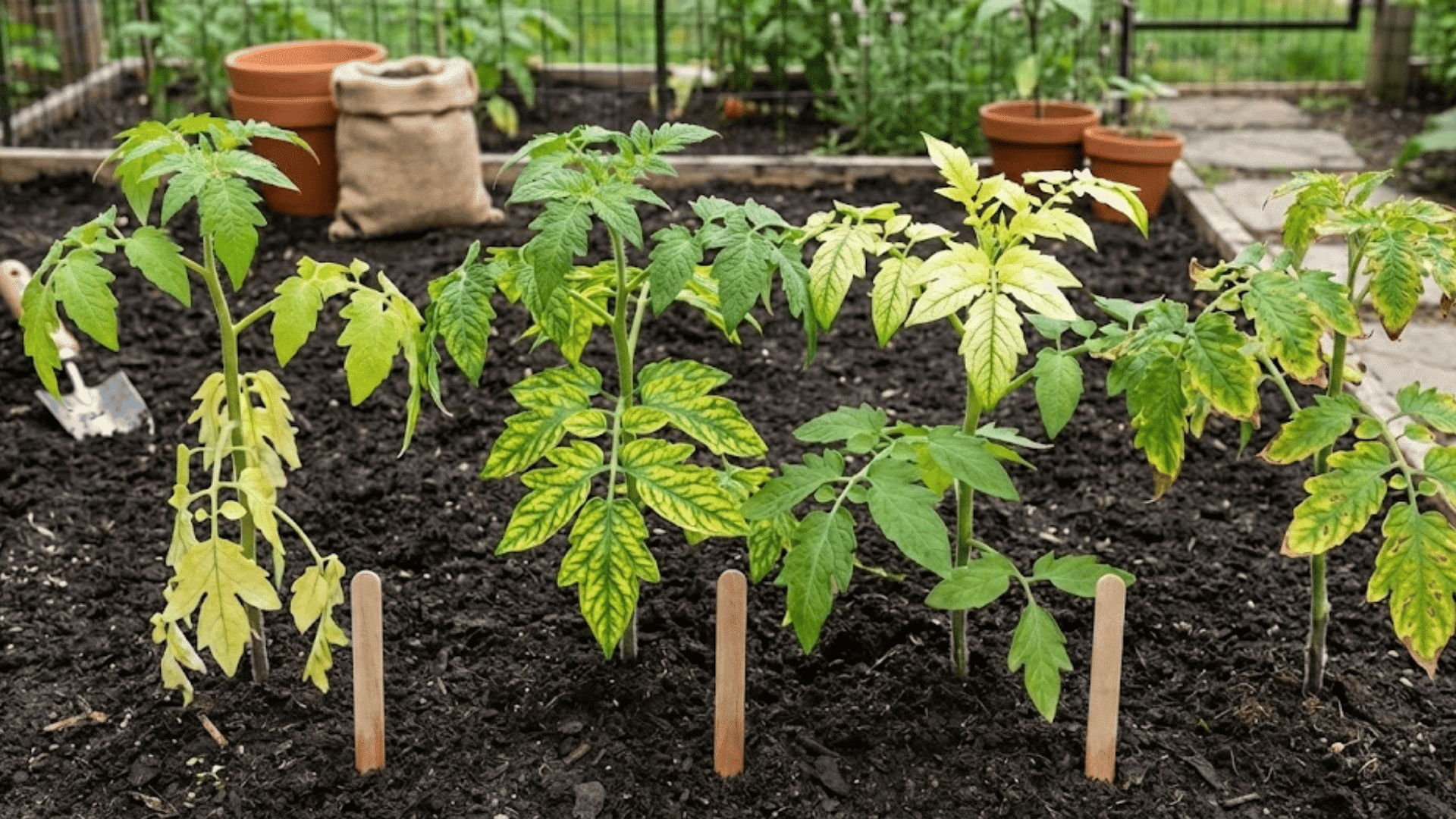
When your tomato plants lack essential nutrients, yellowing becomes their distress signal.
Each deficiency shows up differently, giving you clues about what’s missing from the soil.
4. Nitrogen Deficiency
Nitrogen fuels leafy growth, and when it runs low, your tomato plant starts pulling nutrients from older leaves to feed new growth.
Yellowing begins at the bottom and works its way up, leaving lower leaves pale and sometimes dropping off entirely. The whole plant may look stunted with thin stems and slow fruit development.
A quick nitrogen boost from compost or balanced fertilizer usually brings back that vibrant green within days.
5. Magnesium Deficiency
This one has a telltale signature that makes it easier to identify than most nutrient issues.
- Yellow leaves with green veins create a distinctive marbled pattern.
- Older leaves show symptoms first, starting between the veins.
- Container tomatoes are especially prone since frequent watering leaches magnesium from the potting soil.
- Epsom salt dissolved in water offers a fast fix.
6. Iron Deficiency
Unlike nitrogen issues, iron deficiency hits the youngest leaves first, and soil pH is usually the hidden culprit behind it.
| Symptom | What to Look For | Why It Happens |
|---|---|---|
| Yellowing in young leaves | New growth turns pale yellow or white while veins stay green | Alkaline soil (pH above 7) locks up iron, making it unavailable |
| Stunted new growth | Tips of the plants look weak and chlorotic | Even iron-rich soil can’t help if the pH is off |
| Soil pH connection | Plants can’t absorb iron properly | Test soil and lower pH with sulfur or use chelated iron spray |
7. Potassium Deficiency
Potassium keeps your tomato plants strong and helps them resist stress, so a shortage shows up in weakened growth.
Yellow edges appear on older leaves first, often with brown scorched tips that look burnt. Leaves may curl or develop spotting between veins.
Fruit production slows down, and what does grow tends to ripen unevenly. Wood ash or potassium-rich fertilizer can correct this deficiency.
Yellow Spots on Tomato Leaves
Spotting on tomato leaves tells a different story than overall yellowing, and paying attention to the pattern can help you catch diseases or pests early.
What Spots Usually Indicate?
Yellow spots rarely point to nutrient issues and almost always signal something more active happening on your plants.
- Early blight creates brown-centered spots with yellow halos that spread quickly.
- Septoria leaf spot shows up as tiny yellow specks that multiply across the foliage.
- Spider mites leave stippled yellow dots from their feeding damage.
- Bacterial infections cause dark spots surrounded by yellow rings.
Difference Between Spotting and Full-Leaf Yellowing
Knowing whether you’re dealing with spots or uniform yellowing helps you narrow down the cause and choose the right fix.
| Spotting | Full-Leaf Yellowing |
|---|---|
| Circular, irregular, or speckled patterns | Entire leaf fades uniformly |
| Accompanied by brown, black, or white marks | Solid yellow or pale green |
| Indicates disease, pests, or fungal infection | Points to watering, nutrients, or environmental stress |
| Spreads from leaf to leaf over time | May affect multiple leaves simultaneously |
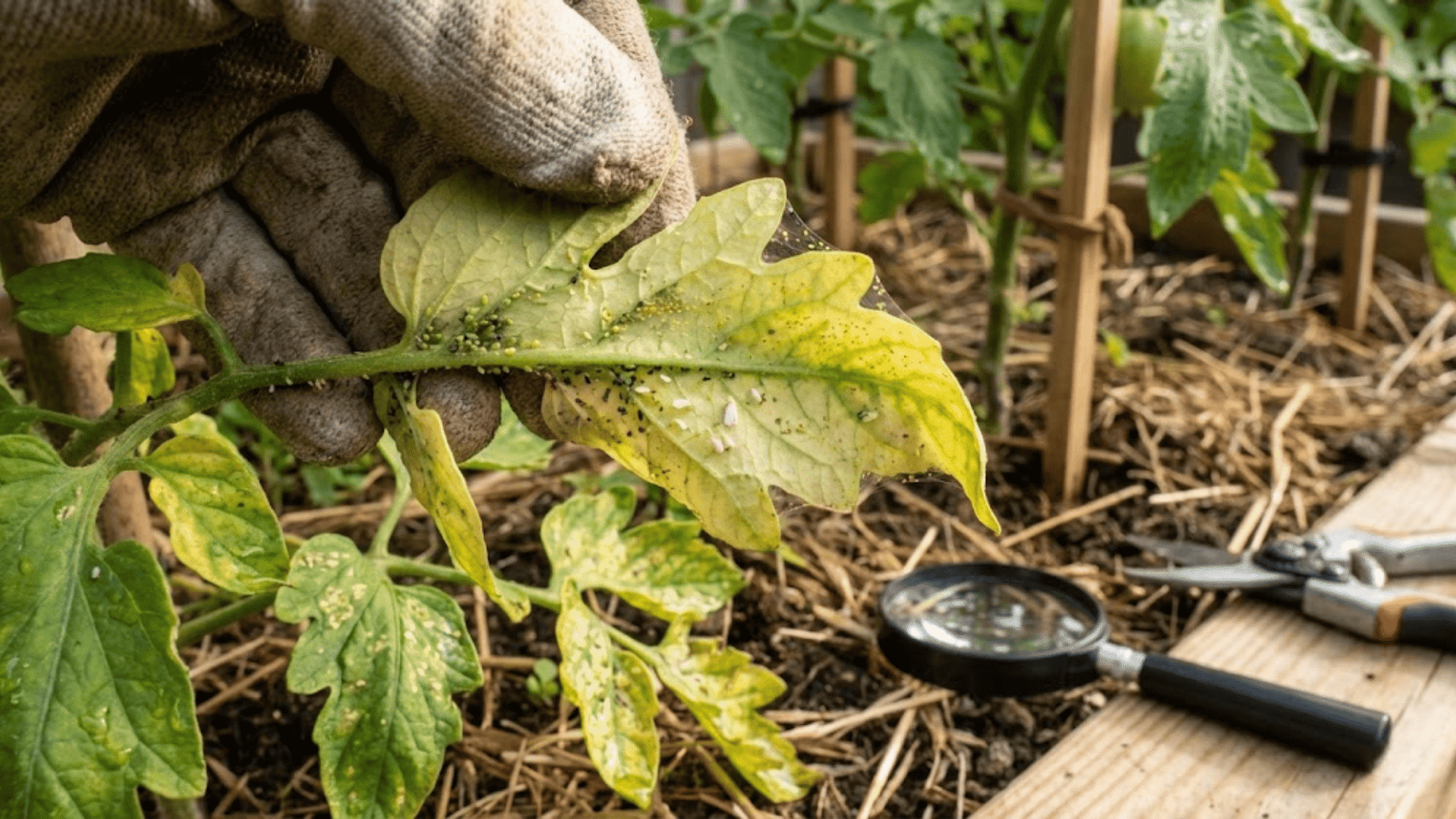
How to Inspect the Underside of Leaves?
Don’t just look at what’s visible from above; flip those leaves over.
The underside often reveals what’s really going on, whether it’s clusters of tiny insects, white fungal growth, or discolored patches that haven’t broken through to the top yet.
Gently lift a spotted leaf and check for aphids, whiteflies, or spider mite webbing. Look for powdery residue or dark spores that signal fungal problems.
Early detection on the underside gives you a head start on treatment before damage becomes obvious.
Diseases That Cause Tomato Leaves to Turn Yellow
Diseases can turn your thriving tomato plants yellow seemingly overnight, and catching them early makes all the difference.
Knowing what you’re dealing with helps you decide whether to treat or remove affected plants.
Fungal Diseases
Fungal problems love warm, humid conditions and spread quickly if left unchecked.
- Early blight starts with dark spots surrounded by yellow halos on lower leaves, gradually moving upward.
- Septoria leaf spot creates masses of tiny yellow spots with dark centers that cover entire leaves.
- Powdery mildew appears as white dusty patches on yellowing leaves, especially in shaded, crowded areas.
Remove infected leaves immediately and improve air circulation to slow the spread.
Bacterial and Viral Issues
These infections are trickier than fungal diseases because they often can’t be cured once they take hold.
| Disease | Symptoms | Action |
|---|---|---|
| Bacterial wilt | Sudden yellowing and wilting, brown stem streaks | Remove and destroy entire plant |
| Mosaic virus | Mottled yellow-green patterns, distorted leaves | Pull plant immediately |
| When to remove plants | Rapid decline or confirmed viral infection | Act fast to protect other plants |
Pest Problems Linked to Yellow Leaves
Pests might be tiny, but their impact on your tomato plants can be dramatic.
When insects feed on your plants, they don’t just cause physical damage; they trigger yellowing that weakens the entire plant over time.
- Aphids cluster on stems and leaf undersides, sucking sap and causing leaves to yellow and curl.
- Spider mites create fine webbing and stippled yellow dots as they drain plant cells.
- Whiteflies feed on leaf undersides, leaving behind sticky honeydew and yellowing foliage.
- How pests cause yellowing indirectly through sap removal, stress, and spreading diseases as they move between plants.
Catching pest problems early means fewer yellow leaves and healthier tomatoes overall. Regular inspection keeps small infestations from becoming major headaches.
Soil and Root Problems
What’s happening beneath the surface often determines what you see above ground.
Soil and root issues can starve your tomato plants of oxygen and nutrients, leading to widespread yellowing that won’t improve until you address what’s going on below.
| Problem | What Happens | Signs Above Ground |
|---|---|---|
| Poor drainage | Water sits around roots, suffocating them | Yellow leaves that feel limp, stunted growth, foul soil smell |
| Compacted soil | Roots can’t spread or access oxygen | Slow growth, yellowing lower leaves, weak stems |
| Root rot | Fungal infection destroys root system | Sudden wilting with yellow leaves despite watering, dark mushy roots |
| Overcrowding | Plants compete for nutrients and space | Uniform yellowing across multiple plants, thin stems, poor fruit set |
How to Fix Tomato Leaves Turning Yellow?
Once you’ve identified what’s causing the yellowing, taking action quickly can save your plants and get them back on track. Follow these steps to address the most common causes and restore healthy green foliage.
- Step 1: Adjust watering routine by checking soil moisture two inches down and watering only when dry.
- Step 2: Improve soil drainage by adding compost to heavy soil or drilling extra holes in containers.
- Step 3: Correct nutrient deficiencies with targeted fertilizers based on the specific lack your plant shows.
- Step 4: Treat pests and diseases safely using neem oil or insecticidal soap while removing infected leaves.
- Step 5: Prune yellow leaves properly by cutting them at the stem with clean scissors, focusing on severely damaged ones first.
Most yellowing issues respond well to these fixes within a week or two. Stay consistent with your adjustments and monitor your plants closely for signs of improvement.
Tomato Yellowing by Growth Stage
Yellowing means different things depending on where your tomato plant is in its life cycle. Understanding what’s normal for each stage helps you respond appropriately instead of overreacting to natural changes.
Stage 1: Seedlings
What to expect: Young seedlings often show pale yellow leaves due to limited root systems or shock from transplanting. This usually resolves as roots establish and the plant adjusts to its new environment.
Stage 2: Young Plants
What to expect: Rapid growth can outpace nutrient availability, causing lower leaves to yellow as the plant prioritizes new growth. Boost with balanced fertilizer to support the energy demands of this active stage.
Stage 3: Flowering Stage
What to expect: Yellowing during flowering often signals nitrogen deficiency or stress from the energy shift toward blooms. Light feeding and consistent watering help the plant balance vegetative growth with flower production.
Stage 4: Fruiting Stage
What to expect: As tomatoes ripen, lower leaves naturally yellow and drop as the plant channels resources into fruit development. This is normal unless yellowing spreads rapidly or affects upper foliage.
Prevention Tips for Healthy Green Leaves
Keeping your tomato leaves vibrant and green starts long before yellowing appears. A few smart practices from the beginning can save you from most common problems down the road.
- Proper spacing and mulching give roots room to breathe while keeping soil moisture stable and weeds at bay.
- Consistent fertilizing schedule ensures plants get steady nutrients throughout the season without feast-or-famine cycles.
- Crop rotation prevents soil-borne diseases from building up by planting tomatoes in different spots each year.
- Choosing disease-resistant varieties gives you a head start against common fungal and viral issues that cause yellowing.
Prevention always beats treatment when it comes to healthy tomato plants. Build these habits into your routine and you’ll spend less time troubleshooting and more time enjoying your harvest.
The Bottom Line
Seeing tomato leaves turning yellow doesn’t have to send you into a panic. Now that you know how to read what your plants are telling you, from nutrient gaps to pest visits, you can step in with confidence and get things back on track.
Every garden teaches you something new, and yellowing leaves are just another lesson in becoming a better grower.
Keep observing, stay patient with the process, and remember that most yellowing is fixable.
Have your own tips or questions about yellow leaves? Drop a comment below and let’s keep the conversation growing.