You know that houseplant with the dramatic split leaves that seems to show up in every plant corner on your feed? That’s the Swiss cheese monstera, and those gorgeous holes aren’t just for aesthetics.
These natural cutouts, called fenestrations, are actually the plant’s signature feature and a sign of a happy, thriving monstera.
If you’re bringing home your first one or trying to figure out why yours isn’t looking quite as lush as you’d hoped, understanding the care basics makes all the difference.
We’ll walk you through everything from light and watering to encouraging those iconic splits, so your monstera can become the statement piece your space deserves.
What is a Swiss Cheese Monstera?
The Swiss cheese monstera typically refers to Monstera adansonii, a climbing plant loved for its perforated leaves that resemble Swiss cheese.
While Monstera deliciosa also gets this nickname, adansonii has smaller, more delicate foliage with holes throughout the leaves rather than splits along the edges.
In its native Central and South American rainforests, this plant climbs up trees using aerial roots, reaching for filtered light through the canopy.
Many people assume all monstera are the same, but adansonii stays more compact and develops fenestrations earlier than its larger cousin, ideal for small spaces seeking that tropical vibe without overwhelming your room.
Ideal Growing Conditions for Swiss Cheese Monstera
Getting the environment right sets your monstera up for success. Light, temperature, and humidity work together to encourage healthy growth and those coveted leaf holes.
Light Requirements
Your monstera thrives in bright, indirect light where it gets plenty of illumination without harsh rays hitting the leaves directly. While it tolerates lower light, growth slows, and new leaves won’t develop fenestrations as readily.
Too much direct sun causes brown, crispy patches on the foliage, while too little light leads to leggy stems, smaller leaves, and that telltale reach toward the nearest window.
A spot near an east or north-facing window works beautifully.
Temperature and Humidity
Keep your monstera between 65-80°F for optimal growth, though it can handle brief dips to around 55°F without major damage.
Anything lower risks stunted growth or leaf damage. These tropical plants appreciate humidity levels above 50%, which you can boost with a humidifier, pebble tray, or by grouping plants together.
Dry air often shows up as brown leaf tips or edges, signaling your plant wants more moisture in the atmosphere.
How to Water a Swiss Cheese Plant?
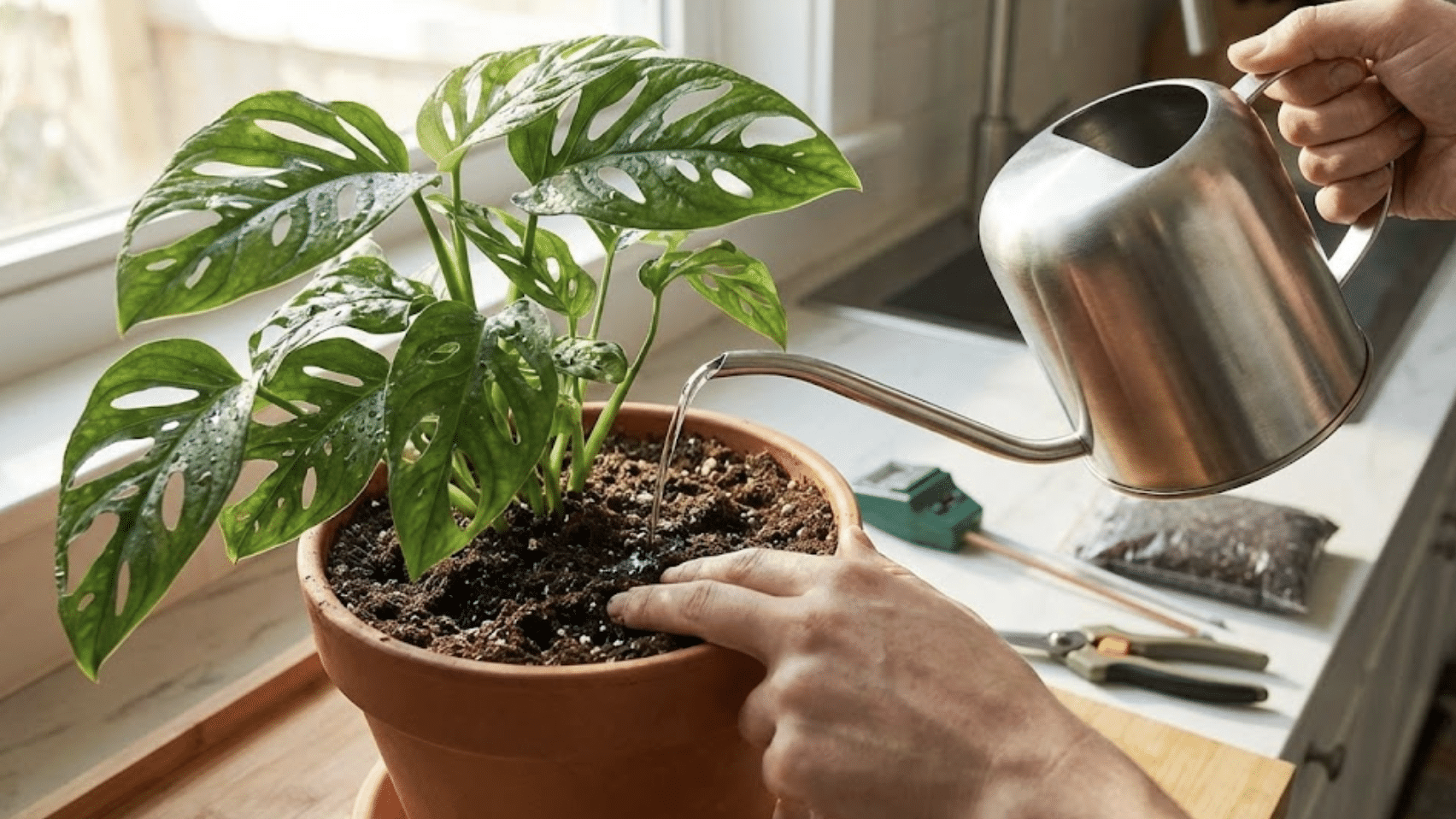
Watering might seem straightforward, but finding the right rhythm keeps your monstera healthy and prevents common issues like root rot or drooping leaves.
Check the top 2 inches of soil before watering. When that layer feels dry to the touch, it’s time for a thorough soak until water drains from the bottom.
During spring and summer, this usually means watering every 5-7 days, while winter often stretches that to 10-14 days as growth slows.
Overwatered monsteras show yellowing leaves and mushy stems, often accompanied by a musty soil smell. Underwatering looks different: leaves curl inward, turn brown at the edges, and the whole plant droops dramatically.
The key is consistency without being rigid about schedules, since your home’s temperature and light levels affect how quickly soil dries out.
Best Soil and Potting Mix
Your monstera needs soil that drains quickly but doesn’t dry out completely. Think of it like a sponge that releases water easily rather than holding it in a soggy clump.
Why Drainage Matters and What to Use?
Monstera roots need air pockets to breathe, which is why heavy, compacted soil leads to root rot, while overly loose mixes dry out too fast.
The ideal mix mimics the chunky forest floor these plants grow on naturally. Combine equal parts potting soil, perlite, and orchid bark for a DIY version that balances moisture and aeration.
The potting soil provides nutrients, perlite creates drainage, and bark adds structure. If you’d rather skip the mixing, aroid blends work perfectly, or lighten up regular potting soil by adding perlite or pumice.
Choosing the Right Container
Always use pots with drainage holes at the bottom so excess water can escape.
Terracotta breathes and dries faster, which helps if you tend to overwater, while plastic retains moisture longer and gives you more time between waterings.
Only size up when roots start circling the pot or poking through drainage holes, since too much soil around the roots stays wet and invites problems.
Fertilizing Swiss Cheese Monstera
Feeding your monstera gives it the nutrients needed for lush growth and those signature fenestrations. Timing and moderation make all the difference between thriving foliage and burnt roots.
When and What to Feed?
Feed your monstera every 2-4 weeks during spring and summer when it’s actively growing, then cut back to monthly or stop entirely in fall and winter as growth slows.
A balanced liquid fertilizer diluted to half strength works beautifully, or use a slow-release formula applied every few months.
Organic options like worm castings or compost tea provide gentle nutrition without the risk of chemical buildup. The goal is consistent, light feeding rather than heavy doses that shock the plant.
Recognizing Fertilizer Problems
Too much or too little fertilizer shows up in distinct ways.
Watch for these signs to adjust your feeding routine:
- Brown, crispy leaf tips and edges signal over-fertilization and salt buildup in the soil.
- White crust on the soil surface indicates excess fertilizer salts that need flushing out with water.
- Pale, small leaves with slow growth suggest your monstera isn’t getting enough nutrients.
- Yellowing lower leaves with stunted growth can mean nutrient deficiency or fertilizer burn, depending on other symptoms.
How to Encourage Bigger Leaves and More Holes?
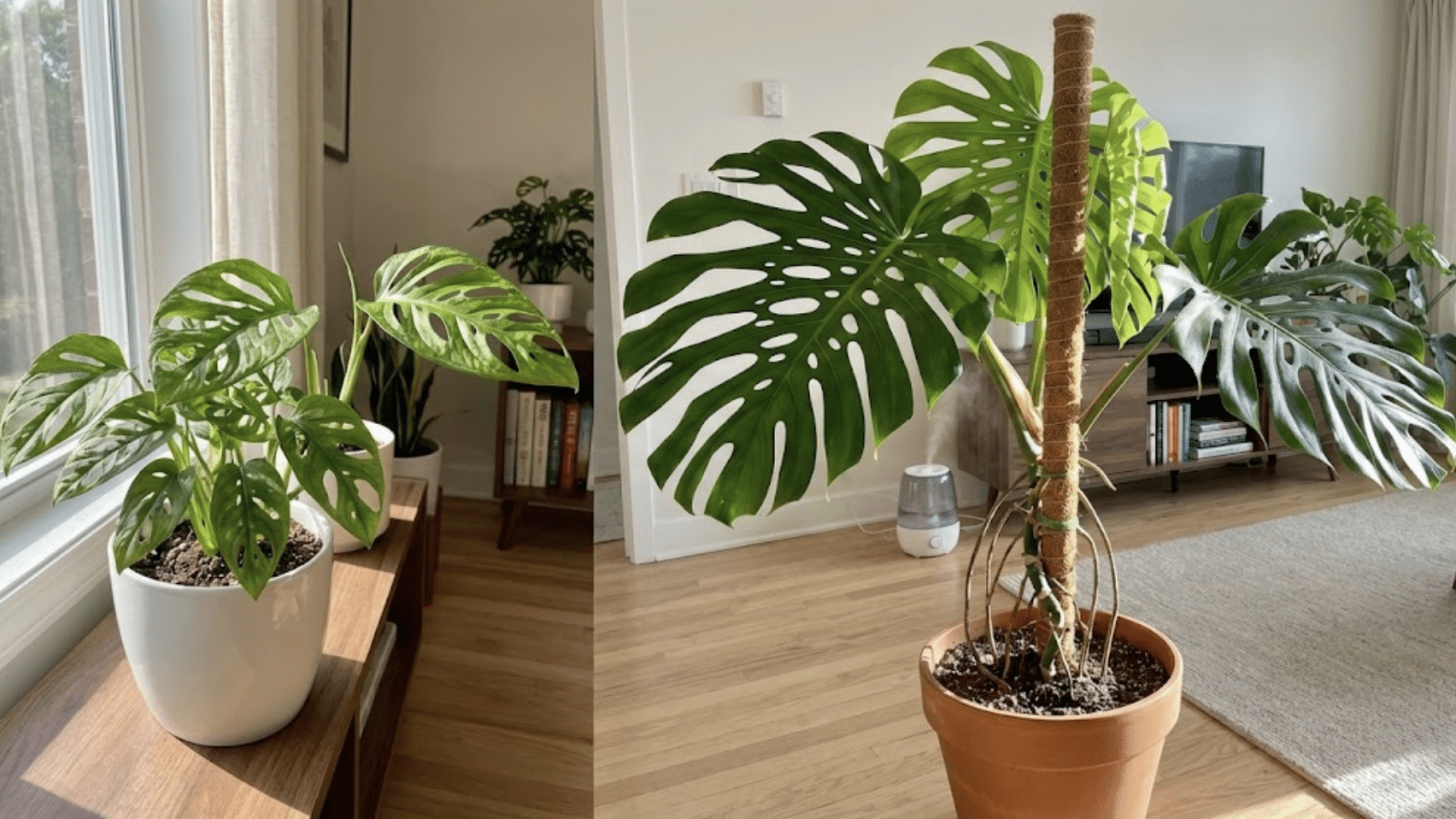
Fenestrations develop as your monstera matures, but you can speed things along with the right care.
Bright, indirect light is non-negotiable since the plant needs energy to produce those intricate leaf patterns. Pair that with humidity above 50% and consistent feeding during the growing season.
Adding a moss pole or trellis makes a real difference since climbing triggers the plant to produce larger leaves with more dramatic holes as it ascends.
Young plants naturally have solid leaves, so patience matters. Once your monstera hits its stride and has support to climb, fenestrations become more pronounced with each new leaf.
Pruning and Training Swiss Cheese Monstera
Shaping your monstera keeps it looking full and encourages the growth pattern you want, whether that’s a cascading trail or an upward climb.
When and How to Prune?
Prune in spring or early summer when your monstera is actively growing and can recover quickly. Use clean, sharp scissors to cut just above a node, which is the small bump where leaves and aerial roots emerge.
Remove leggy stems, yellowing leaves, or any growth that looks sparse or damaged.
Each cut encourages the plant to branch out from lower nodes, creating a fuller appearance. You can also trim to control size or remove vines that have grown too long for your space.
Training Your Monstera to Climb or Trail
Monstera naturally climb in the wild, and giving yours a moss pole or trellis unlocks bigger leaves with more pronounced fenestrations.
Gently tie stems to the support with soft ties or twine, positioning aerial roots against the pole for grip climb. For a trailing look, let leaves cascade from a hanging planter or high shelf, though they stay smaller without vertical support.
Leggy growth happens when light is insufficient, so moving your plant closer to a window often solves the problem better than constant pruning.
How to Propagate a Swiss Cheese Plant?
Propagating your monstera is surprisingly simple and gives you new plants to fill your space or share with friends. A single stem cutting can root in just a few weeks.
- Step 1: Cut a stem section with at least one node and one leaf using clean scissors, making the cut just below the node
- Step 2: Place the cutting in water or moist soil, ensuring the node is submerged or buried, since roots emerge from this point
- Step 3: Keep water cuttings in bright, indirect light and change the water weekly; for soil, maintain consistent moisture without waterlogging
- Step 4: Wait 2-4 weeks for roots to develop in water (transplant when roots reach 2-3 inches) or 3-6 weeks in soil before new growth appears
The most common mistake is cutting without a node or letting water become stagnant, which prevents rooting or causes rot. Once roots establish, treat your new plant just like the parent and watch it grow.
Common Swiss Cheese Monstera Problems and Solutions
Even with great care, your monstera might hit a few bumps along the way. Most issues have straightforward fixes once you identify what’s going wrong.
Problem 1: Leaves are turning yellow.
Solution: This usually points to overwatering or poor drainage, keeping roots too wet. Let the soil dry out more between waterings and check that your pot has drainage holes to prevent water from pooling at the bottom.
Problem 2: Leaf edges or tips are brown and crispy.
Solution: Low humidity or fertilizer salt buildup causes these patches. Boost moisture in the air with a humidifier or pebble tray, and flush the soil with water if you notice white crust forming on the surface.
Problem 3: New leaves have no holes.
Solution: Your monstera needs more light or simply more time to mature. Move it closer to a bright window and give younger plants patience, since fenestrations develop as the plant grows and climbs upward.
Problem 4: Leaves are drooping or curling inward.
Solution: Water stress from underwatering or sudden temperature drops causes this. Check soil moisture and keep your plant away from cold drafts, heating vents, or air conditioning that creates temperature swings.
Problem 5: Pests are appearing on the leaves.
Solution: Spider mites, mealybugs, and thrips show up as tiny bugs, webbing, or sticky residue. Wipe leaves weekly with soapy water or neem oil spray until pests vanish; isolate affected plants to prevent spreading.
Repotting a Swiss Cheese Monstera
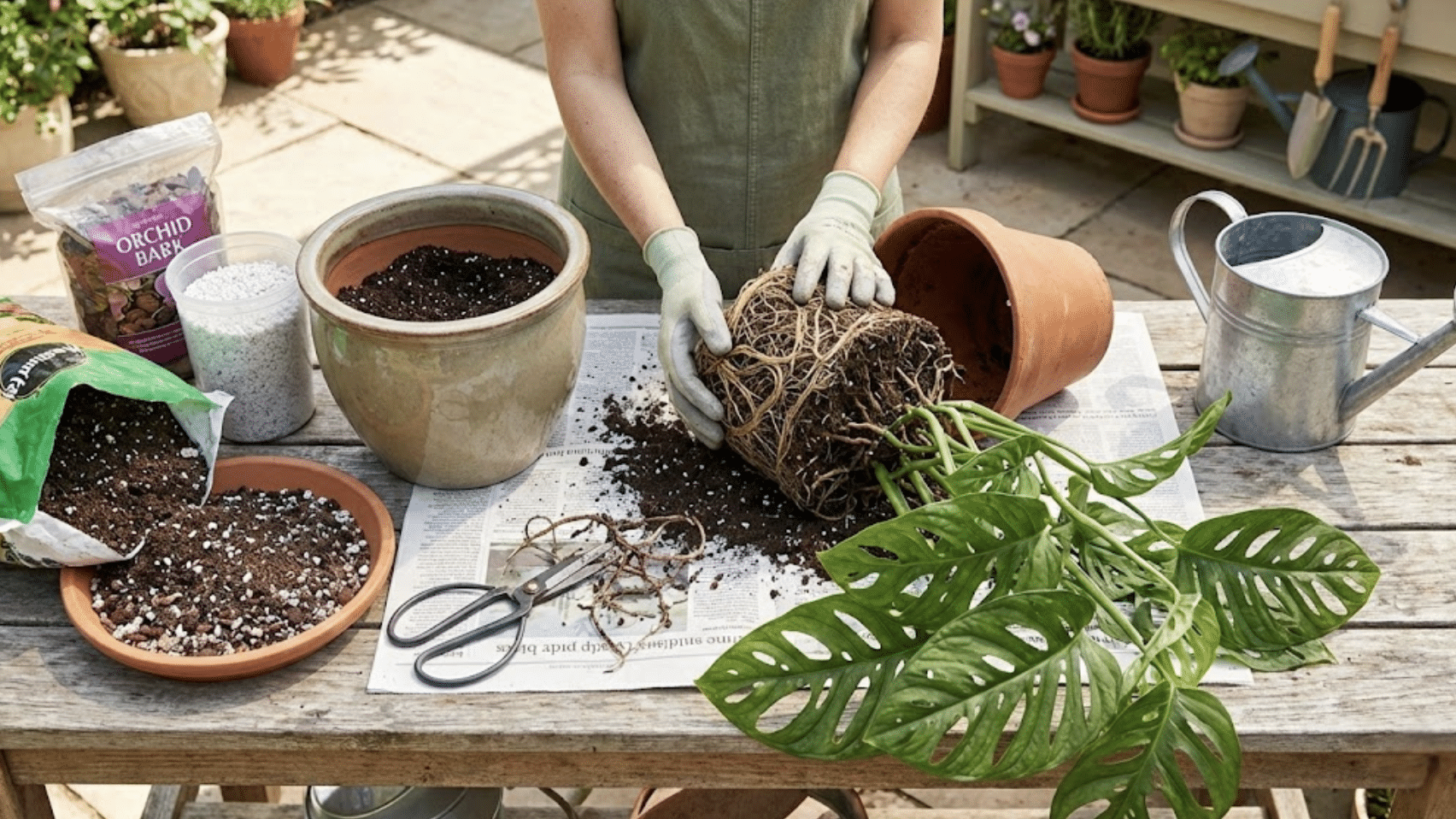
Repotting gives your monstera fresh soil and room to grow when it outgrows its current home. Watch for roots circling the pot or poking through drainage holes as signs it’s time for an upgrade.
- Step 1: Choose a pot one size larger with drainage holes and repot in spring or early summer when the plant is actively growing.
- Step 2: Gently remove the monstera from its current pot, loosening the root ball and trimming any circled or damaged roots with clean scissors.
- Step 3: Add fresh, well-draining soil to the new pot, position the plant at the same depth it was growing before, and fill around the sides.
- Step 4: Water thoroughly until it drains from the bottom, then place the plant back in its usual spot and skip fertilizing for 4-6 weeks.
Most monsteras need repotting every 1-2 years, though fast-growing plants in ideal conditions might need it sooner.
If growth slows despite good care or water runs straight through without absorbing, your plant is telling you it’s time for more space.
Swiss Cheese Monstera Care by Season
Your monstera’s needs shift throughout the year as growth speeds up in warmer months and slows when temperatures drop and light decreases.
| Season | Watering | Fertilizing | Care Adjustments |
|---|---|---|---|
| Spring & Summer | Every 5-7 days | Every 2-4 weeks at half strength | Best time to repot, prune, and propagate |
| Fall & Winter | Every 10-14 days | Monthly or stop entirely | Move closer to light; avoid cold drafts |
Indoor vs. Outdoor Swiss Cheese Plant Care
Monstera can grow outdoors in USDA zones 10-12, where temperatures stay above 50°F year-round. They thrive in shaded or partially shaded spots that mimic their rainforest origins, protected from direct sun and wind.
If you’re moving your indoor monstera outside for summer, transition gradually over a week by increasing outdoor time daily to prevent shock.
Bring it back inside before temperatures drop below 55°F in the fall.
For most climates, keeping your monstera indoors year-round is safer and easier, giving you full control over light, temperature, and humidity without worrying about weather fluctuations or pests from the garden.
Beginner Tips from Plant Enthusiasts
Learning from others’ experiences can save you from common pitfalls and help your monstera thrive from day one.
Avoid These Common Mistakes:
- Watering on a strict schedule instead of checking soil moisture first, leading to overwatering.
- Placing the plant in low light and expecting fenestrations to develop quickly.
- Skipping support structures like moss poles, which keep leaves small and limit fenestrations.
Signs Your Monstera is Thriving:
- New leaves unfurl regularly with vibrant green color and increasing fenestrations.
- Aerial roots develop along stems, and leaves stay perky without drooping or browning.
Once you dial in the basics of light, water, and humidity, your monstera practically takes care of itself.
Many plant enthusiasts discuss common issues like yellowing leaves on Monstera adansonii, which often trace back to watering habits. Pay attention to what your plant is telling you through its leaves and growth, and adjust, as needed.
Wrapping Up
Your monstera might seem finicky at first, but once you understand what it needs, Swiss cheese monstera care becomes second nature.
Focus on the essentials: bright indirect light, well-draining soil, and letting the top few inches dry between waterings.
Add a moss pole when you’re ready to see those leaves grow larger and develop more dramatic holes. Every plant has its own personality and pace, so don’t stress if yours takes time to show off those signature fenestrations.
Watch how it responds, adjust along the way, and enjoy the process of growing together. Have questions or tips to share? Drop a comment below!